 View larger
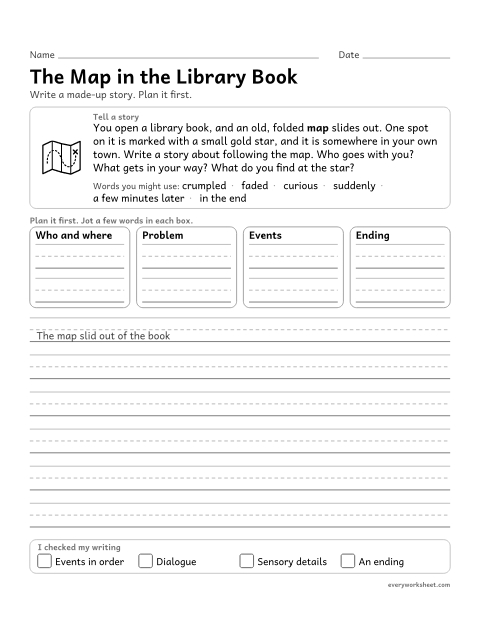
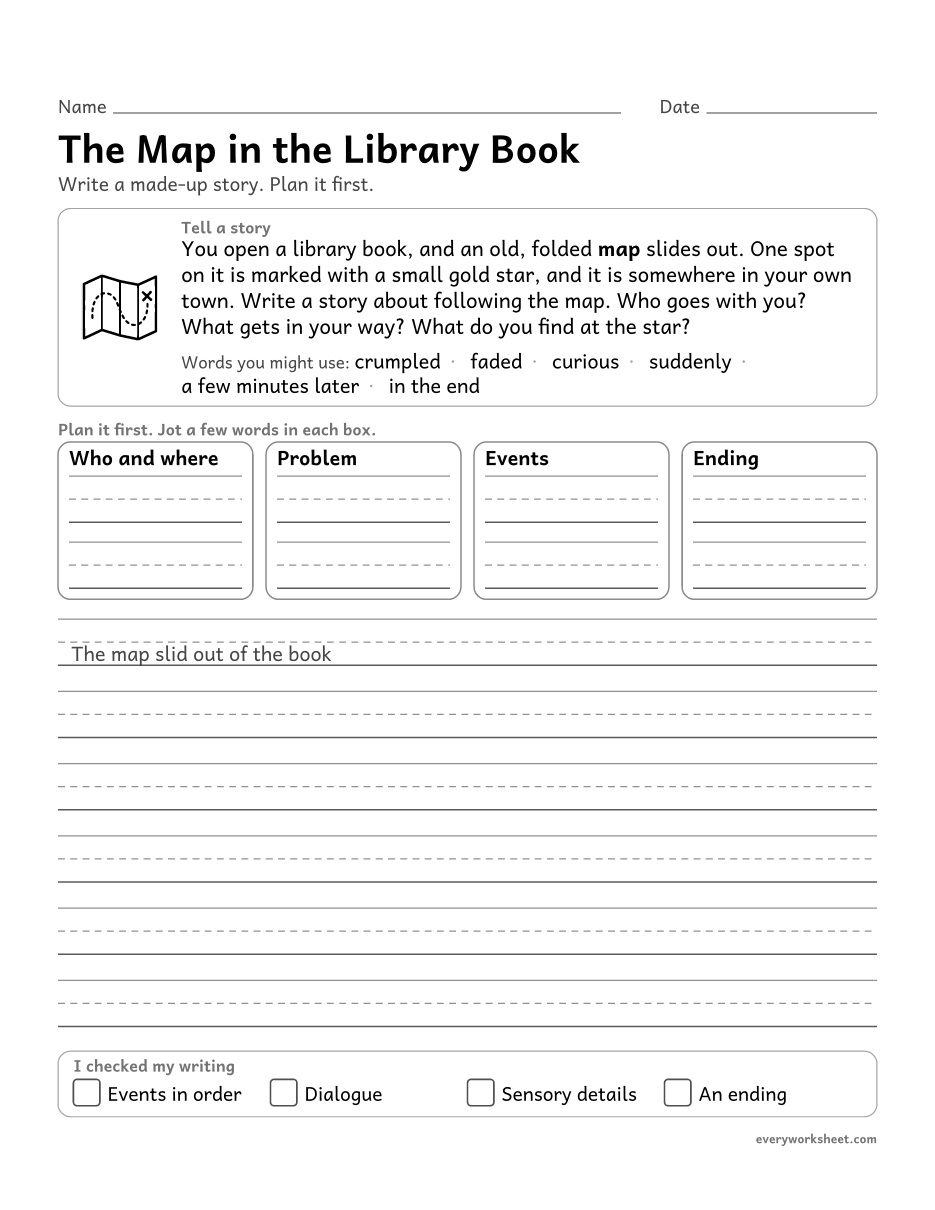
The map in the library book
Introducing characters and a situation and organizing an imagined story that unfolds naturally
1 page46 KB
Narrative, opinion, informative, and five-paragraph essay prompts with plan boxes and room to write.
View largerIntroducing characters and a situation and organizing an imagined story that unfolds naturally
1 page46 KB
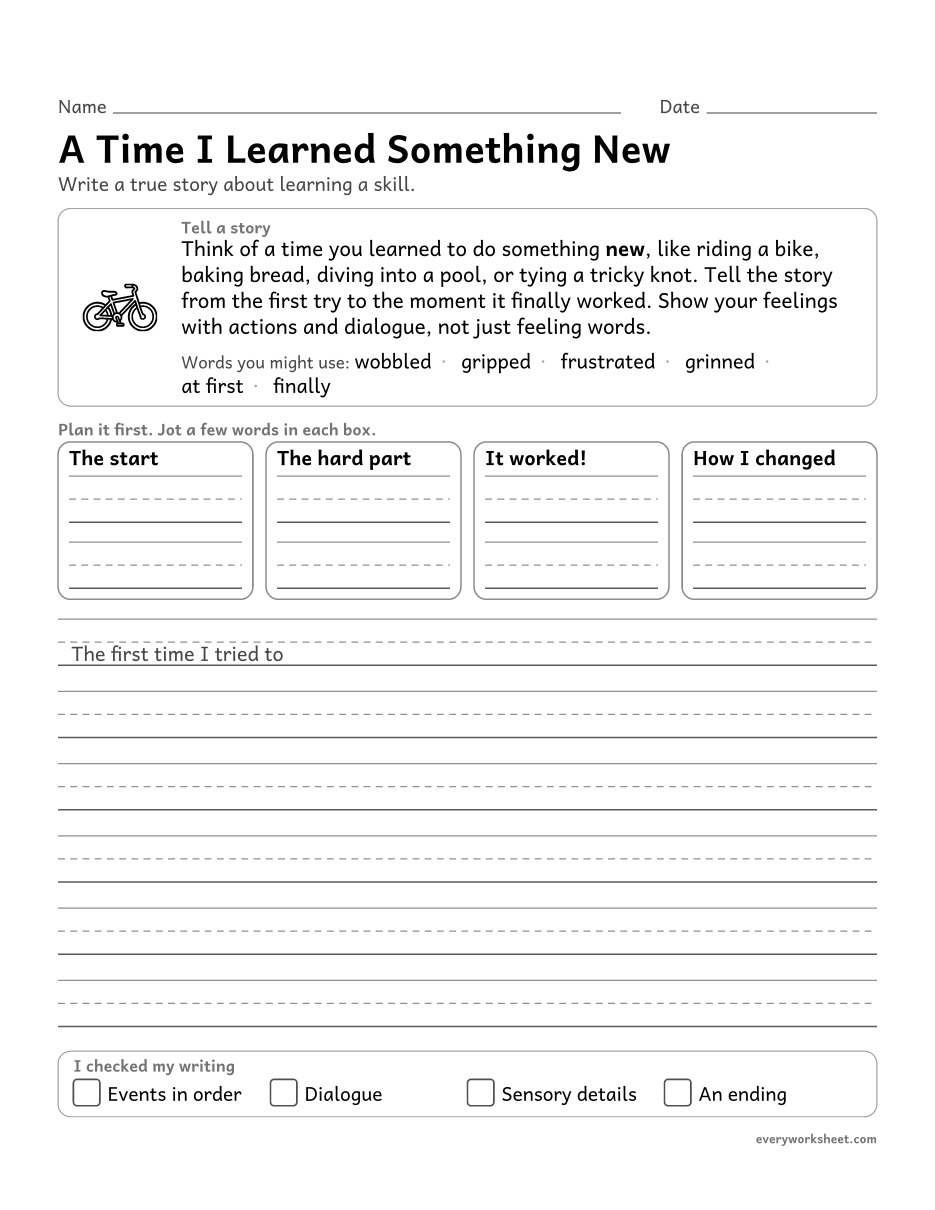 View larger
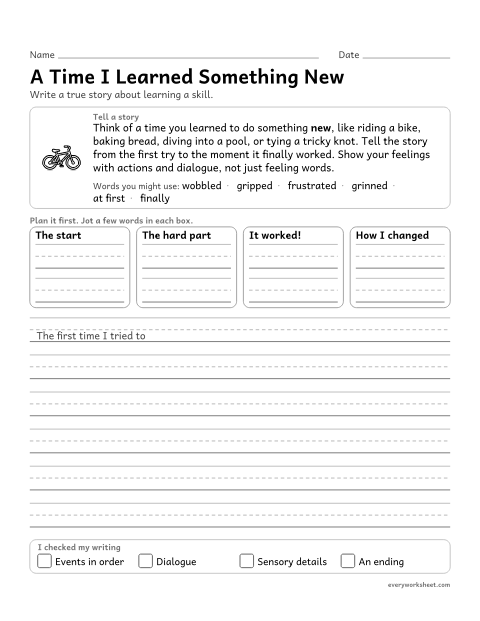
Using dialogue and description to show feelings in a true narrative
1 page57 KB
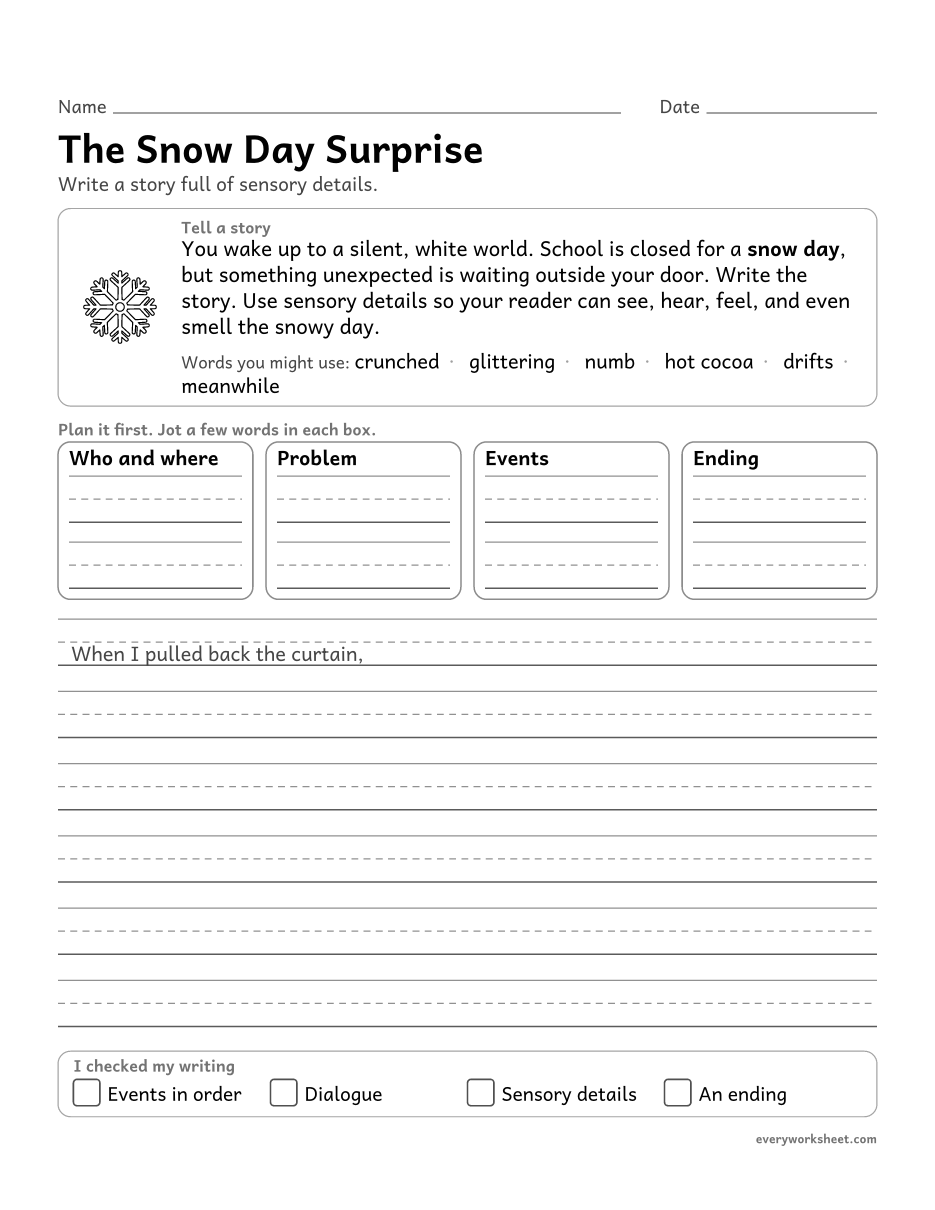 View larger
Using concrete words and sensory details to describe events in a narrative
1 page41 KB
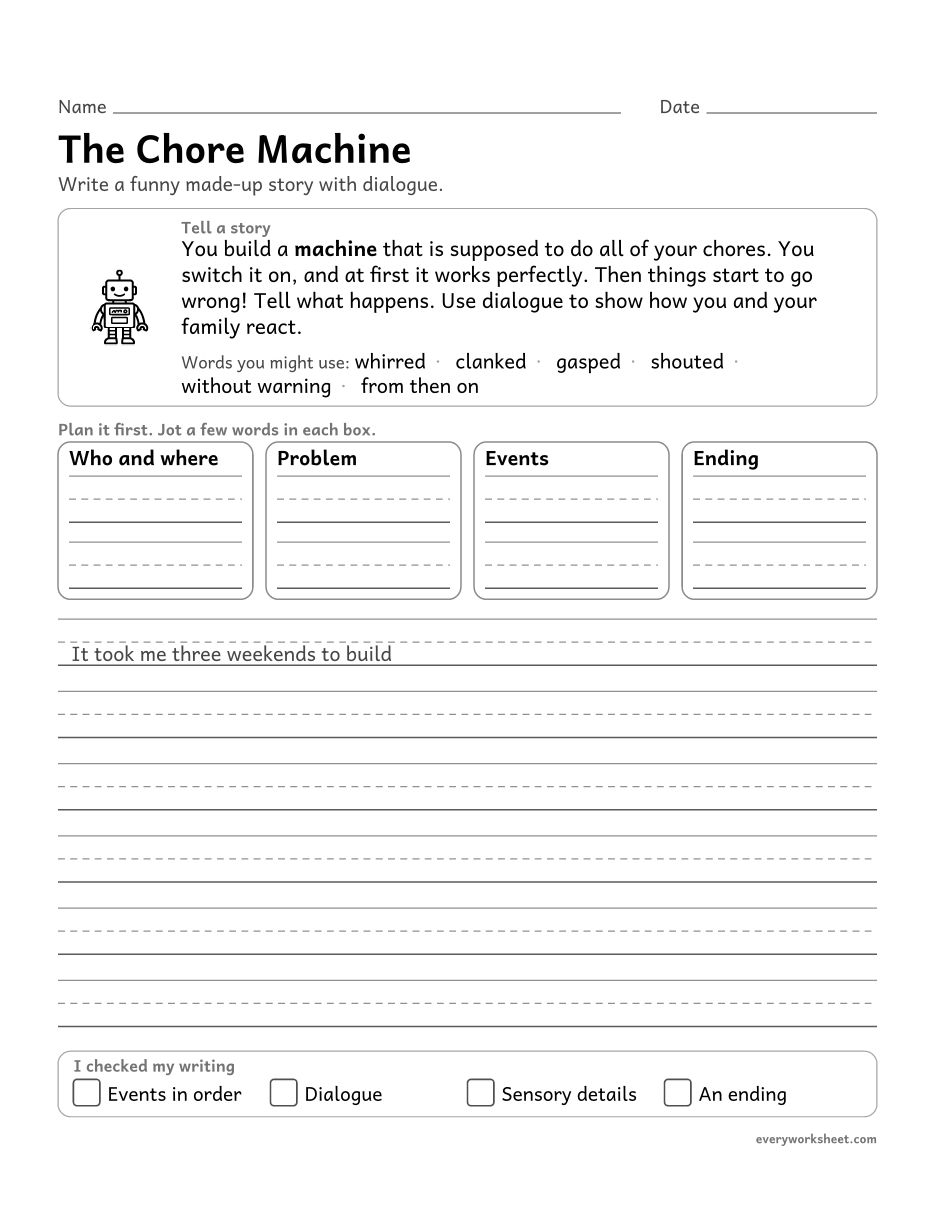 View larger
Using dialogue to develop events and show how characters respond in an imagined story
1 page45 KB
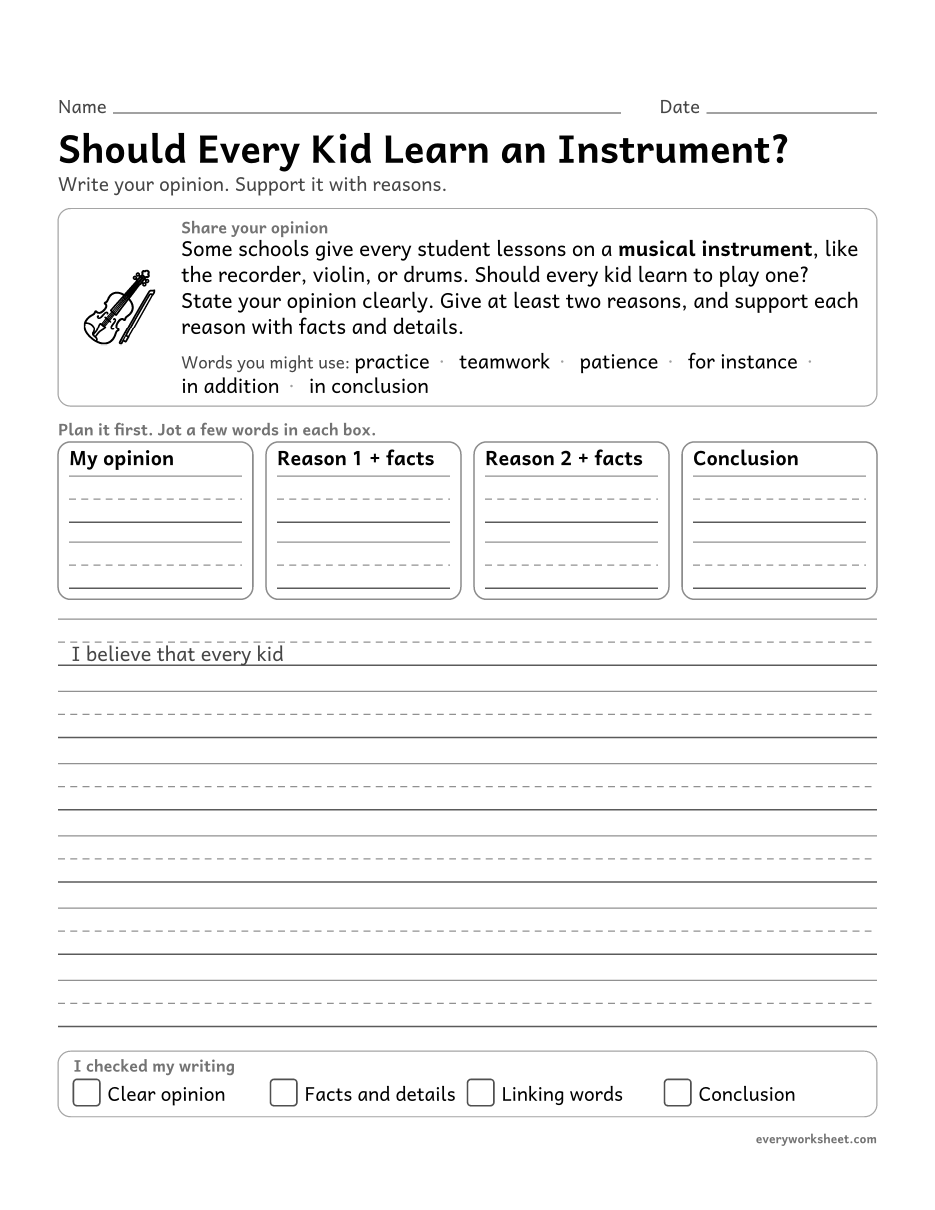 View larger
Writing an opinion piece supported by reasons and information
1 page69 KB
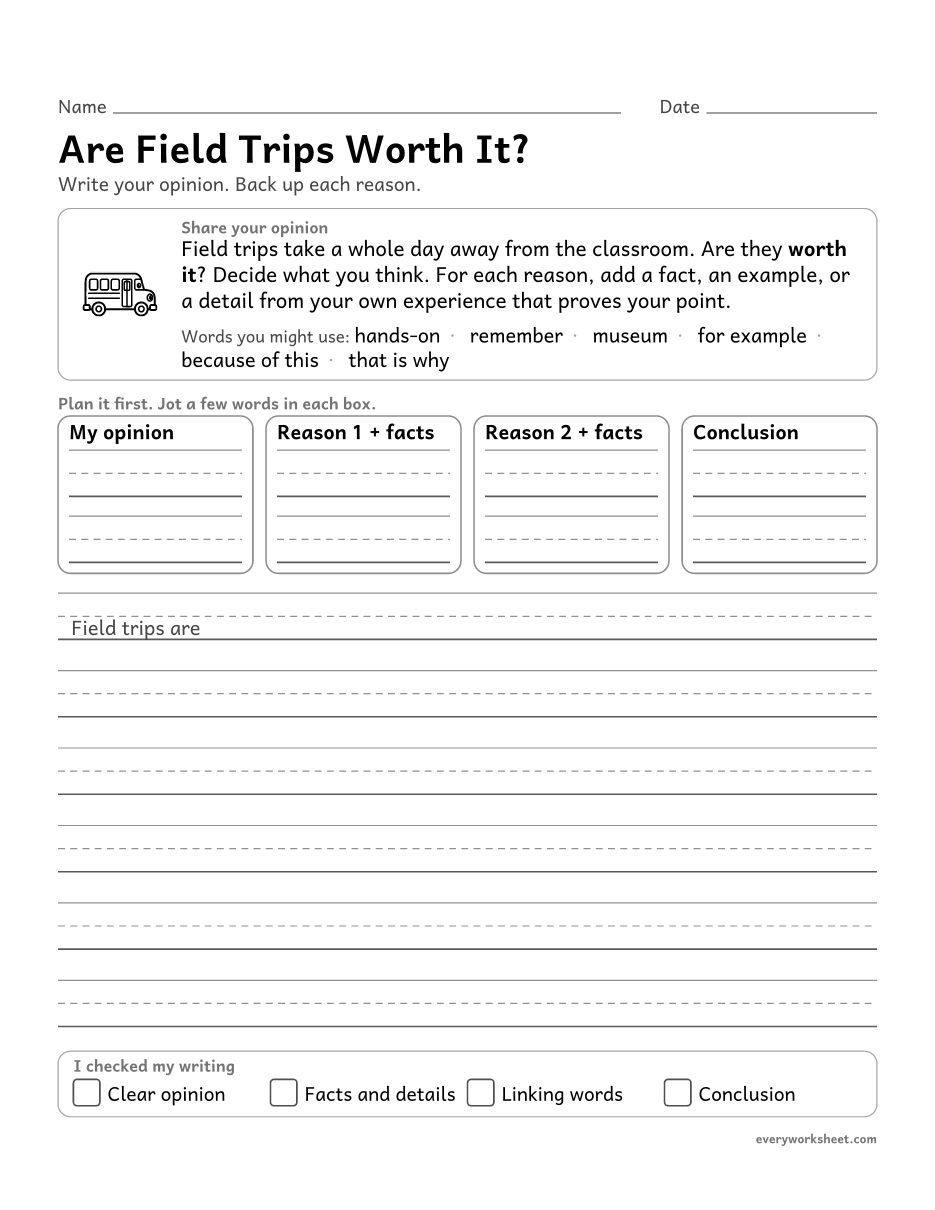 View larger
Supporting reasons with facts and details in an opinion piece
1 page45 KB
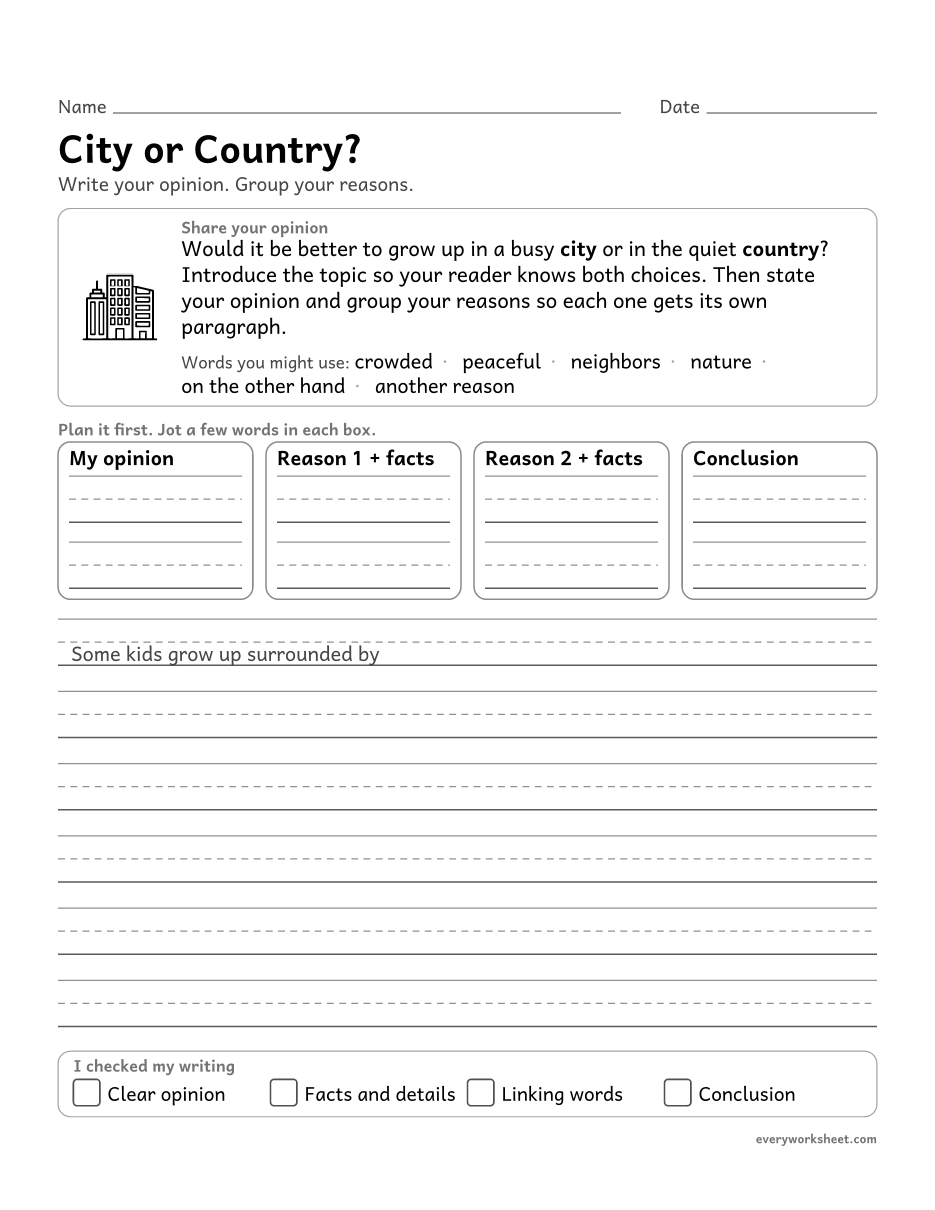 View larger
Introducing a topic, stating an opinion, and grouping related reasons
1 page40 KB
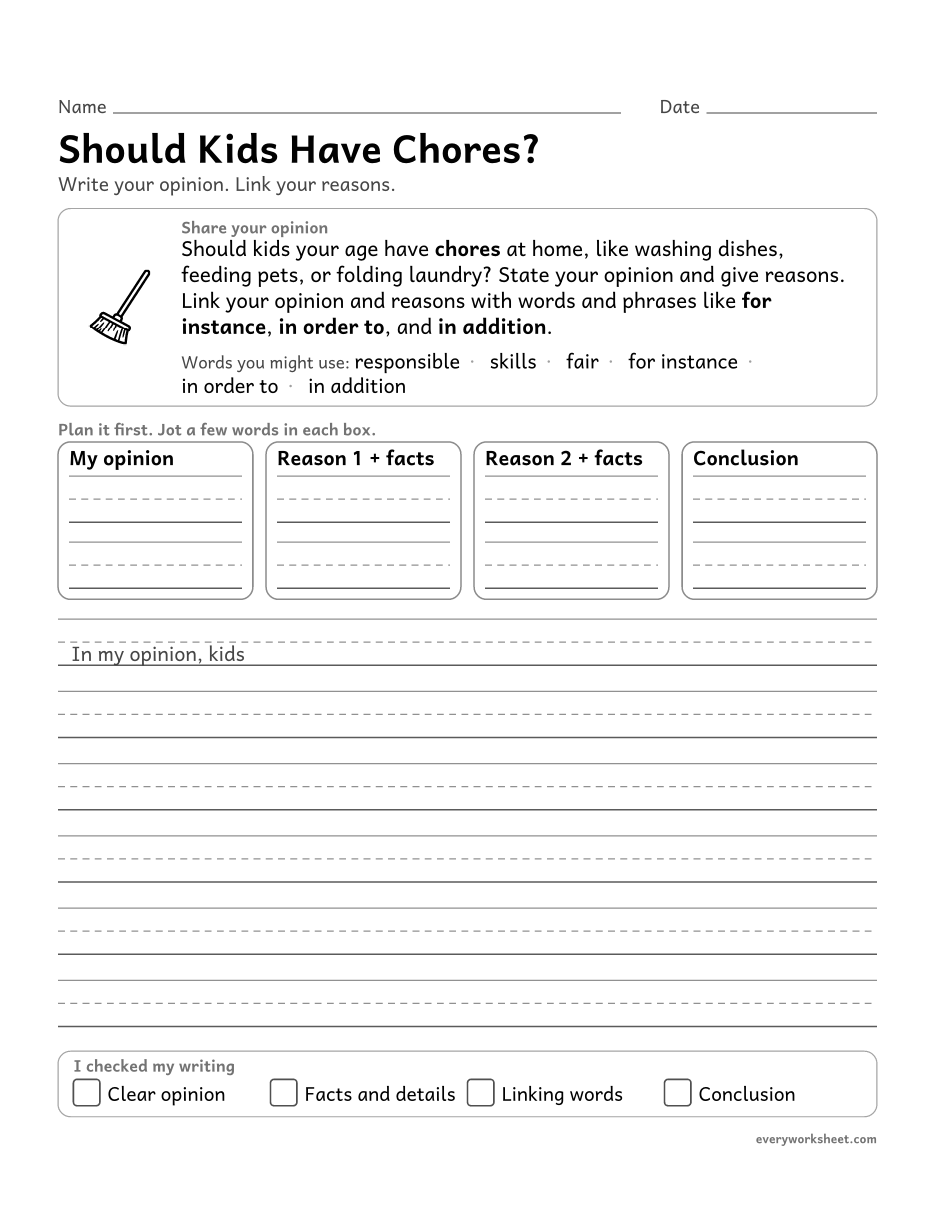 View larger
Linking an opinion and reasons with words and phrases
1 page53 KB
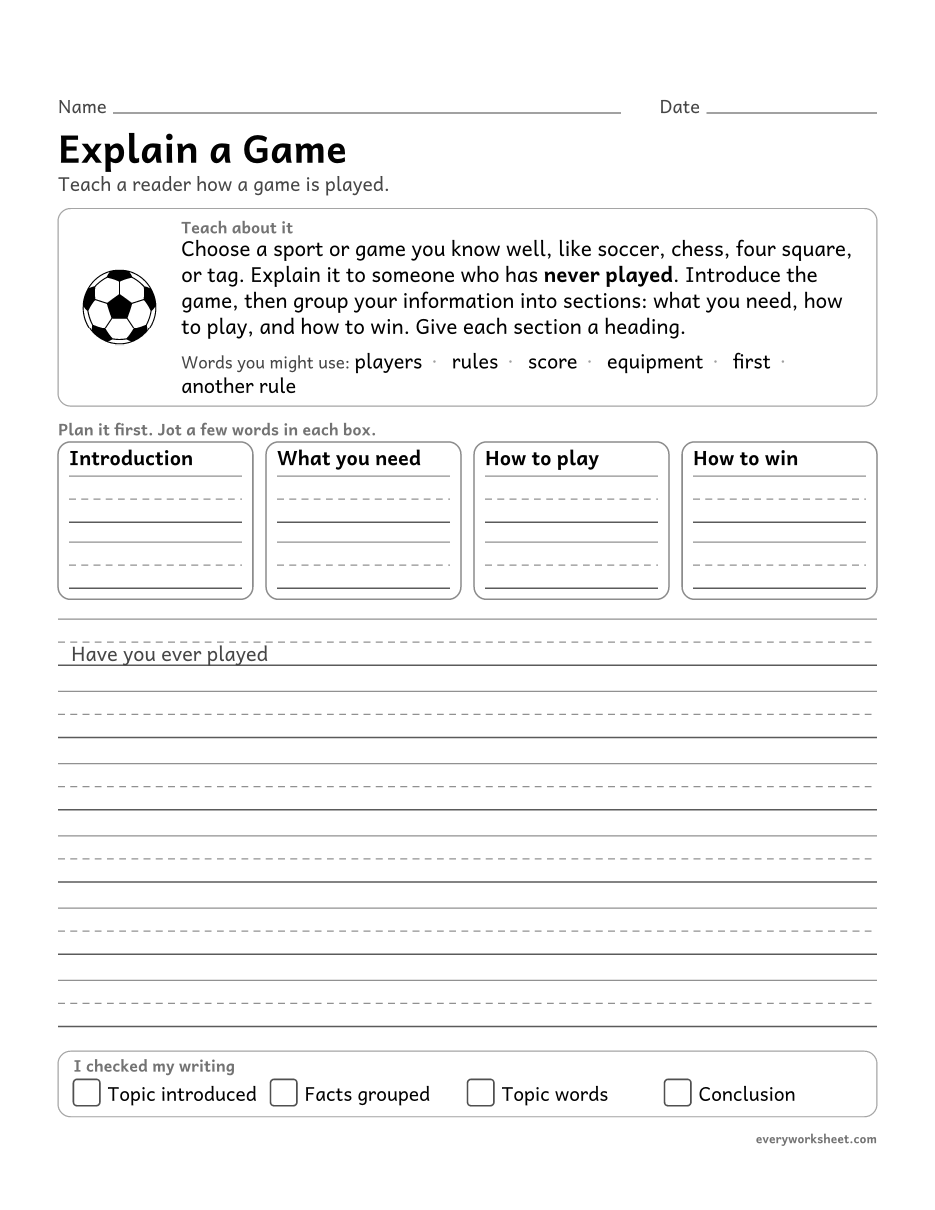 View larger
Introducing a topic and grouping information in sections with headings
1 page35 KB
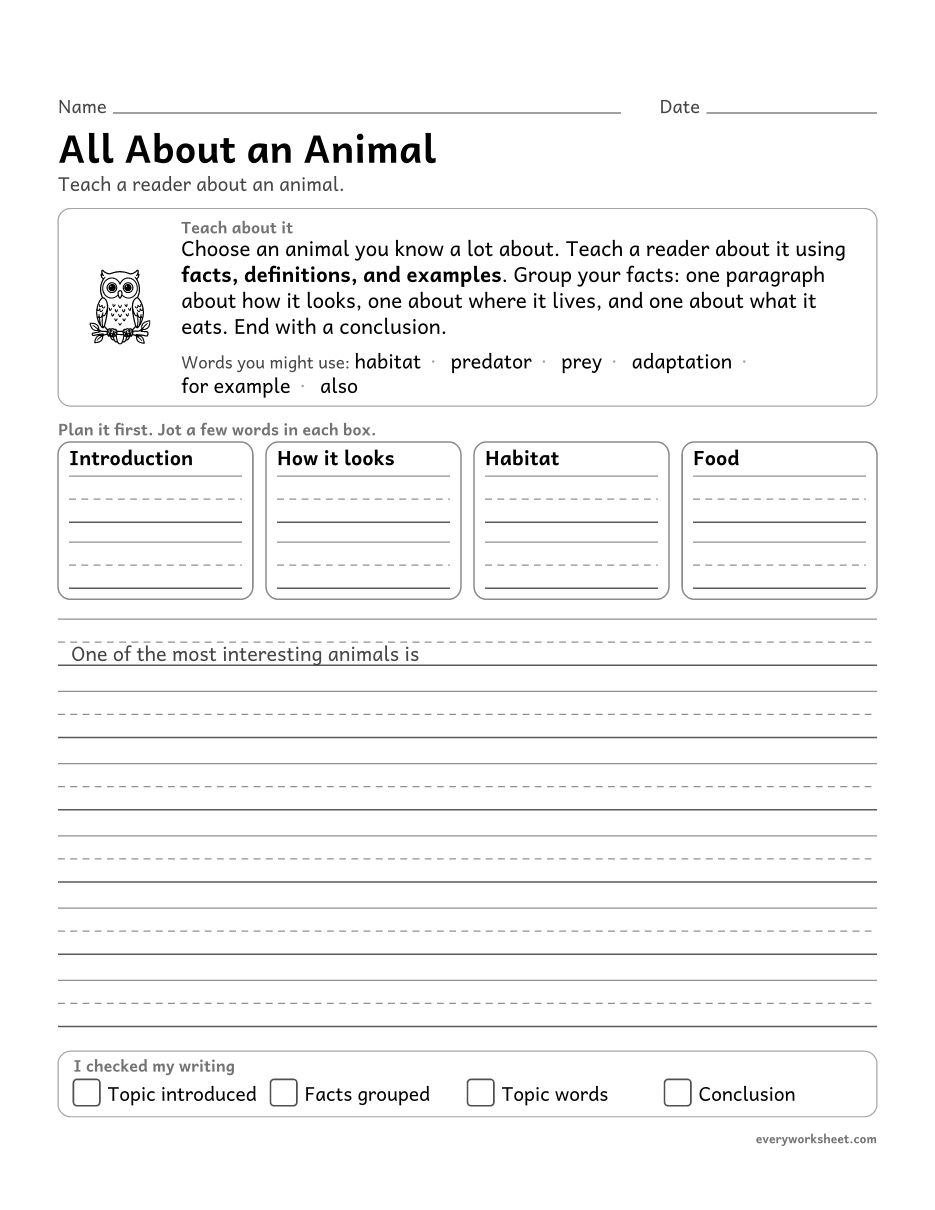 View larger
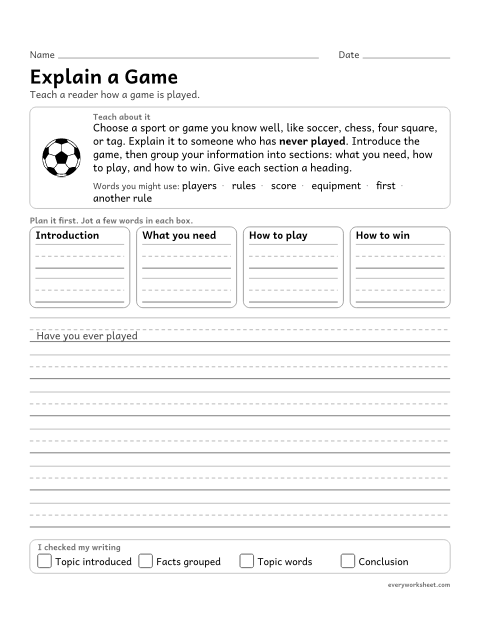
Developing a topic with facts, definitions, and details grouped in paragraphs
1 page47 KB
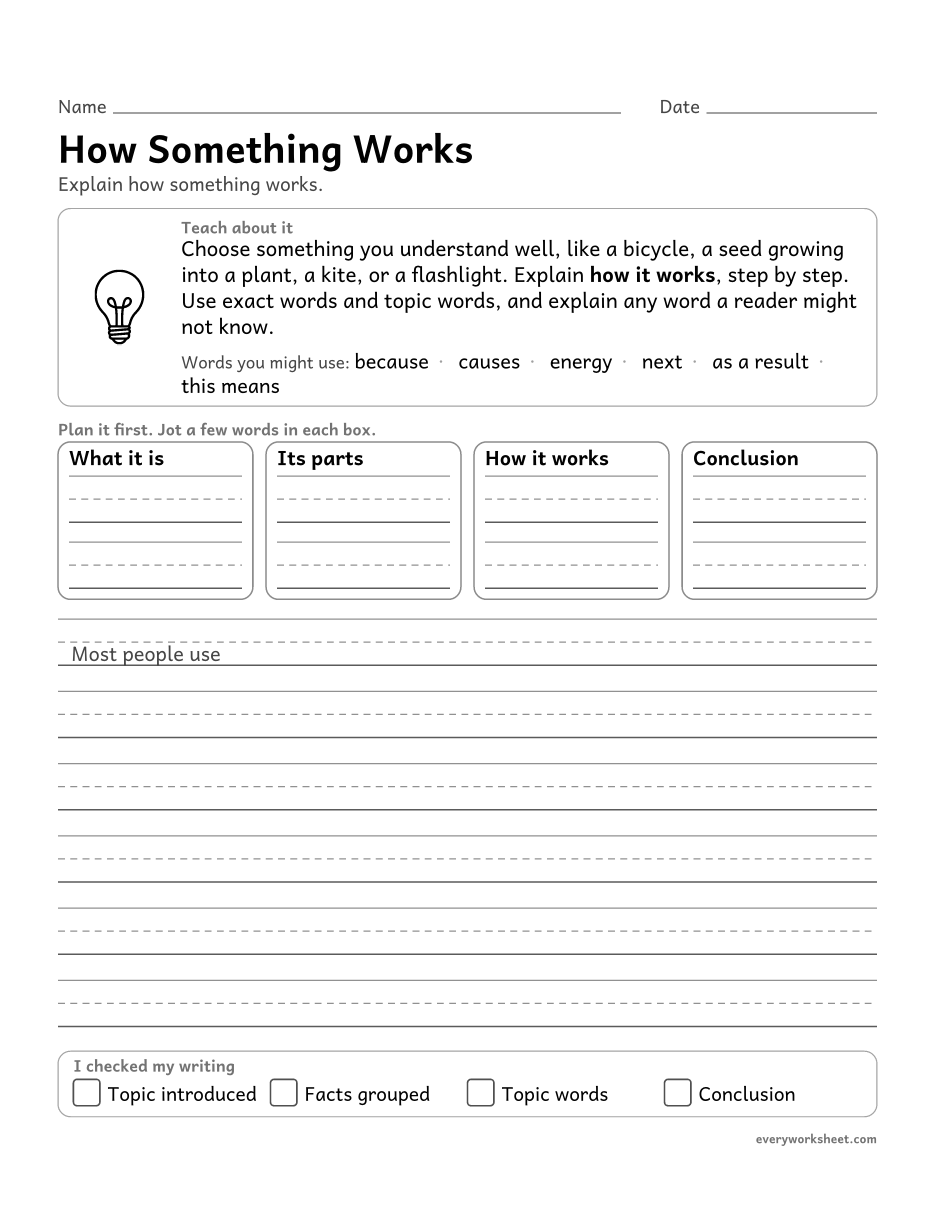 View larger
Using precise language and topic words to explain how something works
1 page44 KB
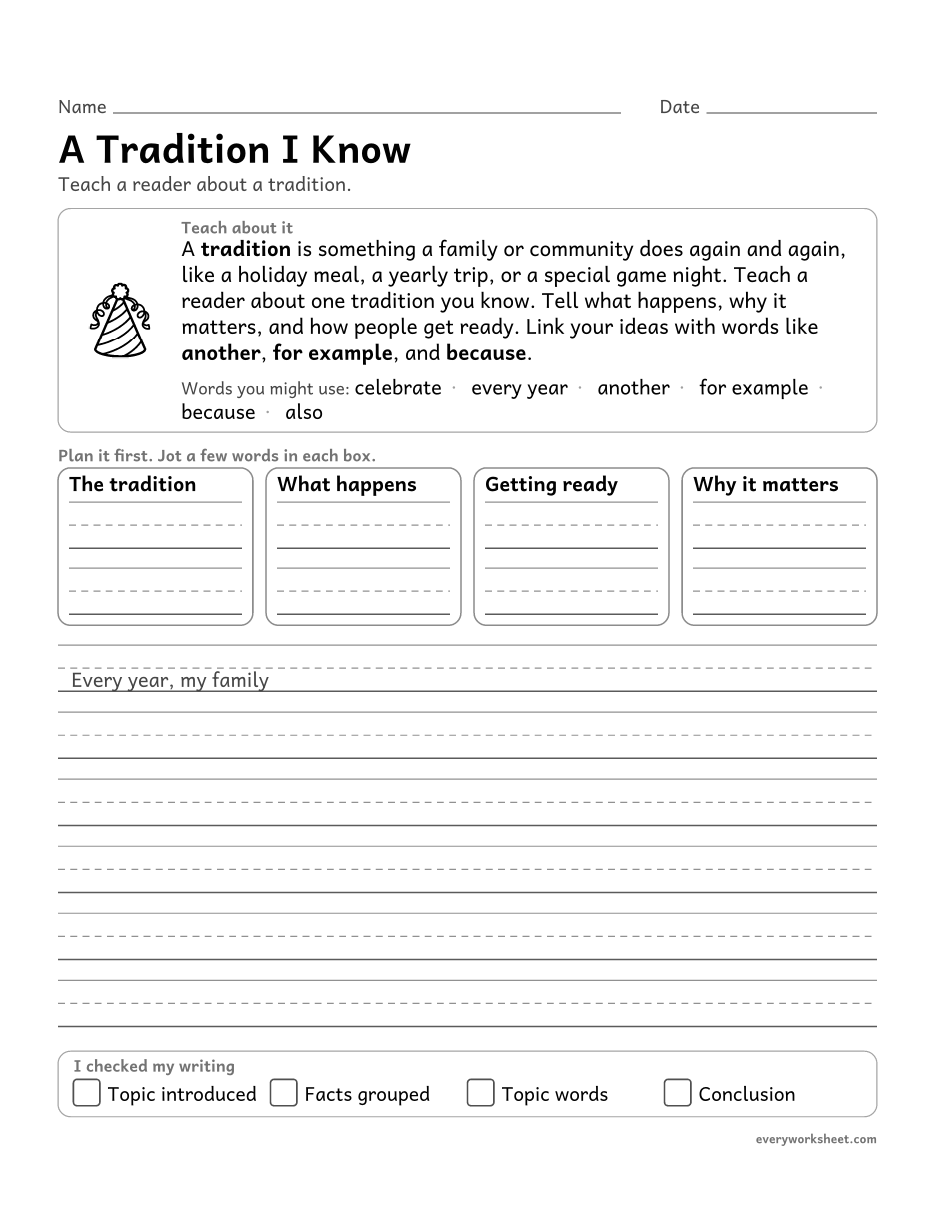 View larger
Linking ideas within categories of information with words and phrases
1 page63 KB
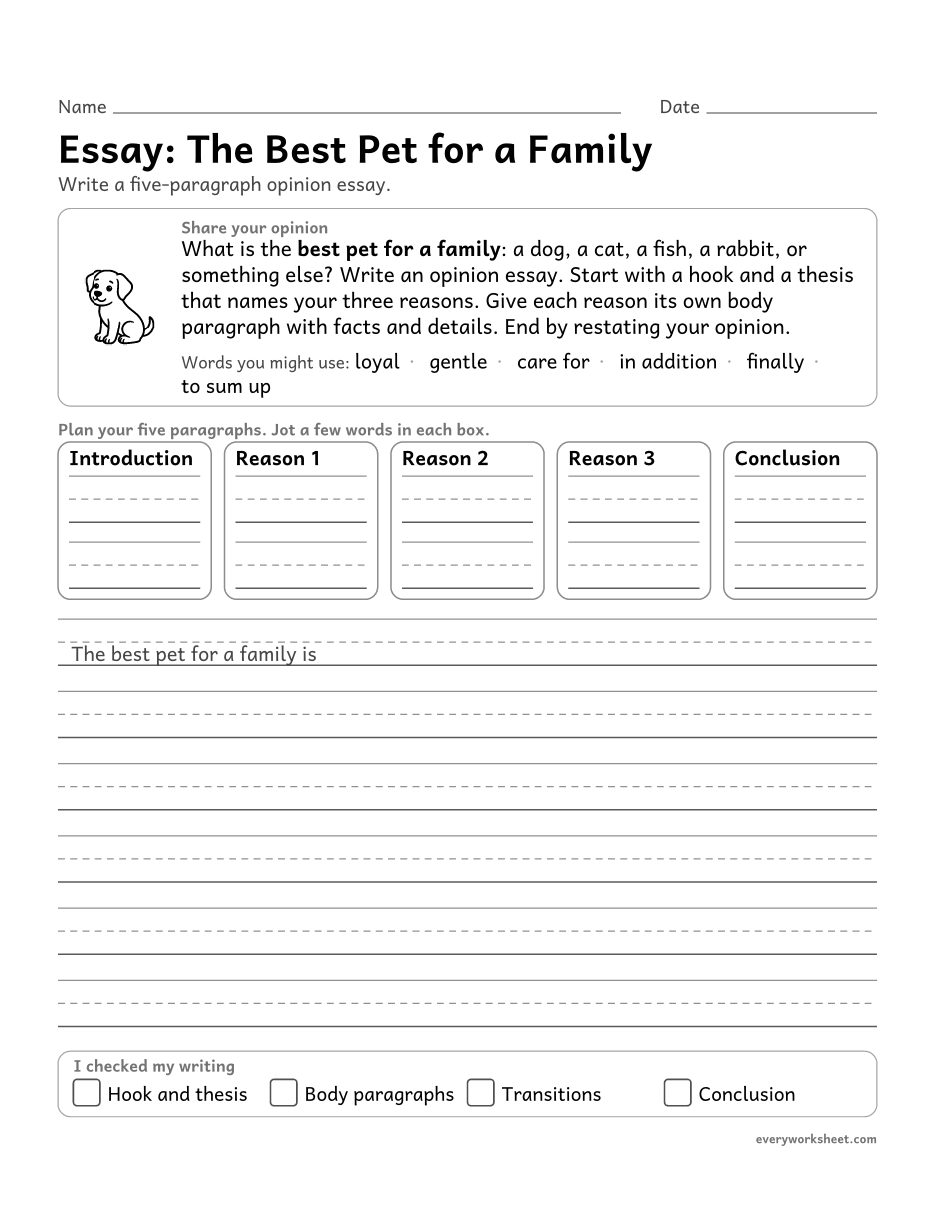 View larger
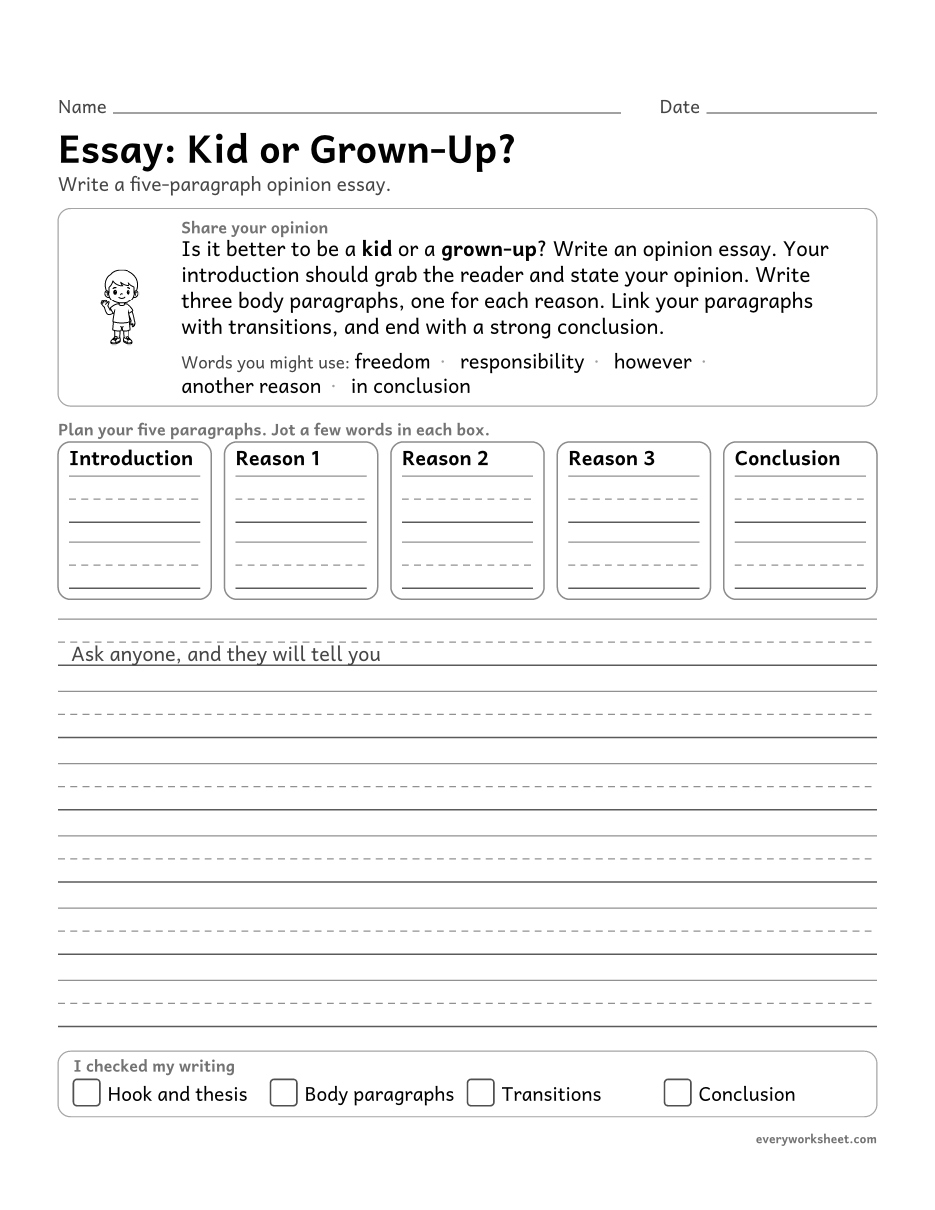
Planning and writing a multi-paragraph opinion essay with an introduction, three reasons, and a conclusion
1 page47 KB
 View larger
Writing a multi-paragraph opinion essay that ends with a concluding section
1 page44 KB
 View larger
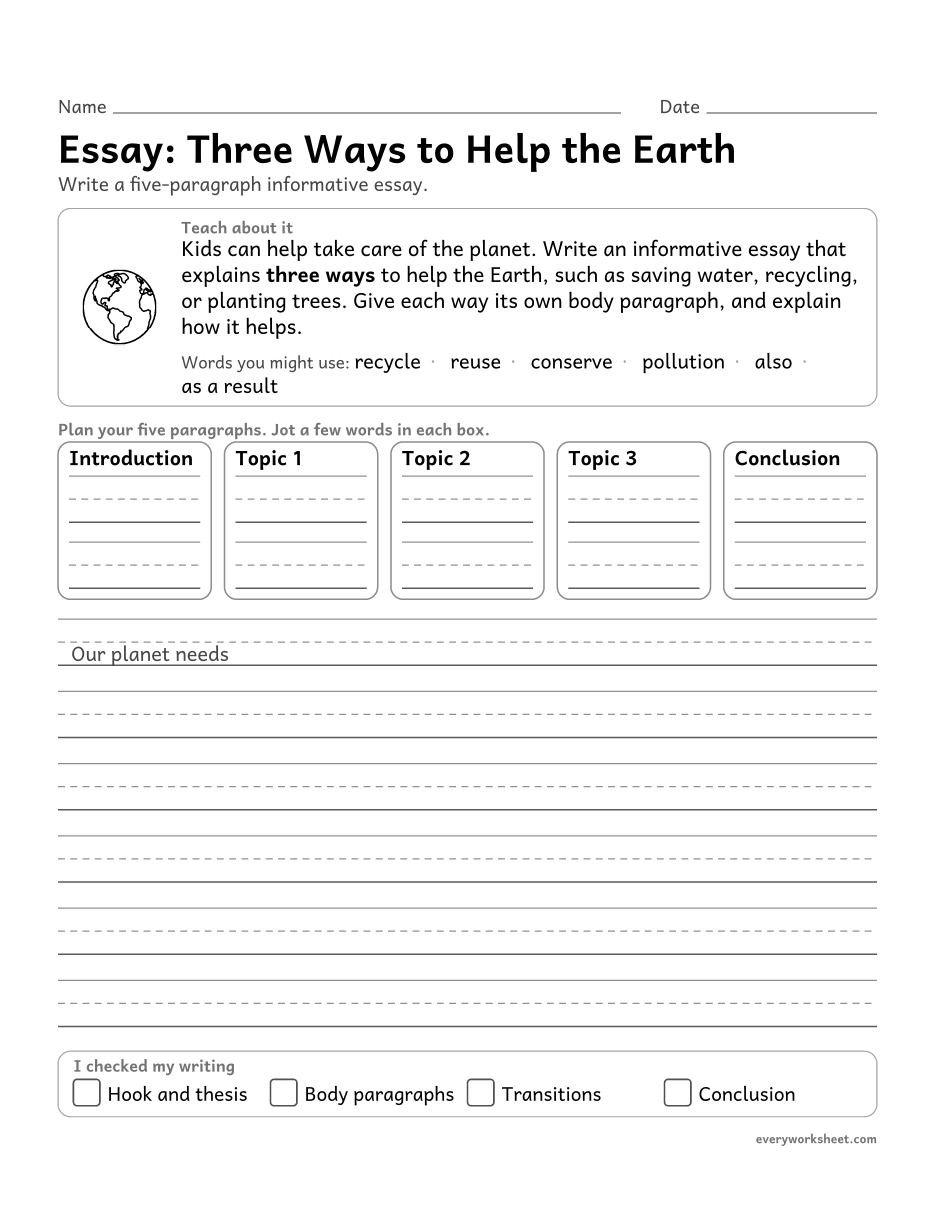
Planning and writing a multi-paragraph informative essay with grouped information
1 page44 KB
 View larger
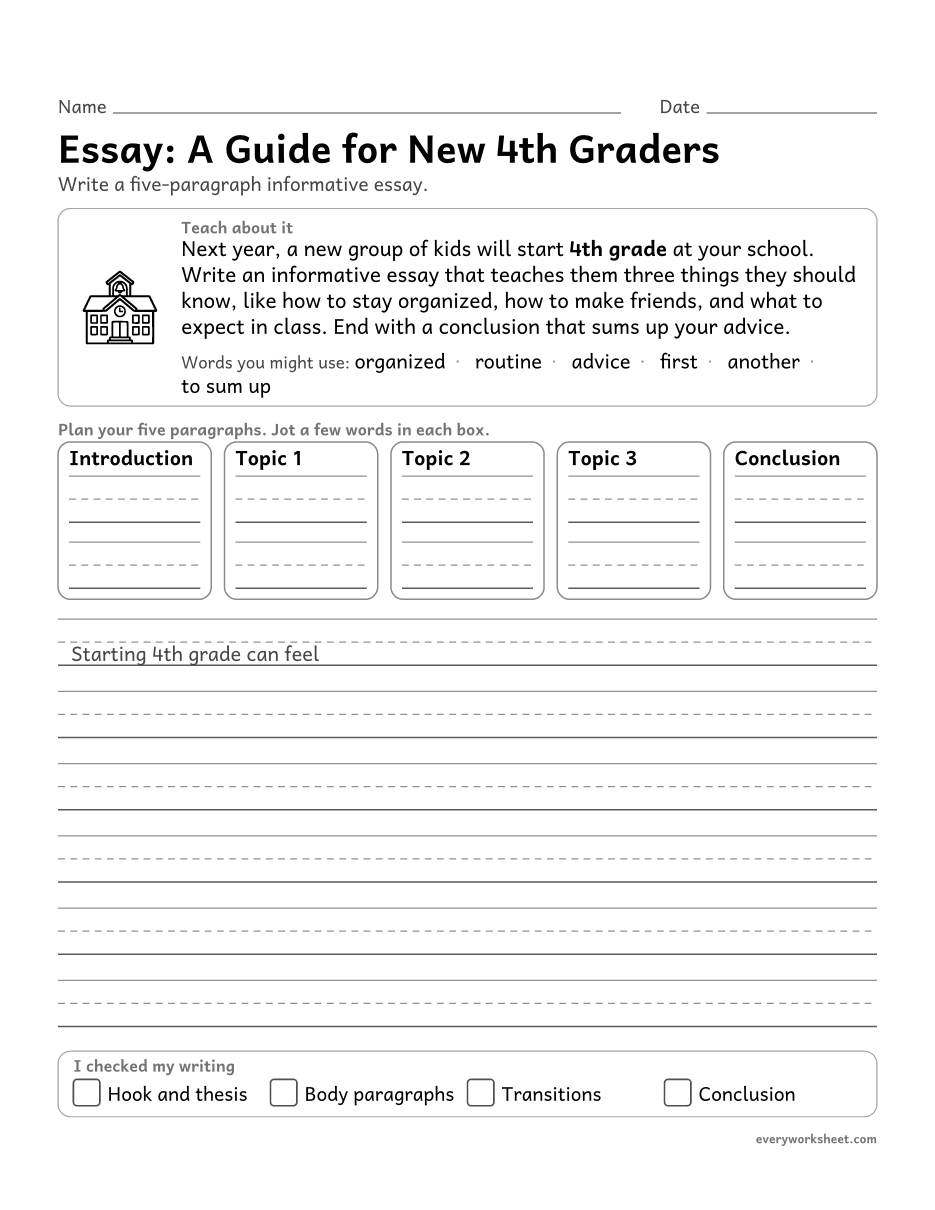
Writing a multi-paragraph informative essay with a concluding section
1 page50 KB
Print at 100% (actual size) for the cleanest tracing lines.
A writing prompt is a short idea that gets a writer started. In 4th grade, children write three main kinds of pieces: **narratives** (true or made-up stories), **opinion pieces** (I think this, and here is why), and **informative pieces** (teaching a reader about a topic). A prompt like "You find an old map inside a library book" invites a story, "Should every kid learn an instrument?" invites an opinion, and "Explain a game to someone who has never played" invites an informative piece.
These writing prompts for 4th graders are built for that next step up. Opinion prompts ask for reasons supported by facts and details. Informative prompts ask children to group information into sections, use exact topic words, and link ideas with words like **another**, **for example**, and **because**. Narrative prompts push for dialogue, sensory details, and a real ending.
Looking for essay prompts for 4th graders? The essay prompts group asks for multi-paragraph opinion and informative essays. Each one has a planning row with five boxes, one for the introduction, three for the reasons or topics, and one for the conclusion, so children see the shape of the essay before they write.
Every page has a short prompt, a few helpful words, plan boxes, a sentence starter, and full writing rows sized for 4th grade handwriting, with a quick "I checked my writing" strip at the bottom.
CCSS.ELA-LITERACY.W.4.1Write opinion pieces on topics or texts, supporting a point of view with reasons and information.CCSS.ELA-LITERACY.W.4.1.AIntroduce a topic or text clearly, state an opinion, and create an organizational structure in which related ideas are grouped to support the writer's purpose.CCSS.ELA-LITERACY.W.4.1.BProvide reasons that are supported by facts and details.CCSS.ELA-LITERACY.W.4.1.CLink opinion and reasons using words and phrases (e.g., for instance, in order to, in addition).CCSS.ELA-LITERACY.W.4.1.DProvide a concluding statement or section related to the opinion presented.CCSS.ELA-LITERACY.W.4.2.AIntroduce a topic clearly and group related information in paragraphs and sections; include formatting (e.g., headings), illustrations, and multimedia when useful to aiding comprehension.CCSS.ELA-LITERACY.W.4.2.BDevelop the topic with facts, definitions, concrete details, quotations, or other information and examples related to the topic.CCSS.ELA-LITERACY.W.4.2.CLink ideas within categories of information using words and phrases (e.g., another, for example, also, because).CCSS.ELA-LITERACY.W.4.2.DUse precise language and domain-specific vocabulary to inform about or explain the topic.CCSS.ELA-LITERACY.W.4.2.EProvide a concluding statement or section related to the information or explanation presented.CCSS.ELA-LITERACY.W.4.3.AOrient the reader by establishing a situation and introducing a narrator and/or characters; organize an event sequence that unfolds naturally.CCSS.ELA-LITERACY.W.4.3.BUse dialogue and description to develop experiences and events or show the responses of characters to situations.CCSS.ELA-LITERACY.W.4.3.DUse concrete words and phrases and sensory details to convey experiences and events precisely.By the end of 4th grade, most children can write a story with dialogue and description, an opinion piece with reasons backed by facts and details, and an informative piece grouped into paragraphs with a conclusion. Many are starting to write multi-paragraph essays.
A single-page response of two to four paragraphs is typical for one sitting. A five-paragraph essay usually takes a few days and more than one page.
A writing prompt can lead to any kind of piece, including a story. An essay prompt asks for an organized, multi-paragraph piece with an introduction, body paragraphs, and a conclusion.
Yes. Every page is free to print and use at home or in class.