 View larger
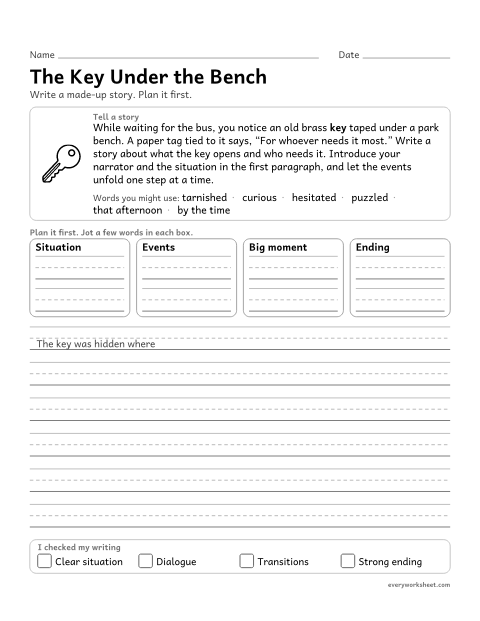
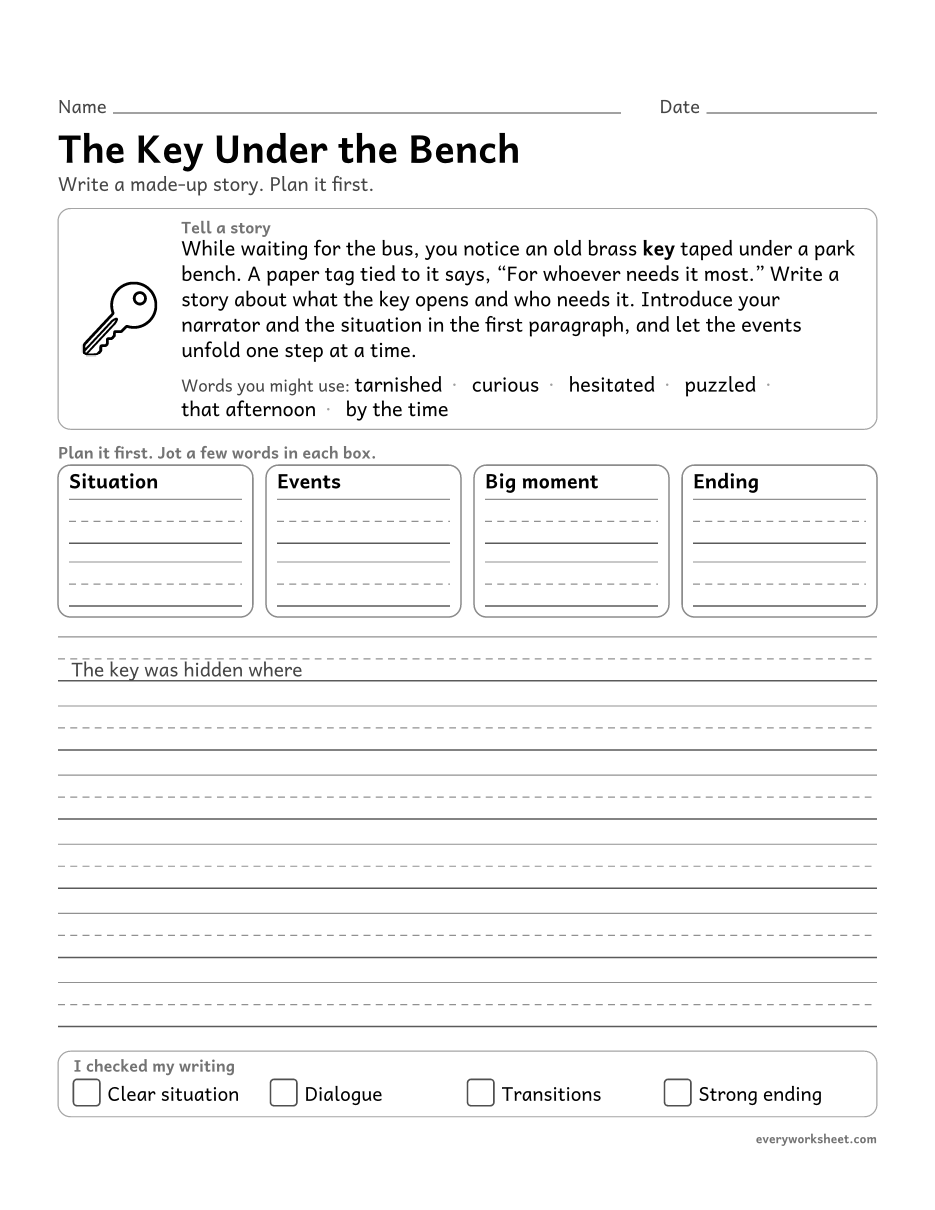
The key under the bench
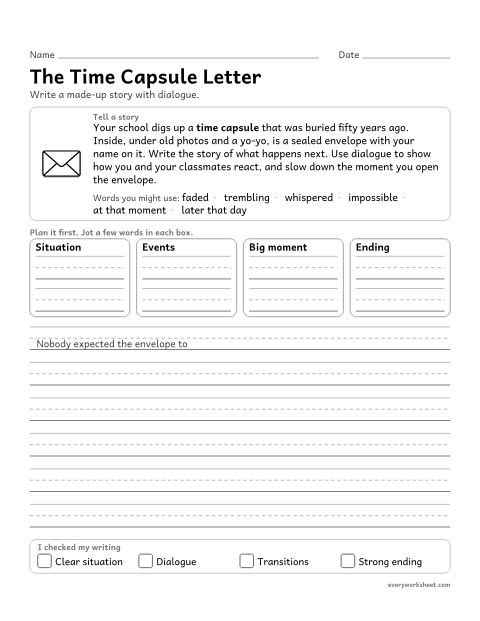
Orienting the reader with a narrator and a situation and organizing an event sequence that unfolds naturally
1 page44 KB
Narrative, opinion, informative, and five-paragraph essay prompts with plan boxes and a full page of lines.
View largerOrienting the reader with a narrator and a situation and organizing an event sequence that unfolds naturally
1 page44 KB
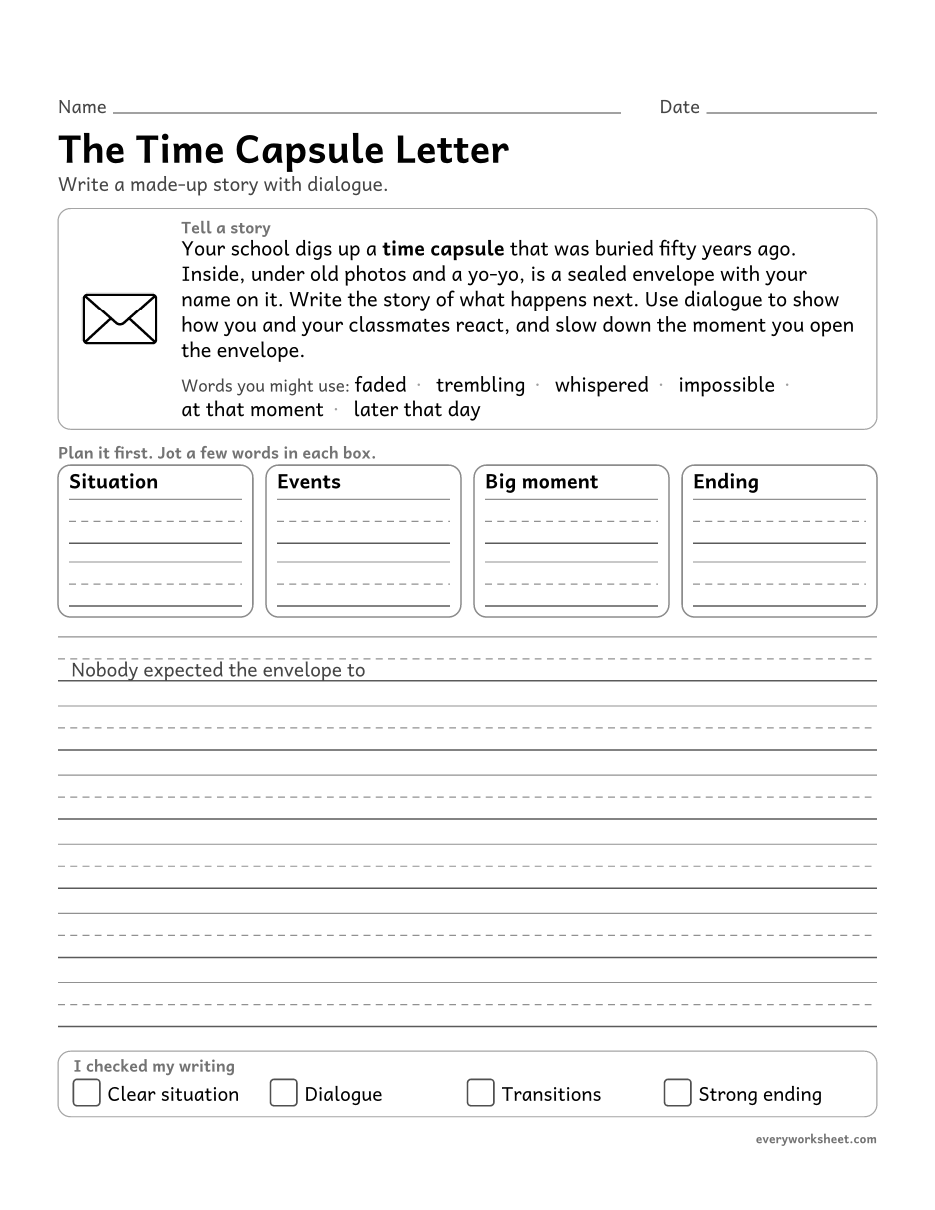 View larger
Using dialogue and pacing to develop events and show how characters respond
1 page37 KB
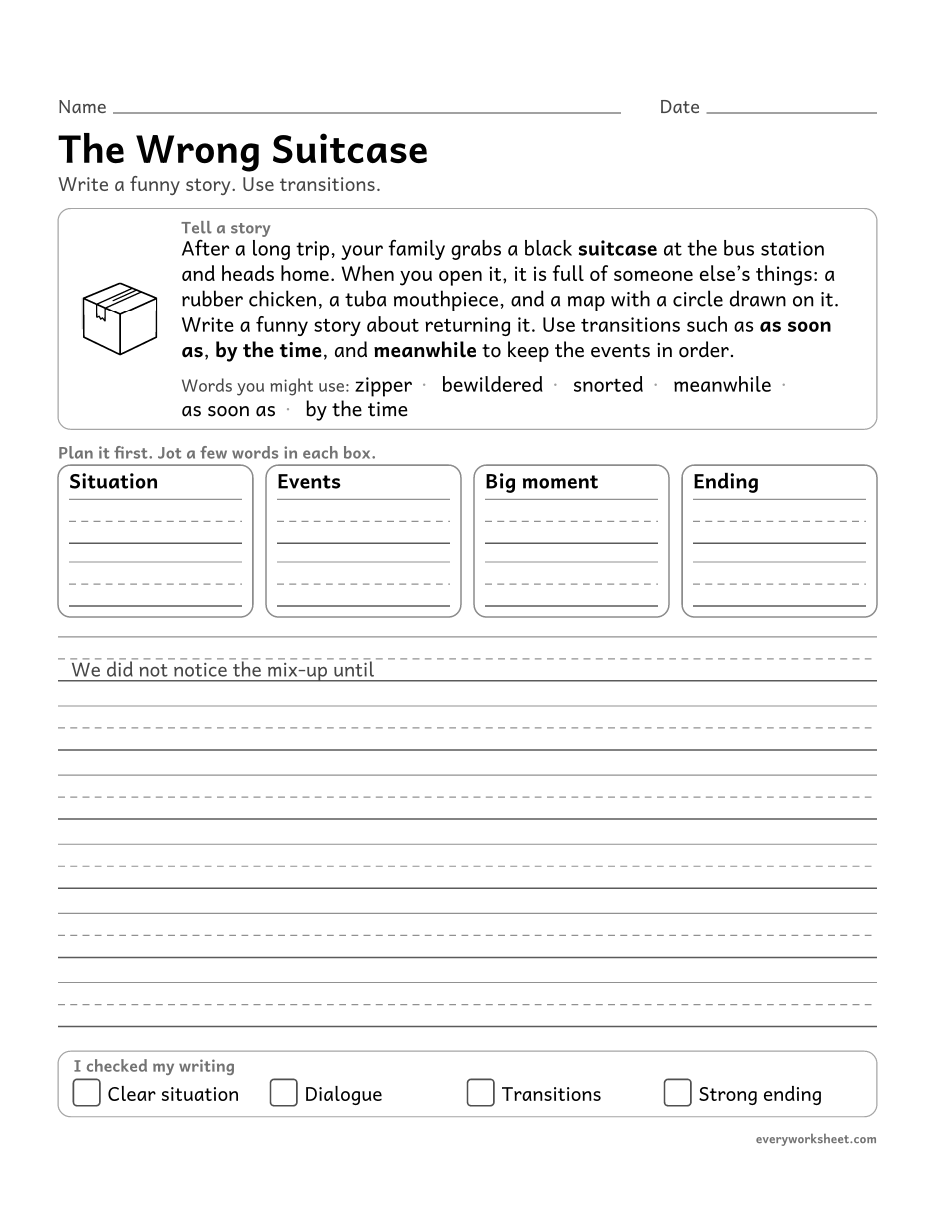 View larger
Using a variety of transitional words, phrases, and clauses to manage the sequence of events
1 page59 KB
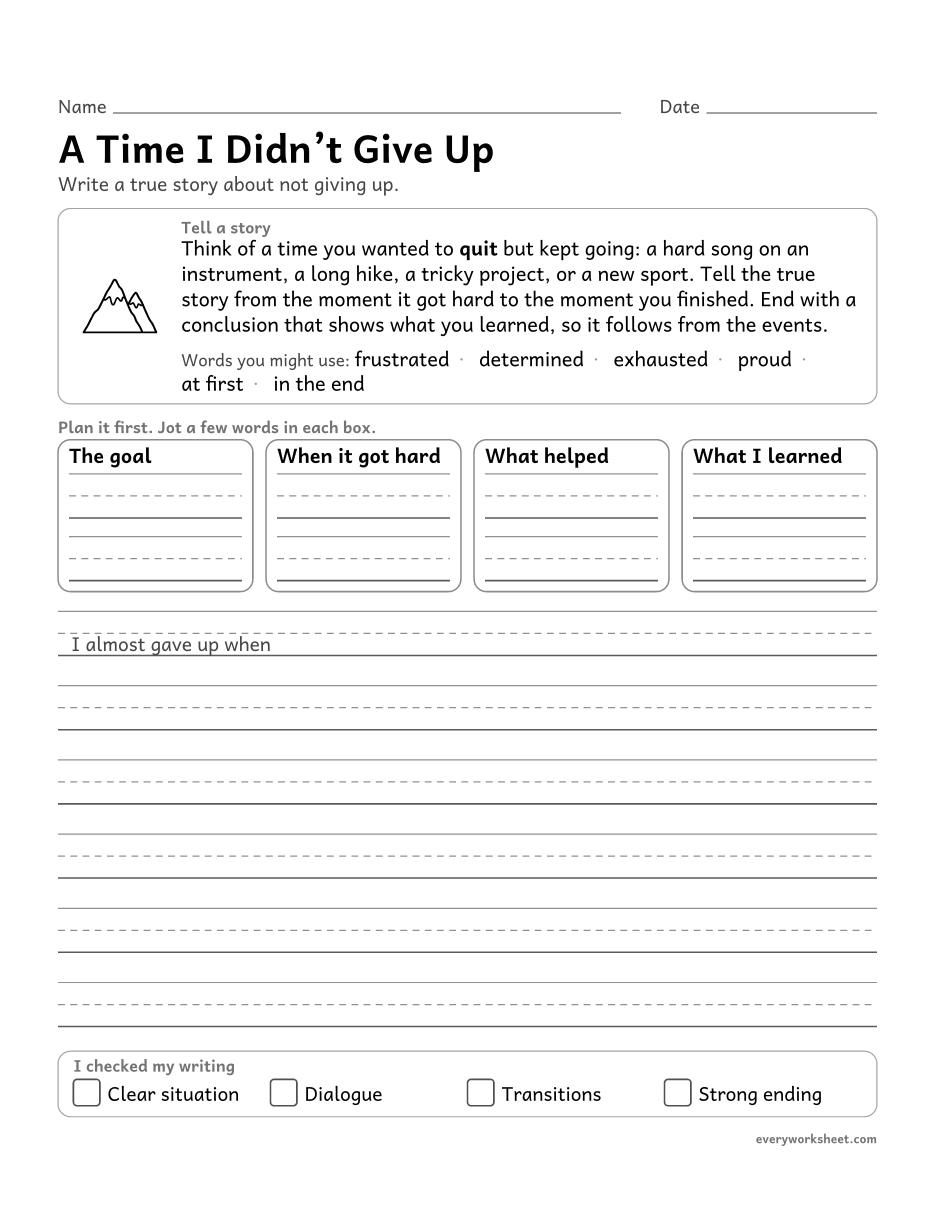 View larger
Writing a true narrative with a conclusion that follows from the events
1 page49 KB
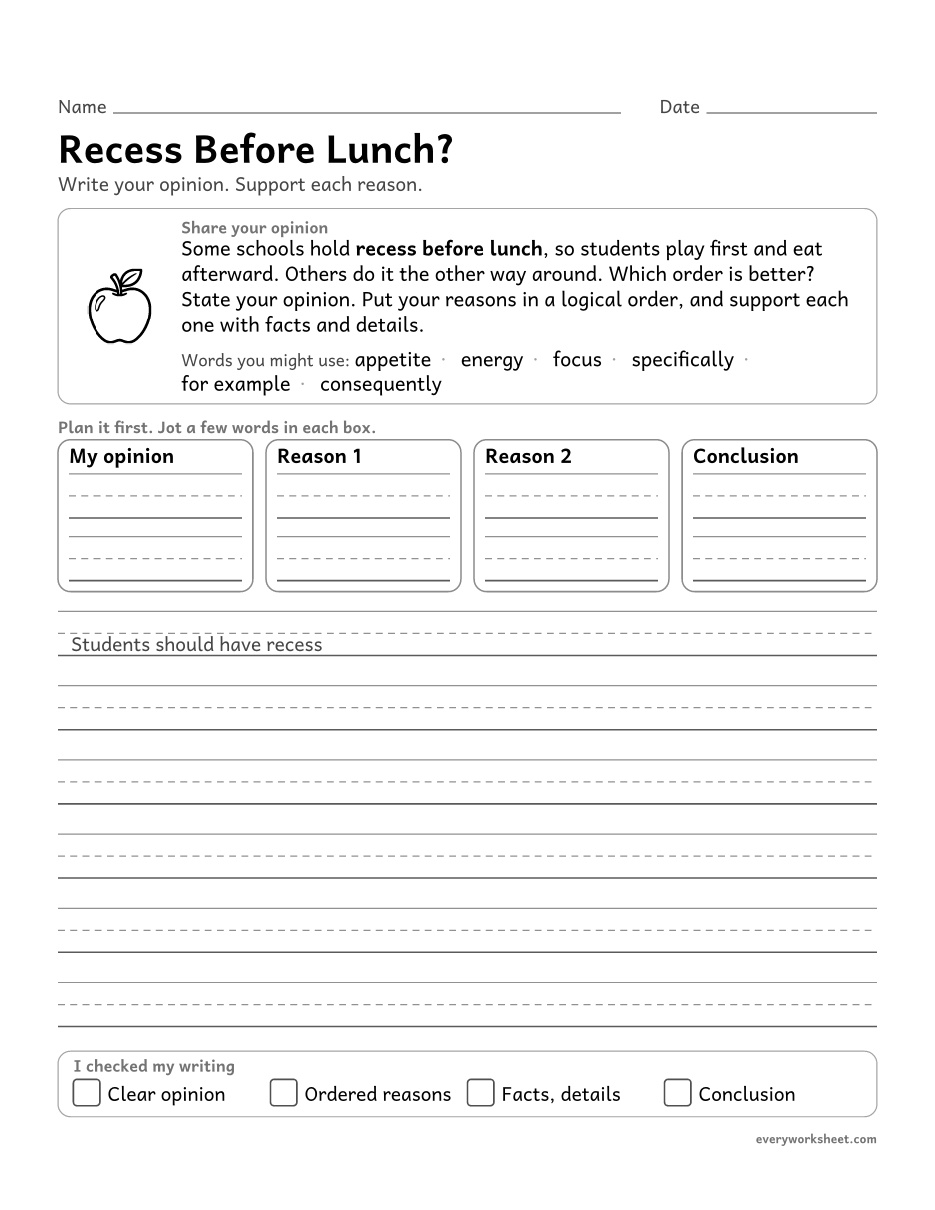 View larger
Providing logically ordered reasons supported by facts and details
1 page49 KB
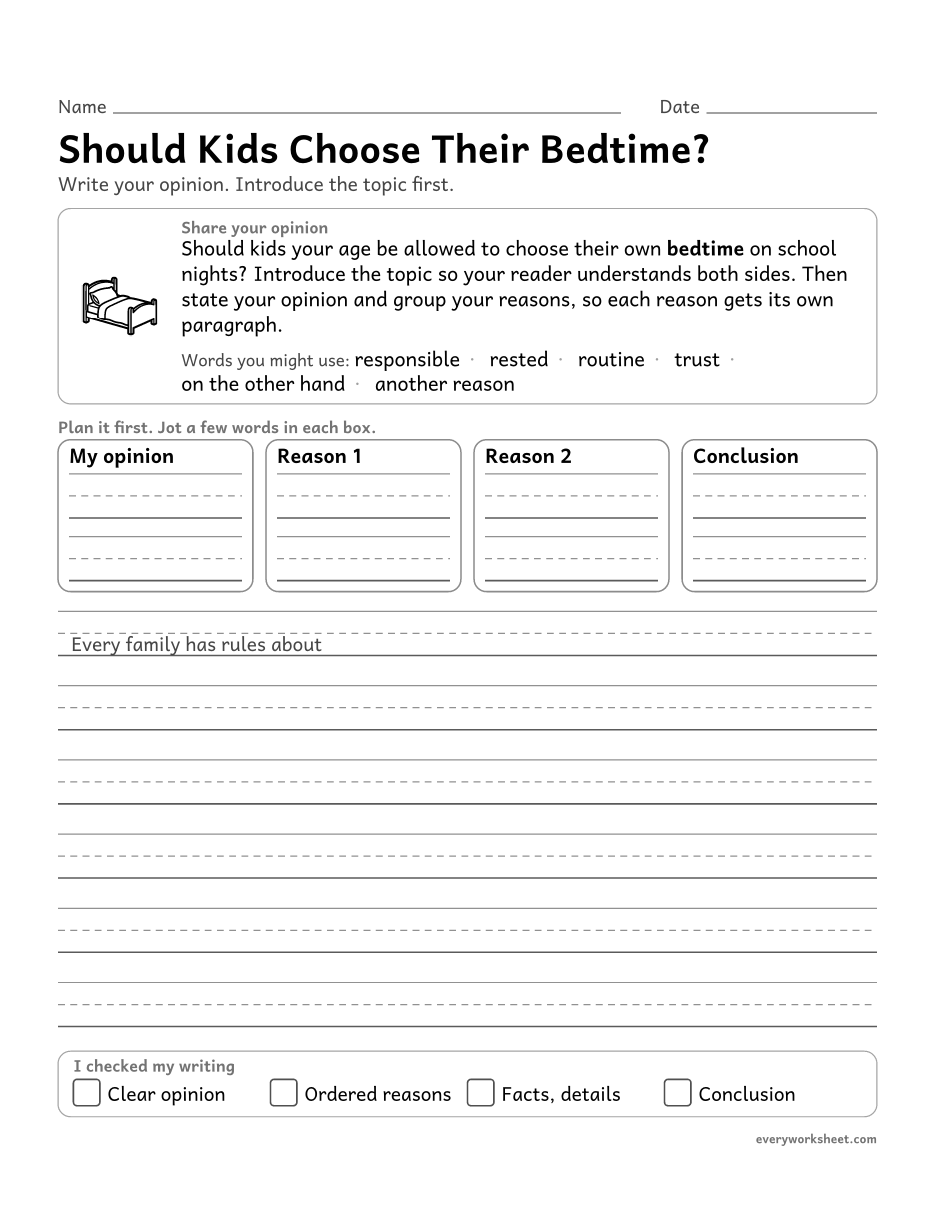 View larger
Introducing a topic, stating an opinion, and grouping reasons in a logical structure
1 page56 KB
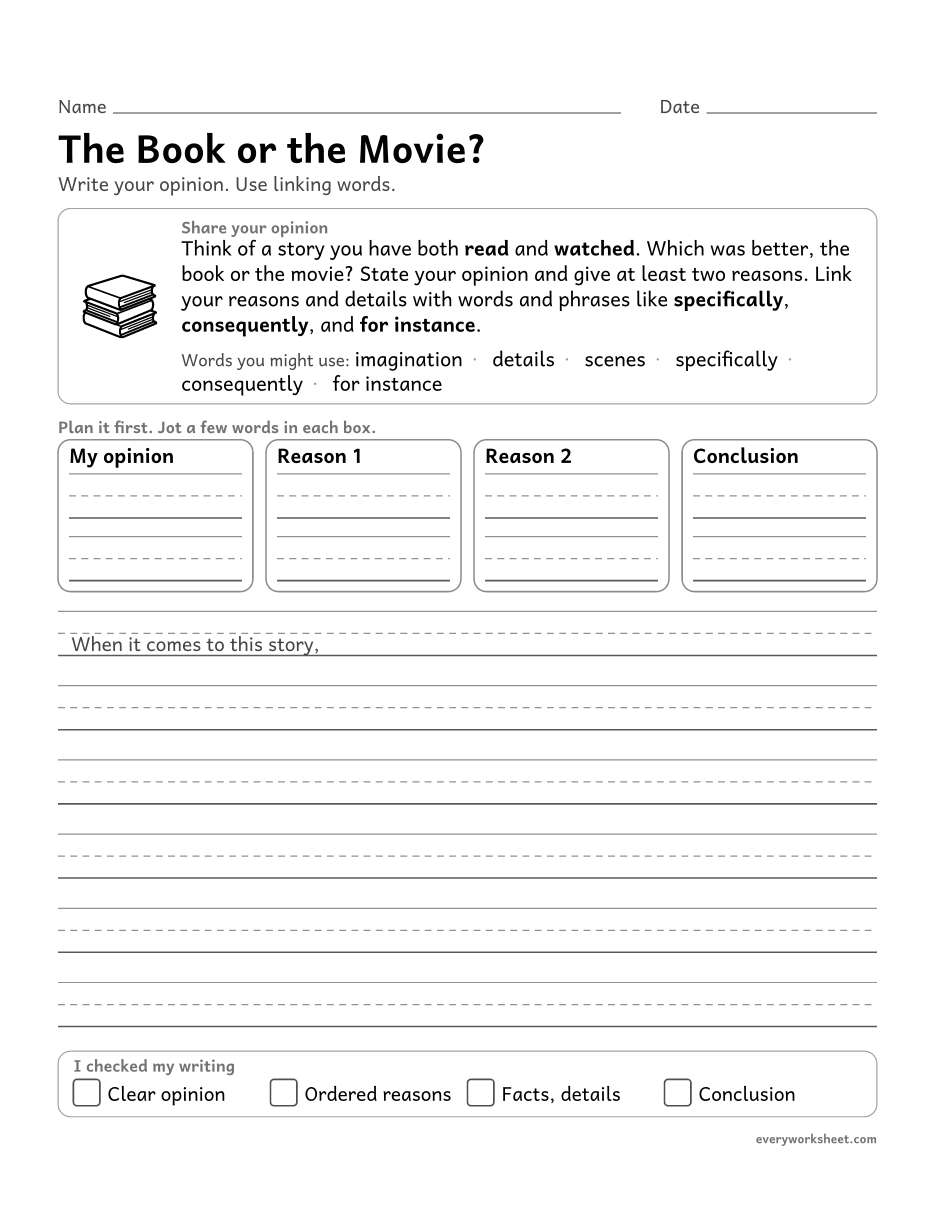 View larger
Linking an opinion and reasons with words, phrases, and clauses such as consequently and specifically
1 page80 KB
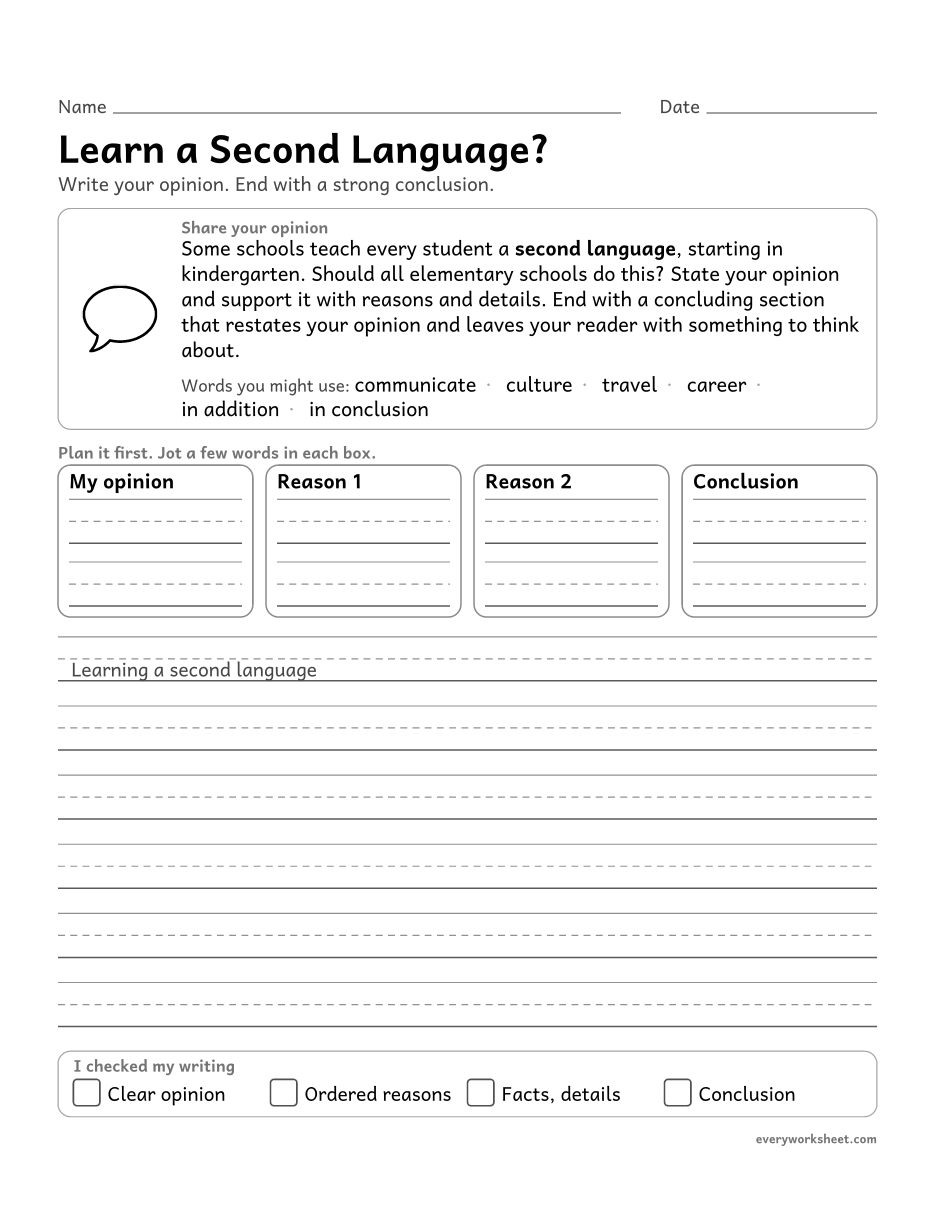 View larger
Providing a concluding section related to the opinion presented
1 page43 KB
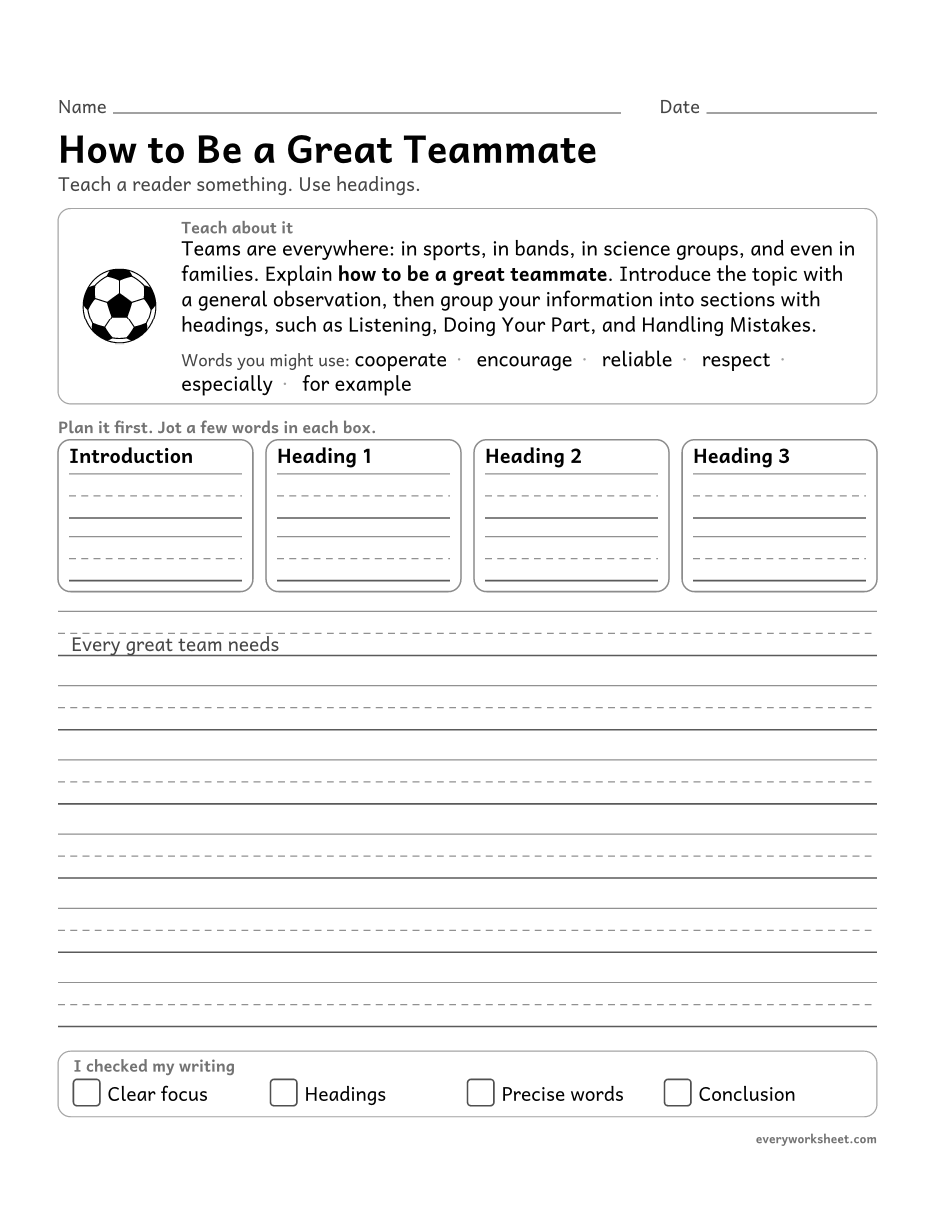 View larger
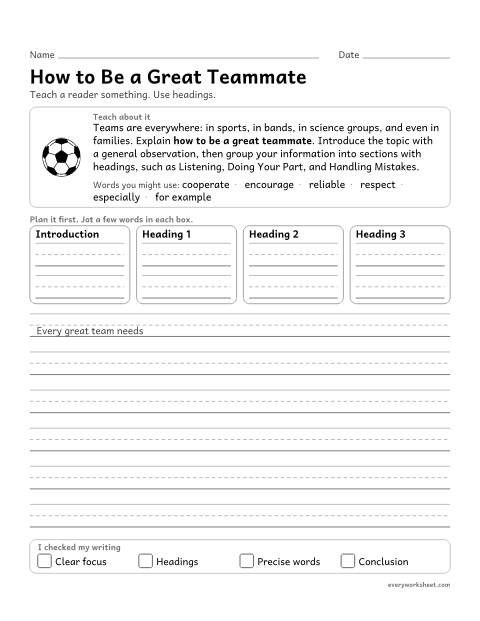
Introducing a topic with a general observation and focus and grouping information under headings
1 page35 KB
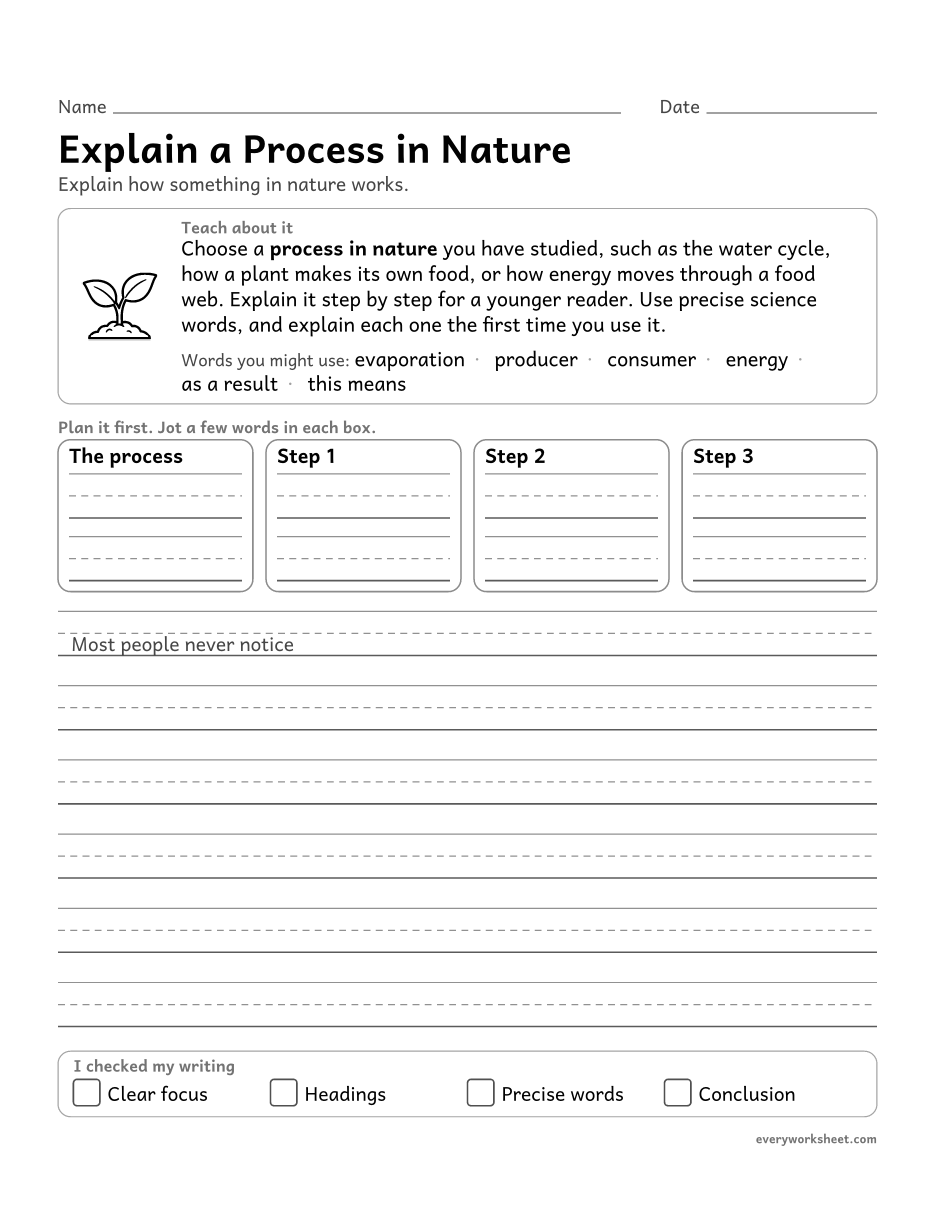 View larger
Using precise language and domain-specific vocabulary to explain a process
1 page45 KB
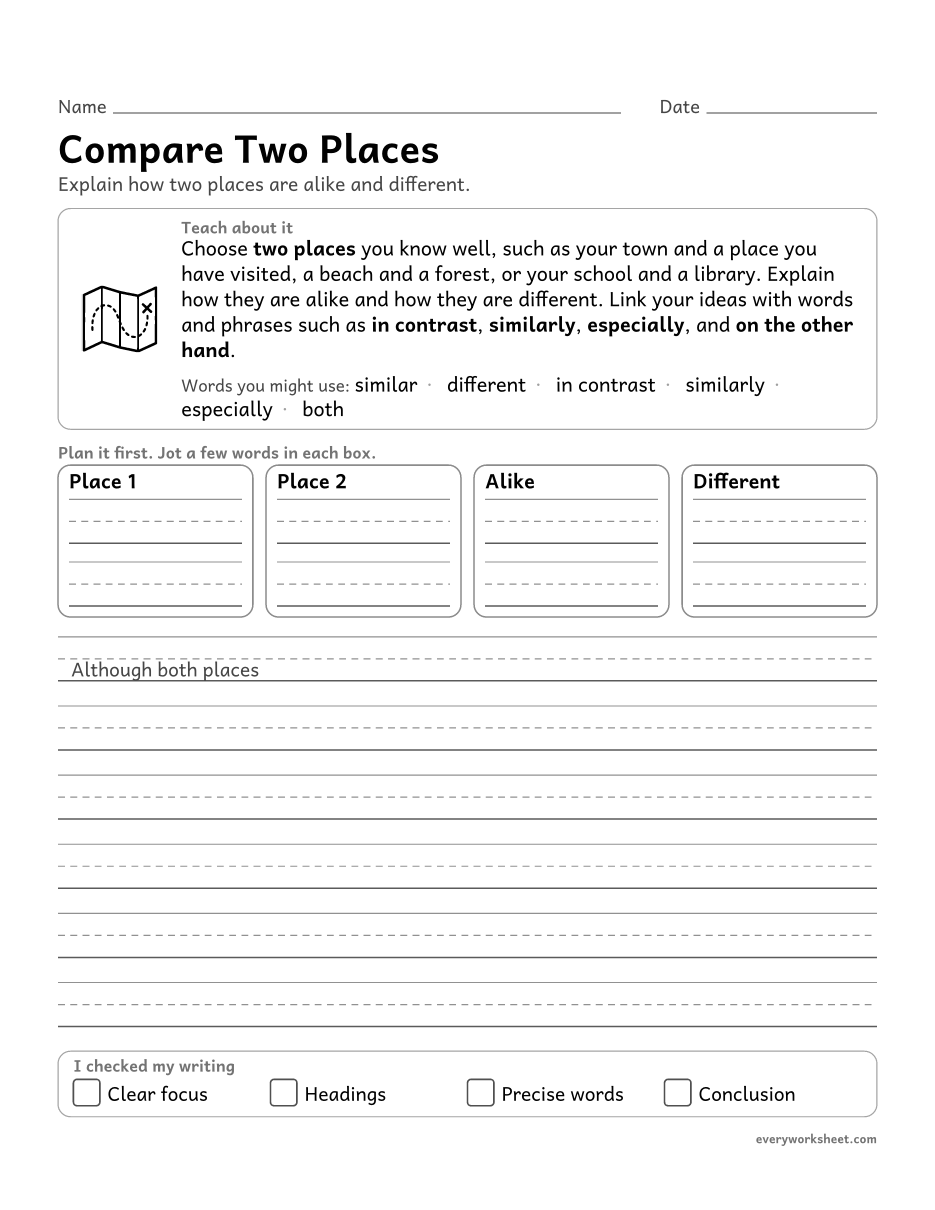 View larger
Linking ideas within and across categories of information with words such as in contrast and especially
1 page47 KB
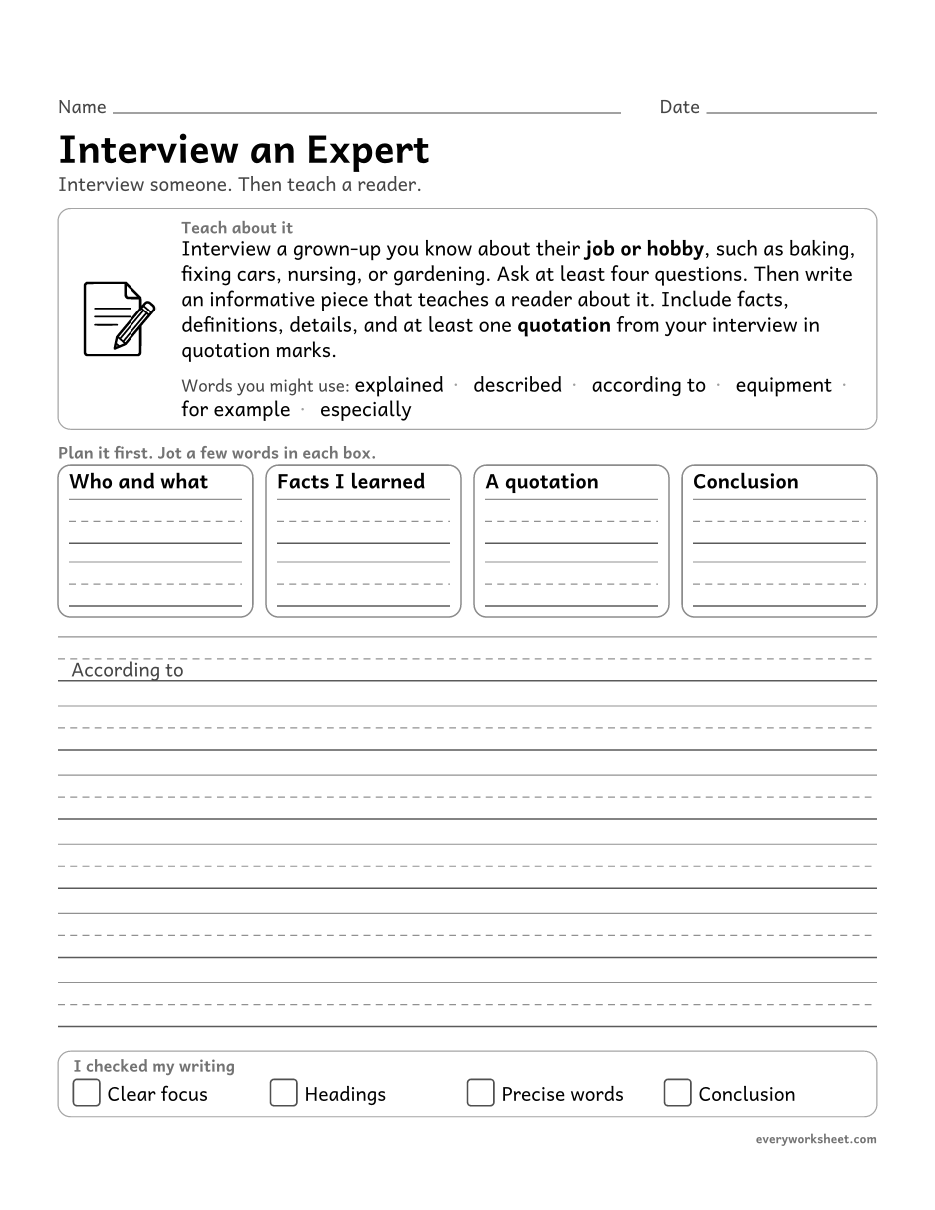 View larger
Developing a topic with facts, definitions, details, and quotations from an interview
1 page44 KB
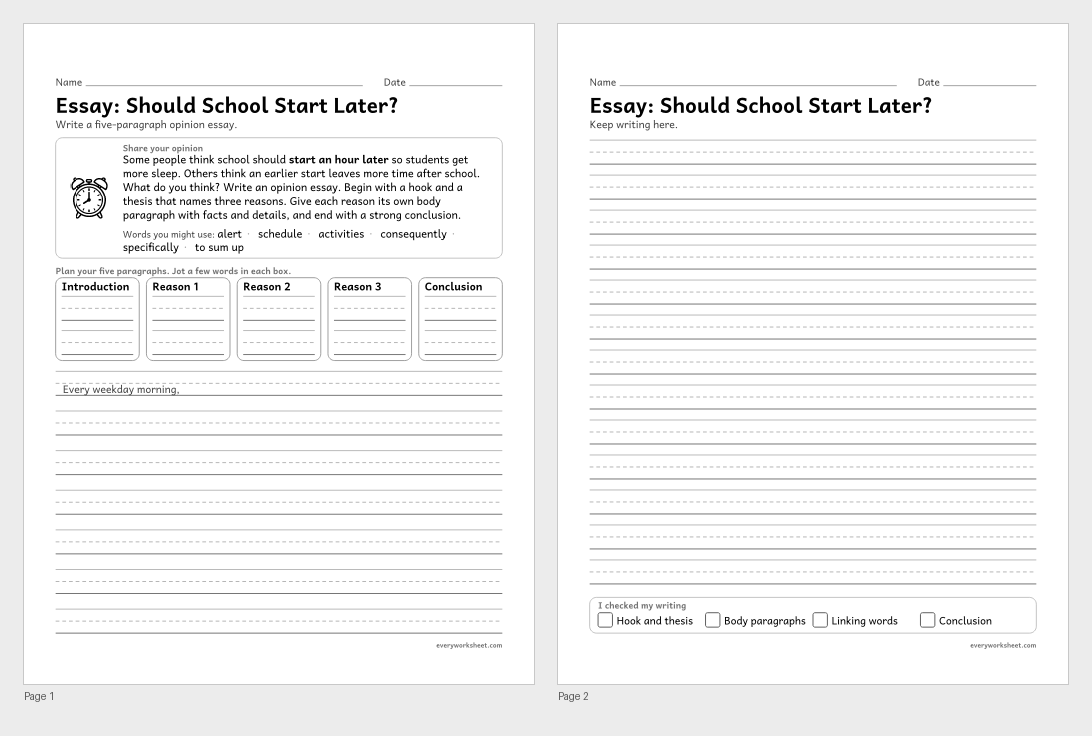 View all 2 pages
Planning and writing a multi-paragraph opinion essay with a clear structure
2 pages67 KB
 View all 2 pages
Writing an opinion essay with logically ordered reasons supported by facts and details
2 pages50 KB
 View all 2 pages
Planning and writing a multi-paragraph informative essay with grouped information and headings
2 pages48 KB
 View all 2 pages
Developing an informative essay with facts, definitions, and concrete details
2 pages48 KB
Print at 100% (actual size) for the cleanest tracing lines.
A writing prompt is a short idea that gets a writer started. In 5th grade, children write three main kinds of pieces: **narratives** (true or made-up stories), **opinion pieces** (a point of view backed by reasons and evidence), and **informative pieces** (teaching a reader about a topic). A prompt like "You find an old brass key taped under a park bench" invites a story, "Should recess come before lunch?" invites an opinion, and "Explain how to be a great teammate" invites an informative piece.
These writing prompts for 5th graders ask for the moves that matter at the top of elementary school. Story prompts ask children to orient the reader, slow down the big moment with dialogue and pacing, and use transitions like **as soon as** and **by the time**. Opinion prompts ask for reasons in a logical order, each backed by facts and details, and linked with words like **consequently** and **specifically**. Informative prompts ask for a clear focus, sections with headings, precise topic words, and even a quotation from an interview.
Looking for essay prompts for 5th graders? The essay prompts group asks for full five-paragraph opinion and informative essays, and each one is clearly labeled "Essay." A planning row with five boxes shows the shape of the essay before your child writes: an introduction, three body paragraphs, and a conclusion.
Every page has a short prompt, a few helpful words, plan boxes, a sentence starter, and a full page of writing lines sized for 5th grade handwriting, with a quick "I checked my writing" strip at the bottom.
CCSS.ELA-LITERACY.W.5.1.AIntroduce a topic or text clearly, state an opinion, and create an organizational structure in which ideas are logically grouped to support the writer's purpose.CCSS.ELA-LITERACY.W.5.1.BProvide logically ordered reasons that are supported by facts and details.CCSS.ELA-LITERACY.W.5.1.CLink opinion and reasons using words, phrases, and clauses (e.g., consequently, specifically).CCSS.ELA-LITERACY.W.5.1.DProvide a concluding statement or section related to the opinion presented.CCSS.ELA-LITERACY.W.5.2.AIntroduce a topic clearly, provide a general observation and focus, and group related information logically; include formatting (e.g., headings), illustrations, and multimedia when useful to aiding comprehension.CCSS.ELA-LITERACY.W.5.2.BDevelop the topic with facts, definitions, concrete details, quotations, or other information and examples related to the topic.CCSS.ELA-LITERACY.W.5.2.CLink ideas within and across categories of information using words, phrases, and clauses (e.g., in contrast, especially).CCSS.ELA-LITERACY.W.5.2.DUse precise language and domain-specific vocabulary to inform about or explain the topic.CCSS.ELA-LITERACY.W.5.3.AOrient the reader by establishing a situation and introducing a narrator and/or characters; organize an event sequence that unfolds naturally.CCSS.ELA-LITERACY.W.5.3.BUse narrative techniques, such as dialogue, description, and pacing, to develop experiences and events or show the responses of characters to situations.CCSS.ELA-LITERACY.W.5.3.CUse a variety of transitional words, phrases, and clauses to manage the sequence of events.CCSS.ELA-LITERACY.W.5.3.EProvide a conclusion that follows from the narrated experiences or events.By the end of 5th grade, most children can write a well-paced story with dialogue and a fitting ending, an opinion piece with ordered reasons backed by facts and details, and an informative piece with headings, precise words, and a conclusion. Many write multi-paragraph essays on their own.
A single sitting often produces one to two pages, or three to five paragraphs. A full five-paragraph essay usually takes a few days, with time to plan, draft, and revise.
A writing prompt can lead to any kind of piece, including a story. An essay prompt asks for an organized, multi-paragraph piece with an introduction, body paragraphs, and a conclusion.
Yes. Every page is free to print and use at home or in class.