 View larger
Alliteration
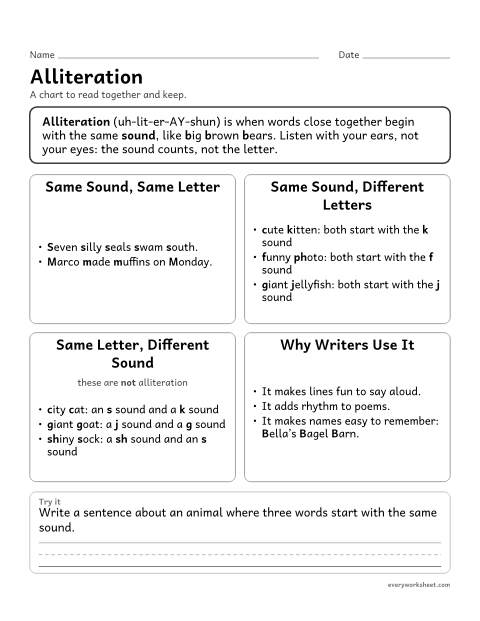
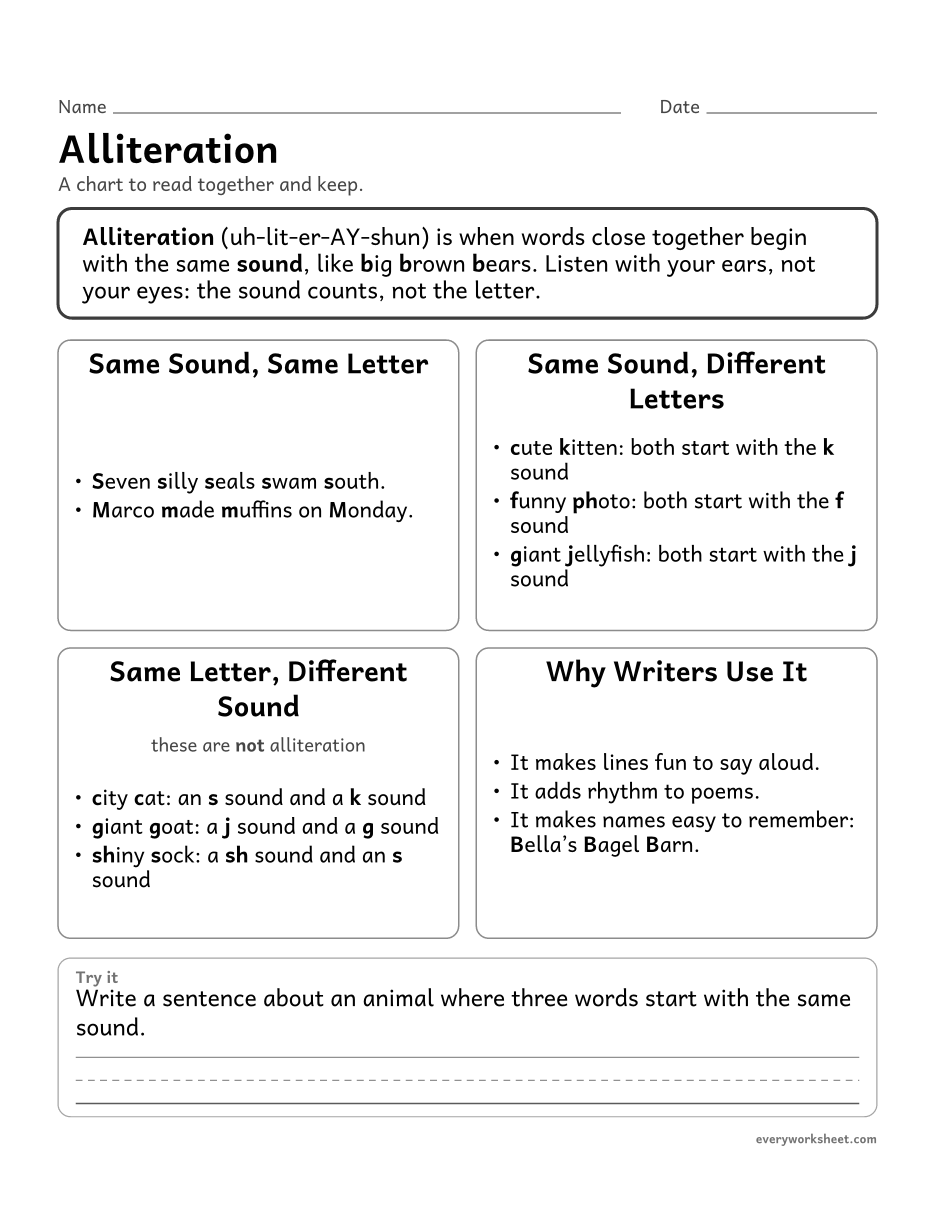
Knowing that alliteration repeats the same beginning sound, not just the same letter
1 page41 KB
Hear and write alliteration, including the tricky same-letter, different-sound cases, plus tongue twisters and a poem.
View largerKnowing that alliteration repeats the same beginning sound, not just the same letter
1 page41 KB
 View all 2 pages
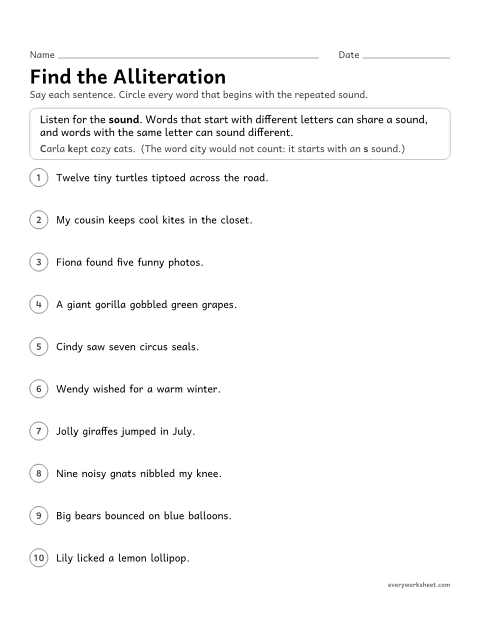
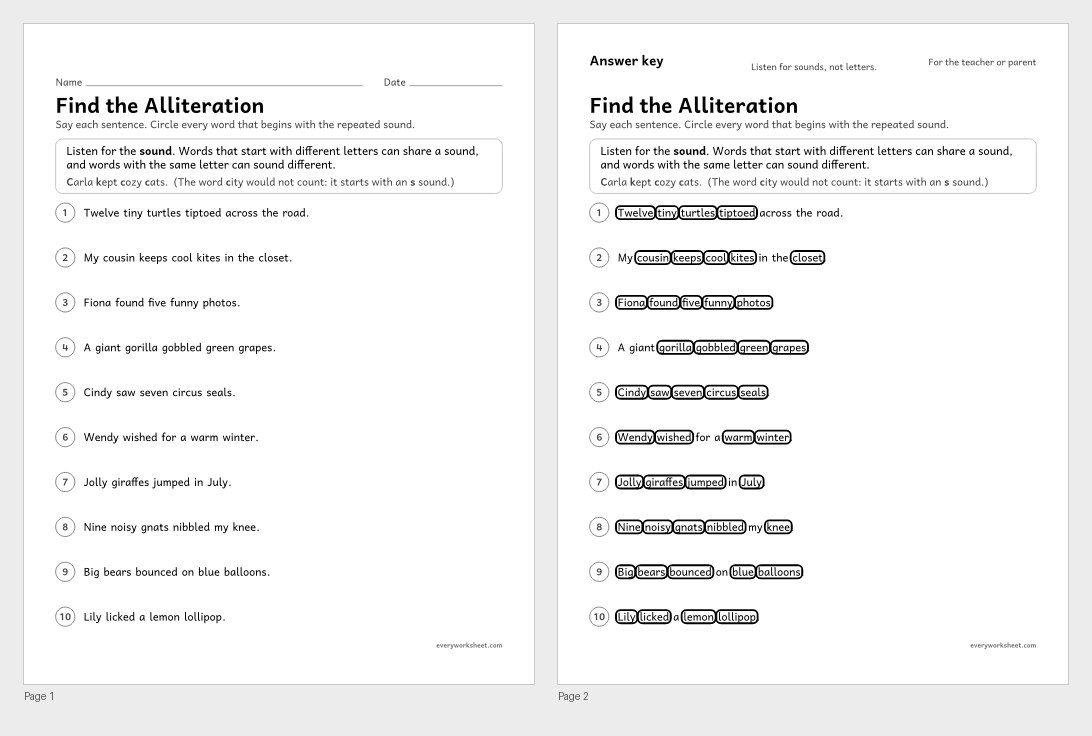
Finding alliteration by listening for the same beginning sound
Answer key on page 2
2 pages53 KB
 View all 2 pages
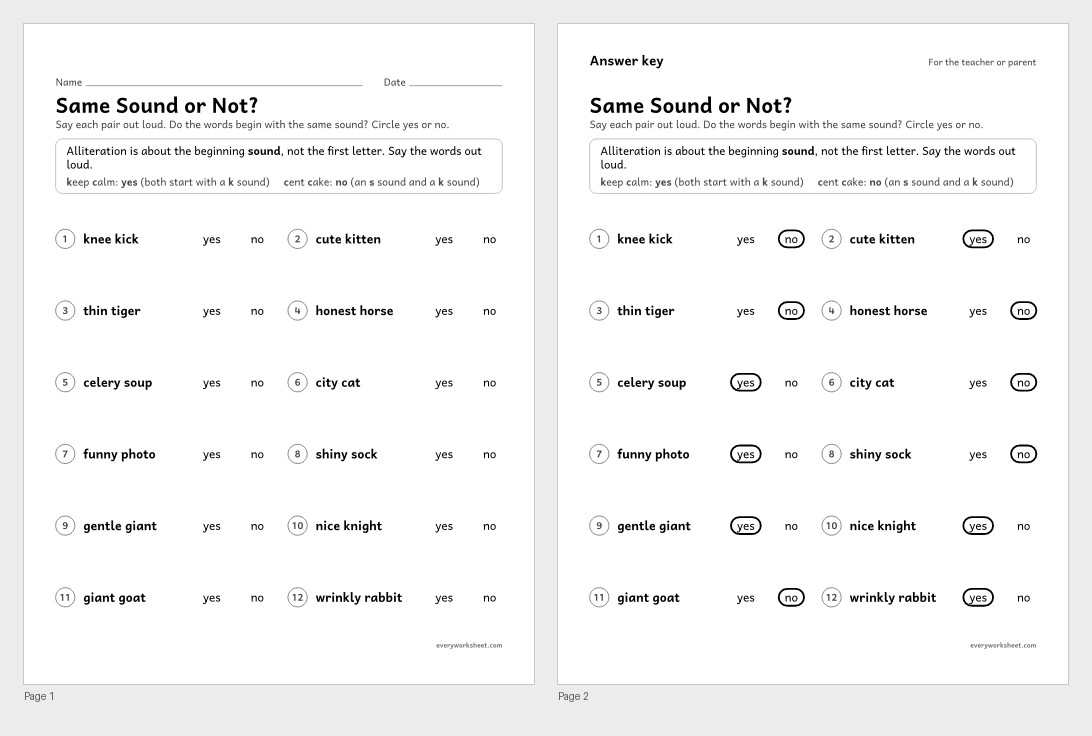
Hearing whether two words begin with the same sound, even when the letters differ
Answer key on page 2
2 pages60 KB
 View all 2 pages
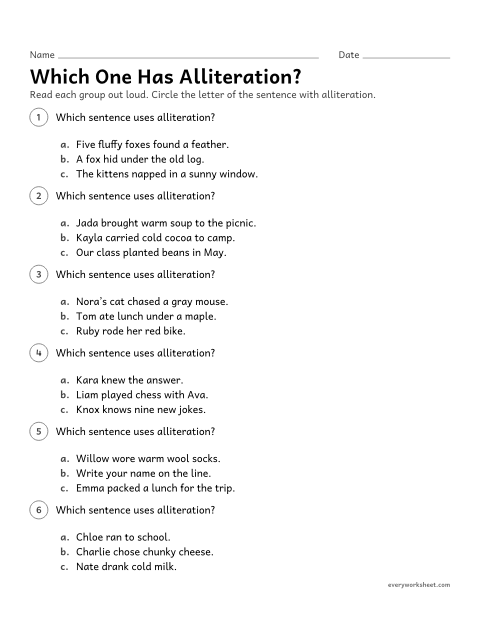
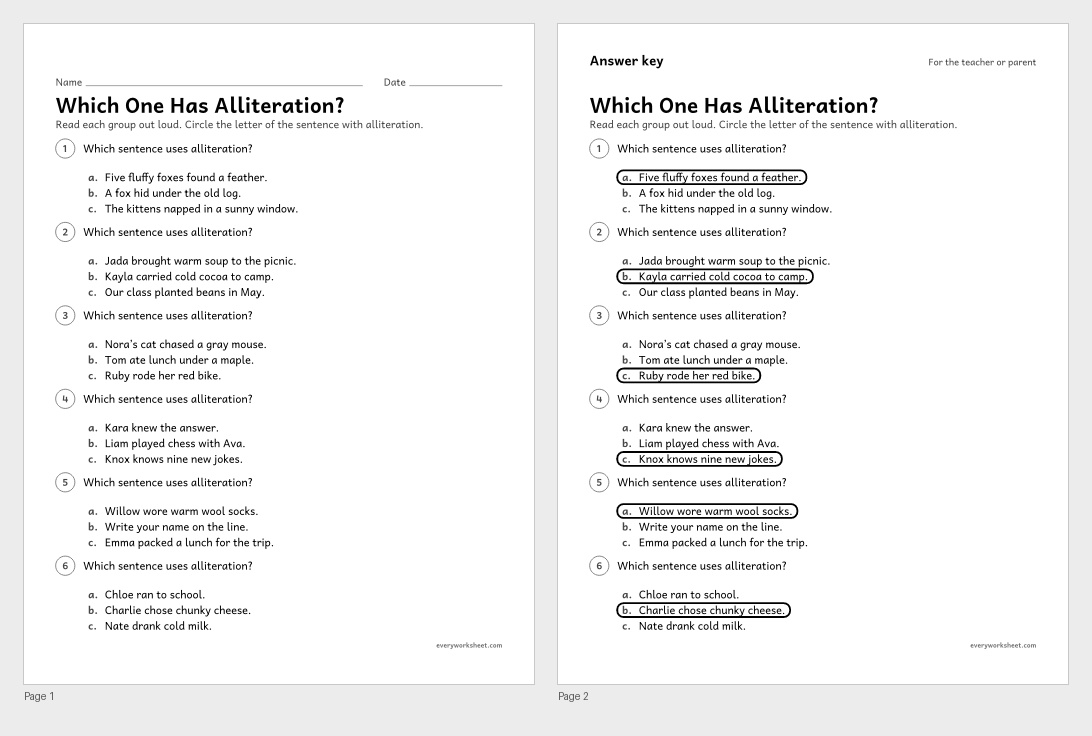
Choosing the sentence that uses alliteration
Answer key on page 2
2 pages57 KB
 View all 2 pages
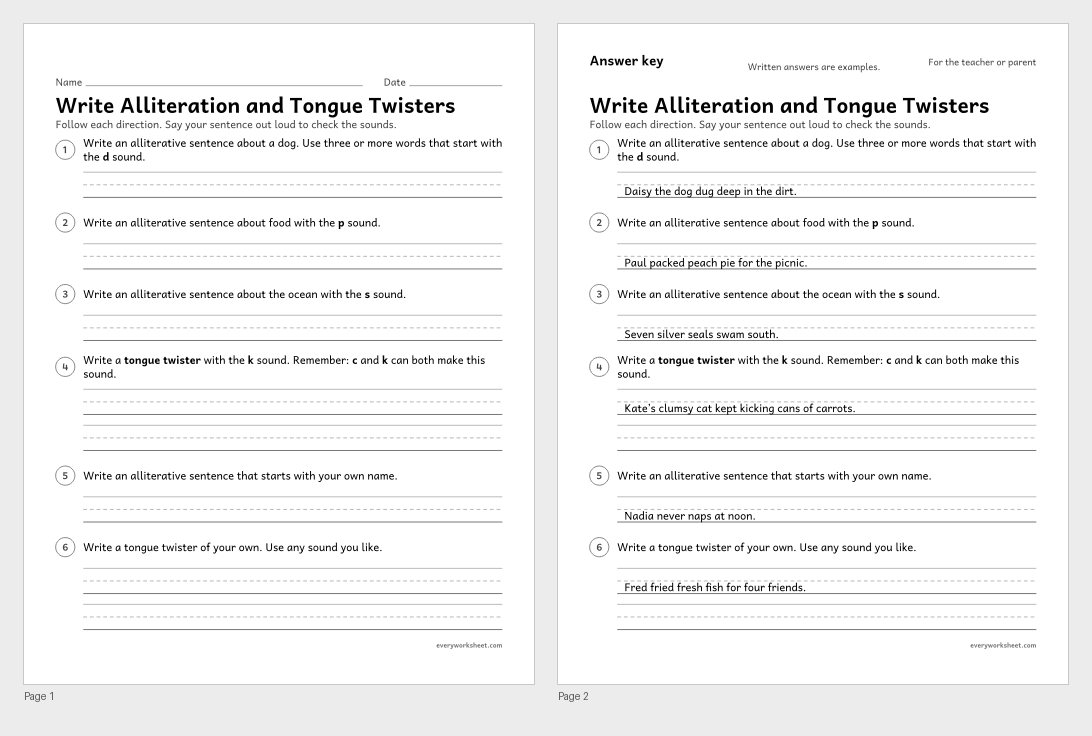
Writing original alliterative sentences and tongue twisters
Answer key on page 2
2 pages42 KB
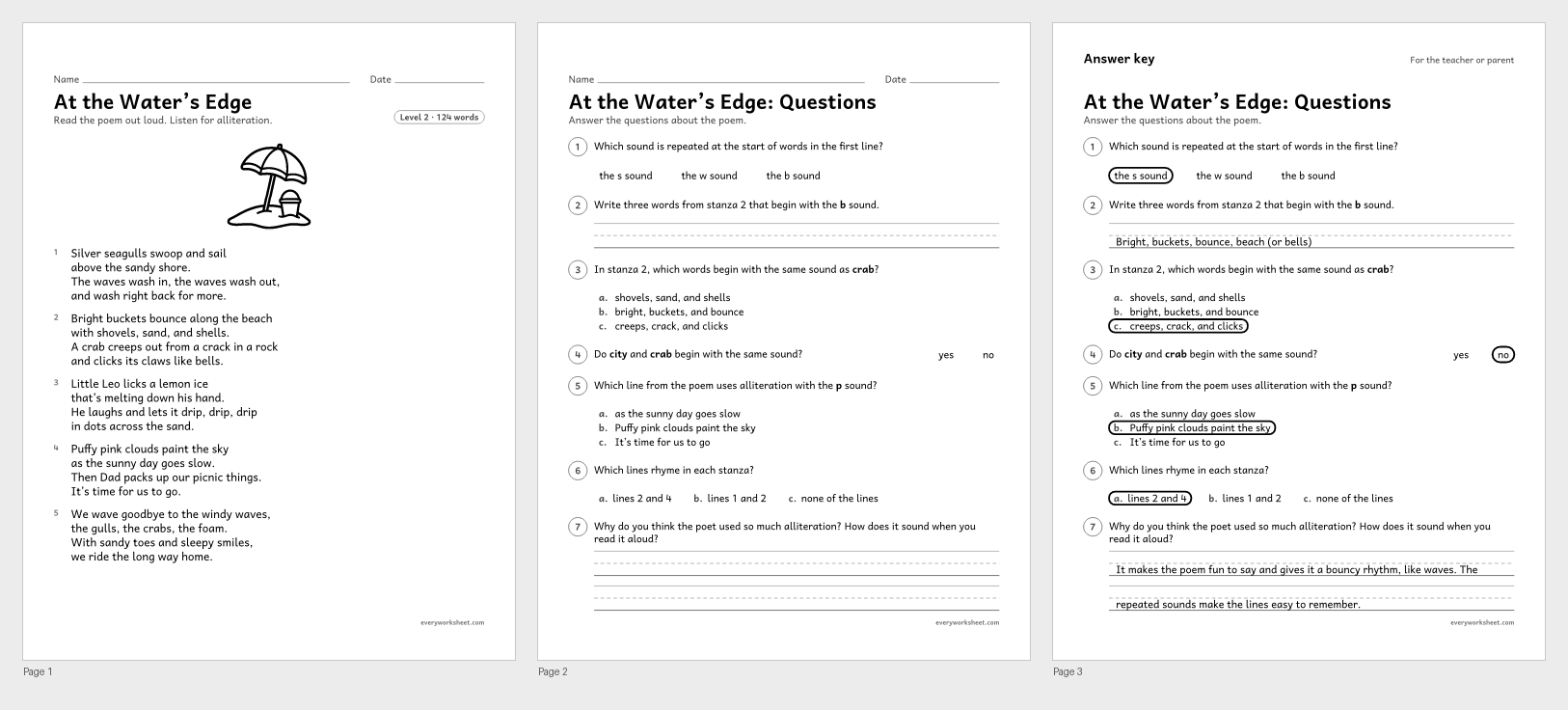 3 pagesView all 3 pages
Finding alliteration in a poem and explaining how it adds rhythm and sound
Answer key on page 3
3 pages78 KB
Print at 100% (actual size) for the cleanest tracing lines.
Alliteration (say it uh-lit-er-AY-shun) is the repetition of the same beginning sound in words that are close together, like "big brown bears" or "seven silly seals swam south." It makes lines fun to say, adds rhythm to poems, and helps names stick in your memory.
The key word is sound, not letter. "Cute kitten" is alliteration, because cute and kitten both start with a k sound, even though the letters are different. "Funny photo" works too: ph makes the f sound. But "city cat" is not alliteration: city starts with an s sound and cat with a k sound. "Giant goat" is not either (a j sound and a g sound), and neither is "shiny sock" (sh and s).
Small words like a, the, and on can sit between the alliterative words without breaking the pattern: "Big bears bounced on blue balloons." Alliteration is different from rhyme, which repeats the ending sound (cat, hat), and from onomatopoeia, which imitates a noise (buzz).
These worksheets teach children to listen with their ears, not their eyes. They include a chart of same sound and same letter cases, circling the repeated sound, yes-or-no sound pairs, choosing the sentence with alliteration, writing alliterative sentences and tongue twisters, and an original beach poem to read aloud.
CCSS.ELA-LITERACY.RL.4.5Explain major differences between poems, drama, and prose, and refer to the structural elements of poems (e.g., verse, rhythm, meter) and drama (e.g., casts of characters, settings, descriptions, dialogue, stage directions) when writing or speaking about a text.CCSS.ELA-LITERACY.L.4.3.AChoose words and phrases to convey ideas precisely.CCSS.ELA-LITERACY.L.4.5Demonstrate understanding of figurative language, word relationships, and nuances in word meanings.Alliteration is the repetition of the same beginning sound in nearby words, such as "Wendy wished for a warm winter."
"Twelve tiny turtles tiptoed," "Fiona found five funny photos," and "Lily licked a lemon lollipop" are examples. Notice that photos counts, because ph makes the f sound.
No. Alliteration is about the beginning sound, not the letter. "Cute kitten" and "funny photo" are alliteration even though the letters differ, while "city cat" is not alliteration even though both words start with c.
Alliteration repeats the beginning sound (silly seals). Rhyme repeats the ending sound (seal, meal). A poem can use both.
Pick one sound, list words that start with it, and string them into a silly sentence: "Fred fried fresh fish for four friends." Then try saying it three times fast.