 View larger
Types of figurative language
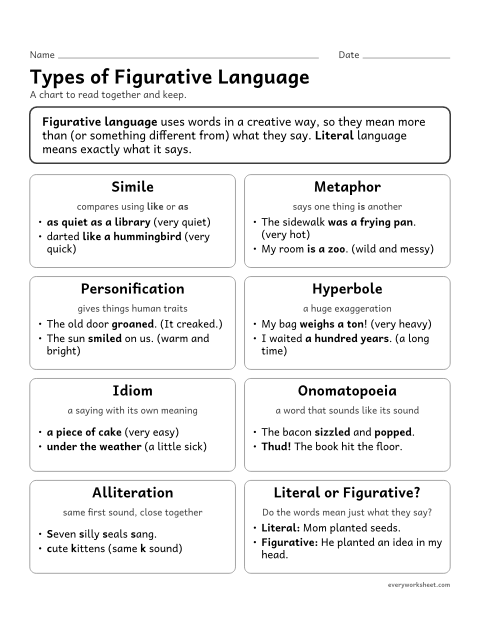
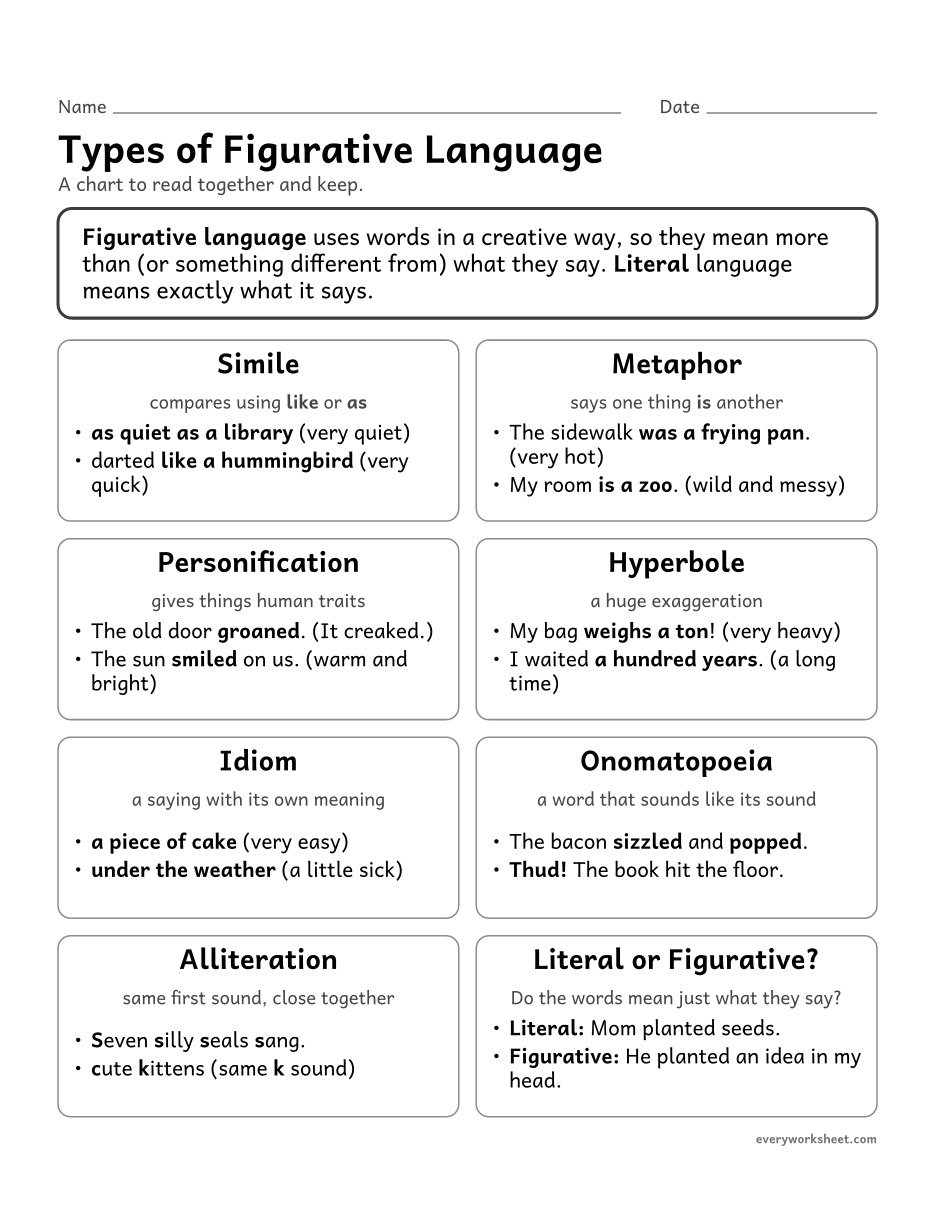
Knowing seven kinds of figurative language and what each example means
1 page44 KB
Learn and practice seven kinds of figurative language with a chart, sorts, an original poem and story, and writing pages.
View largerKnowing seven kinds of figurative language and what each example means
1 page44 KB
 View all 2 pages
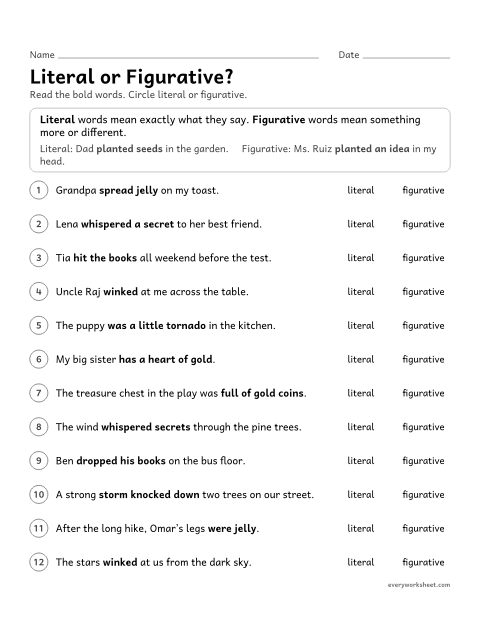
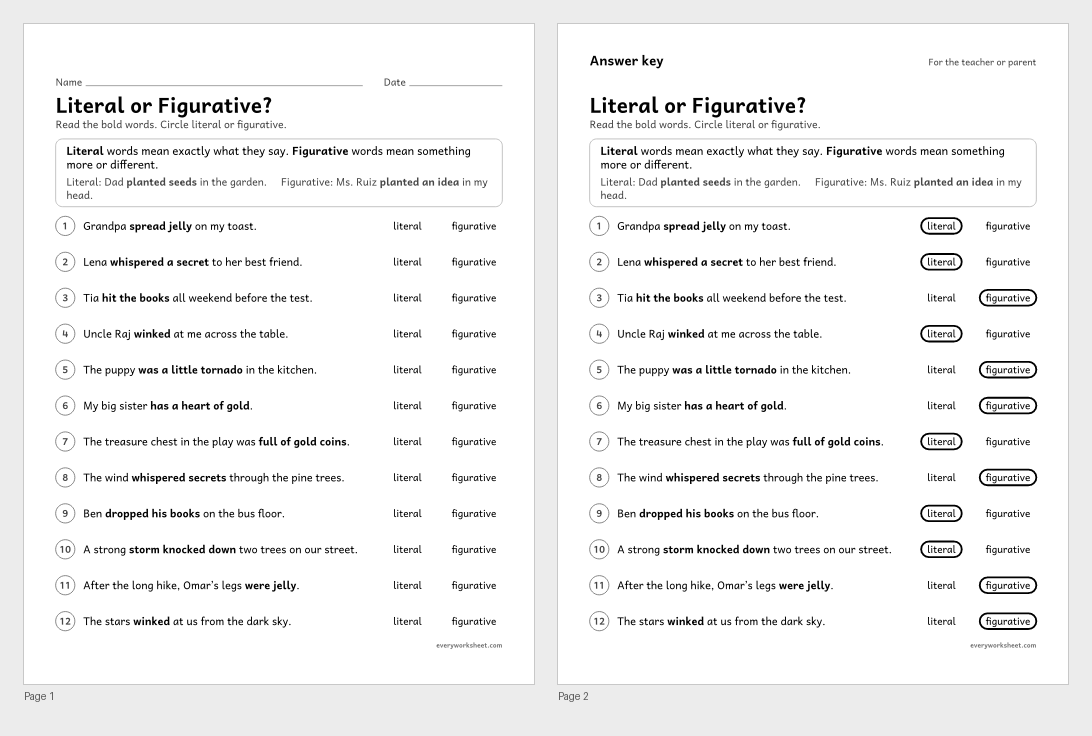
Telling literal language from figurative language in the same kinds of sentences
Answer key on page 2
2 pages61 KB
 View all 2 pages
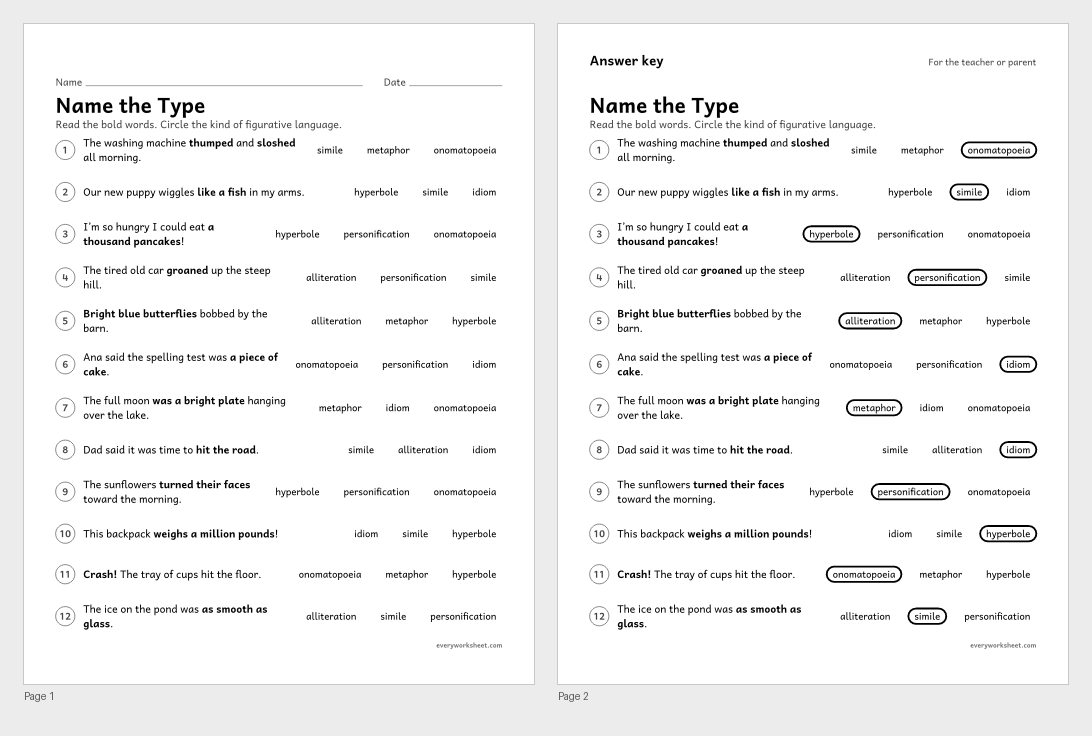
Naming simile, metaphor, personification, hyperbole, idiom, onomatopoeia, and alliteration
Answer key on page 2
2 pages59 KB
 View all 2 pages
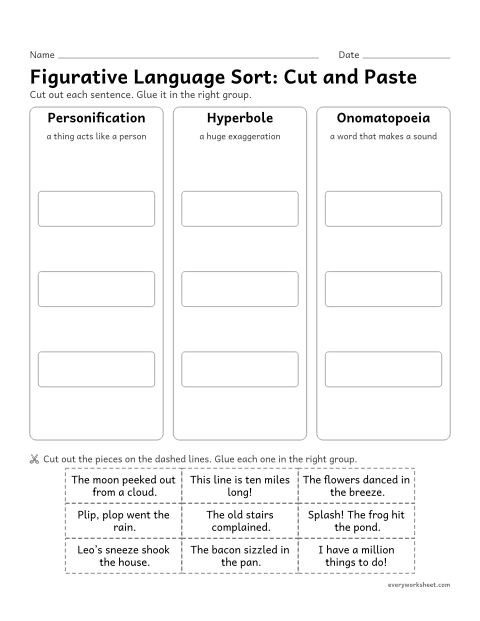
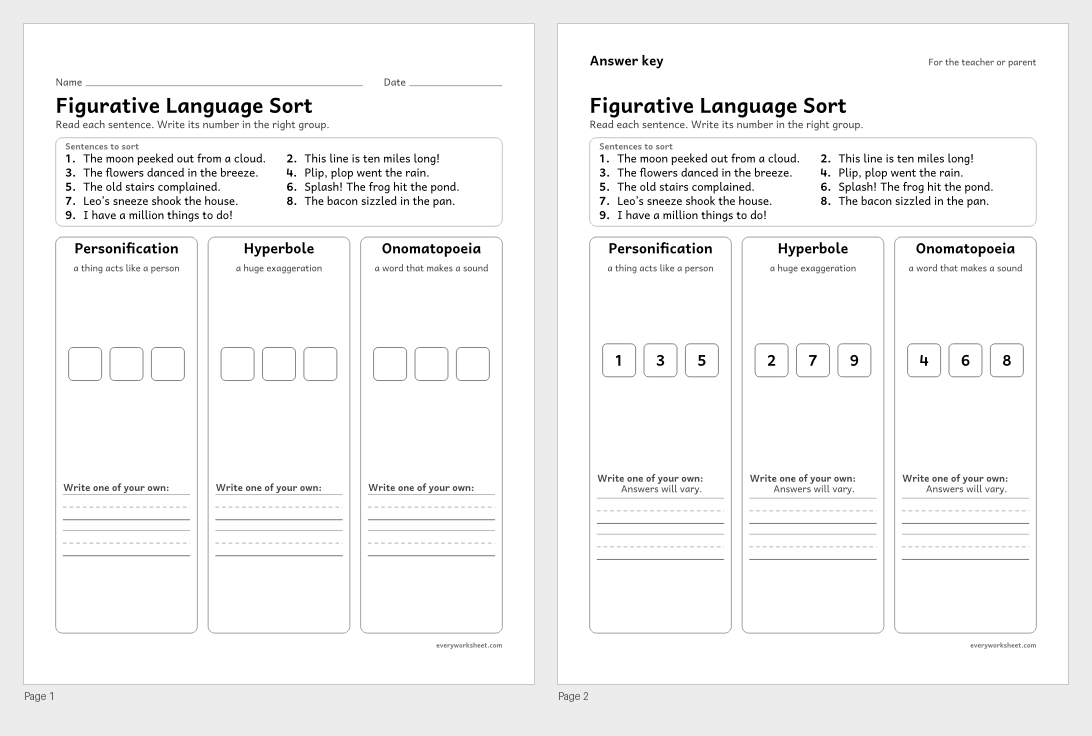
Sorting sentences into personification, hyperbole, and onomatopoeia
Answer key on page 2
2 pages50 KB
 View all 2 pages
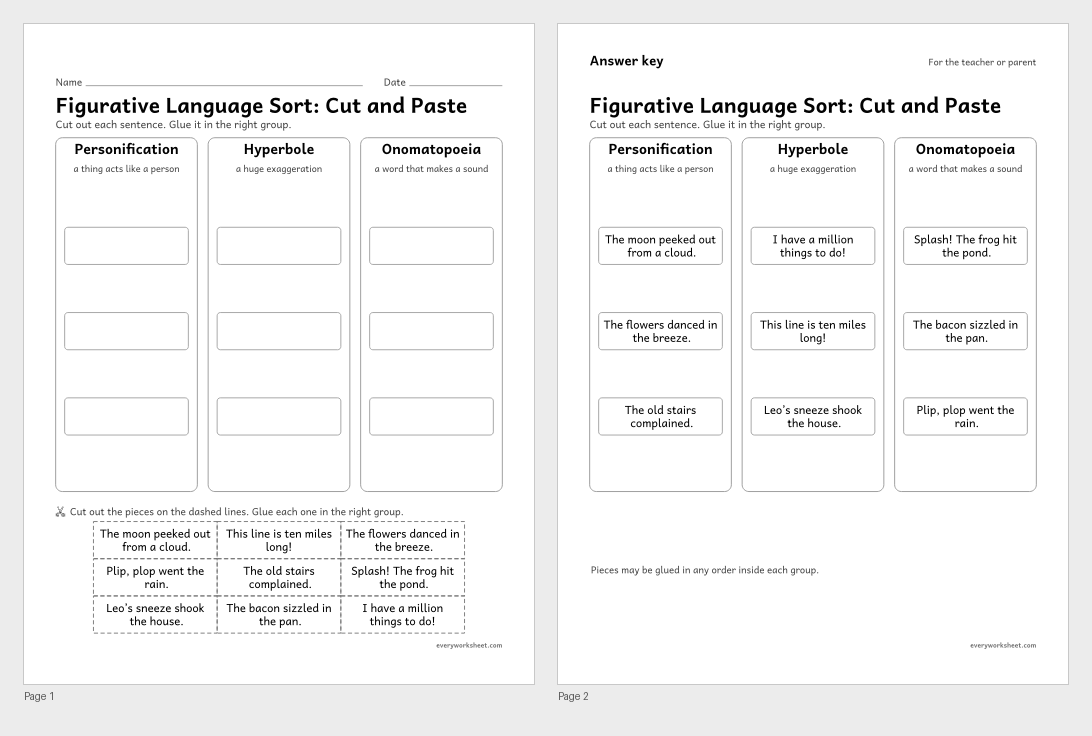
Sorting sentences into personification, hyperbole, and onomatopoeia
Answer key on page 2
2 pages67 KB
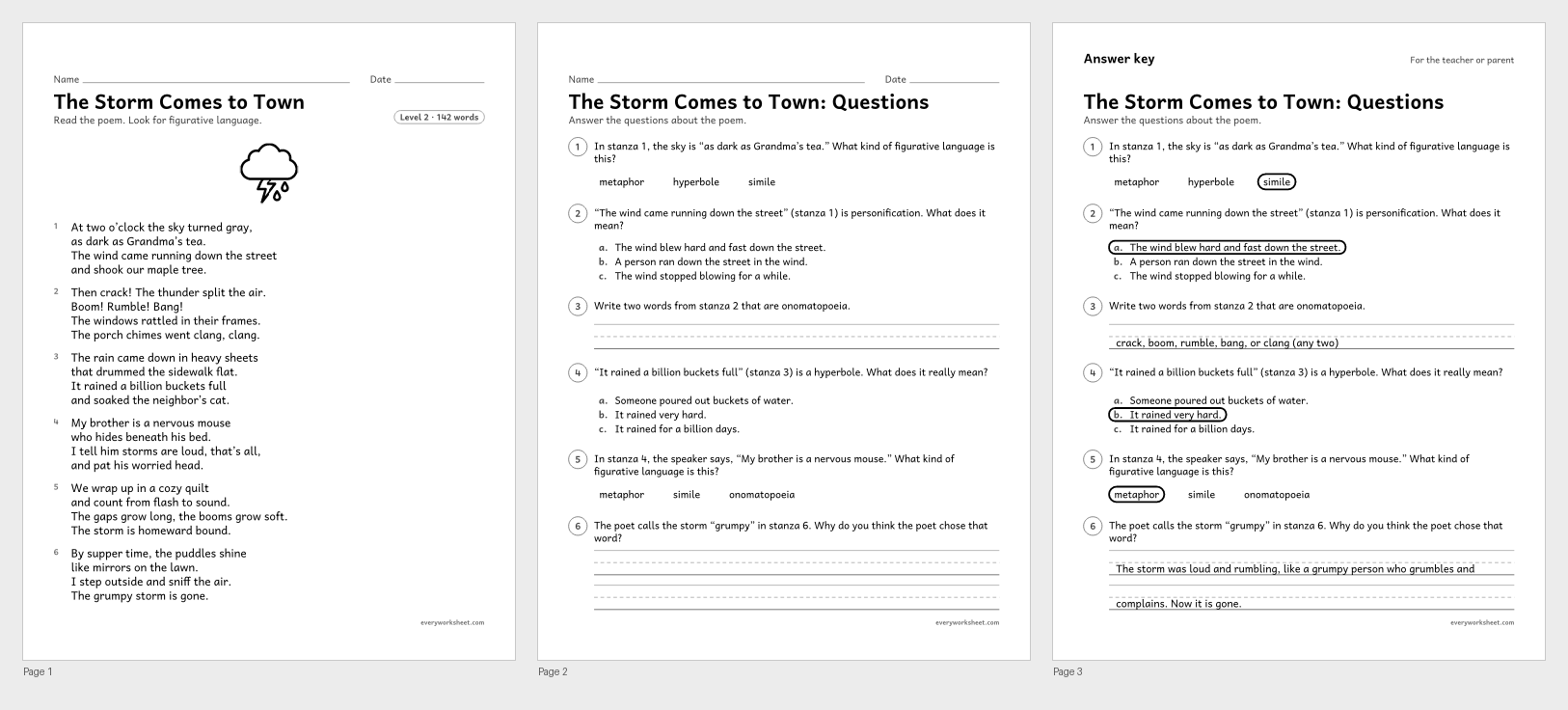 3 pagesView all 3 pages
Finding figurative language in a poem and explaining what each phrase means
Answer key on page 3
3 pages56 KB
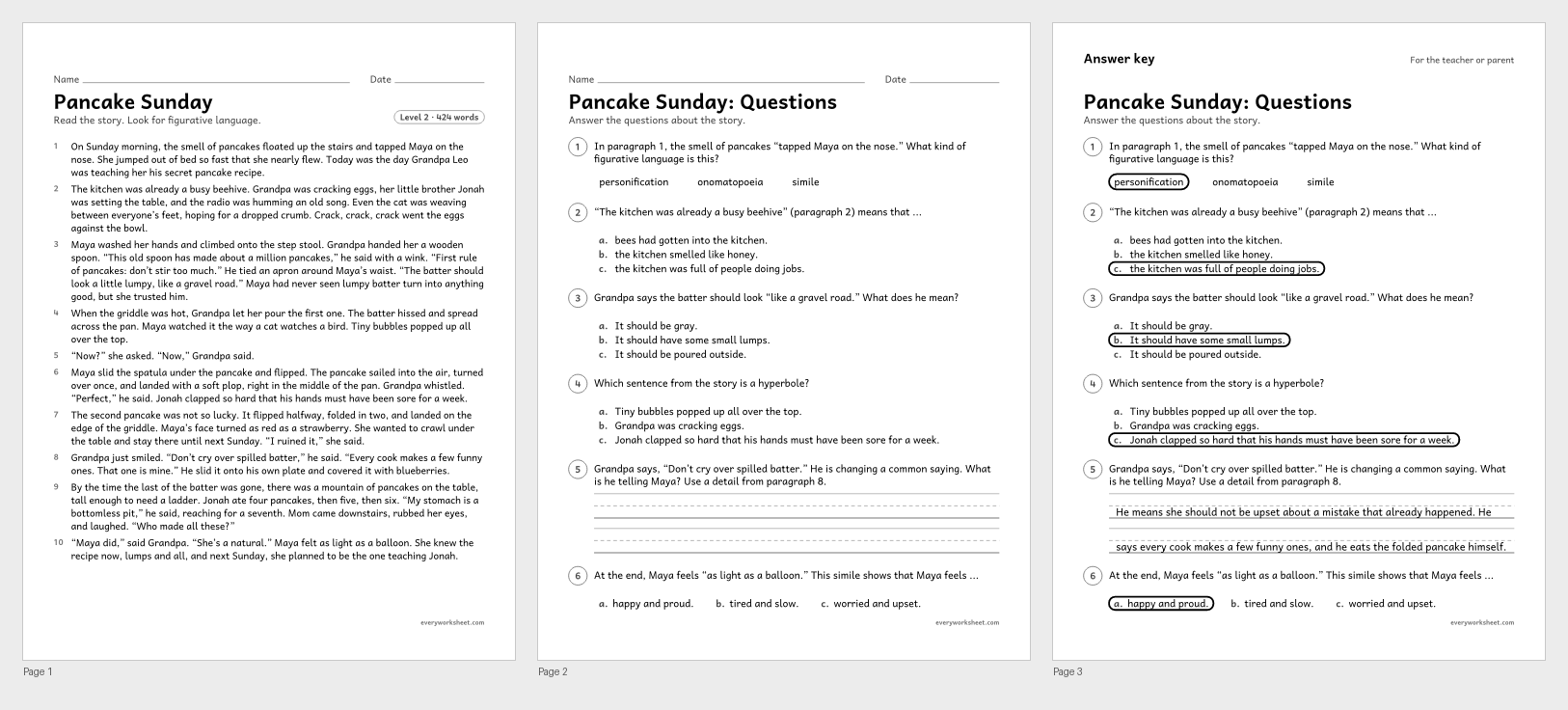 3 pagesView all 3 pages
Explaining what similes, metaphors, personification, hyperbole, and an idiom mean in a story
Answer key on page 3
3 pages61 KB
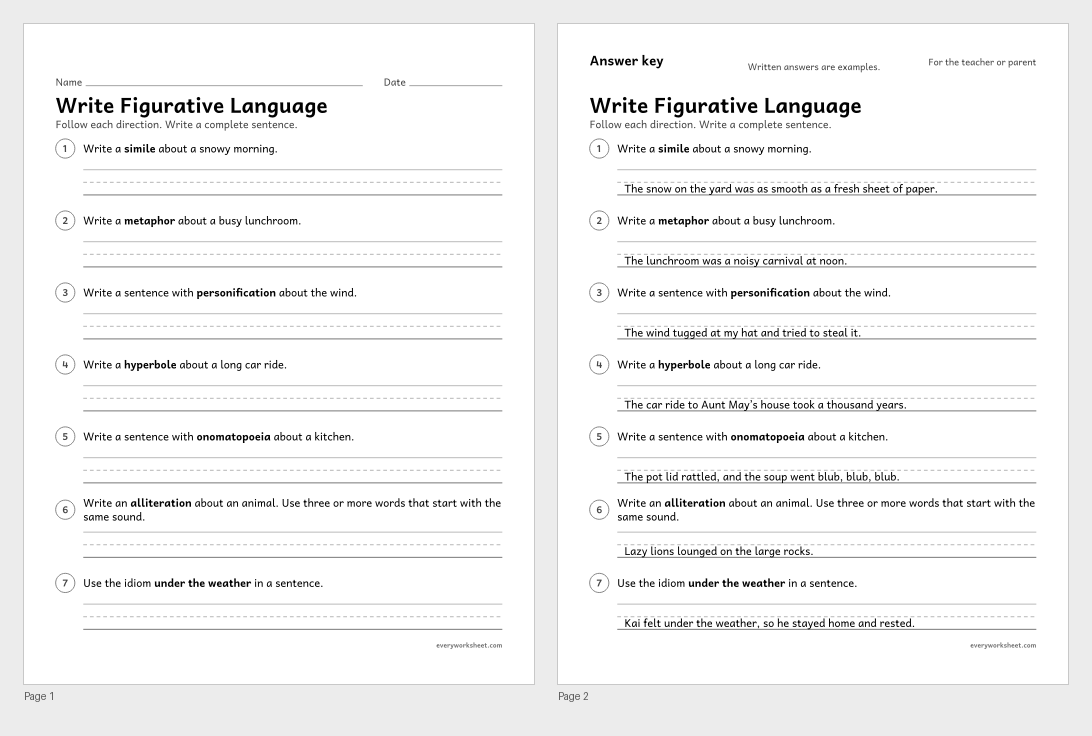 View all 2 pages
Writing original similes, metaphors, personification, hyperbole, onomatopoeia, alliteration, and idioms
Answer key on page 2
2 pages43 KB
Print at 100% (actual size) for the cleanest tracing lines.
Figurative language is language that means more than, or something different from, what the words literally say. When a writer says "the sidewalk was a frying pan," nobody is cooking eggs on the street: the writer means the sidewalk was very hot. Literal language means exactly what it says ("The sidewalk was hot"). Figurative language paints a picture, so the reader feels the heat.
There are seven kinds that 4th graders meet most often. A simile compares two things using like or as ("as quiet as a library"). A metaphor says one thing is another ("my room is a zoo"). Personification gives human traits to something that is not human ("the old door groaned"). Hyperbole is a huge exaggeration ("my backpack weighs a ton"). An idiom is a saying with its own meaning ("a piece of cake" means very easy). Onomatopoeia is a word that sounds like its sound ("sizzle," "thud"). Alliteration repeats the same beginning sound in words close together ("seven silly seals").
The tricky part is telling the kinds apart. A simile and a metaphor both compare, but only a simile uses like or as. A hyperbole exaggerates, while a simile simply compares (and some similes, like "as tall as a skyscraper," do both). Personification gives a thing a human action, while a metaphor says the thing is something else entirely.
Writers use figurative language to help readers see, hear, and feel a scene, to make them laugh, and to say a lot in a few words. These worksheets start with a chart of all seven types, then move to literal or figurative, naming the type, a sort, an original poem and story with questions about what each phrase means, and a page for writing your own.
CCSS.ELA-LITERACY.RL.4.4Determine the meaning of words and phrases as they are used in a text, including those that allude to significant characters found in mythology (e.g., Herculean).CCSS.ELA-LITERACY.L.4.5Demonstrate understanding of figurative language, word relationships, and nuances in word meanings.Figurative language uses words in a creative way, so they mean more than or something different from what they literally say. "The test was a piece of cake" does not mean there was cake. It means the test was easy.
The seven most taught types are simile, metaphor, personification, hyperbole, idiom, onomatopoeia, and alliteration. Some lists also include other sound devices and allusions, but these seven are the core for elementary school.
Literal language means exactly what it says: "Mom planted seeds in the garden." Figurative language means something more: "Mr. Lee planted an idea in my head" means he gave me an idea.
"The wind came running down the street" is personification: the wind blew hard and fast. "It rained a billion buckets" is hyperbole: it rained very hard. "The puddles shone like mirrors" is a simile.
Children meet similes and simple idioms in 2nd and 3rd grade. In 4th grade they explain similes and metaphors in context and learn idioms, adages, and proverbs, and they usually study personification, hyperbole, onomatopoeia, and alliteration in reading and poetry.
Yes. Every practice page has an answer key, and pages with open writing show sample answers. The anchor chart is a single page to keep.