 View larger
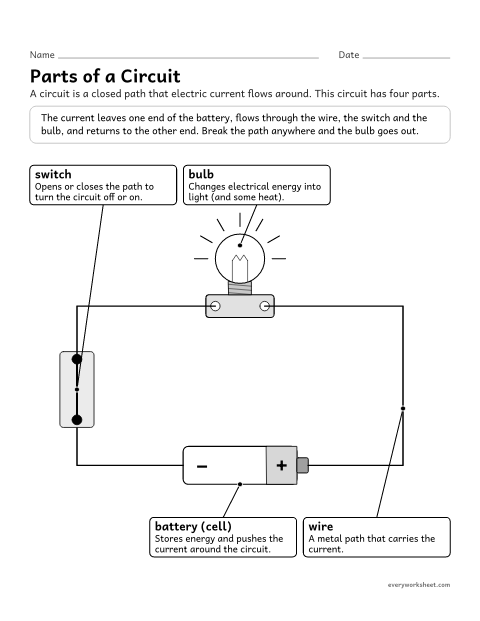
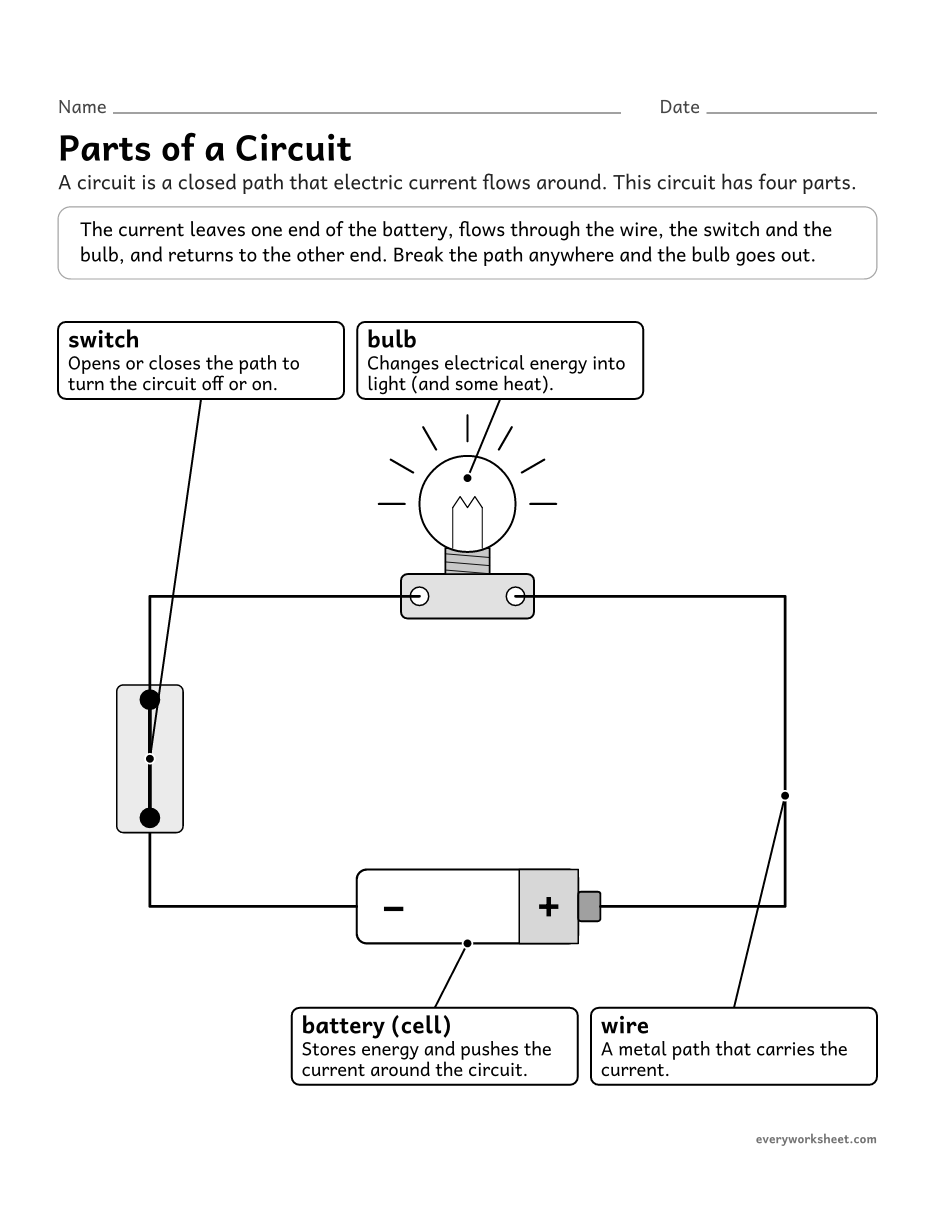
Parts of a circuit diagram (Labeled Poster)
Naming the parts of a simple electric circuit and what each part does
1 page29 KB
Label a simple circuit, learn circuit symbols, predict which bulbs light, sort open and closed circuits and test conductors and insulators.
View largerNaming the parts of a simple electric circuit and what each part does
1 page29 KB
 View all 2 pages
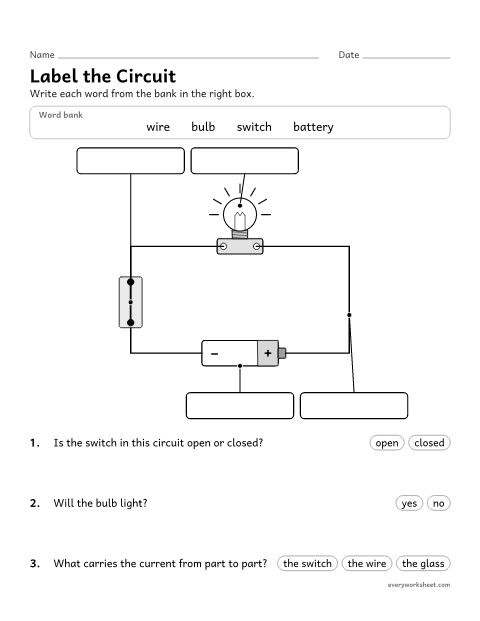
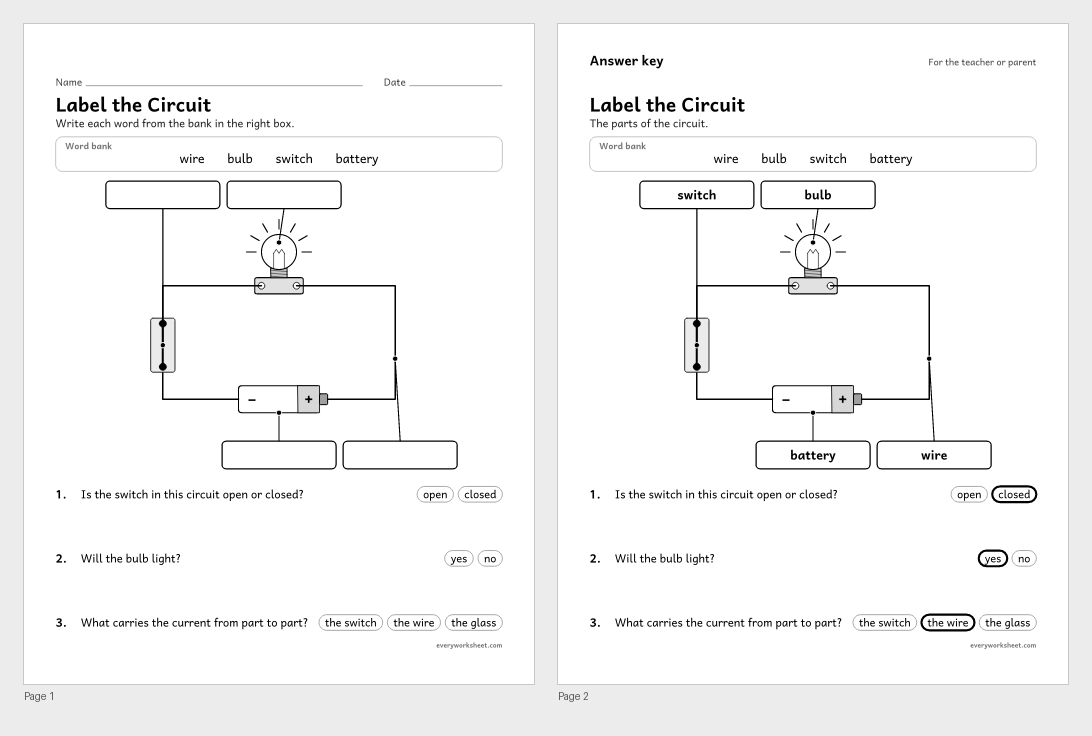
Labeling the parts of a simple electric circuit
Answer key on page 2
2 pages37 KB
 View larger
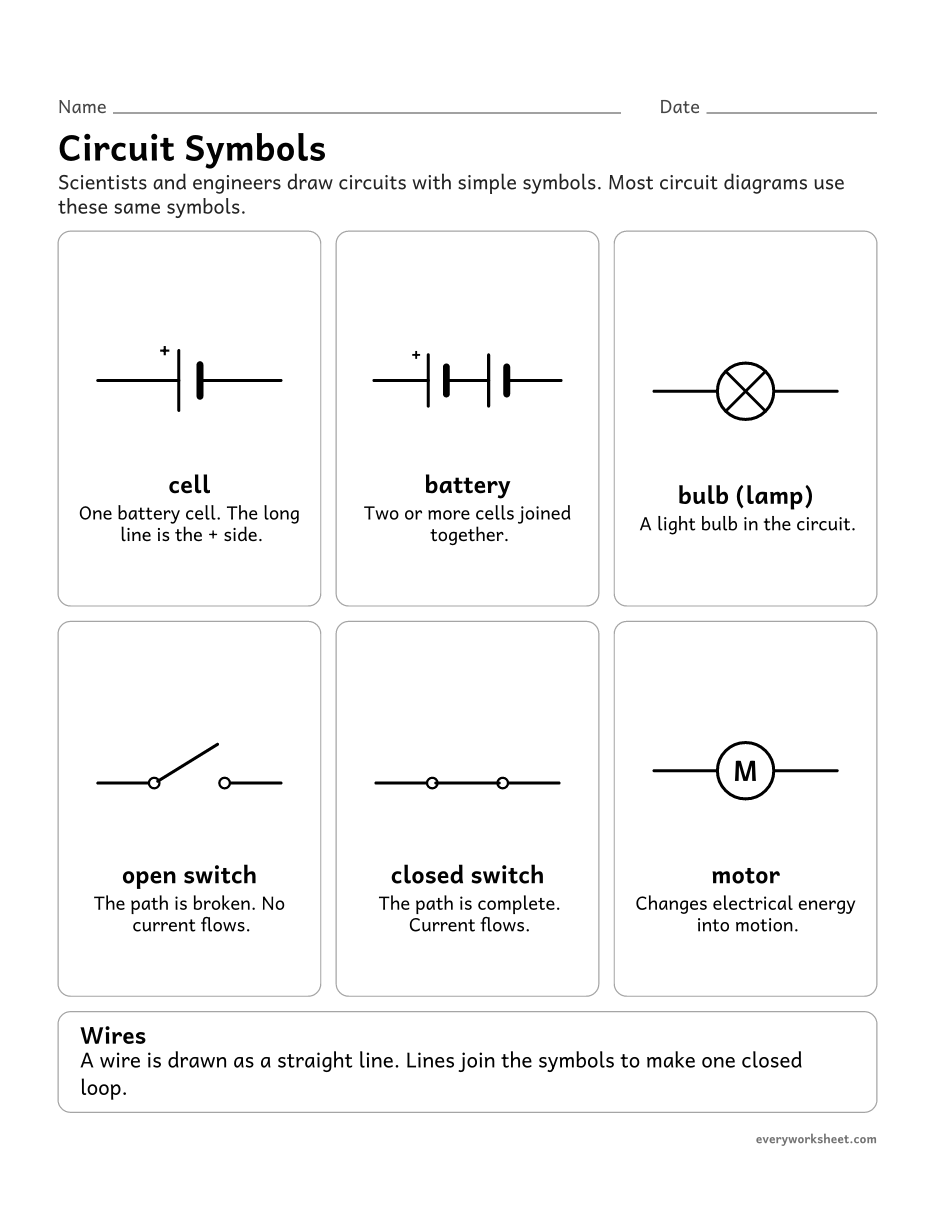
Reading and drawing the symbols used in circuit diagrams
1 page29 KB
 View all 2 pages
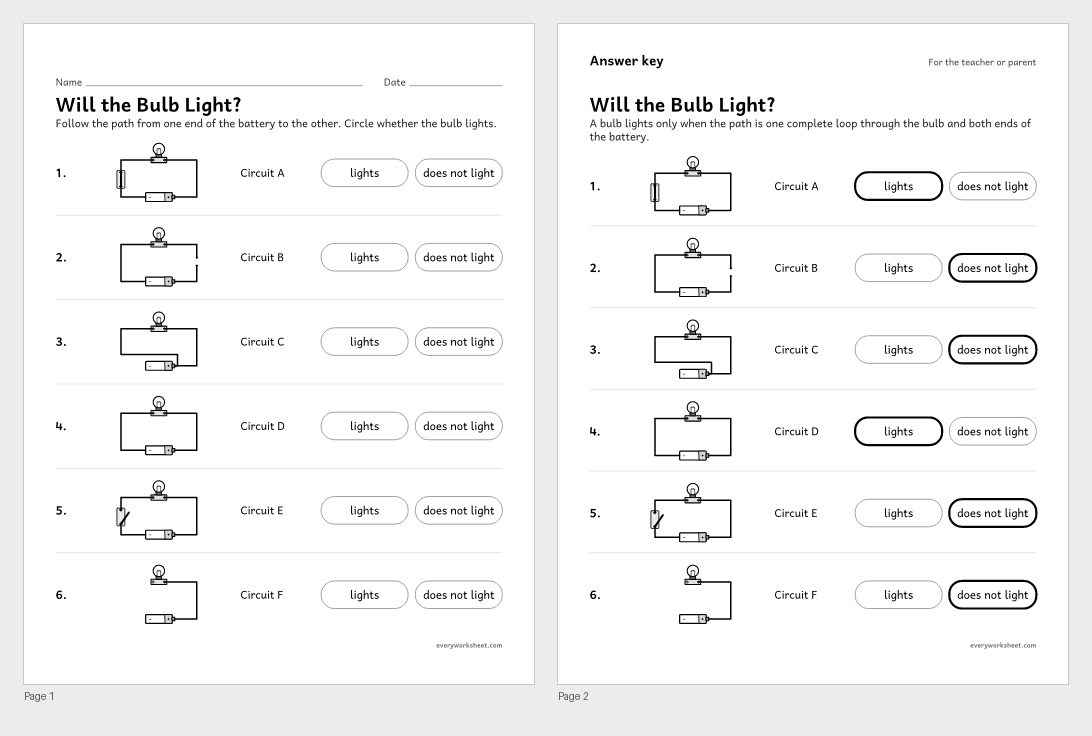
Predicting whether a bulb lights by checking for a complete circuit
Answer key on page 2
2 pages46 KB
 View all 2 pages
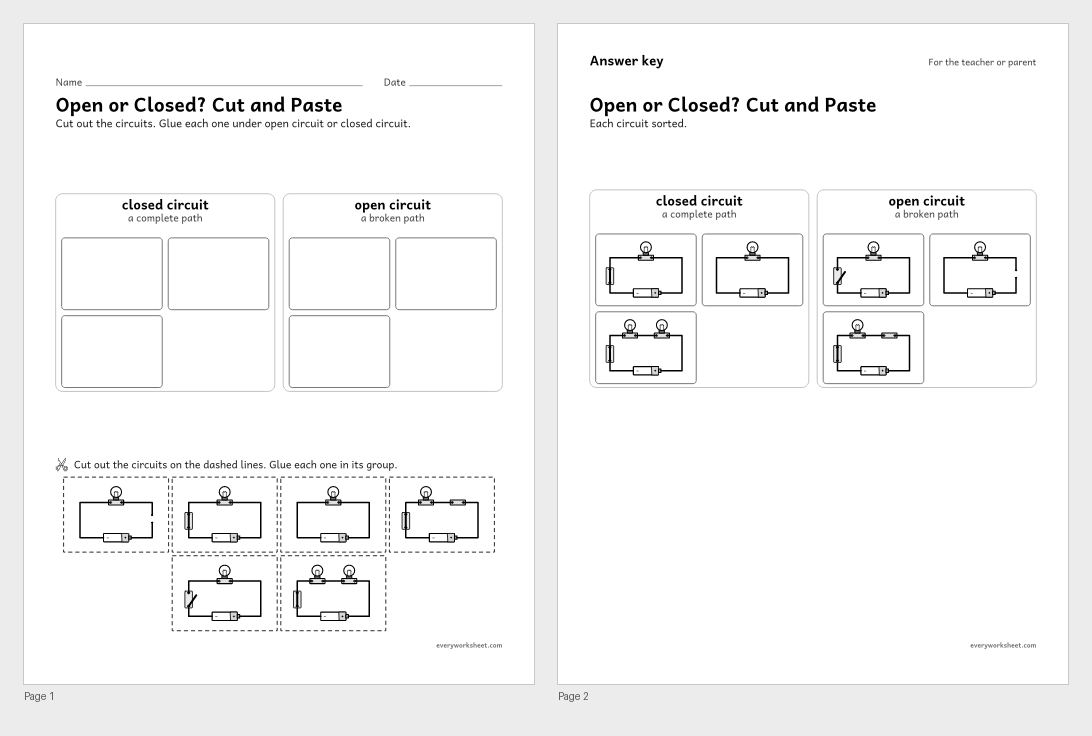
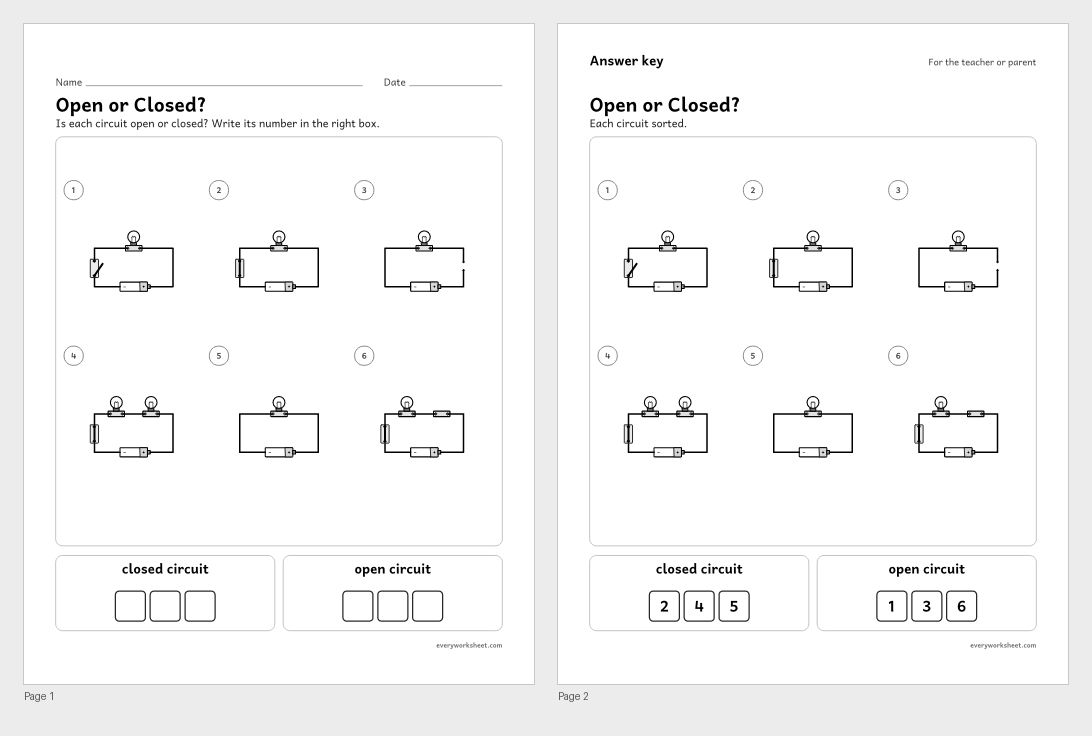
Sorting circuits into open and closed circuits
Answer key on page 2
2 pages64 KB
 View all 2 pages
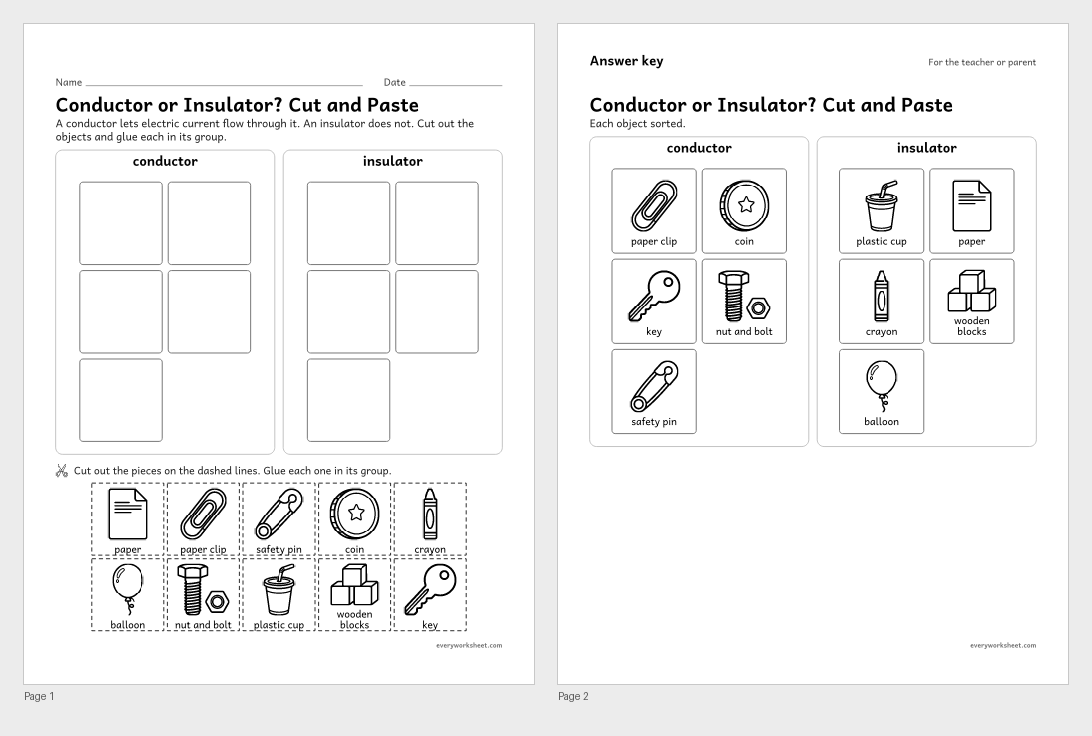
Sorting circuits into open and closed circuits
Answer key on page 2
2 pages37 KB
 View all 2 pages
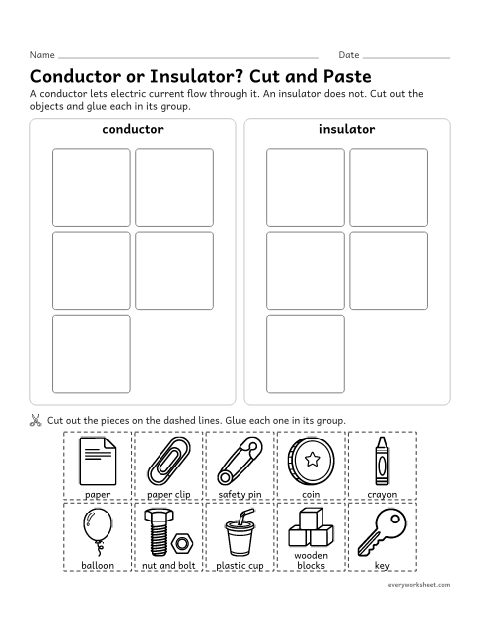
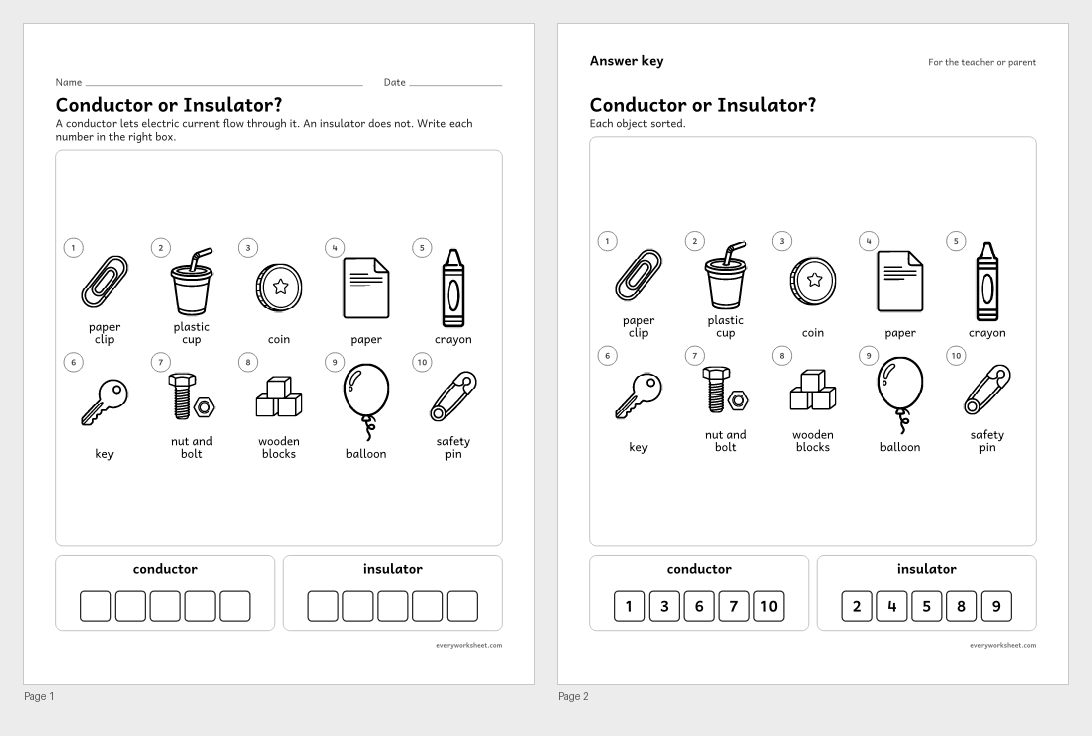
Sorting materials that let electric current flow and materials that do not
Answer key on page 2
2 pages344 KB
 View all 2 pages
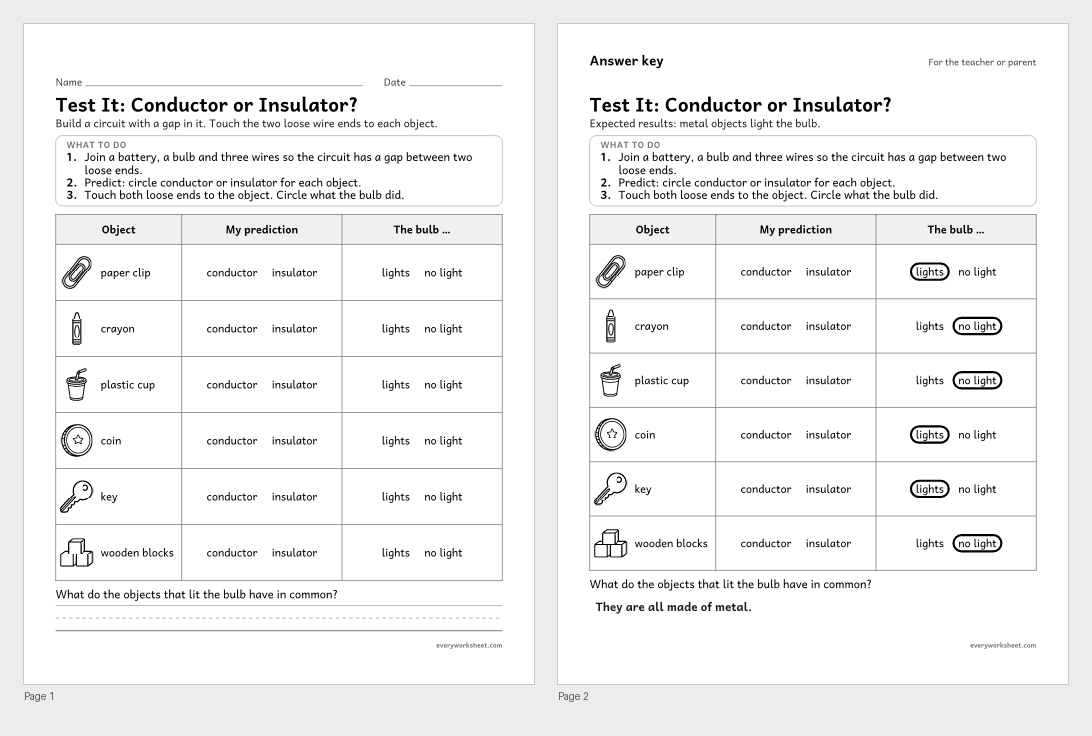
Sorting materials that let electric current flow and materials that do not
Answer key on page 2
2 pages322 KB
 View all 2 pages
Planning and recording a test of which materials conduct electricity
Answer key on page 2
2 pages239 KB
 View all 2 pages
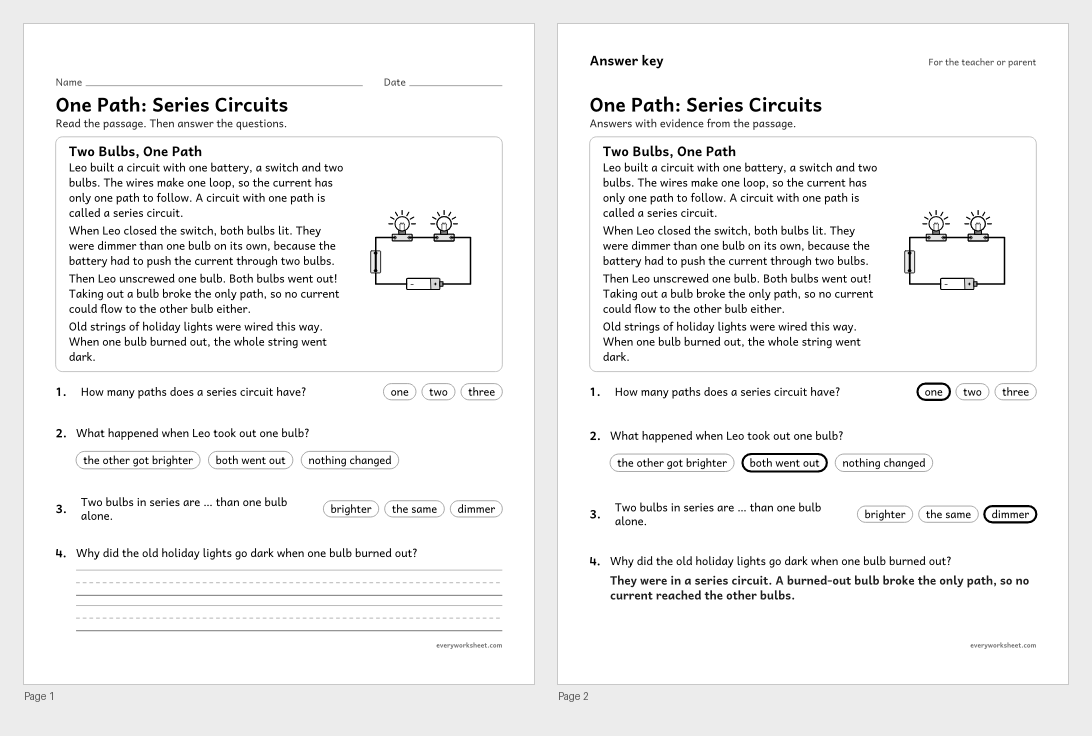
Explaining how current flows in a series circuit
Answer key on page 2
2 pages43 KB
 View all 2 pages
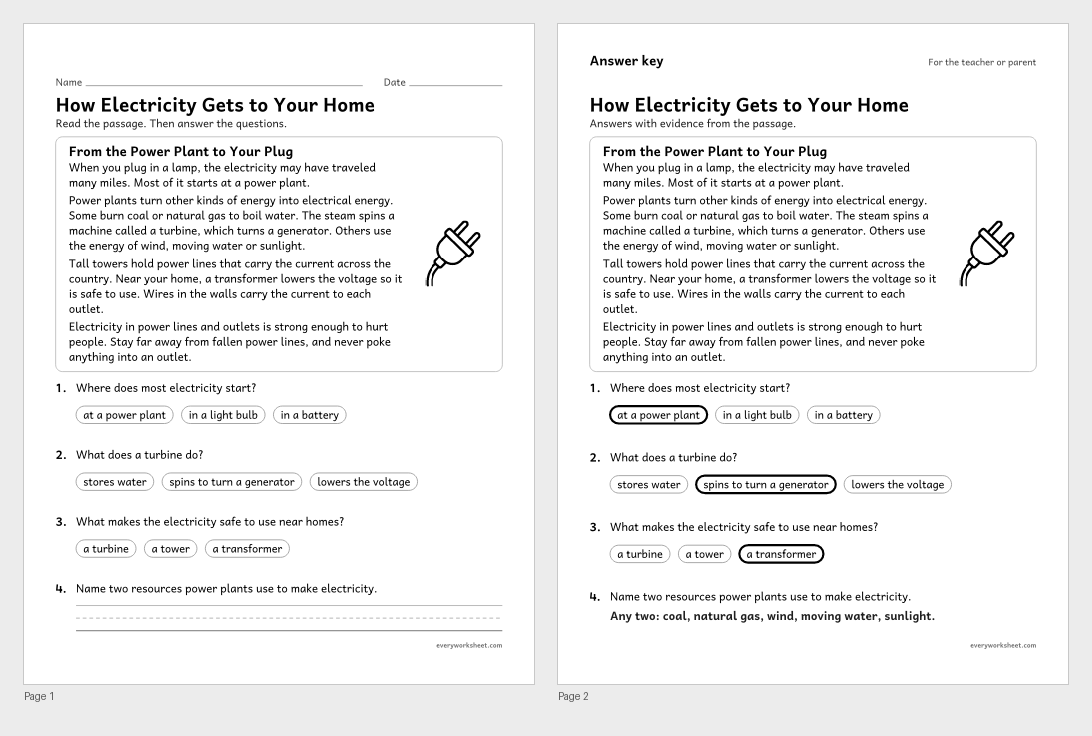
Describing how electrical energy is produced and carried to homes
Answer key on page 2
2 pages57 KB
 View larger
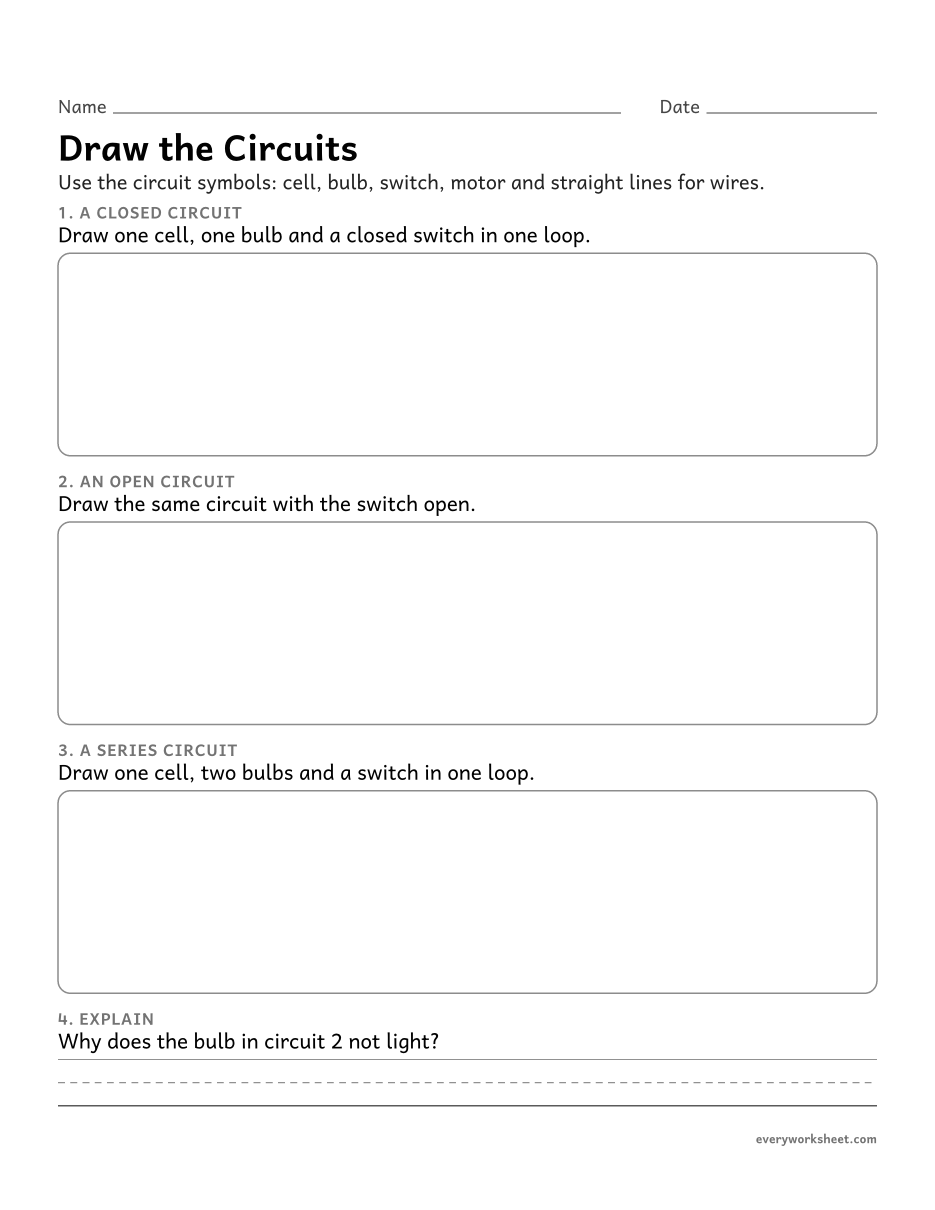
Drawing circuit diagrams with standard symbols
1 page27 KB
 View all 2 pages
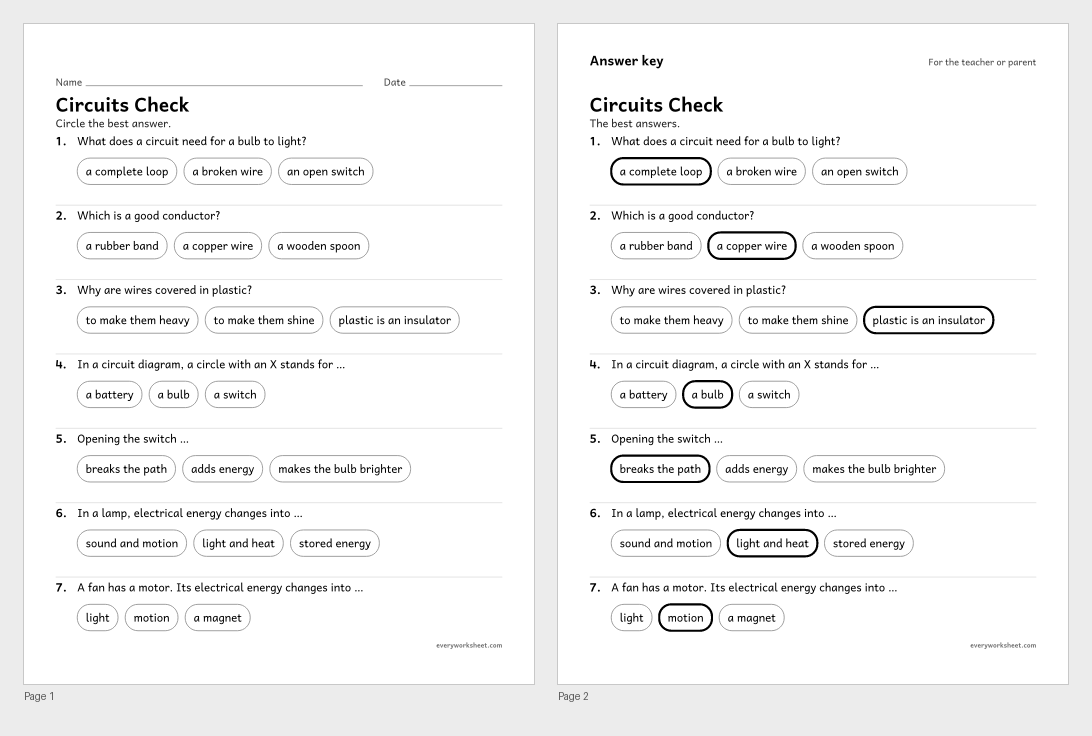
Reviewing circuits, conductors, insulators and energy transfer by electric current
Answer key on page 2
2 pages40 KB
Print at 100% (actual size) for the cleanest tracing lines.
Electric current carries energy from place to place, but only around a complete path called a circuit. A simple circuit needs a source of energy such as a battery, wires, and something that uses the energy, such as a bulb. A switch opens or closes the path.
These circuits worksheets begin with a labeled parts of a circuit diagram and a page to label, then a chart of circuit symbols. Children predict whether bulbs light, sort open and closed circuits (cut and paste or write the numbers), test conductors and insulators, read about series circuits and how electricity reaches homes, and draw their own circuit diagrams.
Every page is black and white, prints on US Letter or A4, and every page with right answers has an answer key on page 2.
NGSS 4-PS3-2Make observations to provide evidence that energy can be transferred from place to place by sound, light, heat, and electric currents.A closed circuit is a complete loop, so electric current can flow and the bulb lights. An open circuit has a break in the path, like an open switch or a loose wire, so no current flows.
A long and short line is a cell (the long line is +), a circle with an X is a bulb, a line with a hinge is a switch, a circle with an M is a motor, and straight lines are wires.
Conductors let electric current flow through them; most metals are good conductors. Insulators do not; plastic, rubber, wood and glass are insulators.
A series circuit has only one path. If one bulb is removed or burns out, the path is broken and all the bulbs go out.