 View larger
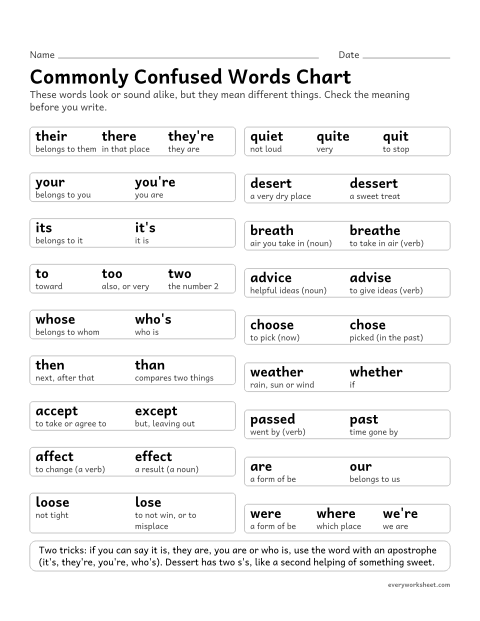
Commonly confused words chart
Seeing 18 sets of commonly confused words and what each one means
1 page39 KB
A chart of 18 sets of commonly confused words, four sentence pages, two proofreading pages and a write-your-own page, for 4th grade writers.
View largerSeeing 18 sets of commonly confused words and what each one means
1 page39 KB
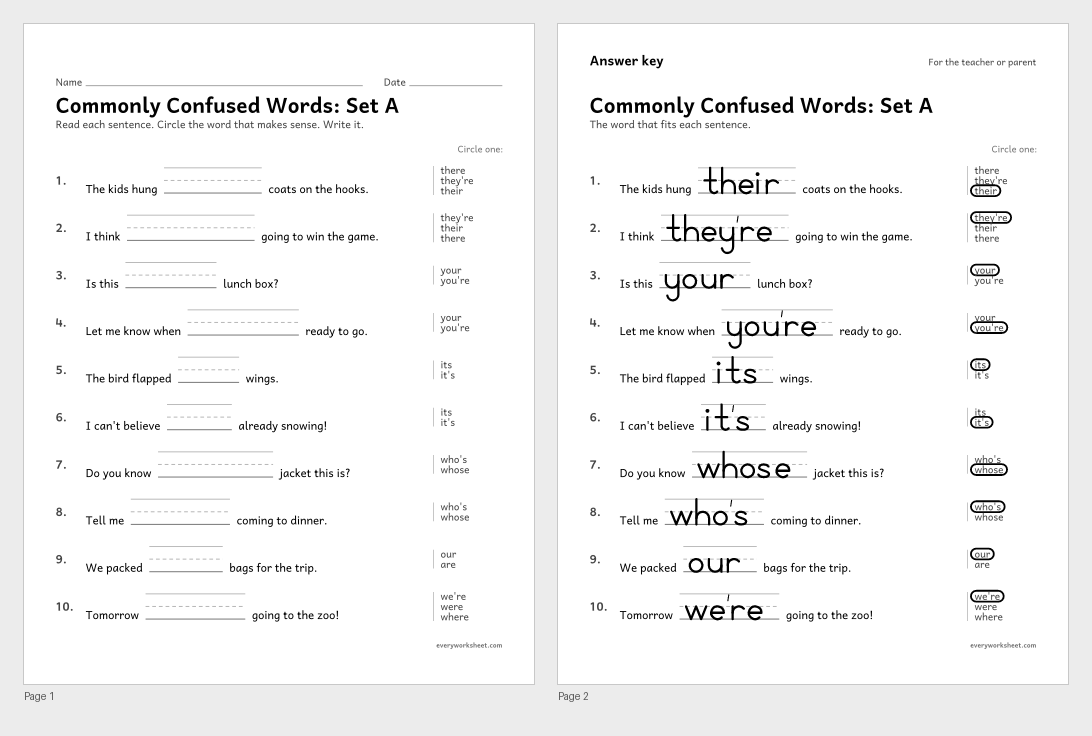 View all 2 pages
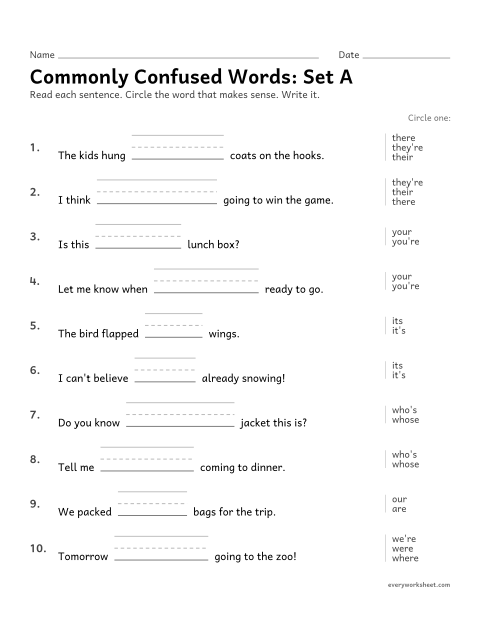
Choosing between possessives and contractions: their, they're, your, you're, its, it's, whose, who's
Answer key on page 2
2 pages51 KB
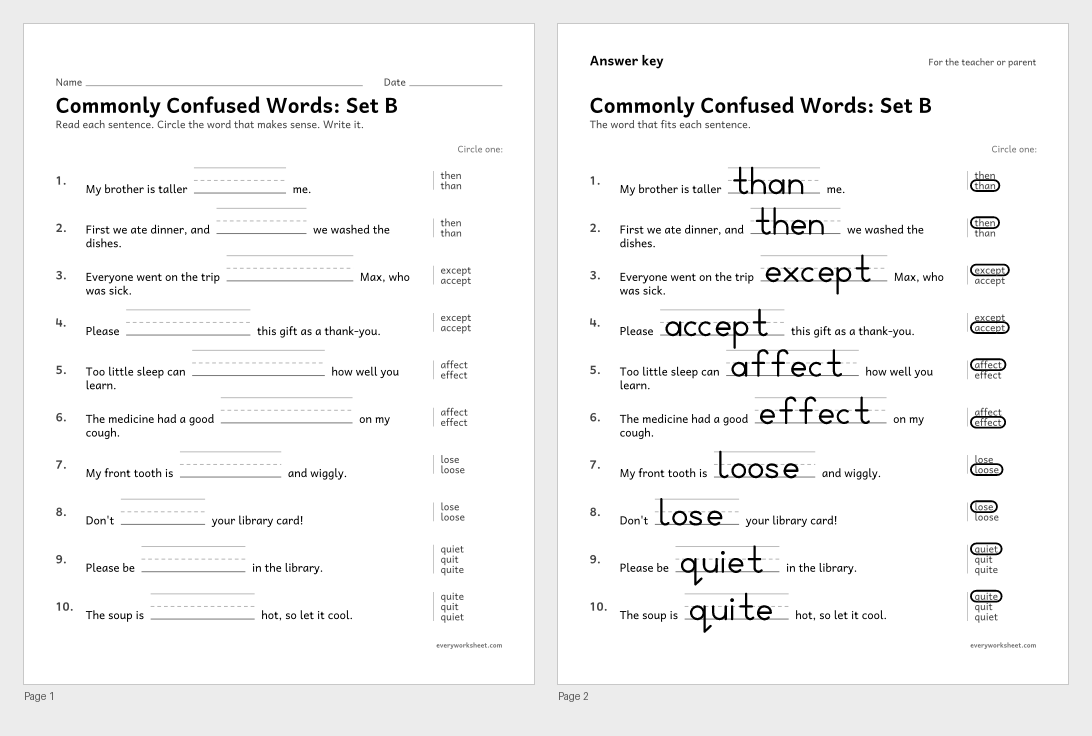 View all 2 pages
Choosing then or than, accept or except, affect or effect, loose or lose, quiet or quite
Answer key on page 2
2 pages52 KB
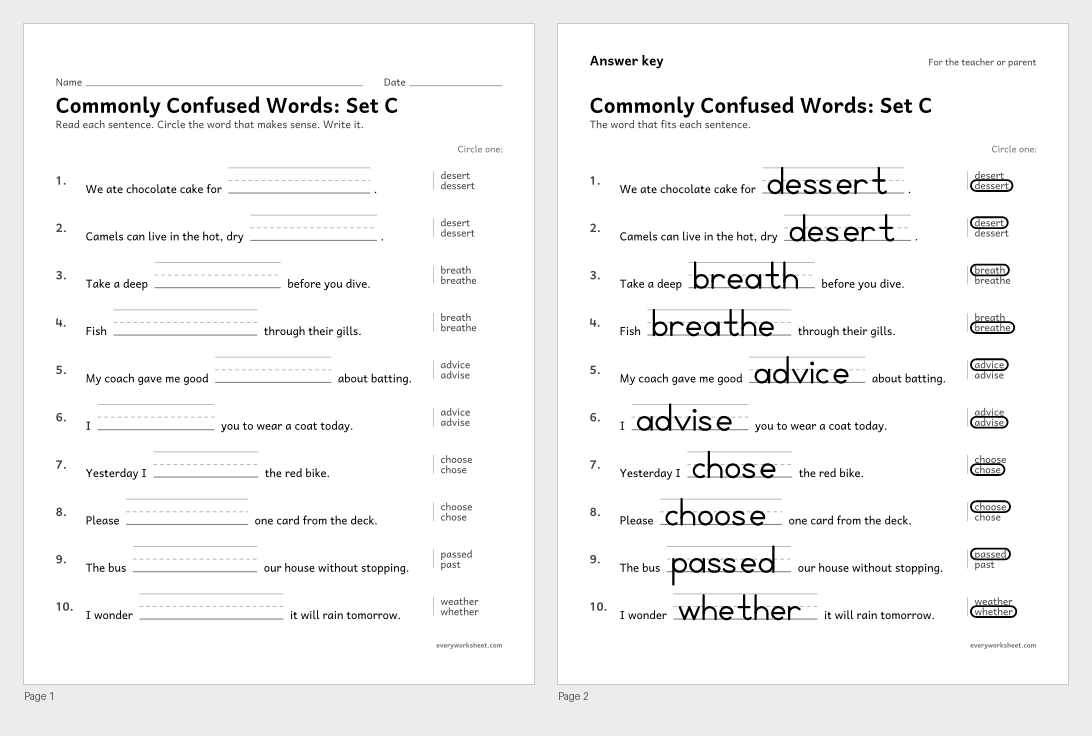 View all 2 pages
Choosing desert or dessert, breath or breathe, advice or advise, choose or chose, passed or past
Answer key on page 2
2 pages53 KB
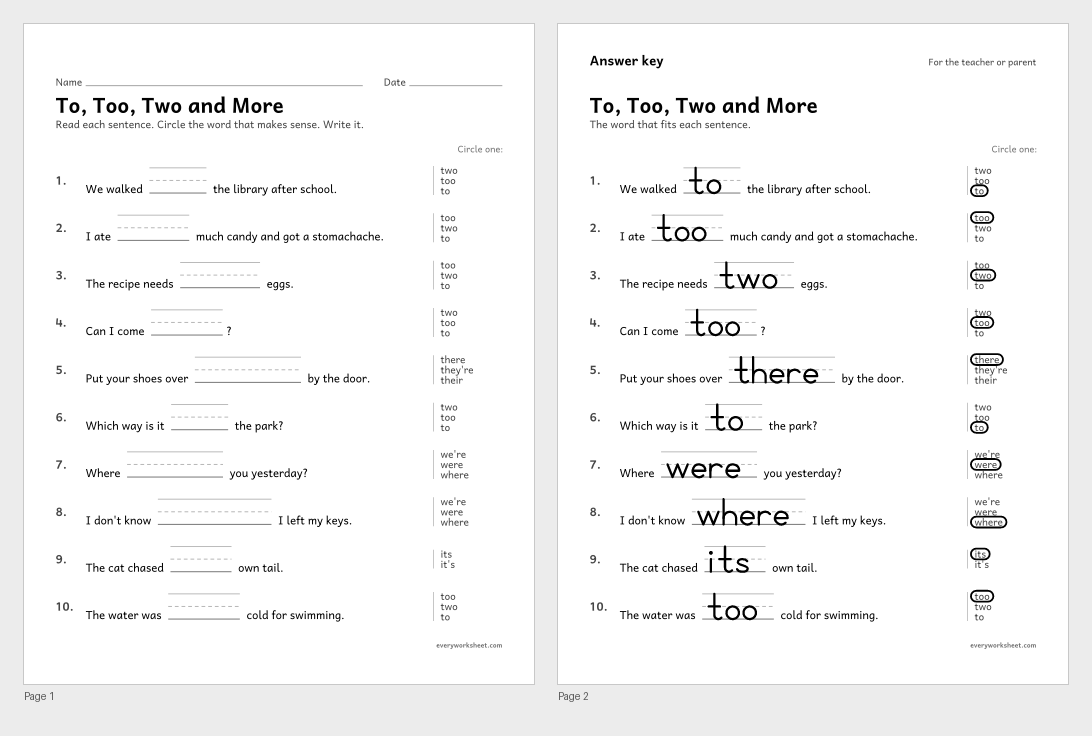 View all 2 pages
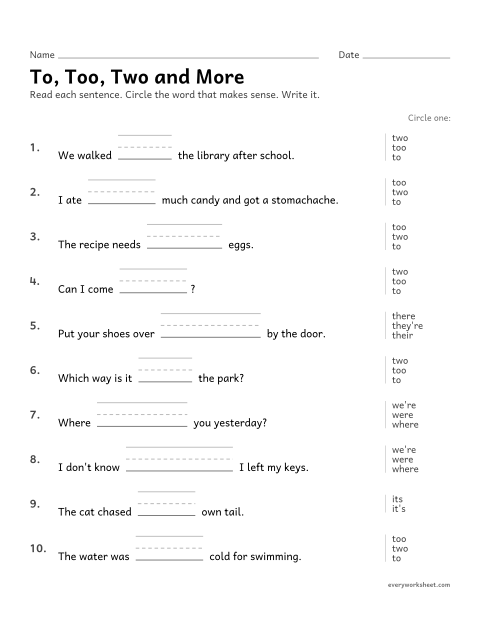
Choosing to, too or two, and there, were or where, in a sentence
Answer key on page 2
2 pages50 KB
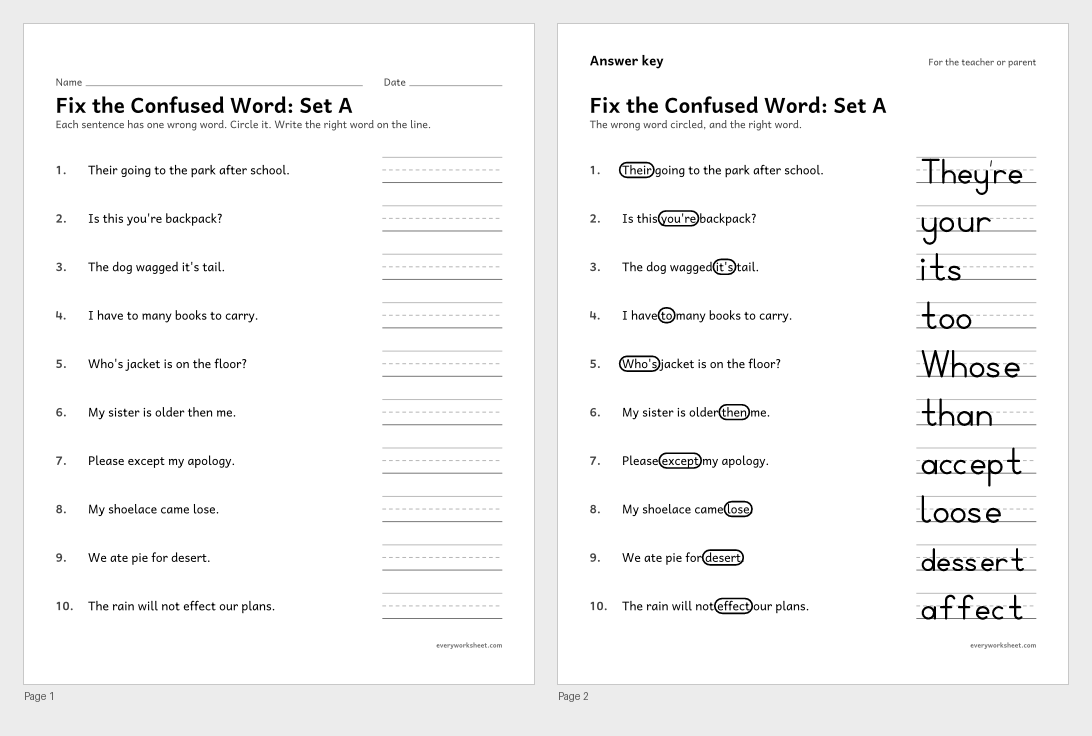 View all 2 pages
Finding and fixing a commonly confused word in a sentence
Answer key on page 2
2 pages49 KB
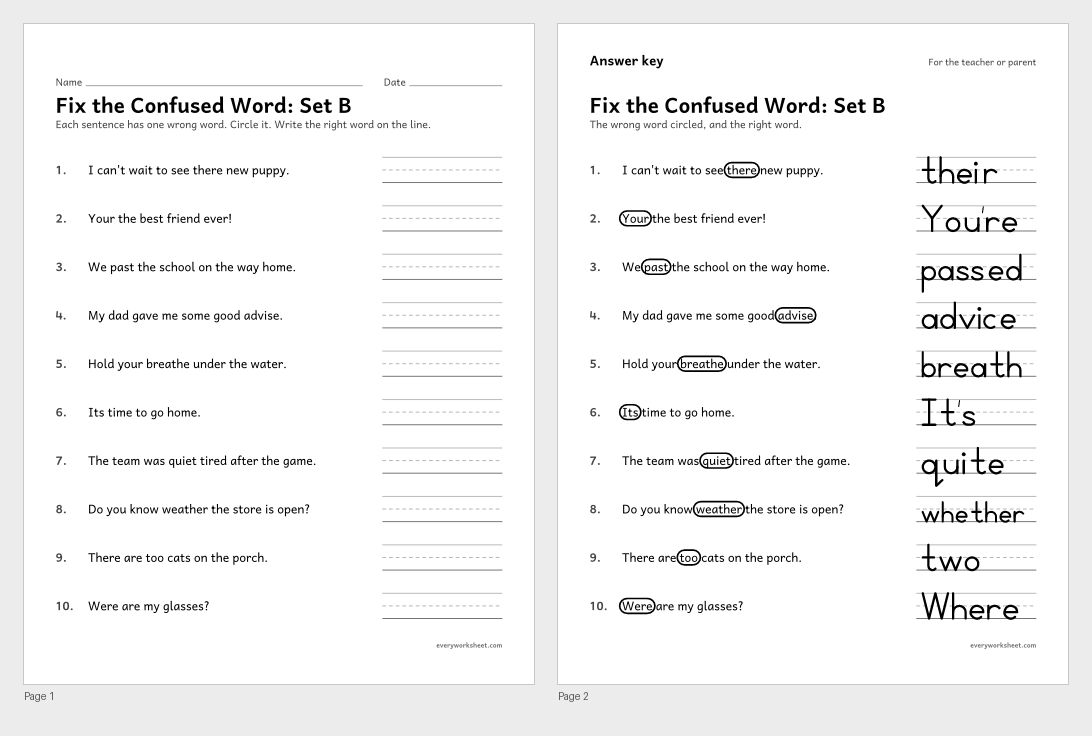 View all 2 pages
Finding and fixing a commonly confused word in a sentence
Answer key on page 2
2 pages49 KB
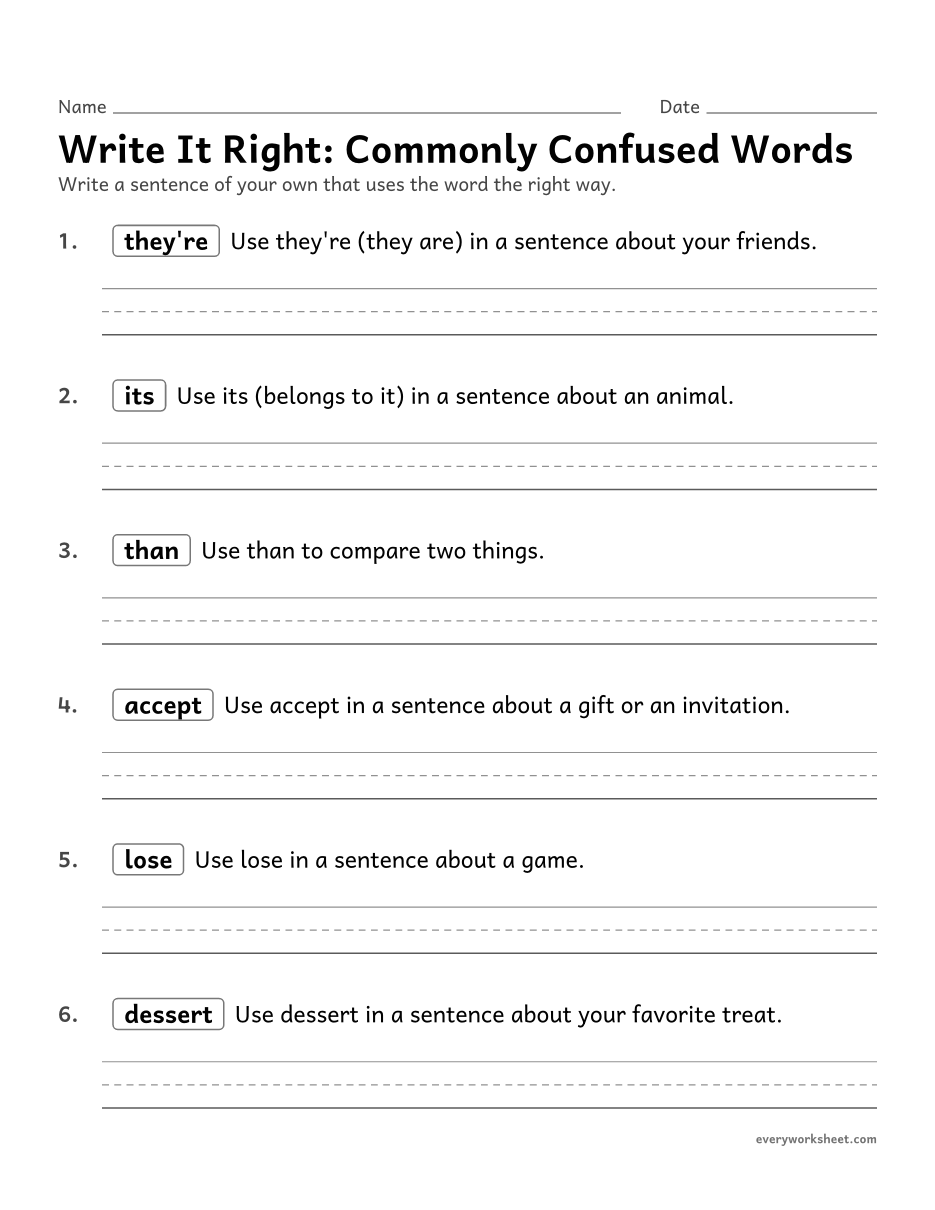 View larger
Writing sentences that use commonly confused words correctly
1 page31 KB
Print at 100% (actual size) for the cleanest tracing lines.
Commonly confused words look or sound alike but mean different things. Some are homophones (their, there and they're; to, too and two). Others only sound close or differ by a letter (then and than, accept and except, affect and effect, loose and lose, quiet and quite, desert and dessert, breath and breathe).
Many of the trickiest pairs are a possessive and a contraction: its and it's, your and you're, their and they're, whose and who's. The test is simple: if you can say it is, you are, they are or who is, use the word with an apostrophe. If the word shows who something belongs to, there is no apostrophe.
These worksheets start with a chart of 18 sets of commonly confused words and what each one means. Four sentence pages ask children to circle and write the word that fits, two proofreading pages ask them to find and fix the wrong word, and a final page asks them to write sentences of their own. Pages with right answers have an answer key on page 2.
CCSS.ELA-LITERACY.L.4.1.GCorrectly use frequently confused words (e.g., to, too, two; there, their).CCSS.ELA-LITERACY.L.4.2.DSpell grade-appropriate words correctly, consulting references as needed.Words that look or sound alike but have different meanings and spellings, such as their, there and they're; then and than; and affect and effect.
Some are. Homophones sound exactly the same (to, too, two). Other confused words only sound close (accept and except, loose and lose) or are spelled almost the same (desert and dessert).
Children start with simple homophones in 2nd and 3rd grade. In 4th grade they are expected to use frequently confused words like to, too and two and there and their correctly in their own writing.