 View larger
Decimal place value chart
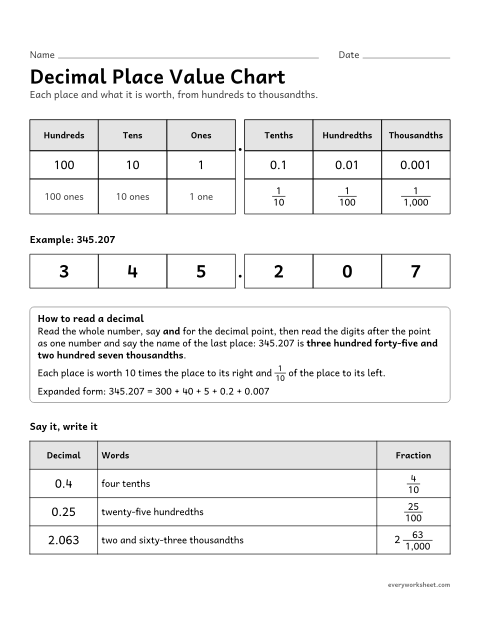
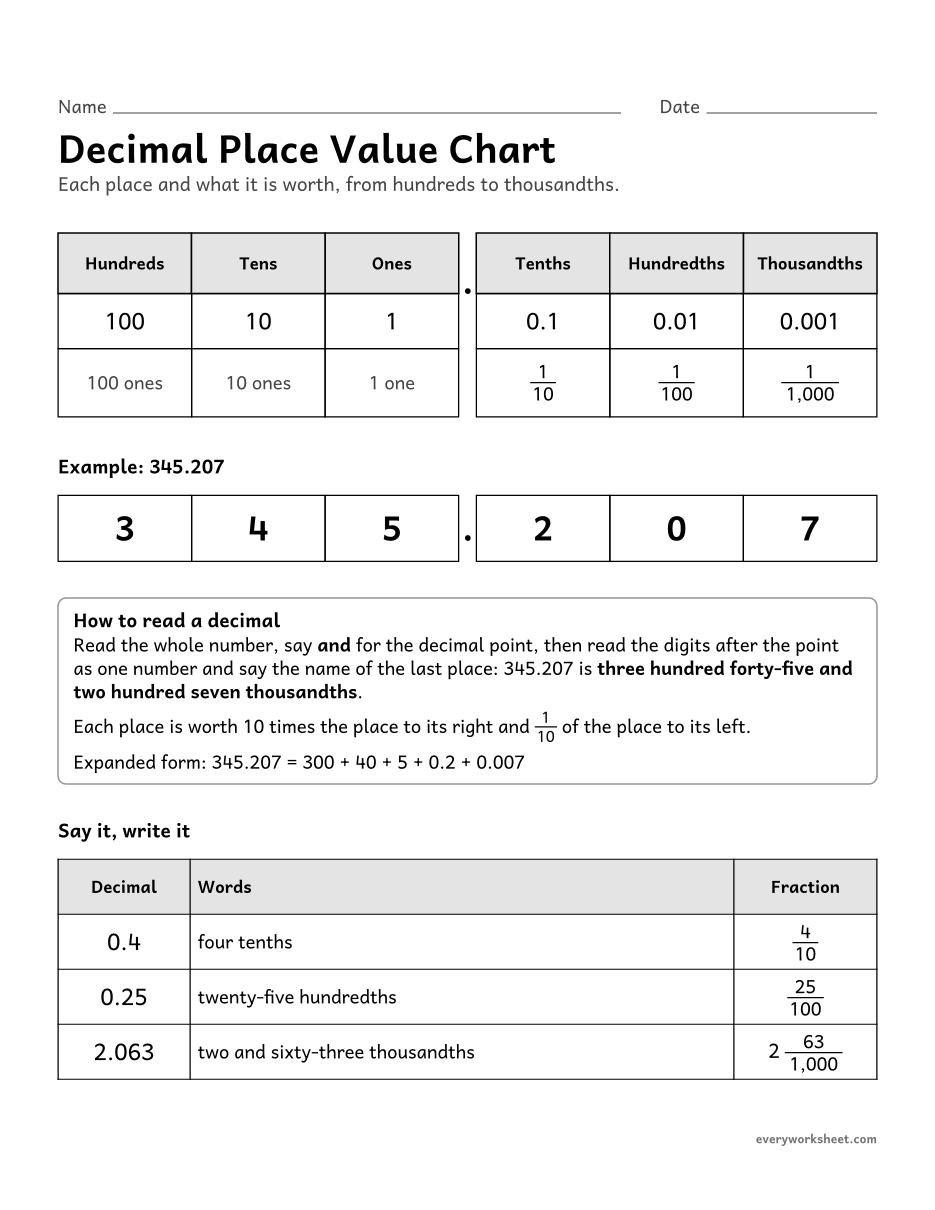
Reading a decimal place value chart to thousandths
1 page39 KB
Decimals to thousandths: place value charts, the value of each digit, expanded and word form, comparing, ordering and rounding.
View largerReading a decimal place value chart to thousandths
1 page39 KB
 View all 2 pages
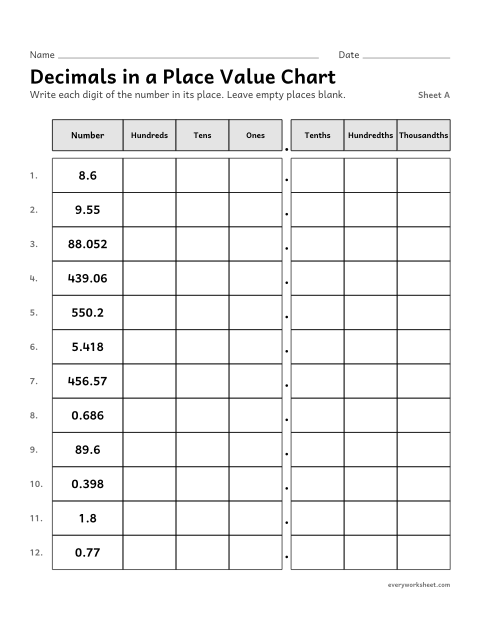
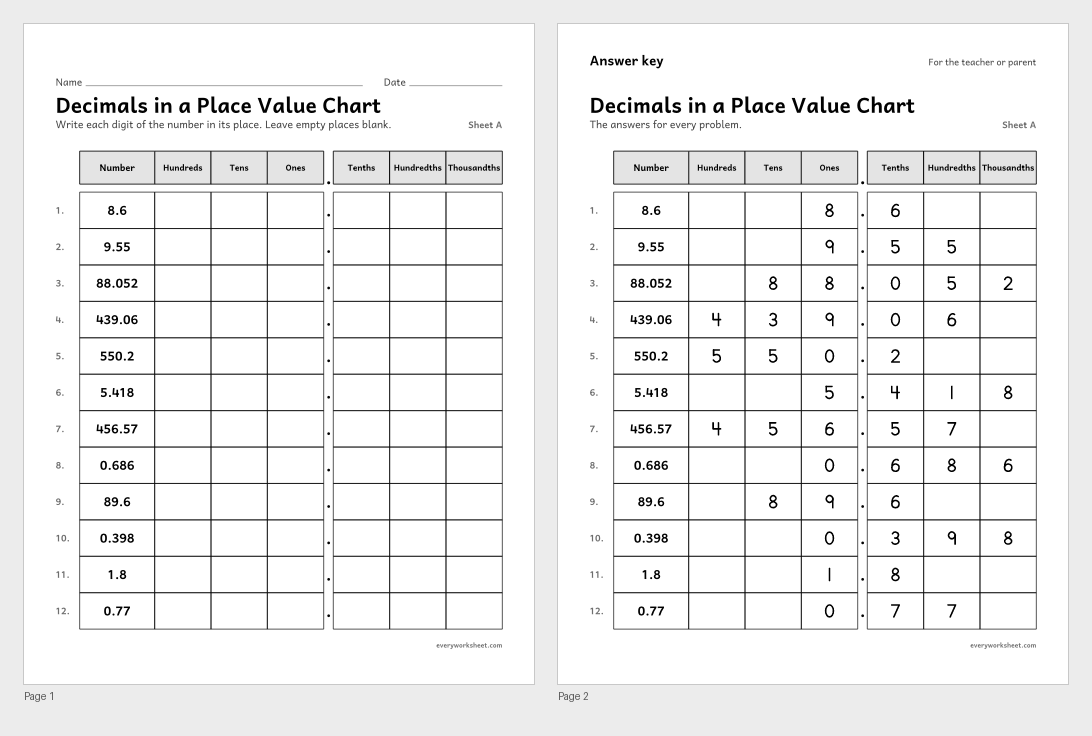
Placing the digits of a decimal in a place value chart
Answer key on page 2
2 pages34 KB
 View all 2 pages
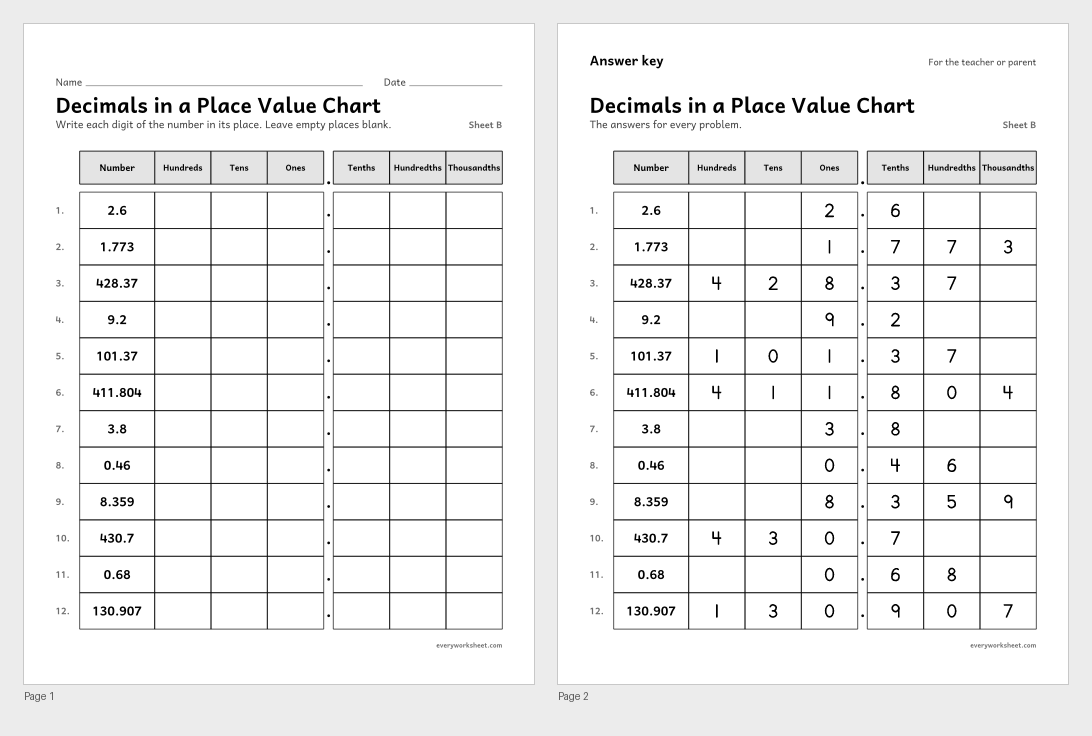
Placing the digits of a decimal in a place value chart
Answer key on page 2
2 pages34 KB
 View all 2 pages
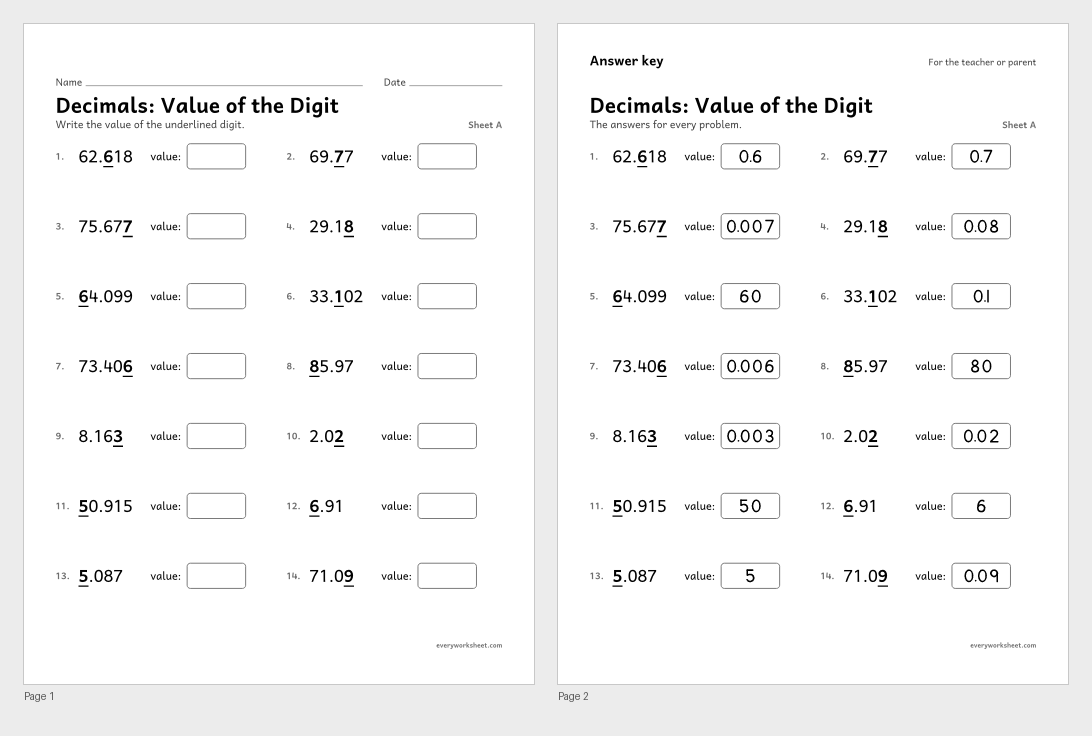
Finding the value of a digit in a decimal
Answer key on page 2
2 pages72 KB
 View all 2 pages
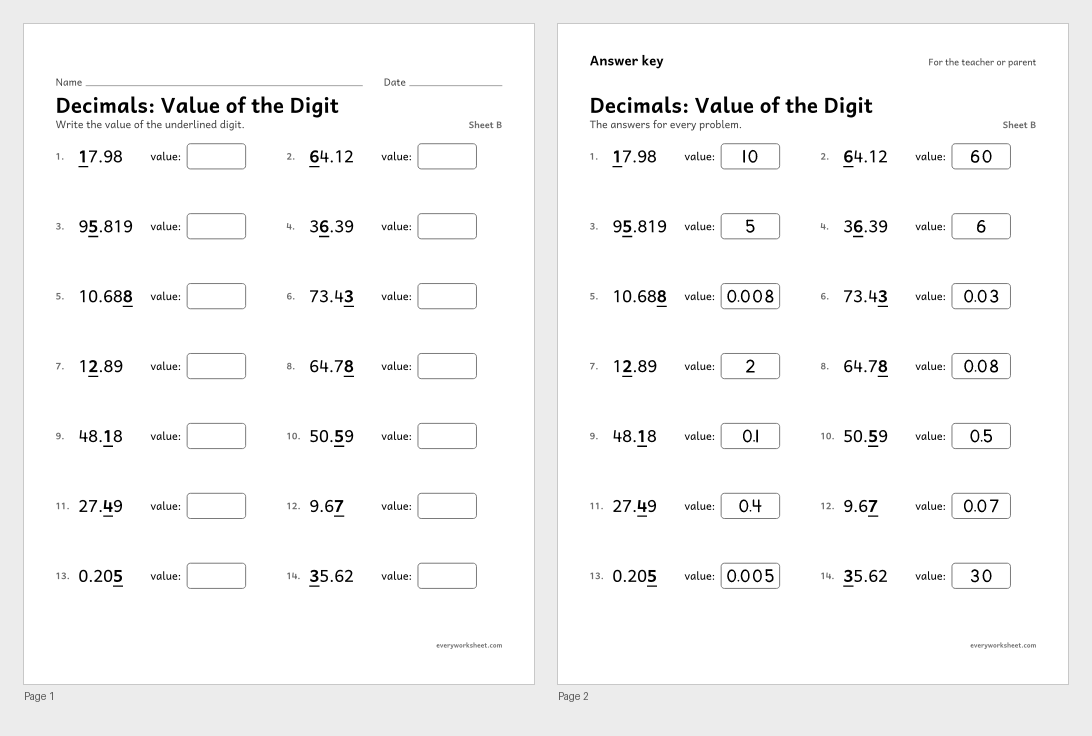
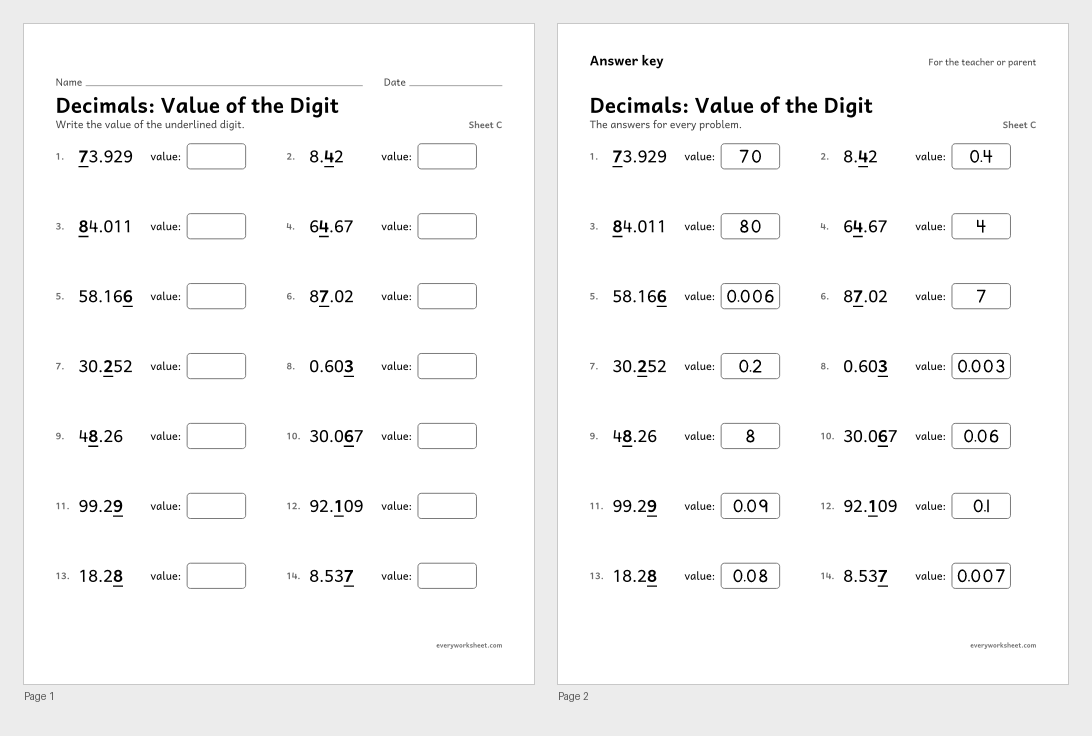
Finding the value of a digit in a decimal
Answer key on page 2
2 pages73 KB
 View all 2 pages
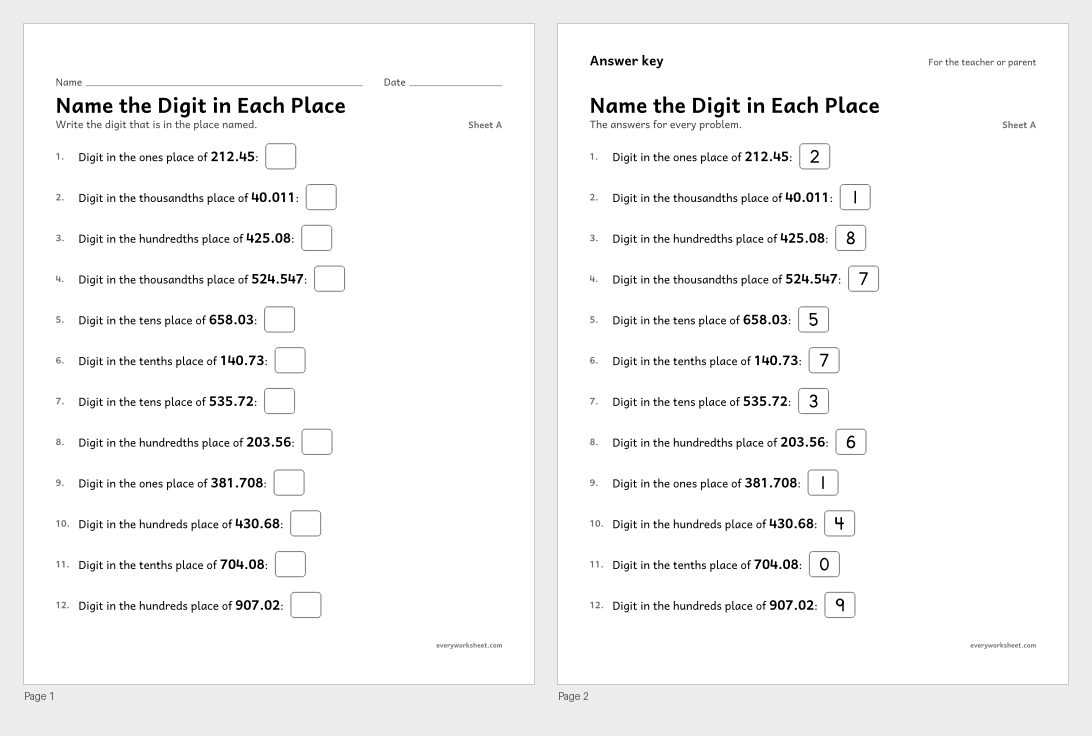
Finding the value of a digit in a decimal
Answer key on page 2
2 pages73 KB
 View all 2 pages
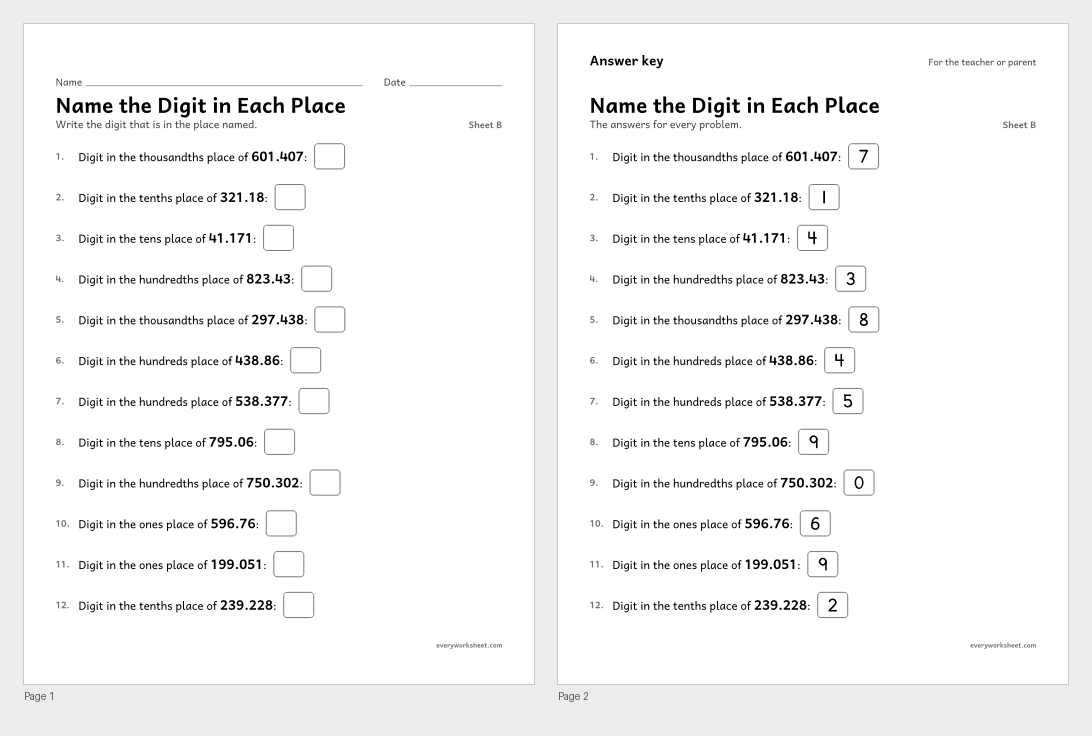
Identifying the digit in a decimal place
Answer key on page 2
2 pages54 KB
 View all 2 pages
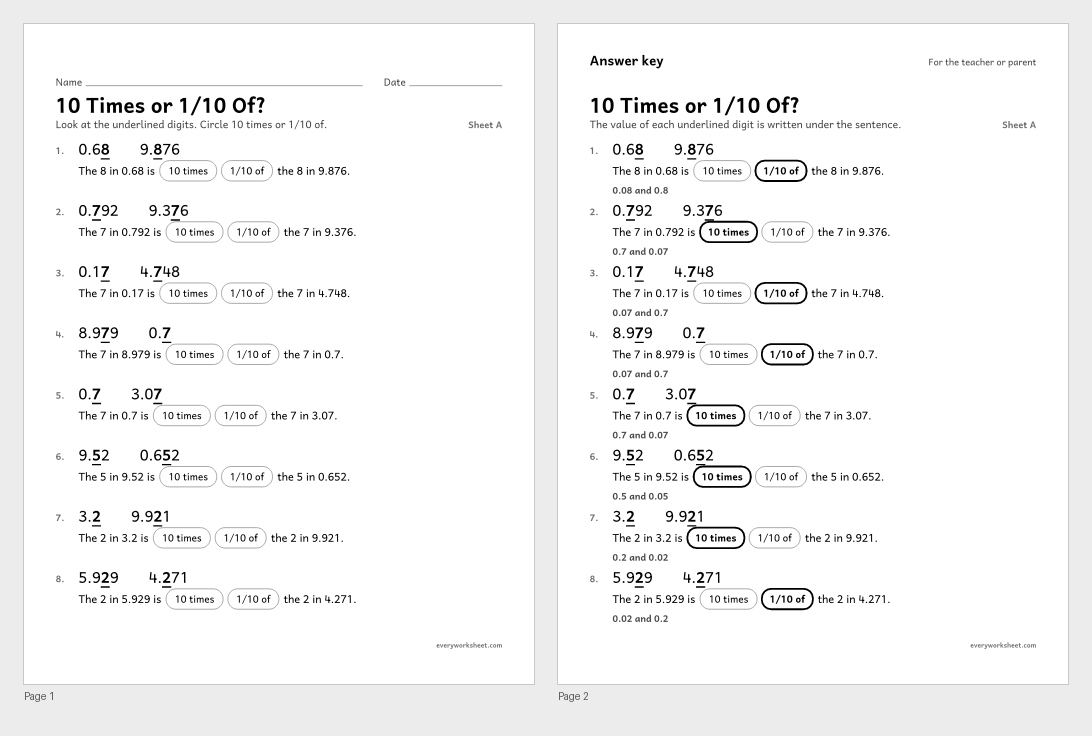
Identifying the digit in a decimal place
Answer key on page 2
2 pages54 KB
 View all 2 pages
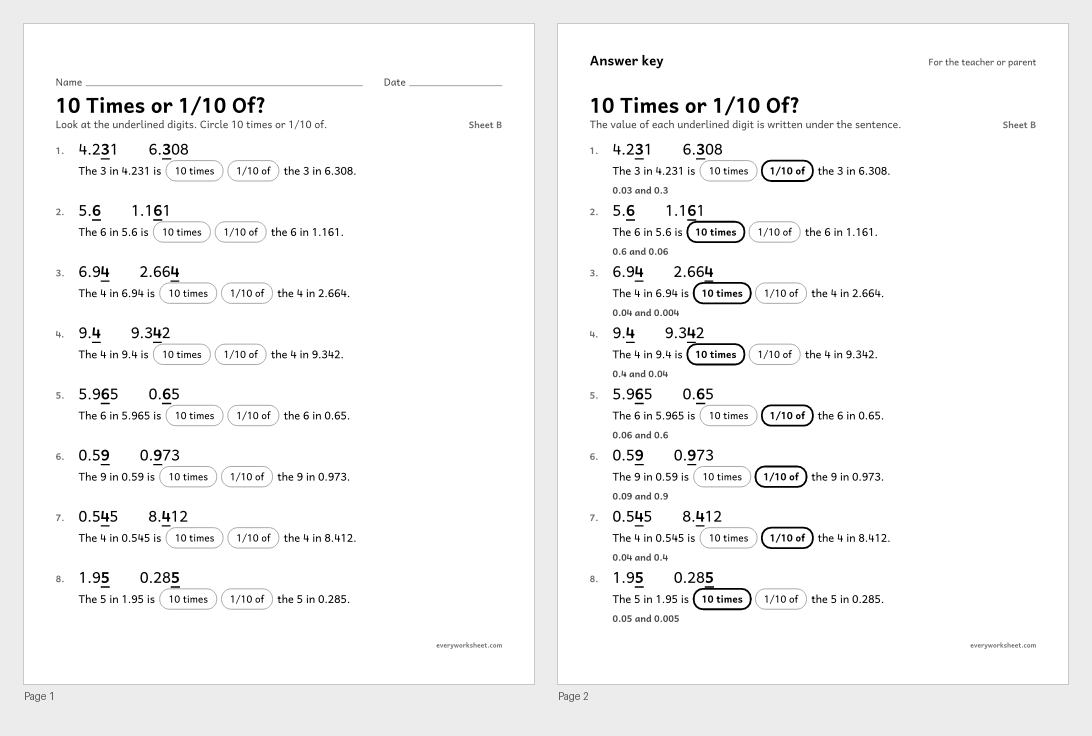
Comparing the values of a digit in neighbouring places
Answer key on page 2
2 pages74 KB
 View all 2 pages
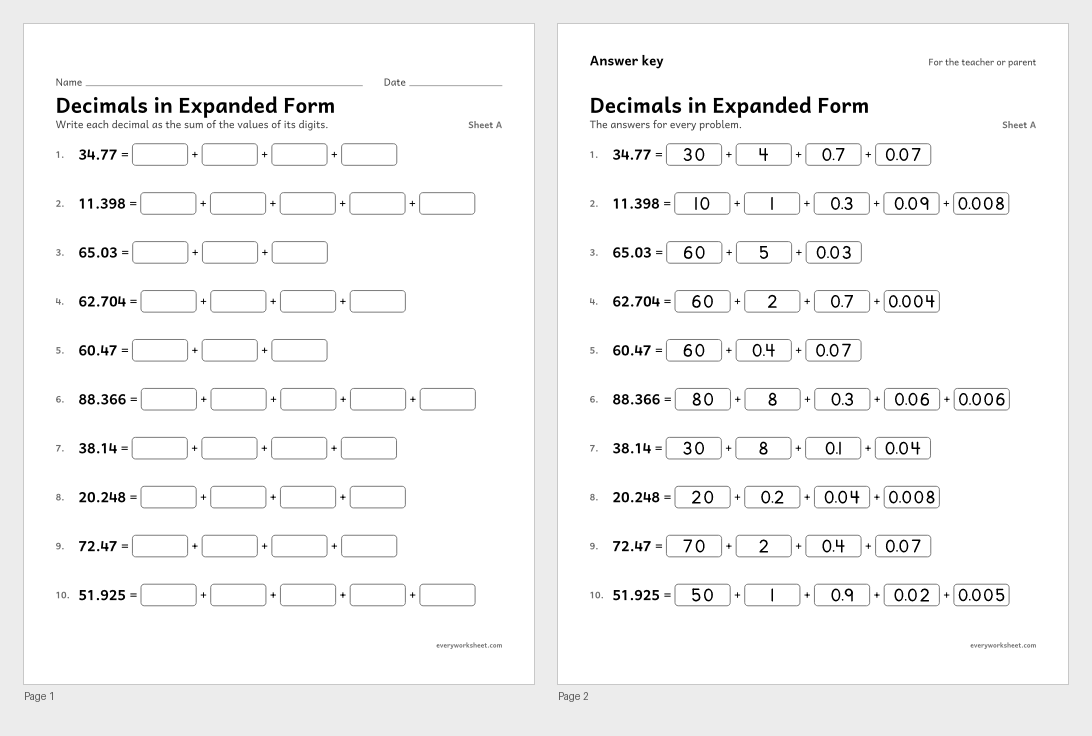
Comparing the values of a digit in neighbouring places
Answer key on page 2
2 pages74 KB
 View all 2 pages
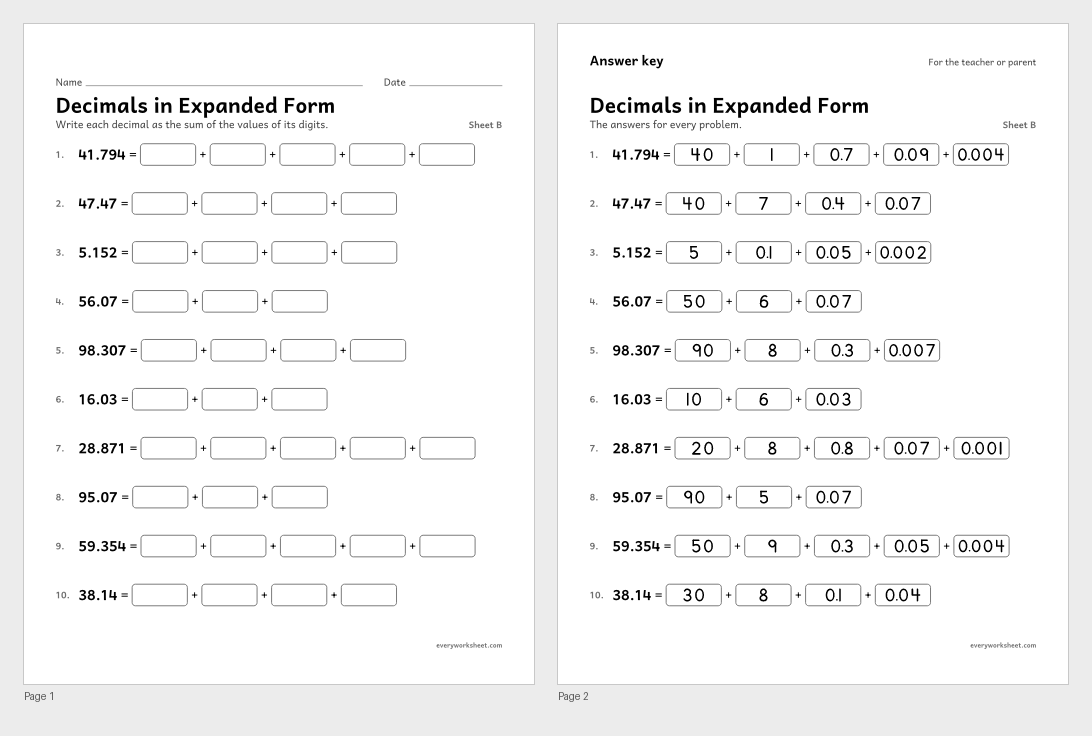
Writing decimals in expanded form
Answer key on page 2
2 pages77 KB
 View all 2 pages
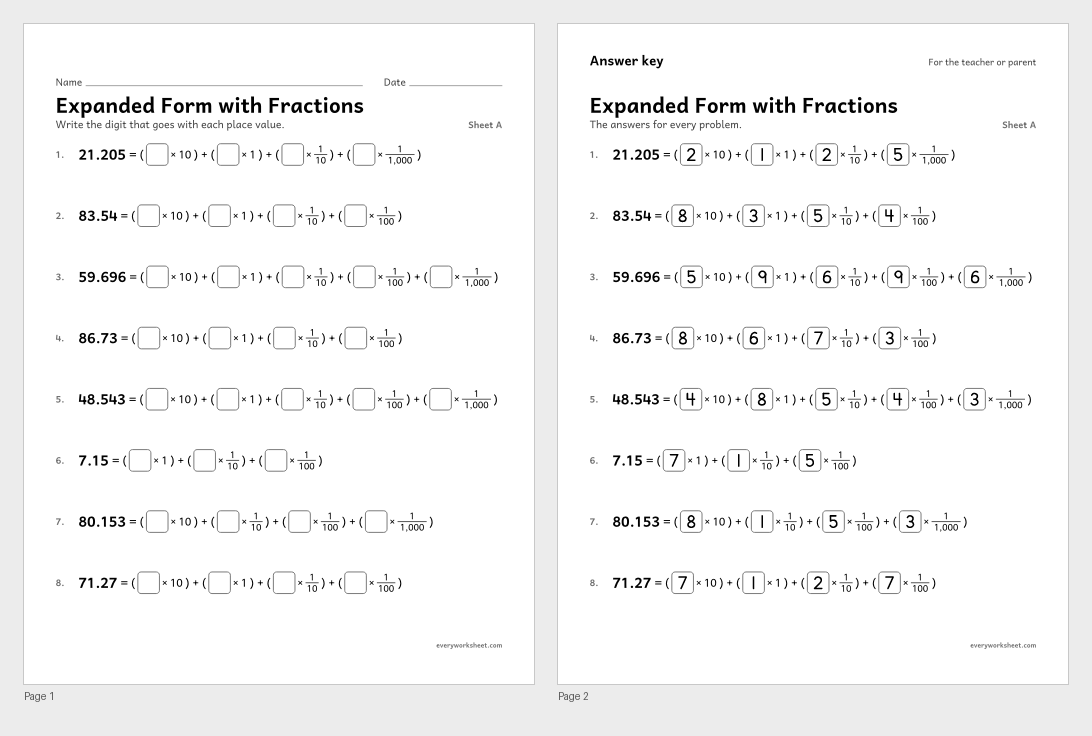
Writing decimals in expanded form
Answer key on page 2
2 pages75 KB
 View all 2 pages
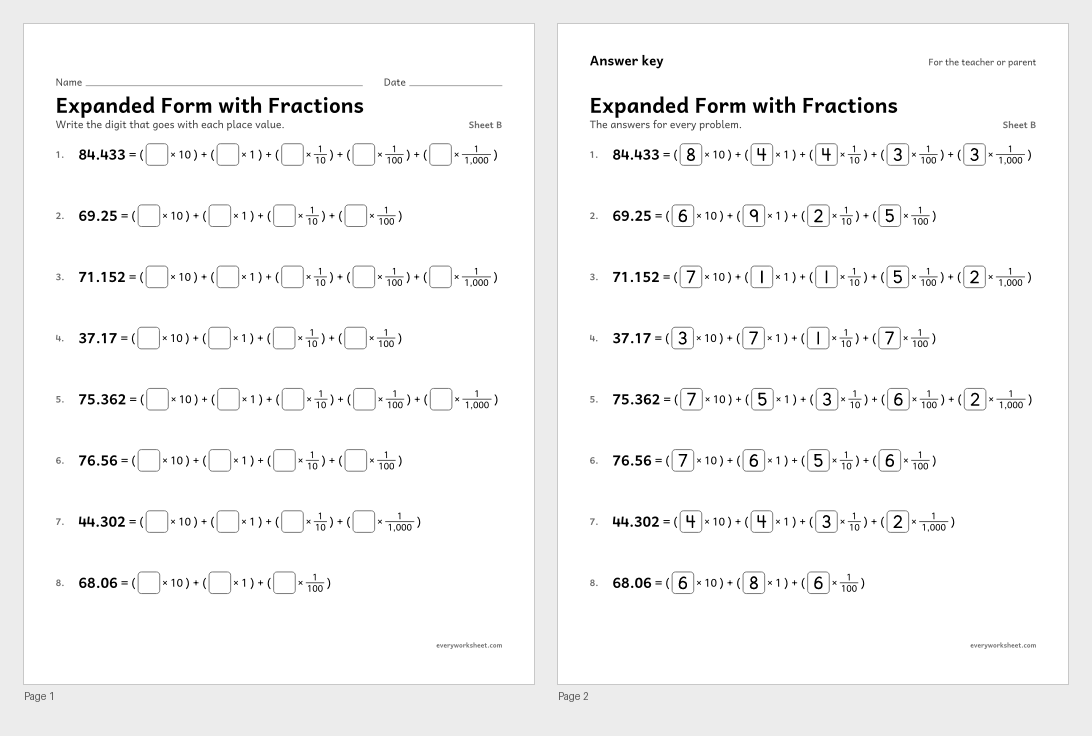
Writing decimals in expanded form with fractions
Answer key on page 2
2 pages158 KB
 View all 2 pages
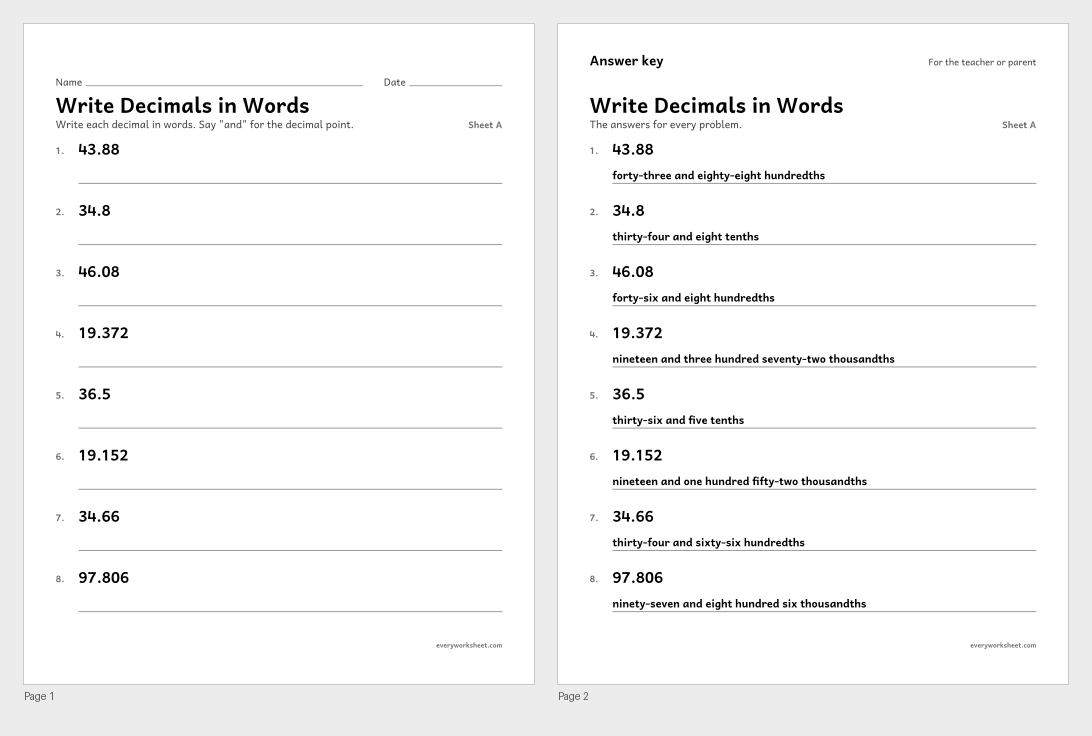
Writing decimals in expanded form with fractions
Answer key on page 2
2 pages160 KB
 View all 2 pages
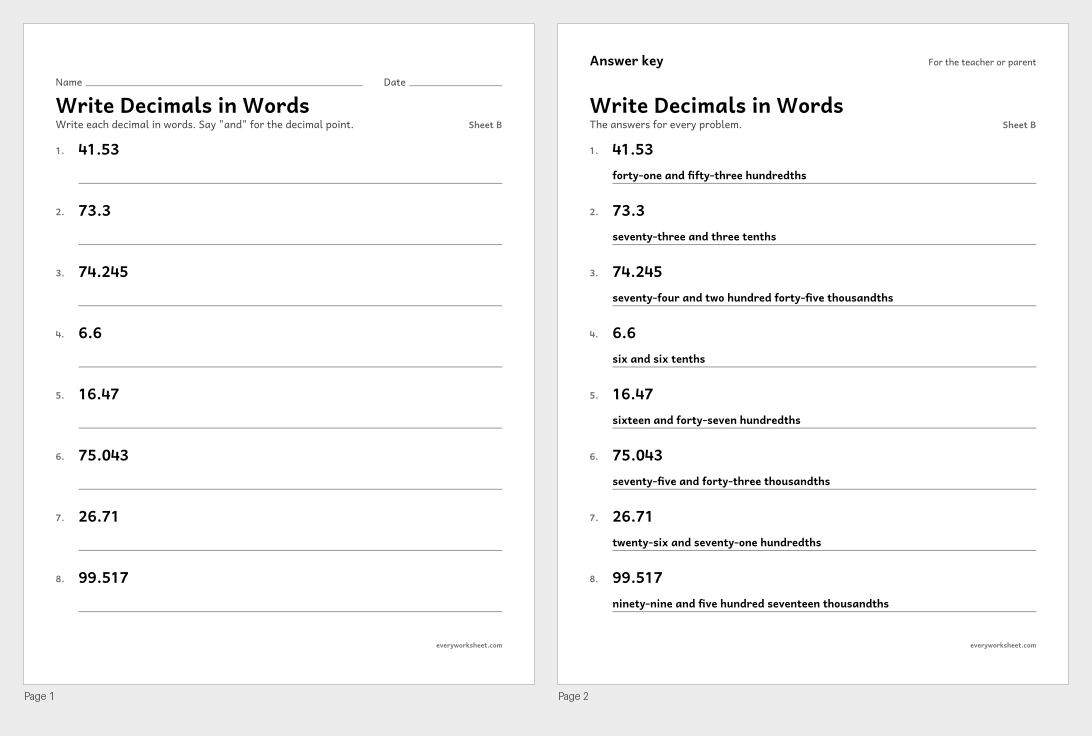
Writing decimals in word form
Answer key on page 2
2 pages40 KB
 View all 2 pages
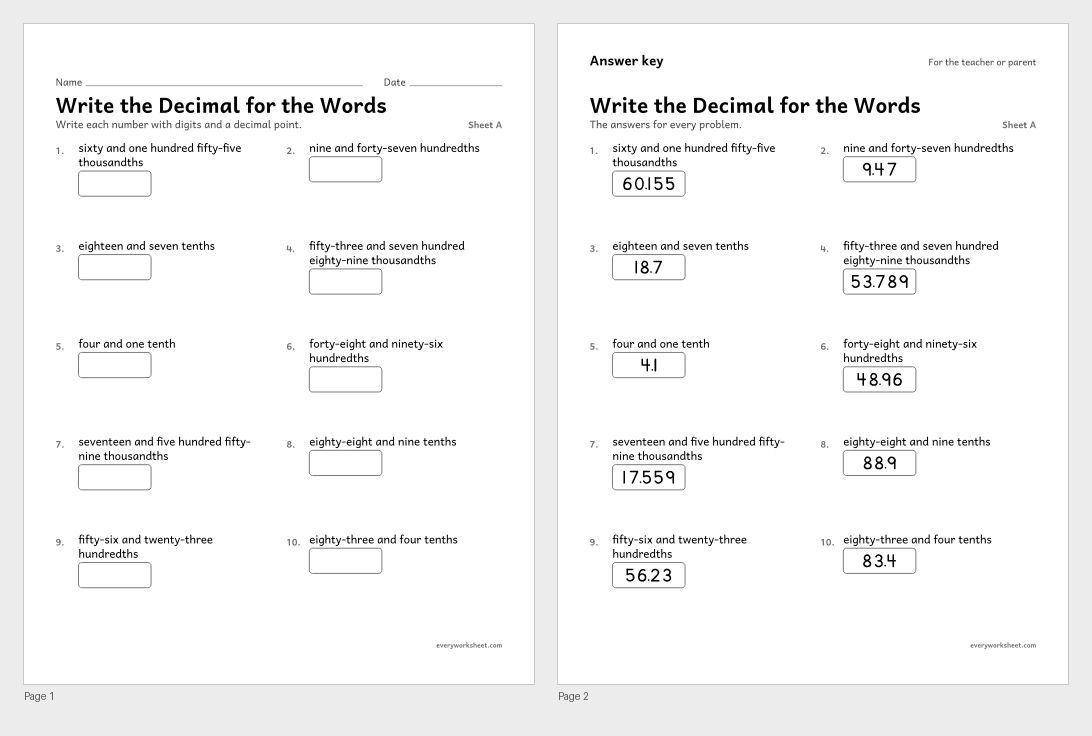
Writing decimals in word form
Answer key on page 2
2 pages40 KB
 View all 2 pages
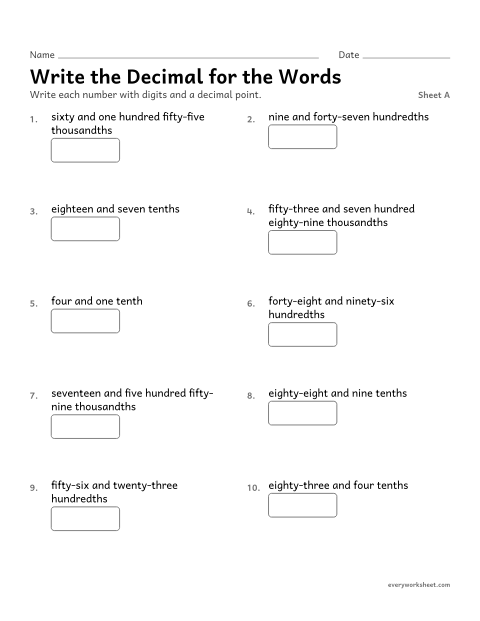
Writing decimals from word form
Answer key on page 2
2 pages44 KB
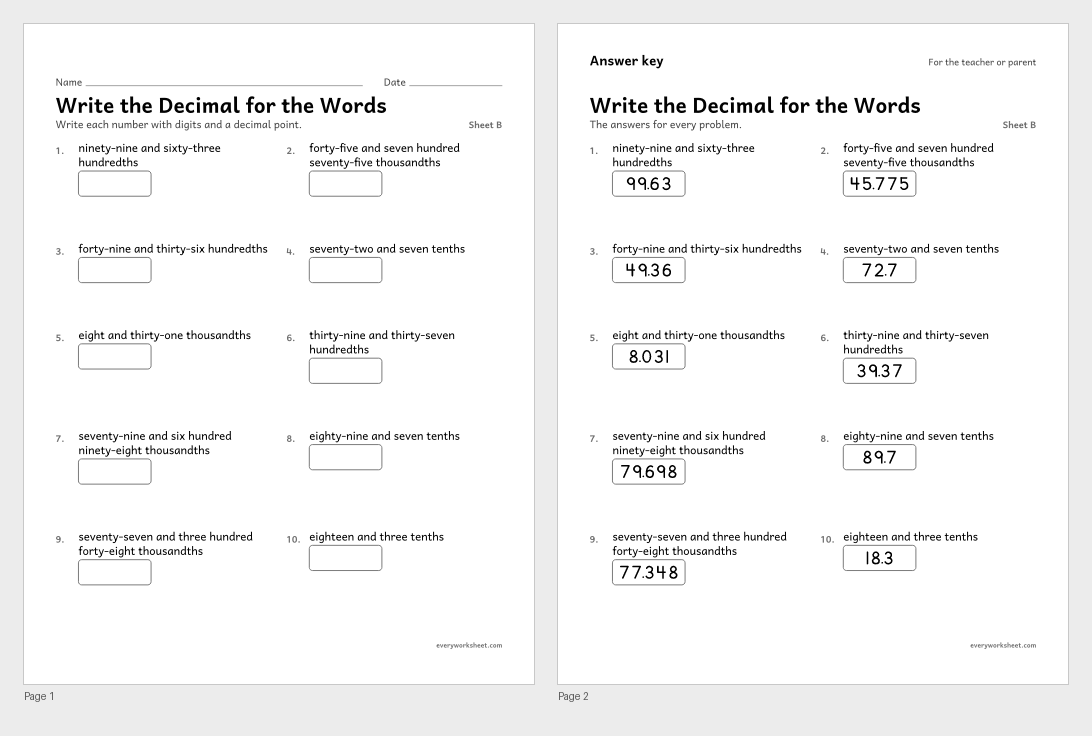 View all 2 pages
Writing decimals from word form
Answer key on page 2
2 pages44 KB
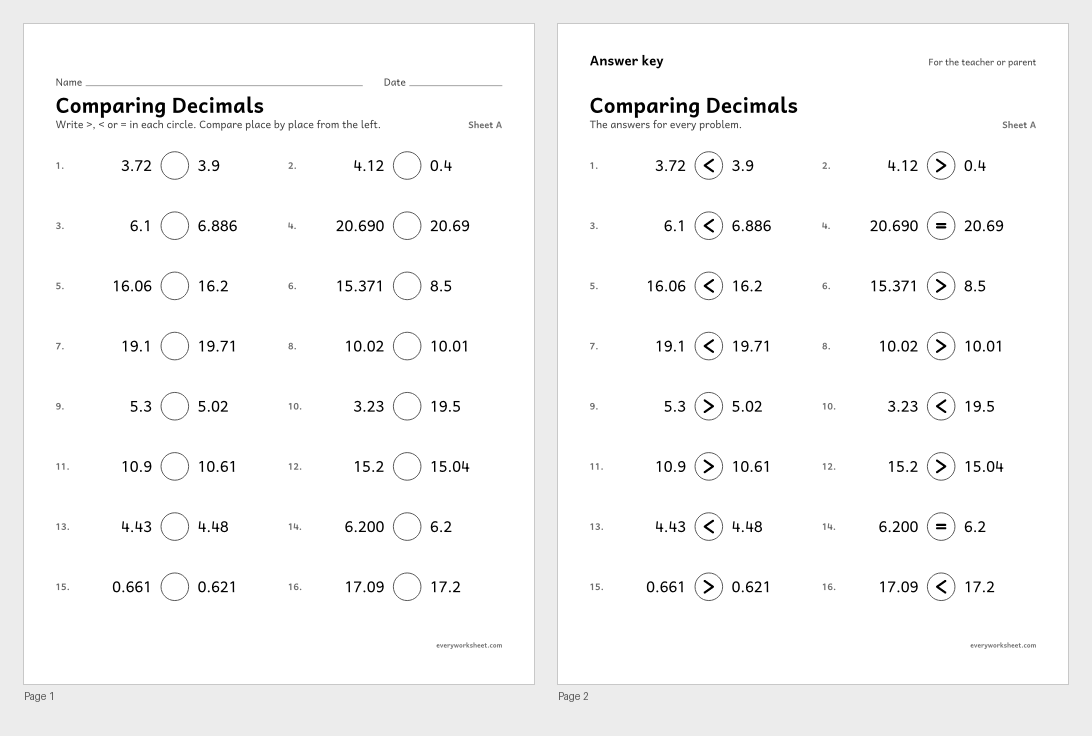 View all 2 pages
Comparing decimals to thousandths
Answer key on page 2
2 pages66 KB
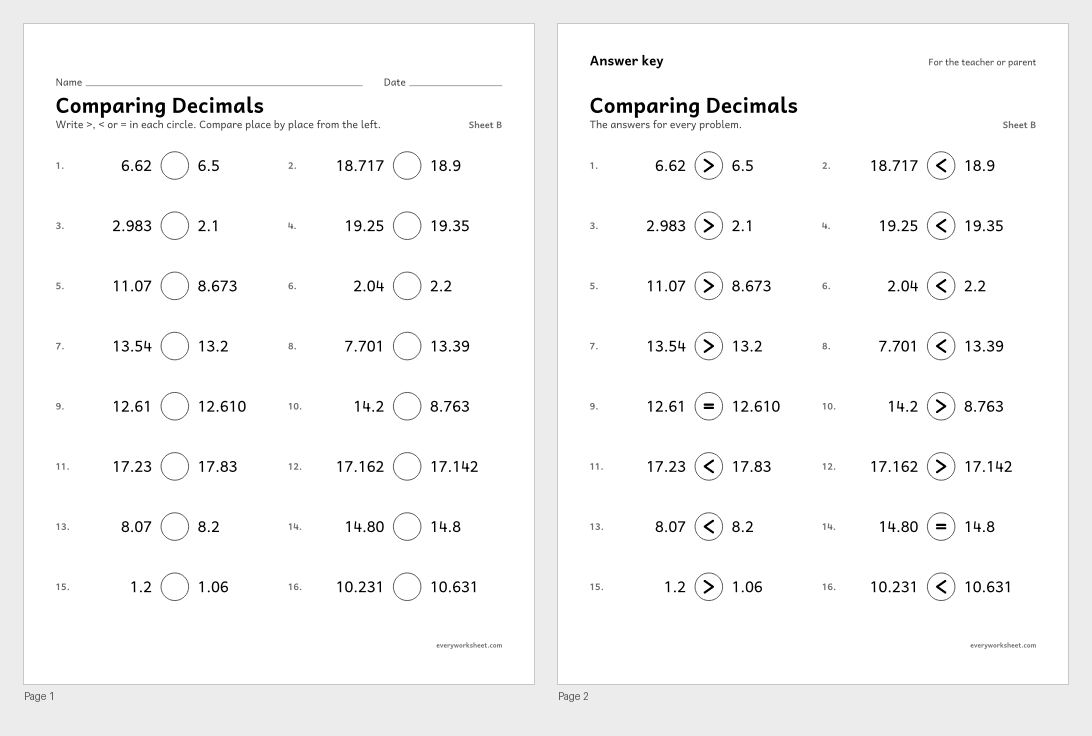 View all 2 pages
Comparing decimals to thousandths
Answer key on page 2
2 pages67 KB
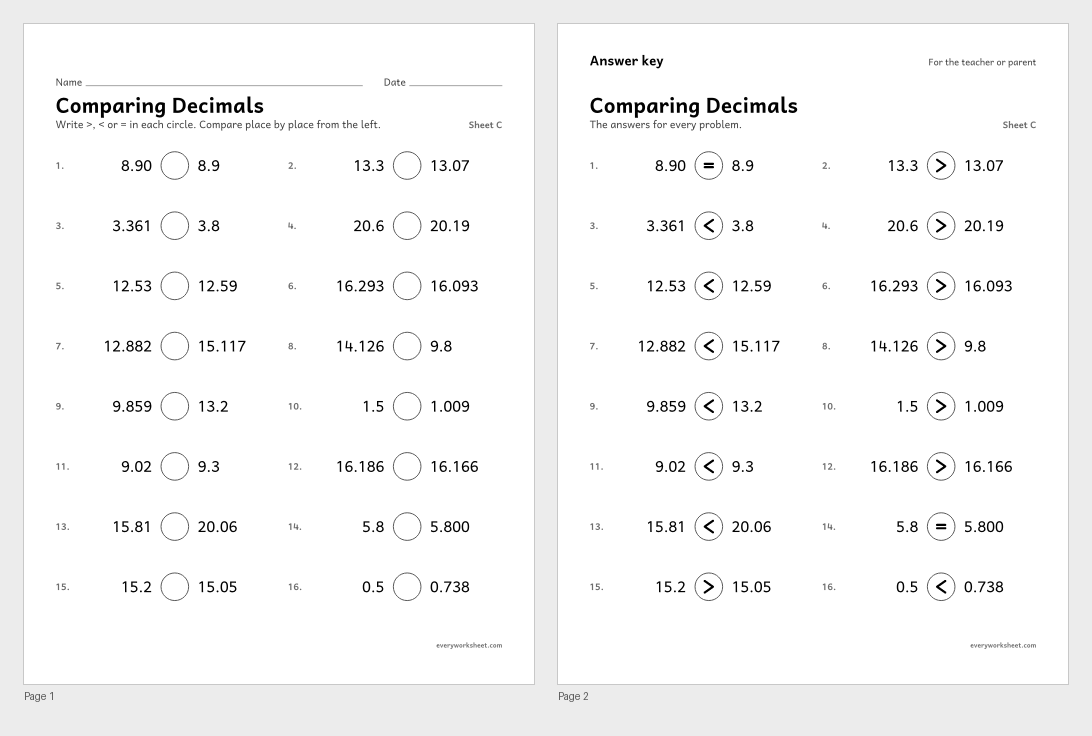 View all 2 pages
Comparing decimals to thousandths
Answer key on page 2
2 pages66 KB
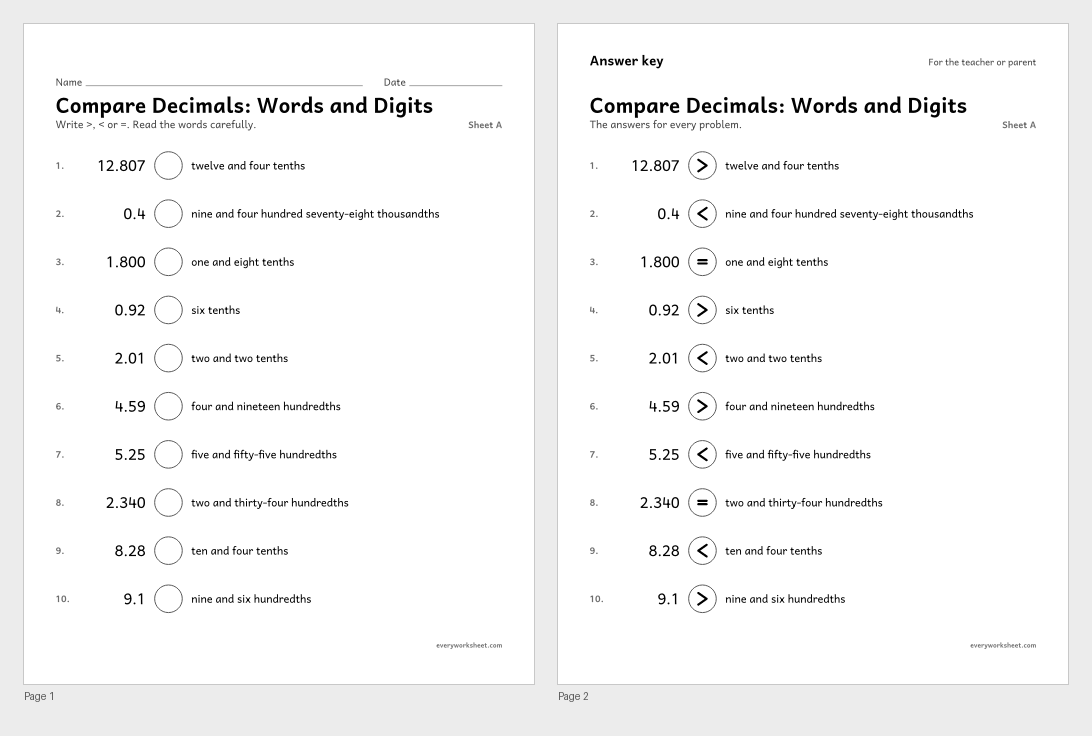 View all 2 pages
Comparing decimals written in words and digits
Answer key on page 2
2 pages54 KB
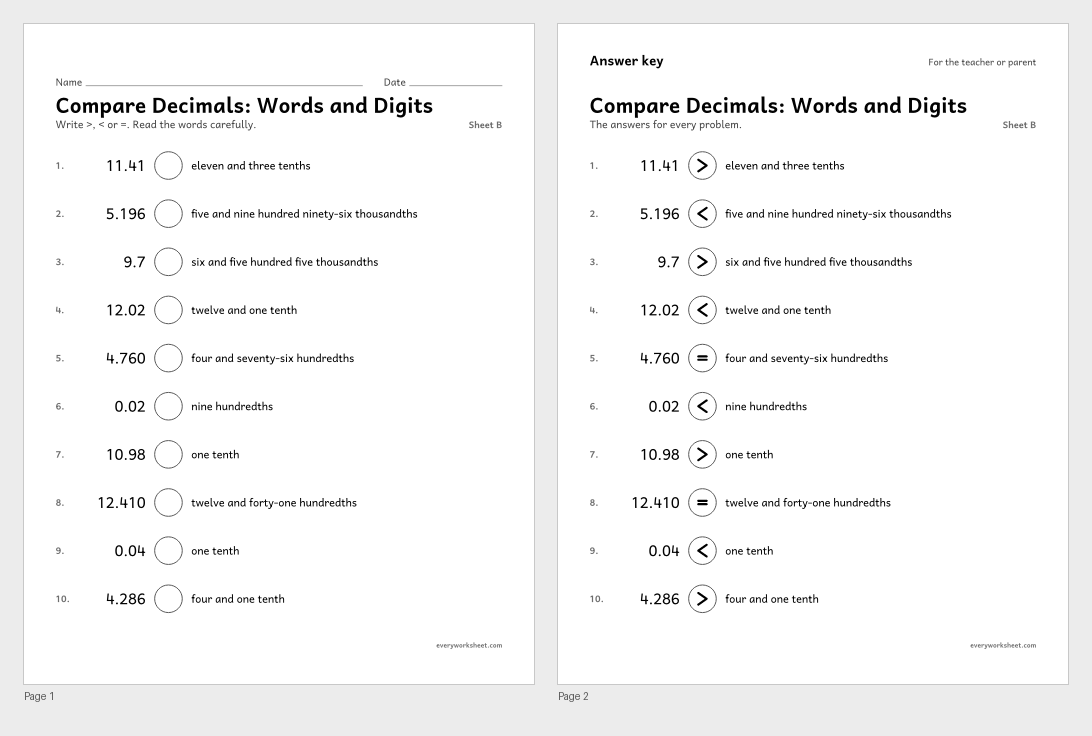 View all 2 pages
Comparing decimals written in words and digits
Answer key on page 2
2 pages54 KB
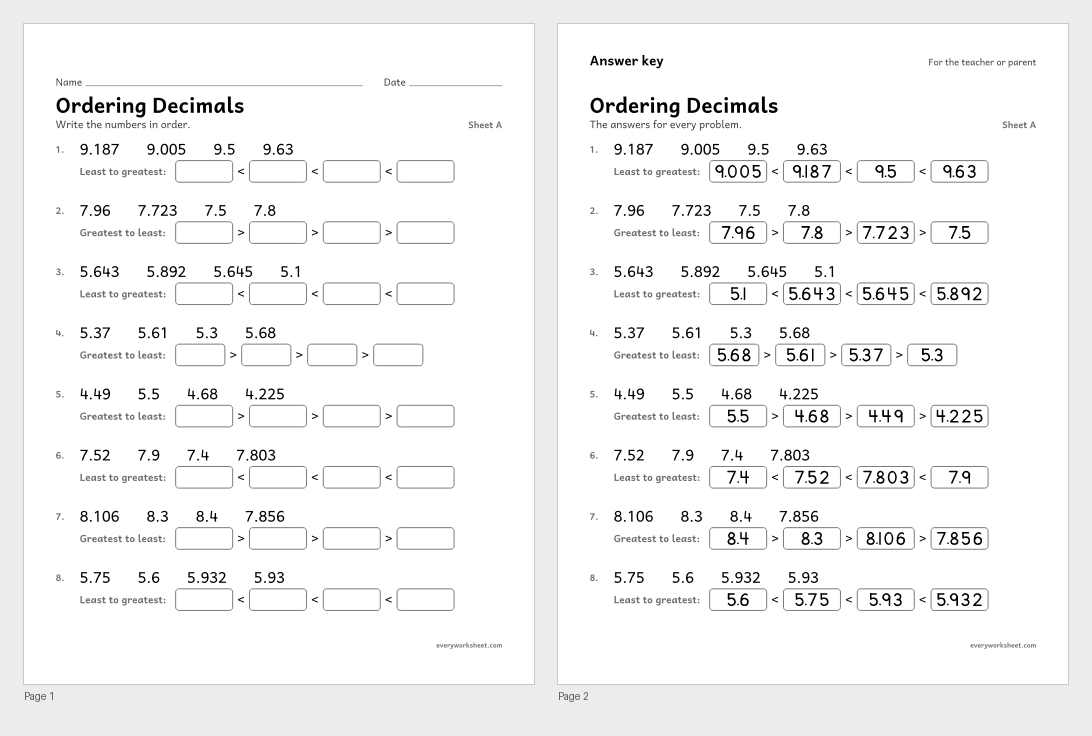 View all 2 pages
Ordering decimals to thousandths
Answer key on page 2
2 pages66 KB
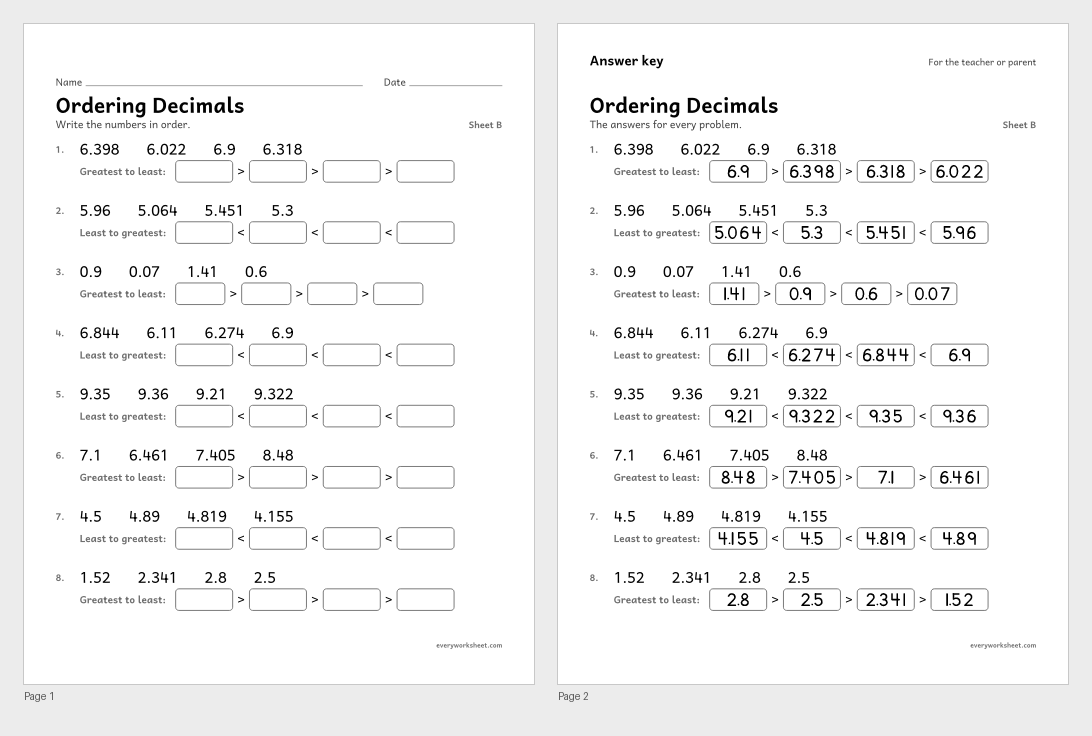 View all 2 pages
Ordering decimals to thousandths
Answer key on page 2
2 pages67 KB
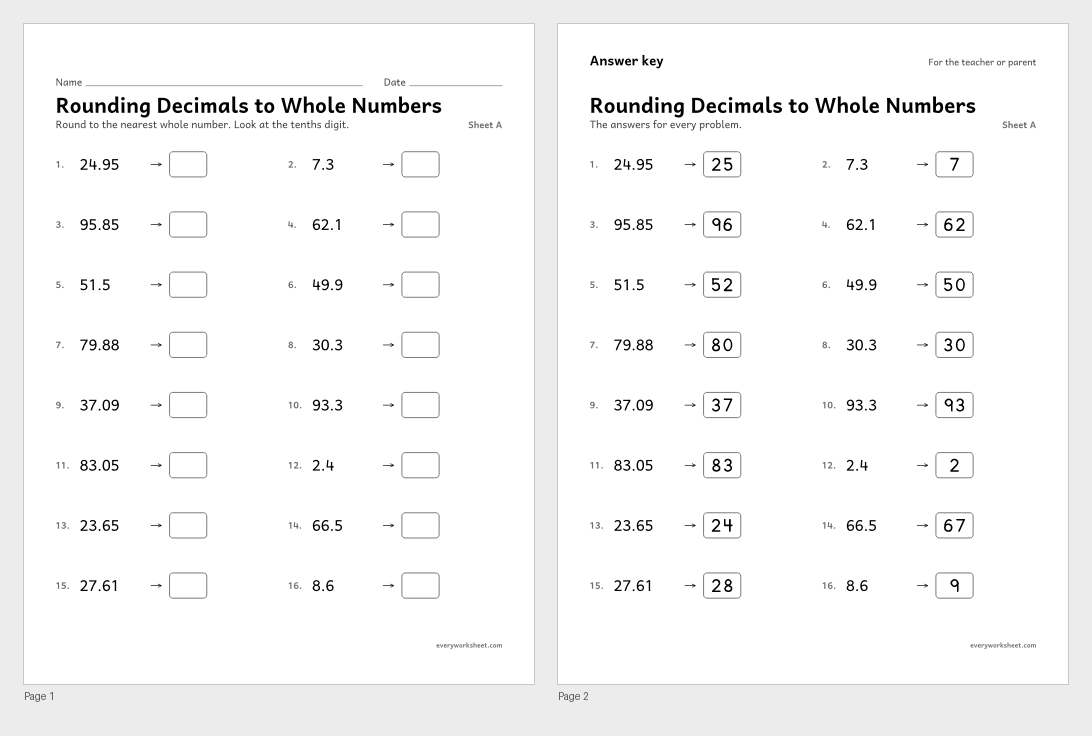 View all 2 pages
Rounding decimals to the nearest whole number
Answer key on page 2
2 pages69 KB
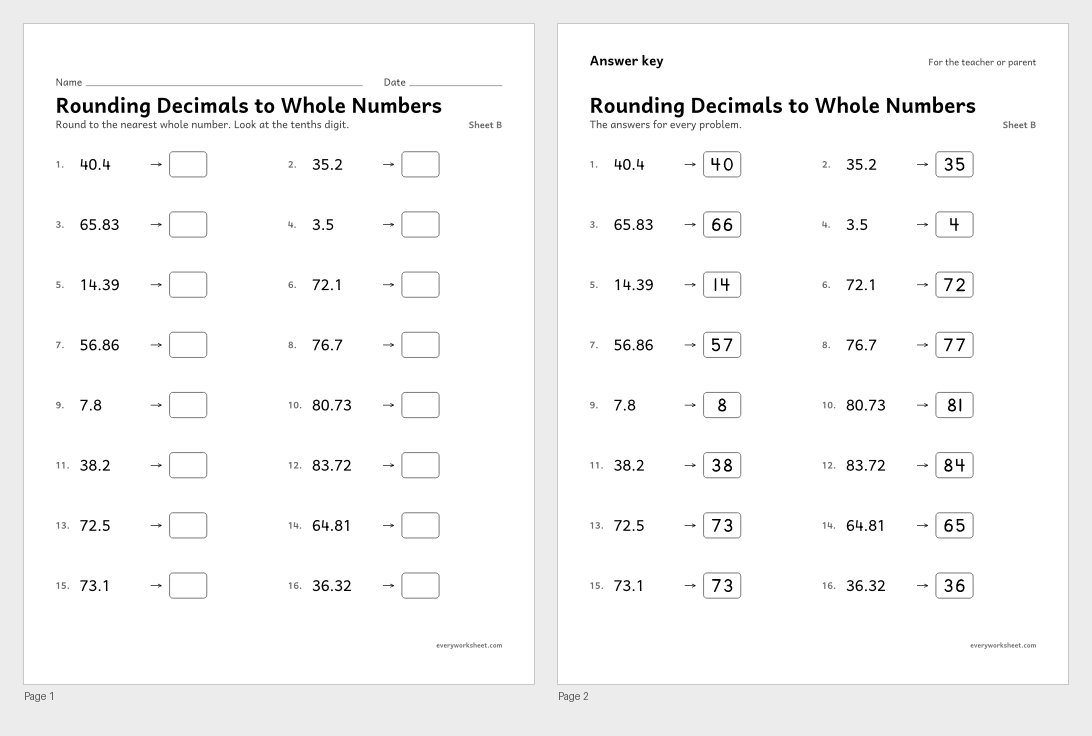 View all 2 pages
Rounding decimals to the nearest whole number
Answer key on page 2
2 pages69 KB
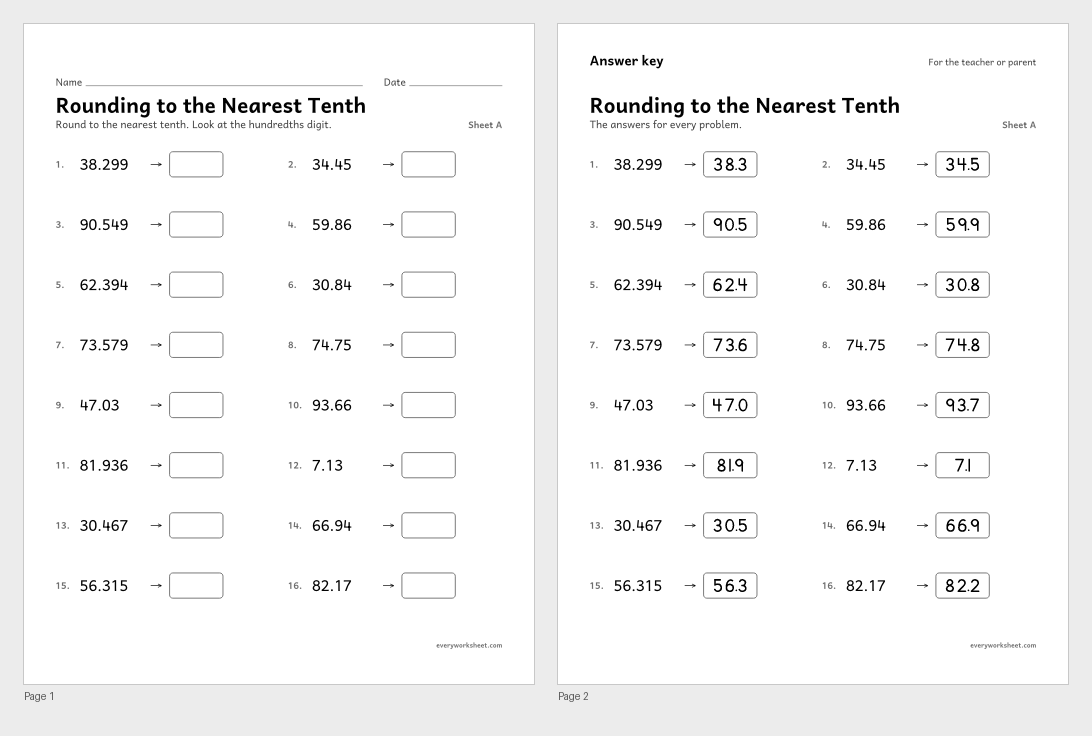 View all 2 pages
Rounding decimals to the nearest tenth
Answer key on page 2
2 pages69 KB
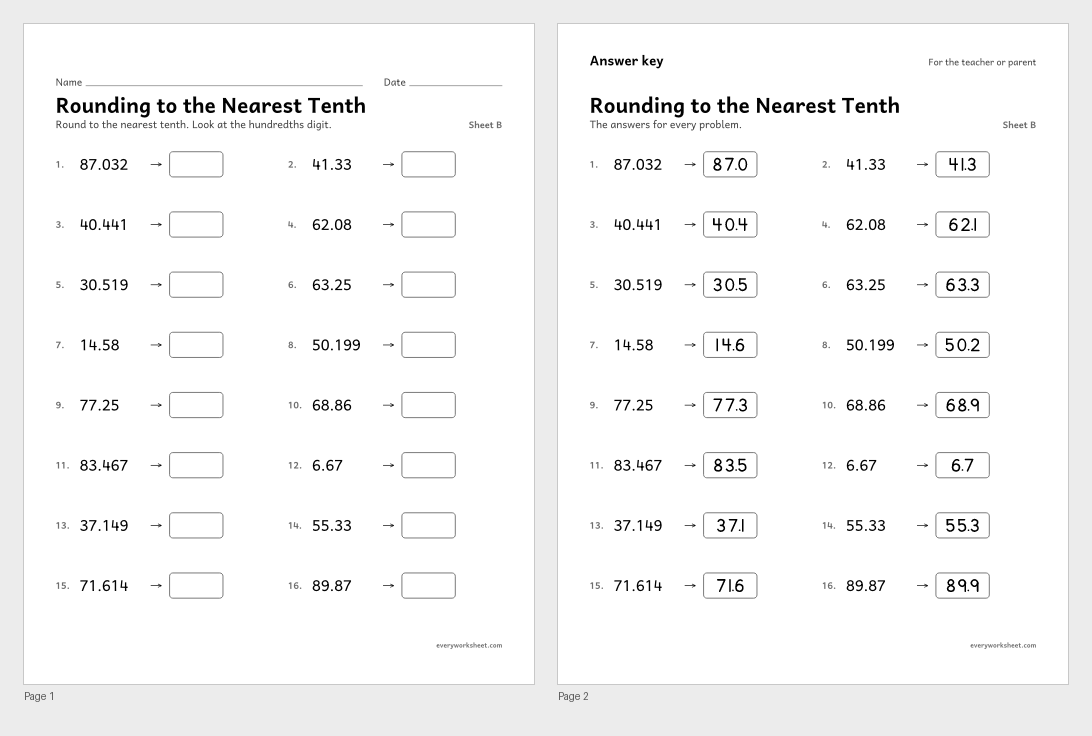 View all 2 pages
Rounding decimals to the nearest tenth
Answer key on page 2
2 pages69 KB
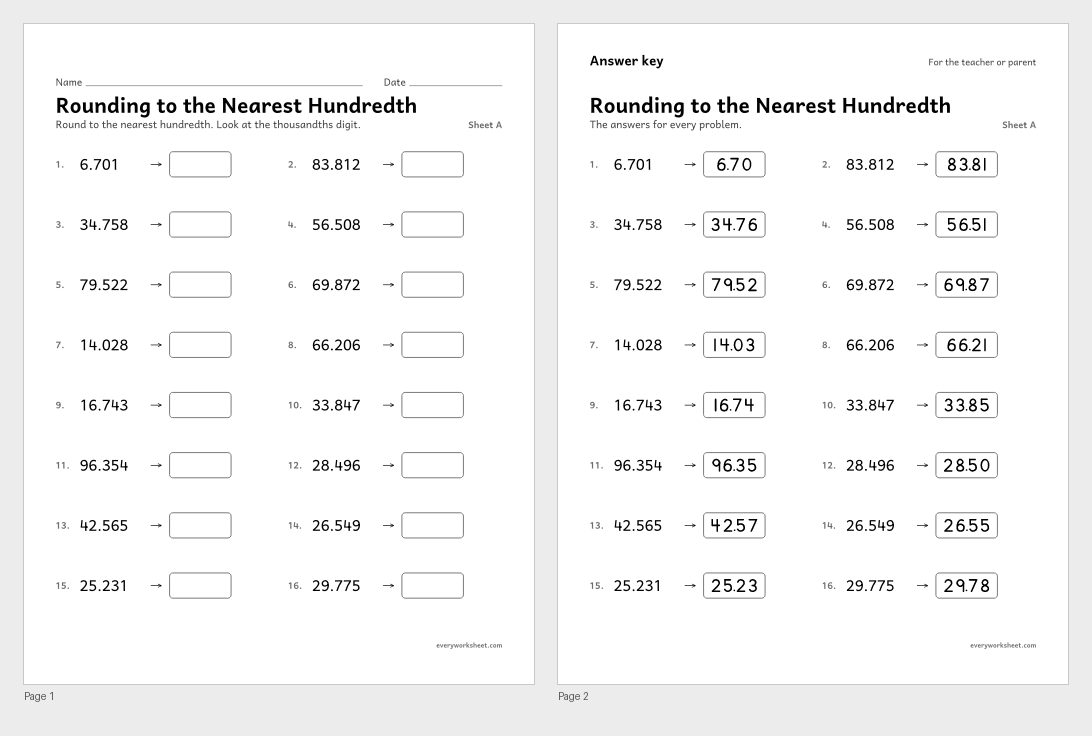 View all 2 pages
Rounding decimals to the nearest hundredth
Answer key on page 2
2 pages69 KB
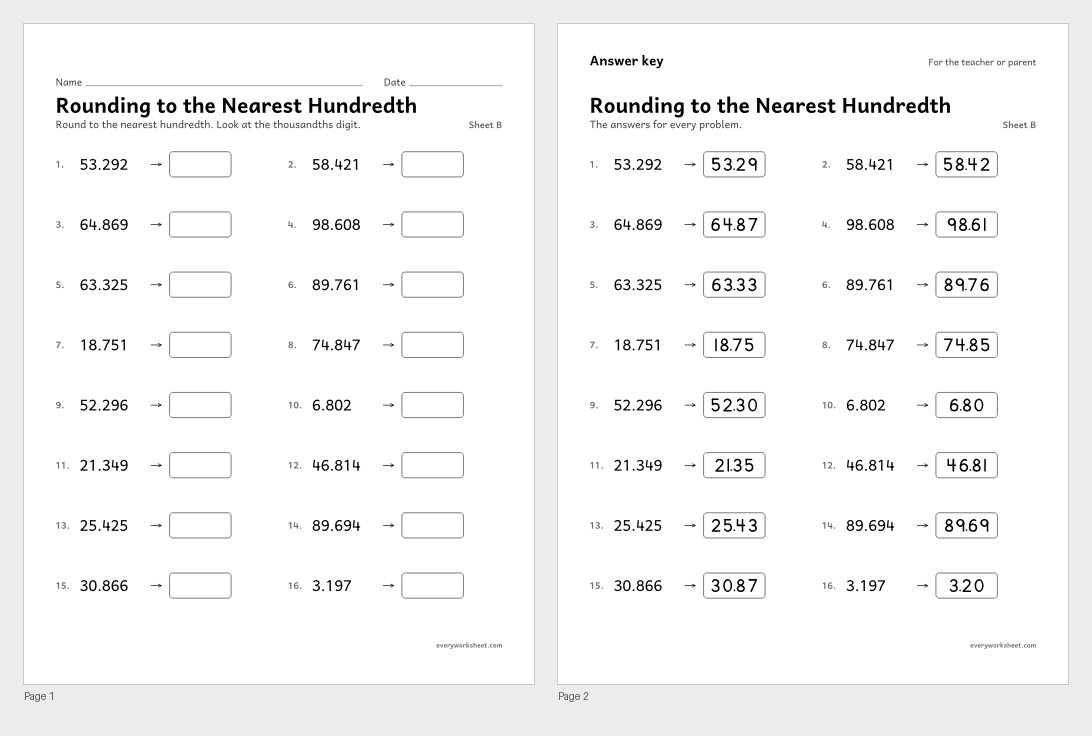 View all 2 pages
Rounding decimals to the nearest hundredth
Answer key on page 2
2 pages69 KB
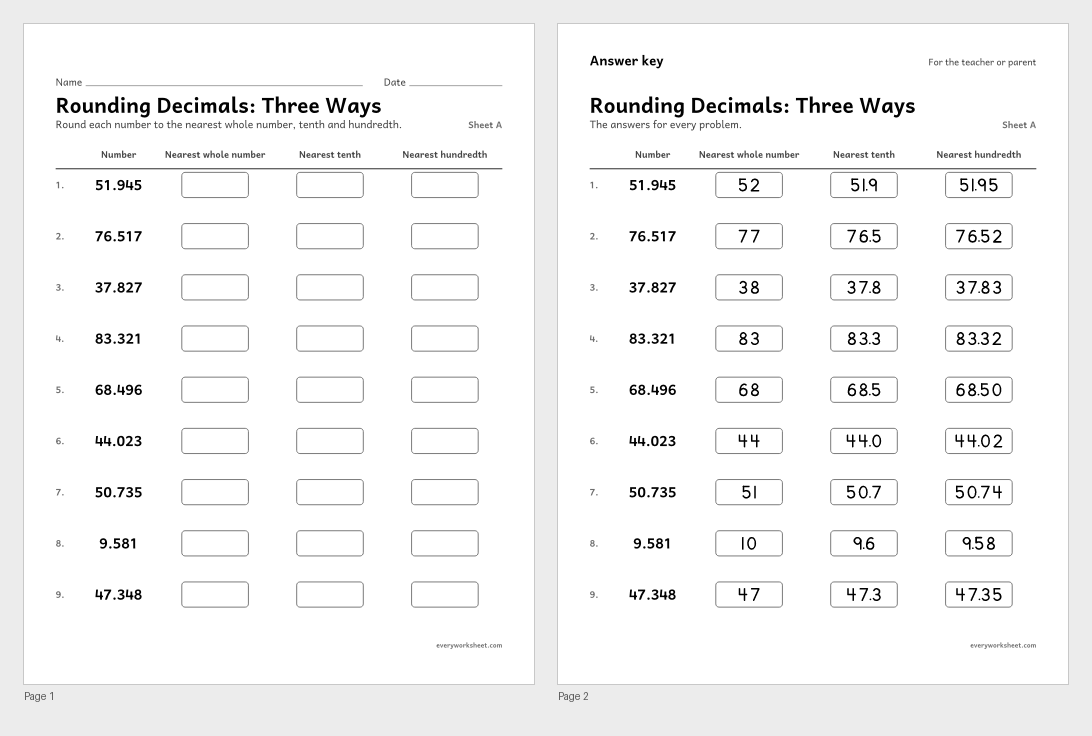 View all 2 pages
Rounding decimals to any place
Answer key on page 2
2 pages48 KB
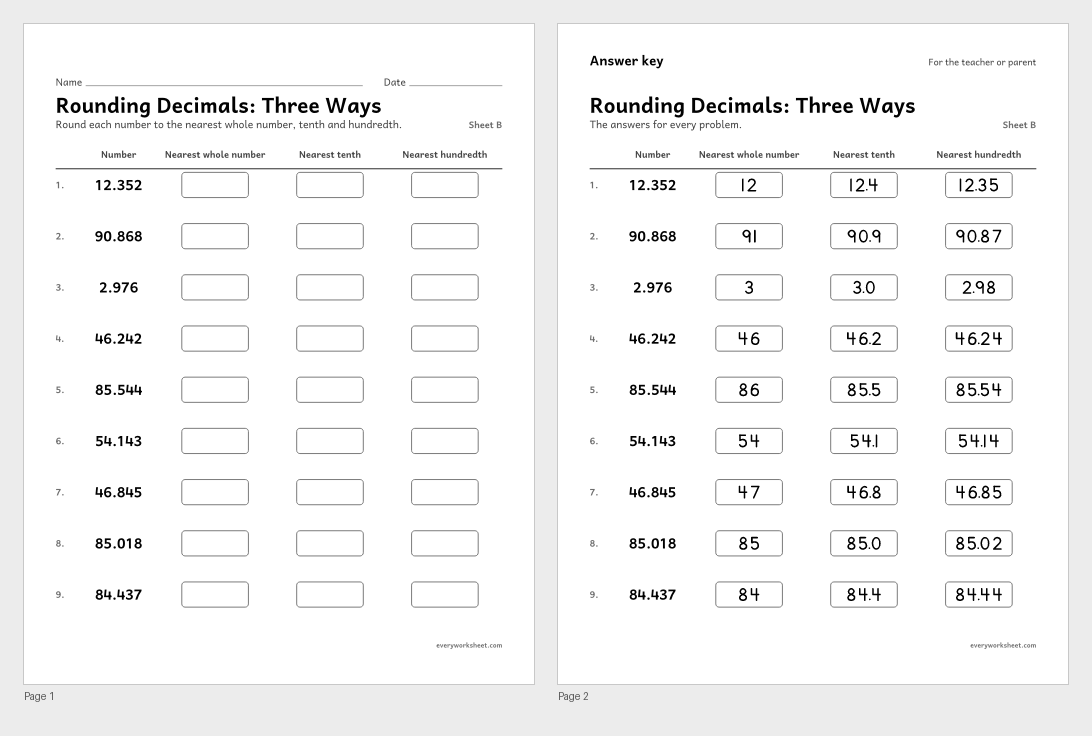 View all 2 pages
Rounding decimals to any place
Answer key on page 2
2 pages48 KB
Print at 100% (actual size) for the cleanest tracing lines.
Decimal places follow the same rule as whole number places: each place is worth 10 times the place to its right. To the right of the ones come tenths, hundredths and thousandths. In 45.208, the 2 is worth 2 tenths (0.2), the 0 holds the hundredths place, and the 8 is worth 8 thousandths (0.008).
Fifth graders read and write decimals to thousandths in standard, word and expanded form, compare them with >, < and =, put them in order and round them to any place. The common traps are thinking 0.65 is bigger than 0.7 because it has more digits, and dropping the zero in 4.05.
These pages start with a decimal place value chart and move through digit values, the 10 times relationship, expanded and word form, then comparing, ordering and rounding. Most pages come as Sheet A and B (or A, B and C), each with an answer key on page 2.
CCSS.MATH.CONTENT.5.NBT.A.1Recognize that in a multi-digit number, a digit in one place represents 10 times as much as it represents in the place to its right and 1/10 of what it represents in the place to its left.CCSS.MATH.CONTENT.5.NBT.A.3aRead and write decimals to thousandths using base-ten numerals, number names, and expanded form, e.g., 347.392 = 3 × 100 + 4 × 10 + 7 × 1 + 3 × (1/10) + 9 × (1/100) + 2 × (1/1000).CCSS.MATH.CONTENT.5.NBT.A.3bCompare two decimals to thousandths based on meanings of the digits in each place, using >, =, and < symbols to record the results of comparisons.CCSS.MATH.CONTENT.5.NBT.A.4Use place value understanding to round decimals to any place.Tenths, hundredths and thousandths, to the right of the ones place. 0.1 is one tenth, 0.01 one hundredth and 0.001 one thousandth.
Line up the decimal points and compare digits from the left. The first place where the digits differ decides. 0.7 > 0.65 because 7 tenths is more than 6 tenths.
Look at the digit one place to the right of the place you round to. If it is 5 or more, round up; if it is less than 5, keep the digit.
Read the whole number, say "and" for the point, then read the decimal digits as a number with the name of the last place: 6.205 is six and two hundred five thousandths.