 View larger
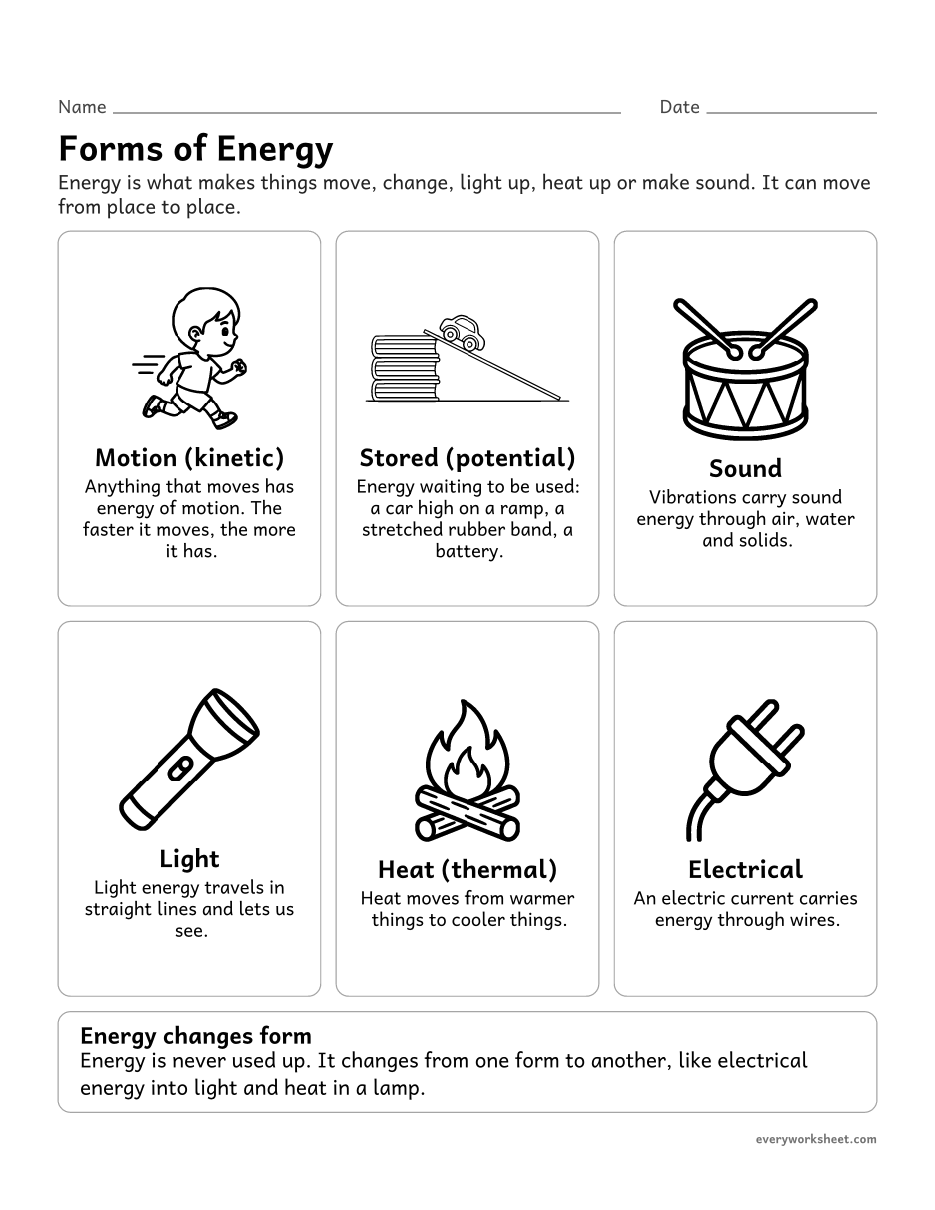
Forms of energy poster for 4th grade
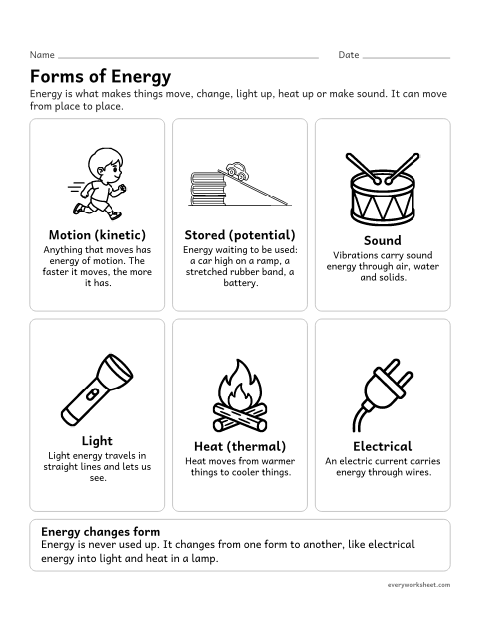
Naming forms of energy and where we see them
1 page136 KB
Potential and kinetic energy, speed and energy, how energy moves and changes form, and what happens when objects collide.
View largerNaming forms of energy and where we see them
1 page136 KB
 View all 2 pages
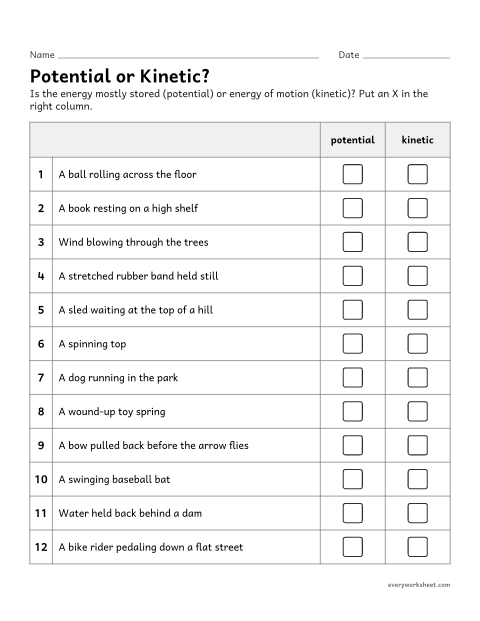
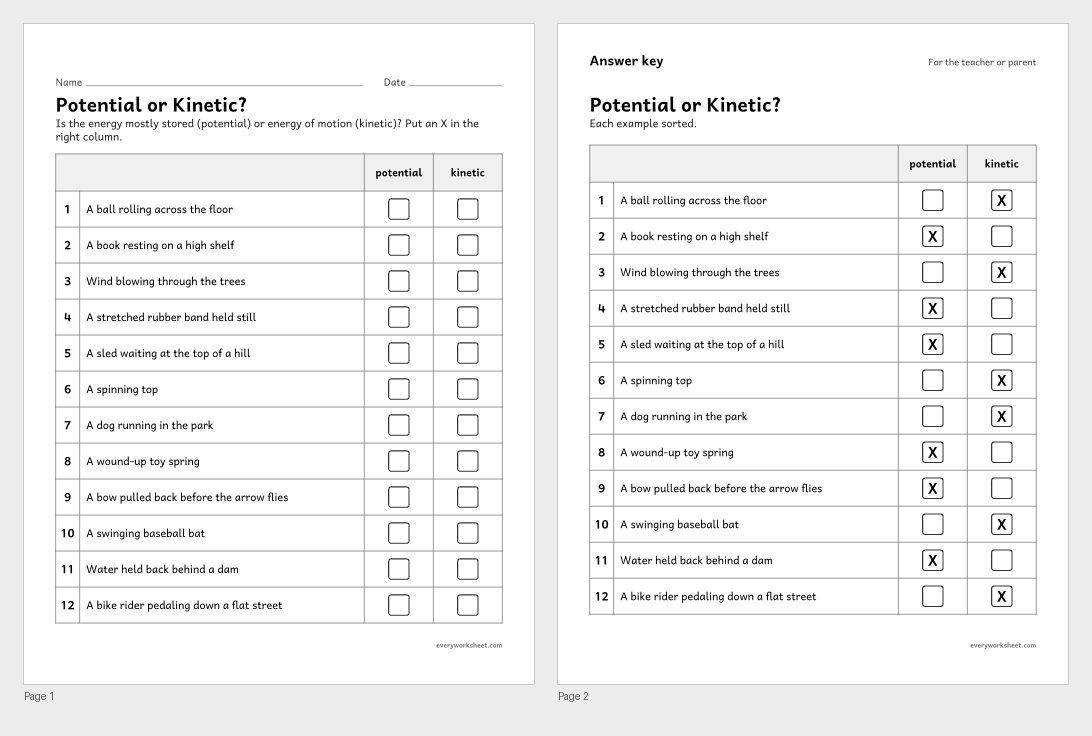
Sorting examples of stored (potential) energy and energy of motion (kinetic)
Answer key on page 2
2 pages49 KB
 View all 2 pages
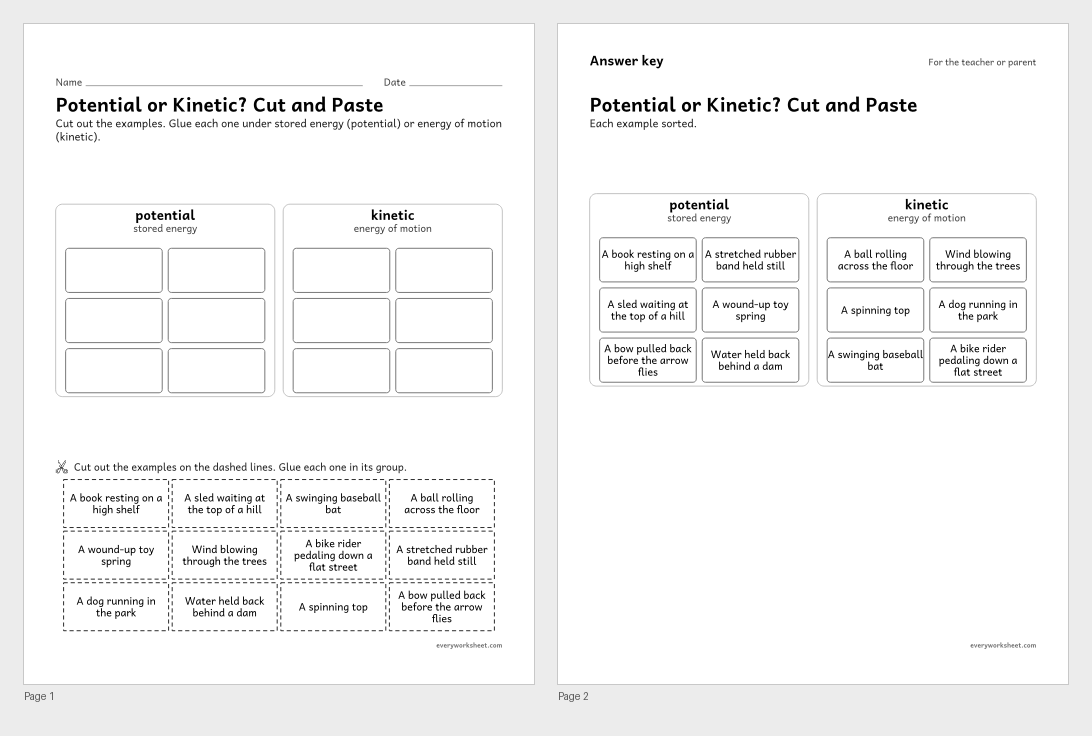
Sorting examples of stored (potential) energy and energy of motion (kinetic)
Answer key on page 2
2 pages64 KB
 View all 2 pages
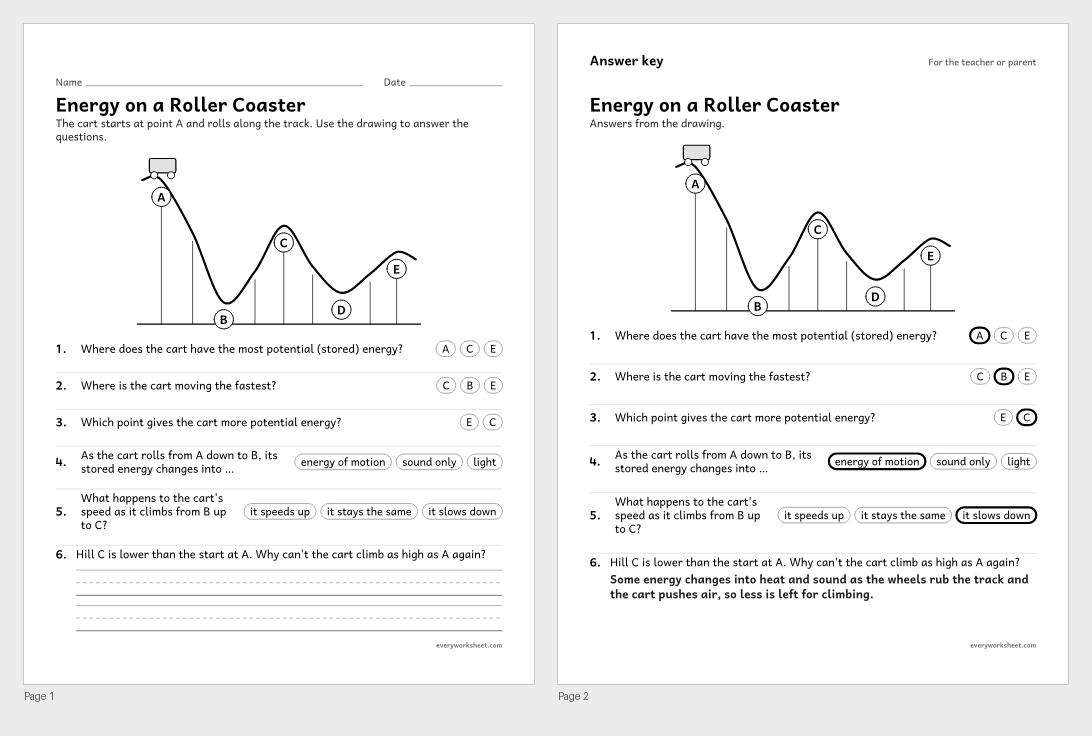
Using a roller coaster model to relate height, speed and energy
Answer key on page 2
2 pages43 KB
 View all 2 pages
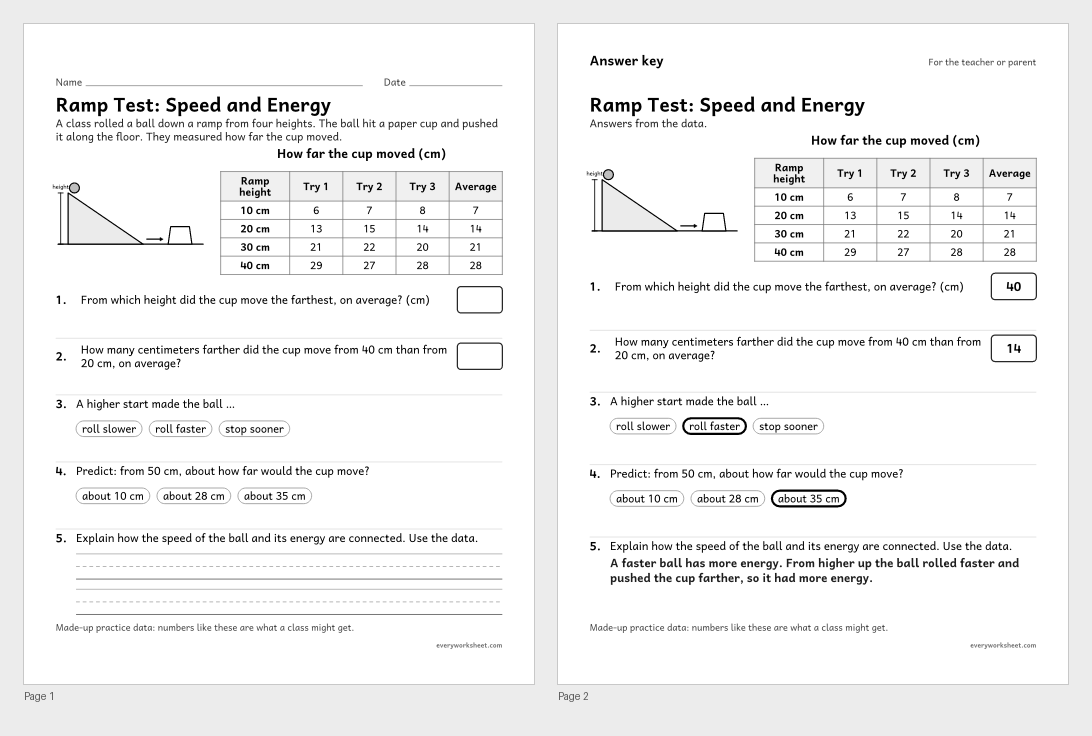
Analyzing data to relate the speed of an object to its energy
Answer key on page 2
2 pages52 KB
 View all 2 pages
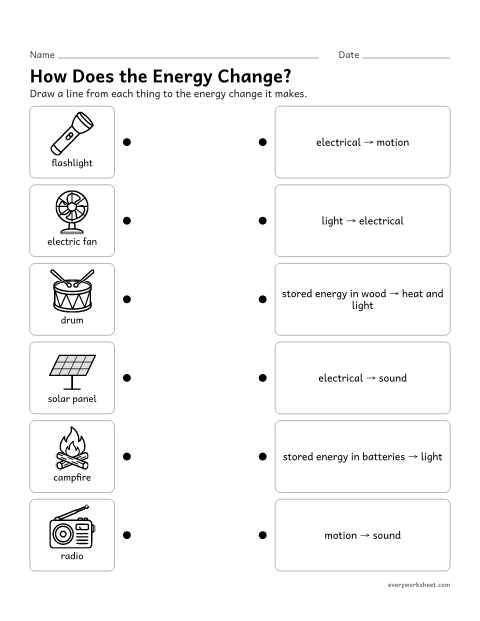
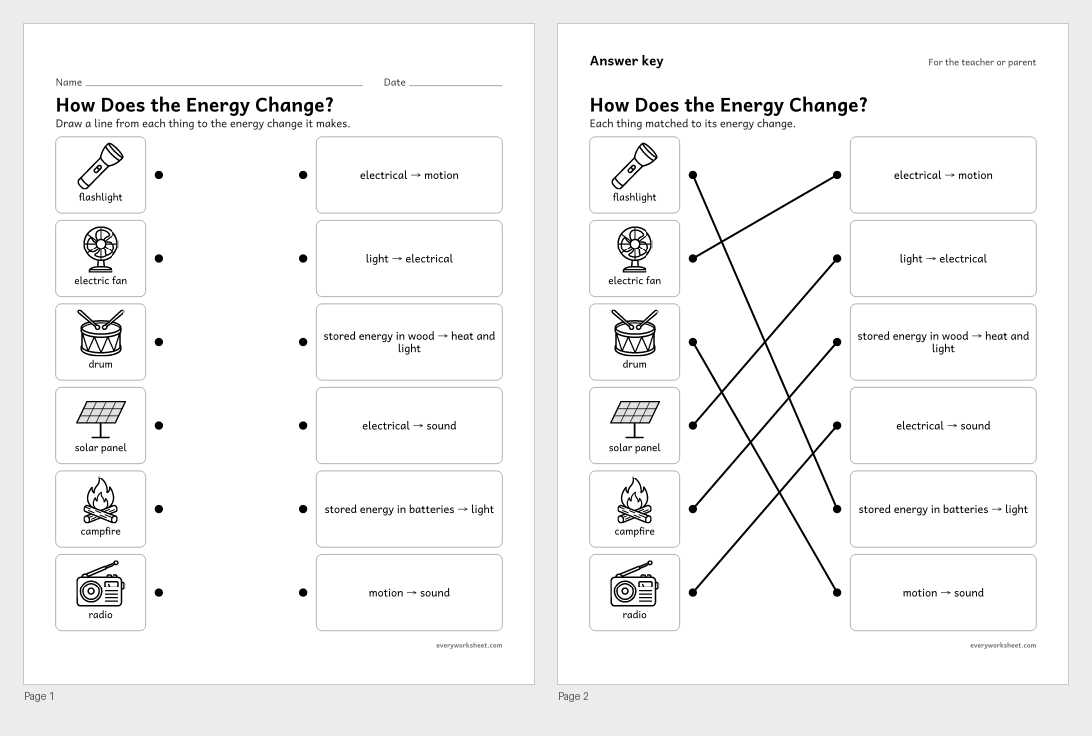
Identifying how devices change energy from one form to another
Answer key on page 2
2 pages258 KB
 View all 2 pages
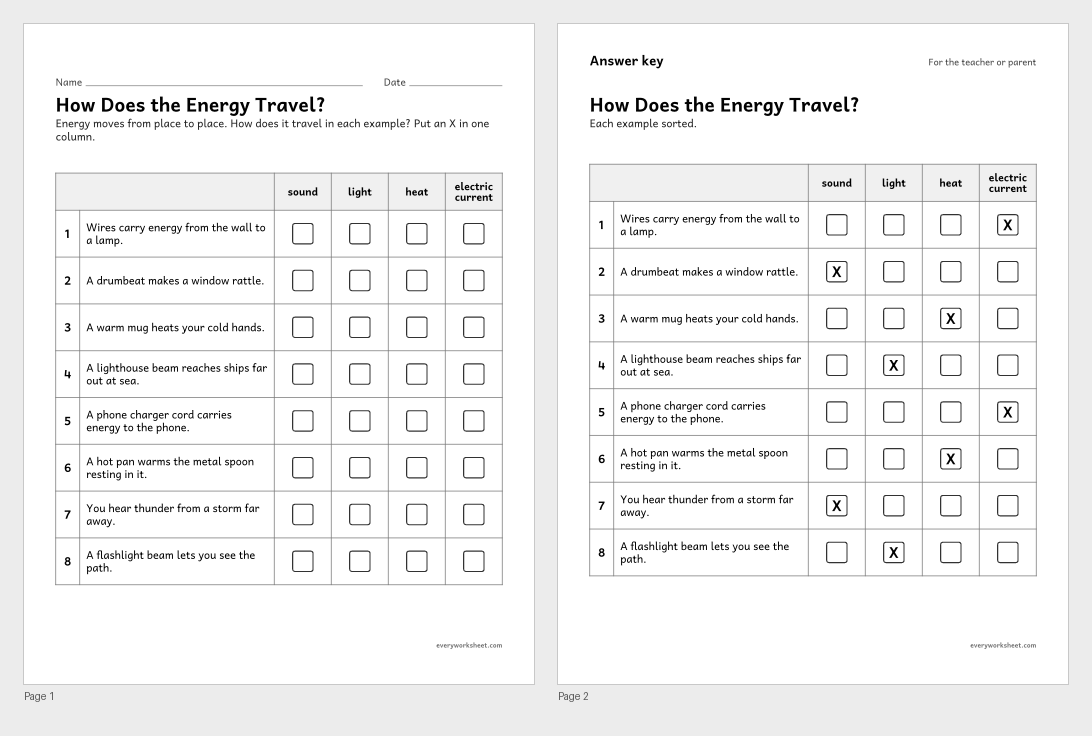
Classifying ways energy moves from place to place
Answer key on page 2
2 pages49 KB
 View all 2 pages
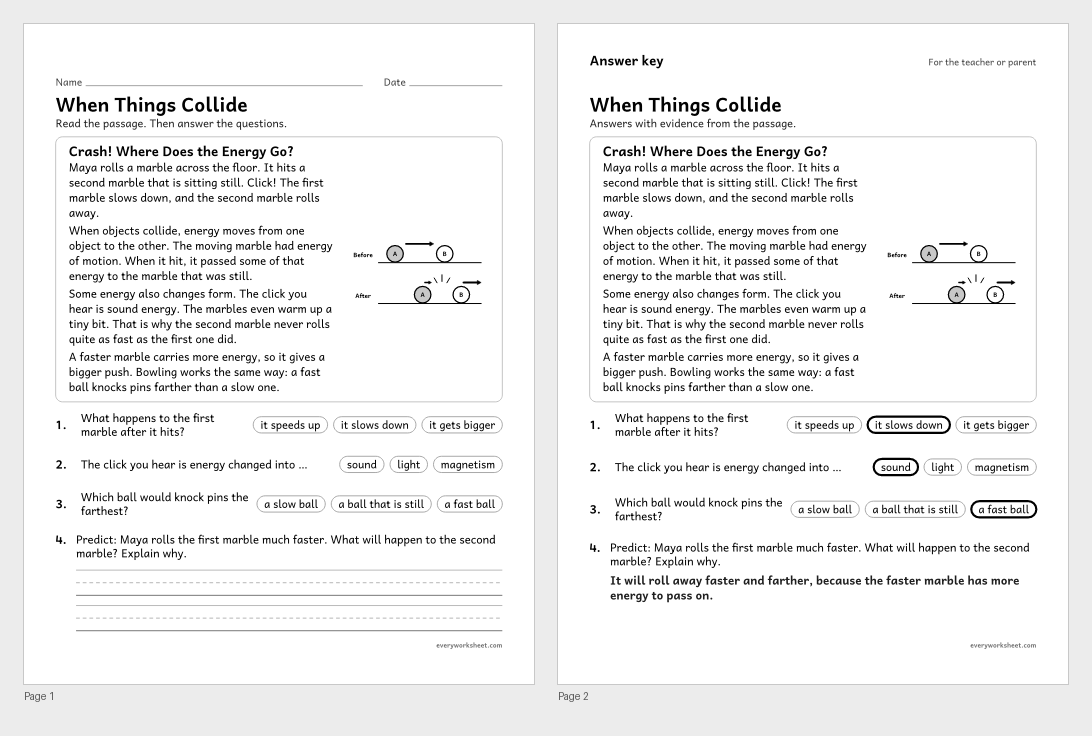
Explaining the energy changes that happen when objects collide
Answer key on page 2
2 pages43 KB
 View all 2 pages
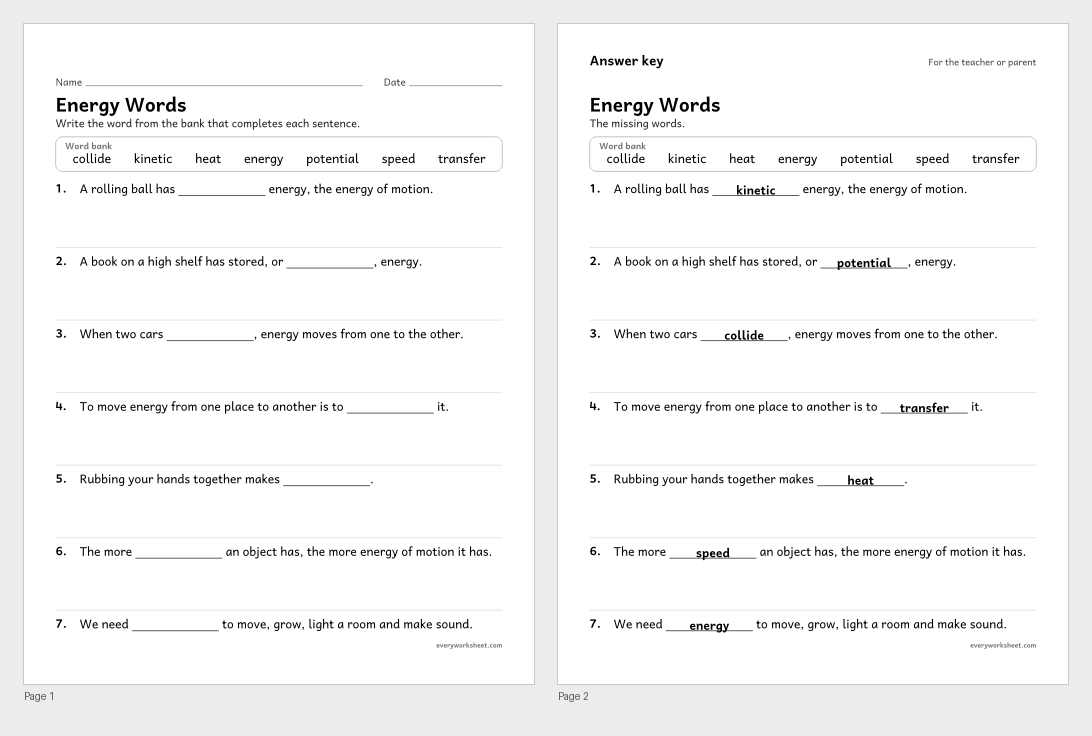
Using energy vocabulary in context
Answer key on page 2
2 pages37 KB
 View all 2 pages
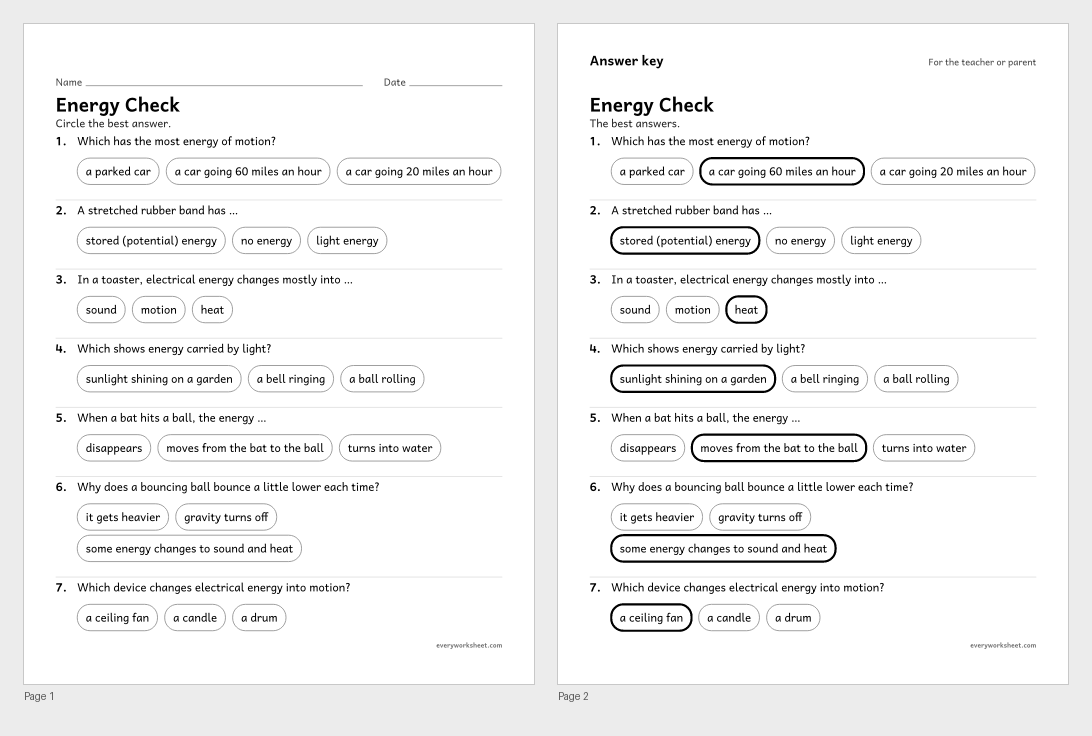
Reviewing energy, speed, transfer and collisions
Answer key on page 2
2 pages41 KB
 View larger
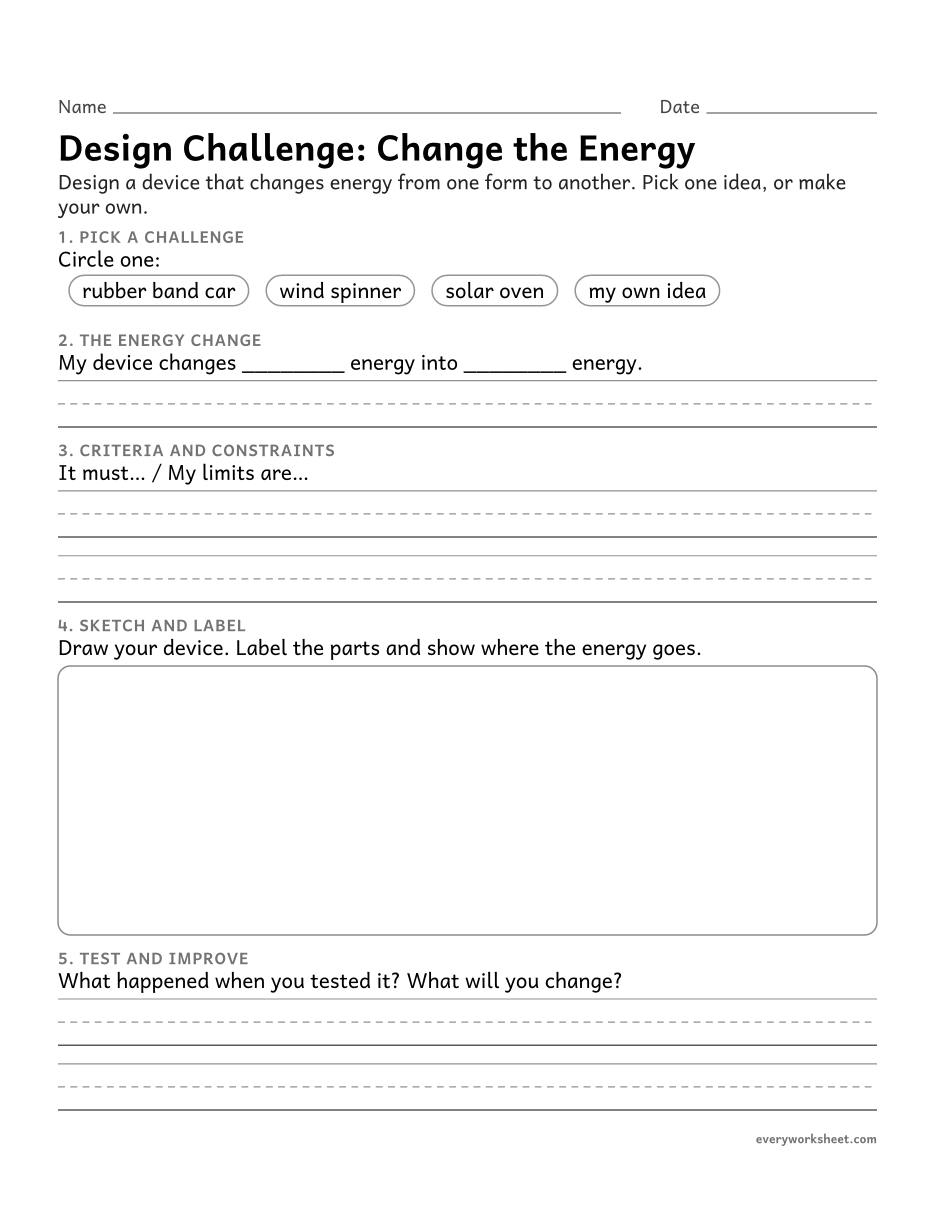
Designing, testing and improving a device that converts energy from one form to another
1 page29 KB
Print at 100% (actual size) for the cleanest tracing lines.
Energy is what makes things move, light up, heat up and make sound. Stored energy is called potential energy: a book on a high shelf, a stretched rubber band, a battery. Energy of motion is called kinetic energy, and the faster something moves, the more kinetic energy it has.
These energy worksheets for 4th grade start with a forms of energy poster and a potential or kinetic sort (with a cut and paste twin). A roller coaster diagram shows stored energy changing into motion, and ramp data link speed to energy. Children then trace energy as it moves by sound, light, heat and electric current, explain collisions, and design a device that changes energy from one form to another.
Every page is black and white, prints on US Letter or A4, and every page with right answers has an answer key on page 2.
NGSS 4-PS3-2Make observations to provide evidence that energy can be transferred from place to place by sound, light, heat, and electric currents.NGSS 4-PS3-1Use evidence to construct an explanation relating the speed of an object to the energy of that object.NGSS 4-PS3-4Apply scientific ideas to design, test, and refine a device that converts energy from one form to another.NGSS 4-PS3-3Ask questions and predict outcomes about the changes in energy that occur when objects collide.CCSS.ELA-LITERACY.RI.4.4Determine the meaning of general academic and domain-specific words or phrases in a text relevant to a grade 4 topic or subject area.Potential energy is stored energy, like a sled at the top of a hill. Kinetic energy is the energy of motion, like the sled racing down. As the sled goes down, potential energy changes into kinetic energy.
The faster an object moves, the more energy it has. A ball rolled faster hits a cup harder and pushes it farther.
Some energy moves from one object to the other, and some changes into sound and heat. That is why you hear a crack when a bat hits a ball.
They are realistic practice data. Running the test with a toy car or ball, a ramp and a paper cup gives your own numbers to compare.