 View all 2 pages
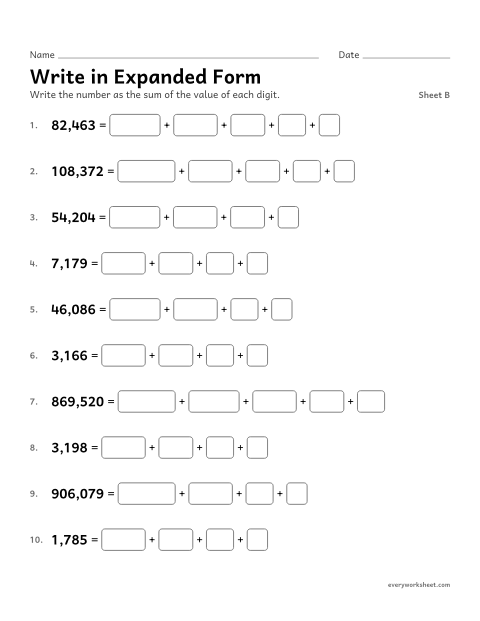
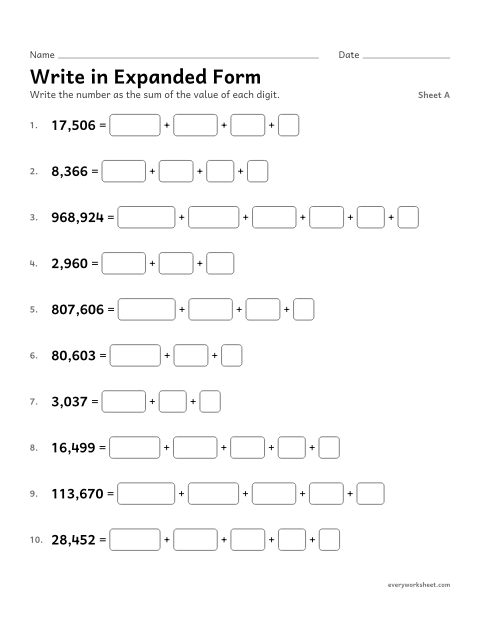
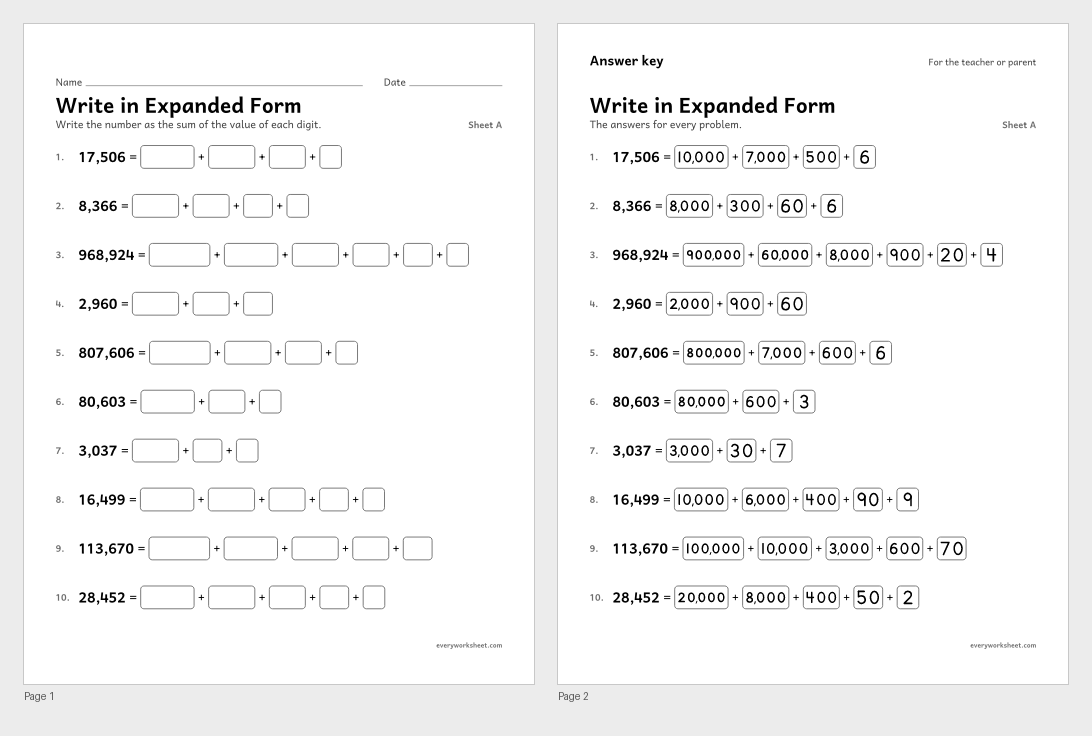
Write in expanded Form, sheet A
Writing numbers to 1,000,000 in expanded form
Answer key on page 2
2 pages80 KB
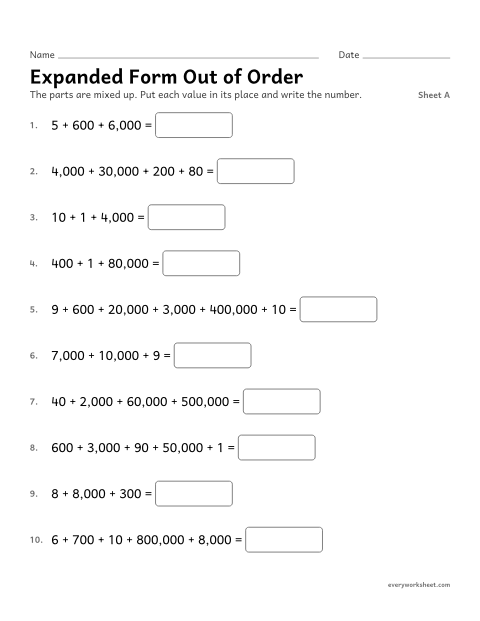
Write numbers to 1,000,000 in expanded form and back to standard form, with parts out of order, missing parts and expanded form with multiplication.
View all 2 pagesWriting numbers to 1,000,000 in expanded form
Answer key on page 2
2 pages80 KB
 View all 2 pages
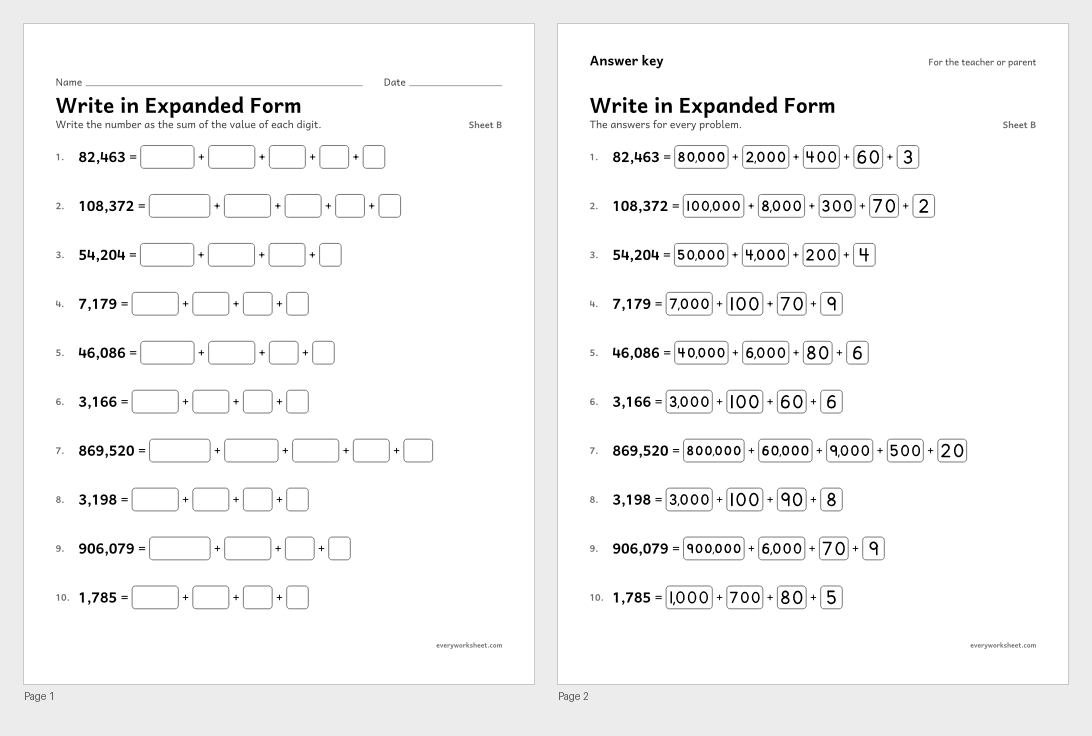
Writing numbers to 1,000,000 in expanded form
Answer key on page 2
2 pages81 KB
 View all 2 pages
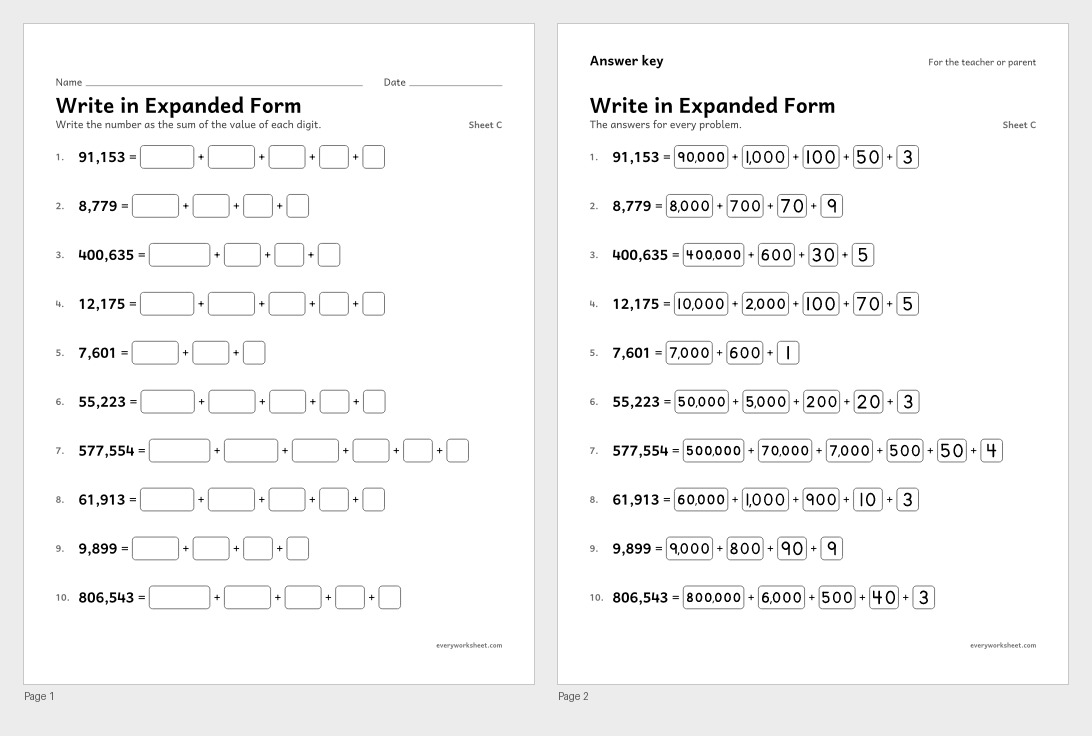
Writing numbers to 1,000,000 in expanded form
Answer key on page 2
2 pages83 KB
 View all 2 pages
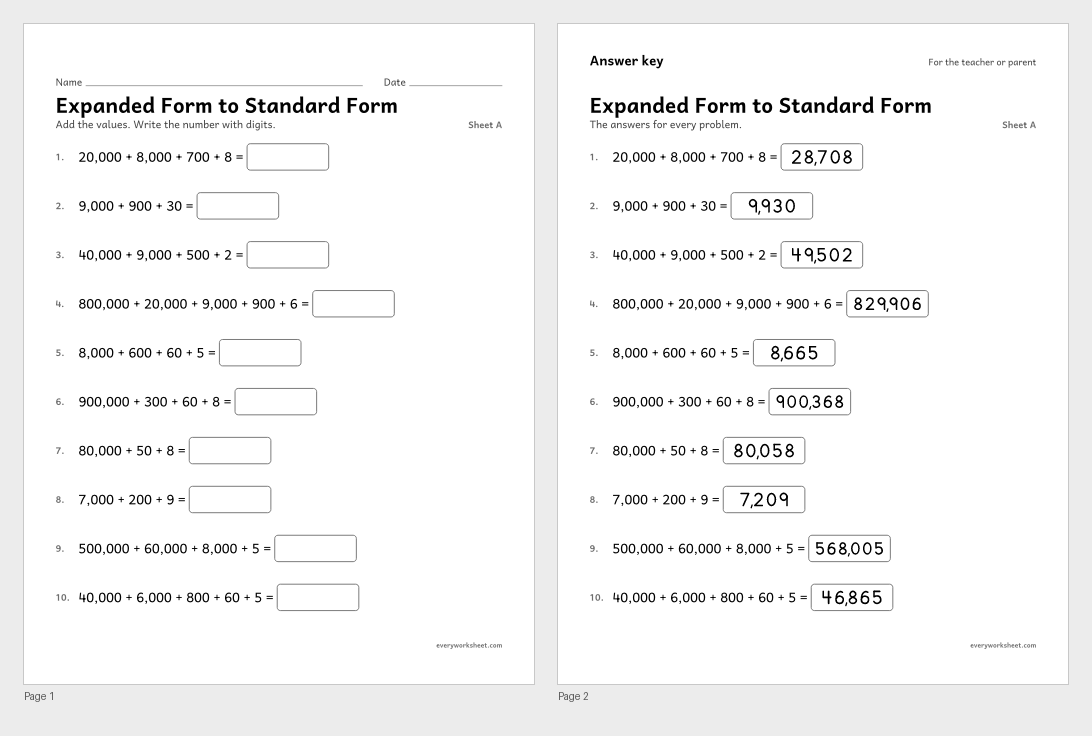
Writing a number from its expanded form
Answer key on page 2
2 pages84 KB
 View all 2 pages
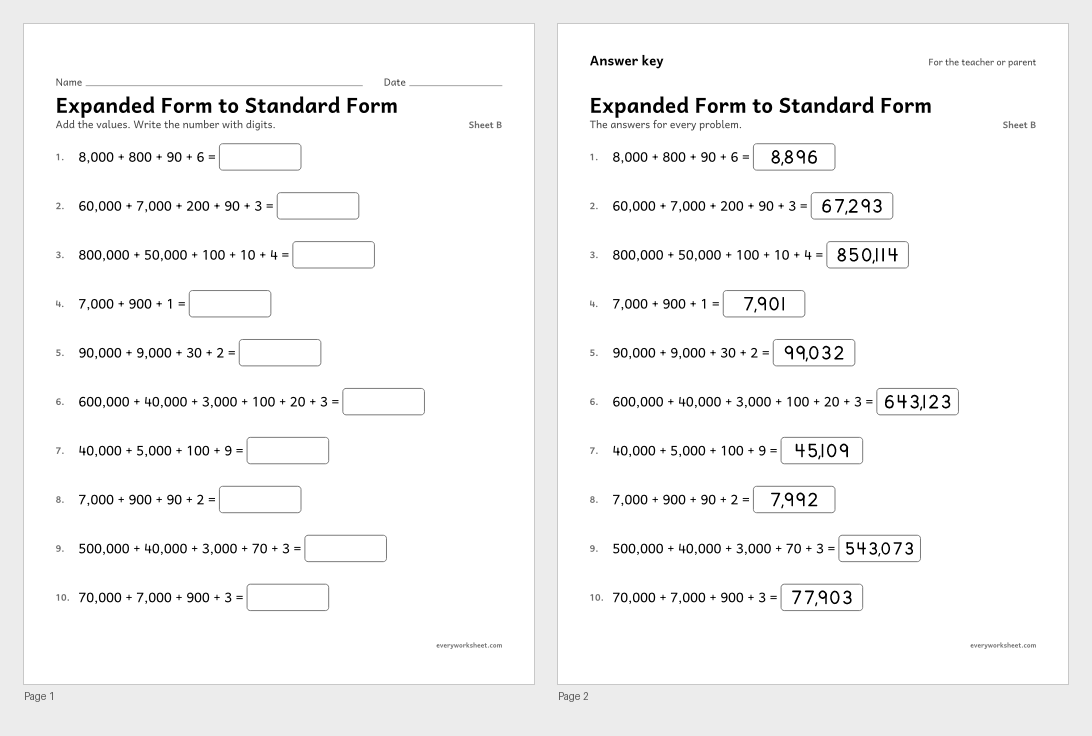
Writing a number from its expanded form
Answer key on page 2
2 pages88 KB
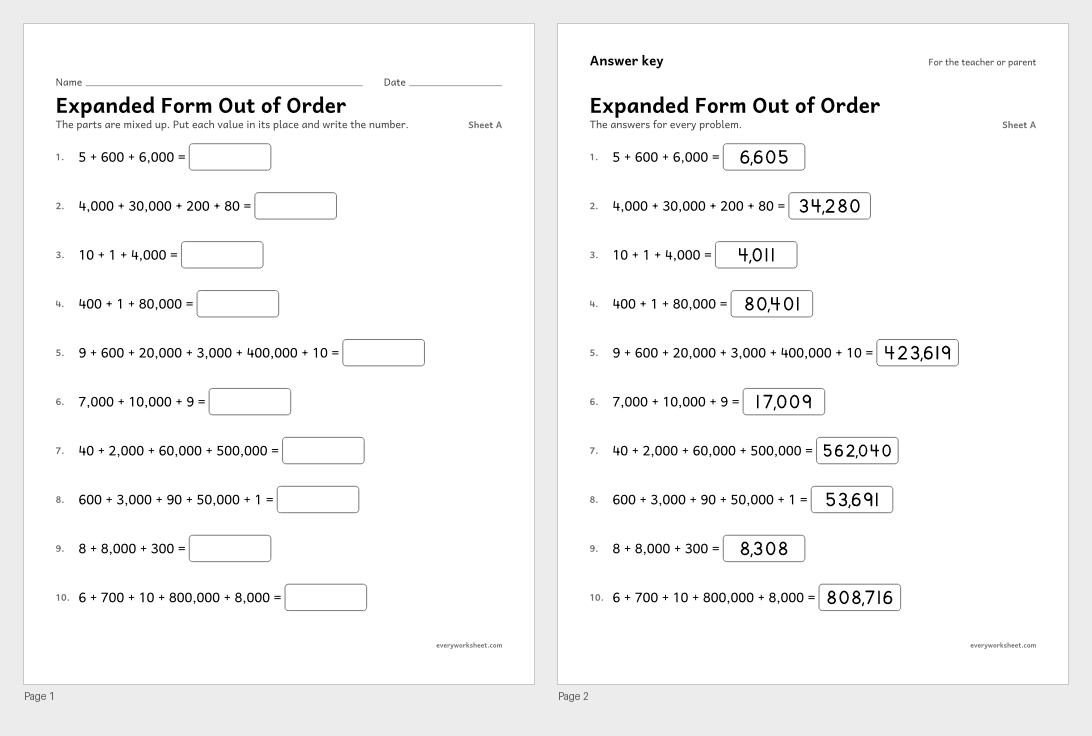 View all 2 pages
Writing a number from expanded form in any order
Answer key on page 2
2 pages83 KB
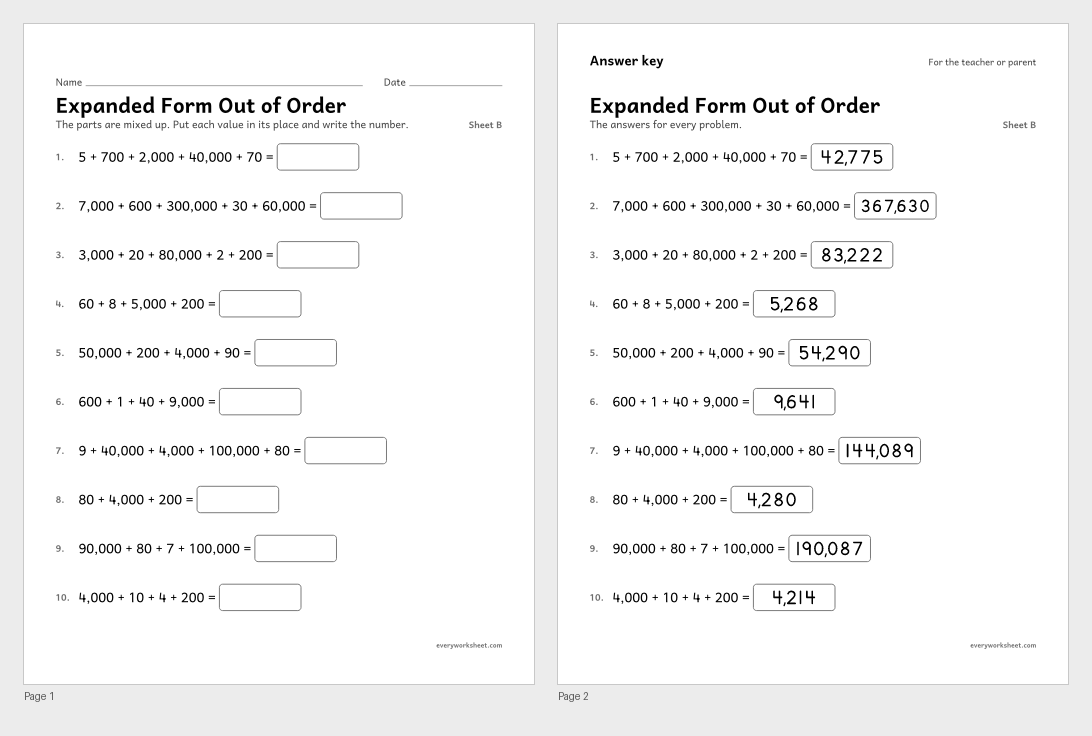 View all 2 pages
Writing a number from expanded form in any order
Answer key on page 2
2 pages87 KB
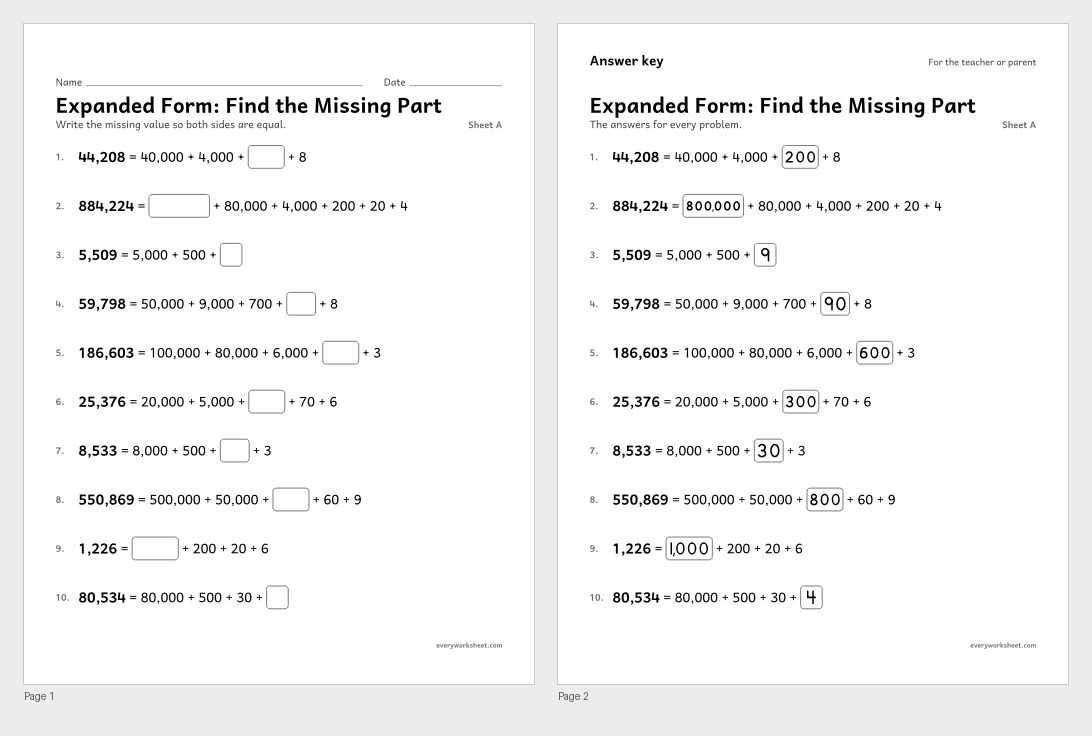 View all 2 pages
Finding a missing part of an expanded form
Answer key on page 2
2 pages90 KB
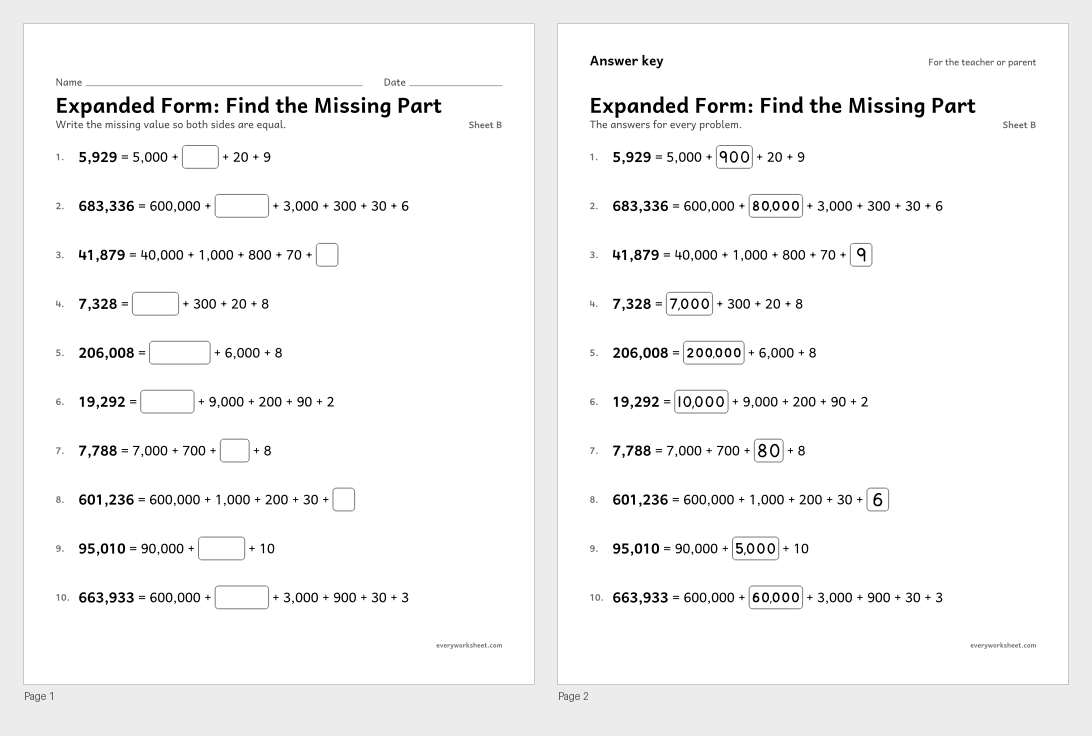 View all 2 pages
Finding a missing part of an expanded form
Answer key on page 2
2 pages90 KB
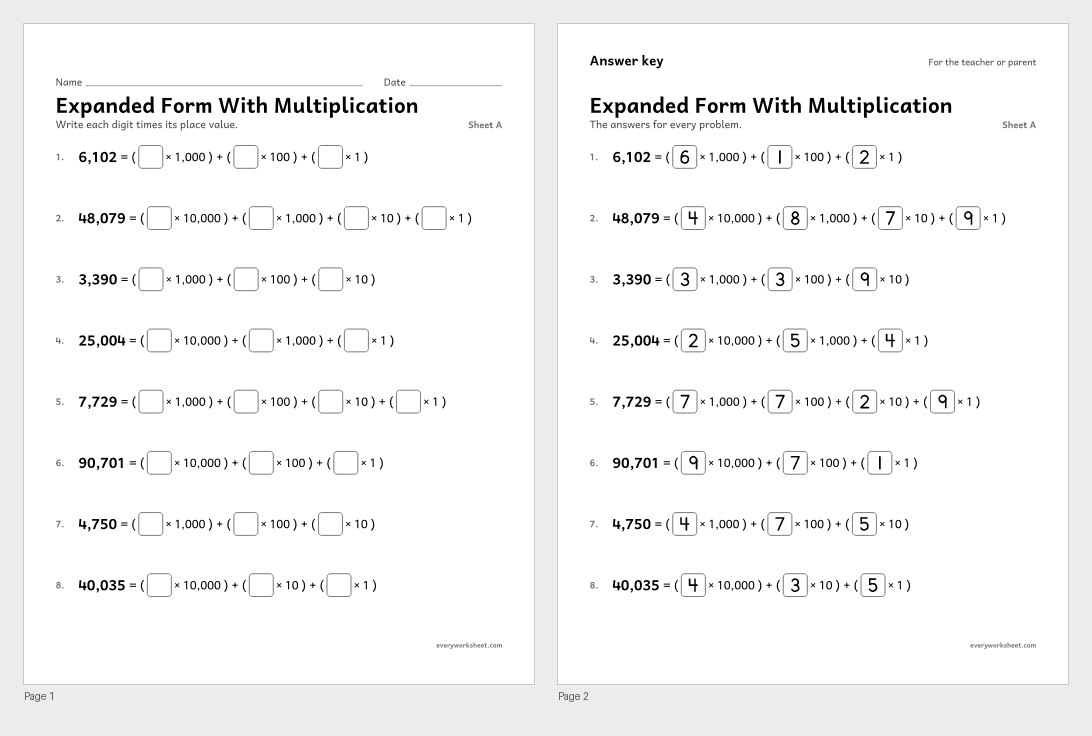 View all 2 pages
Writing expanded form with multiplication
Answer key on page 2
2 pages119 KB
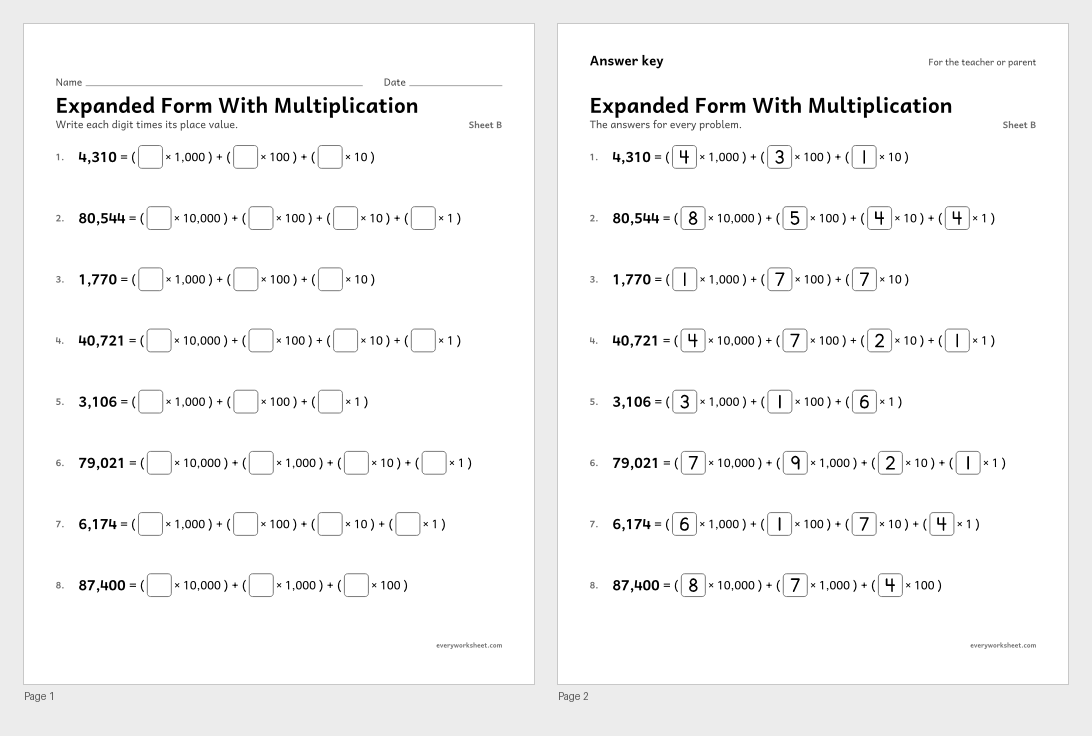 View all 2 pages
Writing expanded form with multiplication
Answer key on page 2
2 pages124 KB
Print at 100% (actual size) for the cleanest tracing lines.
Expanded form writes a number as the sum of the values of its digits. 47,302 in expanded form is 40,000 + 7,000 + 300 + 2. Each part is one digit times its place value, and a 0 digit adds nothing, so it has no part. Written with multiplication, the same number is (4 × 10,000) + (7 × 1,000) + (3 × 100) + (2 × 1).
Expanded form is how children prove they understand place value: that the 4 in 47,302 means 40,000, not 4. It also prepares them for multi-digit multiplication and division, where every method splits numbers into these same parts.
These pages go both ways. Children write numbers in expanded form, put expanded form back into standard form (including parts listed out of order, which forces them to think about each place), find a missing part, and write expanded form with multiplication. Numbers run up to six digits, the 4th grade range.
CCSS.MATH.CONTENT.4.NBT.A.2Read and write multi-digit whole numbers using base-ten numerals, number names, and expanded form. Compare two multi-digit numbers based on meanings of the digits in each place, using >, =, and < symbols to record the results of comparisons.CCSS.MATH.CONTENT.4.NBT.A.1Recognize that in a multi-digit whole number, a digit in one place represents ten times what it represents in the place to its right. For example, recognize that 700 ÷ 70 = 10 by applying concepts of place value and division.Expanded form writes a number as the sum of the values of its digits. 3,482 is 3,000 + 400 + 80 + 2.
A digit that is 0 has a value of 0, so it is left out. 6,045 is 6,000 + 40 + 5.
Each part is written as a digit times its place value: 3,482 = (3 × 1,000) + (4 × 100) + (8 × 10) + (2 × 1).