 View all 2 pages
Explorers chart for 4th Grade: Who, when and where
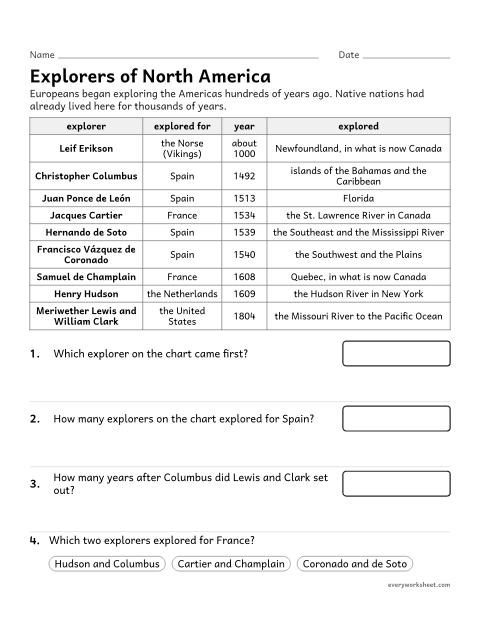
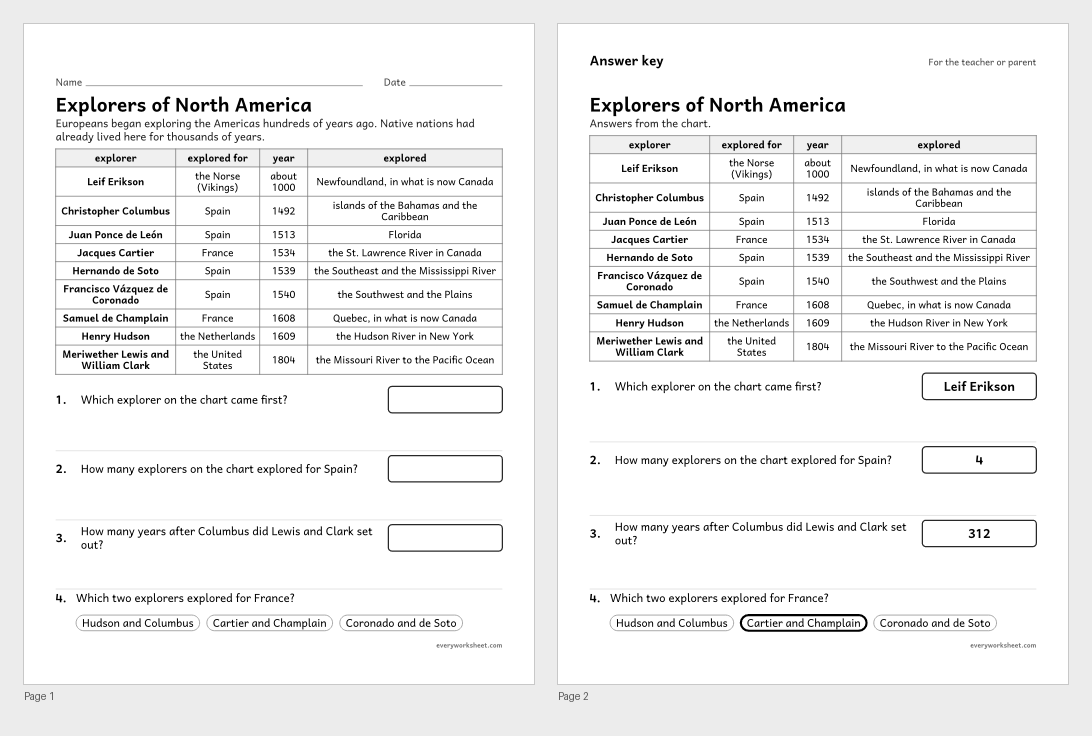
Reading a chart of European explorers of North America
Answer key on page 2
2 pages57 KB
European explorers of North America, a timeline, Columbus and the Taíno, Lewis and Clark with Sacagawea, two points of view and research.
View all 2 pagesReading a chart of European explorers of North America
Answer key on page 2
2 pages57 KB
 View all 2 pages
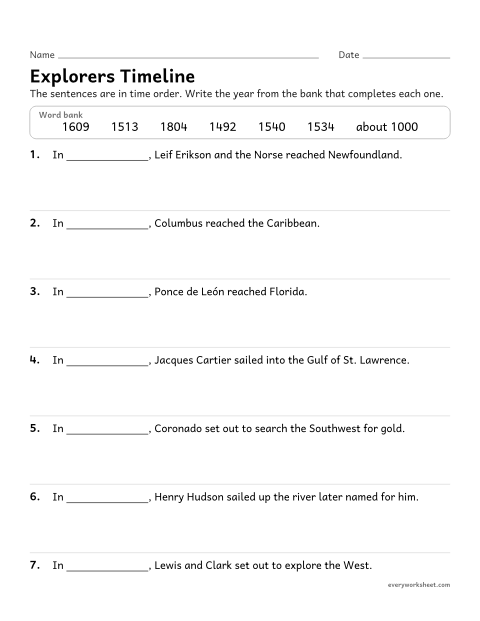
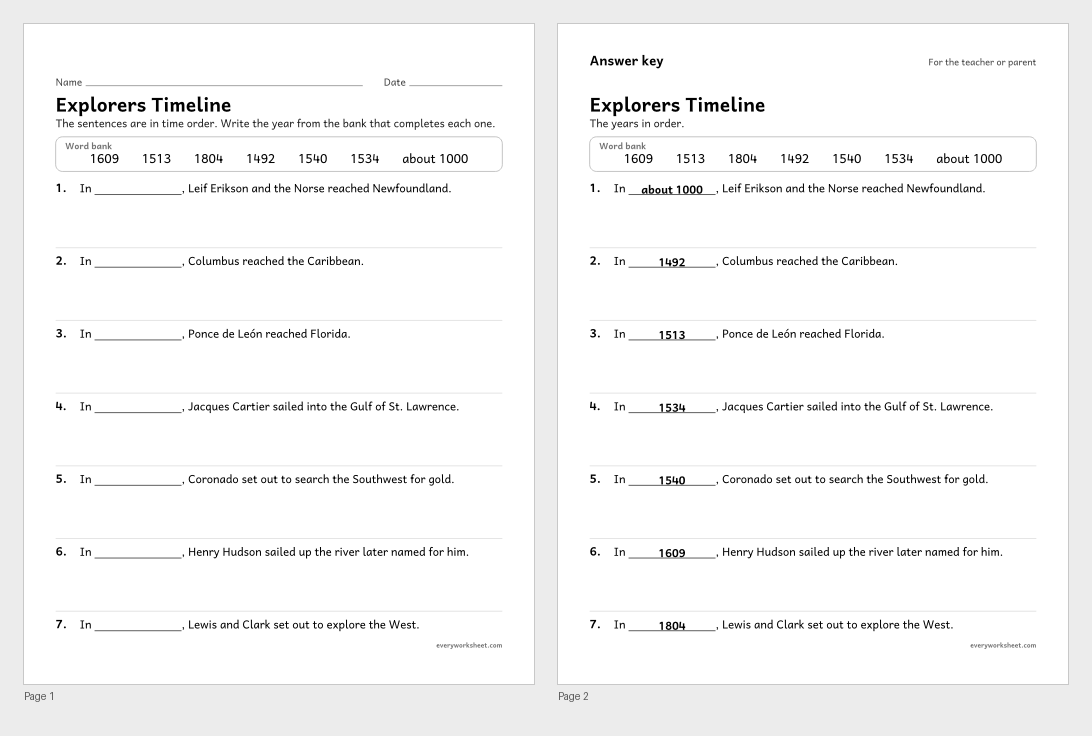
Placing explorers' journeys in chronological order
Answer key on page 2
2 pages40 KB
 View all 2 pages
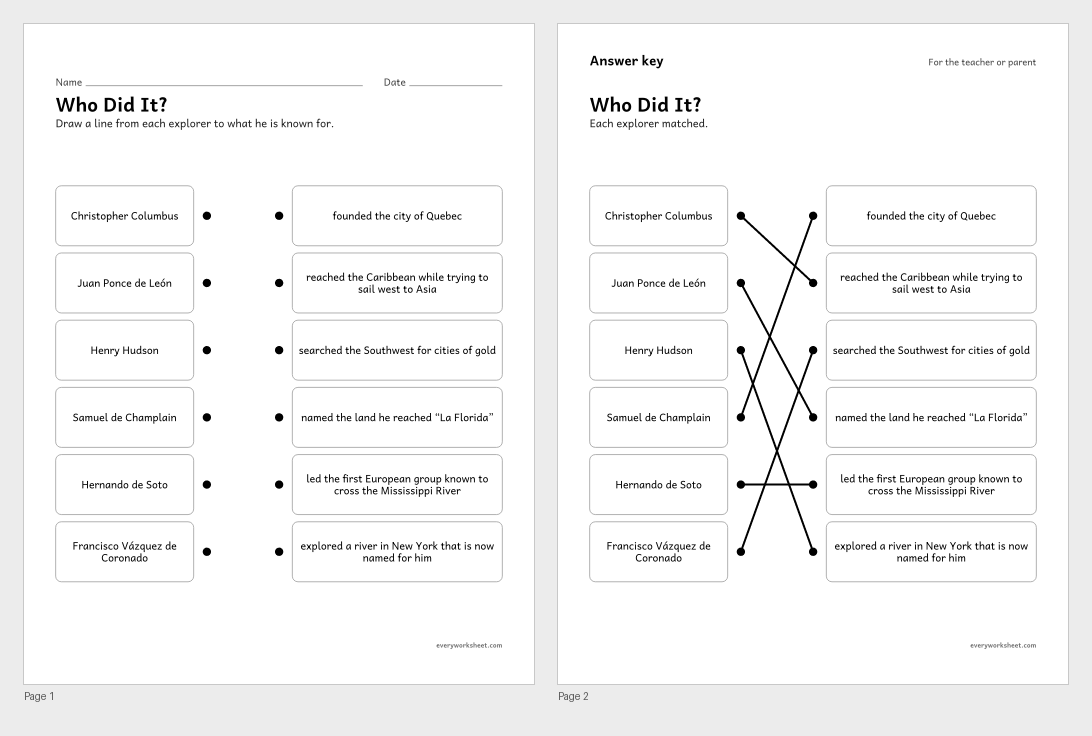
Matching explorers to what they are known for
Answer key on page 2
2 pages30 KB
 View all 2 pages
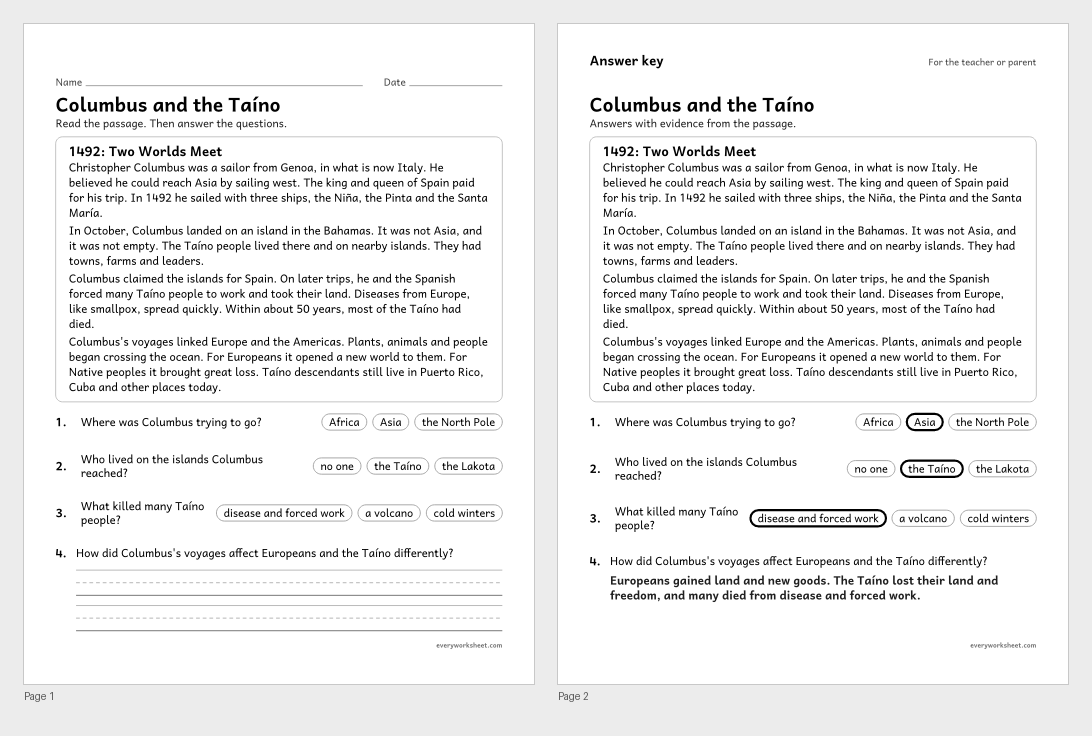
Describing Columbus's voyages and their effects on Native peoples
Answer key on page 2
2 pages42 KB
 View all 2 pages
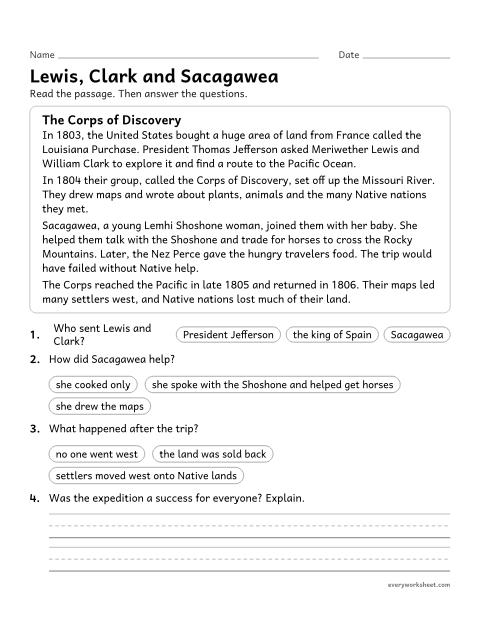
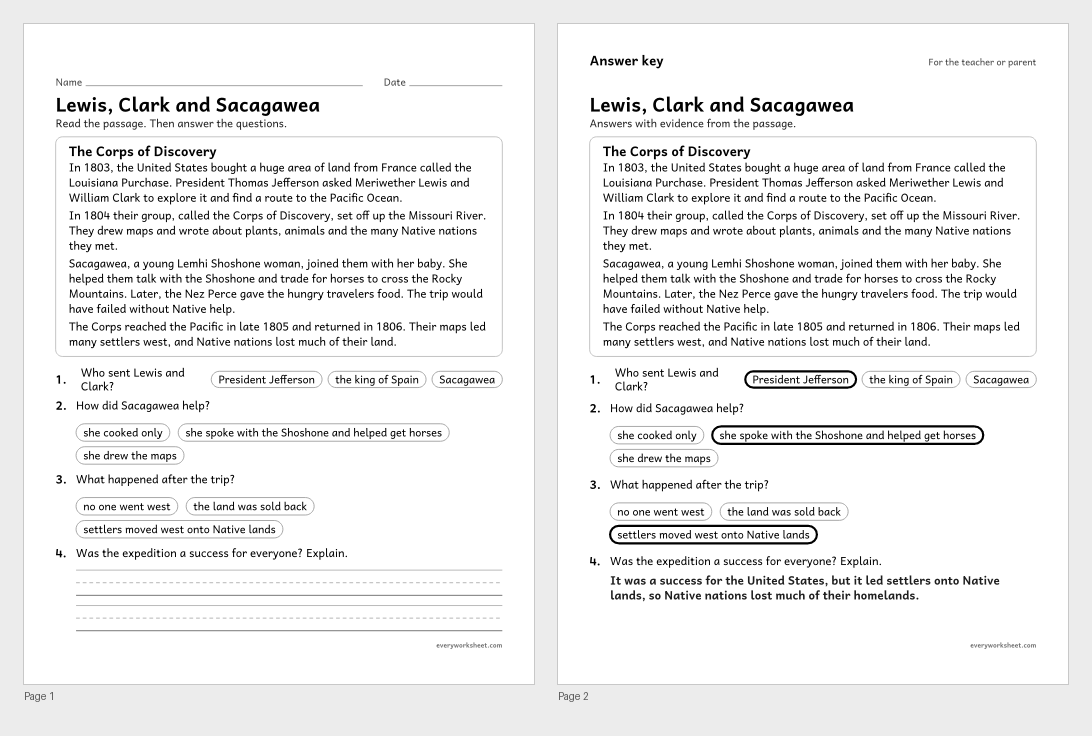
Describing the Lewis and Clark expedition and the people who made it possible
Answer key on page 2
2 pages42 KB
 View all 2 pages
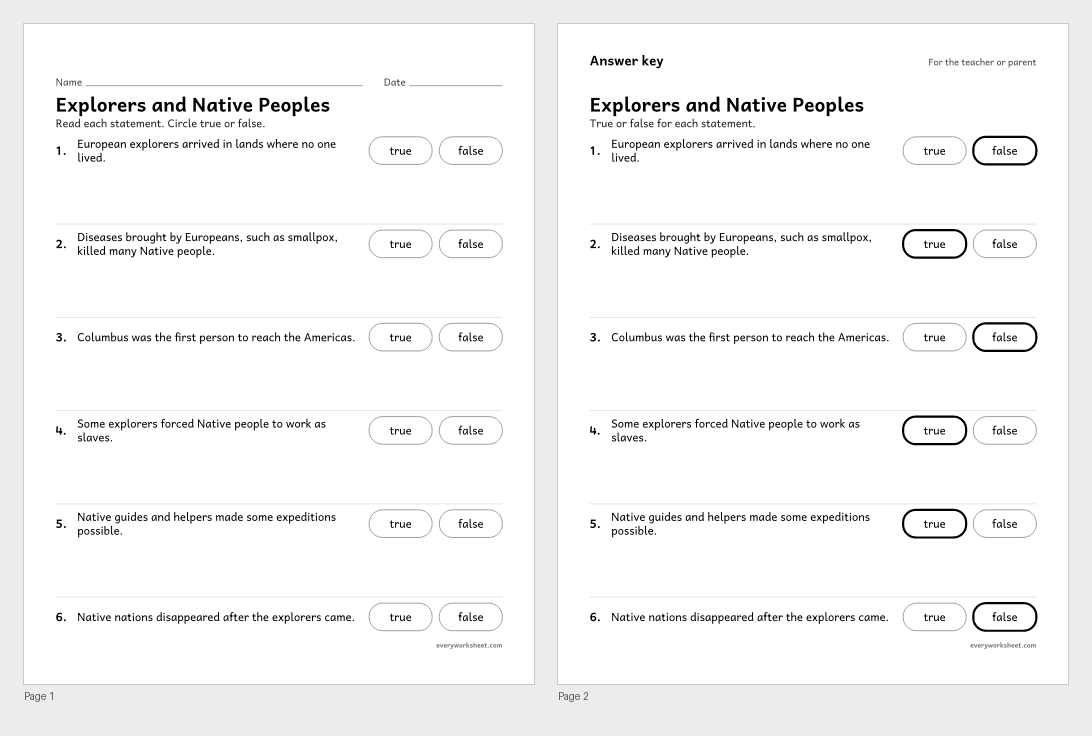
Evaluating statements about how European exploration affected Native peoples
Answer key on page 2
2 pages40 KB
 View larger
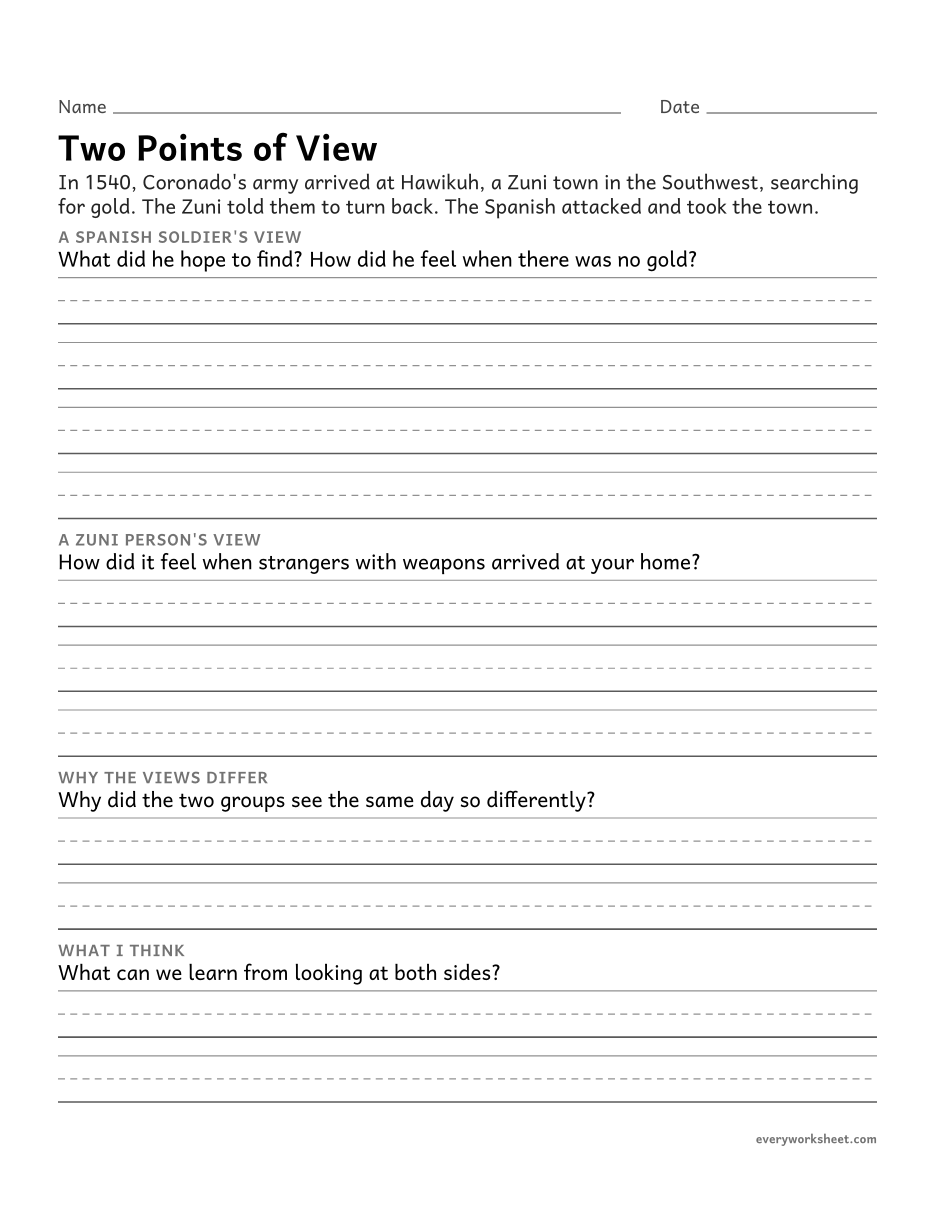
Explaining how people at the same event saw it differently
1 page28 KB
 View larger
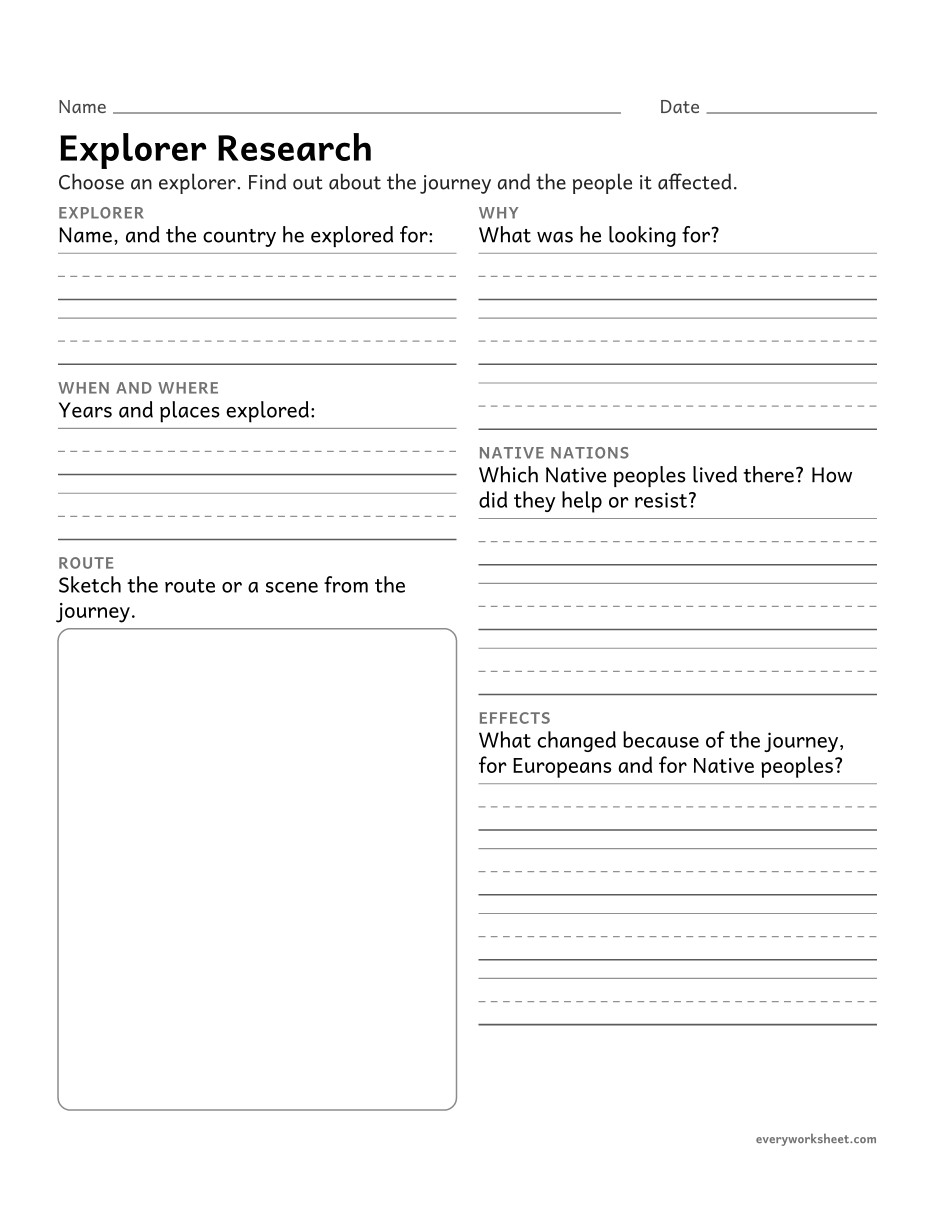
Researching an explorer and the effects of the journey
1 page29 KB
 View all 2 pages
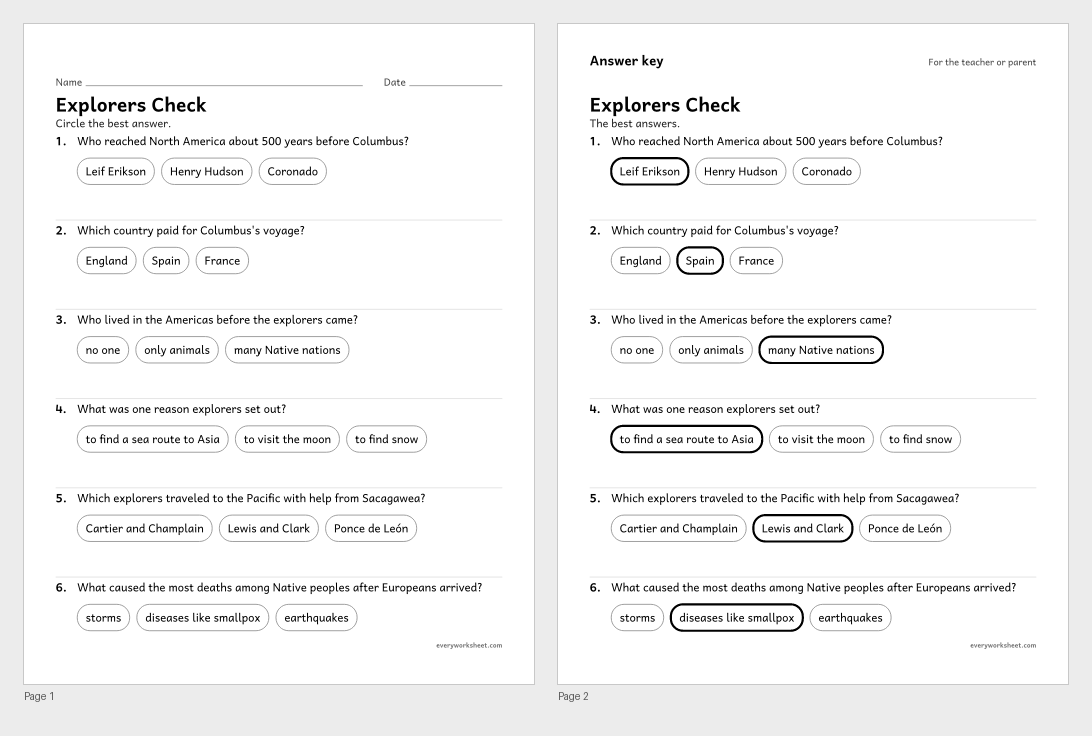
Reviewing European explorers and their effects
Answer key on page 2
2 pages40 KB
Print at 100% (actual size) for the cleanest tracing lines.
Starting around 1000 and growing after 1492, European explorers sailed to the Americas looking for sea routes to Asia, gold and land. They arrived in places where Native nations had lived for thousands of years, and their journeys changed life for everyone.
These explorers worksheets give both sides of the story. A chart and timeline show who explored, when and where. Reading passages cover Columbus and the Taíno, and Lewis and Clark with Sacagawea. A true or false page and a two-points-of-view writing page ask children to think about how exploration affected Native peoples.
Every page is black and white, prints on US Letter or A4, and every page with right answers has an answer key on page 2.
C3 D2.His.1.3-5Create and use a chronological sequence of related events to compare developments that happened at the same time.C3 D2.His.3.3-5Generate questions about individuals and groups who have shaped significant historical changes and continuities.C3 D2.His.14.3-5Explain probable causes and effects of events and developments.C3 D2.His.4.3-5Explain why individuals and groups during the same historical period differed in their perspectives.CCSS.ELA-LITERACY.W.4.7Conduct short research projects that build knowledge through investigation of different aspects of a topic.Many were looking for a sea route to Asia for trade. Others searched for gold, land, and fame for the countries that paid for their trips.
Explorers claimed Native lands, and some forced people into work or slavery. Diseases like smallpox killed huge numbers. Native nations survived, and many are still here today.
Native peoples had lived there for thousands of years. The Norse explorer Leif Erikson reached Newfoundland around the year 1000.