 View all 2 pages
What is an Exponent?
Understanding whole-number exponents
Answer key on page 2
2 pages66 KB
What the base and exponent mean, powers as repeated multiplication, exponent form, and finding the value of a power.
View all 2 pagesUnderstanding whole-number exponents
Answer key on page 2
2 pages66 KB
 View all 2 pages
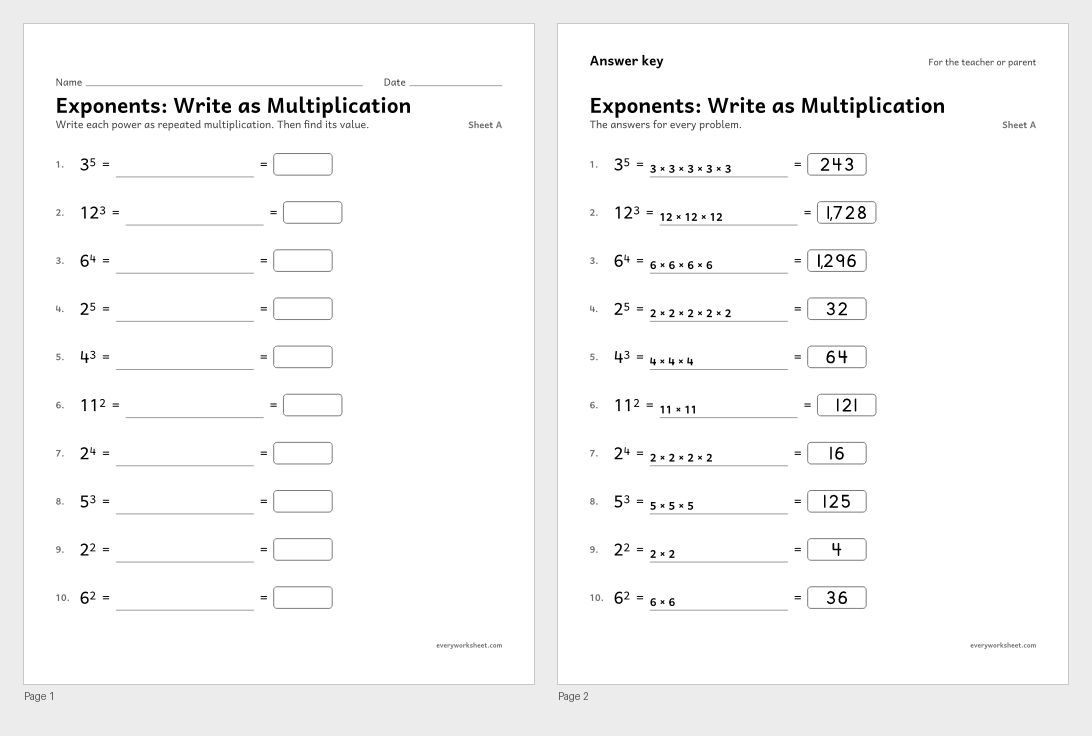
Writing a power as repeated multiplication
Answer key on page 2
2 pages63 KB
 View all 2 pages
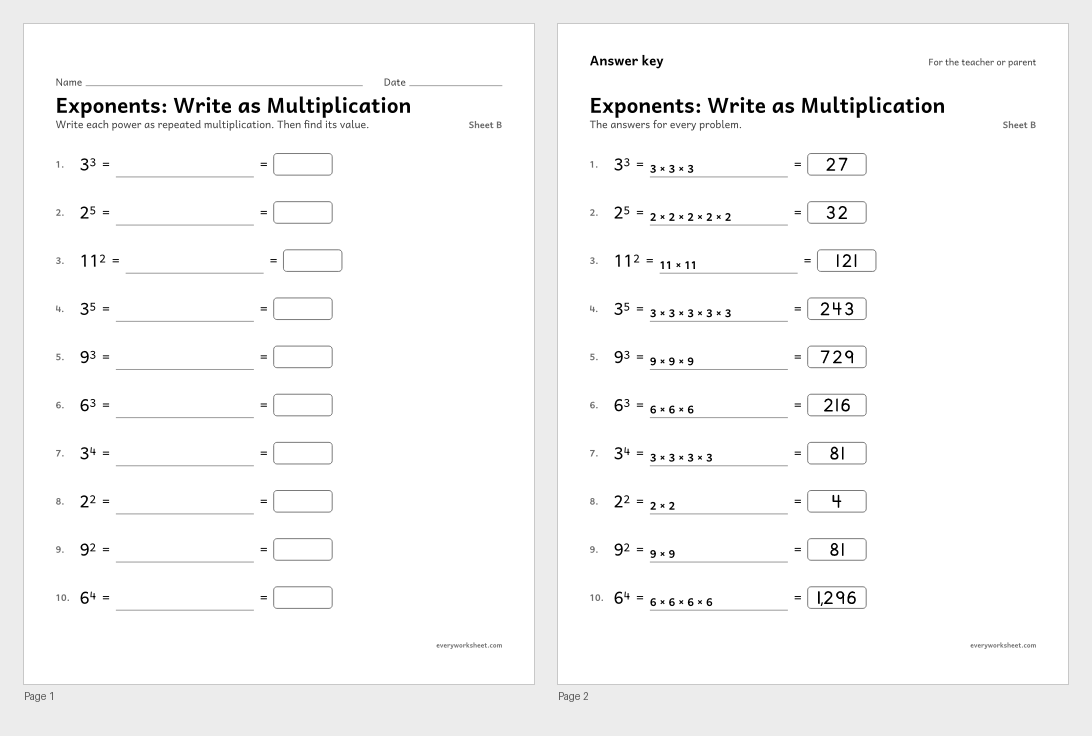
Writing a power as repeated multiplication
Answer key on page 2
2 pages63 KB
 View all 2 pages
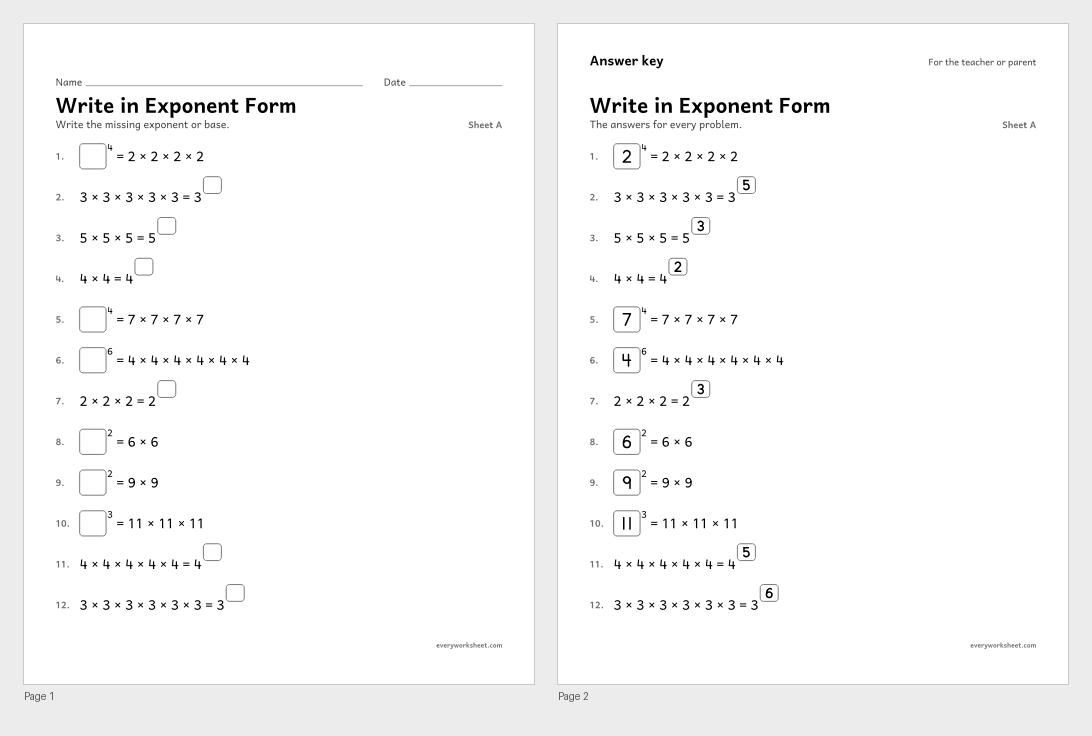
Writing repeated multiplication with an exponent
Answer key on page 2
2 pages92 KB
 View all 2 pages
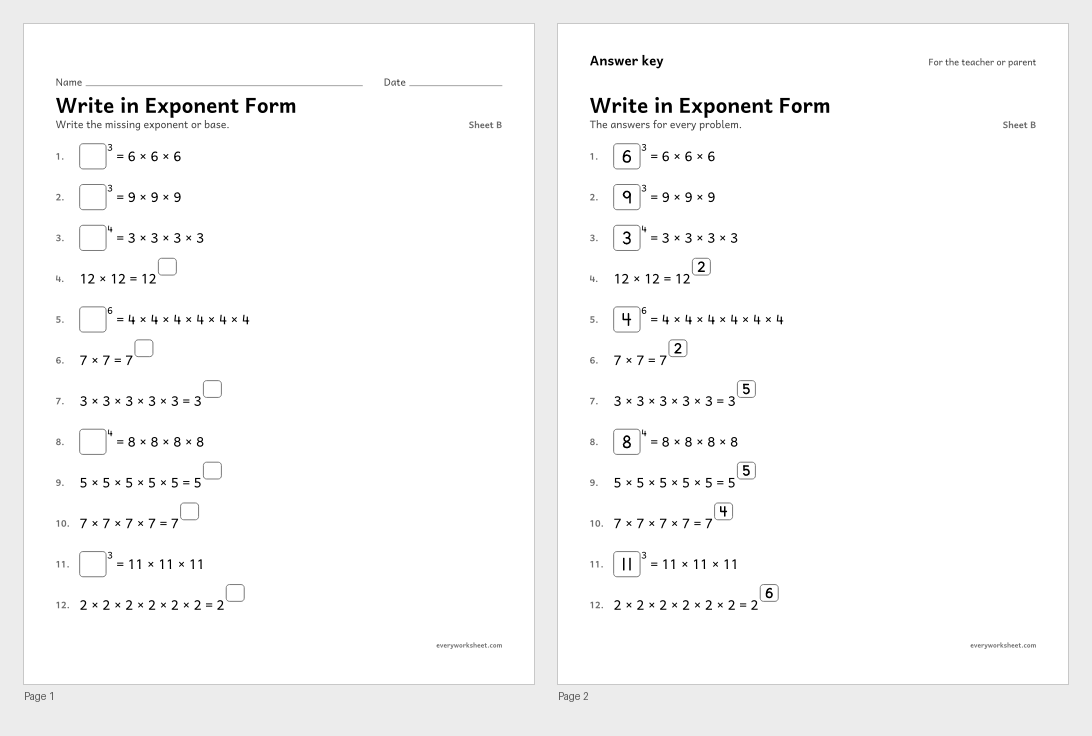
Writing repeated multiplication with an exponent
Answer key on page 2
2 pages95 KB
 View all 2 pages
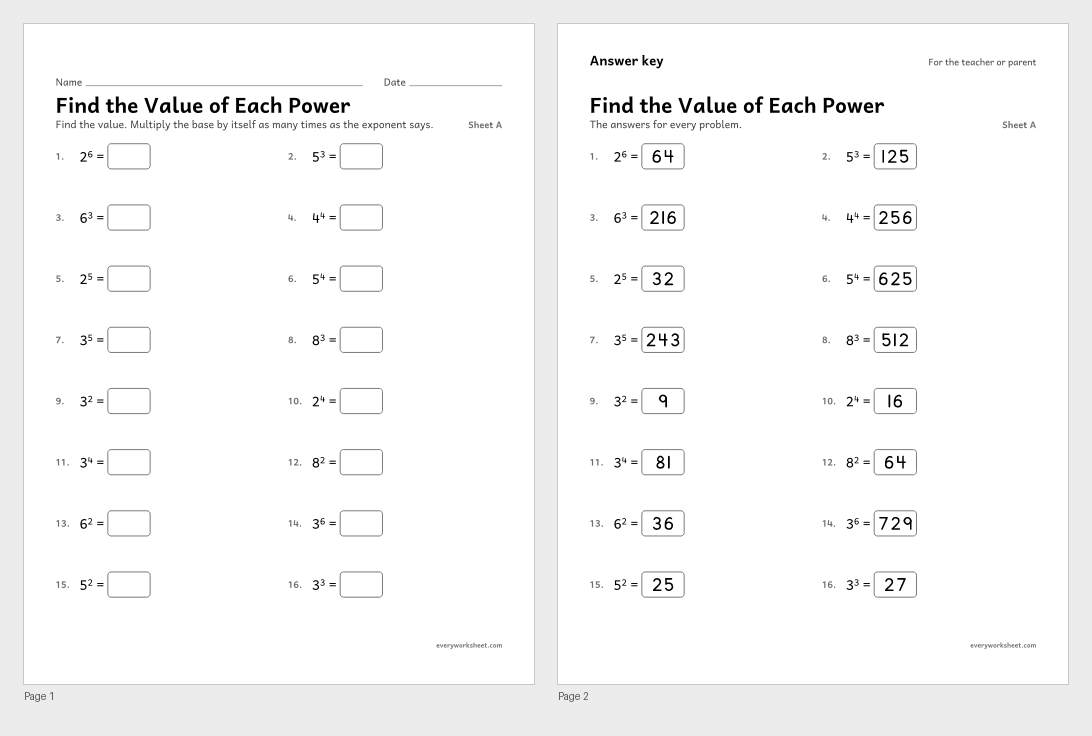
Finding the value of a power
Answer key on page 2
2 pages68 KB
 View all 2 pages
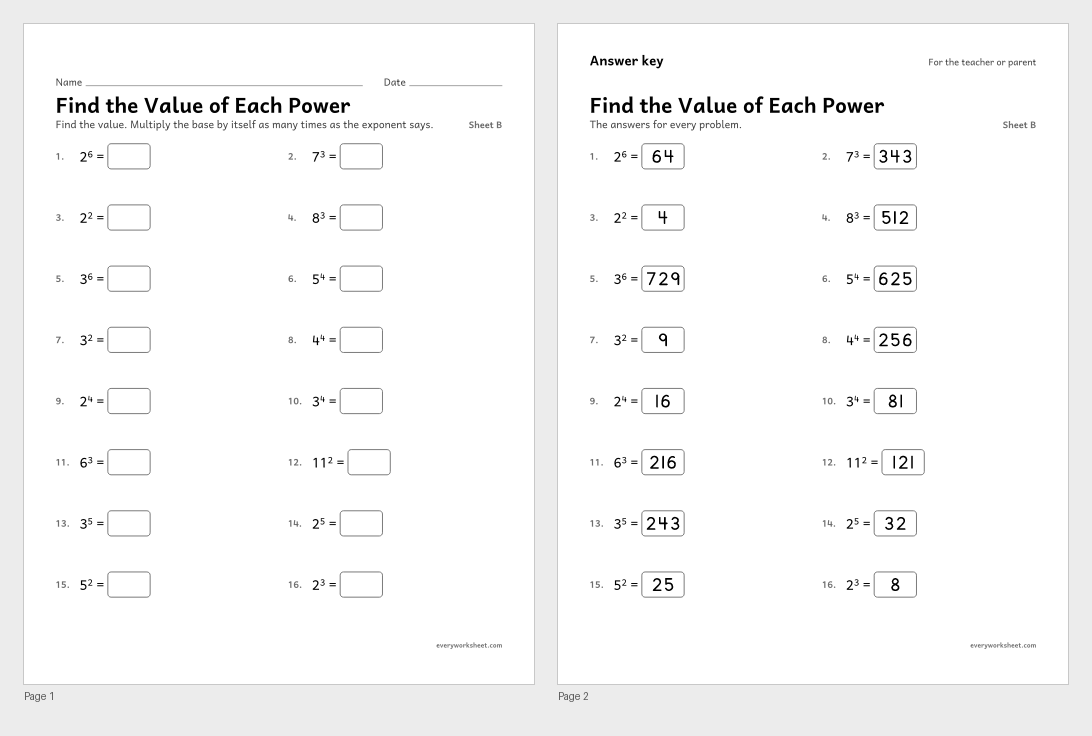
Finding the value of a power
Answer key on page 2
2 pages69 KB
 View all 2 pages
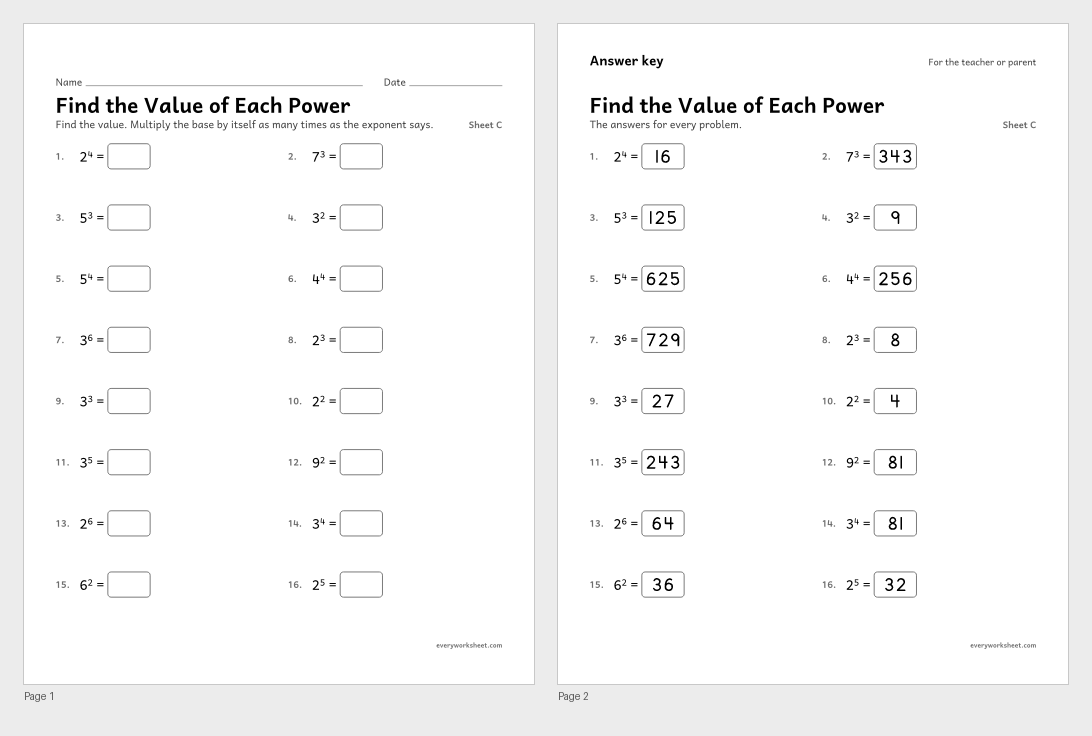
Finding the value of a power
Answer key on page 2
2 pages68 KB
 View all 2 pages
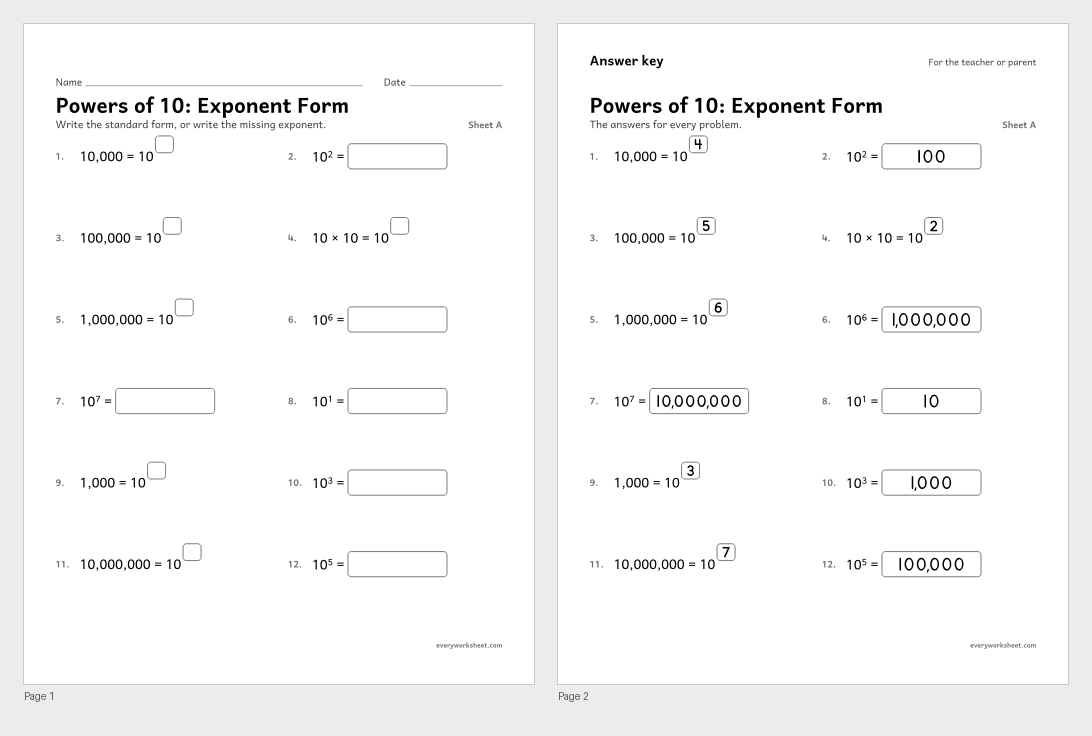
Writing powers of 10 with exponents
Answer key on page 2
2 pages61 KB
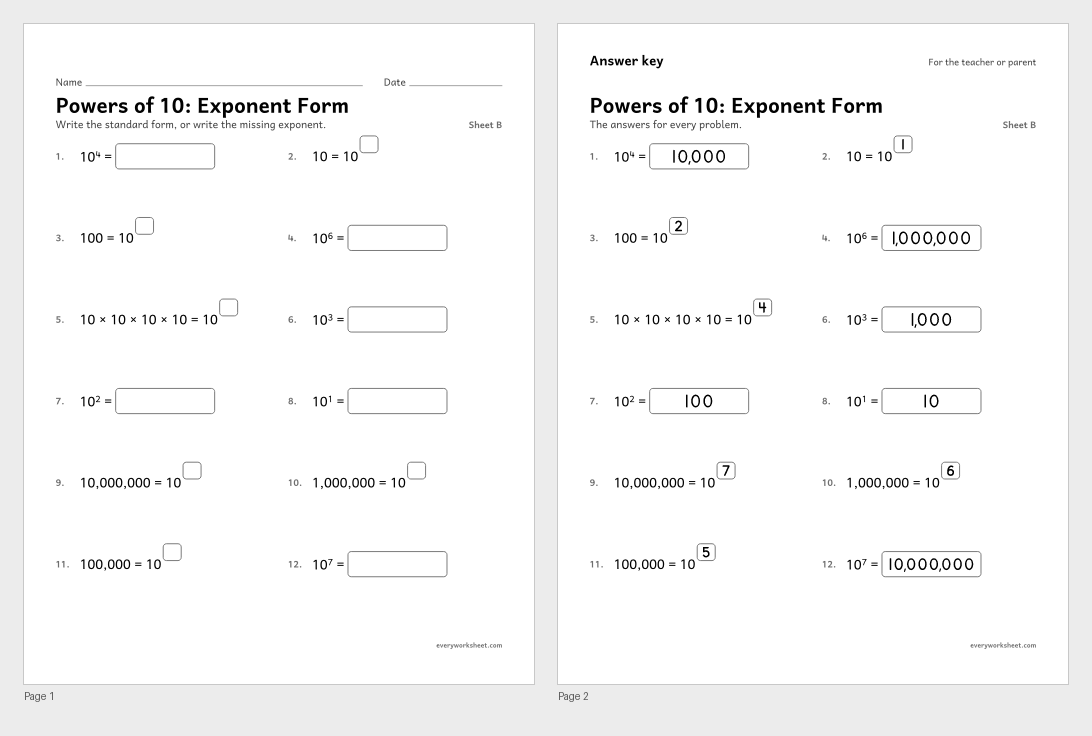 View all 2 pages
Writing powers of 10 with exponents
Answer key on page 2
2 pages63 KB
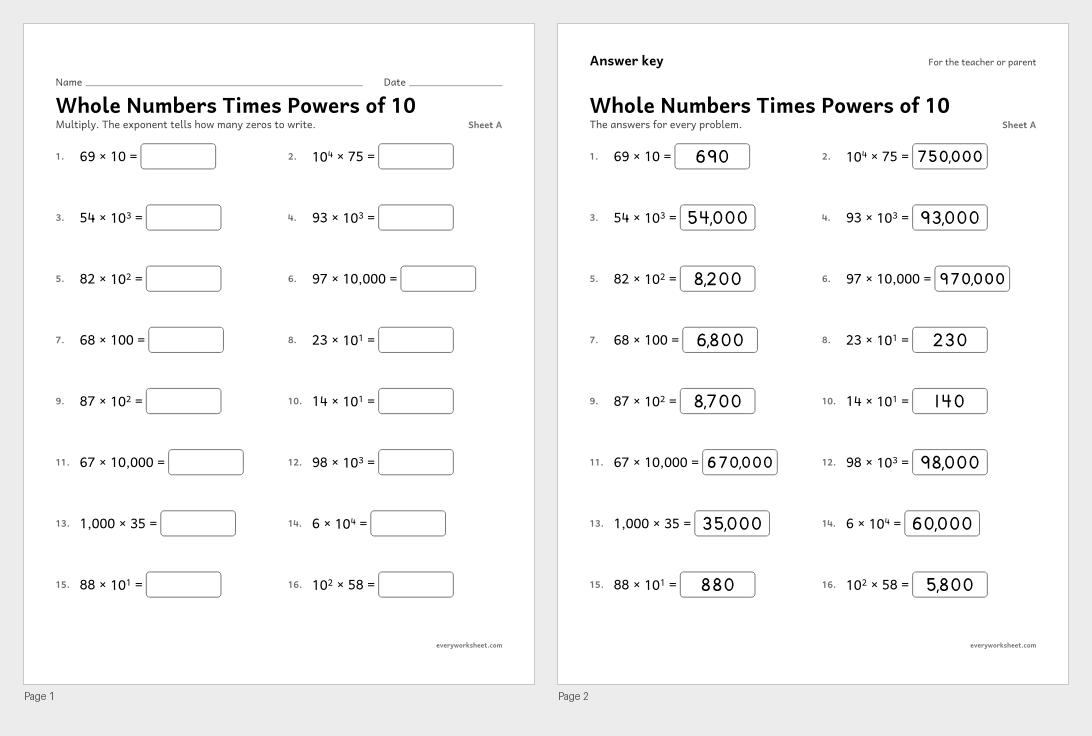 View all 2 pages
Multiplying whole numbers by powers of 10
Answer key on page 2
2 pages85 KB
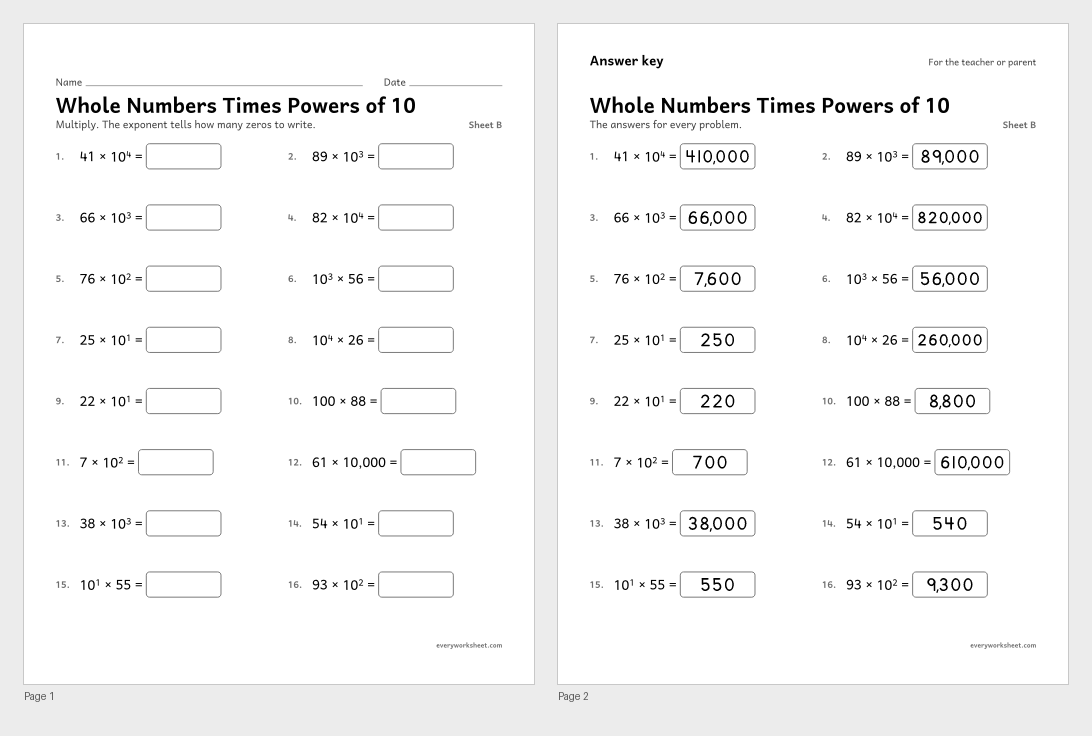 View all 2 pages
Multiplying whole numbers by powers of 10
Answer key on page 2
2 pages85 KB
Print at 100% (actual size) for the cleanest tracing lines.
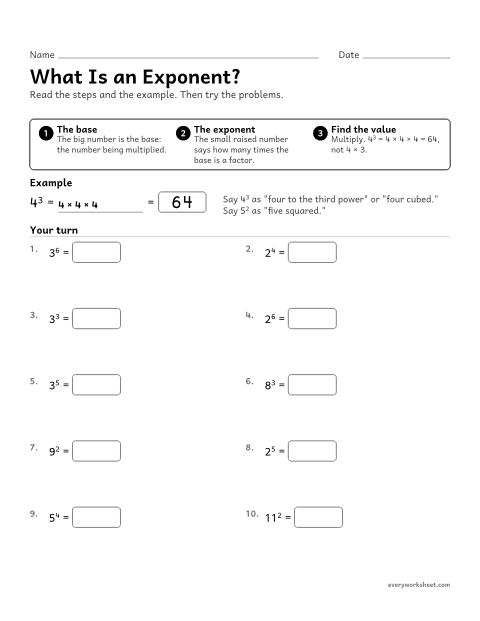
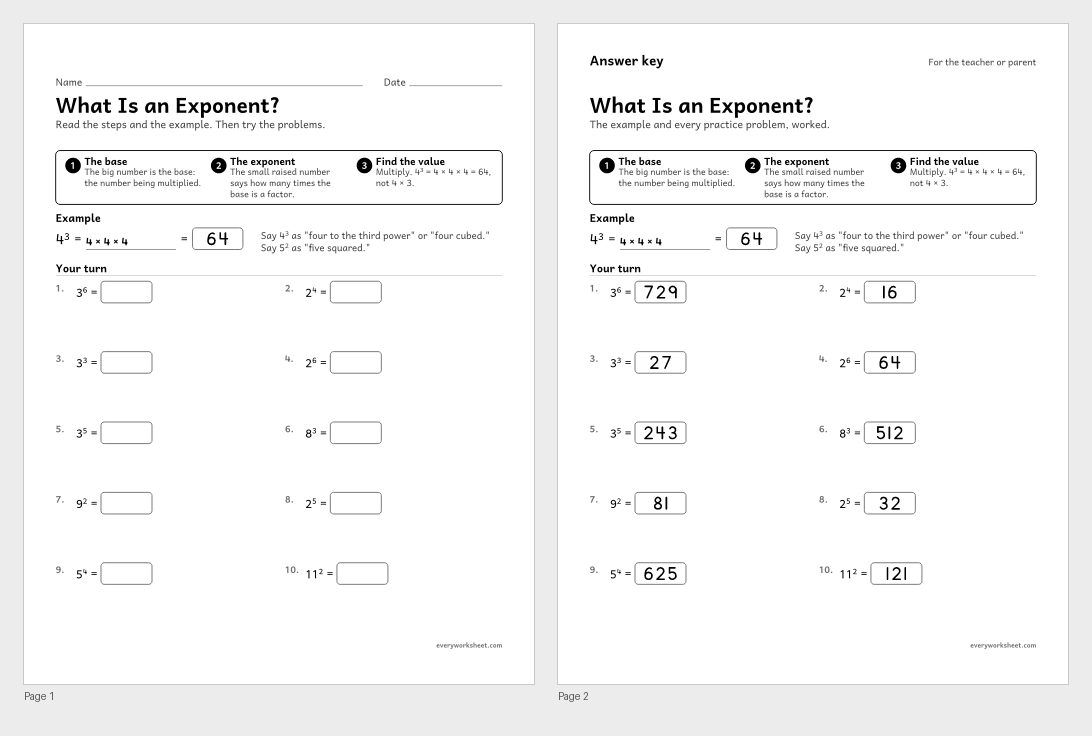
An exponent is a small raised number that tells how many times a base is used as a factor. In 4³ the base is 4 and the exponent is 3, so 4³ = 4 × 4 × 4 = 64. You say it as "four to the third power" or "four cubed." A power of 2 is called squared: 5² is "five squared."
In 5th grade, exponents start with powers of 10 (10³ = 1,000) and simple whole-number powers like 2⁵ and 3⁴. The most common mistake is to multiply the base by the exponent, so 4³ becomes 12. Writing the power out as repeated multiplication first stops that mistake.
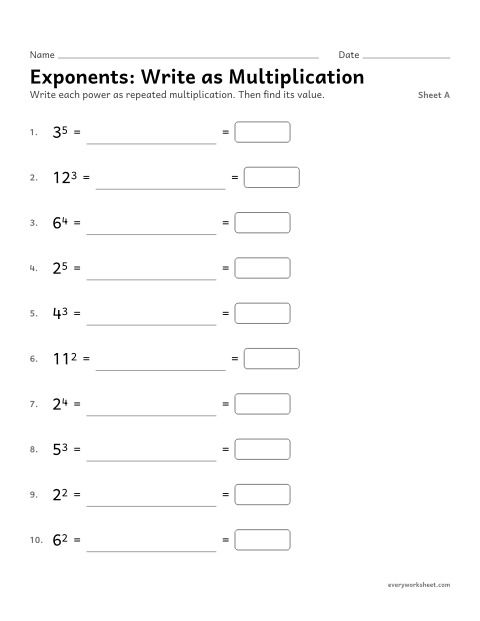
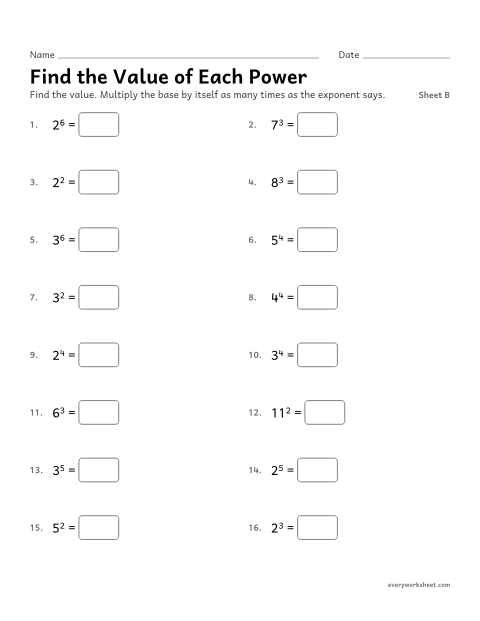
These pages explain exponents with a worked example, then practice writing powers as multiplication, writing repeated multiplication in exponent form, and finding values. Every page has an answer key on page 2.
CCSS.MATH.CONTENT.5.NBT.A.2Explain patterns in the number of zeros of the product when multiplying a number by powers of 10, and explain patterns in the placement of the decimal point when a decimal is multiplied or divided by a power of 10. Use whole-number exponents to denote powers of 10.A small raised number that tells how many times the base is a factor. 3⁴ = 3 × 3 × 3 × 3 = 81.
Yes. Fifth graders use whole-number exponents for powers of 10, and many classes also practice simple powers like 2⁵ and 5².
Squared means an exponent of 2 (6² = 36) and cubed means an exponent of 3 (2³ = 8).