 View larger
Fact and opinion
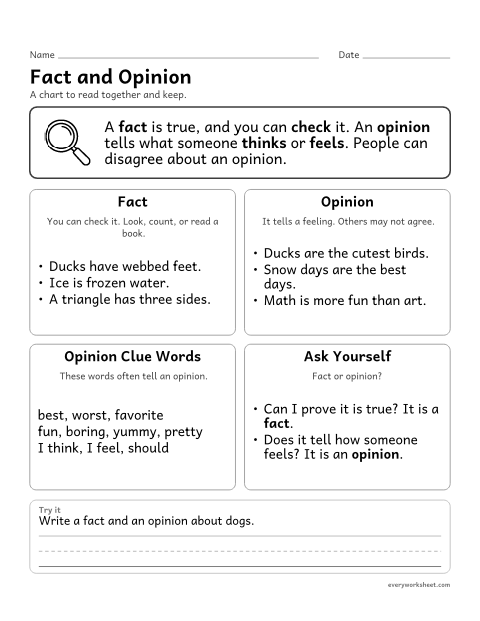
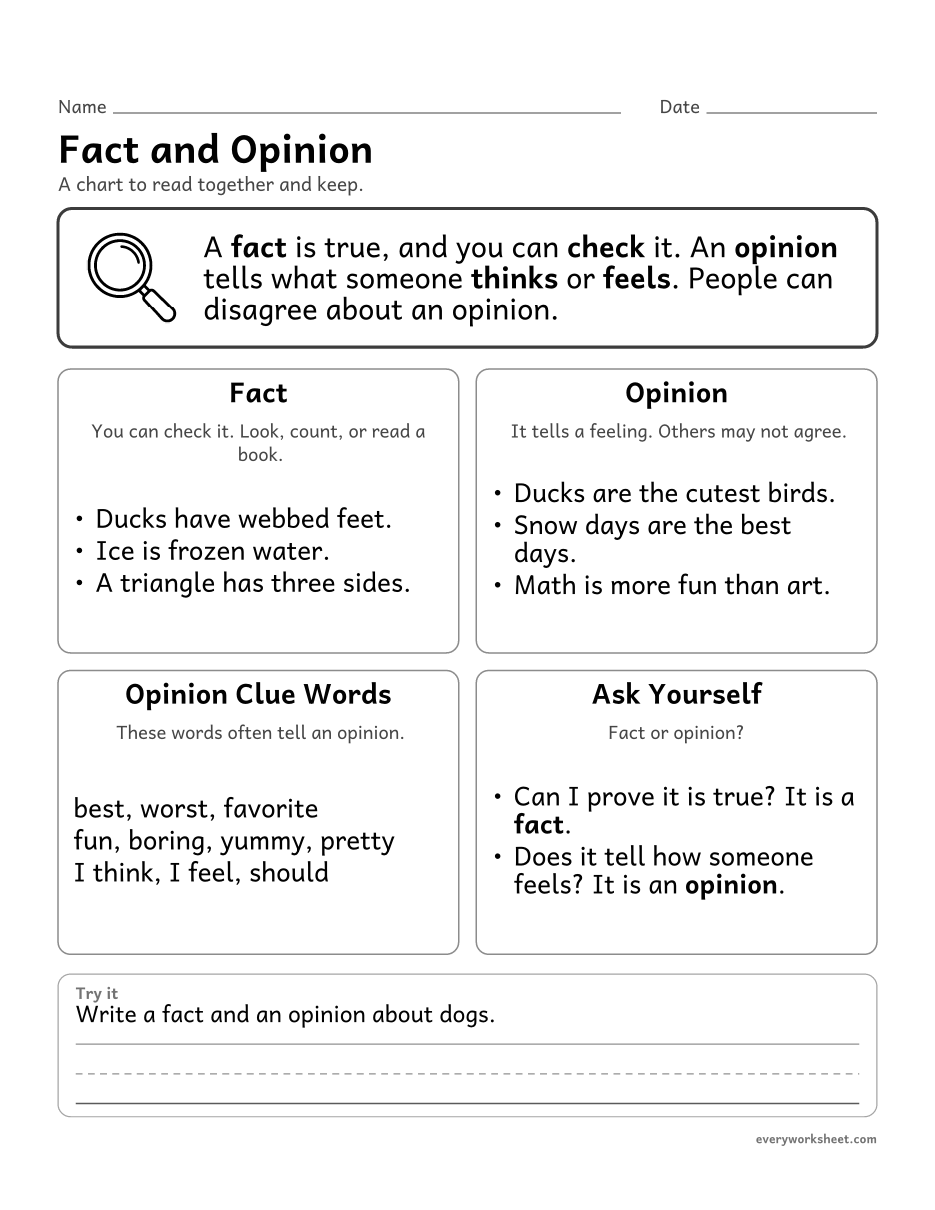
Knowing that a fact can be checked and an opinion tells what someone thinks or feels
1 page53 KB
Tell facts from opinions with charts, sorts, practice pages, and short texts to read, from 2nd to 5th grade.
View largerKnowing that a fact can be checked and an opinion tells what someone thinks or feels
1 page53 KB
 View all 2 pages
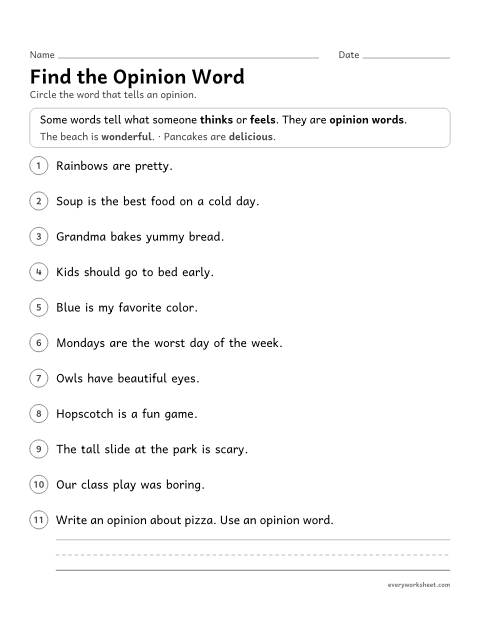
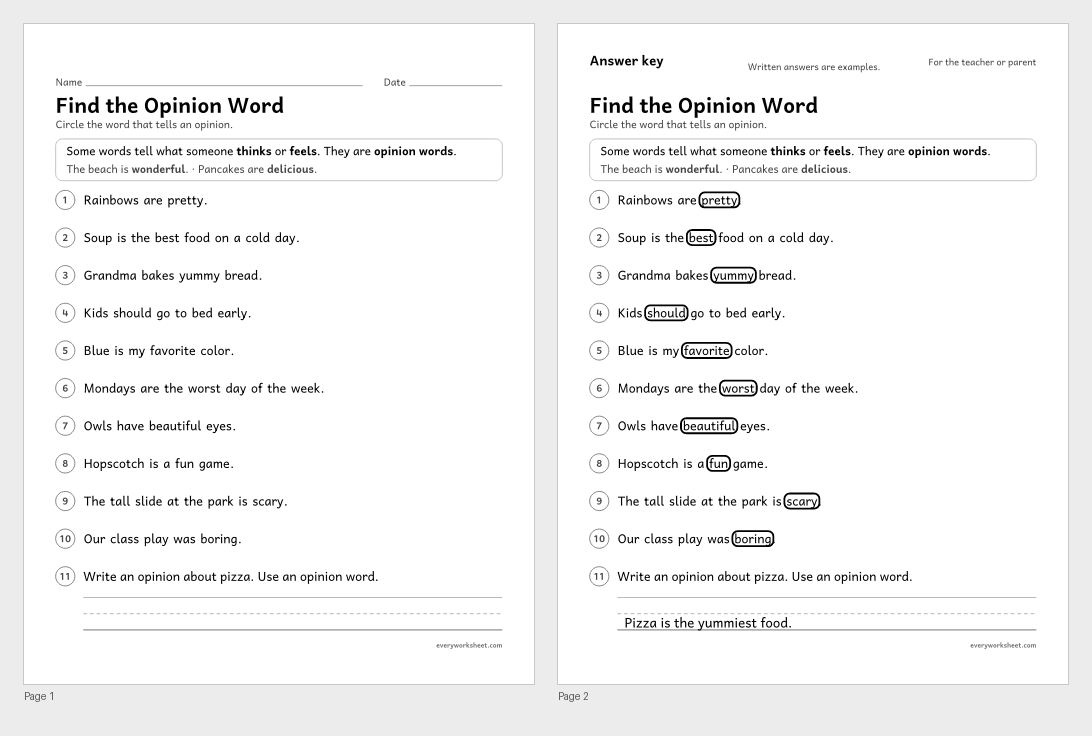
Finding the clue word that shows a sentence is an opinion
Answer key on page 2
2 pages52 KB
 View all 2 pages
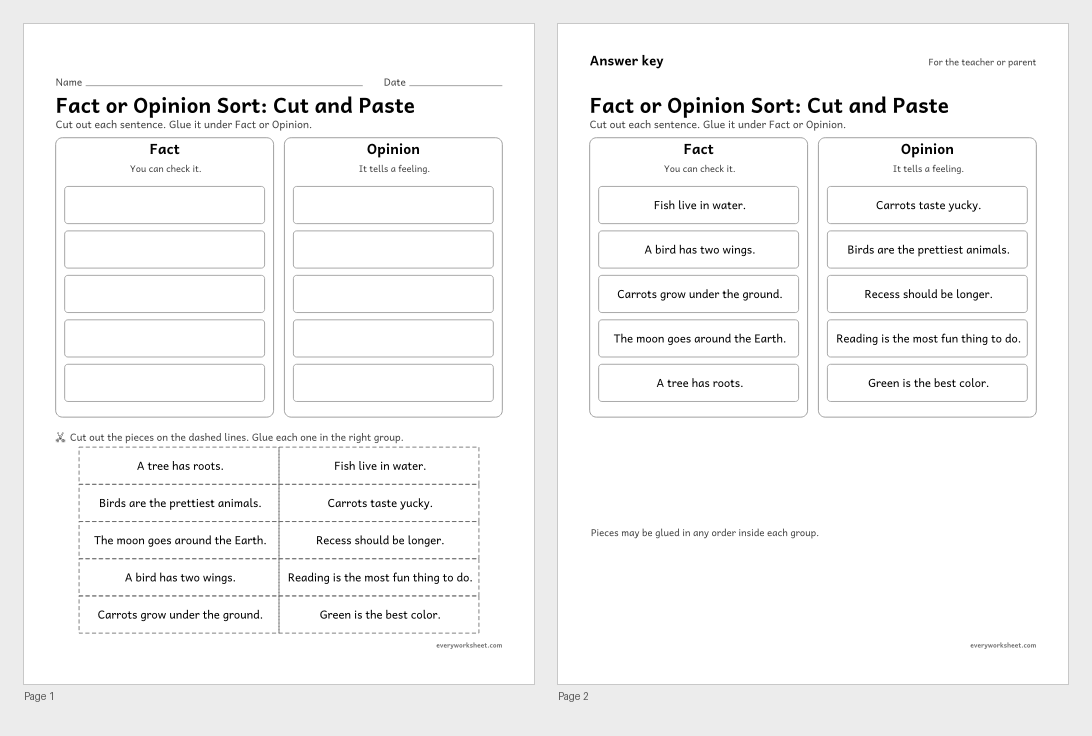
Sorting sentences into facts and opinions (cut and paste)
Answer key on page 2
2 pages65 KB
 View all 2 pages
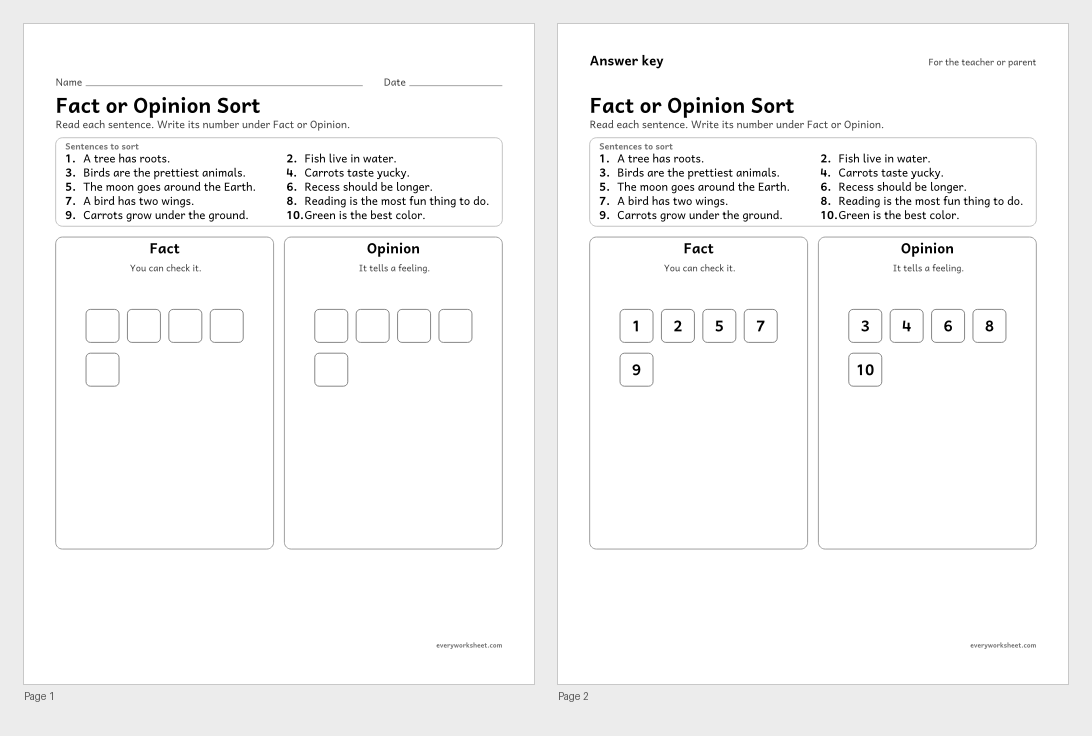
Sorting sentences into facts and opinions
Answer key on page 2
2 pages48 KB
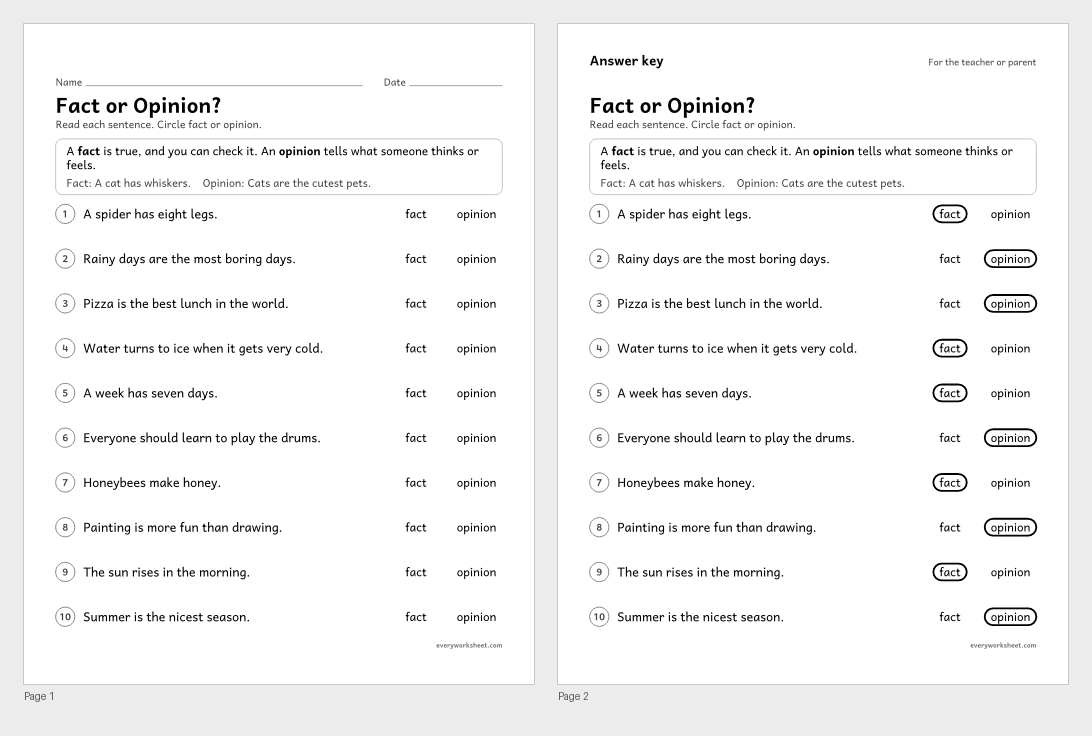 View all 2 pages
 3 pagesView all 3 pages
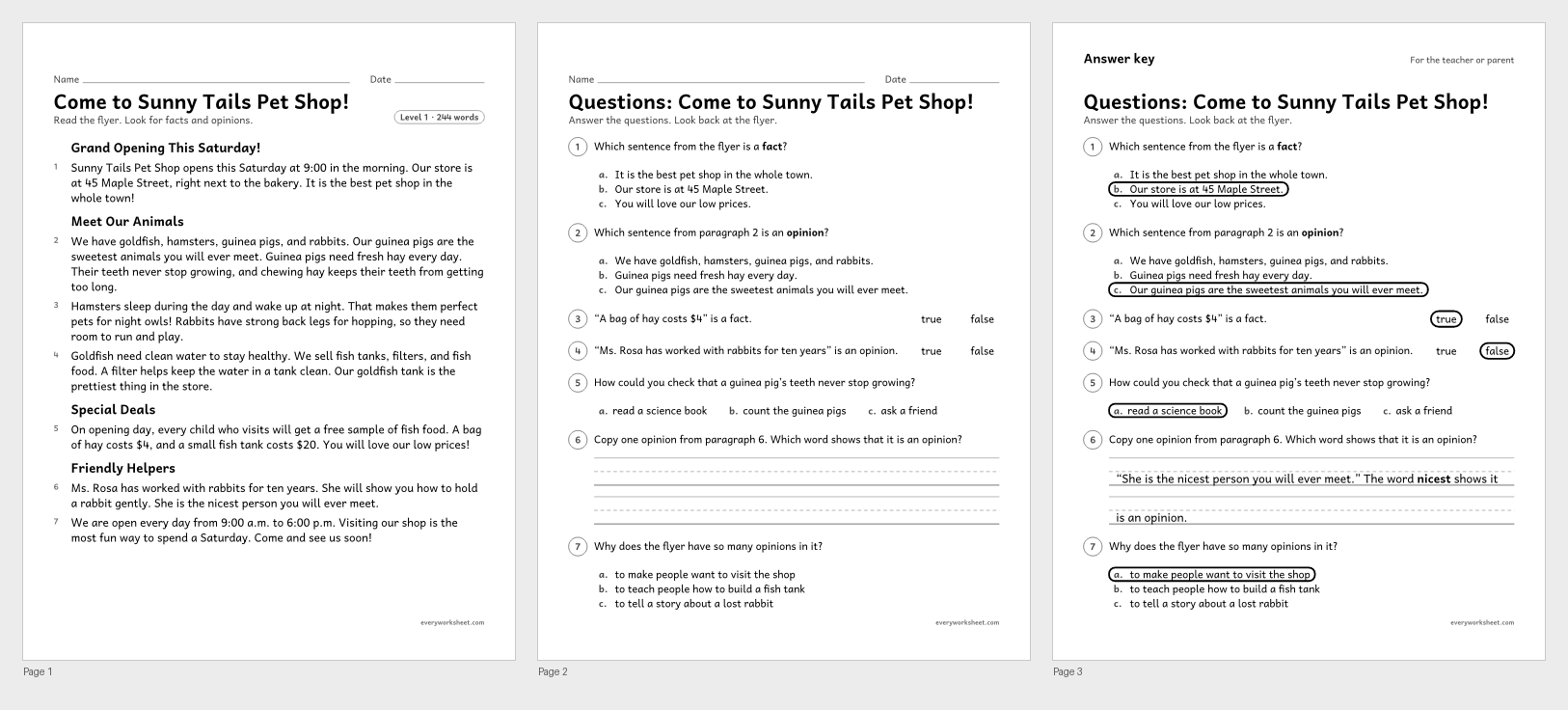
Finding facts and opinions in an advertising flyer
Answer key on page 3
3 pages64 KB
 View all 2 pages
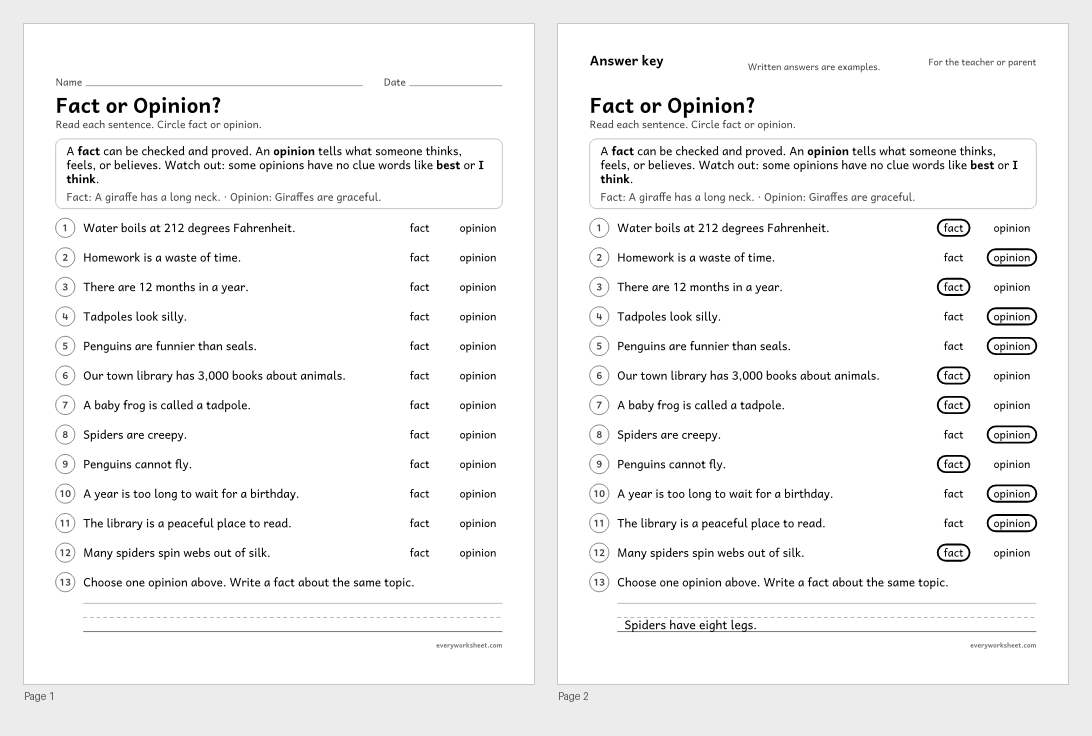
Telling facts from opinions, including opinions without clue words
Answer key on page 2
2 pages58 KB
 View all 2 pages
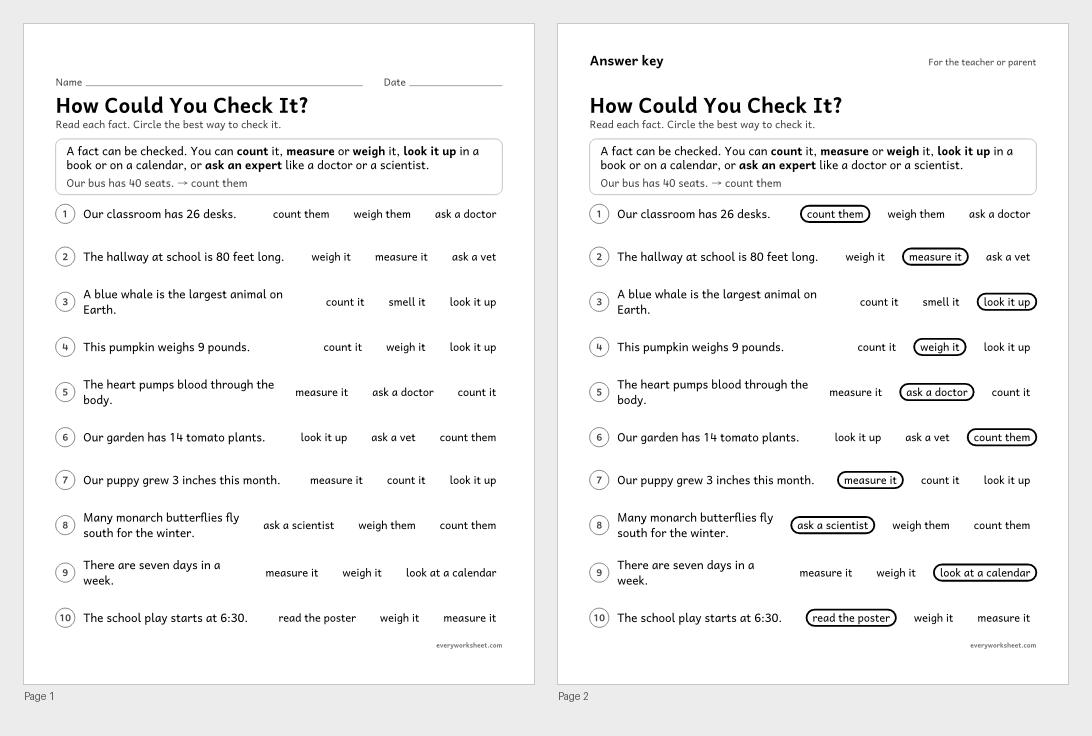
Choosing a way to check a fact: count, measure, weigh, look it up, or ask an expert
Answer key on page 2
2 pages55 KB
 View all 2 pages
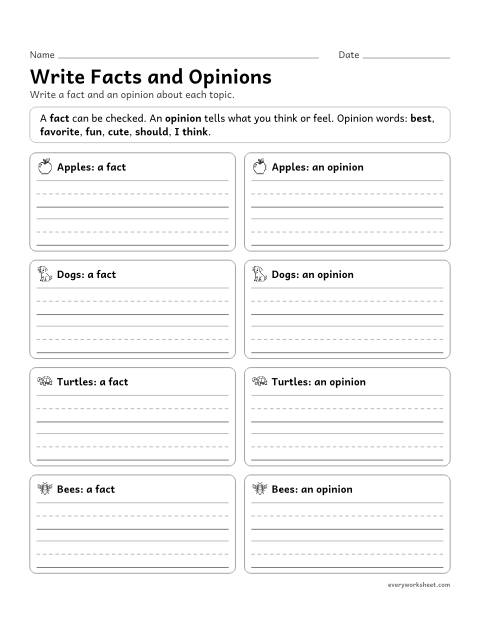
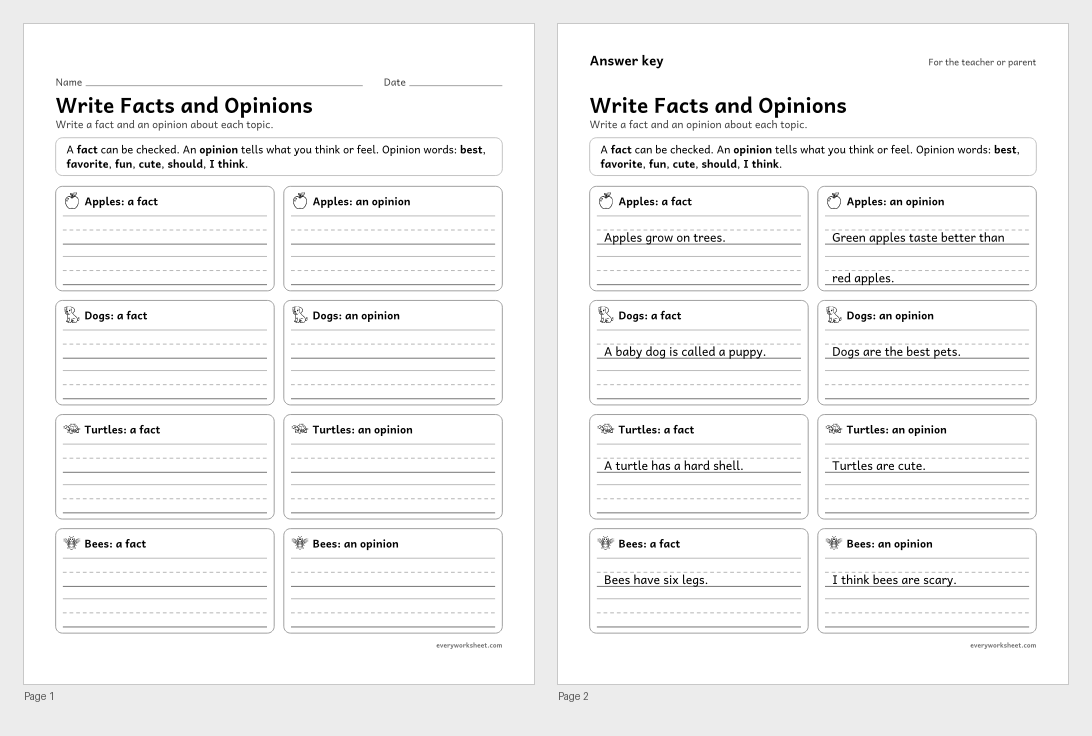
Writing a fact and an opinion about the same topic
Answer key on page 2
2 pages287 KB
 View larger
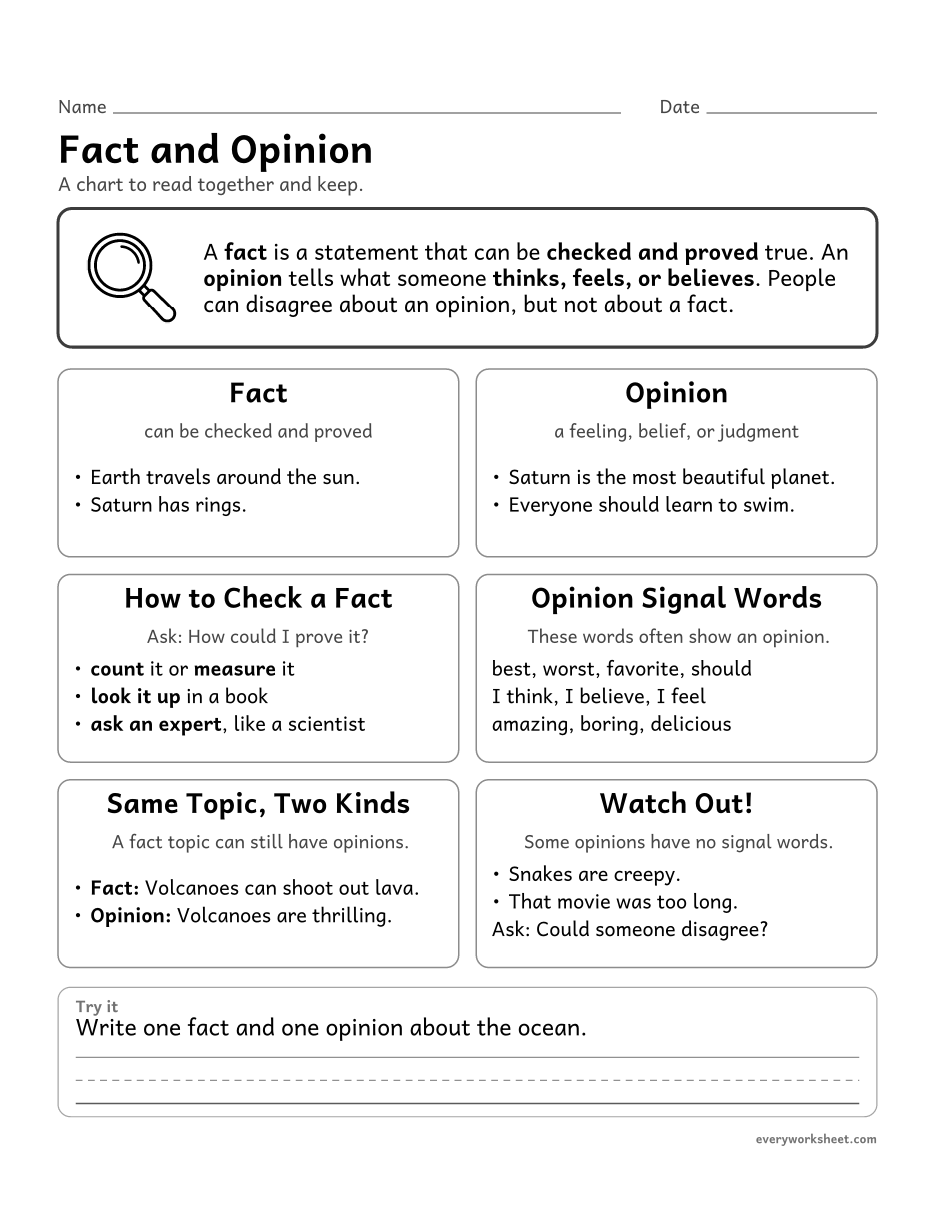
Knowing how facts and opinions differ, opinion signal words, and how to check a fact
1 page56 KB
 3 pagesView all 3 pages
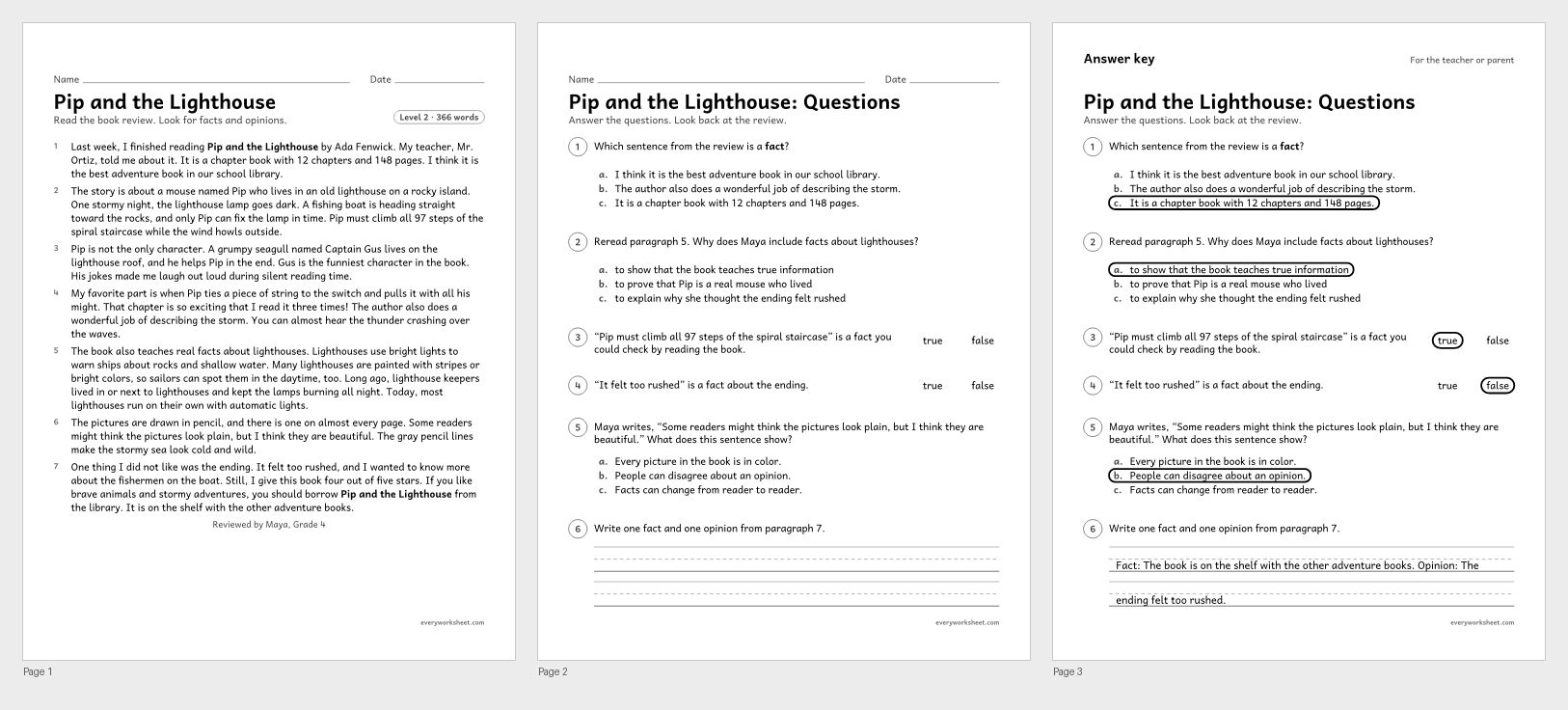
Finding facts and opinions in a student book review and explaining how each is used
Answer key on page 3
3 pages61 KB
 View all 2 pages
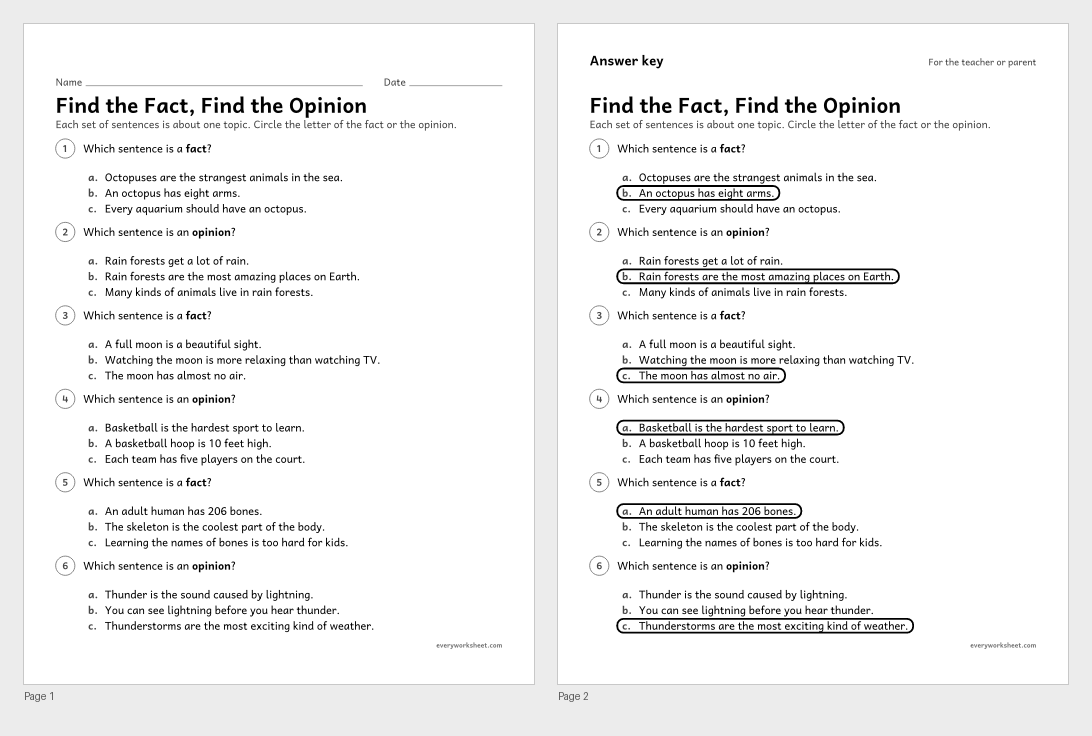
Choosing the fact or the opinion among three sentences on the same topic
Answer key on page 2
2 pages61 KB
 View all 2 pages
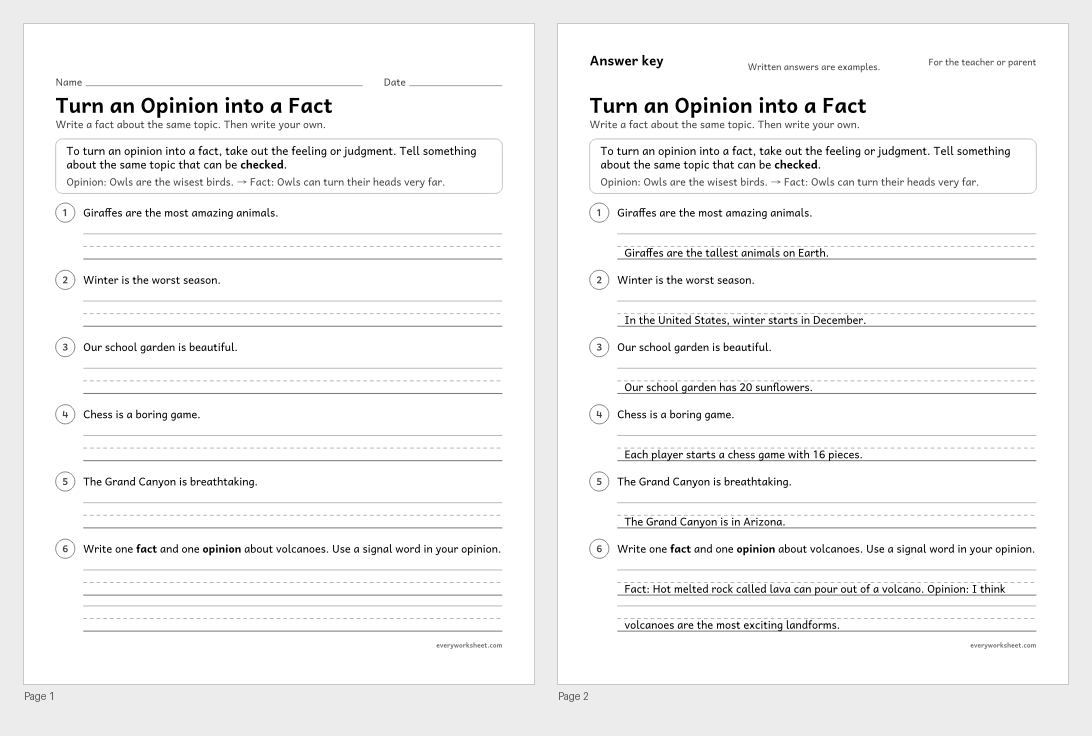
Rewriting opinions as facts on the same topic, and writing a fact and an opinion
Answer key on page 2
2 pages42 KB
 3 pagesView all 3 pages
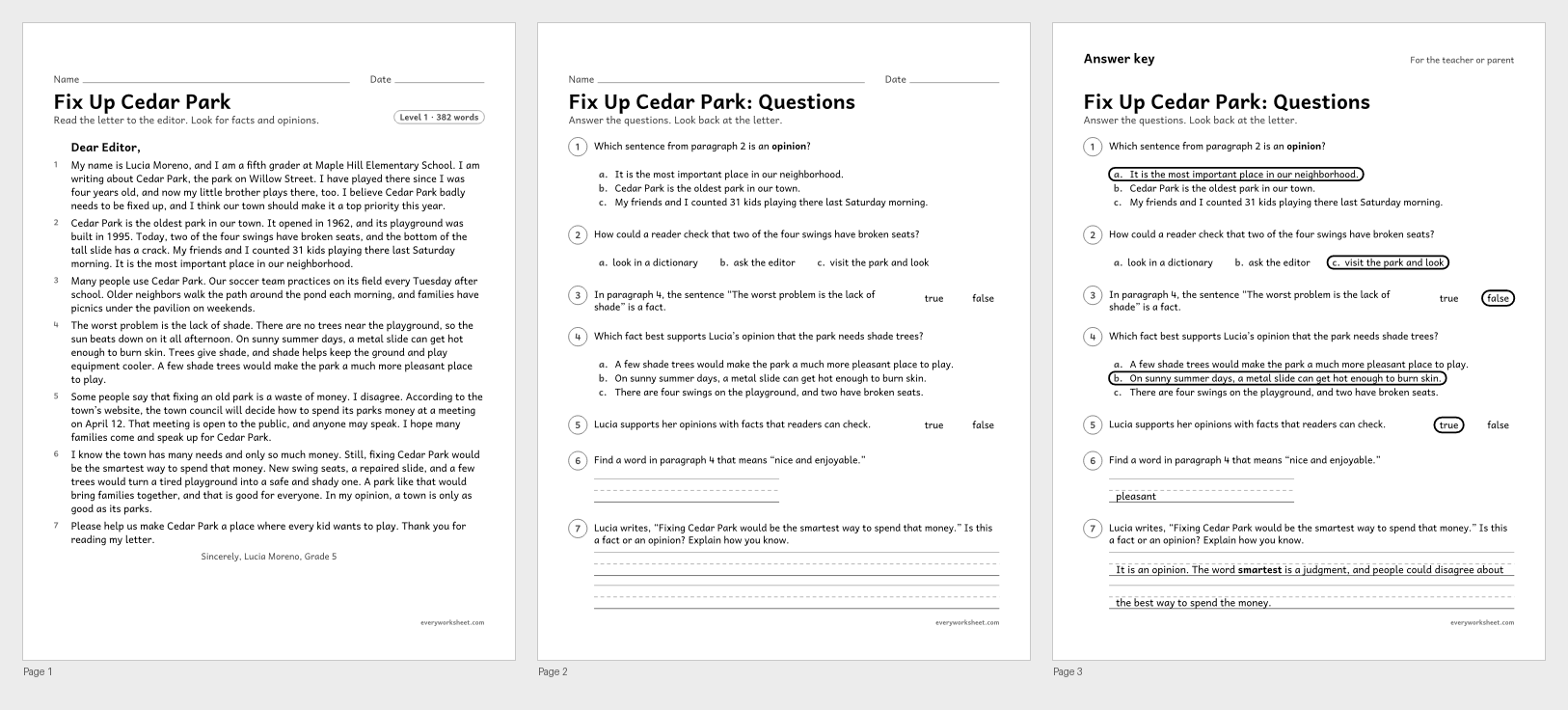
Telling facts from opinions in a letter to the editor and judging which facts support the writer's opinions
Answer key on page 3
3 pages60 KB
 View all 2 pages
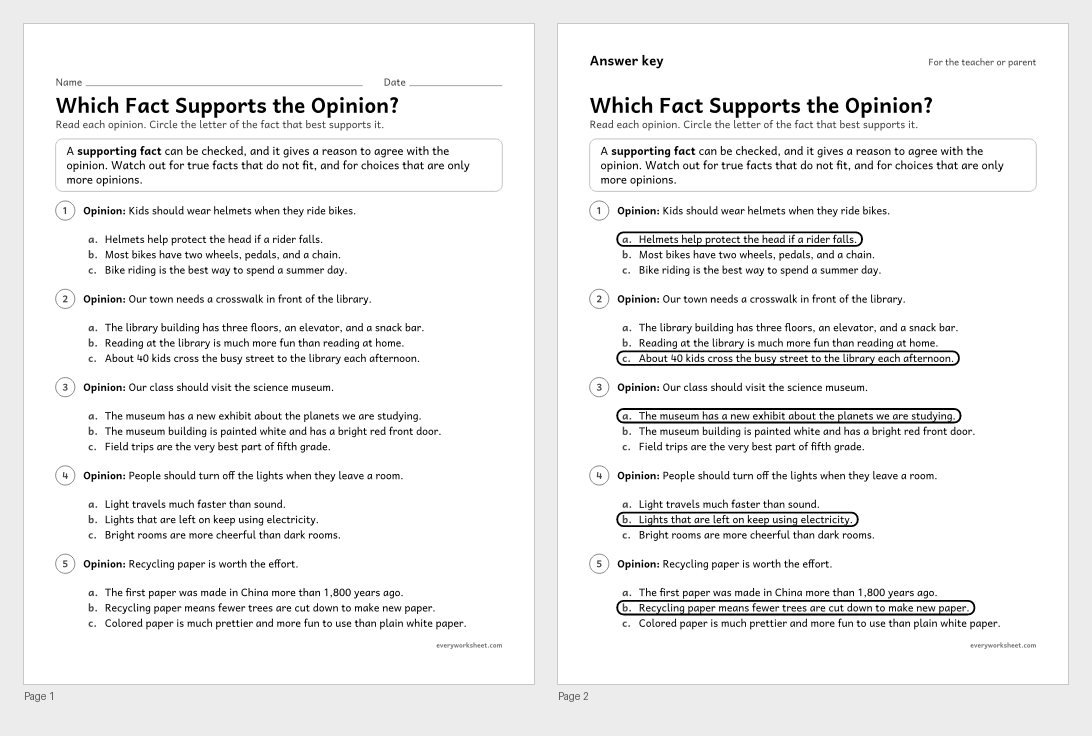
Choosing the fact that supports an opinion, and rejecting facts that do not and opinions posing as reasons
Answer key on page 2
2 pages58 KB
 View all 2 pages
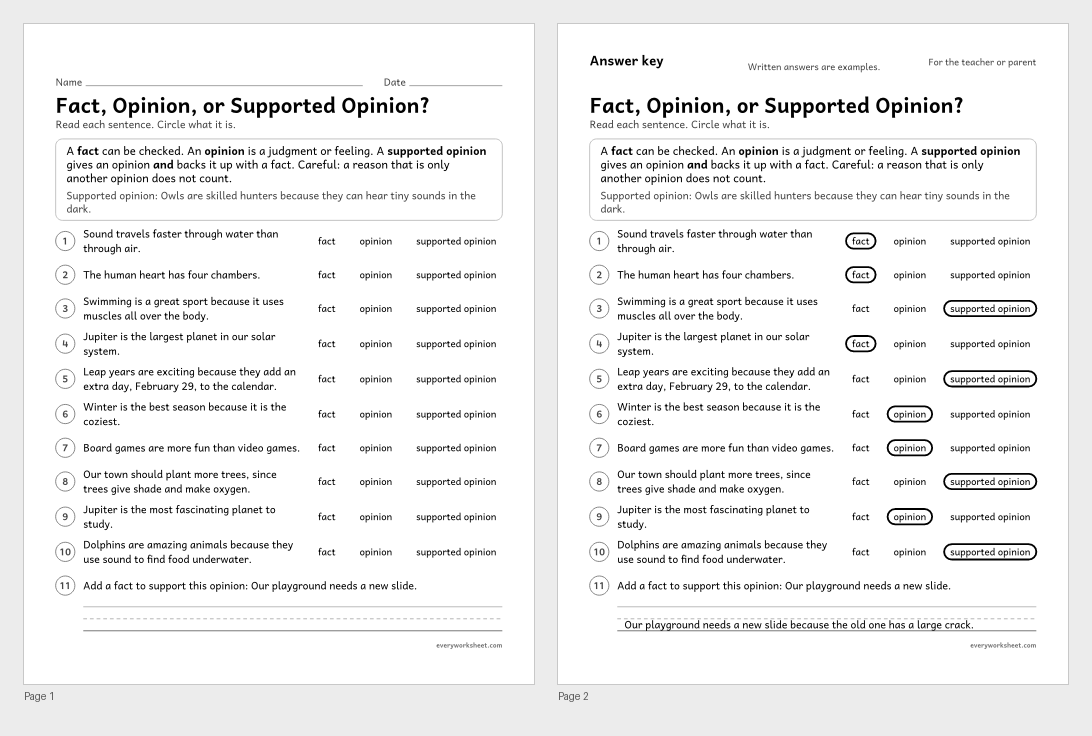
Telling facts, opinions, and opinions supported by facts apart, and adding a supporting fact
Answer key on page 2
2 pages56 KB
 View all 2 pages
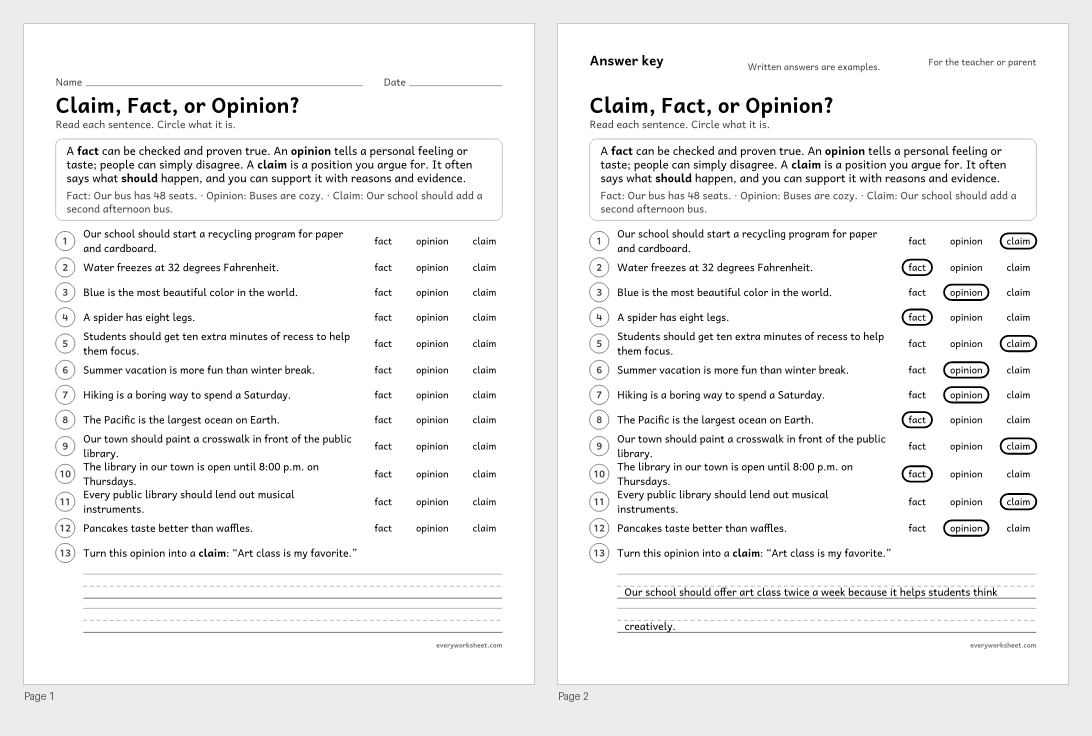
Telling a claim apart from a fact and a personal opinion
Answer key on page 2
2 pages62 KB
Print at 100% (actual size) for the cleanest tracing lines.
A fact is something that can be checked and proved true. "A spider has eight legs" is a fact: you can count them, or look it up in a book about animals. An opinion tells what someone thinks, feels, or believes. "Spiders are creepy" is an opinion, because someone else might think spiders are amazing. People can disagree about an opinion, but checking a fact settles it.
Opinions often come with clue words like best, worst, favorite, should, I think, beautiful, and boring. Some opinions have no clue words at all ("That movie was too long"), so older readers learn to ask one more question: could someone disagree? A sentence can also be about a fact-filled topic and still be an opinion. "Volcanoes can shoot out lava" is a fact, while "Volcanoes are the most interesting landforms" is an opinion.
These worksheets build the skill step by step. Second graders start with a chart, a sort, and opinion words. Third graders check facts by counting, measuring, or asking an expert, and find facts and opinions in a pet shop flyer. Fourth graders read a student's book review and turn opinions into facts. Fifth graders read a letter to the editor, choose the fact that best supports an opinion, and spot opinions that are backed up by facts.
Every page has an answer key, and every passage, flyer, review, and letter is written just for these worksheets.
CCSS.ELA-LITERACY.RI.3.1Ask and answer questions to demonstrate understanding of a text, referring explicitly to the text as the basis for the answers.CCSS.ELA-LITERACY.RI.4.1Refer to details and examples in a text when explaining what the text says explicitly and when drawing inferences from the text.CCSS.ELA-LITERACY.RI.5.8Explain how an author uses reasons and evidence to support particular points in a text, identifying which reasons and evidence support which point(s).CCSS.ELA-LITERACY.W.2.1Write opinion pieces in which they introduce the topic or book they are writing about, state an opinion, supply reasons that support the opinion, use linking words (e.g., because, and, also) to connect opinion and reasons, and provide a concluding statement or section.CCSS.ELA-LITERACY.W.3.1Write opinion pieces on topics or texts, supporting a point of view with reasons.CCSS.ELA-LITERACY.W.3.8Recall information from experiences or gather information from print and digital sources; take brief notes on sources and sort evidence into provided categories.CCSS.ELA-LITERACY.W.4.1.BProvide reasons that are supported by facts and details.CCSS.ELA-LITERACY.W.5.1.BProvide logically ordered reasons that are supported by facts and details.A fact can be checked and proved true, by counting, measuring, looking it up, or asking an expert. An opinion tells what someone thinks, feels, or believes, so people can disagree about it.
They are words that often show an opinion: best, worst, favorite, should, must, I think, I believe, I feel, beautiful, boring, amazing, and delicious. Not every opinion uses one, so children also ask whether someone could disagree.
Children usually meet facts and opinions in 2nd grade, when they start writing their own opinions. They keep practicing through 5th grade, when they judge which facts best support an opinion.
It is an opinion backed up by a fact, like "Bats are helpful because many bats eat mosquitoes." Our 5th grade pages teach children to tell supported opinions from plain opinions and facts.
Yes. Every practice page, sort, and reading page has an answer key, and the writing pages show sample answers.