 View all 2 pages
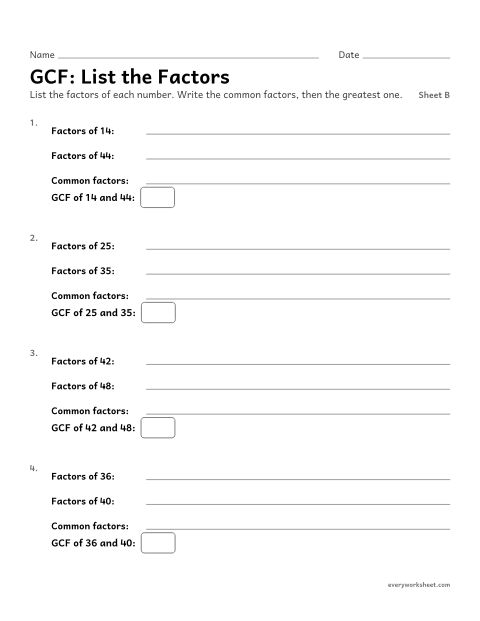
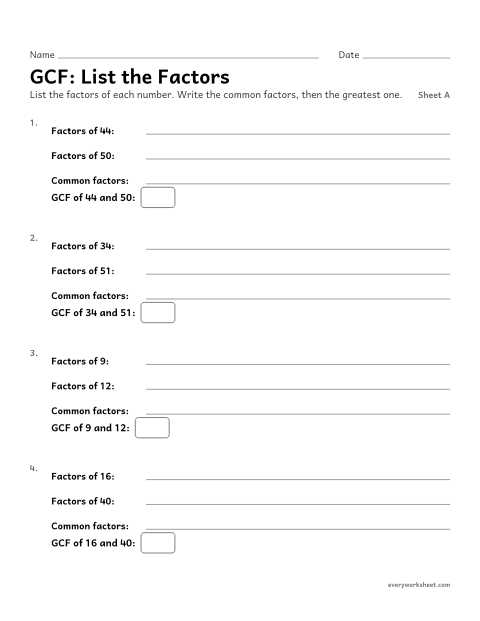
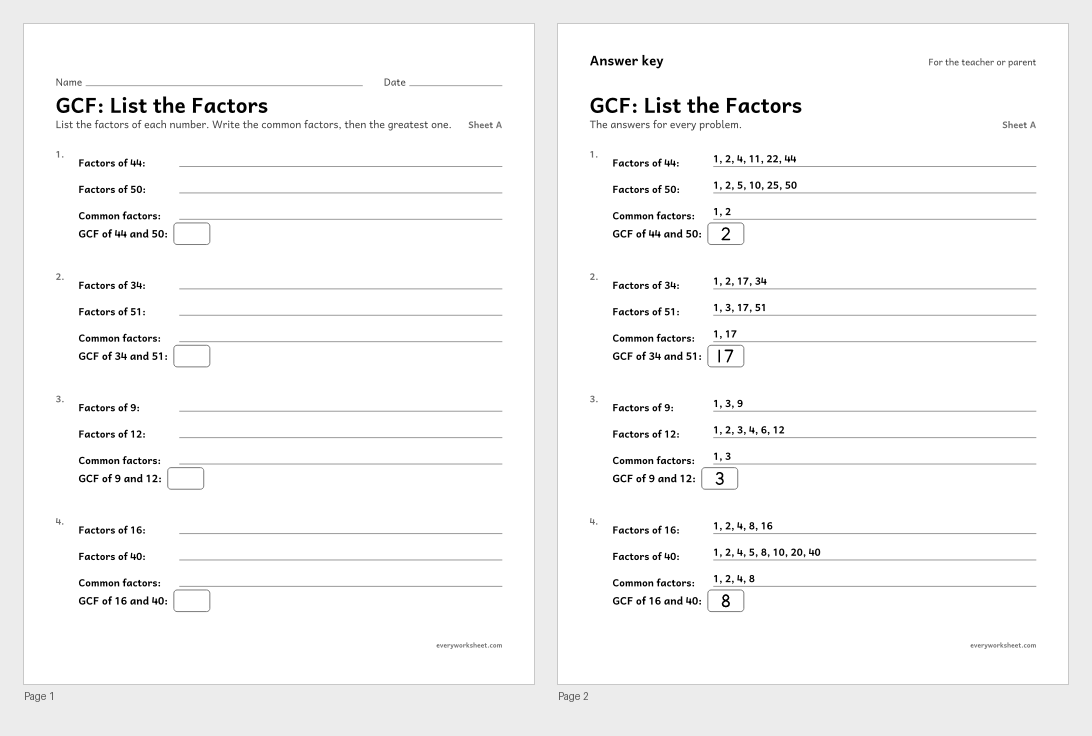
GCF: list the Factors, sheet A
Finding the greatest common factor by listing factors
Answer key on page 2
2 pages48 KB
Greatest common factor and least common multiple: listing factors and multiples, practice pairs, and word problems that ask which one you need.
View all 2 pagesFinding the greatest common factor by listing factors
Answer key on page 2
2 pages48 KB
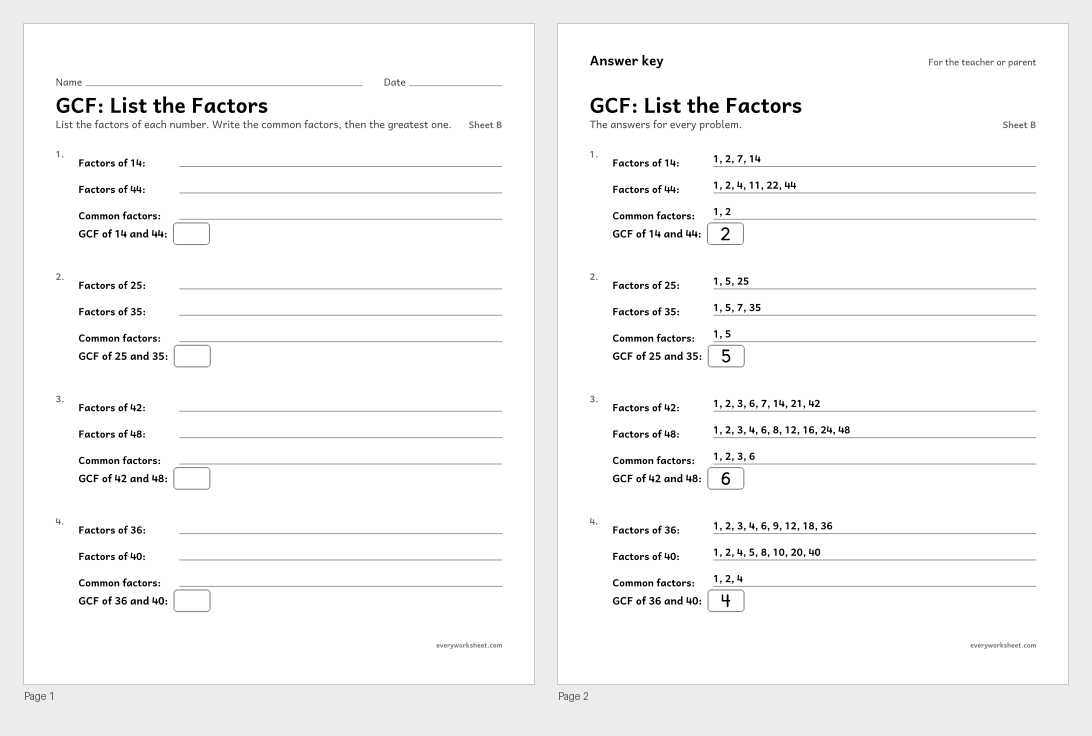 View all 2 pages
Finding the greatest common factor by listing factors
Answer key on page 2
2 pages48 KB
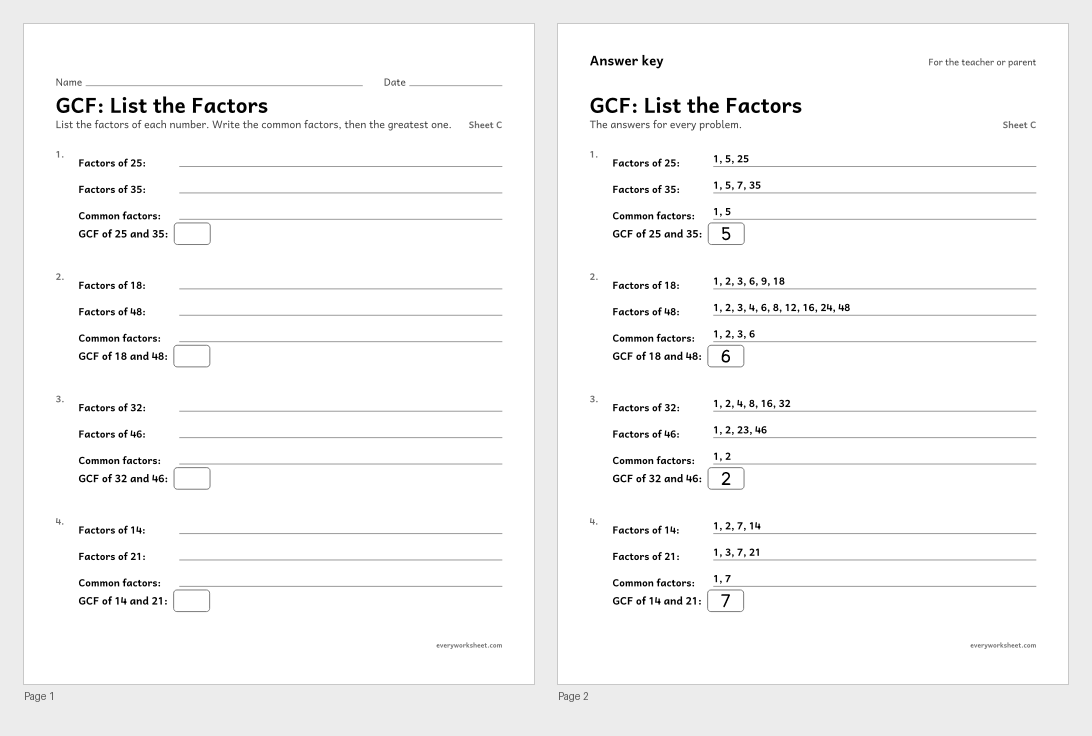 View all 2 pages
Finding the greatest common factor by listing factors
Answer key on page 2
2 pages48 KB
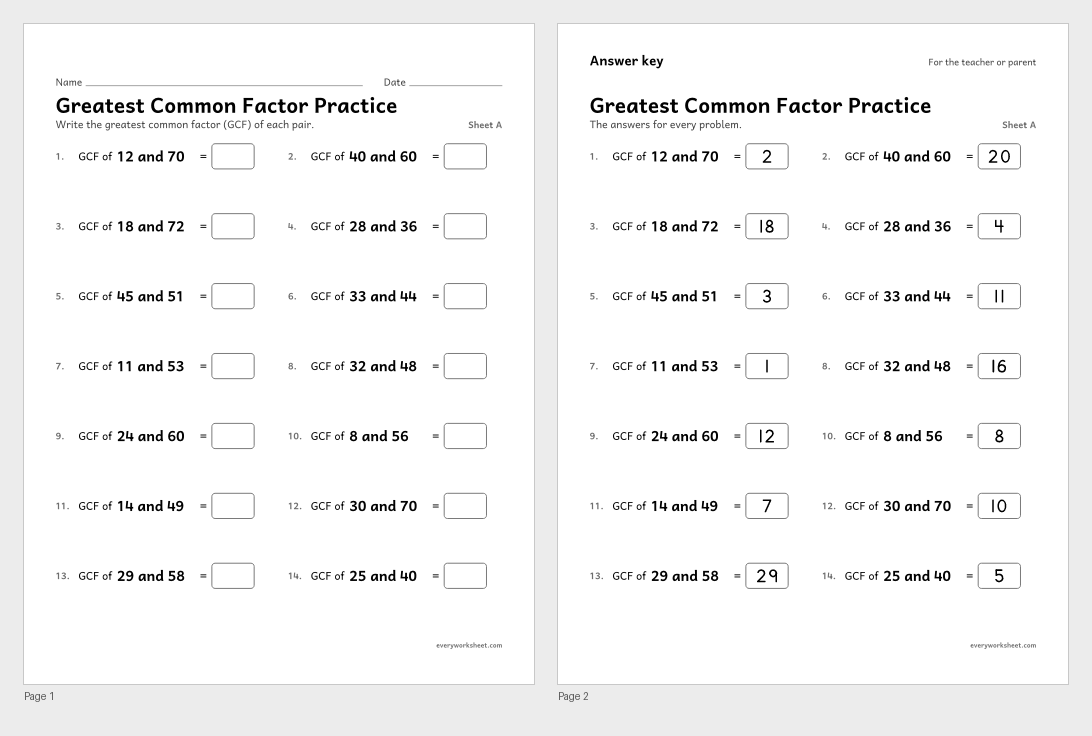 View all 2 pages
Finding the greatest common factor
Answer key on page 2
2 pages68 KB
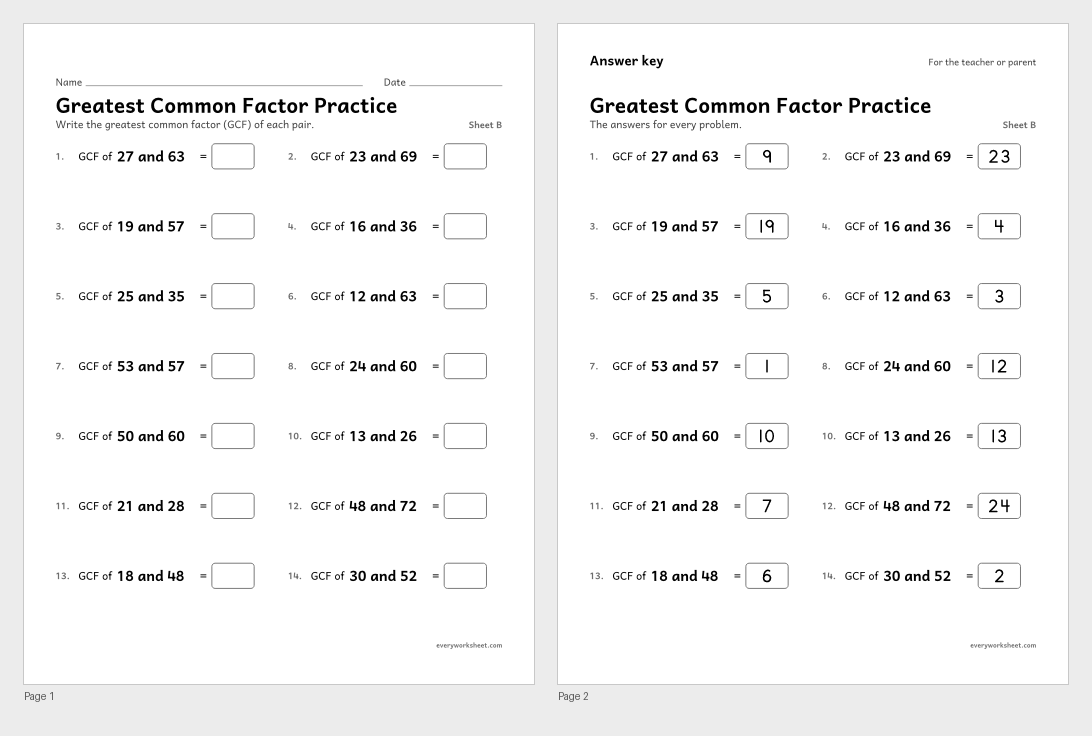 View all 2 pages
Finding the greatest common factor
Answer key on page 2
2 pages68 KB
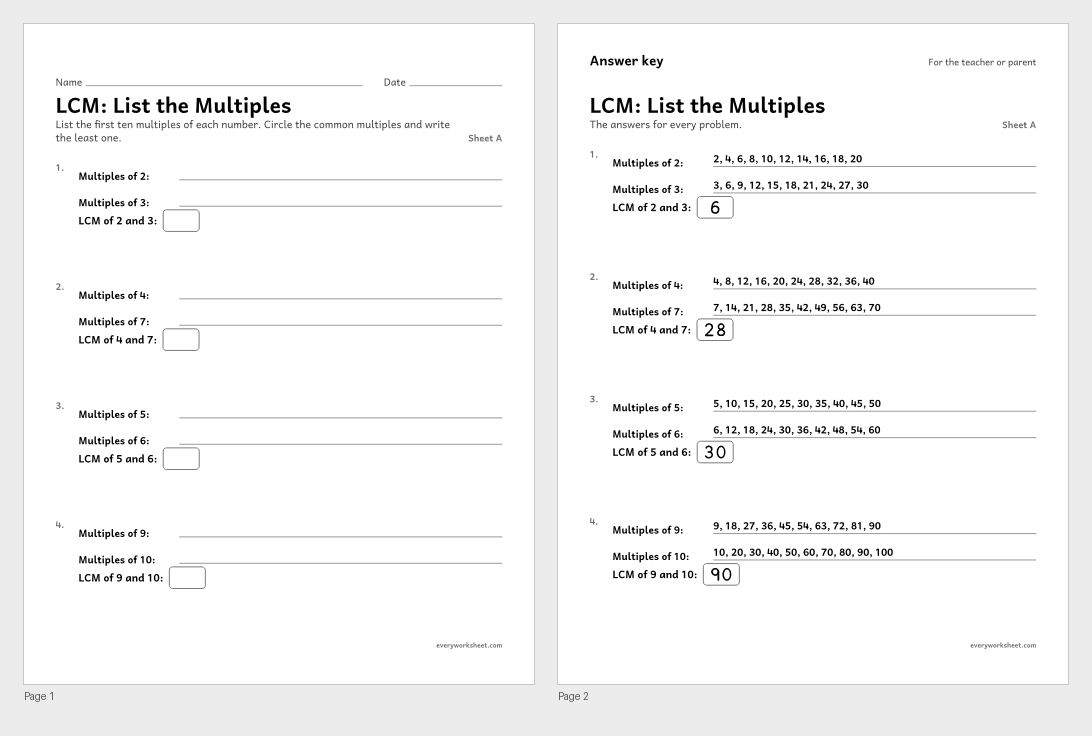 View all 2 pages
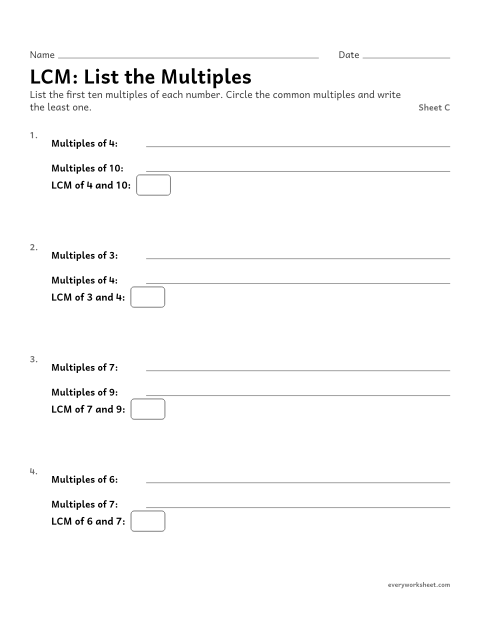
Finding the least common multiple by listing multiples
Answer key on page 2
2 pages45 KB
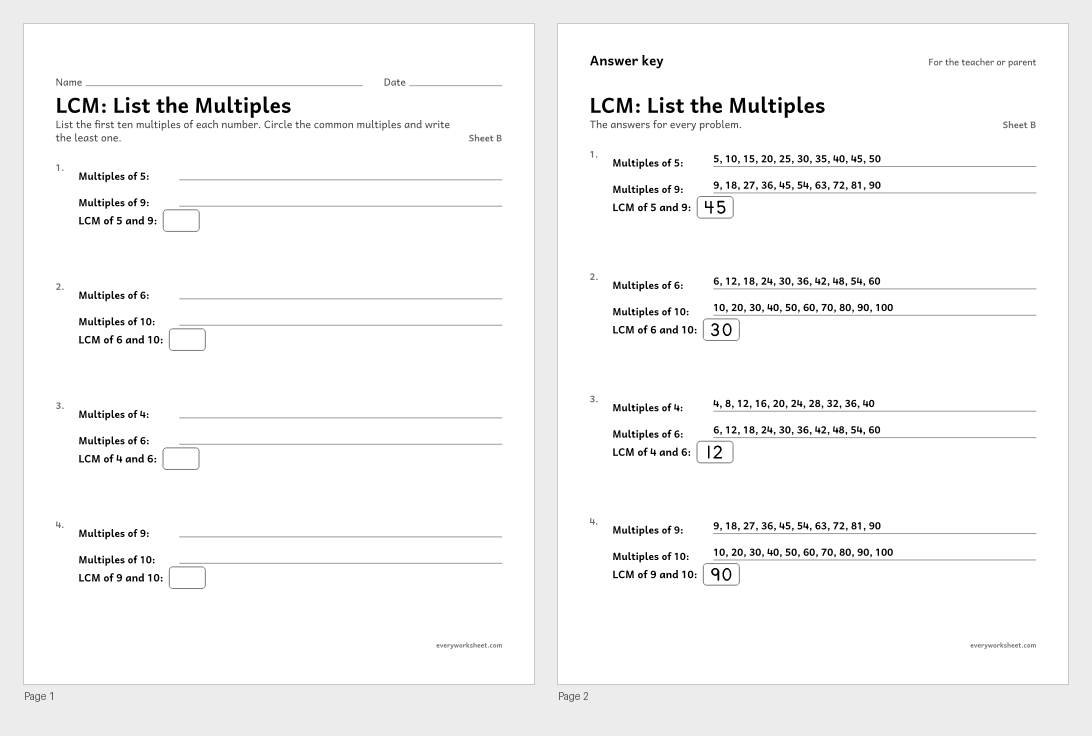 View all 2 pages
Finding the least common multiple by listing multiples
Answer key on page 2
2 pages45 KB
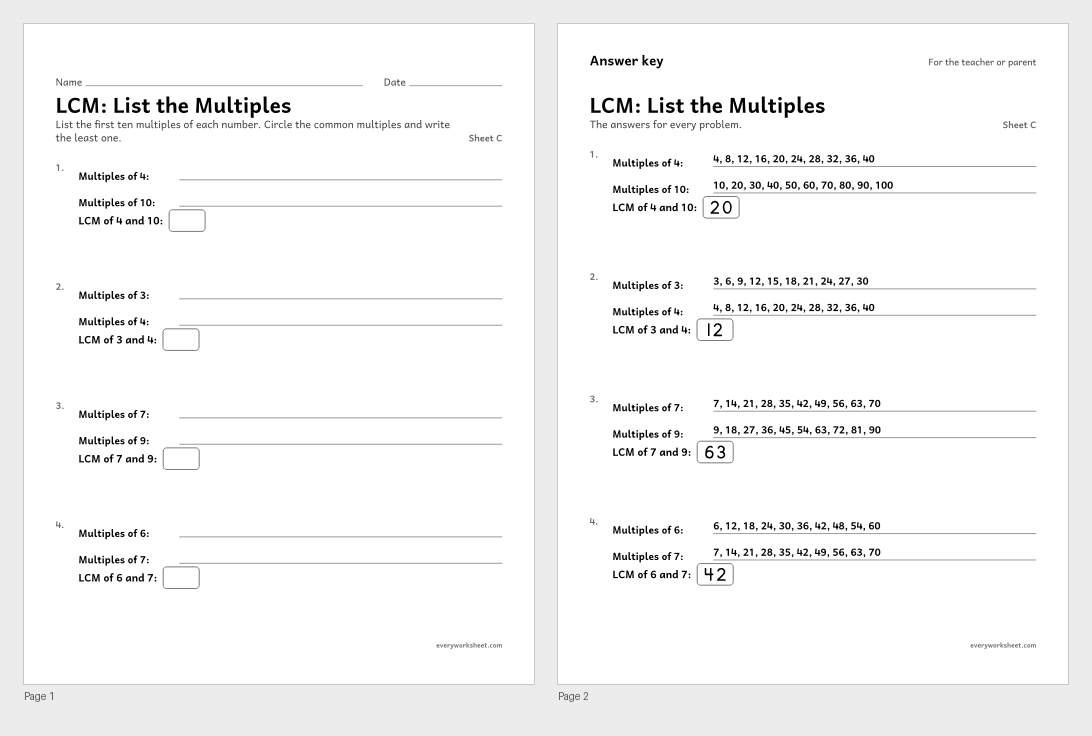 View all 2 pages
Finding the least common multiple by listing multiples
Answer key on page 2
2 pages45 KB
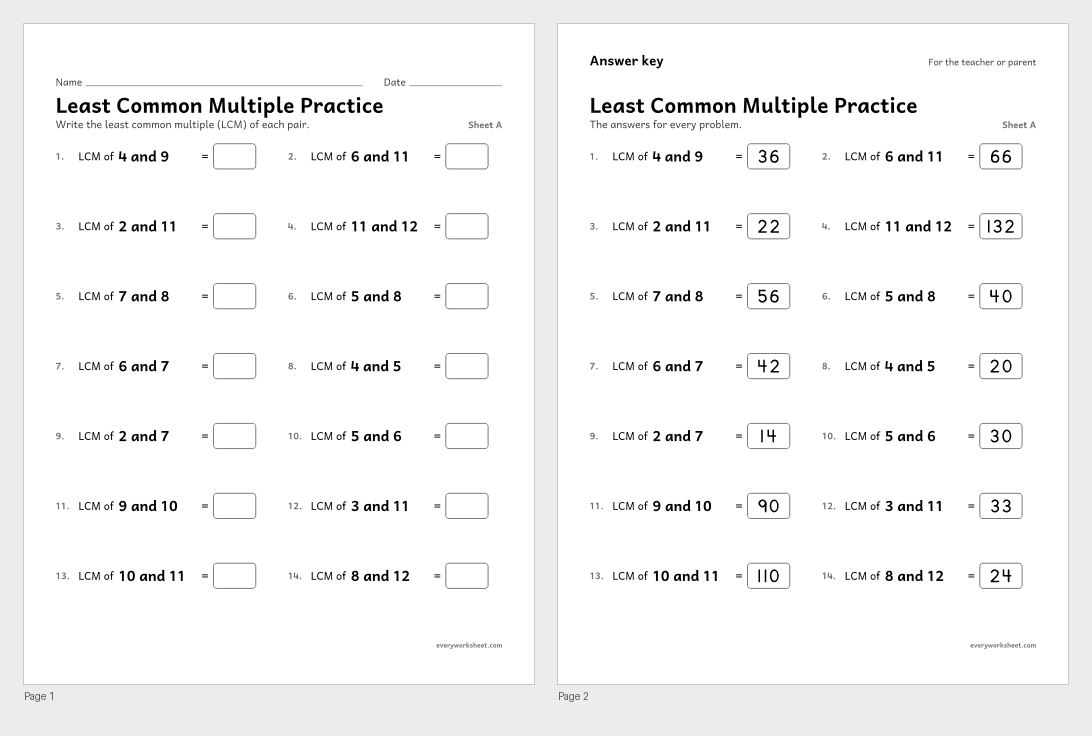 View all 2 pages
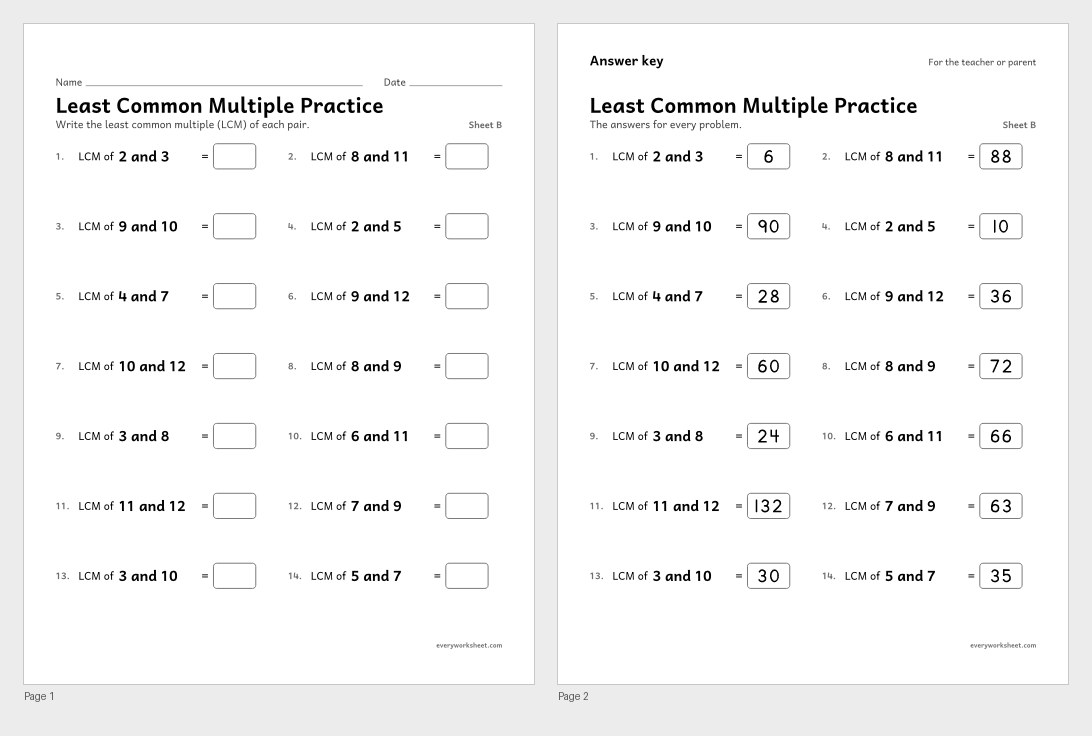
Finding the least common multiple
Answer key on page 2
2 pages69 KB
 View all 2 pages
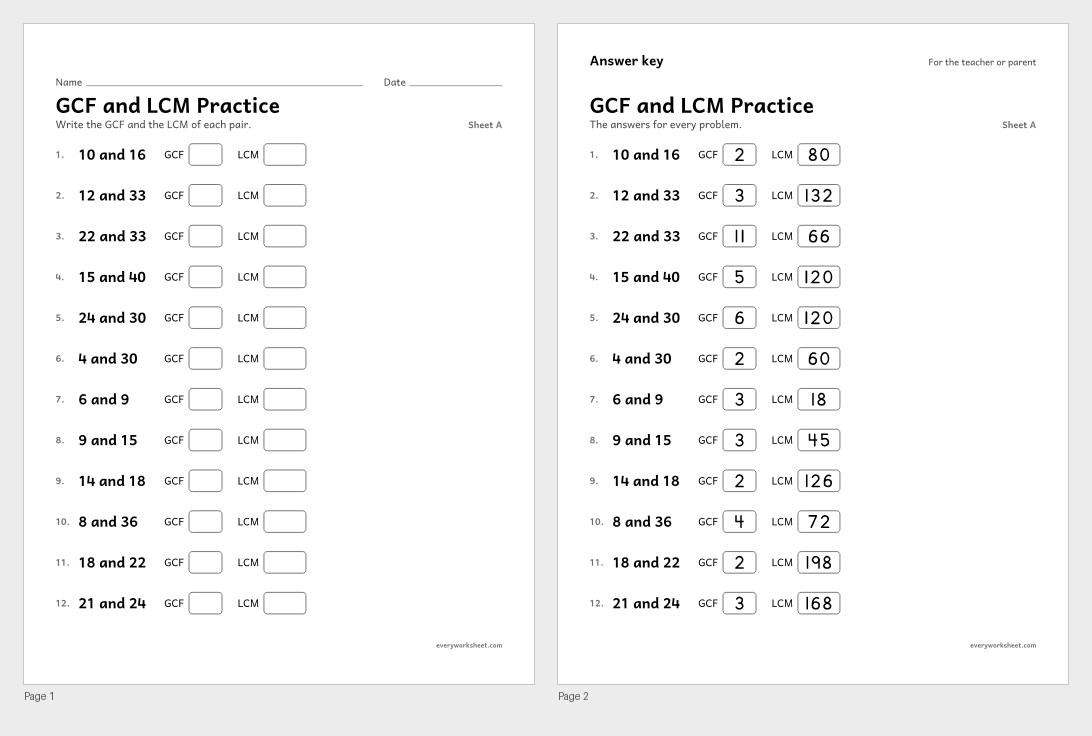
Finding the least common multiple
Answer key on page 2
2 pages69 KB
 View all 2 pages
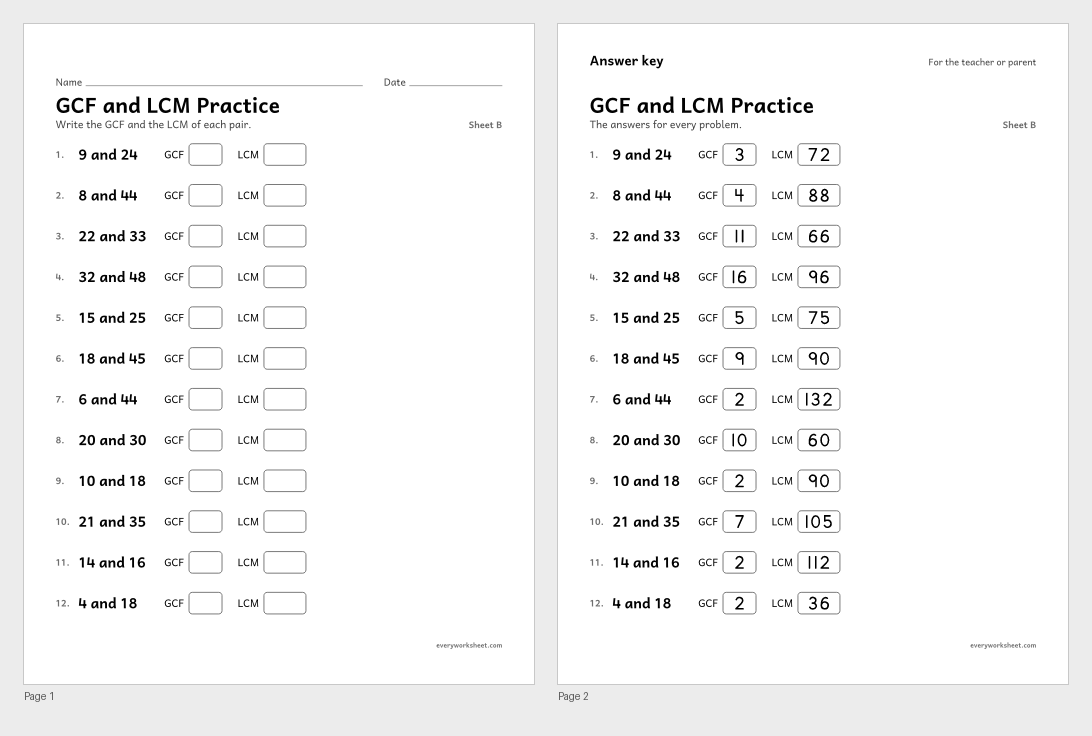
Finding the GCF and LCM of two numbers
Answer key on page 2
2 pages68 KB
 View all 2 pages
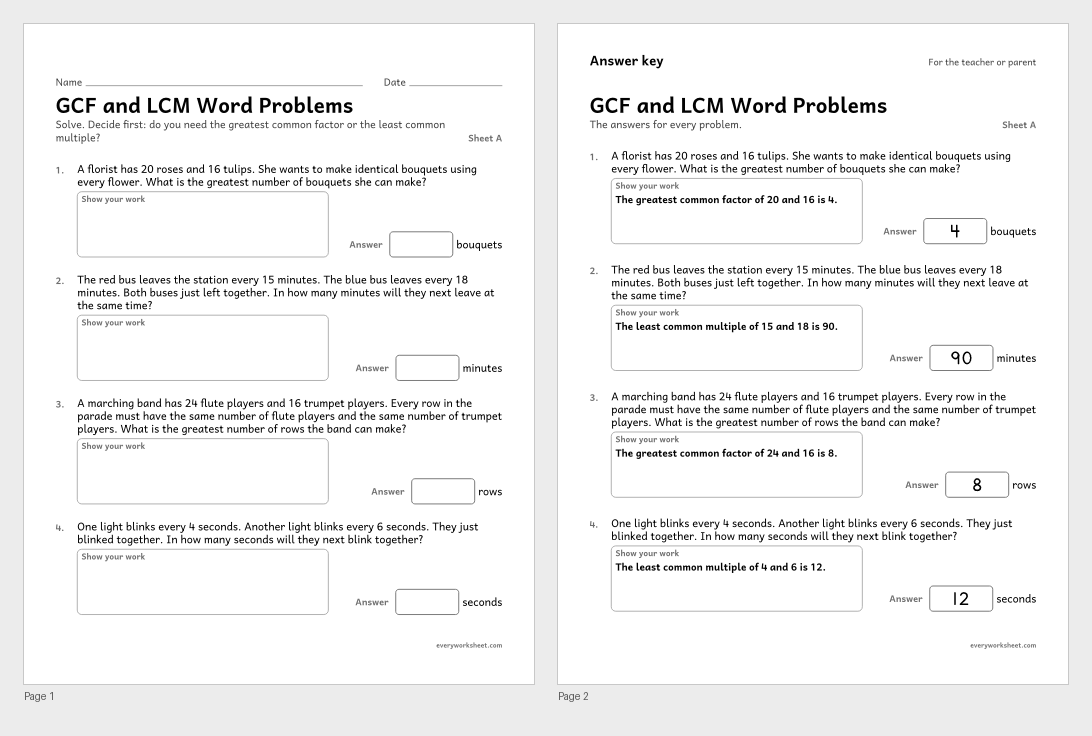
Finding the GCF and LCM of two numbers
Answer key on page 2
2 pages69 KB
 View all 2 pages
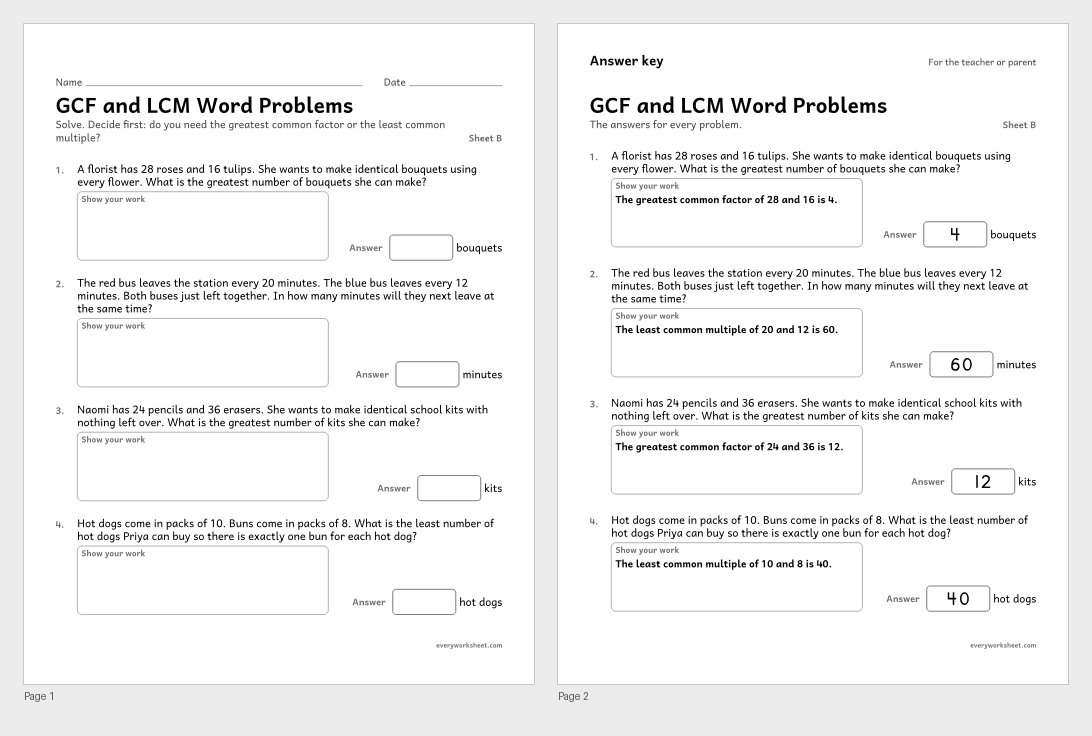
Solving word problems with the GCF and LCM
Answer key on page 2
2 pages48 KB
 View all 2 pages
Solving word problems with the GCF and LCM
Answer key on page 2
2 pages47 KB
Print at 100% (actual size) for the cleanest tracing lines.
The greatest common factor (GCF) of two numbers is the biggest number that divides both of them. The GCF of 18 and 24 is 6. The least common multiple (LCM) is the smallest number that both numbers divide into. The LCM of 6 and 8 is 24.
Fifth graders use these ideas with fractions: the GCF simplifies 18/24 to 3/4, and the LCM gives the common denominator for adding 1/6 + 3/8. Listing the factors or the first ten multiples of each number is the clearest way to find them.
These pages start with listing factors and multiples, then practice pairs and word problems. The word problems mix both kinds, so children must decide whether a story asks for the greatest number of equal groups (GCF) or the next time things happen together (LCM). Every page has an answer key on page 2.
CCSS.MATH.CONTENT.6.NS.B.4Find the greatest common factor of two whole numbers less than or equal to 100 and the least common multiple of two whole numbers less than or equal to 12. Use the distributive property to express a sum of two whole numbers 1-100 with a common factor as a sum of two whole numbers with no common factor. For example, express 36 + 8 as 4 (9 + 2).CCSS.MATH.CONTENT.4.OA.B.4Find all factor pairs for a whole number in the range 1-100. Recognize that a whole number is a multiple of each of its one-digit factors. Determine whether a given whole number in the range 1-100 is a multiple of a given one-digit number. Determine whether a given whole number in the range 1-100 is prime or composite.The GCF is the greatest number that divides both numbers. The LCM is the least number that both numbers divide into.
It is formally a 6th grade standard, but 5th graders use it for simplifying fractions and finding common denominators, so many classes start here.
List the multiples of the bigger number and stop at the first one the smaller number divides into.