 View larger
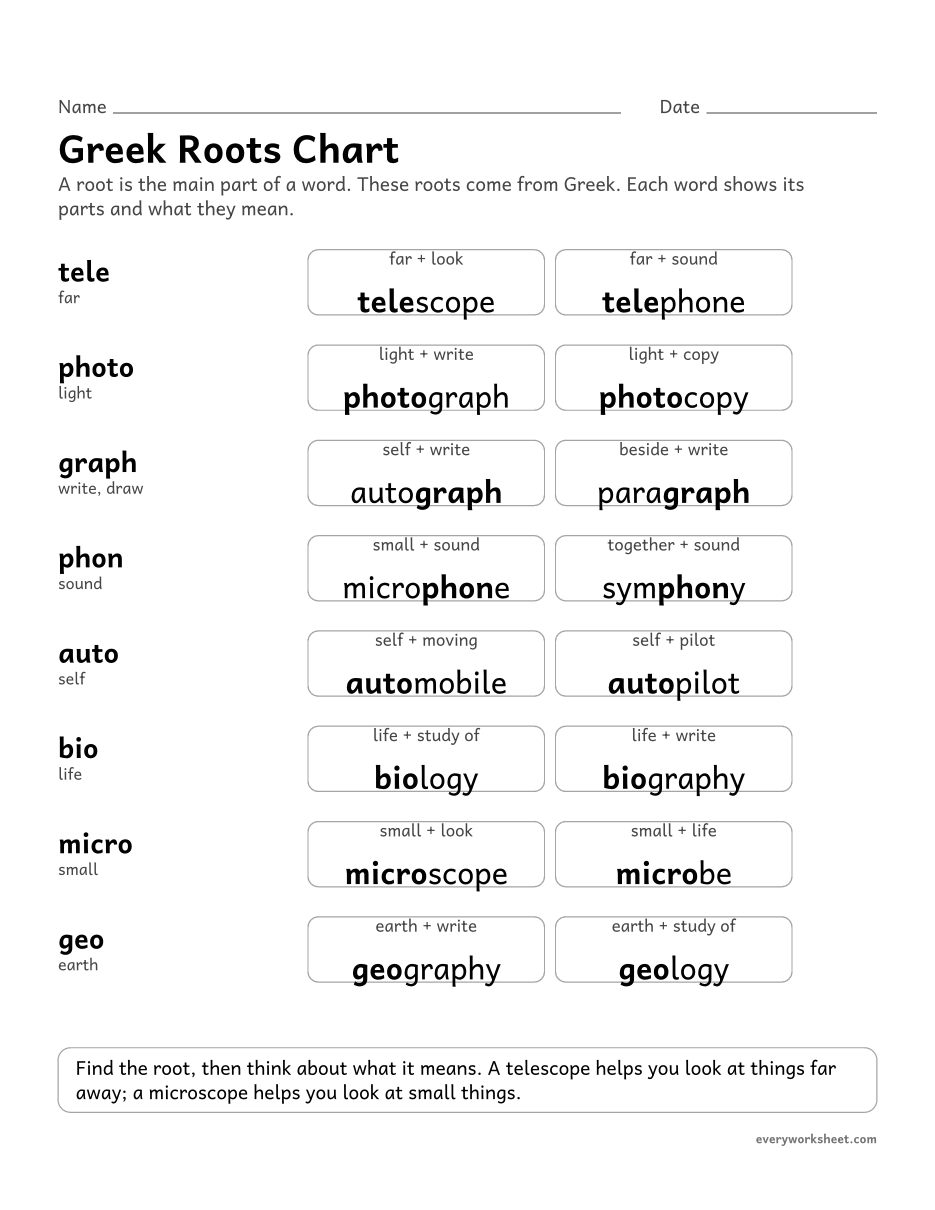
Greek roots chart
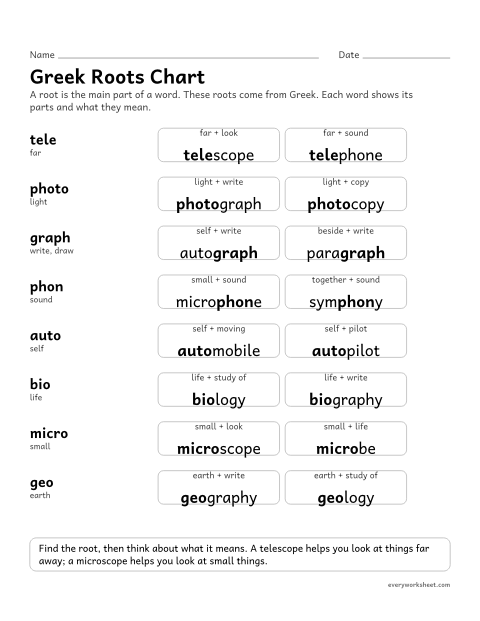
Seeing eight Greek roots, what they mean and words built from them
1 page33 KB
Greek and Latin root charts, a root words list, root meaning matches, sorts, word building with a no-cut twin, using roots as meaning clues, and a root word web.
View largerSeeing eight Greek roots, what they mean and words built from them
1 page33 KB
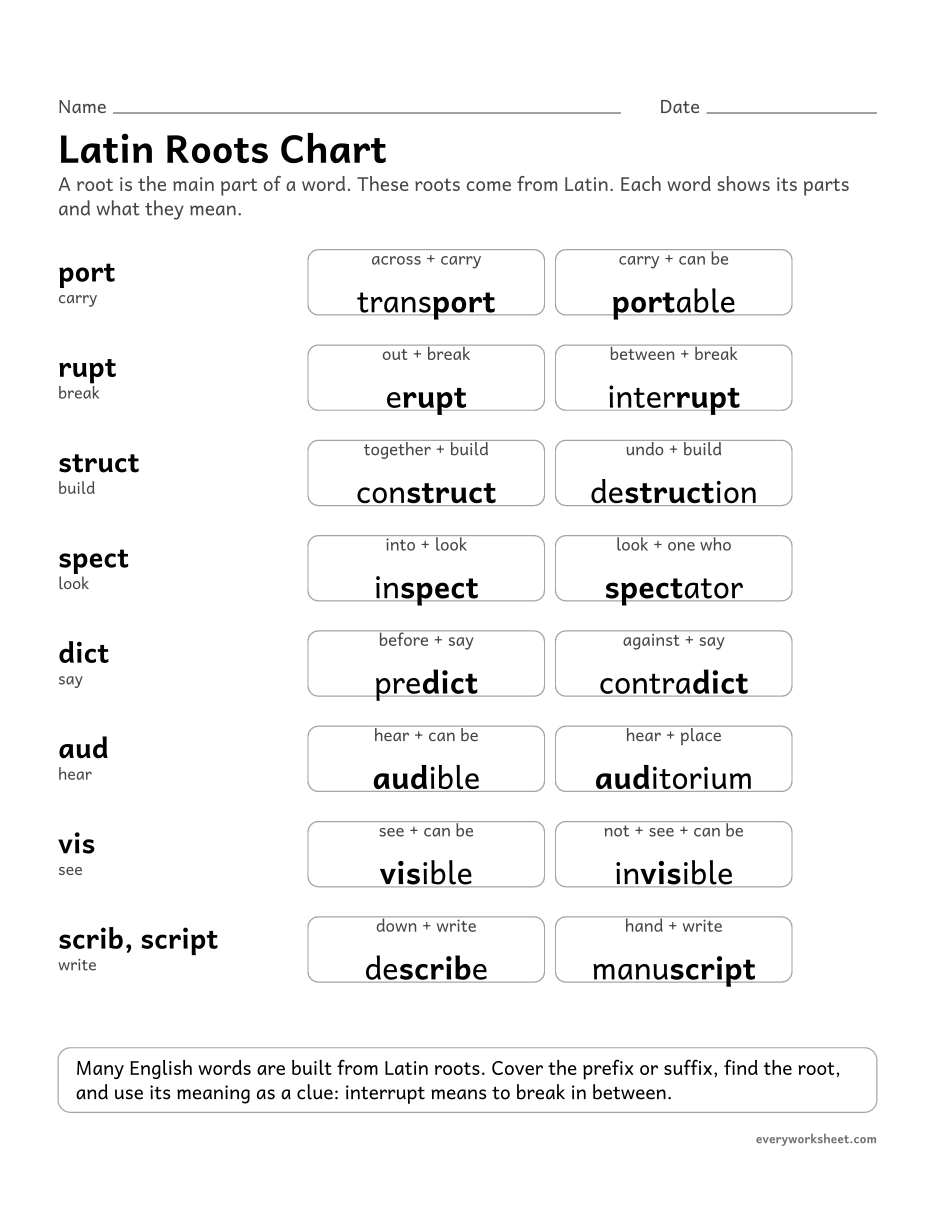 View larger
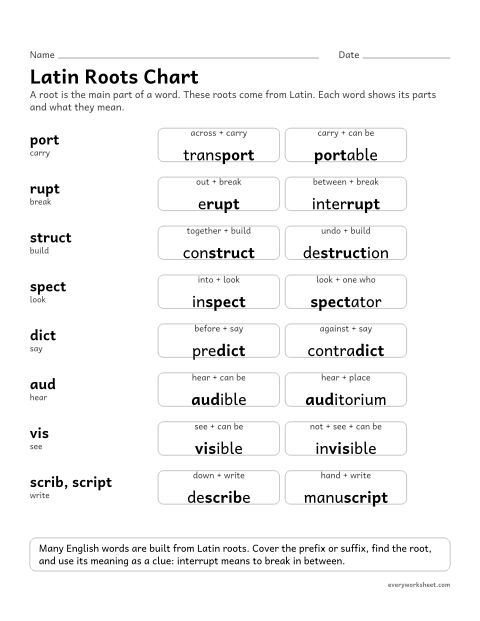
Seeing eight Latin roots, what they mean and words built from them
1 page34 KB
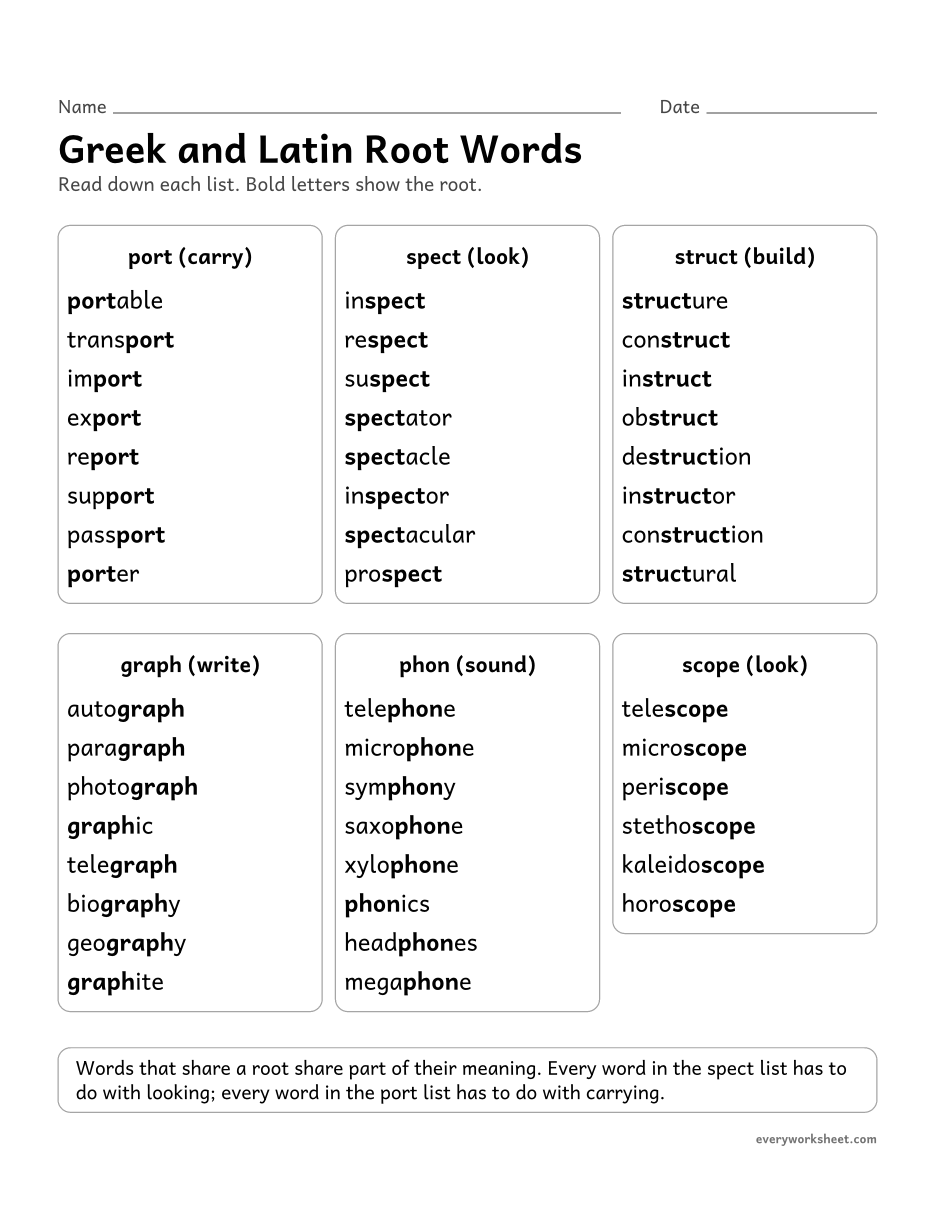 View larger
Reading 46 words built from six Greek and Latin roots
1 page30 KB
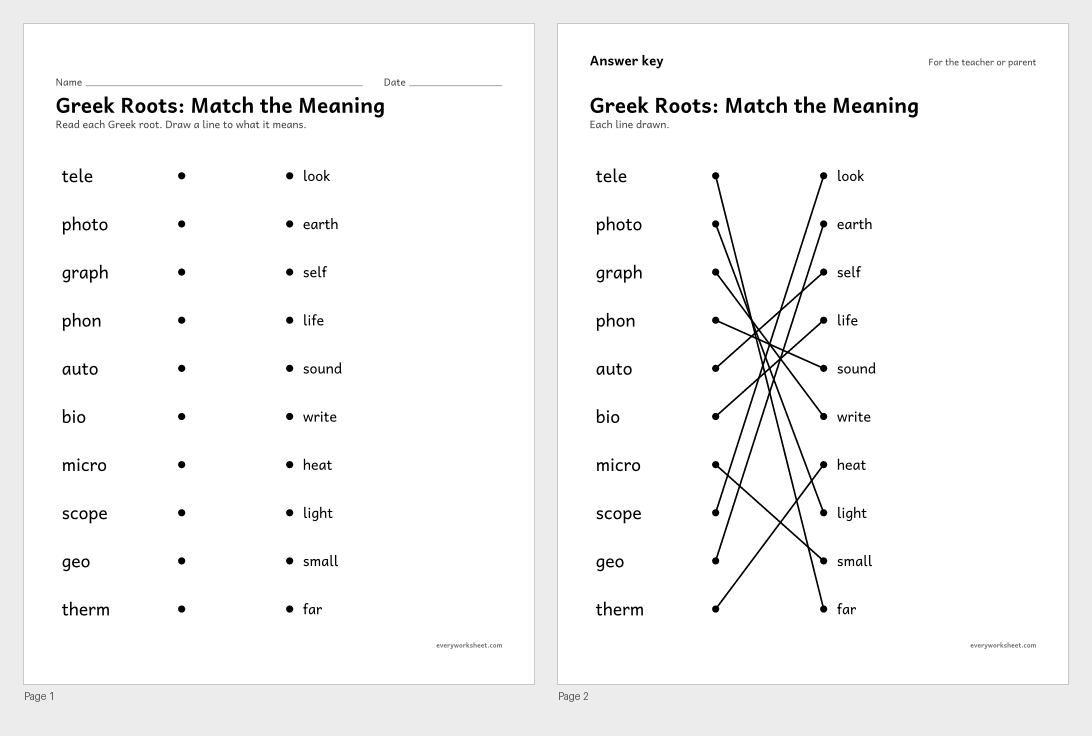 View all 2 pages
Matching ten Greek roots to their meanings
Answer key on page 2
2 pages28 KB
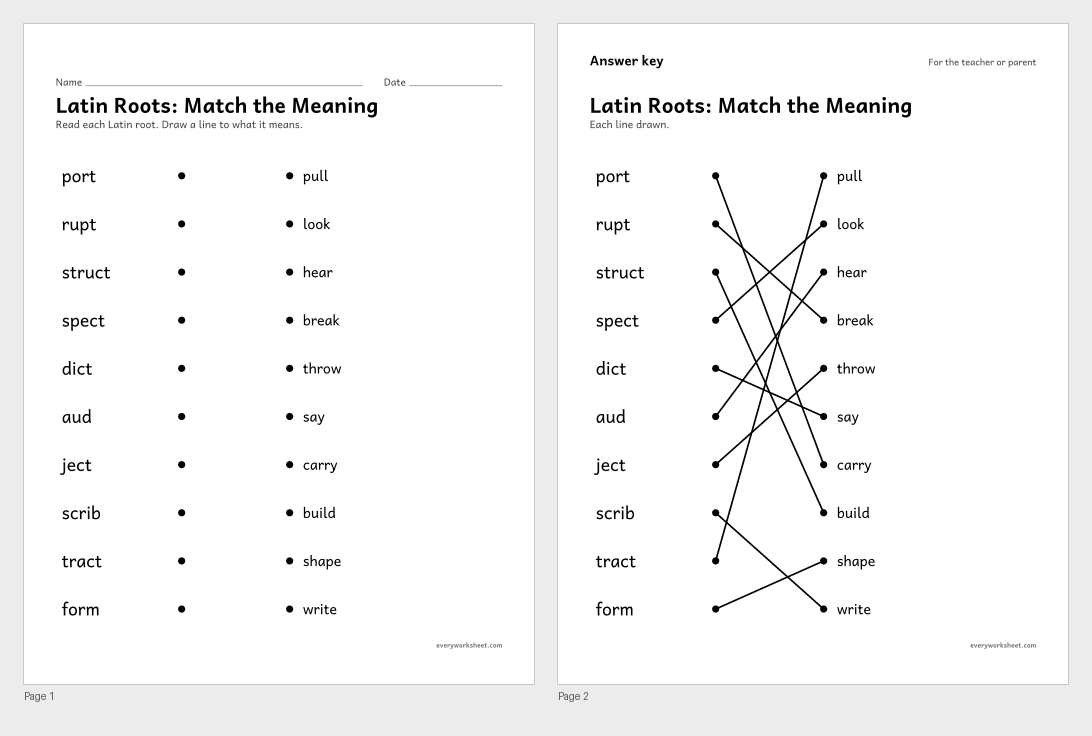 View all 2 pages
Matching ten Latin roots to their meanings
Answer key on page 2
2 pages28 KB
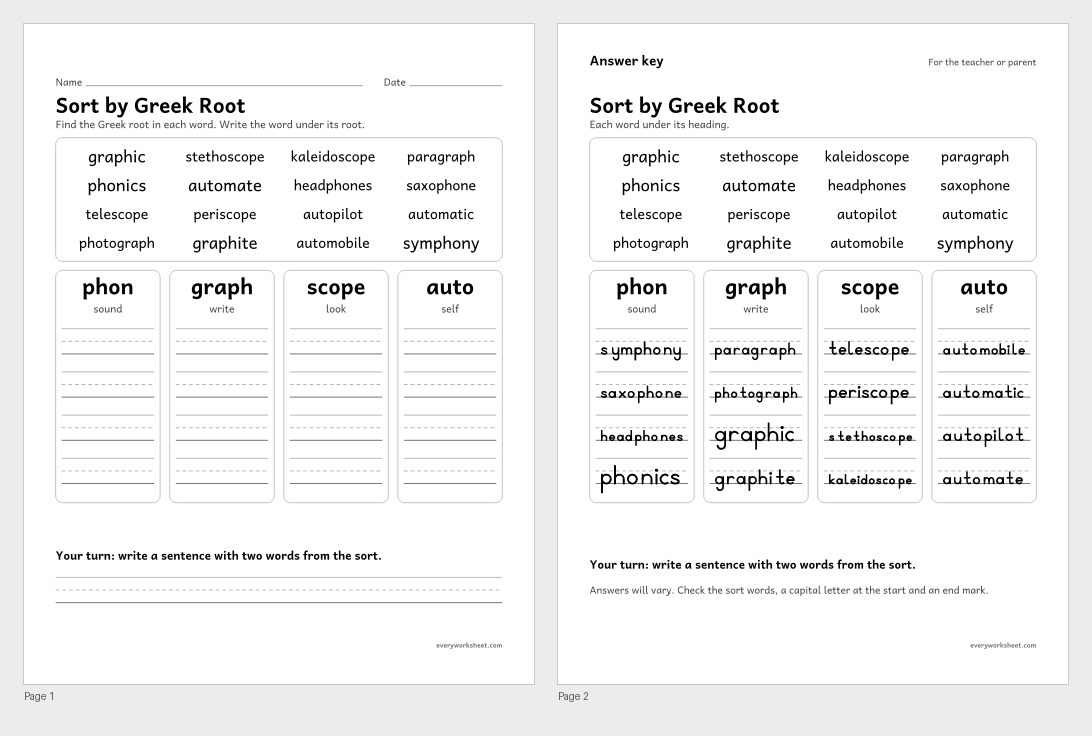 View all 2 pages
Sorting words by their Greek root
Answer key on page 2
2 pages50 KB
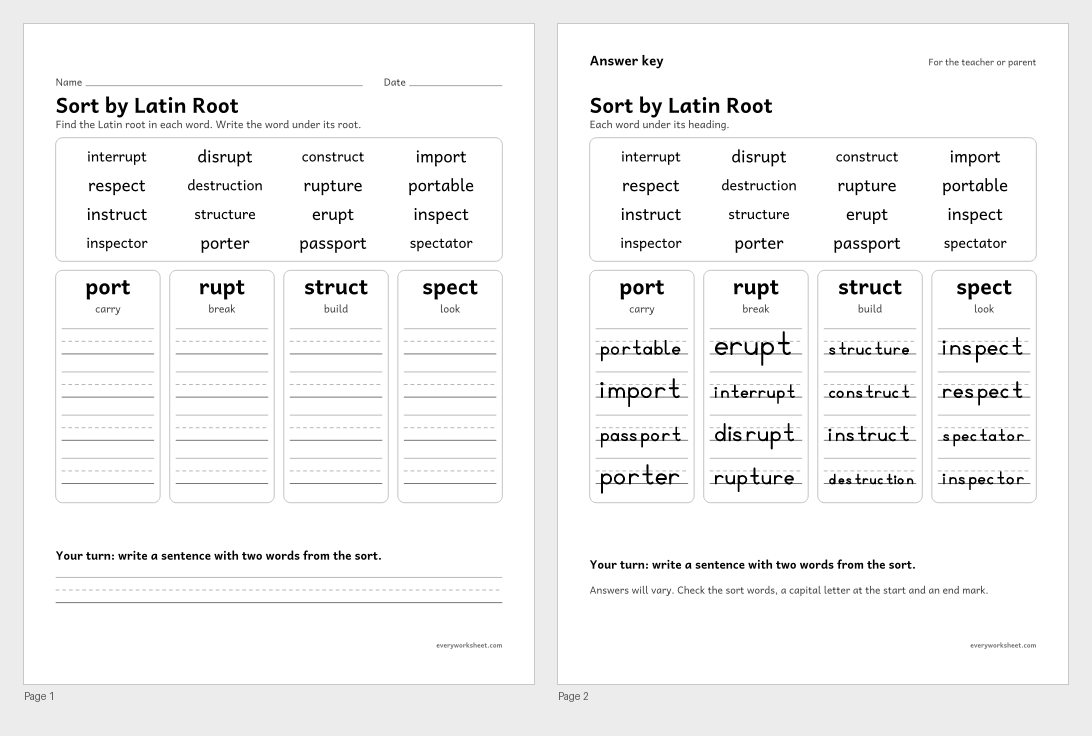 View all 2 pages
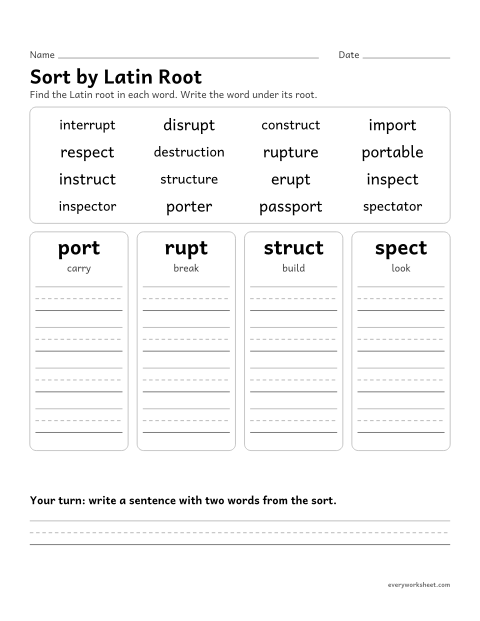
Sorting words by their Latin root
Answer key on page 2
2 pages50 KB
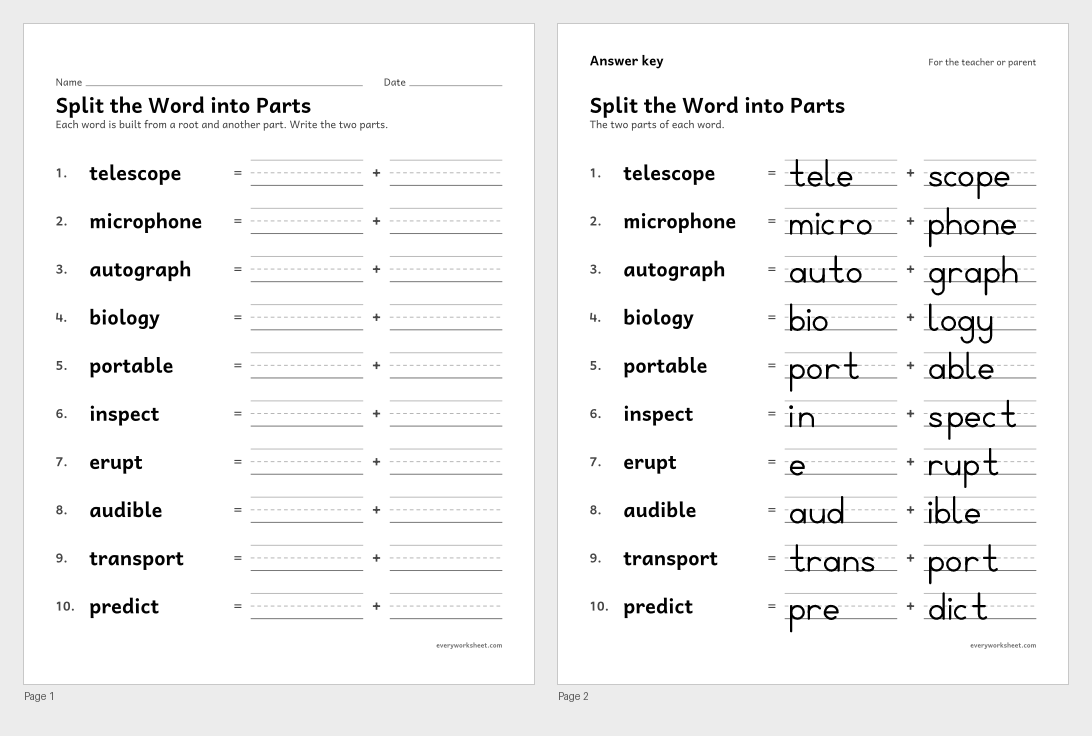 View all 2 pages
Splitting words into a Greek or Latin root and another part
Answer key on page 2
2 pages56 KB
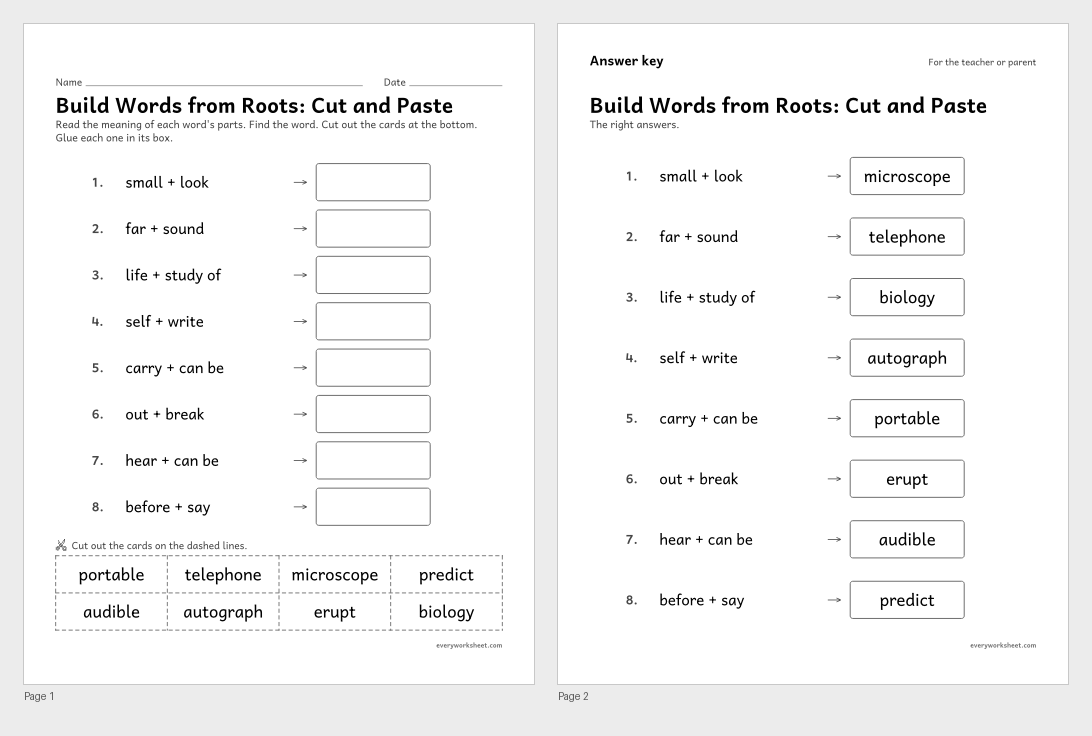 View all 2 pages
Matching root meanings to the words built from them
Answer key on page 2
2 pages79 KB
 View all 2 pages
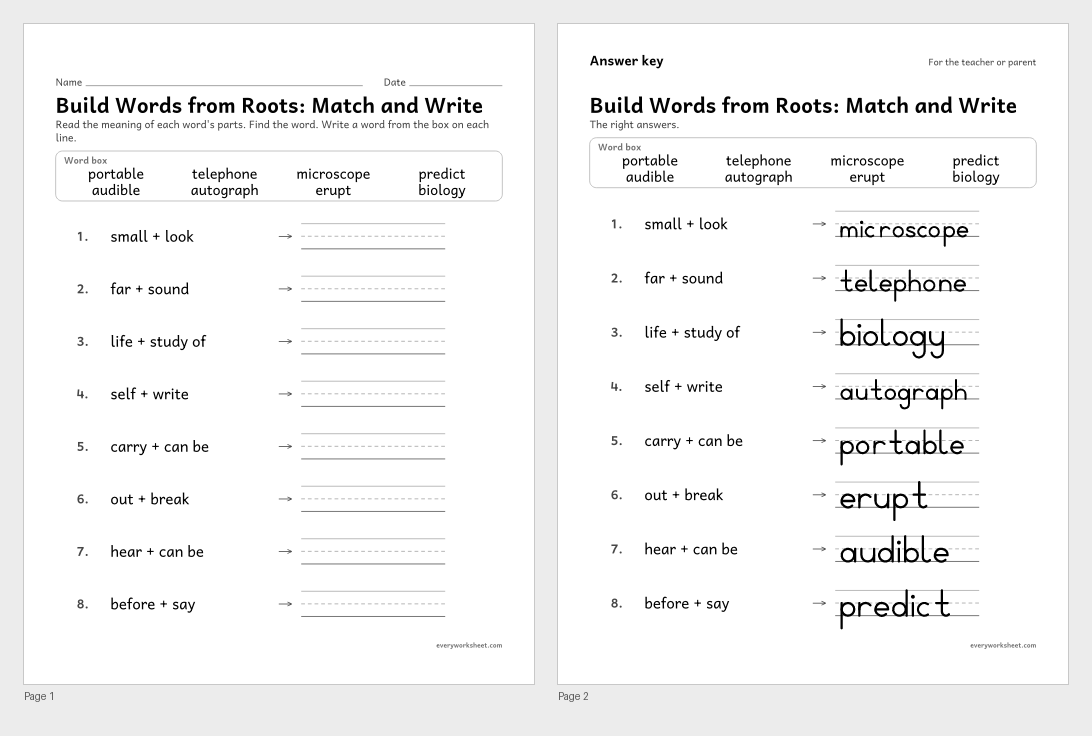
Writing the word whose roots match each meaning
Answer key on page 2
2 pages56 KB
 View all 2 pages
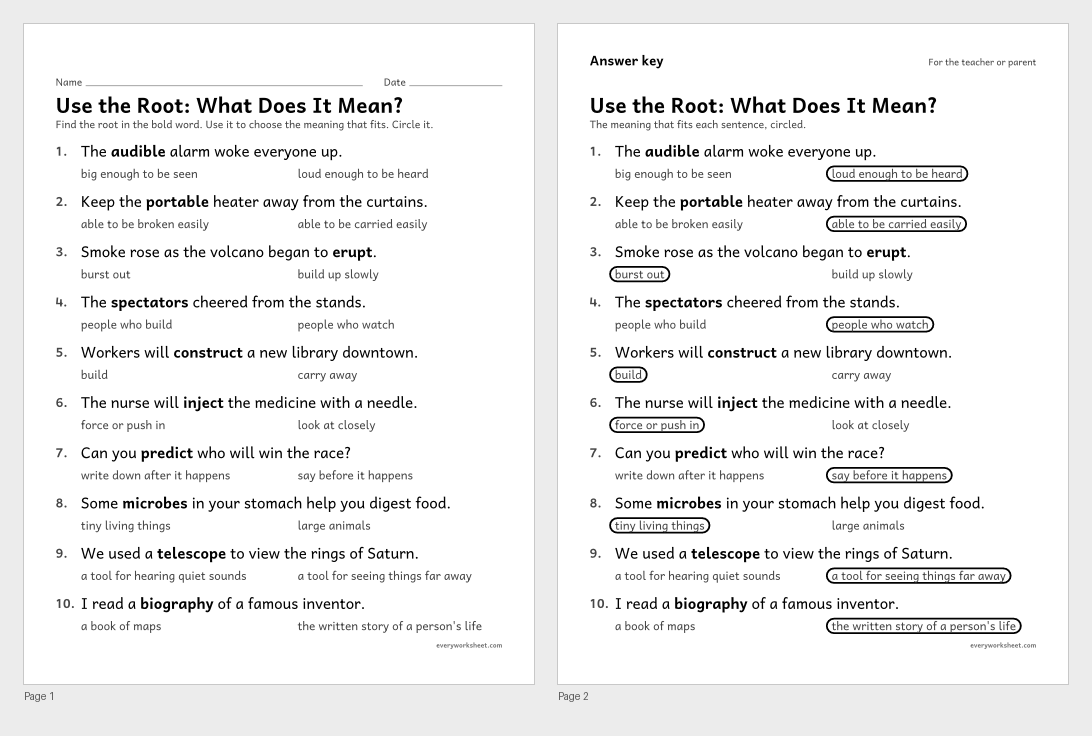
Using a Greek or Latin root as a clue to a word's meaning
Answer key on page 2
2 pages55 KB
 View all 2 pages
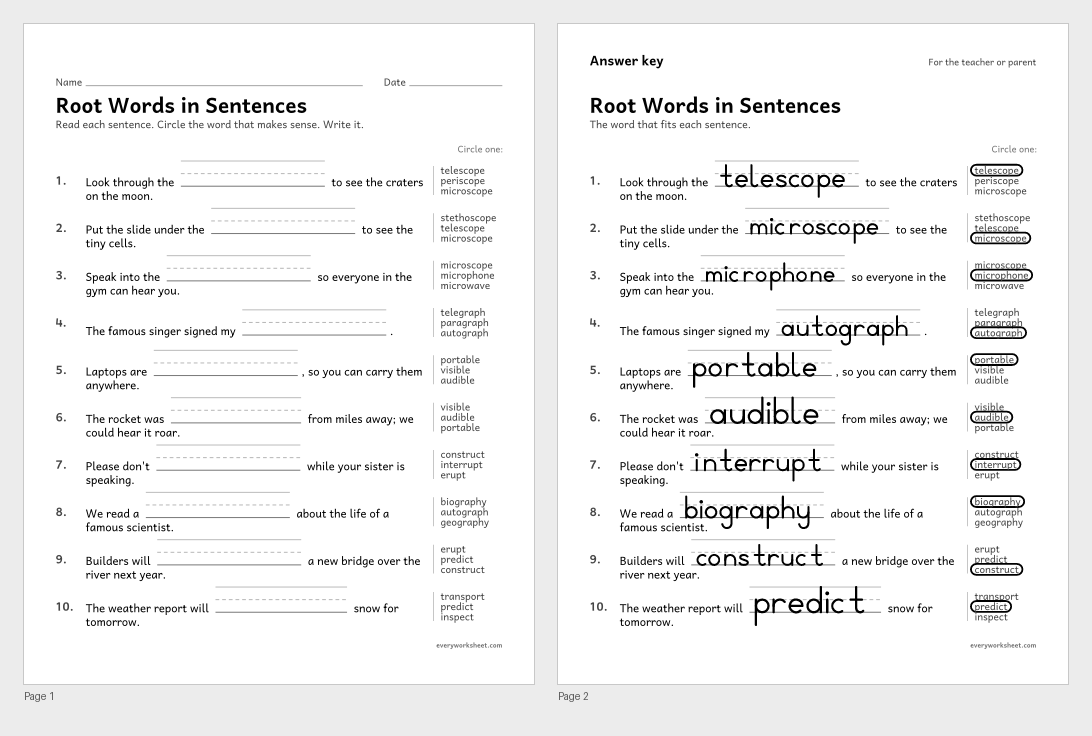
Choosing the word with the right root to complete a sentence
Answer key on page 2
2 pages57 KB
 View larger
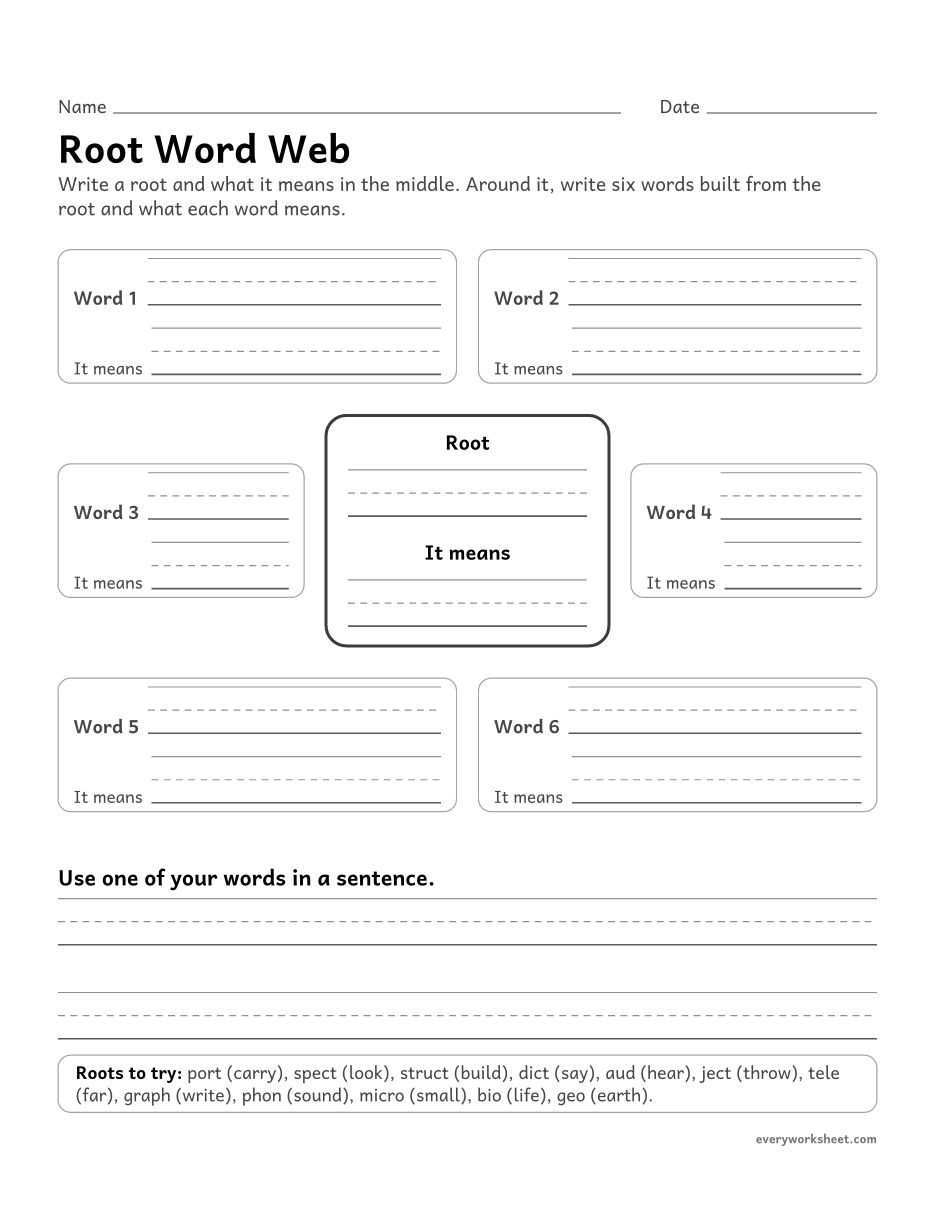
Print at 100% (actual size) for the cleanest tracing lines.
A root is the main part of a word that carries its meaning. Many English words are built from Greek and Latin roots: tele means far, phon means sound, graph means write, port means carry, rupt means break and spect means look. Once a child knows a root, a whole family of words opens up. A telephone carries sound from far away; a portable radio can be carried; a volcano erupts when it breaks open.
Greek roots show up in many science and technology words: telescope (far + look), microscope (small + look), biology (life + study of), geography (earth + write) and autograph (self + write). Latin roots show up all over everyday English: transport (across + carry), interrupt (between + break), construct (together + build), inspect (into + look), predict (before + say) and audible (hear + can be).
These Greek and Latin roots worksheets start with two charts that show eight roots each, with every example word split into its parts and their meanings. Children then match roots to meanings, sort words by root, split words into parts, build words from root meanings (cut and paste or no-cut), use a root as a clue to choose a meaning, and choose the right root word for a sentence. Pages with right answers have an answer key on page 2.
CCSS.ELA-LITERACY.L.4.4.BUse common, grade-appropriate Greek and Latin affixes and roots as clues to the meaning of a word (e.g., telegraph, photograph, autograph).CCSS.ELA-LITERACY.RF.4.3.AUse combined knowledge of all letter-sound correspondences, syllabication patterns, and morphology (e.g., roots and affixes) to read accurately unfamiliar multisyllabic words in context and out of context.CCSS.ELA-LITERACY.L.4.4Determine or clarify the meaning of unknown and multiple-meaning words and phrases based on grade 4 reading and content, choosing flexibly from a range of strategies.Word parts that come from Greek and Latin and carry meaning. For example, the Greek root phon means sound (telephone, symphony) and the Latin root port means carry (transport, portable).
A base word can stand alone (play in replay). A root often cannot stand alone in English (spect in inspect), but it still carries the main meaning of the word.
Most children meet roots in 4th grade, when they learn to use Greek and Latin affixes and roots as clues to the meaning of words like telegraph, photograph and autograph, and keep building on them through middle school.
Yes. Every page with right answers has an answer key on page 2. The charts, word list and root word web don't need one.