 View larger
Idioms Worksheets
Learn what common idioms, adages, and proverbs really mean with charts, matching, a story, and draw-and-write pages.
Download the idioms worksheets
Idioms chart
 View larger
Idiom meanings and matching
 View all 2 pages
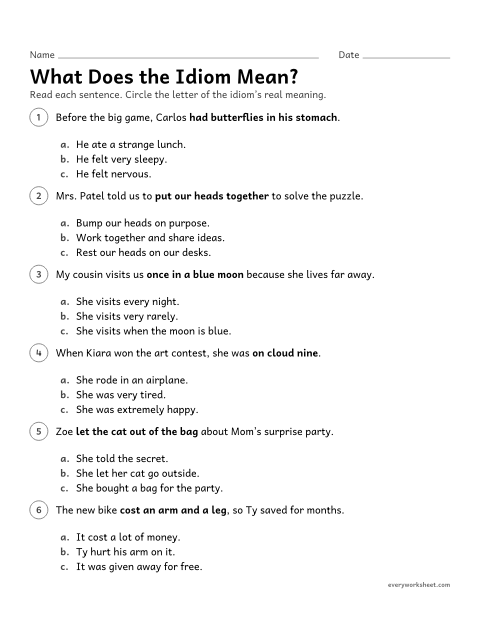
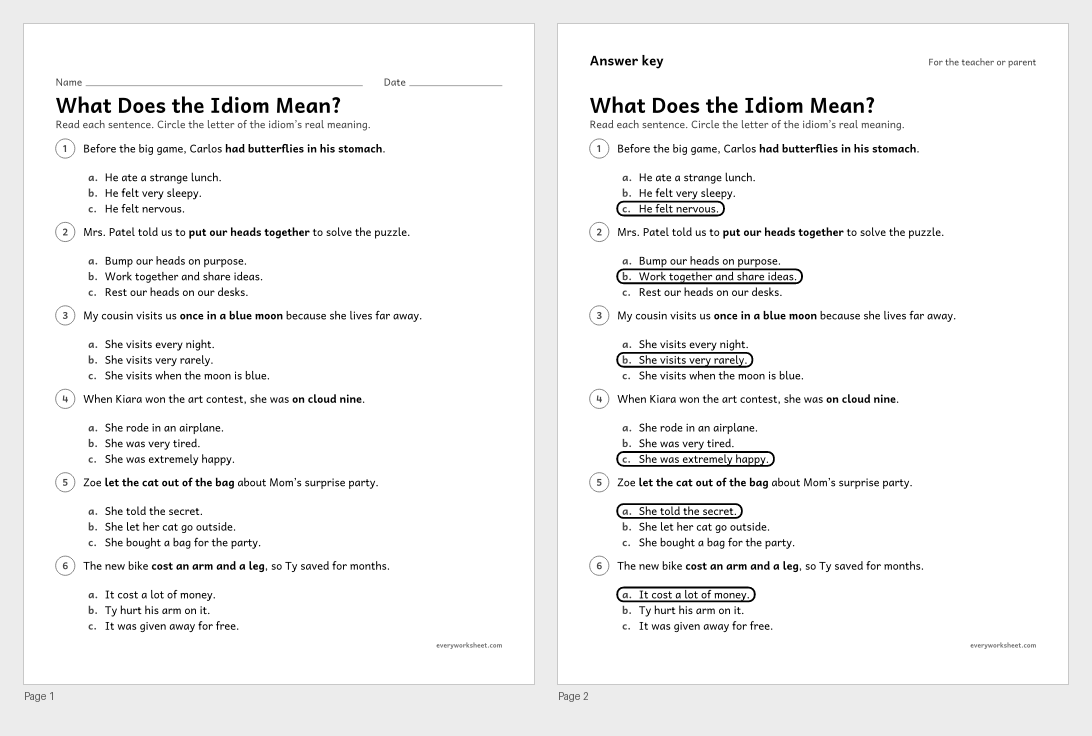
What does the idiom Mean?
Using context to choose the meaning of an idiom
Answer key on page 2
2 pages62 KB
 View all 2 pages
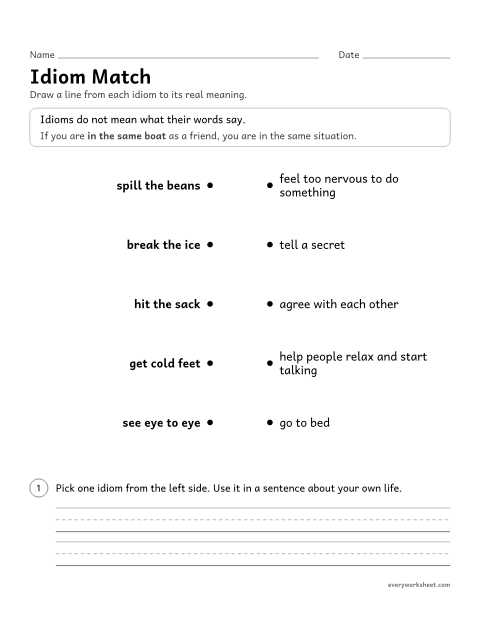
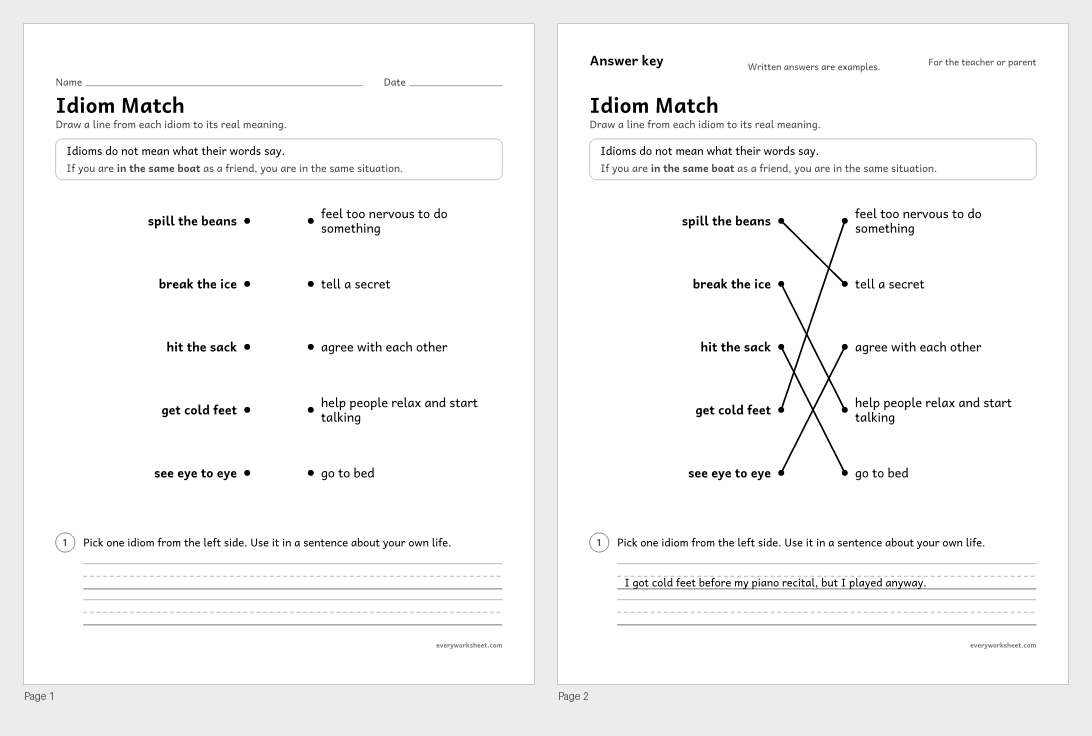
Idiom match
Matching common idioms to their meanings
Answer key on page 2
2 pages38 KB
 View all 2 pages
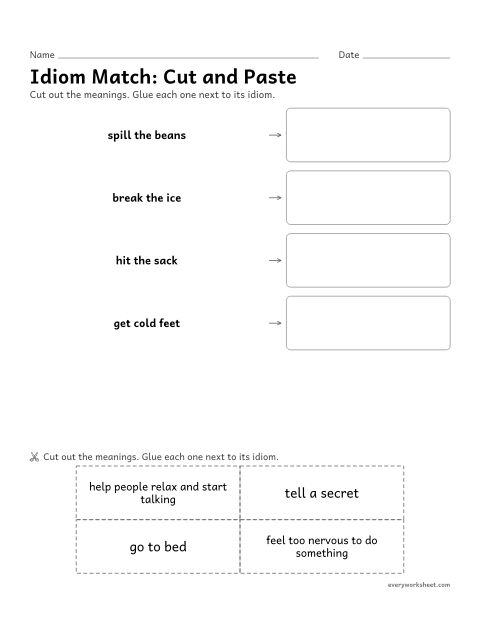
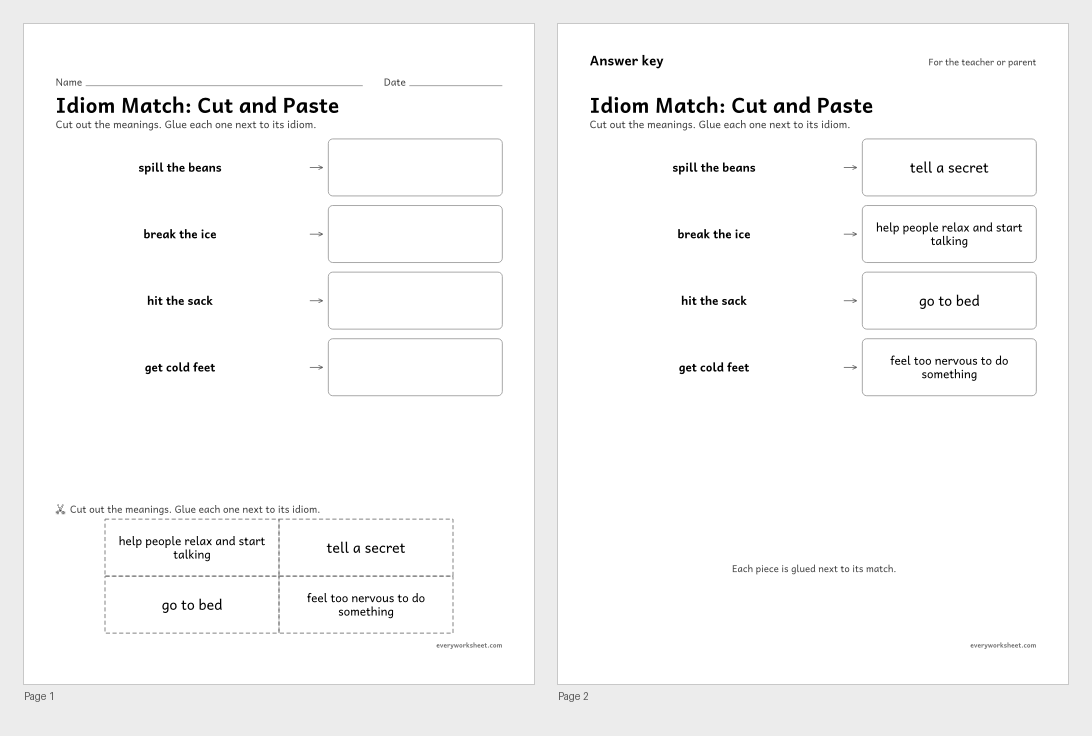
Idiom Match: cut and paste
Matching common idioms to their meanings
Answer key on page 2
2 pages66 KB
Idioms in a story
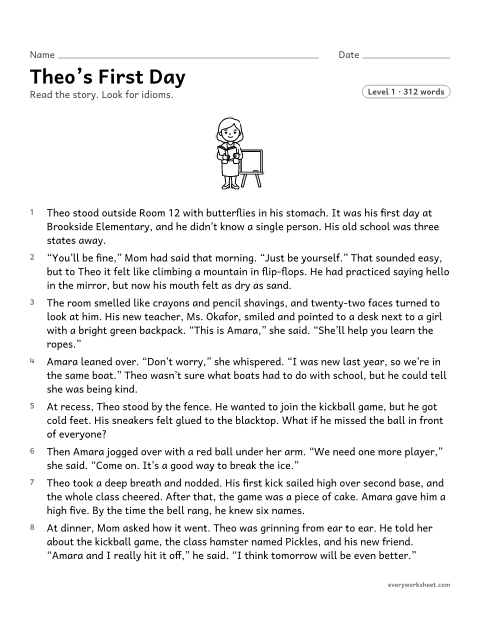 3 pagesView all 3 pages
Theo's first day
Explaining what idioms mean in a story
Answer key on page 3
3 pages71 KB
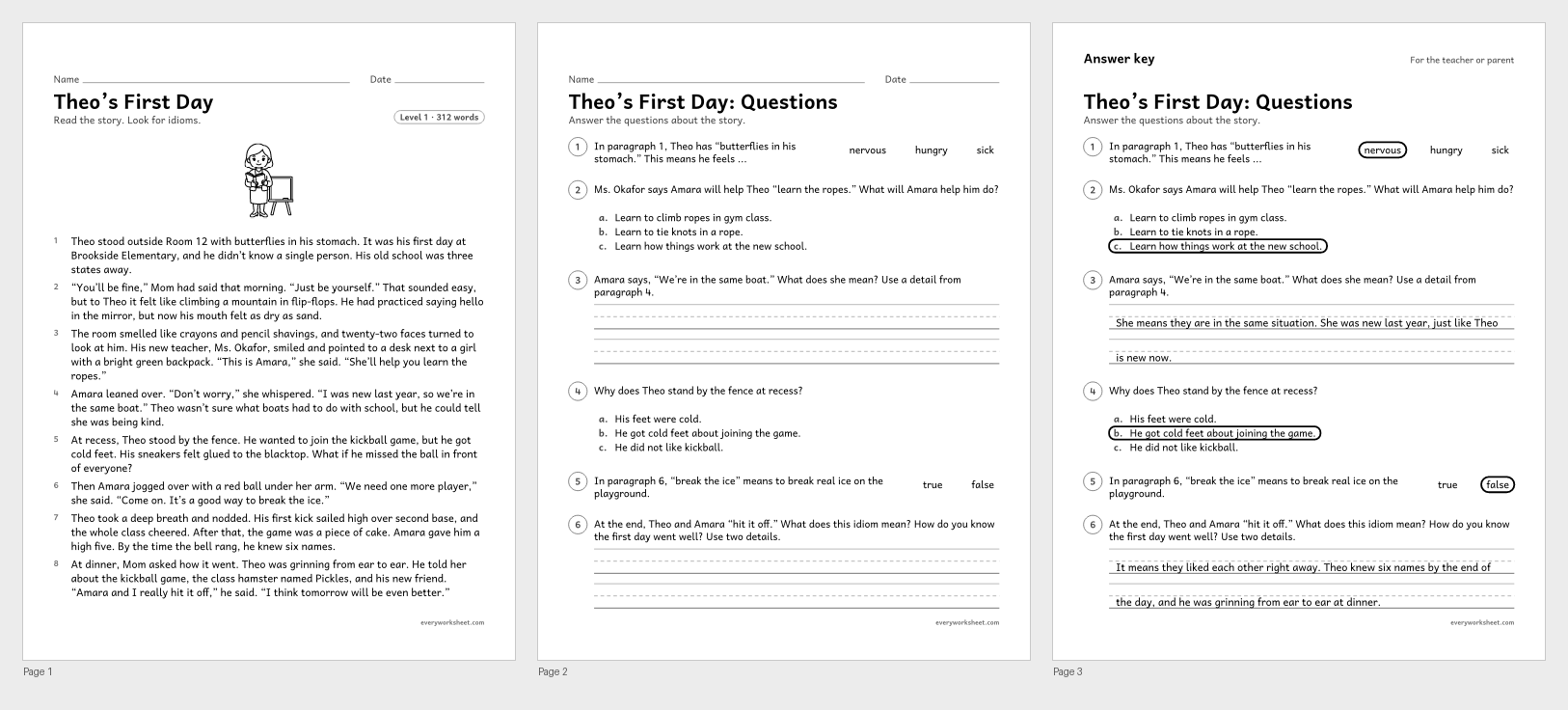
Draw what it says, write what it means
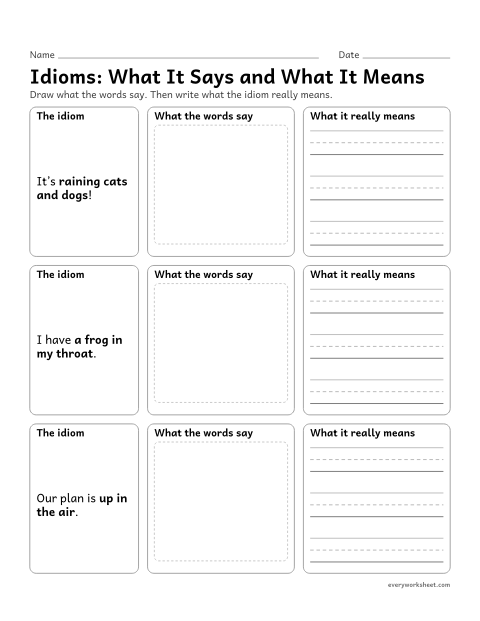 View all 2 pages
Idioms: what it says and what it means
Contrasting the literal and real meanings of idioms
Answer key on page 2
2 pages37 KB
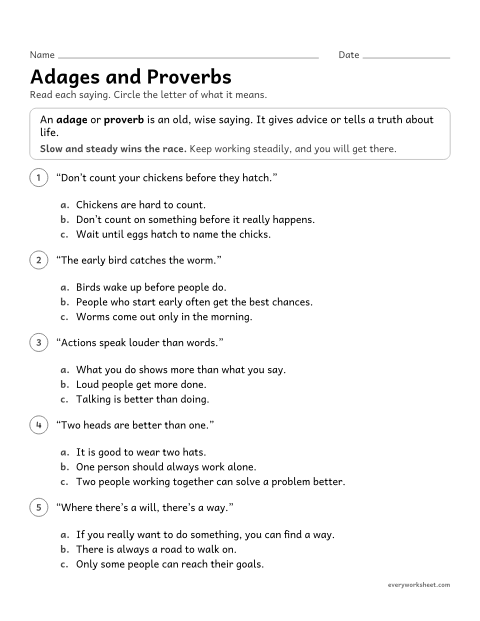
Adages and proverbs
 View all 2 pages
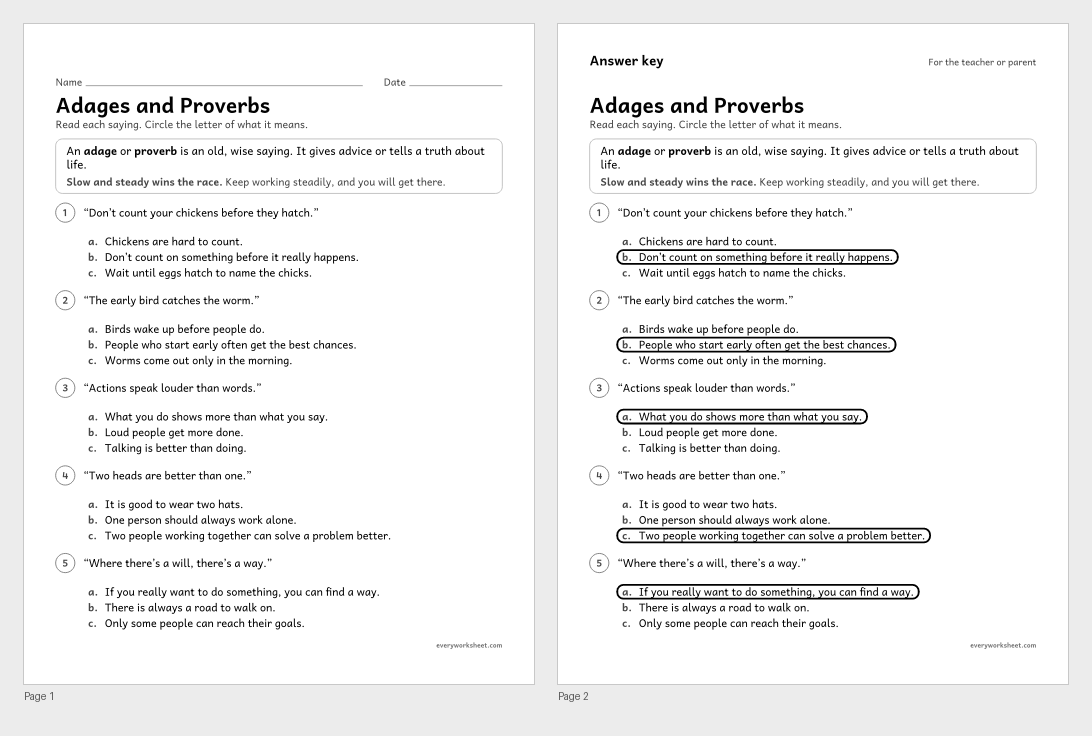
Adages and proverbs
Explaining the meaning of common adages and proverbs
Answer key on page 2
2 pages55 KB
 View all 2 pages
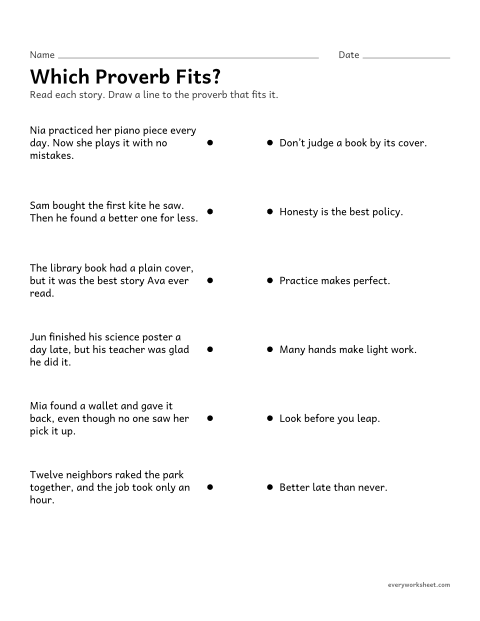
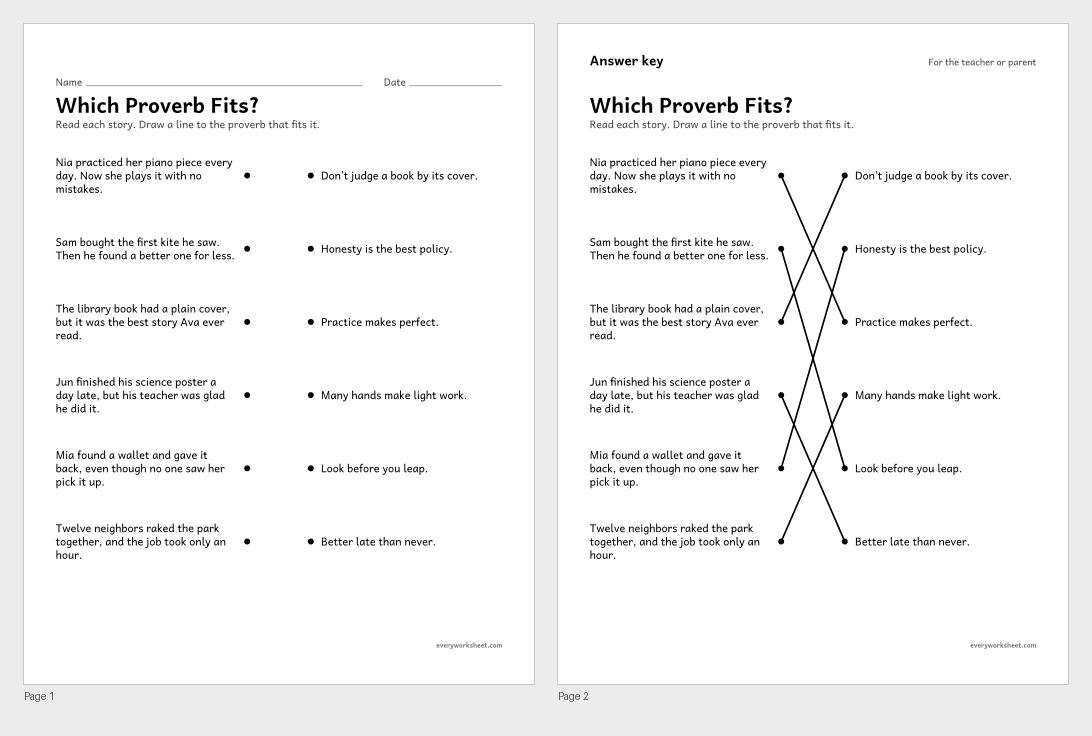
Which proverb Fits?
Matching proverbs to real-life situations
Answer key on page 2
2 pages36 KB
Print at 100% (actual size) for the cleanest tracing lines.
About these idioms worksheets
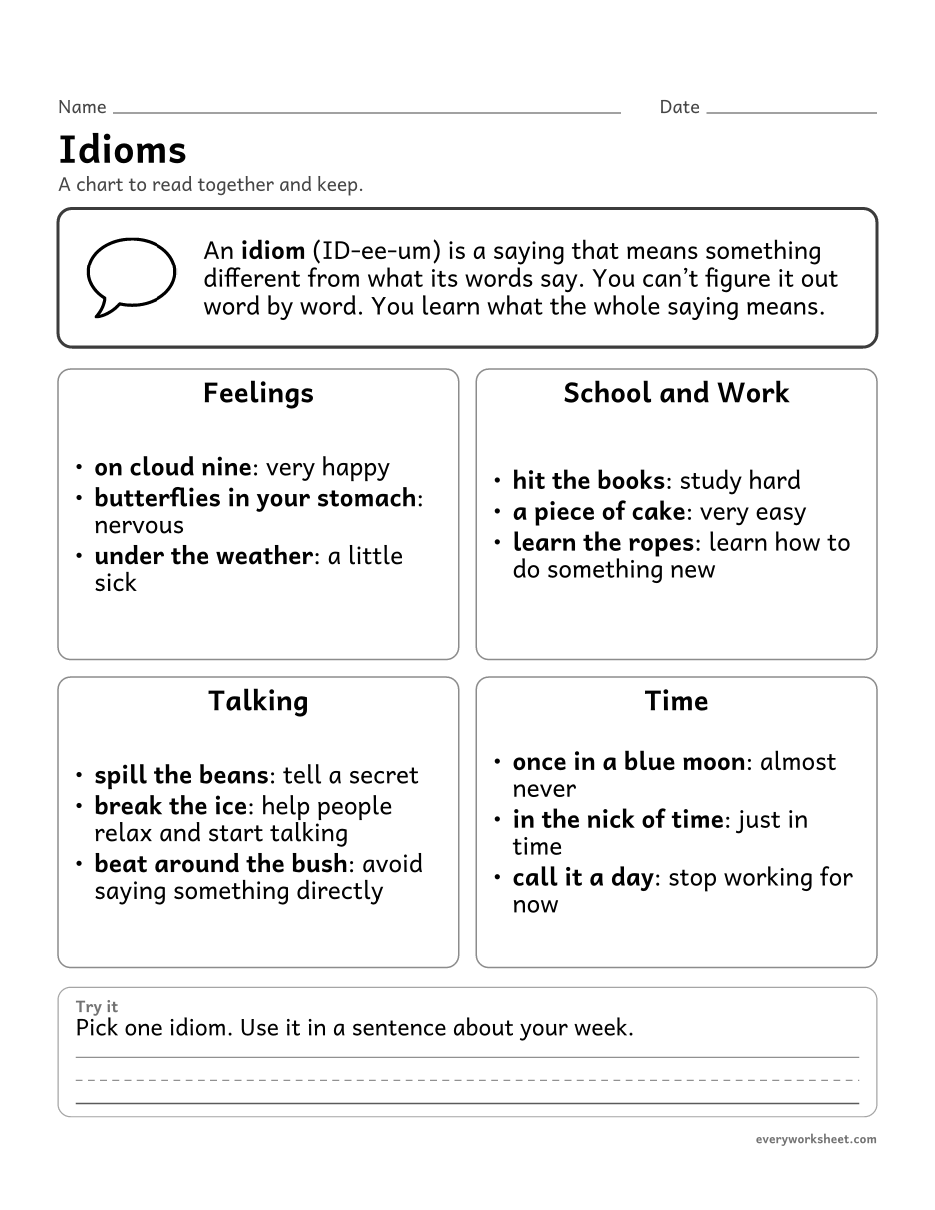
An idiom (say it ID-ee-um) is a saying whose meaning is different from the meaning of its words. If your friend says the quiz was "a piece of cake," there was no cake: the quiz was easy. If Grandpa is "under the weather," he is a little sick. You can't work out an idiom word by word. You learn what the whole saying means, the same way you learn a new word.
English is full of idioms. "Break the ice" means to help people relax and start talking. "Spill the beans" means to tell a secret. "Hit the books" means to study hard. "Once in a blue moon" means almost never. "Butterflies in your stomach" means you feel nervous. Context helps a lot: the sentence around an idiom usually gives clues to what it means.
Idioms are a kind of figurative language, but they are different from similes and metaphors. A writer makes up a fresh simile ("her kite darted like a hummingbird"), while an idiom is a fixed saying that many people already know. Adages and proverbs are close cousins: old, wise sayings that give advice, like "Practice makes perfect" and "Look before you leap."
These 4th grade idioms worksheets start with a chart, then practice choosing meanings in context, matching idioms to meanings (cut and paste or draw lines), reading an original story full of idioms, drawing the funny literal meaning next to the real one, and explaining proverbs.
Standards
CCSS.ELA-LITERACY.RL.4.4Determine the meaning of words and phrases as they are used in a text, including those that allude to significant characters found in mythology (e.g., Herculean).CCSS.ELA-LITERACY.L.4.5.BRecognize and explain the meaning of common idioms, adages, and proverbs.
How to use them
- Read the idioms chart together. Ask your child to use one idiom in a sentence about their day.
- Do What Does the Idiom Mean? and the matching pages, using the sentence clues.
- Read Theo's First Day and talk about how each idiom fits the story.
- Finish with the draw-and-write page and the adages and proverbs pages.
Teaching tips
- Drawing the literal meaning (cats and dogs falling from the sky) makes idioms memorable and funny.
- Collect idioms you hear at home on a sticky note for a week, then talk about what each one means.
- Idioms can confuse children who are learning English. Explain them plainly, and celebrate the funny pictures they create.
- For proverbs, connect each saying to a real moment: "Remember when you practiced every day? Practice makes perfect."
Questions teachers and parents ask
What is an idiom?
An idiom is a saying that means something different from what its words say. "Spill the beans" means to tell a secret, not to drop beans on the floor.
What are some examples of idioms?
Common idioms include "a piece of cake" (very easy), "break the ice" (help people relax and talk), "under the weather" (a little sick), "hit the sack" (go to bed), "once in a blue moon" (almost never), and "cost an arm and a leg" (cost a lot).
What is the difference between an idiom and a metaphor?
A metaphor is a comparison a writer creates, like "the sidewalk was a frying pan." An idiom is a fixed saying that many people already know, like "a piece of cake." Some idioms began as metaphors long ago, but now their meanings must be learned as a whole.
What is the difference between an idiom and a proverb?
A proverb (or adage) is a short, wise saying that gives advice, like "Look before you leap." An idiom is a phrase with a special meaning, like "get cold feet," and it usually does not give advice.
What are adages and proverbs for 4th grade?
Good ones to start with are "Practice makes perfect," "Look before you leap," "Don't judge a book by its cover," "The early bird catches the worm," "Actions speak louder than words," and "Two heads are better than one."