 View larger
Making inferences
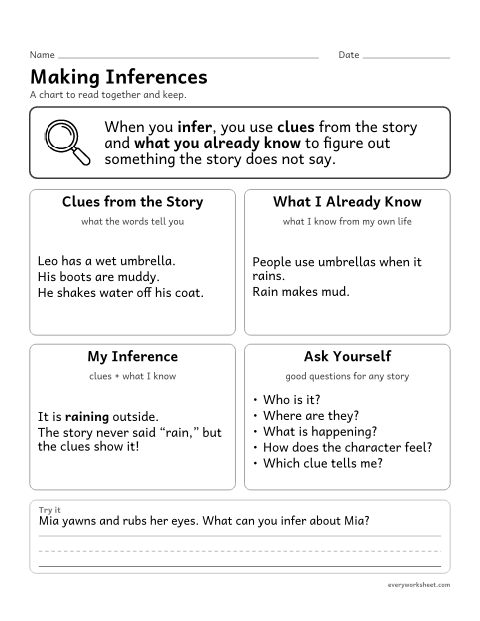
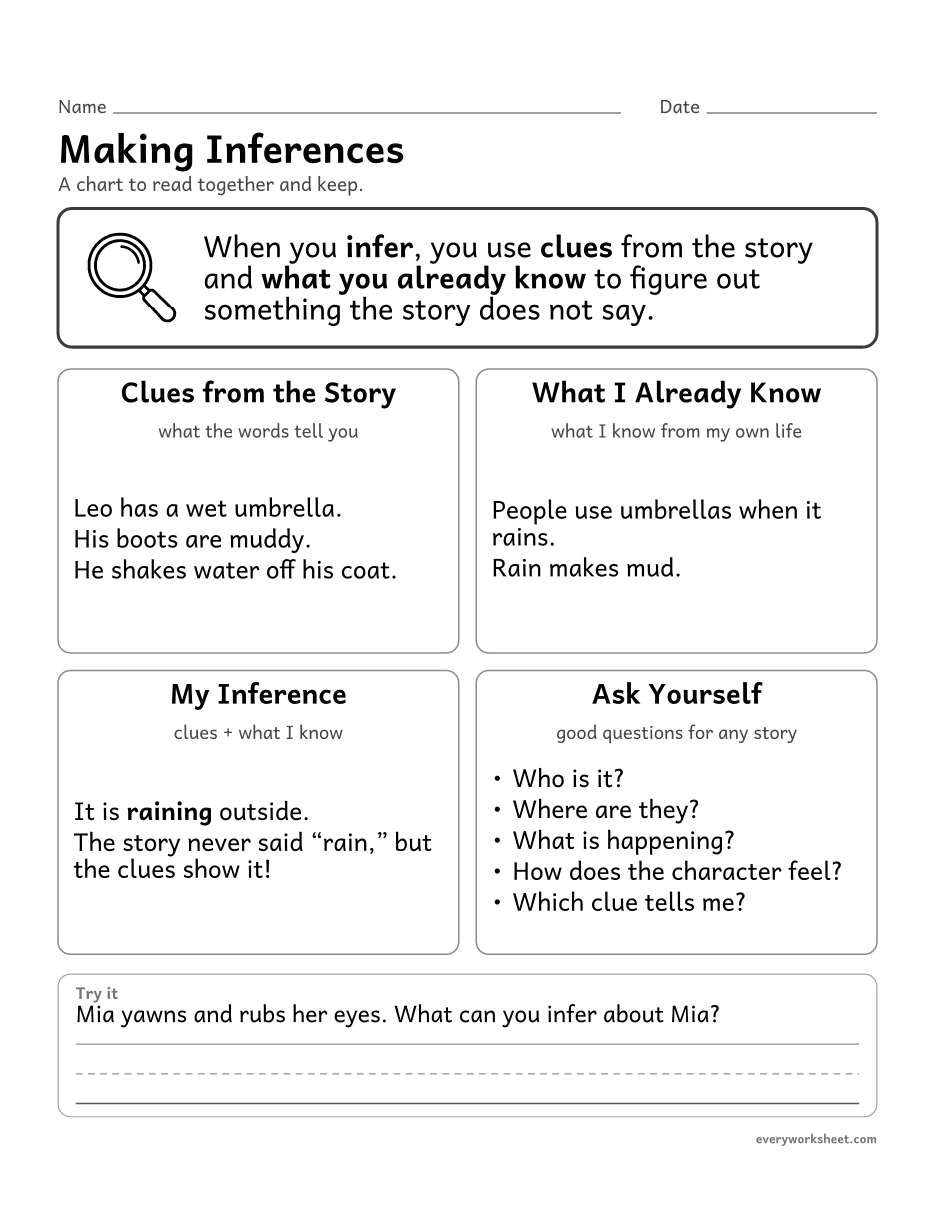
Knowing that an inference uses clues from the text and what you already know
1 page52 KB
Read the clues, add what you know, and figure out what the author does not say, with original stories and answer keys.
View largerKnowing that an inference uses clues from the text and what you already know
1 page52 KB
 3 pagesView all 3 pages
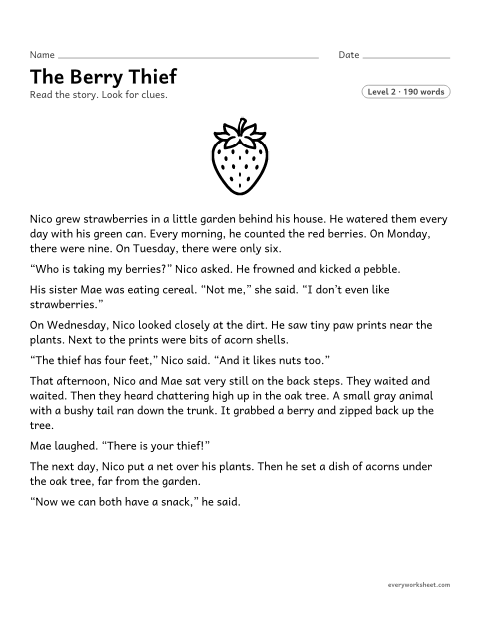
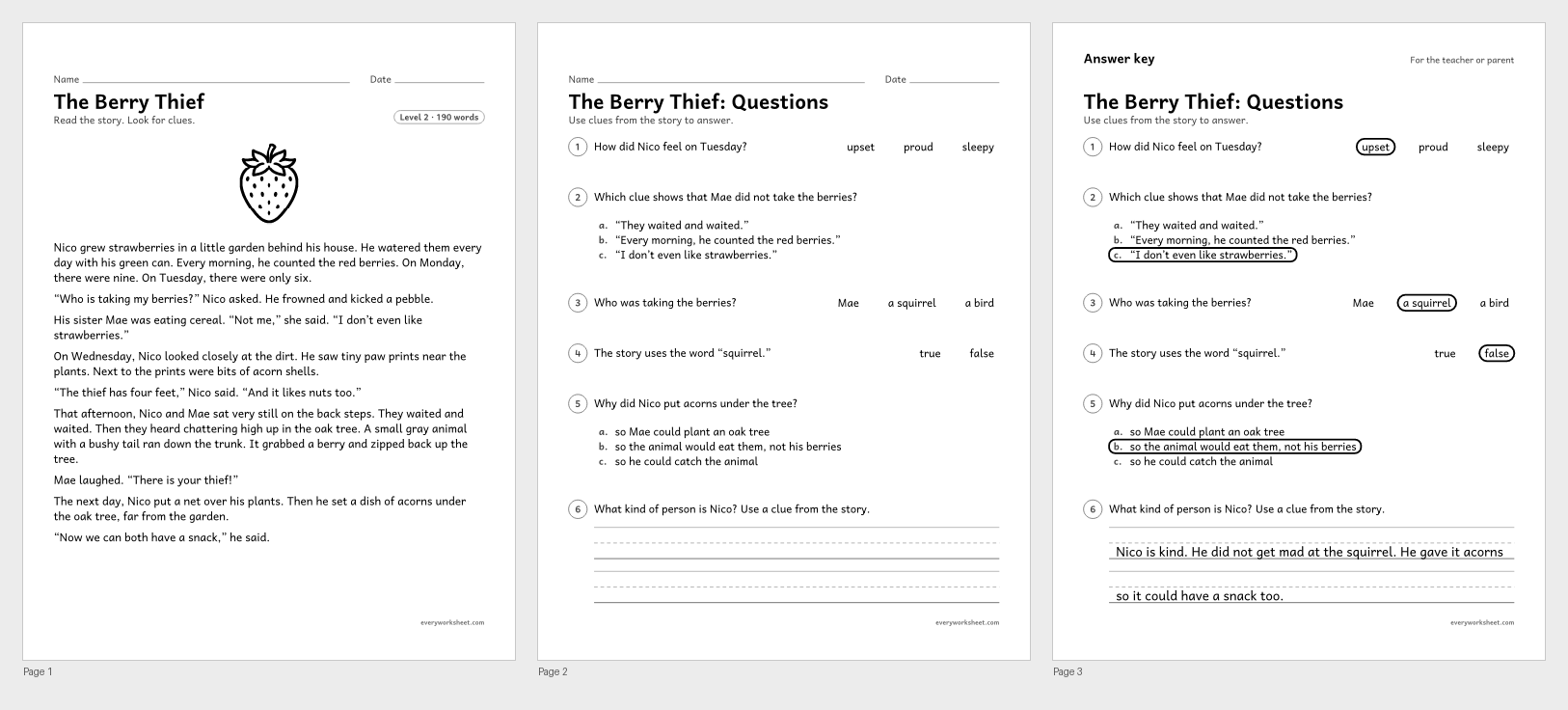
Answering questions about a mystery story by using clues the author gives
Answer key on page 3
3 pages70 KB
 View all 2 pages
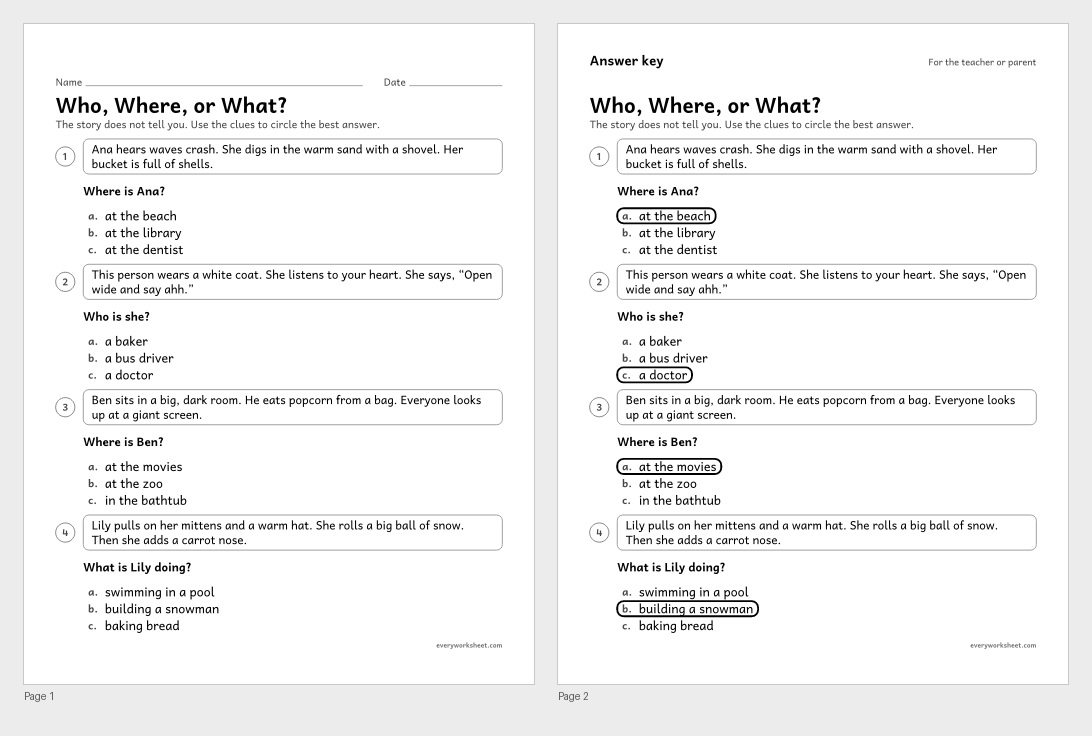
Using clues in a short text to infer who someone is, where they are, or what is happening
Answer key on page 2
2 pages49 KB
 View all 2 pages
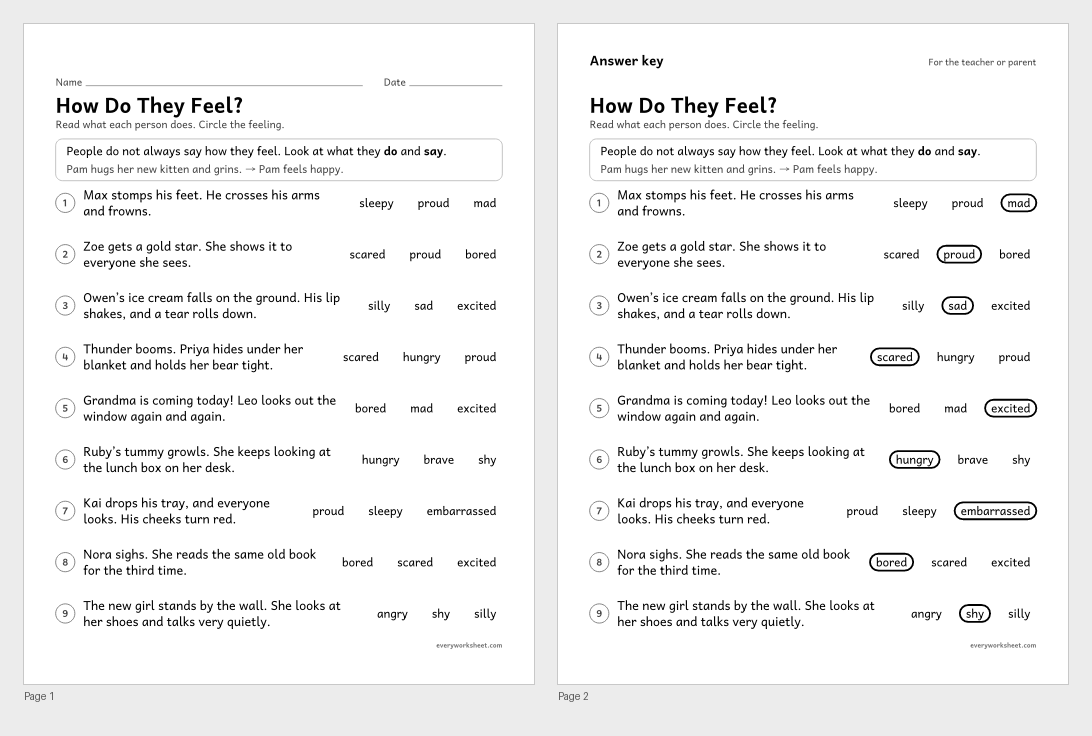
Inferring how a character feels from what the character does and says
Answer key on page 2
2 pages51 KB
 3 pagesView all 3 pages
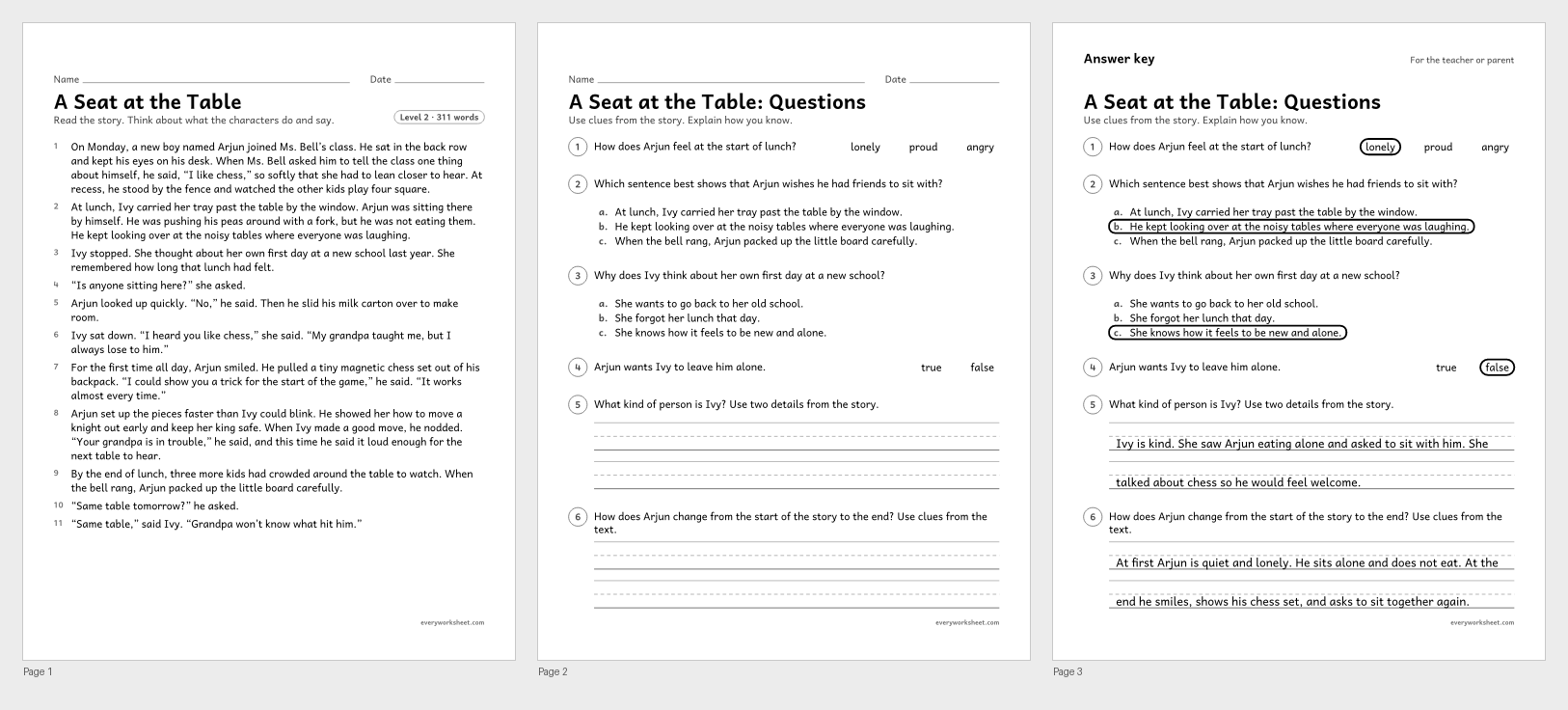
Inferring characters' feelings and traits from their actions and words, and explaining how a character changes
Answer key on page 3
3 pages57 KB
 View all 2 pages
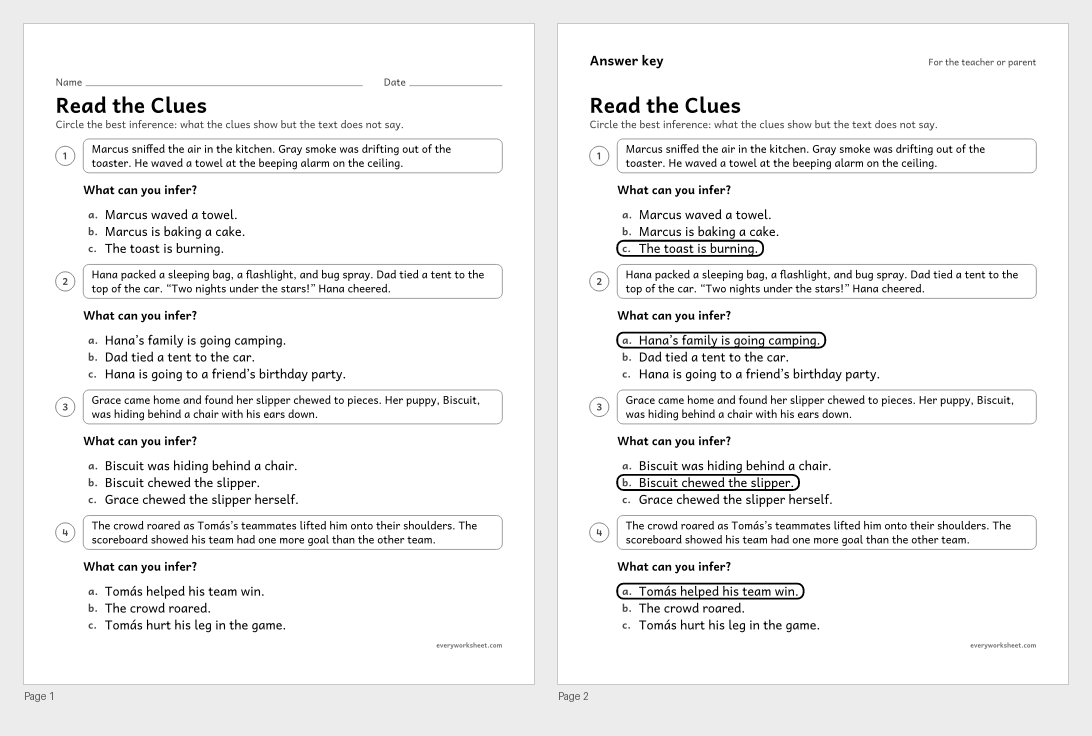
Choosing the inference the clues support, and telling it apart from a detail the text states
Answer key on page 2
2 pages50 KB
 View all 2 pages
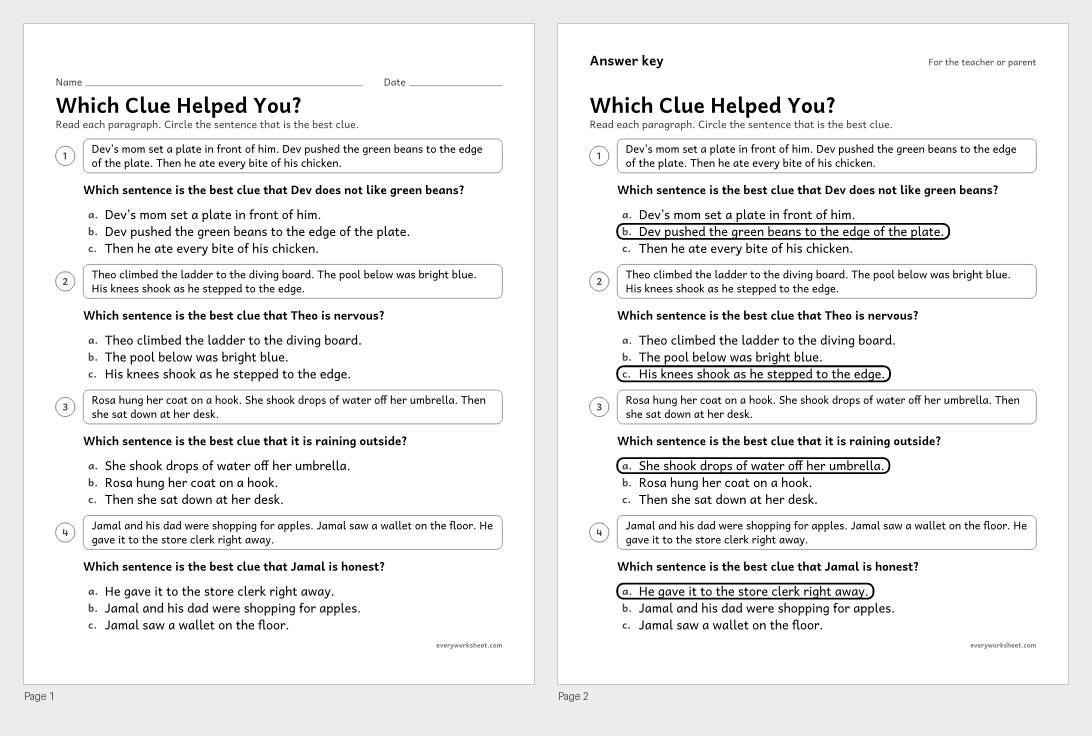
Choosing the sentence in a text that best supports an inference
Answer key on page 2
2 pages49 KB
 View all 2 pages
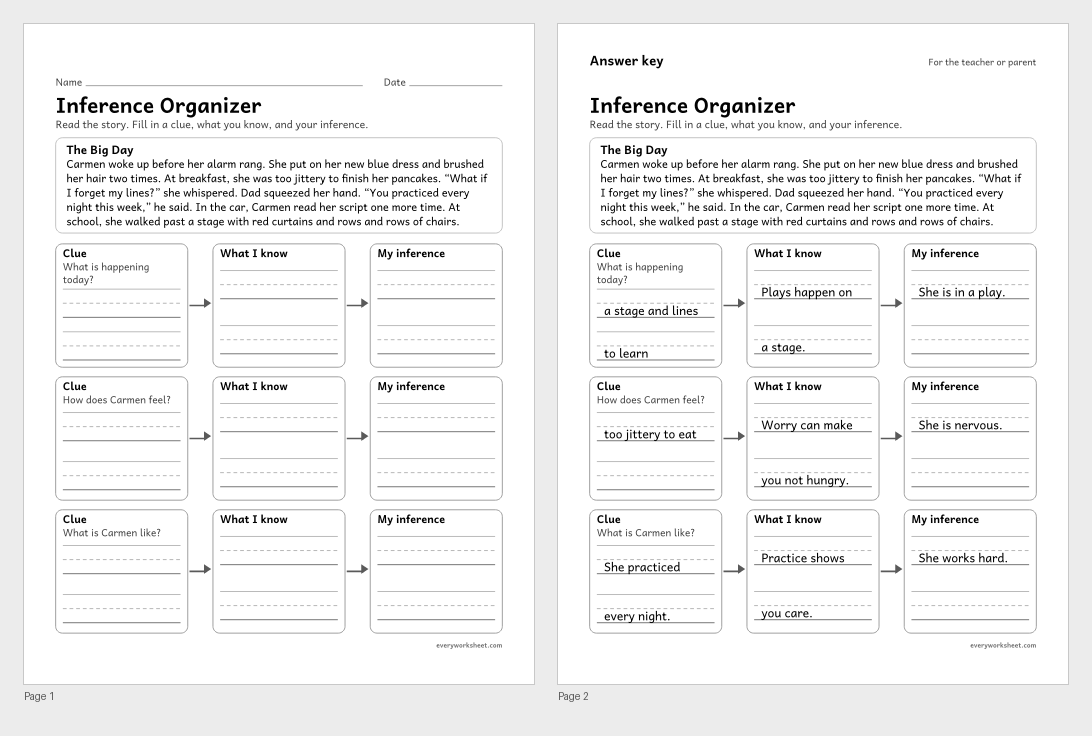
Making inferences about a story with a clue, background knowledge, and a conclusion
Answer key on page 2
2 pages38 KB
 3 pagesView all 3 pages
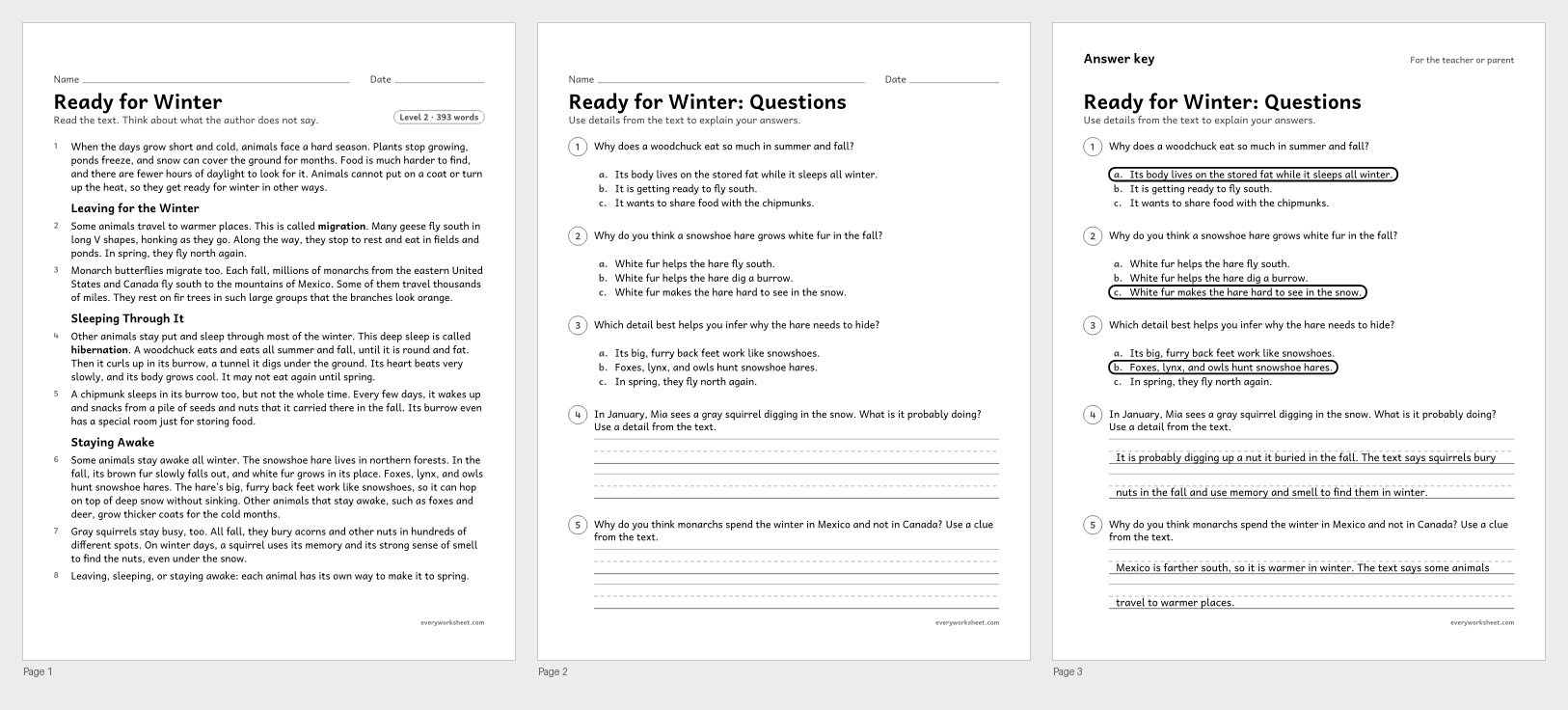
Using details in a science text to explain what it says directly and to draw inferences
Answer key on page 3
3 pages59 KB
 3 pagesView all 3 pages
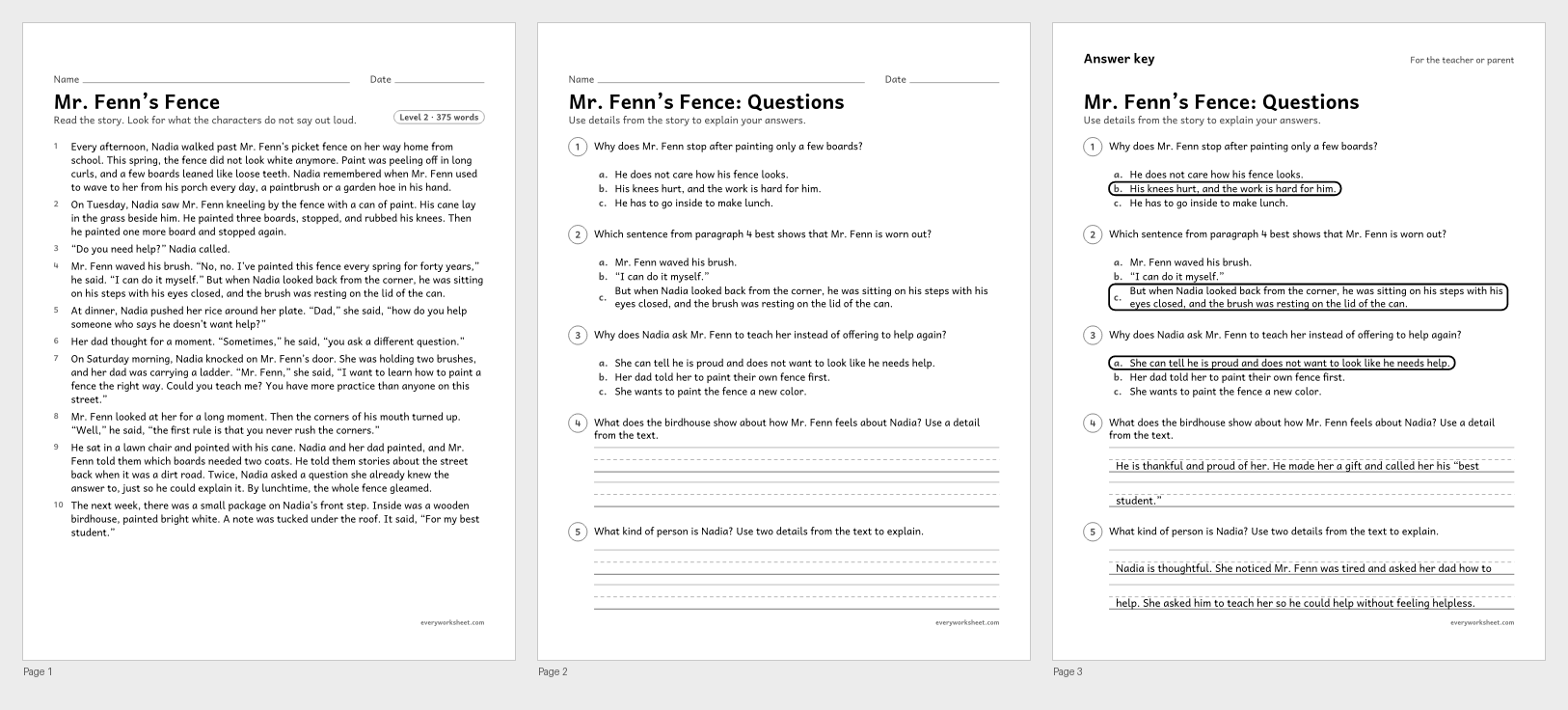
Referring to details in a story to explain what it says and to make inferences about characters
Answer key on page 3
3 pages58 KB
 View all 2 pages
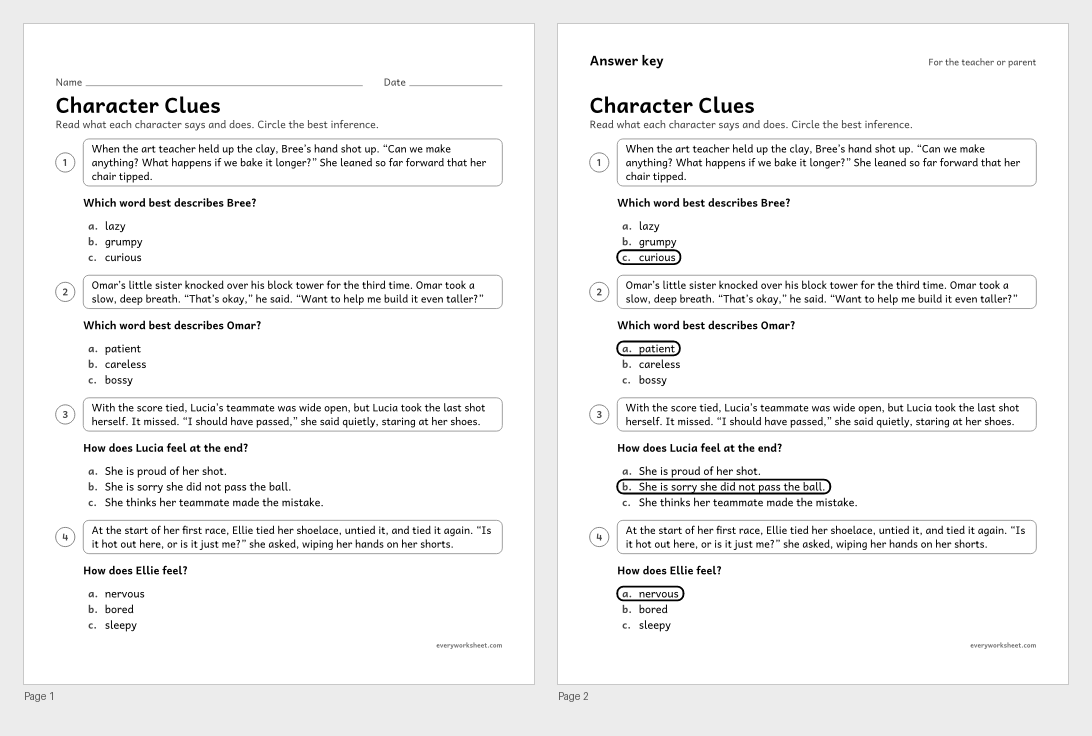
Inferring a character's traits and feelings from dialogue and actions
Answer key on page 2
2 pages51 KB
 3 pagesView all 3 pages
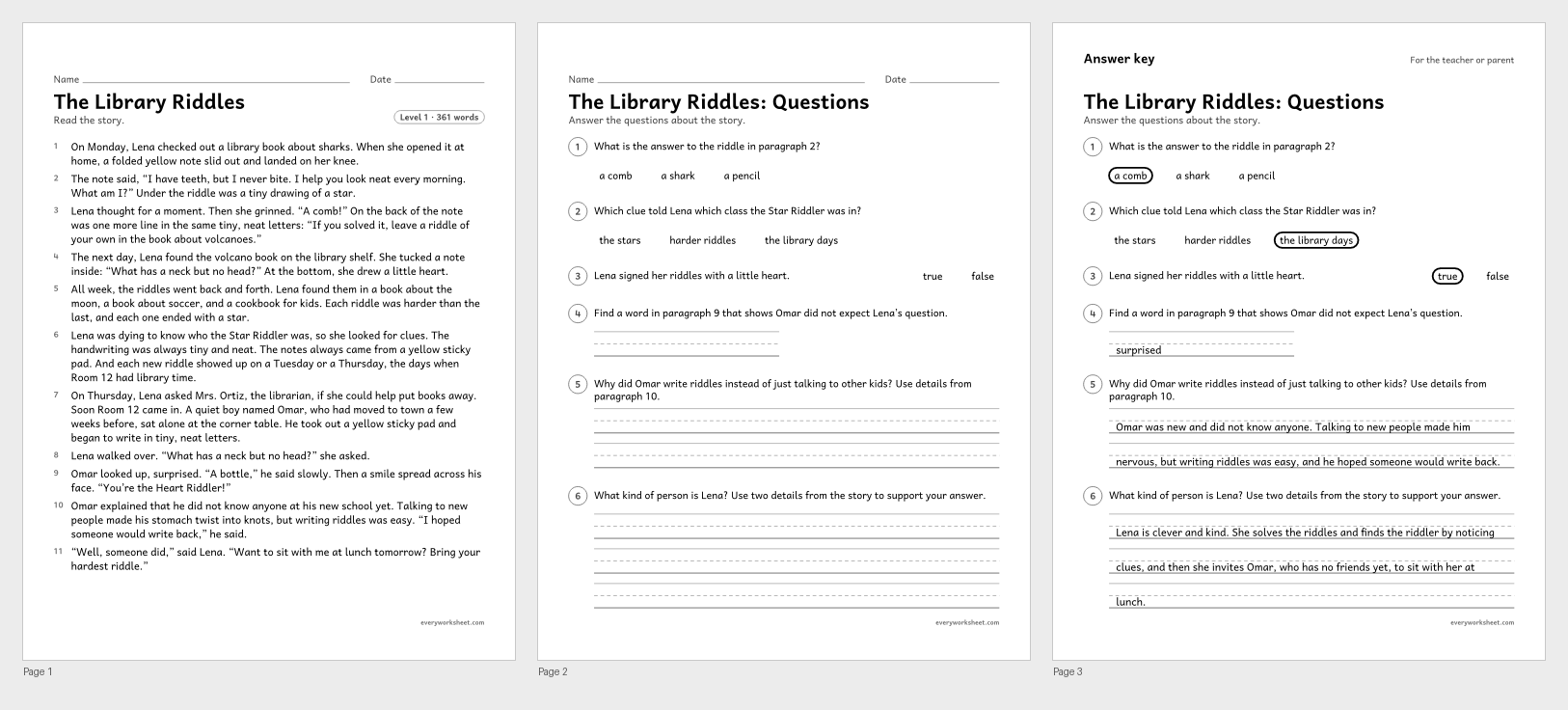
Using details from the story to explain what happens and to make inferences
Answer key on page 3
3 pages52 KB
 3 pagesView all 3 pages
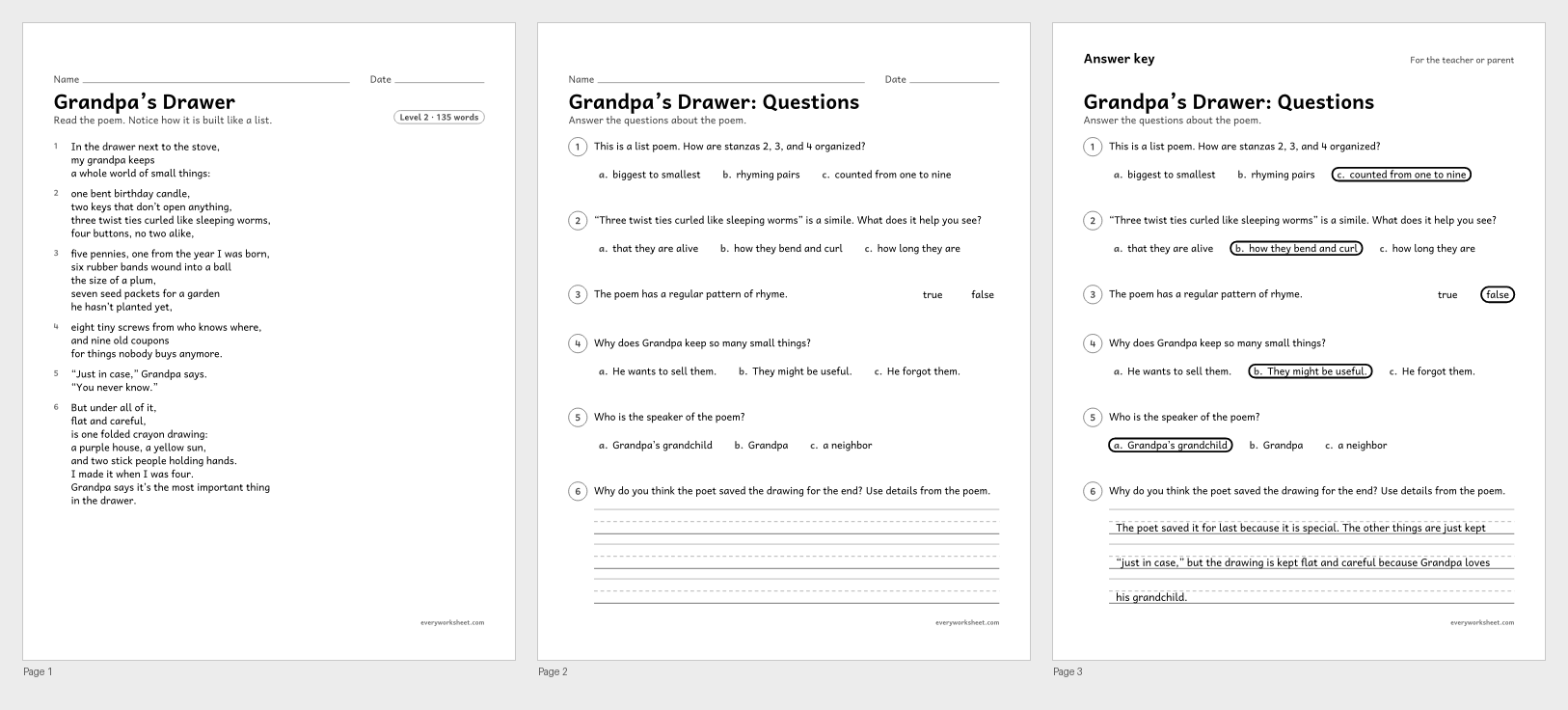
Using details in a list poem to make inferences about the speaker and Grandpa
Answer key on page 3
3 pages49 KB
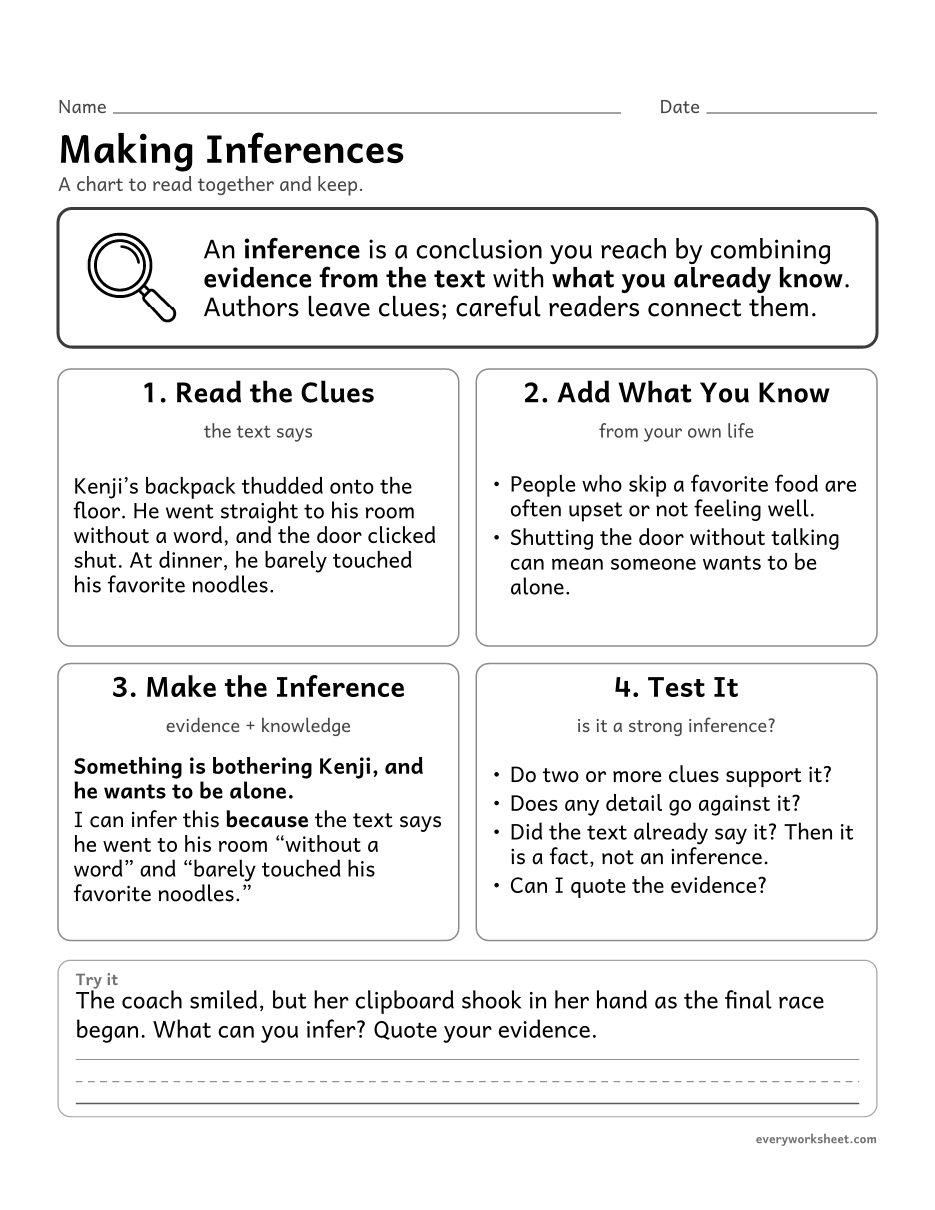 View larger
Knowing how to make an inference from text evidence and background knowledge, and how to test it
1 page55 KB
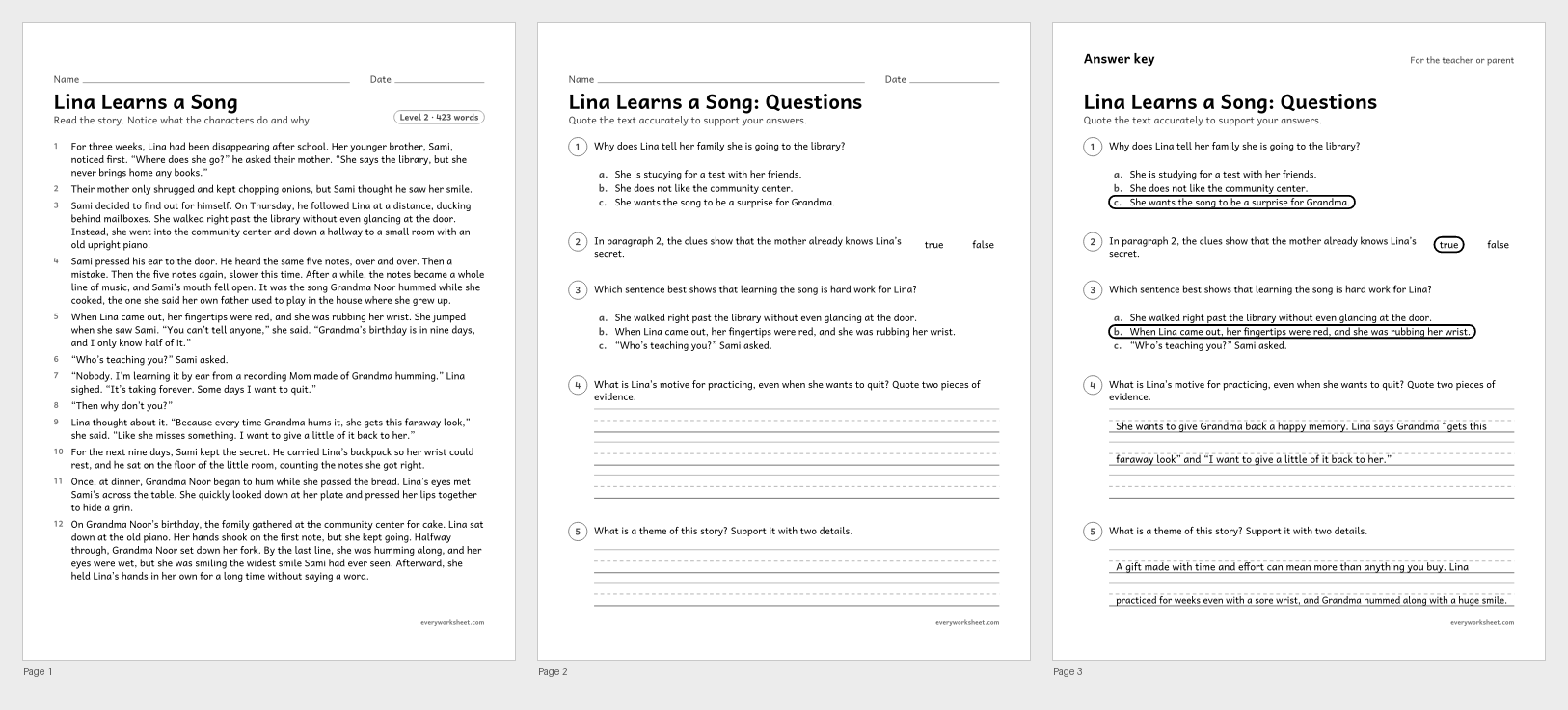 3 pagesView all 3 pages
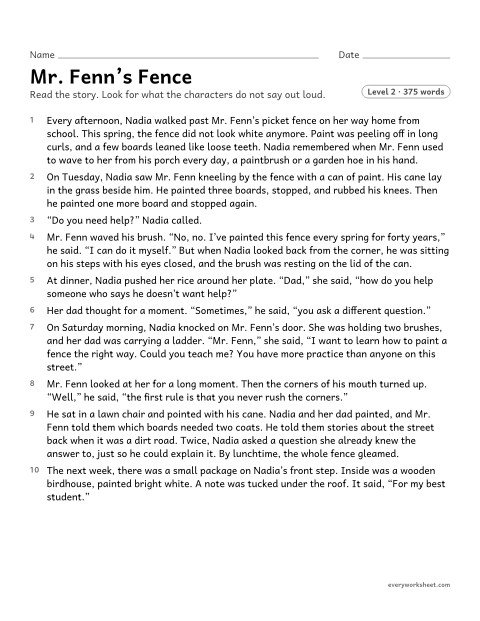
Inferring a character's motive and a story's theme, and quoting accurately to support them
Answer key on page 3
3 pages57 KB
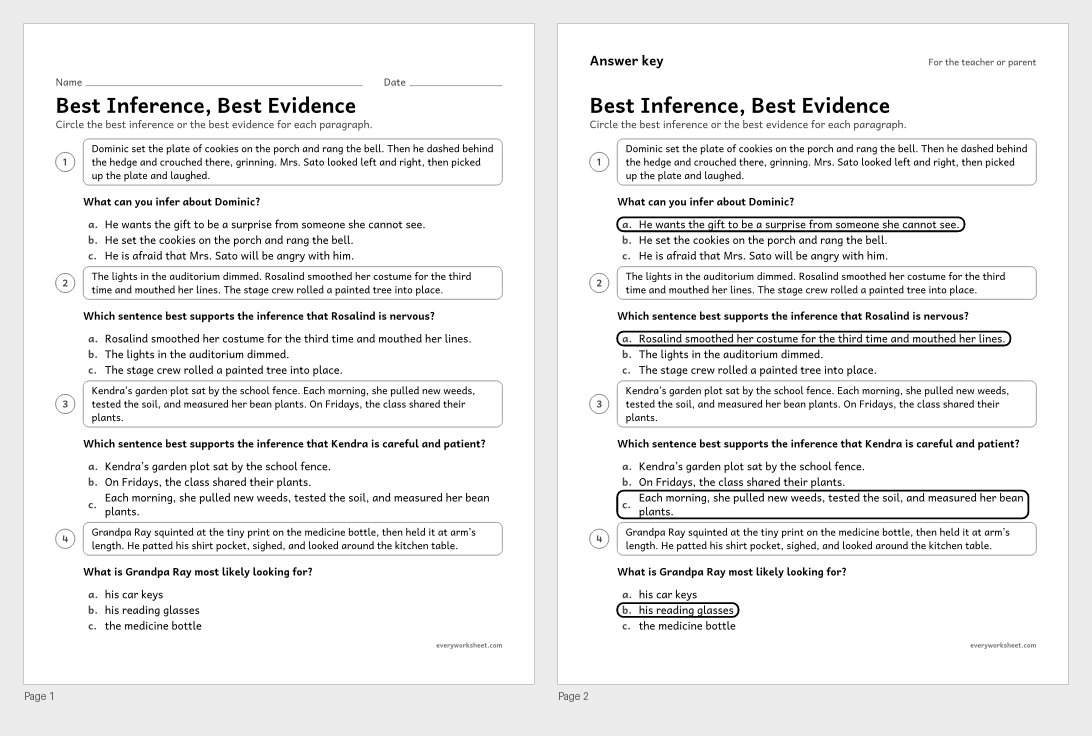 View all 2 pages
Choosing the inference best supported by a text and the sentence that best supports an inference
Answer key on page 2
2 pages51 KB
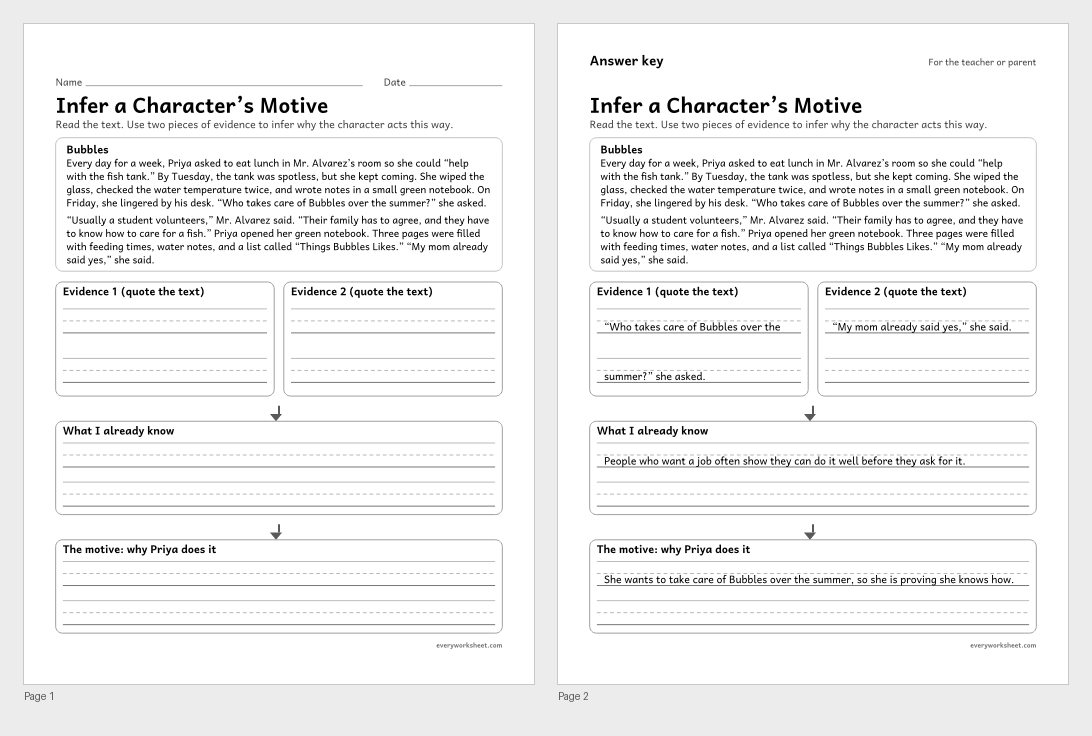 View all 2 pages
Inferring a character's motive by combining two quoted pieces of evidence with background knowledge
Answer key on page 2
2 pages37 KB
 3 pagesView all 3 pages
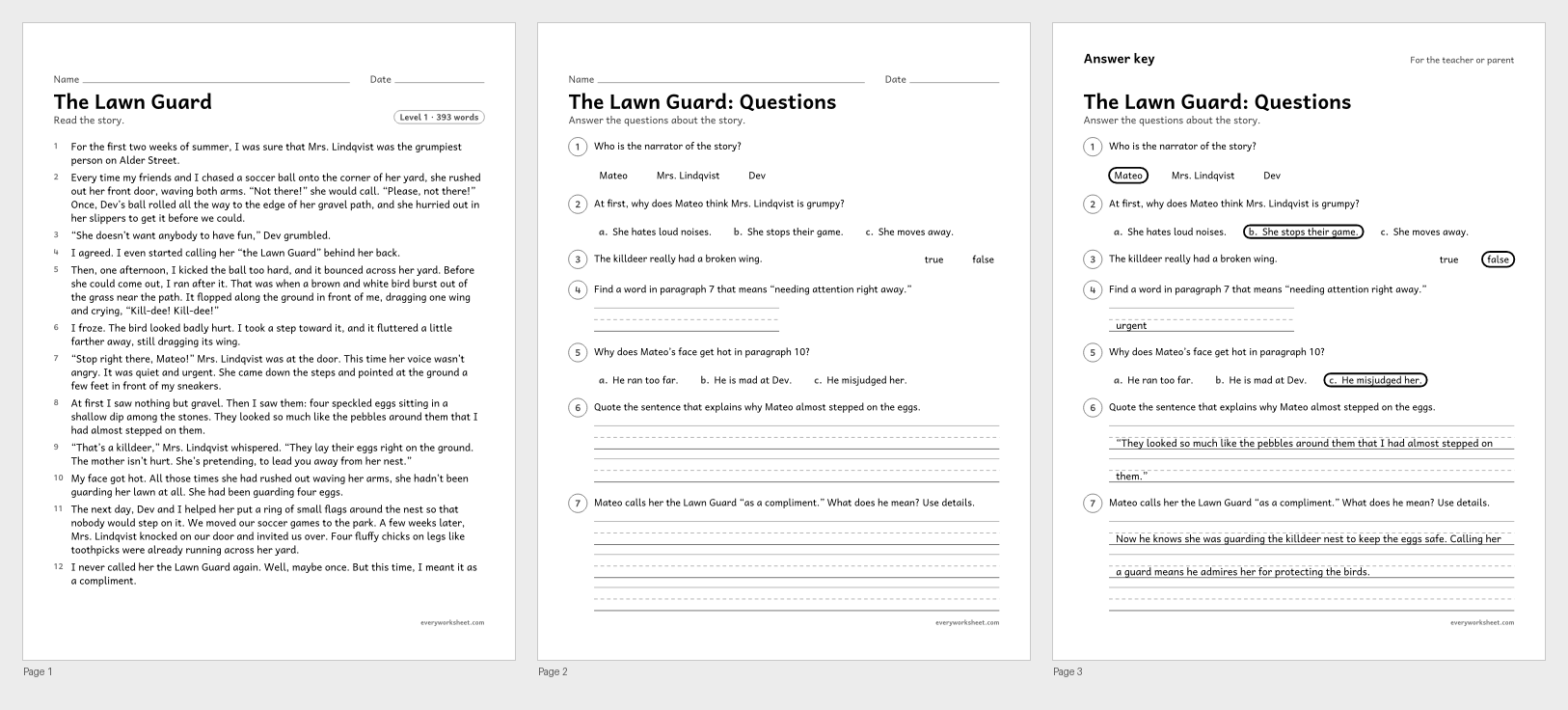
Quoting accurately from a story to explain what happens and to make inferences
Answer key on page 3
3 pages55 KB
 View larger
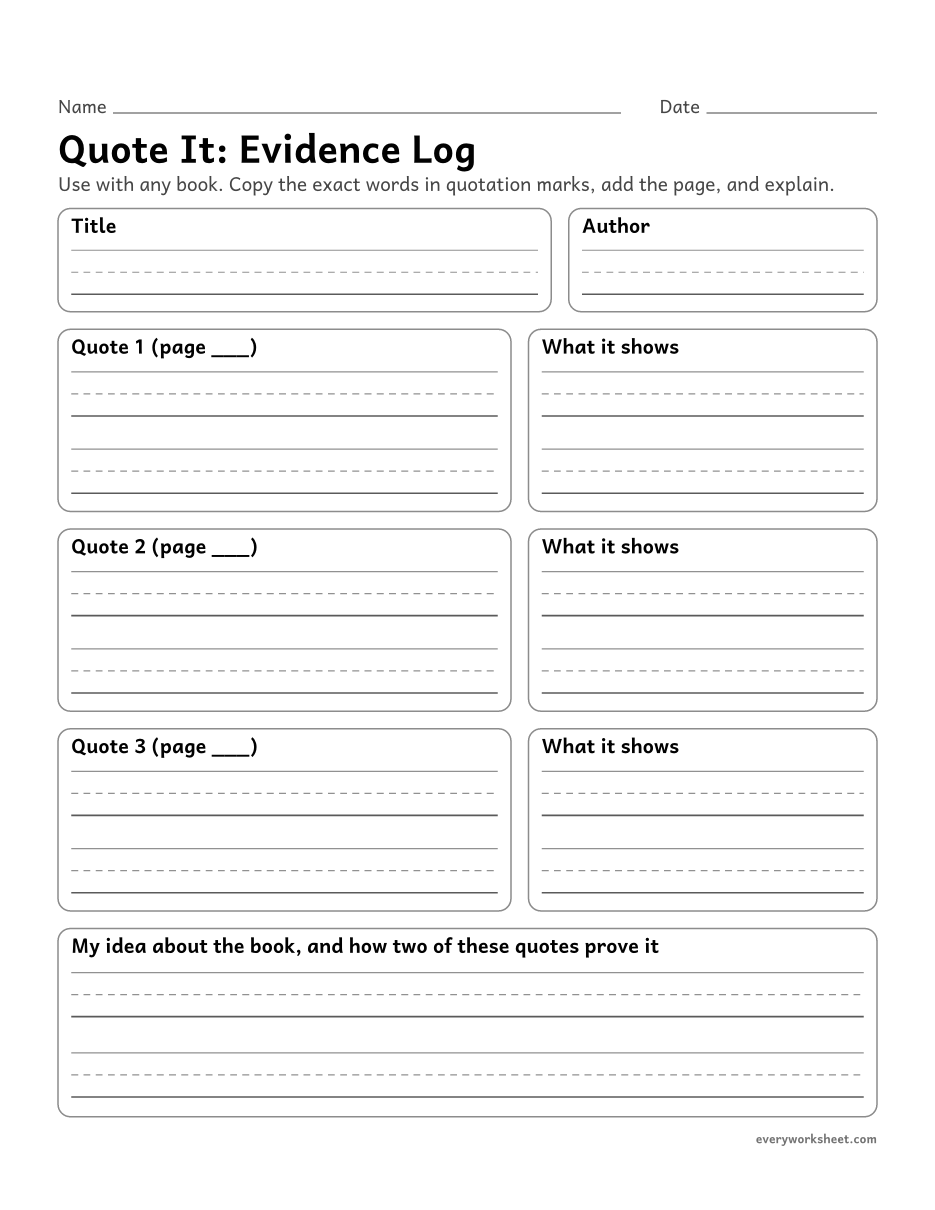
Quoting accurately from any text to support ideas and inferences
1 page30 KB
Print at 100% (actual size) for the cleanest tracing lines.
To make an inference is to figure out something the text does not say by putting together clues from the text and what you already know. Suppose a story says, "Leo came in with a dripping umbrella and muddy boots." It never says it is raining, but you know that people carry umbrellas in the rain and that rain makes mud, so you can infer that it is raining outside. Clues plus what I know equals an inference.
Readers infer all the time: who a character is, where a scene takes place, how someone feels, why a character acts the way they do, and what lesson a story is teaching. A good inference is one the clues really support, not a wild guess, and it is not something the text already says out loud.
These worksheets build the skill step by step. Second graders solve who, where, and what riddles and read feelings from actions. Third graders choose the best inference, point to the clue that helped them, and fill in an inference organizer. Fourth graders infer character traits from dialogue and draw inferences from a science text, and fifth graders quote evidence to infer a character's motive and a story's theme.
Every passage and paragraph is written just for these pages, and every sheet with a right answer has an answer key. Written answers on the keys are examples, so accept any answer the clues support.
CCSS.ELA-LITERACY.RI.4.1Refer to details and examples in a text when explaining what the text says explicitly and when drawing inferences from the text.CCSS.ELA-LITERACY.RL.2.1Ask and answer such questions as who, what, where, when, why, and how to demonstrate understanding of key details in a text.CCSS.ELA-LITERACY.RL.2.3Describe how characters in a story respond to major events and challenges.CCSS.ELA-LITERACY.RL.3.1Ask and answer questions to demonstrate understanding of a text, referring explicitly to the text as the basis for the answers.CCSS.ELA-LITERACY.RL.3.3Describe characters in a story (e.g., their traits, motivations, or feelings) and explain how their actions contribute to the sequence of events.CCSS.ELA-LITERACY.RL.4.1Refer to details and examples in a text when explaining what the text says explicitly and when drawing inferences from the text.CCSS.ELA-LITERACY.RL.4.3Describe in depth a character, setting, or event in a story or drama, drawing on specific details in the text (e.g., a character's thoughts, words, or actions).CCSS.ELA-LITERACY.RL.5.1Quote accurately from a text when explaining what the text says explicitly and when drawing inferences from the text.CCSS.ELA-LITERACY.RL.5.2Determine a theme of a story, drama, or poem from details in the text, including how characters in a story or drama respond to challenges or how the speaker in a poem reflects upon a topic; summarize the text.An inference is a conclusion you reach by combining clues in the text with what you already know. For example, if a character yawns and rubs her eyes, you can infer that she is tired, even though the text never says so.
An inference figures out something that is true now but not stated, like how a character feels. A prediction is a guess about what will happen next. Both use clues from the text.
Children start making simple inferences about characters and settings in the early grades. By 4th grade, standards ask them to refer to details when drawing inferences, and by 5th grade to quote the text accurately to support them.
Yes. Every sheet with a right answer has a key on the last page. Written answers on the keys are examples, so accept any answer the text supports.