 View larger
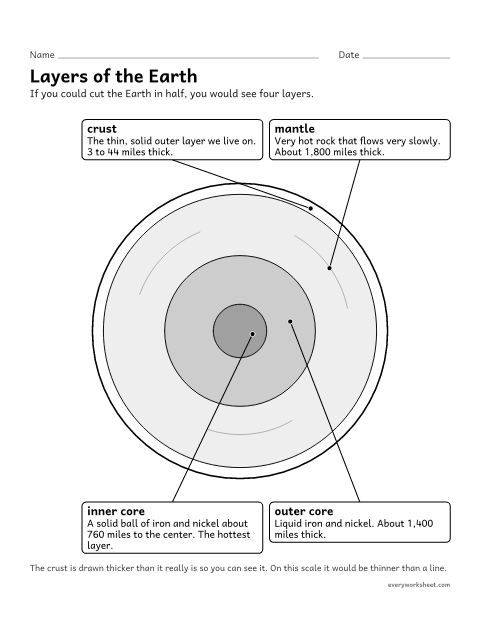
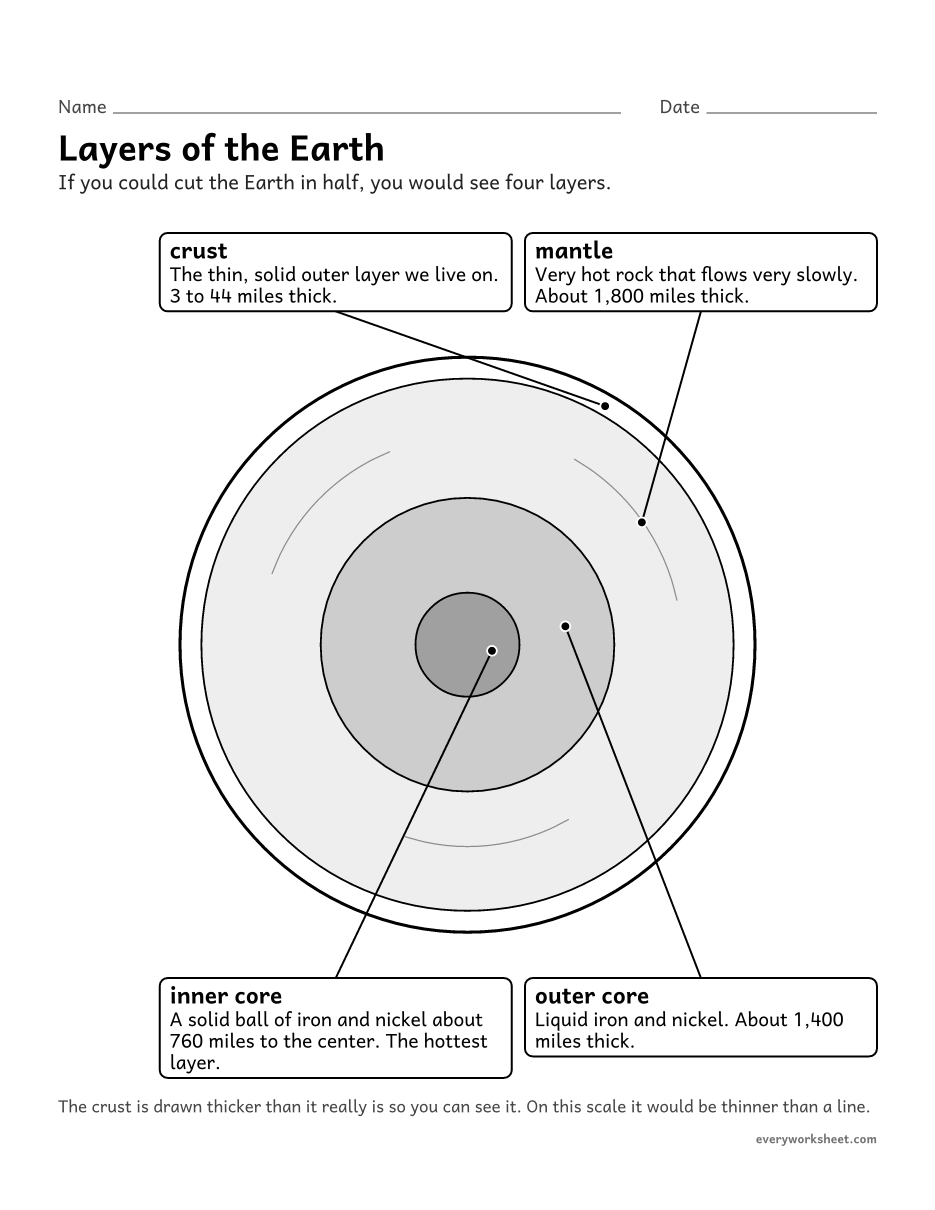
Layers of the earth diagram (Labeled) for kids
Naming and describing the layers of the Earth
1 page28 KB
A labeled diagram of the crust, mantle, outer core and inner core, label and cut and paste pages, a chart, a reading passage and a model to make.
View largerNaming and describing the layers of the Earth
1 page28 KB
 View all 2 pages
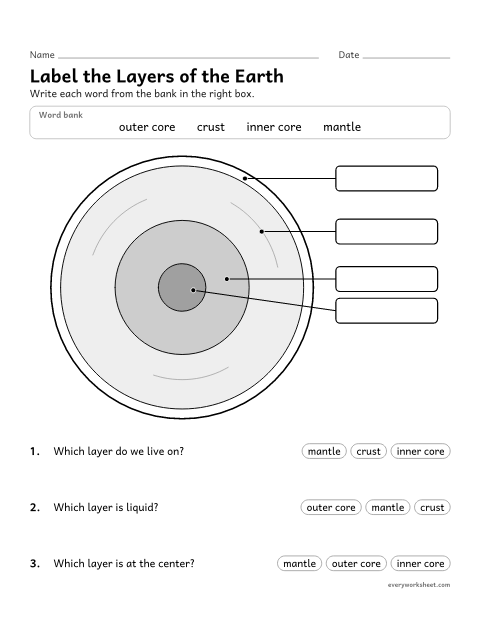
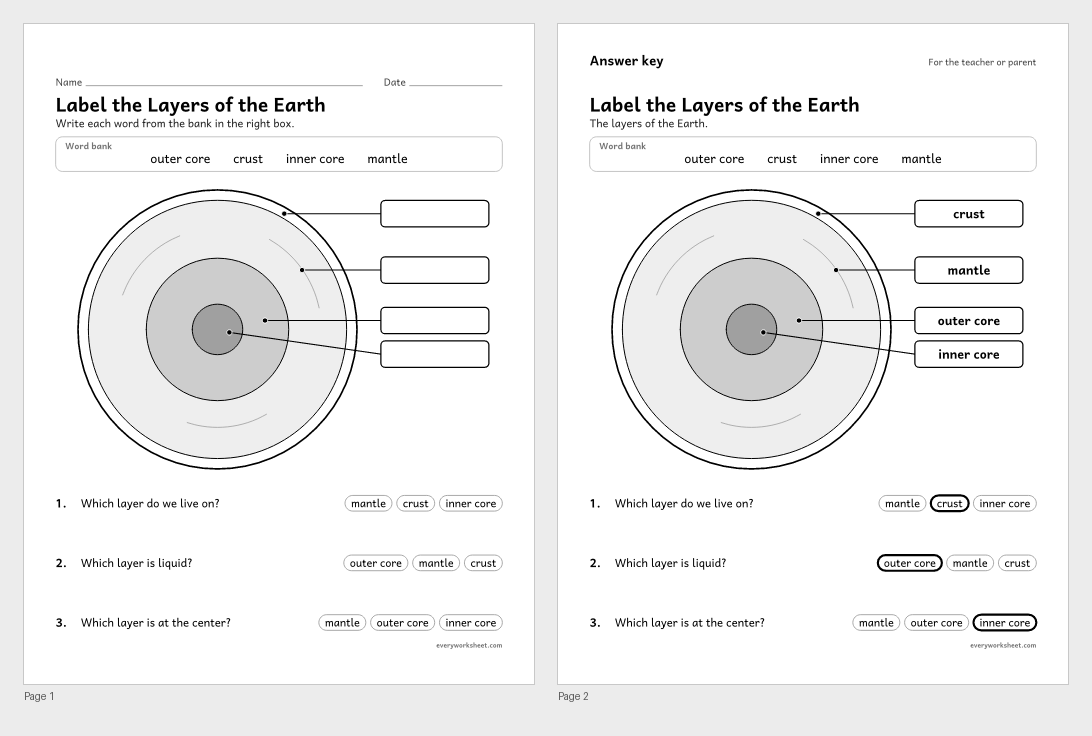
Labeling the layers of the Earth
Answer key on page 2
2 pages36 KB
 View all 2 pages
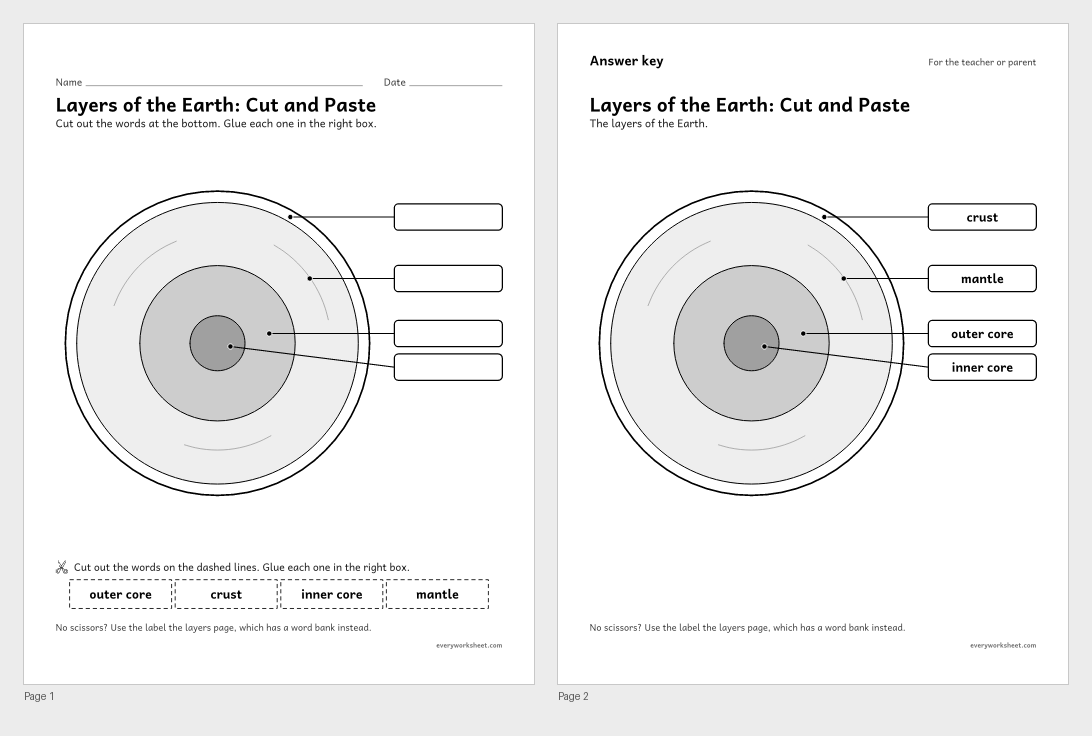
Labeling the layers of the Earth
Answer key on page 2
2 pages59 KB
 View all 2 pages
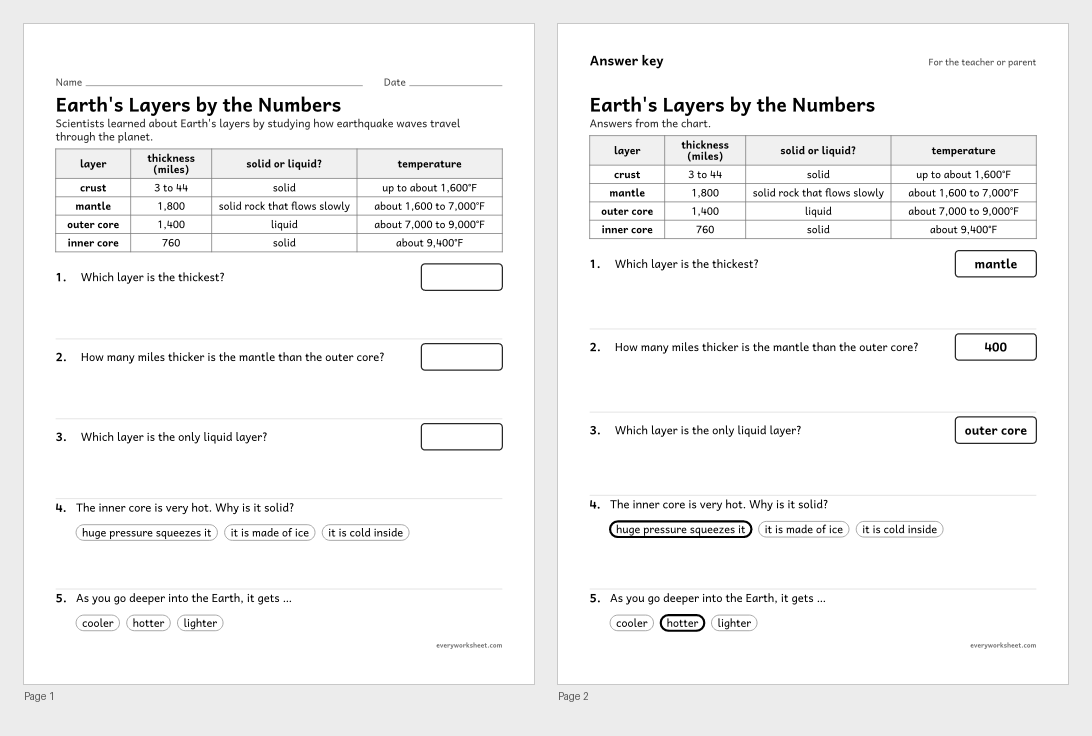
Reading a chart that compares the layers of the Earth
Answer key on page 2
2 pages48 KB
 View all 2 pages
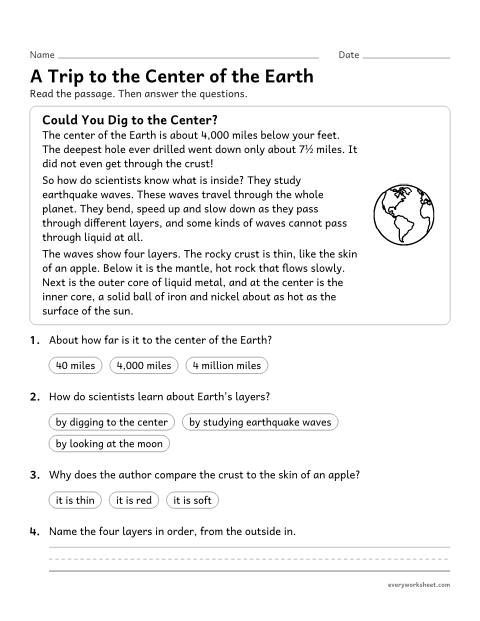
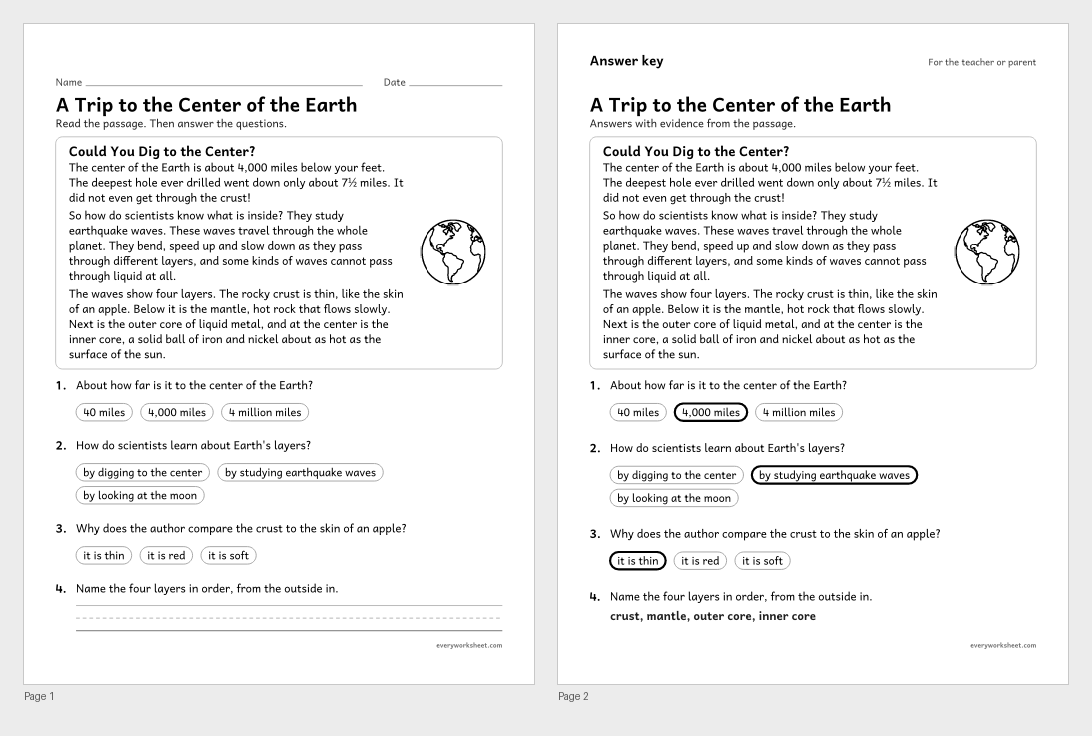
Explaining the layers of the Earth from a nonfiction text
Answer key on page 2
2 pages62 KB
 View all 2 pages
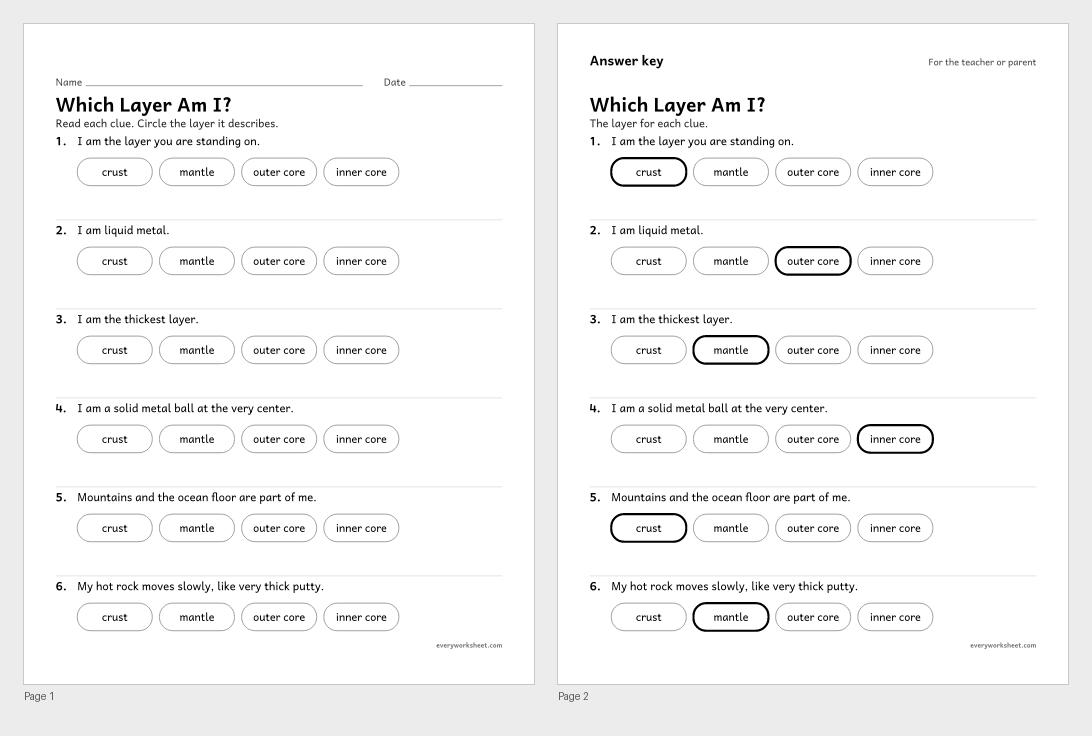
Identifying the layers of the Earth from clues
Answer key on page 2
2 pages37 KB
 View larger
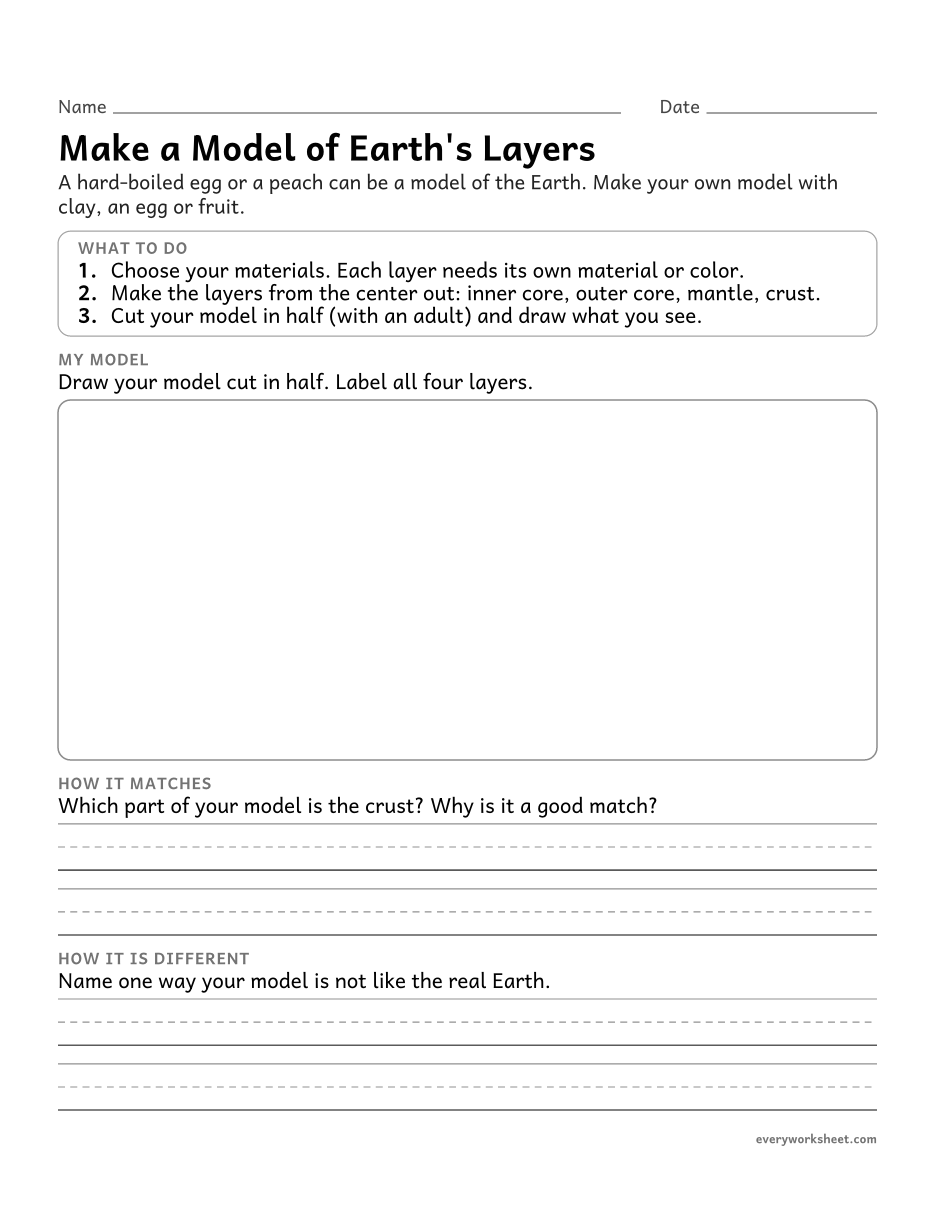
Designing and explaining a model of the Earth's layers
1 page29 KB
 View all 2 pages
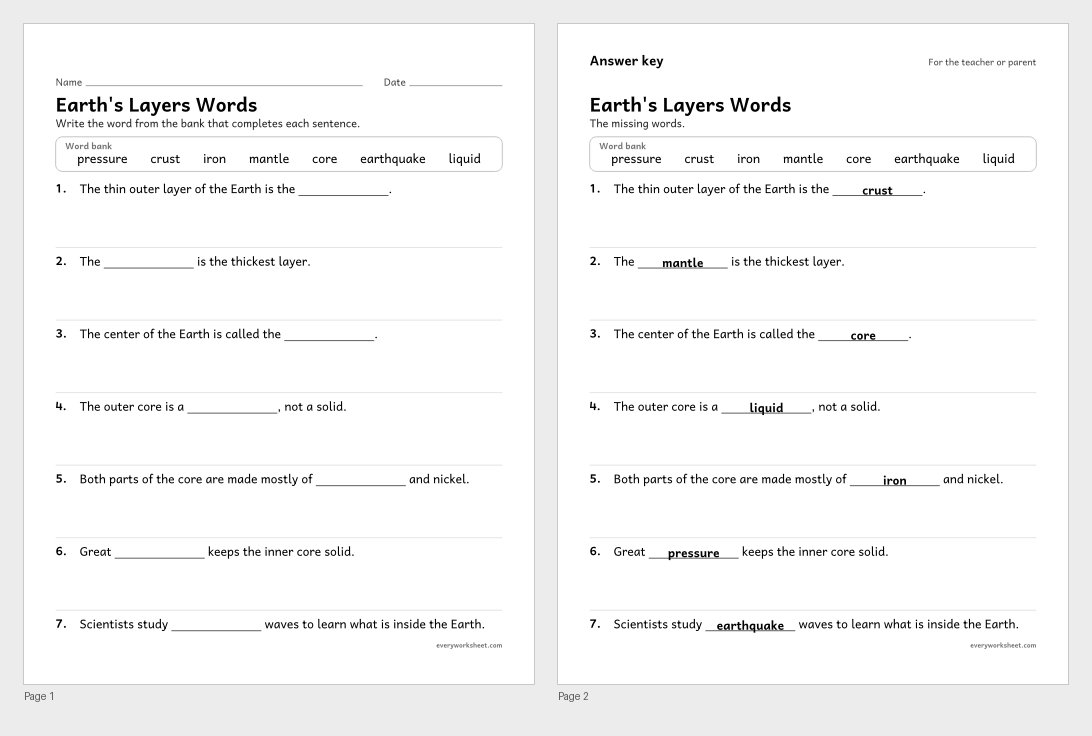
Using vocabulary about the Earth's layers in context
Answer key on page 2
2 pages38 KB
Print at 100% (actual size) for the cleanest tracing lines.
If you could cut the Earth in half, you would see four layers. The thin, rocky crust is where we live. Below it is the thick mantle of hot rock that flows very slowly. Then comes the liquid metal outer core and, at the very center, the solid inner core of iron and nickel.
These layers of the Earth worksheets include a labeled diagram, a page to label with a word bank and a cut and paste twin. A chart compares the thickness and temperature of each layer, a reading passage explains how scientists learn about Earth's insides from earthquake waves, and riddles, a vocabulary page and a make-a-model activity round out the topic.
Every page is black and white, prints on US Letter or A4, and every page with right answers has an answer key on page 2.
CCSS.ELA-LITERACY.RI.4.7Interpret information presented visually, orally, or quantitatively (e.g., in charts, graphs, diagrams, time lines, animations, or interactive elements on Web pages) and explain how the information contributes to an understanding of the text in which it appears.CCSS.ELA-LITERACY.RI.4.1Refer to details and examples in a text when explaining what the text says explicitly and when drawing inferences from the text.CCSS.ELA-LITERACY.RI.4.4Determine the meaning of general academic and domain-specific words or phrases in a text relevant to a grade 4 topic or subject area.From the outside in: the crust, the mantle, the outer core and the inner core.
The mantle, at about 1,800 miles thick.
No one has drilled through the crust. Scientists study how earthquake waves bend, speed up and slow down as they travel through the planet.
Yes. The label page has a word bank, and the cut and paste page has the words to glue in. Both have answer keys.