 View larger
How to make a prediction
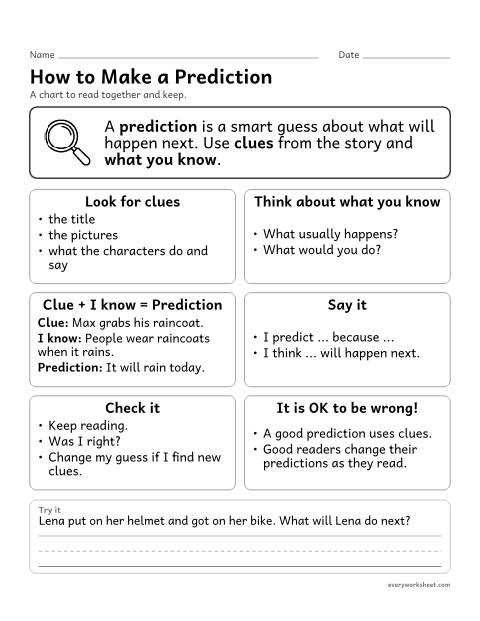
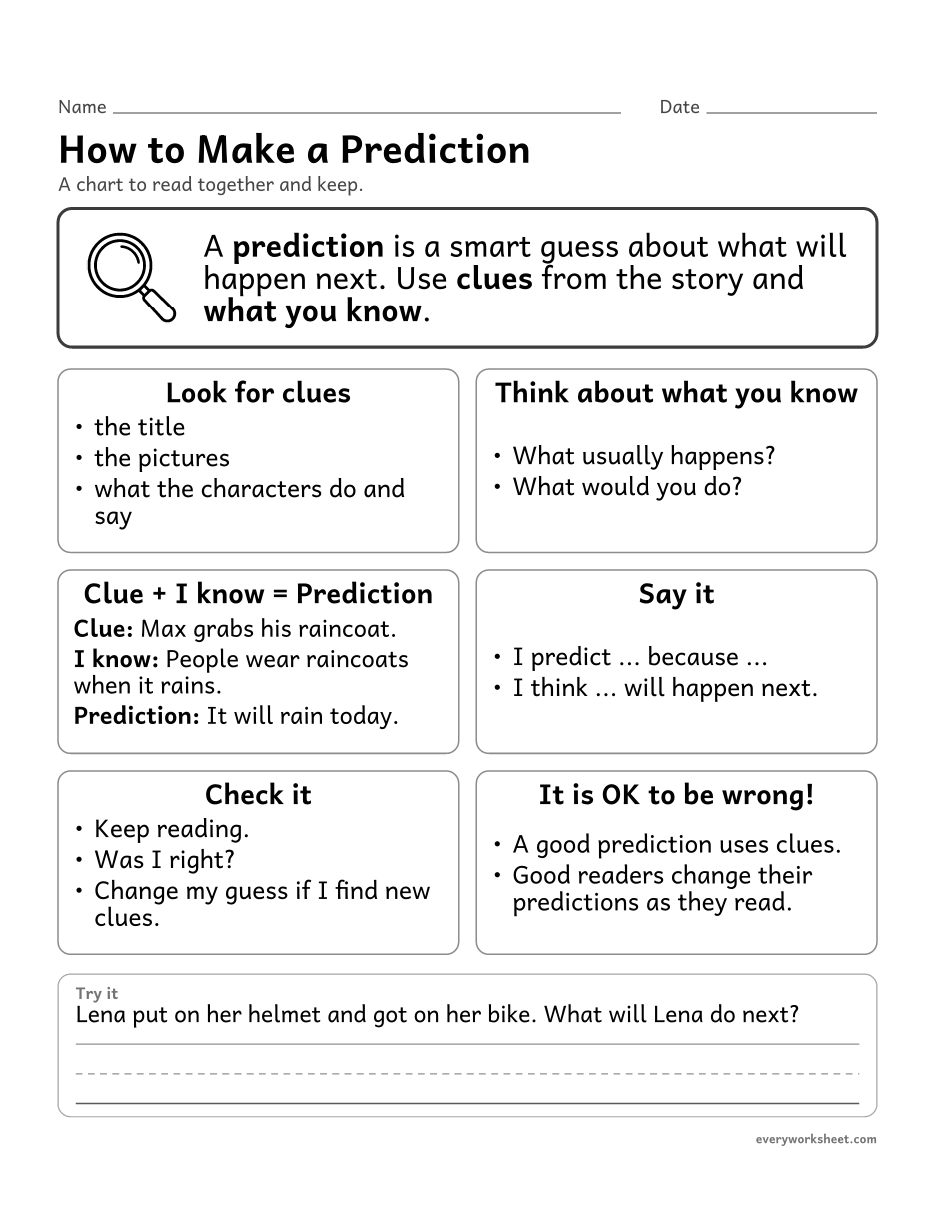
Knowing what a prediction is: clues from the story plus what you know, then checking as you read
1 page56 KB
Original short stories and texts where children use clues to predict what will happen, then read on to check.
View largerKnowing what a prediction is: clues from the story plus what you know, then checking as you read
1 page56 KB
 View all 2 pages
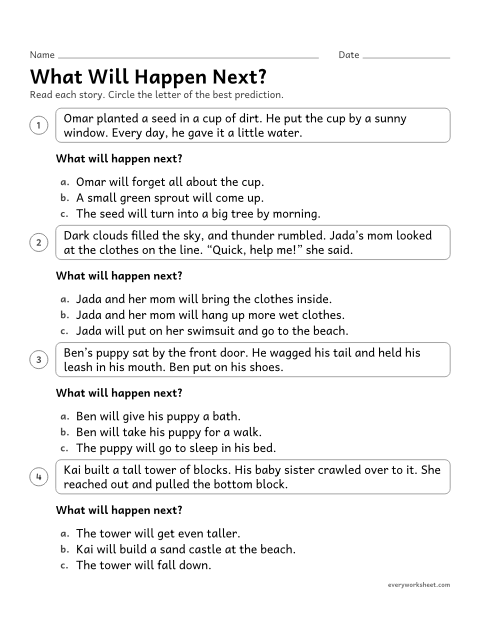
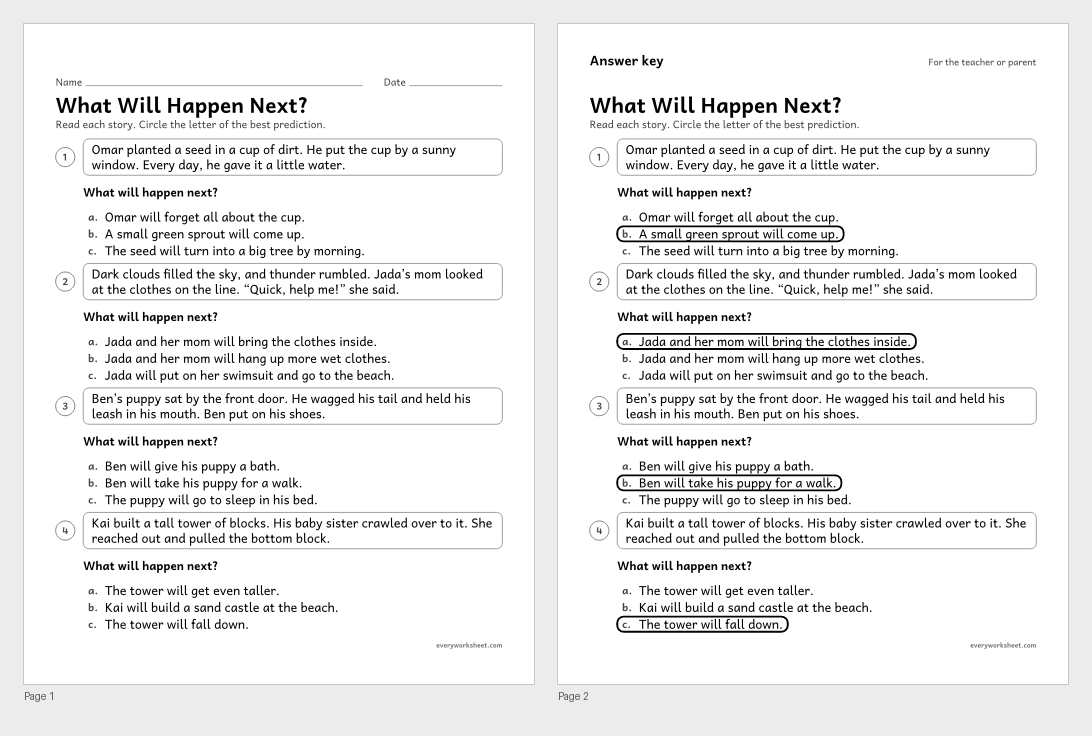
Choosing the prediction that the clues in a short story support
Answer key on page 2
2 pages50 KB
 View all 2 pages
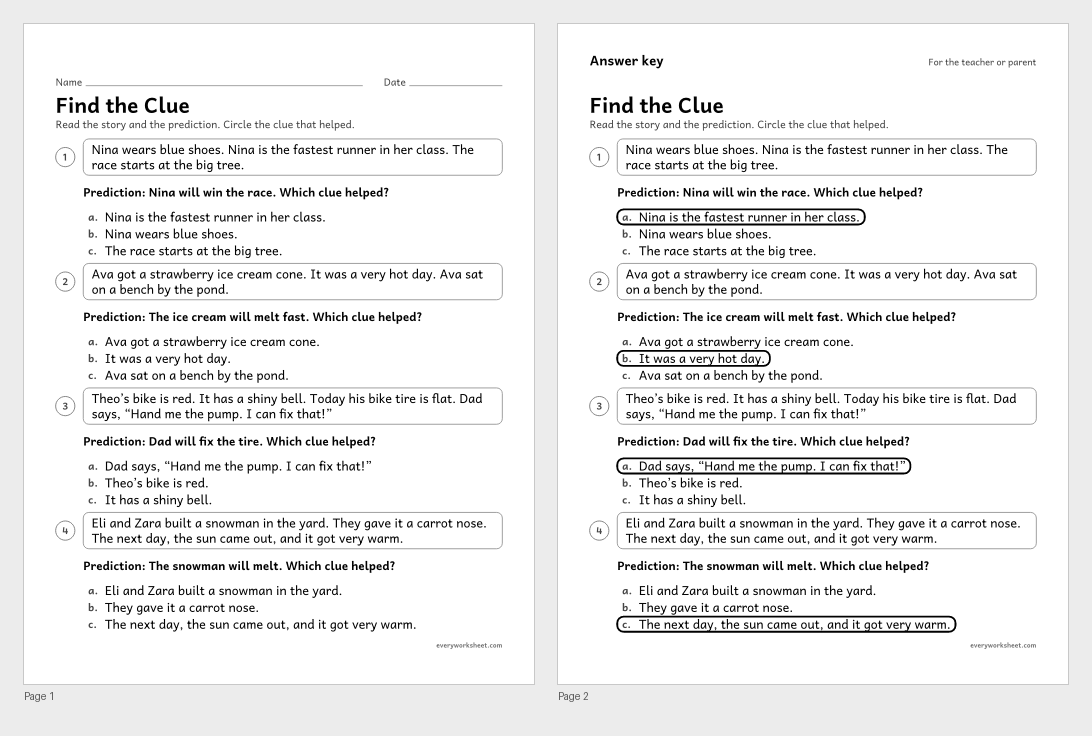
Finding the sentence in a short story that supports a prediction
Answer key on page 2
2 pages51 KB
 View all 2 pages
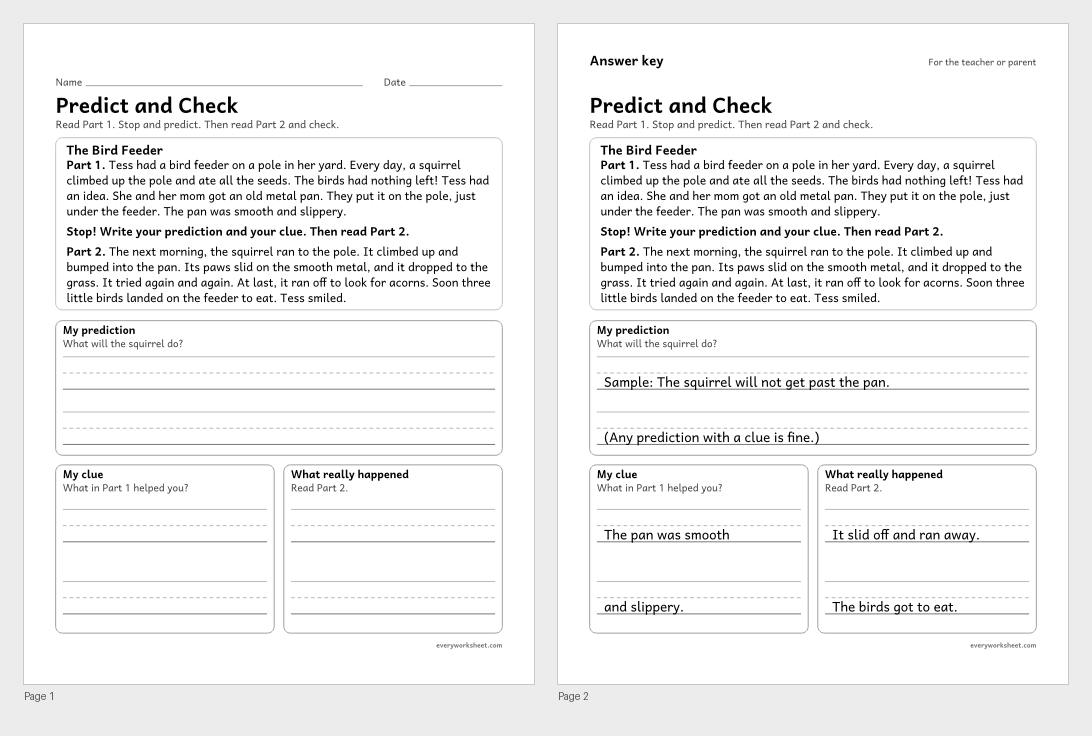
Making a prediction with a clue at a stopping point, then checking it against what happens
Answer key on page 2
2 pages36 KB
 View all 2 pages
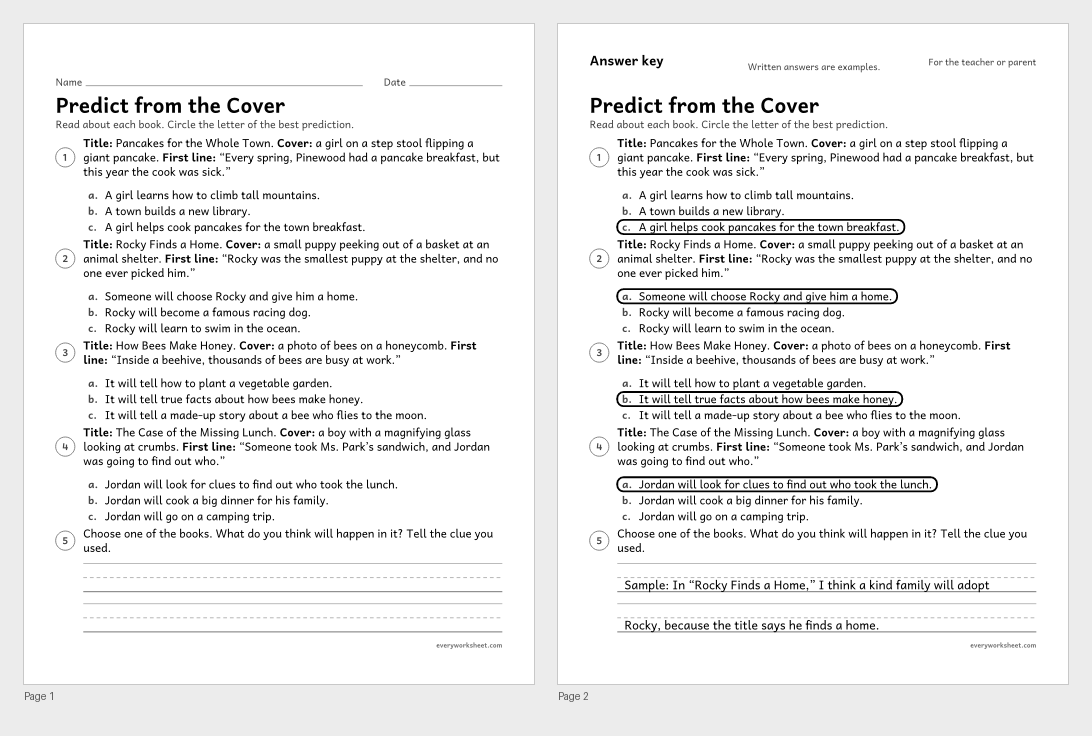
Predicting what a book will be about from its title, cover, and first sentence
Answer key on page 2
2 pages58 KB
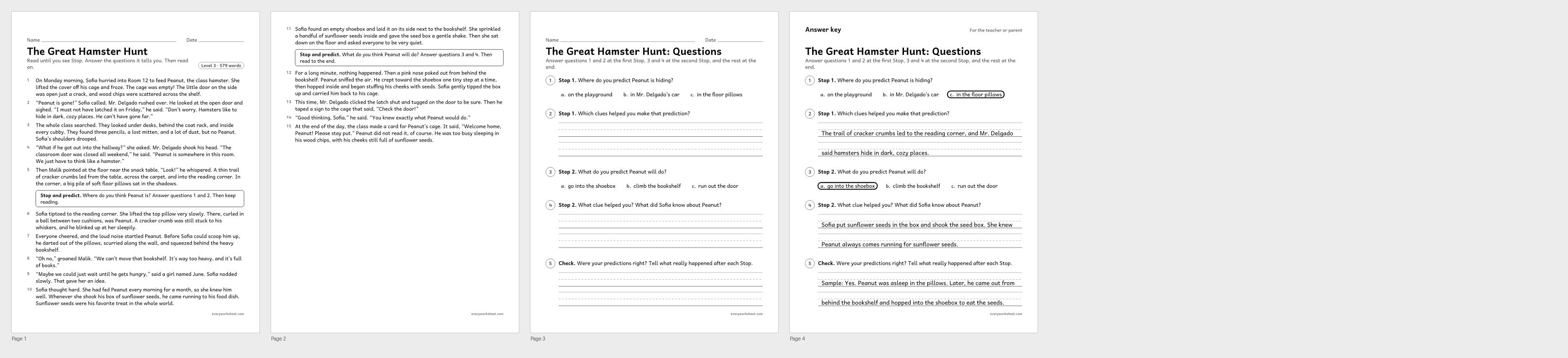 4 pagesView all 4 pages
Stopping to predict with clues, then reading on to check the predictions
Answer key on page 4
4 pages58 KB
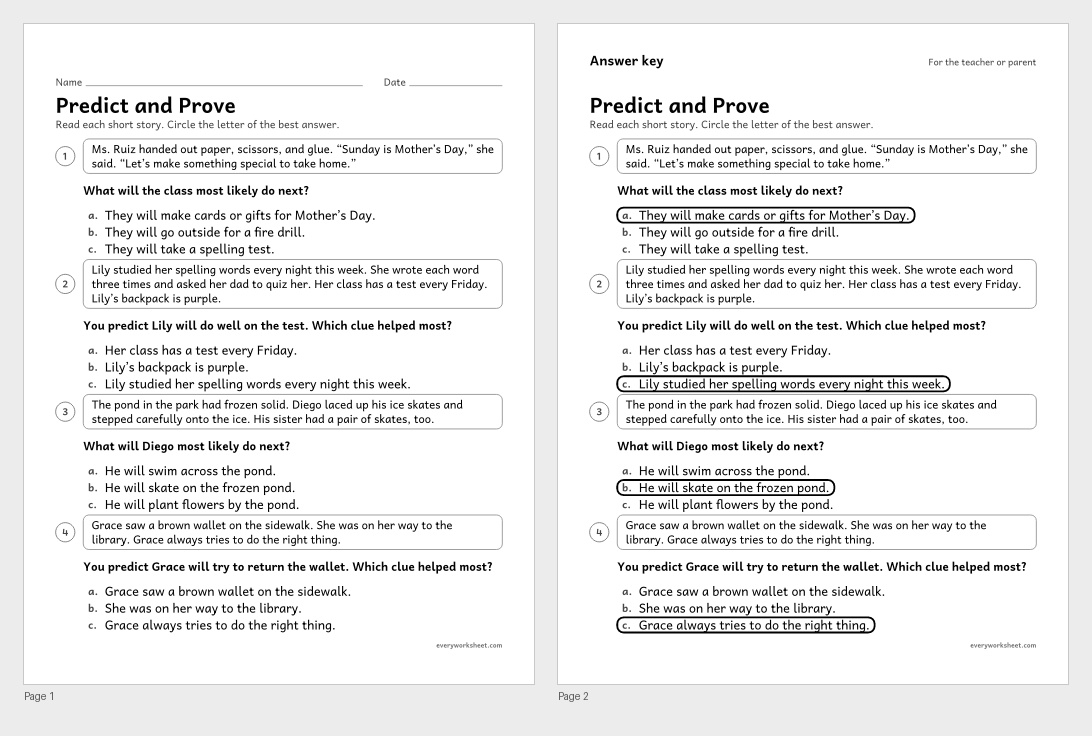 View all 2 pages
Choosing the best-supported prediction and the clue that supports a prediction
Answer key on page 2
2 pages51 KB
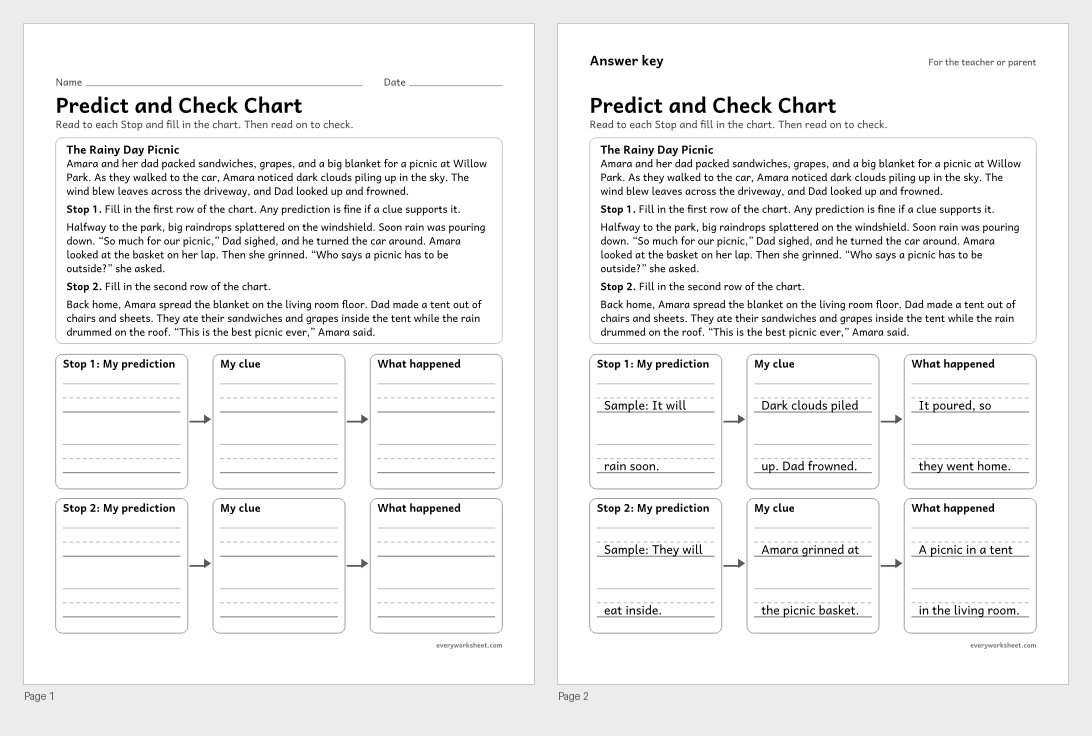 View all 2 pages
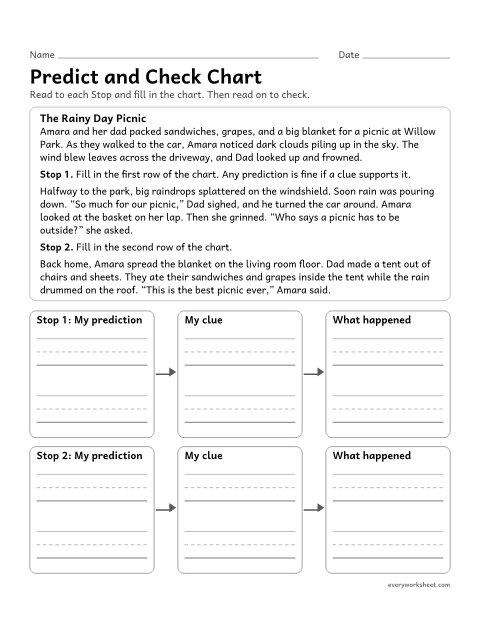
Recording a prediction, its clue, and what really happened at two stopping points in a story
Answer key on page 2
2 pages38 KB
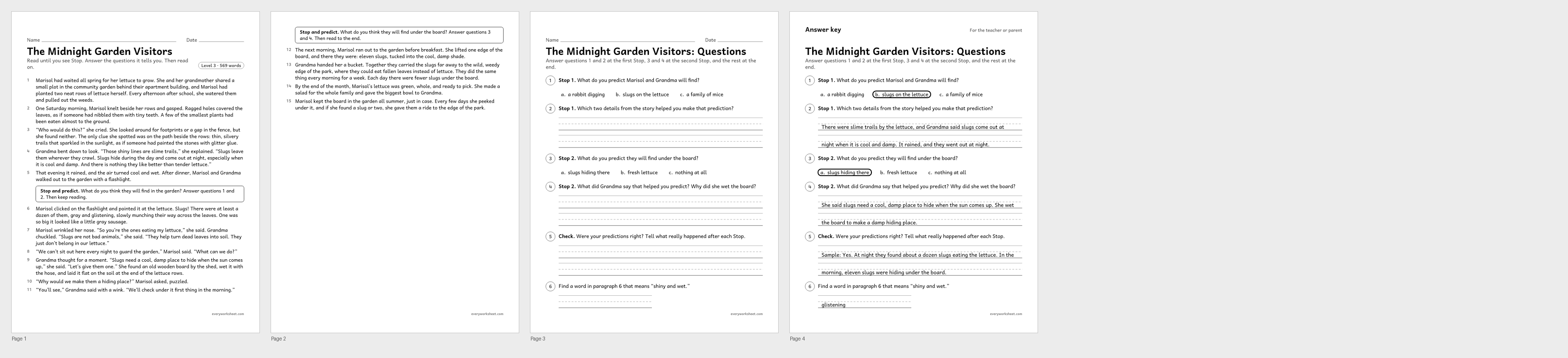 4 pagesView all 4 pages
Making predictions with details at two stopping points, then checking them against the story
Answer key on page 4
4 pages59 KB
 View all 2 pages
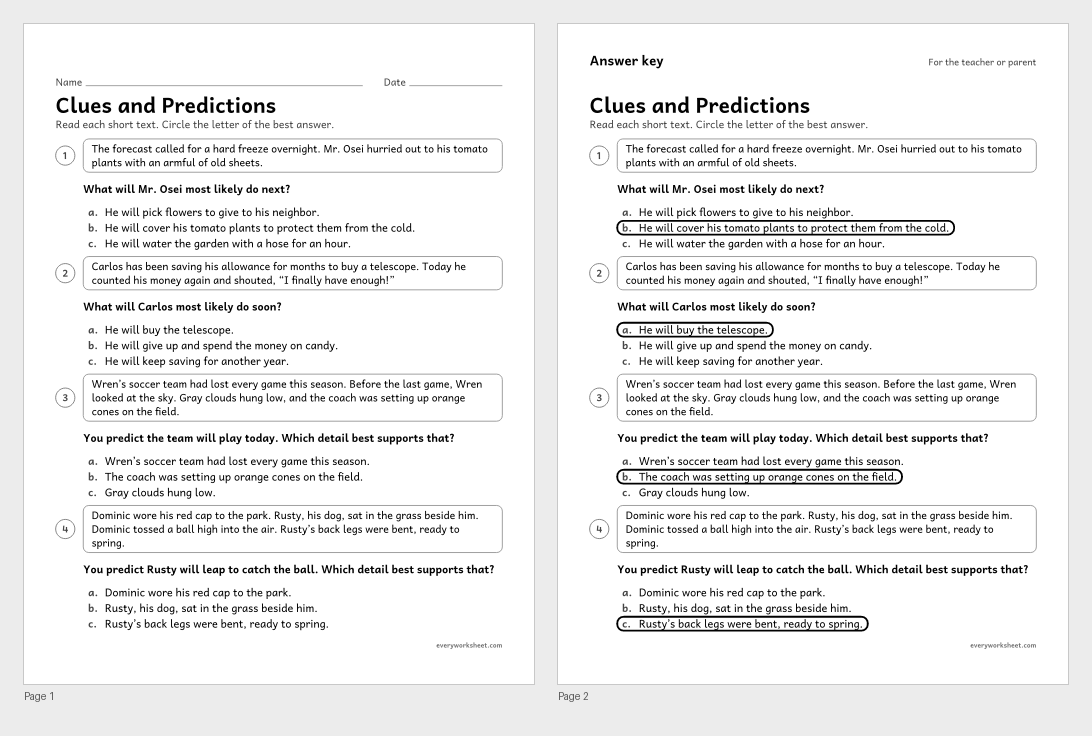
Choosing the prediction best supported by details, and the detail that best supports a prediction
Answer key on page 2
2 pages51 KB
 View all 2 pages
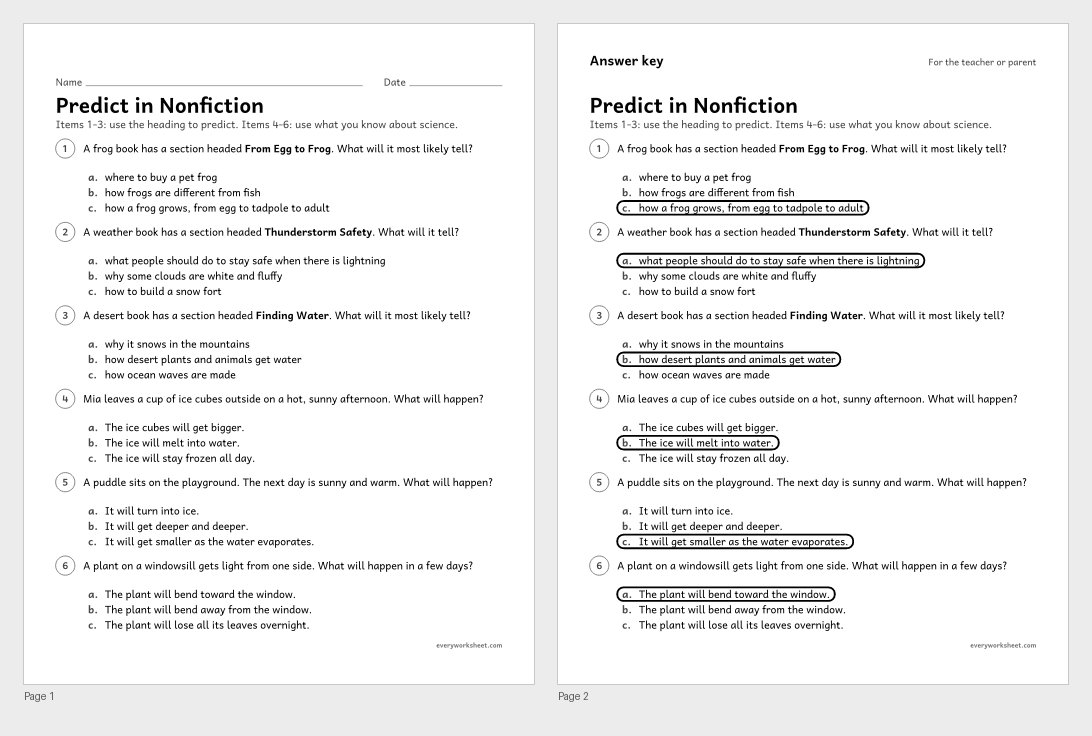
Predicting what a nonfiction section will tell from its heading, and what will happen in a simple science situation
Answer key on page 2
2 pages61 KB
 View all 2 pages
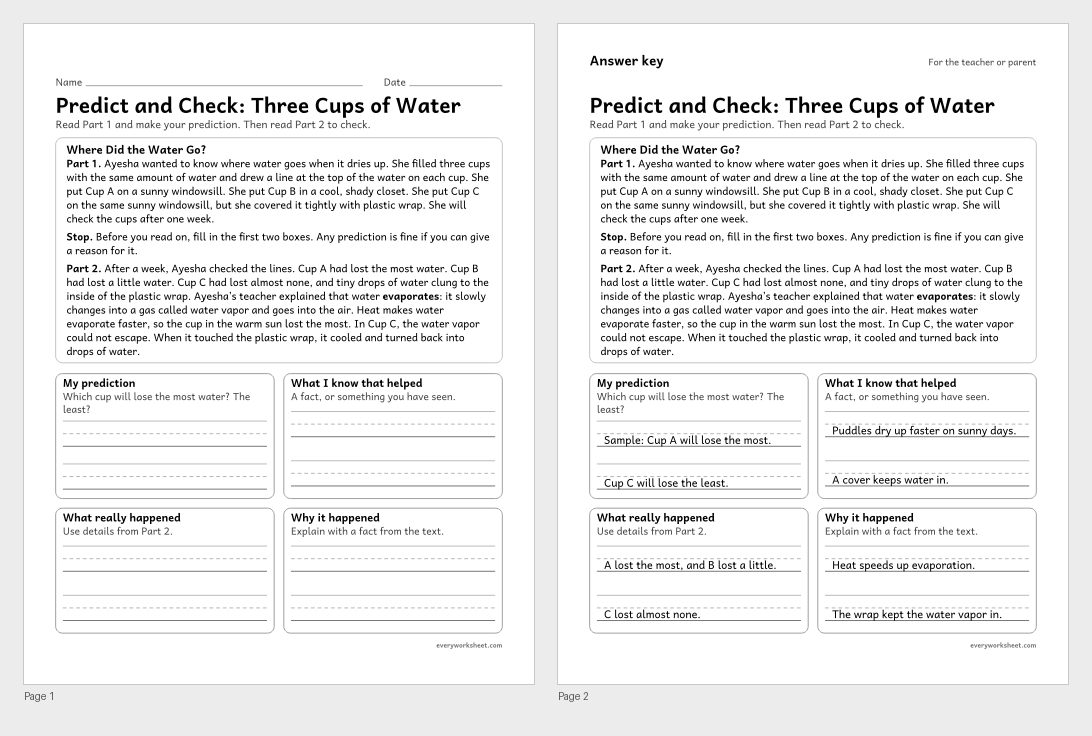
Predicting the result of a simple science test, then checking the prediction against the results and the reason
Answer key on page 2
2 pages39 KB
 4 pagesView all 4 pages
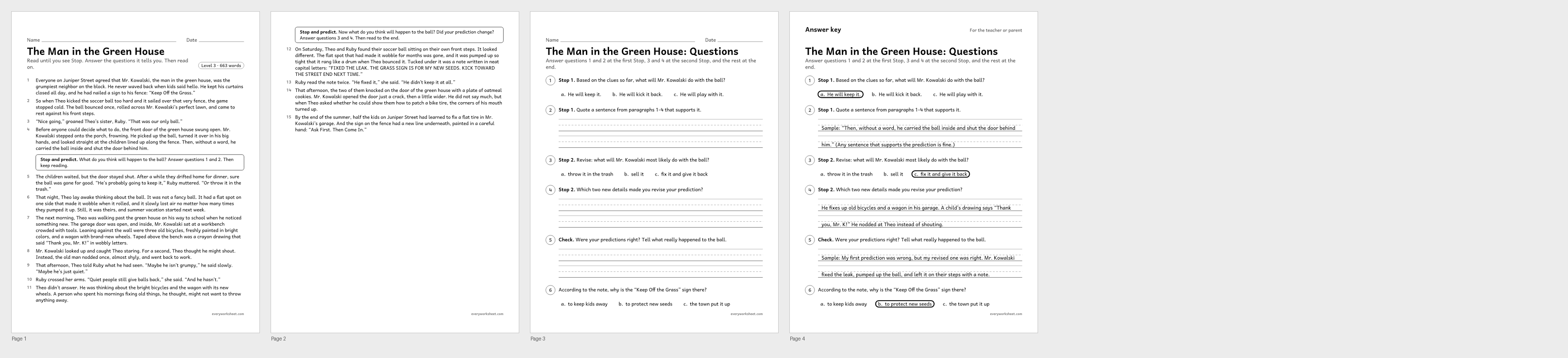
Making, revising, and checking predictions about a character, quoting details from the story
Answer key on page 4
4 pages61 KB
 View all 2 pages
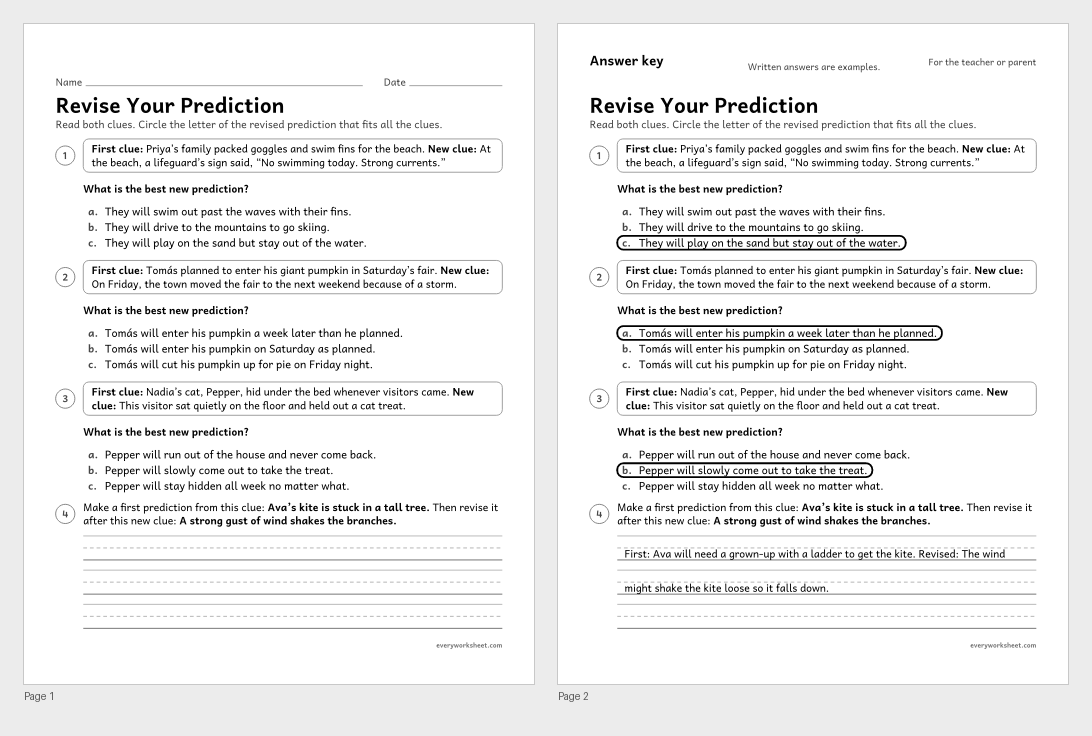
Revising a prediction when a new detail changes what is likely to happen
Answer key on page 2
2 pages51 KB
 View all 2 pages
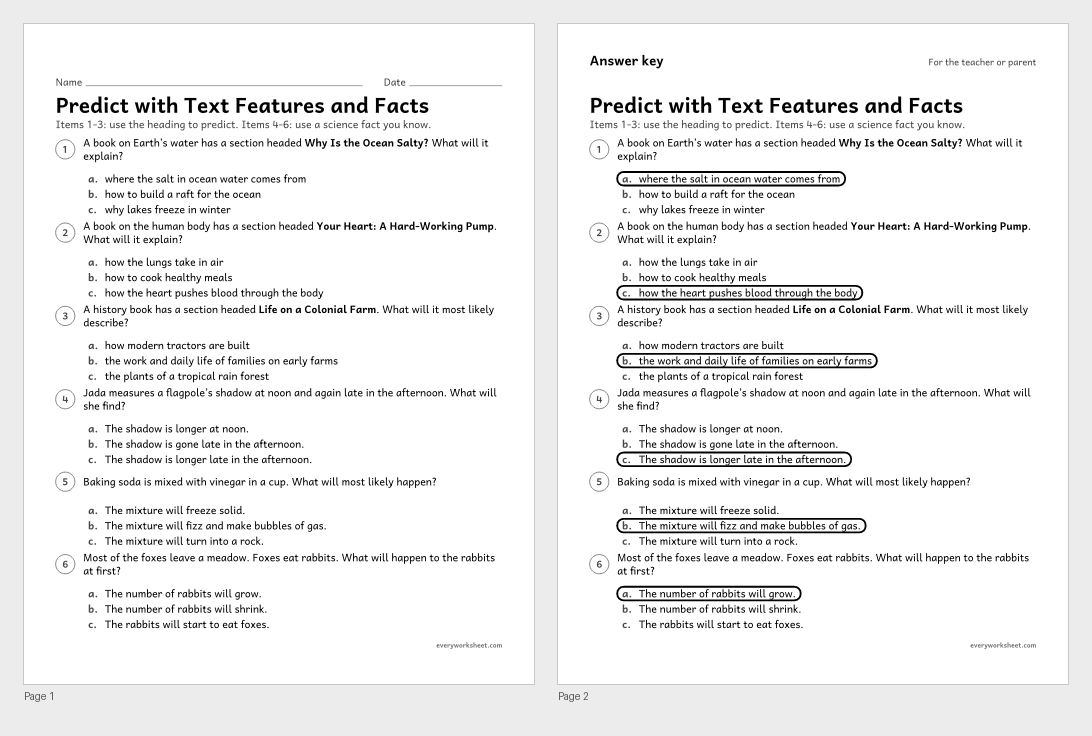
Predicting what a section will explain from its heading, and the result of a science situation from known facts
Answer key on page 2
2 pages62 KB
Print at 100% (actual size) for the cleanest tracing lines.
A prediction is a smart guess about what will happen next, based on clues. Readers find clues in the title, the pictures, and what the characters do and say, and they add what they already know about how things usually go. For example, if a story says, "Dark clouds filled the sky, and thunder rumbled," and a girl grabs her raincoat, a good prediction is that it will rain soon. The clue is the dark clouds and thunder; what you know is that storms bring rain.
Predicting keeps children thinking while they read. They read ahead to find out whether they were right, and when new clues show up, they change their prediction to fit. A prediction that turns out wrong is not a mistake, as long as a clue supported it. Good readers check and revise all the way through a story.
These worksheets start in 2nd grade with an anchor chart, short "What will happen next?" stories, and a hunt for the clue that helped. In 3rd and 4th grade, children predict from book covers and first lines, read longer stop-and-predict stories in parts, and fill in predict-and-check charts. Older readers also predict in nonfiction, from headings and from simple science situations, and 5th graders practice revising a prediction when a new clue changes the picture.
Every story and text was written for these pages, and every sheet has an answer key. Where children write their own predictions, the key gives a sample and accepts any prediction that a clue from the text supports.
CCSS.ELA-LITERACY.RI.4.1Refer to details and examples in a text when explaining what the text says explicitly and when drawing inferences from the text.CCSS.ELA-LITERACY.RI.4.3Explain events, procedures, ideas, or concepts in a historical, scientific, or technical text, including what happened and why, based on specific information in the text.CCSS.ELA-LITERACY.RI.5.1Quote accurately from a text when explaining what the text says explicitly and when drawing inferences from the text.CCSS.ELA-LITERACY.RL.2.1Ask and answer such questions as who, what, where, when, why, and how to demonstrate understanding of key details in a text.CCSS.ELA-LITERACY.RL.3.1Ask and answer questions to demonstrate understanding of a text, referring explicitly to the text as the basis for the answers.CCSS.ELA-LITERACY.RL.4.1Refer to details and examples in a text when explaining what the text says explicitly and when drawing inferences from the text.CCSS.ELA-LITERACY.RL.5.1Quote accurately from a text when explaining what the text says explicitly and when drawing inferences from the text.A prediction is a smart guess about what will happen next in a story or what a text will tell. Readers make predictions by putting together clues from the text, such as the title, pictures, and what characters do and say, with what they already know.
That is fine. A good prediction is one that a clue supports, not one that always comes true. The important part is checking it while reading and changing it when new clues appear. Our keys give sample predictions and accept any prediction backed by a clue.
Both use clues plus what you know. An inference figures out something the author does not say about right now, like how a character feels. A prediction looks ahead to what will happen next or what a text will tell.
Yes. Readers predict what a section will explain from its heading, and what will happen in a science situation from facts they know, such as ice melting in the sun. The 4th and 5th grade pages practice both.