 View larger
Mixtures and Solutions Worksheets
What mixtures and solutions are, how to separate them, what dissolves and how temperature changes dissolving.
Download the mixtures and solutions worksheets
Mixtures and solutions
 View larger
 View all 2 pages
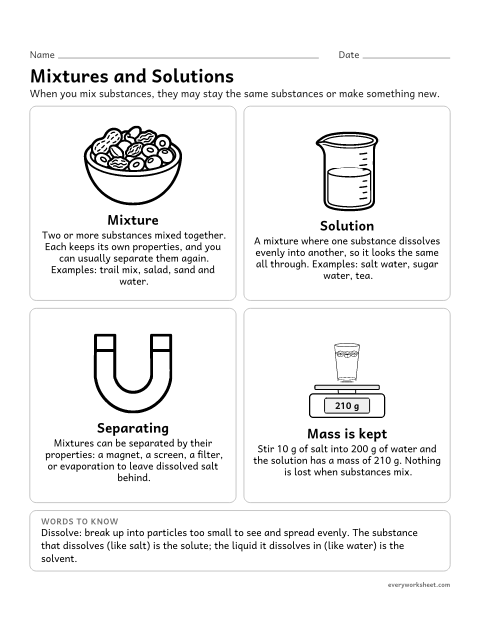
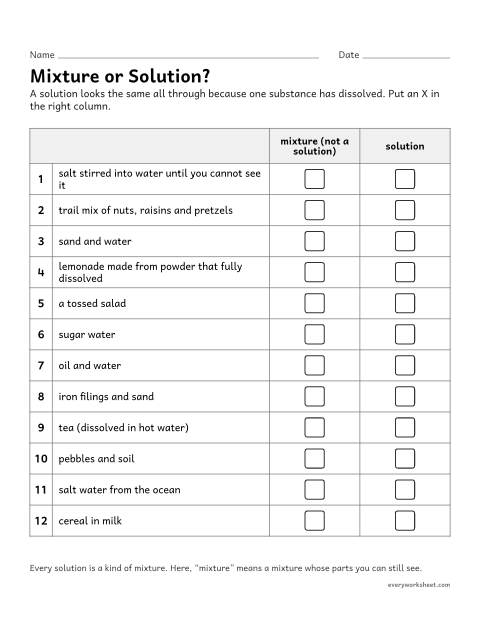
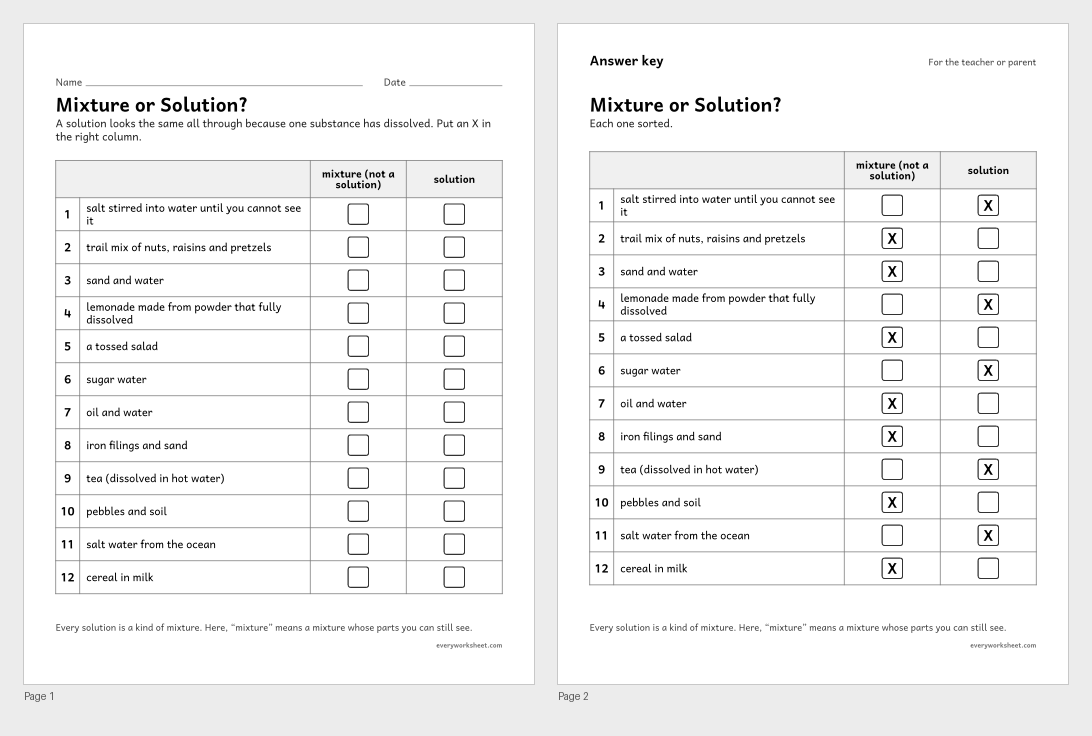
Mixture or solution sort worksheet
Classifying mixtures and solutions
Answer key on page 2
2 pages50 KB
Separate and dissolve
 View all 2 pages
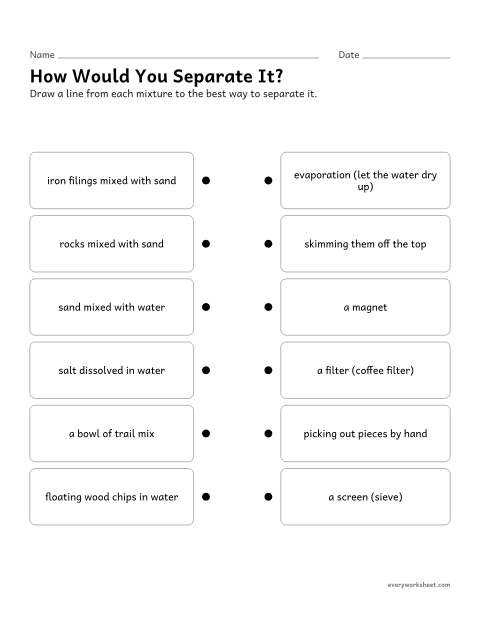
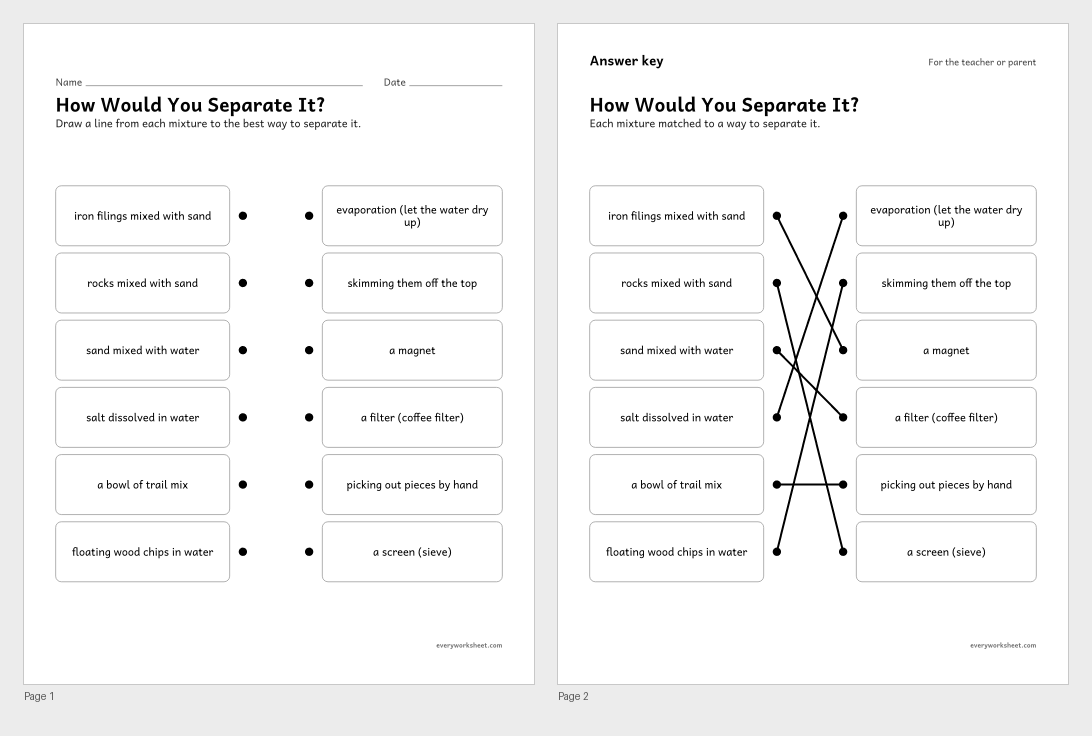
Separating mixtures Worksheet: which Tool?
Using properties to choose a way to separate a mixture
Answer key on page 2
2 pages29 KB
 View all 2 pages
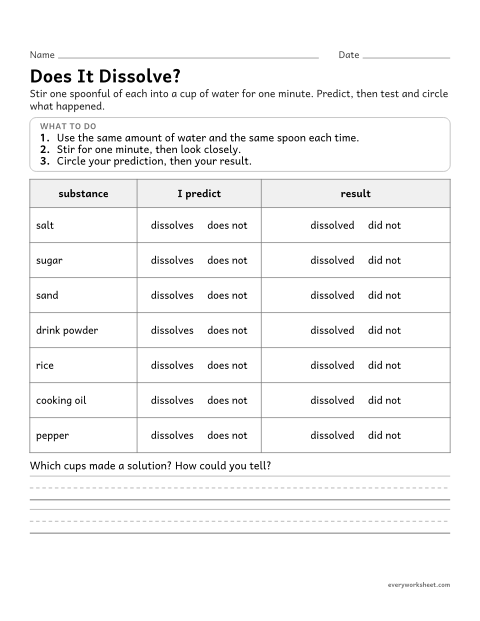
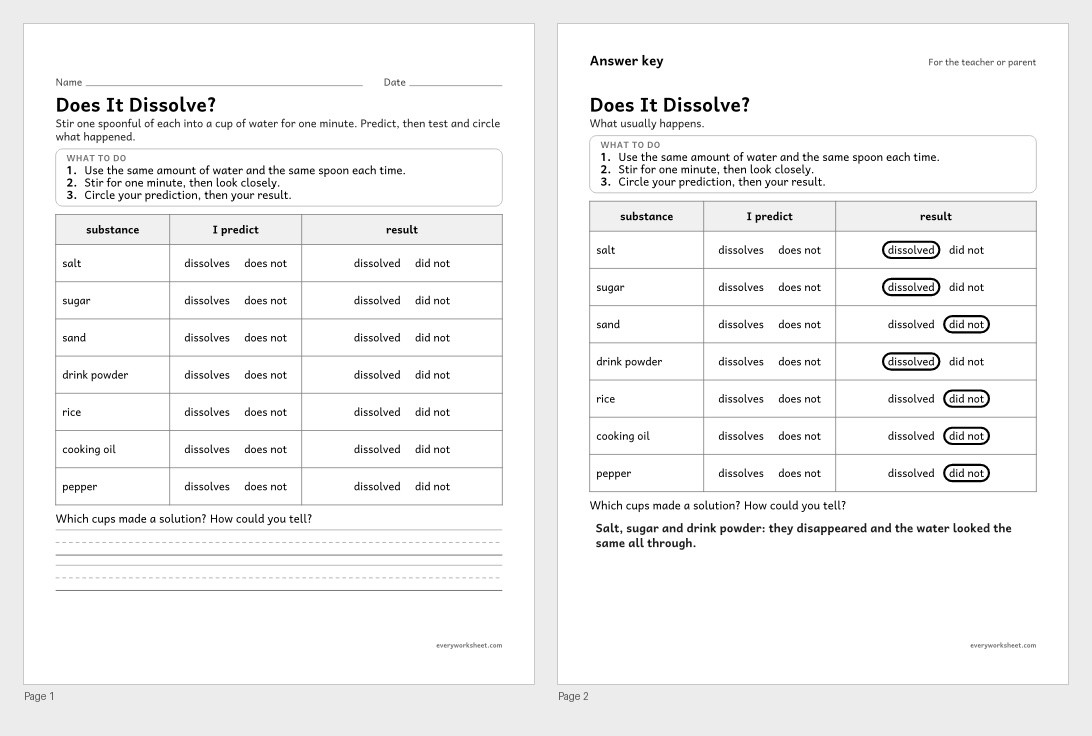
Does it Dissolve? solubility investigation
Investigating which substances dissolve in water
Answer key on page 2
2 pages44 KB
 View all 2 pages
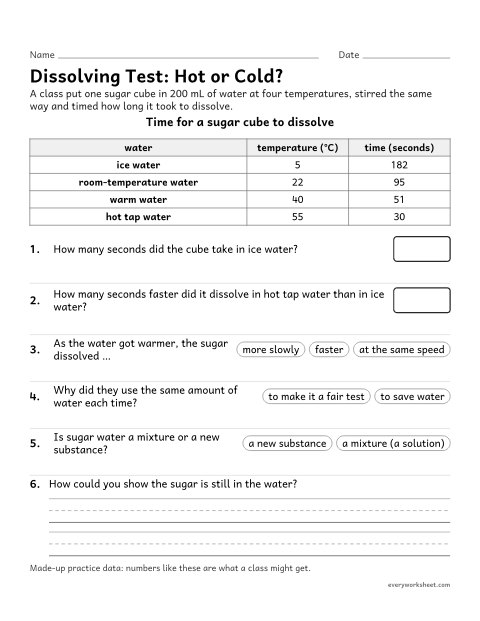
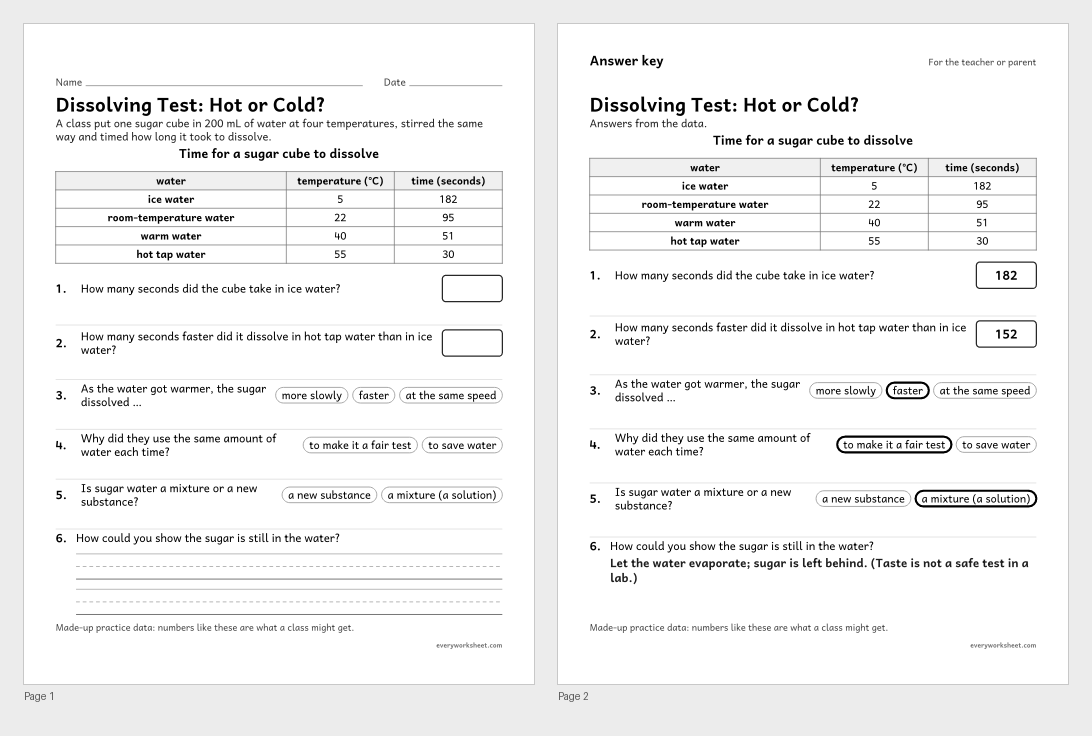
Dissolving Experiment: does temperature Matter?
Analyzing data from a dissolving investigation
Answer key on page 2
2 pages50 KB
Read and review
 View all 2 pages
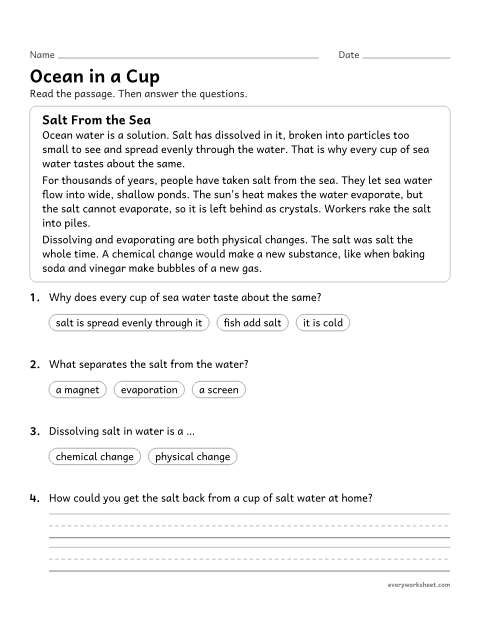
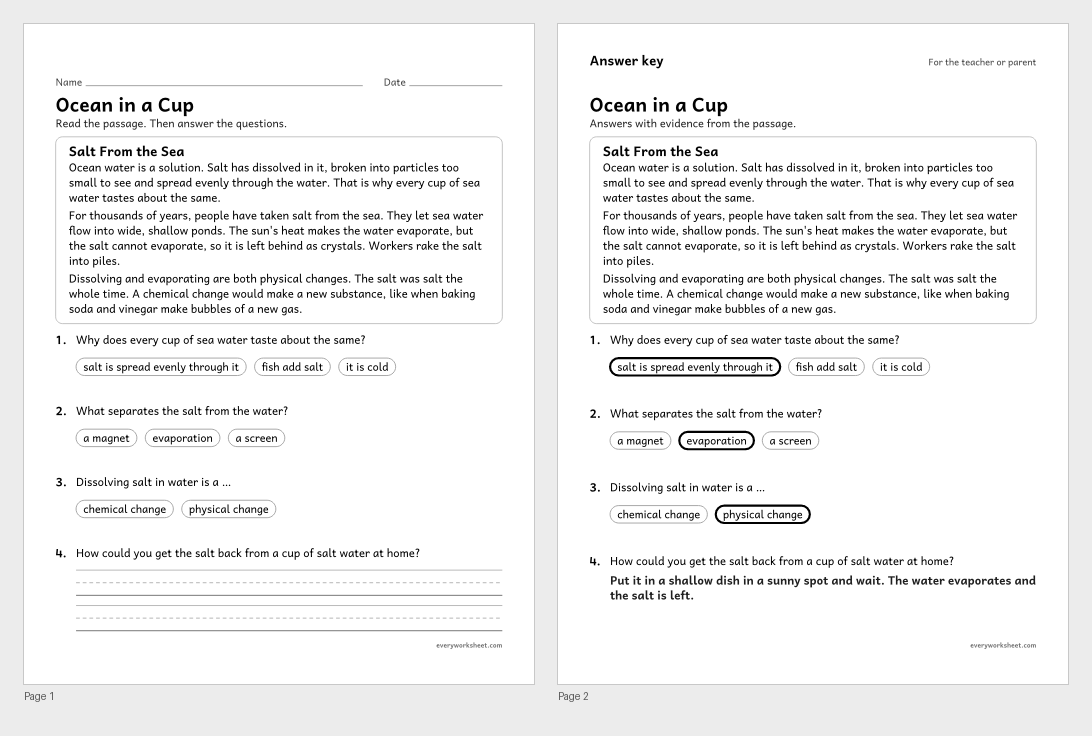
Mixtures and solutions reading passage for 5th grade
Explaining how solutions form and how they can be separated
Answer key on page 2
2 pages38 KB
 View all 2 pages
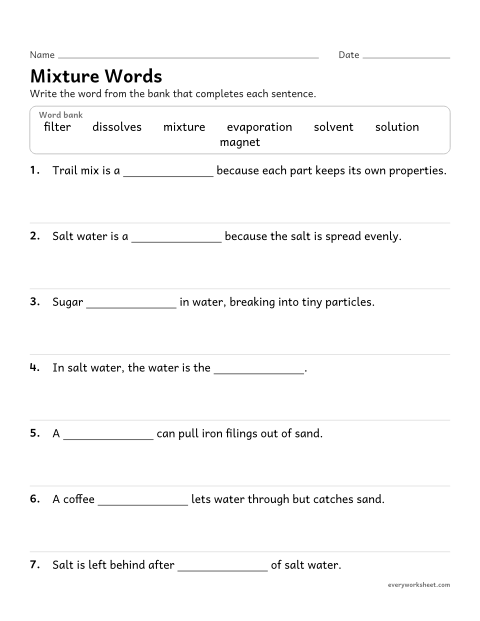
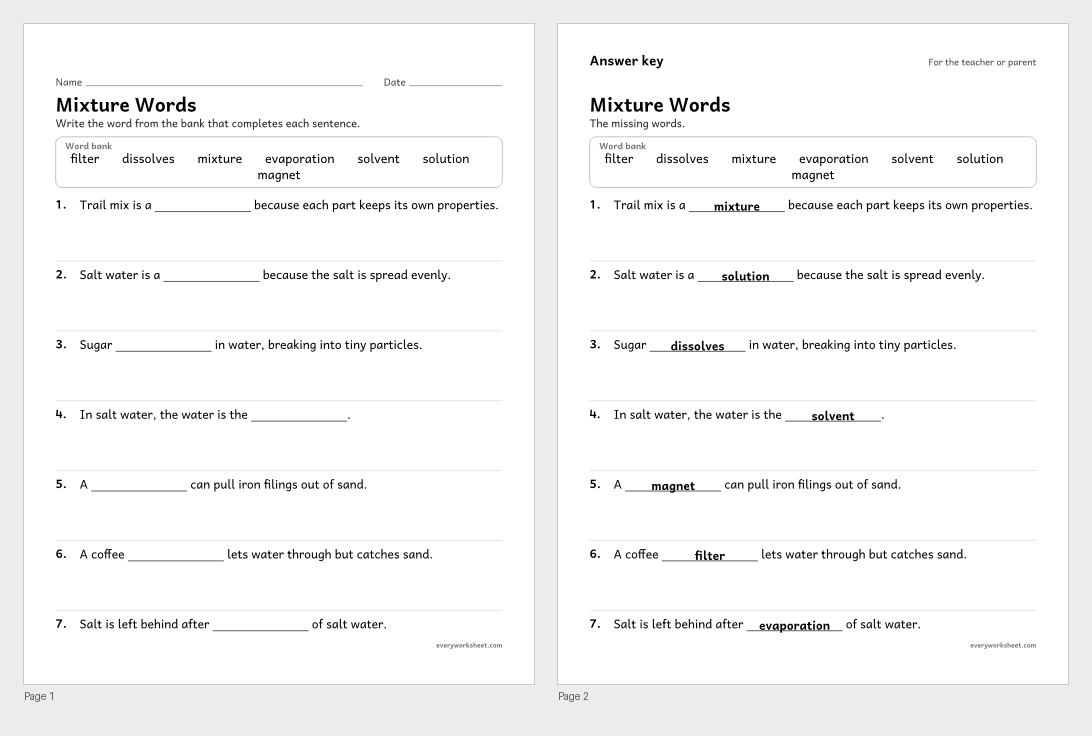
Mixtures and solutions vocabulary worksheet
Using mixtures and solutions vocabulary in context
Answer key on page 2
2 pages38 KB
 View all 2 pages
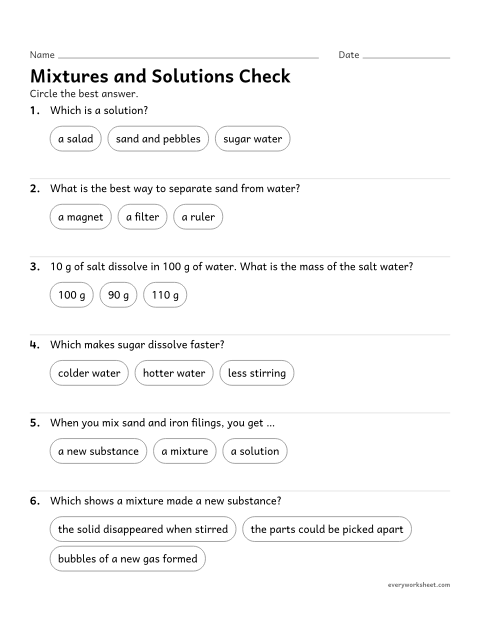
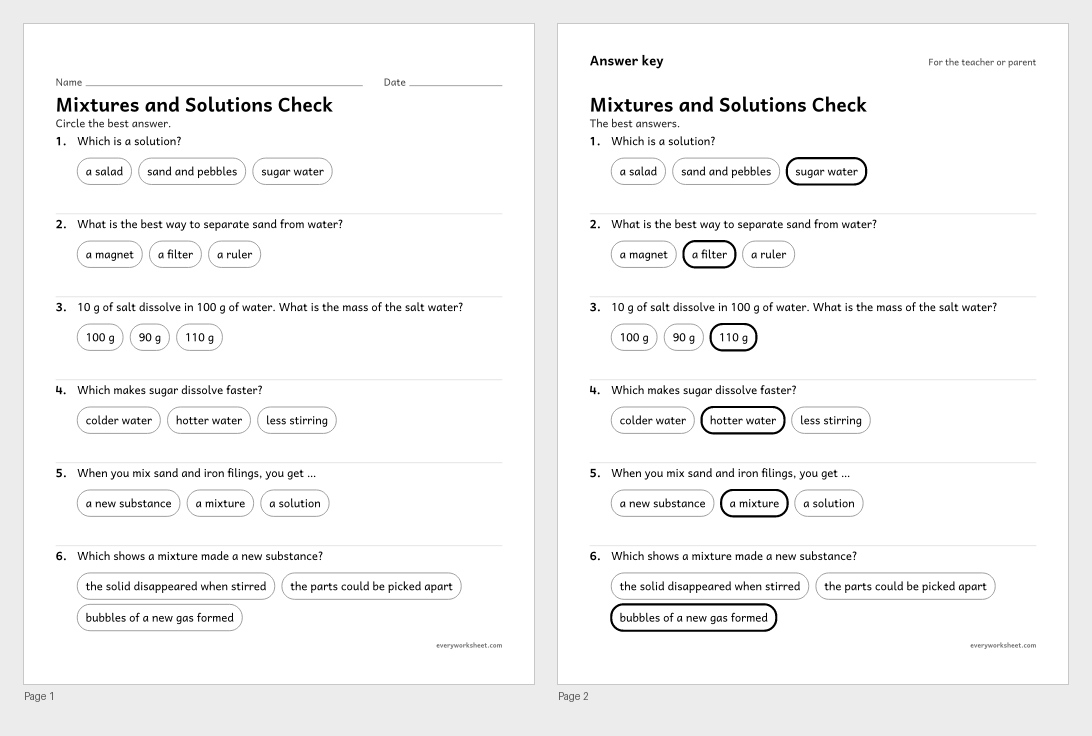
Mixtures and solutions quiz for 5th grade
Reviewing mixtures, solutions and how to separate them
Answer key on page 2
2 pages39 KB
Print at 100% (actual size) for the cleanest tracing lines.
About these mixtures and solutions worksheets
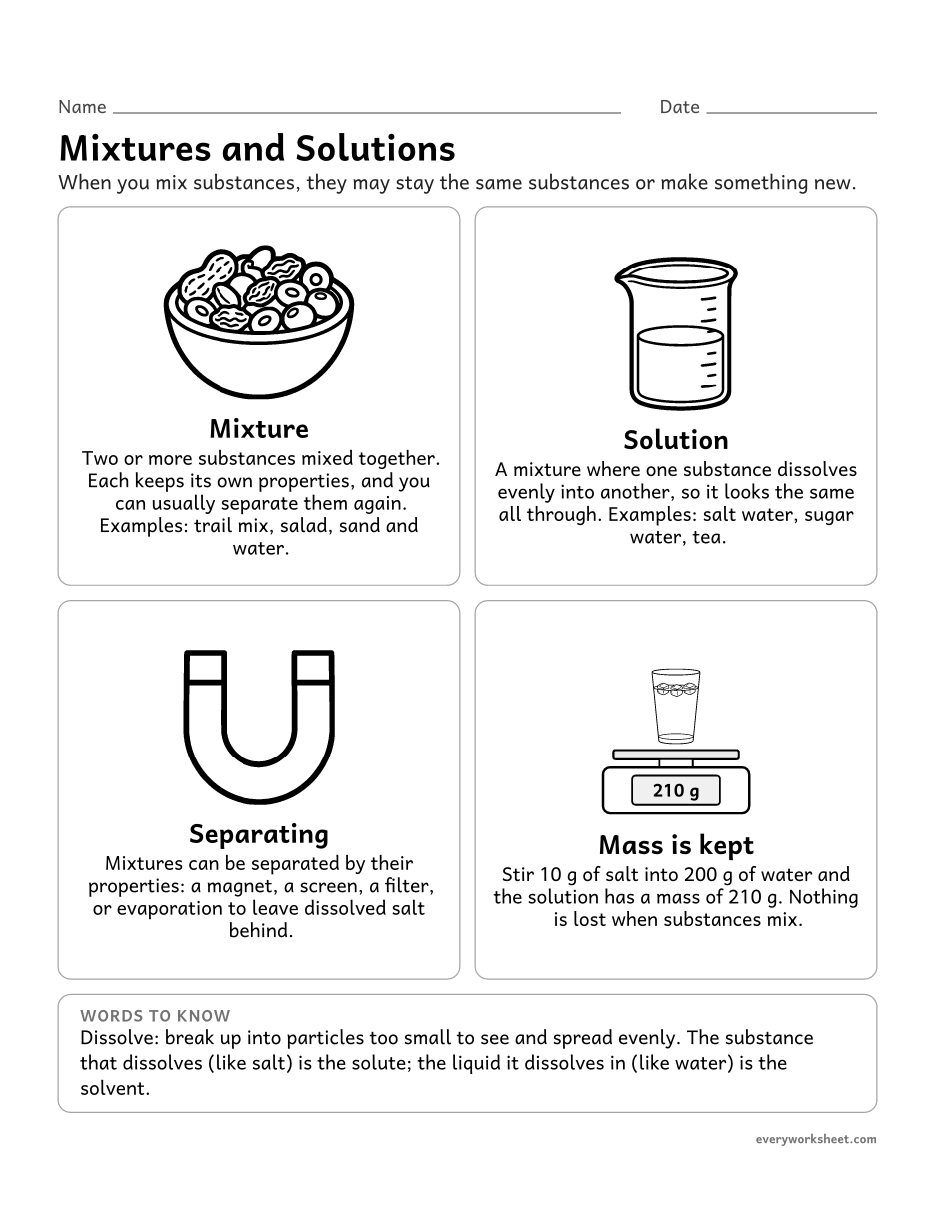
A mixture is two or more substances mixed together, each keeping its own properties. A solution is a special mixture where one substance dissolves evenly into another, like salt in water. Mixing substances can also make a new substance, and fifth graders learn to tell the difference.
These mixtures and solutions worksheets start with a poster and a mixture or solution sort. Children choose tools to separate mixtures, investigate what dissolves, analyze data on dissolving in hot and cold water, read how salt is taken from the sea and finish with vocabulary and a quiz.
Every page is black and white, prints on US Letter or A4, and every page with right answers has an answer key on page 2.
Standards
NGSS 5-PS1-4Conduct an investigation to determine whether the mixing of two or more substances results in new substances.NGSS 5-PS1-3Make observations and measurements to identify materials based on their properties.CCSS.ELA-LITERACY.RI.5.3Explain the relationships or interactions between two or more individuals, events, ideas, or concepts in a historical, scientific, or technical text based on specific information in the text.CCSS.ELA-LITERACY.RI.5.4Determine the meaning of general academic and domain-specific words and phrases in a text relevant to a grade 5 topic or subject area.
How to use them
- Make trail mix and salt water before the poster. Ask which one you could pick apart by hand.
- Run the does-it-dissolve investigation with clear cups and stirring spoons.
- Use the dissolving data page after a quick hot-and-cold water demonstration.
- Finish with the reading passage, vocabulary and quiz.
Teaching tips
- Every solution is a mixture, but not every mixture is a solution. A solution looks the same all through.
- Dissolving is a physical change: the salt is still salt, and evaporation gets it back.
- Total mass stays the same when substances mix: 10 g of salt in 200 g of water makes 210 g of salt water.
- The dissolving data are made-up practice numbers and are labeled that way on the page.
Questions teachers and parents ask
What is the difference between a mixture and a solution?
In a mixture each part keeps its properties and can often be seen, like trail mix. In a solution one substance dissolves evenly into another, like sugar water, so it looks the same all through.
How can you separate a mixture?
Use the parts' properties: a magnet for iron filings, a screen for rocks, a filter for sand in water, and evaporation to get salt back from salt water.
Does dissolving make a new substance?
No. Dissolving is a physical change. Letting the water evaporate leaves the same salt or sugar behind.