 View larger
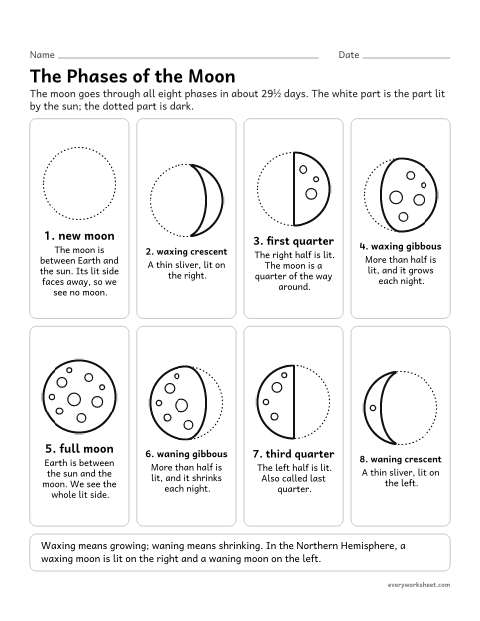
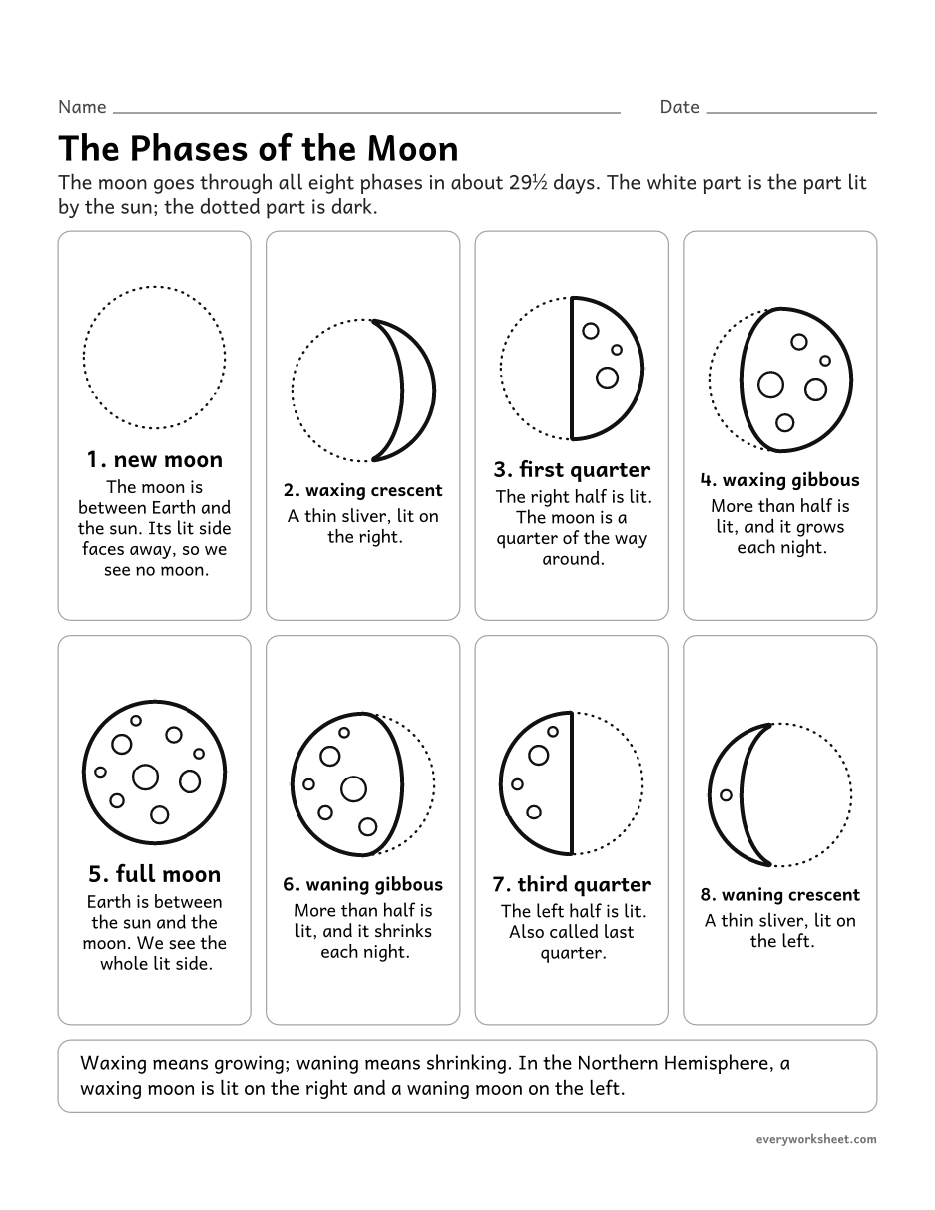
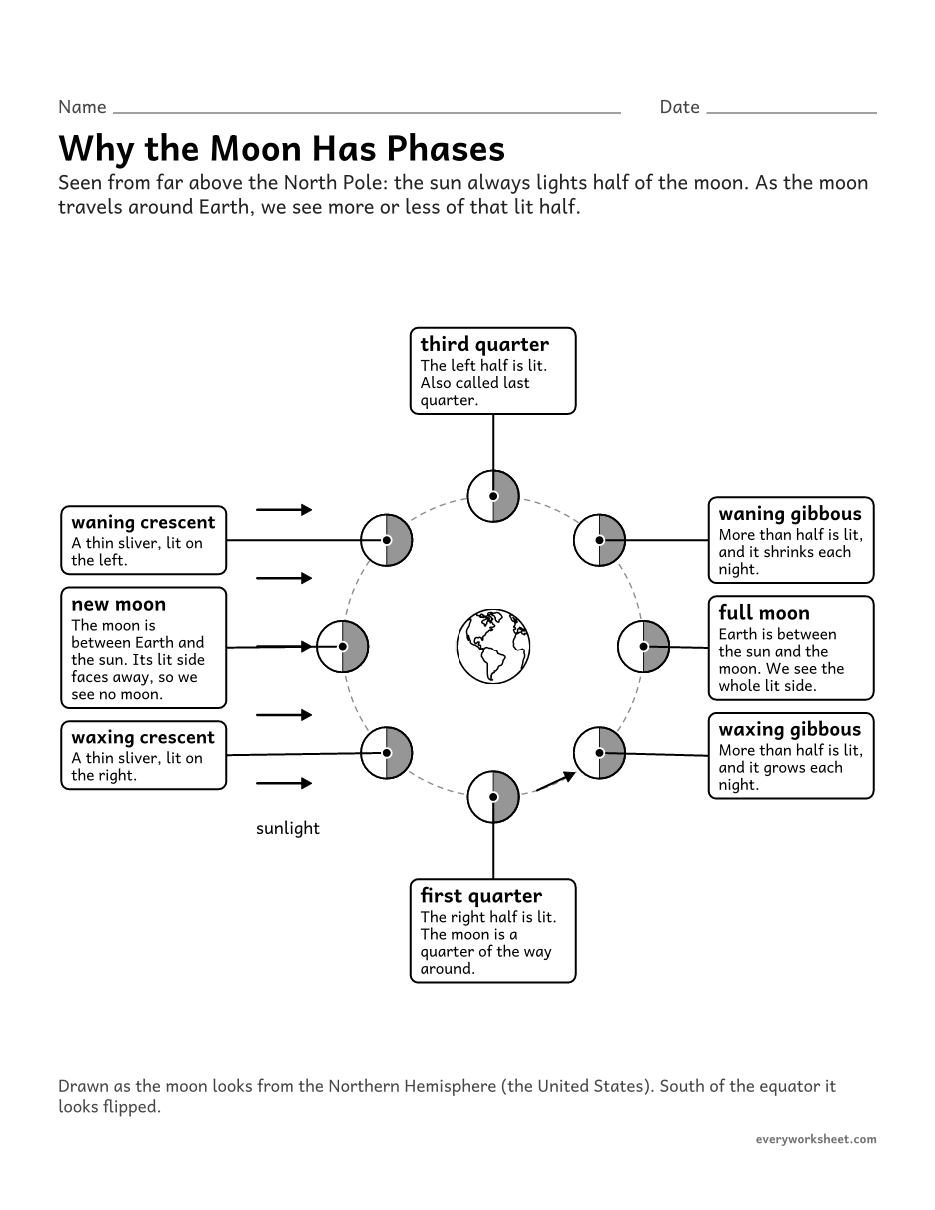
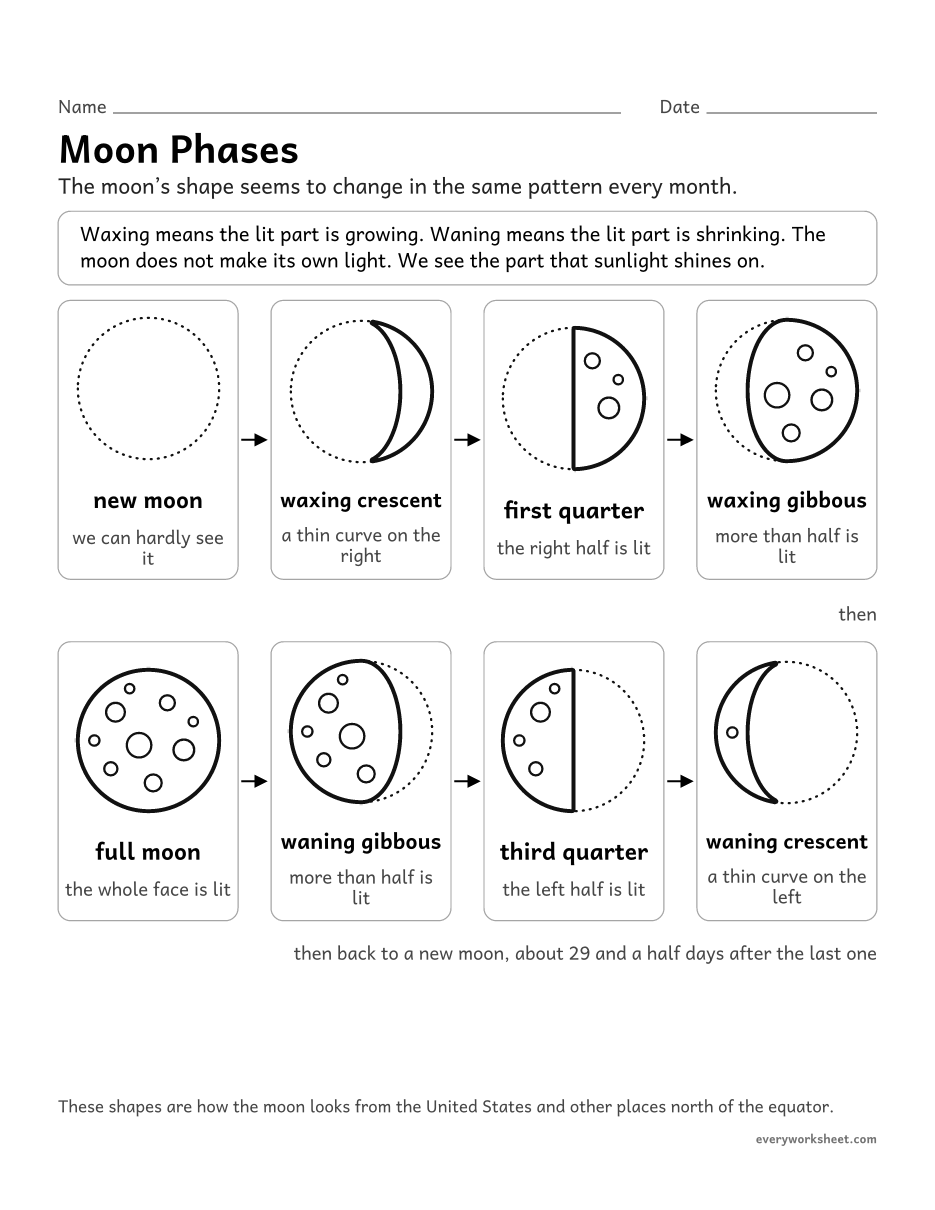
Moon phases Chart: the 8 phases of the moon
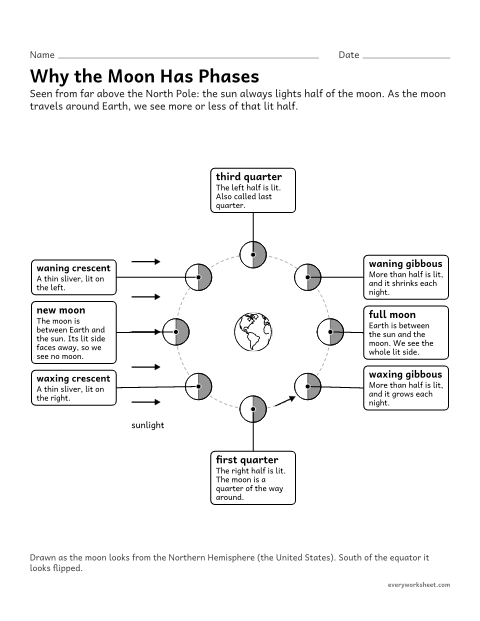
Naming the eight phases of the moon in order
1 page51 KB
The eight phases of the moon in order, why they happen, waxing and waning, a 30-night moon journal, a hands-on cookie model, and simpler pages for 1st grade.
View largerNaming the eight phases of the moon in order
1 page51 KB
 View larger
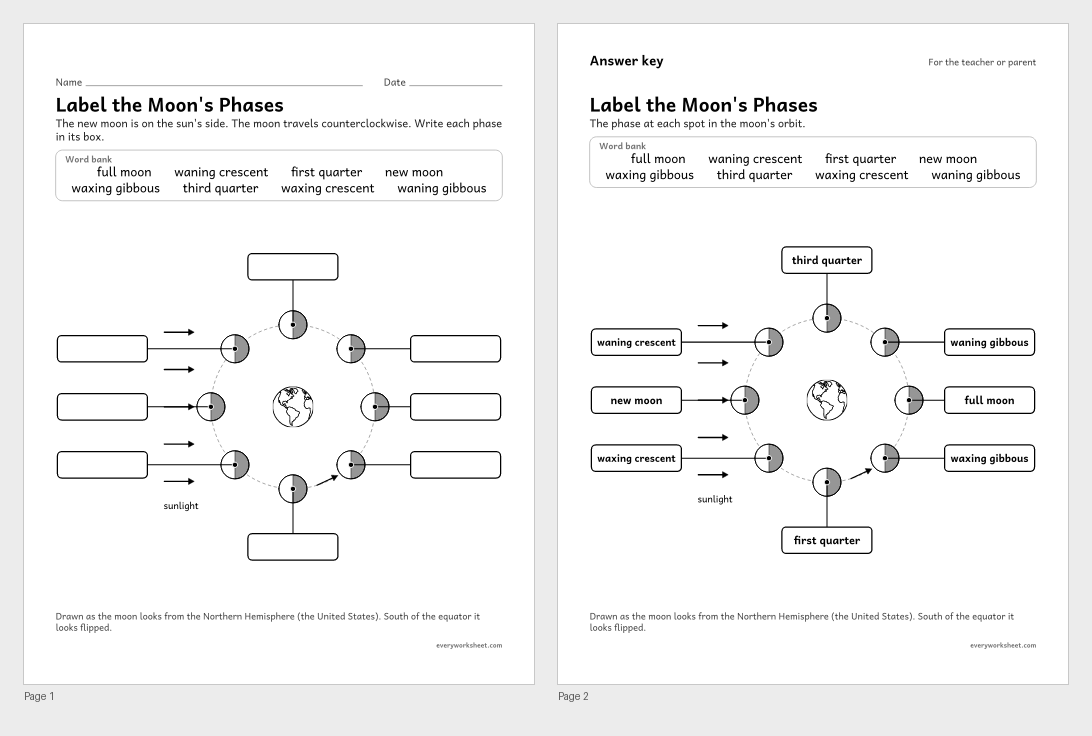
Using a model to explain the phases of the moon
1 page44 KB
 View all 2 pages
Using a model to explain the phases of the moon
Answer key on page 2
2 pages57 KB
 View all 2 pages
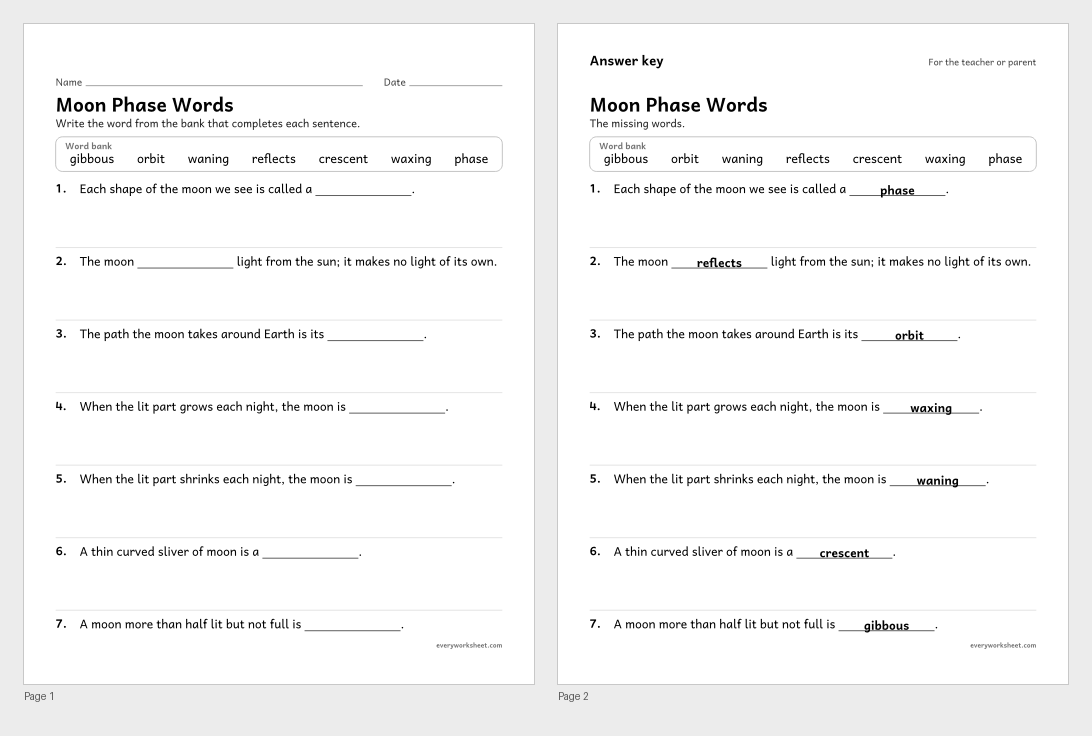
Using vocabulary for the phases of the moon
Answer key on page 2
2 pages38 KB
 View all 2 pages
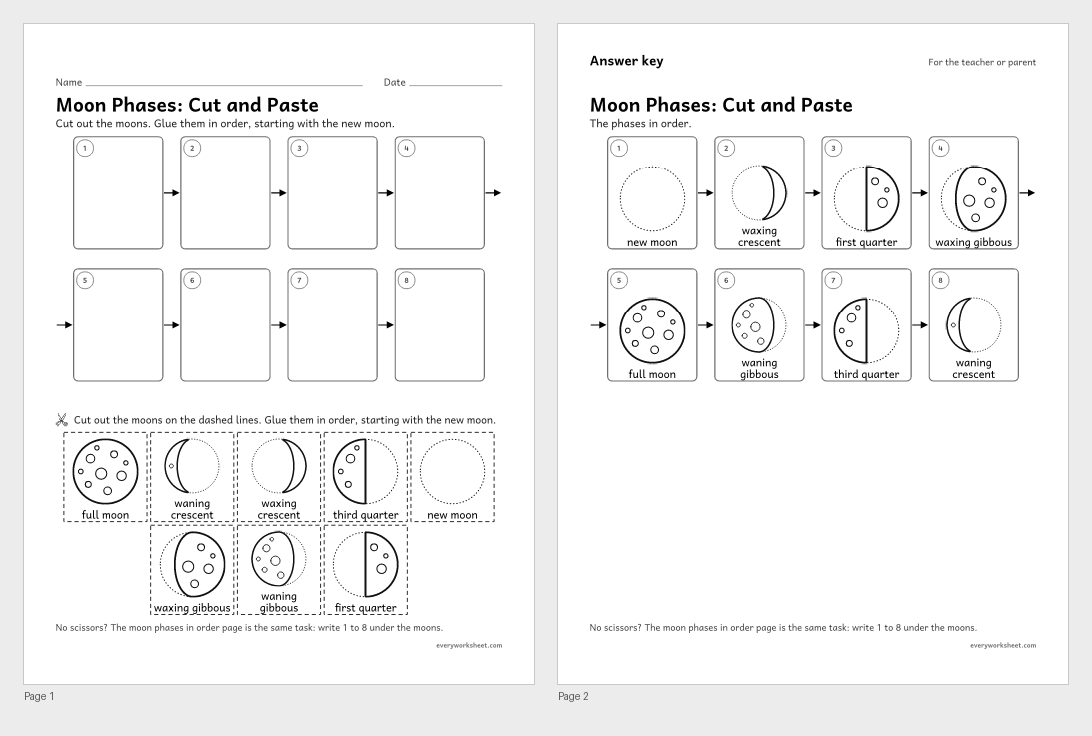
Ordering the phases of the moon
Answer key on page 2
2 pages107 KB
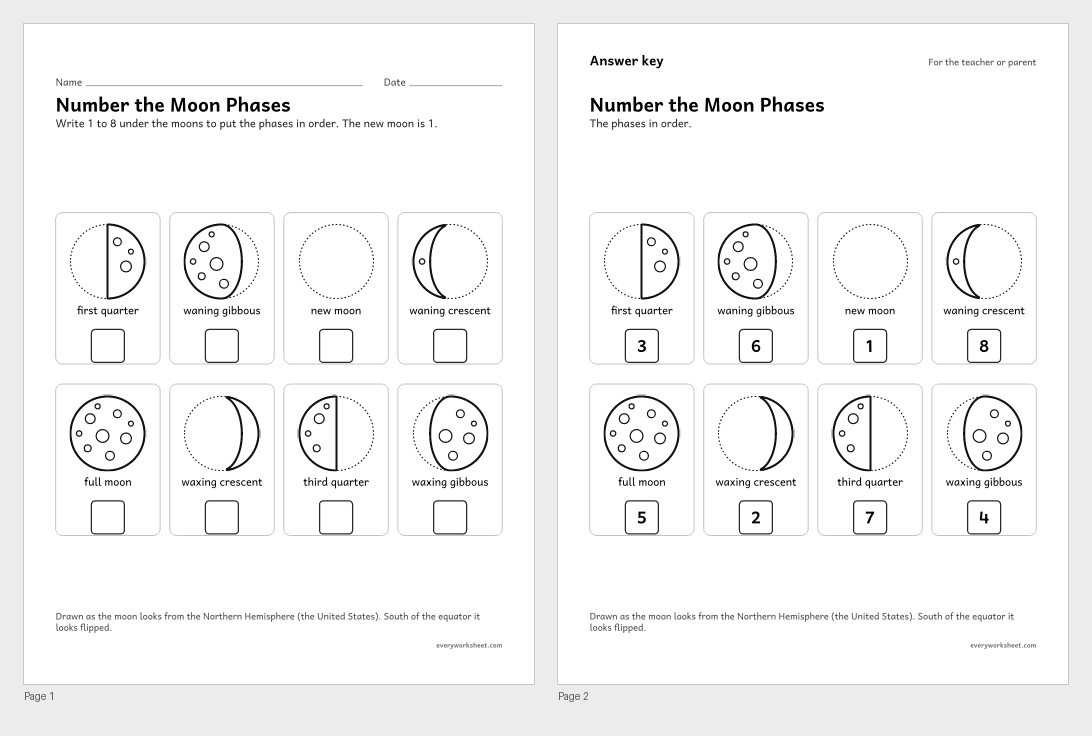 View all 2 pages
Ordering the phases of the moon
Answer key on page 2
2 pages73 KB
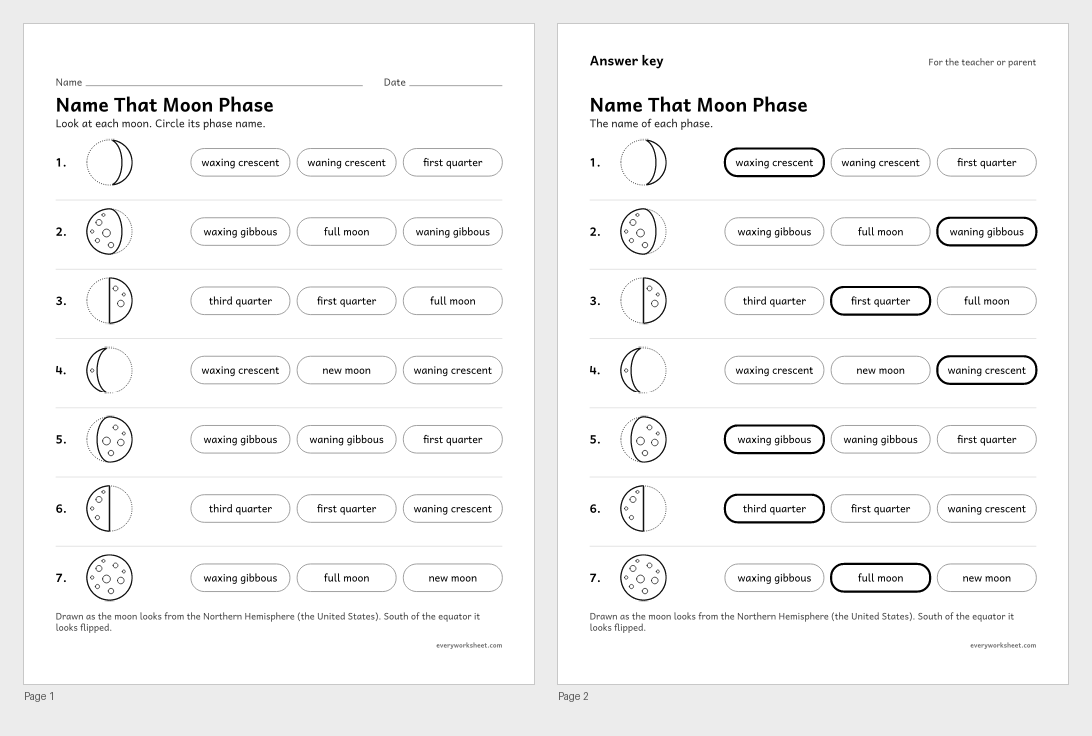 View all 2 pages
Identifying the phases of the moon
Answer key on page 2
2 pages81 KB
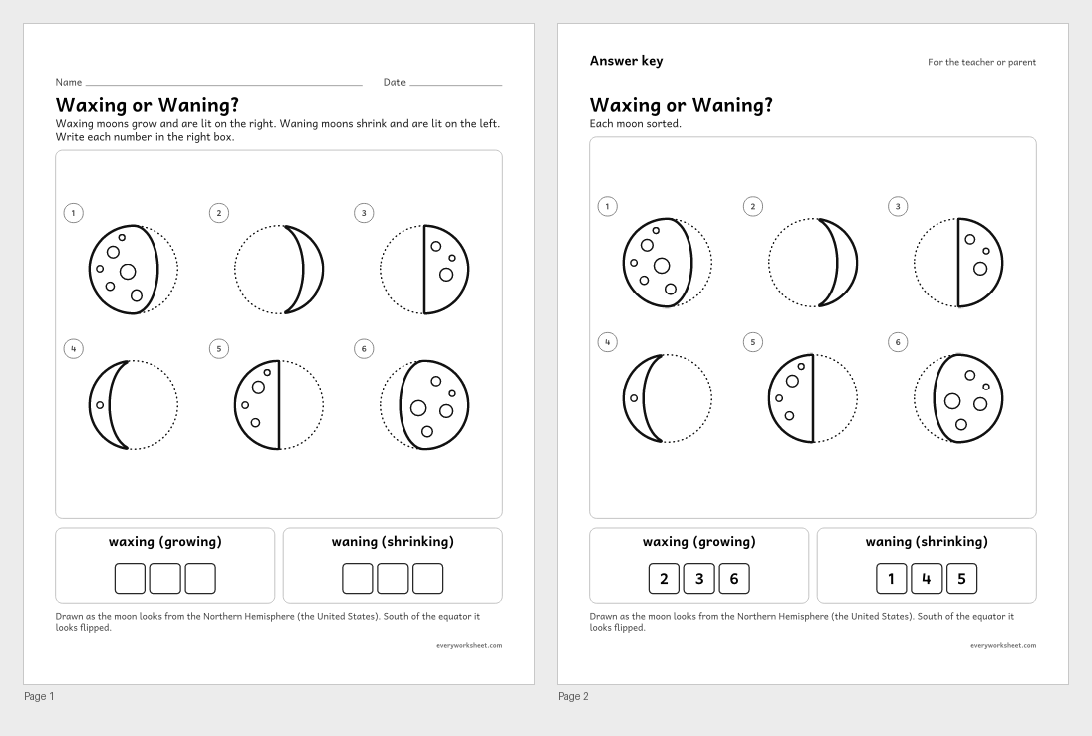 View all 2 pages
Telling waxing phases from waning phases
Answer key on page 2
2 pages66 KB
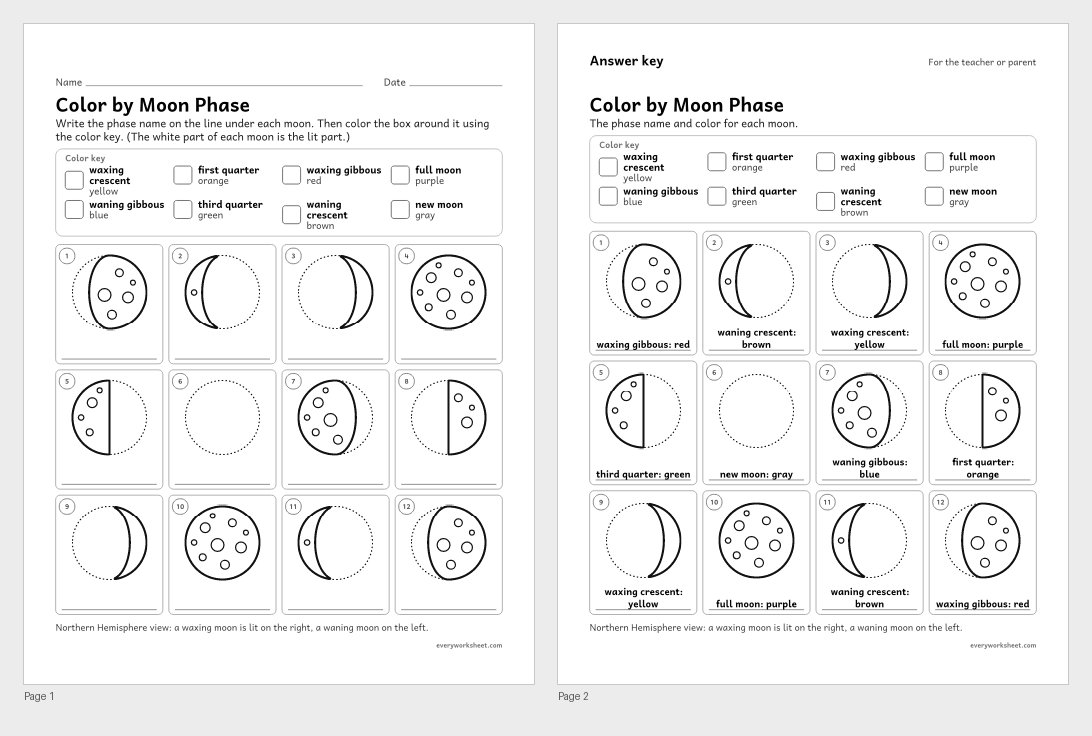 View all 2 pages
Identifying moon phases by name
Answer key on page 2
2 pages111 KB
 View larger
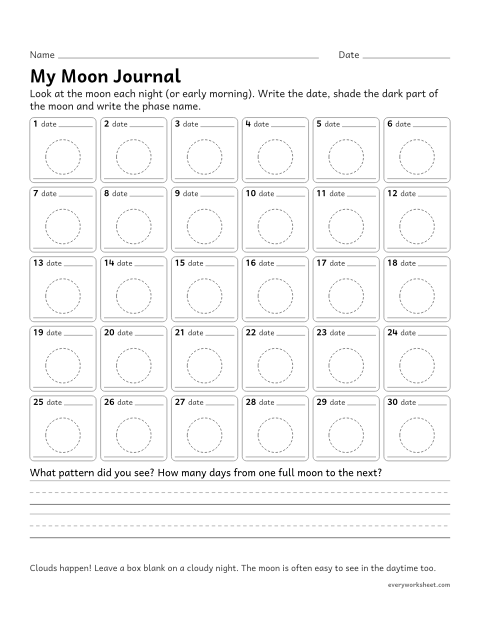
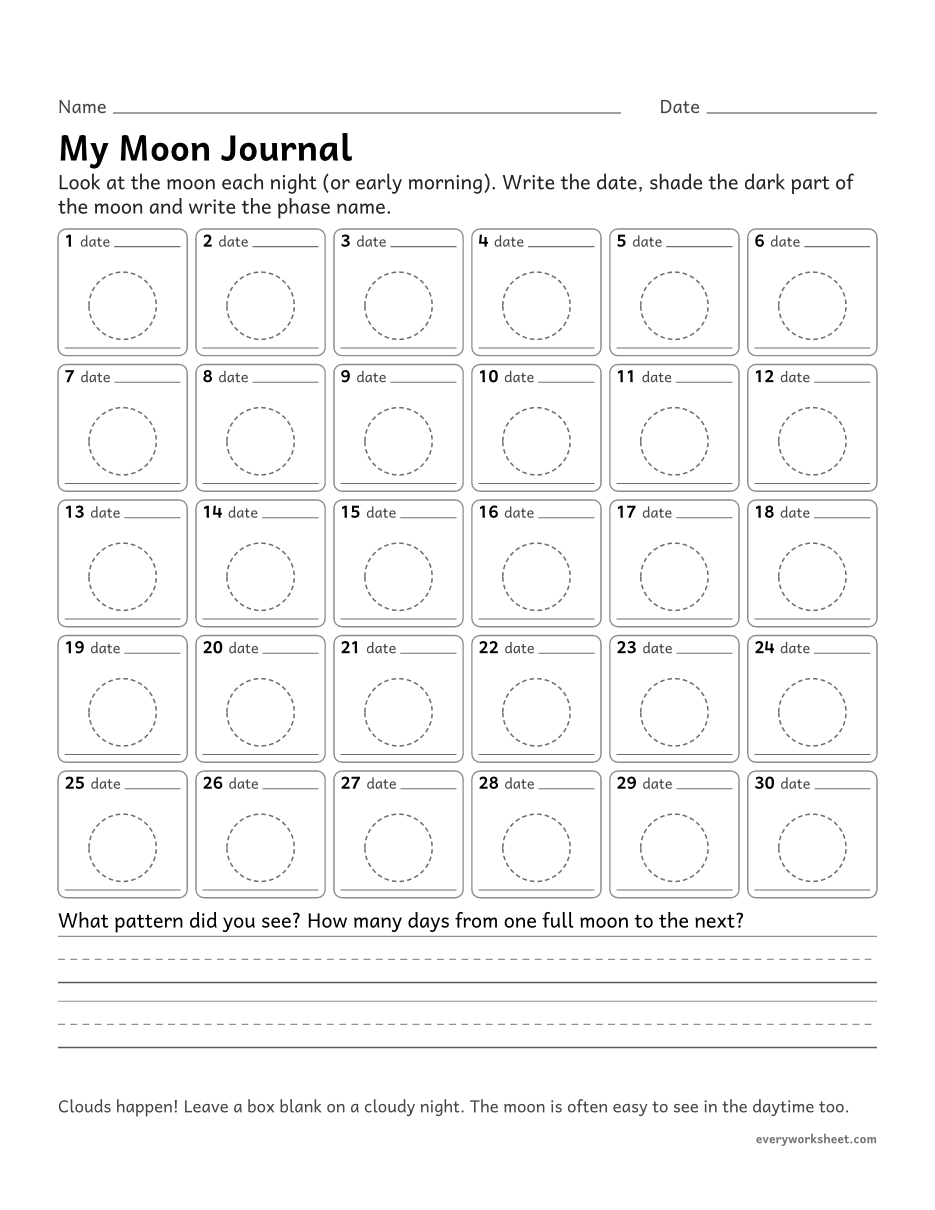
Observing and recording the moon's phases each night
1 page46 KB
 View all 2 pages
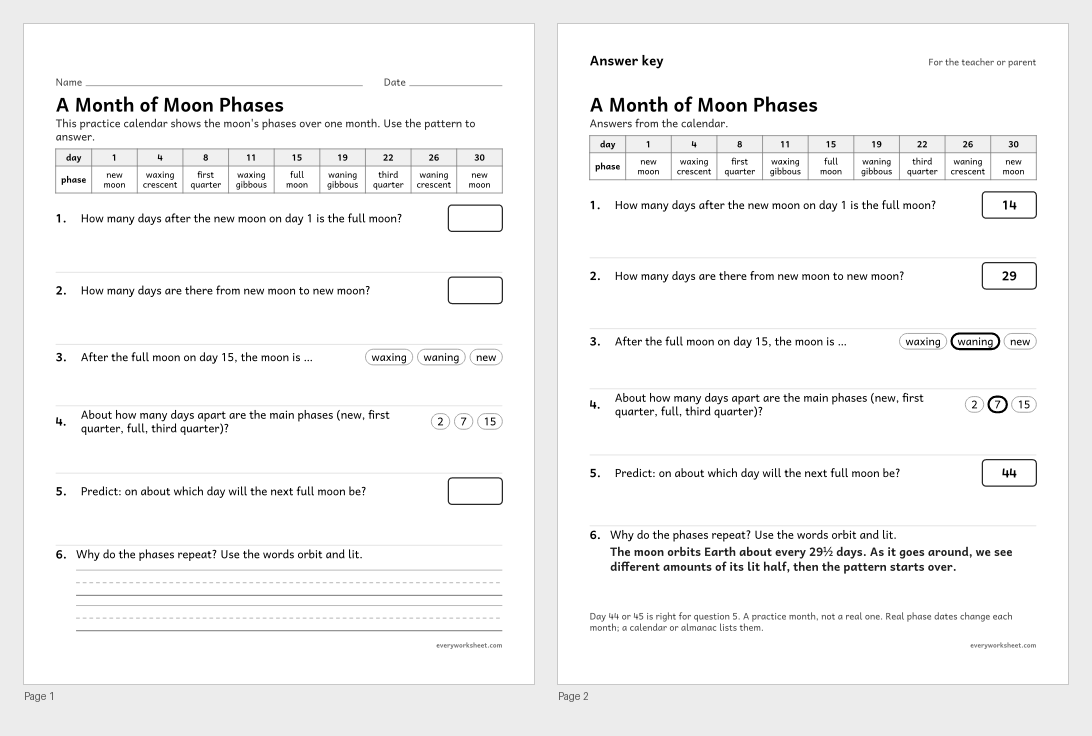
Using the pattern of moon phases to make predictions
Answer key on page 2
2 pages51 KB
 View all 2 pages
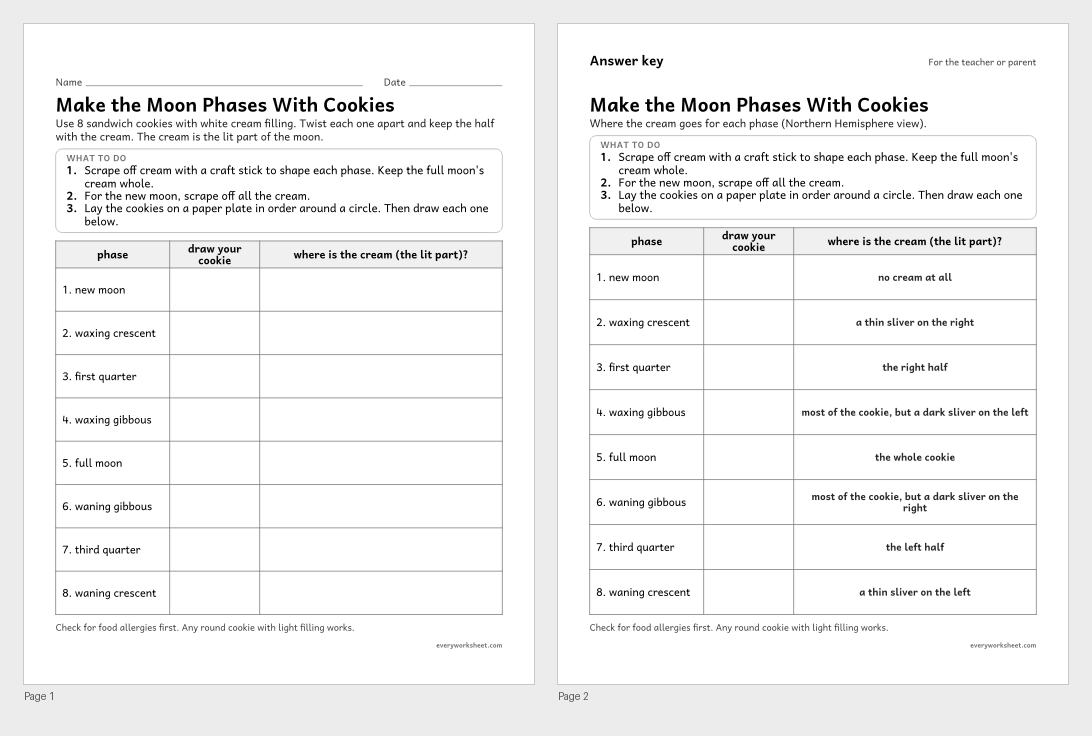
Modeling the phases of the moon with a hands-on activity
Answer key on page 2
2 pages47 KB
 View all 2 pages
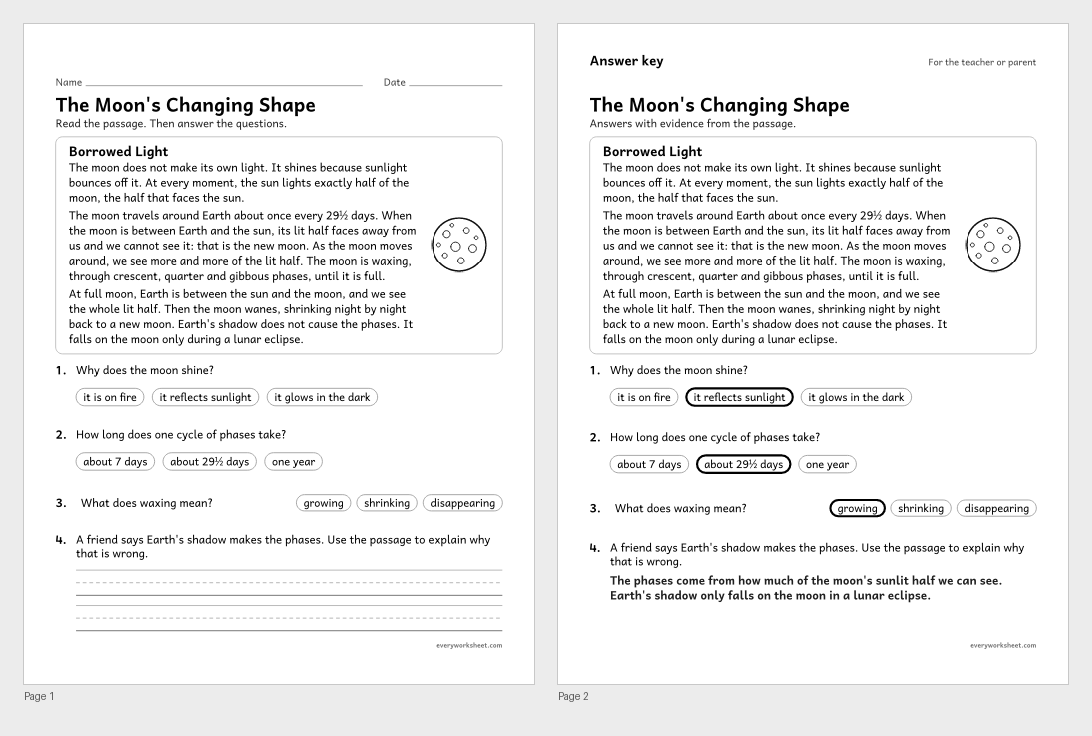
Explaining why the moon appears to change shape
Answer key on page 2
2 pages49 KB
 View all 2 pages
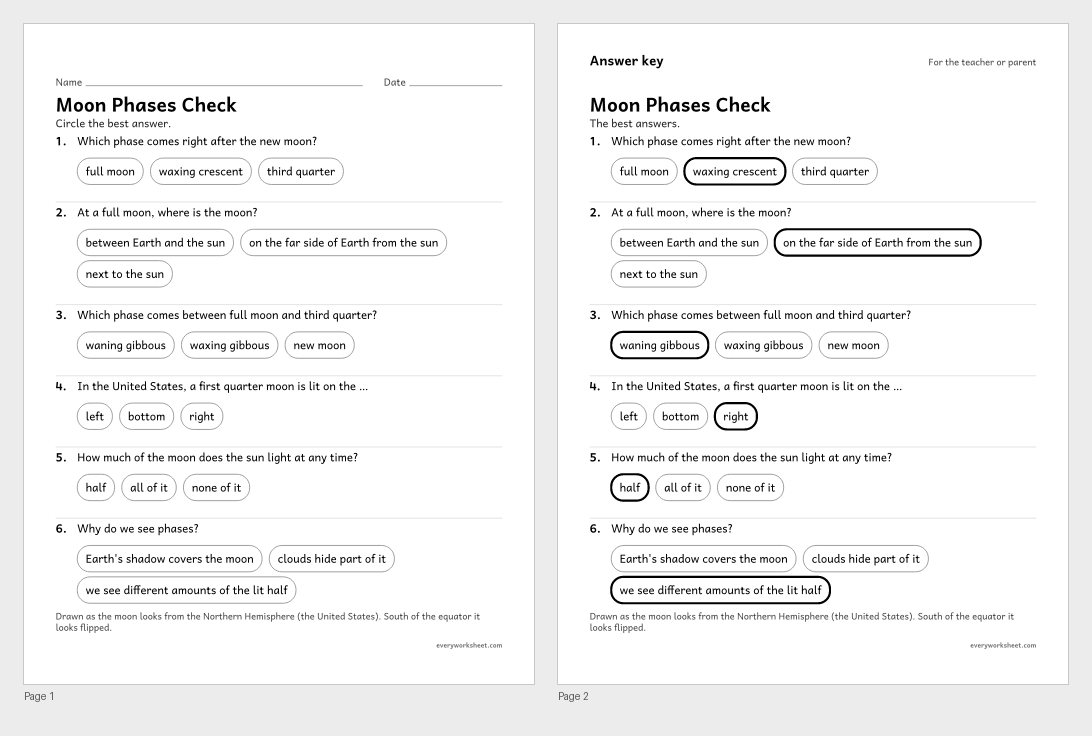
Reviewing the phases of the moon and why they happen
Answer key on page 2
2 pages40 KB
 View larger
 View all 2 pages
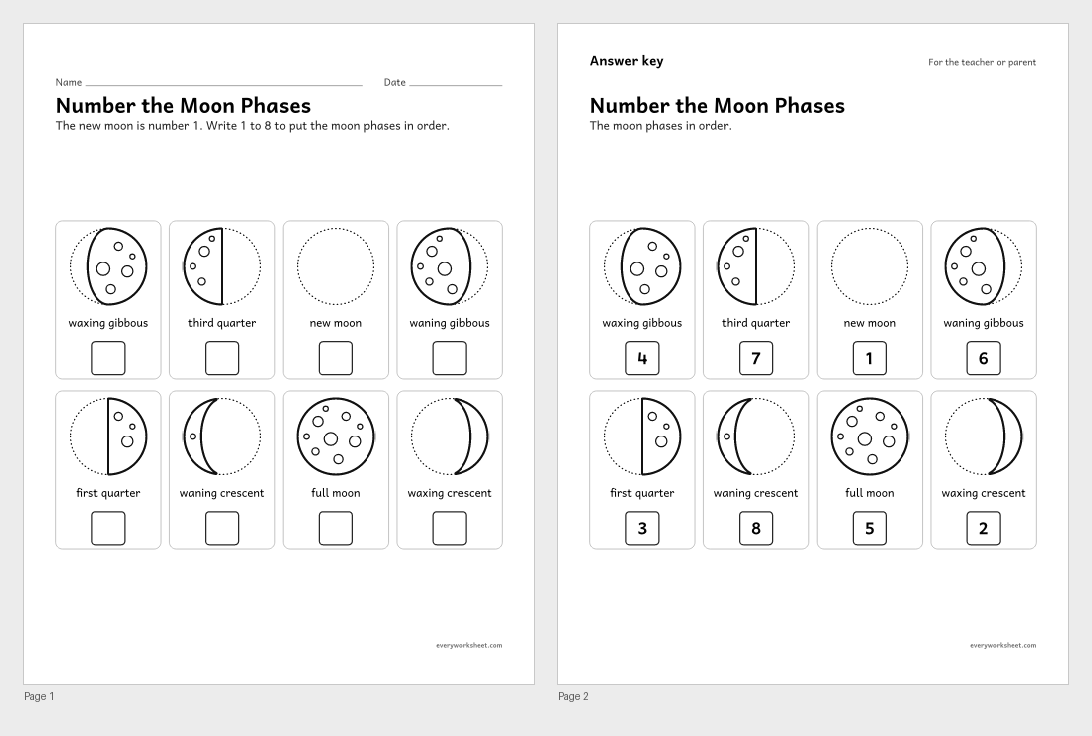
Putting the moon’s phases in order
Answer key on page 2
2 pages73 KB
 View all 2 pages
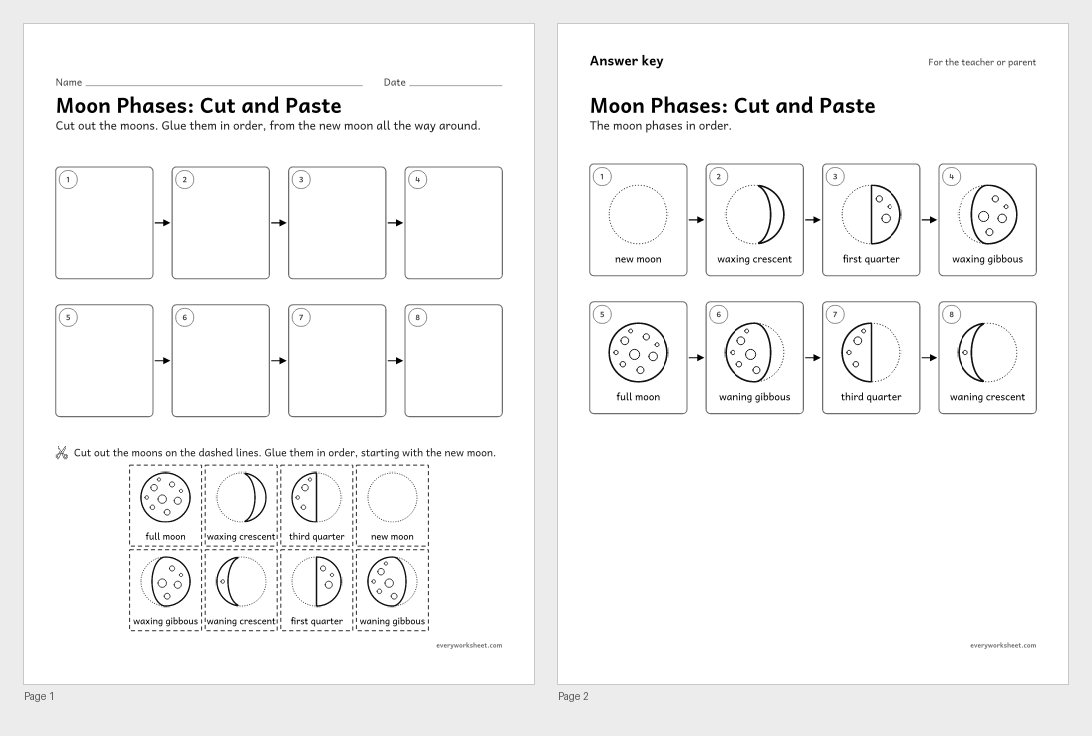
Putting the moon’s phases in order
Answer key on page 2
2 pages104 KB
 View larger
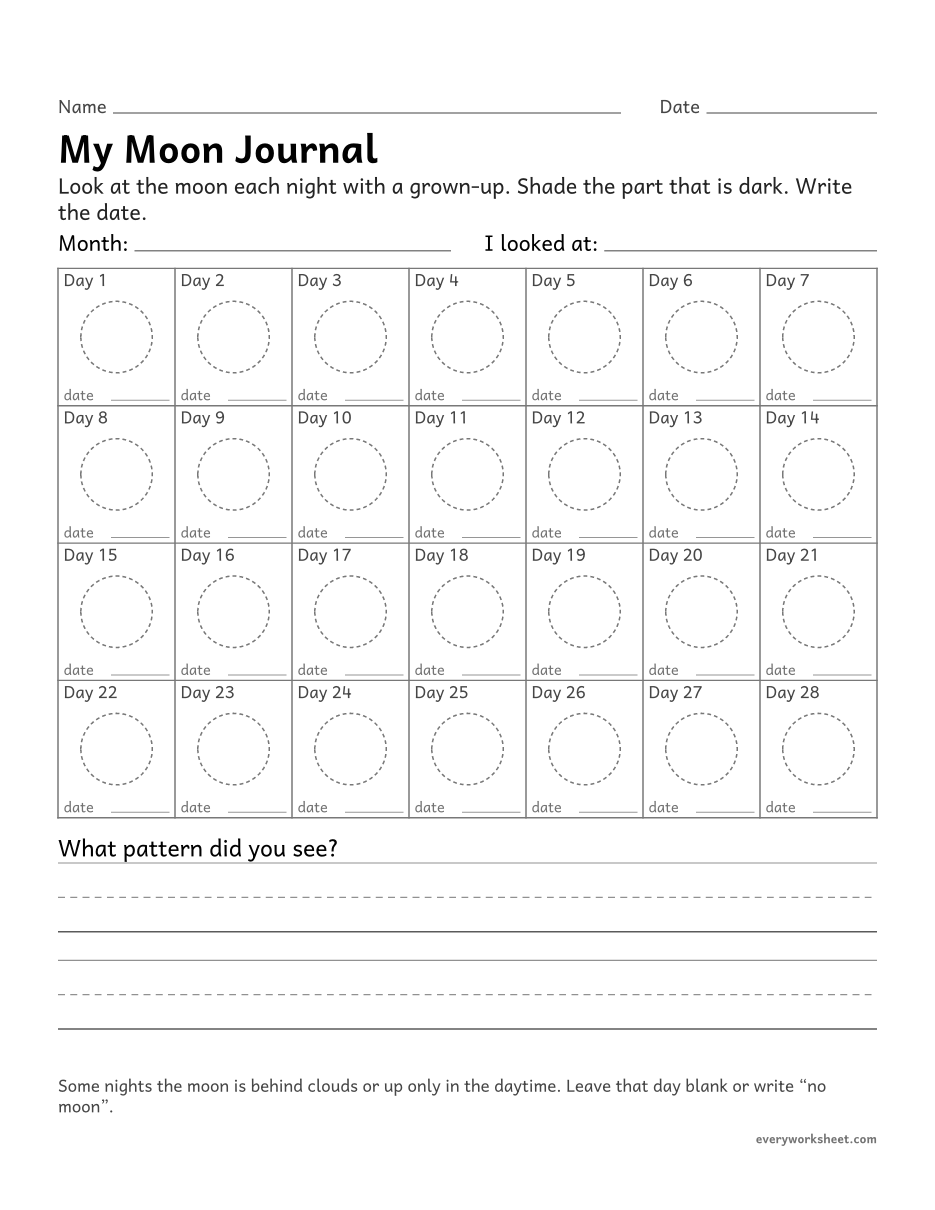
Observing and recording the moon’s shape to find a pattern
1 page33 KB
Print at 100% (actual size) for the cleanest tracing lines.
The moon does not make its own light. The sun always lights half of it, and as the moon travels around Earth about every 29½ days, we see more or less of that lit half. That makes the phases: new moon, waxing crescent, first quarter, waxing gibbous, full moon, waning gibbous, third quarter and waning crescent.
These moon phases worksheets include a phase chart, a diagram of the moon's orbit that explains why phases happen (labeled and blank), a cut and paste page with a no-cut twin, a name-the-phase page, a waxing or waning sort, color by phase name, a moon journal, a moon phase calendar, a hands-on sandwich cookie model, vocabulary, a reading passage and a quiz. Simpler 1st grade pages are included too.
Every page is black and white, prints on US Letter or A4, and every page with right answers has an answer key on page 2.
NGSS 1-ESS1-1Use observations of the sun, moon, and stars to describe patterns that can be predicted.CCSS.ELA-LITERACY.RI.5.4Determine the meaning of general academic and domain-specific words and phrases in a text relevant to a grade 5 topic or subject area.CCSS.ELA-LITERACY.RI.5.3Explain the relationships or interactions between two or more individuals, events, ideas, or concepts in a historical, scientific, or technical text based on specific information in the text.NGSS 5-ESS1-2Represent data in graphical displays to reveal patterns of daily changes in length and direction of shadows, day and night, and the seasonal appearance of some stars in the night sky.New moon, waxing crescent, first quarter, waxing gibbous, full moon, waning gibbous, third (last) quarter and waning crescent, then new moon again.
The sun lights half of the moon. As the moon orbits Earth, we see different amounts of that lit half.
About 29½ days from one new moon to the next.
The orbit diagram, calendar and reading suit 4th and 5th grade; the chart, ordering pages and journal also work for 1st to 3rd grade, and there are simpler 1st grade pages too.