 View all 2 pages
Native american nations by region chart for 4th grade
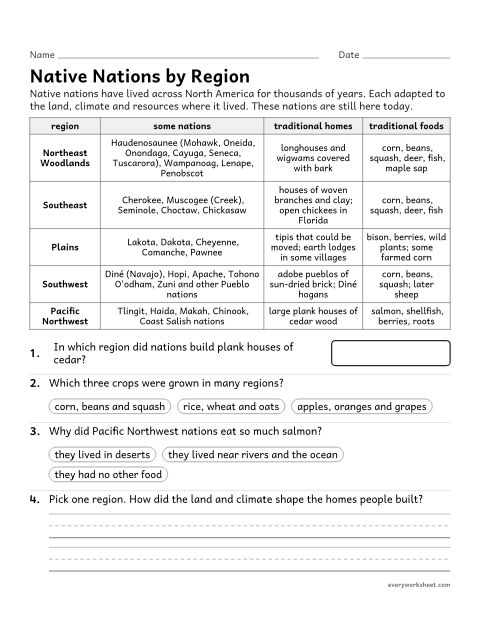
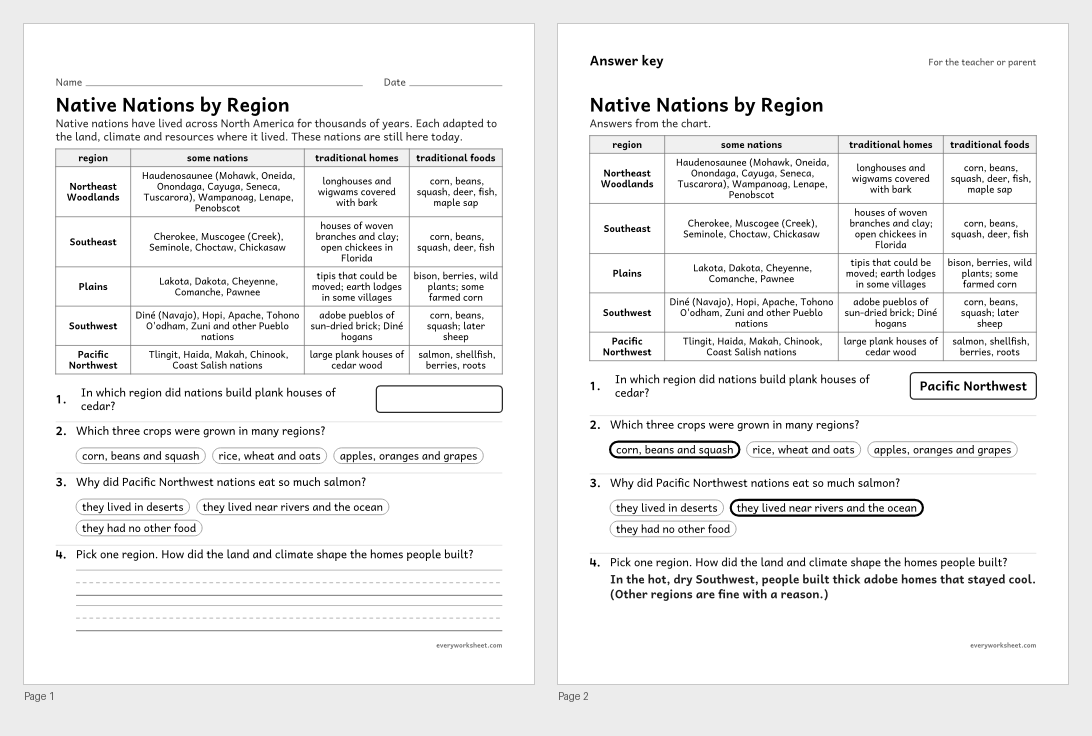
Describing how Native nations in different regions used their environments
Answer key on page 2
2 pages51 KB
Native nations by region, how they adapted to the land, the Haudenosaunee Confederacy, Sequoyah and the Cherokee, the Navajo Nation today, and a research organizer.
View all 2 pagesDescribing how Native nations in different regions used their environments
Answer key on page 2
2 pages51 KB
 View all 2 pages
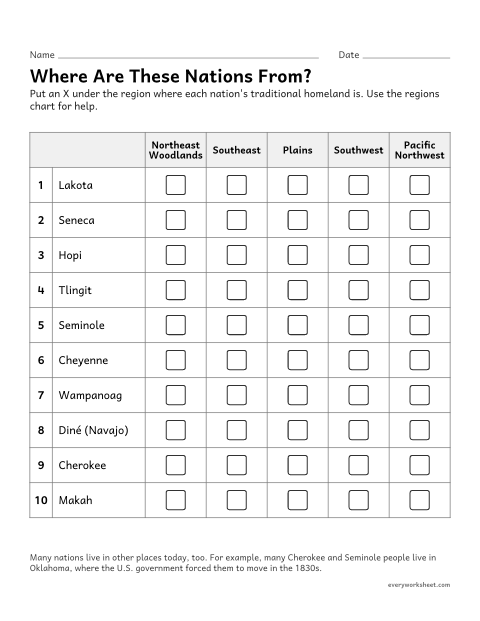
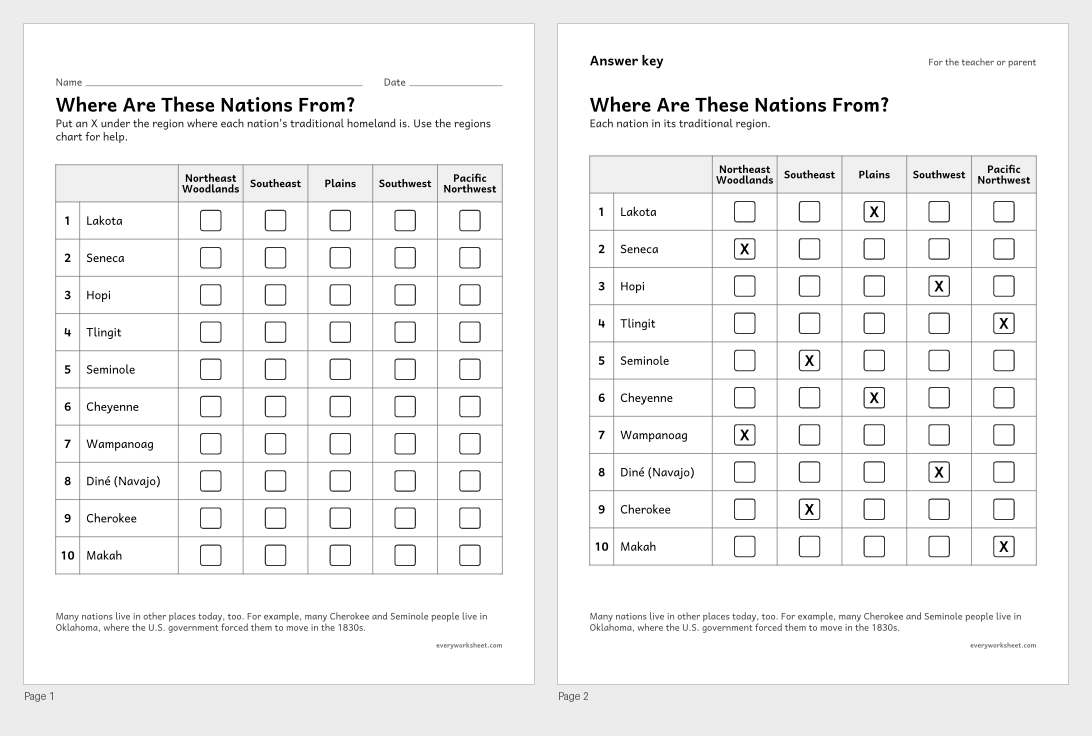
Sorting Native nations by the region of their traditional homelands
Answer key on page 2
2 pages58 KB
 View all 2 pages
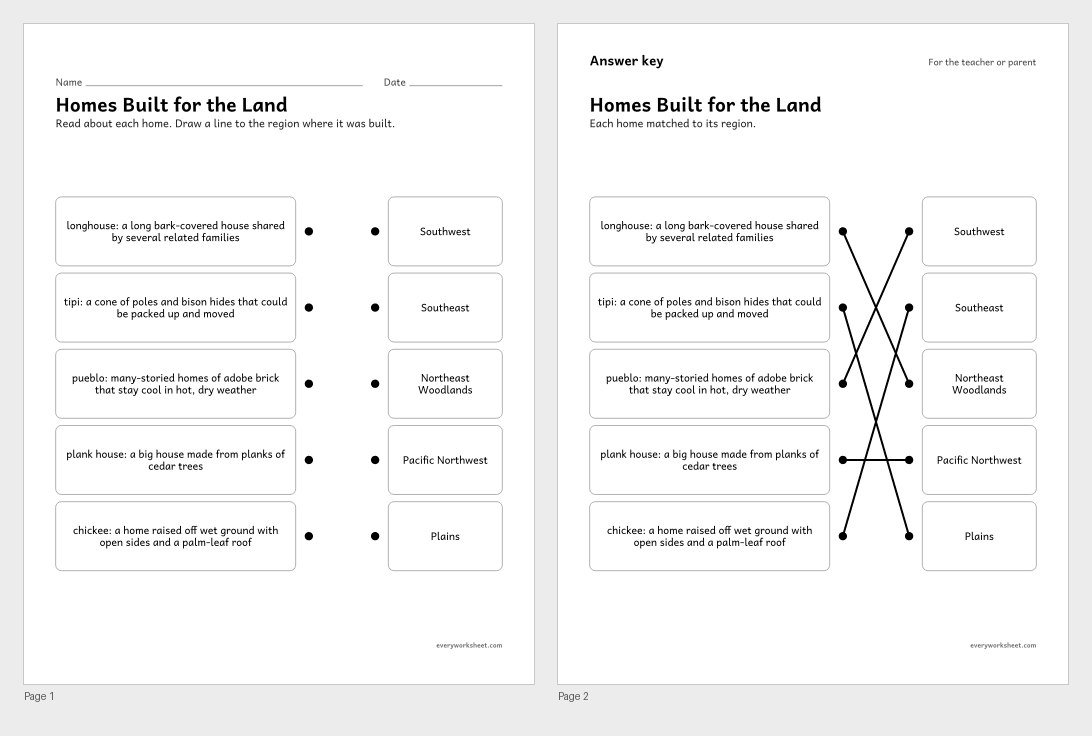
Matching traditional homes to the regions and environments they suited
Answer key on page 2
2 pages29 KB
 View all 2 pages
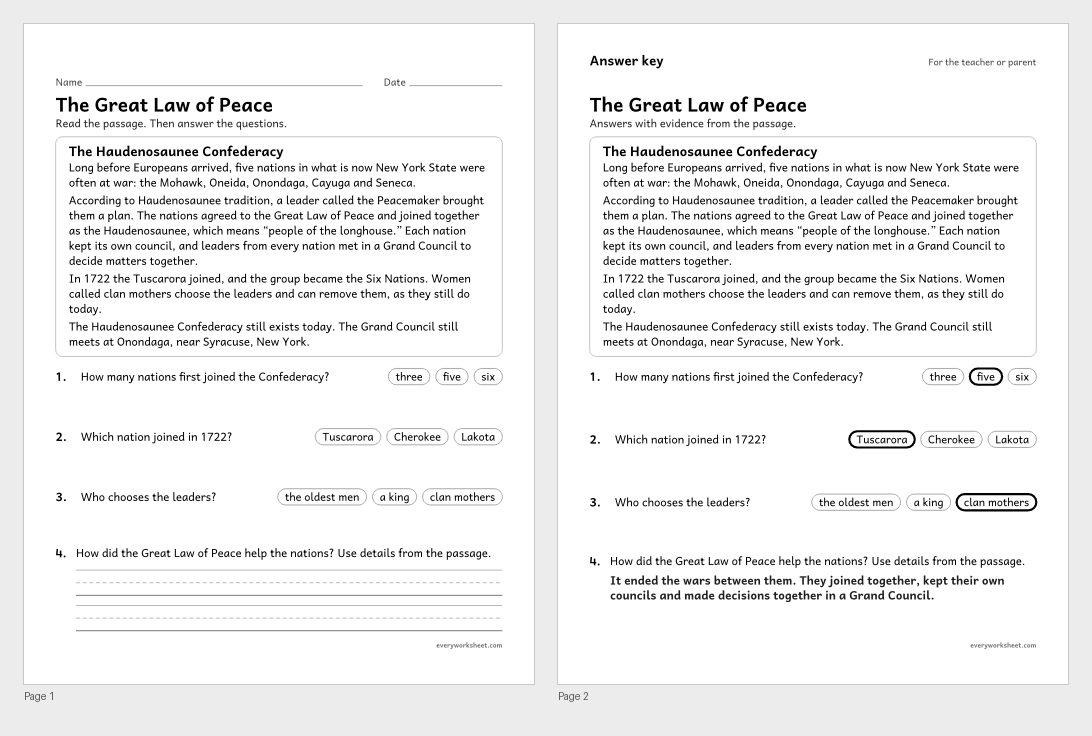
Explaining how the Haudenosaunee nations formed a confederacy
Answer key on page 2
2 pages41 KB
 View all 2 pages
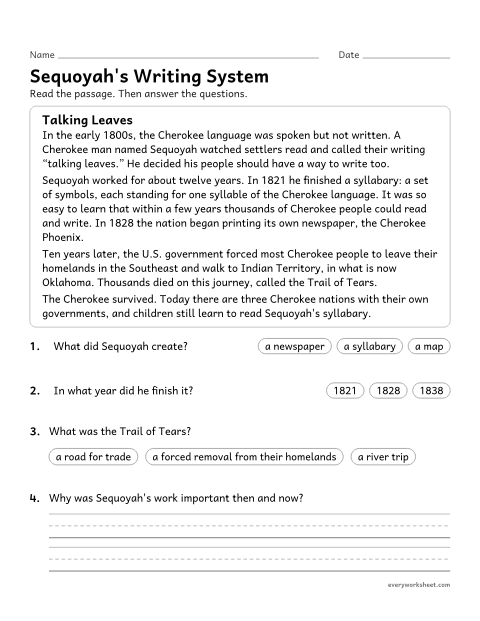
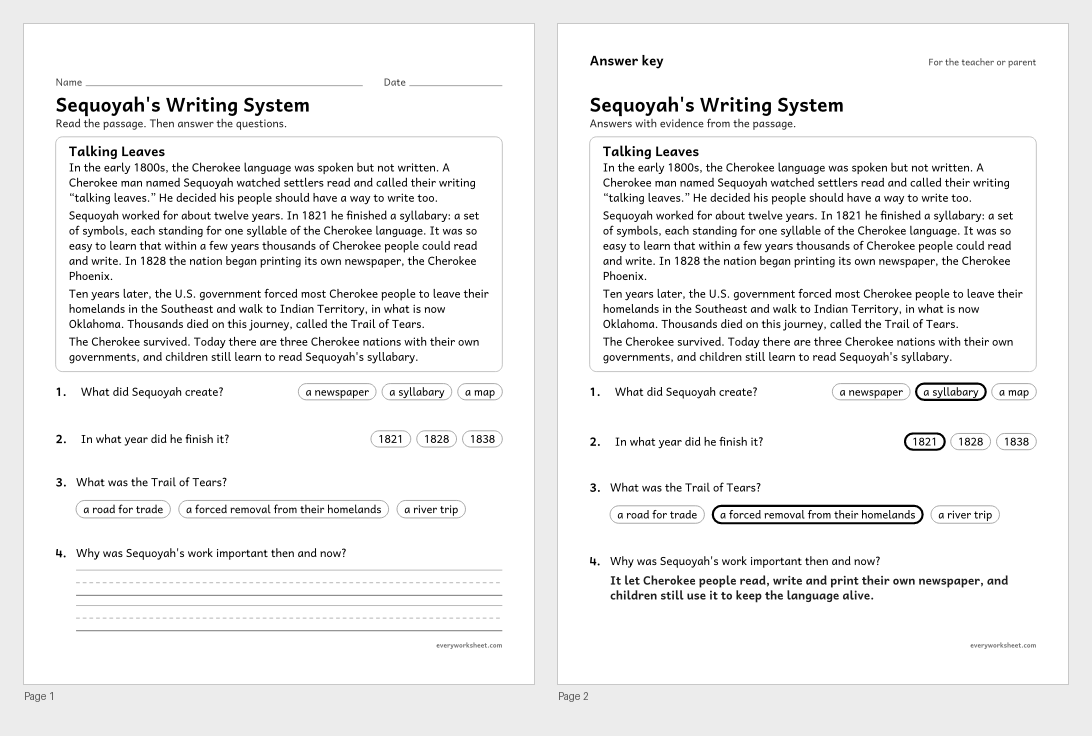
Describing a Cherokee leader's contribution and the history of the Cherokee Nation
Answer key on page 2
2 pages41 KB
 View all 2 pages
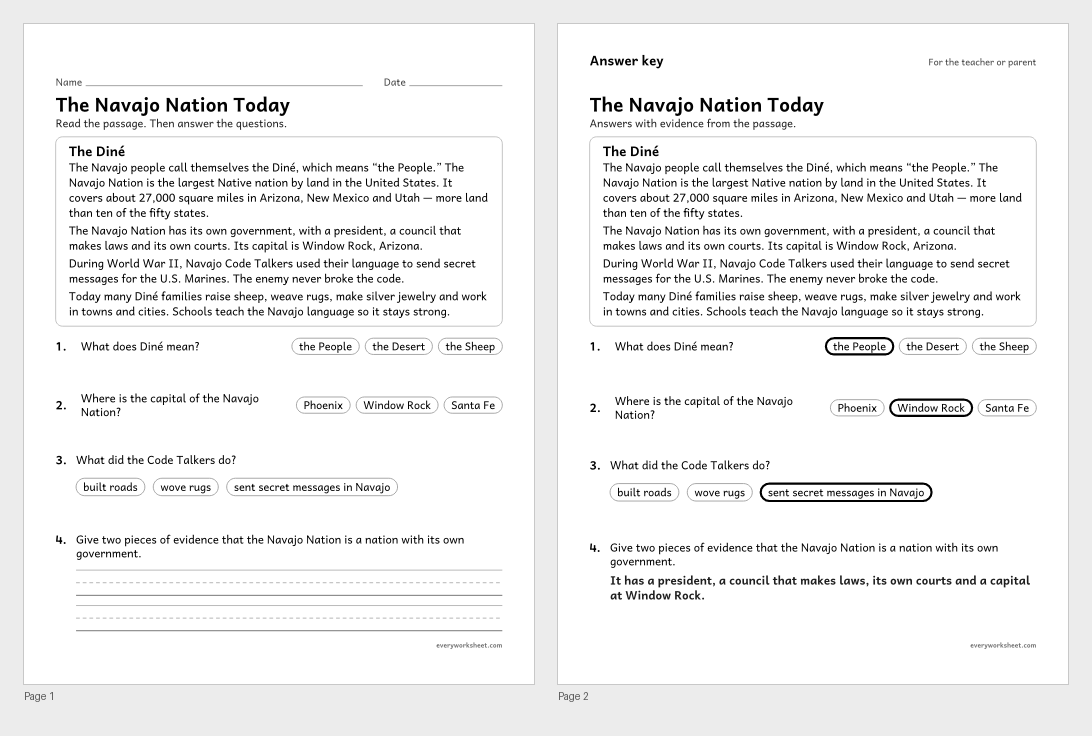
Describing a present-day Native nation, its government and its history
Answer key on page 2
2 pages40 KB
 View larger
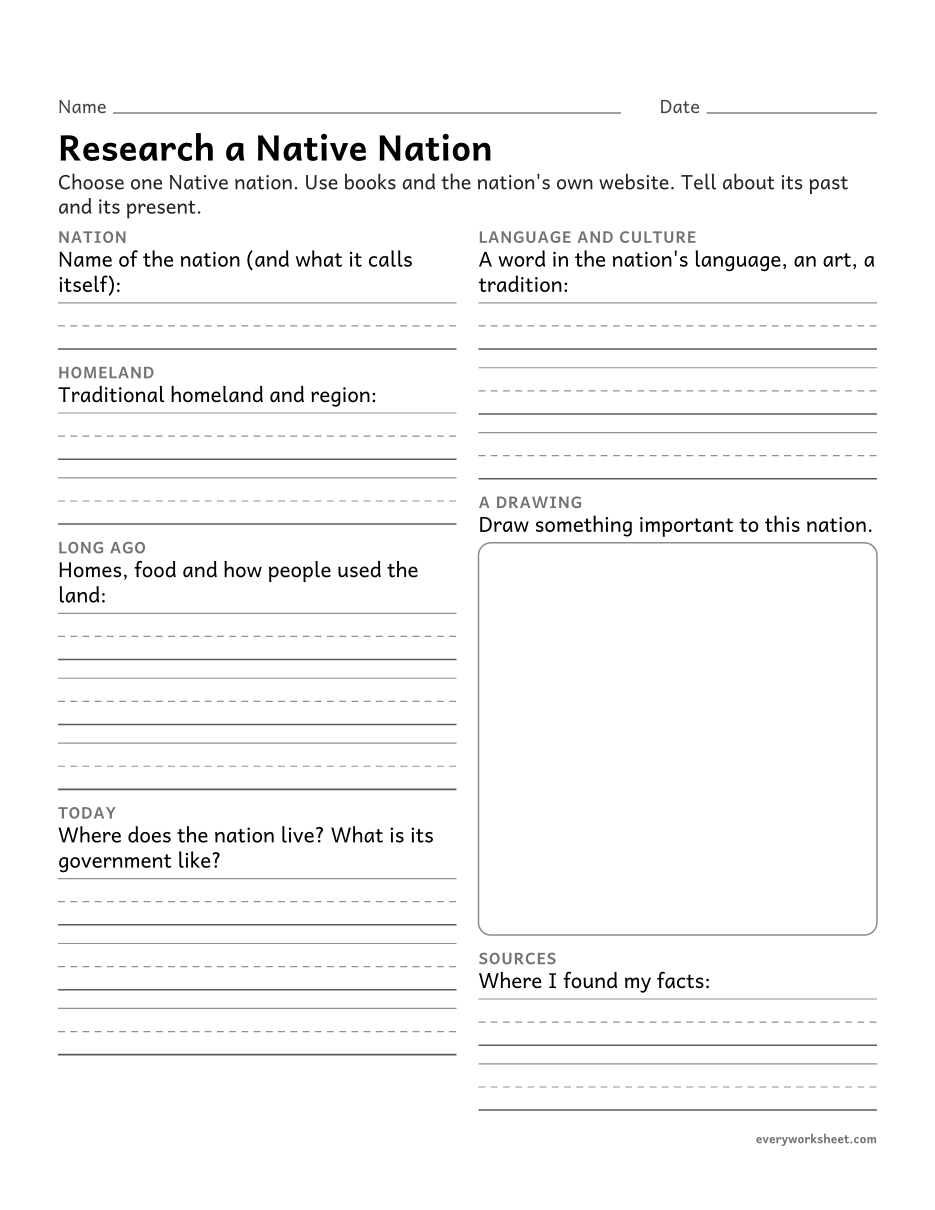
Researching a Native nation's history and present day
1 page28 KB
 View all 2 pages
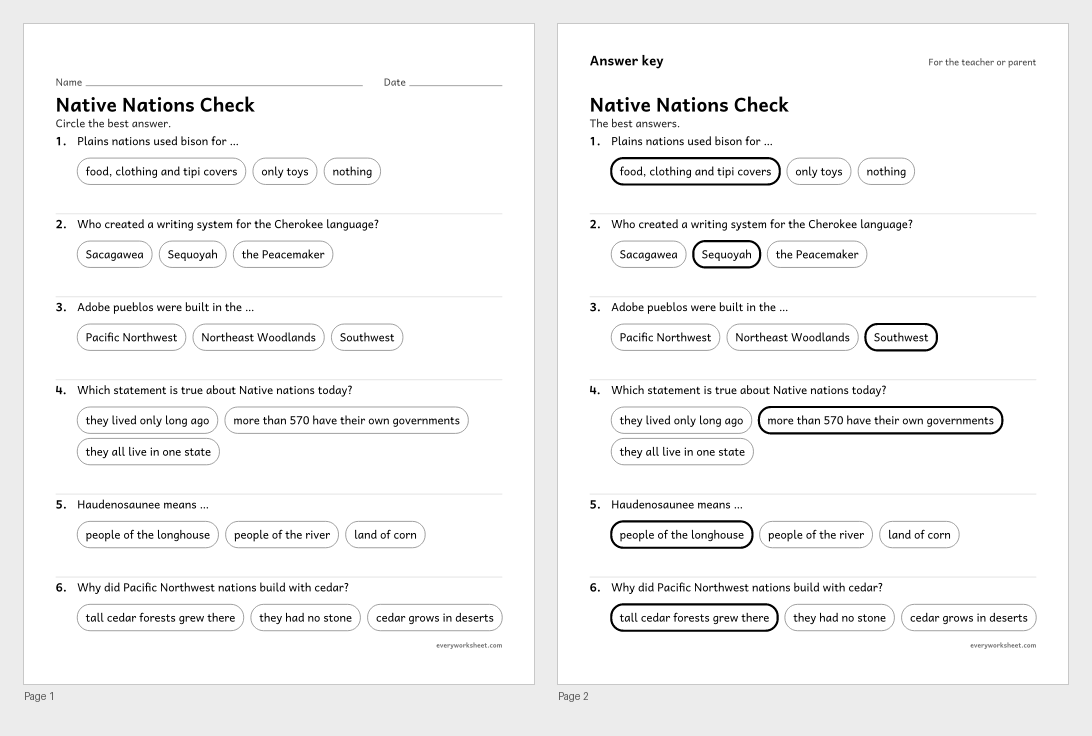
Reviewing Native nations by region, past and present
Answer key on page 2
2 pages39 KB
Print at 100% (actual size) for the cleanest tracing lines.
Native nations have lived across North America for thousands of years, and more than 570 are recognized by the U.S. government today. Each adapted to the land, climate and resources of its homeland, and each has its own language, government and traditions.
These worksheets teach Native nations by region with a chart of nations, homes and foods, a sort and a homes matching page. Reading passages tell about the Haudenosaunee Confederacy, Sequoyah's Cherokee syllabary and the Trail of Tears, and the Navajo Nation's government today. A research organizer covers a nation's past and present.
Every page is black and white, prints on US Letter or A4, and every page with right answers has an answer key on page 2.
C3 D2.Geo.4.3-5Explain how culture influences the way people modify and adapt to their environments.C3 D2.His.2.3-5Compare life in specific historical time periods to life today.C3 D2.His.3.3-5Generate questions about individuals and groups who have shaped significant historical changes and continuities.CCSS.ELA-LITERACY.W.4.7Conduct short research projects that build knowledge through investigation of different aspects of a topic.More than 570 tribes are recognized by the U.S. government today, and many others are recognized by states.
They used local resources: cedar plank houses in the Pacific Northwest, bison on the Plains, adobe pueblos in the hot, dry Southwest, and longhouses in the forests of the Northeast.
Yes. Many have elected leaders, councils, courts and laws. The Navajo Nation, for example, has a president, a council and courts, with its capital at Window Rock, Arizona.