 View larger
Renewable and nonrenewable resources poster
Describing renewable and nonrenewable energy resources
1 page80 KB
Renewable and nonrenewable resources, energy sources and their effects, fossil fuels, products made from natural resources and ways to conserve.
View largerDescribing renewable and nonrenewable energy resources
1 page80 KB
 View all 2 pages
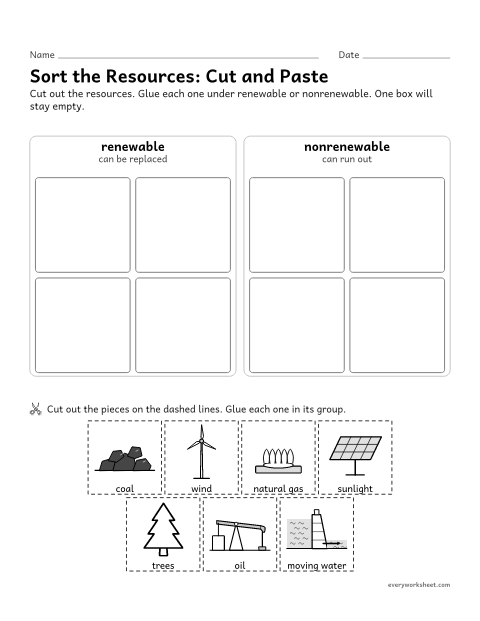
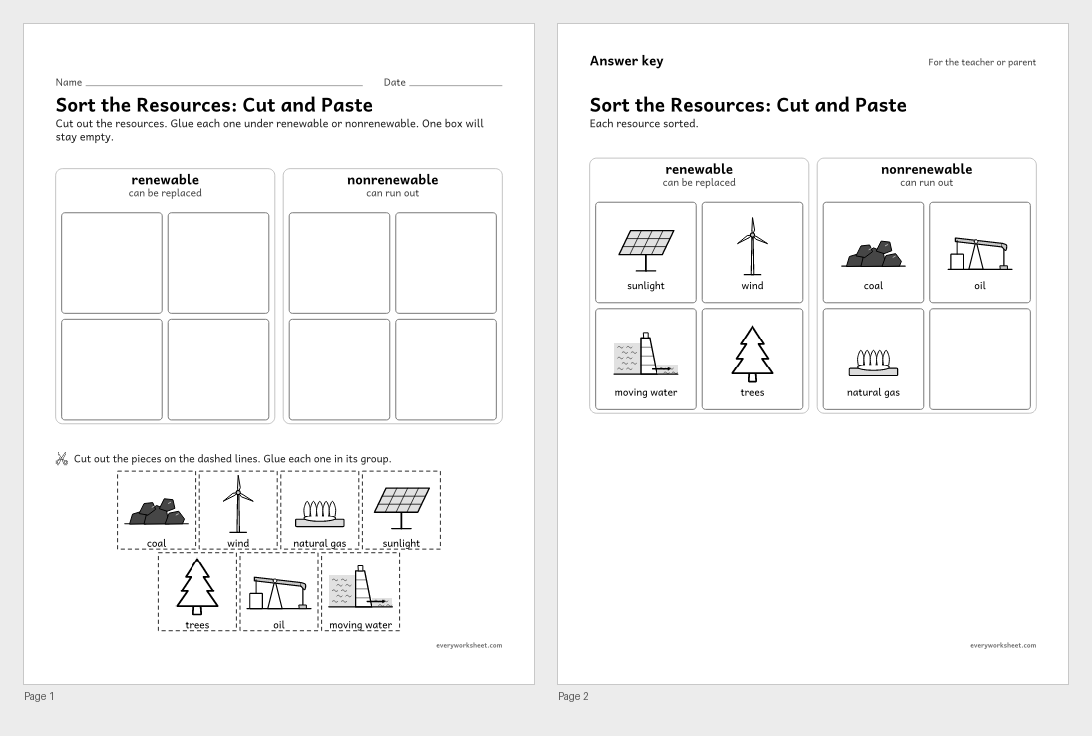
Sorting energy resources into renewable and nonrenewable
Answer key on page 2
2 pages91 KB
 View all 2 pages
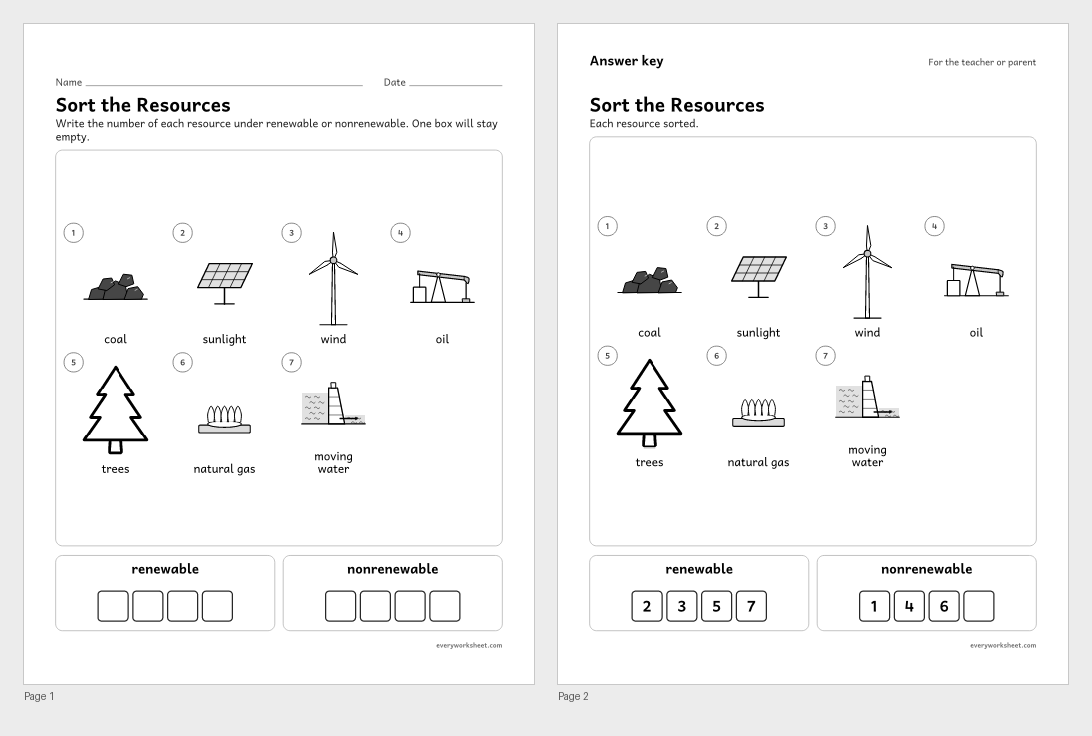
Sorting energy resources into renewable and nonrenewable
Answer key on page 2
2 pages65 KB
 View all 2 pages
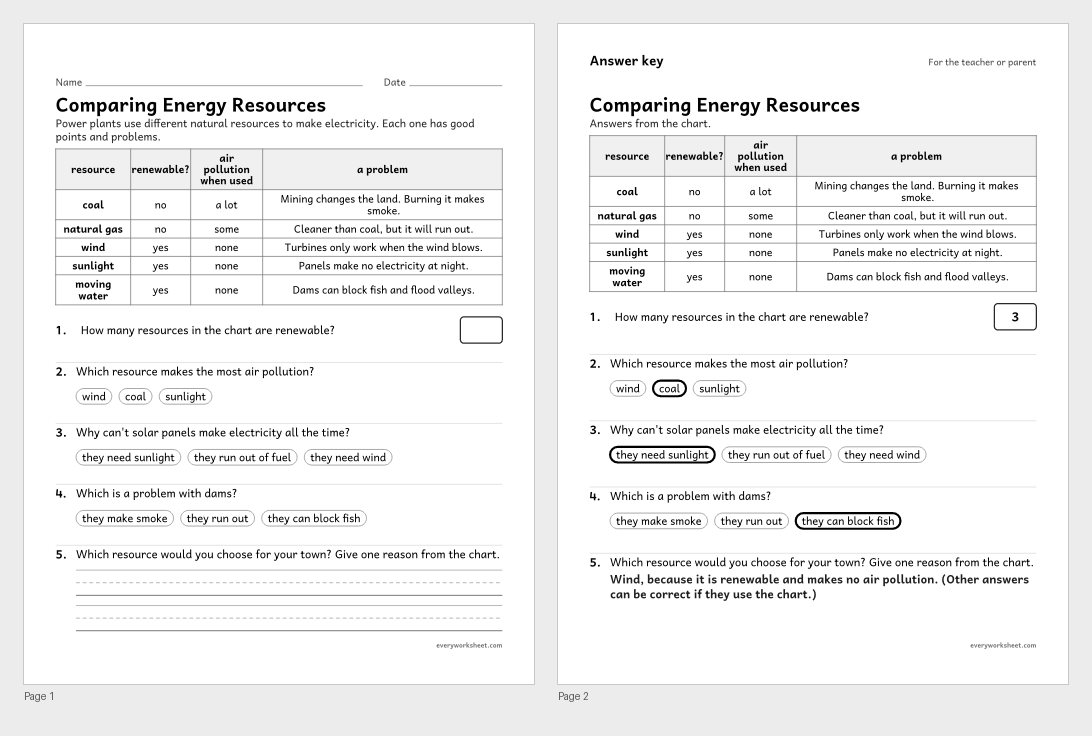
Comparing how energy resources are used and how they affect the environment
Answer key on page 2
2 pages50 KB
 View all 2 pages
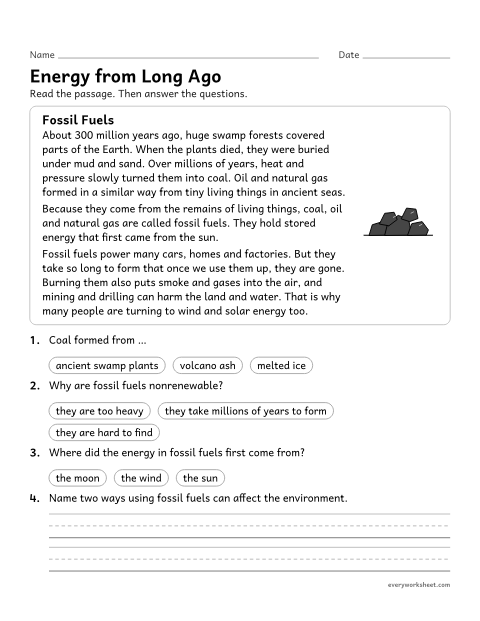
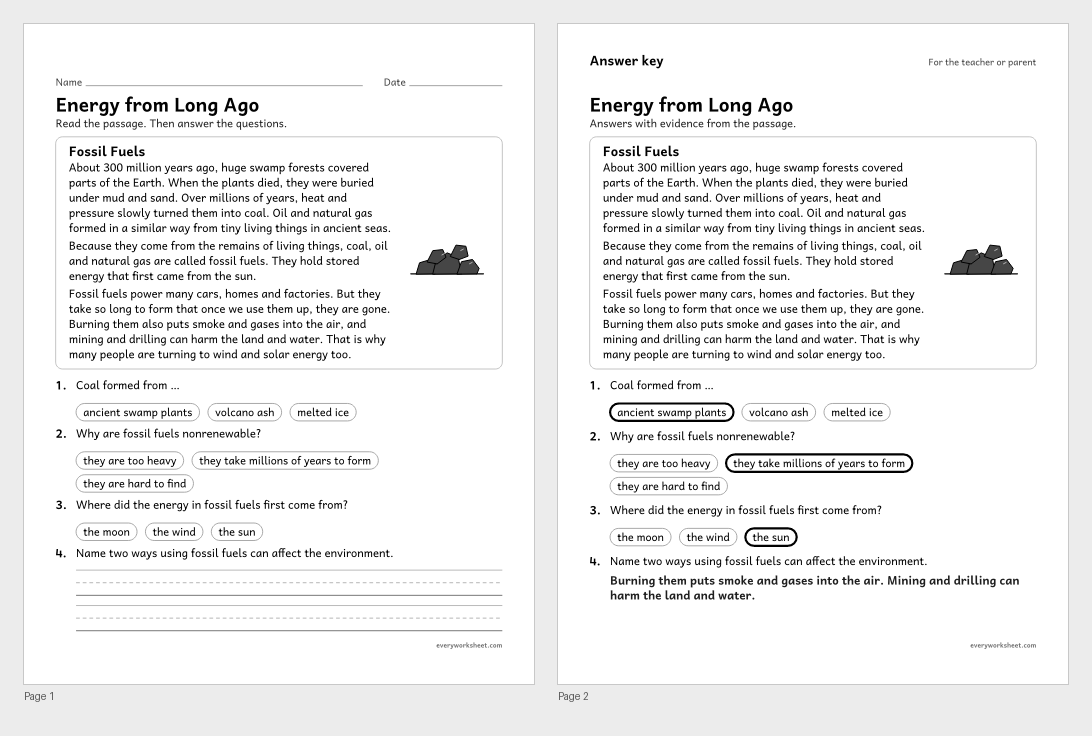
Explaining how fossil fuels form and how using them affects the environment
Answer key on page 2
2 pages40 KB
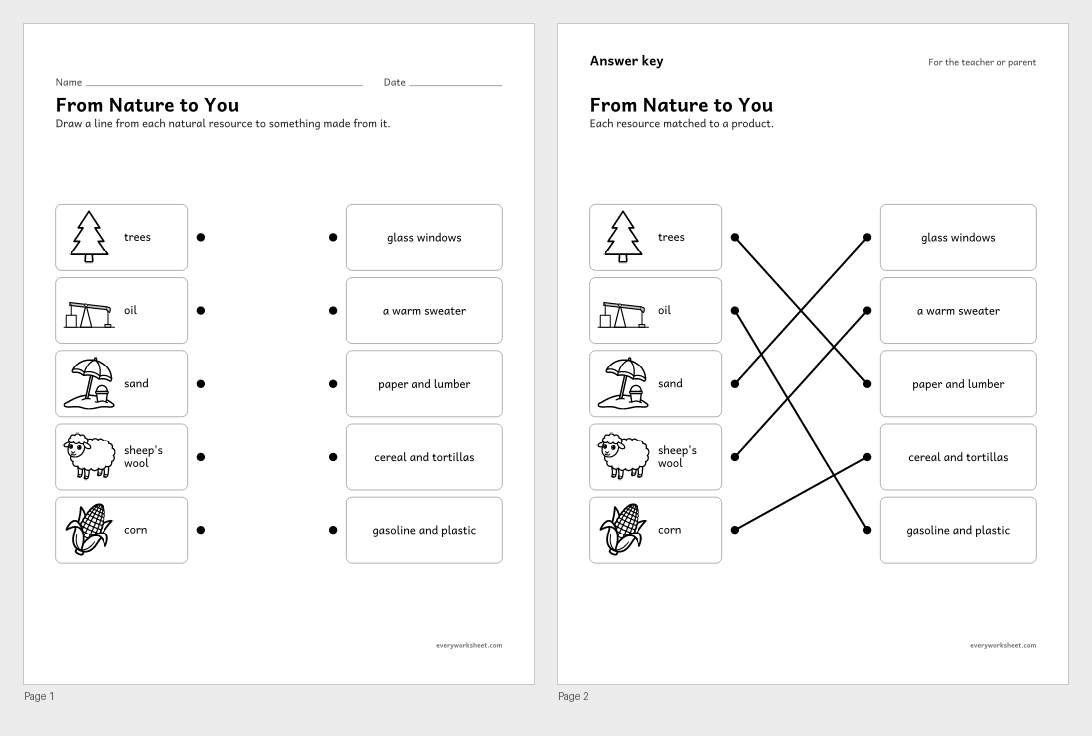 View all 2 pages
Matching natural resources to products made from them
Answer key on page 2
2 pages207 KB
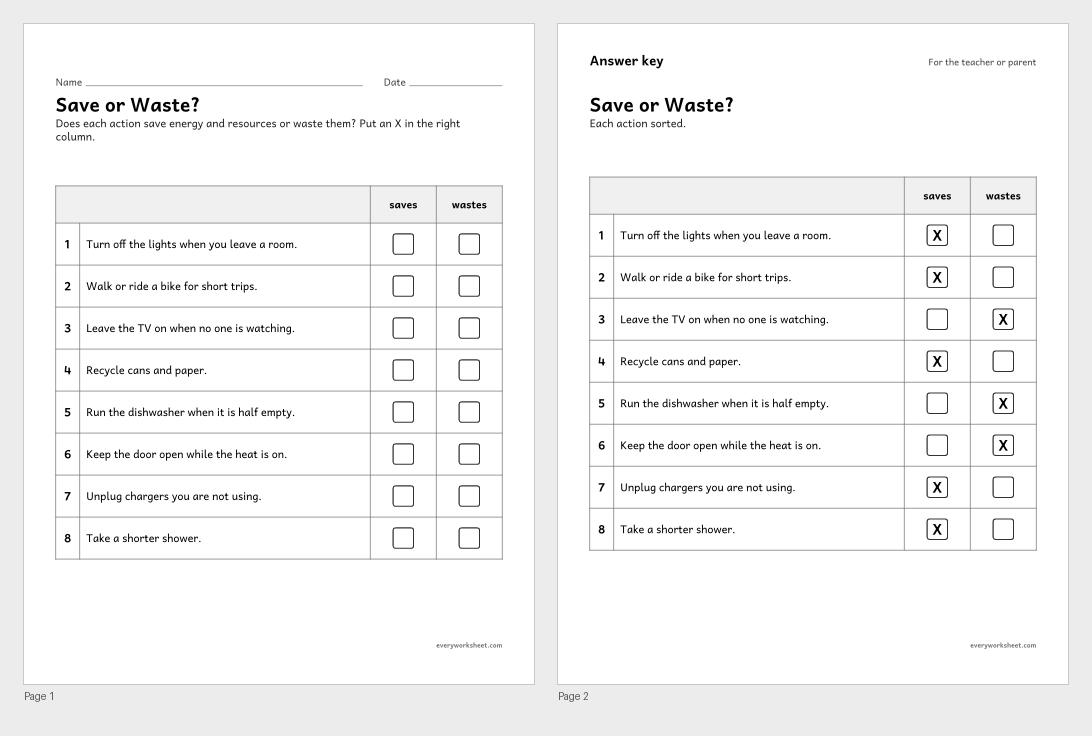 View all 2 pages
Identifying actions that conserve energy and natural resources
Answer key on page 2
2 pages42 KB
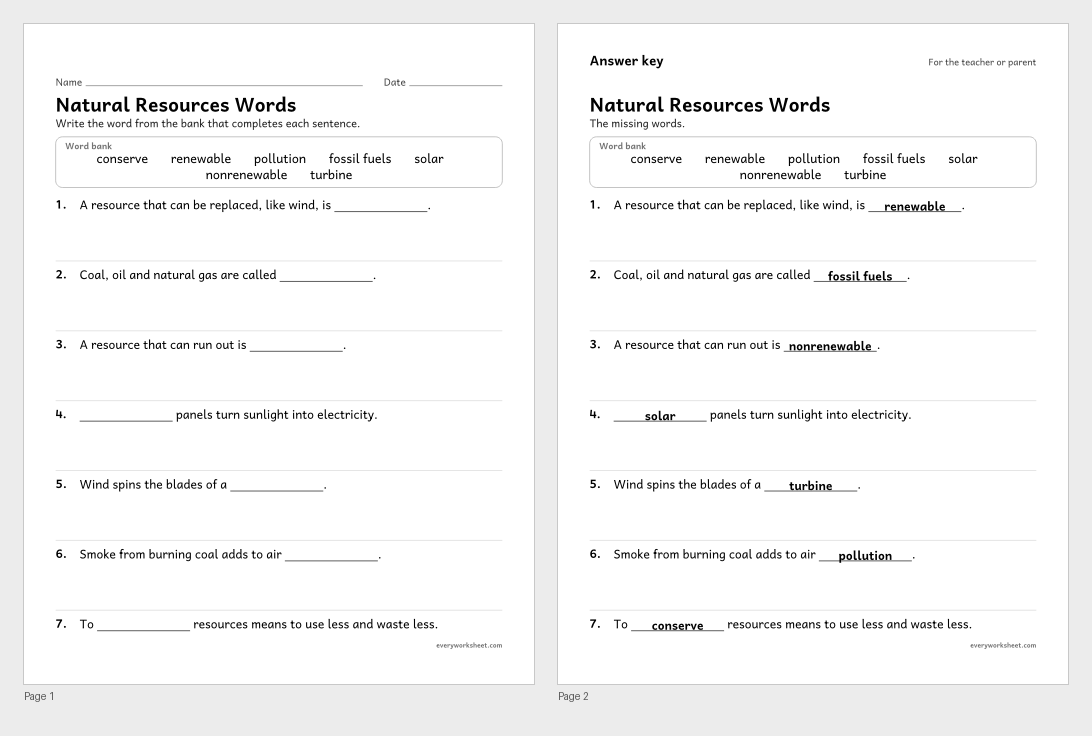 View all 2 pages
Using natural resources vocabulary in context
Answer key on page 2
2 pages37 KB
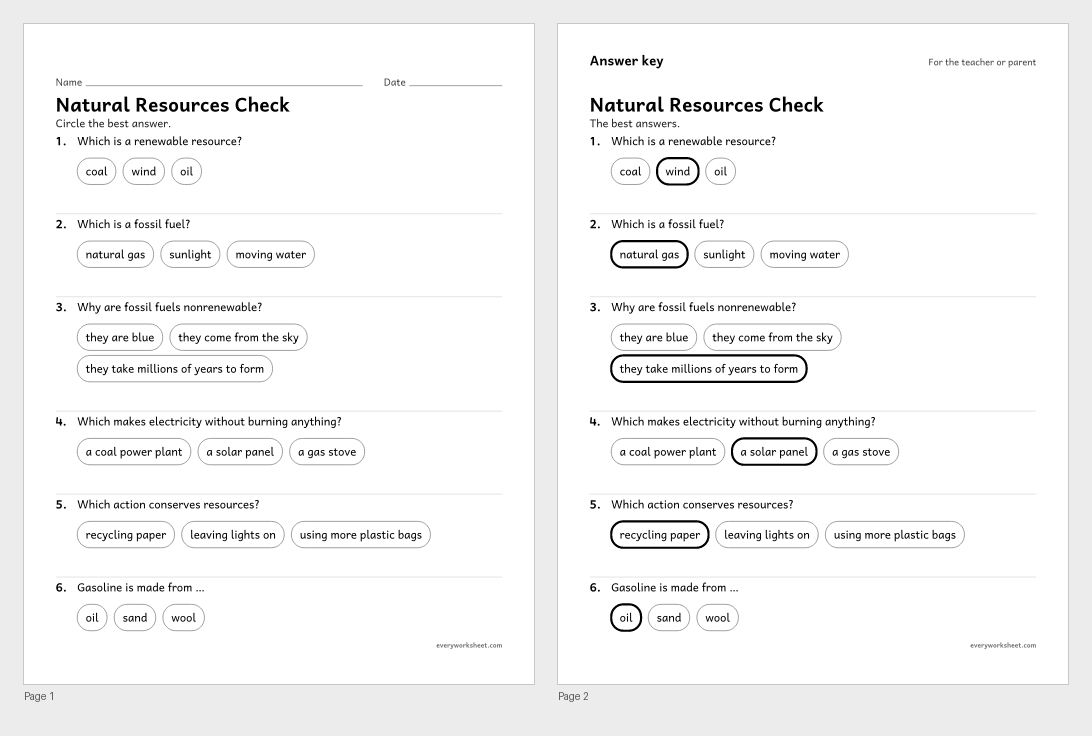 View all 2 pages
Reviewing renewable and nonrenewable resources and their effects
Answer key on page 2
2 pages38 KB
Print at 100% (actual size) for the cleanest tracing lines.
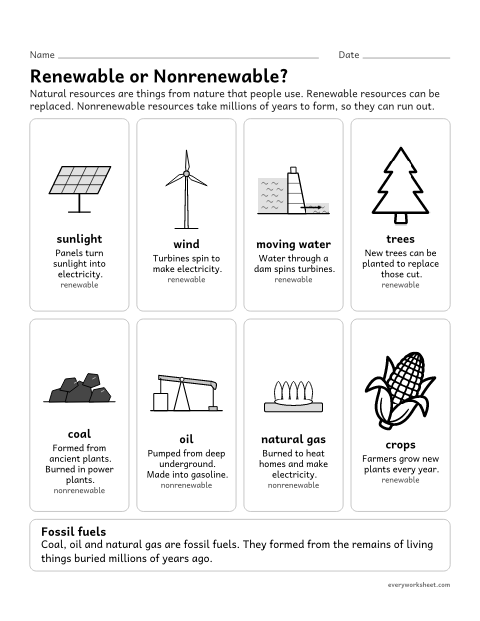
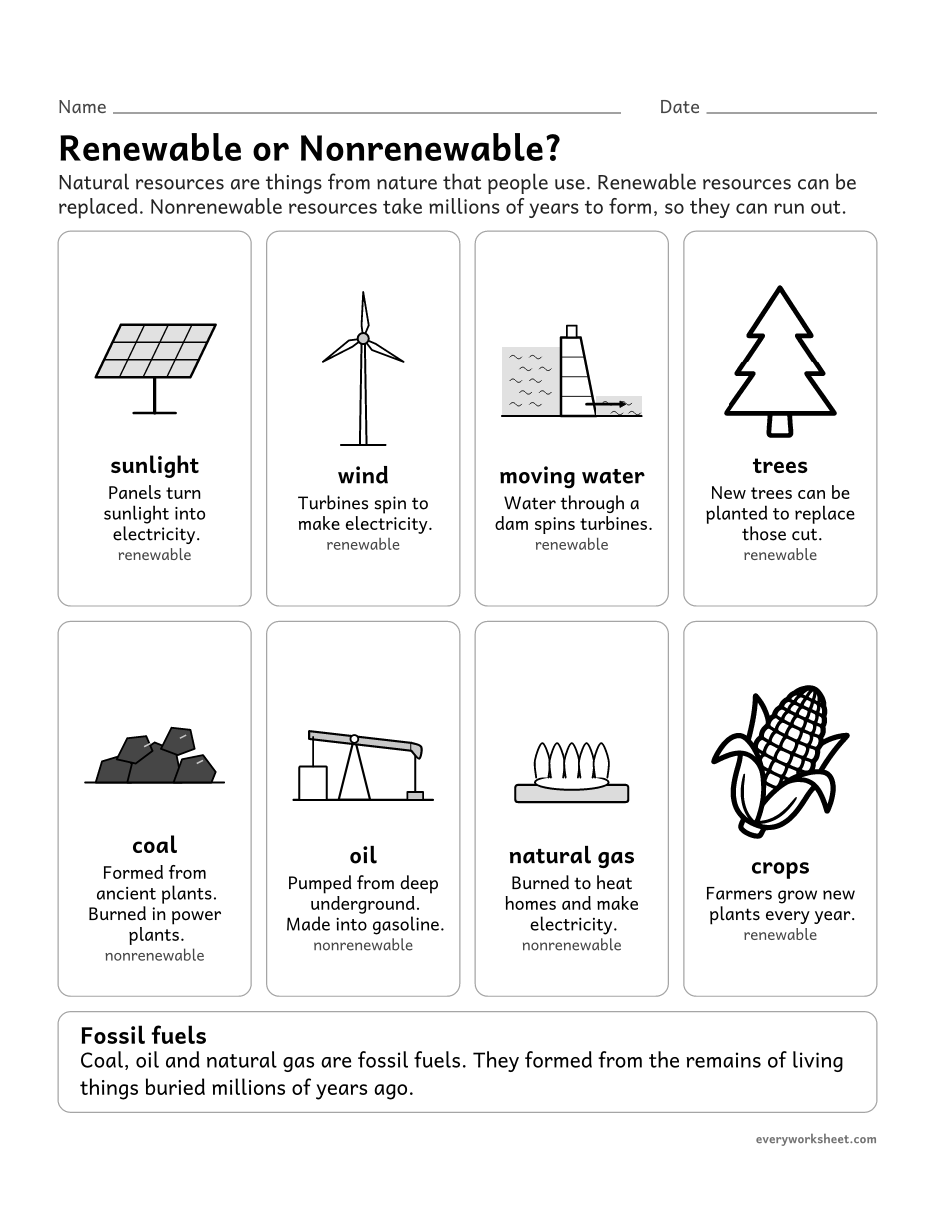
Natural resources are things from nature that people use: water, air, soil, trees, minerals and fuels. Renewable resources, like sunlight and wind, can be replaced. Nonrenewable resources, like coal, oil and natural gas, take millions of years to form and can run out.
These natural resources worksheets start with a poster and a renewable or nonrenewable sort (cut and paste or write the numbers). A chart compares energy resources and their effects on the environment, a passage explains how fossil fuels formed, and pages link resources to products and to everyday choices that save energy.
Every page is black and white, prints on US Letter or A4, and every page with right answers has an answer key on page 2.
NGSS 4-ESS3-1Obtain and combine information to describe that energy and fuels are derived from natural resources and their uses affect the environment.C3 D2.Geo.8.3-5Explain how human settlements and movements relate to the locations and use of various natural resources.CCSS.ELA-LITERACY.RI.4.4Determine the meaning of general academic and domain-specific words or phrases in a text relevant to a grade 4 topic or subject area.Renewable resources can be replaced in a person's lifetime, like sunlight, wind, water and trees. Nonrenewable resources, like coal, oil and natural gas, take millions of years to form and can run out.
They formed from the remains of plants and tiny sea creatures buried millions of years ago.
Burning fossil fuels puts smoke and gases into the air, and mining and drilling can harm land and water. Renewable sources make less pollution but have their own costs, like dams that block fish.