 View larger
Onomatopoeia
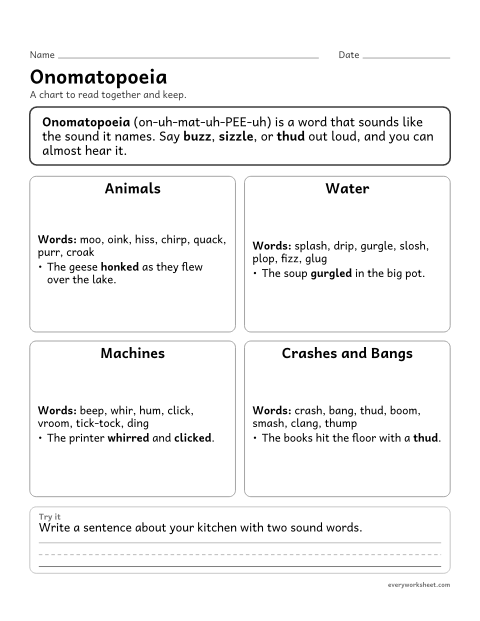
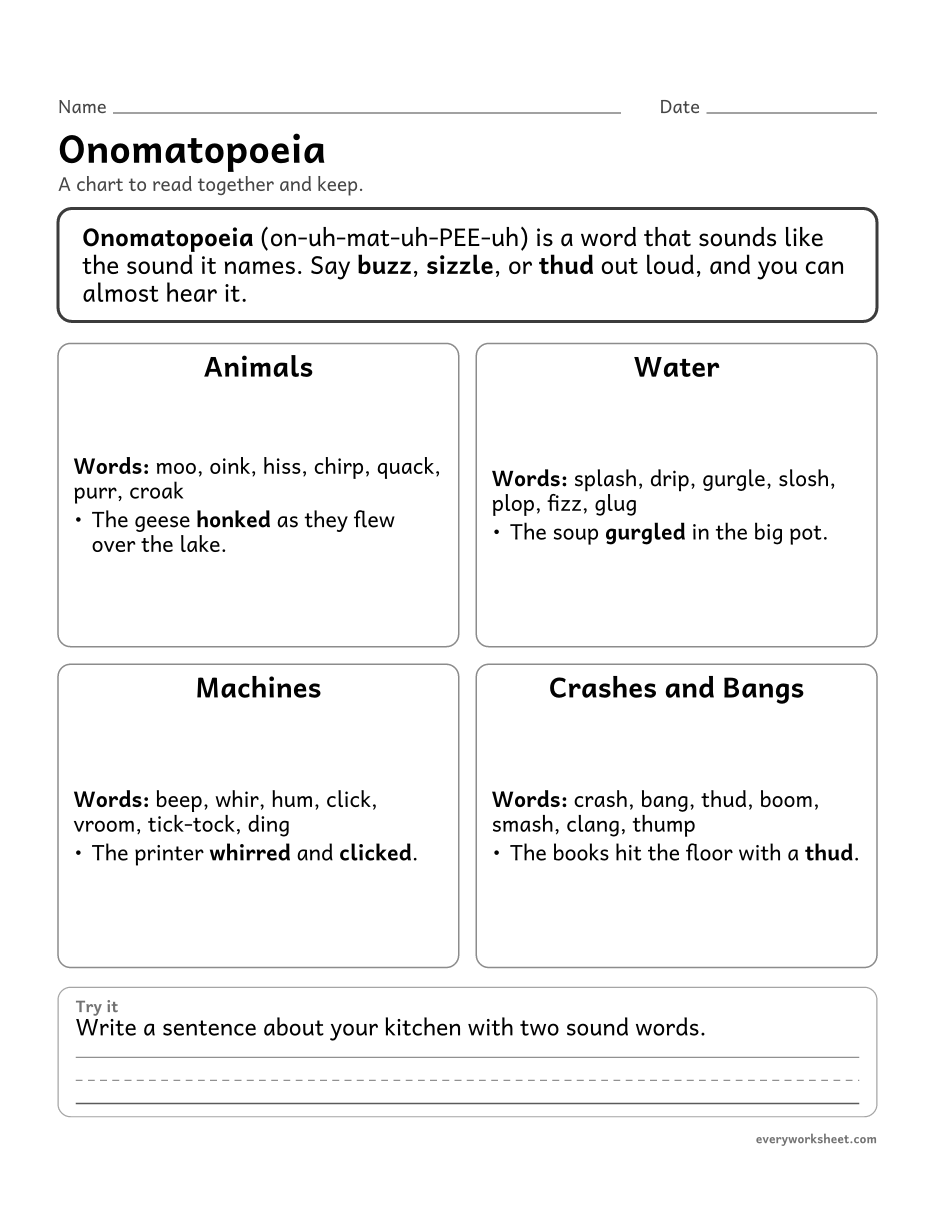
Knowing that onomatopoeia is a word that imitates a sound, grouped by sound family
1 page34 KB
Hear, find, sort, and write sound words with a chart, practice pages, a poem, and a writing prompt.
View largerKnowing that onomatopoeia is a word that imitates a sound, grouped by sound family
1 page34 KB
 View all 2 pages
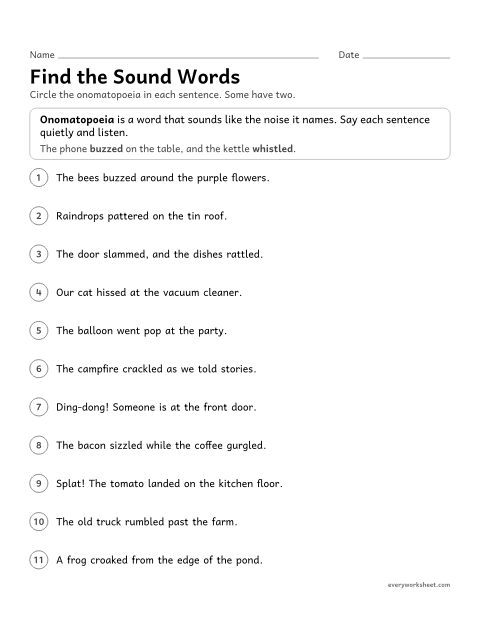
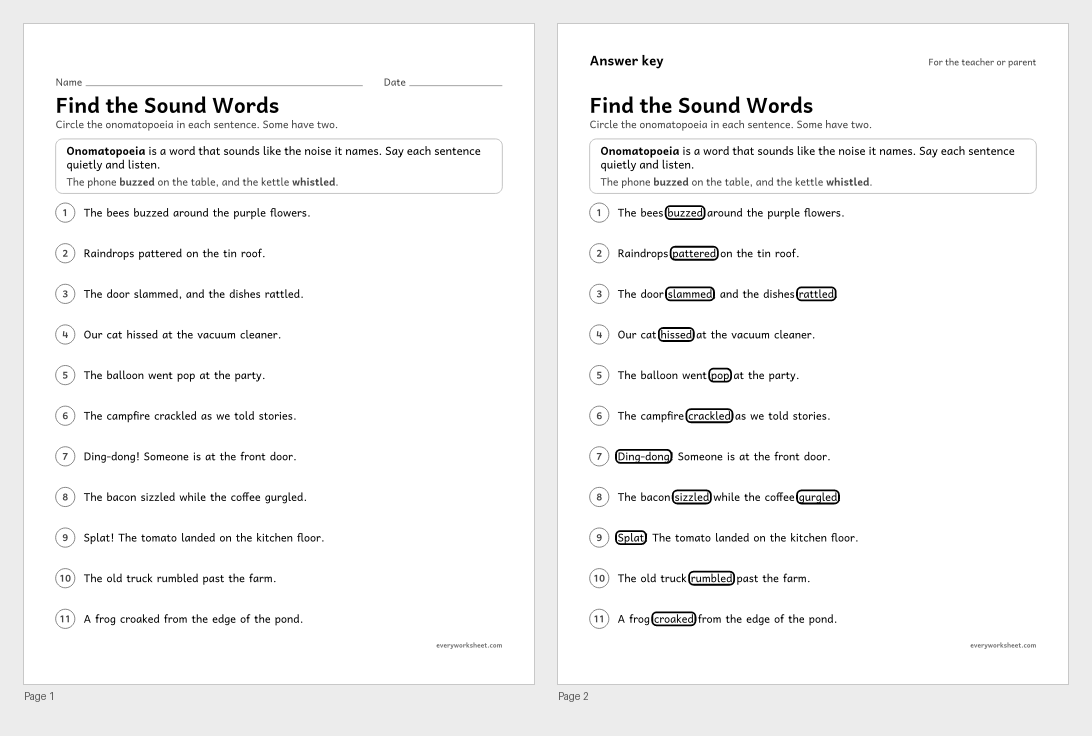
Finding onomatopoeia (sound words) in sentences
Answer key on page 2
2 pages53 KB
 View all 2 pages
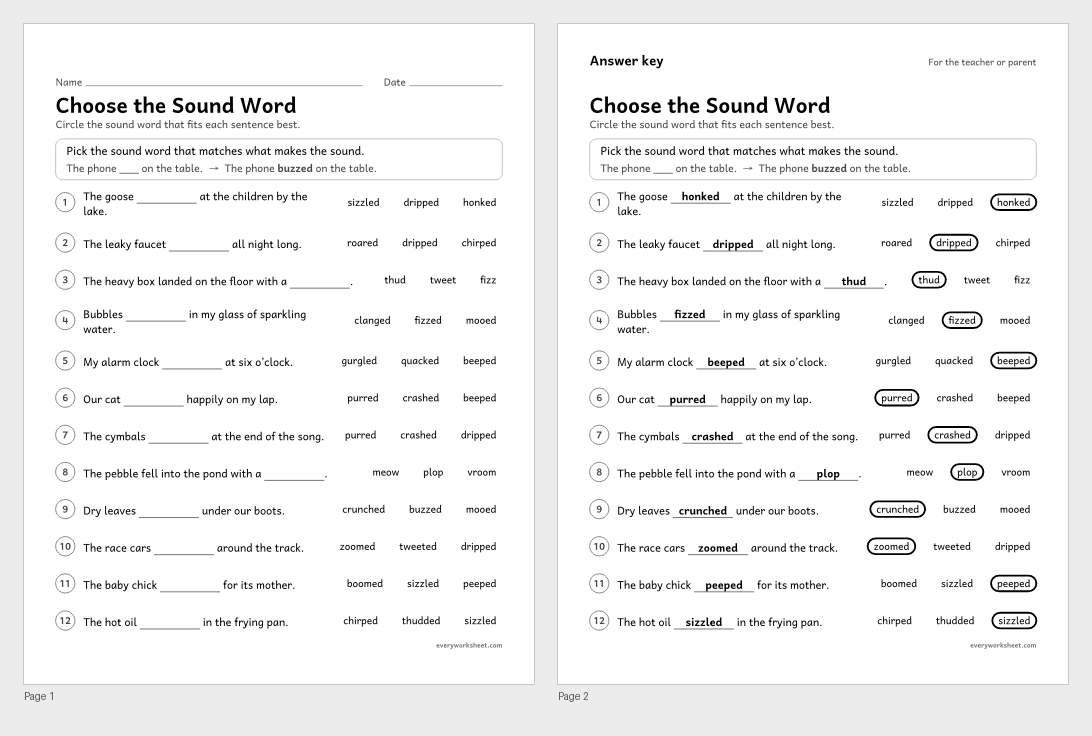
Choosing the onomatopoeia that fits a sentence
Answer key on page 2
2 pages58 KB
 View all 2 pages
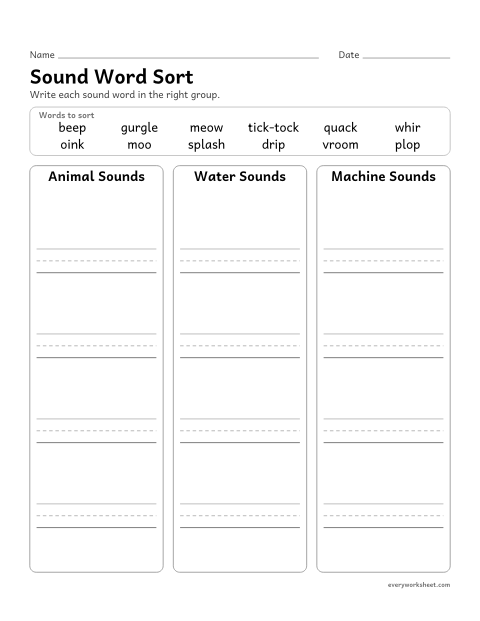
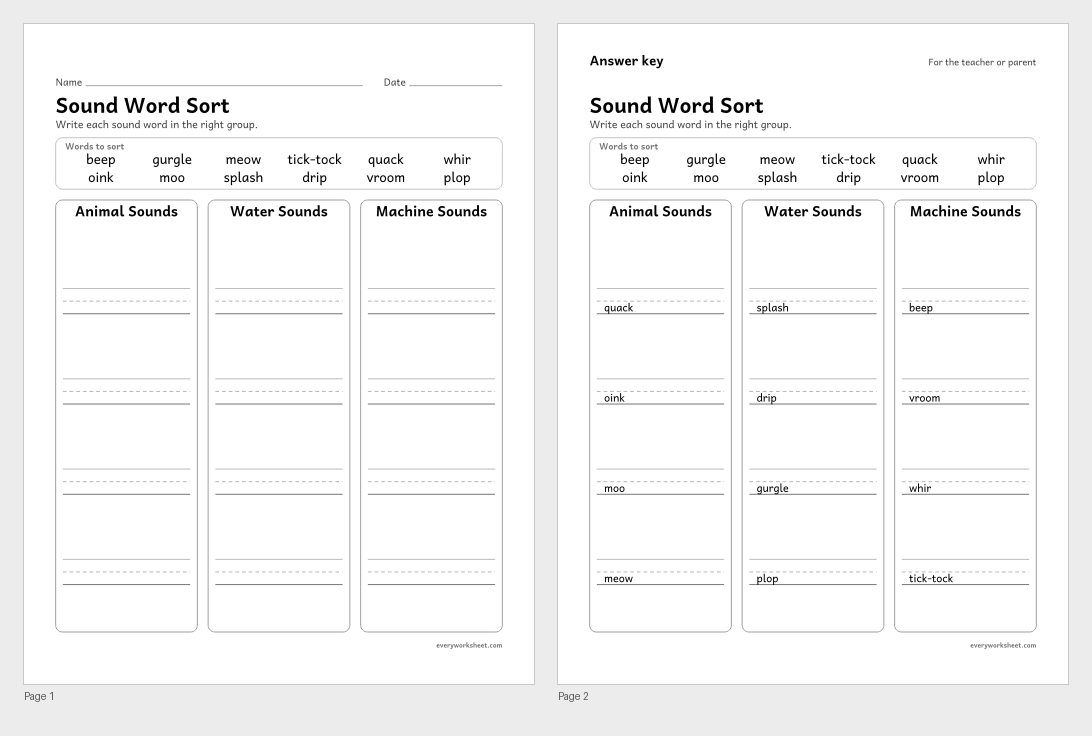
Sorting onomatopoeia into animal, water, and machine sounds
Answer key on page 2
2 pages35 KB
 View all 2 pages
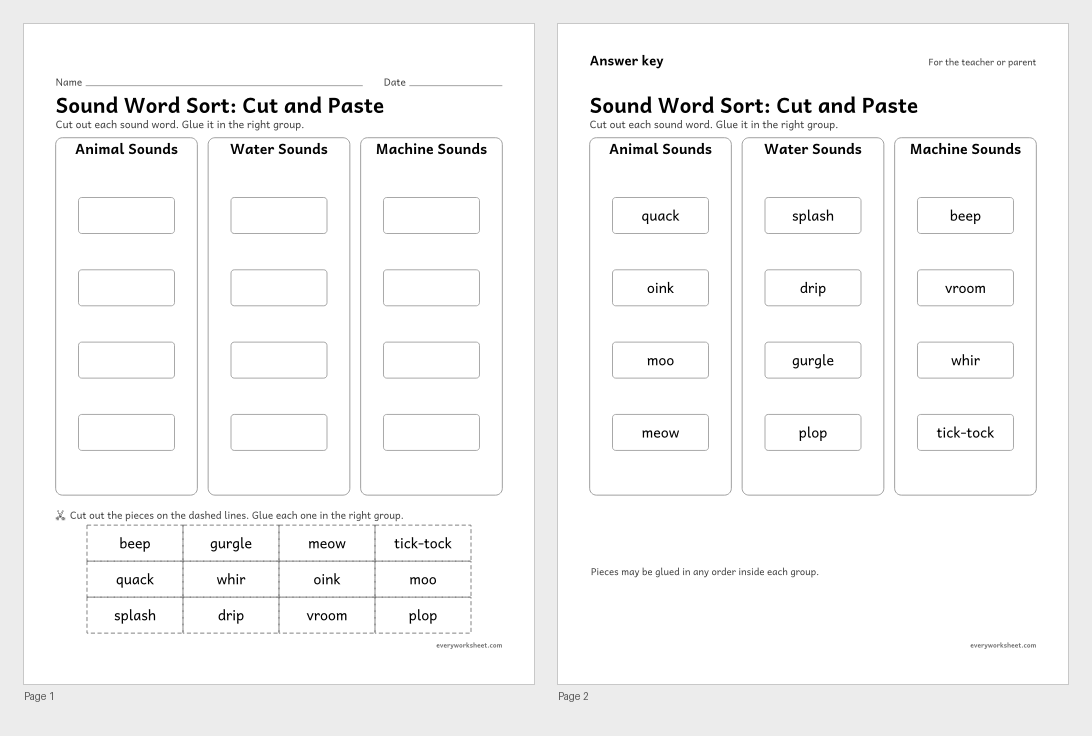
Sorting onomatopoeia into animal, water, and machine sounds
Answer key on page 2
2 pages66 KB
 3 pagesView all 3 pages
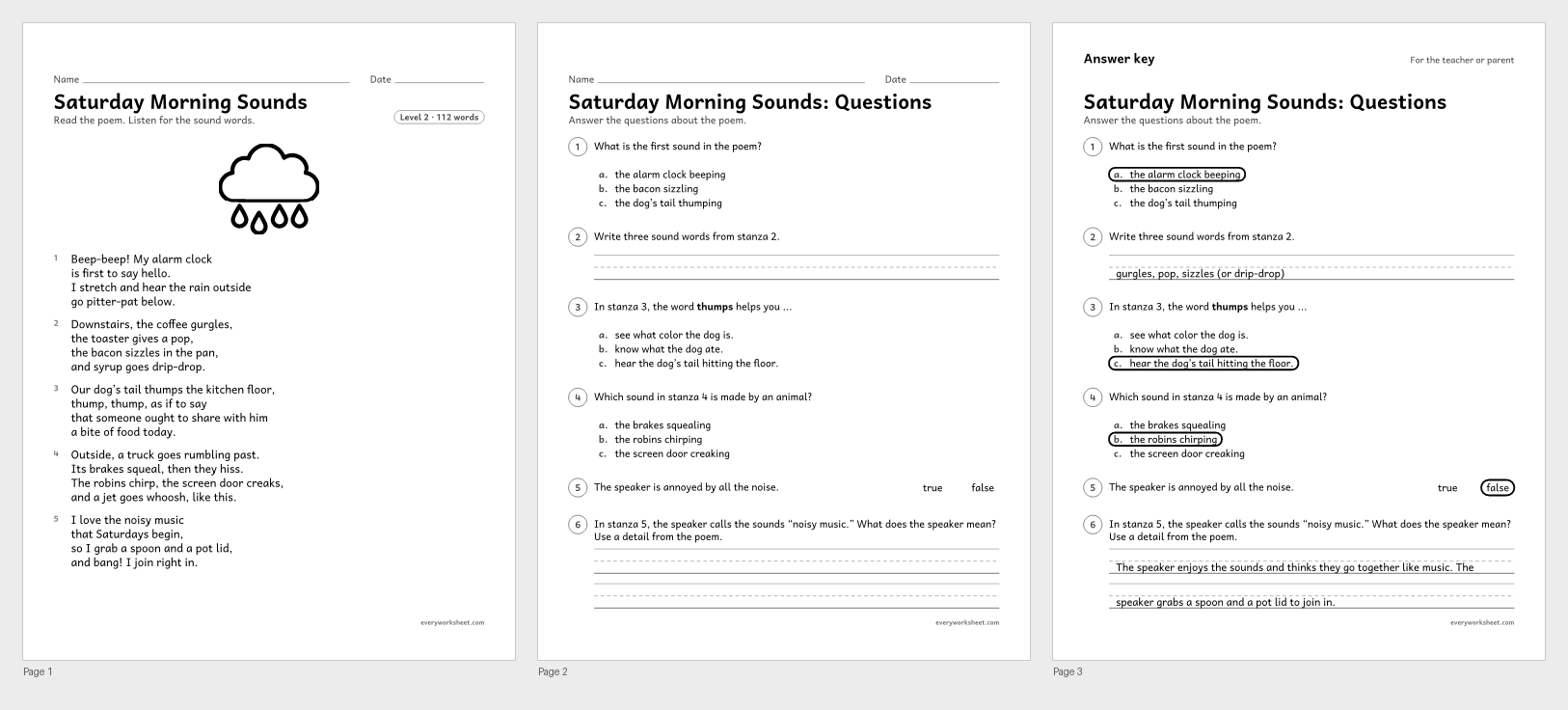
Finding onomatopoeia in a poem and explaining how sound words help the reader
Answer key on page 3
3 pages59 KB
 View larger
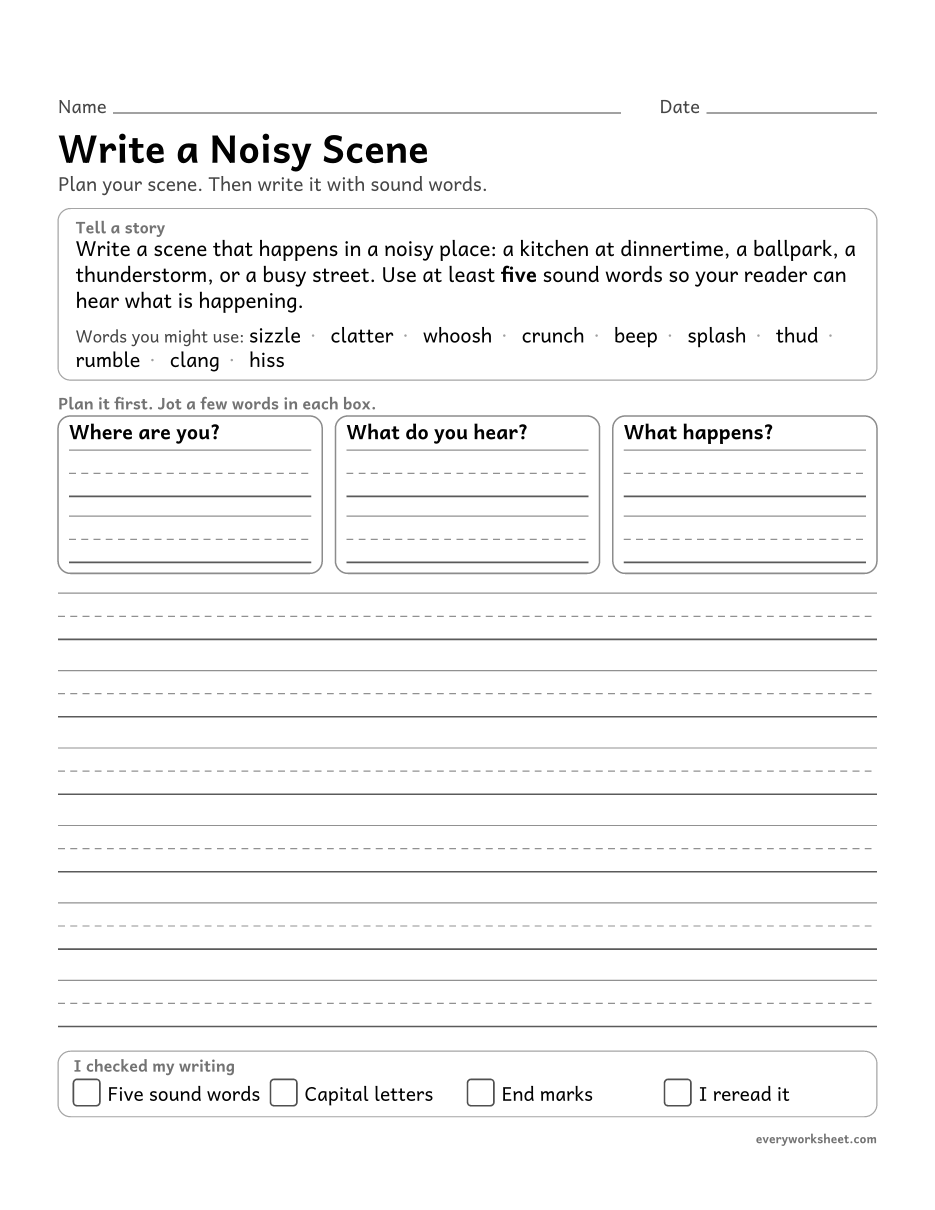
Writing a short scene that uses onomatopoeia for sensory detail
1 page31 KB
Print at 100% (actual size) for the cleanest tracing lines.
Onomatopoeia (say it on-uh-mat-uh-PEE-uh) is a word that sounds like the sound it names. Say "buzz," "sizzle," or "thud" out loud and you can almost hear a bee, bacon in a pan, or a heavy book hitting the floor. Sound words like these let readers hear a scene, not just see it.
Sound words come in families. Animals: moo, oink, quack, purr, chirp, and croak. Water: splash, drip, gurgle, plop, and fizz. Machines: beep, whir, click, vroom, and tick-tock. Crashes and bangs: crash, bang, boom, clang, and thump. Many sound words are also verbs, so "the bees buzzed" and "the door slammed" both use onomatopoeia.
Onomatopoeia is different from alliteration. Alliteration repeats the same beginning sound ("big brown bears"), while onomatopoeia imitates a real noise. A sound word can stand alone, too: "Crash! The tray hit the floor." Comic strips and poems use onomatopoeia often, because it adds energy and rhythm.
These worksheets start with a chart grouped by sound family. Children then circle sound words in sentences, choose the sound word that fits, sort sound words into animal, water, and machine sounds, read an original poem full of Saturday morning sounds, and write a noisy scene of their own.
CCSS.ELA-LITERACY.RL.4.4Determine the meaning of words and phrases as they are used in a text, including those that allude to significant characters found in mythology (e.g., Herculean).CCSS.ELA-LITERACY.W.4.3.DUse concrete words and phrases and sensory details to convey experiences and events precisely.CCSS.ELA-LITERACY.L.4.3.AChoose words and phrases to convey ideas precisely.CCSS.ELA-LITERACY.L.4.5Demonstrate understanding of figurative language, word relationships, and nuances in word meanings.Onomatopoeia is a word that imitates the sound it describes, like "buzz," "splash," "beep," or "crash."
Say it on-uh-mat-uh-PEE-uh. Spell it o-n-o-m-a-t-o-p-o-e-i-a. A trick: "onomato" then "poeia," with the "oe" making the long e sound.
Animal sounds (moo, quack, hiss), water sounds (drip, splash, gurgle), machine sounds (beep, whir, vroom), and crashes (bang, thud, boom) are all onomatopoeia.
Yes. Onomatopoeia is usually taught as a kind of figurative language and a sound device. It helps readers hear what is happening.
Onomatopoeia imitates a real sound ("sizzle"). Alliteration repeats the same beginning sound in nearby words ("silly seals sang"). A sentence can use both: "The sausages sizzled."