 View larger
Oxymoron Worksheets
Learn what an oxymoron is with a chart, then find, sort, explain, and write oxymorons like jumbo shrimp and bittersweet.
Download the oxymoron worksheets
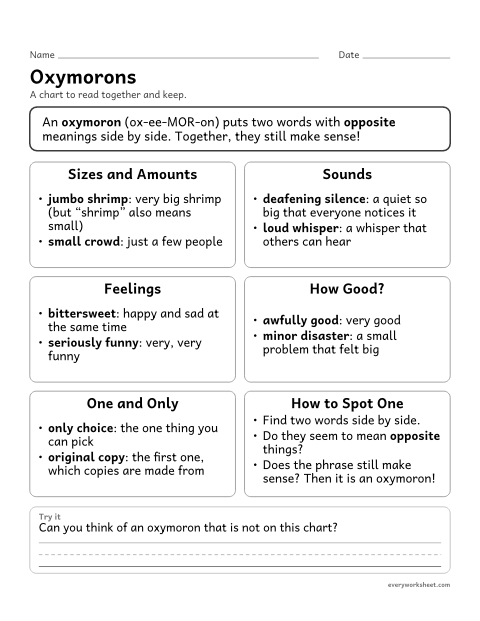
4th grade: oxymoron anchor chart
 View larger
4th grade: find the oxymoron
 View all 2 pages
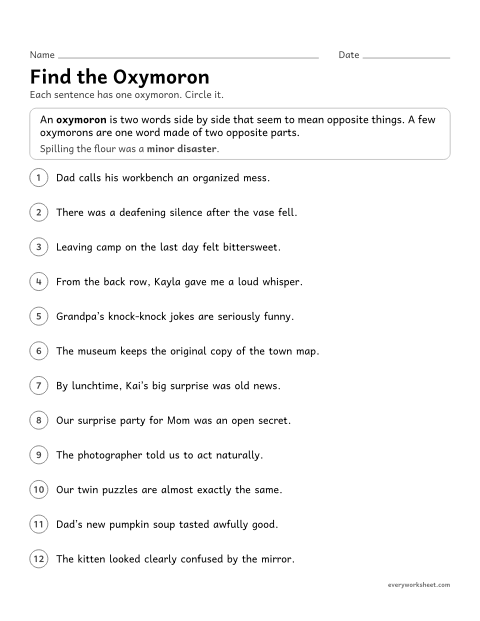
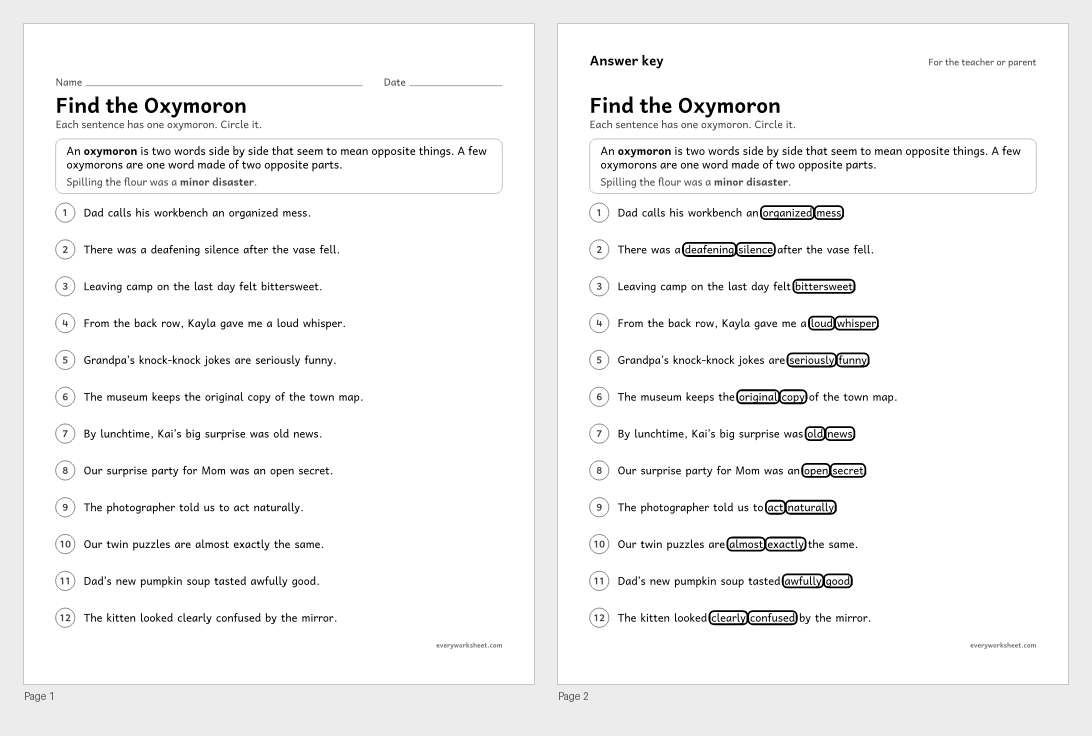
Find the oxymoron
Finding the oxymoron in a sentence
Answer key on page 2
2 pages55 KB
 View all 2 pages
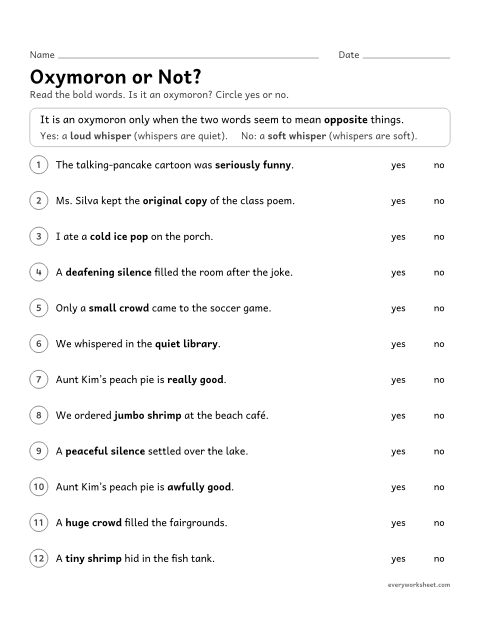
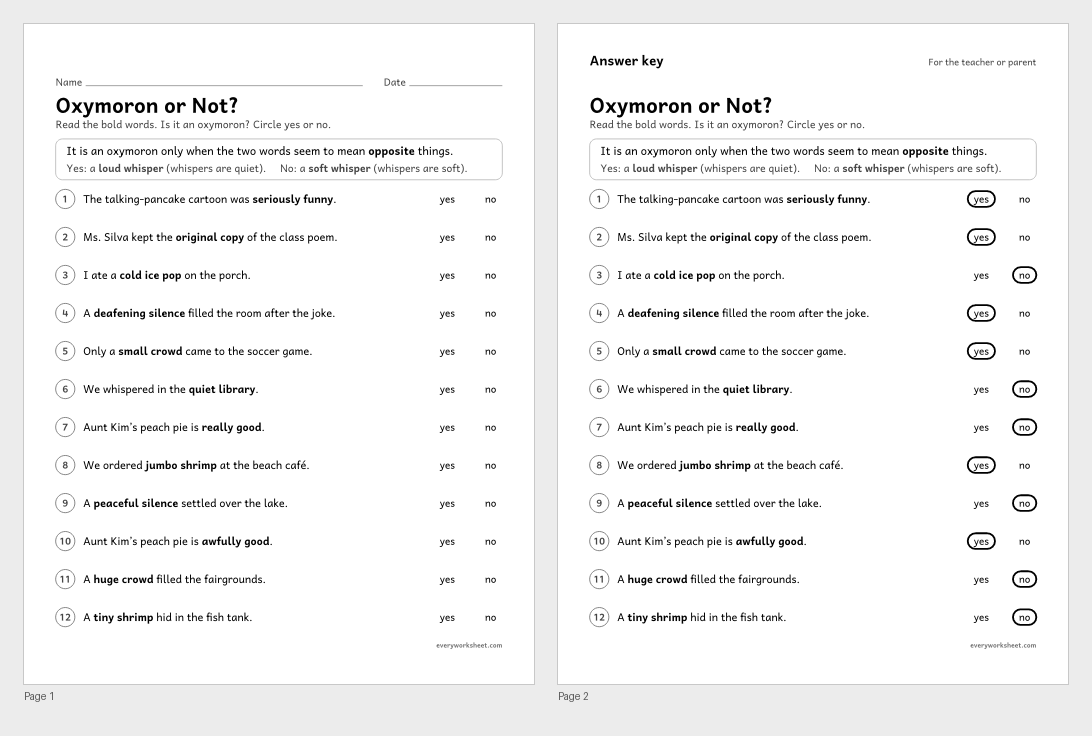
Oxymoron or Not?
Telling oxymorons from word pairs whose words agree
Answer key on page 2
2 pages61 KB
4th grade: what does the oxymoron mean?
 View all 2 pages
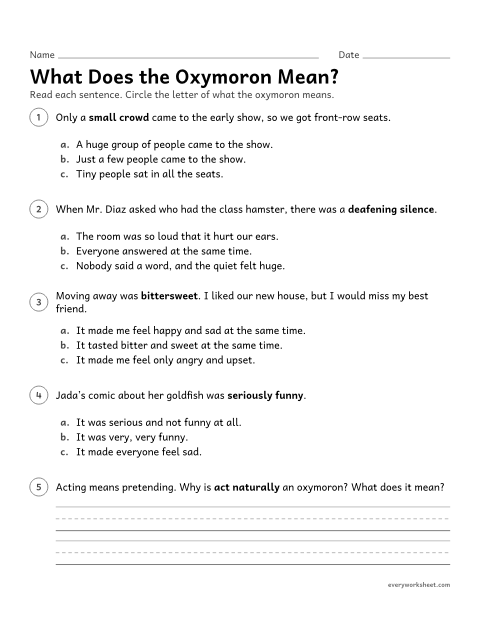
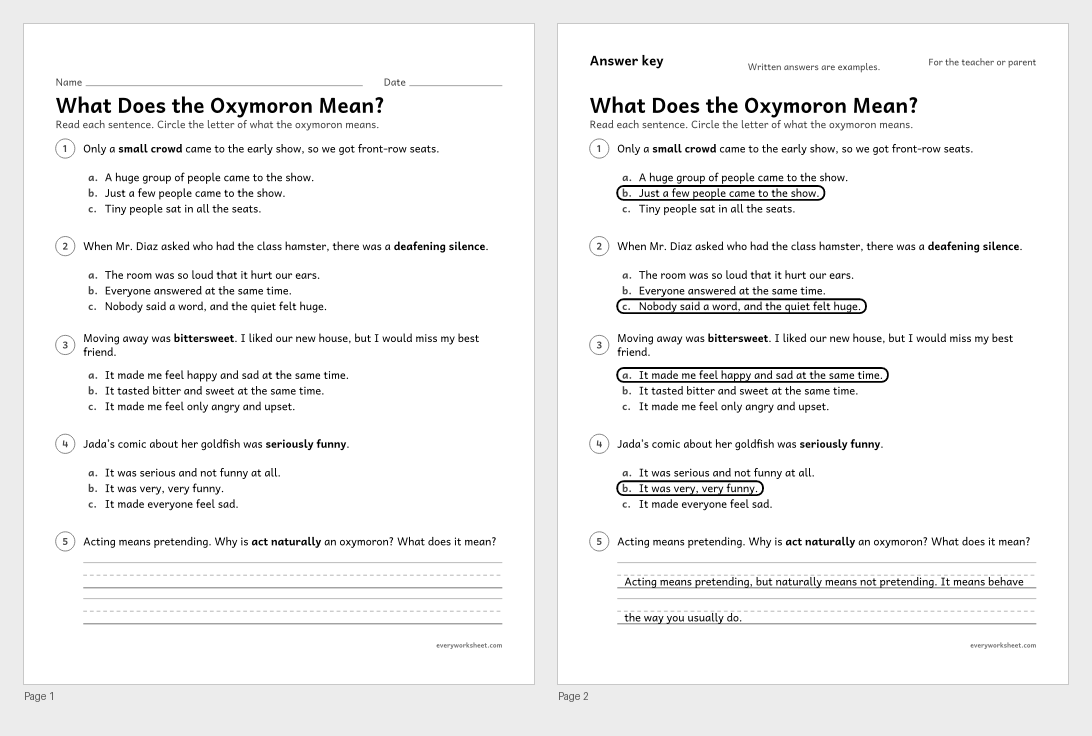
What does the oxymoron Mean?
Using context to tell what an oxymoron means
Answer key on page 2
2 pages54 KB
 View all 2 pages
 View all 2 pages
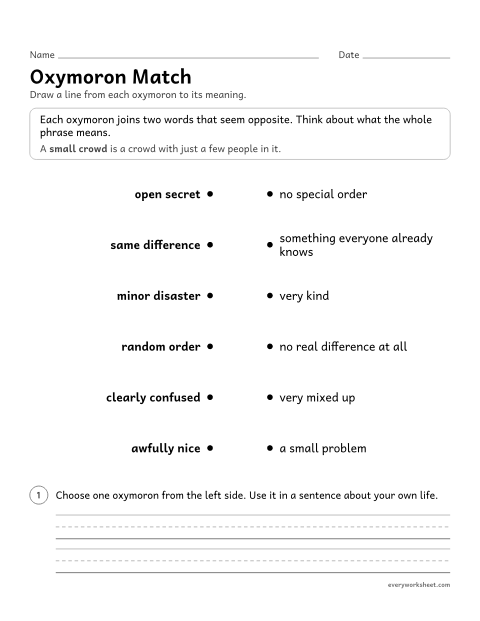
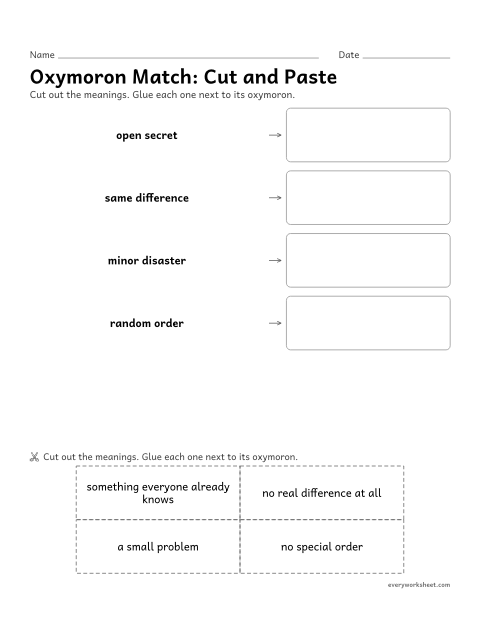
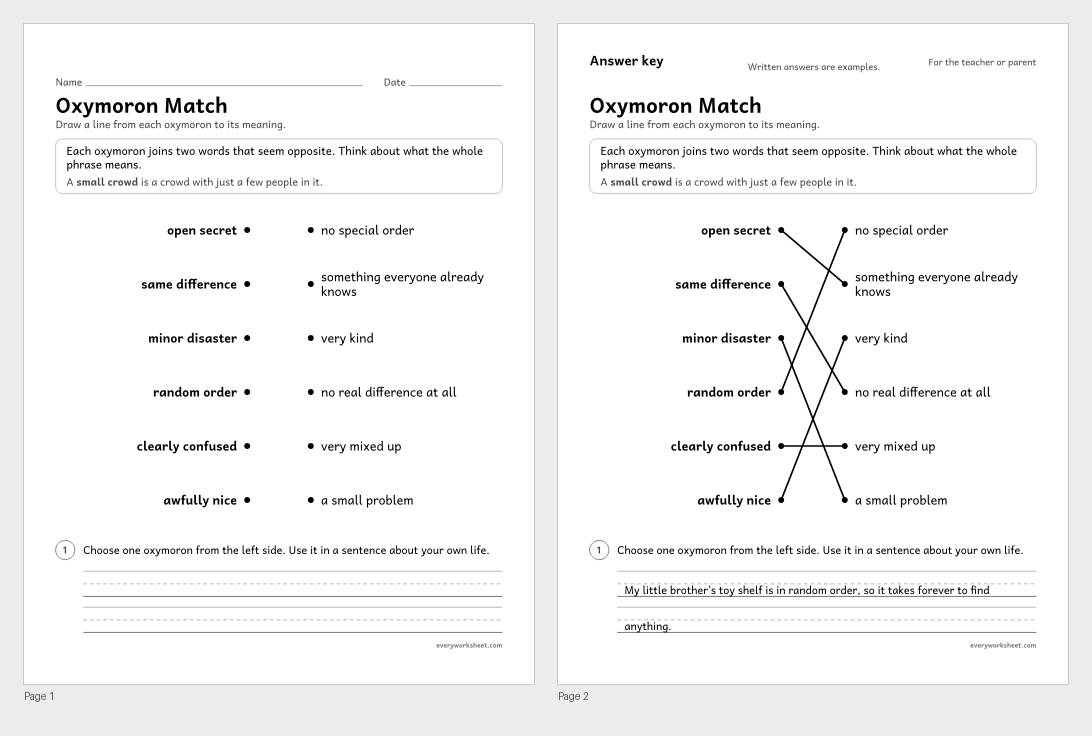
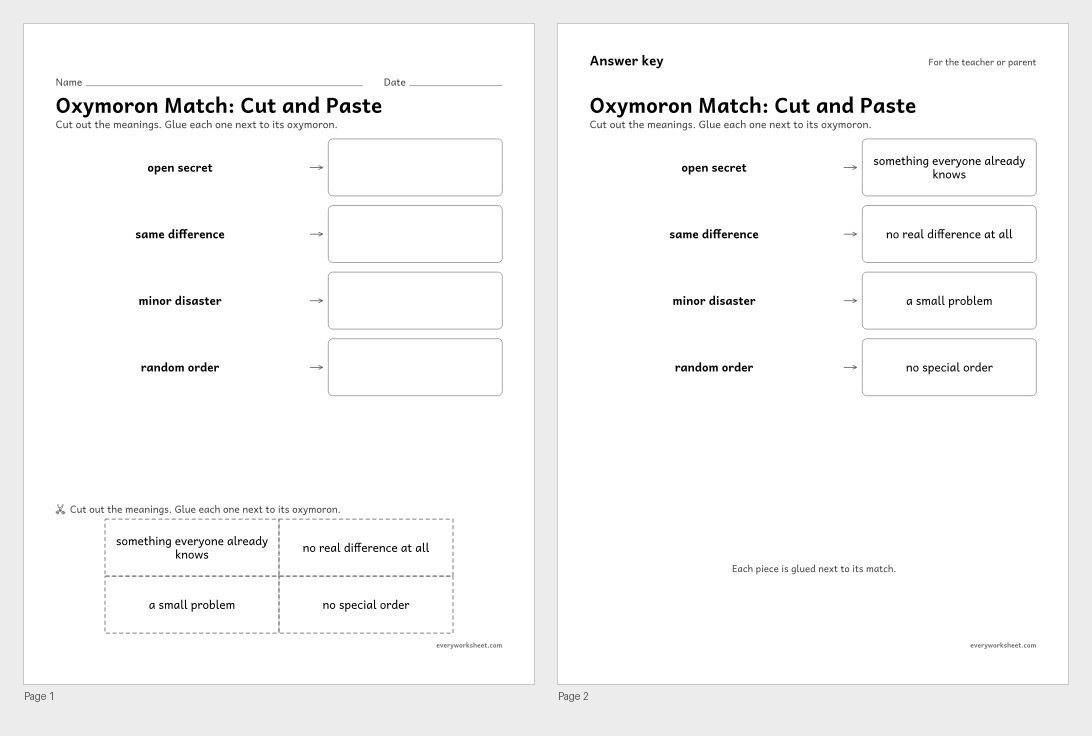
Oxymoron Match: cut and paste
Matching oxymorons to their meanings
Answer key on page 2
2 pages66 KB
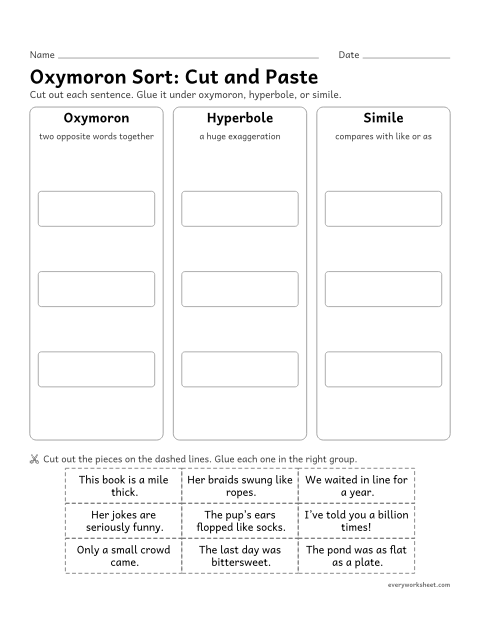
4th grade: oxymoron, hyperbole, or simile sort
 View all 2 pages
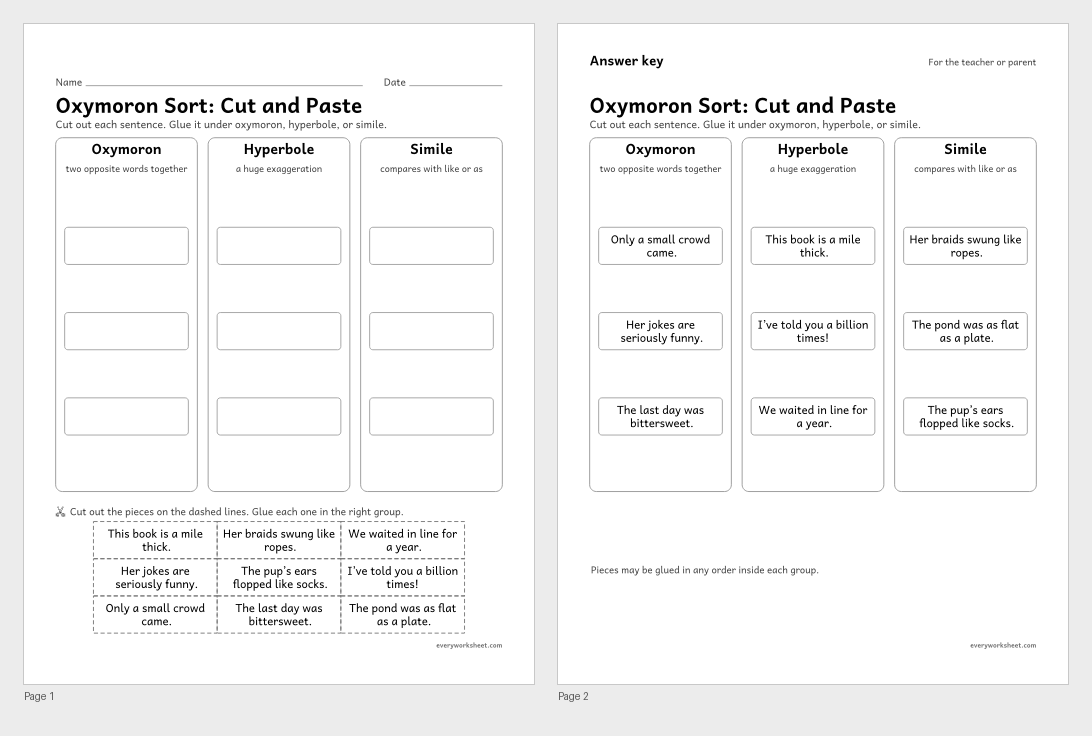
Oxymoron Sort: cut and paste
Sorting sentences into oxymoron, hyperbole, and simile
Answer key on page 2
2 pages67 KB
 View all 2 pages
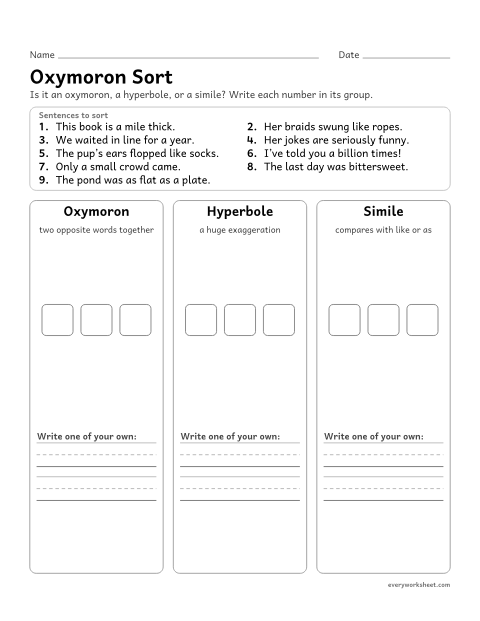
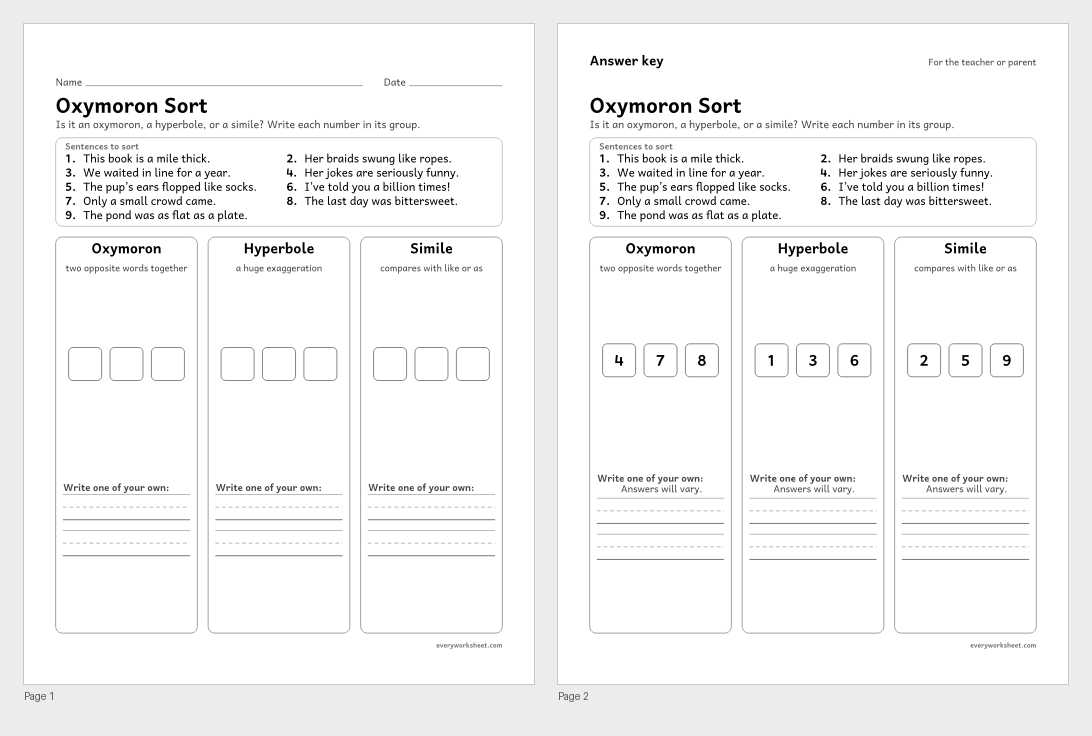
Oxymoron sort
Sorting sentences into oxymoron, hyperbole, and simile
Answer key on page 2
2 pages49 KB
4th grade: write with oxymorons
 View all 2 pages
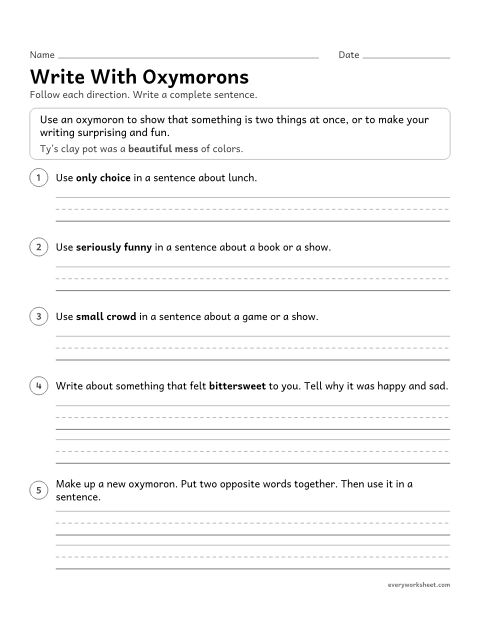
Write with oxymorons
Using common oxymorons in sentences and inventing new ones
Answer key on page 2
2 pages41 KB
5th grade: oxymorons in a story
 3 pagesView all 3 pages
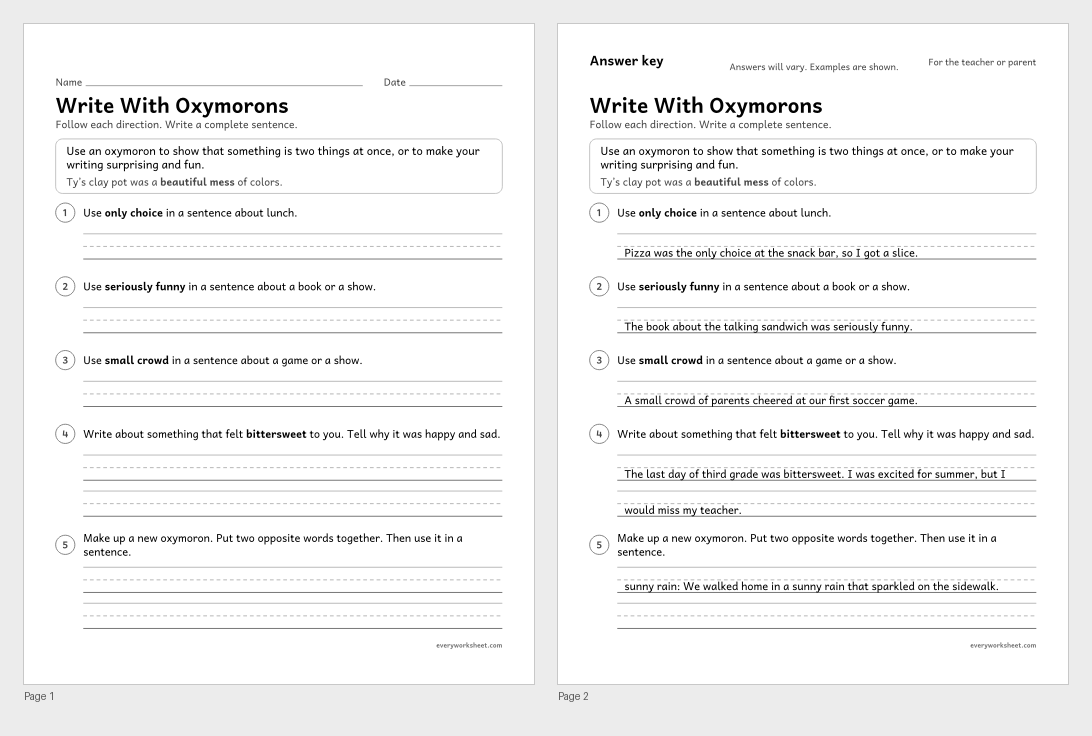
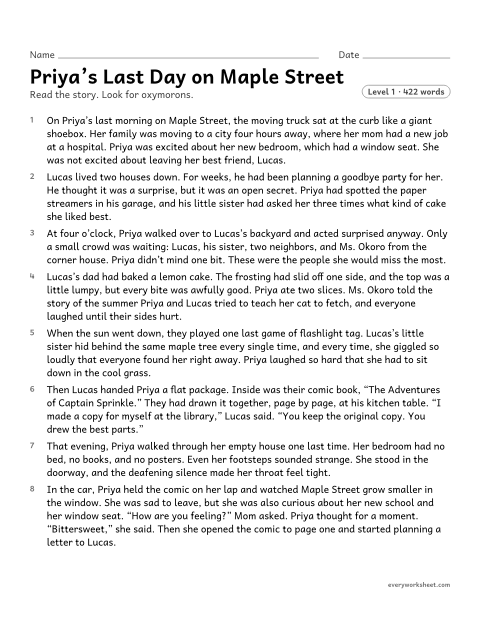
Priya's last day on maple street
Explaining the meaning of oxymorons in a story and how they show a character's feelings
Answer key on page 3
3 pages58 KB
5th grade: explain the oxymoron
 View all 2 pages
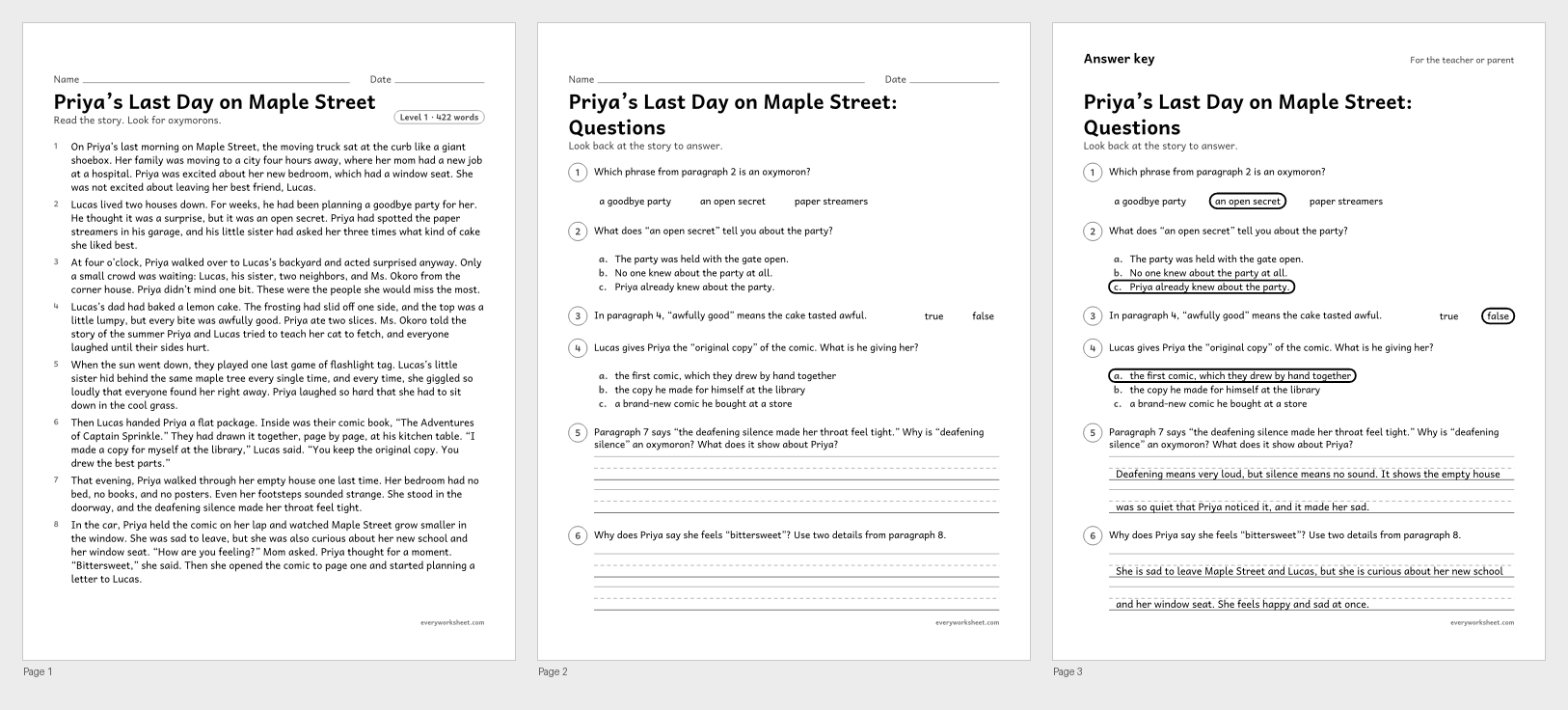
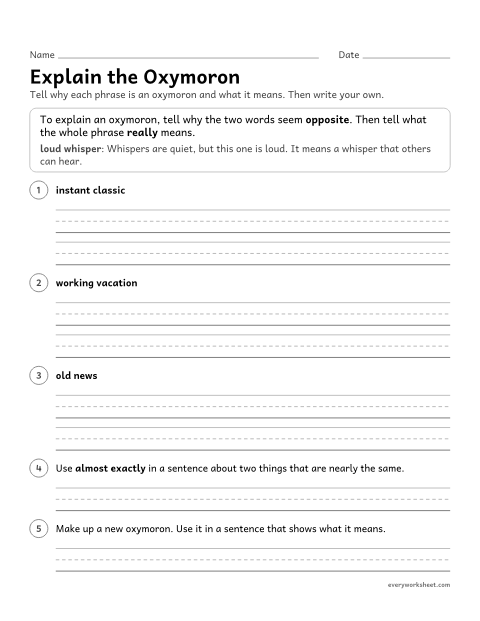
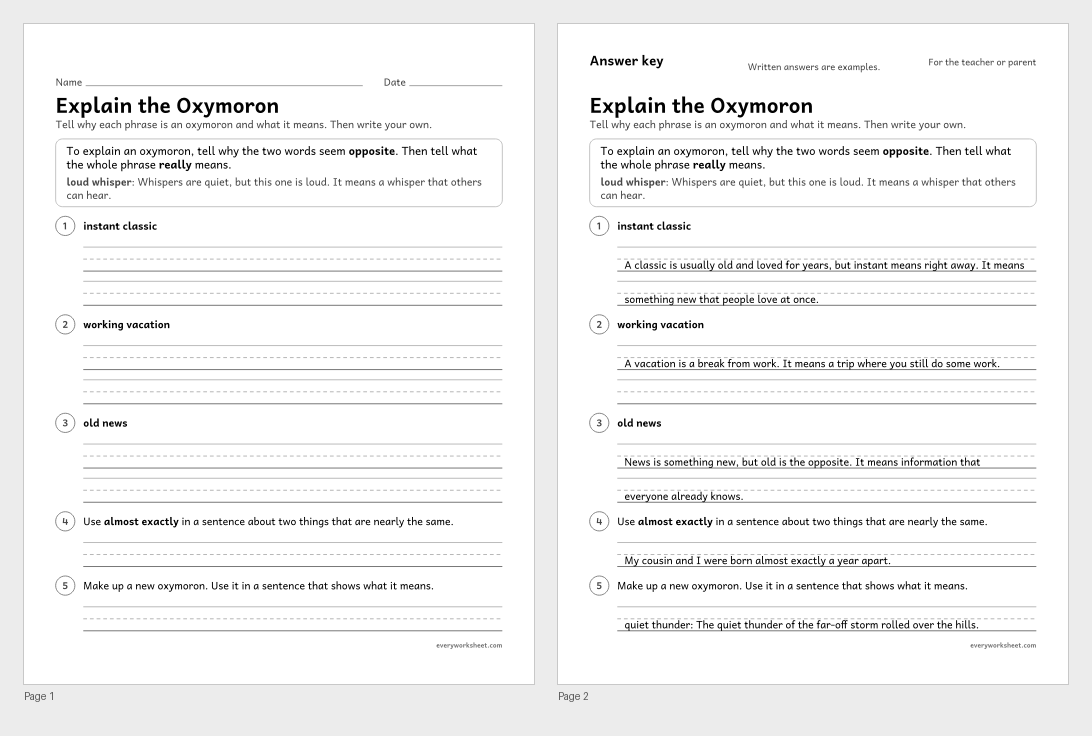
Explain the oxymoron
Explaining why a phrase is an oxymoron and what it means, then writing with oxymorons
Answer key on page 2
2 pages39 KB
Print at 100% (actual size) for the cleanest tracing lines.
About these oxymoron worksheets
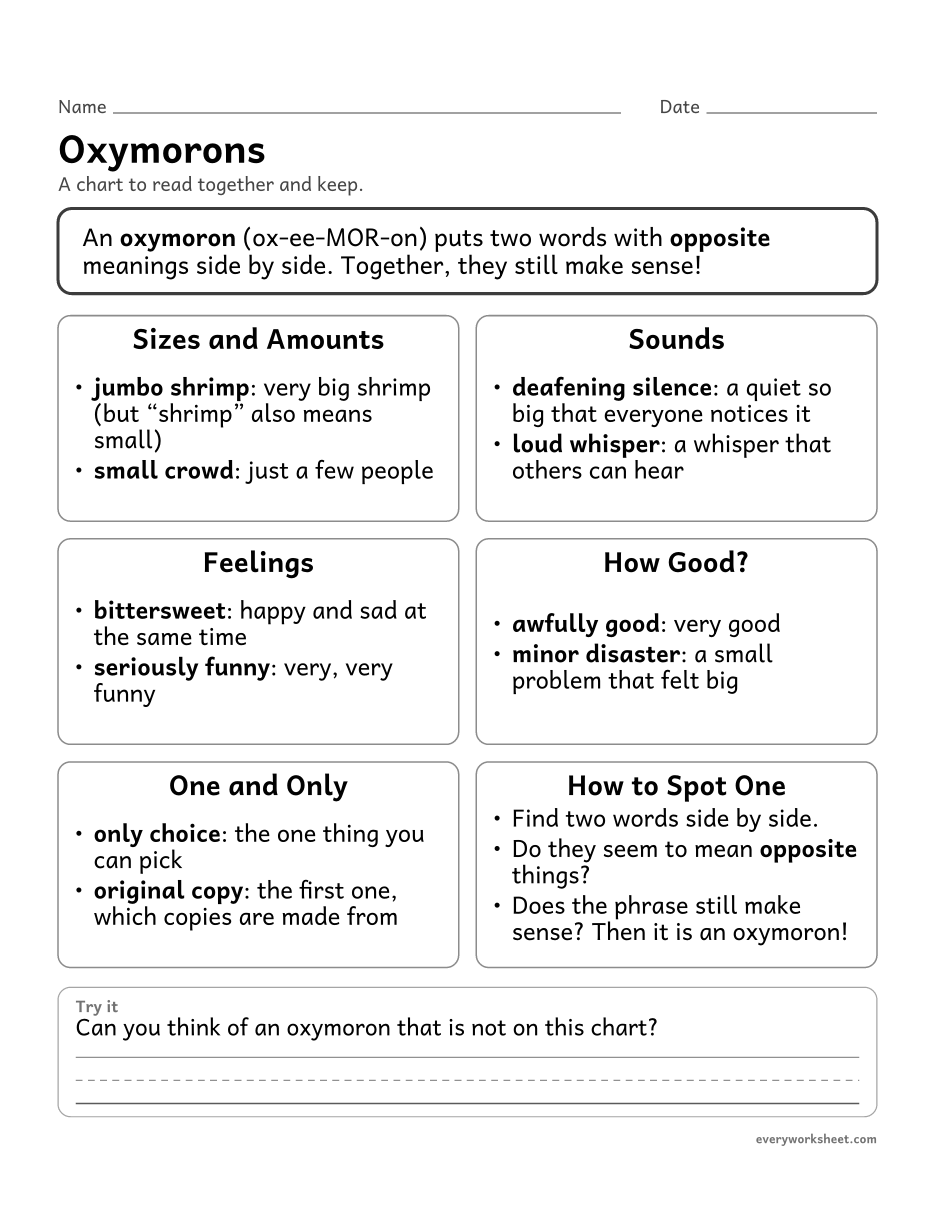
An oxymoron puts two words with opposite meanings side by side, and the phrase still makes sense. Jumbo shrimp are very big shrimp, even though "shrimp" usually means something small. A small crowd is a crowd with only a few people in it. A deafening silence is a quiet so complete that everyone notices it, and something bittersweet makes you feel happy and sad at the same time.
Writers use oxymorons to show that something is two things at once, or to surprise the reader and make a line memorable. Once children know the trick, they start spotting oxymorons everywhere: awfully good soup, a seriously funny comic, an original copy of a drawing, an open secret that everybody already knows.
These printable pages start with an anchor chart of common oxymorons and what they mean. Children then circle the oxymoron in a sentence, decide whether a pair of words is an oxymoron or not, choose what an oxymoron means from the clues around it, match oxymorons to their meanings, and sort oxymorons from hyperboles and similes. Writing pages ask them to use oxymorons in their own sentences and to invent new ones.
For 5th grade, an original story about a girl's last day before her family moves is full of oxymorons, with questions that ask what each one means and how it shows her feelings. A second page asks children to explain why each phrase is an oxymoron and what it really means. Every practice page has an answer key.
Standards
CCSS.ELA-LITERACY.L.4.5Demonstrate understanding of figurative language, word relationships, and nuances in word meanings.CCSS.ELA-LITERACY.L.5.5Demonstrate understanding of figurative language, word relationships, and nuances in word meanings.CCSS.ELA-LITERACY.RL.5.4Determine the meaning of words and phrases as they are used in a text, including figurative language such as metaphors and similes.
How to use them
- Start with the anchor chart. Read each oxymoron aloud and ask which two words seem to disagree.
- Practice spotting them with the find-it and oxymoron-or-not pages, then move on to meanings in context and matching.
- Use the sort to compare oxymorons with hyperboles and similes, as cut and paste or with no cutting.
- Finish with a writing page, or the 5th grade story and explain-it page, so children use oxymorons on their own.
Teaching tips
- Ask two questions every time: Do the words seem opposite? Does the phrase still make sense? If both answers are yes, it is an oxymoron.
- Words that agree are not oxymorons. A huge crowd and a tiny shrimp are just ordinary descriptions.
- Some oxymorons are one word made of two opposite parts, like bittersweet.
- Make it a game: keep a class list of oxymorons children find in books, menus, and conversations.
Questions teachers and parents ask
What is an oxymoron?
An oxymoron is a phrase that puts two words with opposite meanings together, like jumbo shrimp, small crowd, or deafening silence. Even though the words seem to disagree, the phrase still makes sense.
What are some easy oxymorons for kids?
Good starter oxymorons are jumbo shrimp, small crowd, awfully good, seriously funny, only choice, original copy, loud whisper, deafening silence, open secret, and bittersweet.
How is an oxymoron different from a hyperbole?
A hyperbole is a huge exaggeration, like "I've told you a billion times." An oxymoron joins two opposite words, like "small crowd." One stretches the truth, and the other puts opposites together.
What grade learns about oxymorons?
Children usually meet oxymorons in 4th and 5th grade, when they study figurative language and word relationships. These pages are written for those grades.
Do the worksheets have answer keys?
Yes. Every practice page has an answer key. Writing pages show example answers, since children's own sentences will vary.