 View larger
Personification
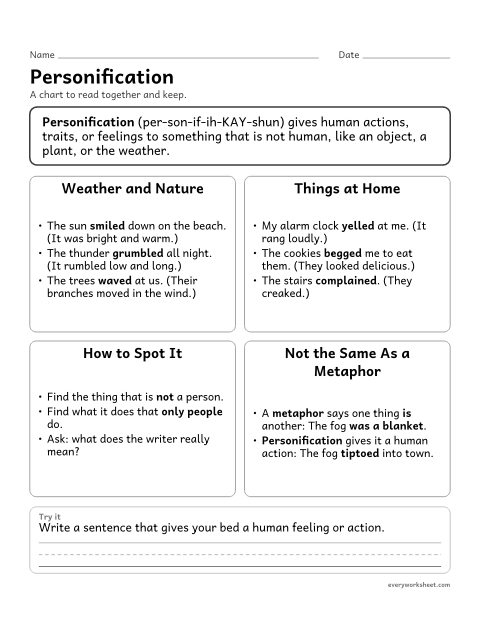
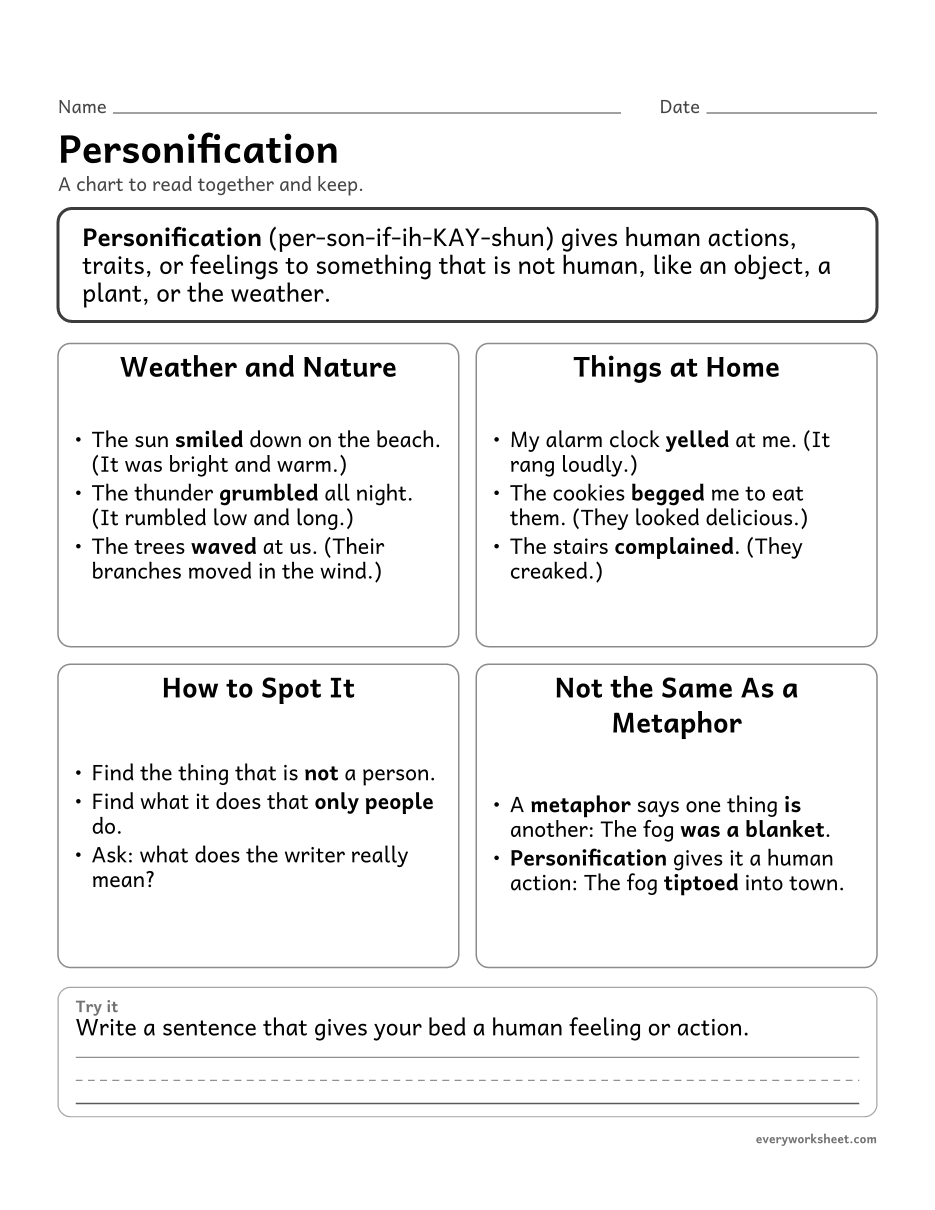
Knowing that personification gives human traits to things that are not human
1 page37 KB
Find, explain, and write personification with a chart, practice pages, and an original poem.
View largerKnowing that personification gives human traits to things that are not human
1 page37 KB
 View all 2 pages
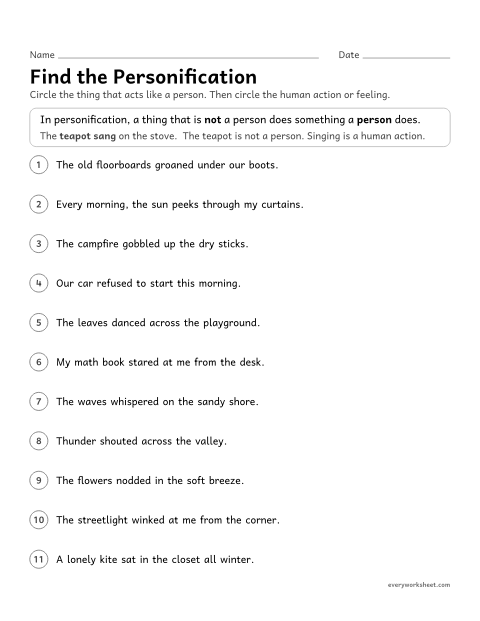
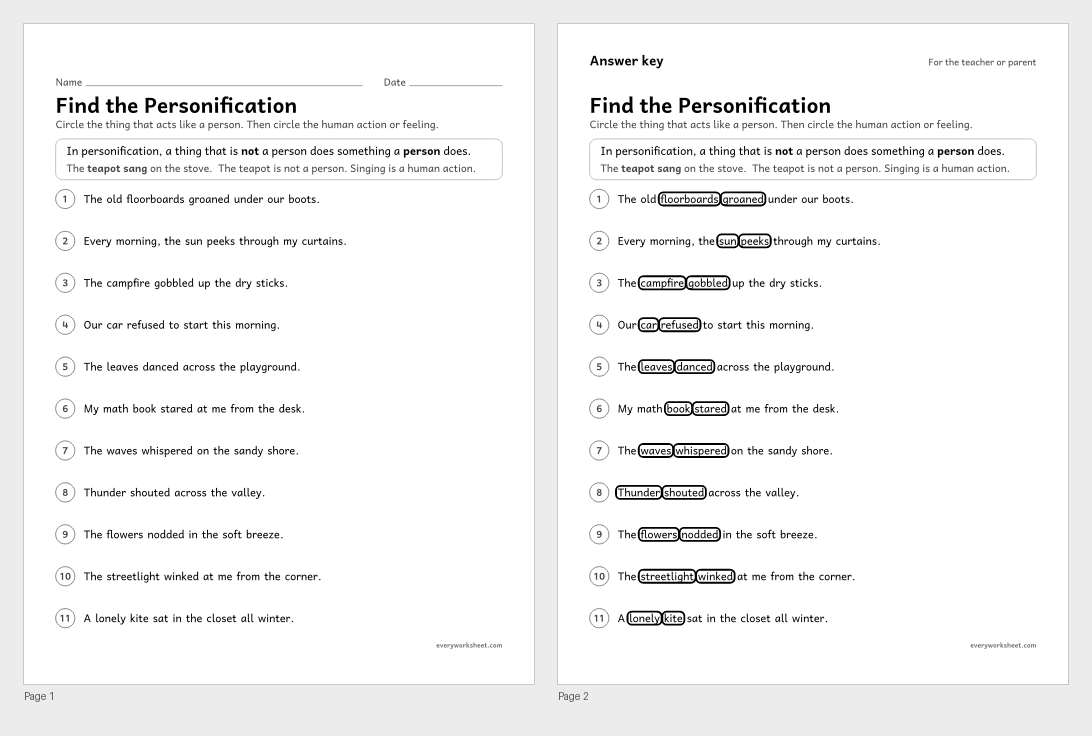
Finding the nonhuman thing and the human trait in personification
Answer key on page 2
2 pages53 KB
 View all 2 pages
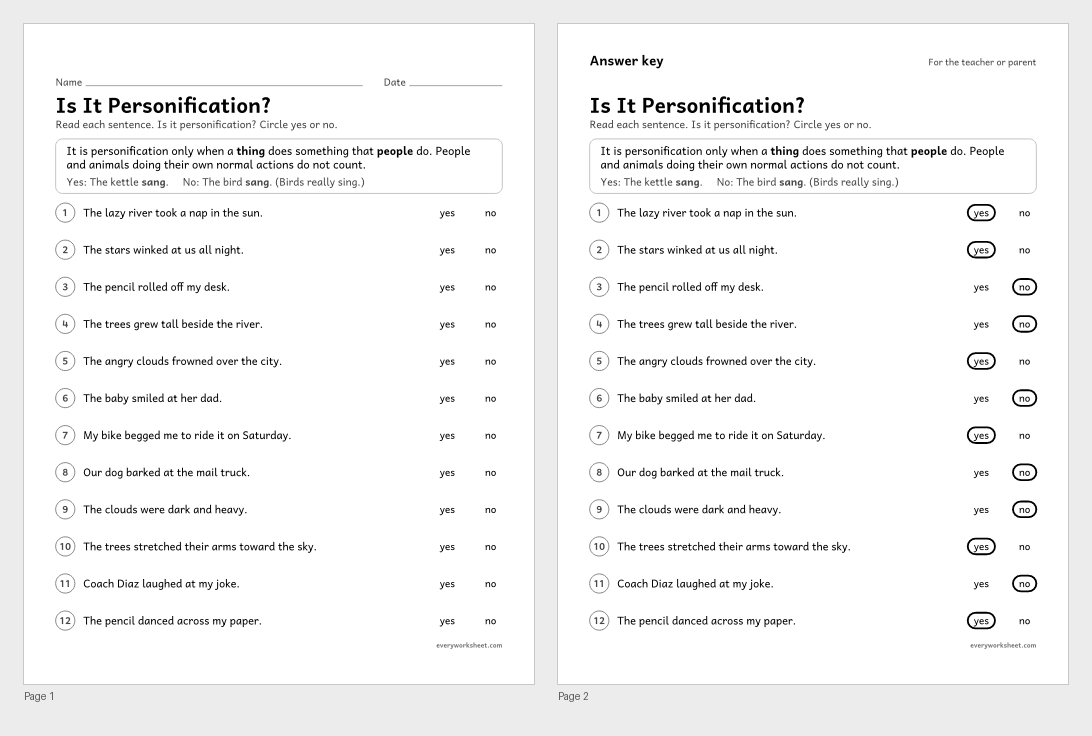
Telling personification from sentences where people or animals do what they really do
Answer key on page 2
2 pages56 KB
 View all 2 pages
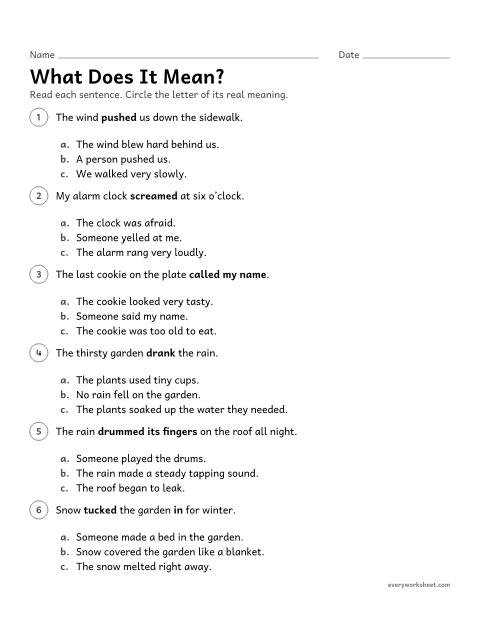
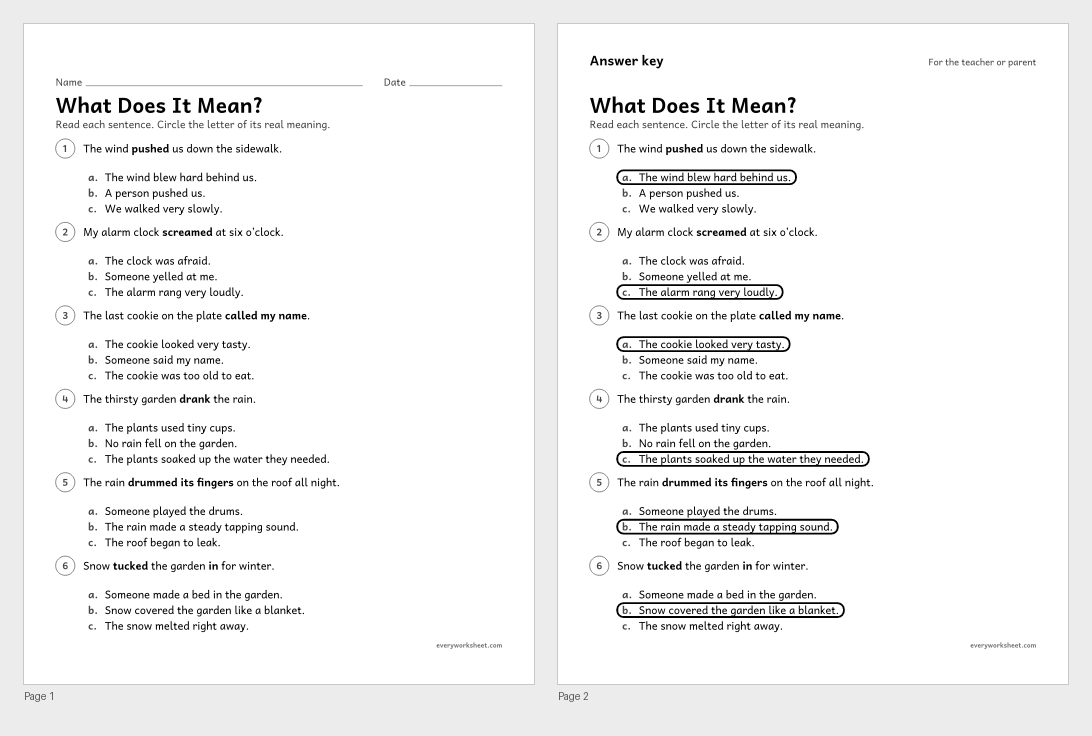
Explaining what personification really describes
Answer key on page 2
2 pages61 KB
 View all 2 pages
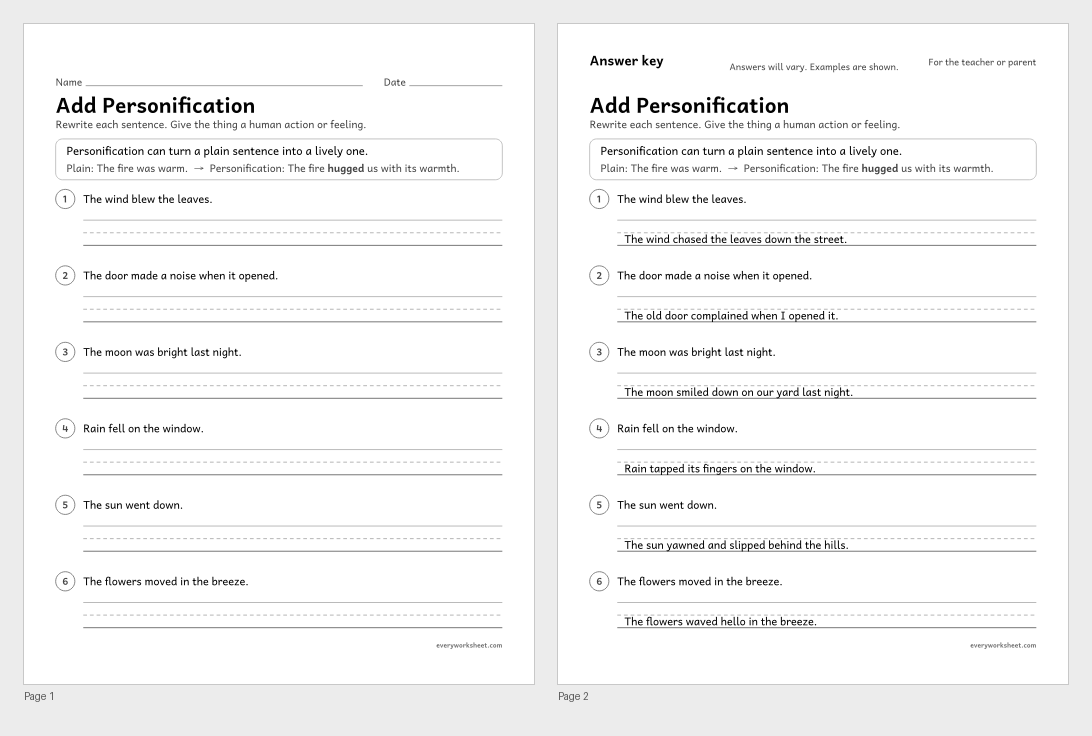
Rewriting plain sentences with personification to make them more vivid
Answer key on page 2
2 pages39 KB
 3 pagesView all 3 pages
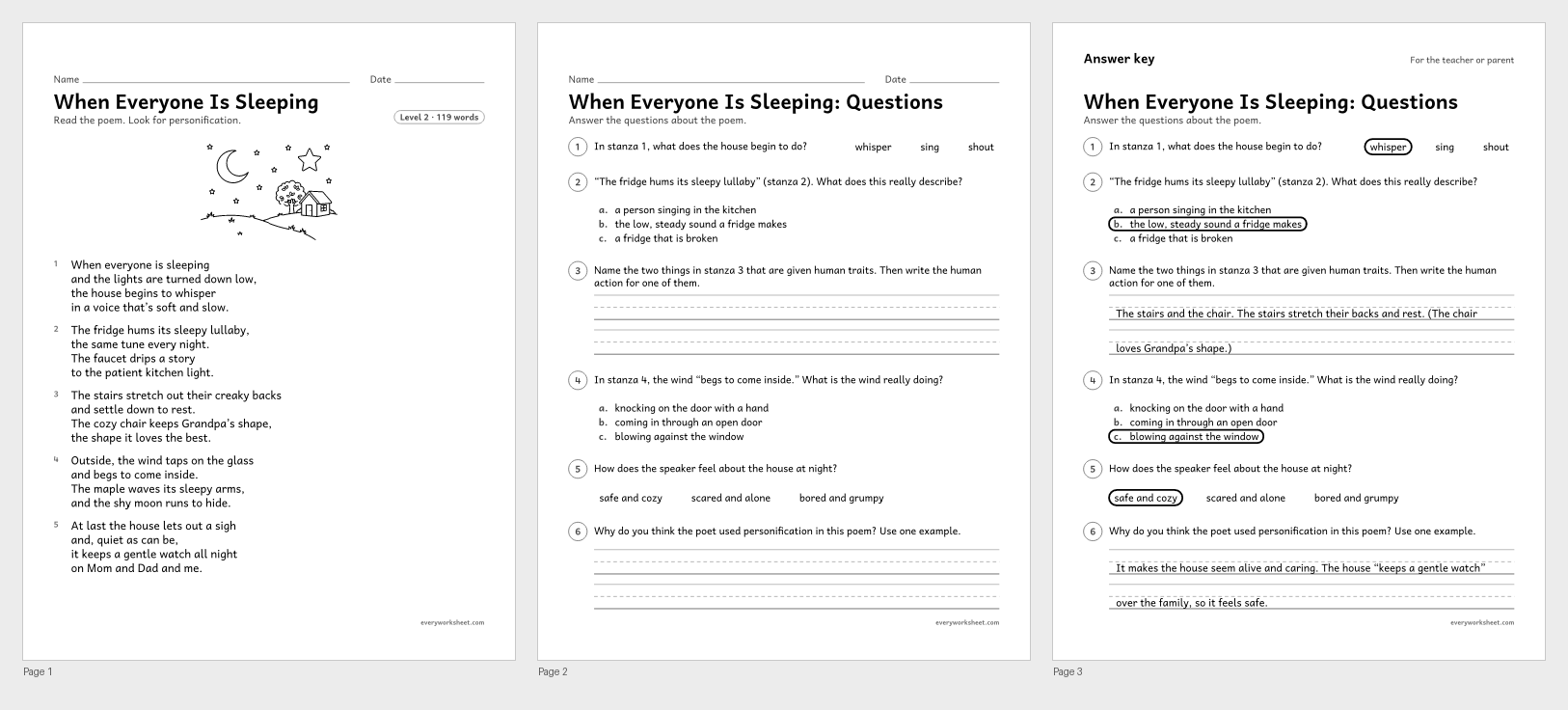
Explaining personification in a poem
Answer key on page 3
3 pages70 KB
Print at 100% (actual size) for the cleanest tracing lines.
Personification (say it per-son-if-ih-KAY-shun) gives human actions, traits, or feelings to something that is not human, like an object, a plant, an animal, or the weather. When a writer says "the old floorboards groaned," the floor isn't really complaining: the boards are creaking. When "the sun smiled down on the beach," the day was bright and warm.
To spot personification, look for two things: the thing that is not a person (the sun, the wind, a clock) and the action or feeling that only people have (smiling, whispering, begging, feeling lonely). "My alarm clock yelled at me" means it rang loudly. "The last cookie called my name" means it looked delicious. "The flowers nodded in the breeze" means they bobbed up and down.
Personification is not the same as a metaphor. A metaphor says one thing is another: "The fog was a blanket." Personification gives the thing a human action: "The fog tiptoed into town." It also doesn't count when people or animals do what they really do: "the bird sang" is literal, but "the kettle sang" is personification.
Writers use personification to make settings feel alive, to show mood, and to help readers picture sounds and movement. These worksheets include a chart, finding the thing and the human action, yes-or-no practice, explaining meanings, rewriting plain sentences, and an original poem about a house at night.
CCSS.ELA-LITERACY.RL.4.4Determine the meaning of words and phrases as they are used in a text, including those that allude to significant characters found in mythology (e.g., Herculean).CCSS.ELA-LITERACY.L.4.3.AChoose words and phrases to convey ideas precisely.CCSS.ELA-LITERACY.L.4.5Demonstrate understanding of figurative language, word relationships, and nuances in word meanings.Personification is giving human actions, traits, or feelings to something that is not human. "The thunder grumbled all night" is personification, because only people really grumble.
"The leaves danced across the playground" (they blew around), "the campfire gobbled up the dry sticks" (it burned them quickly), and "the moon peeked out from behind a cloud" (it appeared a little) are all examples.
A metaphor says one thing is another ("the moon was a lantern"). Personification gives a thing a human action or feeling ("the moon smiled at us"). Both are figurative language, but they work differently.
It depends on the action. Dogs really bark, run, and wag, so those are literal. Smiling, frowning, or worrying are human traits, so giving them to a dog is personification.
Start with a plain sentence, like "The wind blew the leaves." Pick the thing that is not a person (the wind), and give it a human action: "The wind chased the leaves down the street."