Photosynthesis Worksheets

9 free PDFsUS Letter PDFsAnswer key includedNo login

How leaves use sunlight to make sugar from carbon dioxide and water, where a plant's mass comes from, and how the energy in food began as sunlight.

Download the photosynthesis worksheets

How plants make food

A labeled photosynthesis diagram, a blank one to label and its cut and paste twin.

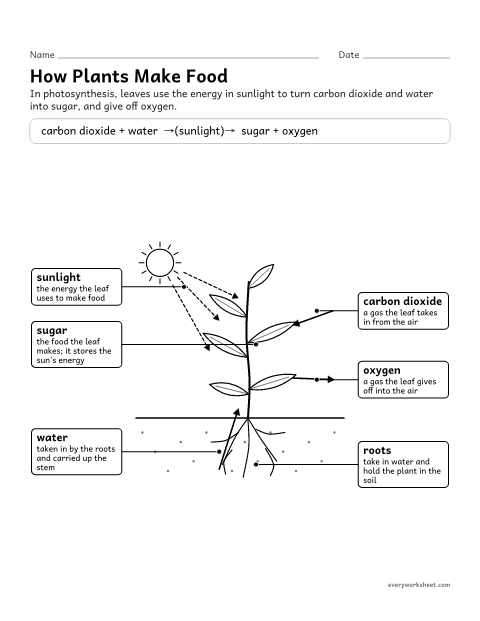
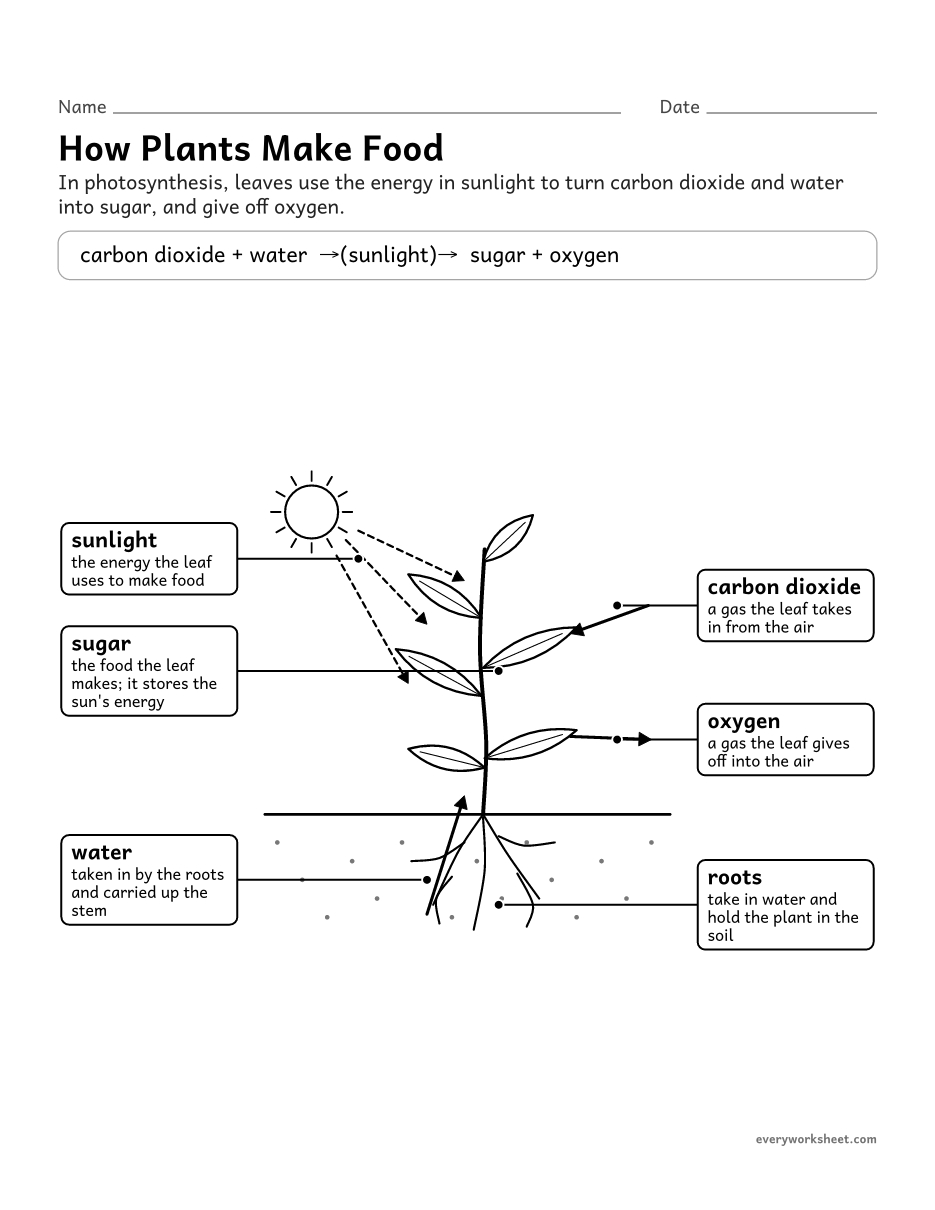
  • Preview of the printable “Photosynthesis diagram for kids (Labeled)” worksheet: describing the inputs and outputs of photosynthesis with a labeled modelView larger

    Photosynthesis diagram for kids (Labeled)

    Describing the inputs and outputs of photosynthesis with a labeled model

    1 page30 KB
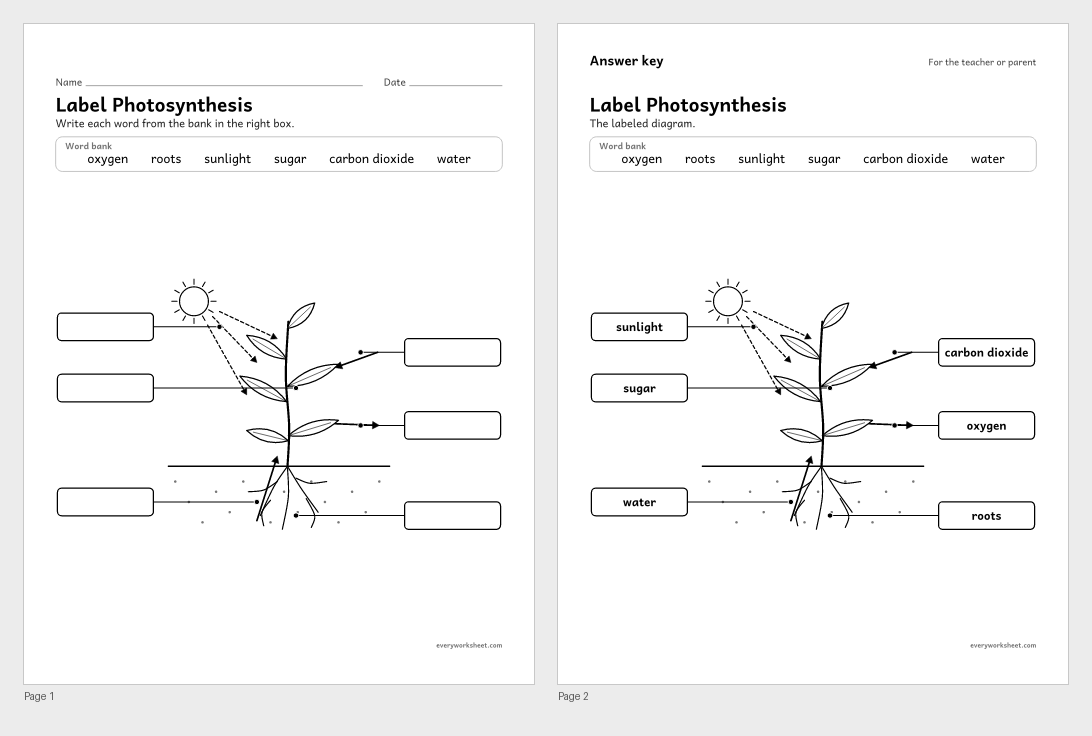
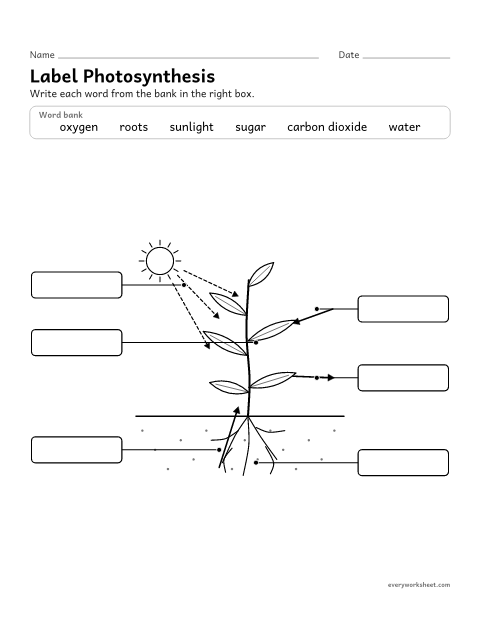
  • Preview of the printable “Photosynthesis diagram to label (Blank, with word Bank)” worksheet: labeling the inputs and outputs of photosynthesisView all 2 pages

    Photosynthesis diagram to label (Blank, with word Bank)

    Labeling the inputs and outputs of photosynthesis

    Answer key on page 2

    2 pages32 KB
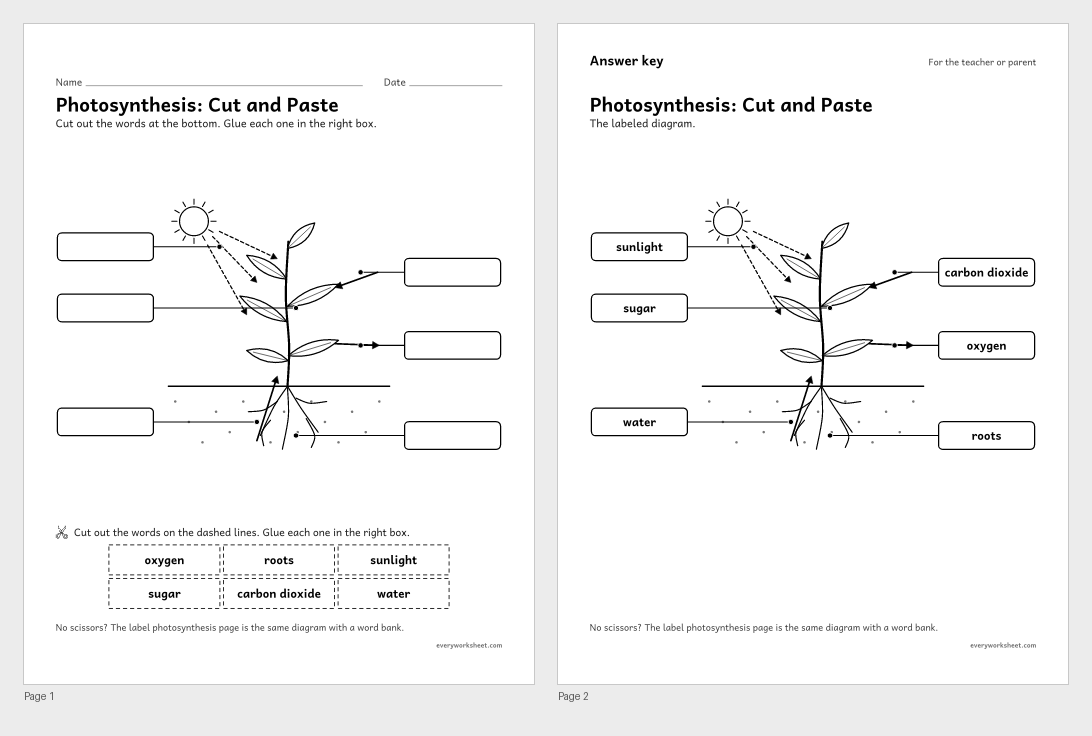
  • Preview of the printable “Photosynthesis cut and paste diagram” worksheet: labeling the inputs and outputs of photosynthesisView all 2 pages

    Photosynthesis cut and paste diagram

    Labeling the inputs and outputs of photosynthesis

    Answer key on page 2

    2 pages61 KB
Where plants get their matter

The willow tree experiment, plant and soil data, and what goes in and comes out.

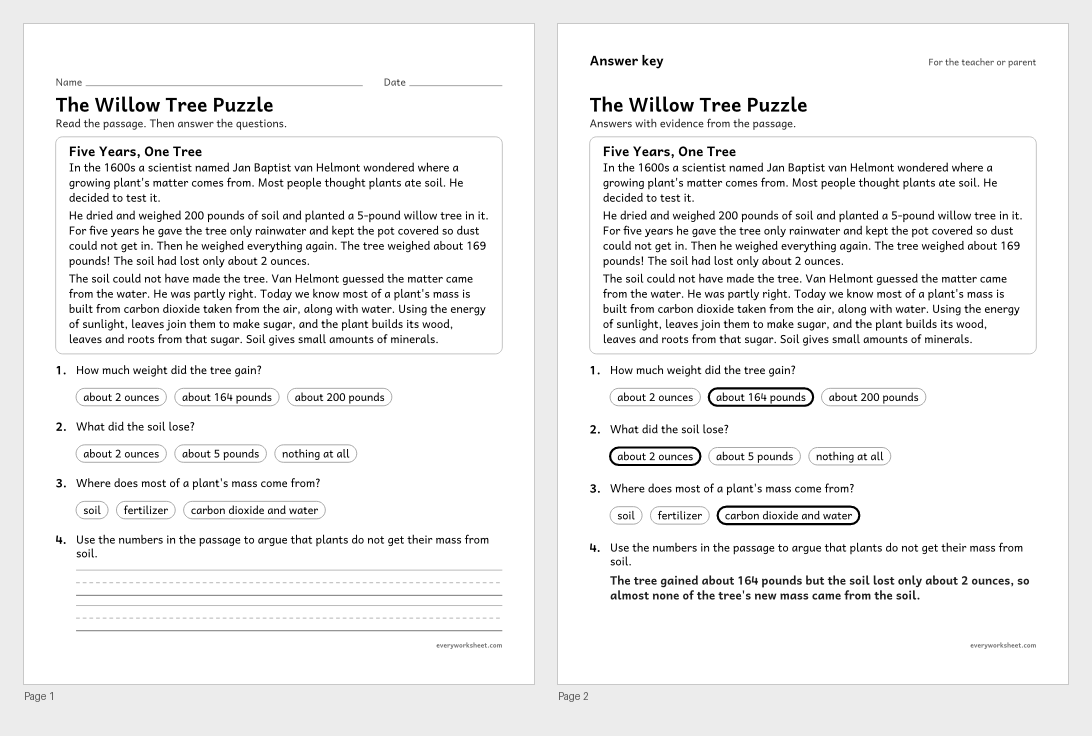
  • Preview of the printable “Where do plants get their Mass? reading passage” worksheet: arguing from evidence that plants get the materials they need to grow chiefly from air and waterView all 2 pages

    Where do plants get their Mass? reading passage

    Arguing from evidence that plants get the materials they need to grow chiefly from air and water

    Answer key on page 2

    2 pages41 KB
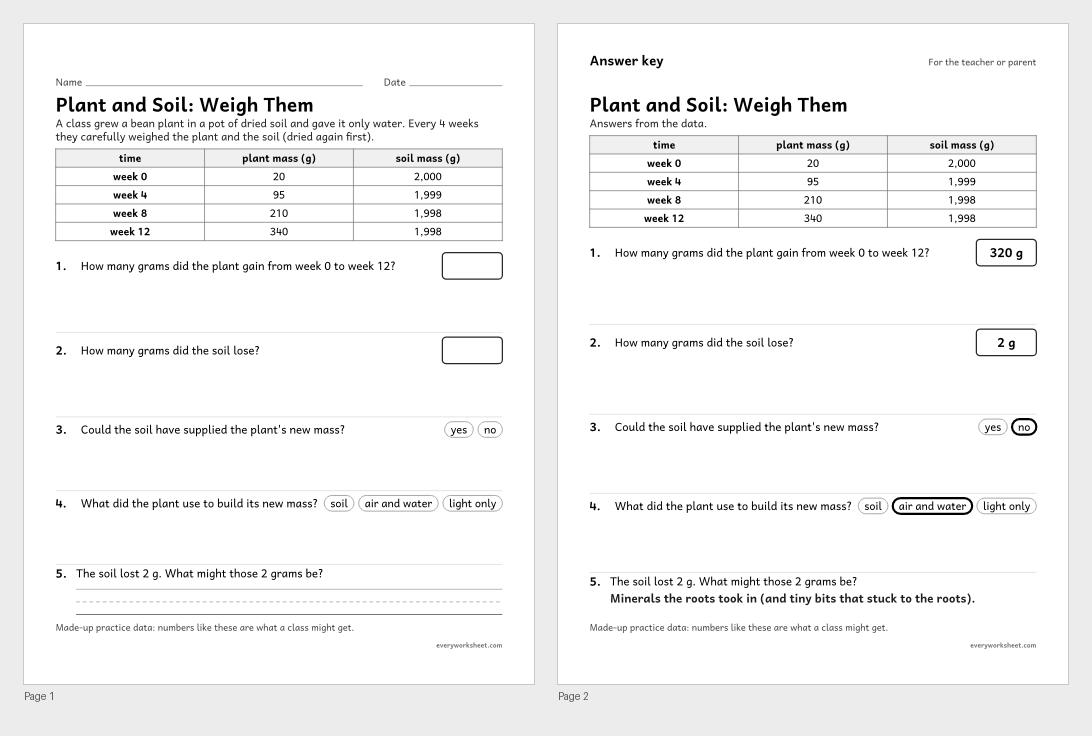
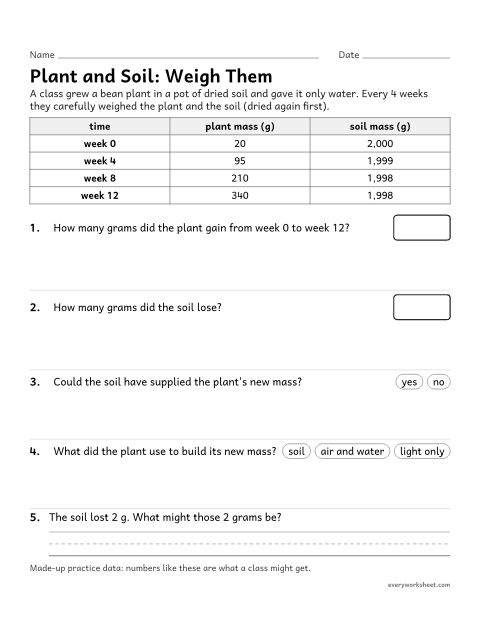
  • Preview of the printable “Plant growth Data: plant mass vs soil mass” worksheet: analyzing data as evidence that plants do not get their mass from soilView all 2 pages

    Plant growth Data: plant mass vs soil mass

    Analyzing data as evidence that plants do not get their mass from soil

    Answer key on page 2

    2 pages46 KB
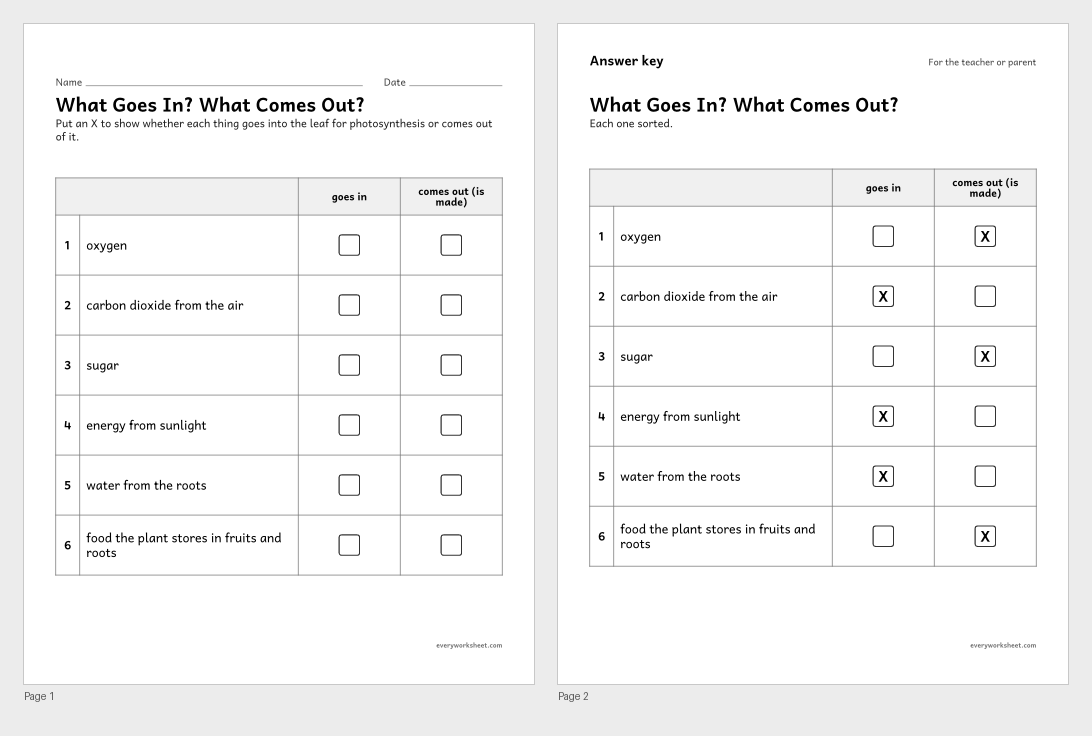
  • Preview of the printable “Photosynthesis inputs and outputs sort” worksheet: classifying what a plant takes in and gives off in photosynthesisView all 2 pages

    Photosynthesis inputs and outputs sort

    Classifying what a plant takes in and gives off in photosynthesis

    Answer key on page 2

    2 pages39 KB
Energy from the sun and review

Follow the energy, vocabulary and a quiz.

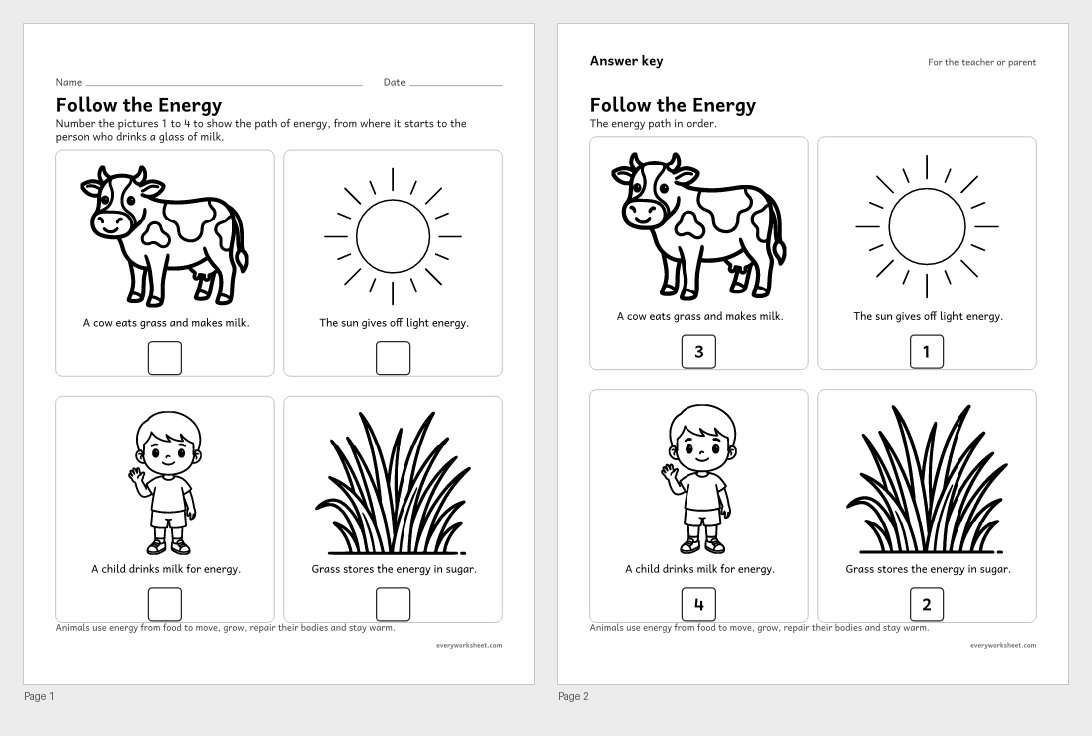
  • Preview of the printable “Energy in food comes from the sun worksheet” worksheet: modeling how the energy in animals' food was once energy from the sunView all 2 pages

    Energy in food comes from the sun worksheet

    Modeling how the energy in animals' food was once energy from the sun

    Answer key on page 2

    2 pages177 KB
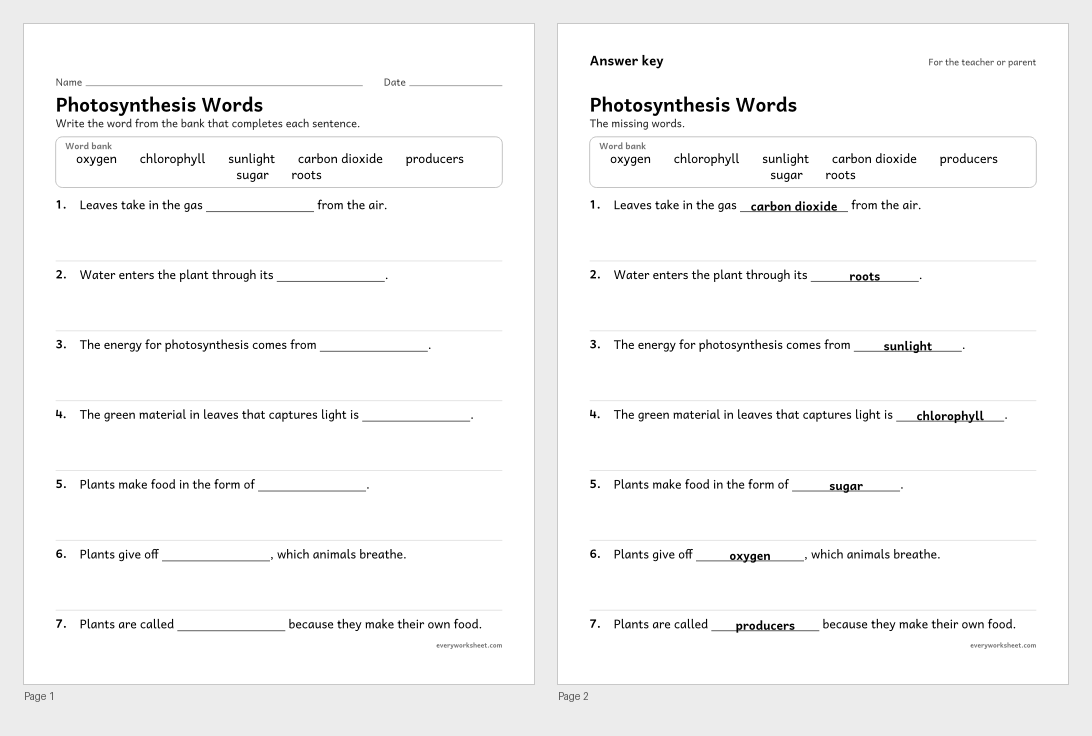
  • Preview of the printable “Photosynthesis fill in the blank worksheet” worksheet: using photosynthesis vocabulary in contextView all 2 pages

    Photosynthesis fill in the blank worksheet

    Using photosynthesis vocabulary in context

    Answer key on page 2

    2 pages38 KB
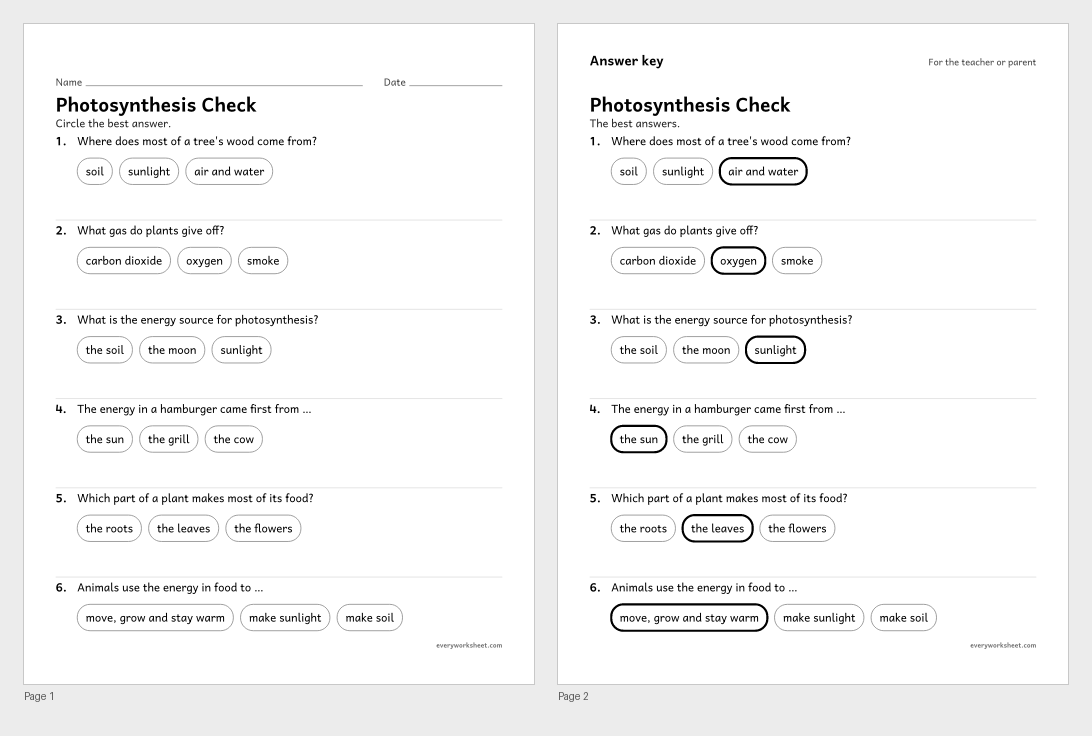
  • Preview of the printable “Photosynthesis quiz for 5th grade” worksheet: reviewing photosynthesis and where plants get their materialsView all 2 pages

    Photosynthesis quiz for 5th grade

    Reviewing photosynthesis and where plants get their materials

    Answer key on page 2

    2 pages38 KB

About these photosynthesis worksheets

Plants make their own food. In photosynthesis, leaves use the energy in sunlight to turn carbon dioxide from the air and water from the soil into sugar, and they give off oxygen. Surprisingly, most of a plant's mass comes from the air, not the soil.

These photosynthesis worksheets include a labeled diagram, a blank diagram to label and a cut and paste twin. A reading passage tells the story of a famous willow tree experiment, a data page compares plant and soil mass, a sort shows what goes in and what comes out, and a sequencing page follows energy from the sun to a glass of milk.

Every page is black and white, prints on US Letter or A4, and every page with right answers has an answer key on page 2.

Standards

  • NGSS 5-LS1-1Support an argument that plants get the materials they need for growth chiefly from air and water.
  • NGSS 5-PS3-1Use models to describe that energy in animals’ food (used for body repair, growth, motion, and to maintain body warmth) was once energy from the sun.
  • CCSS.ELA-LITERACY.RI.5.4Determine the meaning of general academic and domain-specific words and phrases in a text relevant to a grade 5 topic or subject area.

How to use them

  1. Start with the labeled diagram and the equation in words.
  2. Read the willow tree passage, then ask: if the soil barely changed, where did 164 pounds come from?
  3. Use the energy path page to connect photosynthesis to the food we eat.
  4. Finish with vocabulary and the quiz.

Teaching tips

  • A common mistake is to think plants eat soil. Soil gives small amounts of minerals; most of a plant's mass is built from carbon dioxide and water.
  • Animals use the energy in food to move, grow, repair their bodies and stay warm. That energy came from the sun.
  • Chlorophyll, the green material in leaves, captures the light.
  • The plant data page uses made-up practice numbers.

Questions teachers and parents ask

What is photosynthesis in simple words?

It is how plants make food. Leaves use sunlight to turn carbon dioxide and water into sugar, and they give off oxygen.

Where does a plant get its mass?

Mostly from carbon dioxide in the air and from water. In the 1600s, a willow tree gained about 164 pounds while its soil lost only about 2 ounces.

Is there a blank photosynthesis diagram?

Yes. There is a blank diagram with a word bank and a cut and paste version, both with answer keys.