 View larger
Physical and Chemical Changes Worksheets
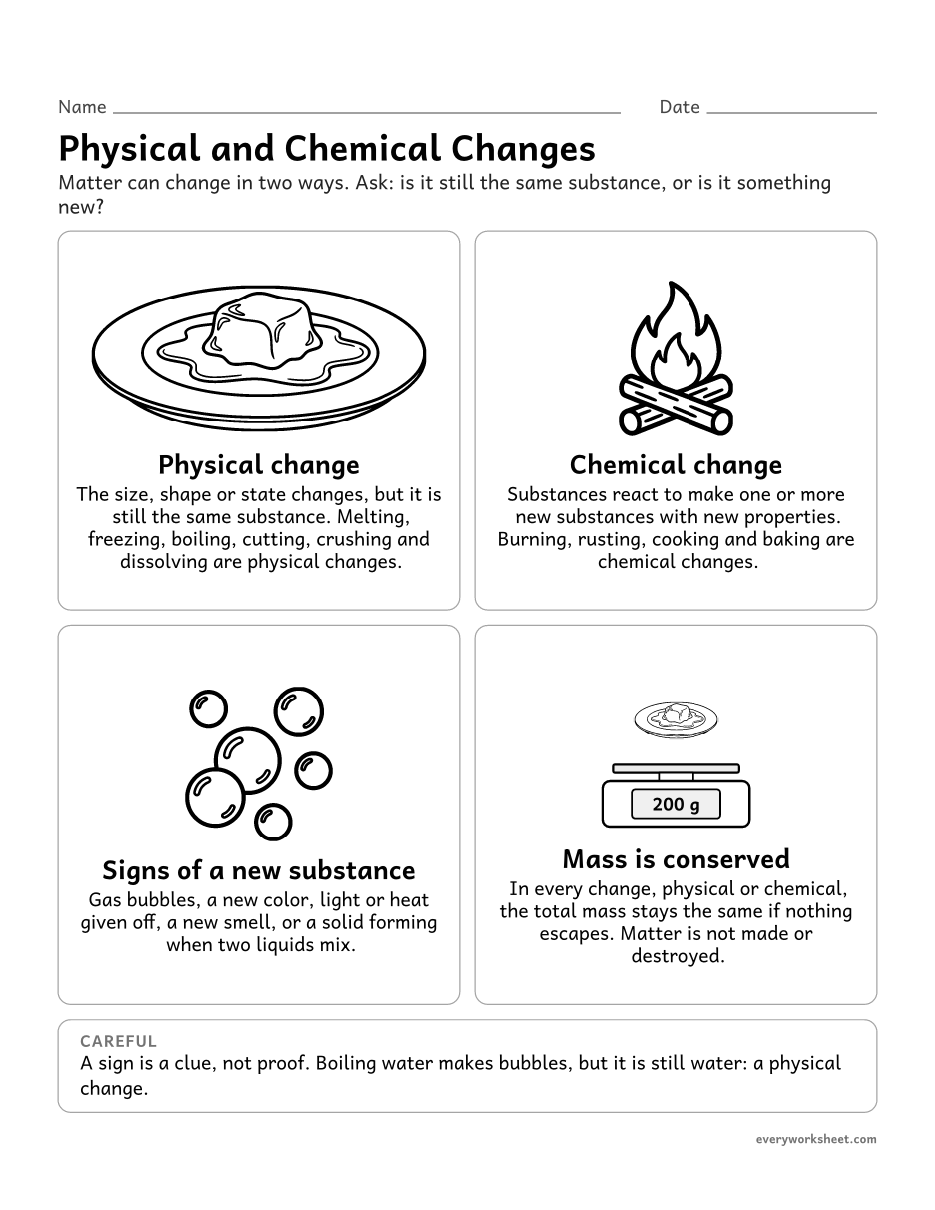
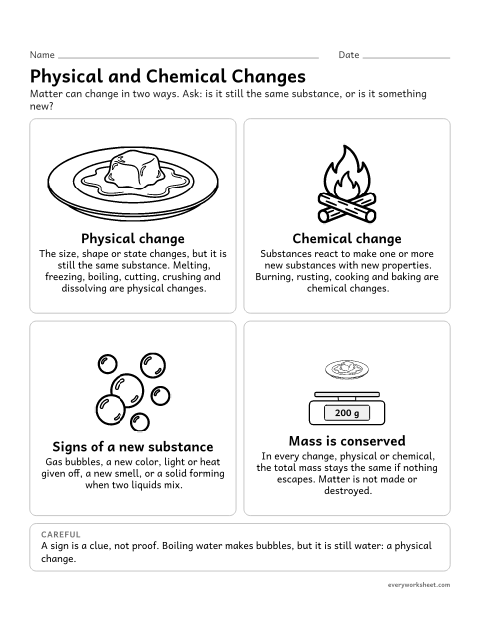
Physical and chemical changes, the evidence that a new substance formed, and conservation of mass shown by weighing before and after.
Download the physical and chemical changes worksheets
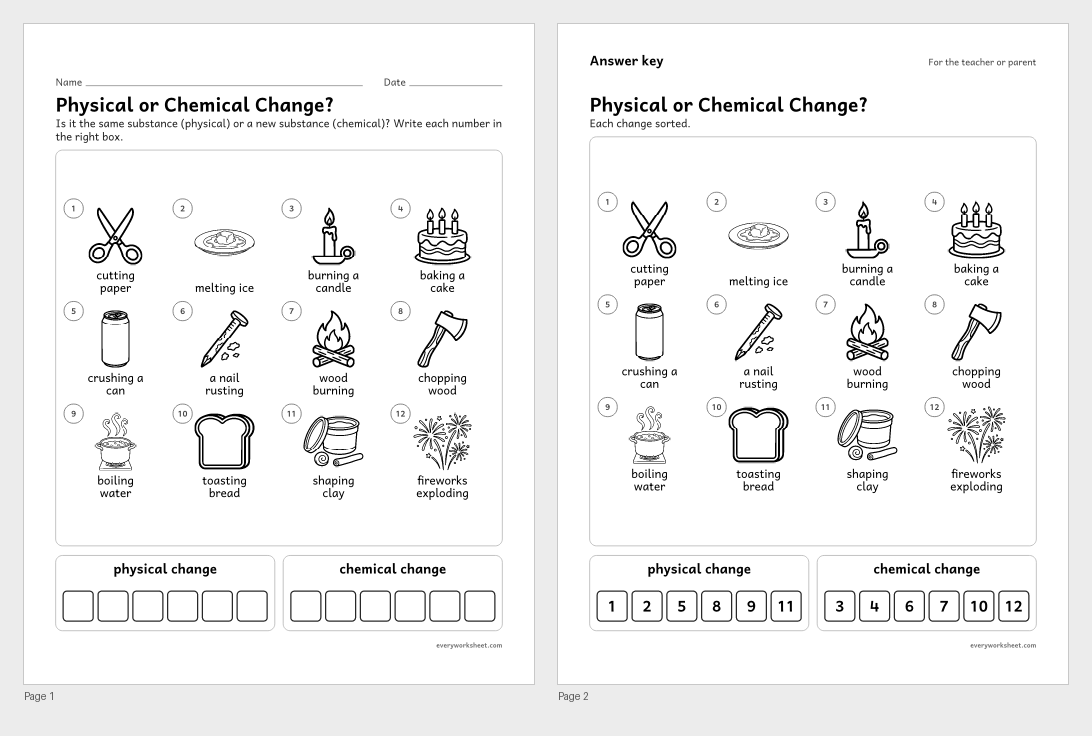
Physical or chemical?
 View larger
 View all 2 pages
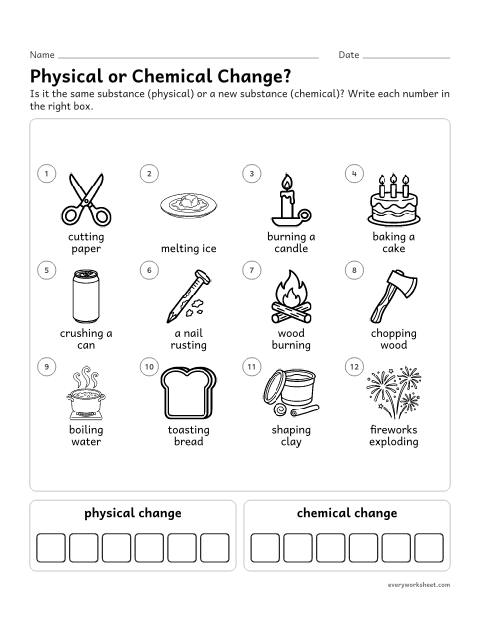
Physical or chemical change sort worksheet
Classifying changes as physical or chemical
Answer key on page 2
2 pages546 KB
 View all 2 pages
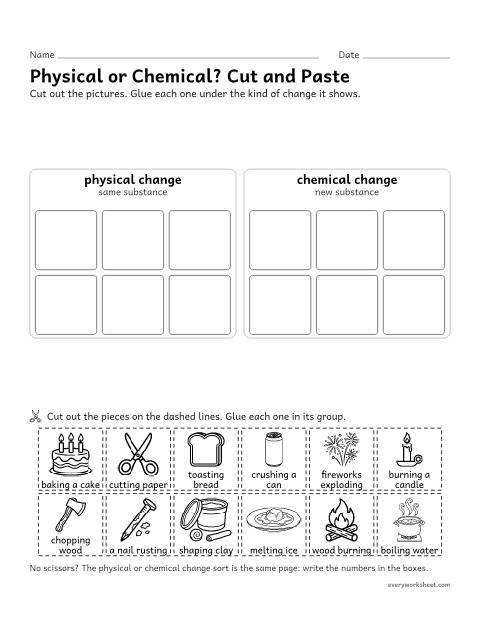
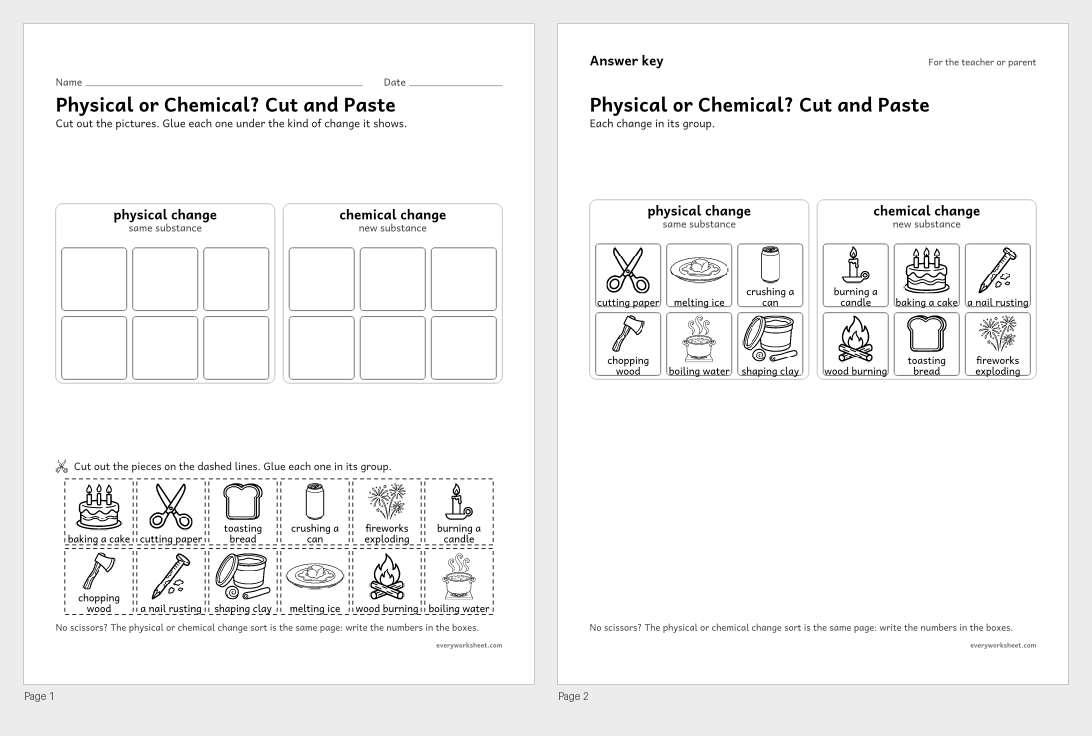
Physical or chemical change cut and paste sort
Classifying changes as physical or chemical
Answer key on page 2
2 pages569 KB
 View all 2 pages
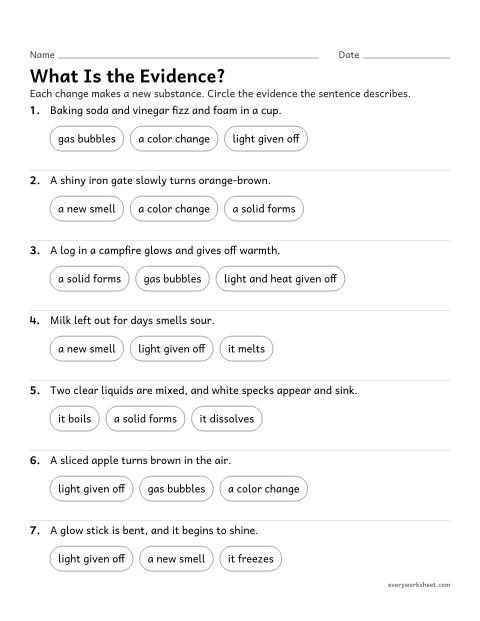
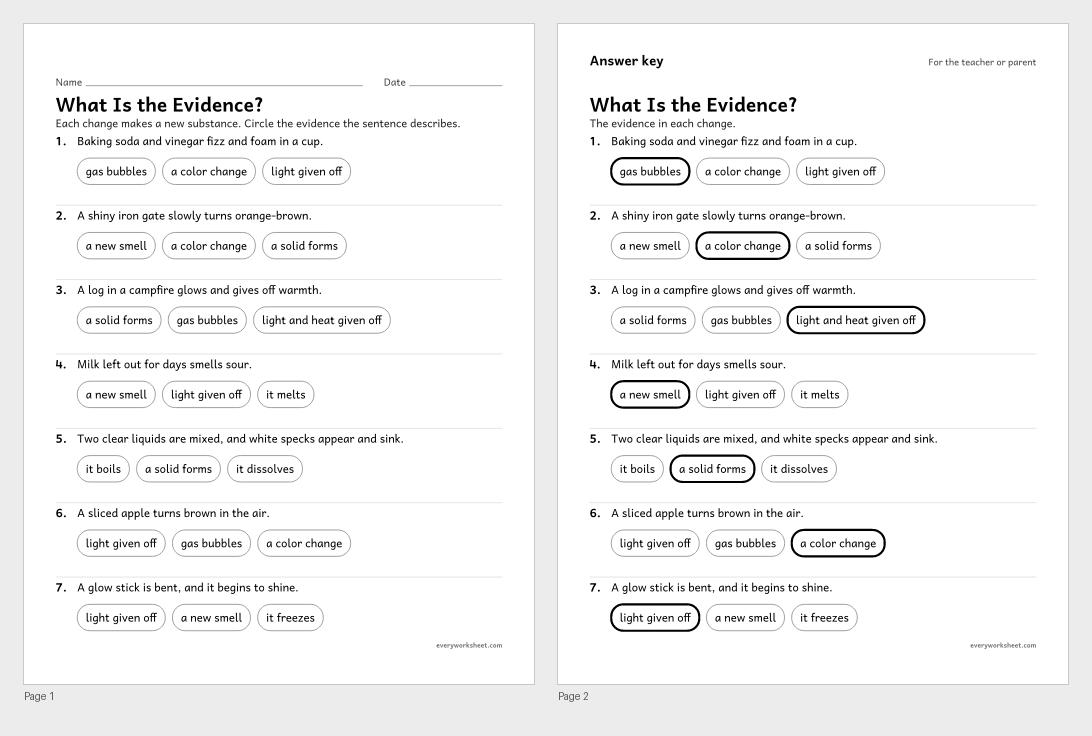
Signs of a chemical change worksheet
Identifying evidence that a chemical change made a new substance
Answer key on page 2
2 pages41 KB
Conservation of matter
 View all 2 pages
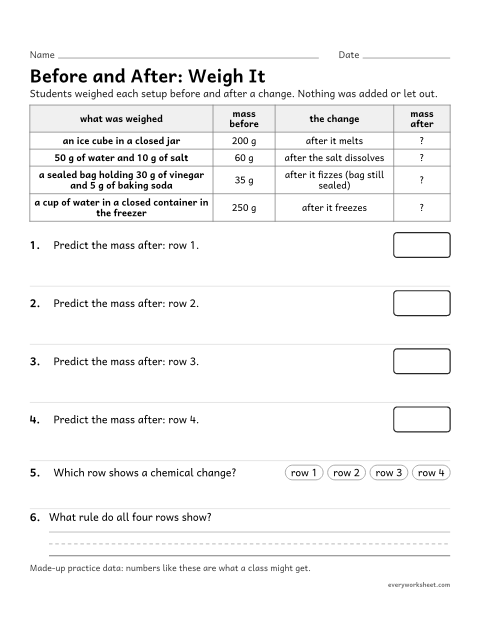
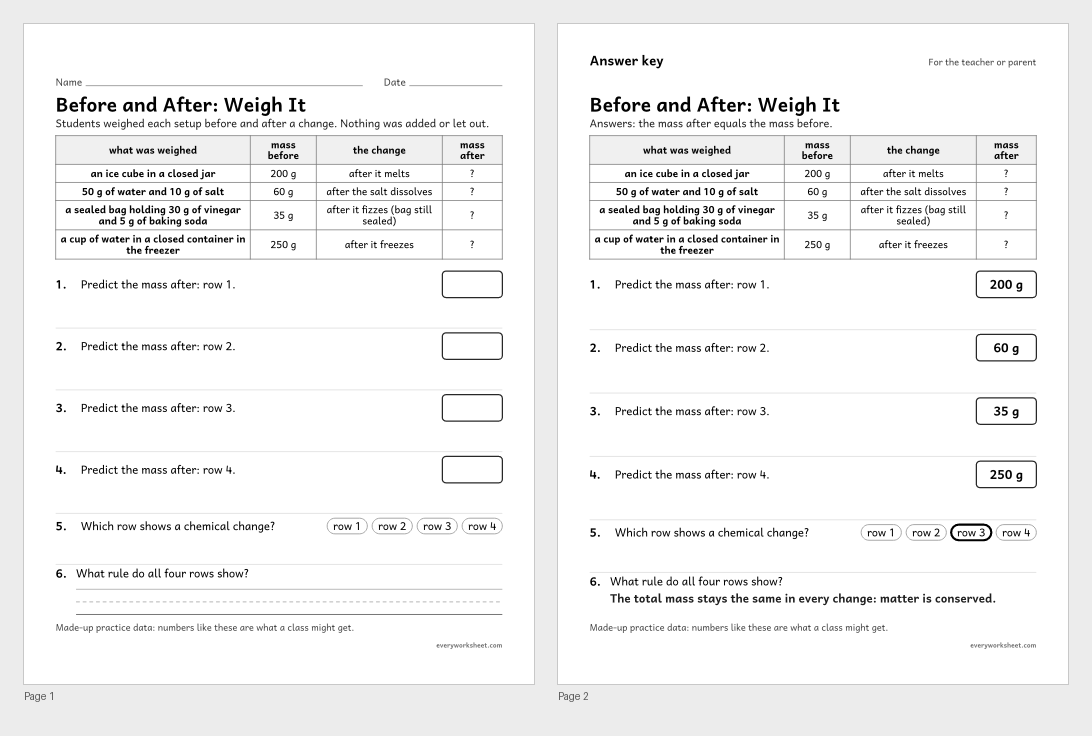
Conservation of matter Worksheet: weigh it before and after
Using measurements to show that total mass is conserved in physical and chemical changes
Answer key on page 2
2 pages49 KB
 View all 2 pages
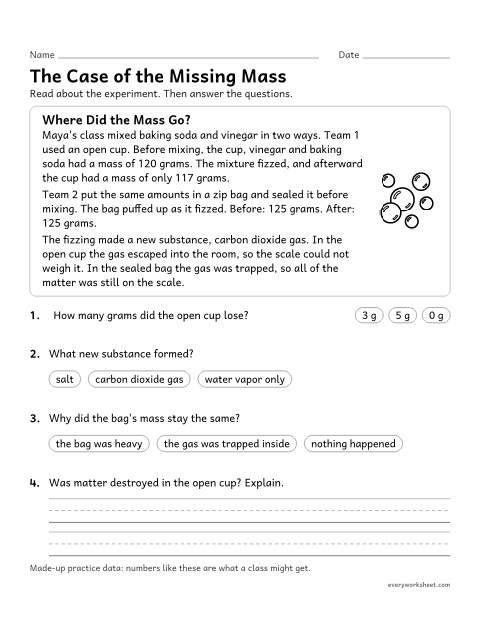
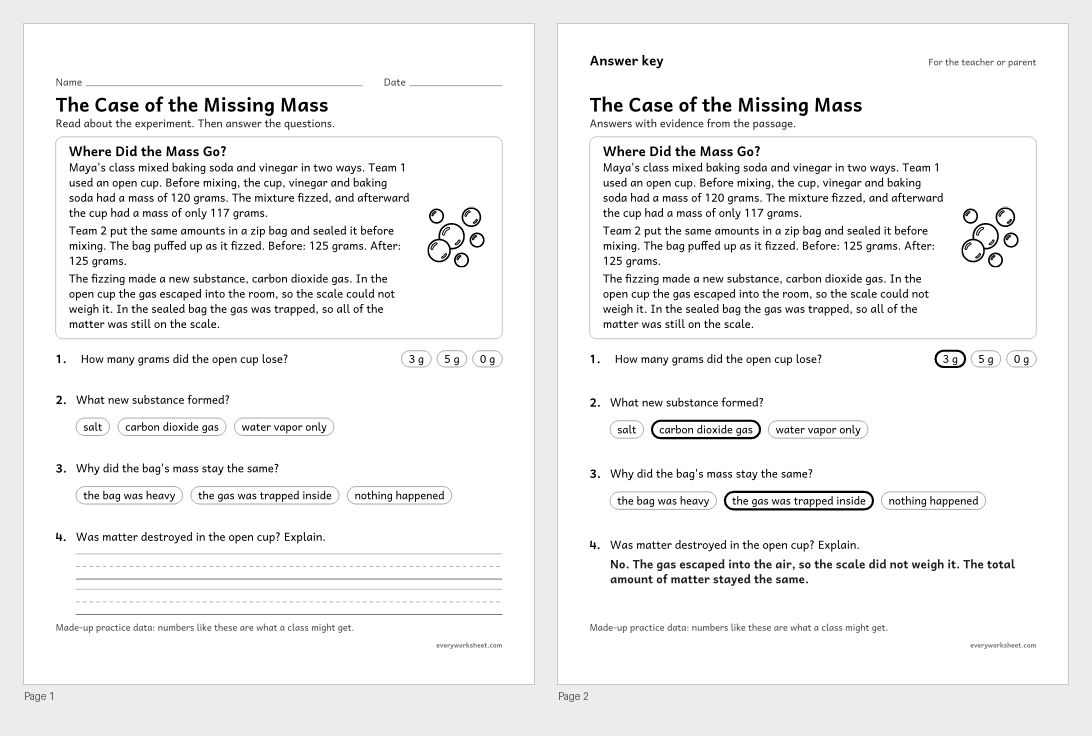
Conservation of matter Experiment: open cup vs sealed bag
Explaining why mass seems to change when a gas escapes
Answer key on page 2
2 pages89 KB
 View all 2 pages
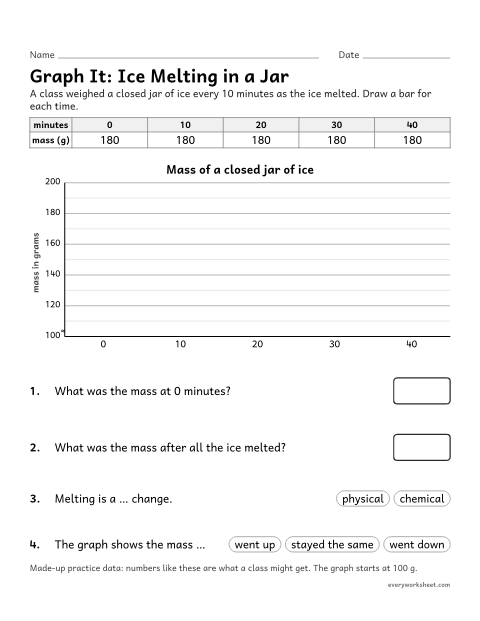
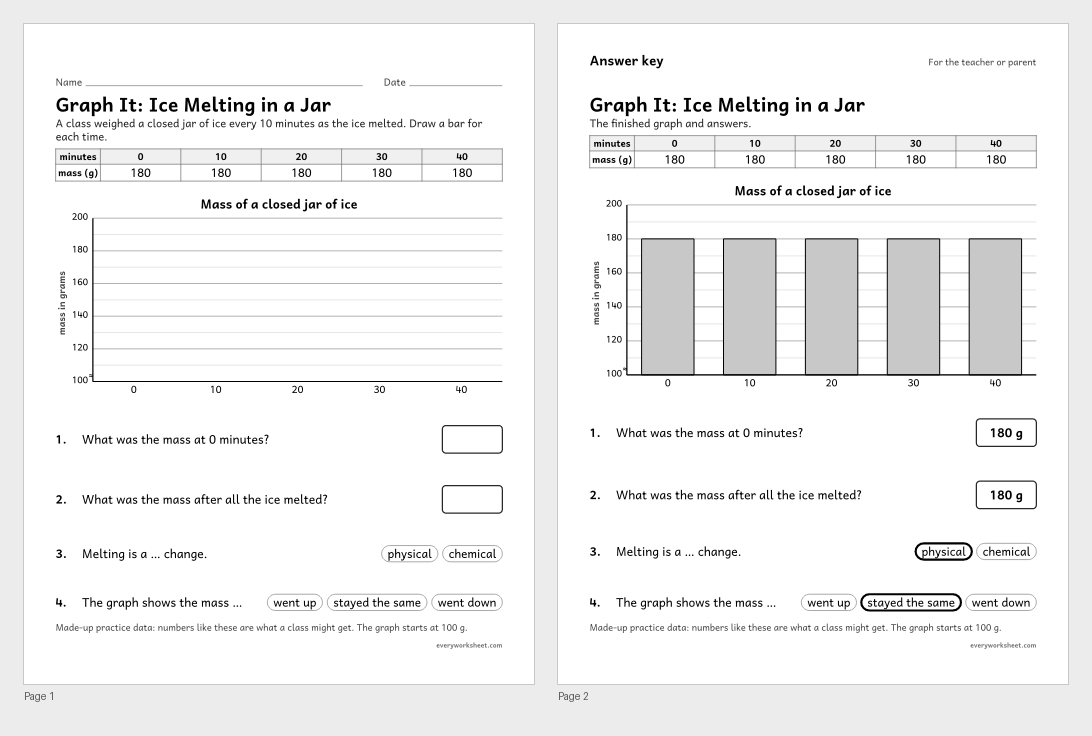
Conservation of mass Graph: melting ice in a jar
Graphing measurements to show that mass is conserved during melting
Answer key on page 2
2 pages45 KB
Read and review
 View all 2 pages
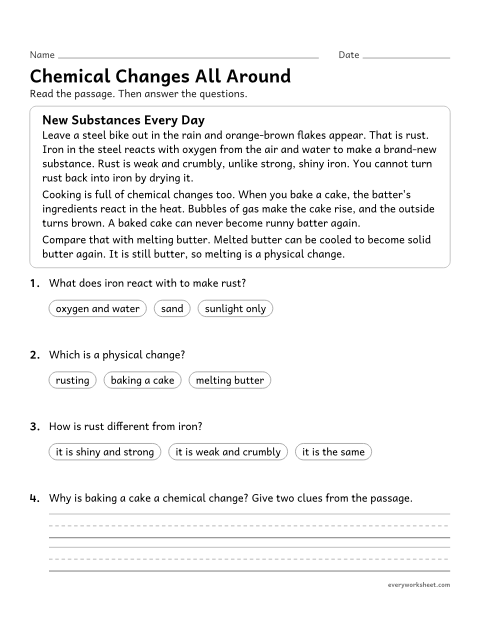
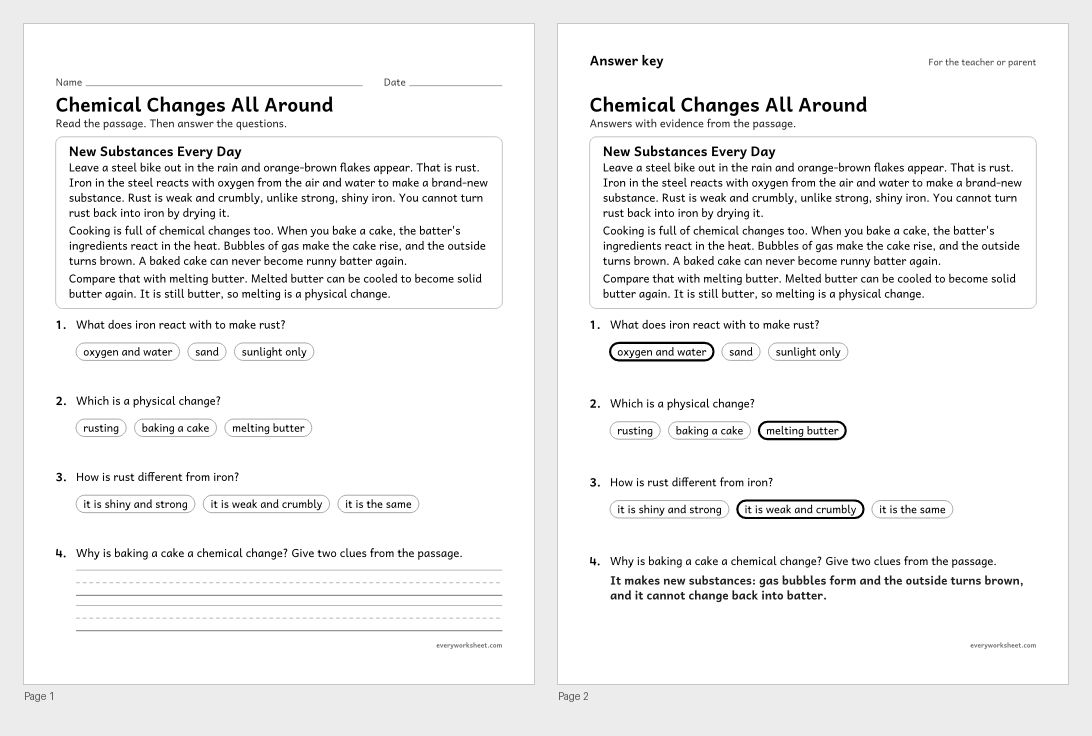
Chemical changes reading Passage: rust and cooking
Explaining how chemical changes make new substances
Answer key on page 2
2 pages39 KB
 View all 2 pages
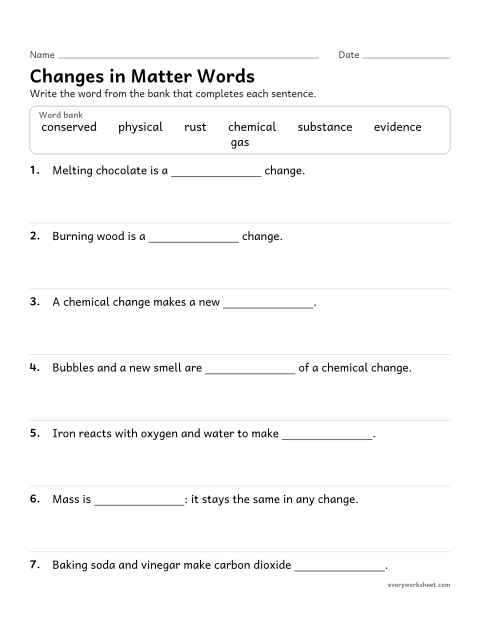
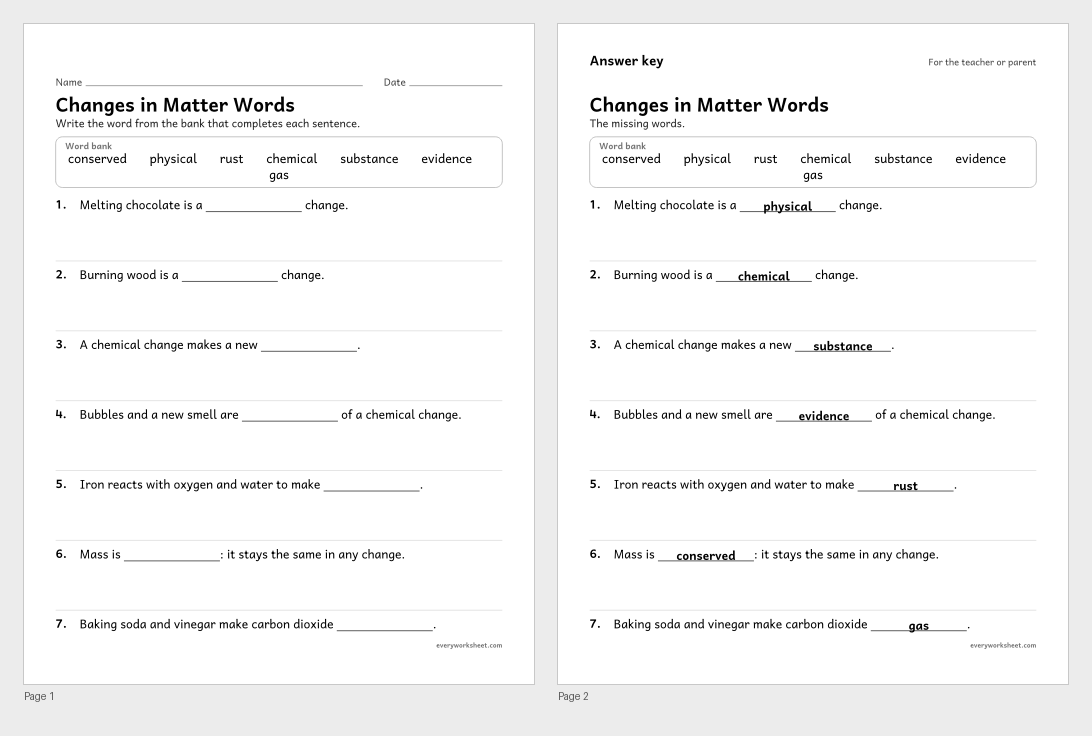
Physical and chemical changes vocabulary worksheet
Using vocabulary for changes in matter
Answer key on page 2
2 pages38 KB
 View all 2 pages
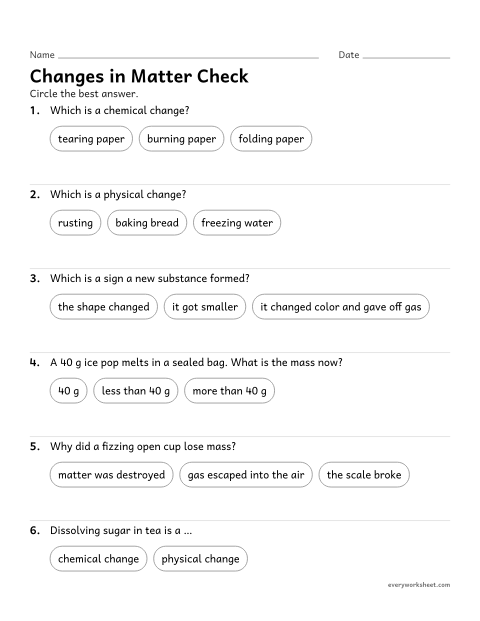
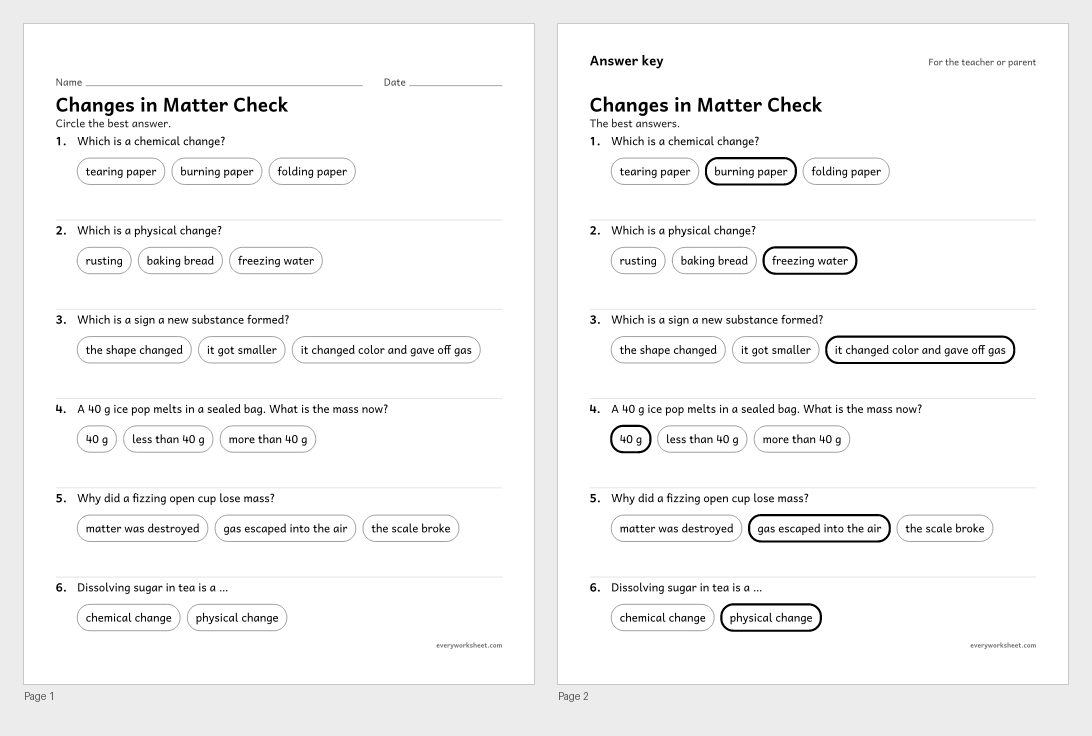
Physical and chemical changes quiz
Reviewing physical and chemical changes and conservation of mass
Answer key on page 2
2 pages39 KB
Print at 100% (actual size) for the cleanest tracing lines.
About these physical and chemical changes worksheets
In a physical change, matter changes size, shape or state but stays the same substance. In a chemical change, substances react to make something new: wood burns, iron rusts, cake batter bakes. Either way, when nothing escapes, the total mass stays the same.
These physical and chemical changes worksheets begin with a poster, then a picture sort (cut and paste, or write the numbers). Children name the evidence for chemical changes, predict masses before and after a change, read about a sealed-bag experiment, graph the mass of melting ice and finish with a reading passage, vocabulary and a quiz.
Every page is black and white, prints on US Letter or A4, and every page with right answers has an answer key on page 2.
Standards
NGSS 5-PS1-4Conduct an investigation to determine whether the mixing of two or more substances results in new substances.NGSS 5-PS1-2Measure and graph quantities to provide evidence that regardless of the type of change that occurs when heating, cooling, or mixing substances, the total weight of matter is conserved.CCSS.ELA-LITERACY.RI.5.3Explain the relationships or interactions between two or more individuals, events, ideas, or concepts in a historical, scientific, or technical text based on specific information in the text.CCSS.ELA-LITERACY.RI.5.4Determine the meaning of general academic and domain-specific words and phrases in a text relevant to a grade 5 topic or subject area.
How to use them
- Melt an ice cube and burn a candle (adult only) side by side. Ask which one made a new substance.
- Use the sort or its cut and paste twin, then the evidence page.
- Weigh a sealed bag of baking soda and vinegar before and after it fizzes, then do the conservation pages.
- Finish with the reading passage and quiz.
Teaching tips
- Signs like bubbles or color change are clues, not proof. Boiling water bubbles, but it is still water.
- When a gas escapes from an open cup, the scale shows less mass, but no matter was destroyed.
- Rusting, burning, cooking and baking are chemical changes; melting, freezing, cutting and dissolving are physical changes.
- Practice data are made up and labeled as such on each page.
Questions teachers and parents ask
What is the difference between a physical and a chemical change?
A physical change alters size, shape or state, but the substance stays the same, like melting ice. A chemical change makes a new substance, like rust forming on iron.
What are signs of a chemical change?
Gas bubbles, a color change, light or heat given off, a new smell, or a solid forming when two liquids are mixed.
What is conservation of matter?
In any change, the total mass stays the same if nothing escapes. Melt a 40 g ice pop in a sealed bag and you still have 40 g.