 View larger
Plate tectonics for Kids: plate boundaries poster
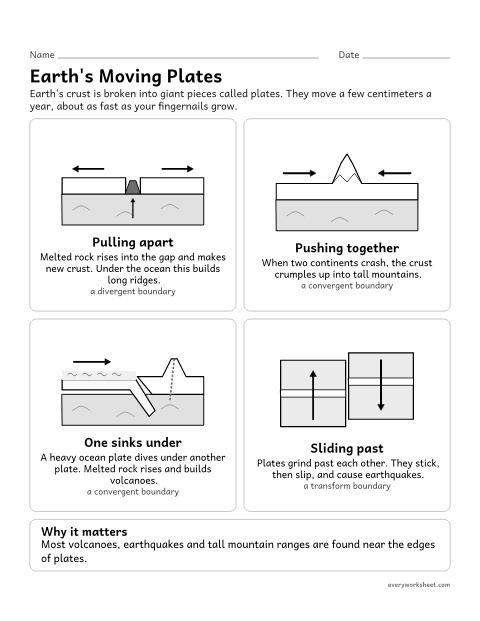
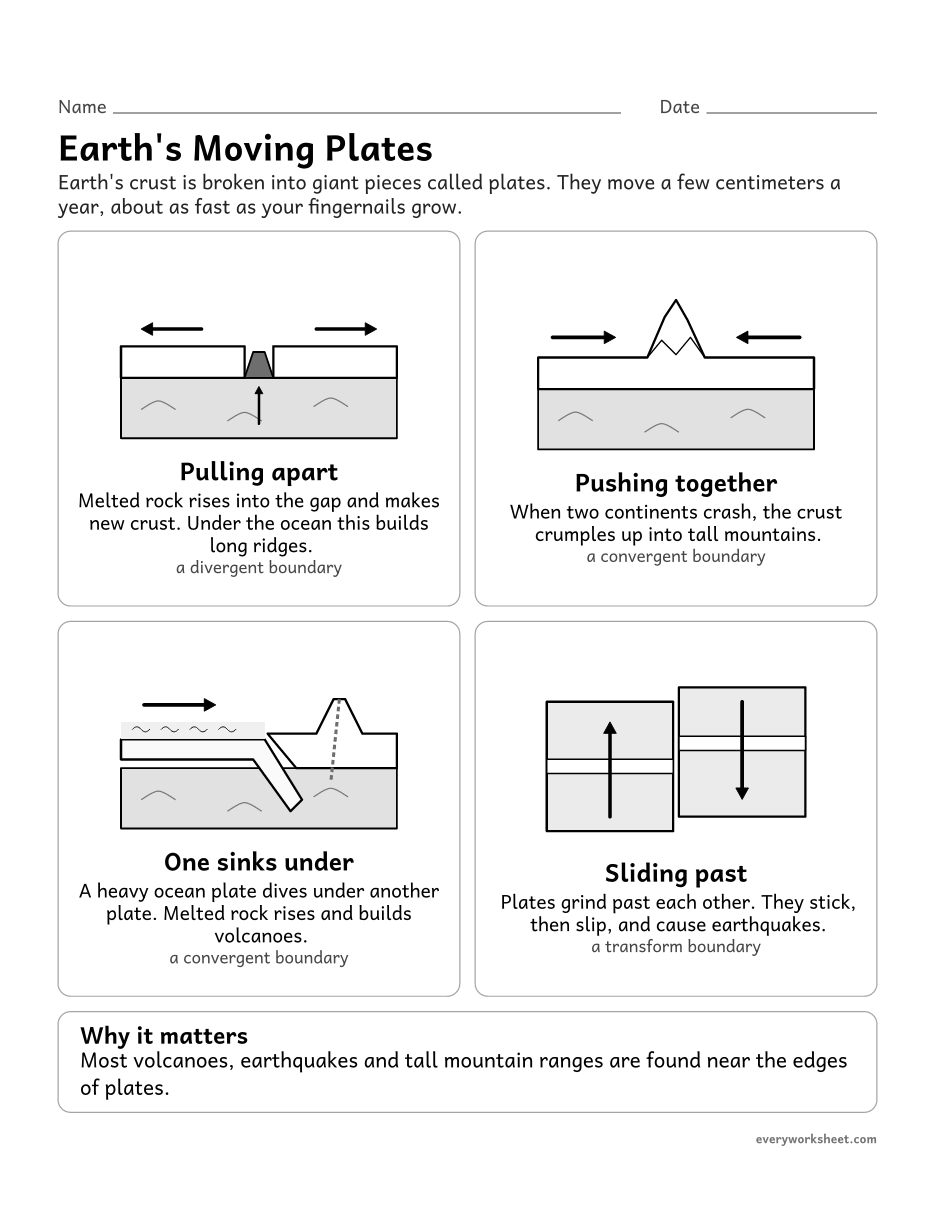
Describing how Earth's plates move and what happens at their edges
1 page30 KB
Earth's moving plates, plate boundaries, the evidence that continents moved, and the pattern of volcanoes and earthquakes.
View largerDescribing how Earth's plates move and what happens at their edges
1 page30 KB
 View all 2 pages
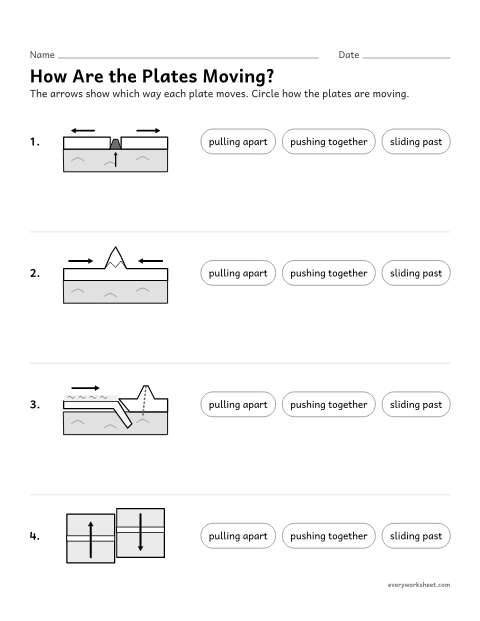
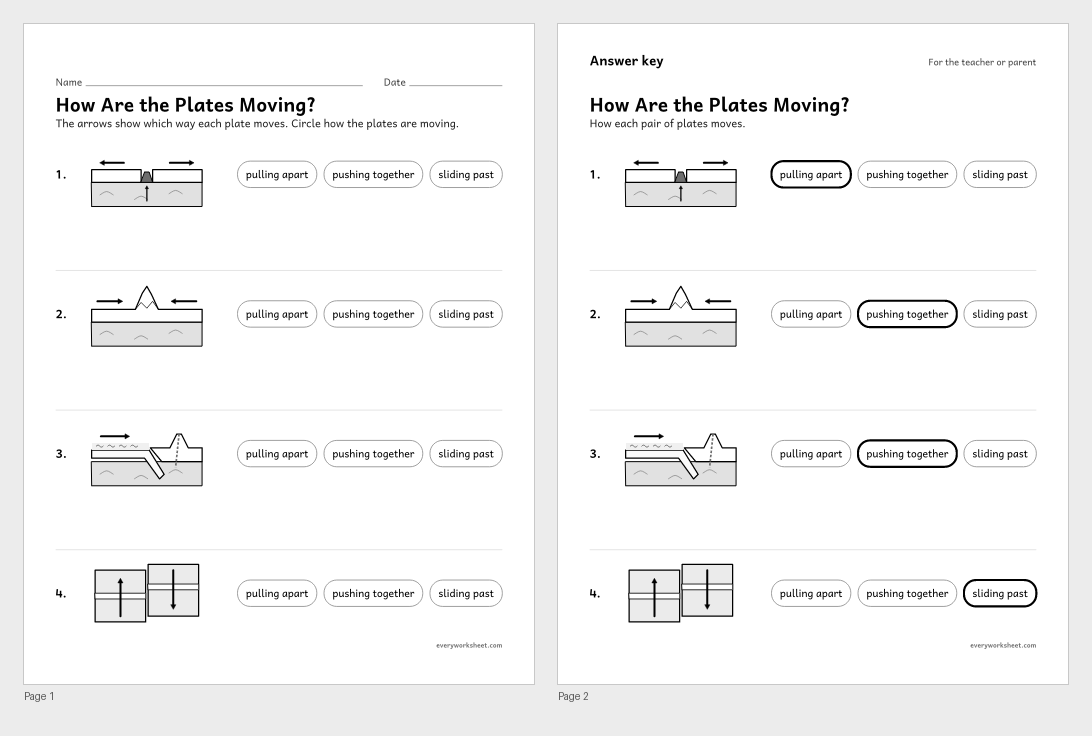
Identifying the motion at plate boundaries from diagrams
Answer key on page 2
2 pages36 KB
 View all 2 pages
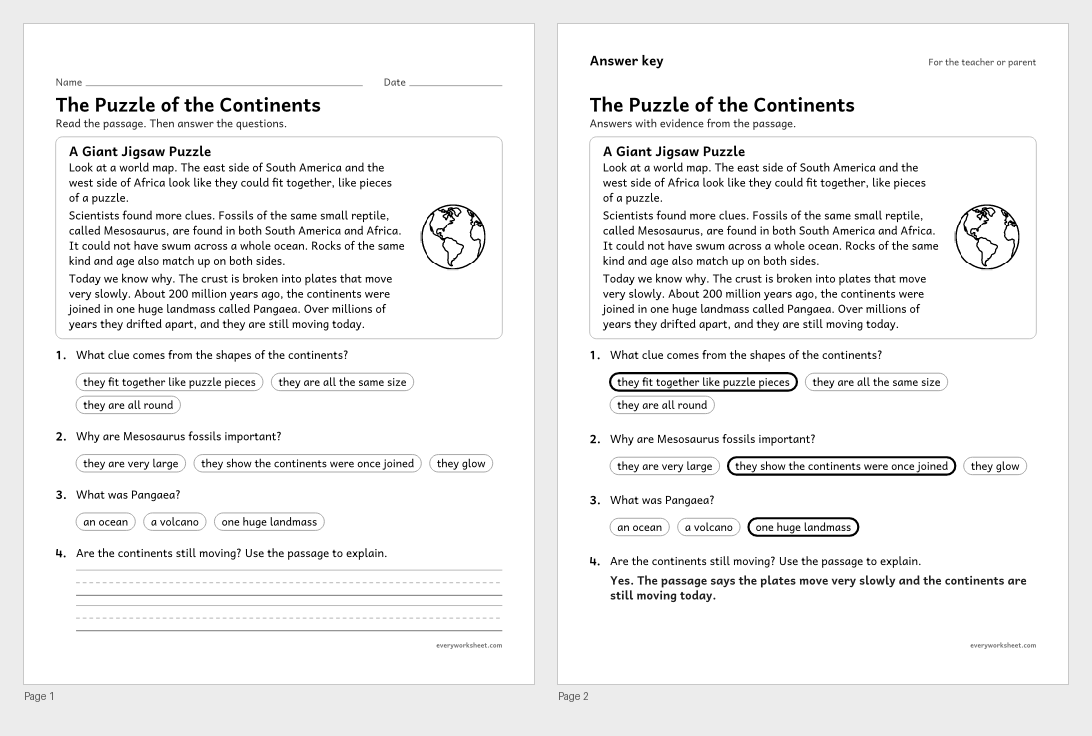
Explaining evidence that Earth's plates and continents move
Answer key on page 2
2 pages61 KB
 View all 2 pages
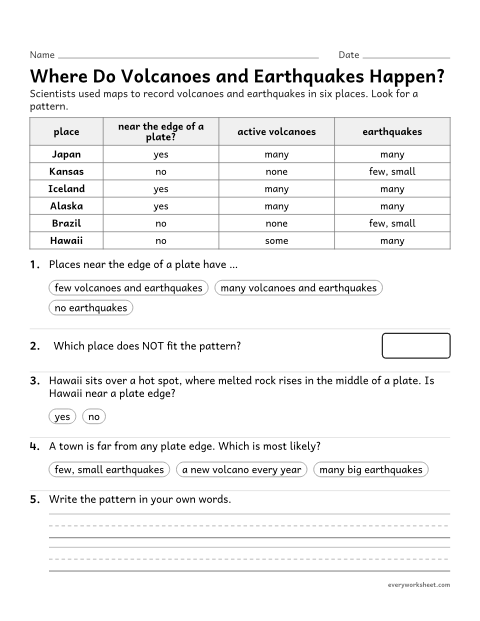
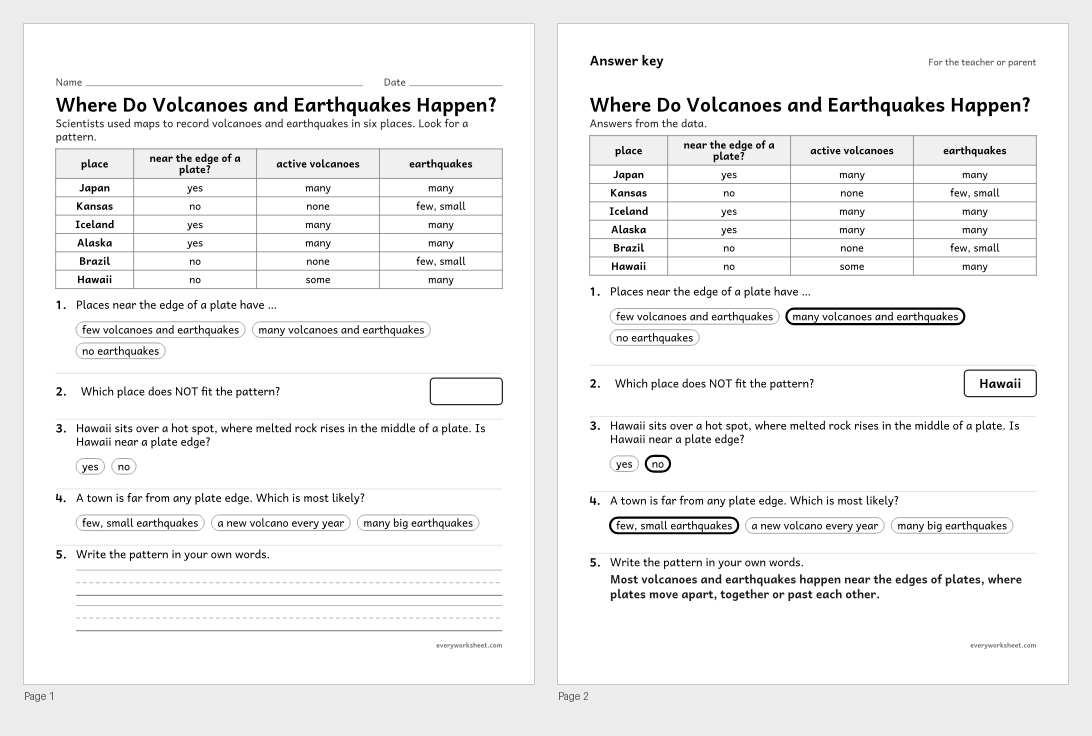
Analyzing data to find patterns in where volcanoes and earthquakes happen
Answer key on page 2
2 pages51 KB
 View all 2 pages
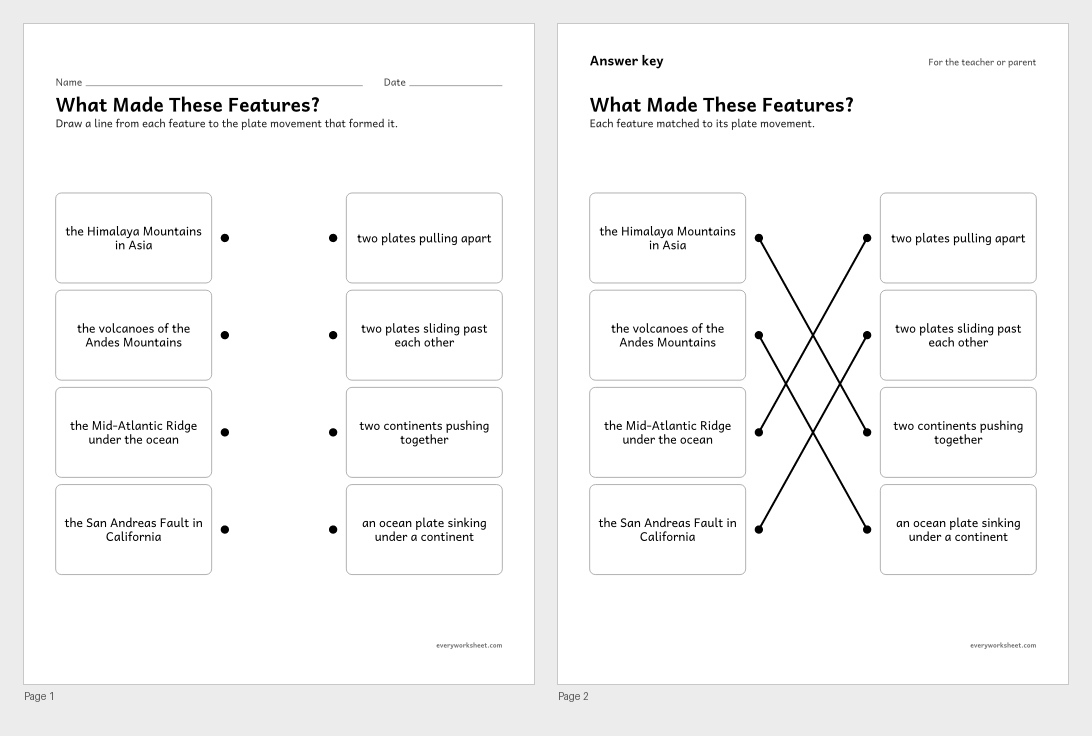
Matching Earth features to the plate movements that formed them
Answer key on page 2
2 pages28 KB
 View all 2 pages
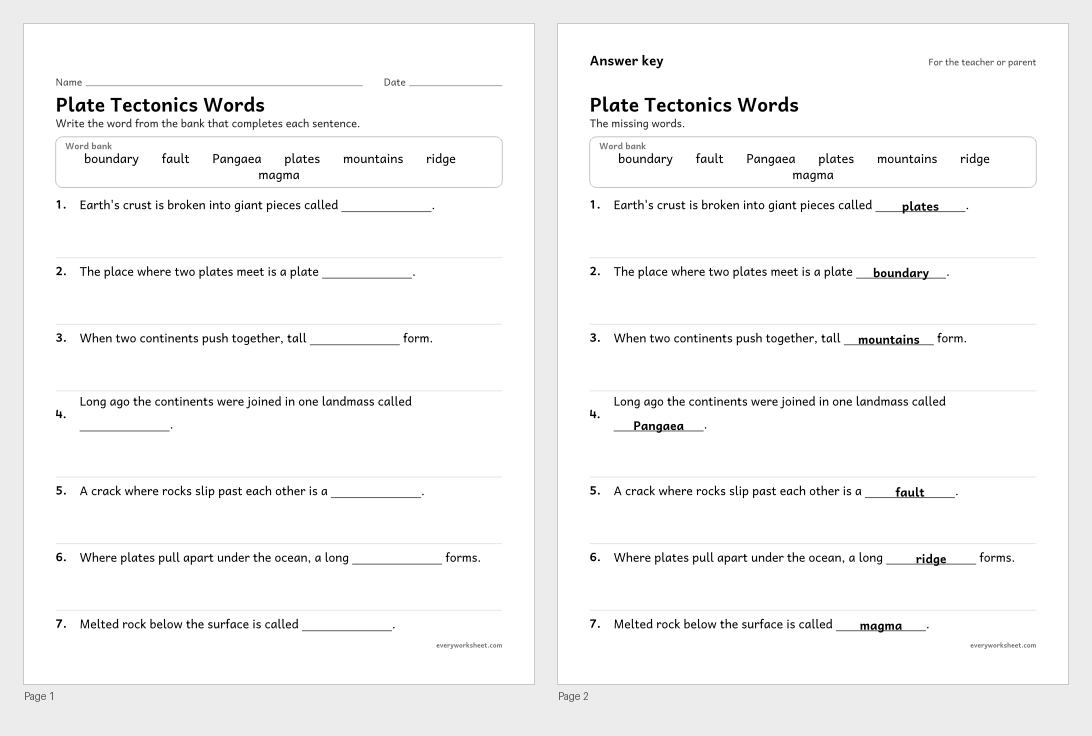
Using plate tectonics vocabulary in context
Answer key on page 2
2 pages38 KB
 View all 2 pages
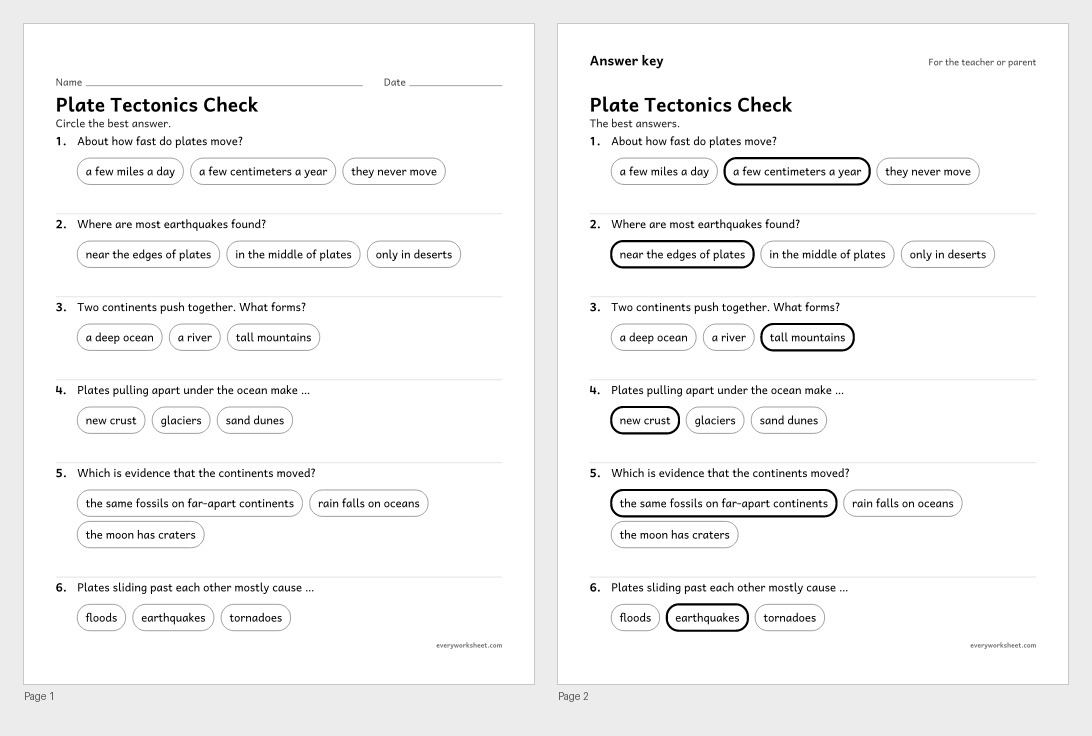
Reviewing plates, boundaries and the patterns of Earth's features
Answer key on page 2
2 pages39 KB
Print at 100% (actual size) for the cleanest tracing lines.
Earth's crust is broken into giant pieces called plates. They move only a few centimeters a year, but over millions of years they build mountains, open oceans and move whole continents.
These plate tectonics worksheets start with a poster of the ways plates move, then ask children to name the motion at four boundaries. A reading passage explains the puzzle of the continents and Pangaea, a data page reveals the pattern of volcanoes and earthquakes near plate edges, and a matching page links real places to the plate movements that made them.
Every page is black and white, prints on US Letter or A4, and every page with right answers has an answer key on page 2.
NGSS 4-ESS2-2Analyze and interpret data from maps to describe patterns of Earth’s features.CCSS.ELA-LITERACY.RI.4.1Refer to details and examples in a text when explaining what the text says explicitly and when drawing inferences from the text.CCSS.ELA-LITERACY.RI.4.4Determine the meaning of general academic and domain-specific words or phrases in a text relevant to a grade 4 topic or subject area.It is the idea that Earth's crust is broken into large plates that move slowly. Where plates meet, they pull apart, push together or slide past each other.
Pulling apart makes new crust and ocean ridges. Pushing together builds mountains and, where one plate sinks under another, volcanoes. Sliding past causes earthquakes.
A huge landmass that held almost all the continents about 200 million years ago, before they slowly drifted apart.