 View all 2 pages
Poem, Prose, or Drama?
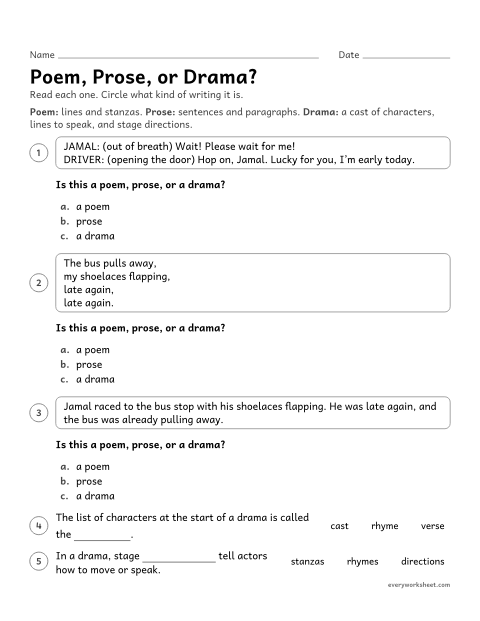
Telling poems, prose, and drama apart by their parts: verse and stanzas, sentences and paragraphs, cast and stage directions
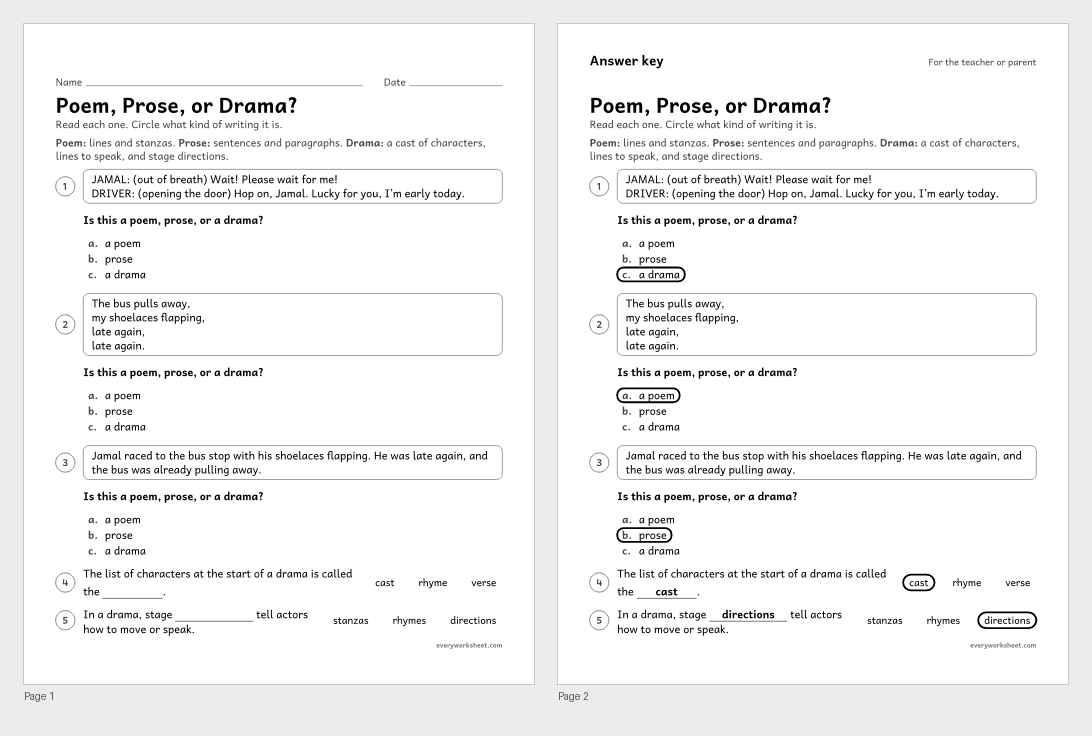
Answer key on page 2
2 pages51 KB
Original poems in many forms, with questions on stanzas, rhyme, beats, the speaker, and theme.
View all 2 pagesTelling poems, prose, and drama apart by their parts: verse and stanzas, sentences and paragraphs, cast and stage directions
Answer key on page 2
2 pages51 KB
 View larger
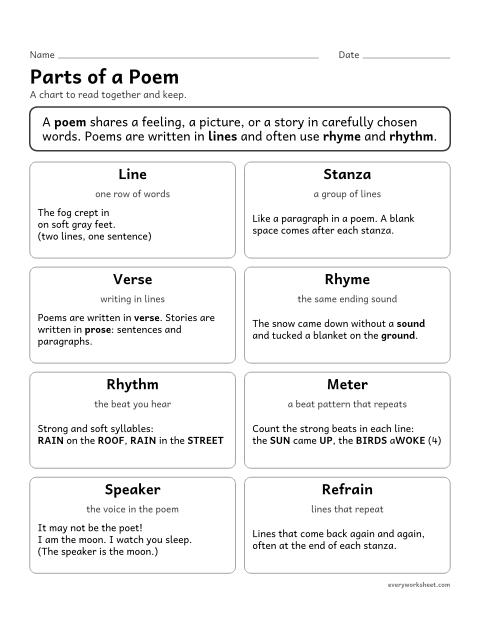
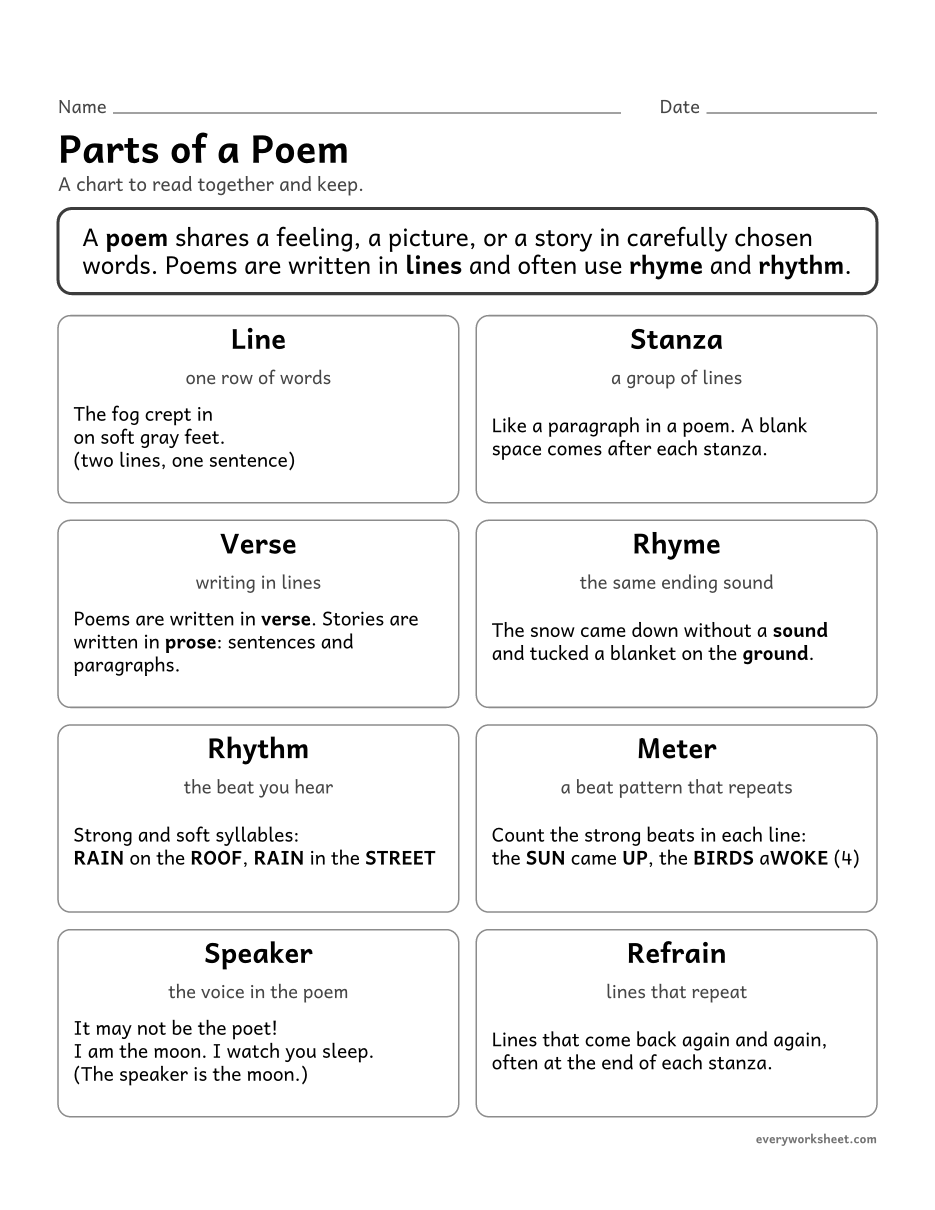
Knowing the parts of a poem: line, stanza, verse, rhyme, rhythm, meter, speaker, and refrain
1 page35 KB
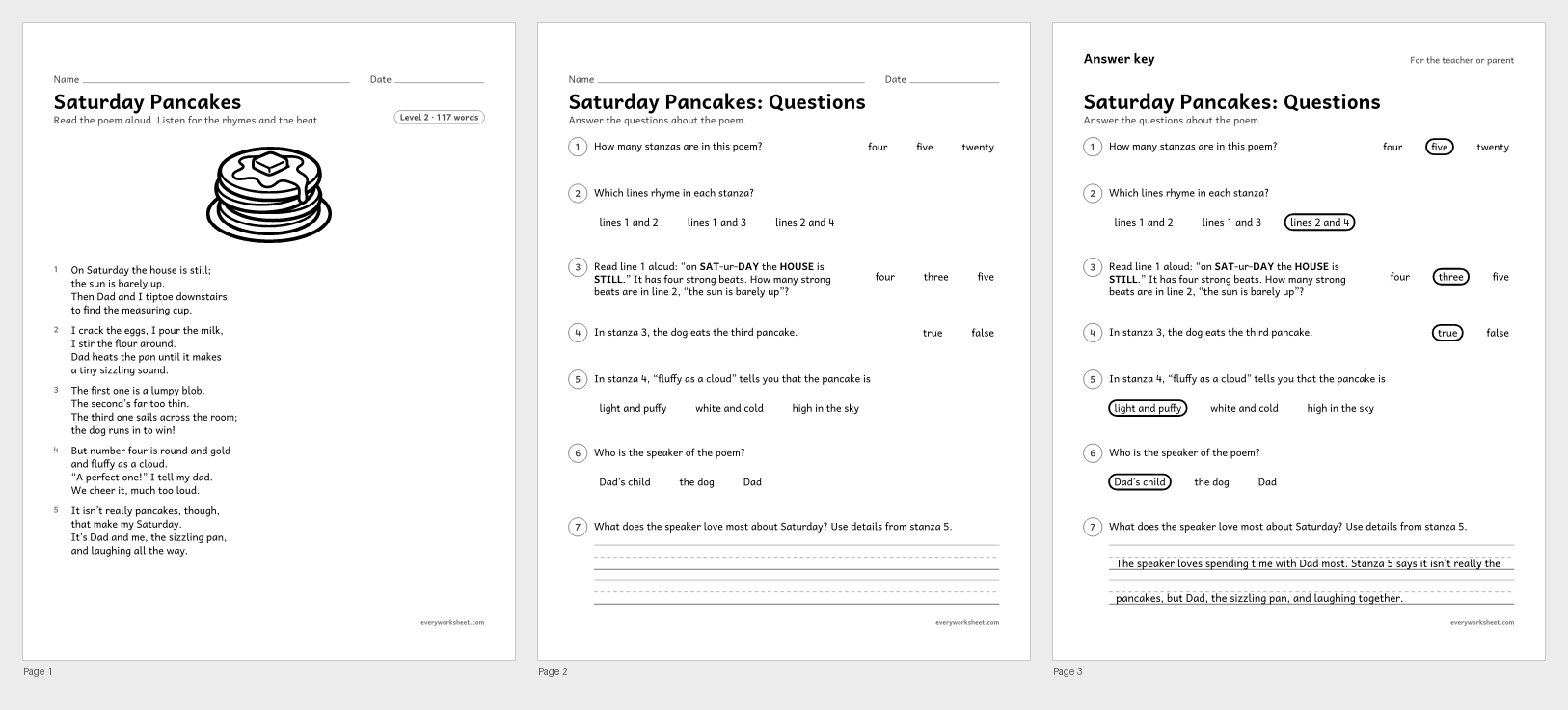 3 pagesView all 3 pages
Finding the rhyme pattern, stanzas, and beats (meter) in a rhyming poem
Answer key on page 3
3 pages89 KB
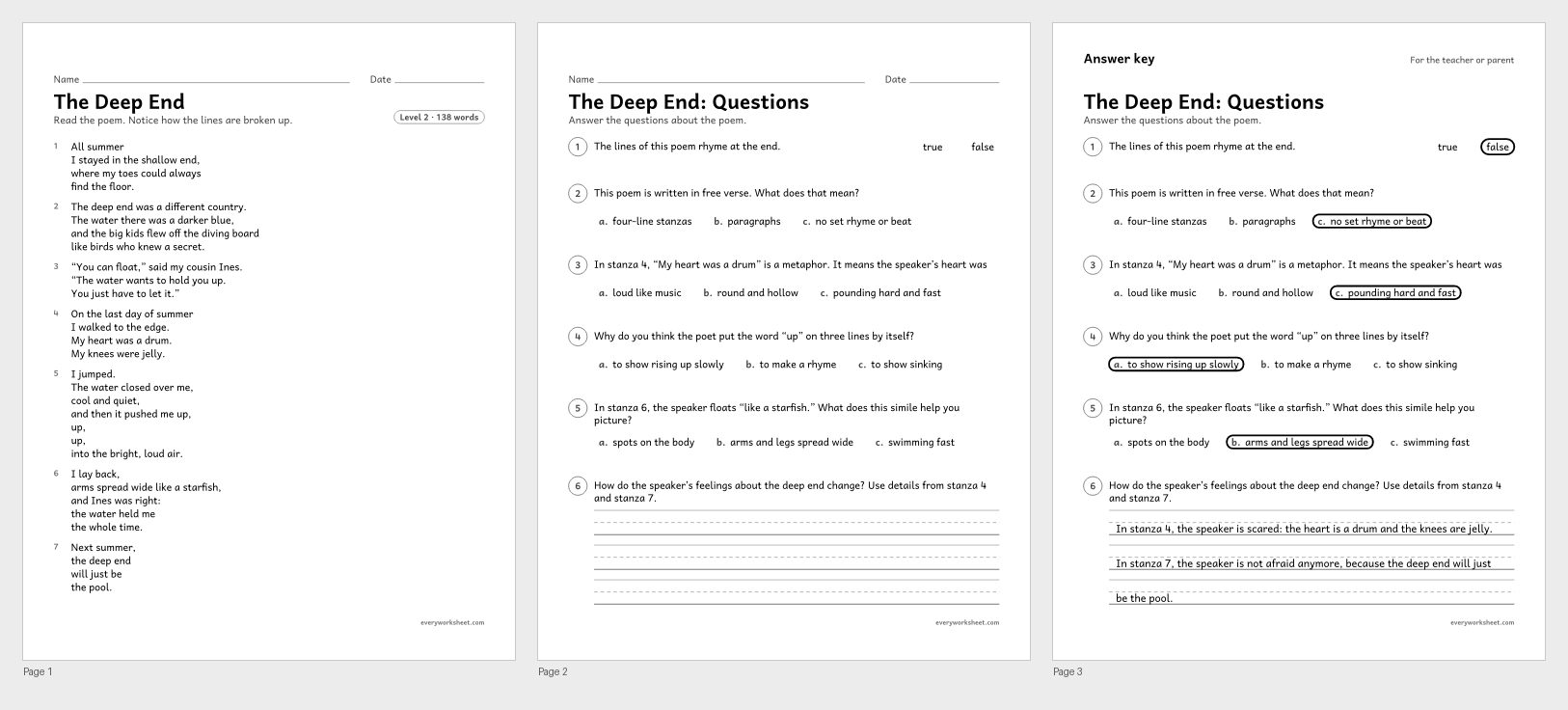 3 pagesView all 3 pages
Explaining similes and metaphors in a free verse poem and the speaker's change
Answer key on page 3
3 pages50 KB
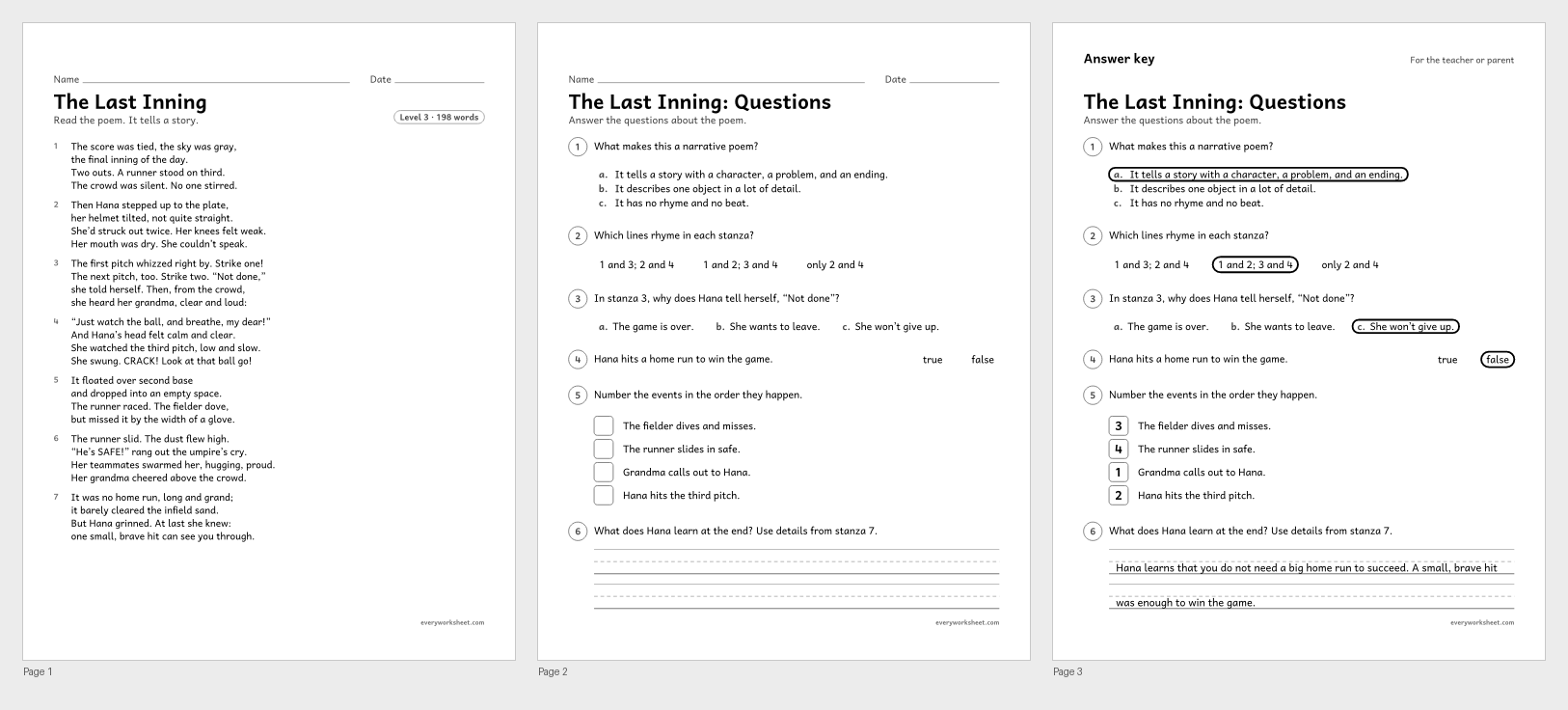 3 pagesView all 3 pages
Describing the character and events in a narrative poem with rhyming couplets
Answer key on page 3
3 pages56 KB
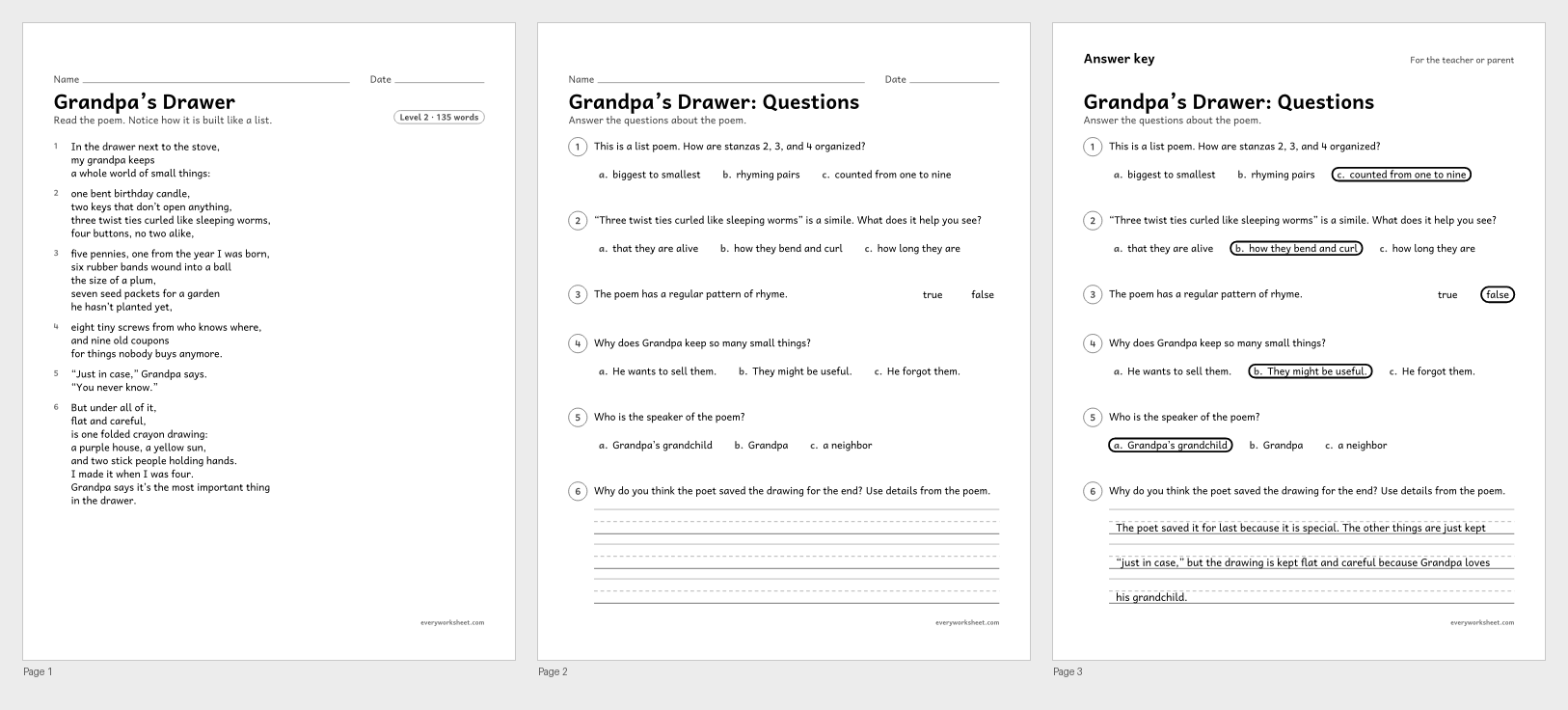 3 pagesView all 3 pages
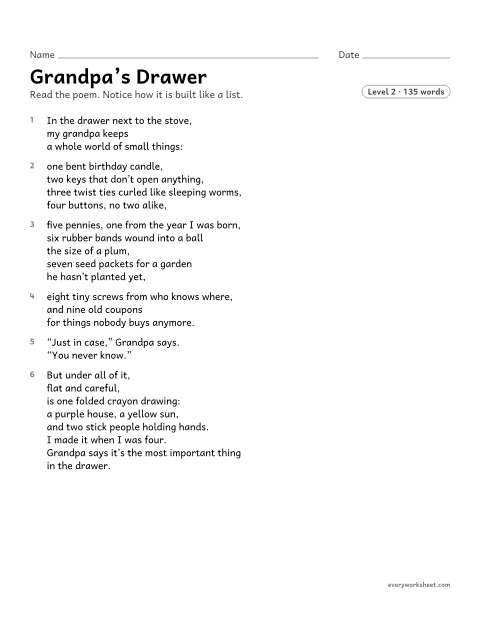
Using details in a list poem to make inferences about the speaker and Grandpa
Answer key on page 3
3 pages49 KB
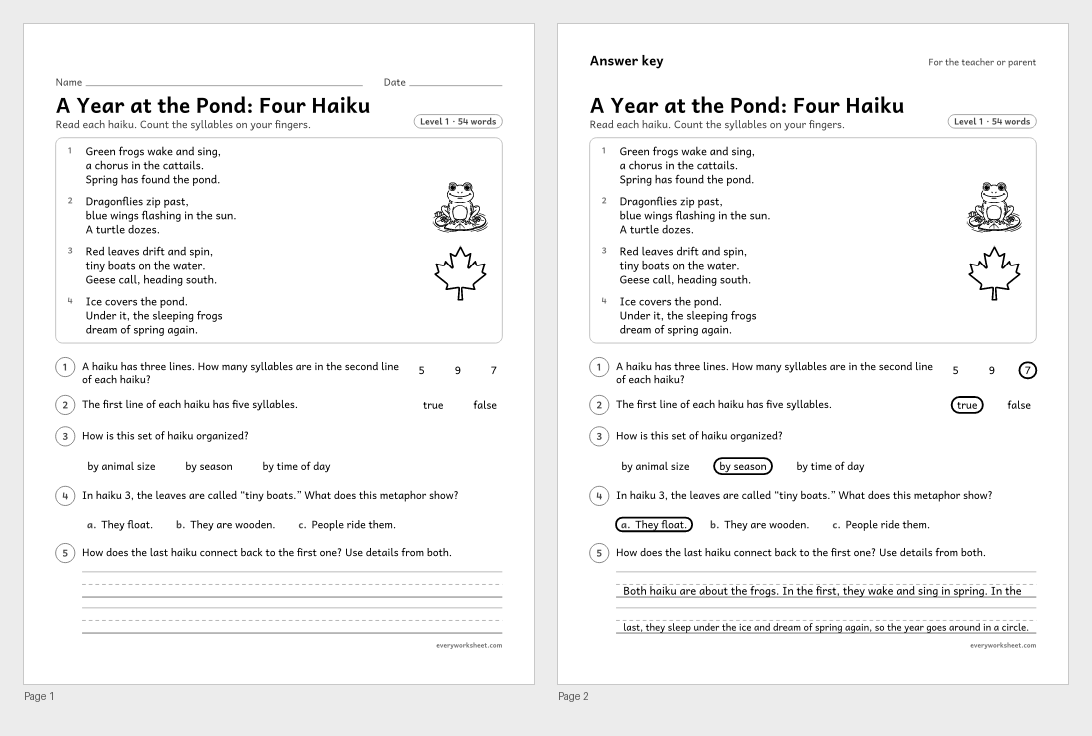 View all 2 pages
Counting syllables in haiku and telling how a set of poems is organized
Answer key on page 2
2 pages103 KB
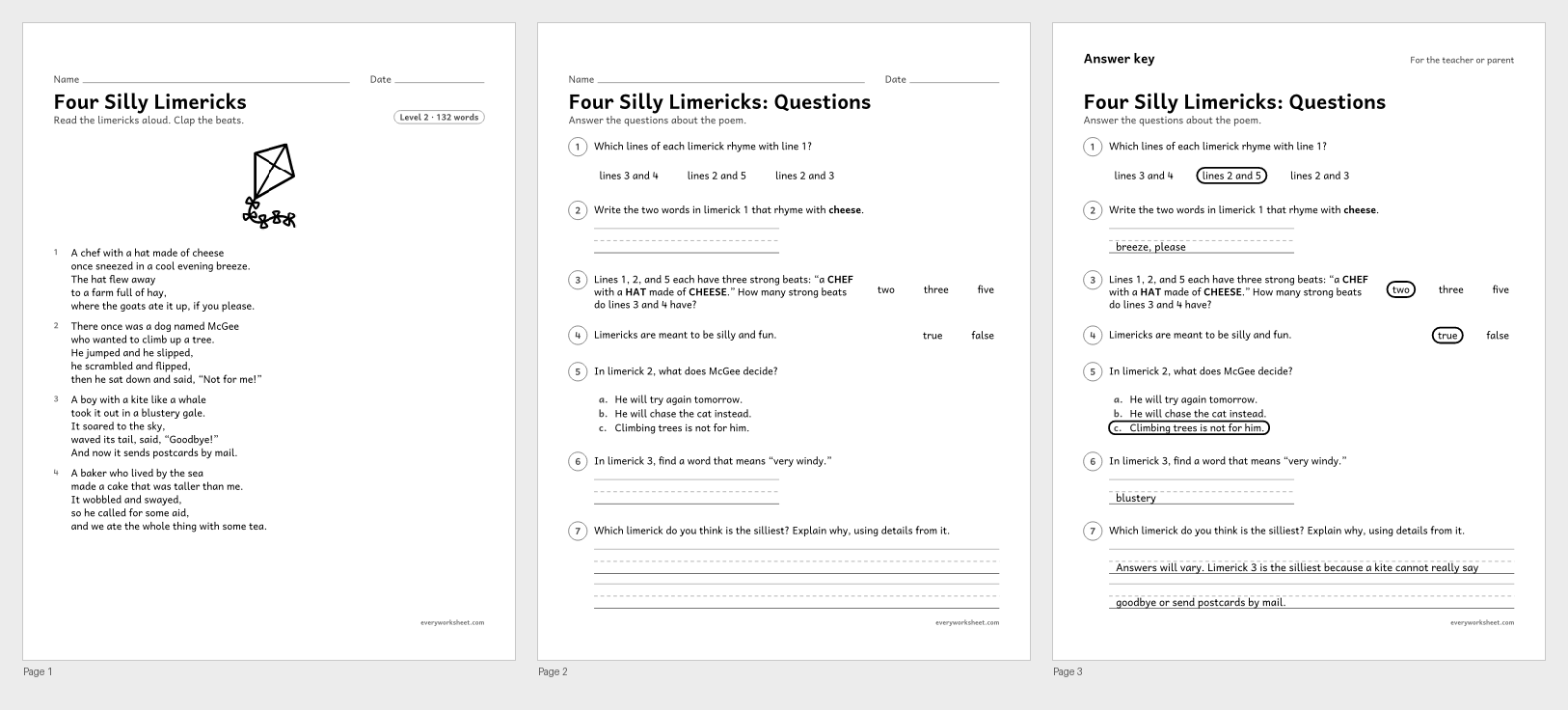 3 pagesView all 3 pages
Finding the rhyme pattern and beats of limericks, a funny five-line form
Answer key on page 3
3 pages75 KB
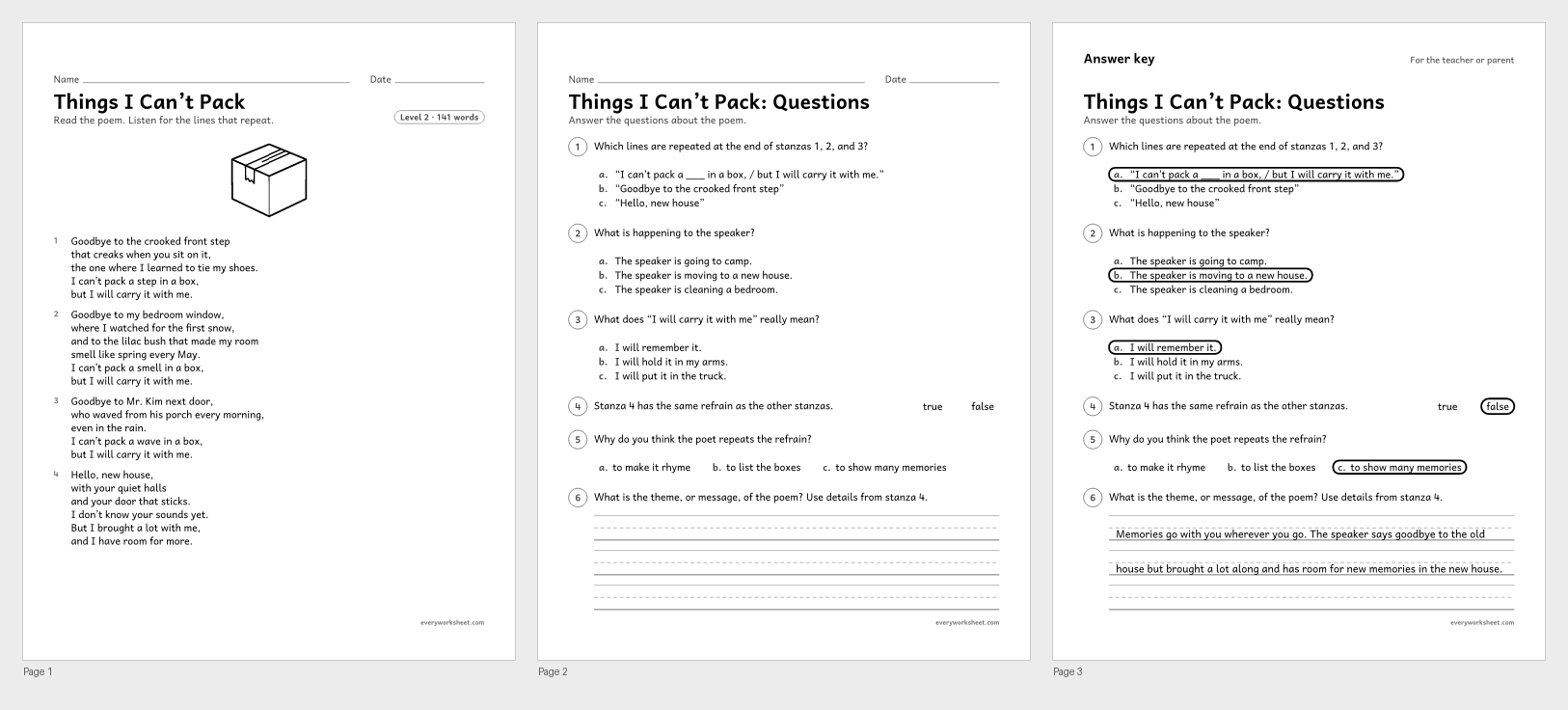 3 pagesView all 3 pages
Finding the theme of a poem with a repeated refrain
Answer key on page 3
3 pages83 KB
 View larger
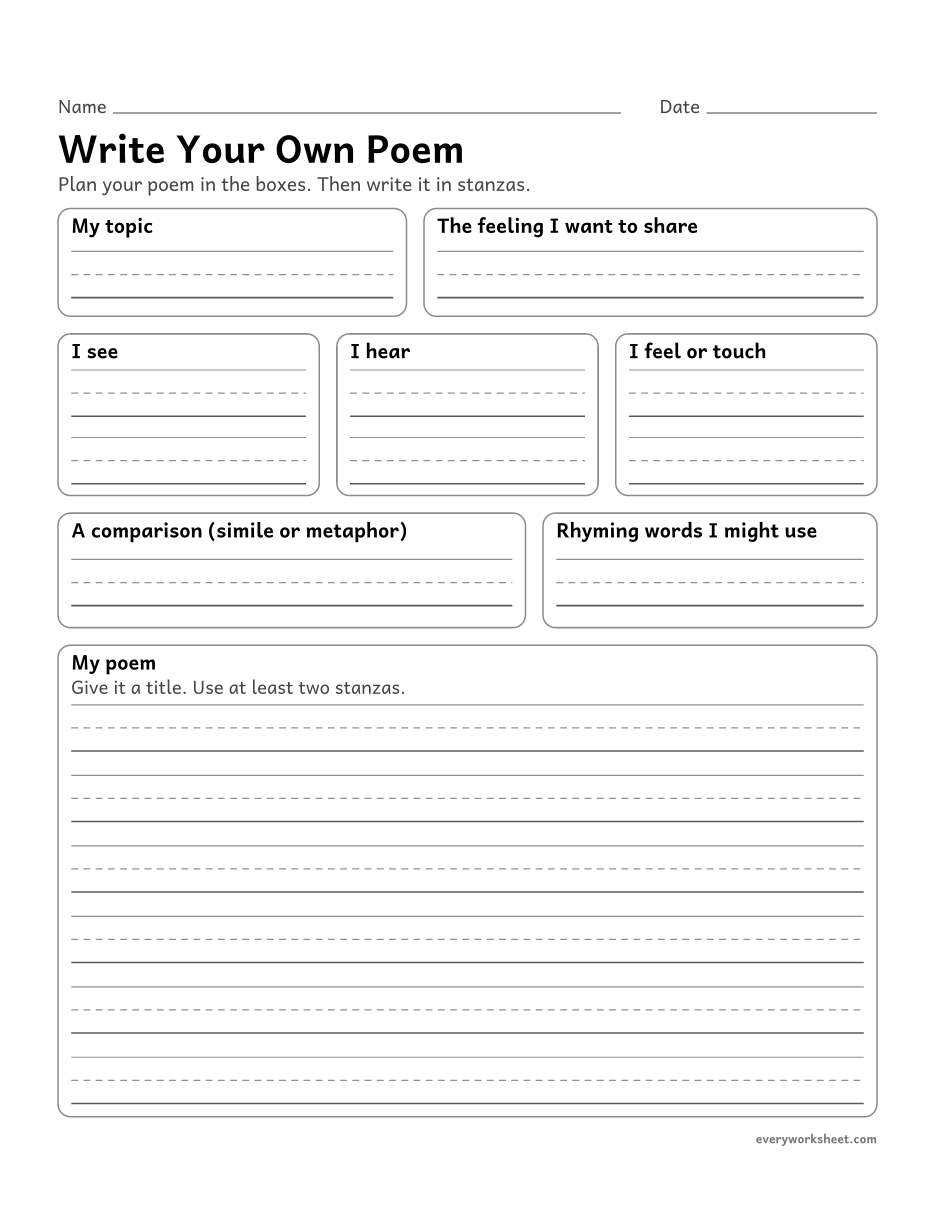
Planning and writing an original poem with sensory details, a comparison, and stanzas
1 page29 KB
Print at 100% (actual size) for the cleanest tracing lines.
A poem shares a feeling, a picture, or a story in a few carefully chosen words. Poems are written in lines, and the lines are grouped into stanzas, the way sentences are grouped into paragraphs in a story. Many poems use rhyme (words that end with the same sound, like sound and ground) and rhythm, the beat you hear when you read aloud. When the beat follows a pattern, that pattern is called meter: you can count the strong beats in each line, as in "the SUN came UP, the BIRDS aWOKE."
In 4th grade, children learn to talk about these parts of a poem and to explain how a poem is different from prose (stories and articles written in sentences and paragraphs) and drama (plays, with a cast of characters and stage directions). They also look for the speaker, the voice talking in the poem, and the theme, the message the poem leaves you with.
Every poem here is original and written for 9 and 10 year olds: a rhyming poem about Saturday pancakes, a free verse poem about jumping into the deep end, a story poem about a big moment in a baseball game, a list poem, a set of haiku, silly limericks, and a poem with a refrain about moving to a new house. Each one has questions and an answer key.
CCSS.ELA-LITERACY.RL.4.1Refer to details and examples in a text when explaining what the text says explicitly and when drawing inferences from the text.CCSS.ELA-LITERACY.RL.4.2Determine a theme of a story, drama, or poem from details in the text; summarize the text.CCSS.ELA-LITERACY.RL.4.3Describe in depth a character, setting, or event in a story or drama, drawing on specific details in the text (e.g., a character's thoughts, words, or actions).CCSS.ELA-LITERACY.RL.4.5Explain major differences between poems, drama, and prose, and refer to the structural elements of poems (e.g., verse, rhythm, meter) and drama (e.g., casts of characters, settings, descriptions, dialogue, stage directions) when writing or speaking about a text.CCSS.ELA-LITERACY.W.4.3.DUse concrete words and phrases and sensory details to convey experiences and events precisely.CCSS.ELA-LITERACY.L.4.5.AExplain the meaning of simple similes and metaphors (e.g., as pretty as a picture) in context.Rhyming poems in four-line stanzas, free verse, a narrative poem that tells a story, a list poem, haiku, limericks, and a poem with a repeated refrain.
Rhythm is the beat you hear when you read a poem aloud. Meter is a rhythm that follows a regular pattern, such as four strong beats in every line.
A poem is written in lines and stanzas. Prose is written in sentences and paragraphs, like stories and articles. A drama is a play, with a cast of characters, lines for each character to speak, and stage directions.
Yes. Every poem was written for this site, so you can print and copy them for your class or family.