Pollution and Conservation Worksheets

9 free PDFsUS Letter PDFsAnswer key includedNo login

Kinds of pollution, choices that help or harm, how communities use science to protect resources, and designing a solution.

Download the pollution and conservation worksheets

Pollution and conservation

A poster and a help-or-harm sort.

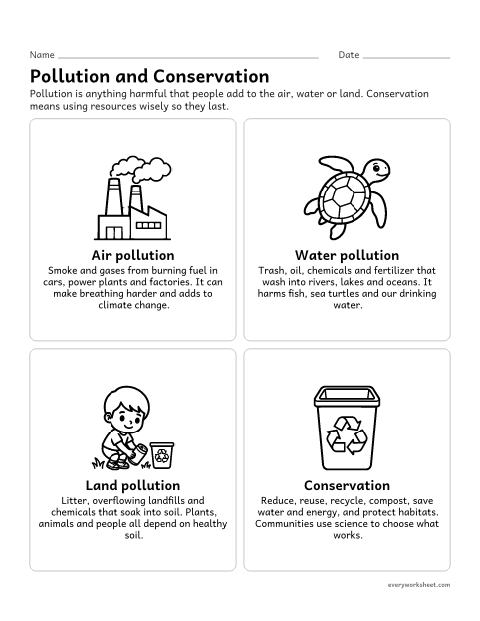
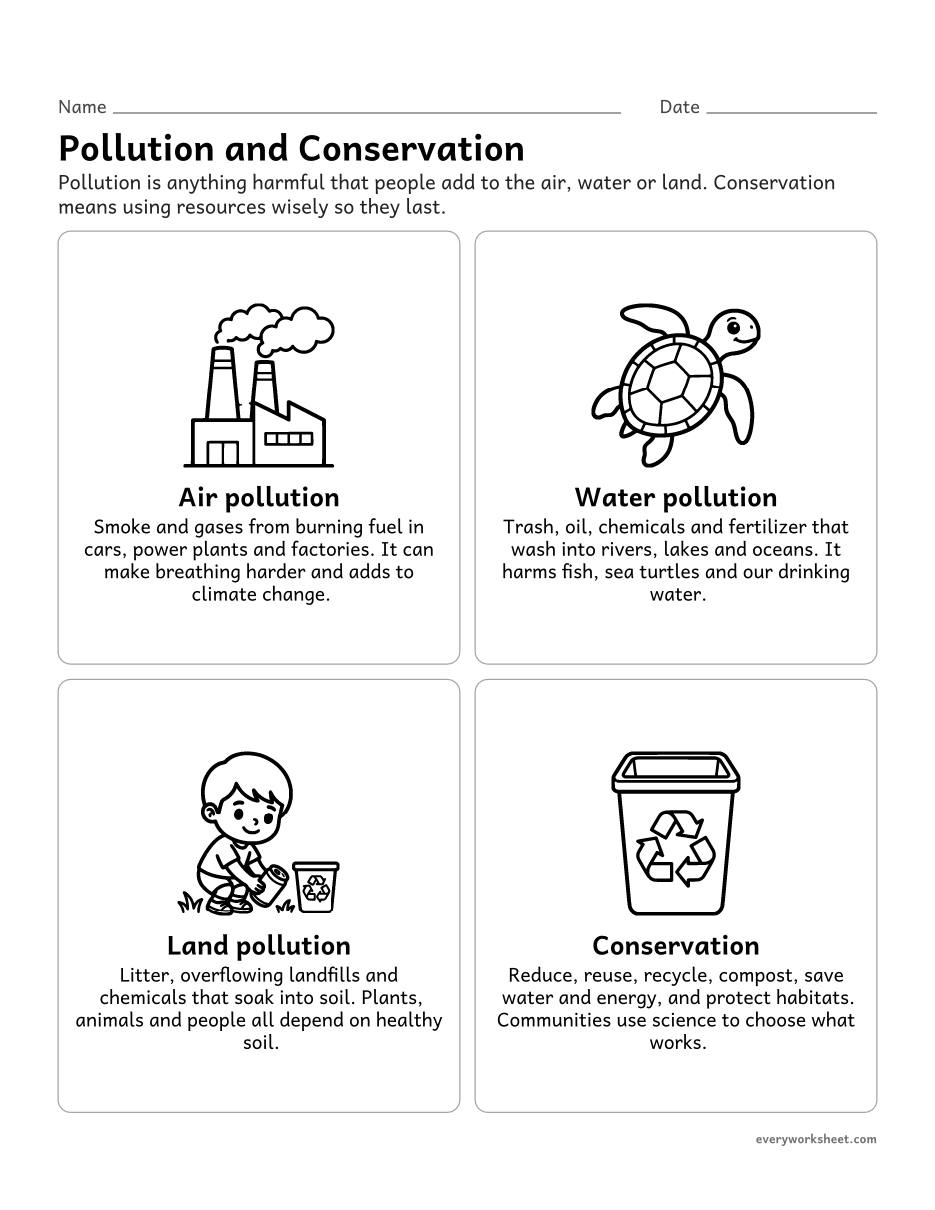
  • Preview of the printable “Pollution and conservation poster for kids” worksheet: describing kinds of pollution and ways communities protect resourcesView larger

    Pollution and conservation poster for kids

    Describing kinds of pollution and ways communities protect resources

    1 page113 KB
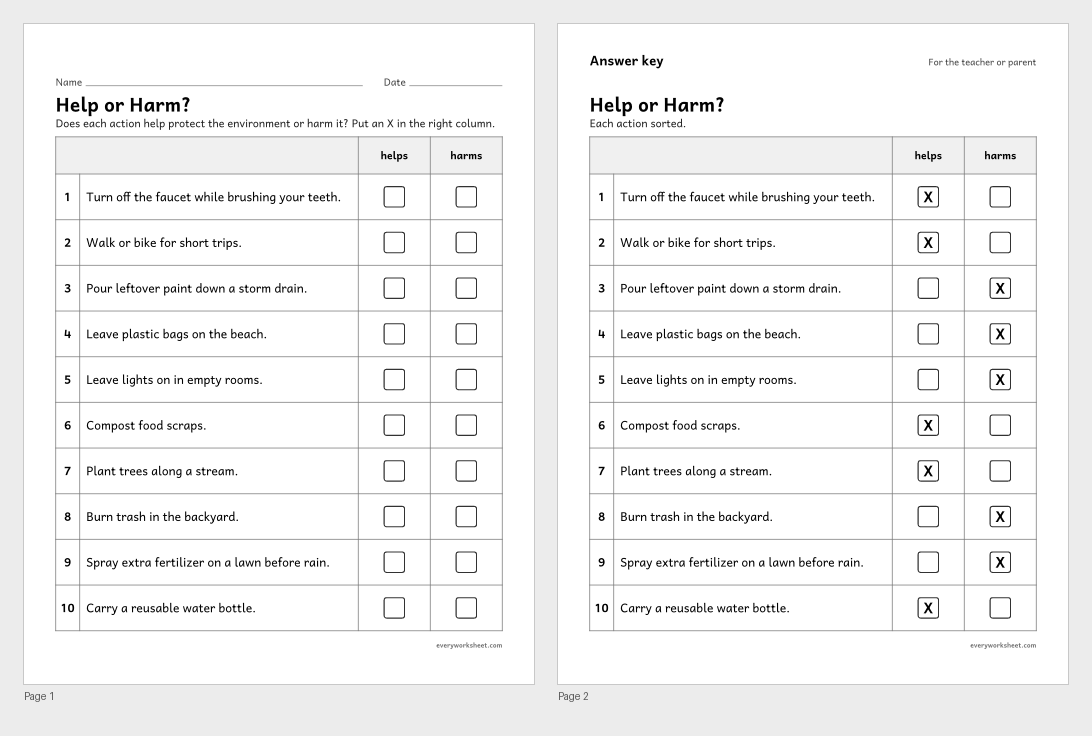
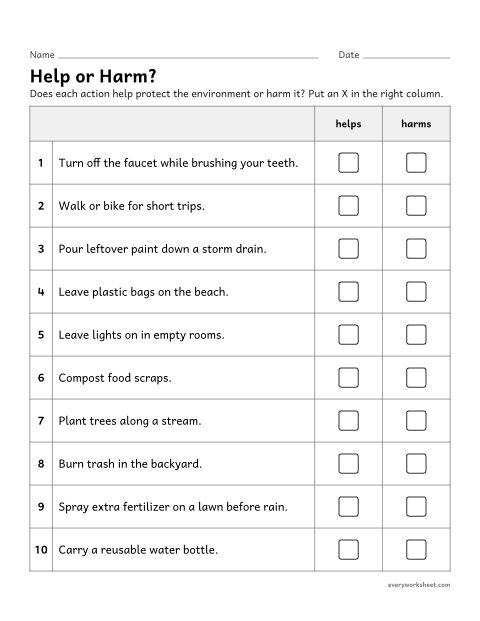
  • Preview of the printable “Helping or harming the environment sort worksheet” worksheet: classifying human actions that help or harm Earth's resourcesView all 2 pages

    Helping or harming the environment sort worksheet

    Classifying human actions that help or harm Earth's resources

    Answer key on page 2

    2 pages46 KB
How communities protect the Earth

Problems and solutions, the river that caught fire, a trash audit and everyday choices.

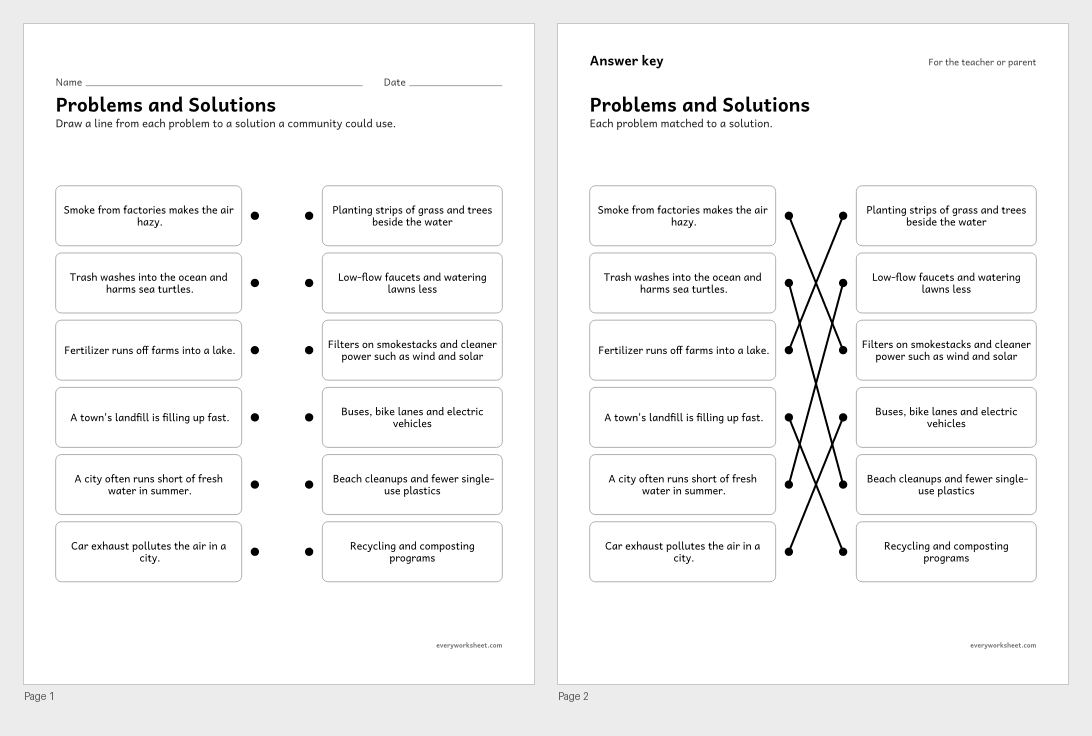
  • Preview of the printable “Pollution problems and solutions matching worksheet” worksheet: matching environmental problems to ways communities solve themView all 2 pages

    Pollution problems and solutions matching worksheet

    Matching environmental problems to ways communities solve them

    Answer key on page 2

    2 pages31 KB
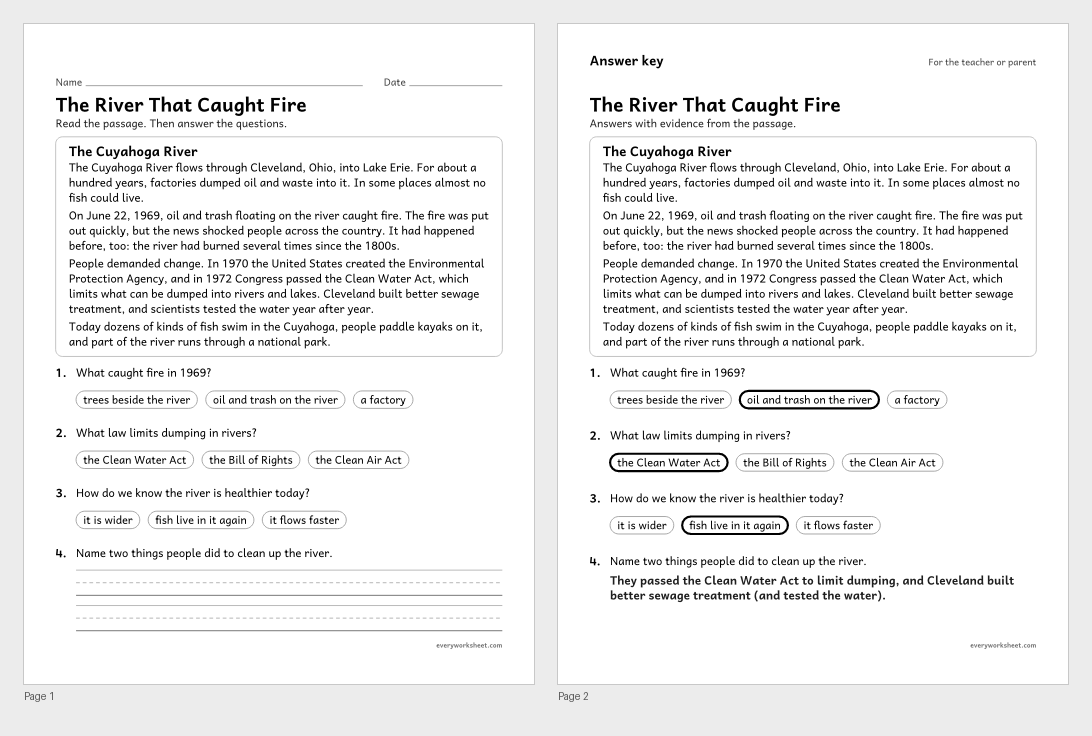
  • Preview of the printable “The river that caught Fire: pollution reading passage” worksheet: describing how a community used science and laws to clean up a polluted riverView all 2 pages

    The river that caught Fire: pollution reading passage

    Describing how a community used science and laws to clean up a polluted river

    Answer key on page 2

    2 pages41 KB
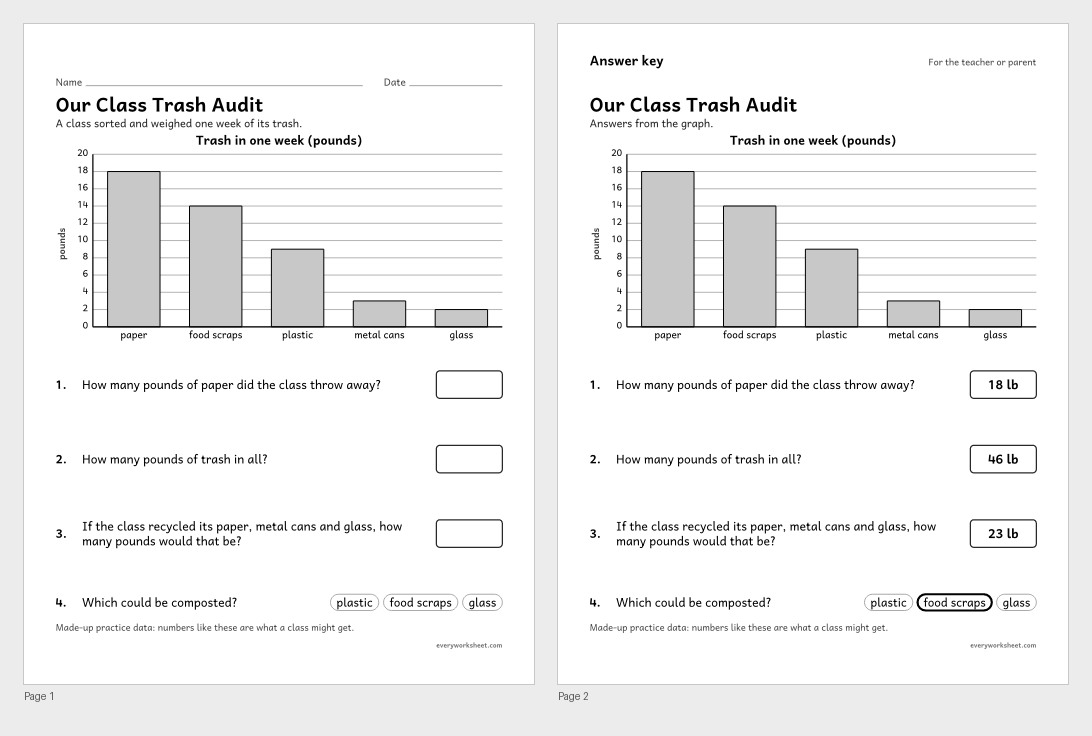
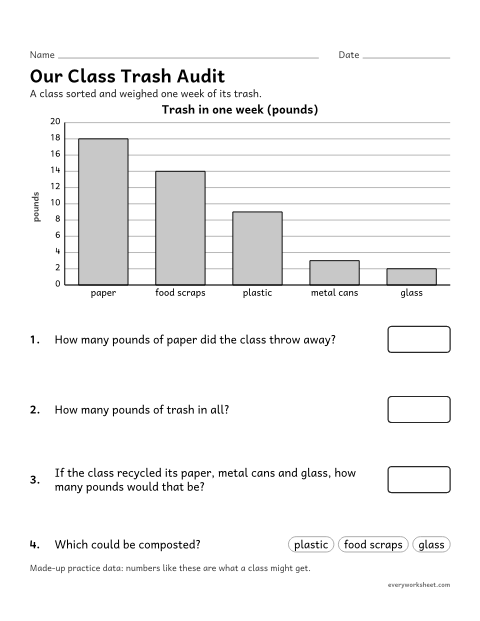
  • Preview of the printable “Trash audit bar graph Worksheet: reduce and recycle” worksheet: analyzing trash data to find ways to reduce wasteView all 2 pages

    Trash audit bar graph Worksheet: reduce and recycle

    Analyzing trash data to find ways to reduce waste

    Answer key on page 2

    2 pages38 KB
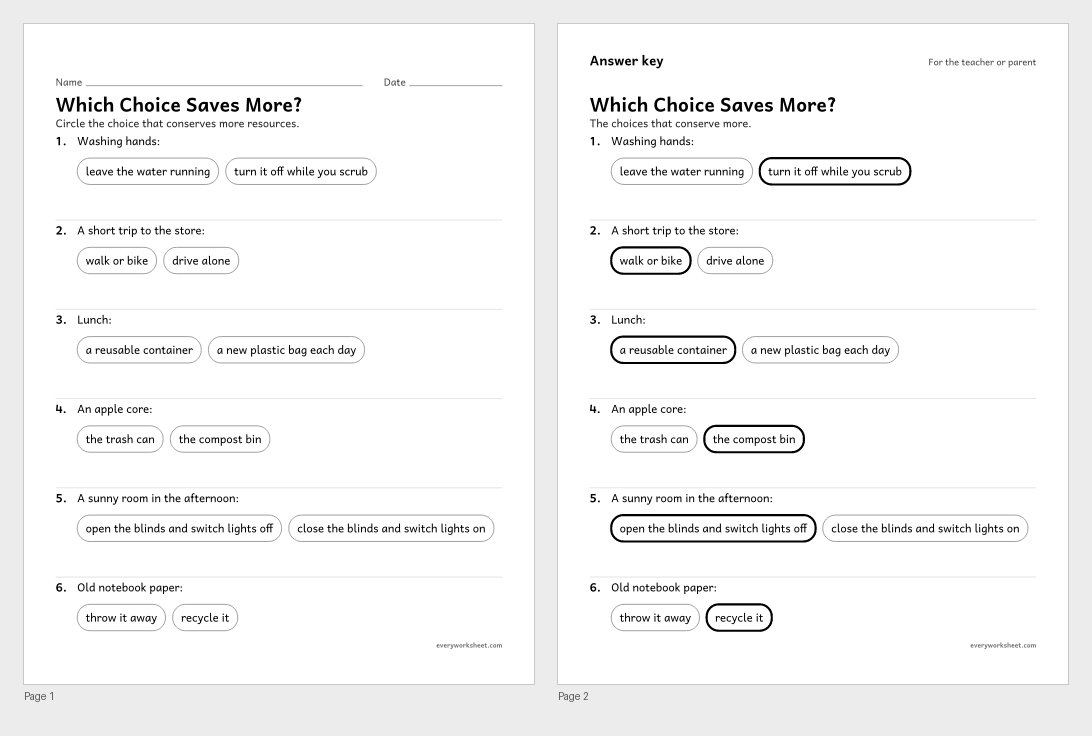
  • Preview of the printable “Conserving resources Worksheet: which choice saves More?” worksheet: comparing choices that conserve water, energy and materialsView all 2 pages

    Conserving resources Worksheet: which choice saves More?

    Comparing choices that conserve water, energy and materials

    Answer key on page 2

    2 pages38 KB
Design and review

Design a solution, vocabulary and a quiz.

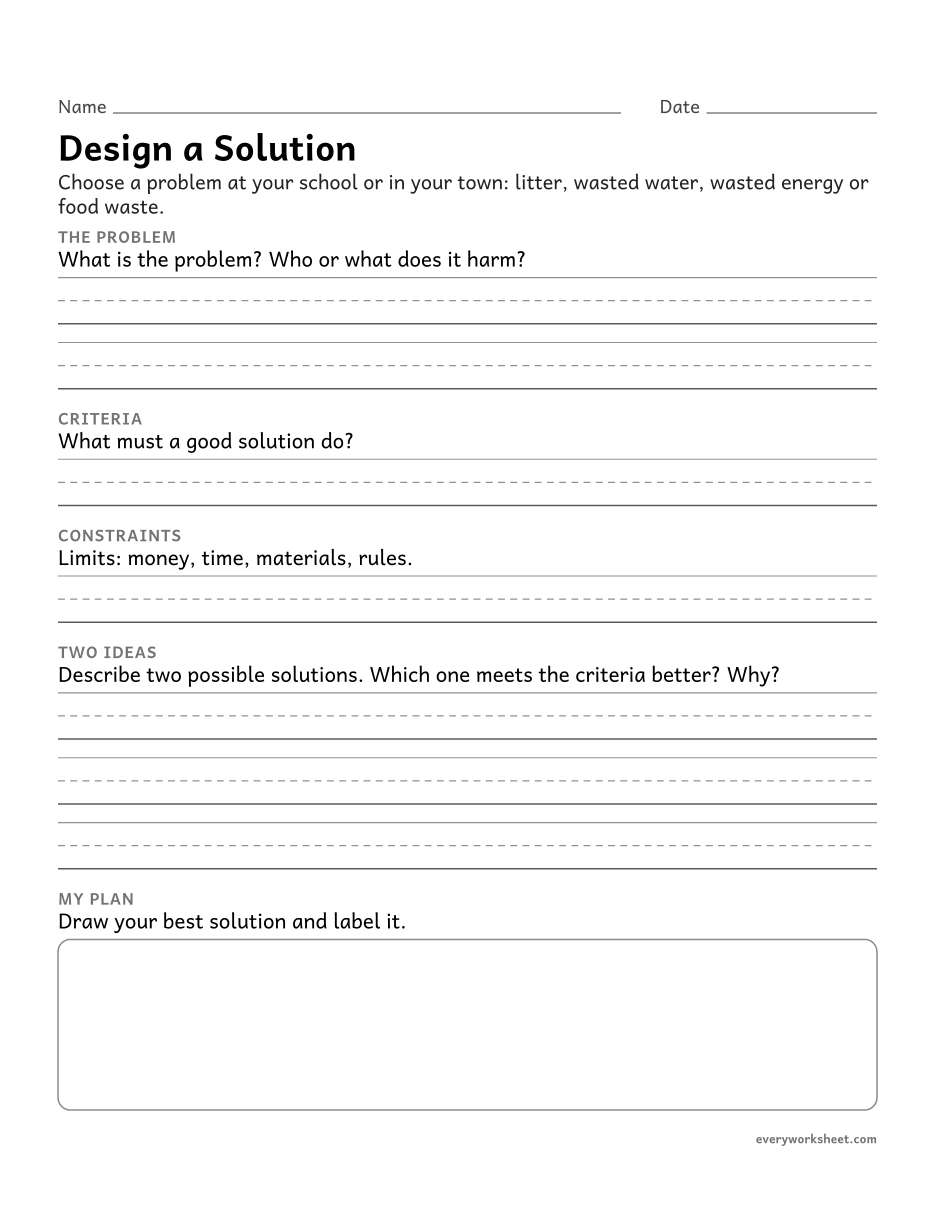
  • Preview of the printable “Design a Solution: environmental problem worksheet” worksheet: defining a design problem and comparing solutions that protect the environmentView larger

    Design a Solution: environmental problem worksheet

    Defining a design problem and comparing solutions that protect the environment

    1 page27 KB
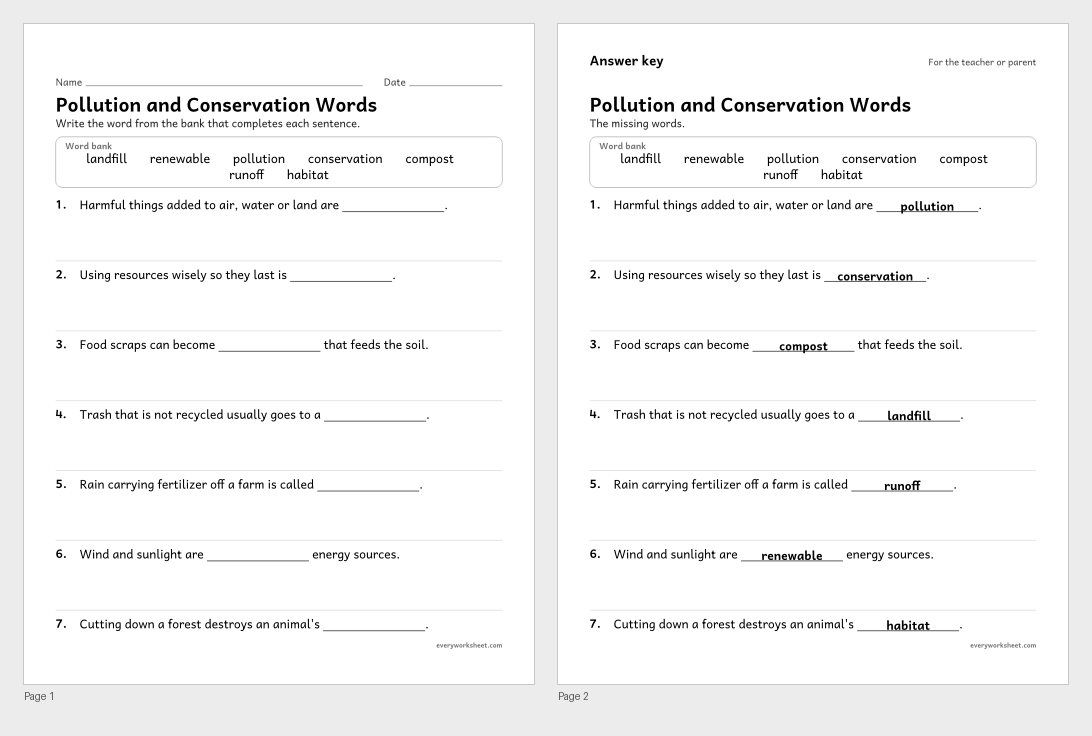
  • Preview of the printable “Pollution and conservation vocabulary worksheet” worksheet: using vocabulary about pollution and conservationView all 2 pages

    Pollution and conservation vocabulary worksheet

    Using vocabulary about pollution and conservation

    Answer key on page 2

    2 pages39 KB
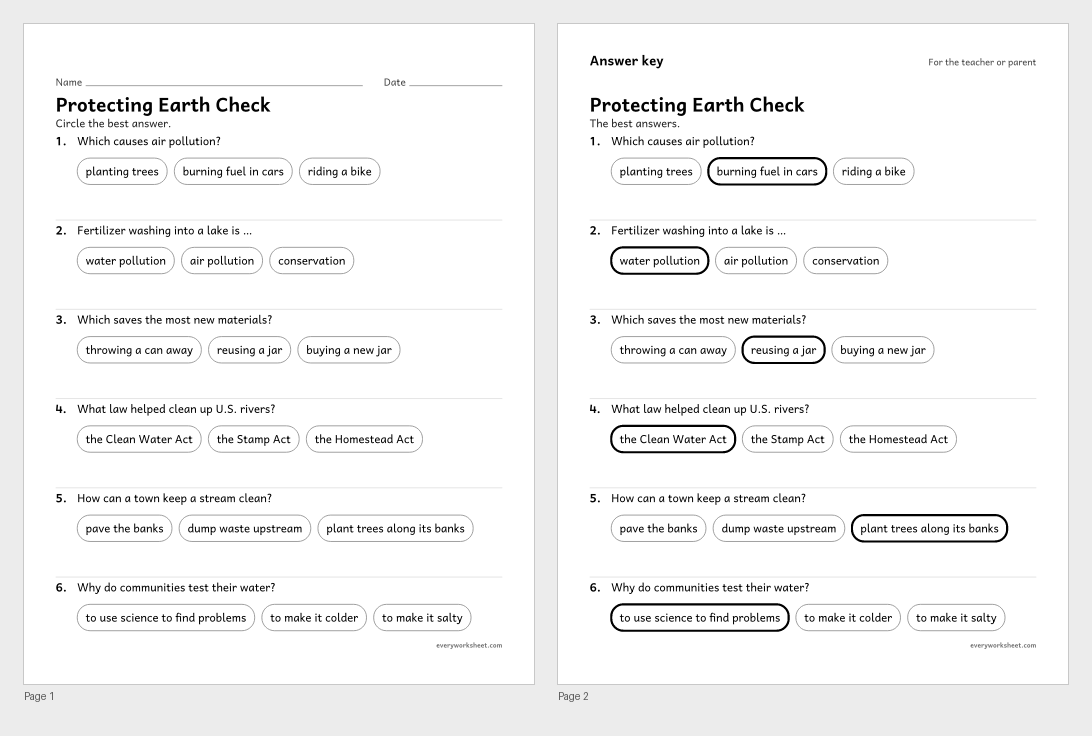
  • Preview of the printable “Pollution and conservation quiz for 5th grade” worksheet: reviewing pollution and ways communities protect resourcesView all 2 pages

    Pollution and conservation quiz for 5th grade

    Reviewing pollution and ways communities protect resources

    Answer key on page 2

    2 pages39 KB

About these pollution and conservation worksheets

Pollution is anything harmful people add to the air, water or land. Conservation means using resources wisely so they last. Communities use science to find problems and choose solutions, from cleaning up rivers to recycling programs.

These pollution and conservation worksheets begin with a poster and a help-or-harm sort. Children match problems to community solutions, read how the Cuyahoga River was cleaned up, read a trash audit graph, compare everyday choices and design their own solution with criteria and constraints.

Every page is black and white, prints on US Letter or A4, and every page with right answers has an answer key on page 2.

Standards

  • NGSS 5-ESS3-1Obtain and combine information about ways individual communities use science ideas to protect the Earth’s resources and environment.
  • NGSS 3-5-ETS1-1Define a simple design problem reflecting a need or a want that includes specified criteria for success and constraints on materials, time, or cost.
  • CCSS.ELA-LITERACY.RI.5.4Determine the meaning of general academic and domain-specific words and phrases in a text relevant to a grade 5 topic or subject area.

How to use them

  1. Start with the poster. Ask children to name one kind of pollution they have seen.
  2. Do a real trash audit of the classroom for one day before the graph page.
  3. Read the Cuyahoga River passage and ask what science and laws each did.
  4. Finish with the design a solution page.

Teaching tips

  • Keep the focus on what individuals and communities can do, and on how science helps them decide.
  • Every solution has costs and benefits; the design page asks children to compare two ideas.
  • The trash audit numbers are made-up practice data.

Questions teachers and parents ask

What are the main kinds of pollution?

Air pollution (smoke and gases), water pollution (trash, oil, chemicals and fertilizer in water) and land pollution (litter, landfills and chemicals in soil).

How can kids help conserve resources?

Turn off water and lights, reuse containers, recycle and compost, walk or bike for short trips, and help with cleanups.

How do communities protect the environment?

They test air and water, pass laws such as the Clean Water Act, build treatment plants, plant trees along streams and run recycling programs.