 View larger
Powers of 10 Worksheets
Powers of 10 in exponent and standard form, then multiplying and dividing whole numbers and decimals by 10, 100 and 1,000.
Download the powers of 10 worksheets
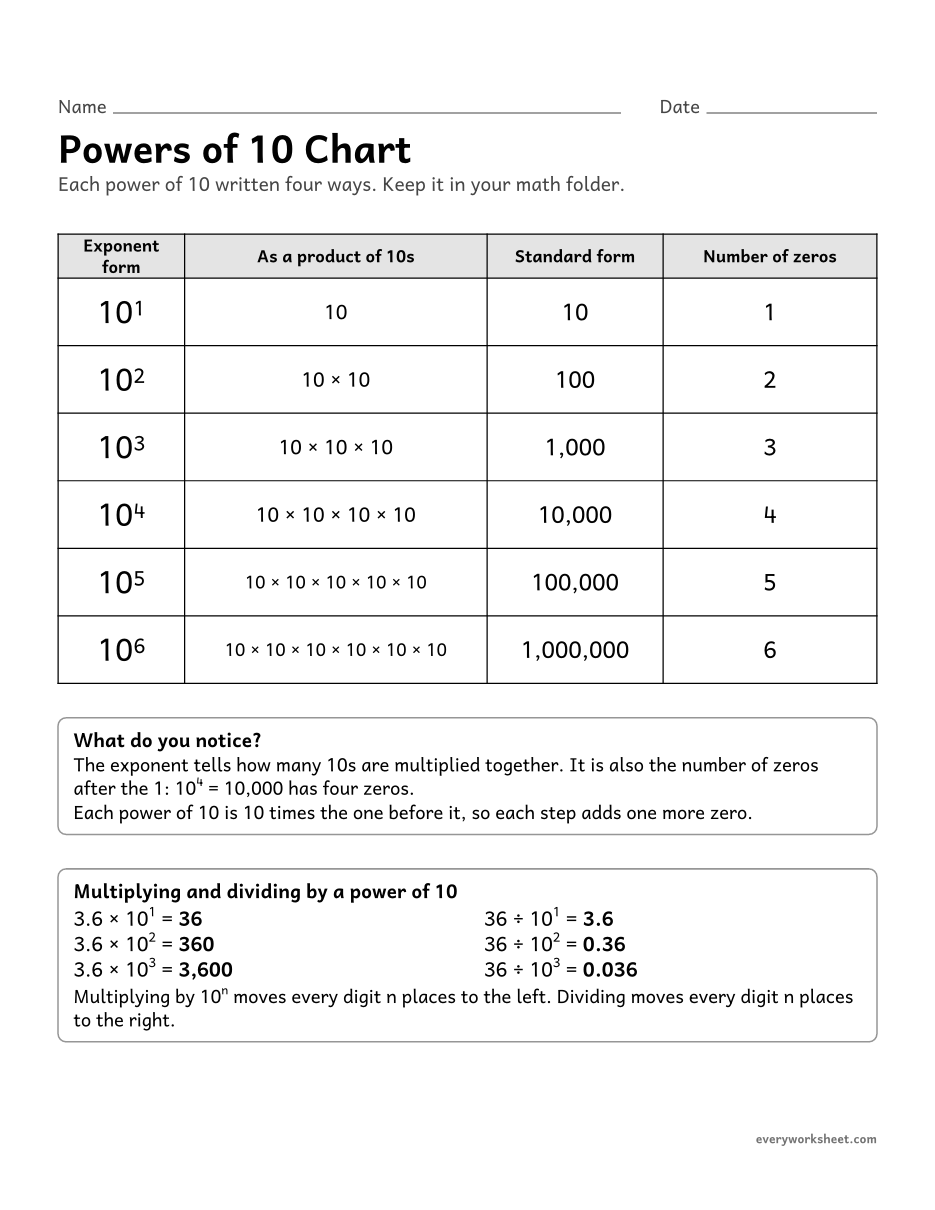
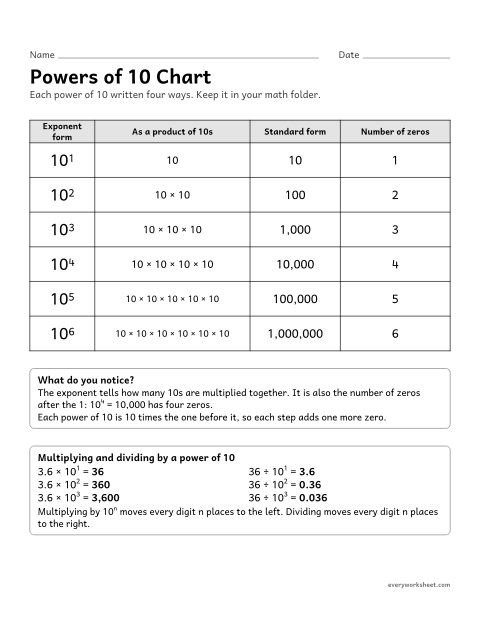
Powers of 10 charts
 View larger
 View all 2 pages
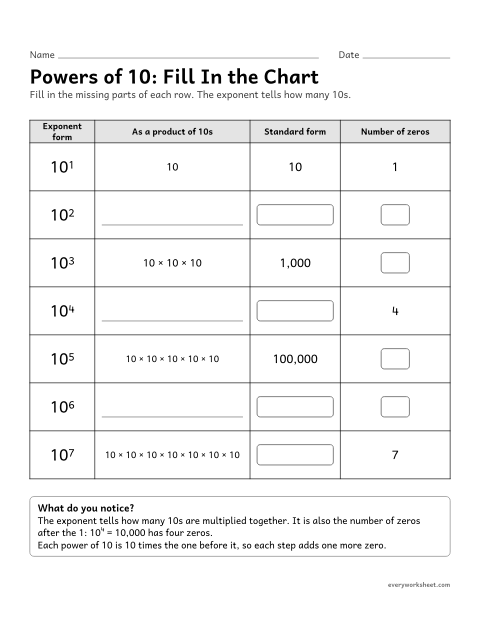
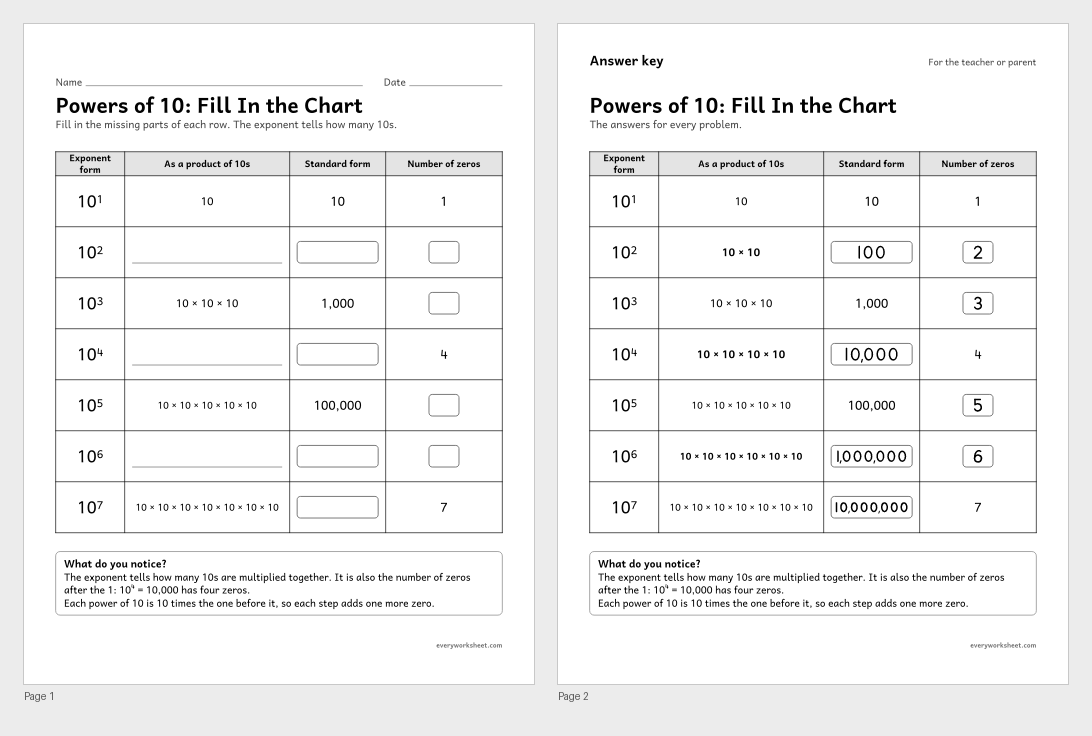
Powers of 10: fill in the chart
Writing powers of 10 in exponent and standard form
Answer key on page 2
2 pages46 KB
 View all 2 pages
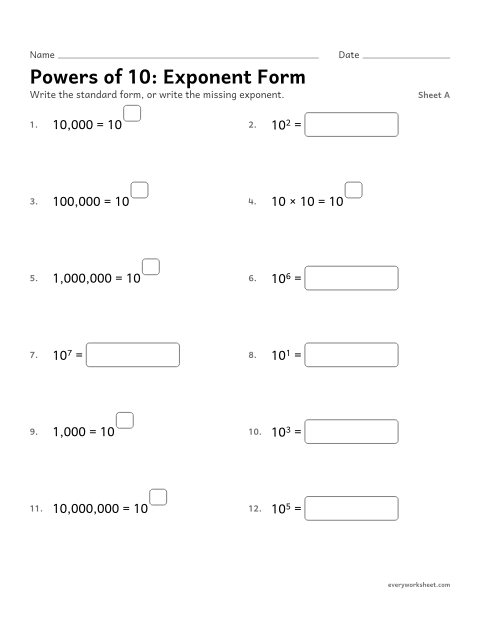
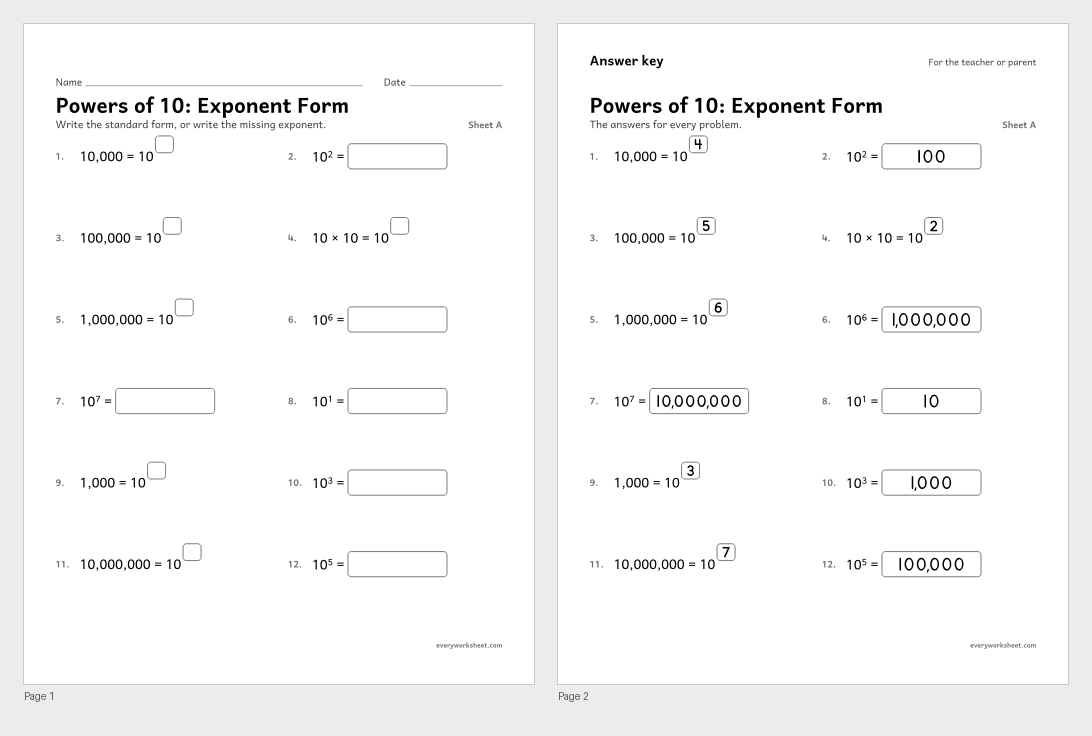
Powers of 10: exponent Form, sheet A
Writing powers of 10 with exponents
Answer key on page 2
2 pages61 KB
 View all 2 pages
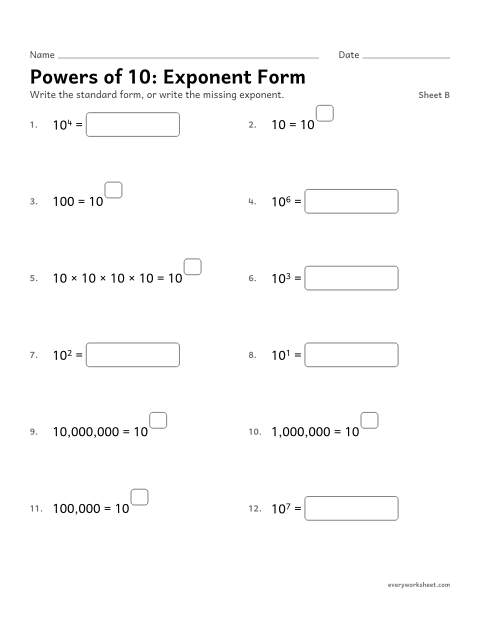
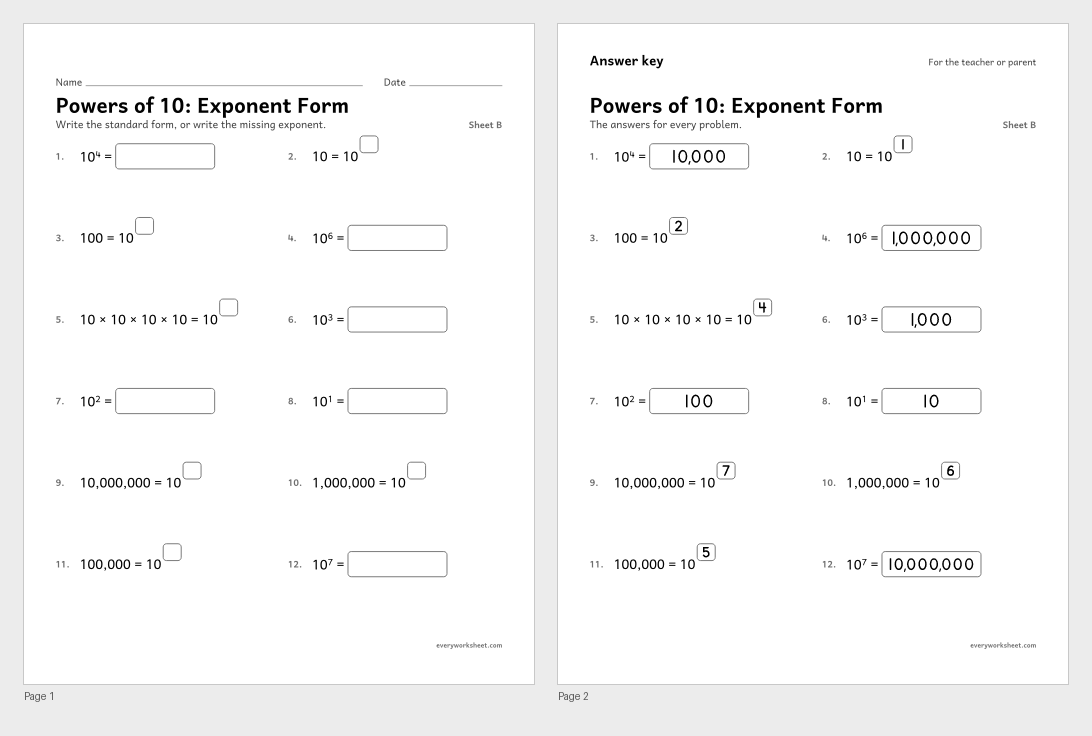
Powers of 10: exponent Form, sheet B
Writing powers of 10 with exponents
Answer key on page 2
2 pages63 KB
Multiply and divide by powers of 10
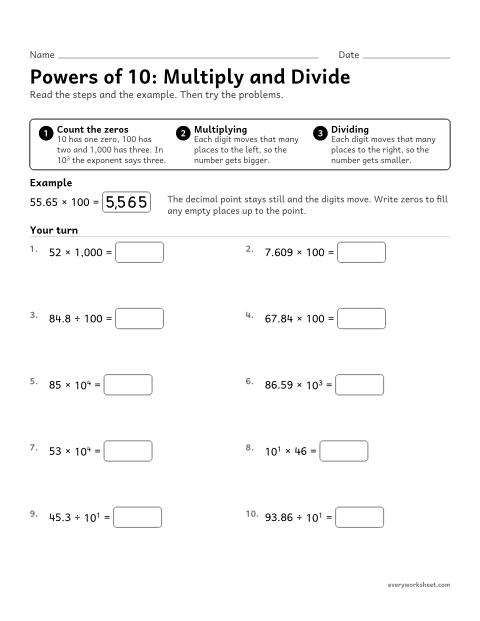 View all 2 pages
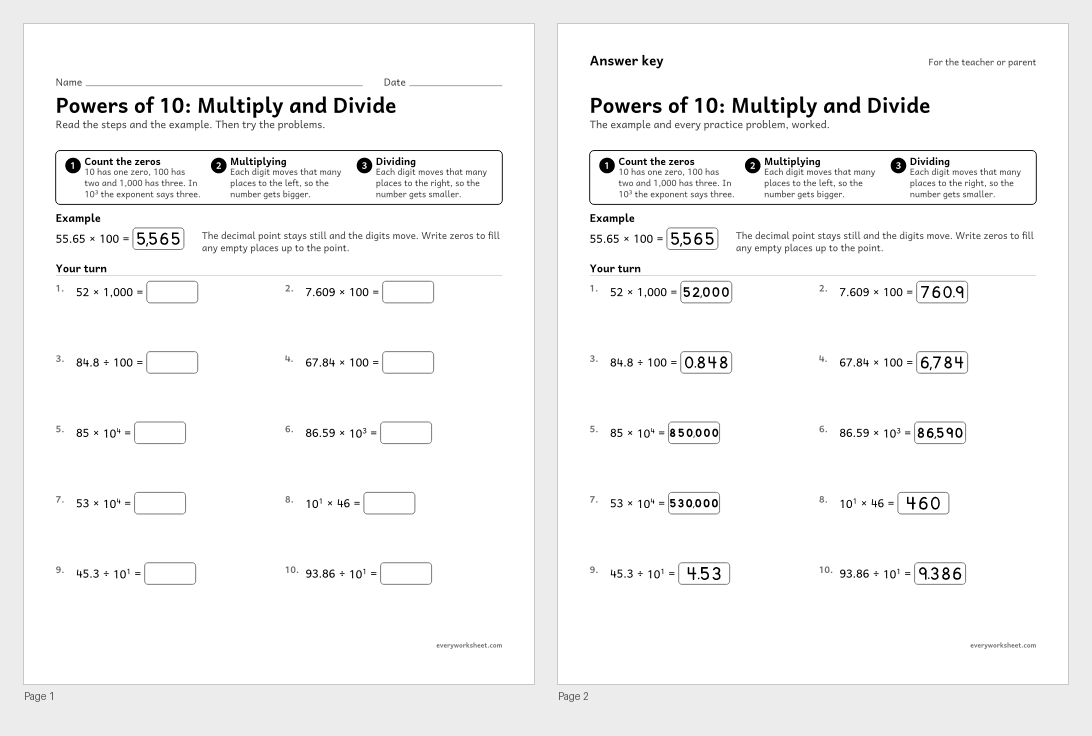
Powers of 10: multiply and divide
Multiplying and dividing by powers of 10
Answer key on page 2
2 pages79 KB
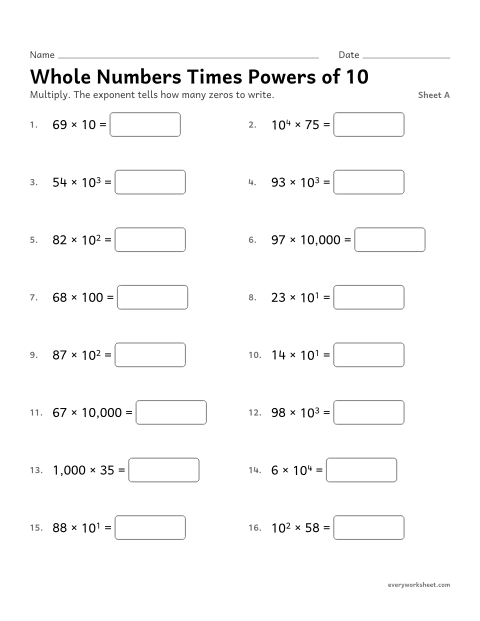 View all 2 pages
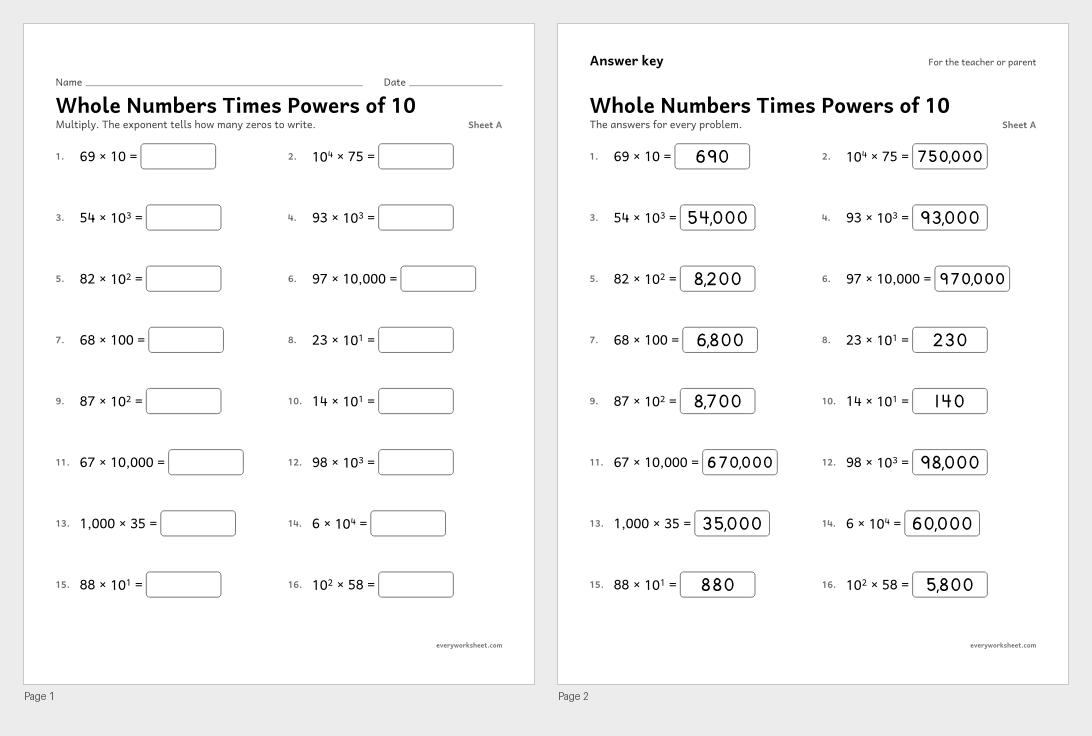
Whole numbers times powers of 10, sheet A
Multiplying whole numbers by powers of 10
Answer key on page 2
2 pages85 KB
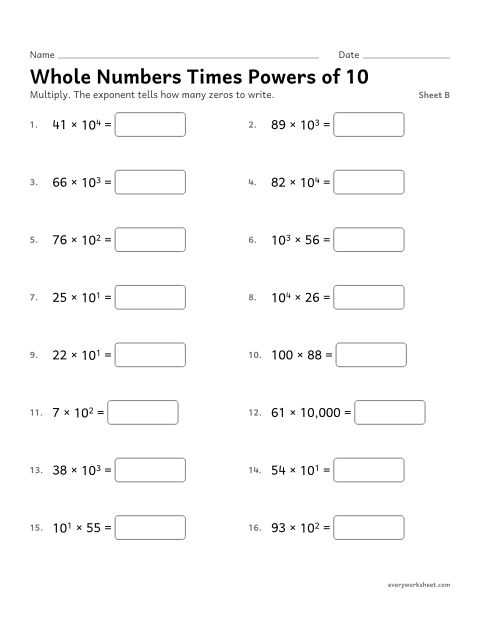 View all 2 pages
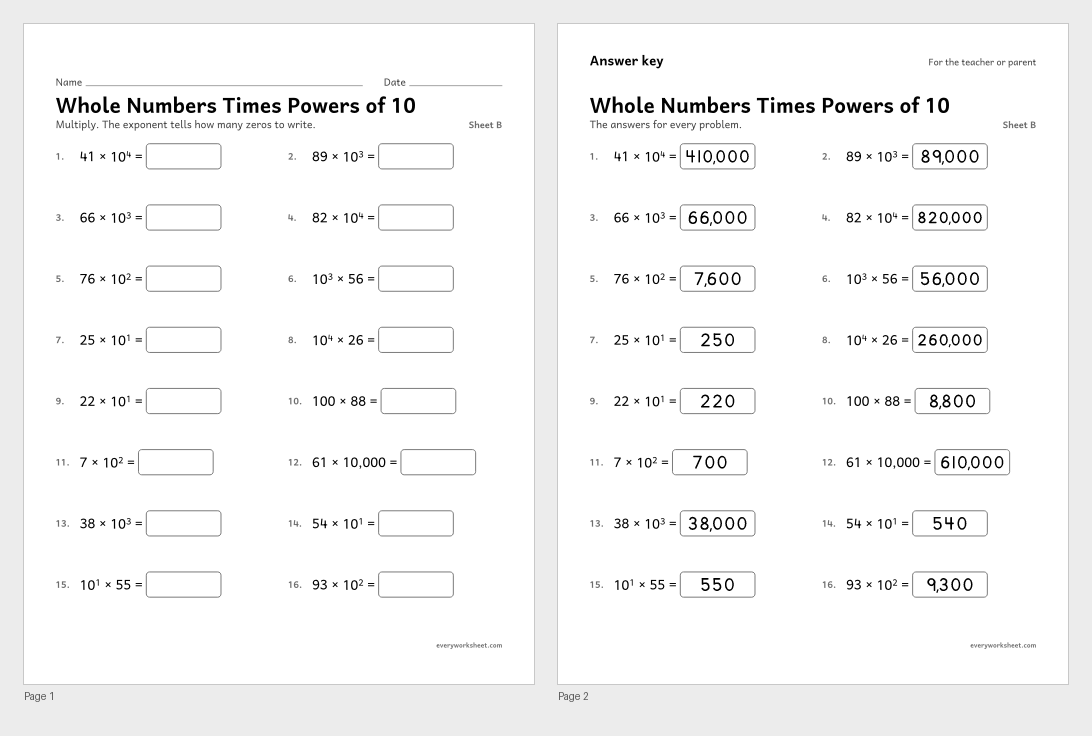
Whole numbers times powers of 10, sheet B
Multiplying whole numbers by powers of 10
Answer key on page 2
2 pages85 KB
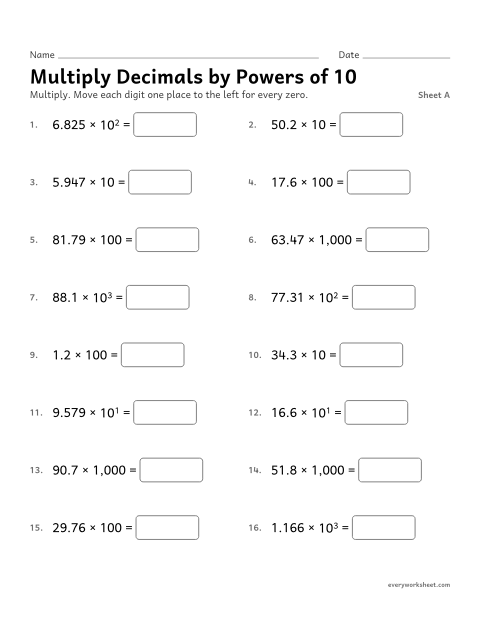 View all 2 pages
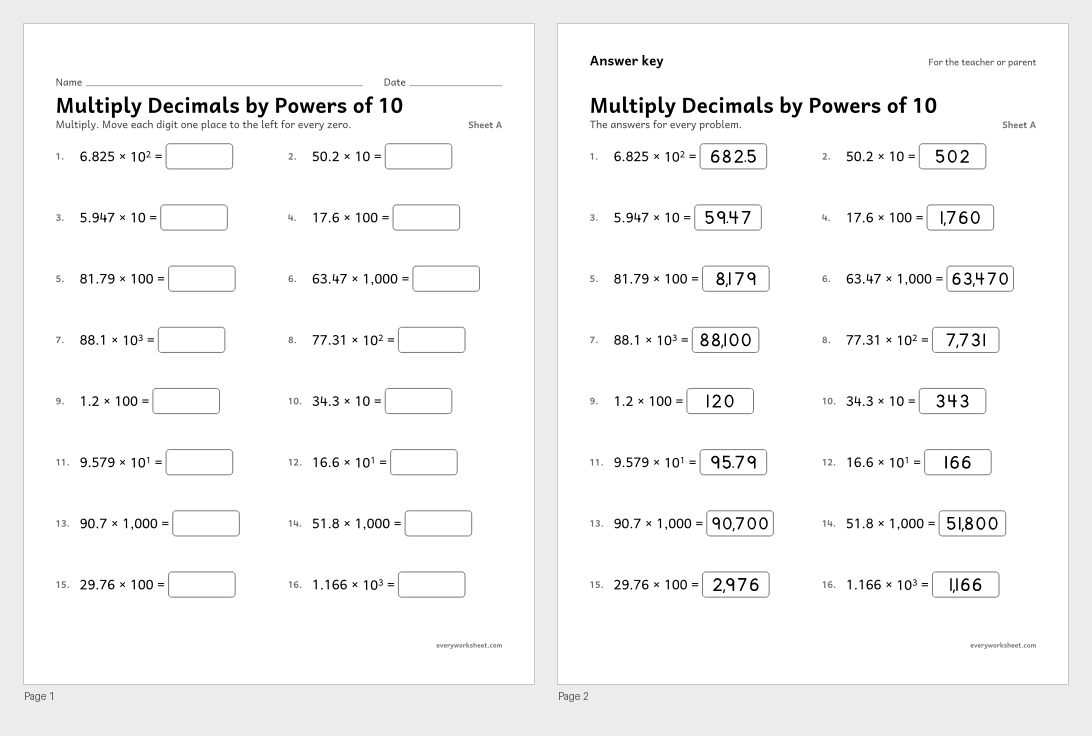
Multiply decimals by powers of 10, sheet A
Multiplying decimals by powers of 10
Answer key on page 2
2 pages85 KB
 View all 2 pages
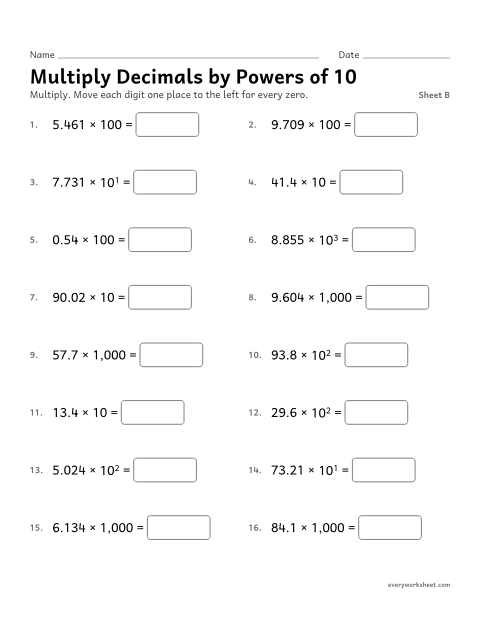
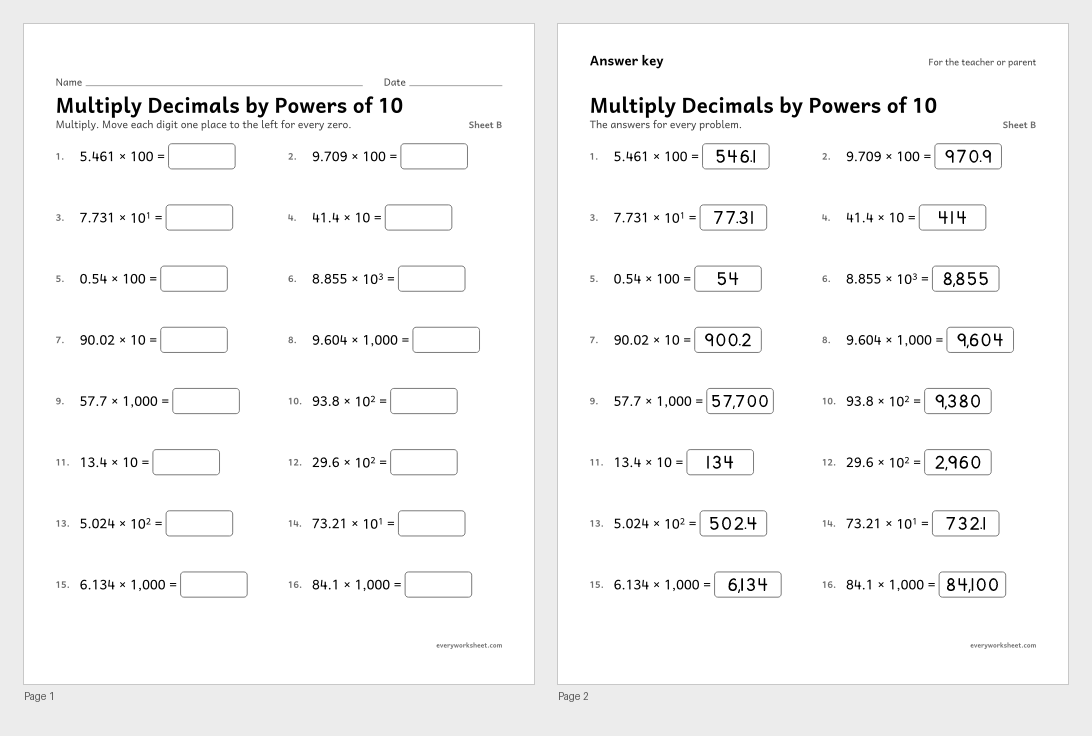
Multiply decimals by powers of 10, sheet B
Multiplying decimals by powers of 10
Answer key on page 2
2 pages85 KB
 View all 2 pages
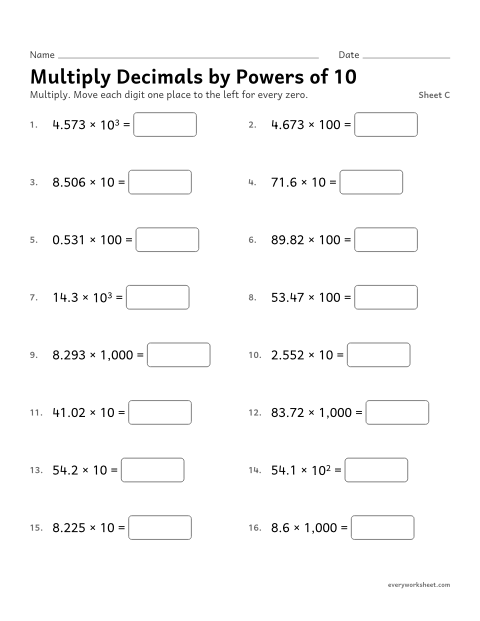
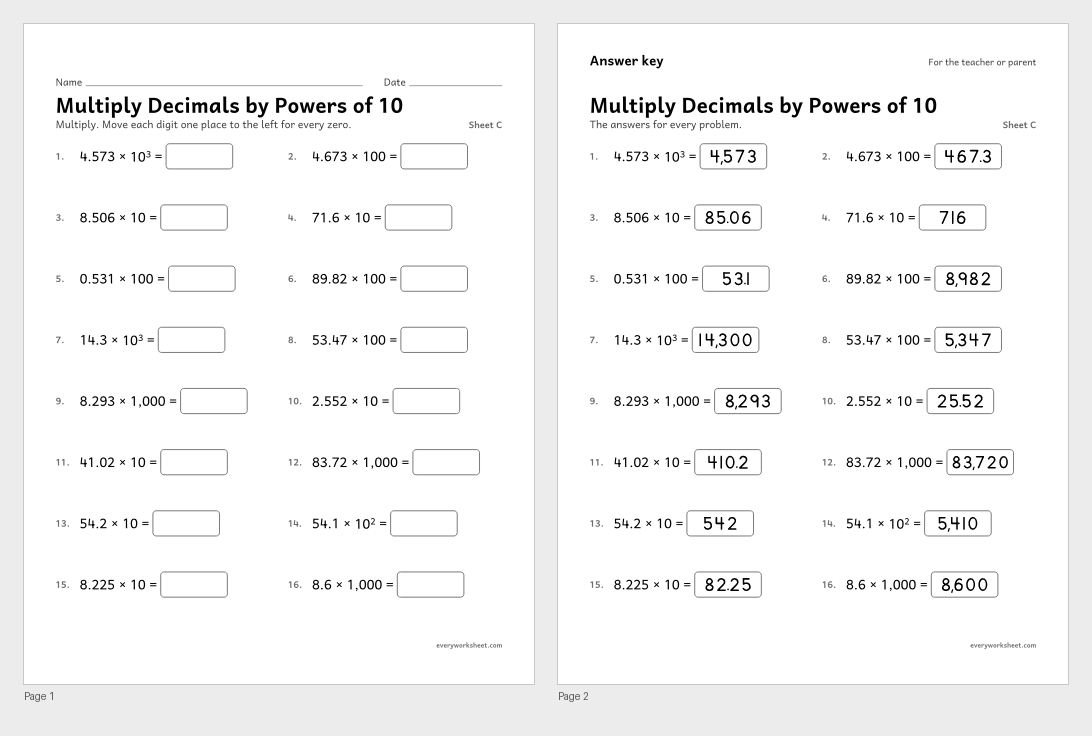
Multiply decimals by powers of 10, sheet C
Multiplying decimals by powers of 10
Answer key on page 2
2 pages85 KB
 View all 2 pages
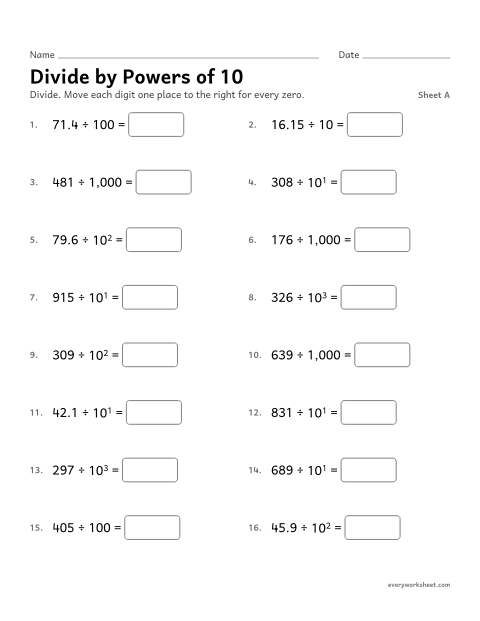
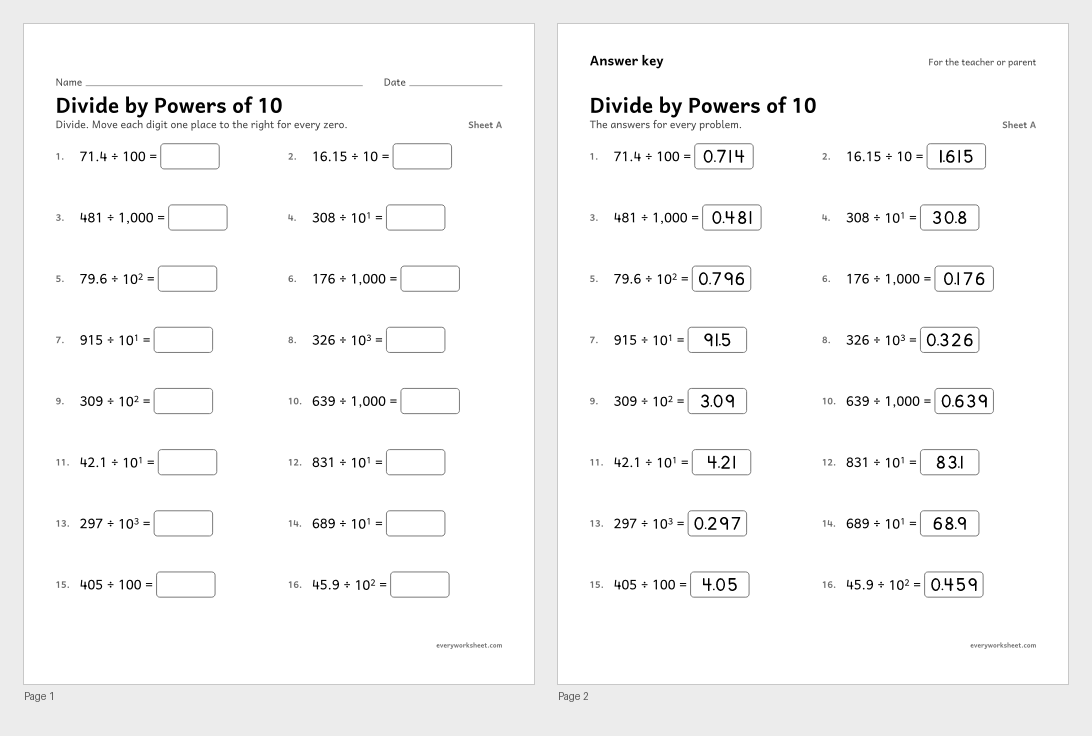
Divide by powers of 10, sheet A
Dividing whole numbers and decimals by powers of 10
Answer key on page 2
2 pages84 KB
 View all 2 pages
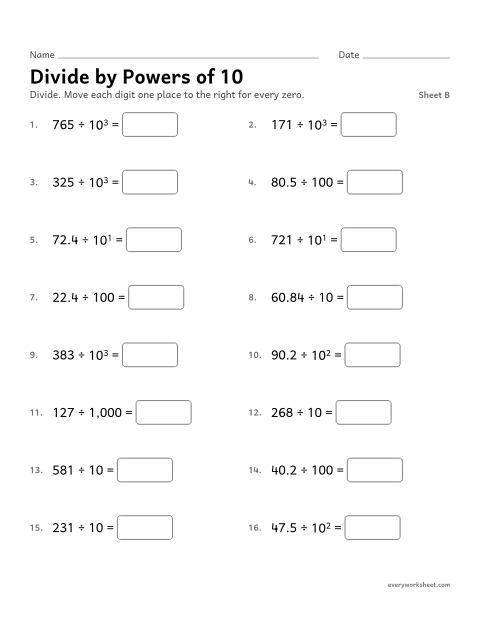
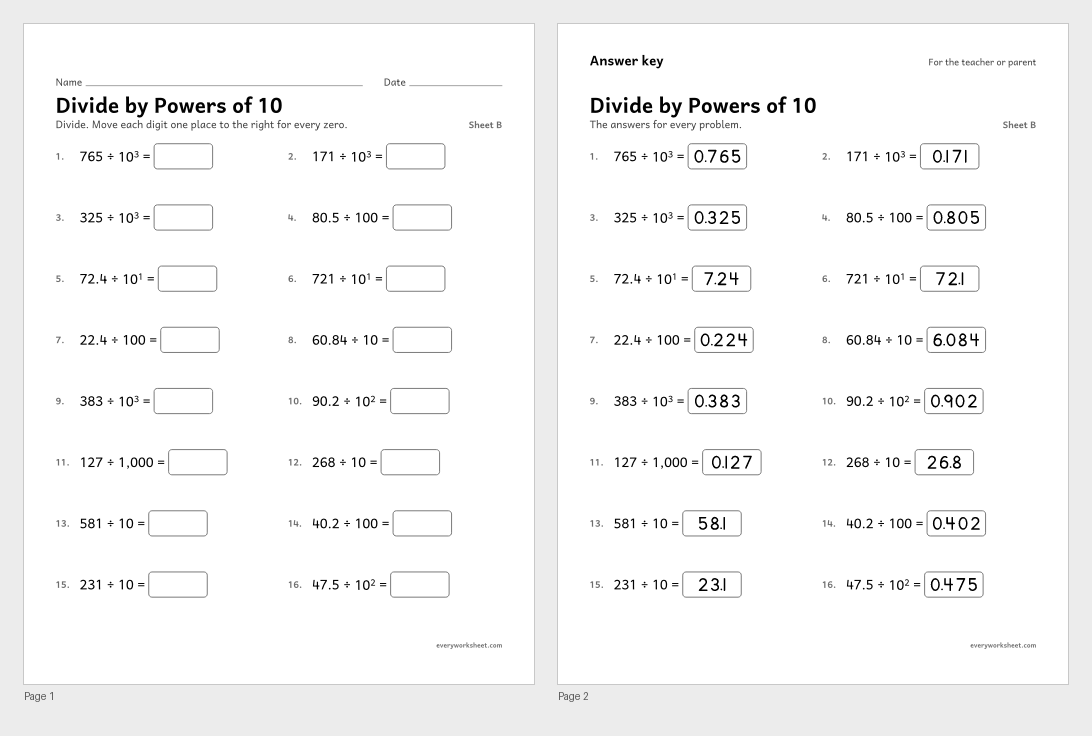
Divide by powers of 10, sheet B
Dividing whole numbers and decimals by powers of 10
Answer key on page 2
2 pages84 KB
 View all 2 pages
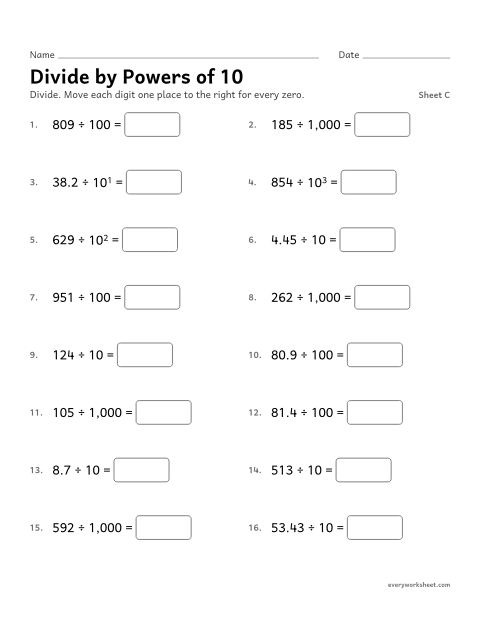
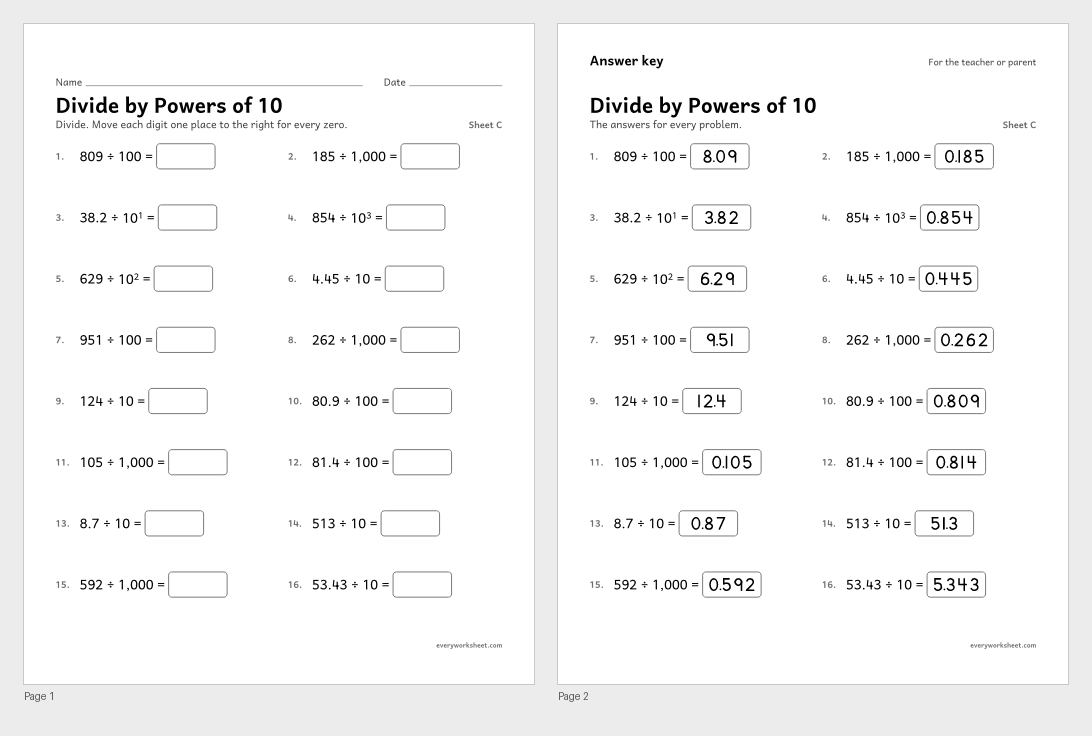
Divide by powers of 10, sheet C
Dividing whole numbers and decimals by powers of 10
Answer key on page 2
2 pages84 KB
 View all 2 pages
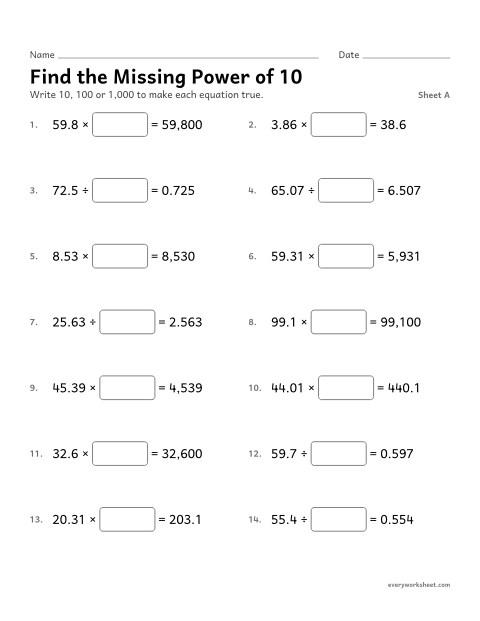
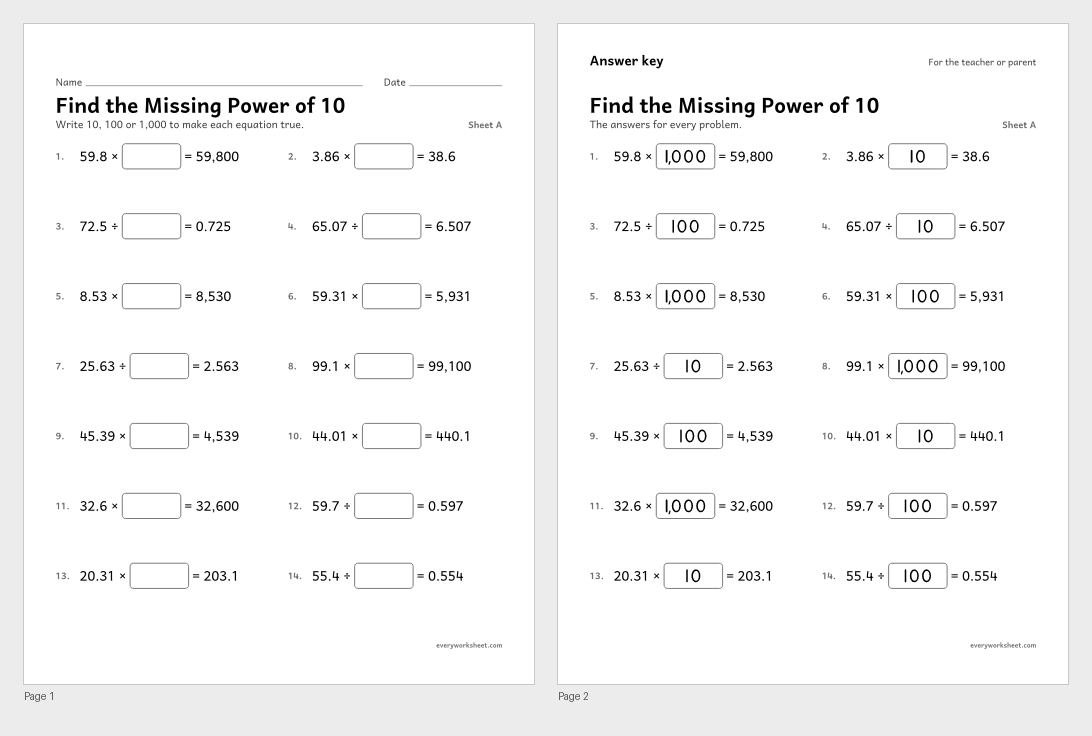
Find the missing power of 10, sheet A
Finding the power of 10 in a multiplication or division
Answer key on page 2
2 pages75 KB
 View all 2 pages
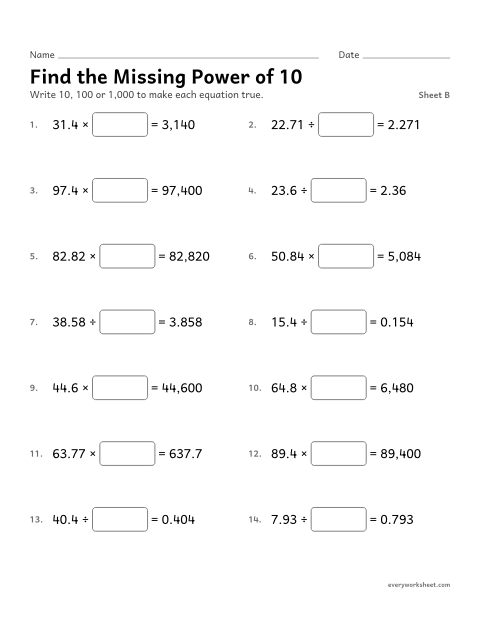
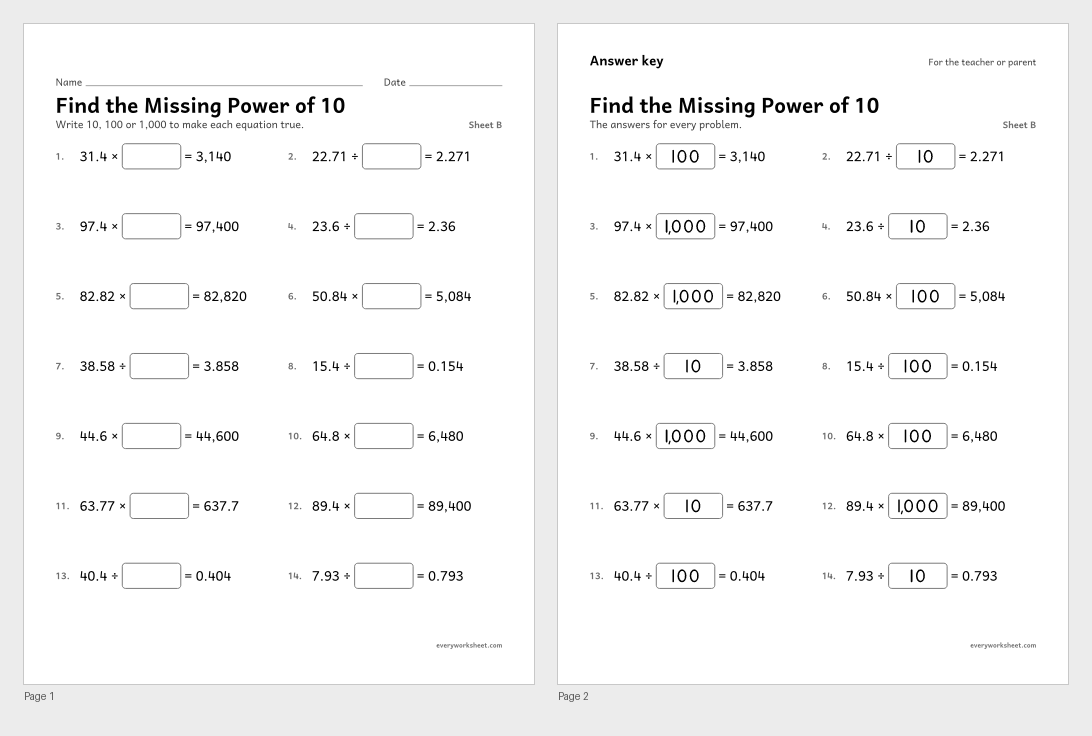
Find the missing power of 10, sheet B
Finding the power of 10 in a multiplication or division
Answer key on page 2
2 pages76 KB
 View all 2 pages
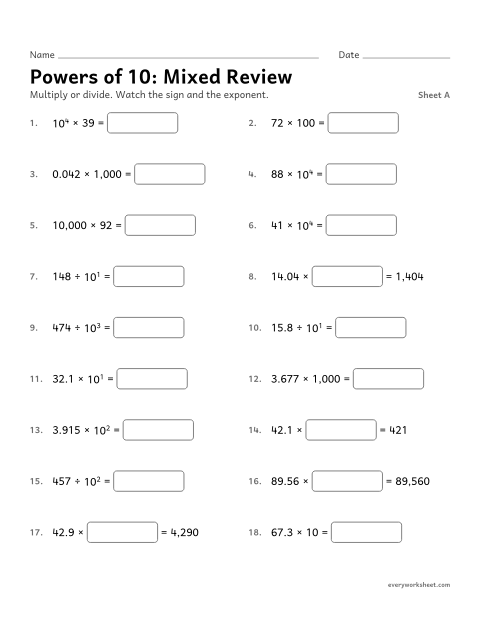
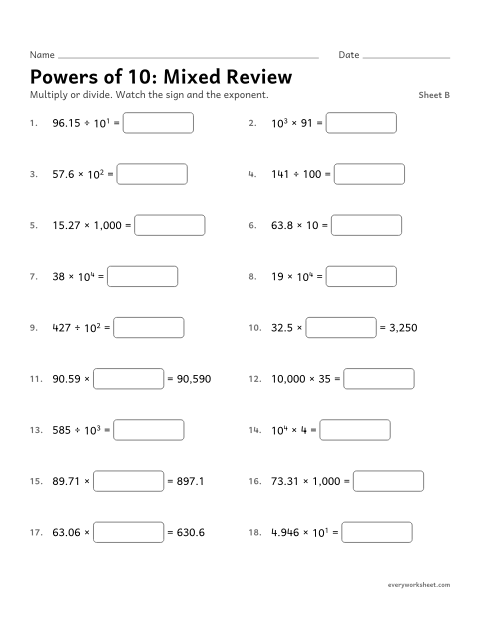
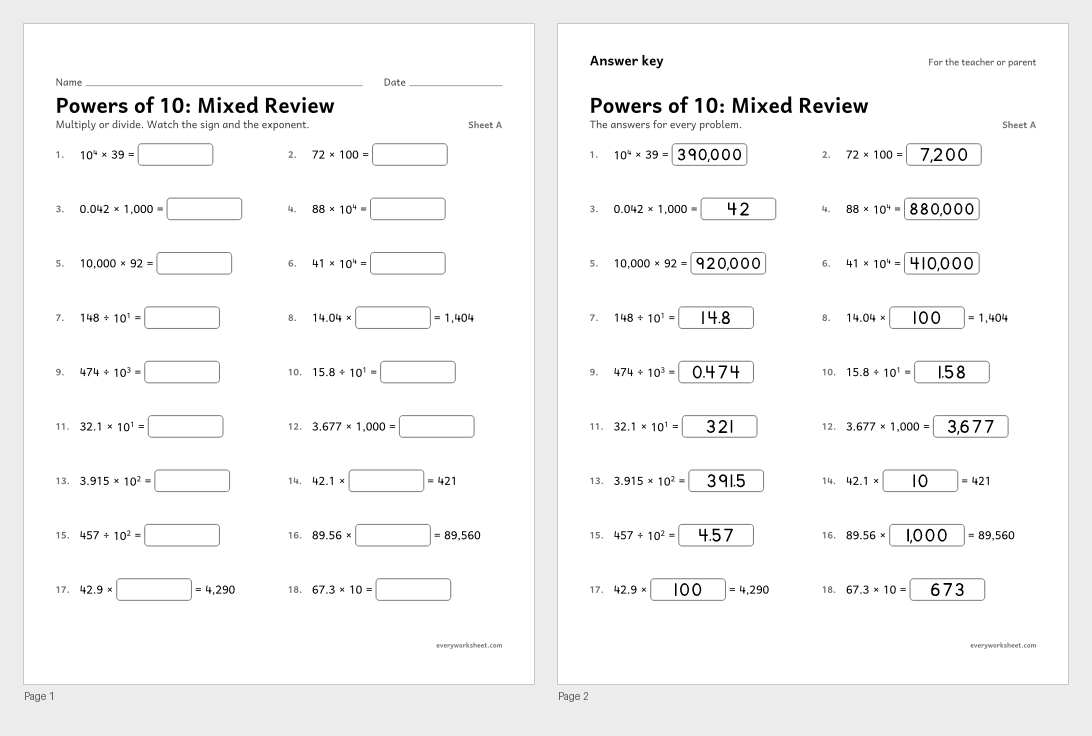
Powers of 10: mixed Review, sheet A
Multiplying and dividing by powers of 10 (mixed)
Answer key on page 2
2 pages92 KB
 View all 2 pages
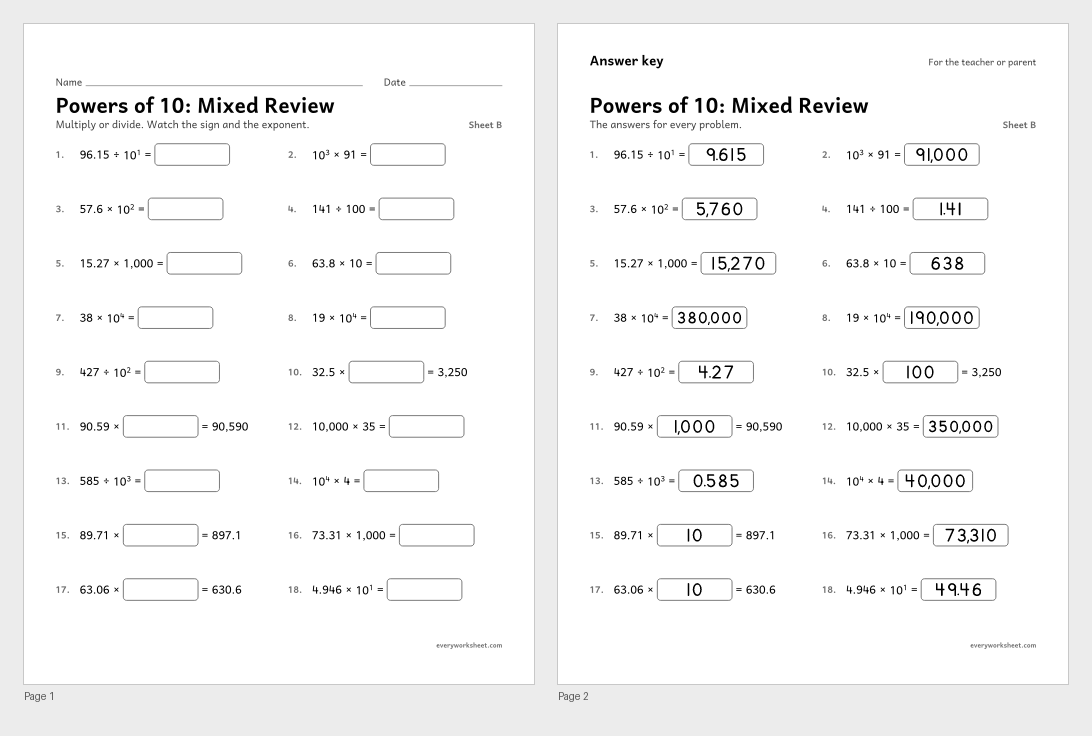
Powers of 10: mixed Review, sheet B
Multiplying and dividing by powers of 10 (mixed)
Answer key on page 2
2 pages93 KB
Print at 100% (actual size) for the cleanest tracing lines.
About these powers of 10 worksheets
A power of 10 is 10 multiplied by itself: 10² = 10 × 10 = 100, and 10³ = 10 × 10 × 10 = 1,000. The small raised number, the exponent, says how many 10s are multiplied together, and it is also the number of zeros after the 1. Fifth graders learn to write powers of 10 both ways and to use them to multiply and divide.
Multiplying by a power of 10 moves every digit to the left, one place for each 10: 3.6 × 100 = 360. Dividing moves every digit to the right: 36 ÷ 100 = 0.36. The decimal point does not move; the digits do. Seeing this pattern is the heart of 5th grade place value, and it makes later work with decimals much easier.
These pages start with a powers of 10 chart and a how-to page with a worked example, then practice multiplying whole numbers, multiplying decimals, dividing, and finding the missing power of 10. Most pages come as Sheet A, B and C, and every page has an answer key on page 2.
Standards
CCSS.MATH.CONTENT.5.NBT.A.2Explain patterns in the number of zeros of the product when multiplying a number by powers of 10, and explain patterns in the placement of the decimal point when a decimal is multiplied or divided by a power of 10. Use whole-number exponents to denote powers of 10.CCSS.MATH.CONTENT.5.NBT.A.1Recognize that in a multi-digit number, a digit in one place represents 10 times as much as it represents in the place to its right and 1/10 of what it represents in the place to its left.
How to use them
- Start with the powers of 10 chart. Read across a row together: 10⁴, 10 × 10 × 10 × 10, 10,000, four zeros.
- Use the how-to page next. Say out loud which way the digits move and how many places.
- Practice whole numbers first, then decimals, then division. The mixed review page checks all three.
- Use the missing power of 10 pages to see whether children can reason backward: what turns 3.2 into 320?
Teaching tips
- "Add a zero" only works for whole numbers. 4.5 × 10 is 45, not 4.50, so teach that the digits move instead.
- Write zeros to fill empty places up to the point: 7 ÷ 100 = 0.07.
- The exponent is not a factor: 10³ means 10 × 10 × 10, not 10 × 3.
- Check with sense: multiplying by 1,000 should make a number much bigger, and dividing should make it much smaller.
Questions teachers and parents ask
What is a power of 10?
A number made by multiplying 10 by itself. 10² = 100, 10³ = 1,000 and 10⁴ = 10,000. The exponent tells how many 10s are multiplied, which is also the number of zeros.
How do you multiply a decimal by 10, 100 or 1,000?
Move every digit one place to the left for each zero: 2.47 × 100 = 247. The decimal point stays where it is.
How do you divide by a power of 10?
Move every digit one place to the right for each zero, and write zeros to fill empty places: 58 ÷ 1,000 = 0.058.
Is 10⁰ on these pages?
No. Fifth grade uses whole-number exponents from 1 up; 10⁰ = 1 comes later.