 View all 2 pages
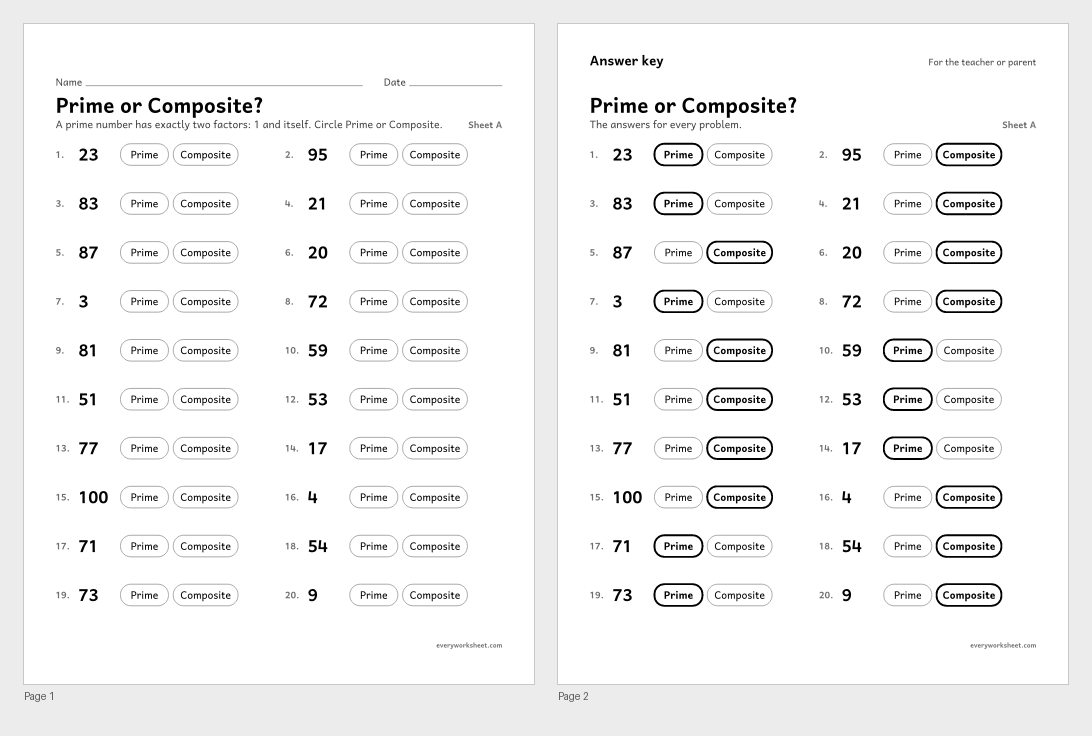
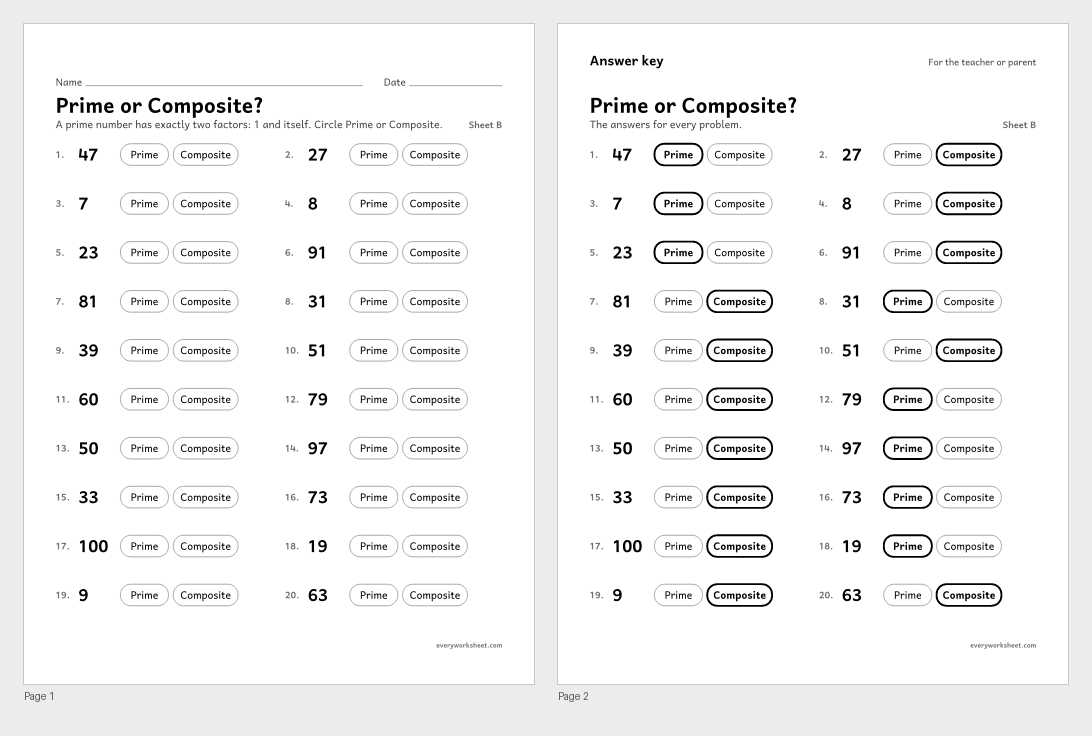
Prime or Composite?, sheet A
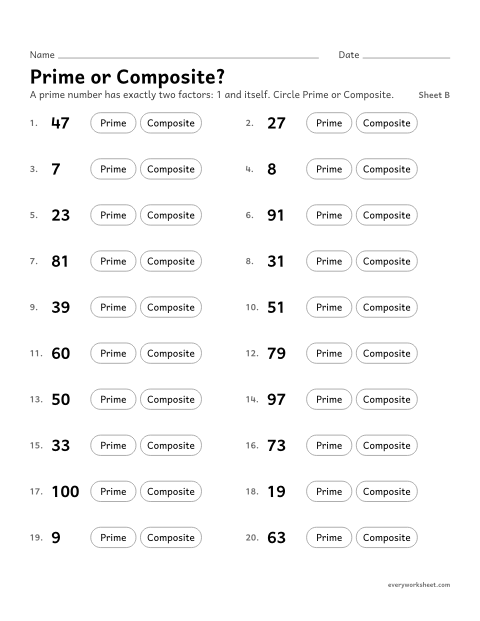
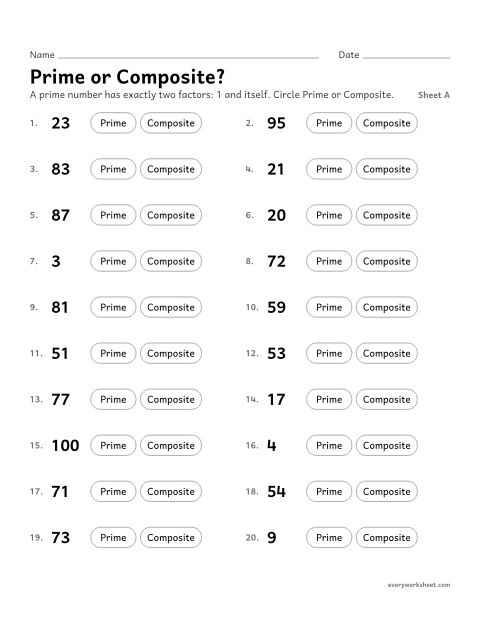
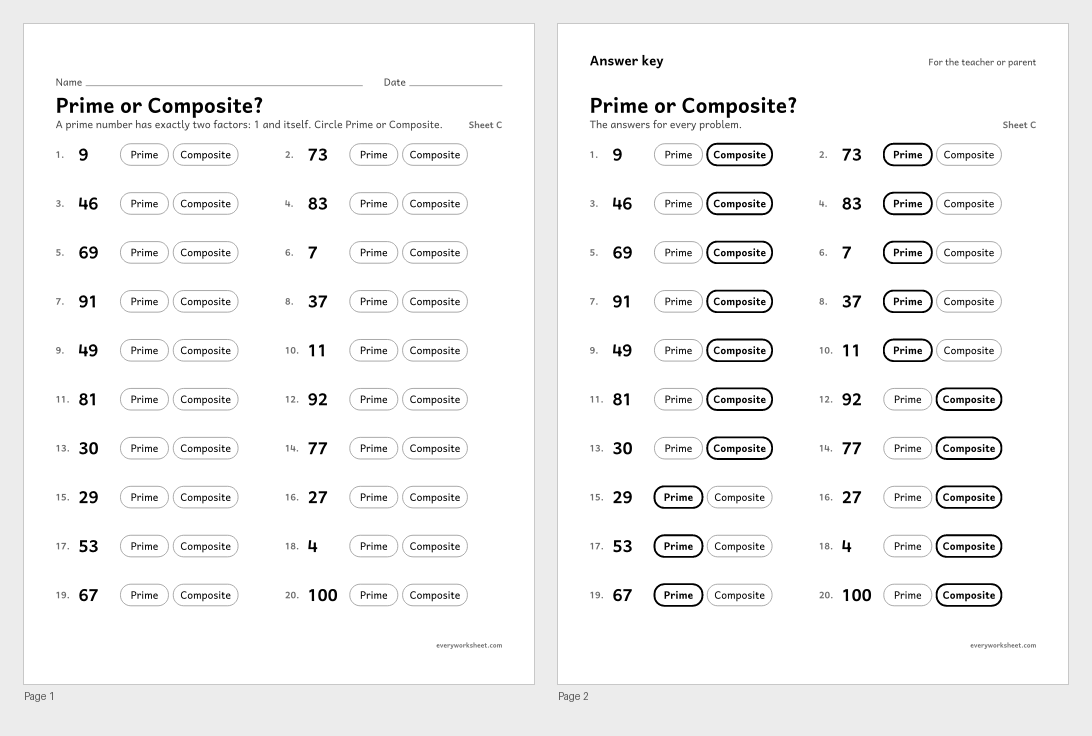
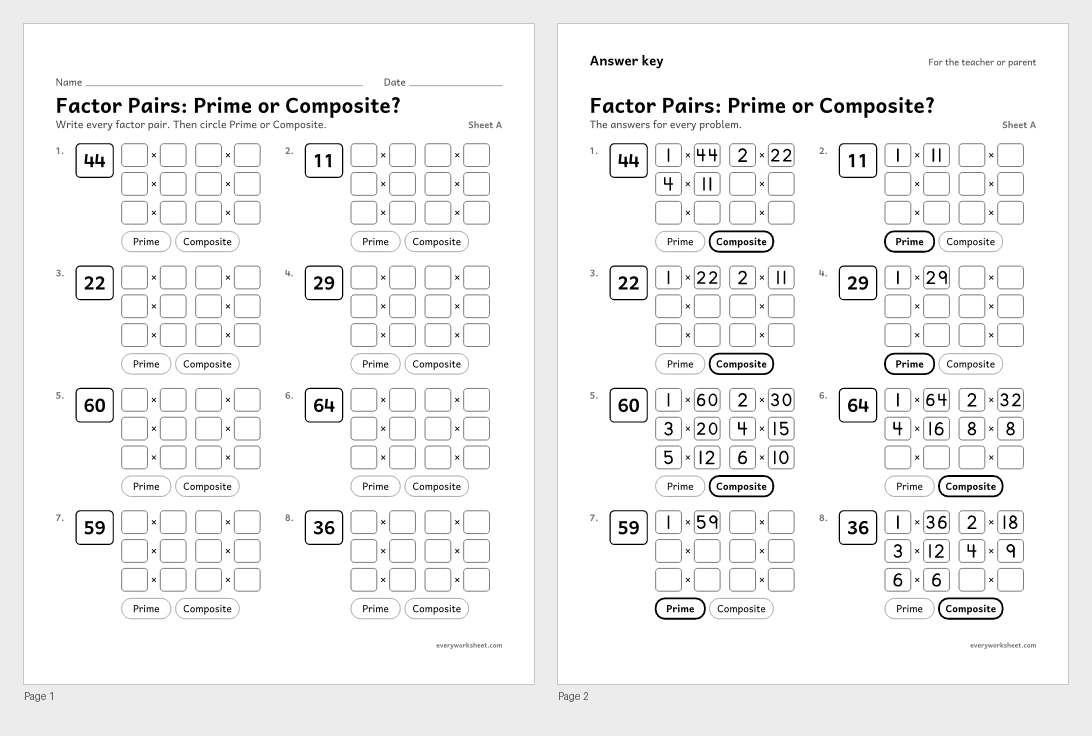
Deciding whether a number to 100 is prime or composite
Answer key on page 2
2 pages72 KB
Prime or composite practice, factor pairs that decide it, a hundred chart activity that finds every prime to 100, and a printable prime numbers chart.
View all 2 pagesDeciding whether a number to 100 is prime or composite
Answer key on page 2
2 pages72 KB
 View all 2 pages
Deciding whether a number to 100 is prime or composite
Answer key on page 2
2 pages72 KB
 View all 2 pages
Deciding whether a number to 100 is prime or composite
Answer key on page 2
2 pages72 KB
 View all 2 pages
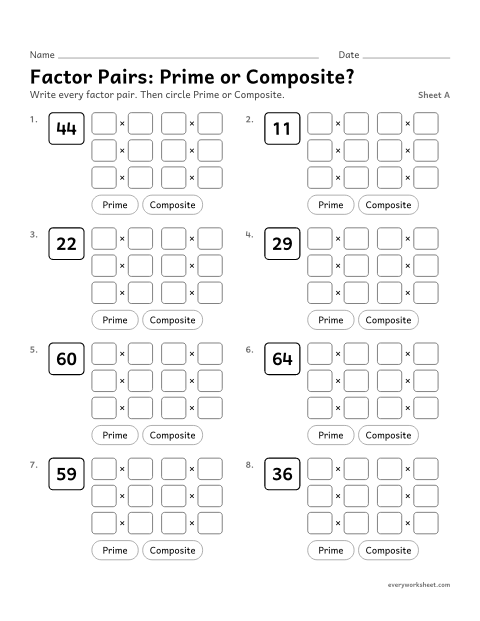
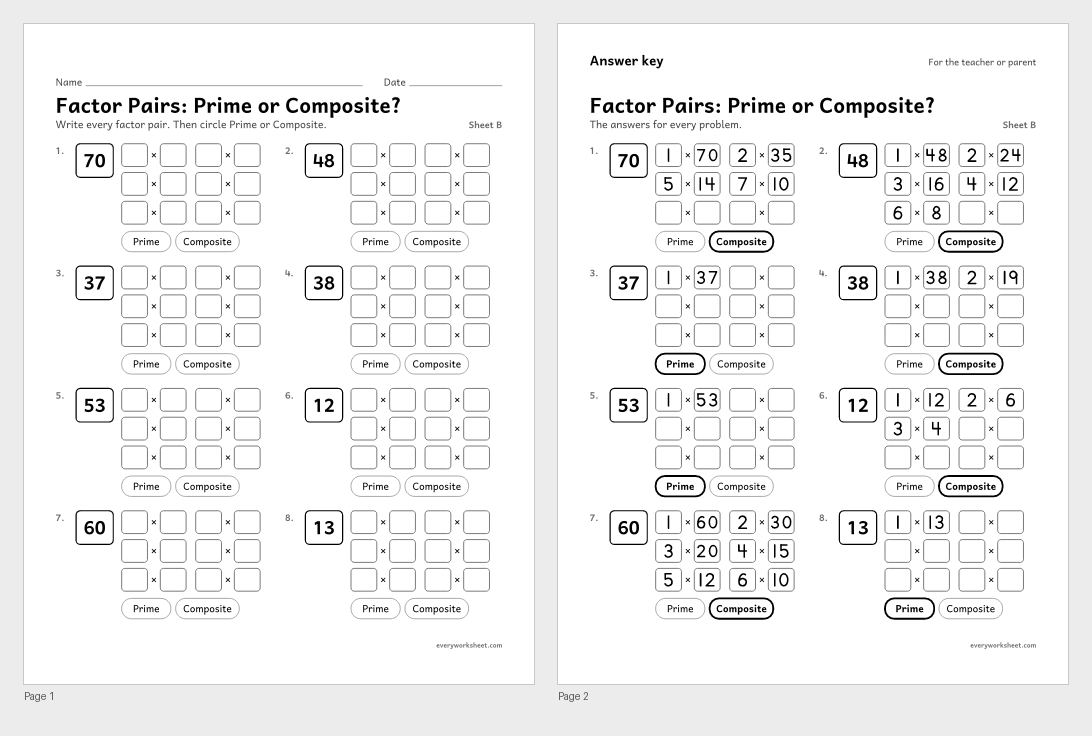
Using factor pairs to tell prime from composite
Answer key on page 2
2 pages106 KB
 View all 2 pages
Using factor pairs to tell prime from composite
Answer key on page 2
2 pages107 KB
 View all 2 pages
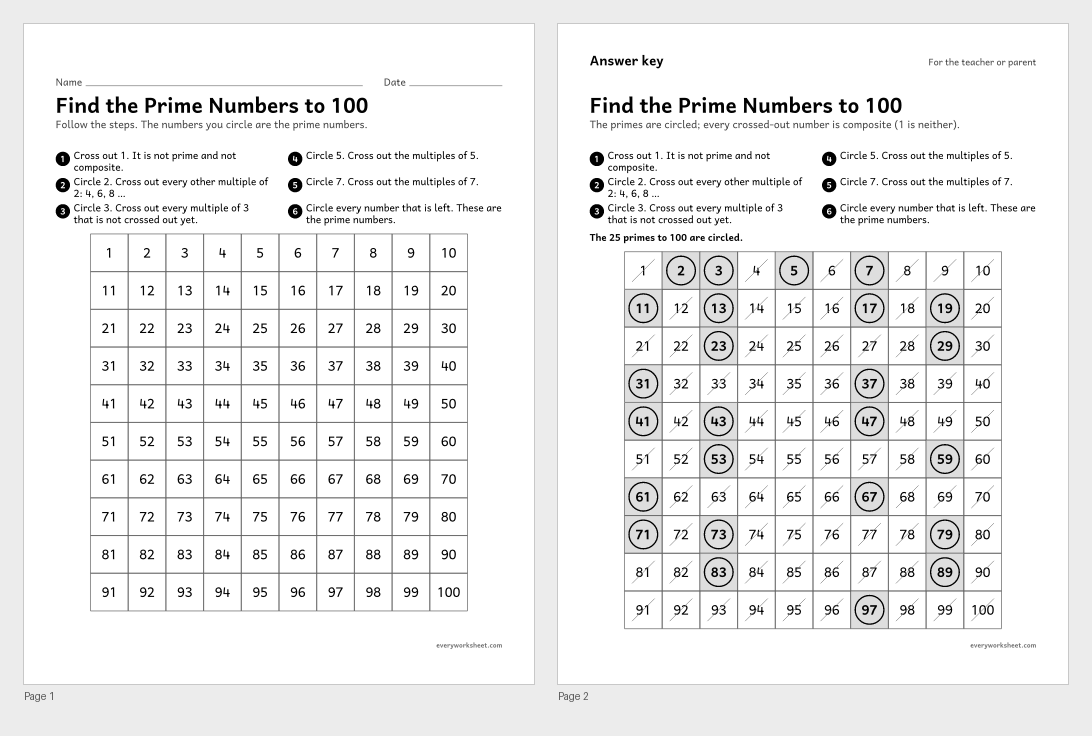
Finding the prime numbers to 100 on a hundred chart
Answer key on page 2
2 pages43 KB
 View larger
Print at 100% (actual size) for the cleanest tracing lines.
A prime number has exactly two factors: 1 and itself. 7 is prime because the only way to make 7 is 1 × 7. A composite number has more than two factors: 12 is composite because 12 = 1 × 12 = 2 × 6 = 3 × 4. The number 1 is neither prime nor composite, because it has only one factor.
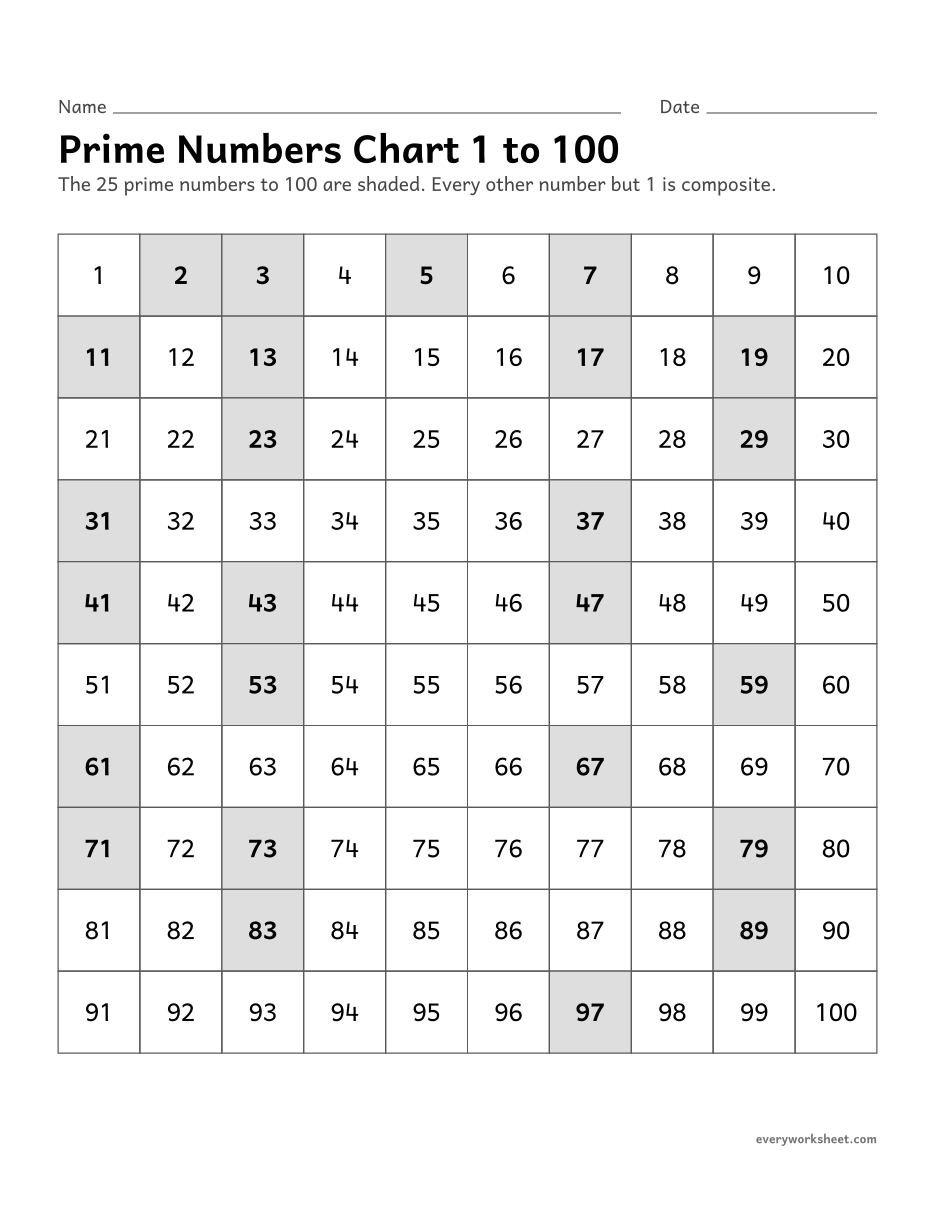
There are 25 prime numbers up to 100: 2, 3, 5, 7, 11, 13, 17, 19, 23, 29, 31, 37, 41, 43, 47, 53, 59, 61, 67, 71, 73, 79, 83, 89 and 97. Only one of them, 2, is even. The hundred chart page lets children find all of them themselves by crossing out the multiples of 2, 3, 5 and 7, which is far more memorable than reading a list.
The practice pages mix in composites that look prime, like 51 (3 × 17), 87 (3 × 29) and 91 (7 × 13), so children check for factors instead of guessing from the last digit.
CCSS.MATH.CONTENT.4.OA.B.4Find all factor pairs for a whole number in the range 1–100. Recognize that a whole number is a multiple of each of its factors. Determine whether a given whole number in the range 1–100 is a multiple of a given one-digit number. Determine whether a given whole number in the range 1–100 is prime or composite.A whole number greater than 1 with exactly two factors, 1 and itself. 2, 3, 5, 7 and 11 are the first five.
No. 1 has only one factor, so it is neither prime nor composite.
There are 25 prime numbers from 1 to 100.
Yes. 2 is the only even prime number. Every other even number has 2 as a factor, so it is composite.