 View all 2 pages
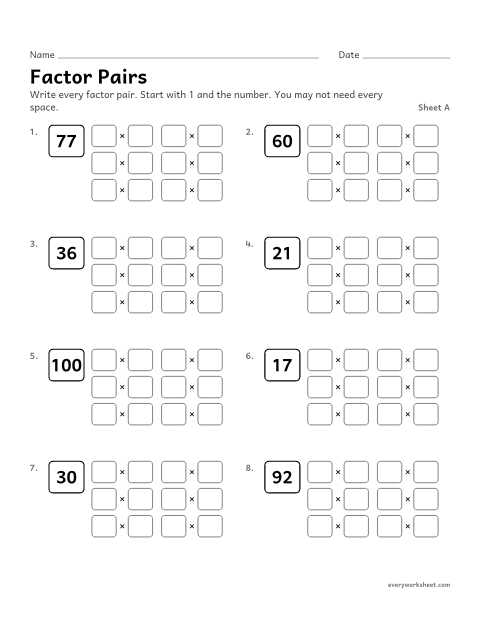
Factor Pairs, sheet A
Finding all factor pairs of a number to 100
Answer key on page 2
2 pages104 KB
Factor pairs to 100, is it a factor, is it a multiple, listing multiples, and printable charts of every factor from 1 to 100.
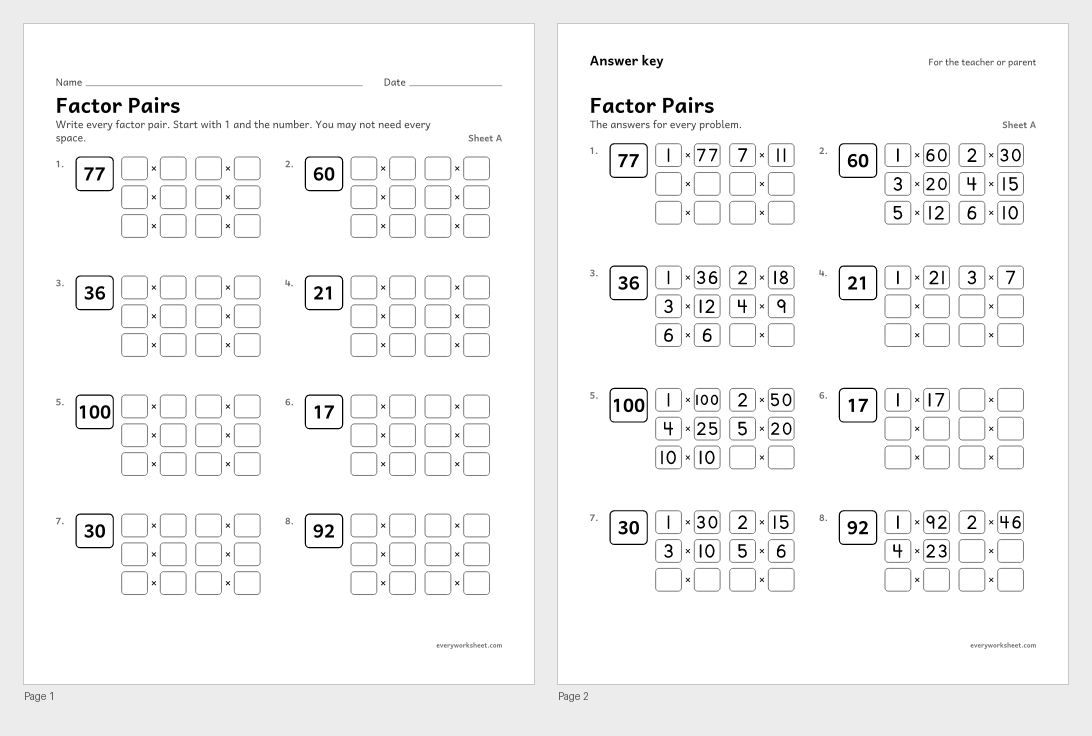
View all 2 pagesFinding all factor pairs of a number to 100
Answer key on page 2
2 pages104 KB
 View all 2 pages
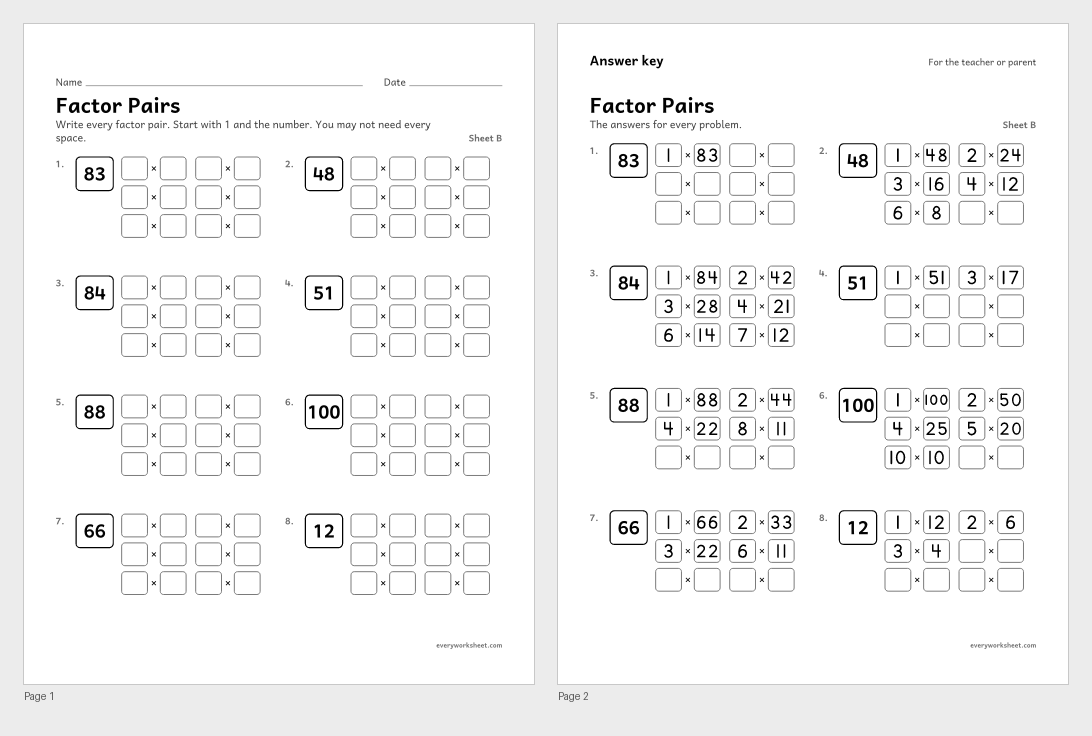
Finding all factor pairs of a number to 100
Answer key on page 2
2 pages103 KB
 View all 2 pages
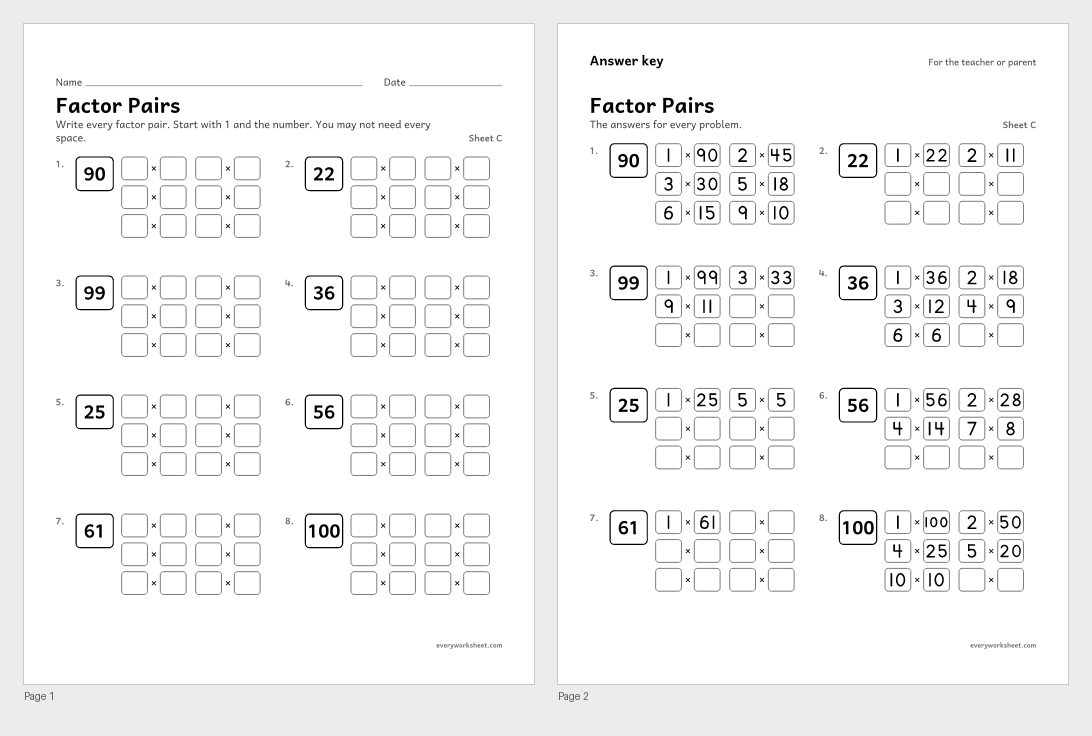
Finding all factor pairs of a number to 100
Answer key on page 2
2 pages104 KB
 View all 2 pages
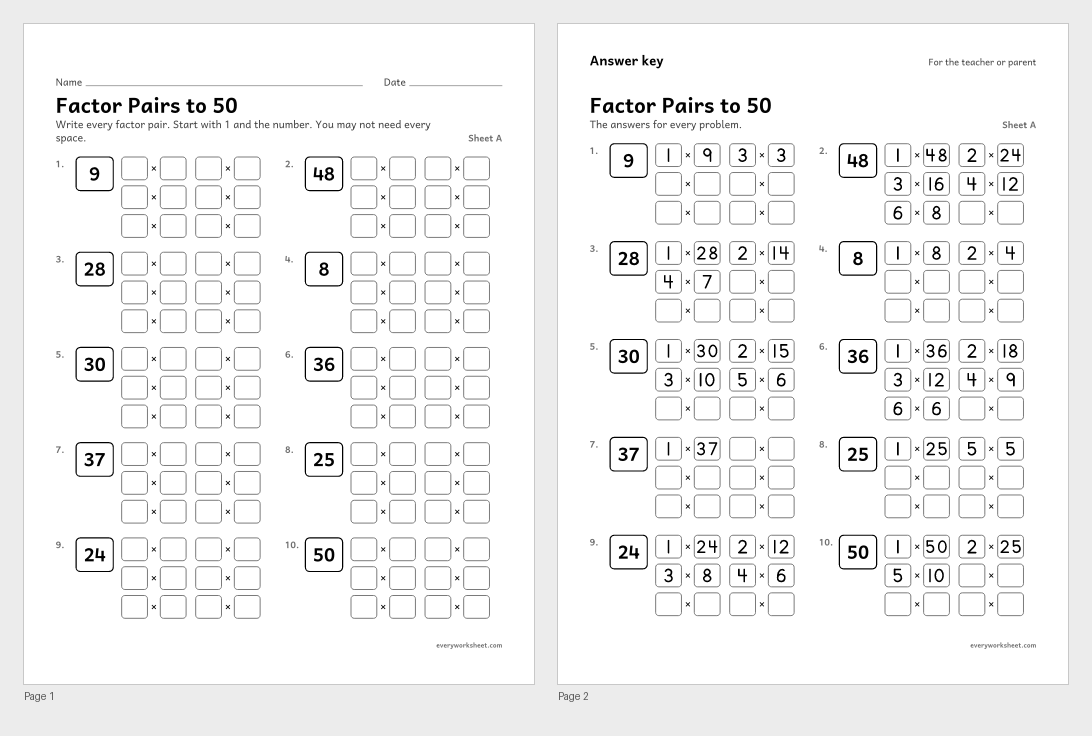
Finding all factor pairs of a number to 50
Answer key on page 2
2 pages121 KB
 View all 2 pages
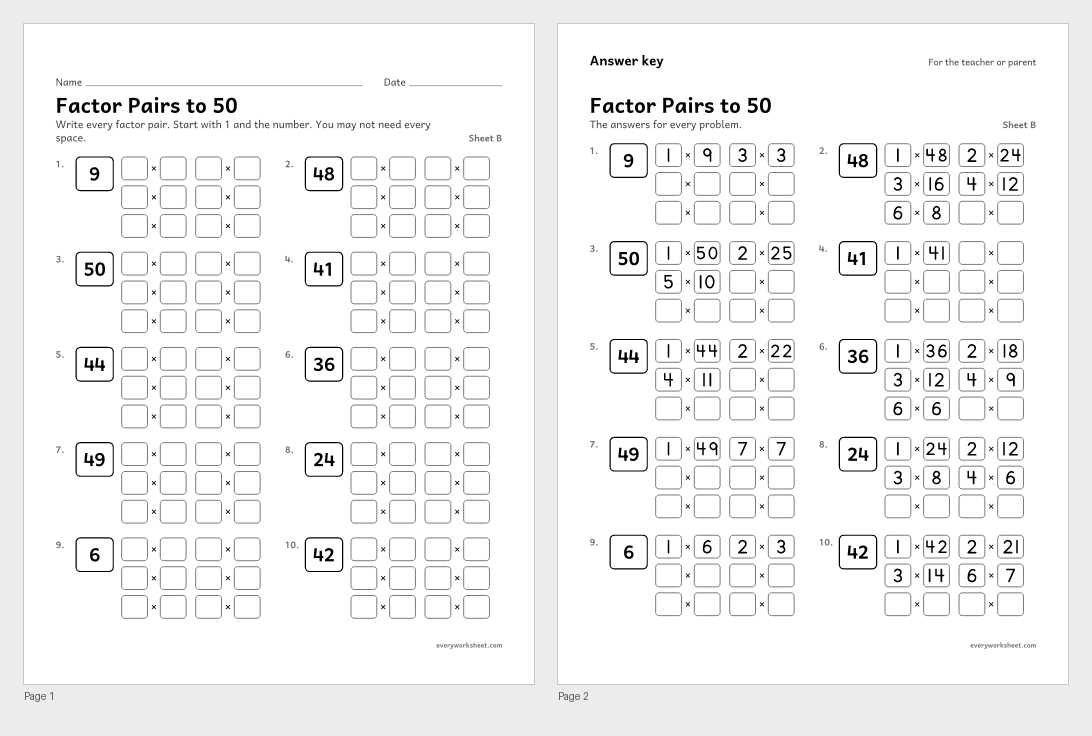
Finding all factor pairs of a number to 50
Answer key on page 2
2 pages121 KB
 View all 2 pages
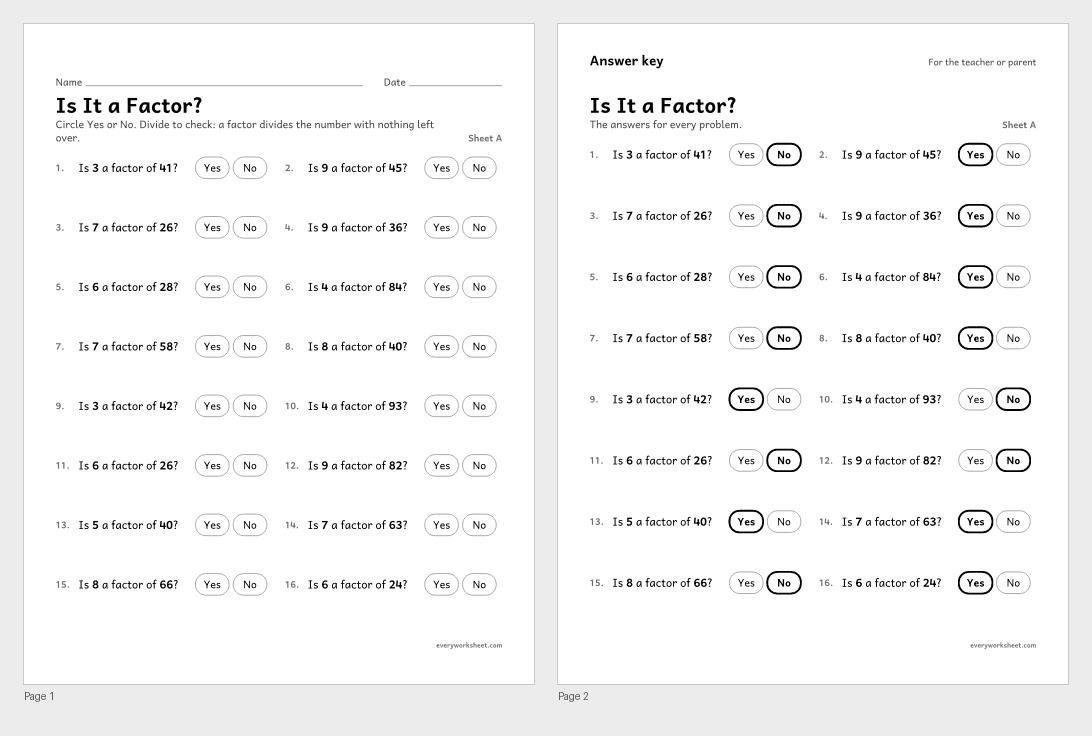
Deciding whether a 1-digit number is a factor
Answer key on page 2
2 pages82 KB
 View all 2 pages
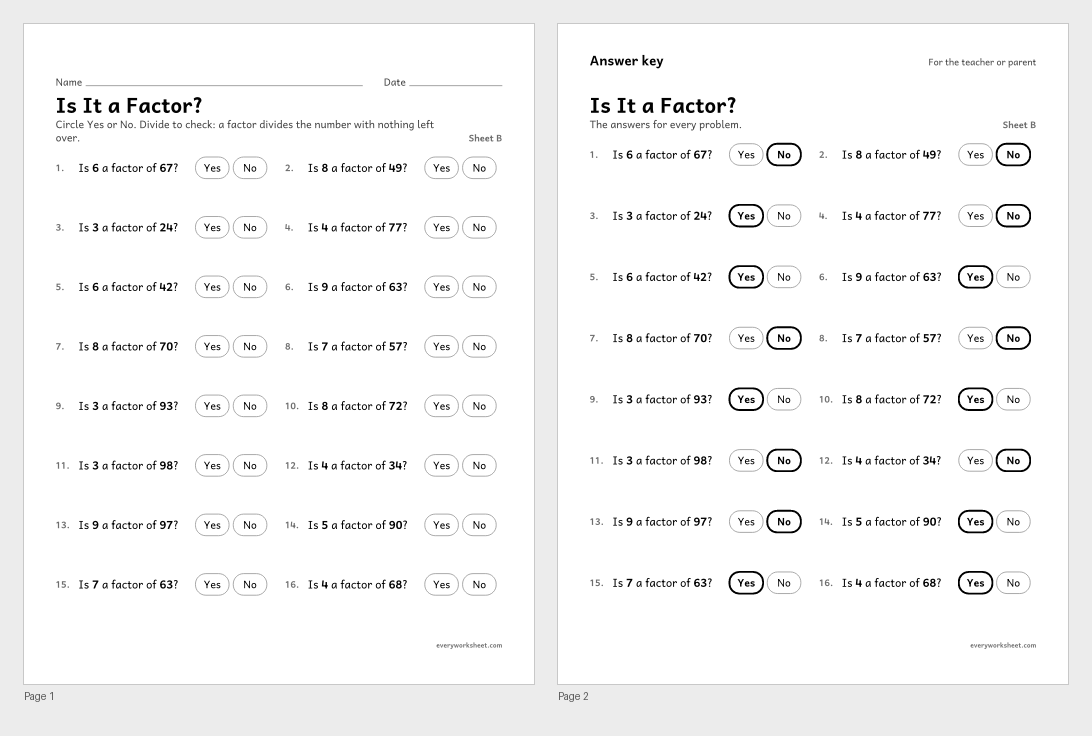
Deciding whether a 1-digit number is a factor
Answer key on page 2
2 pages83 KB
 View all 2 pages
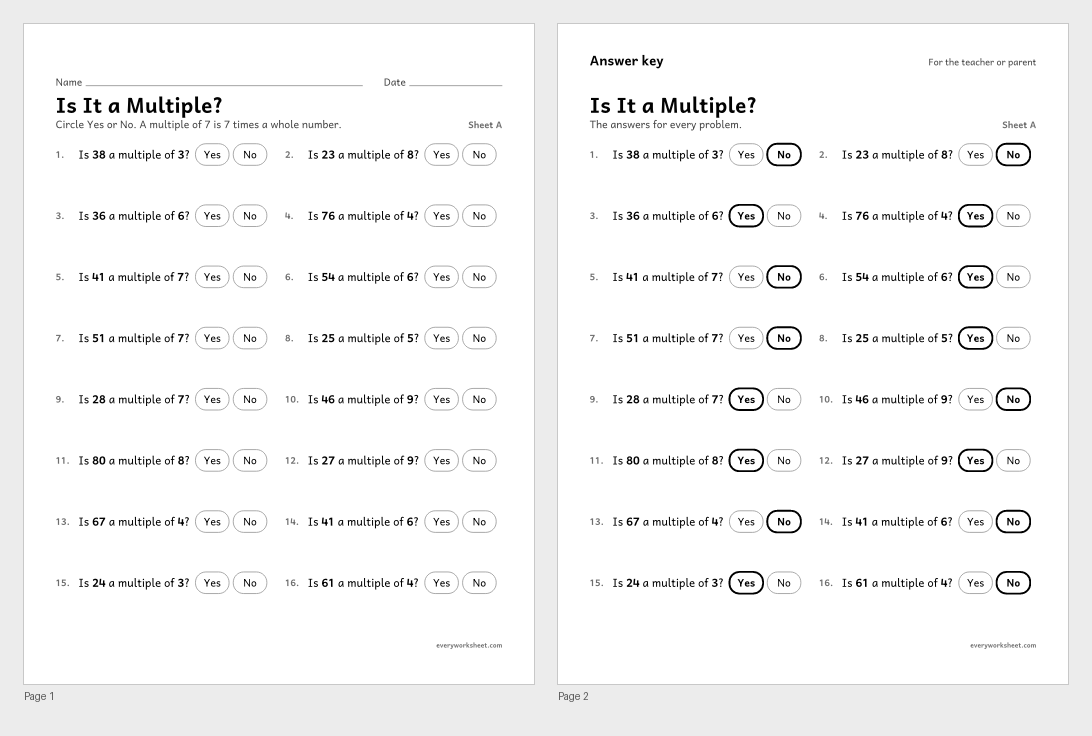
Deciding whether a number is a multiple of a 1-digit number
Answer key on page 2
2 pages83 KB
 View all 2 pages
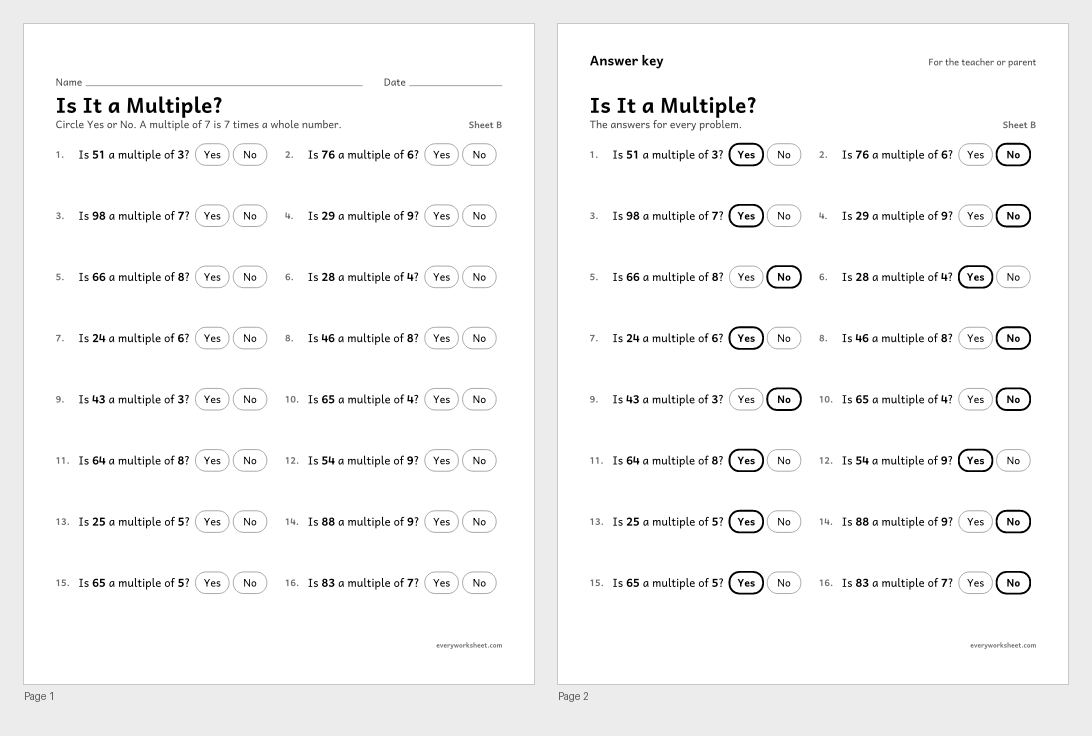
Deciding whether a number is a multiple of a 1-digit number
Answer key on page 2
2 pages83 KB
 View all 2 pages
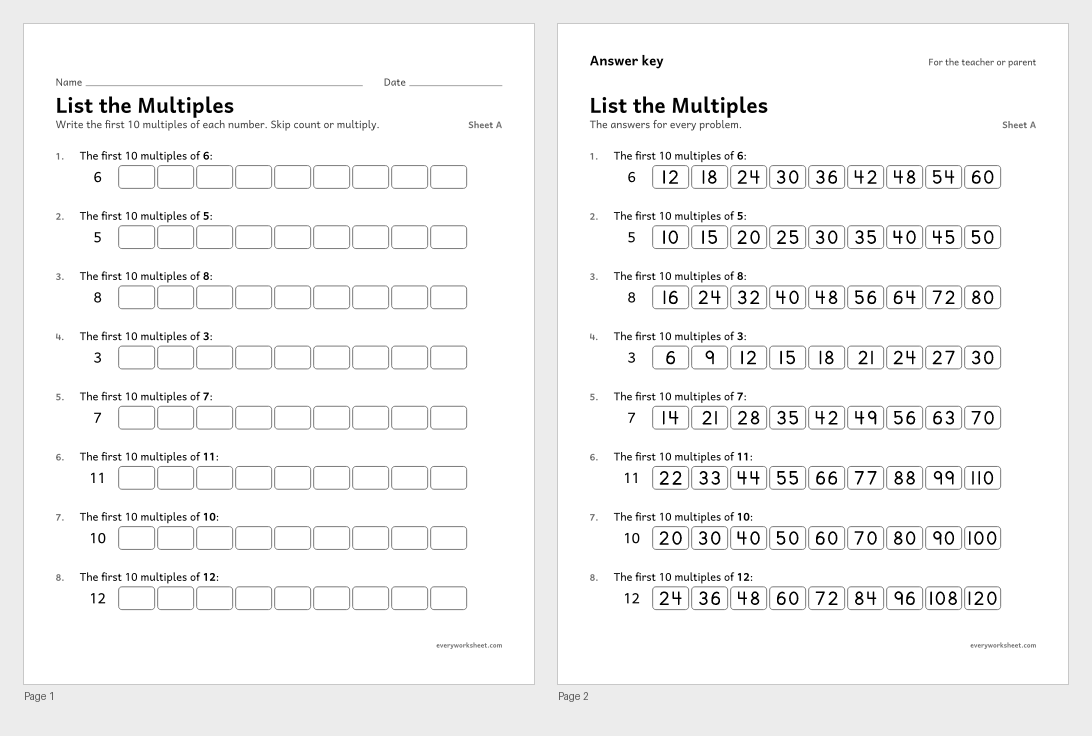
Listing multiples of a number
Answer key on page 2
2 pages63 KB
 View all 2 pages
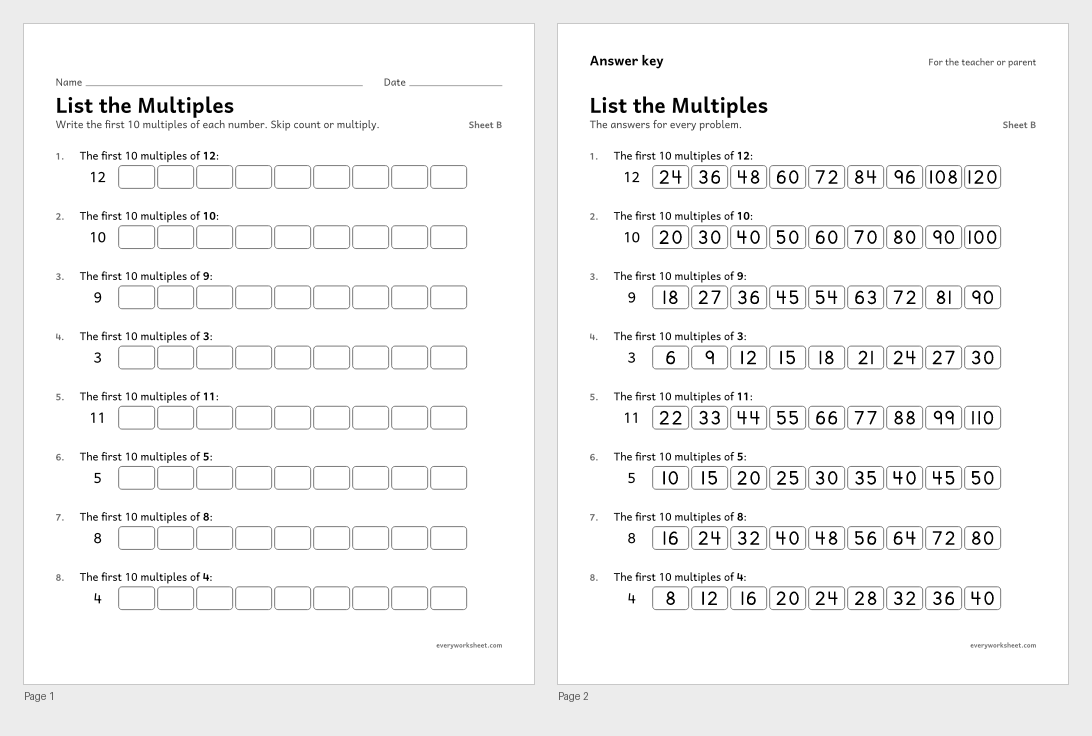
Listing multiples of a number
Answer key on page 2
2 pages63 KB
Print at 100% (actual size) for the cleanest tracing lines.
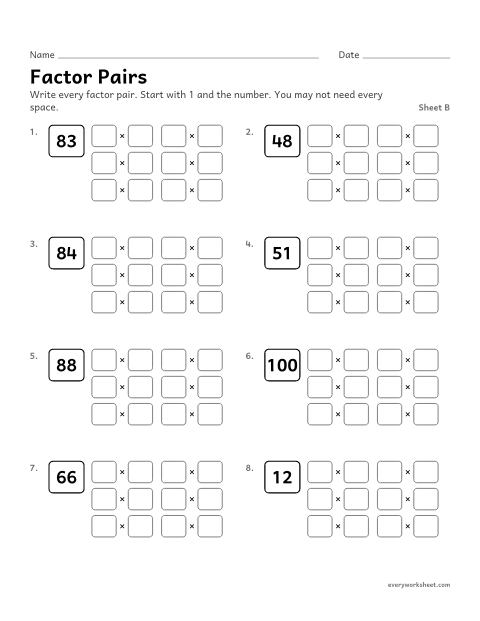
Factors and multiples are two views of the same multiplication fact. In 4 × 6 = 24, the numbers 4 and 6 are factors of 24, and 24 is a multiple of both 4 and 6. A factor pair is two numbers that multiply to make a number: the factor pairs of 24 are 1 × 24, 2 × 12, 3 × 8 and 4 × 6.
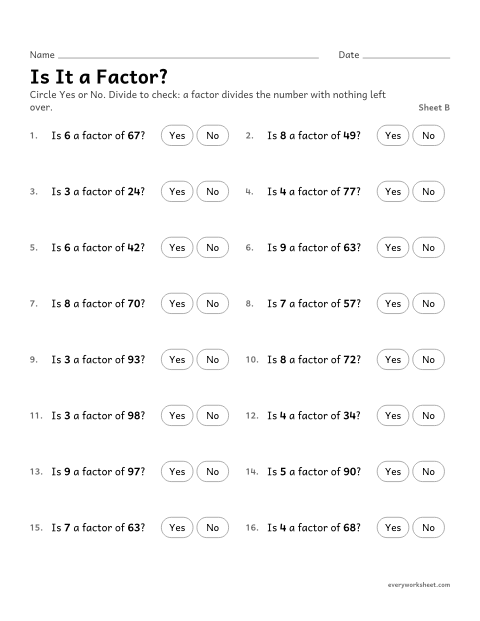
Finding every factor pair is a search with a stopping rule. Try 1, 2, 3 and so on in order, and stop when the pairs start to repeat (after 4 × 6 the next pair would be 6 × 4). These pages give children room for every pair, ask whether a one-digit number is a factor of a number up to 100, and practise listing multiples by skip counting.
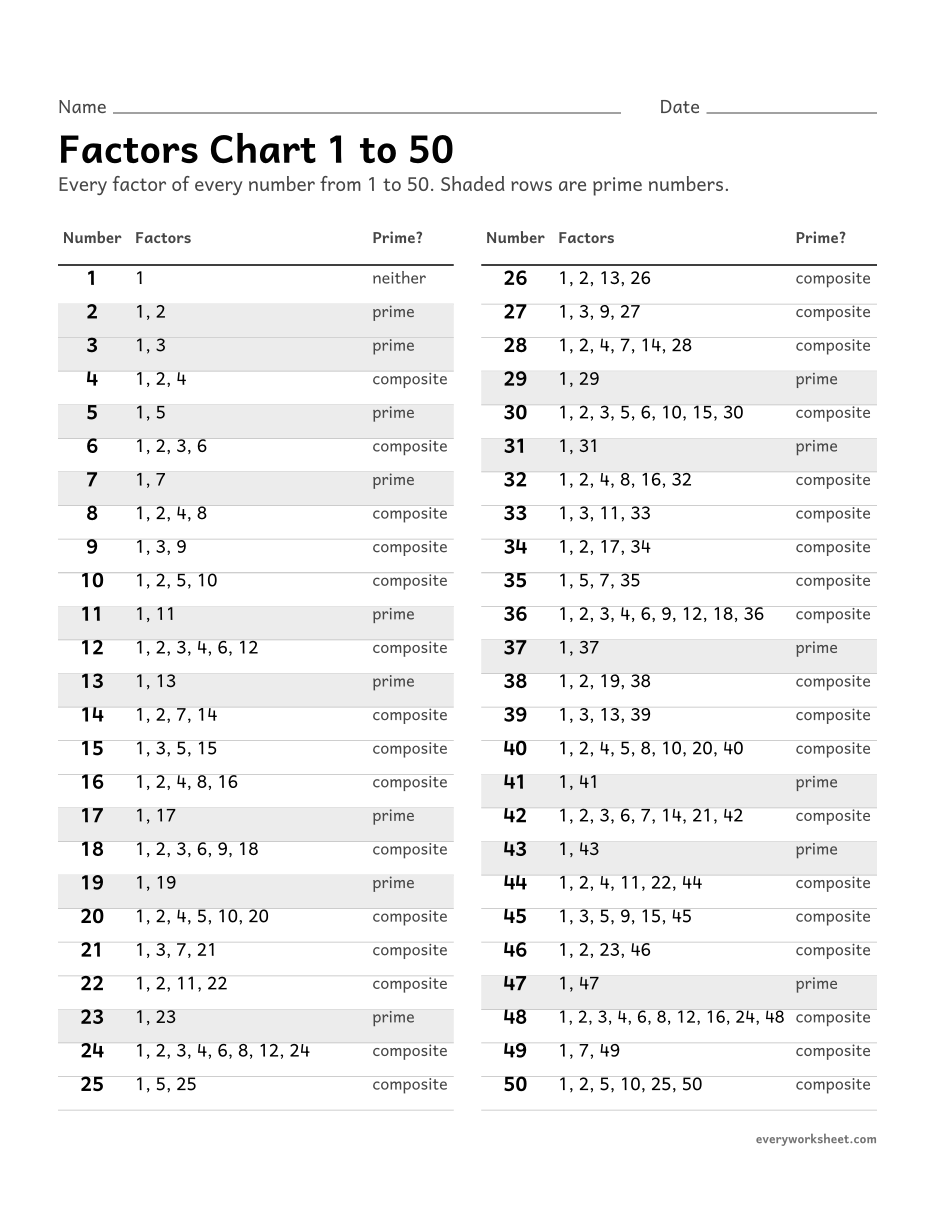
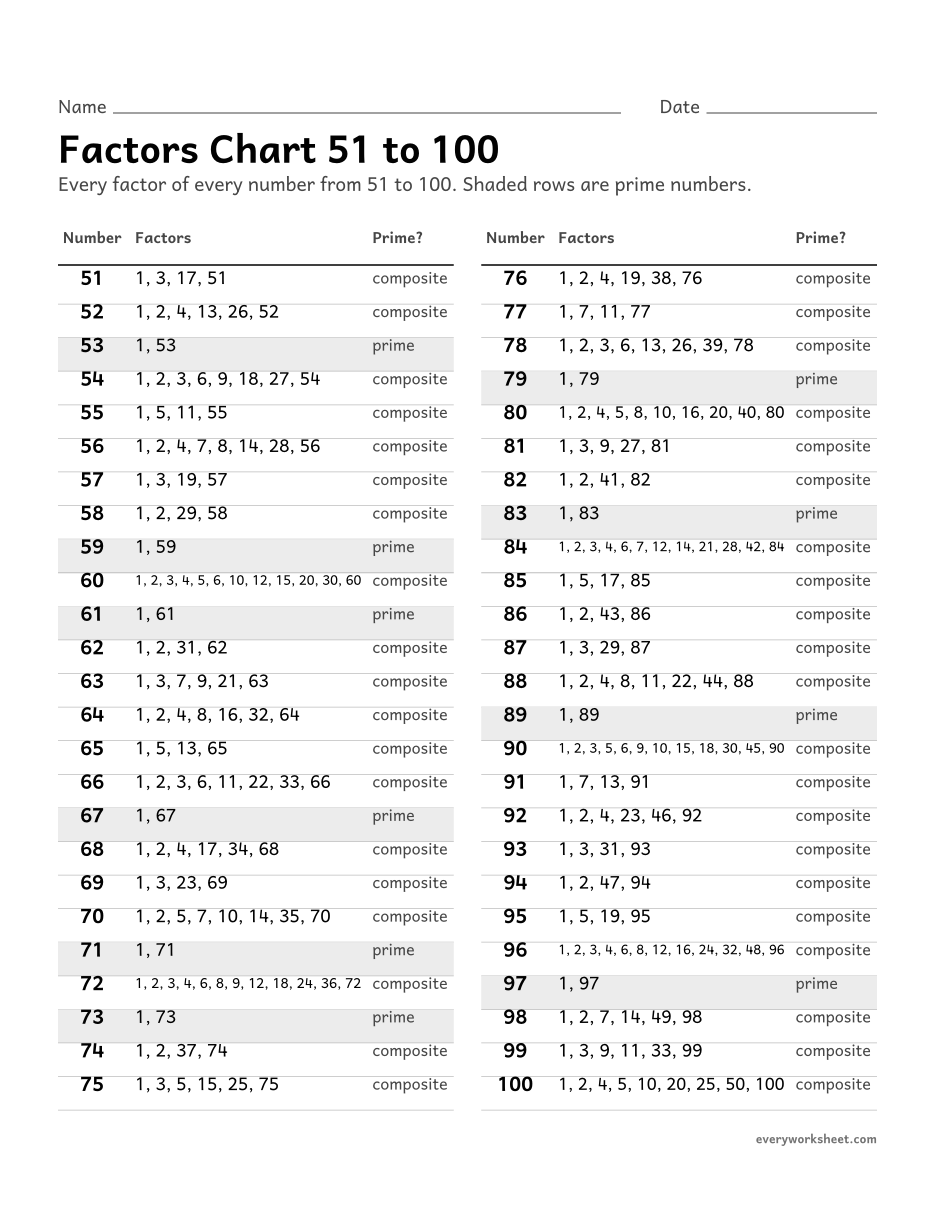
The two factor charts list every factor of every number from 1 to 100, with the primes shaded. They make a handy reference for checking work and for spotting patterns: even numbers always have 2 as a factor, and square numbers like 36 have one pair with the same number twice.
CCSS.MATH.CONTENT.4.OA.B.4Find all factor pairs for a whole number in the range 1–100. Recognize that a whole number is a multiple of each of its factors. Determine whether a given whole number in the range 1–100 is a multiple of a given one-digit number. Determine whether a given whole number in the range 1–100 is prime or composite.A factor divides a number with nothing left over: 6 is a factor of 24. A multiple is the result of multiplying a number by a whole number: 24 is a multiple of 6.
Start with 1 times the number, then try 2, 3, 4 and so on. Write each pair that works, and stop when the next pair would repeat one you already have.
Yes. Every whole number has 1 and itself as factors.