 3 pagesView all 3 pages
Energy on the move
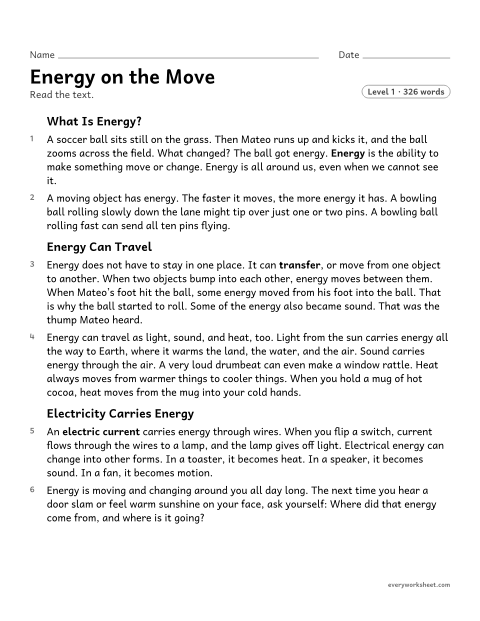
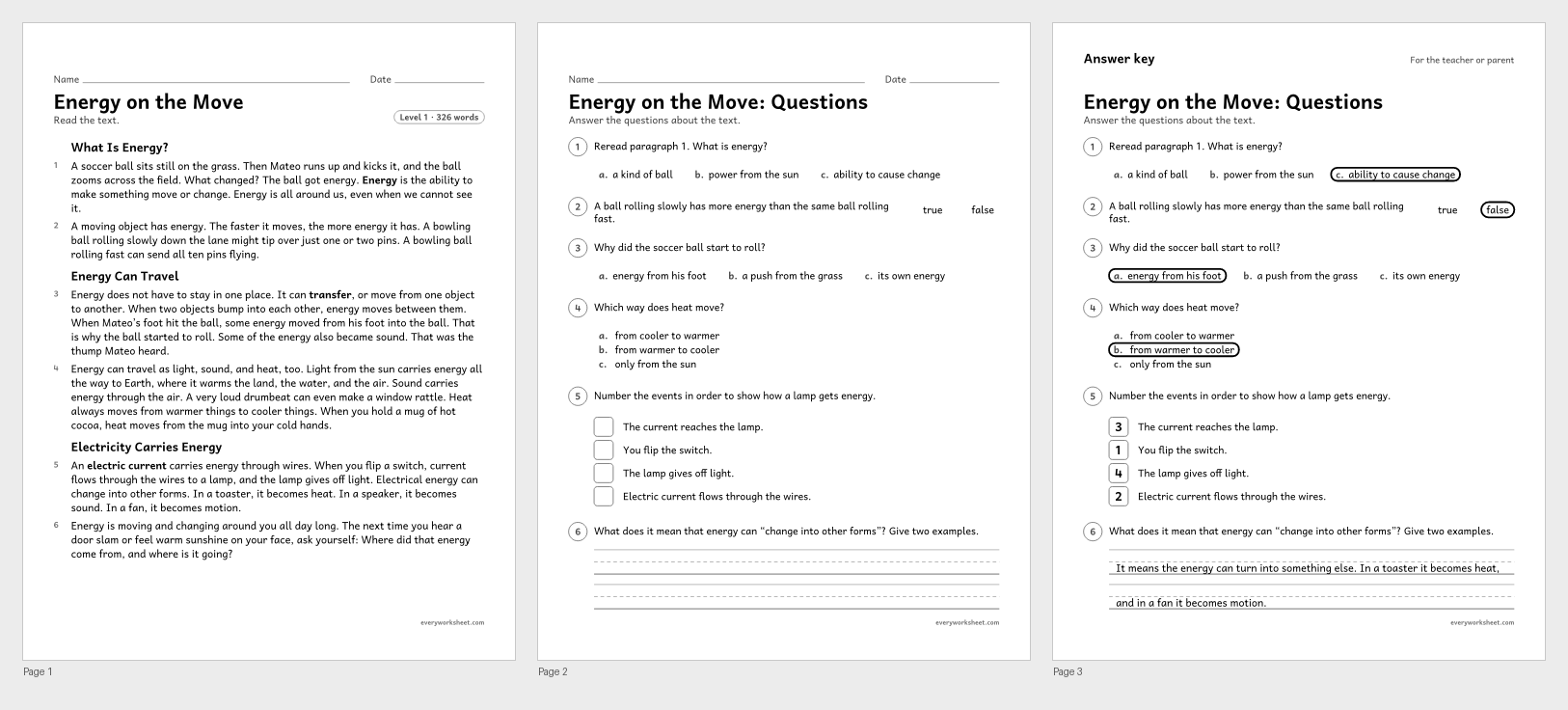
Explaining how energy moves from place to place by collisions, sound, light, heat, and electric current
Answer key on page 3
3 pages57 KB
Science and social studies passages, paired texts, and firsthand and secondhand accounts, each with questions and an answer key.
3 pagesView all 3 pagesExplaining how energy moves from place to place by collisions, sound, light, heat, and electric current
Answer key on page 3
3 pages57 KB
 3 pagesView all 3 pages
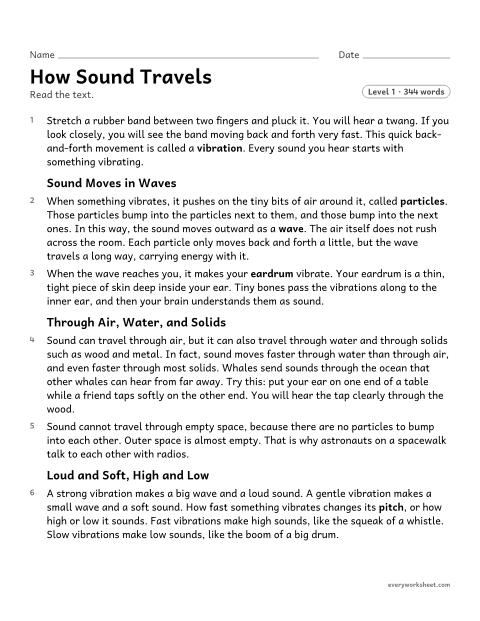
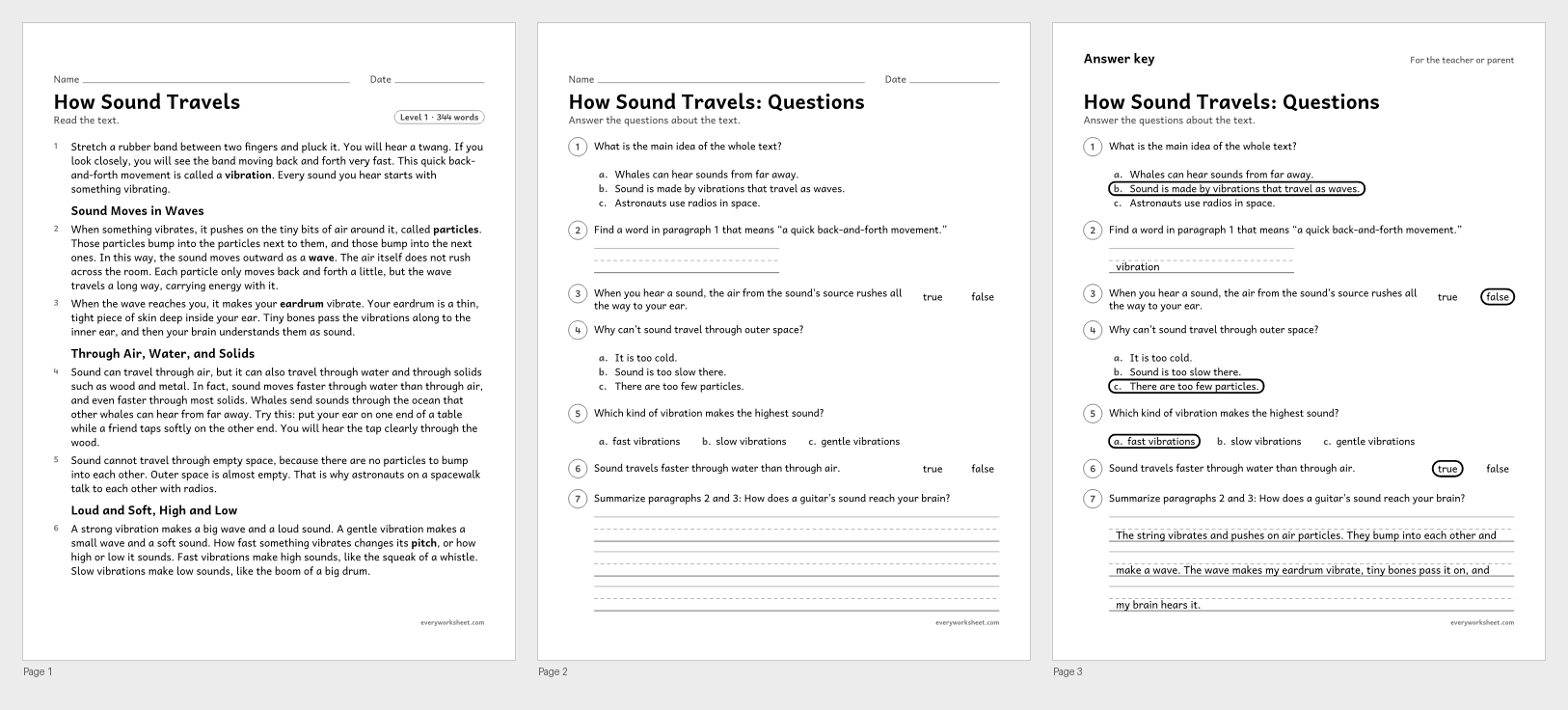
Finding the main idea of a science text about sound waves and summarizing how sound reaches the ear
Answer key on page 3
3 pages59 KB
 3 pagesView all 3 pages
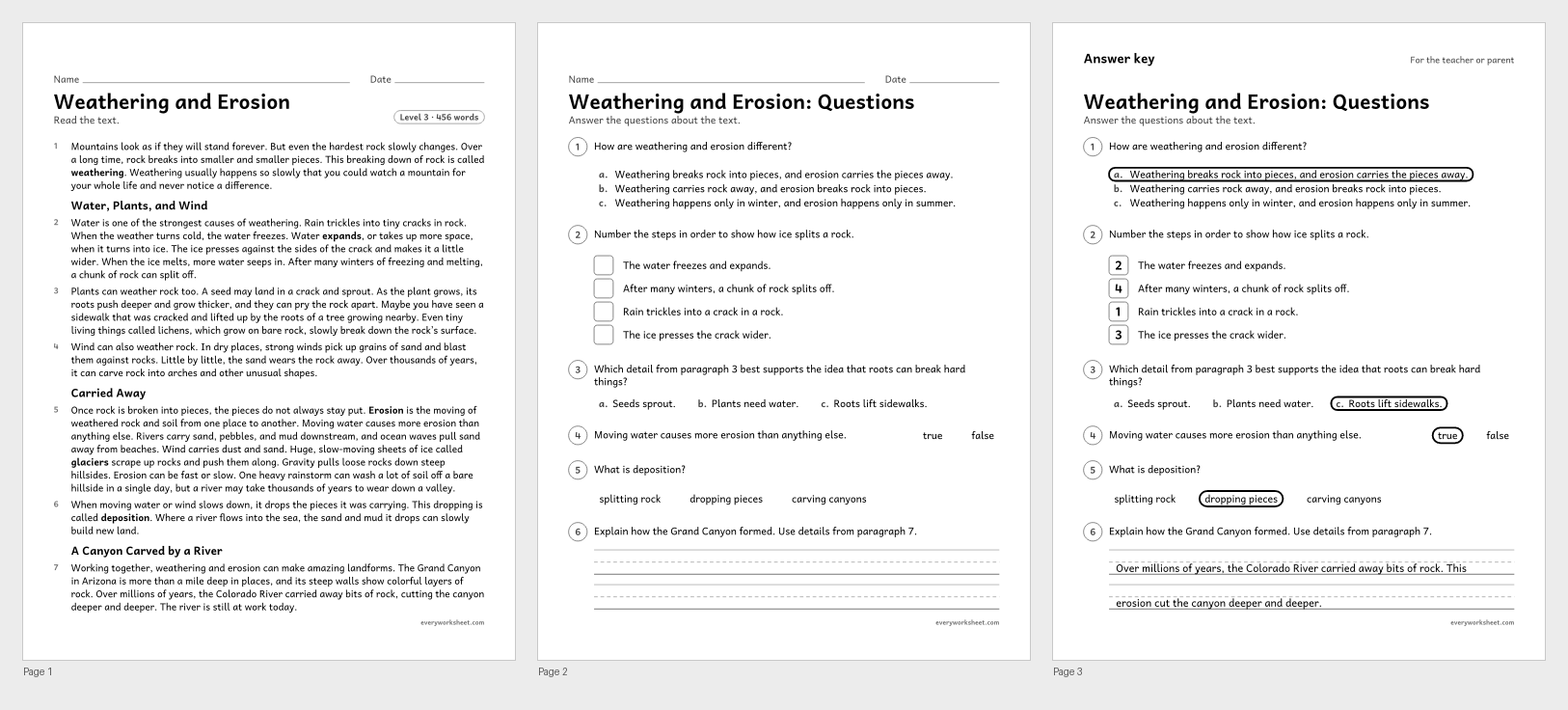
Explaining how weathering and erosion work and how they shape landforms over time
Answer key on page 3
3 pages60 KB
 3 pagesView all 3 pages
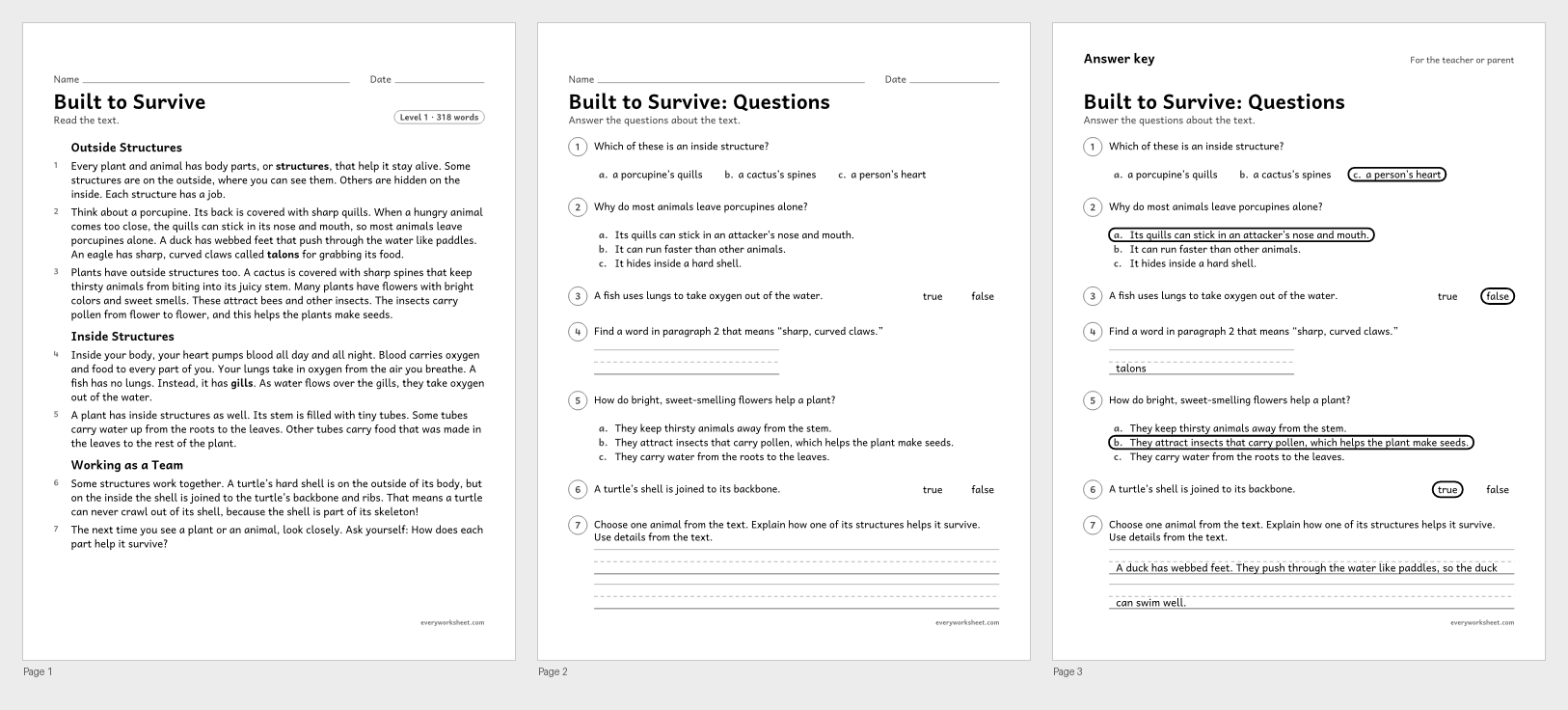
Using details from a text to explain how inside and outside structures help plants and animals survive
Answer key on page 3
3 pages59 KB
 3 pagesView all 3 pages
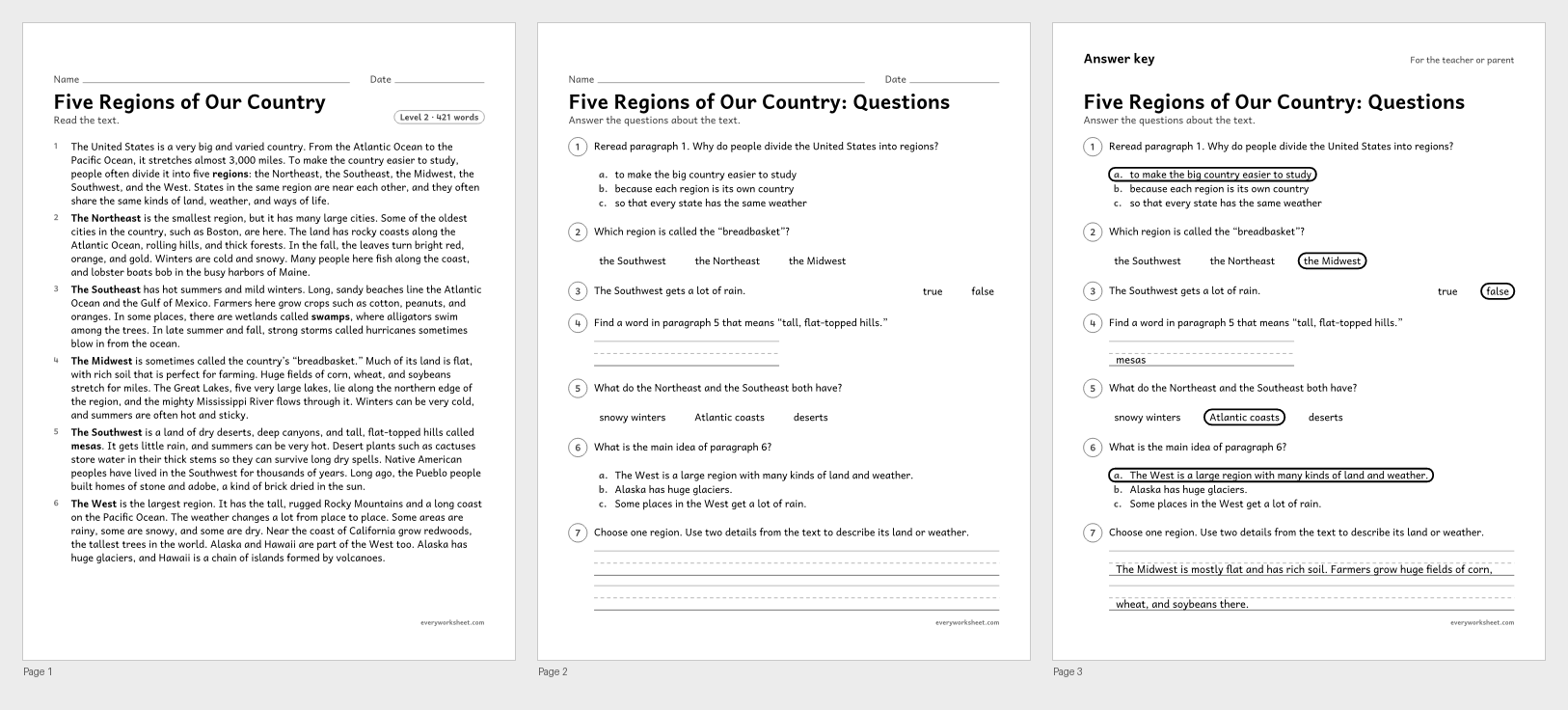
Finding the main idea and key details of each section in a text about the five regions of the United States
Answer key on page 3
3 pages60 KB
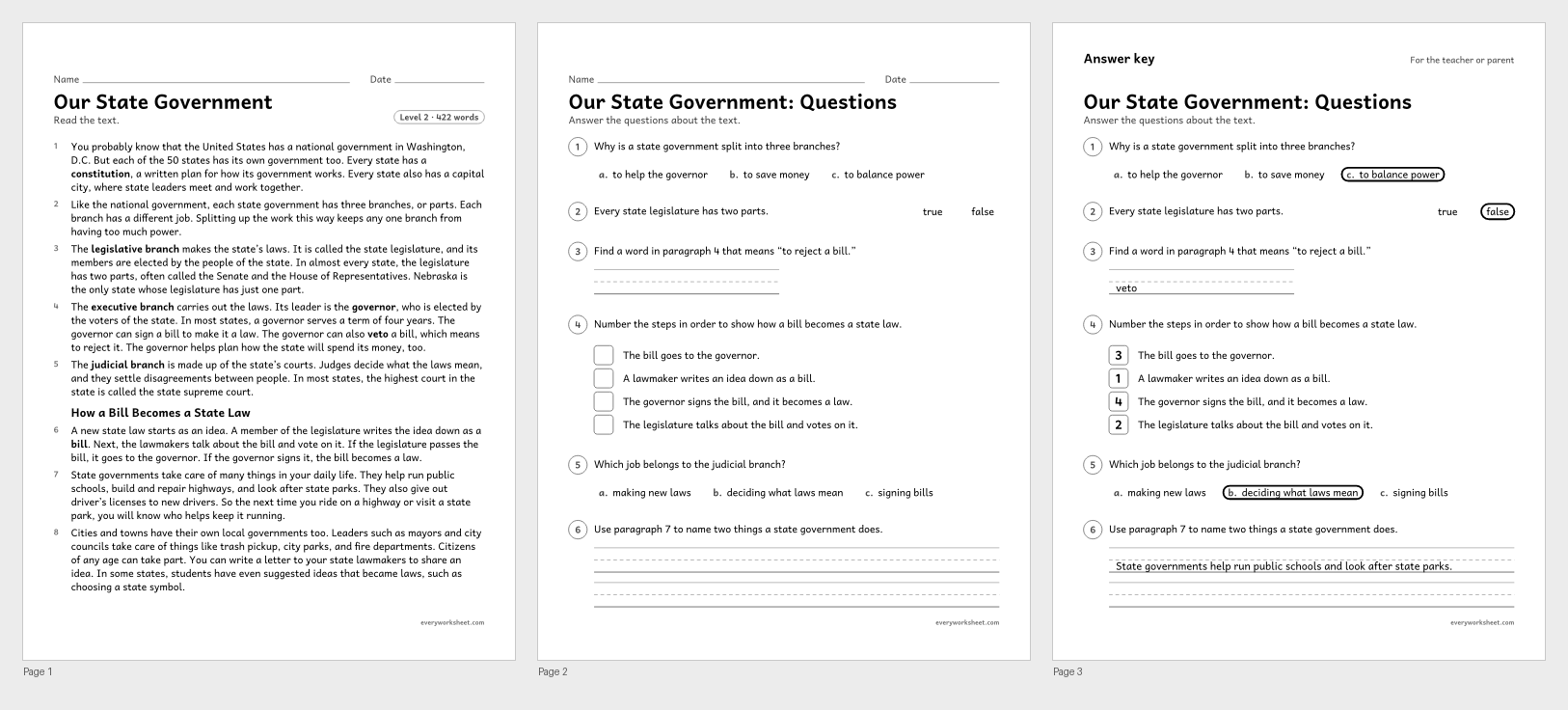 3 pagesView all 3 pages
Explaining the jobs of the three branches of state government and the steps for making a state law
Answer key on page 3
3 pages57 KB
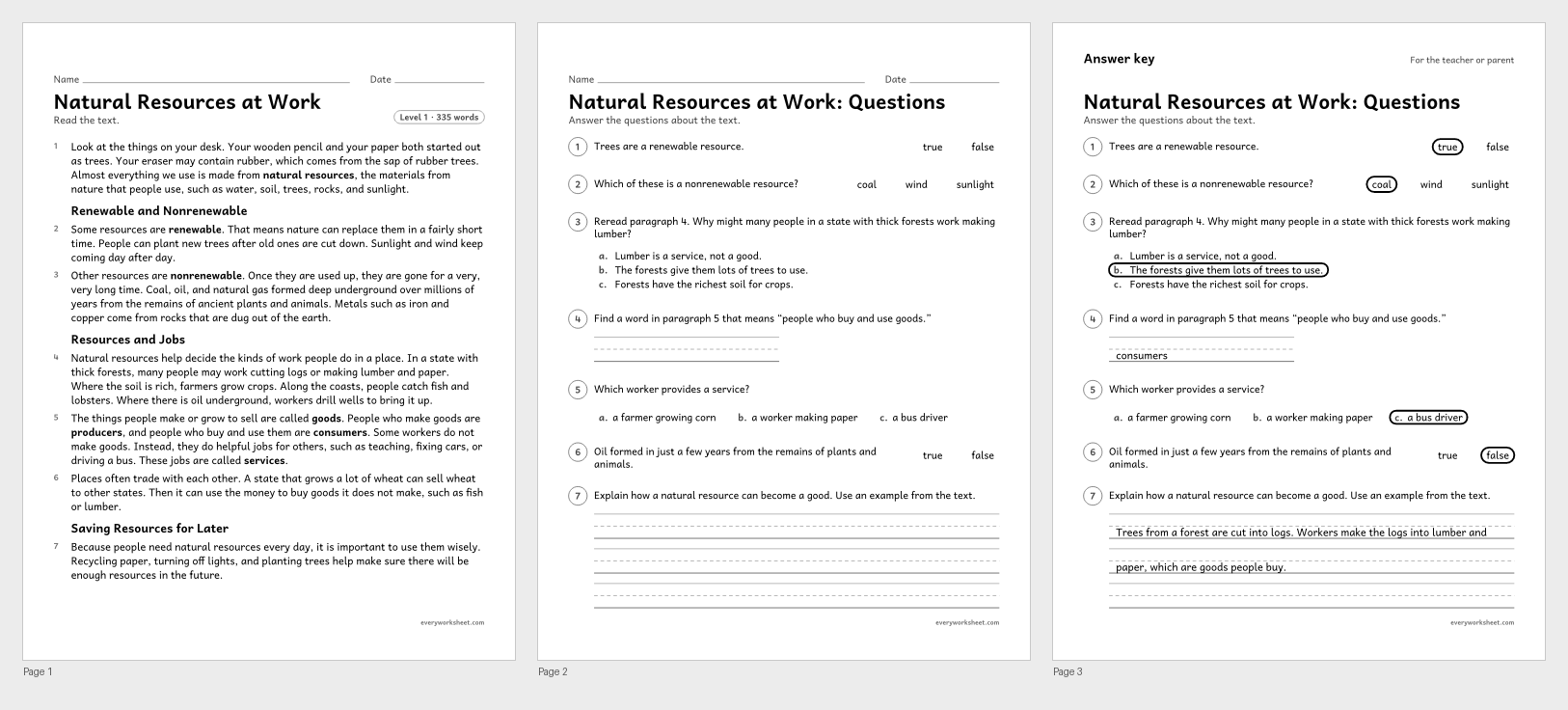 3 pagesView all 3 pages
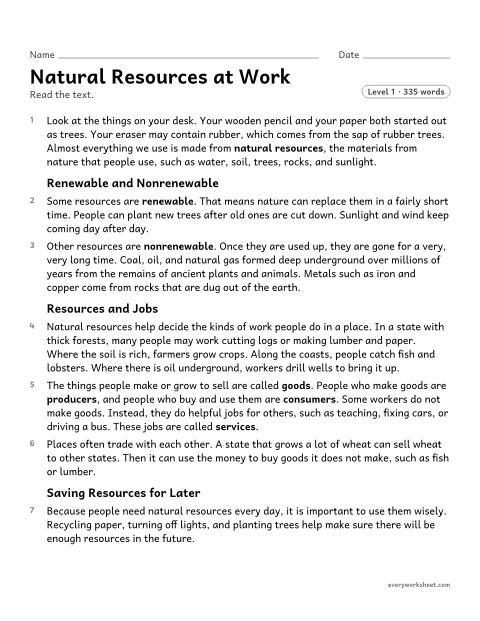
Explaining how natural resources connect to goods, jobs, and a region's economy
Answer key on page 3
3 pages58 KB
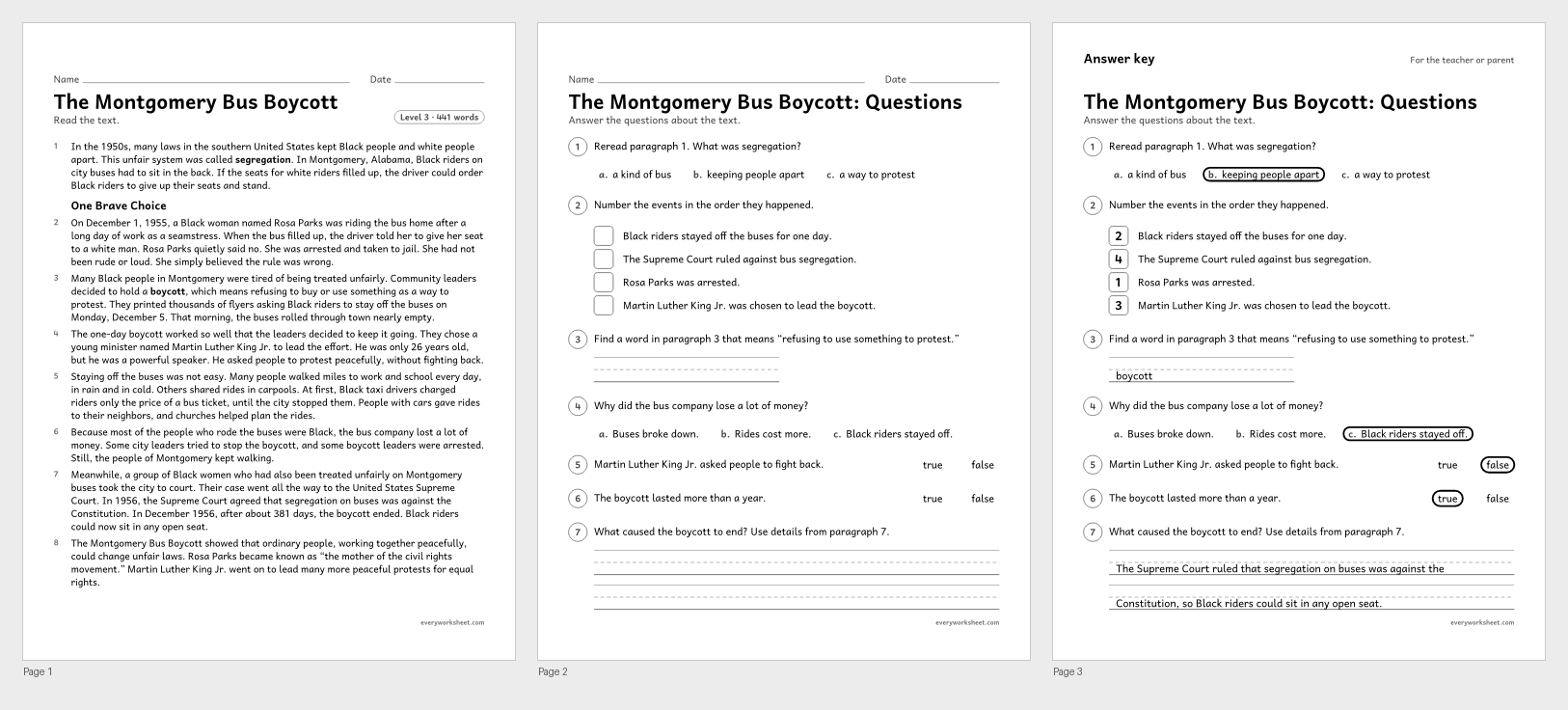 3 pagesView all 3 pages
Explaining what happened and why in a historical text about the Montgomery Bus Boycott
Answer key on page 3
3 pages59 KB
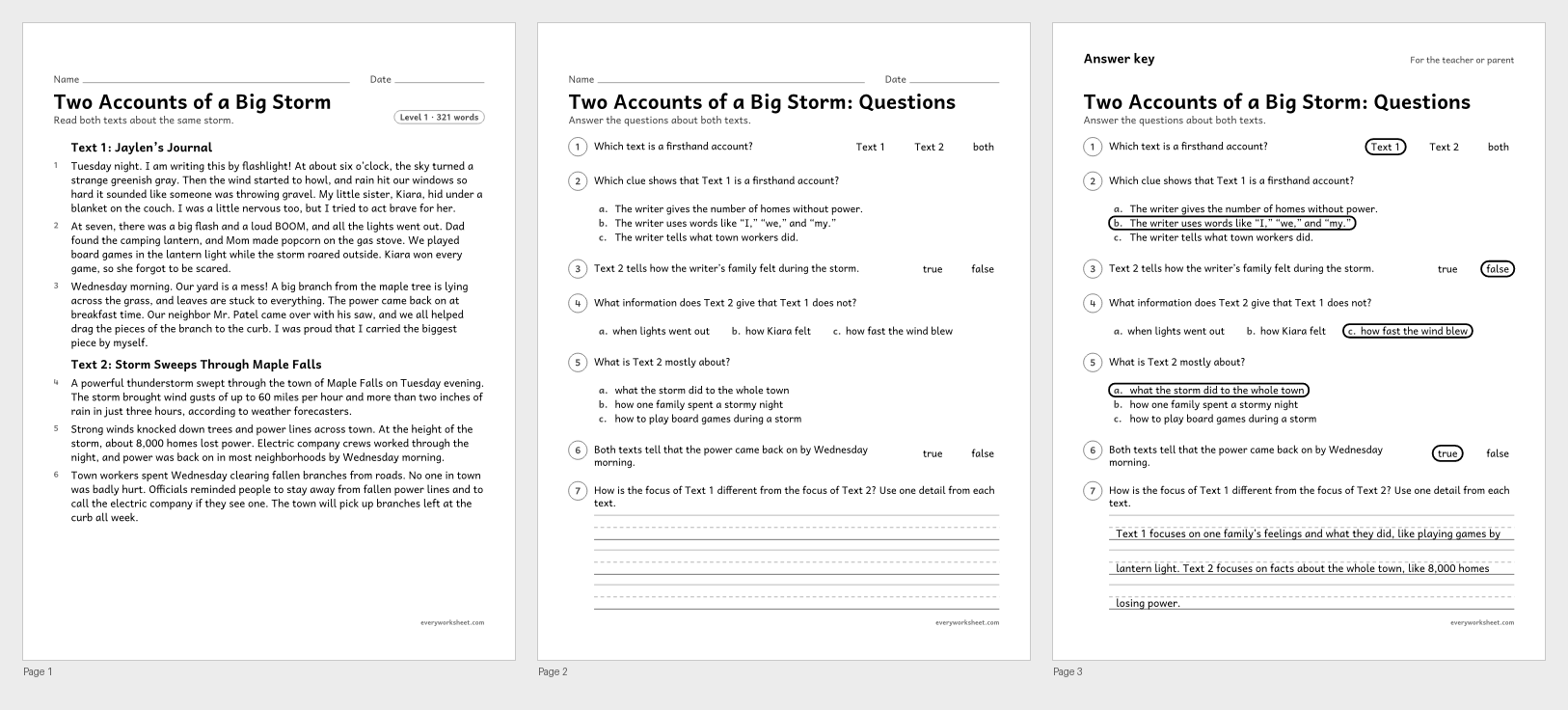 3 pagesView all 3 pages
Comparing a firsthand and a secondhand account of the same storm and telling how their focus differs
Answer key on page 3
3 pages60 KB
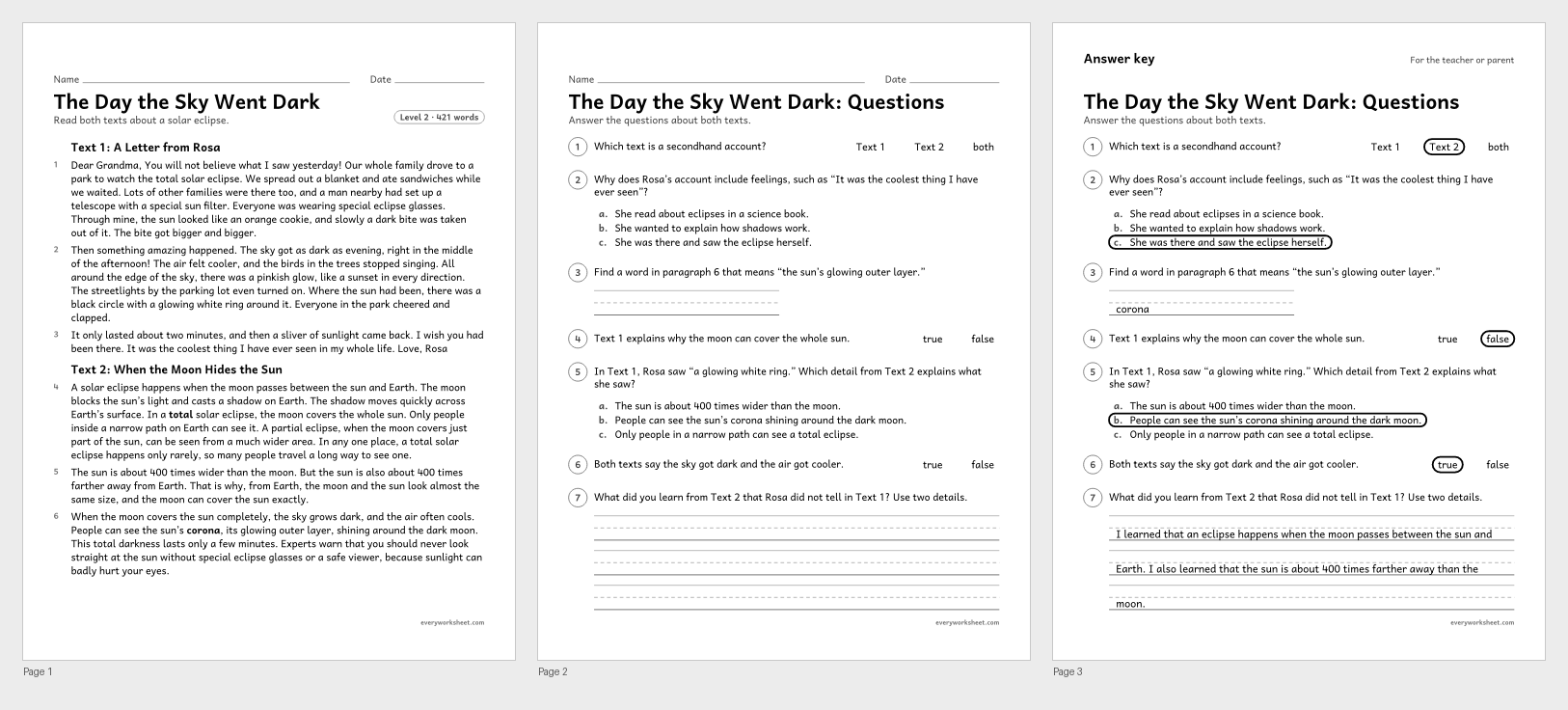 3 pagesView all 3 pages
Comparing a firsthand letter and a secondhand science text about a total solar eclipse
Answer key on page 3
3 pages60 KB
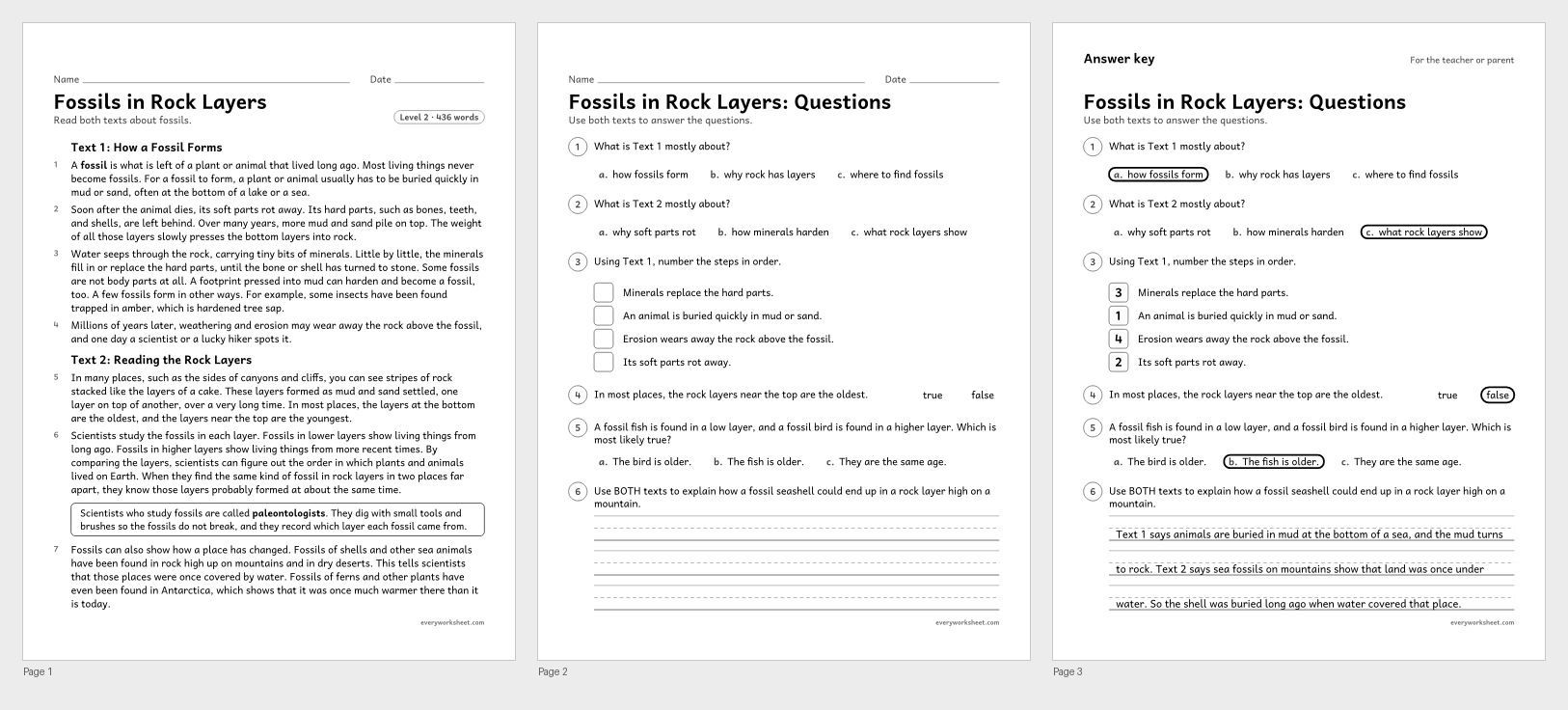 3 pagesView all 3 pages
Integrating information from two texts to explain how fossils form and what rock layers show
Answer key on page 3
3 pages55 KB
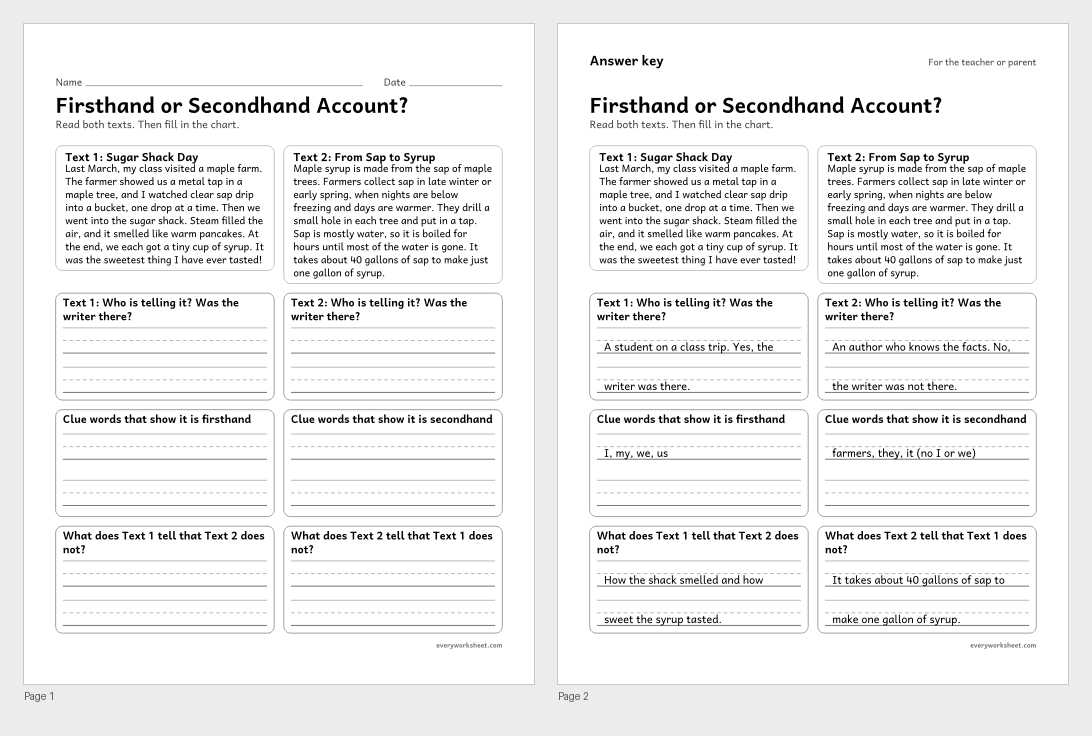 View all 2 pages
Comparing a firsthand and a secondhand account of the same topic in an organizer
Answer key on page 2
2 pages40 KB
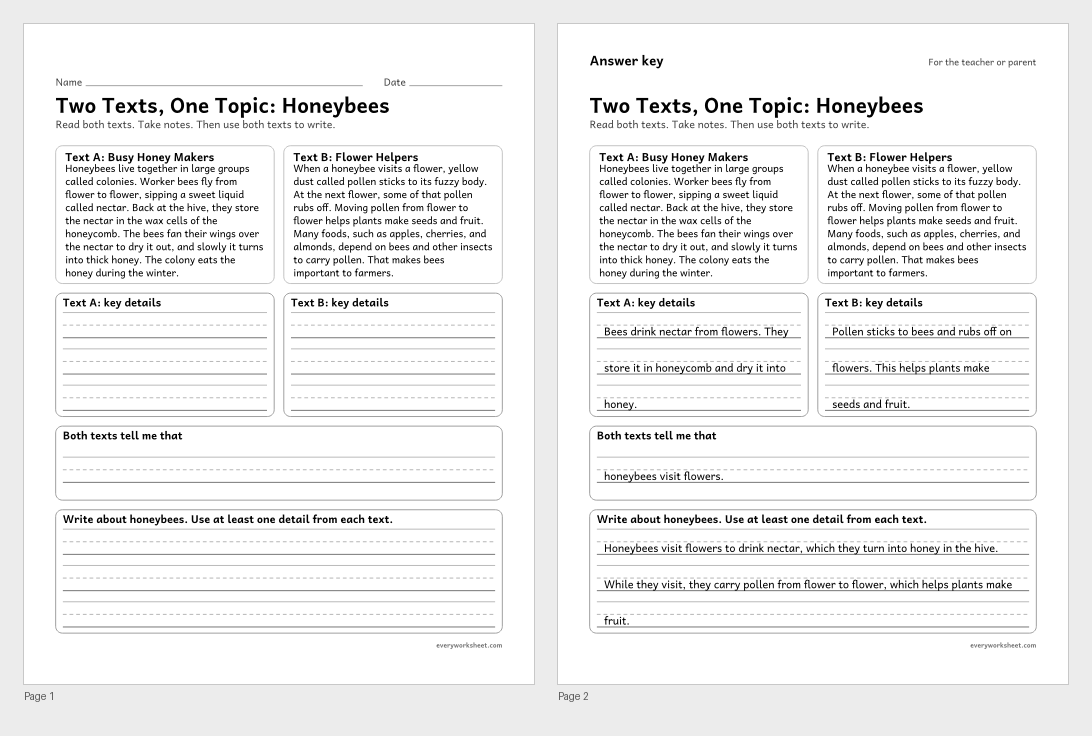 View all 2 pages
Taking notes on two texts about the same topic and combining them to write about the topic
Answer key on page 2
2 pages38 KB
Print at 100% (actual size) for the cleanest tracing lines.
Fourth graders read to learn in every subject, so these reading passages for 4th graders are built around what children study in science and social studies: how energy and sound move, how weathering and erosion shape the land, the five regions of the United States, how a state government works, and the Montgomery Bus Boycott. Each text has numbered paragraphs, so questions can send children back to the exact spot, such as "Reread paragraph 4."
Paired passages put two texts on one topic side by side. Some pair a firsthand account, written by someone who was there ("I watched the sky turn dark"), with a secondhand account, written by someone who learned about it ("A solar eclipse happens when the moon passes between the sun and Earth"). Children compare what each one focuses on and what each one leaves out. Others ask children to put information from two texts together, like how a fossil forms and what rock layers show.
Every passage is original and comes with six or seven questions: multiple choice, true or false, putting events in order, word meaning, and written answers that ask for details from the text. An answer key is included. Two graphic organizers help children compare accounts and take notes from two texts on any topic.
CCSS.ELA-LITERACY.RI.4.1Refer to details and examples in a text when explaining what the text says explicitly and when drawing inferences from the text.CCSS.ELA-LITERACY.RI.4.2Determine the main idea of a text and explain how it is supported by key details; summarize the text.CCSS.ELA-LITERACY.RI.4.3Explain events, procedures, ideas, or concepts in a historical, scientific, or technical text, including what happened and why, based on specific information in the text.CCSS.ELA-LITERACY.RI.4.6Compare and contrast a firsthand and secondhand account of the same event or topic; describe the differences in focus and the information provided.CCSS.ELA-LITERACY.RI.4.9Integrate information from two texts on the same topic in order to write or speak about the subject knowledgeably.They are written for 4th graders reading on their own. Level 1 passages fit early 4th grade (about 320 to 350 words), Level 2 fit the middle of the year (about 420 words), and Level 3 fit late 4th grade, with harder science and history words.
A firsthand account is written by someone who was there, like a diary entry or a letter, so it uses I and we and shares feelings. A secondhand account is written by someone who learned about the event, like a news report or a science article, so it gives more facts and explains why.
Yes. Every passage and organizer has an answer key. Written answers show an example, and children's wording will vary.