 View larger
Rock cycle diagram for kids (Labeled)
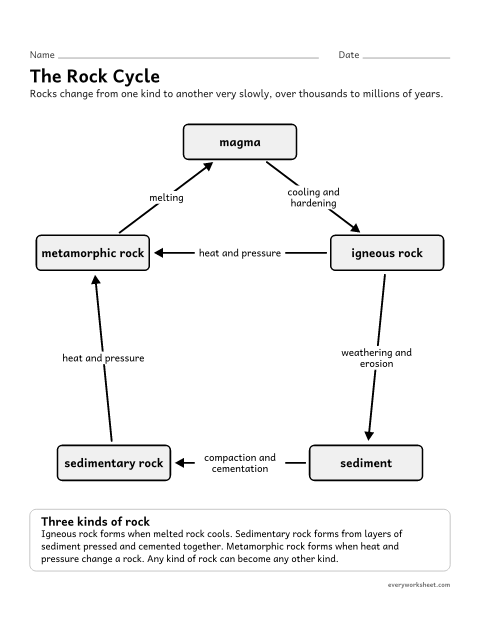
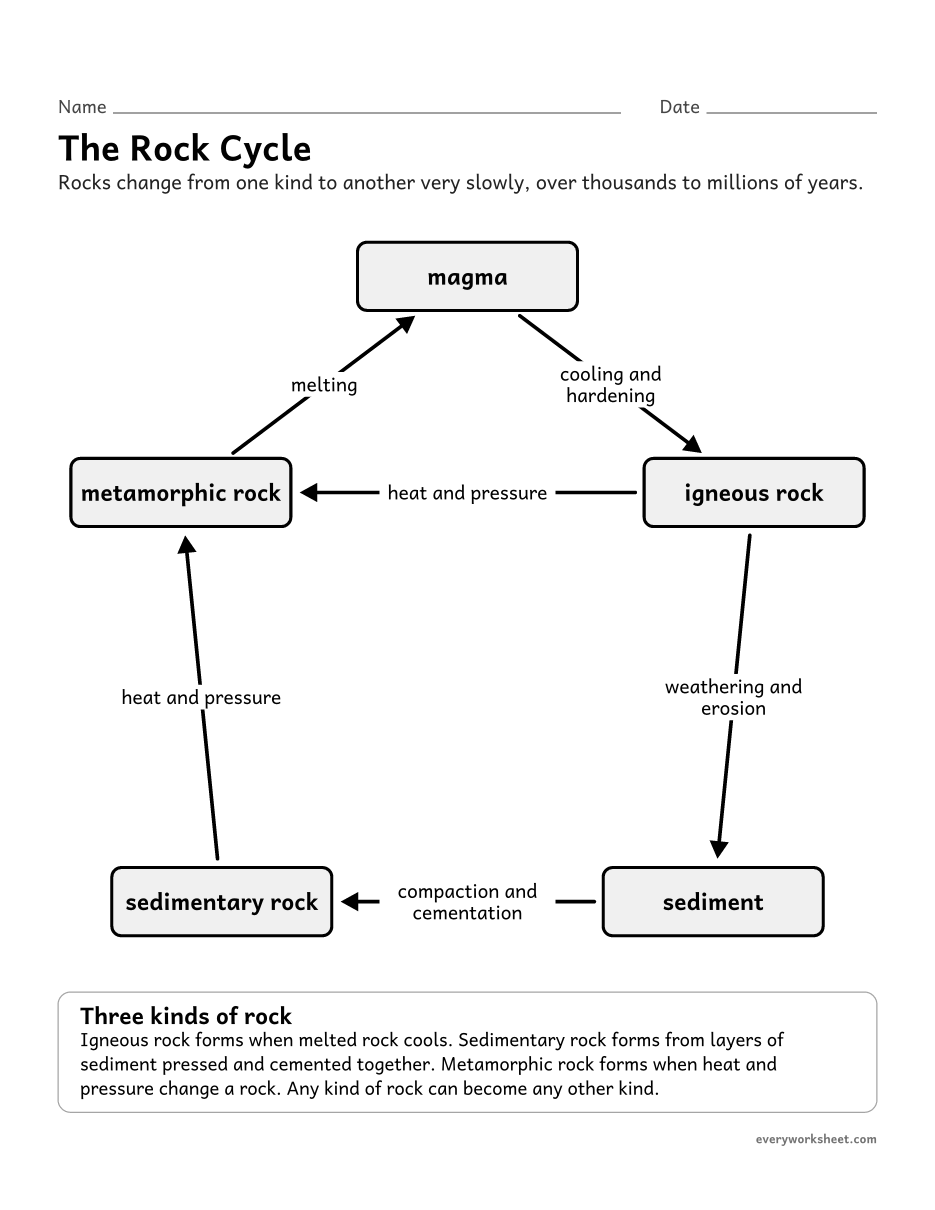
Describing how rocks change from one type to another in the rock cycle
1 page27 KB
A labeled rock cycle diagram, label and cut and paste versions, the processes that change rocks, igneous, sedimentary and metamorphic rocks, and mineral hardness.
View largerDescribing how rocks change from one type to another in the rock cycle
1 page27 KB
 View all 2 pages
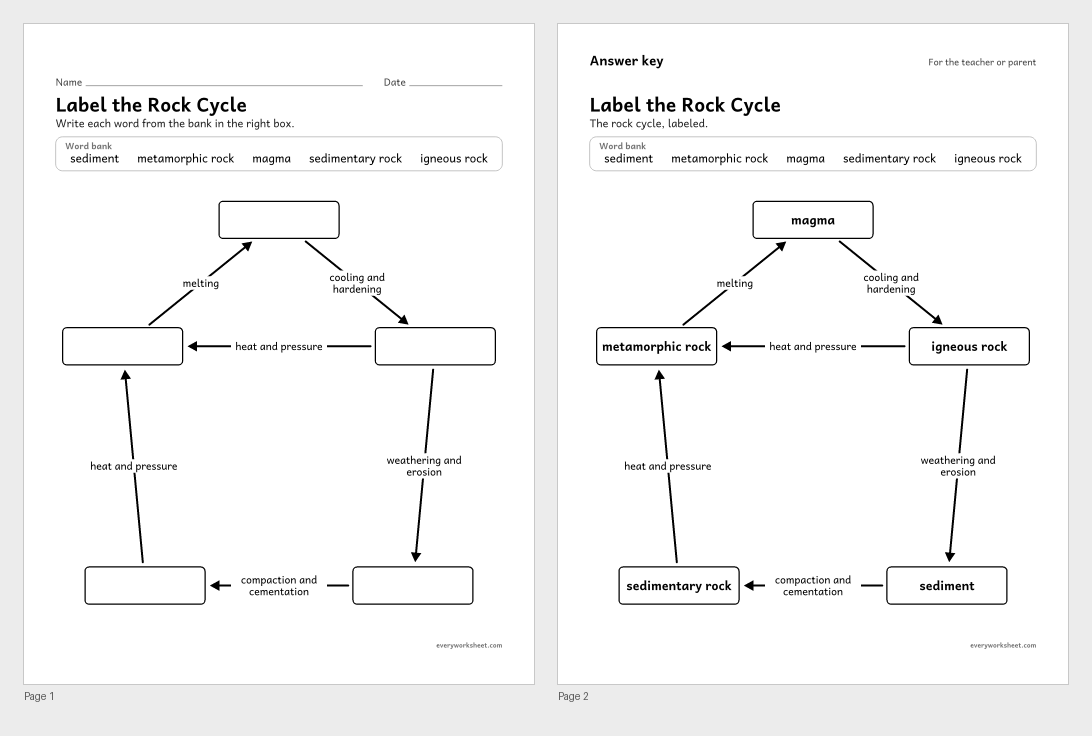
Labeling the stages of the rock cycle
Answer key on page 2
2 pages30 KB
 View all 2 pages
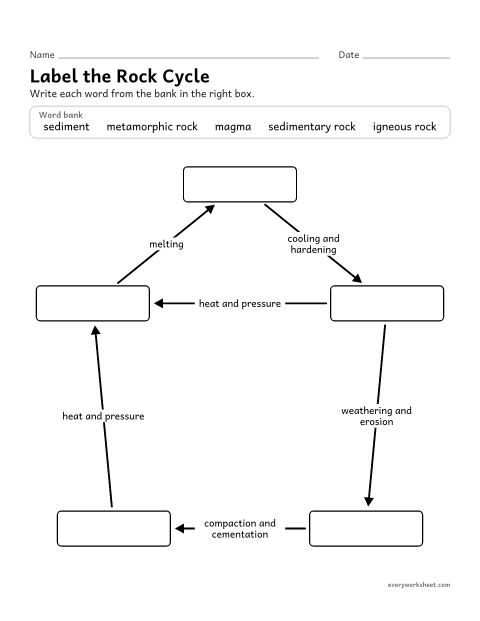
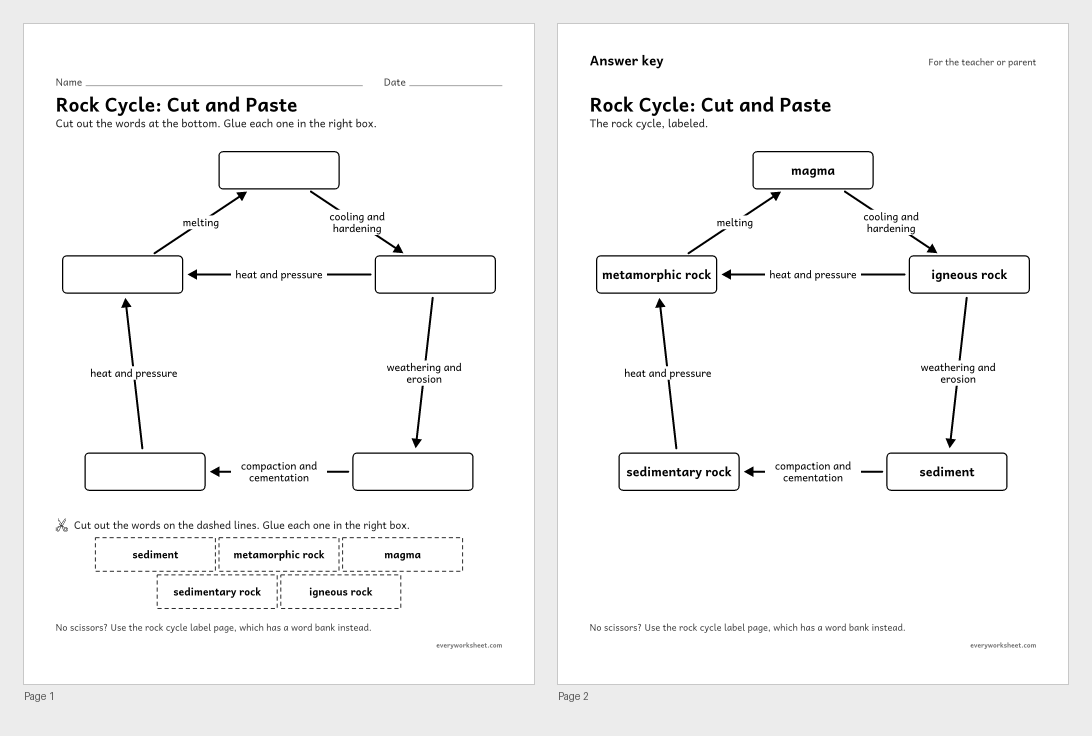
Labeling the stages of the rock cycle
Answer key on page 2
2 pages58 KB
 View all 2 pages
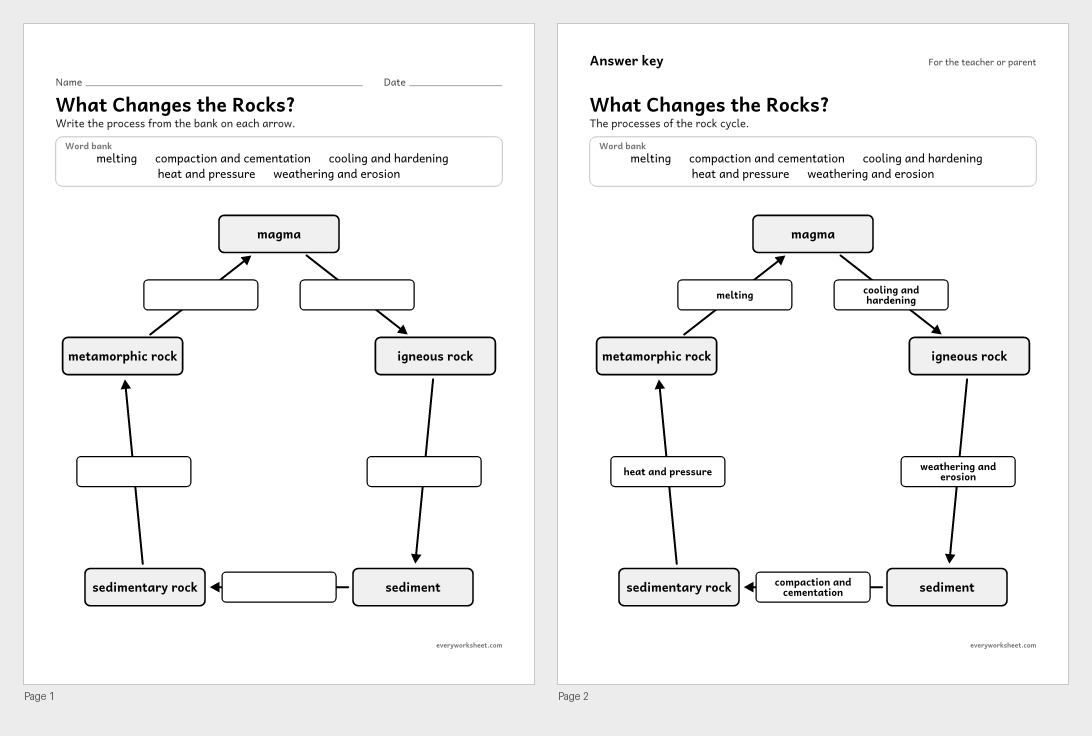
Naming the processes that change rocks in the rock cycle
Answer key on page 2
2 pages29 KB
 View larger
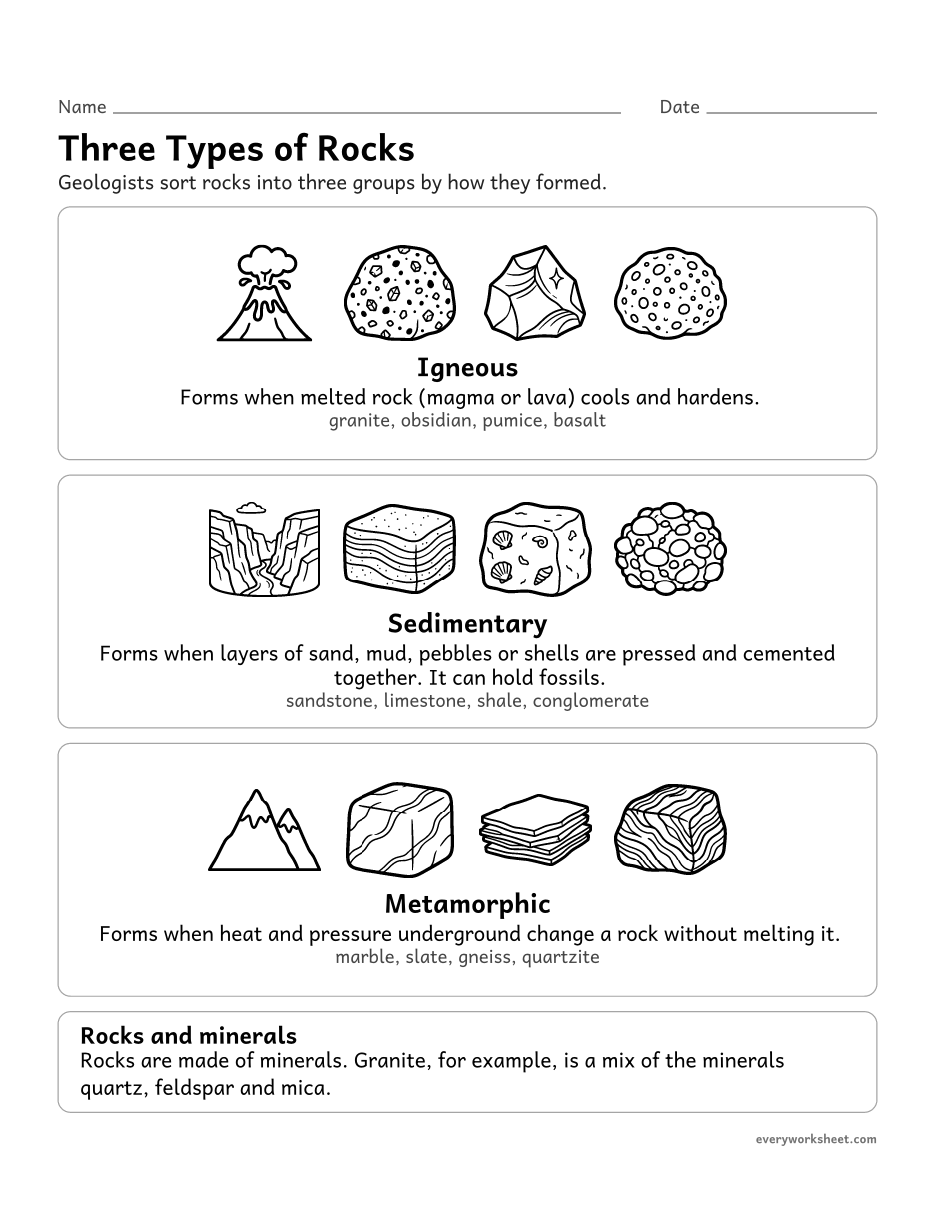
Describing how igneous, sedimentary and metamorphic rocks form
1 page437 KB
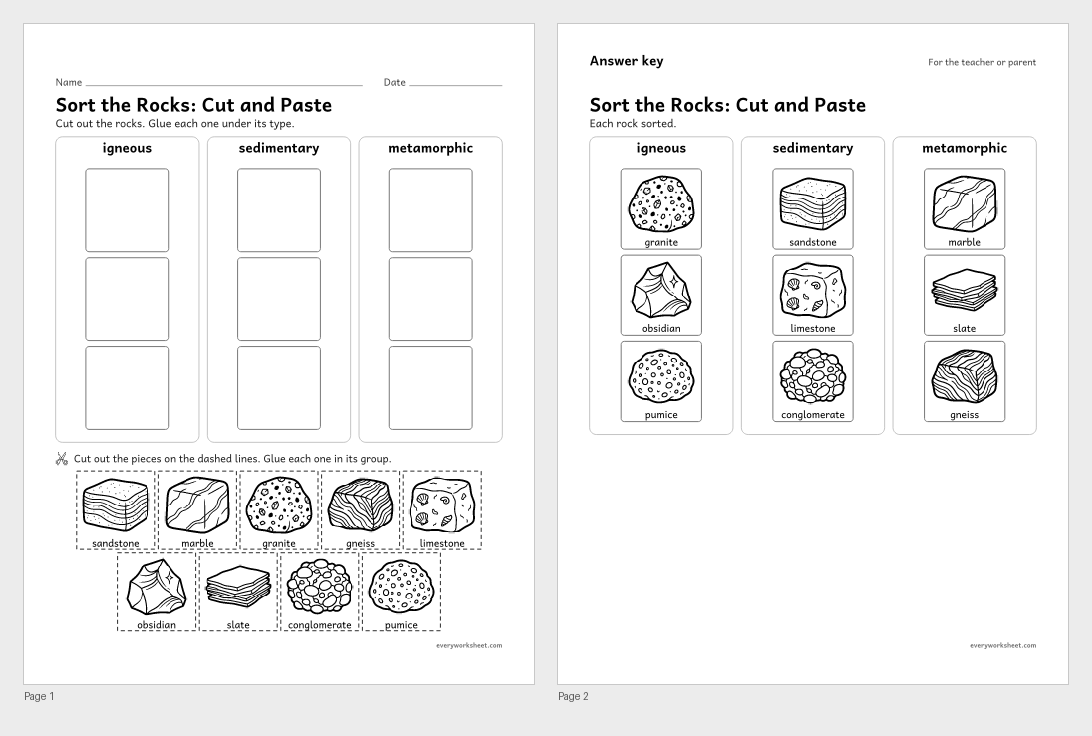 View all 2 pages
Sorting example rocks into igneous, sedimentary and metamorphic
Answer key on page 2
2 pages733 KB
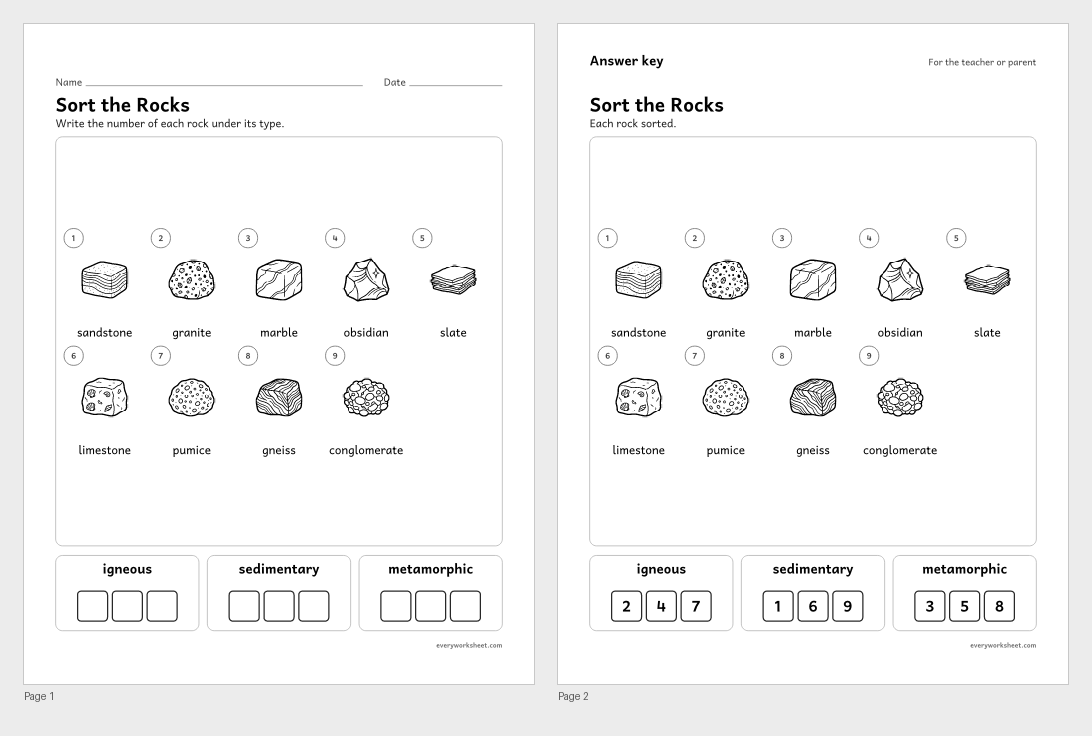 View all 2 pages
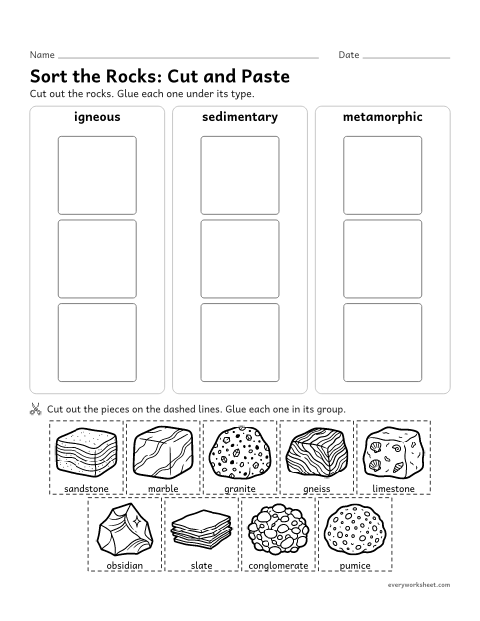
Sorting example rocks into igneous, sedimentary and metamorphic
Answer key on page 2
2 pages711 KB
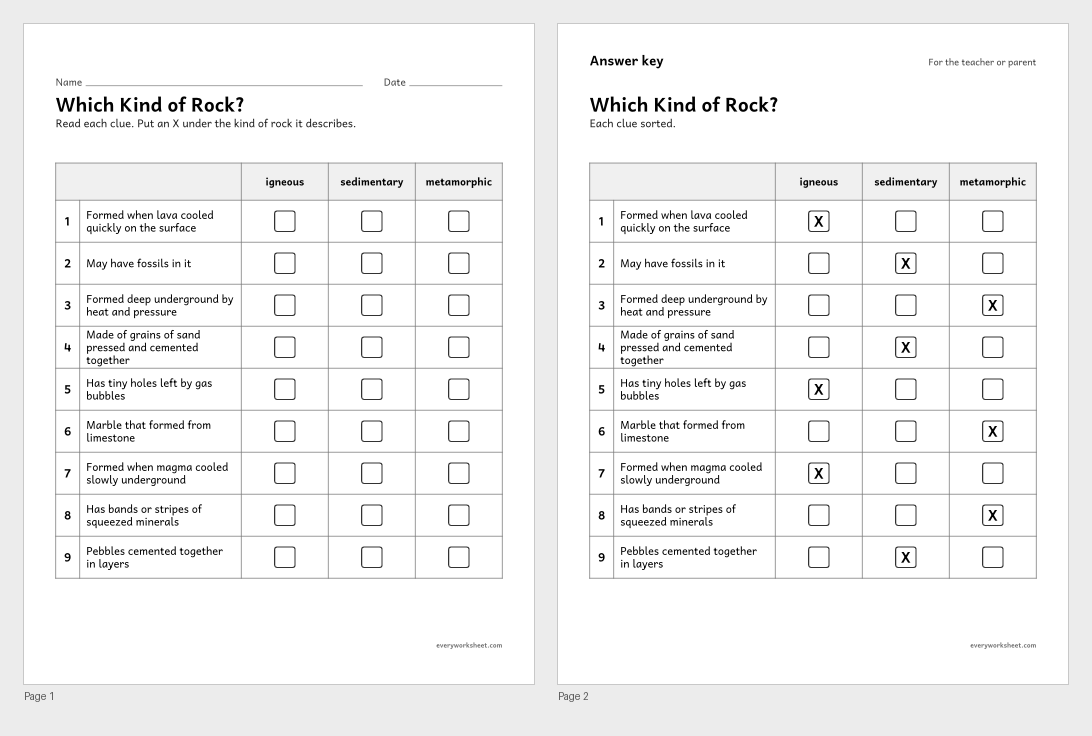 View all 2 pages
Using clues about how a rock formed to classify it
Answer key on page 2
2 pages48 KB
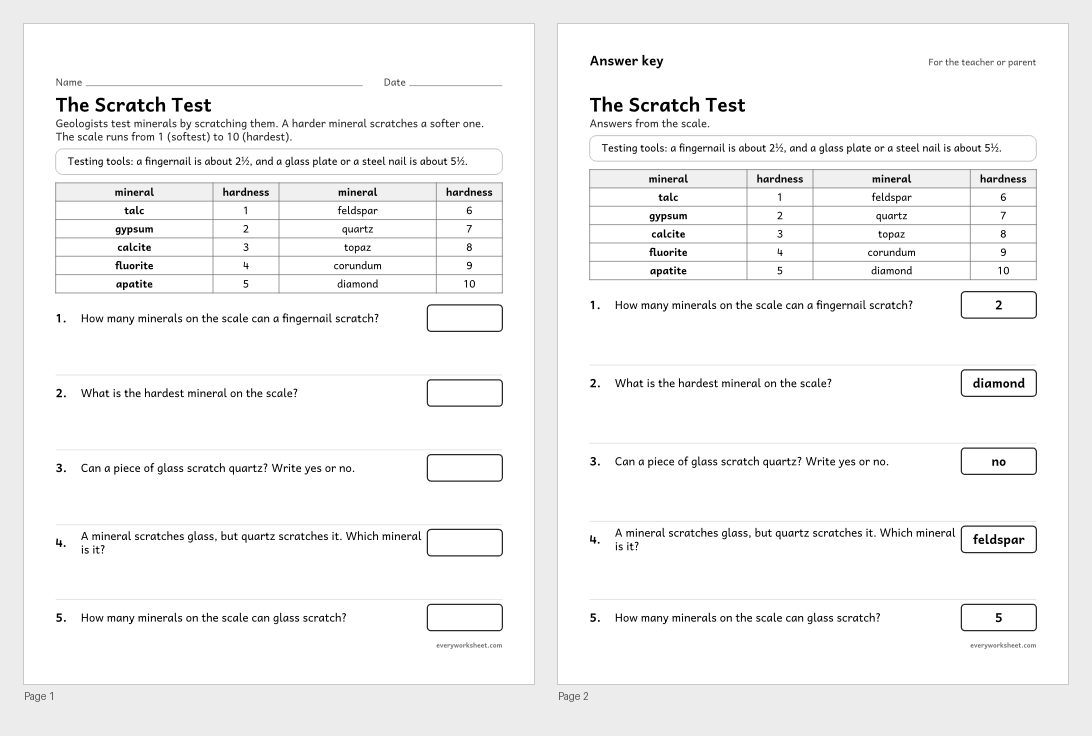 View all 2 pages
Using a hardness scale to compare minerals
Answer key on page 2
2 pages48 KB
 View all 2 pages
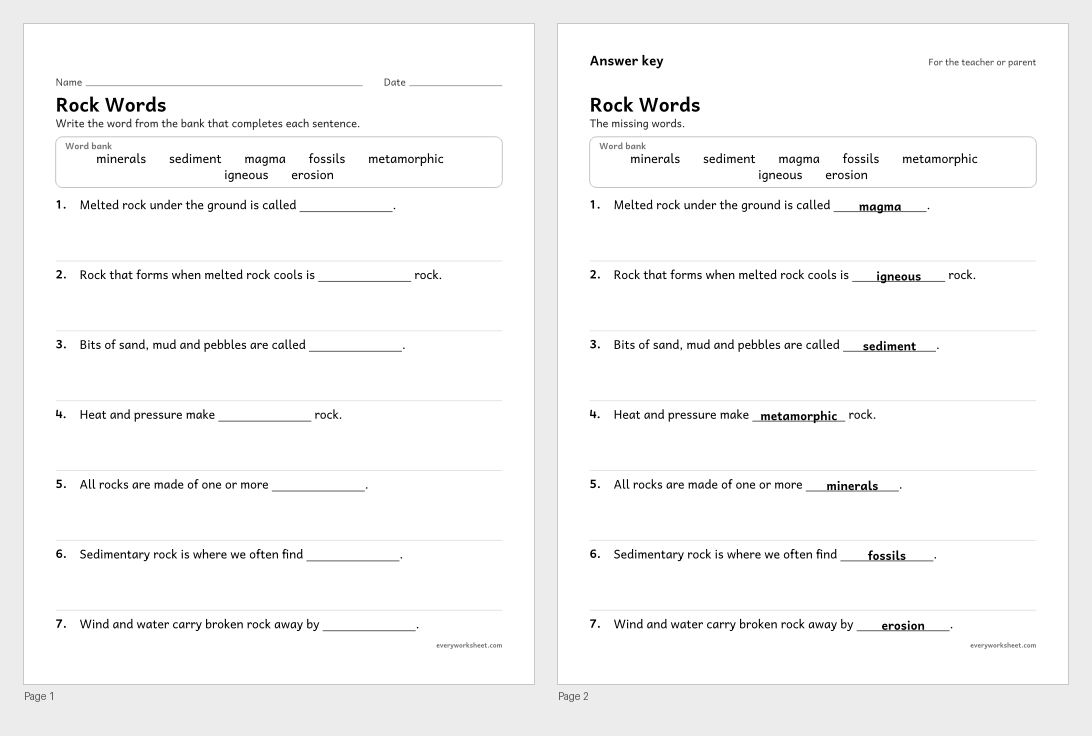
Using rock cycle vocabulary in context
Answer key on page 2
2 pages38 KB
 View all 2 pages
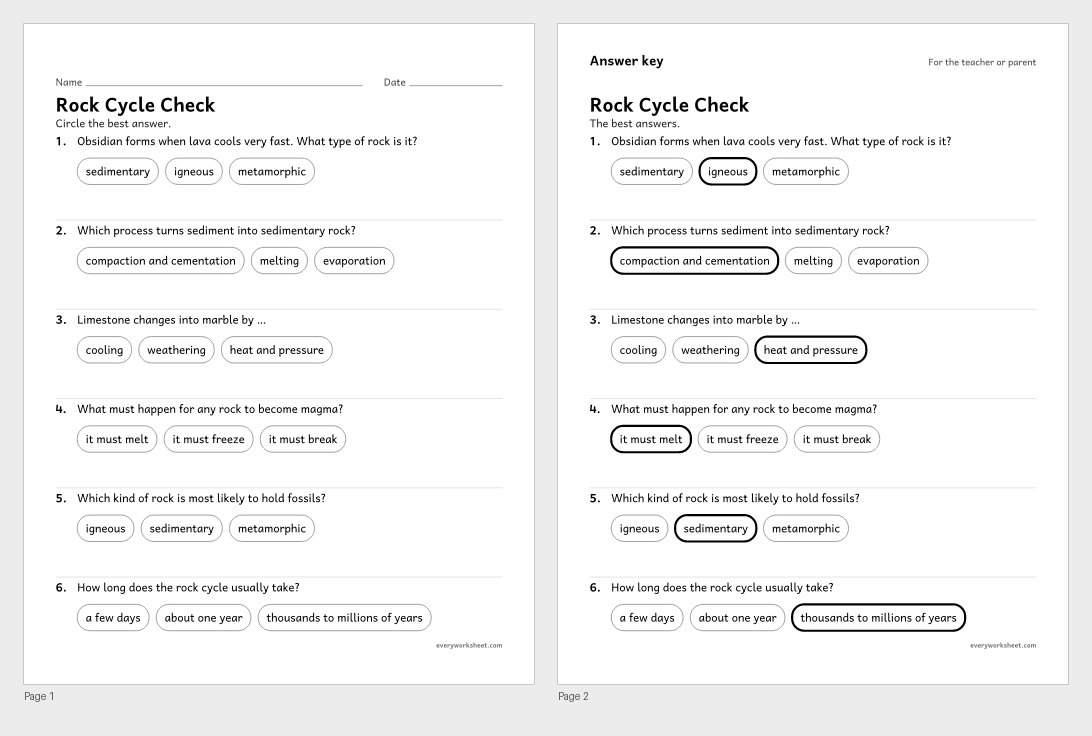
Reviewing the rock cycle and the three types of rock
Answer key on page 2
2 pages38 KB
Print at 100% (actual size) for the cleanest tracing lines.
Rocks change from one kind into another, very slowly, in the rock cycle. Melted rock cools into igneous rock. Weathering breaks rock into sediment, which is pressed and cemented into sedimentary rock. Heat and pressure change rock into metamorphic rock, and melting turns it back into magma.
These rock cycle worksheets have a labeled diagram, a page to label with a word bank, a cut and paste twin and a page to name the processes on the arrows. Types of rocks pages include a poster, a sort of nine example rocks (cut and paste or write the numbers) and a clue sort. A scratch test page uses the mineral hardness scale.
Every page is black and white, prints on US Letter or A4, and every page with right answers has an answer key on page 2.
CCSS.ELA-LITERACY.RI.4.7Interpret information presented visually, orally, or quantitatively (e.g., in charts, graphs, diagrams, time lines, animations, or interactive elements on Web pages) and explain how the information contributes to an understanding of the text in which it appears.CCSS.ELA-LITERACY.RI.4.3Explain events, procedures, ideas, or concepts in a historical, scientific, or technical text, including what happened and why, based on specific information in the text.CCSS.ELA-LITERACY.RI.4.4Determine the meaning of general academic and domain-specific words or phrases in a text relevant to a grade 4 topic or subject area.Igneous rocks form when melted rock cools. Sedimentary rocks form when layers of sediment are pressed and cemented together. Metamorphic rocks form when heat and pressure change a rock without melting it.
Magma cools into igneous rock. Weathering and erosion break rocks into sediment, which becomes sedimentary rock. Heat and pressure make metamorphic rock, and melting turns rock back into magma.
Minerals are natural solids with their own makeup, like quartz. Rocks are made of one or more minerals. Granite is a mix of quartz, feldspar and mica.
Yes. The label page has empty boxes and a word bank, and the cut and paste page has the words to cut out. Both have answer keys.