 View larger
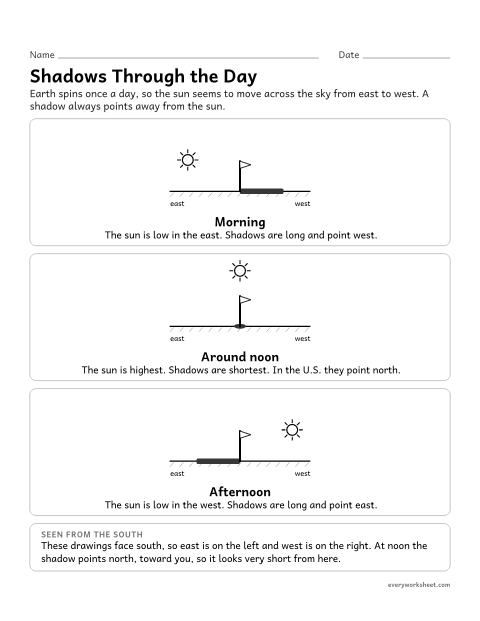
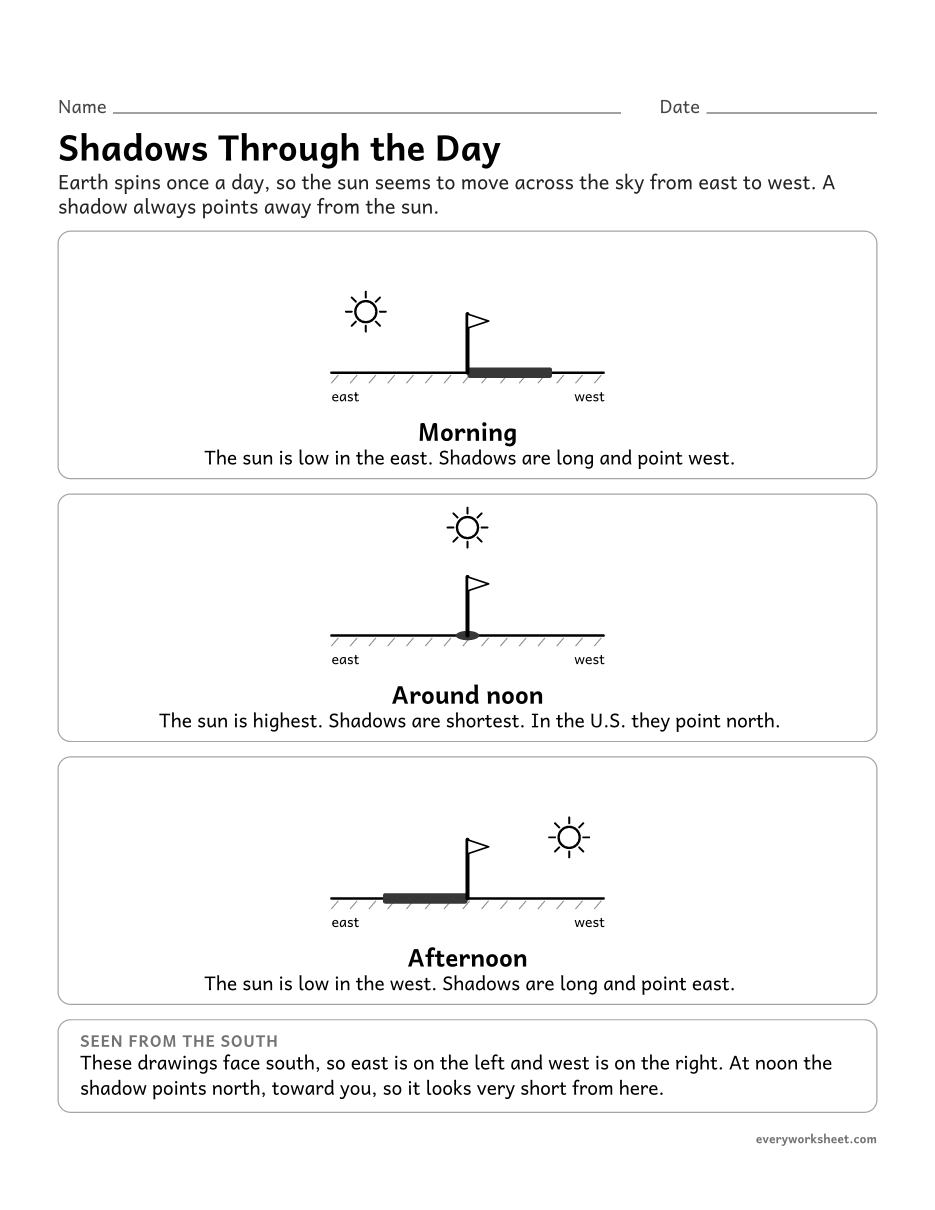
Shadows through the day poster for kids
Describing the daily pattern in the length and direction of shadows
1 page29 KB
How shadows change length and direction during the day, why day and night happen, and how day length changes with the seasons.
View largerDescribing the daily pattern in the length and direction of shadows
1 page29 KB
 View all 2 pages
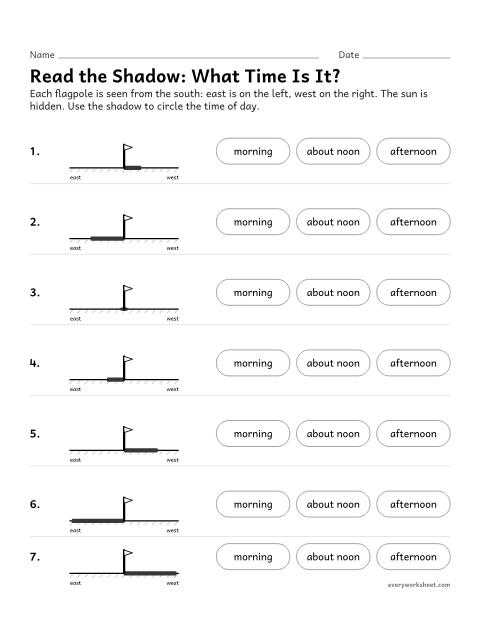
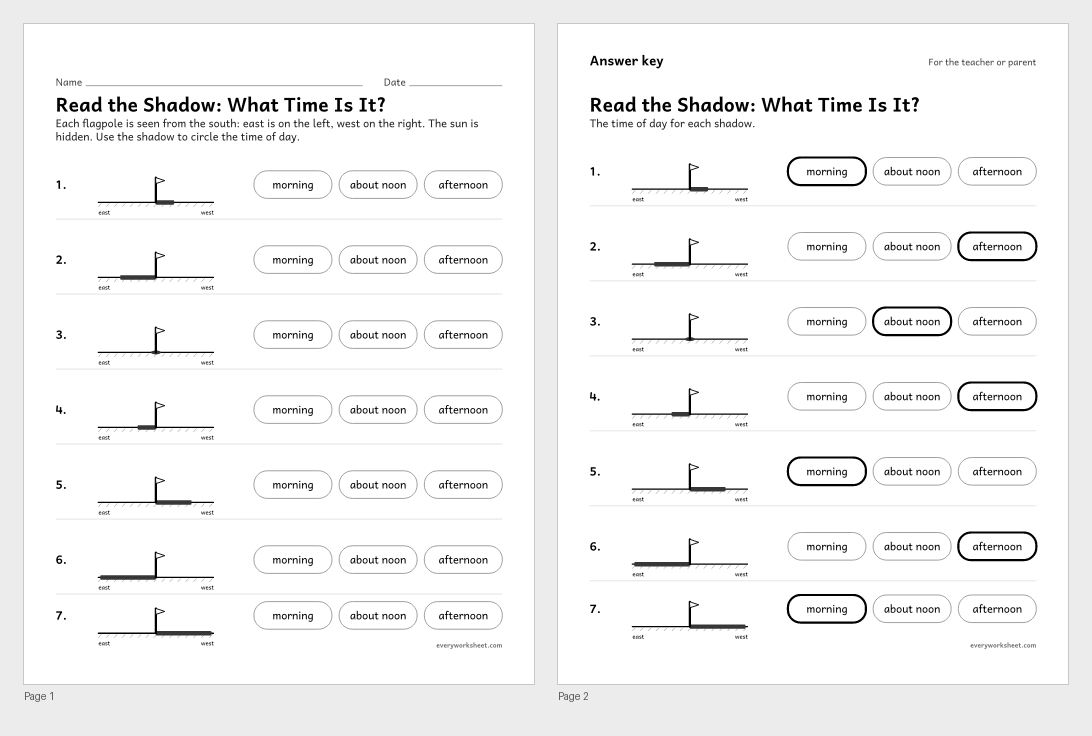
Using the length and direction of a shadow to tell the time of day
Answer key on page 2
2 pages45 KB
 View all 2 pages
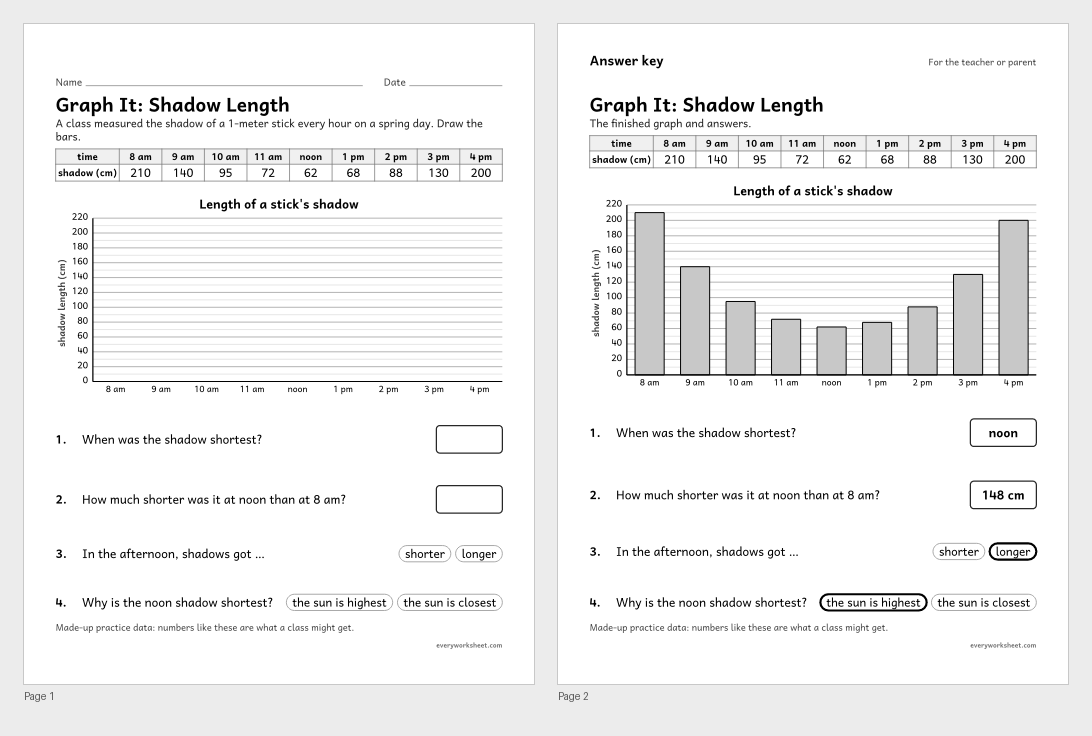
Graphing shadow lengths to find the daily pattern
Answer key on page 2
2 pages49 KB
 View larger
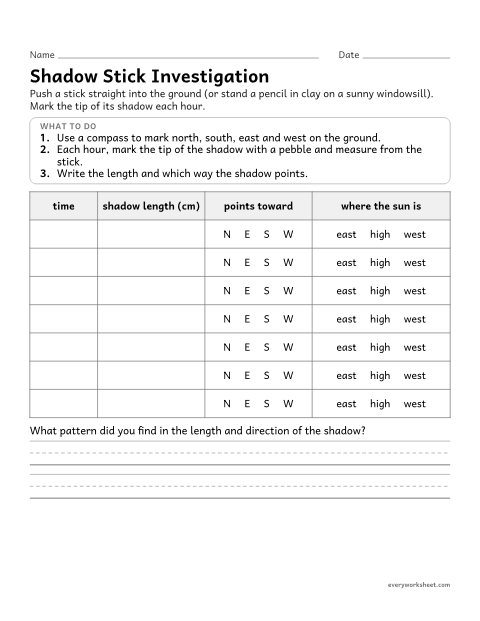
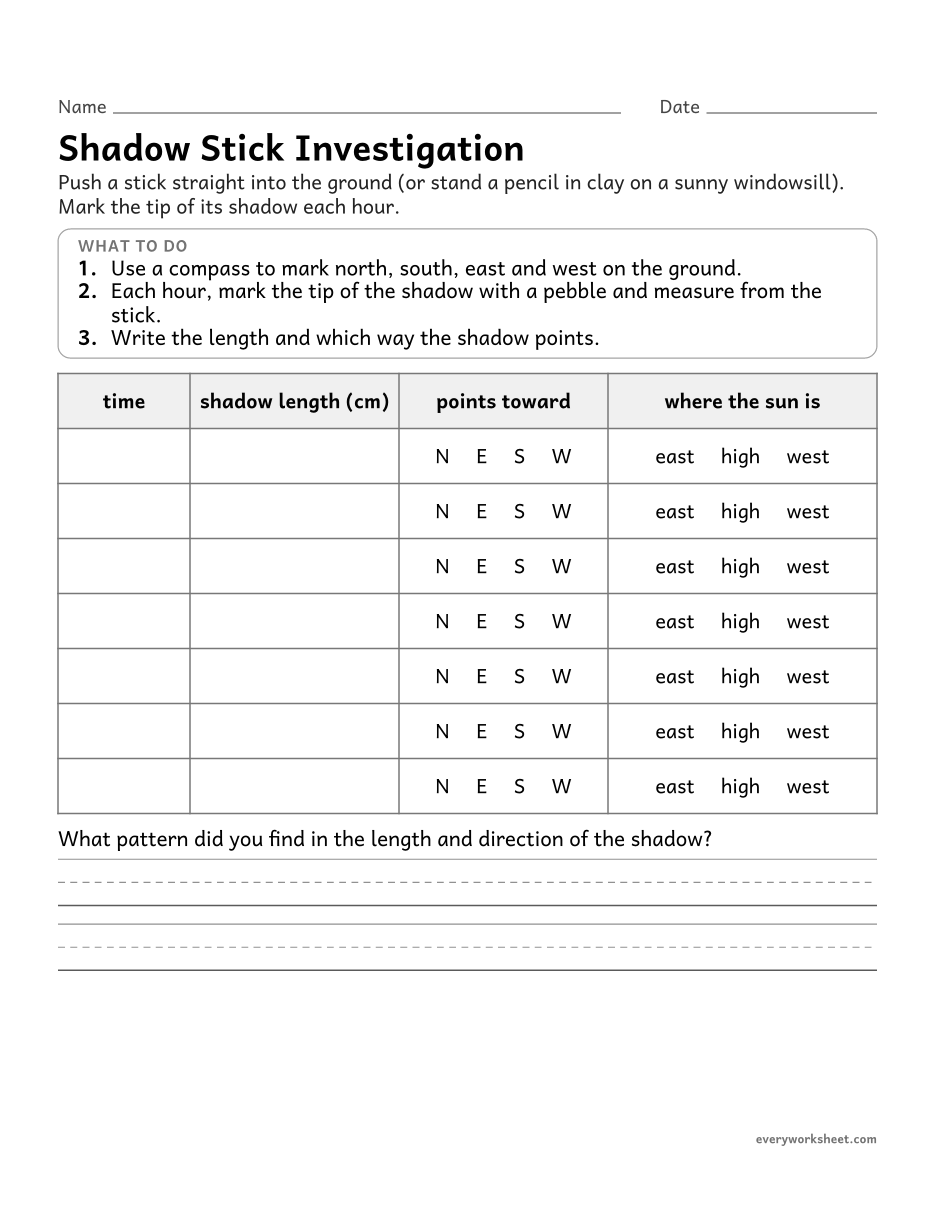
Measuring and recording the length and direction of shadows through a day
1 page36 KB
 View all 2 pages
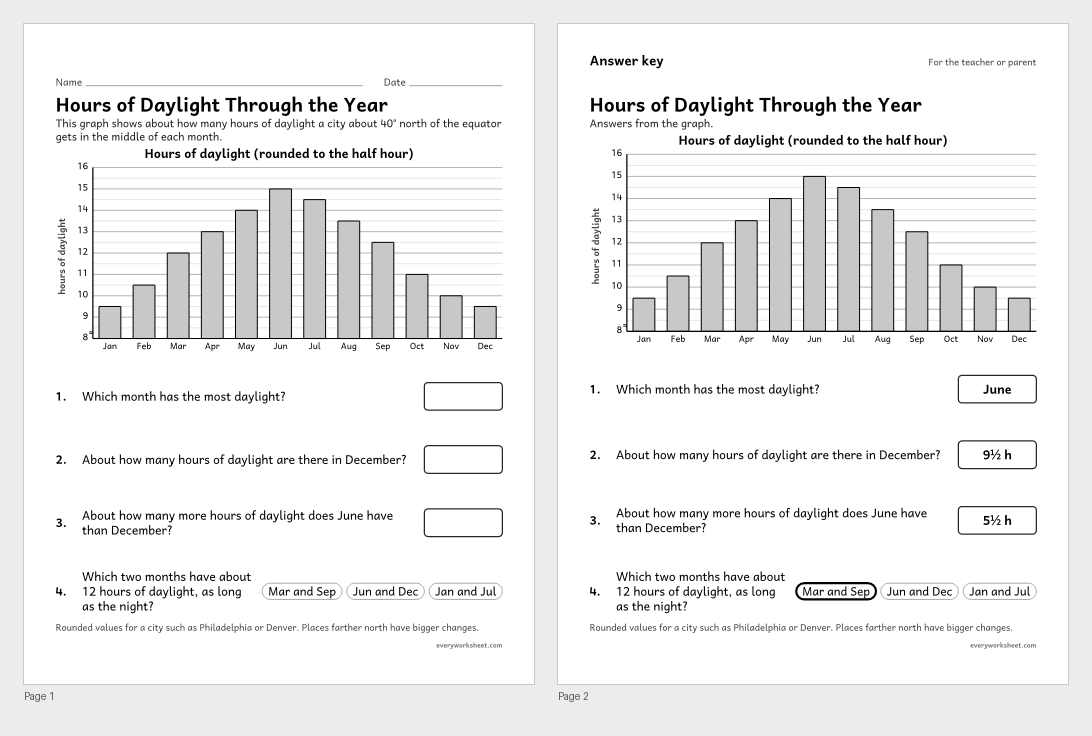
Reading a graph of day length to describe a seasonal pattern
Answer key on page 2
2 pages40 KB
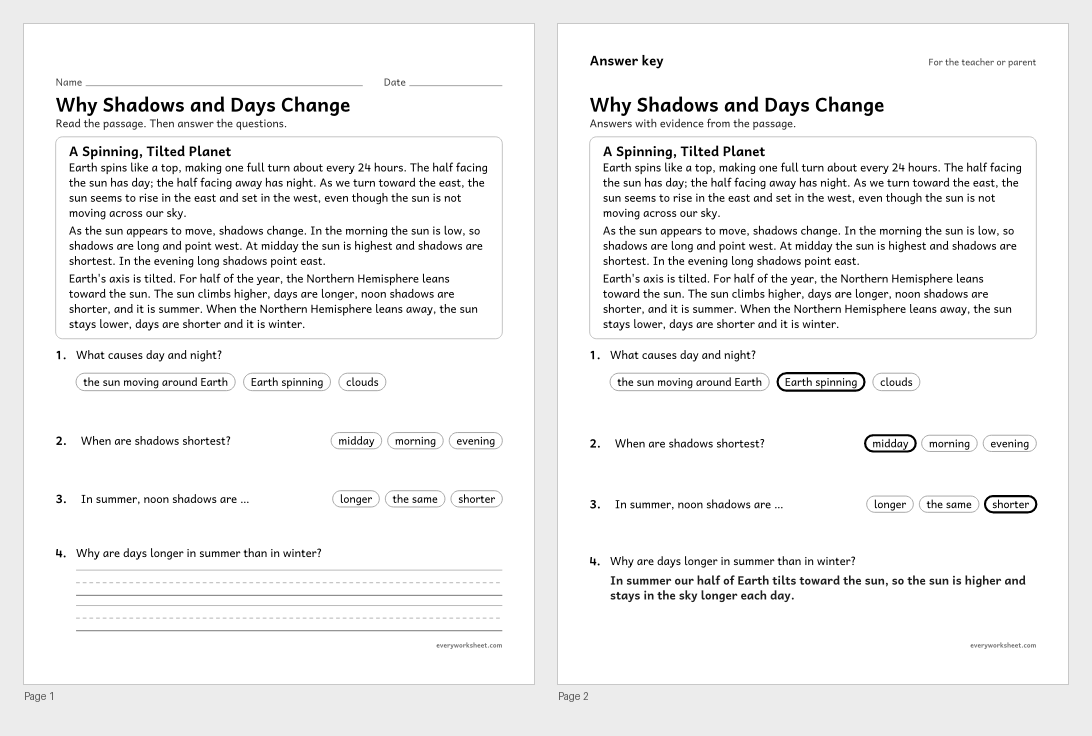 View all 2 pages
Explaining daily and seasonal patterns caused by Earth's spin and tilt
Answer key on page 2
2 pages39 KB
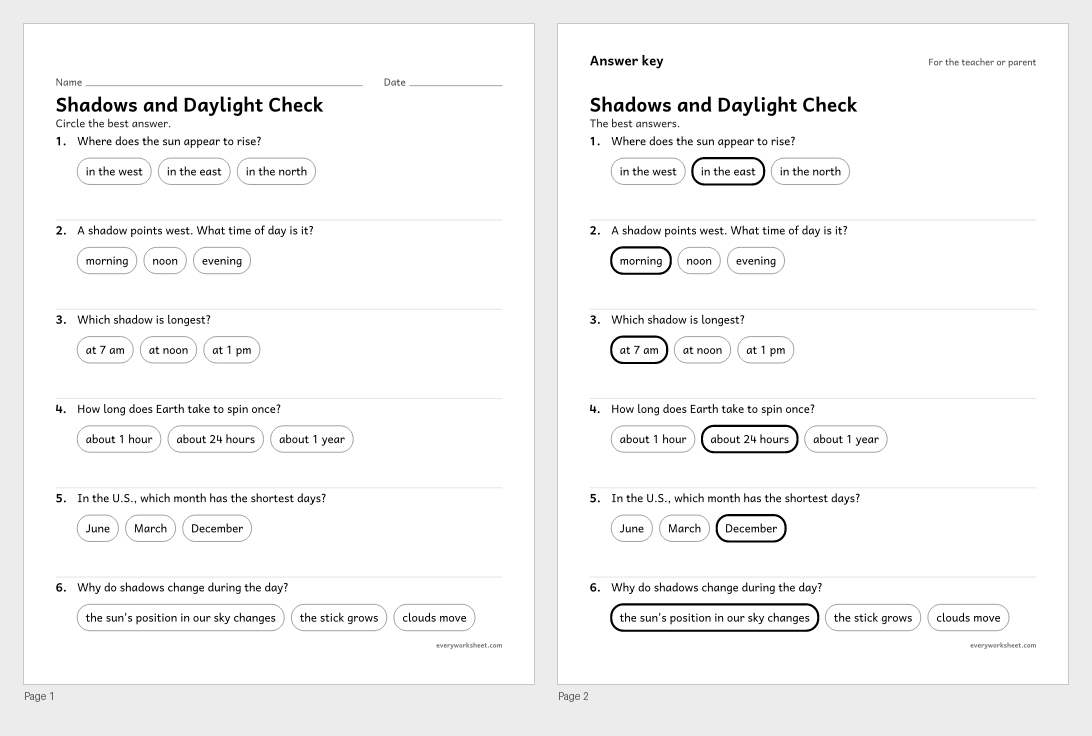 View all 2 pages
Reviewing patterns of shadows, day and night, and day length
Answer key on page 2
2 pages40 KB
Print at 100% (actual size) for the cleanest tracing lines.
Earth spins once a day, so the sun seems to move across the sky from east to west. Shadows always point away from the sun: long and pointing west in the morning, shortest at midday, long and pointing east in the evening. Because Earth's axis is tilted, days are longer in summer than in winter.
These shadows worksheets include a poster of shadows through the day, a tell-the-time-by-the-shadow page, a shadow length graph, a shadow stick record sheet for a real investigation, a graph of hours of daylight by month, a reading passage and a quiz.
Every page is black and white, prints on US Letter or A4, and every page with right answers has an answer key on page 2.
NGSS 5-ESS1-2Represent data in graphical displays to reveal patterns of daily changes in length and direction of shadows, day and night, and the seasonal appearance of some stars in the night sky.CCSS.ELA-LITERACY.RI.5.3Explain the relationships or interactions between two or more individuals, events, ideas, or concepts in a historical, scientific, or technical text based on specific information in the text.As Earth spins, the sun's position in our sky changes. When the sun is low, shadows are long; when it is high at midday, they are short.
Away from the sun: west in the morning, east in the afternoon, and north at noon in the United States.
Earth's axis is tilted. In summer our half of Earth leans toward the sun, so the sun climbs higher and stays up longer.