 View larger
Six simple machines poster for kids
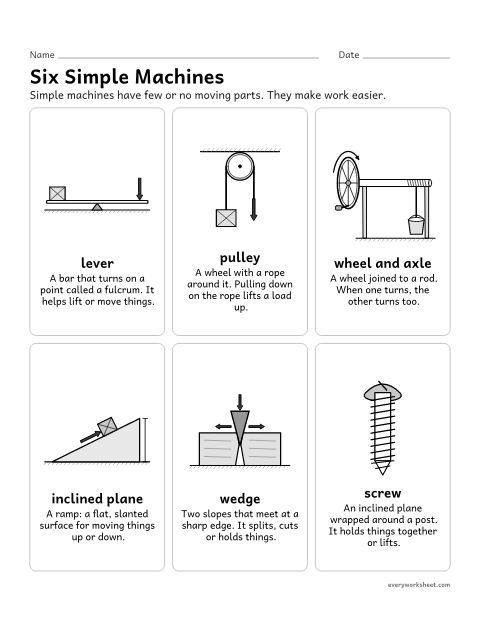
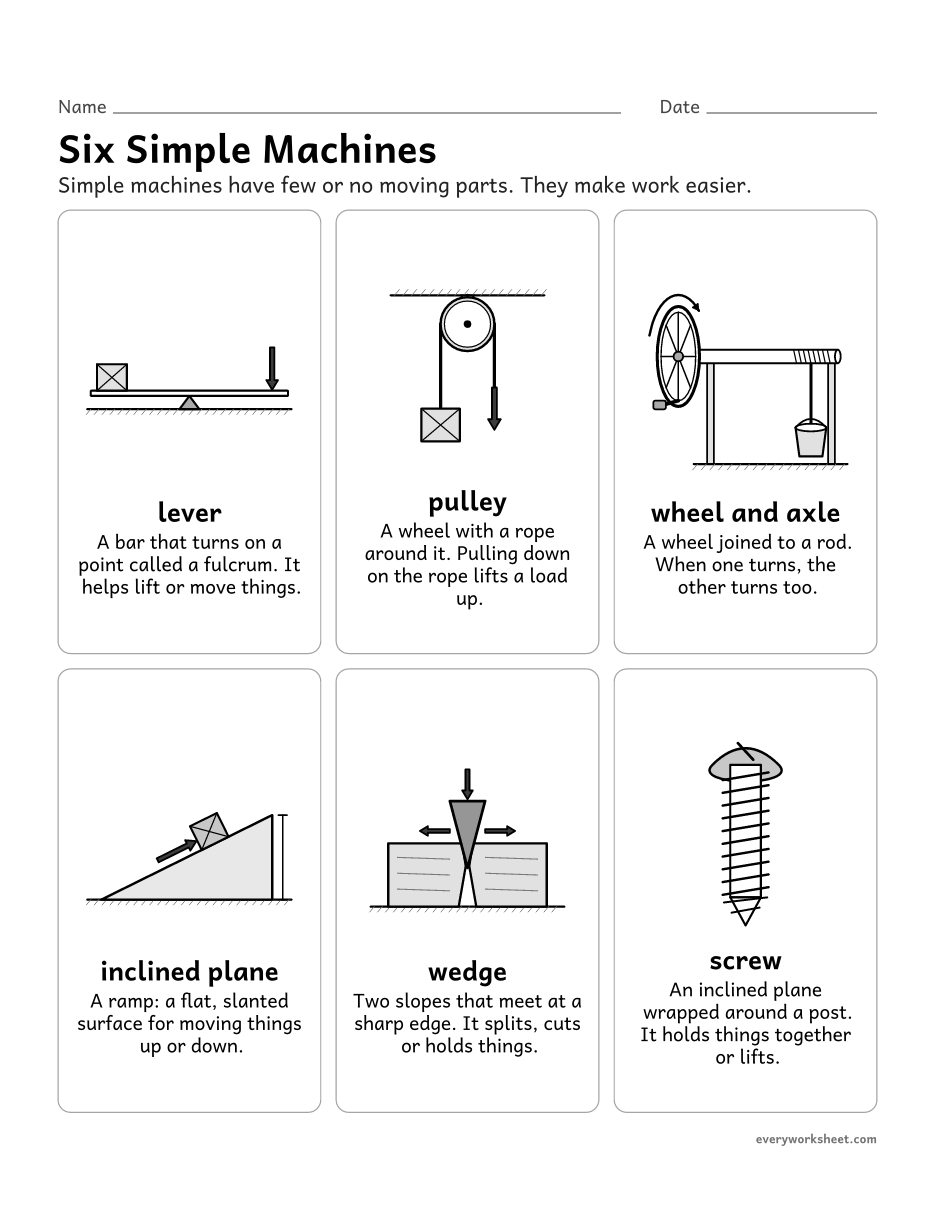
Naming the six simple machines and what they do
1 page32 KB
The six simple machines with labeled diagrams, everyday examples, a lever's parts and classes, ramp and pulley data and compound machines.
View largerNaming the six simple machines and what they do
1 page32 KB
 View all 2 pages
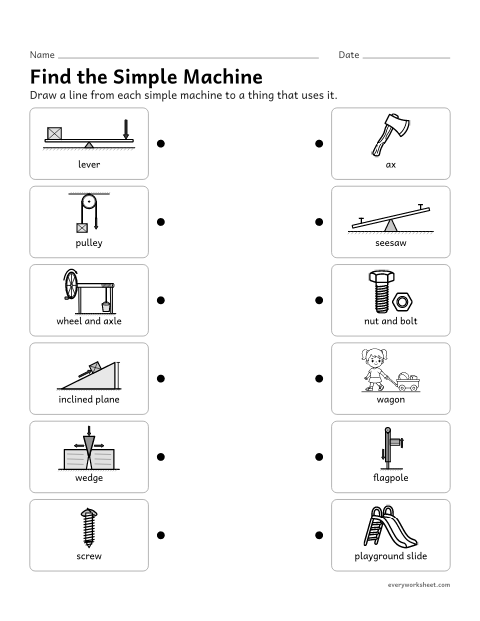
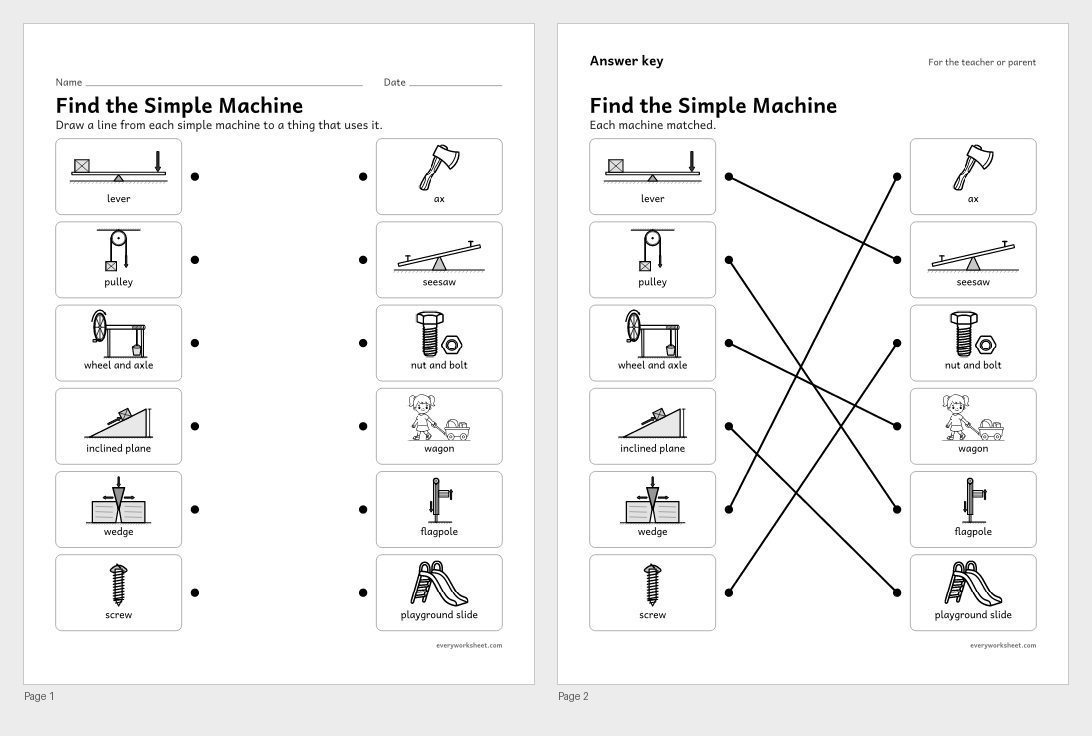
Matching each simple machine to an everyday example
Answer key on page 2
2 pages219 KB
 View all 2 pages
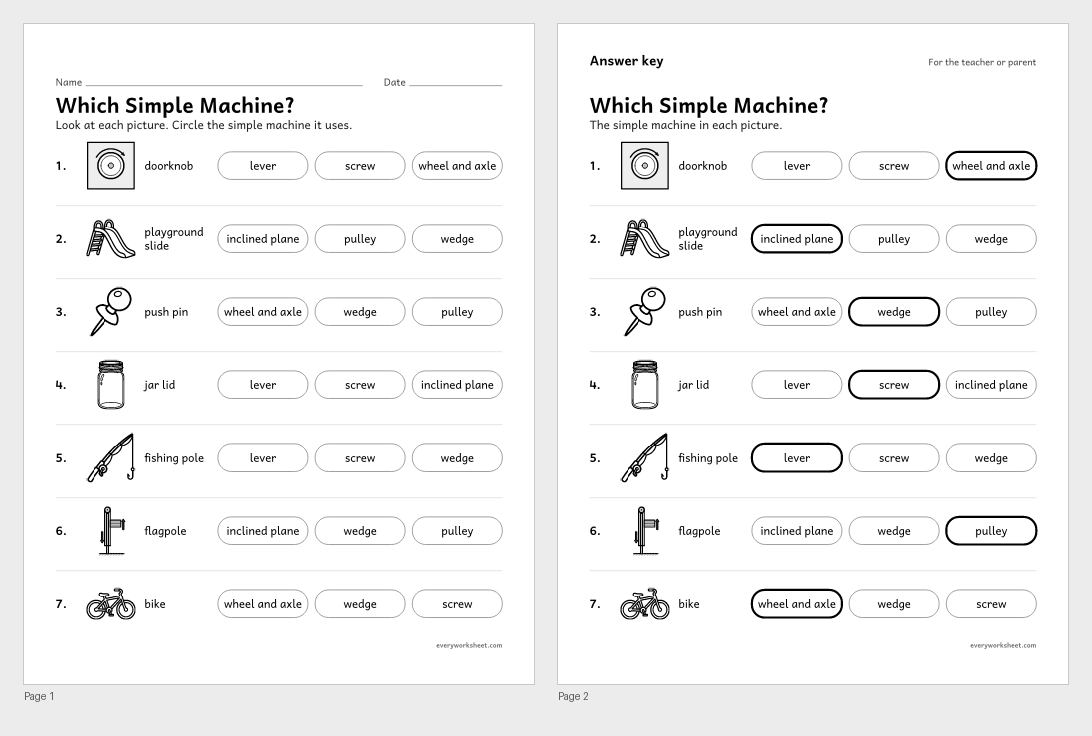
Identifying simple machines in everyday objects
Answer key on page 2
2 pages223 KB
 View larger
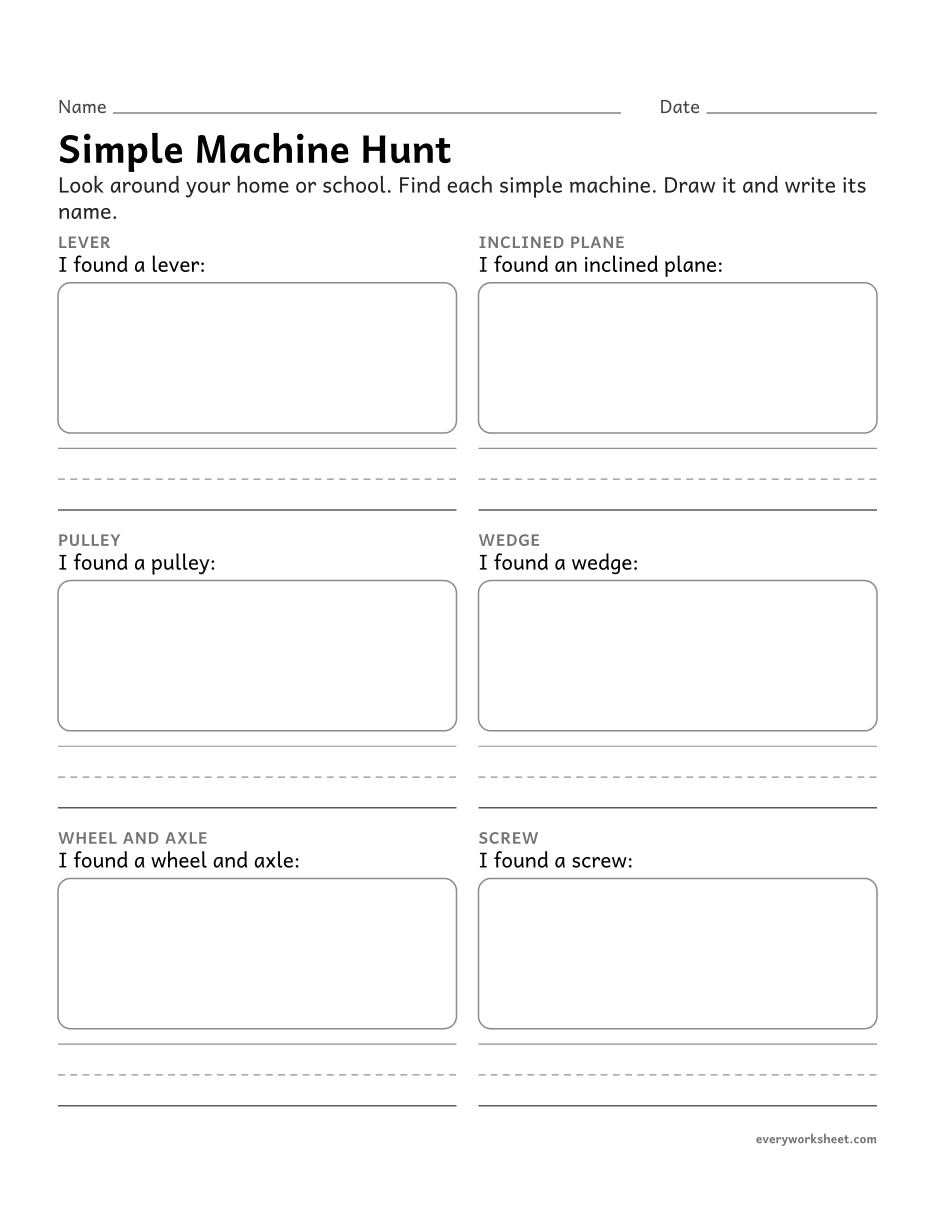
Finding and drawing simple machines at home and school
1 page27 KB
 View all 2 pages
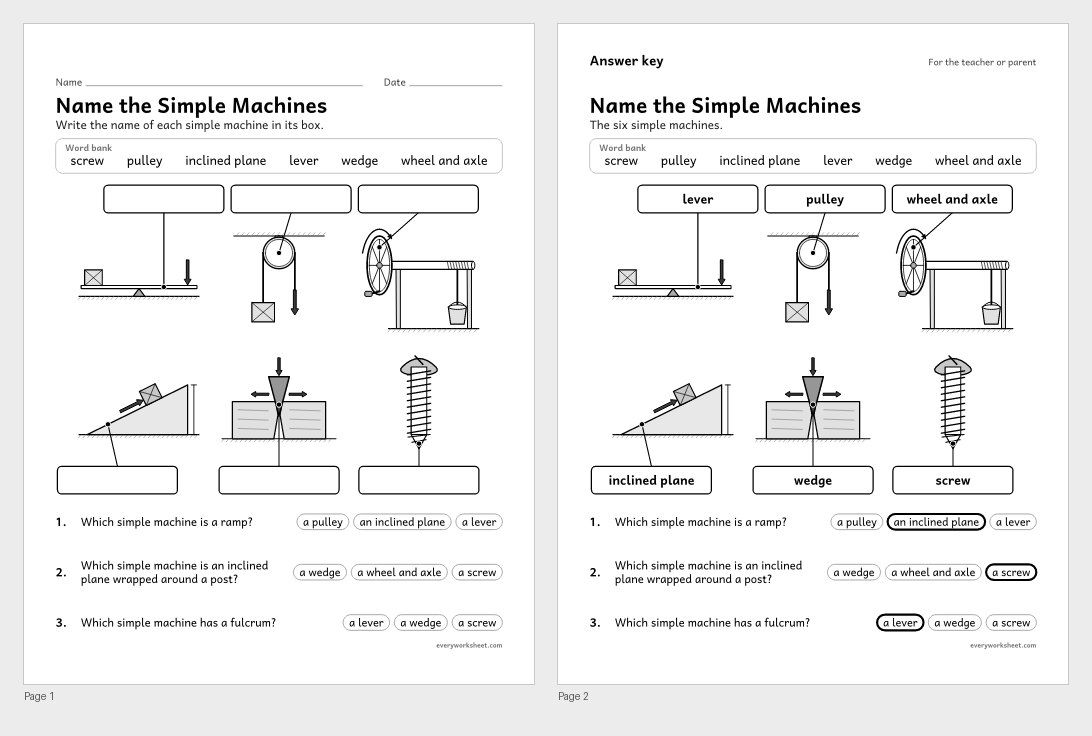
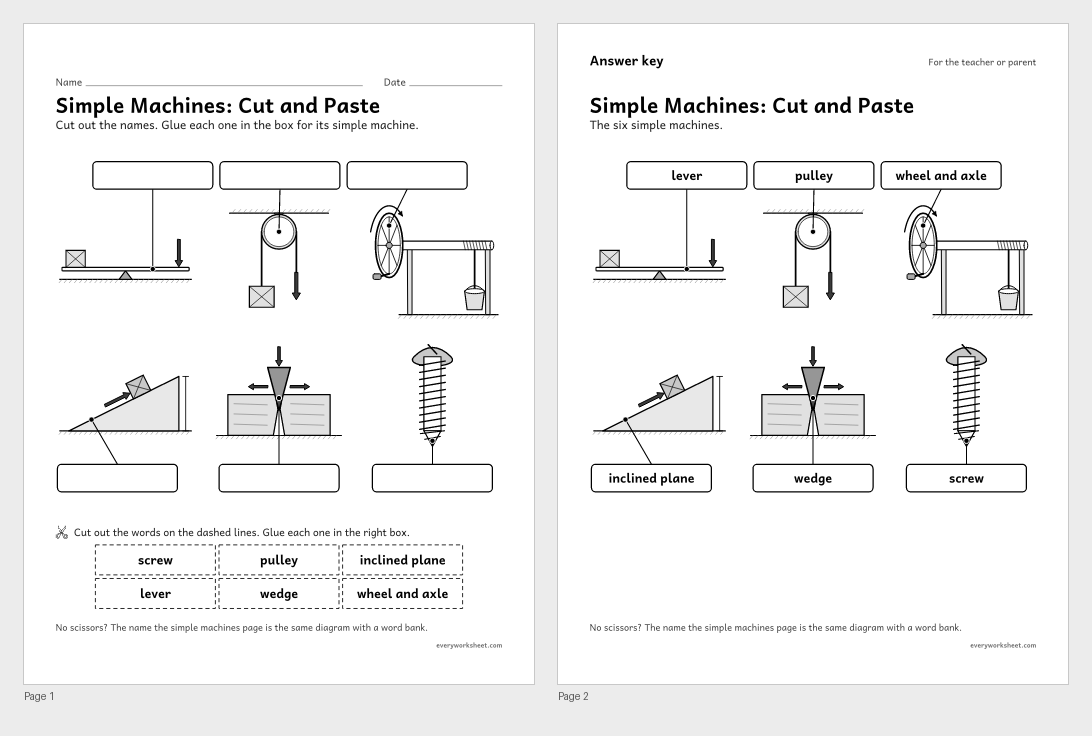
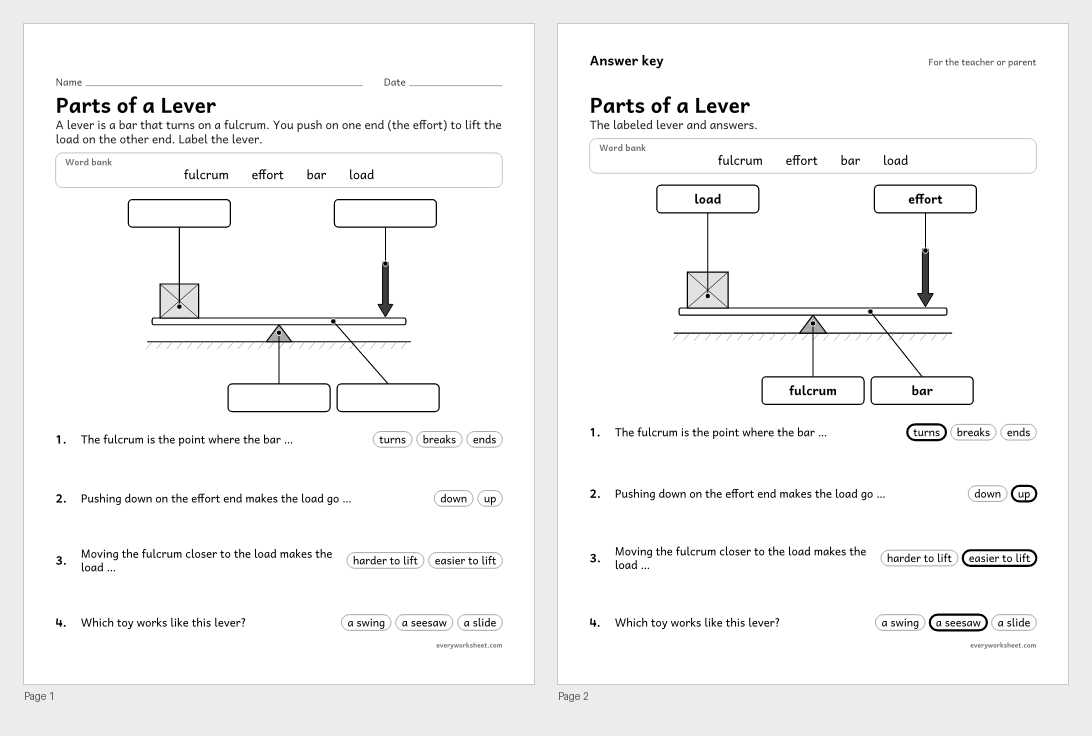
Identifying the six simple machines from diagrams
Answer key on page 2
2 pages43 KB
 View all 2 pages
Identifying the six simple machines from diagrams
Answer key on page 2
2 pages65 KB
 View all 2 pages
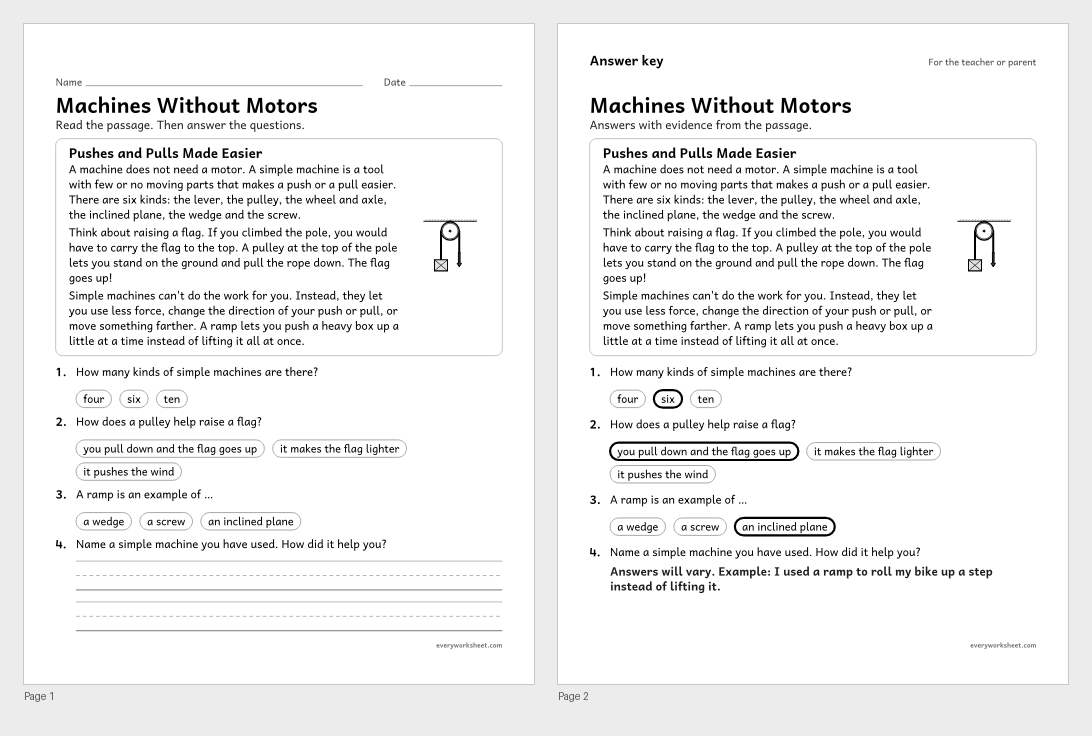
Naming the parts of a lever and explaining how it works
Answer key on page 2
2 pages39 KB
 View all 2 pages
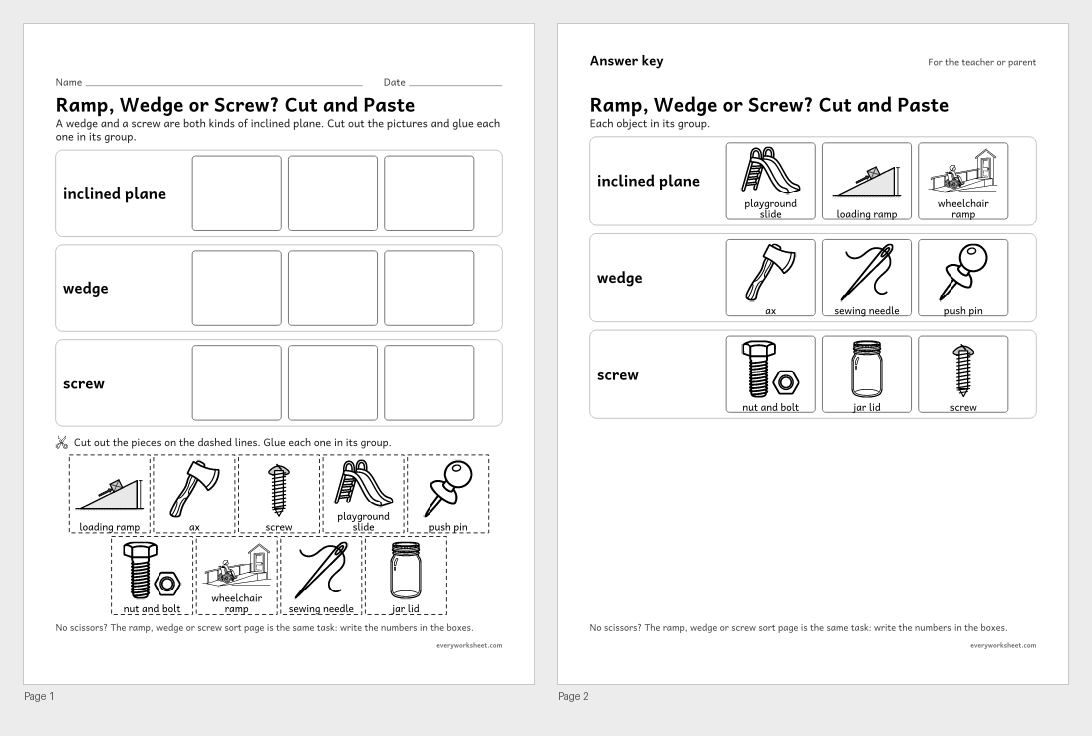
Explaining how simple machines make work easier from a nonfiction text
Answer key on page 2
2 pages41 KB
 View all 2 pages
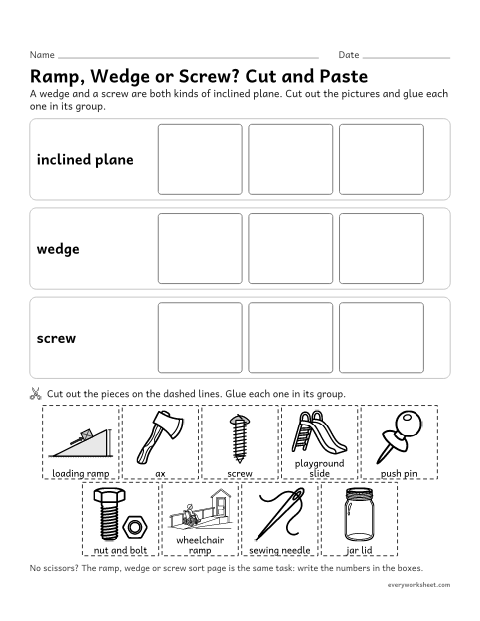
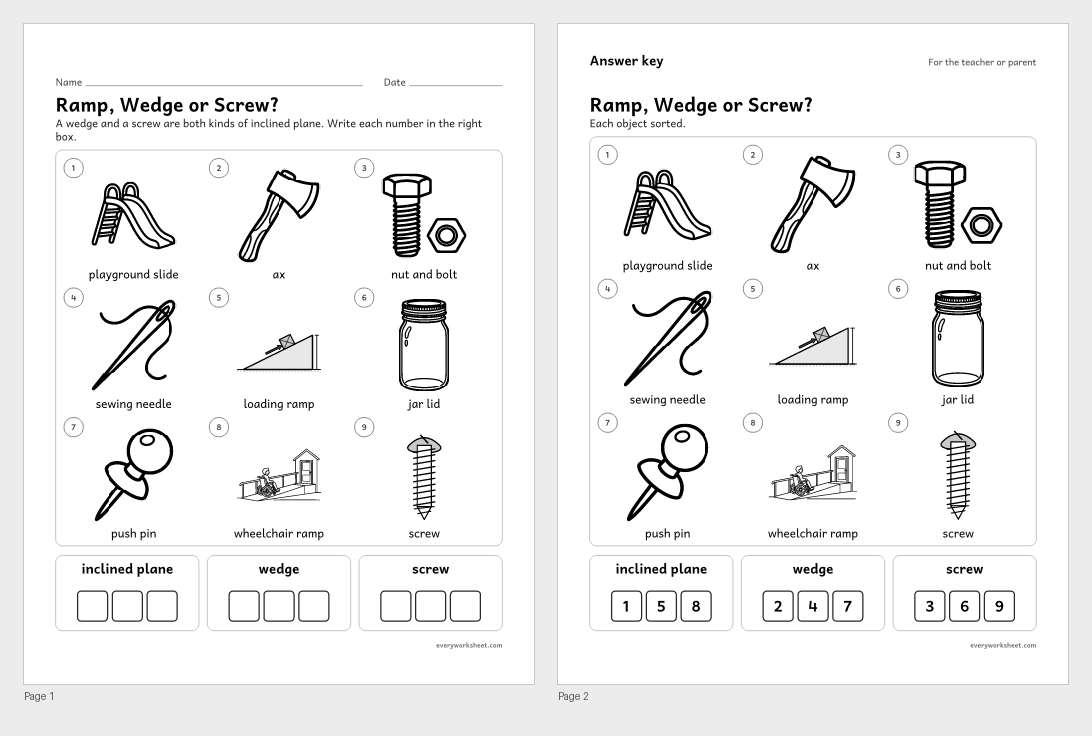
Classifying everyday objects as inclined planes, wedges or screws
Answer key on page 2
2 pages315 KB
 View all 2 pages
Classifying everyday objects as inclined planes, wedges or screws
Answer key on page 2
2 pages291 KB
 View all 2 pages
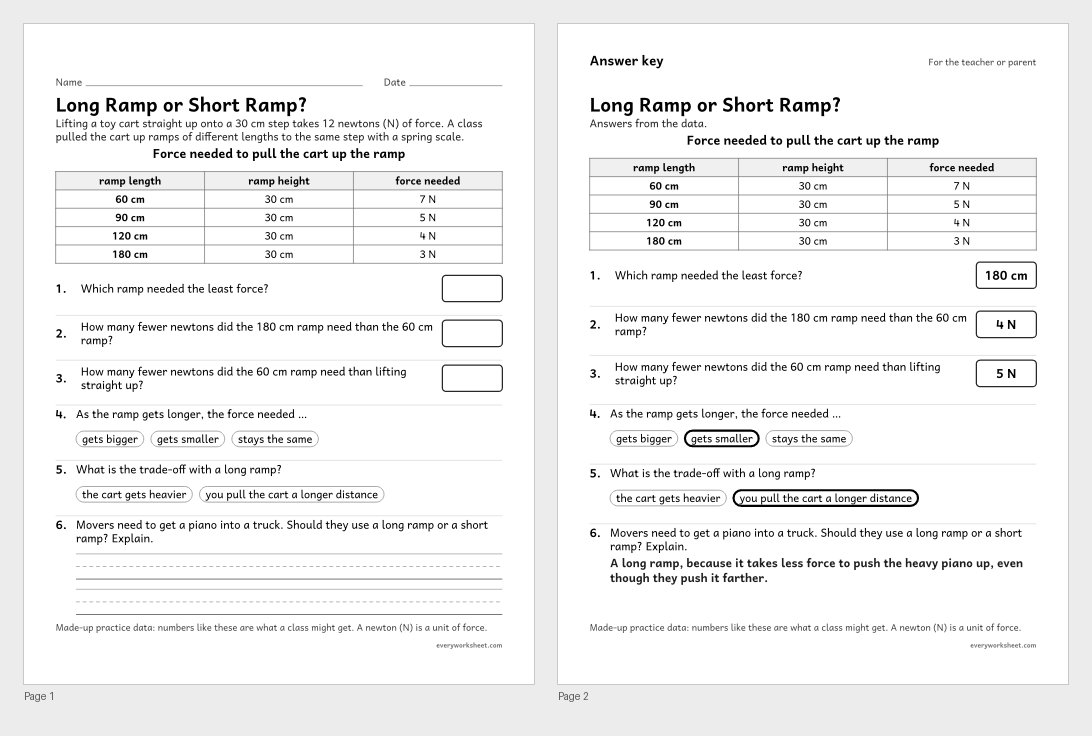
Using data to describe how the length of a ramp changes the force needed
Answer key on page 2
2 pages49 KB
 View all 2 pages
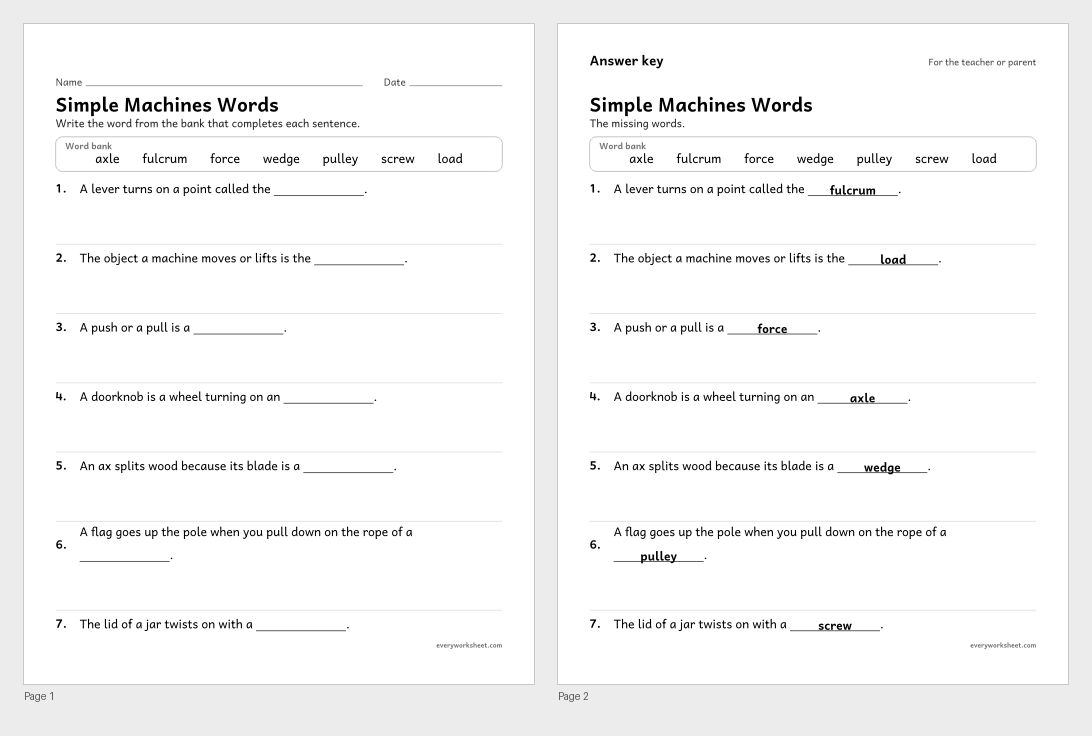
Using vocabulary for simple machines
Answer key on page 2
2 pages38 KB
 View larger
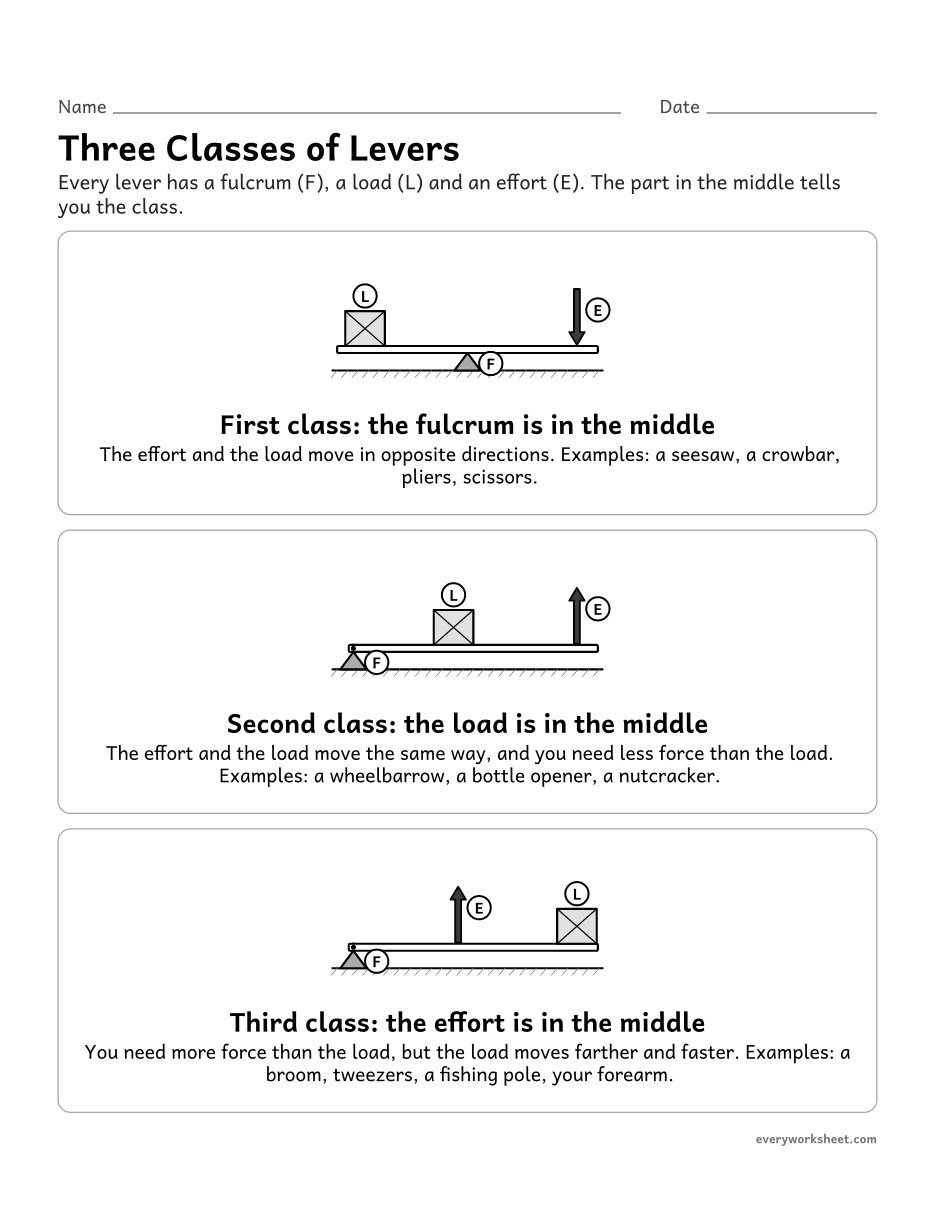
Describing first, second and third class levers
1 page29 KB
 View all 2 pages
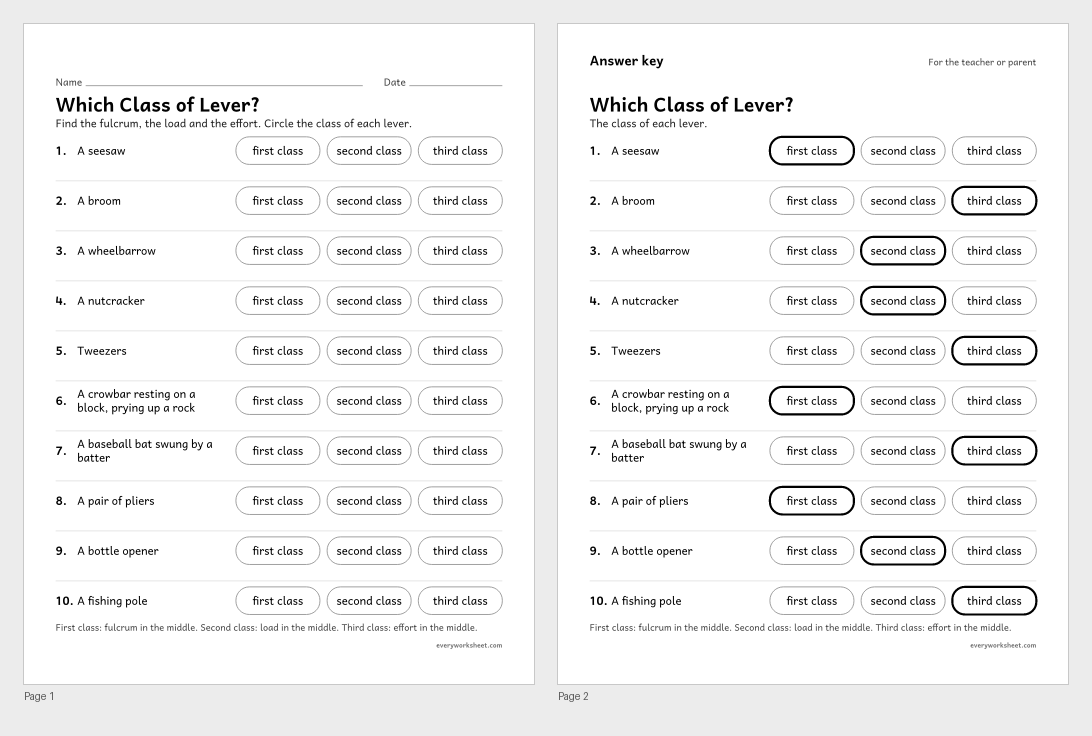
Classifying levers by the positions of fulcrum, load and effort
Answer key on page 2
2 pages49 KB
 View all 2 pages
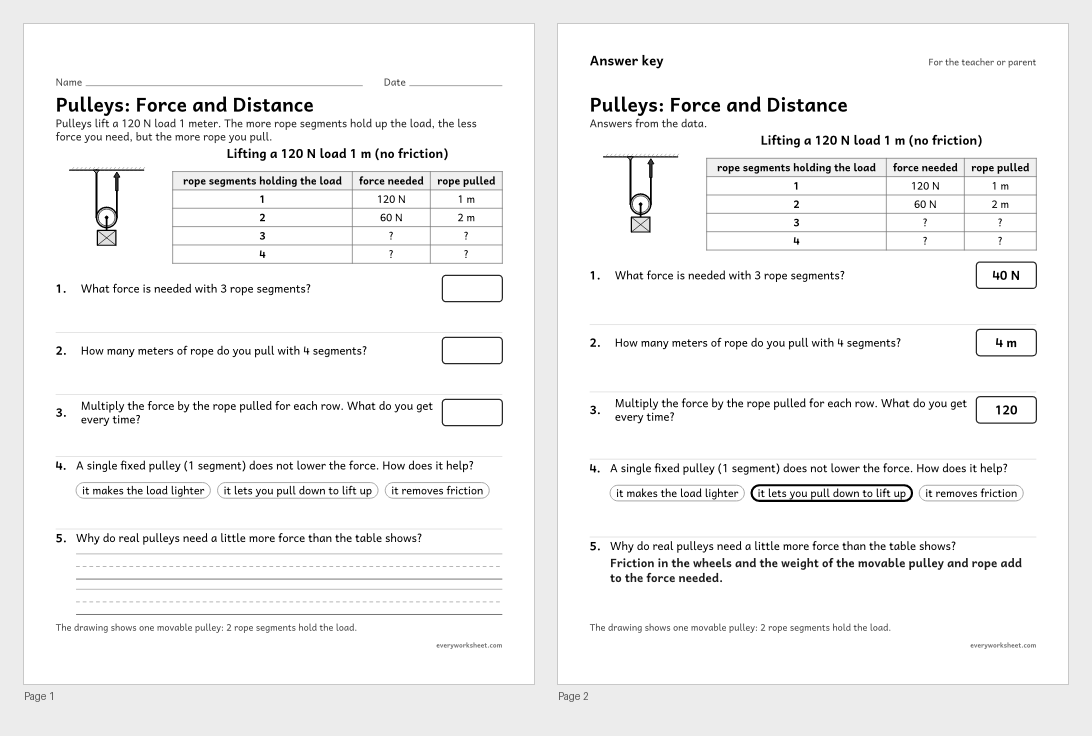
Using data to explain how pulleys trade force for distance
Answer key on page 2
2 pages48 KB
 View all 2 pages
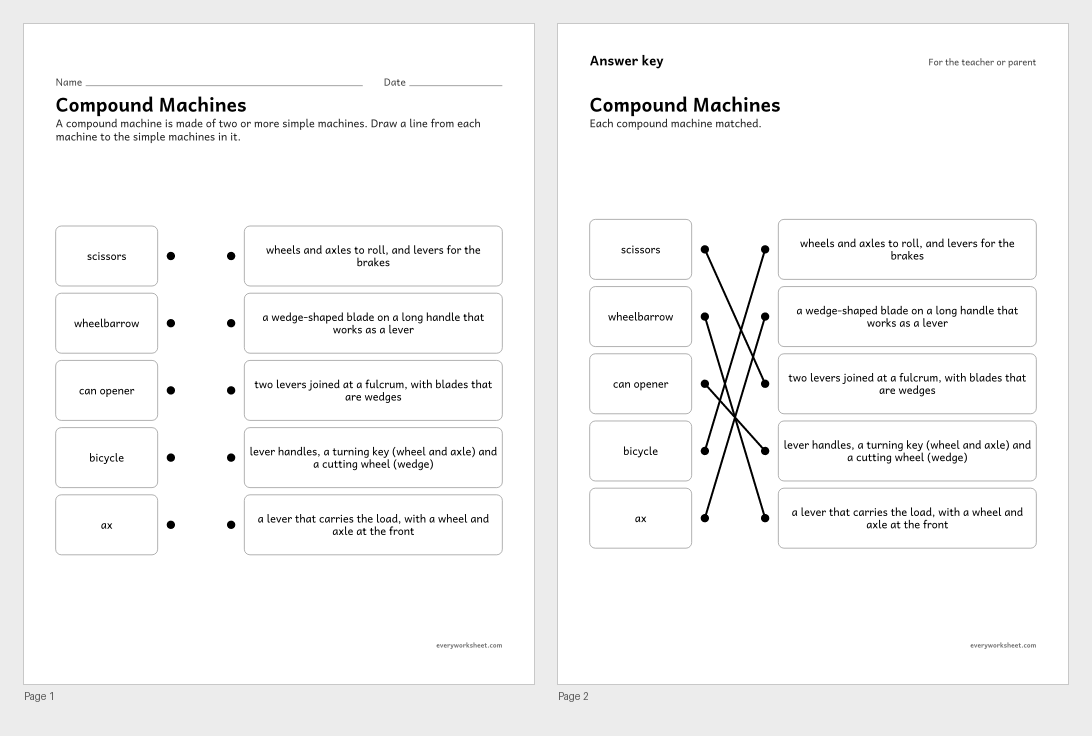
Identifying the simple machines that make up compound machines
Answer key on page 2
2 pages28 KB
 View all 2 pages
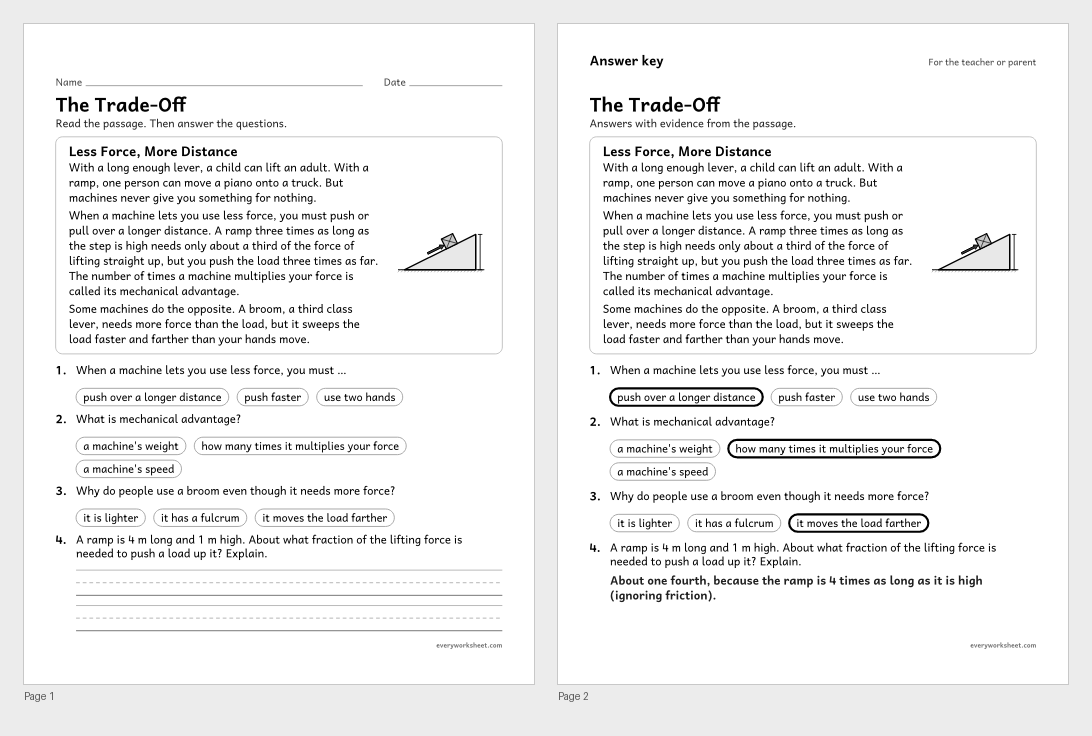
Explaining how simple machines trade force for distance
Answer key on page 2
2 pages41 KB
Print at 100% (actual size) for the cleanest tracing lines.
A simple machine is a tool with few or no moving parts that makes a push or a pull easier. There are six: the lever, the pulley, the wheel and axle, the inclined plane, the wedge and the screw. A seesaw, a flagpole, a doorknob, a slide, an ax and a jar lid all use them.
These simple machines worksheets grow with your child. Second graders meet the six machines on a poster and find them in everyday things. Third graders label the six machines and the parts of a lever and read how machines make work easier. Fourth graders sort ramps, wedges and screws and use ramp data to see the trade-off between force and distance. Fifth graders classify levers, analyze pulley data and take apart compound machines.
Every diagram is drawn in black and white. Cut and paste pages come with a no-scissors twin, and pages with right answers have an answer key on page 2.
NGSS 3-PS2-1Plan and conduct an investigation to provide evidence of the effects of balanced and unbalanced forces on the motion of an object.CCSS.ELA-LITERACY.RI.2.7Explain how specific images (e.g., a diagram showing how a machine works) contribute to and clarify a text.CCSS.ELA-LITERACY.RI.3.7Use information gained from illustrations (e.g., maps, photographs) and the words in a text to demonstrate understanding of the text (e.g., where, when, why, and how key events occur).CCSS.ELA-LITERACY.RI.4.7Interpret information presented visually, orally, or quantitatively (e.g., in charts, graphs, diagrams, time lines, animations, or interactive elements on Web pages) and explain how the information contributes to an understanding of the text in which it appears.CCSS.ELA-LITERACY.RI.5.3Explain the relationships or interactions between two or more individuals, events, ideas, or concepts in a historical, scientific, or technical text based on specific information in the text.The lever, the pulley, the wheel and axle, the inclined plane, the wedge and the screw.
A seesaw or bottle opener (lever), window blinds or a flagpole (pulley), a doorknob (wheel and axle), a ramp (inclined plane), a knife or ax (wedge) and a jar lid (screw).
First class has the fulcrum in the middle (a seesaw). Second class has the load in the middle (a wheelbarrow). Third class has the effort in the middle (a broom).
No. They let you use less force, change its direction or move something farther, but you trade force for distance. Friction means you always put in a little more than you get out.