 View larger
Earth's spheres diagram (Labeled) for kids
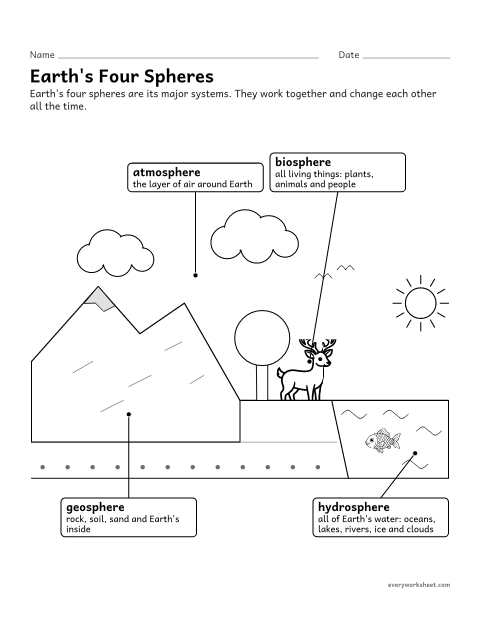
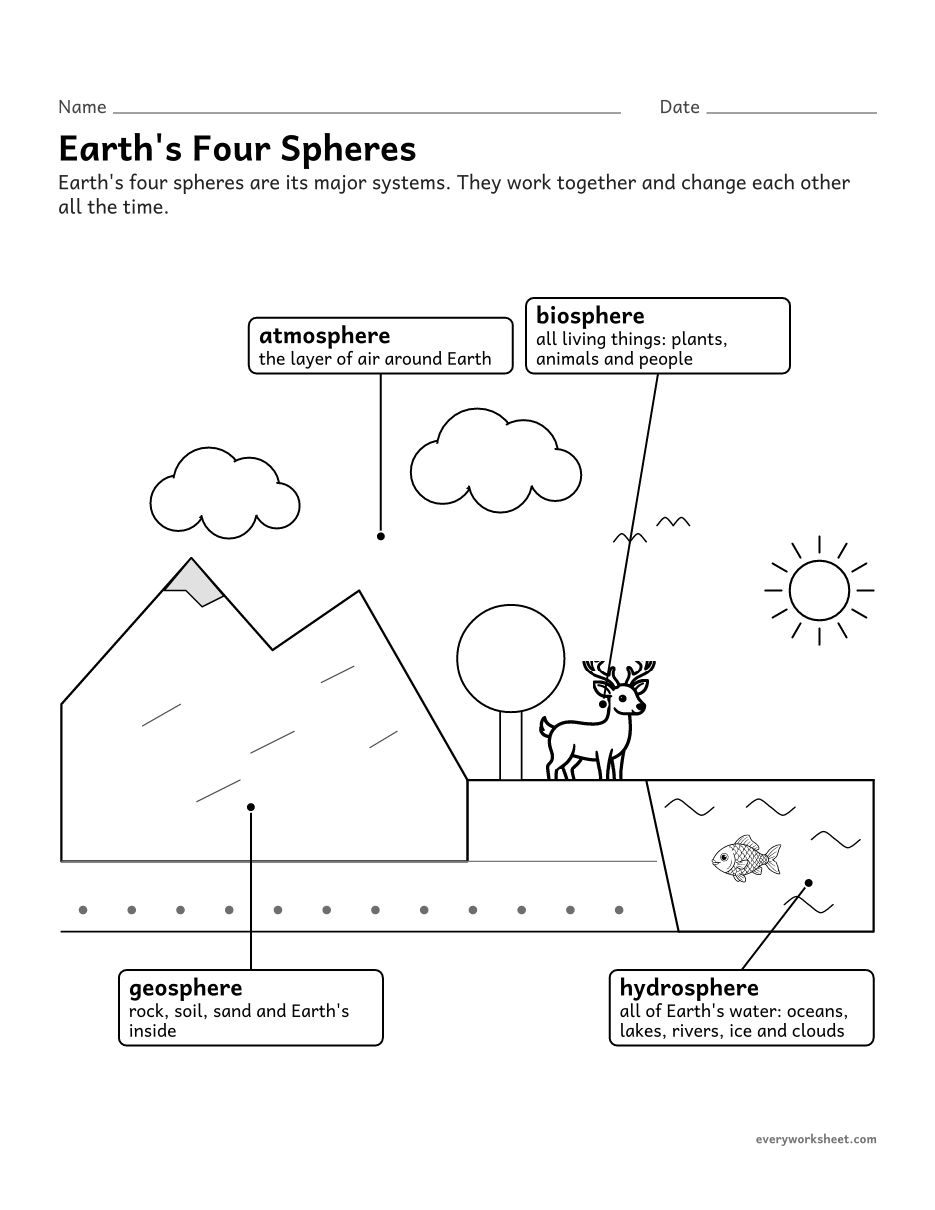
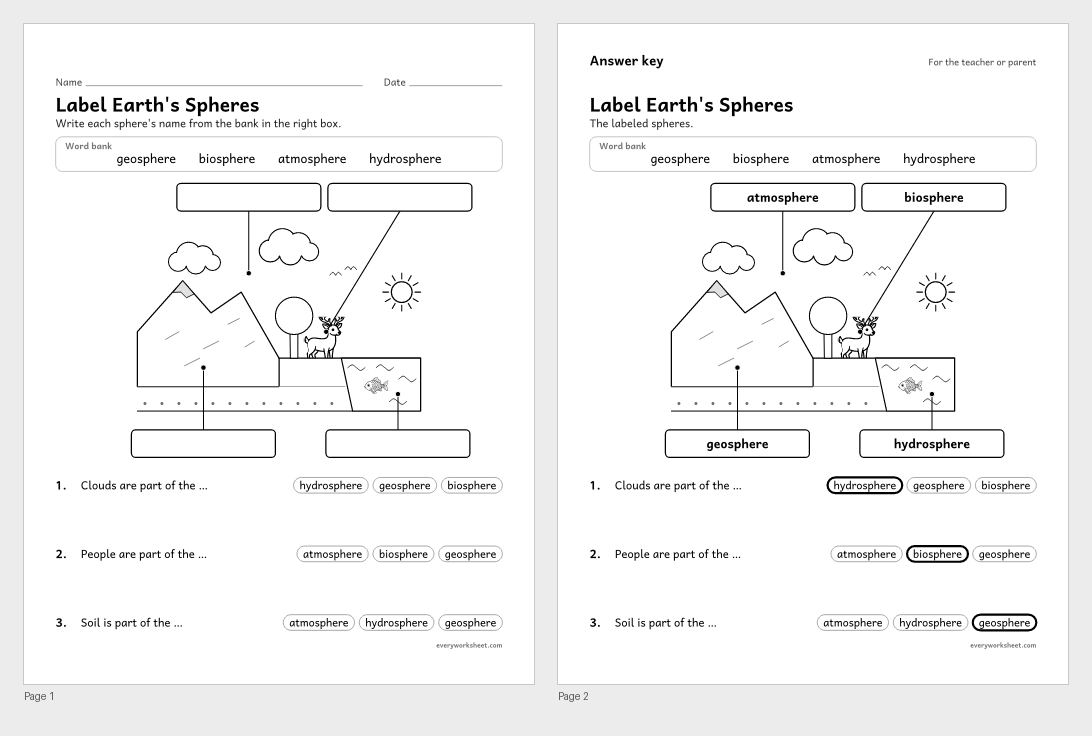
Describing Earth's four major systems with a labeled model
1 page59 KB
The geosphere, hydrosphere, atmosphere and biosphere, how they interact, and how much of Earth's water is salt water and fresh water.
View largerDescribing Earth's four major systems with a labeled model
1 page59 KB
 View all 2 pages
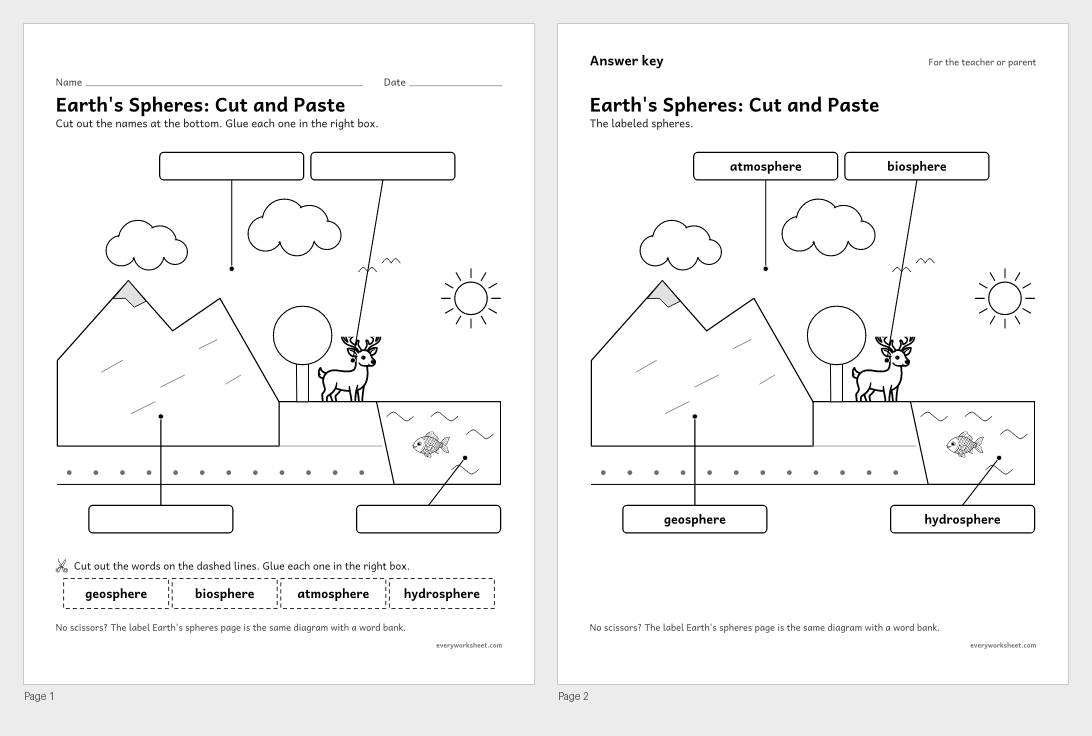
Identifying Earth's four major systems
Answer key on page 2
2 pages100 KB
 View all 2 pages
Identifying Earth's four major systems
Answer key on page 2
2 pages121 KB
 View all 2 pages
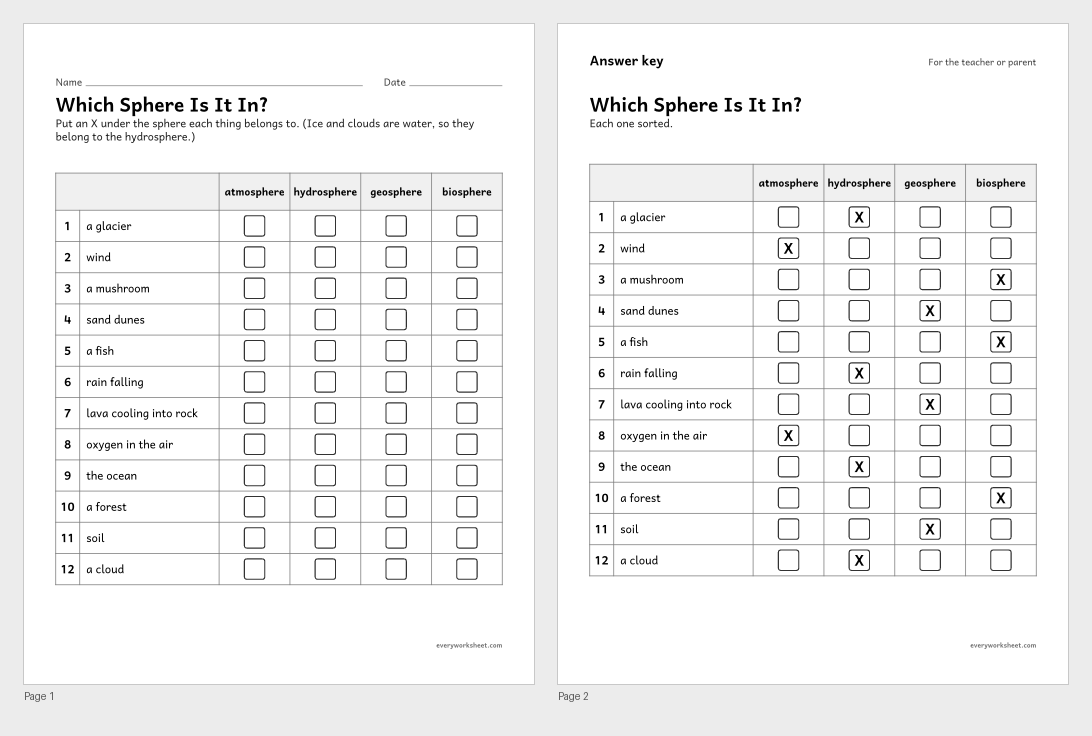
Classifying parts of Earth into the four spheres
Answer key on page 2
2 pages56 KB
 View all 2 pages
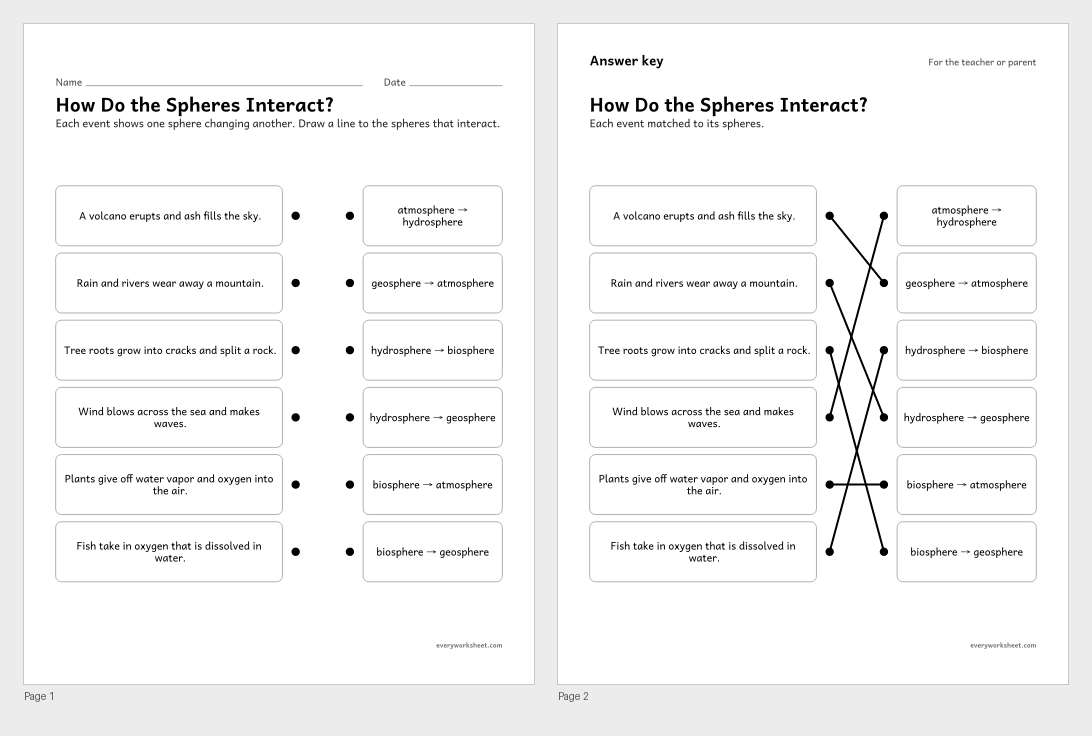
Describing ways the geosphere, biosphere, hydrosphere and atmosphere interact
Answer key on page 2
2 pages29 KB
 View all 2 pages
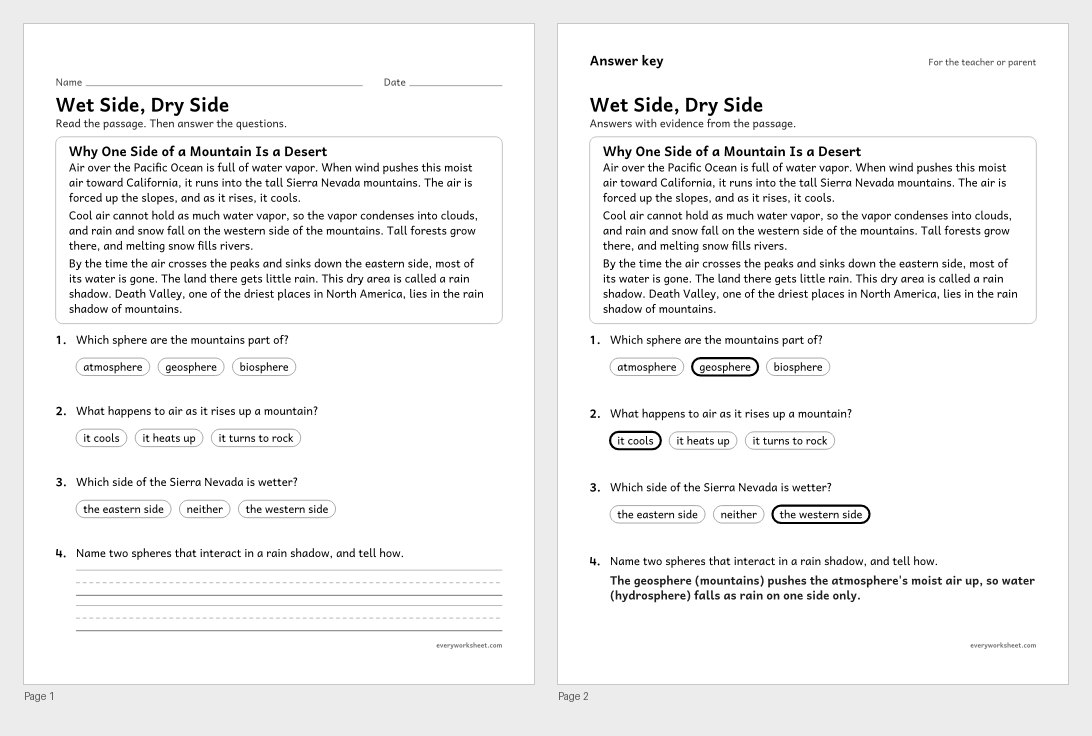
Explaining how the geosphere, hydrosphere and atmosphere interact to shape climate
Answer key on page 2
2 pages39 KB
 View all 2 pages
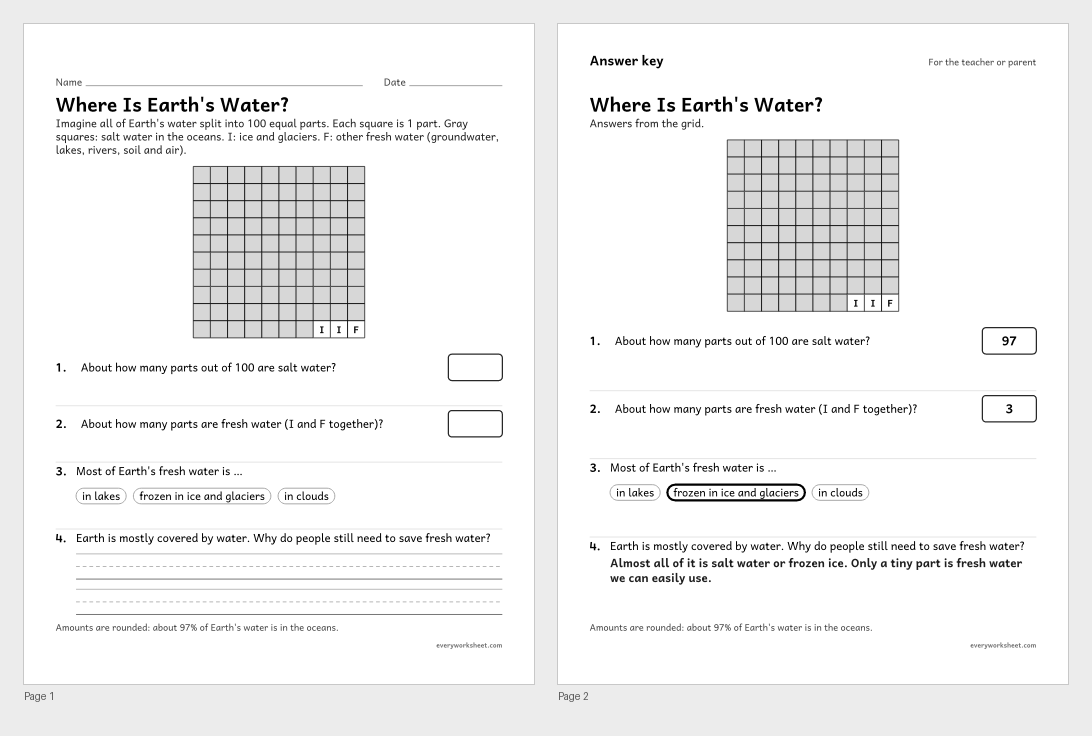
Describing the amounts of salt water and fresh water on Earth
Answer key on page 2
2 pages38 KB
 View all 2 pages
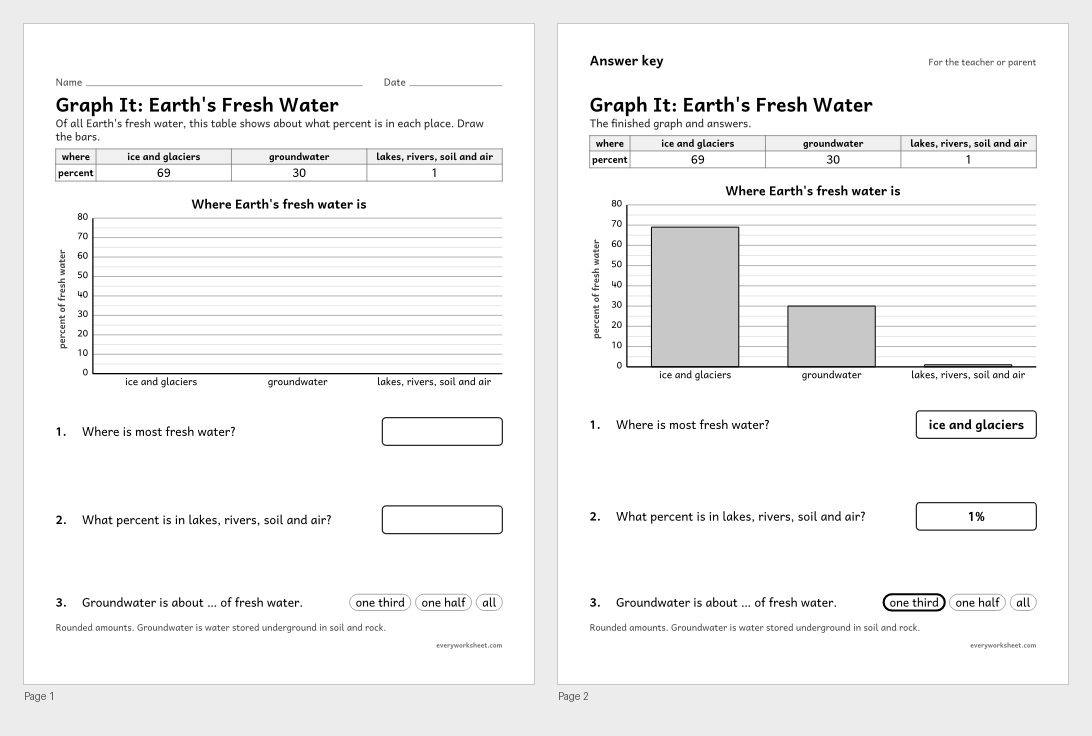
Graphing the amounts of fresh water in different reservoirs
Answer key on page 2
2 pages41 KB
 View all 2 pages
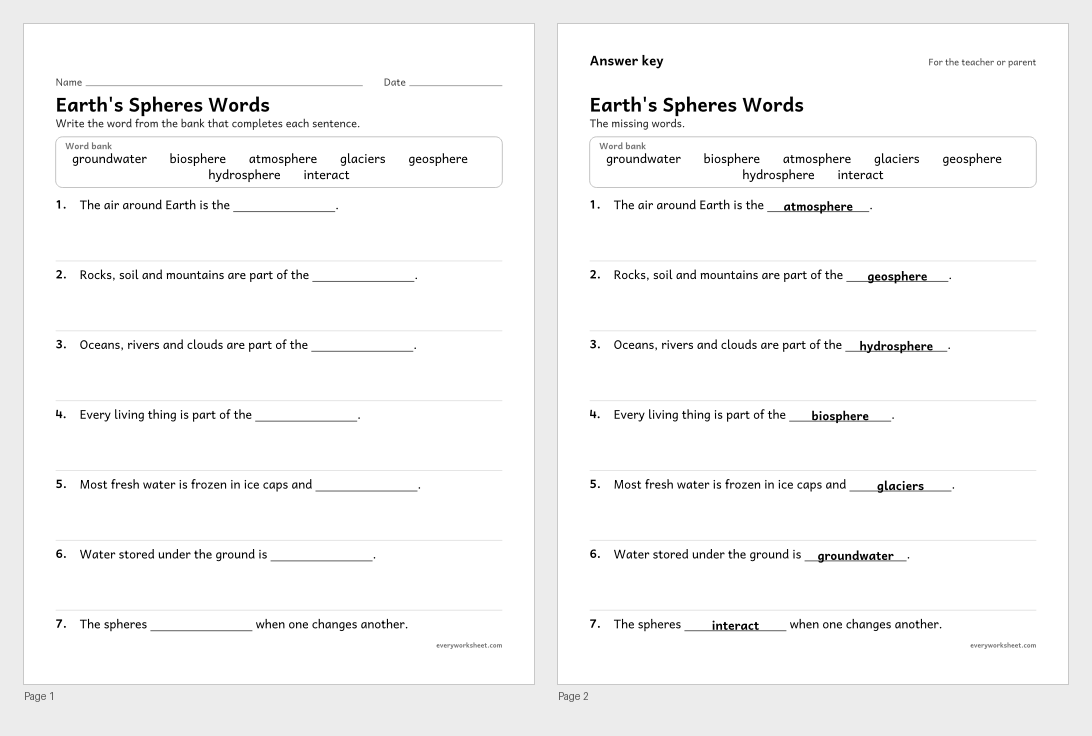
Using vocabulary for Earth's systems
Answer key on page 2
2 pages38 KB
 View all 2 pages
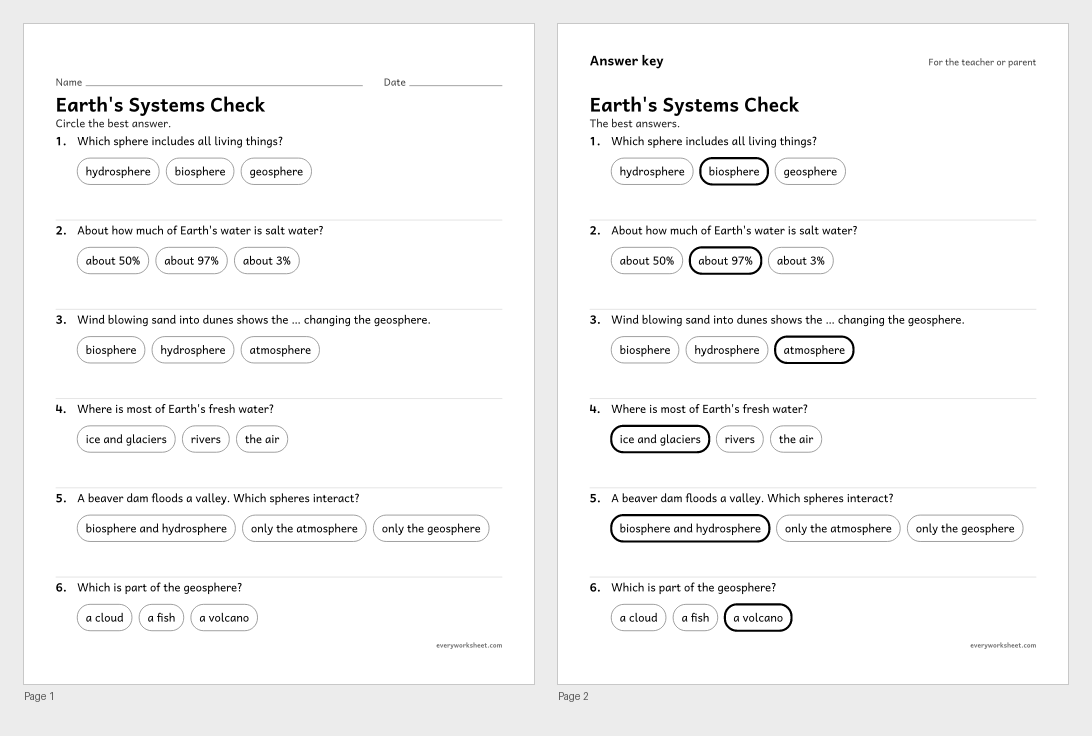
Reviewing Earth's spheres and the distribution of water
Answer key on page 2
2 pages39 KB
Print at 100% (actual size) for the cleanest tracing lines.
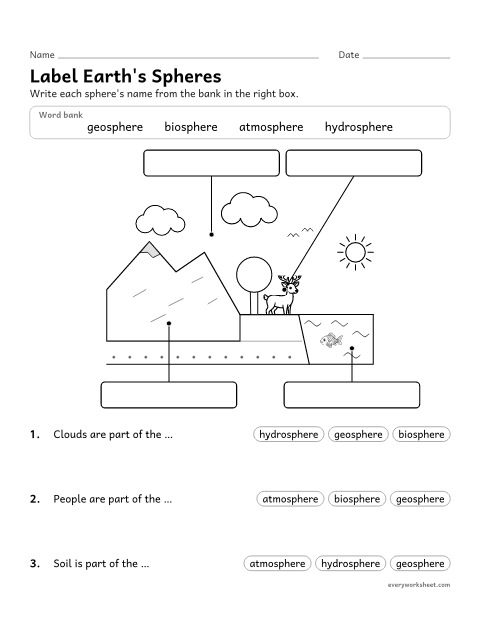
Earth has four major systems, or spheres: the geosphere (rock and soil), the hydrosphere (all water, including ice and clouds), the atmosphere (air) and the biosphere (living things). They interact all the time: rain wears down mountains, plants add oxygen to the air, volcanoes fill the sky with ash.
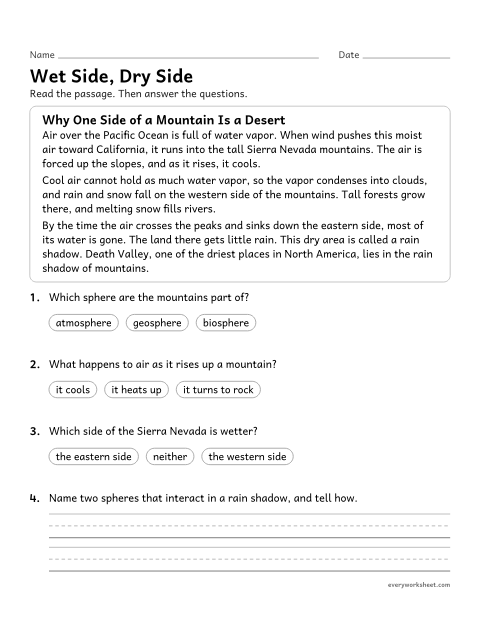
These Earth's spheres worksheets include a labeled diagram, a blank diagram to label and a cut and paste twin, a sort, an interactions matching page and a reading passage about the rain shadow. Two pages show where Earth's water is: a hundred grid of salt and fresh water and a bar graph of fresh water.
Every page is black and white, prints on US Letter or A4, and every page with right answers has an answer key on page 2.
NGSS 5-ESS2-1Develop a model using an example to describe ways the geosphere, biosphere, hydrosphere, and/or atmosphere interact.CCSS.ELA-LITERACY.RI.5.3Explain the relationships or interactions between two or more individuals, events, ideas, or concepts in a historical, scientific, or technical text based on specific information in the text.NGSS 5-ESS2-2Describe and graph the amounts of salt water and fresh water in various reservoirs to provide evidence about the distribution of water on Earth.CCSS.ELA-LITERACY.RI.5.4Determine the meaning of general academic and domain-specific words and phrases in a text relevant to a grade 5 topic or subject area.The geosphere (rock, soil and Earth's inside), the hydrosphere (all of Earth's water), the atmosphere (air) and the biosphere (all living things).
Each one changes the others. Wind (atmosphere) makes waves (hydrosphere); roots (biosphere) crack rock (geosphere); a volcano (geosphere) puts ash into the air (atmosphere).
Only about 3%. About 97% is salt water in the oceans, and most fresh water is frozen in ice and glaciers.