 View larger
Constellations for Kids: star pattern chart
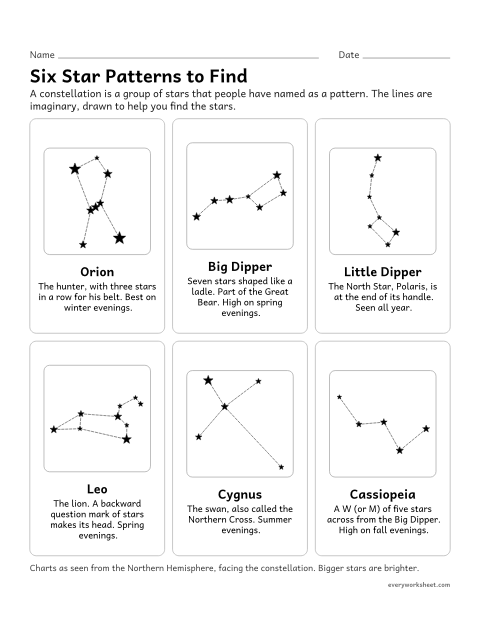
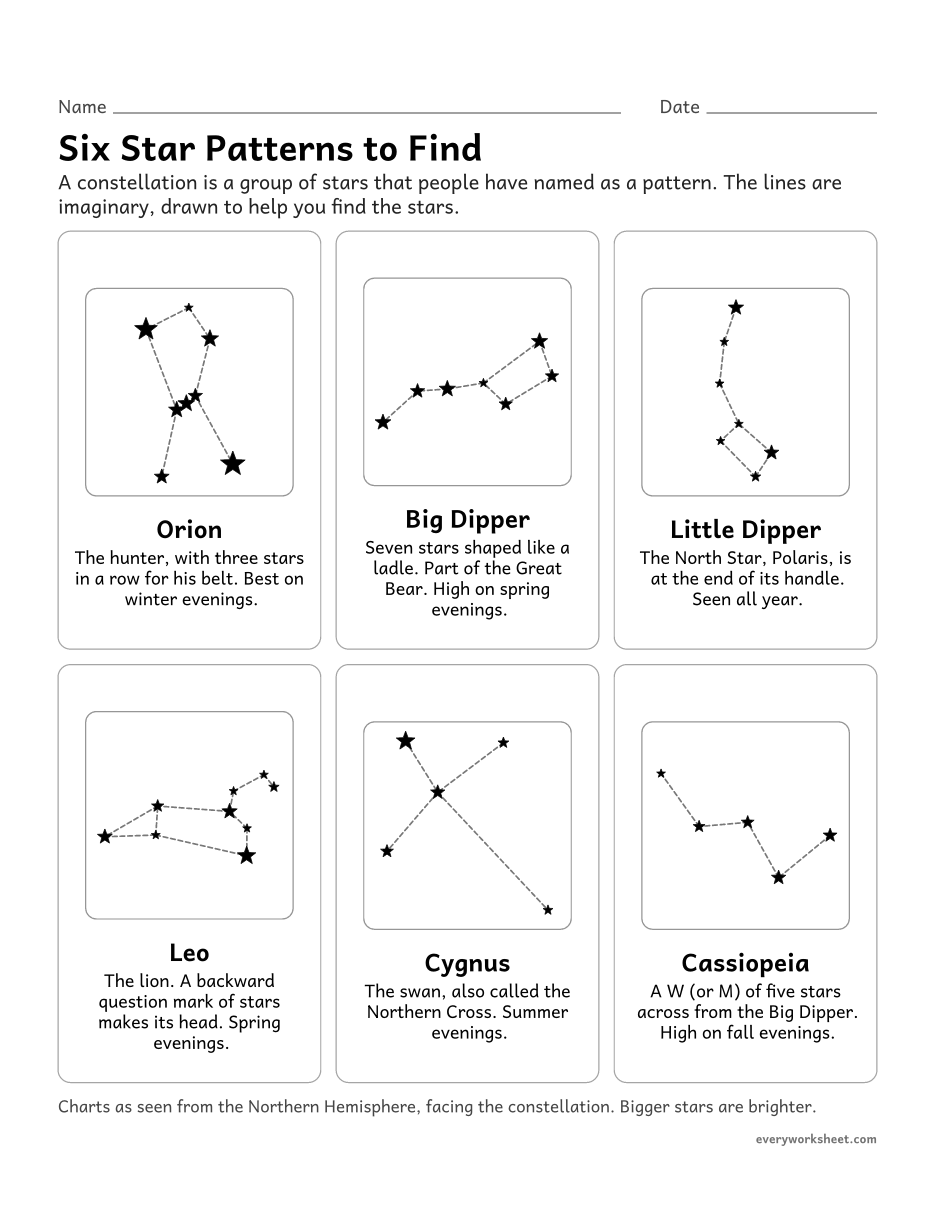
Recognizing common constellations and when they are seen
1 page35 KB
The sun as a star, why it looks brighter than other stars, star patterns such as Orion and the Big Dipper, and why we see different stars in different seasons.
View largerRecognizing common constellations and when they are seen
1 page35 KB
 View all 2 pages
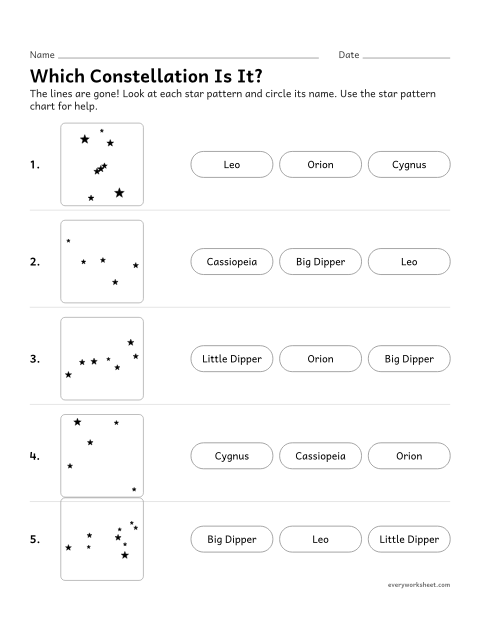
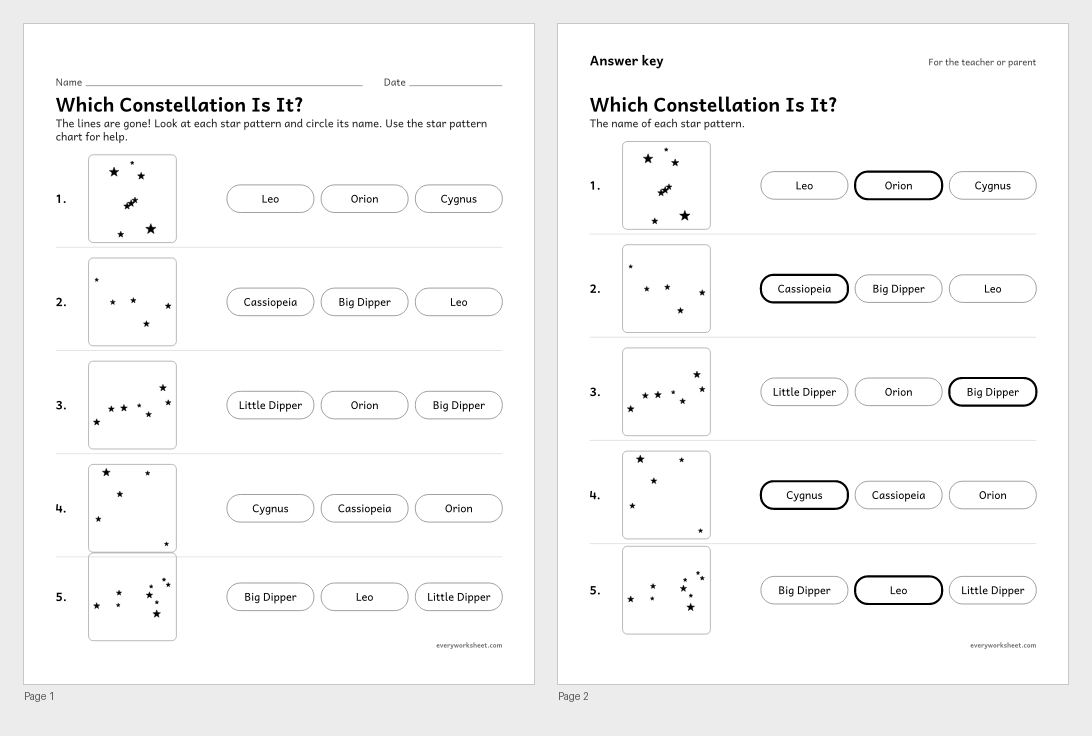
Recognizing constellations by their star patterns
Answer key on page 2
2 pages43 KB
 View all 2 pages
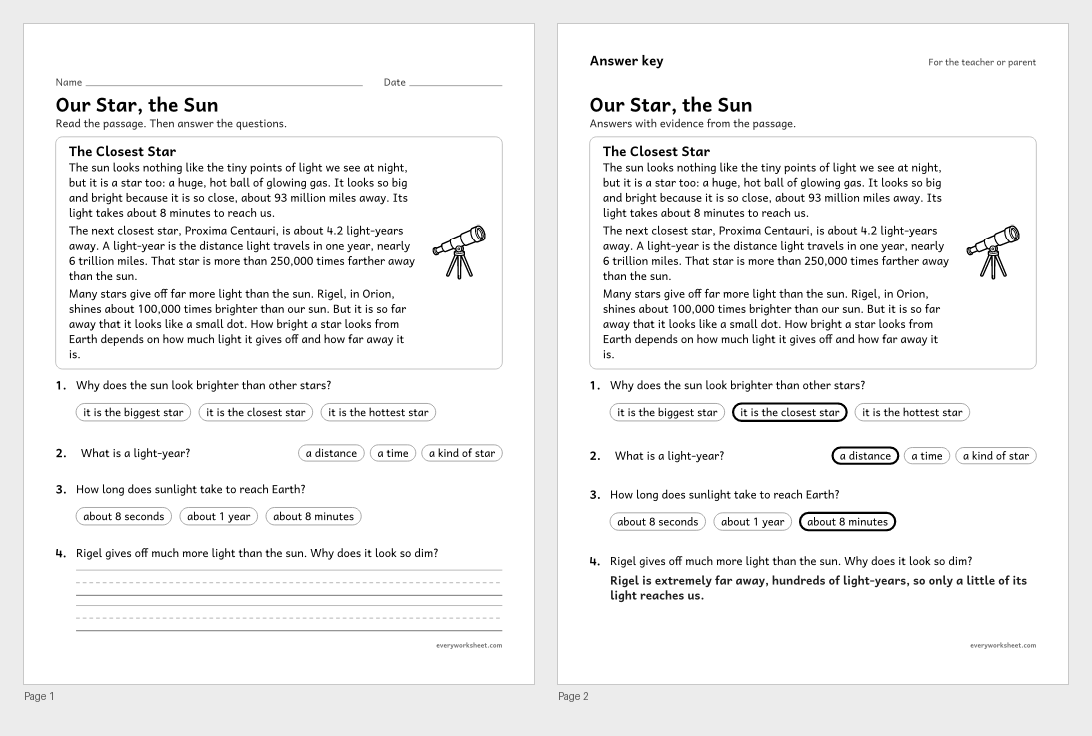
Explaining that the sun is a star that appears brighter because it is closer
Answer key on page 2
2 pages104 KB
 View all 2 pages
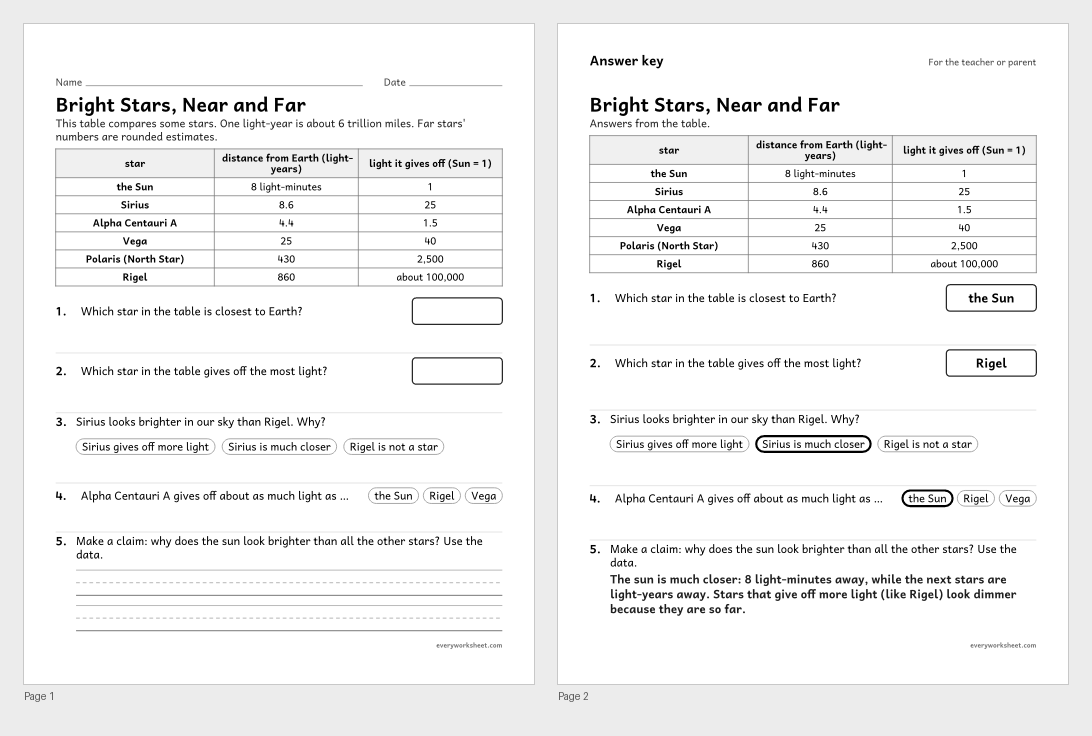
Using data to argue that a star's apparent brightness depends on its distance
Answer key on page 2
2 pages51 KB
 View all 2 pages
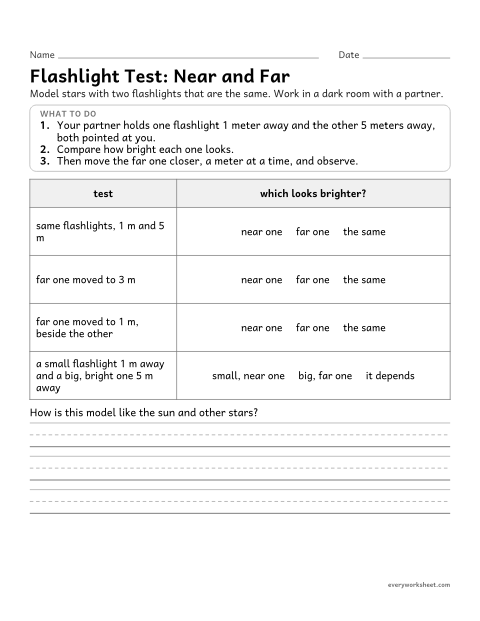
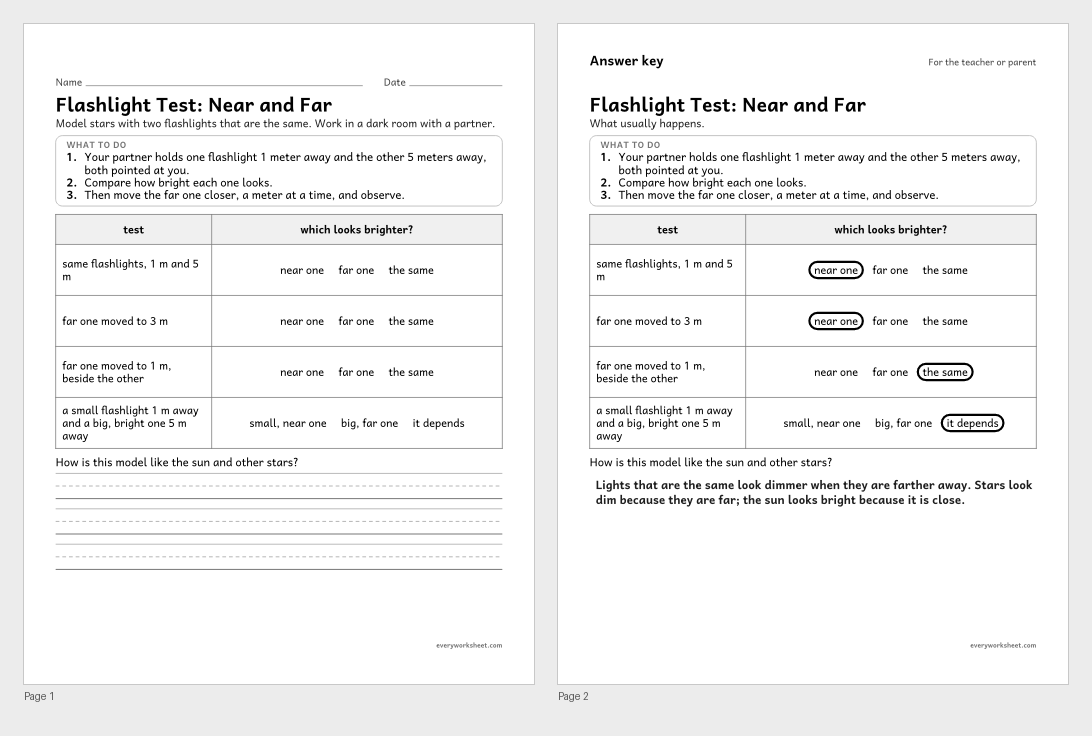
Investigating how distance changes how bright a light appears
Answer key on page 2
2 pages39 KB
 View all 2 pages
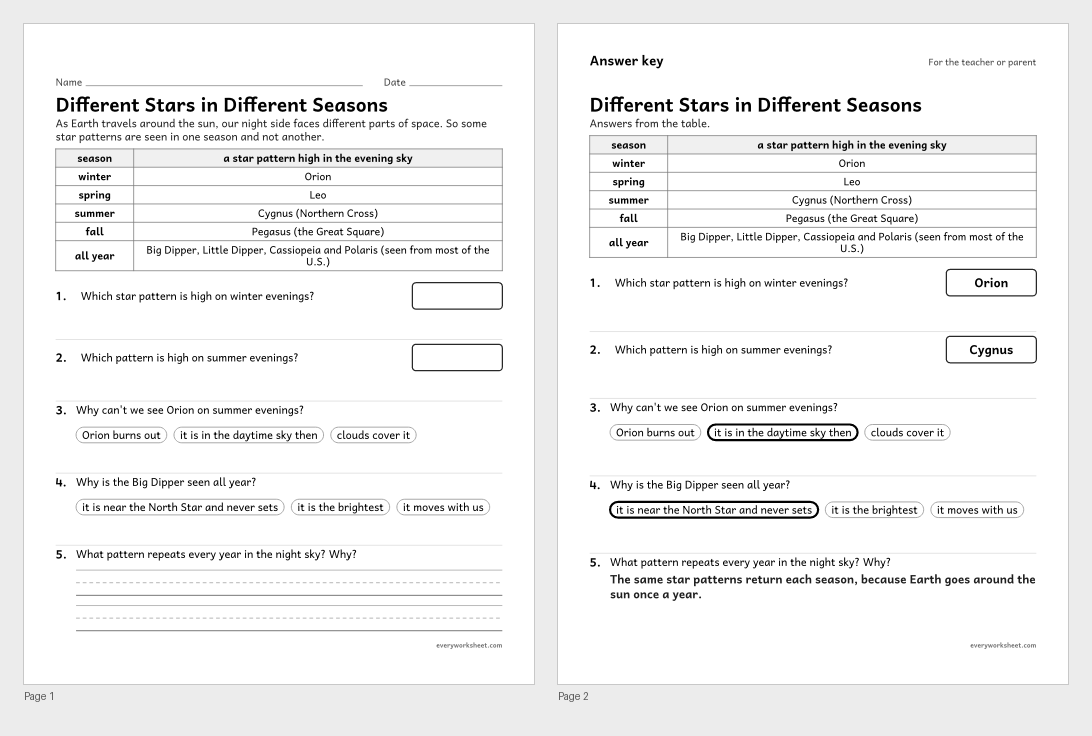
Describing the seasonal appearance of some stars in the night sky
Answer key on page 2
2 pages45 KB
 View all 2 pages
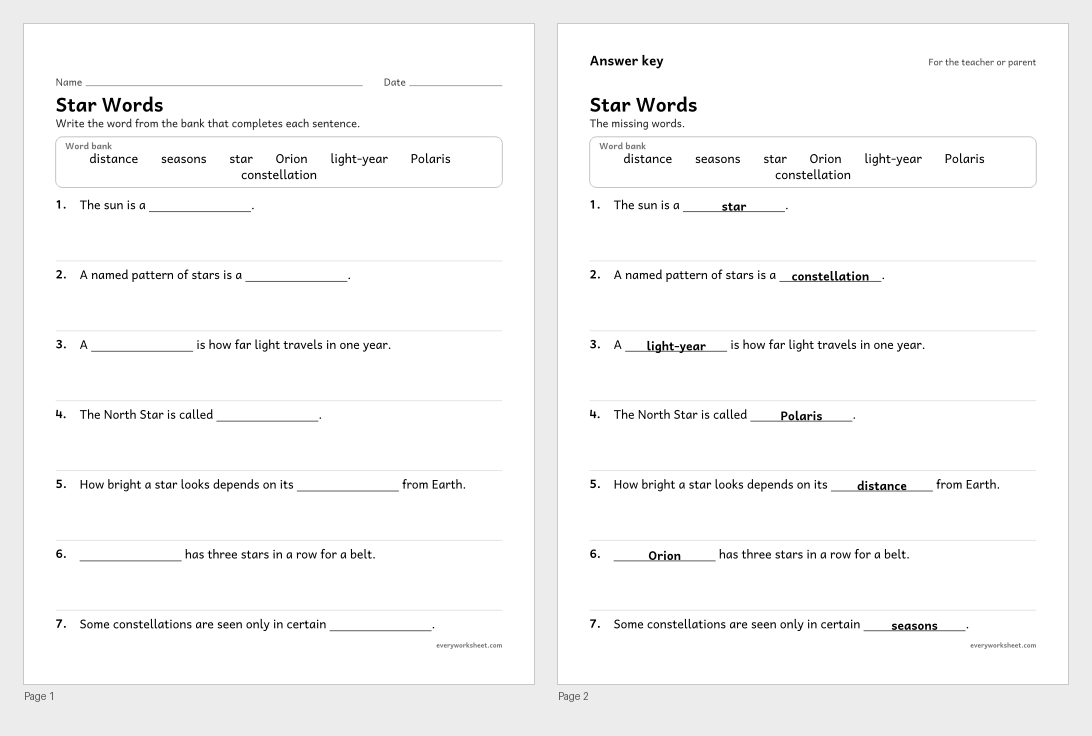
Using vocabulary about stars and constellations
Answer key on page 2
2 pages38 KB
 View all 2 pages
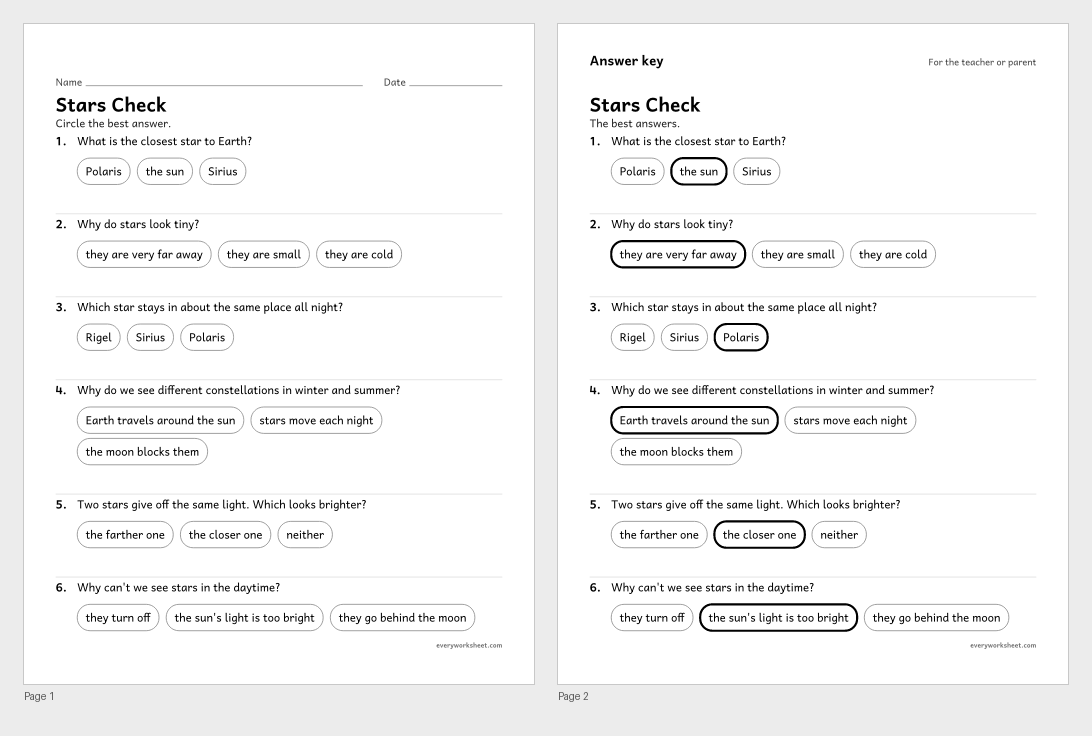
Reviewing stars, the sun and constellations
Answer key on page 2
2 pages38 KB
Print at 100% (actual size) for the cleanest tracing lines.
The sun is a star, the closest one to Earth. It looks so big and bright because it is close: about 93 million miles away, while the next star is about 4.2 light-years away. Many stars give off far more light than the sun but look dim because they are so far.
These stars and constellations worksheets include a chart of six star patterns drawn from real star positions, a name-the-constellation page, a reading passage about the sun as a star, a brightness and distance data page, a flashlight investigation and a page on the stars of each season.
Every page is black and white, prints on US Letter or A4, and every page with right answers has an answer key on page 2.
NGSS 5-ESS1-2Represent data in graphical displays to reveal patterns of daily changes in length and direction of shadows, day and night, and the seasonal appearance of some stars in the night sky.NGSS 5-ESS1-1Support an argument that differences in the apparent brightness of the sun compared to other stars is due to their relative distances from the Earth.CCSS.ELA-LITERACY.RI.5.4Determine the meaning of general academic and domain-specific words and phrases in a text relevant to a grade 5 topic or subject area.Yes. The sun is a medium-sized star. It looks much bigger and brighter than other stars because it is so much closer.
A star's brightness from Earth depends on how much light it gives off and how far away it is. Rigel gives off far more light than the sun but looks dim because it is hundreds of light-years away.
As Earth travels around the sun, the night side of Earth faces different parts of space.