 View larger
How to summarize
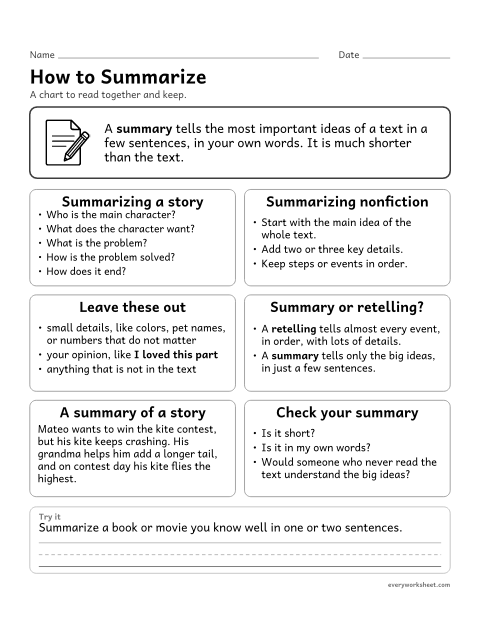
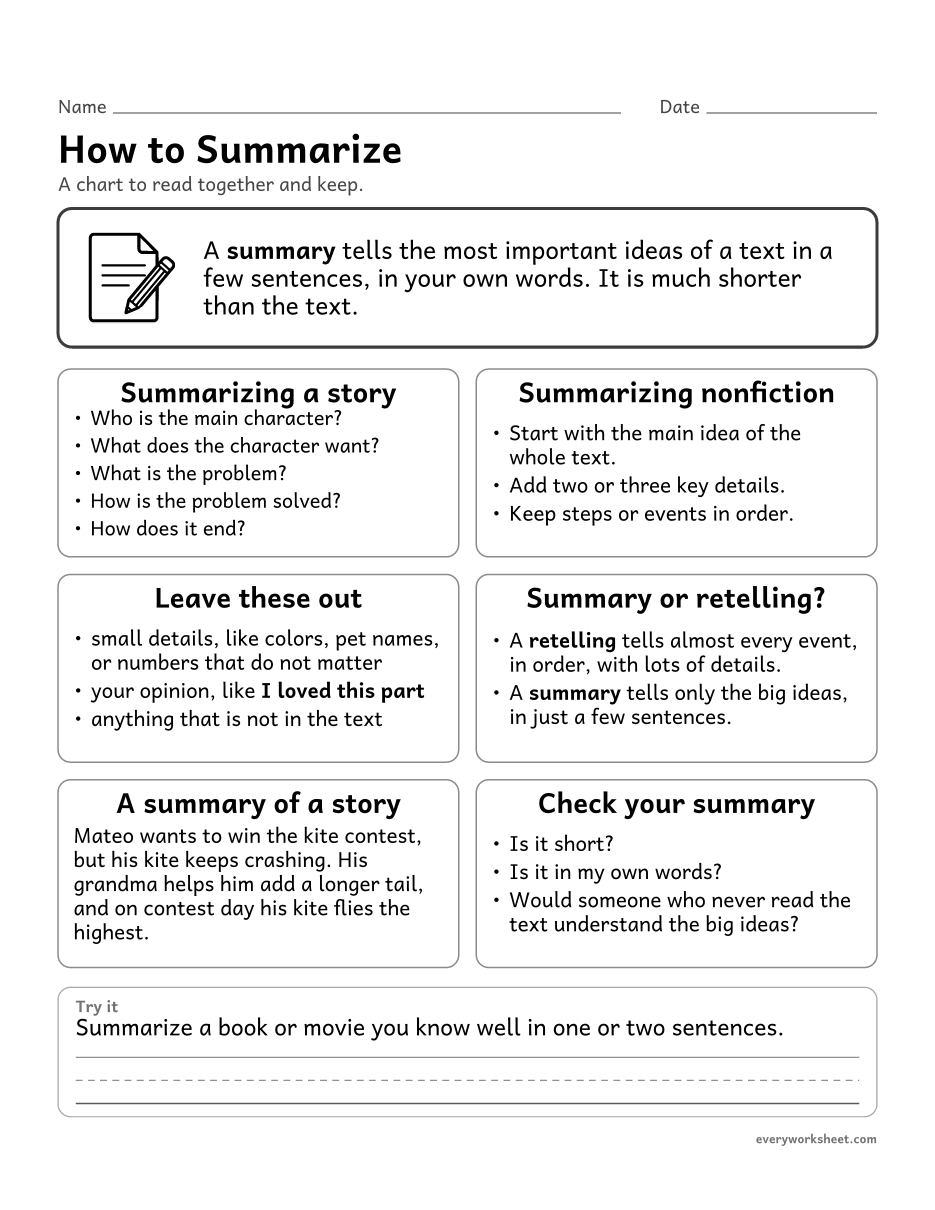
Knowing what a summary is, what goes in it and what to leave out, for stories and for nonfiction
1 page50 KB
Learn what a summary is, pick the best one, and write short summaries of stories and nonfiction.
View largerKnowing what a summary is, what goes in it and what to leave out, for stories and for nonfiction
1 page50 KB
 View all 2 pages
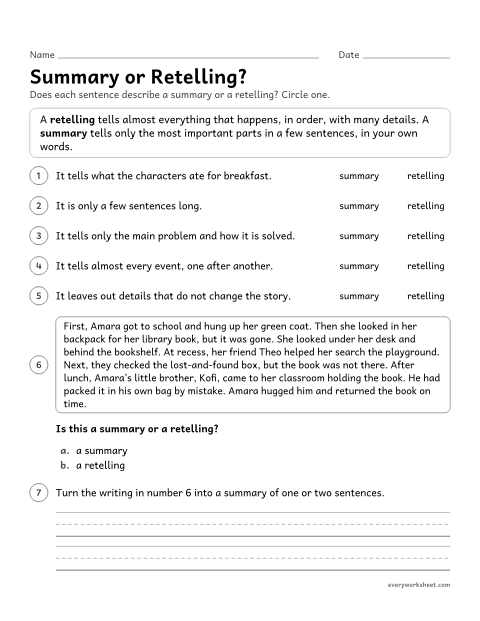
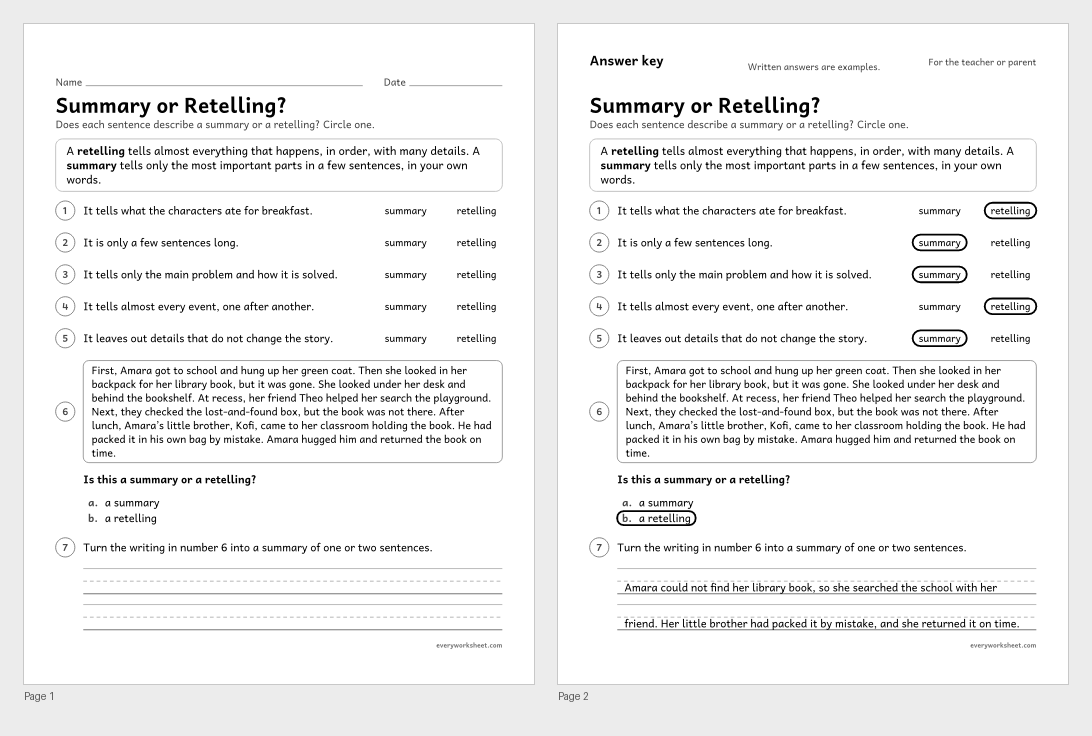
Telling a summary from a retelling and turning a retelling into a short summary
Answer key on page 2
2 pages48 KB
 3 pagesView all 3 pages
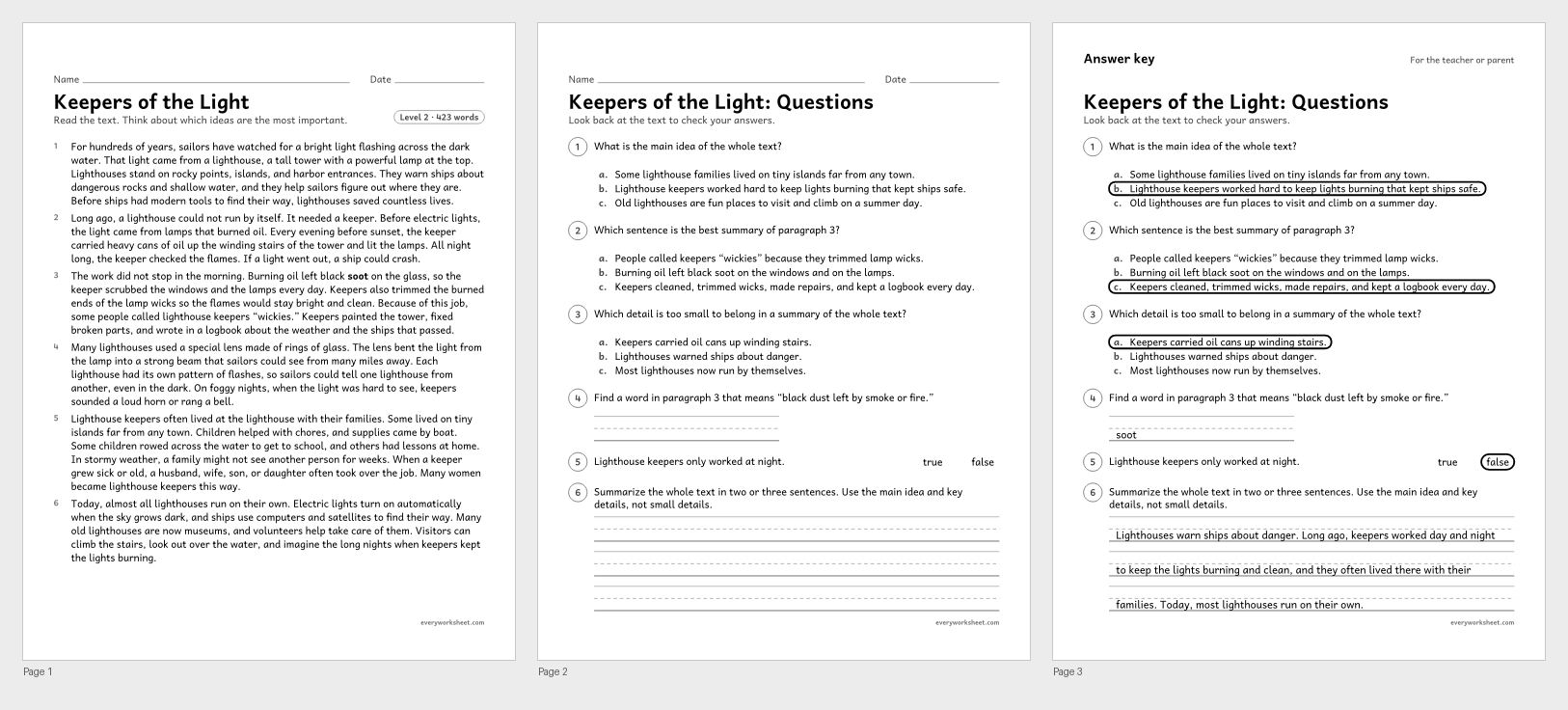
Finding the main idea of a nonfiction text, choosing what to leave out and writing a short summary
Answer key on page 3
3 pages59 KB
 View all 2 pages
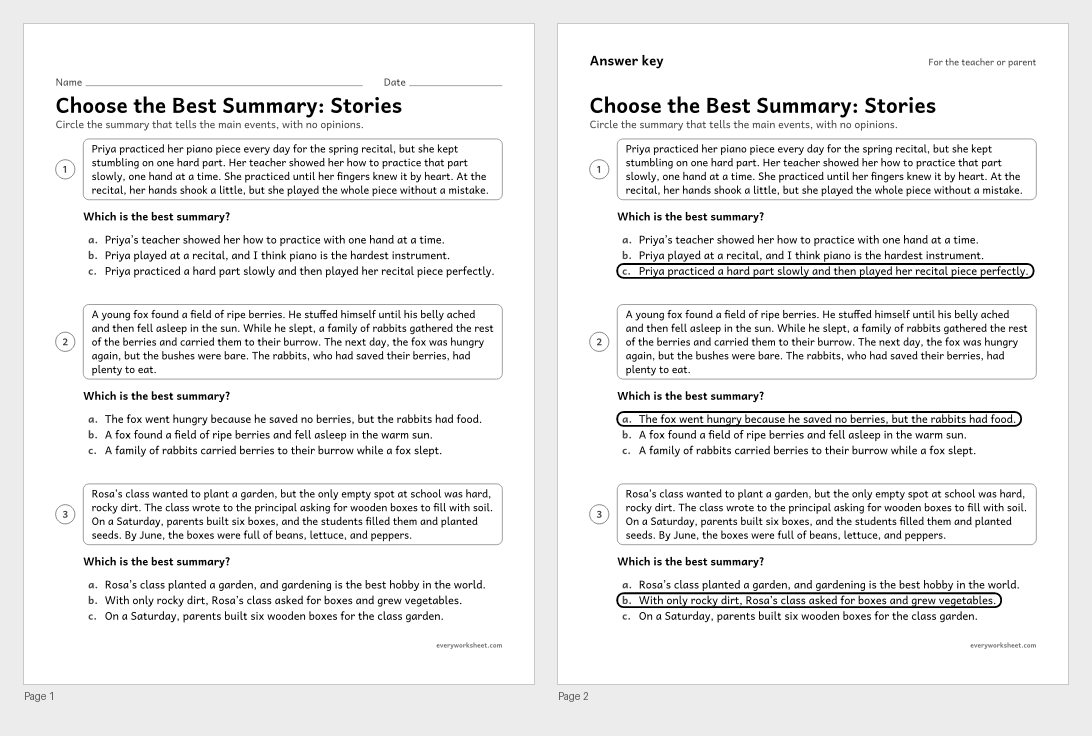
Choosing the best summary of a short story over one that is too detailed, misses the point or adds an opinion
Answer key on page 2
2 pages46 KB
 View all 2 pages
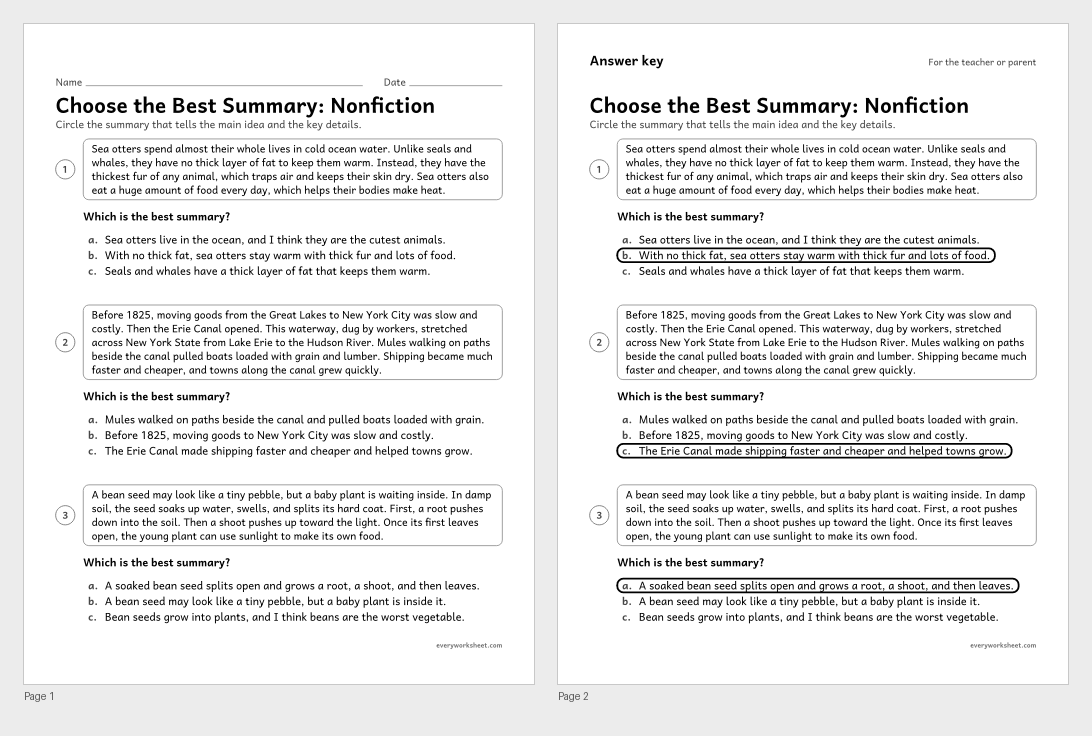
Choosing the best summary of a short informational text
Answer key on page 2
2 pages47 KB
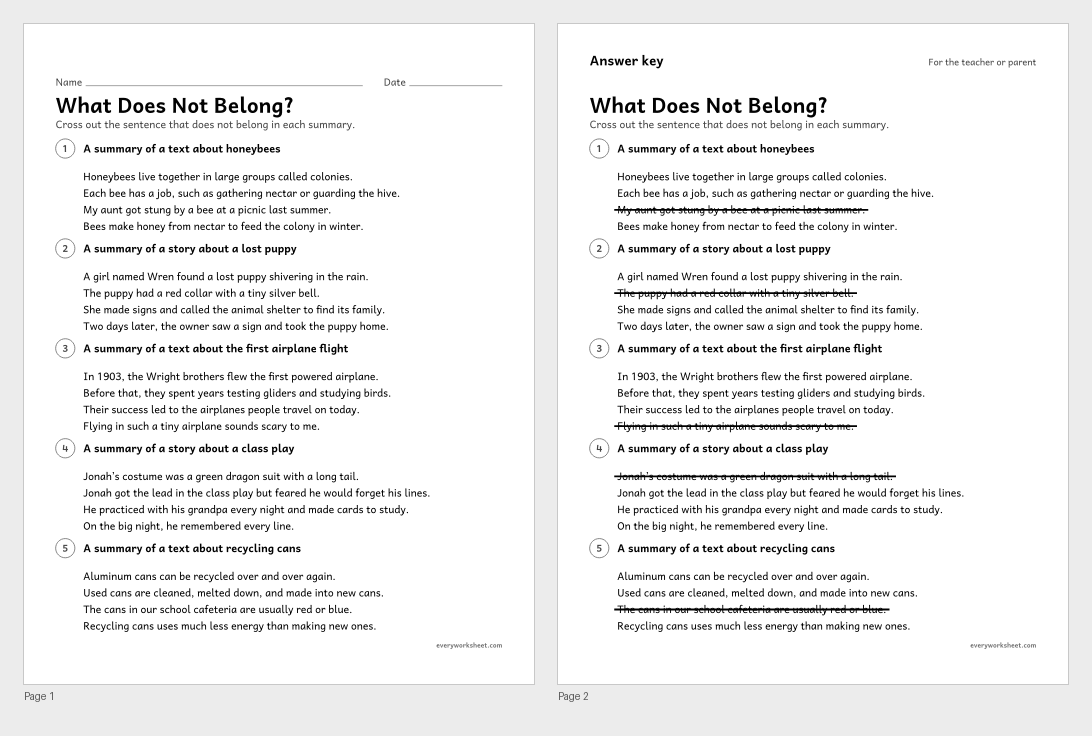 View all 2 pages
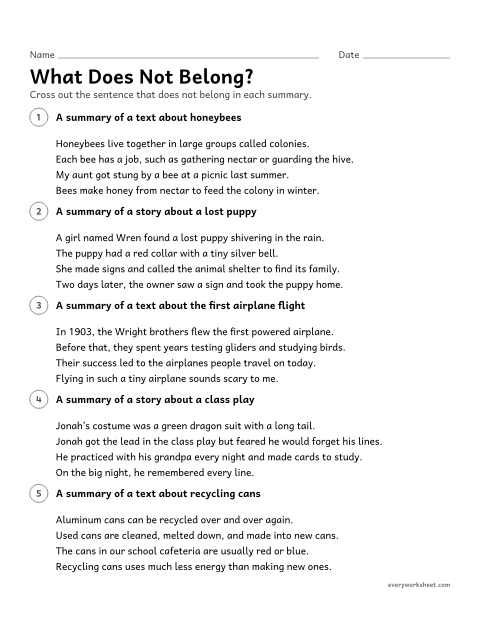
Spotting the small detail or opinion that does not belong in a summary
Answer key on page 2
2 pages43 KB
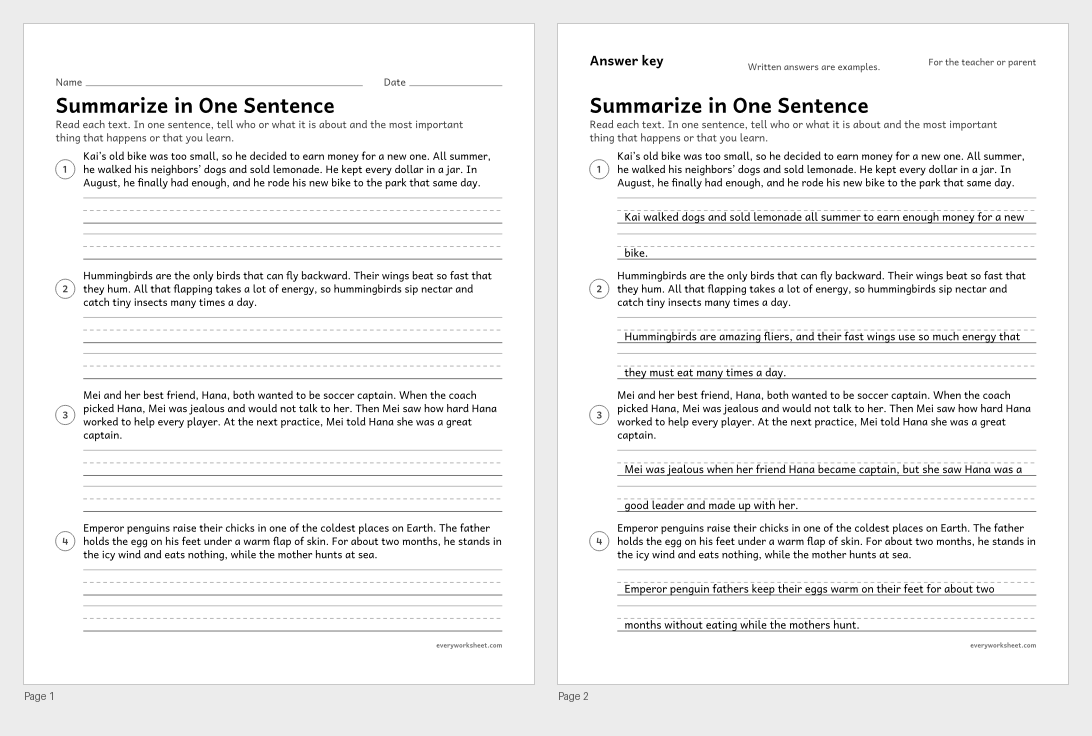 View all 2 pages
Writing a one-sentence summary of a short story or nonfiction text
Answer key on page 2
2 pages36 KB
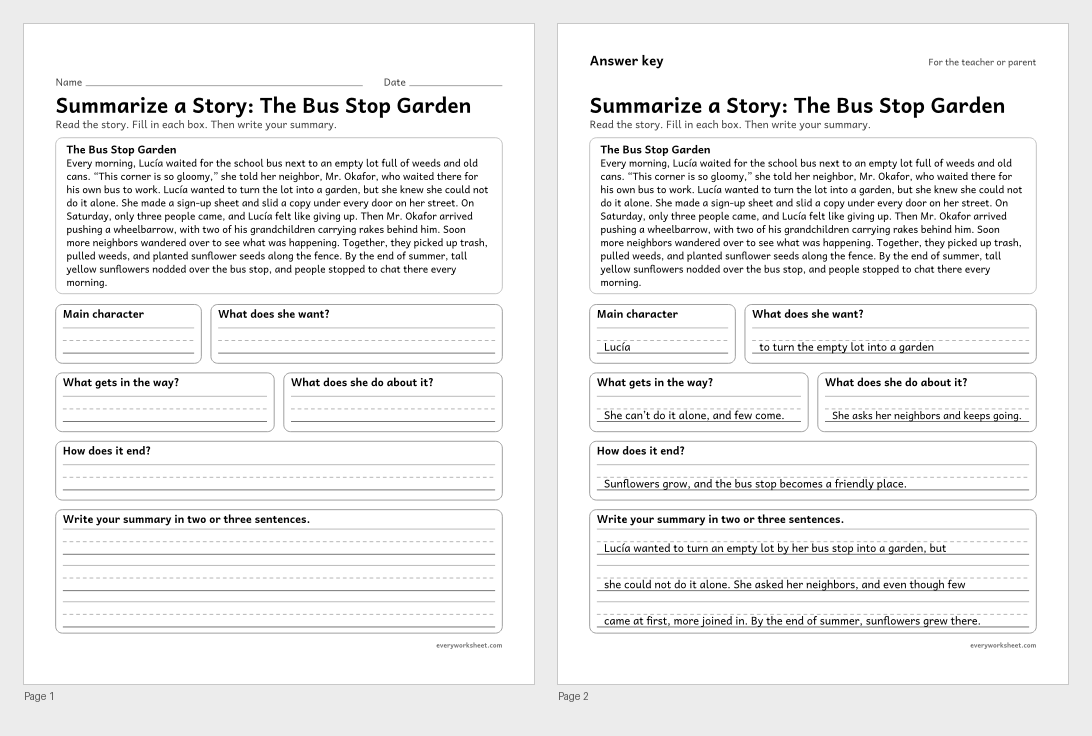 View all 2 pages
Using the main character, goal, problem, actions, and ending to write a short summary of a story
Answer key on page 2
2 pages38 KB
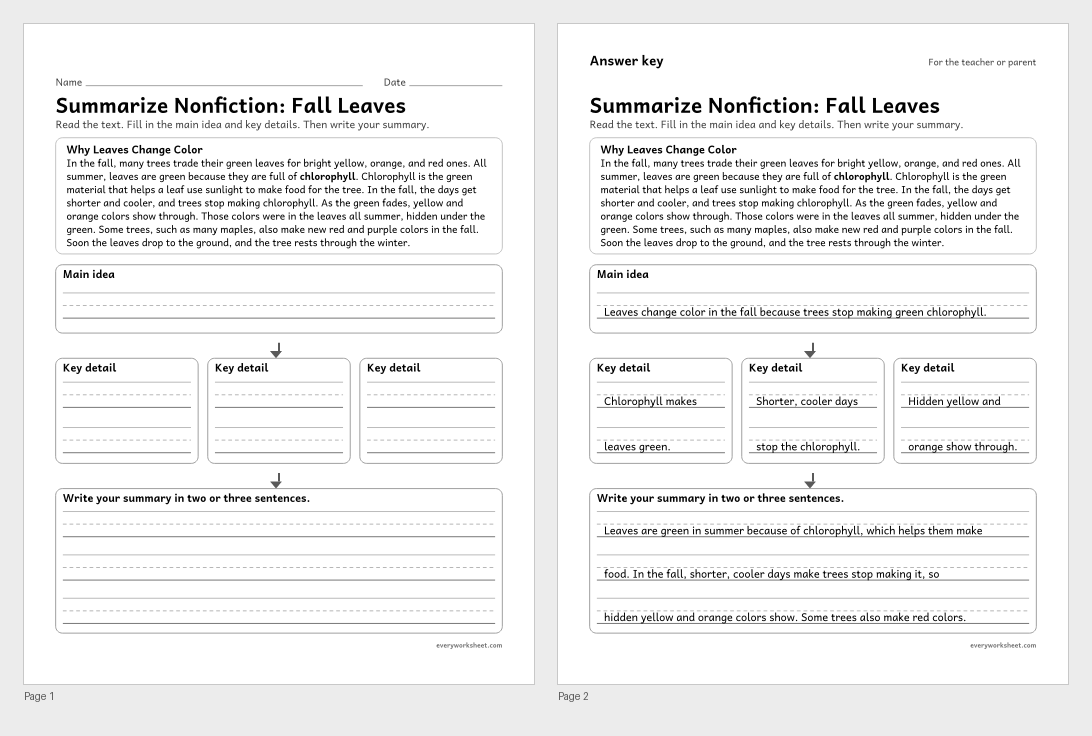 View all 2 pages
Finding the main idea and key details of a nonfiction text and using them to write a summary
Answer key on page 2
2 pages36 KB
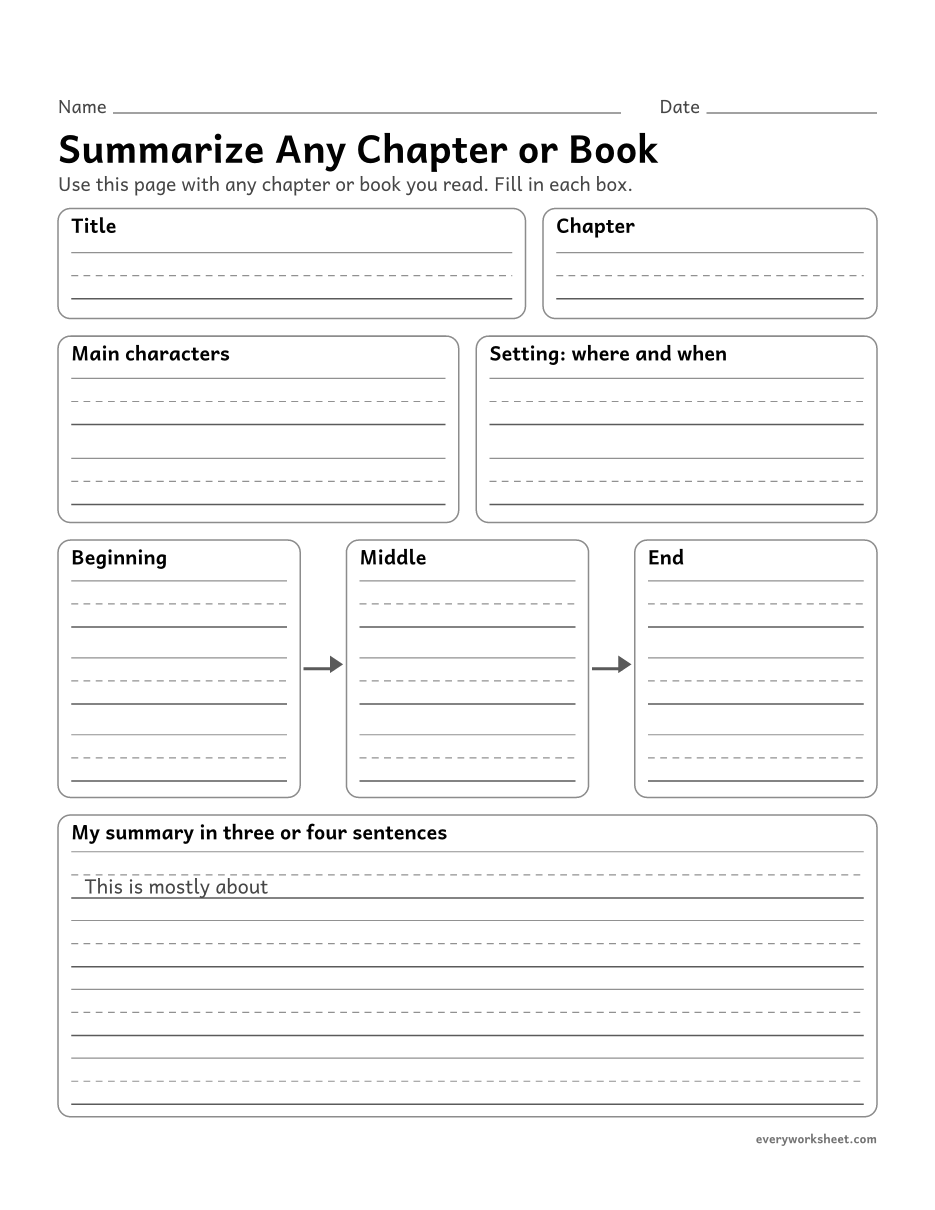 View larger
Planning and writing a summary of any chapter or book
1 page29 KB
Print at 100% (actual size) for the cleanest tracing lines.
A summary tells the most important ideas of a text in a few sentences, in your own words. It is much shorter than the text, and it leaves out small details and opinions. For a story, a good summary answers a few questions: who is the main character, what does the character want, what gets in the way, and how does it end? For nonfiction, a summary starts with the main idea of the whole text and adds two or three key details that support it.
A summary is not the same as a retelling. A retelling tells almost everything that happens, in order, with lots of details: "First, Amara hung up her green coat. Then she looked in her backpack, and her library book was gone. She looked under her desk and behind the bookshelf..." A summary of the same story might be just two sentences: "Amara could not find her library book, so she searched the school with her friend. Her little brother had packed it by mistake, and she returned it on time."
These pages build the skill one step at a time. Children start with an anchor chart and a summary-or-retelling sort, then choose the best summary of short original stories and nonfiction texts, cross out sentences that do not belong, and finally write their own summaries with graphic organizers.
Every text is original and written for 4th graders, and every page with a right answer comes with an answer key.
CCSS.ELA-LITERACY.RL.4.2Determine a theme of a story, drama, or poem from details in the text; summarize the text.CCSS.ELA-LITERACY.RI.4.2Determine the main idea of a text and explain how it is supported by key details; summarize the text.A retelling tells almost every event in order, with many details. A summary tells only the most important ideas in a few sentences, in your own words.
Usually two to four sentences for a short story or article. A one-sentence summary is great practice for finding the single most important idea.
Start with the main idea of the whole text. Then add two or three key details that support it, and leave out small facts, examples, and opinions.
Yes. Every page with right answers has a key, and written answers on the keys are sample answers.