 View larger
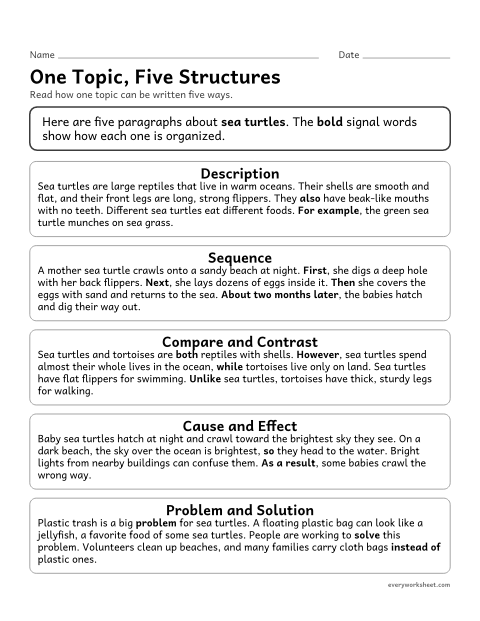
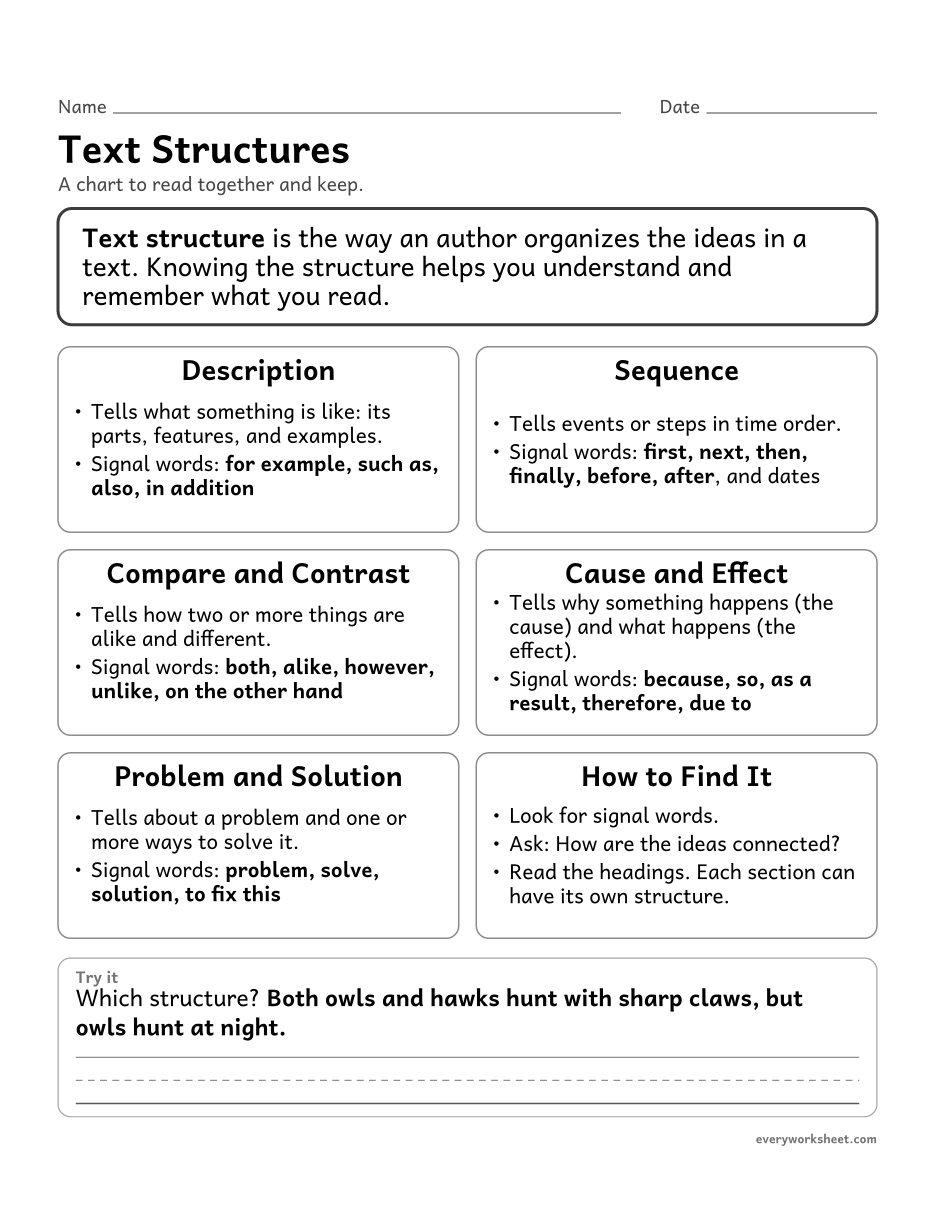
Text structures
Knowing the five text structures, what each one does, and its signal words
1 page39 KB
An anchor chart, name the structure practice, a signal word sort, a graphic organizer for each structure, and writing pages.
View largerKnowing the five text structures, what each one does, and its signal words
1 page39 KB
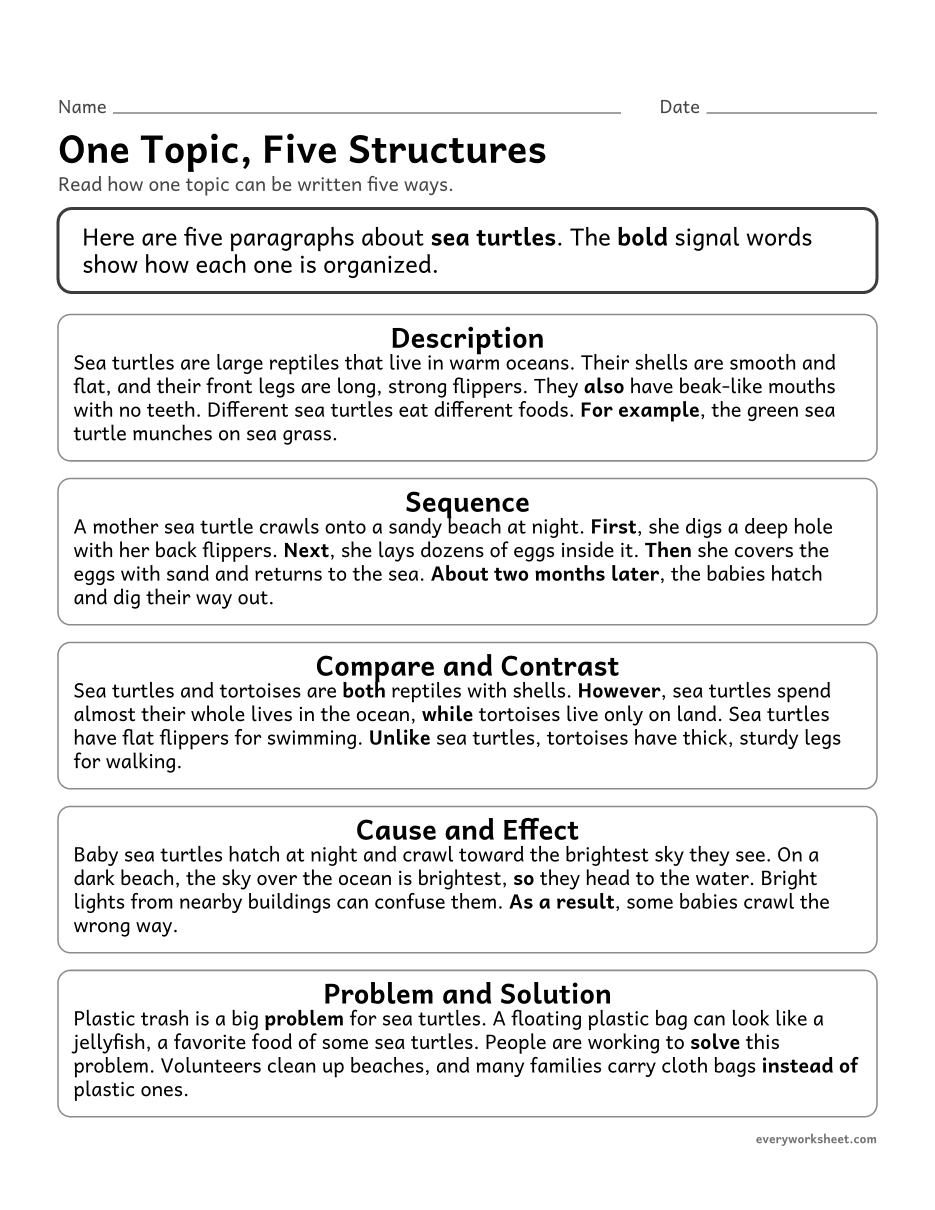 View larger
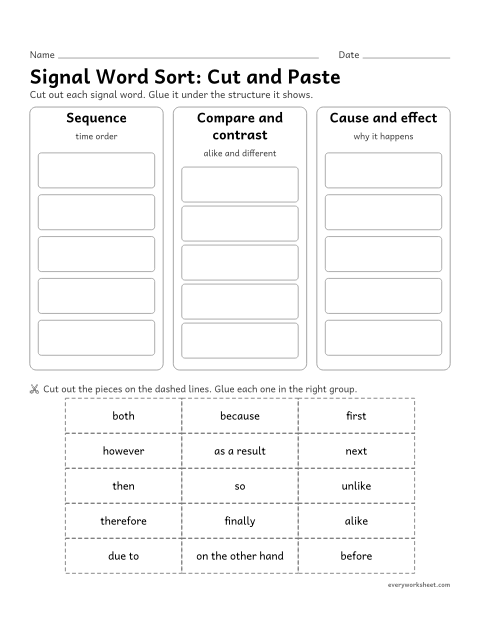
Seeing how the same topic can be organized in each of the five text structures
1 page34 KB
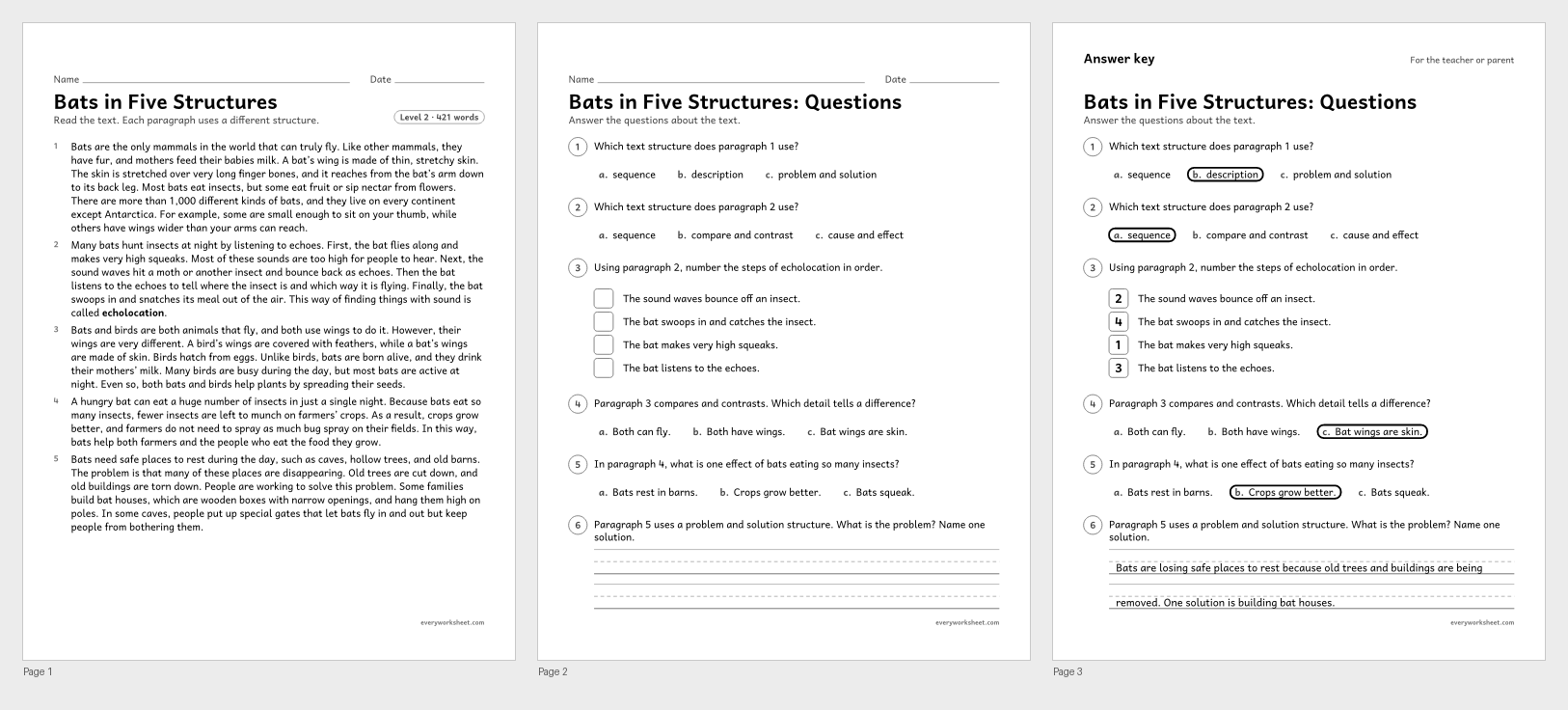 3 pagesView all 3 pages
Identifying the text structure of each paragraph in a longer nonfiction text
Answer key on page 3
3 pages53 KB
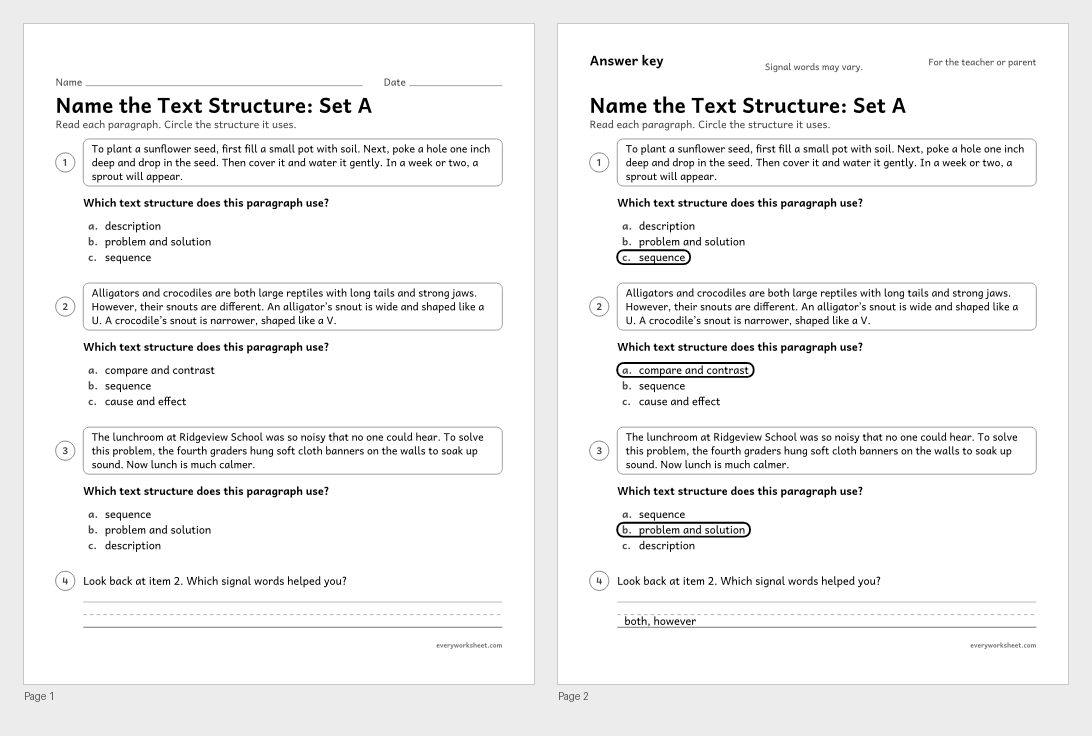 View all 2 pages
Identifying the text structure of a short nonfiction paragraph and the signal words that show it
Answer key on page 2
2 pages48 KB
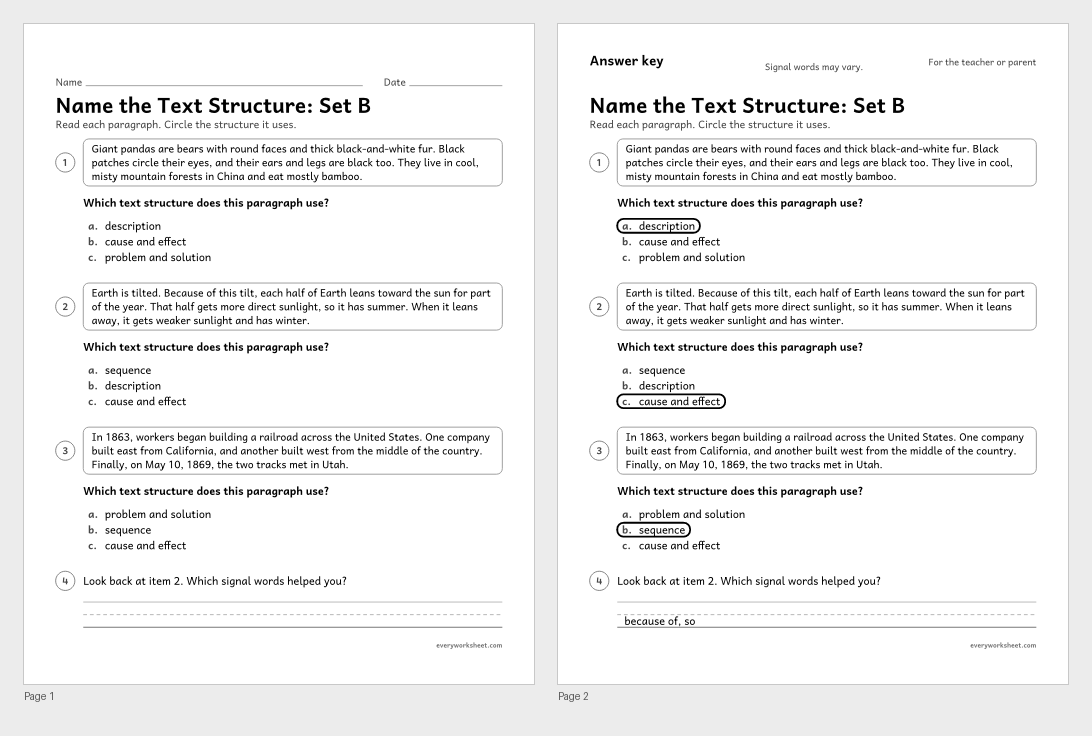 View all 2 pages
Identifying the text structure of a short nonfiction paragraph and the signal words that show it
Answer key on page 2
2 pages49 KB
 View all 2 pages
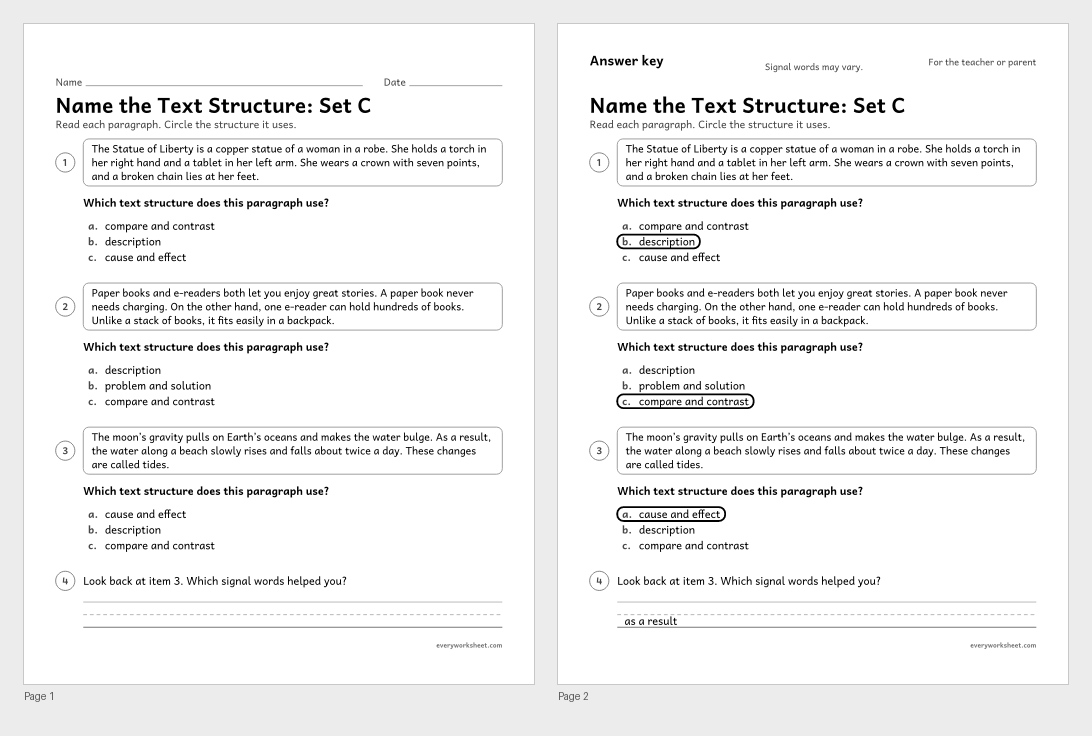
Identifying the text structure of a short nonfiction paragraph and the signal words that show it
Answer key on page 2
2 pages48 KB
 View all 2 pages
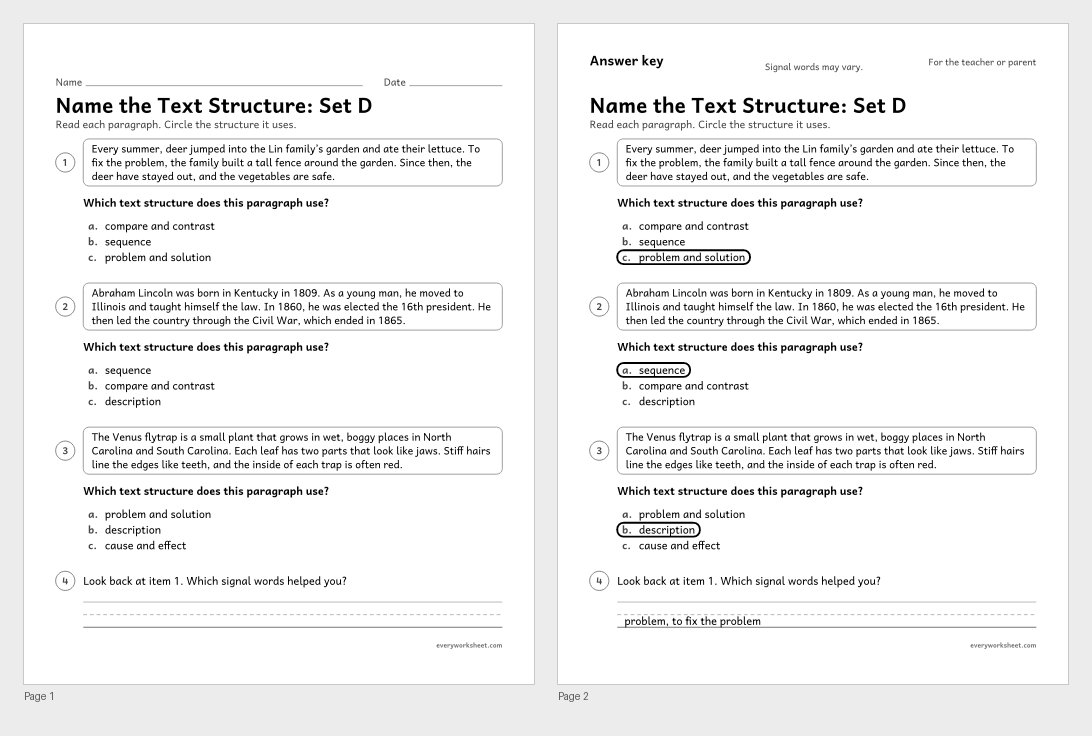
Identifying the text structure of a short nonfiction paragraph and the signal words that show it
Answer key on page 2
2 pages49 KB
 View all 2 pages
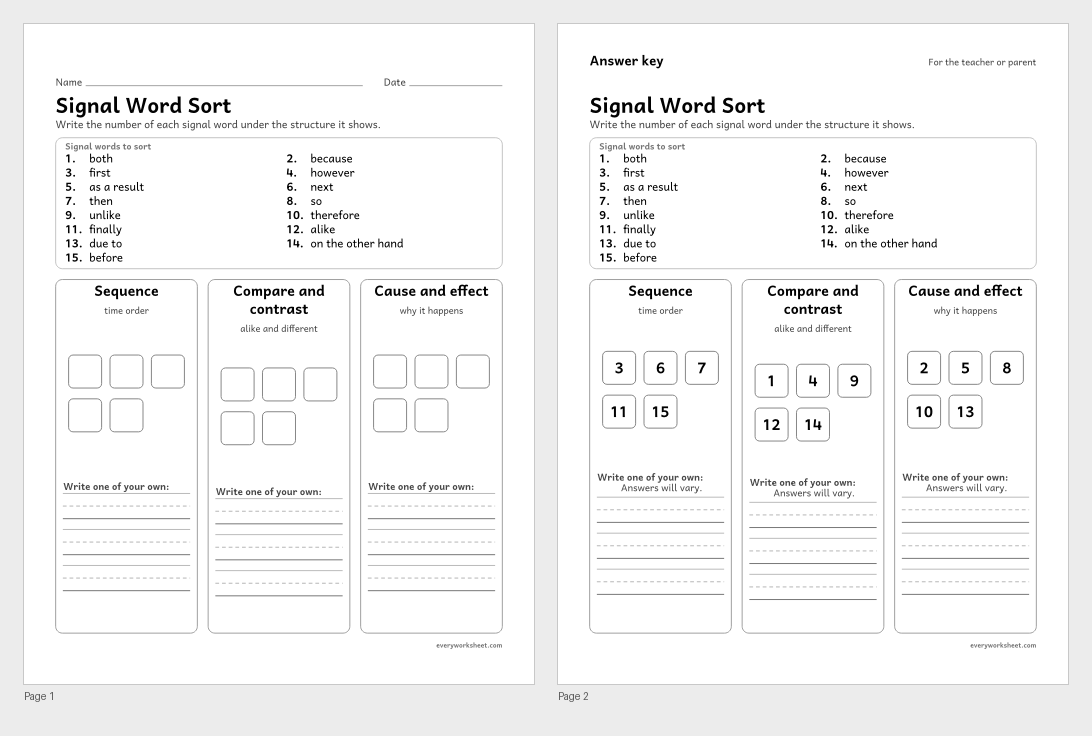
Sorting signal words by the text structure they show
Answer key on page 2
2 pages58 KB
 View all 2 pages
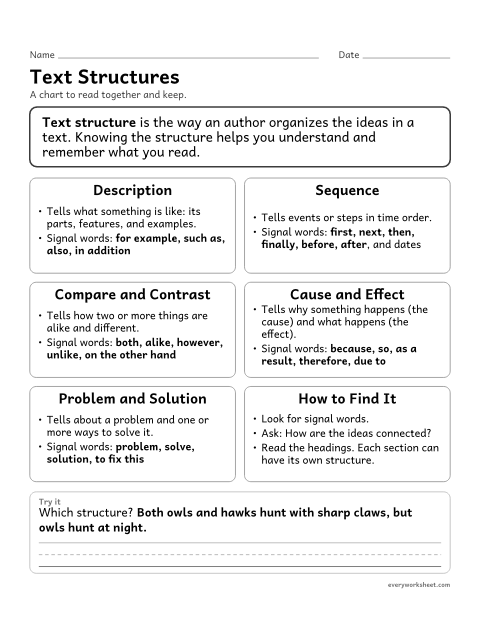
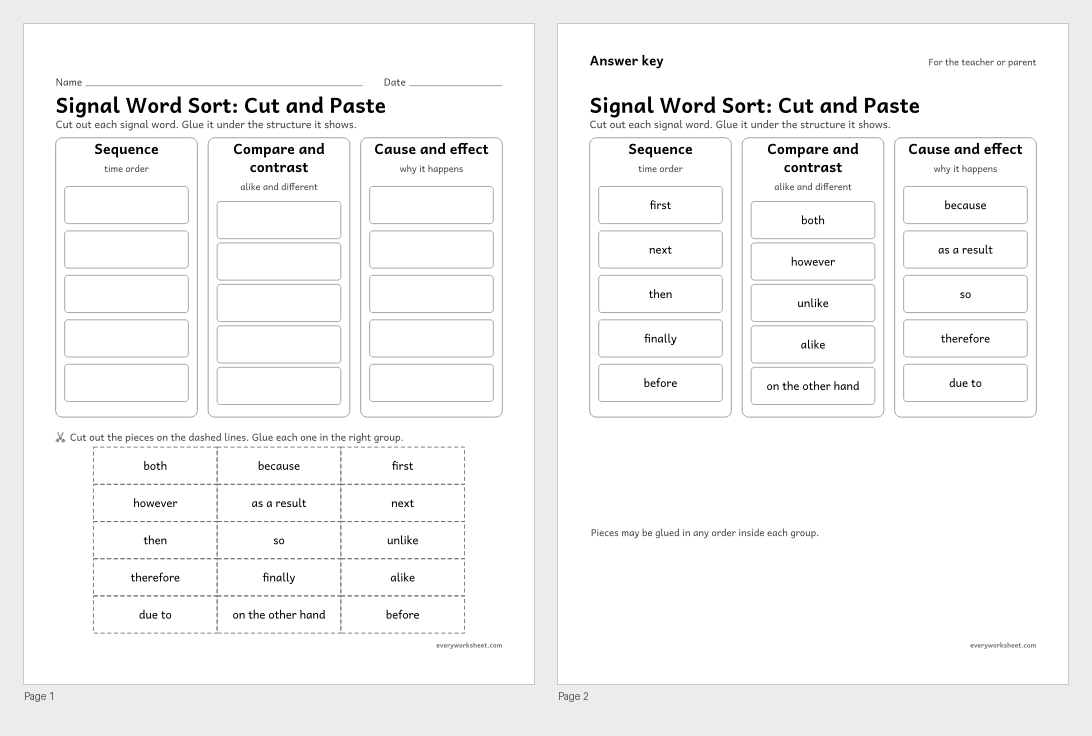
Sorting signal words by the text structure they show (cut and paste)
Answer key on page 2
2 pages70 KB
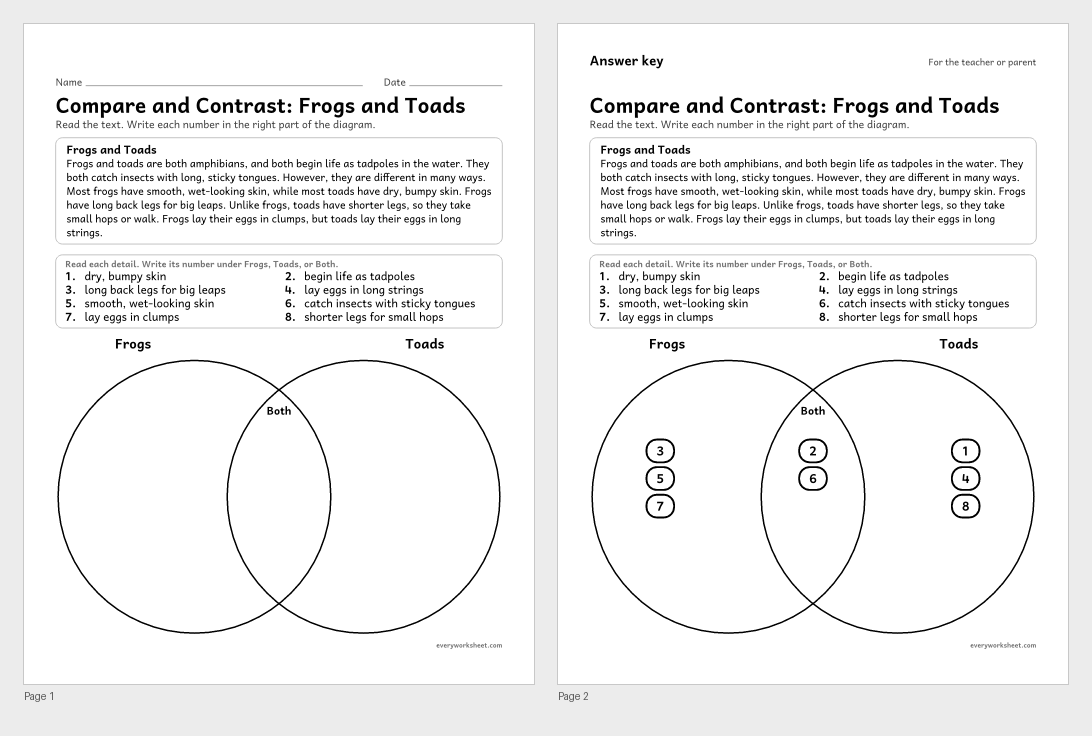 View all 2 pages
Using a Venn diagram to organize details from a compare and contrast text
Answer key on page 2
2 pages43 KB
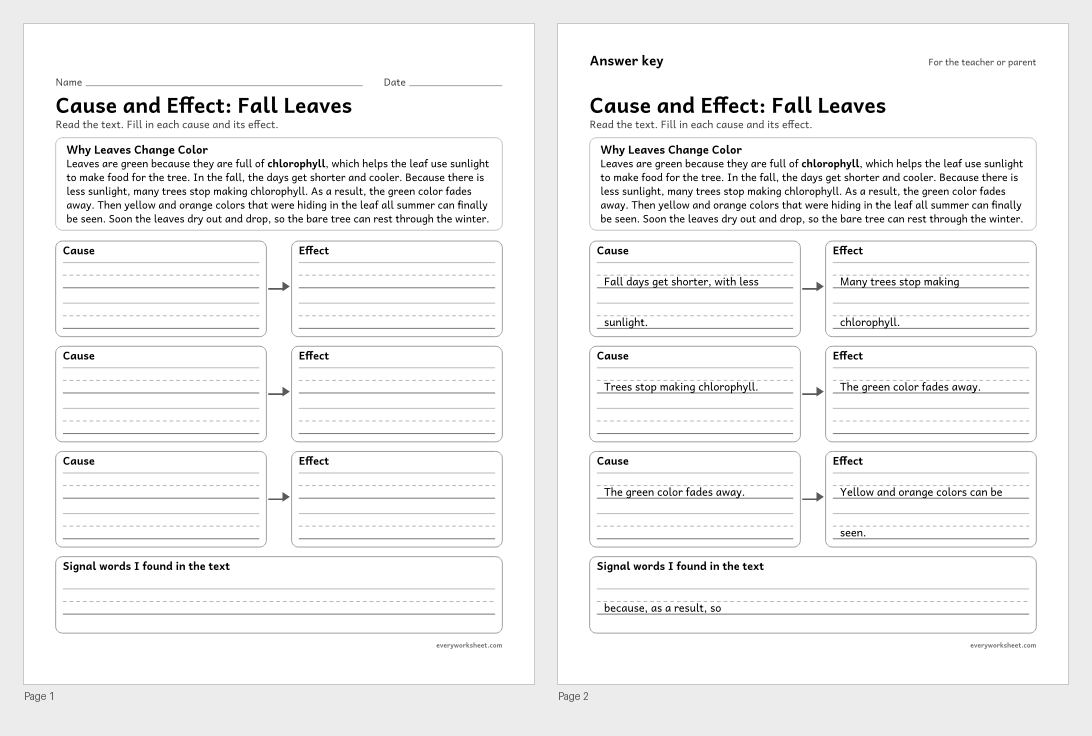 View all 2 pages
Using a cause and effect organizer to show a chain of causes and effects in a science text
Answer key on page 2
2 pages37 KB
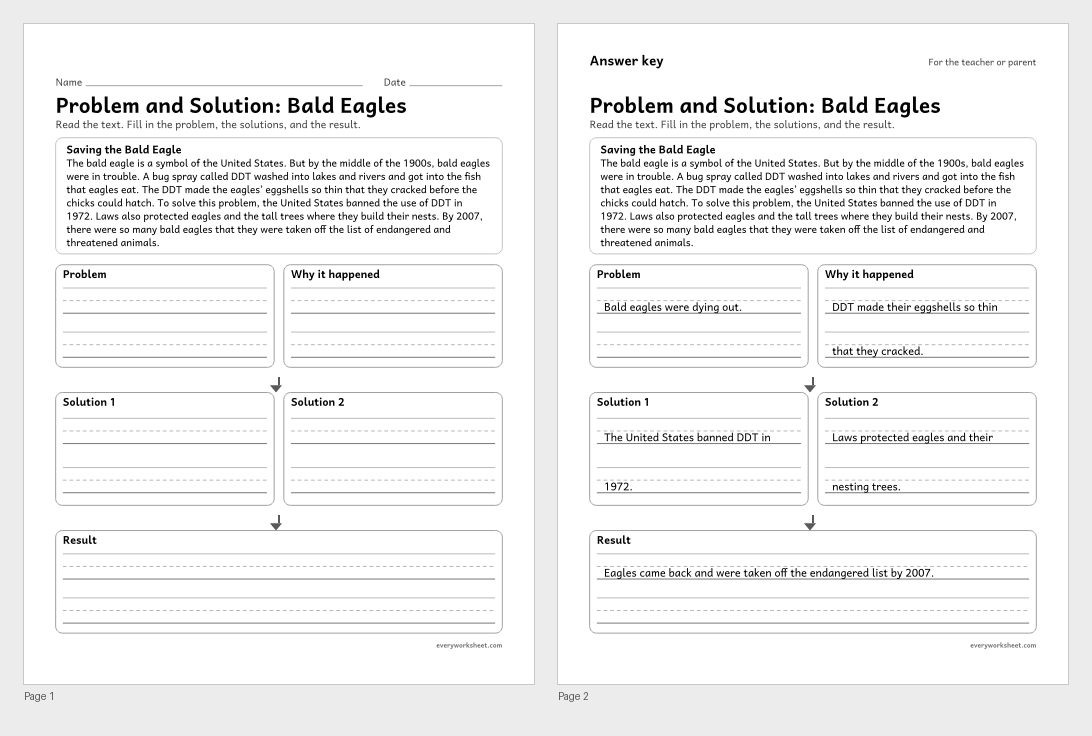 View all 2 pages
Using a problem and solution organizer to record a problem, its cause, the solutions, and the result
Answer key on page 2
2 pages36 KB
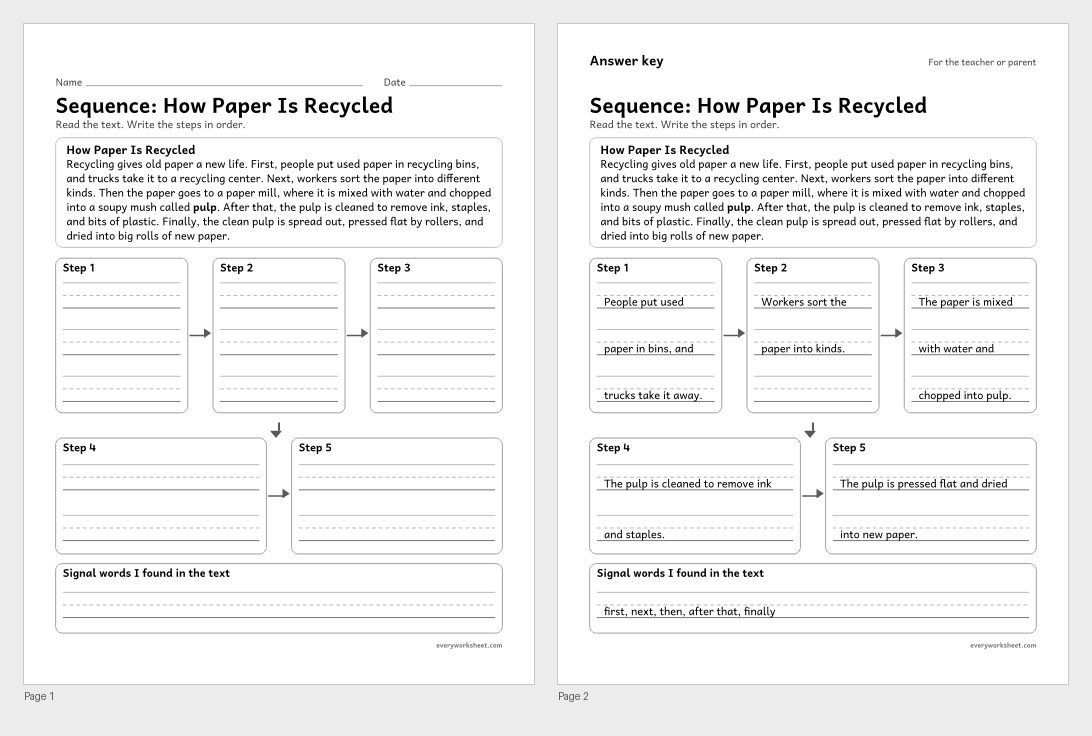 View all 2 pages
Using a sequence organizer to put the steps of a process in order
Answer key on page 2
2 pages37 KB
 View all 2 pages
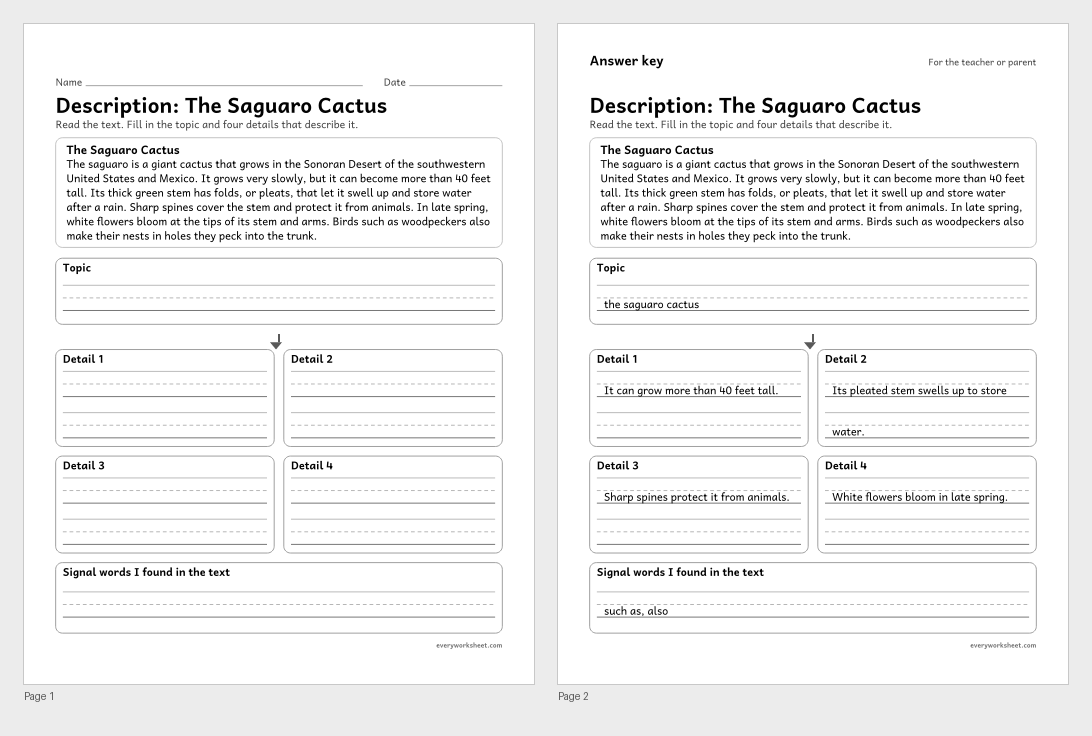
Using a description organizer to record a topic and its key features
Answer key on page 2
2 pages36 KB
 View all 2 pages
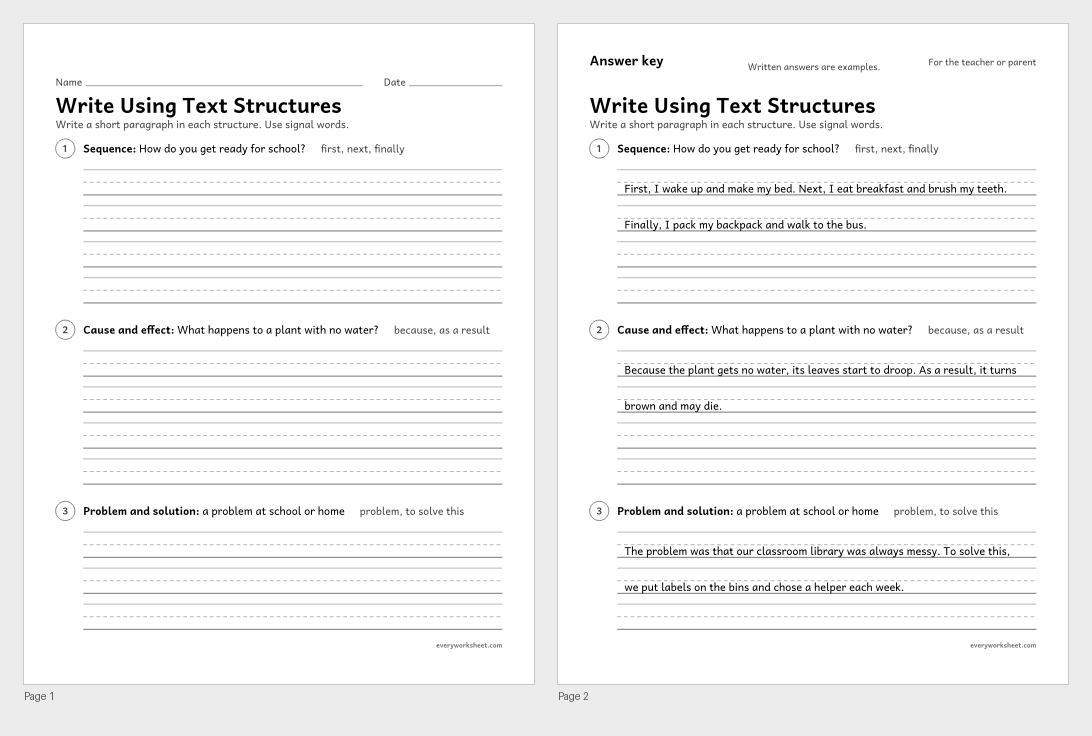
Writing short informative paragraphs organized as sequence, cause and effect, or problem and solution
Answer key on page 2
2 pages36 KB
 View larger
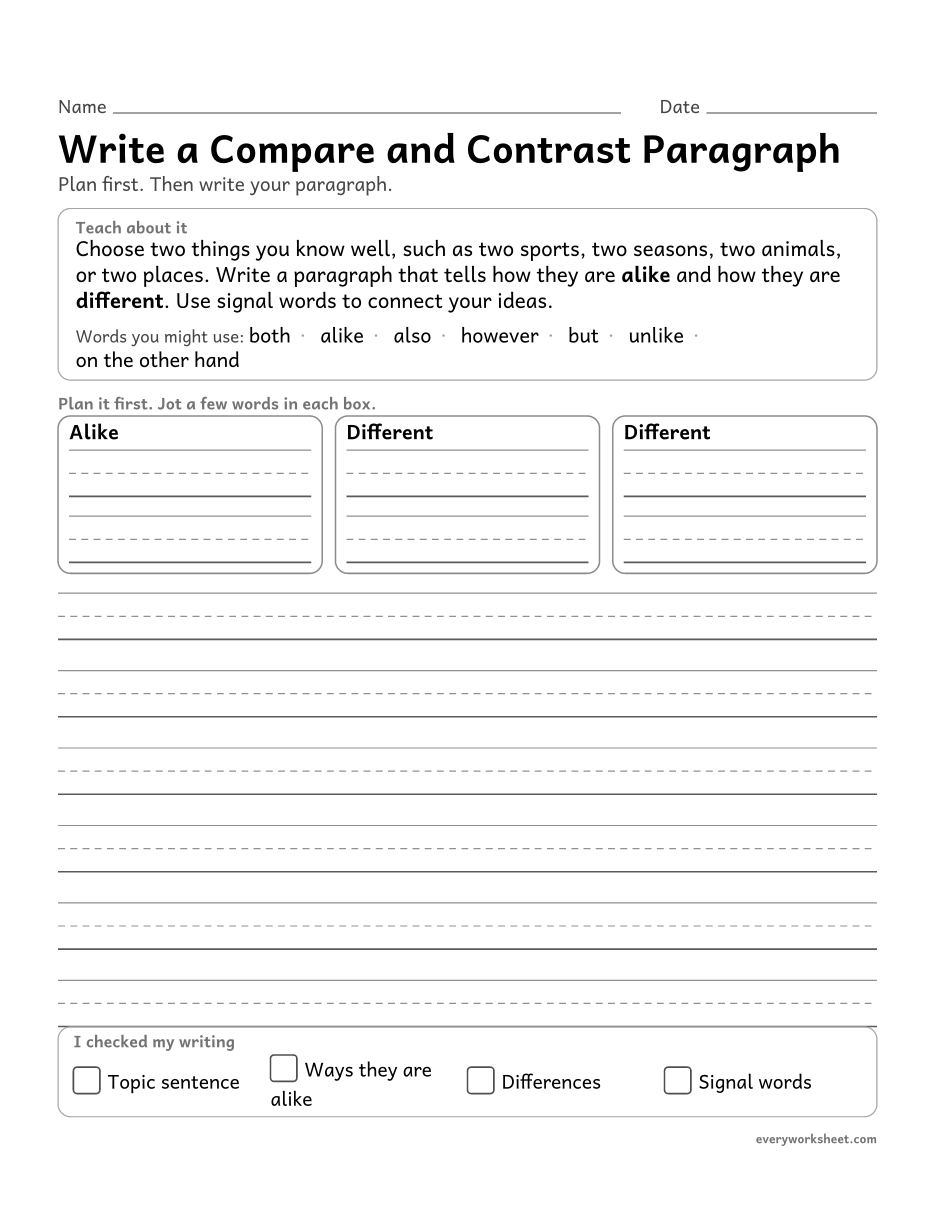
Writing an informative paragraph with a compare and contrast structure
1 page32 KB
Print at 100% (actual size) for the cleanest tracing lines.
Text structure is the way an author organizes the ideas in a nonfiction text. There are five common structures. Description tells what something is like ("Pandas have black-and-white fur"). Sequence tells events or steps in time order (first, next, finally). Compare and contrast tells how things are alike and different (both, however, unlike). Cause and effect tells why something happens (because, so, as a result). Problem and solution tells about a problem and how it was solved (to solve this problem).
Signal words are the clues. When children notice "first" and "then," they can expect steps in order. When they see "however" or "unlike," they know a difference is coming. Knowing the structure helps readers understand how the ideas connect, remember what they read, and take better notes.
These text structure worksheets start with an anchor chart and a page that shows one topic, sea turtles, written five different ways. Children then name the structure of short paragraphs, sort signal words, read a longer text about bats where each paragraph uses a different structure, and fill in a graphic organizer for each structure. Writing pages let them try the structures in their own paragraphs.
CCSS.ELA-LITERACY.RI.4.5Describe the overall structure (e.g., chronology, comparison, cause/effect, problem/solution) of events, ideas, concepts, or information in a text or part of a text.CCSS.ELA-LITERACY.W.4.2.AIntroduce a topic clearly and group related information in paragraphs and sections; include formatting (e.g., headings), illustrations, and multimedia when useful to aiding comprehension.Description, sequence (also called chronology or time order), compare and contrast, cause and effect, and problem and solution.
Signal words are clue words that show how ideas are connected. First, next, and finally show sequence. Both, however, and unlike show compare and contrast. Because, so, and as a result show cause and effect.
They are written for 4th grade, when children learn to describe the overall structure of a text, and they also work well for 3rd and 5th graders who need practice.