 View larger
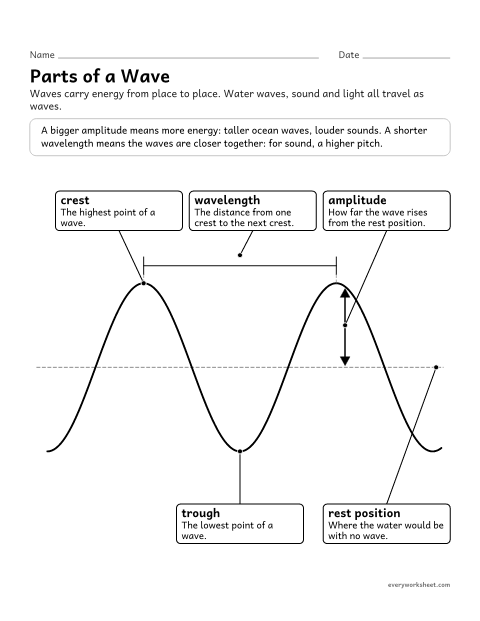
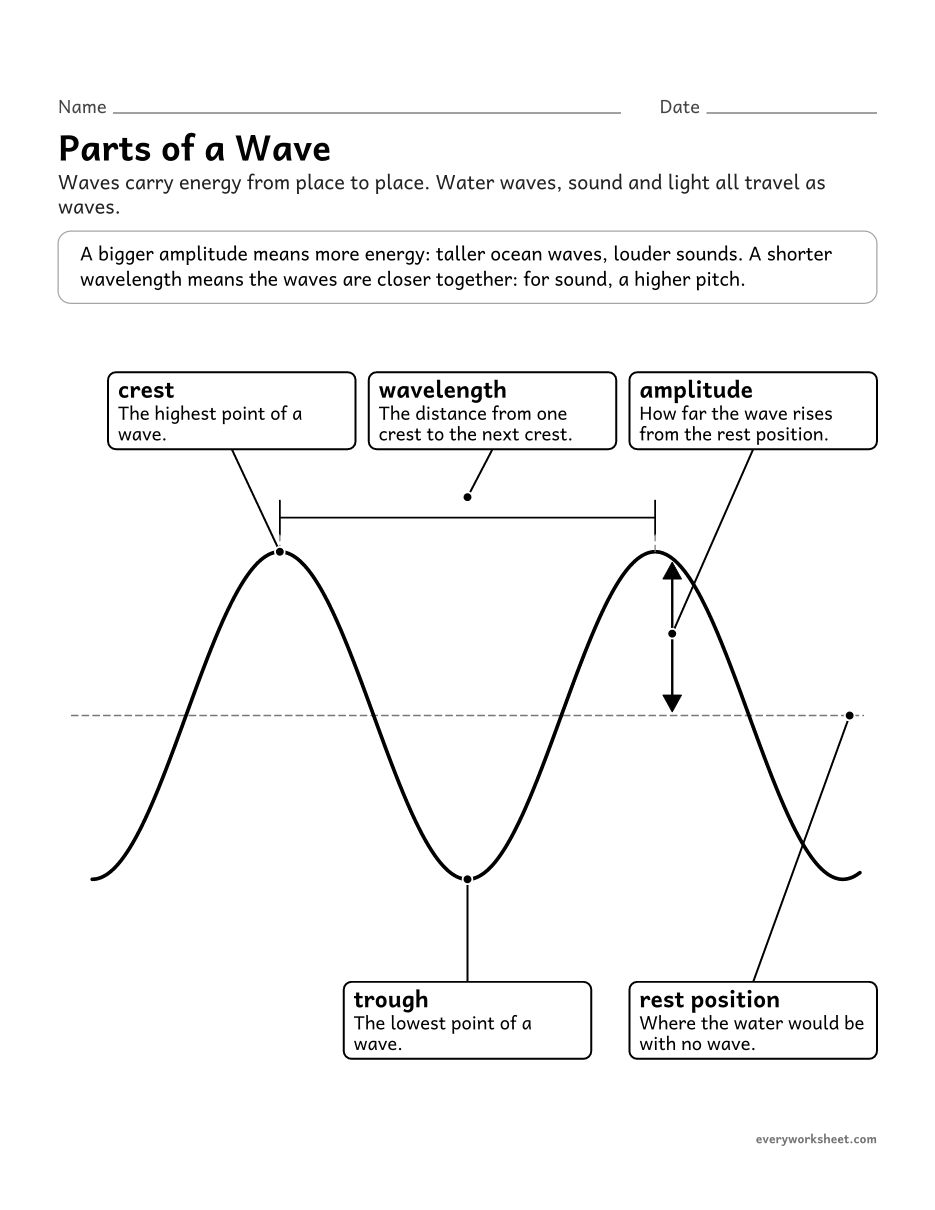
Parts of a wave Diagram: Crest, Trough, Wavelength, amplitude
Naming the parts of a wave: crest, trough, wavelength and amplitude
1 page33 KB
Parts of a wave, amplitude and wavelength, how sound travels, how waves move objects, light and reflection, how we see and codes made of patterns.
View largerNaming the parts of a wave: crest, trough, wavelength and amplitude
1 page33 KB
 View all 2 pages
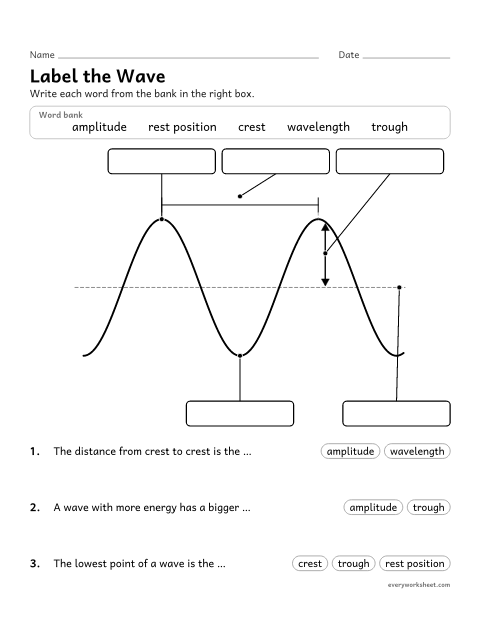
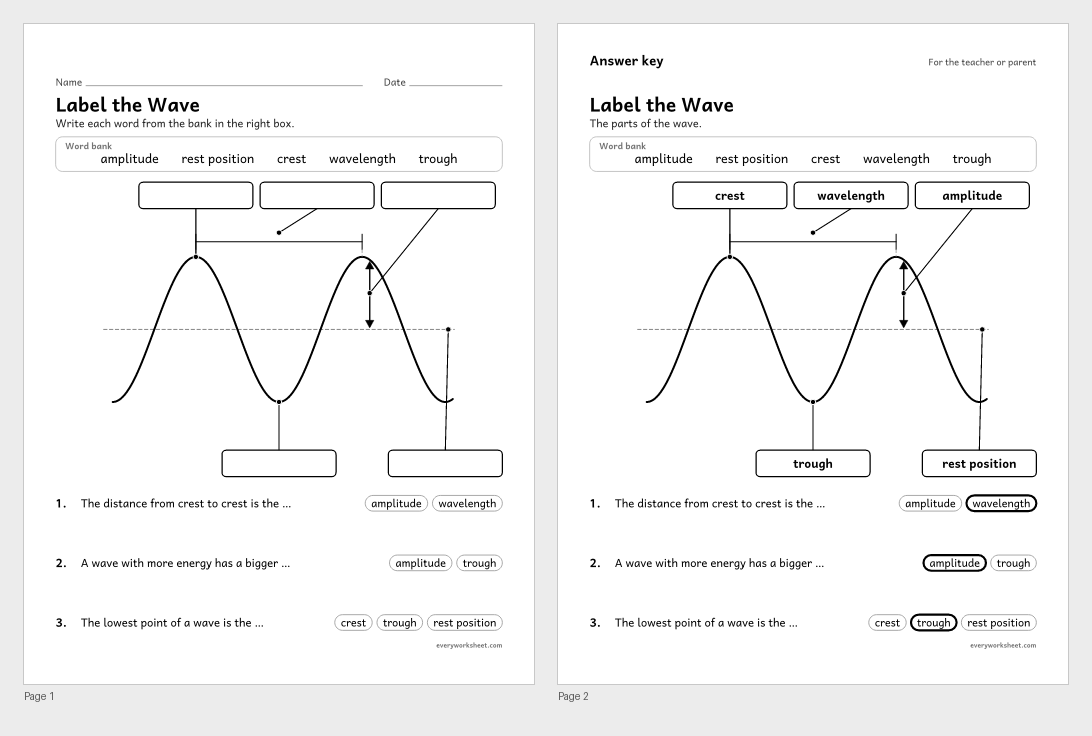
Labeling the parts of a wave
Answer key on page 2
2 pages46 KB
 View all 2 pages
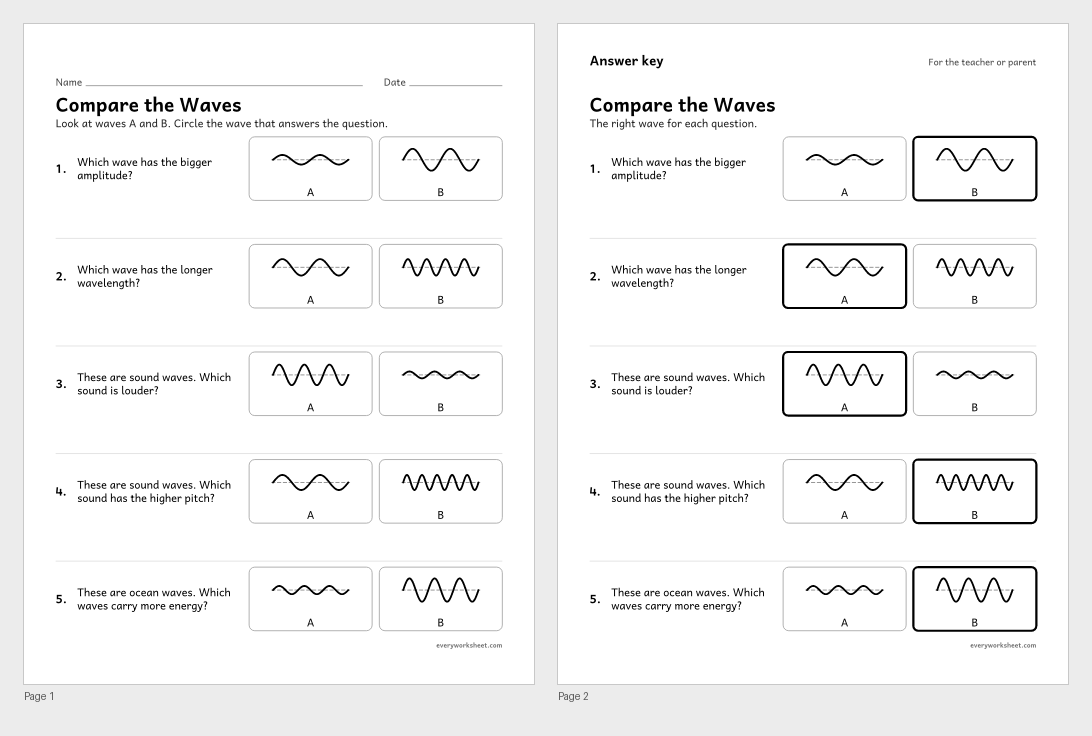
Comparing waves by amplitude and wavelength, and linking them to loudness and pitch
Answer key on page 2
2 pages91 KB
 View all 2 pages
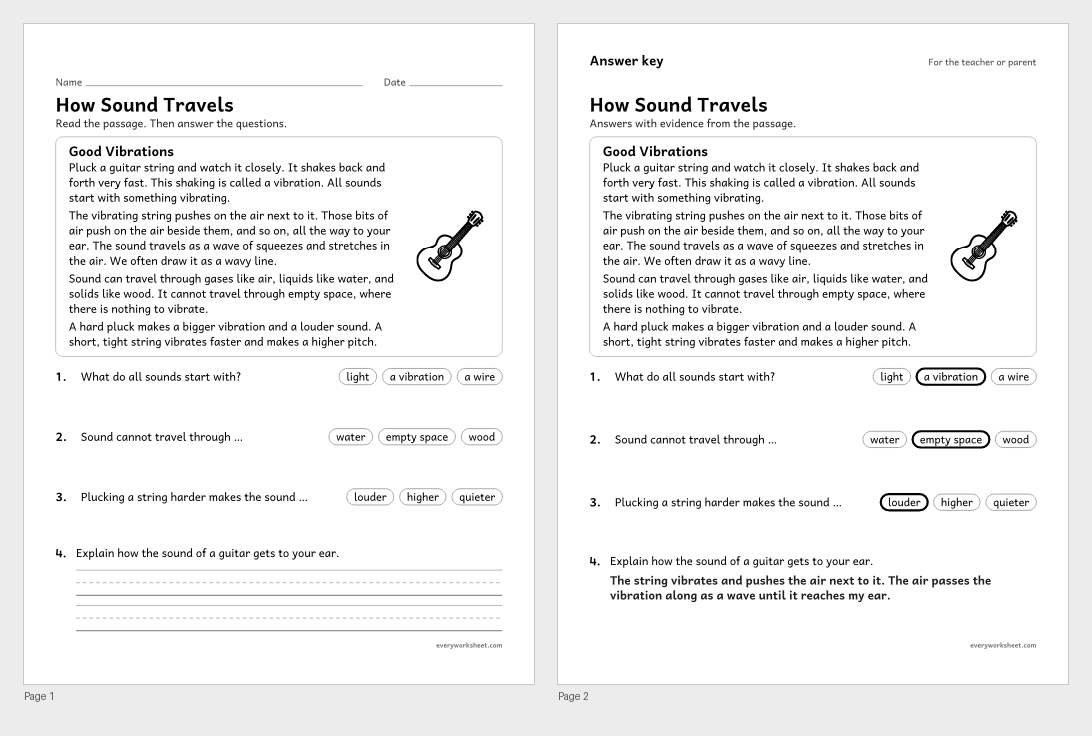
Explaining that sound is made by vibrations and travels as waves
Answer key on page 2
2 pages80 KB
 View all 2 pages
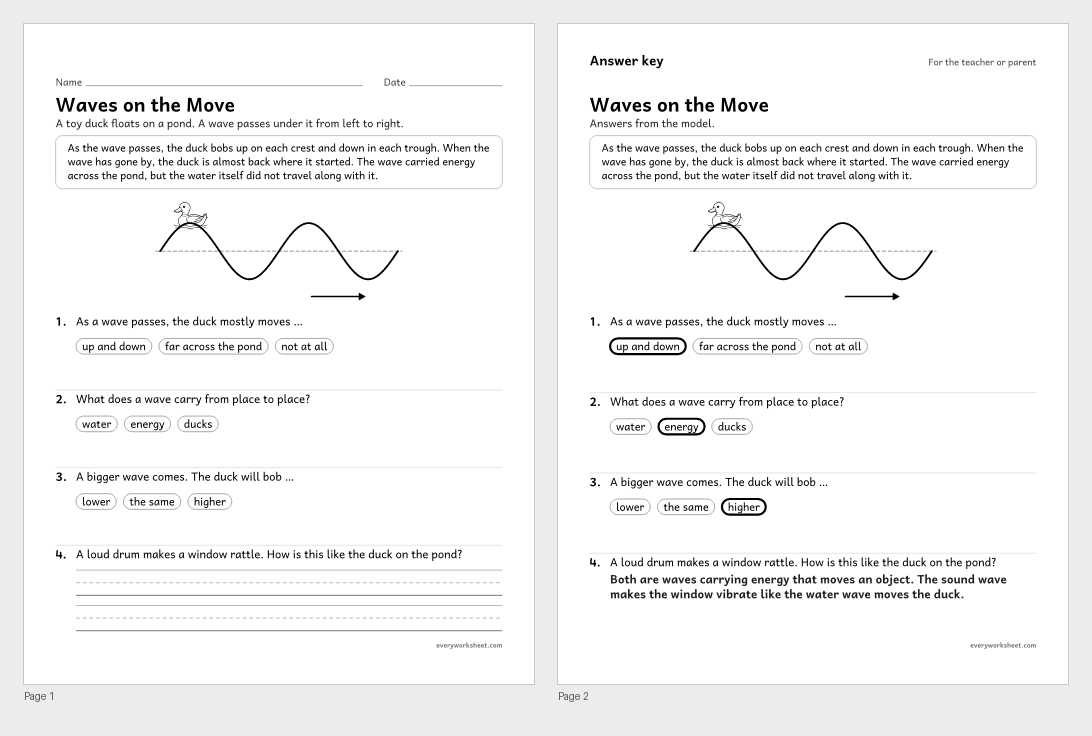
Using a model of water waves to show that waves carry energy and can move objects
Answer key on page 2
2 pages54 KB
 View larger
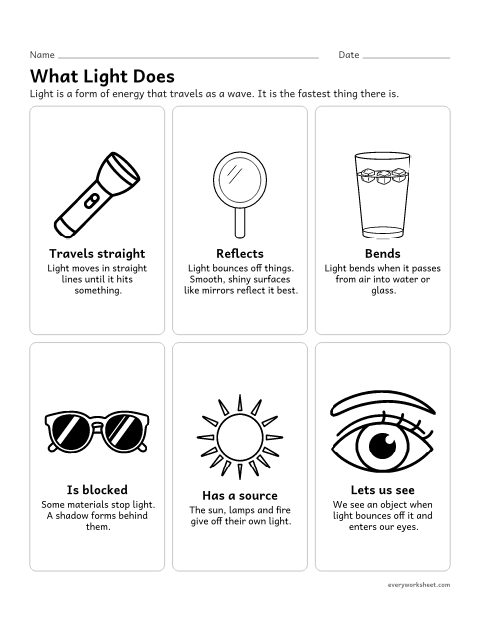
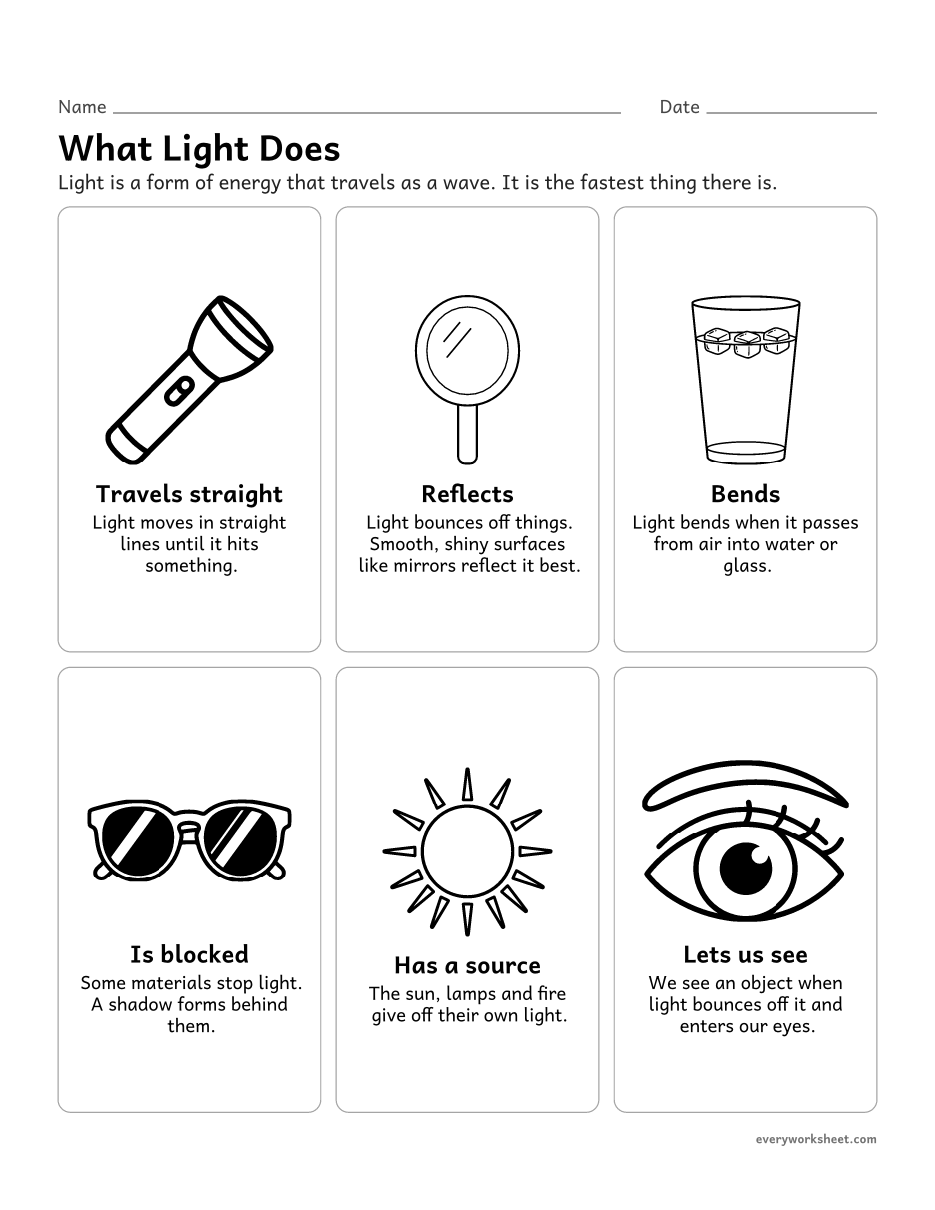
Describing how light travels, reflects and lets us see
1 page56 KB
 View all 2 pages
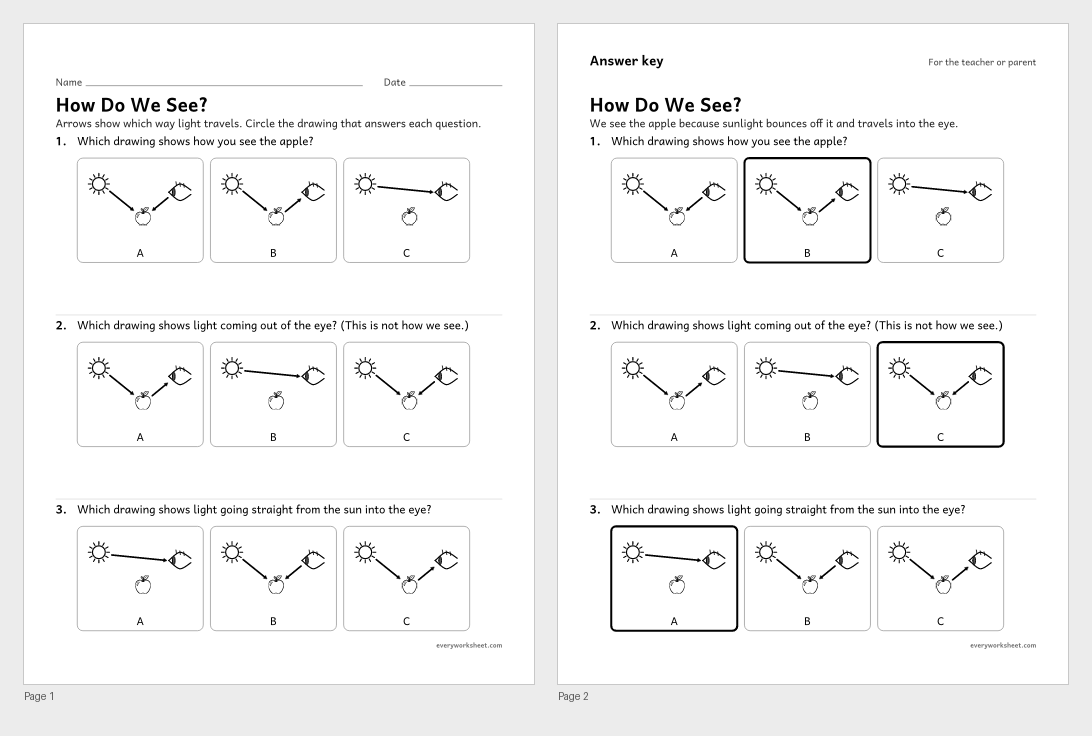
Choosing the model that shows light reflecting from an object into the eye
Answer key on page 2
2 pages340 KB
 View all 2 pages
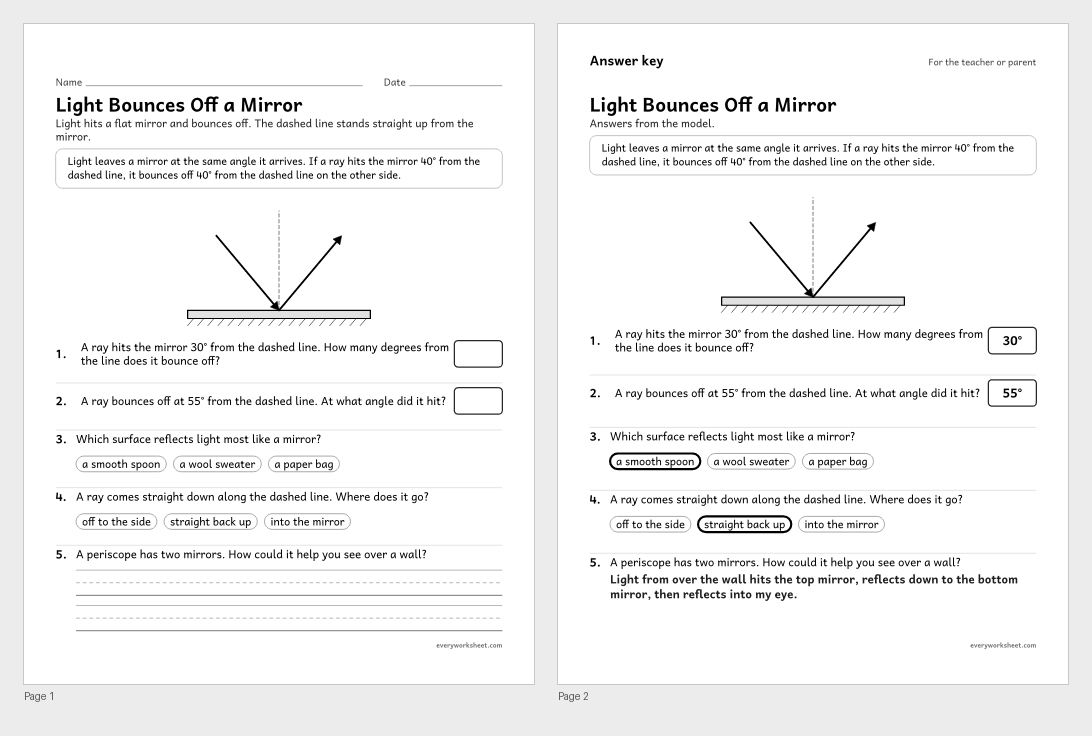
Using a model to show that light reflects off a mirror at the same angle it arrives
Answer key on page 2
2 pages40 KB
 View all 2 pages
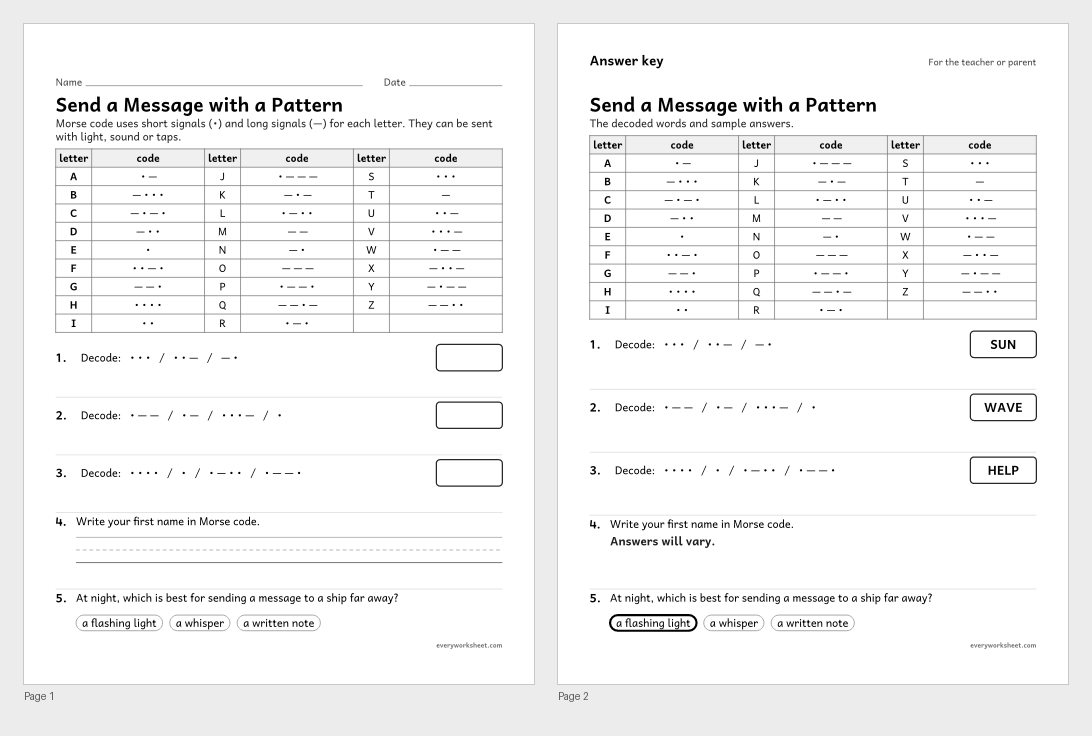
Using a pattern code to send and decode information
Answer key on page 2
2 pages63 KB
 View all 2 pages
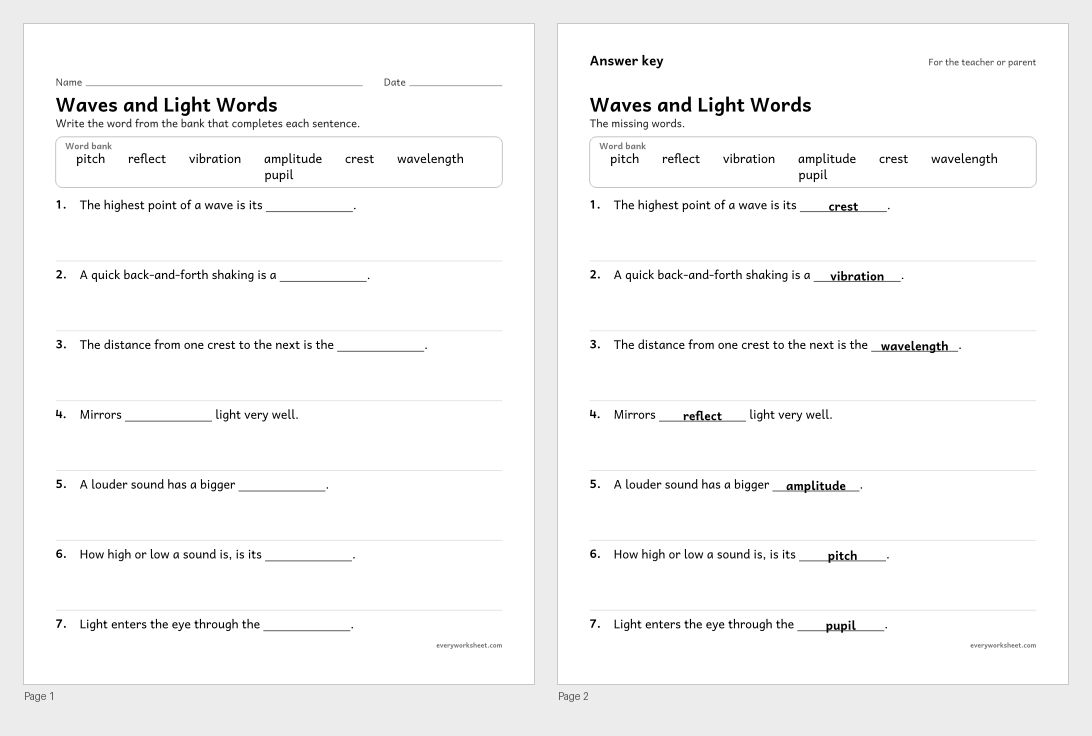
Using vocabulary about waves, sound and light in context
Answer key on page 2
2 pages38 KB
 View all 2 pages
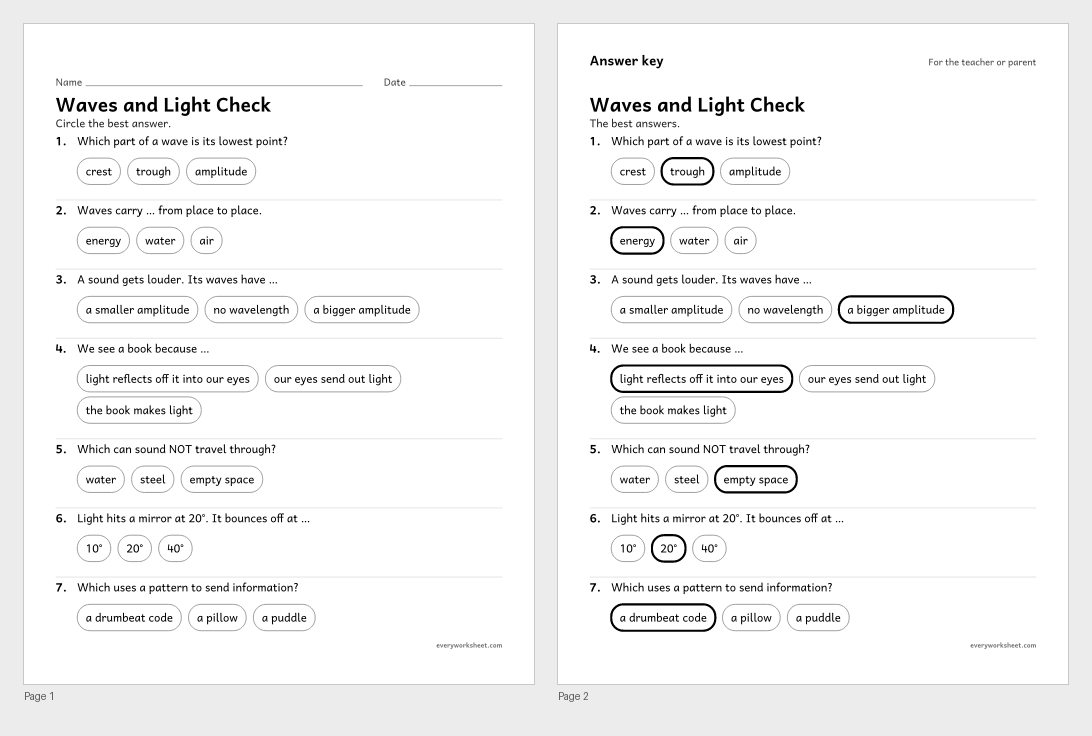
Reviewing waves, sound, light and information transfer
Answer key on page 2
2 pages42 KB
Print at 100% (actual size) for the cleanest tracing lines.
Waves carry energy from place to place. Water waves, sound and light all travel as waves. Fourth graders learn the parts of a wave, see that a bigger amplitude means more energy and a shorter wavelength means waves closer together, and find out that we see things when light bounces off them into our eyes.
These waves, sound and light worksheets include a labeled parts of a wave diagram and a page to label, a compare-the-waves page, a sound waves passage and a model of a duck bobbing on a pond. The light pages cover what light does, how we see, and how a mirror reflects light at the same angle it arrives. A Morse code page shows how patterns carry information.
Every page is black and white, prints on US Letter or A4, and every page with right answers has an answer key on page 2.
NGSS 4-PS4-1Develop a model of waves to describe patterns in terms of amplitude and wavelength and that waves can cause objects to move.NGSS 4-PS4-2Develop a model to describe that light reflecting from objects and entering the eye allows objects to be seen.NGSS 4-PS4-3Generate and compare multiple solutions that use patterns to transfer information.CCSS.ELA-LITERACY.RI.4.4Determine the meaning of general academic and domain-specific words or phrases in a text relevant to a grade 4 topic or subject area.The crest is the highest point and the trough is the lowest. The wavelength is the distance from one crest to the next. The amplitude is how far the wave rises from its rest position.
Light from a source, like the sun or a lamp, bounces off an object and travels into our eyes. The eye senses the light and the brain makes a picture. Our eyes do not send out light.
A bigger vibration makes a wave with a bigger amplitude and a louder sound. A faster vibration makes waves closer together (a shorter wavelength) and a higher pitch.
The 4th grade standards ask children to compare ways to send information with patterns. Morse code uses patterns of short and long signals sent with light or sound.