 View all 2 pages
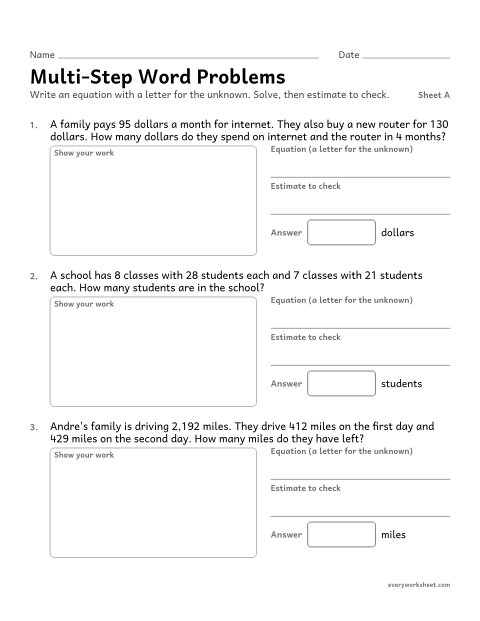
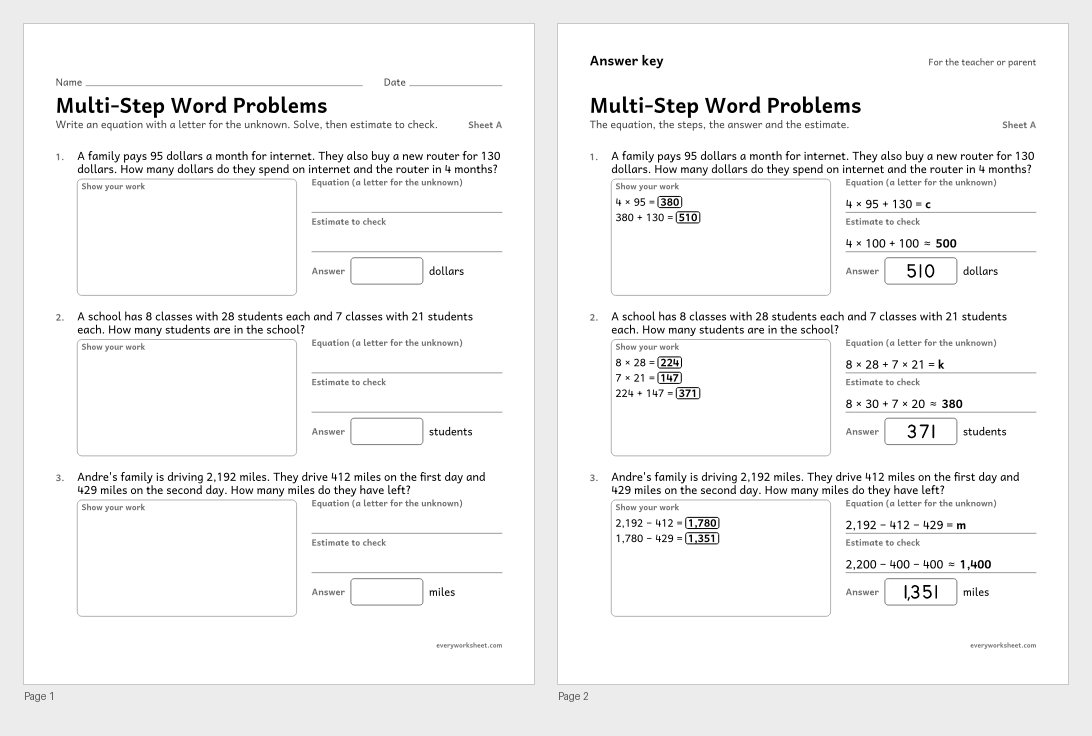
Multi-Step word Problems, sheet A
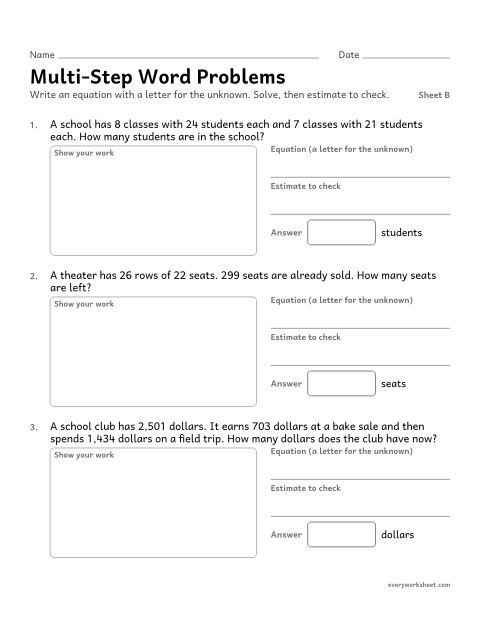
Multi-step word problems with an equation and an estimate
Answer key on page 2
2 pages65 KB
Multi-step problems with all four operations, adding, multiplying and dividing big numbers in stories, remainders to interpret, and times-as-many comparisons.
View all 2 pagesMulti-step word problems with an equation and an estimate
Answer key on page 2
2 pages65 KB
 View all 2 pages
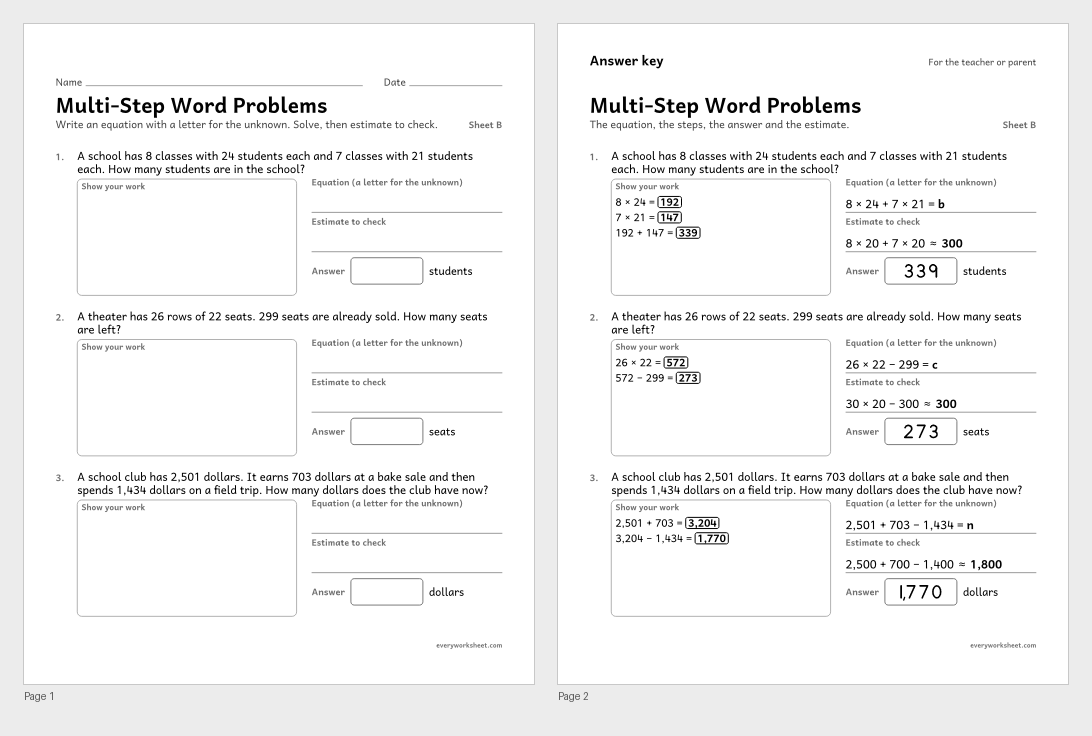
Multi-step word problems with an equation and an estimate
Answer key on page 2
2 pages66 KB
 View all 2 pages
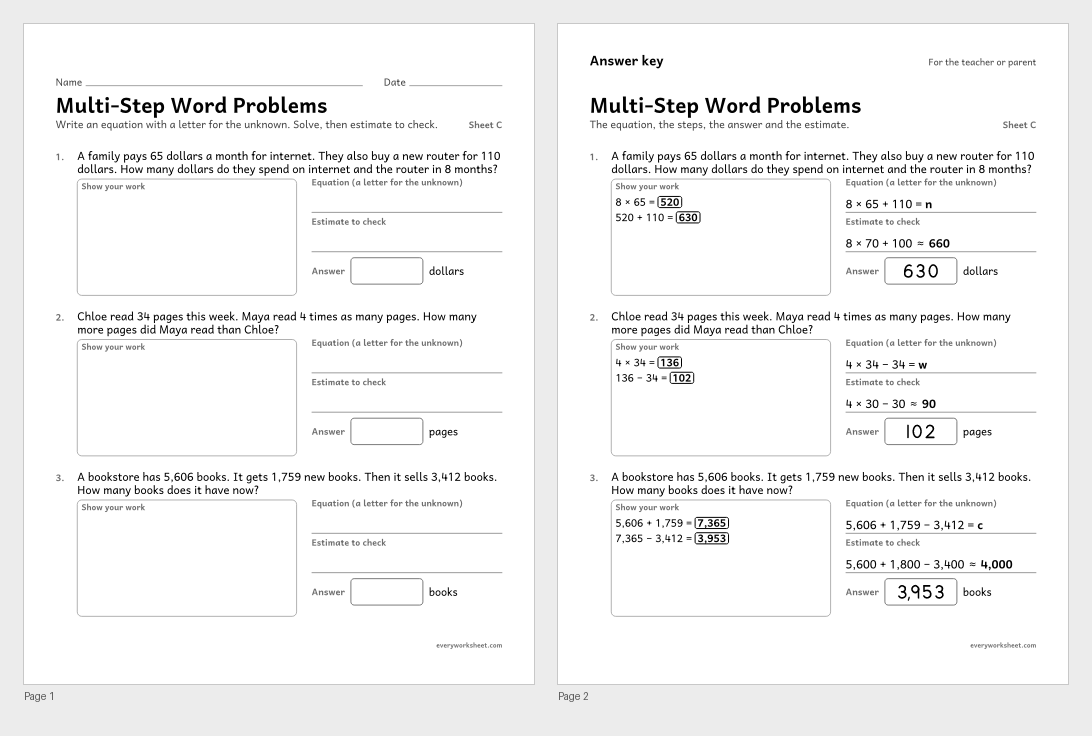
Multi-step word problems with an equation and an estimate
Answer key on page 2
2 pages64 KB
 View all 2 pages
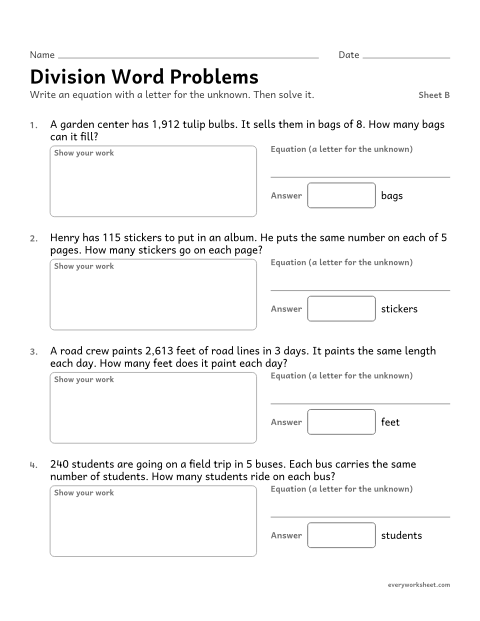
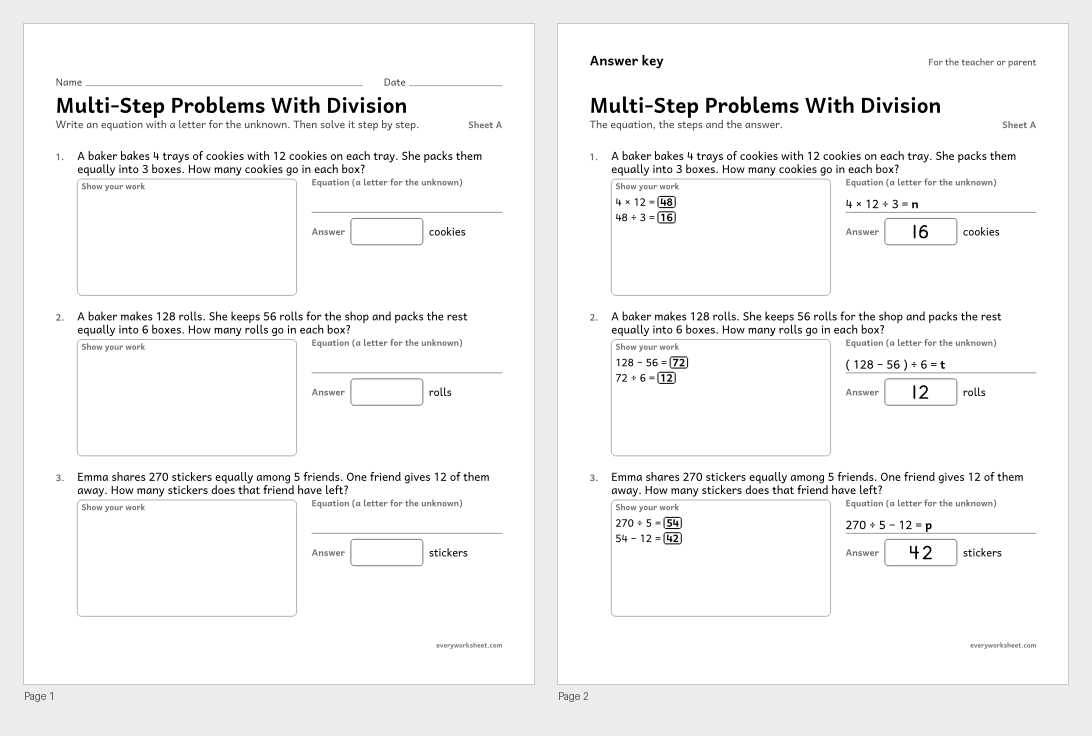
Multi-step word problems that include division
Answer key on page 2
2 pages57 KB
 View all 2 pages
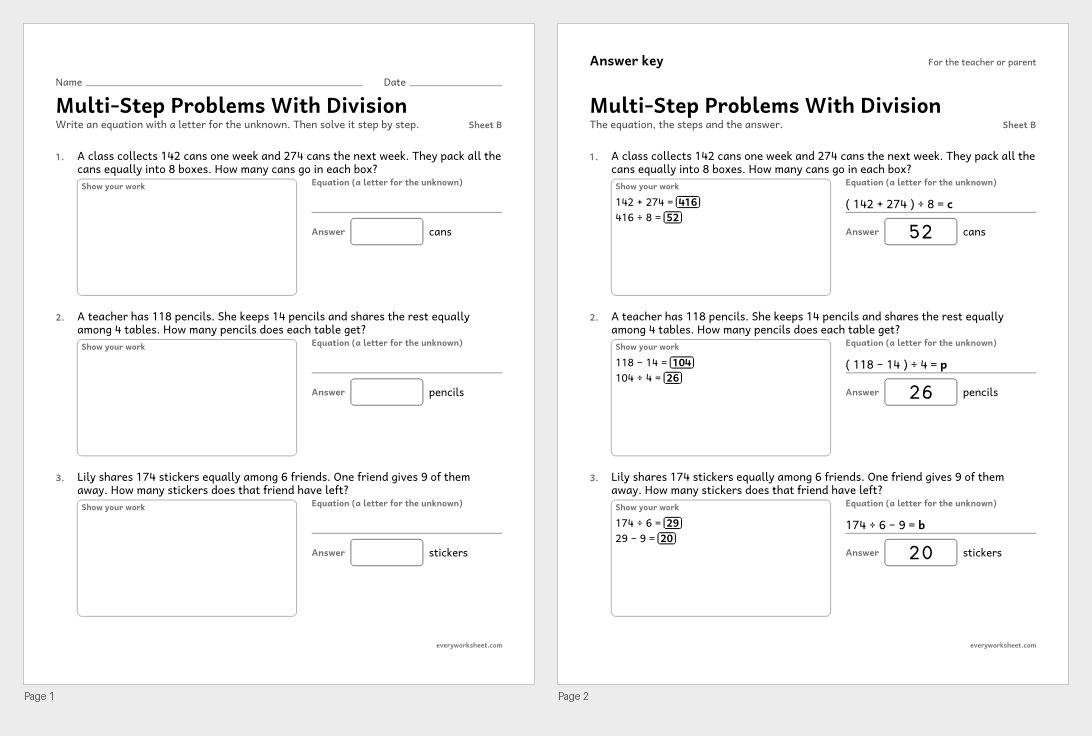
Multi-step word problems that include division
Answer key on page 2
2 pages58 KB
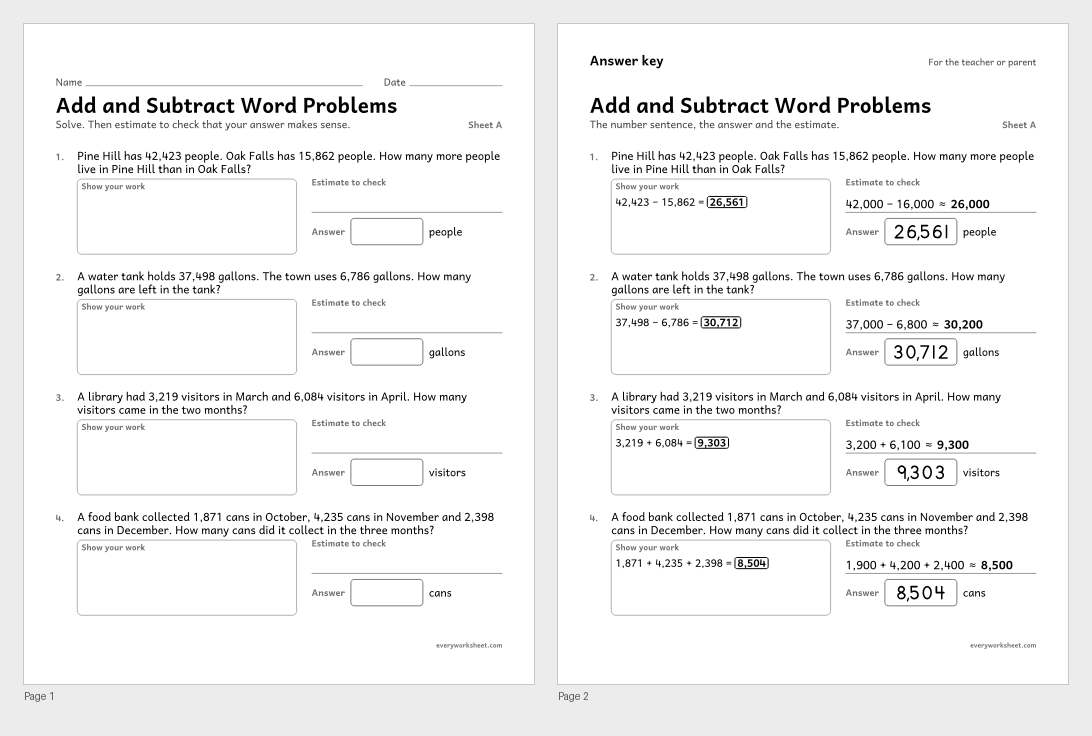 View all 2 pages
Adding and subtracting multi-digit numbers in stories
Answer key on page 2
2 pages59 KB
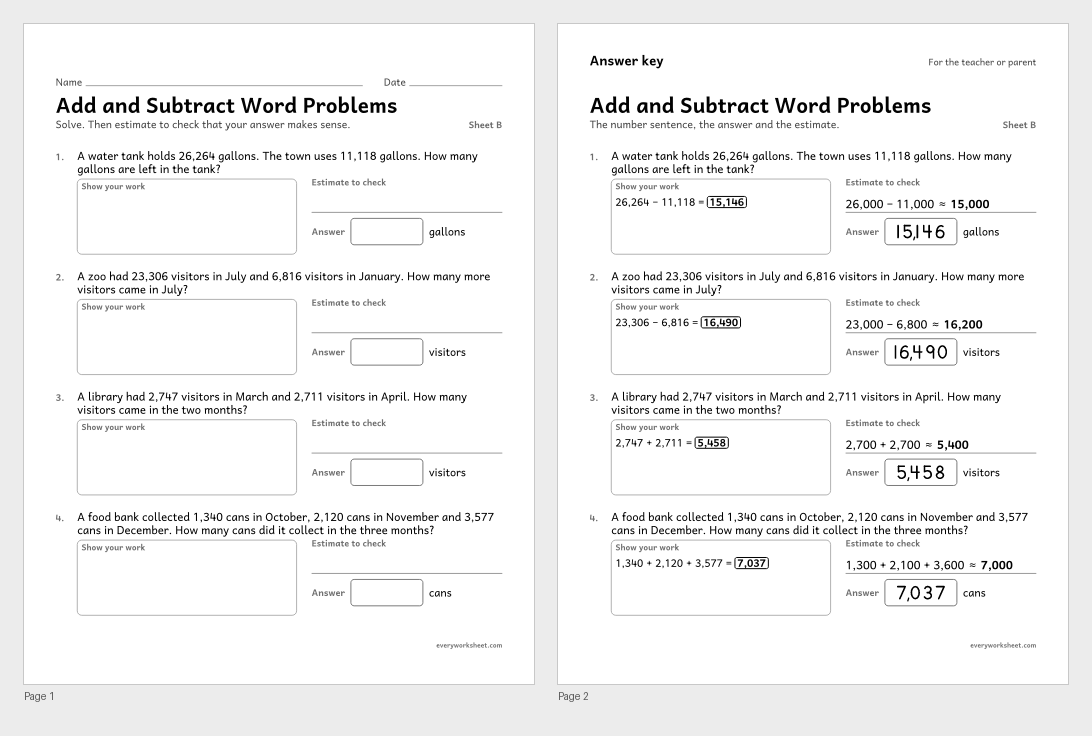 View all 2 pages
Adding and subtracting multi-digit numbers in stories
Answer key on page 2
2 pages59 KB
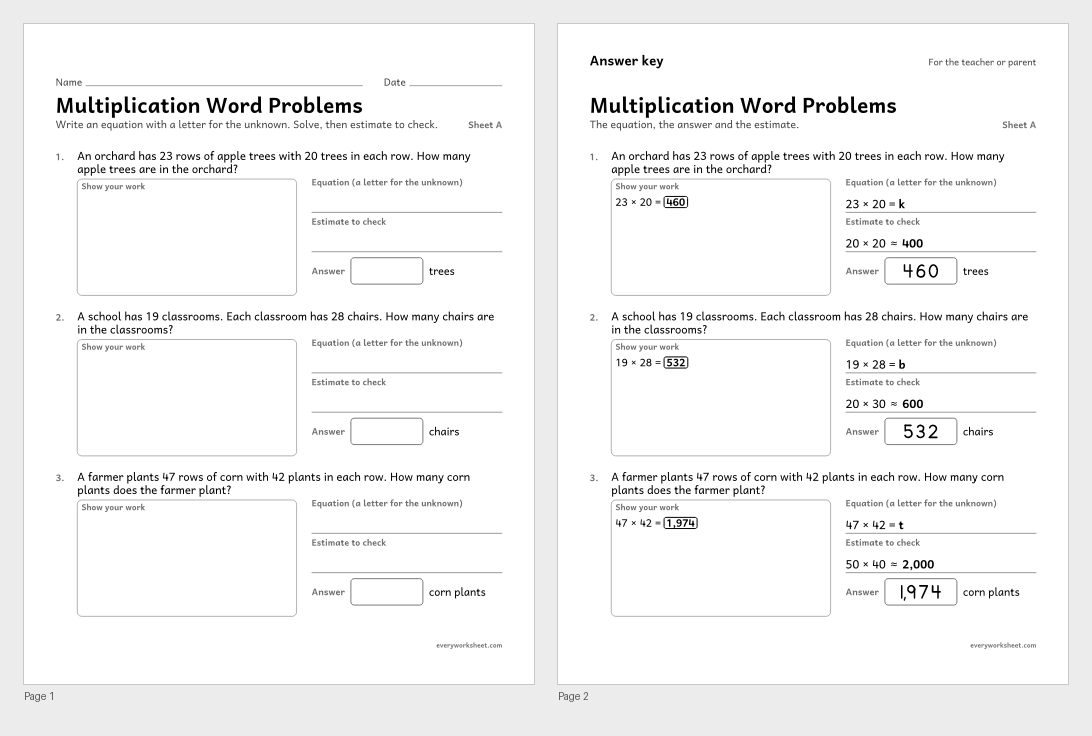 View all 2 pages
Multiplying multi-digit numbers in stories
Answer key on page 2
2 pages56 KB
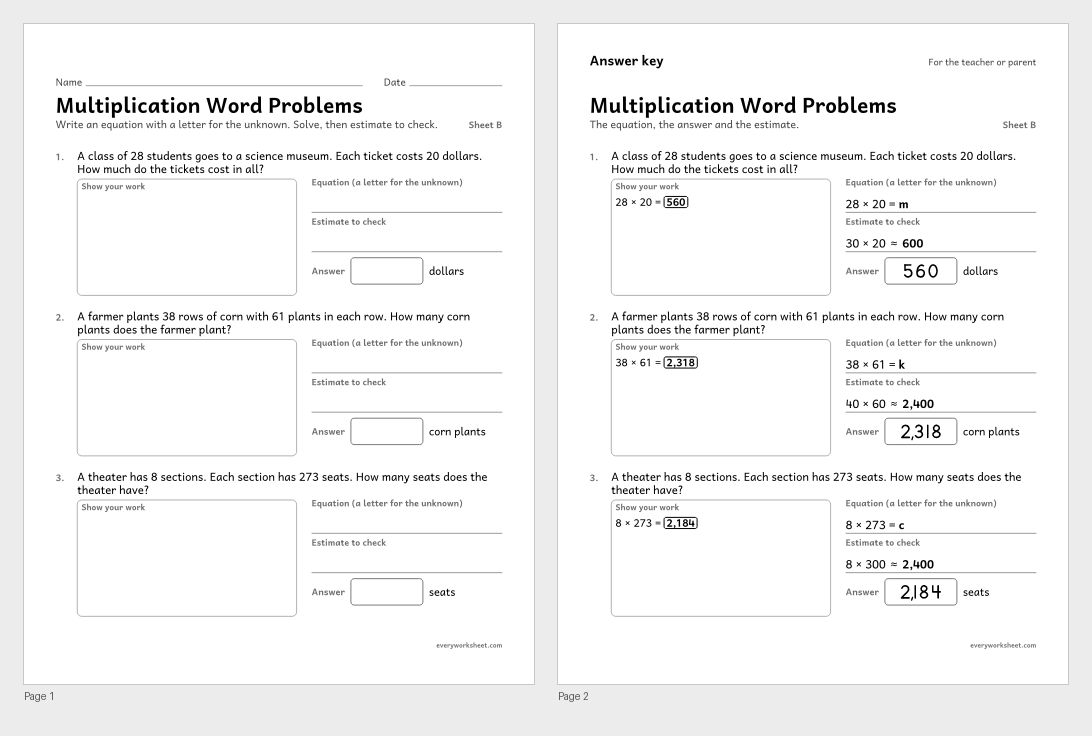 View all 2 pages
Multiplying multi-digit numbers in stories
Answer key on page 2
2 pages56 KB
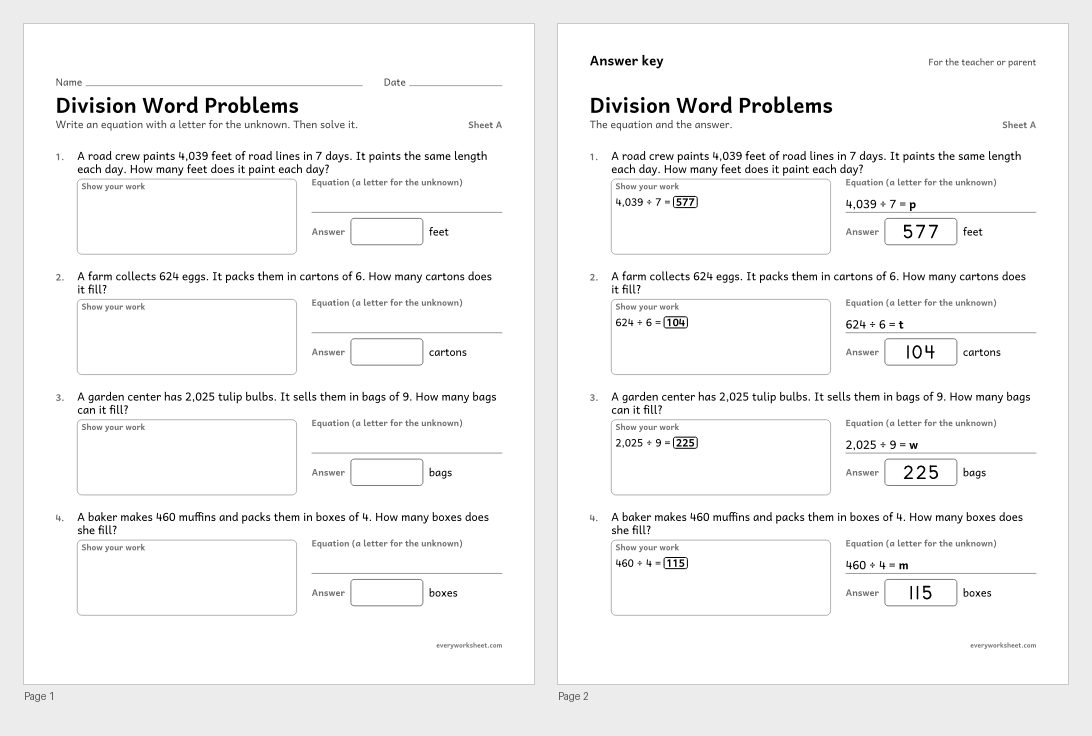 View all 2 pages
Dividing multi-digit numbers in stories
Answer key on page 2
2 pages57 KB
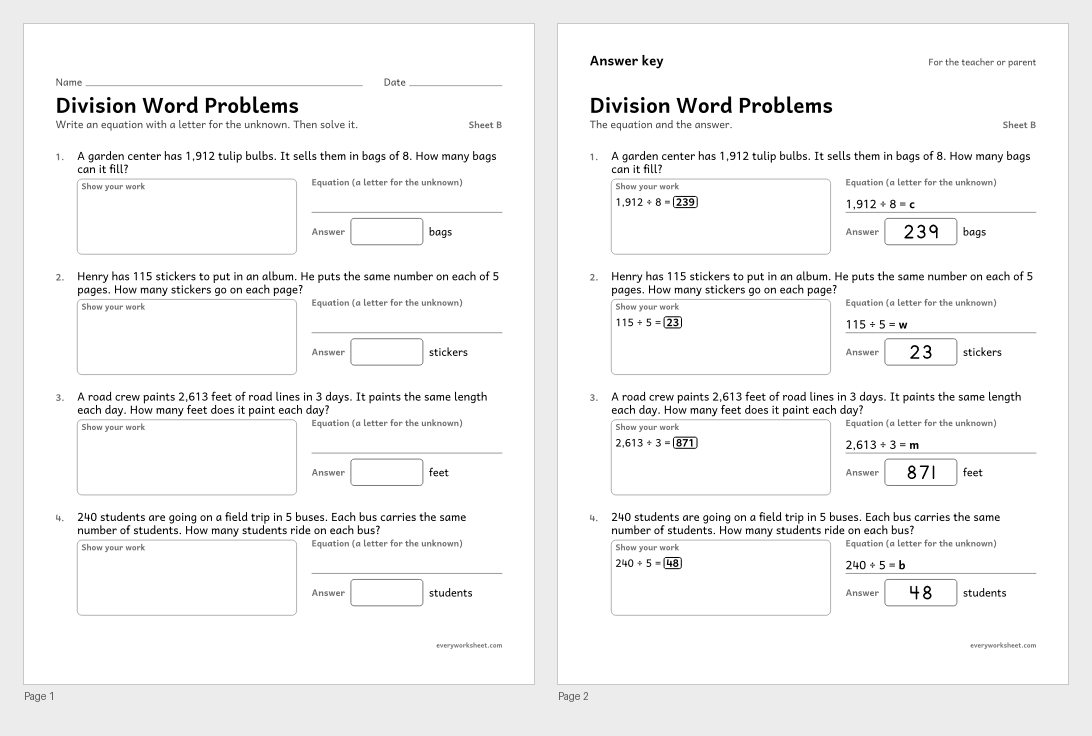 View all 2 pages
Dividing multi-digit numbers in stories
Answer key on page 2
2 pages57 KB
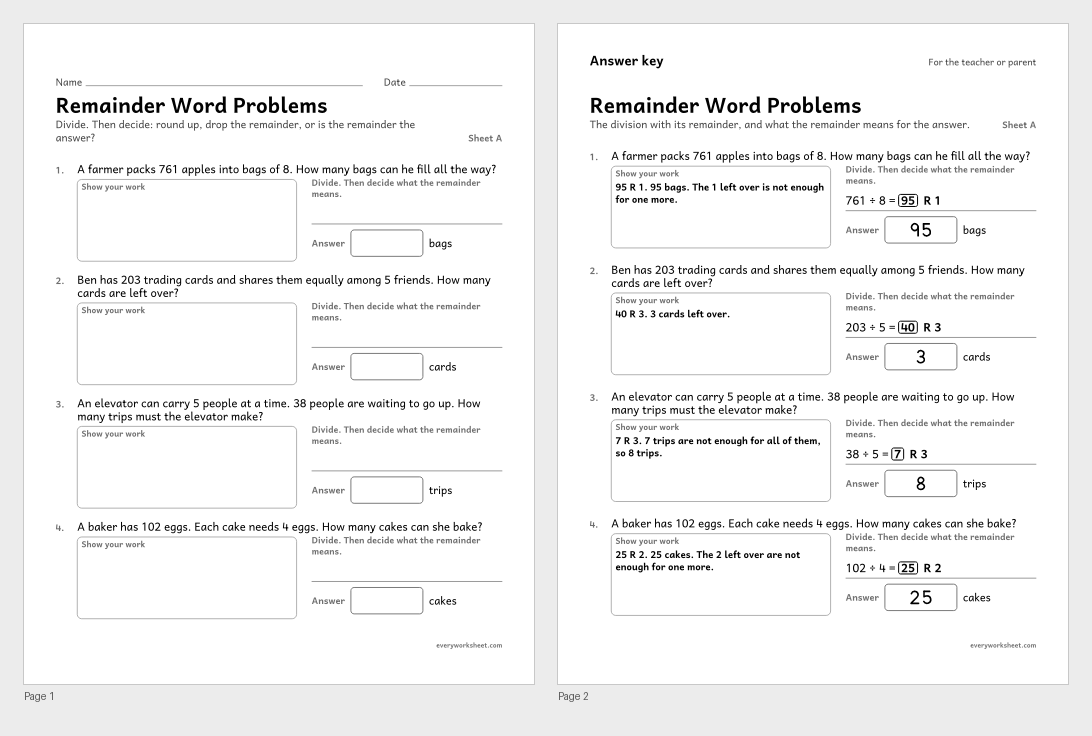 View all 2 pages
Interpreting remainders in word problems
Answer key on page 2
2 pages55 KB
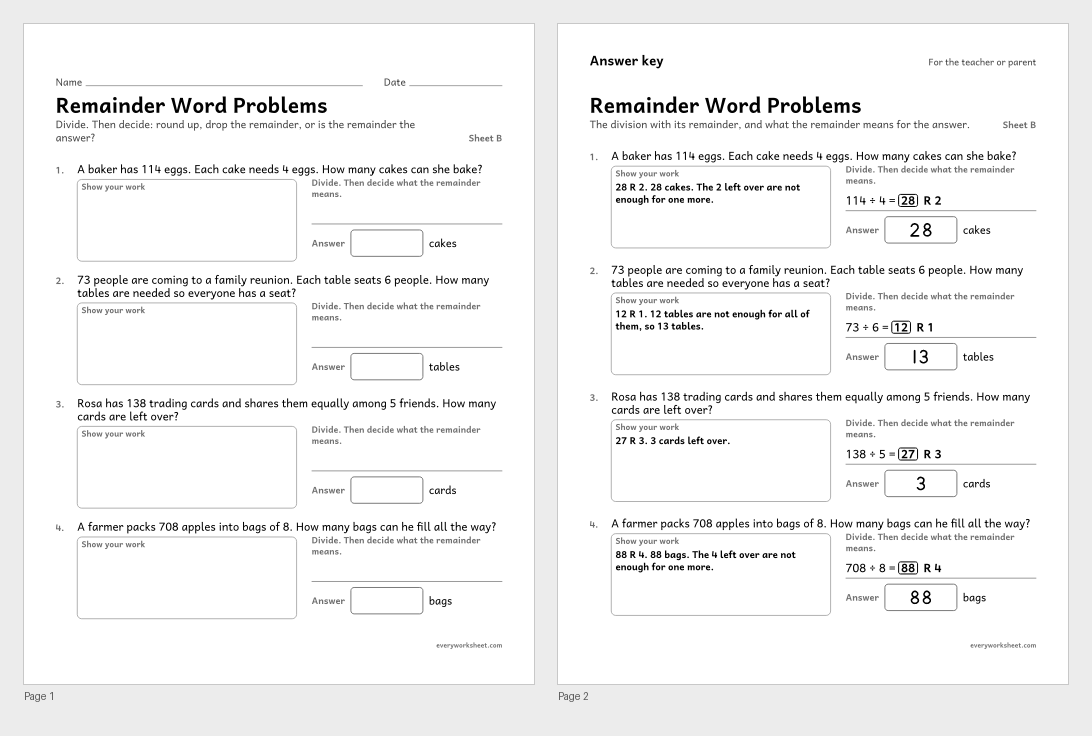 View all 2 pages
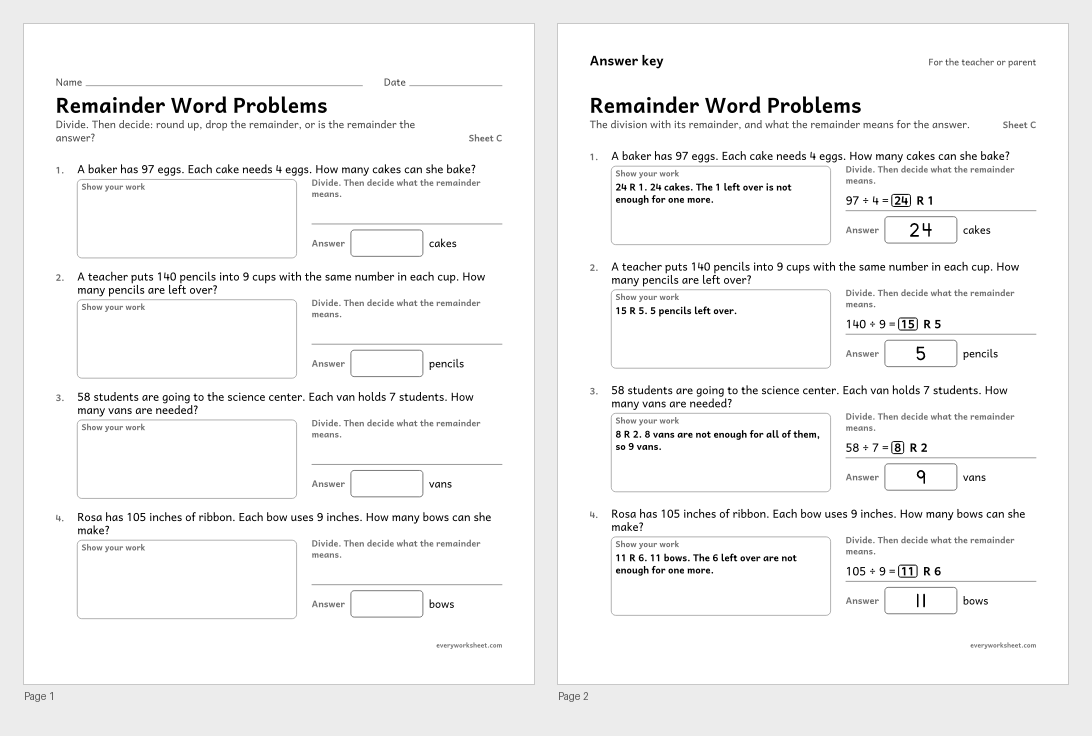
Interpreting remainders in word problems
Answer key on page 2
2 pages54 KB
 View all 2 pages
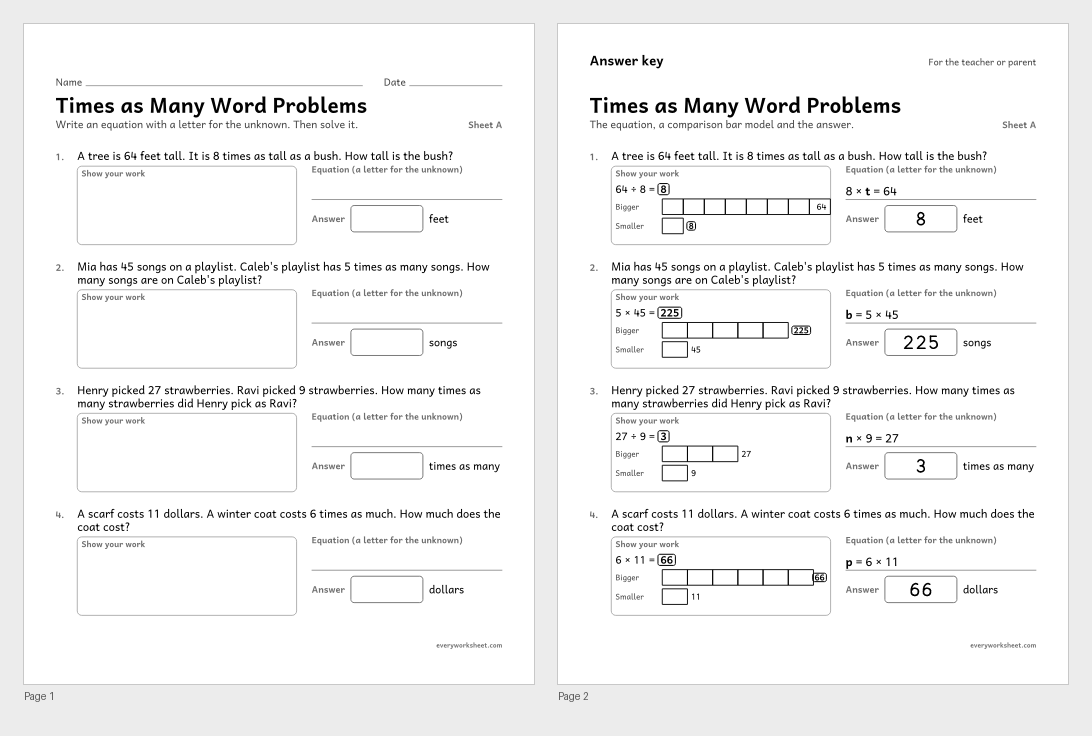
Interpreting remainders in word problems
Answer key on page 2
2 pages54 KB
 View all 2 pages
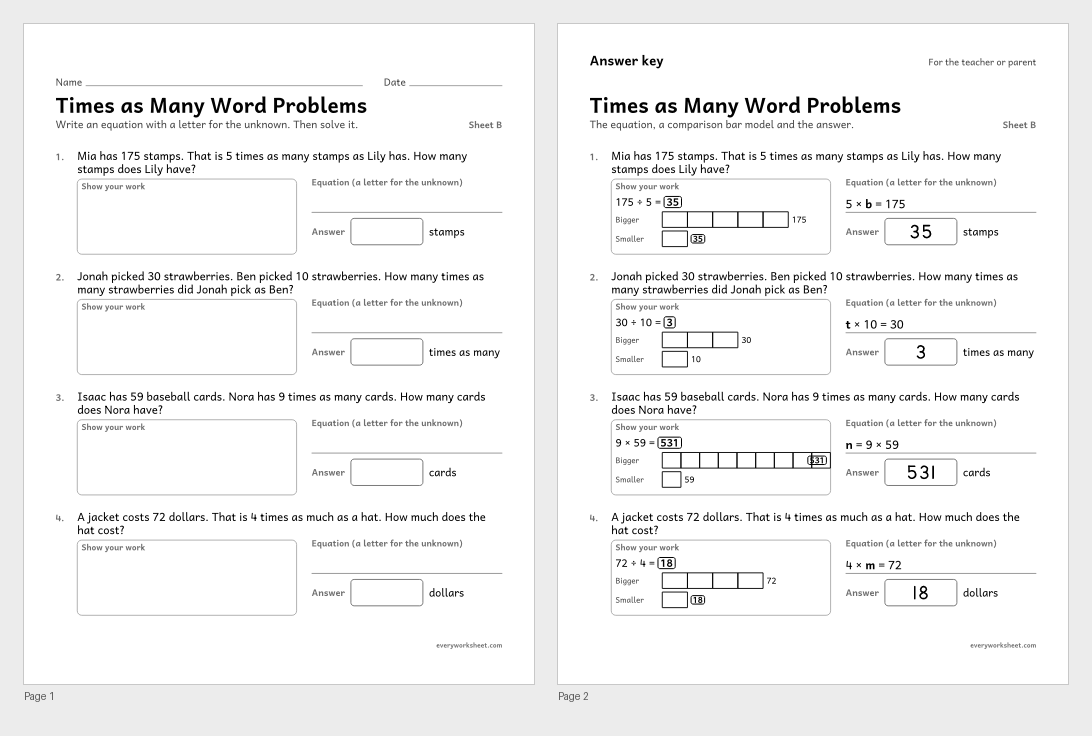
Multiplicative comparison word problems
Answer key on page 2
2 pages63 KB
 View all 2 pages
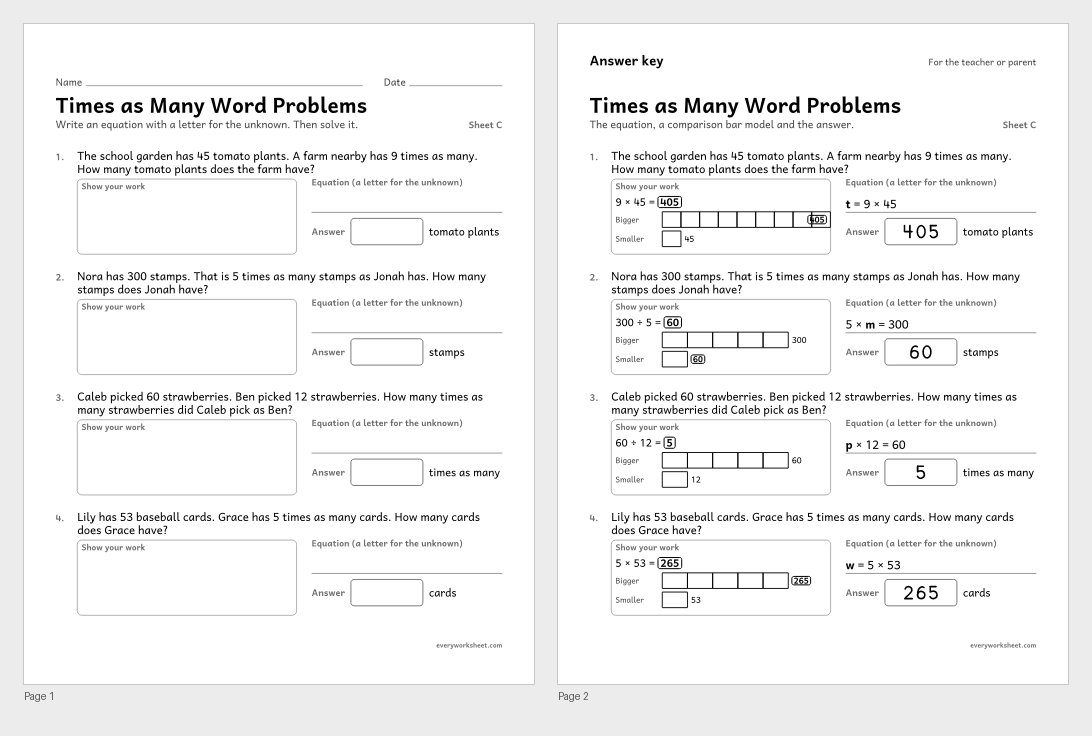
Multiplicative comparison word problems
Answer key on page 2
2 pages63 KB
 View all 2 pages
Multiplicative comparison word problems
Answer key on page 2
2 pages63 KB
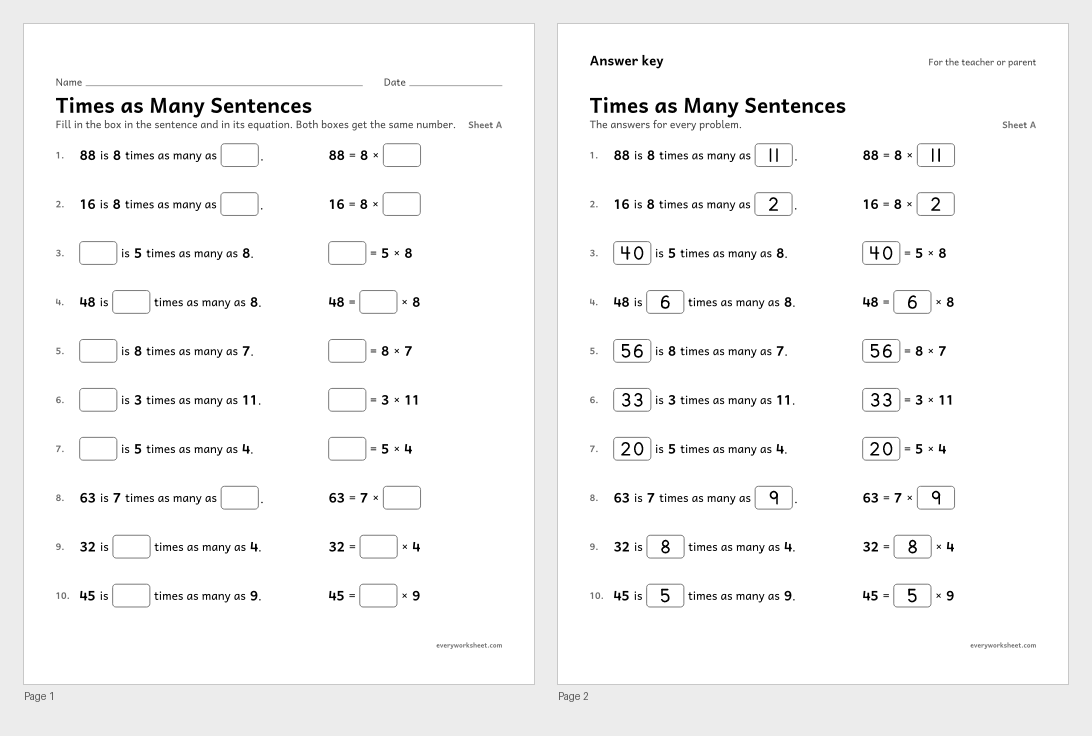 View all 2 pages
Writing multiplication equations as comparisons
Answer key on page 2
2 pages89 KB
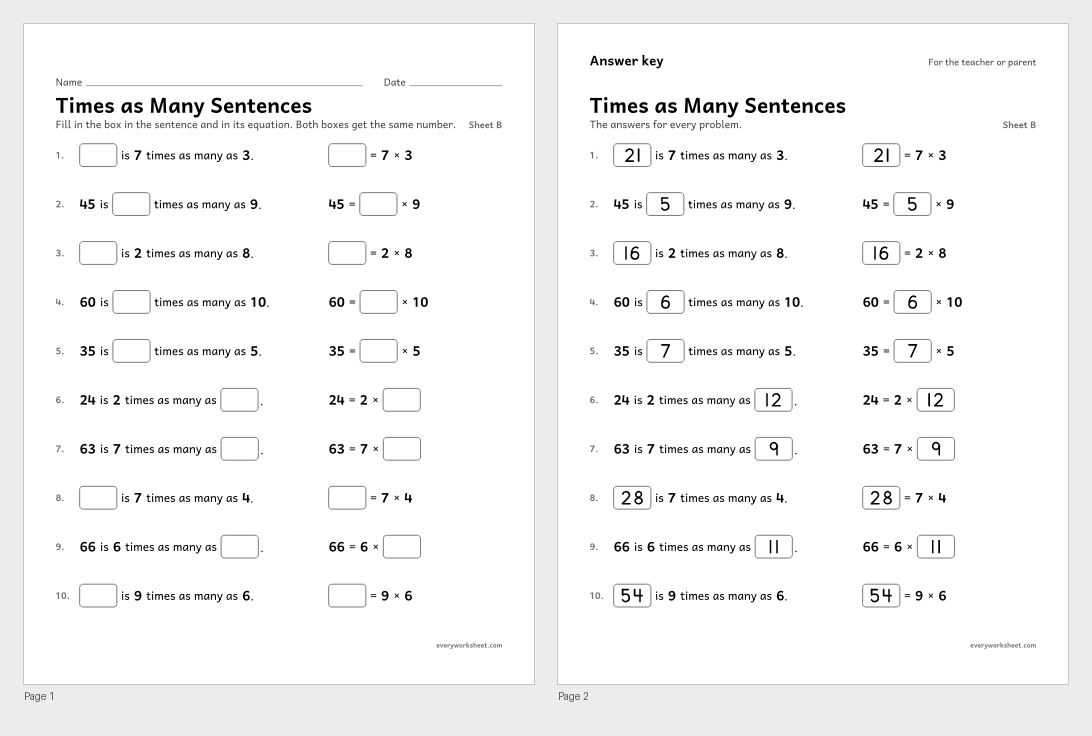 View all 2 pages
Writing multiplication equations as comparisons
Answer key on page 2
2 pages89 KB
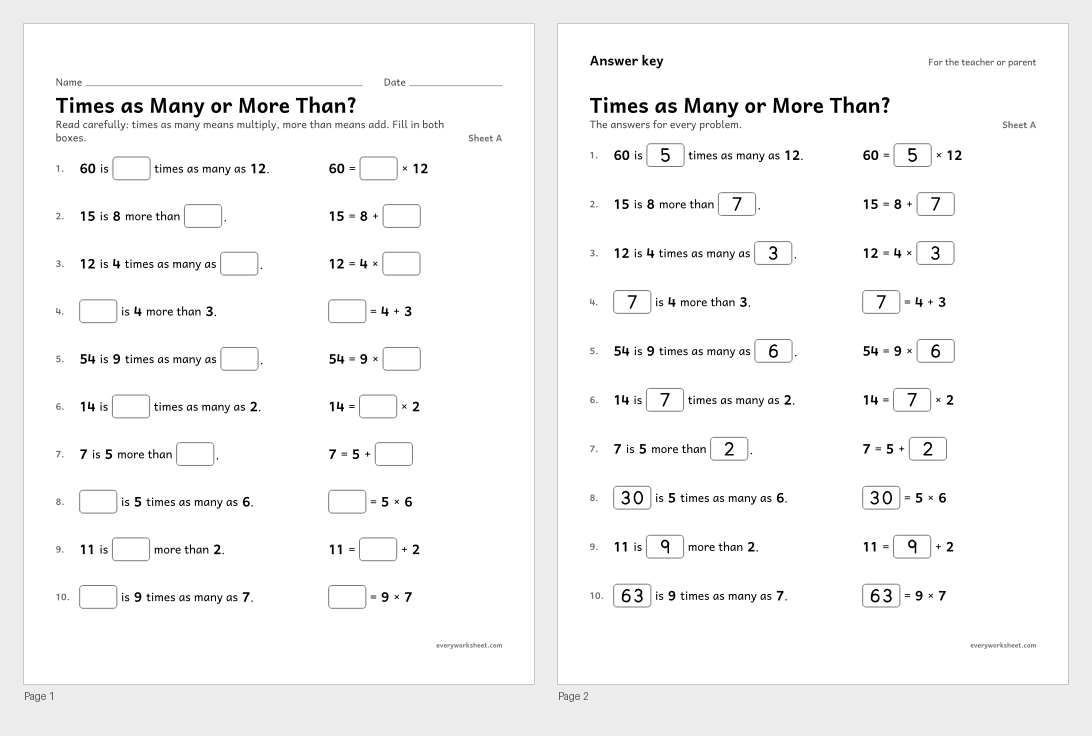 View all 2 pages
Telling multiplicative comparison from additive comparison
Answer key on page 2
2 pages90 KB
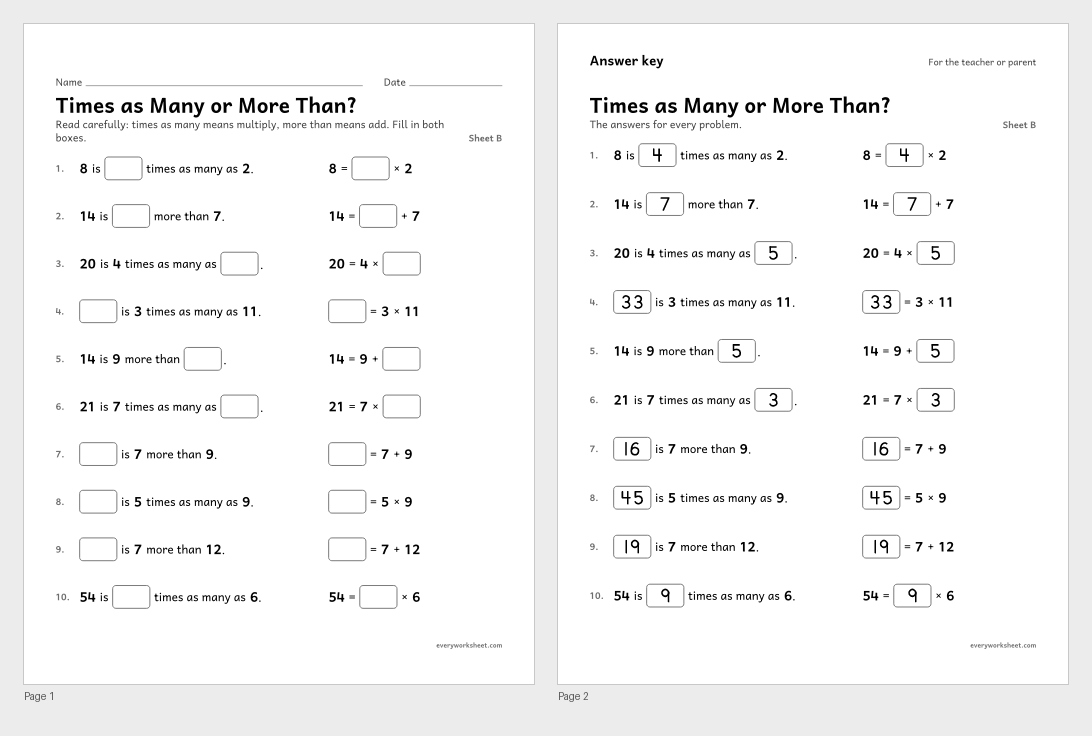 View all 2 pages
Telling multiplicative comparison from additive comparison
Answer key on page 2
2 pages89 KB
Print at 100% (actual size) for the cleanest tracing lines.
Fourth grade word problems take more than one step and use bigger numbers. A typical problem: a theater has 24 rows of 32 seats and 450 seats are already sold, so how many are left? Children write one equation with a letter for the unknown (24 × 32 − 450 = n), solve it step by step, and then estimate (about 25 × 30 − 450 = 300) to check that the answer is reasonable.
Two kinds of problems are new. In remainder problems, the remainder has to be interpreted: 50 people and 6 per elevator trip is 8 R 2, so the answer is 9 trips, but 50 cookies in bags of 6 makes only 8 full bags. In comparison problems, "times as many" means multiply, while "more than" means add or subtract, and the pages ask children to tell the two apart.
Every story is written with realistic numbers, and the answer keys show the equation, each step and, for comparison problems, a bar model. Each page has room to show the work.
CCSS.MATH.CONTENT.4.OA.A.3Solve multistep word problems posed with whole numbers and having whole-number answers using the four operations, including problems in which remainders must be interpreted. Represent these problems using equations with a letter standing for the unknown quantity. Assess the reasonableness of answers using mental computation and estimation strategies including rounding.CCSS.MATH.CONTENT.4.OA.A.2Multiply or divide to solve word problems involving multiplicative comparison, e.g., by using drawings and equations with a symbol for the unknown number to represent the problem, distinguishing multiplicative comparison from additive comparison.CCSS.MATH.CONTENT.4.OA.A.1Interpret a multiplication equation as a comparison, e.g., interpret 35 = 5 × 7 as a statement that 35 is 5 times as many as 7 and 7 times as many as 5. Represent verbal statements of multiplicative comparisons as multiplication equations.CCSS.MATH.CONTENT.4.NBT.B.4Fluently add and subtract multi-digit whole numbers using the standard algorithm.CCSS.MATH.CONTENT.4.NBT.B.5Multiply a whole number of up to four digits by a one-digit whole number, and multiply two two-digit numbers, using strategies based on place value and the properties of operations. Illustrate and explain the calculation by using equations, rectangular arrays, and/or area models.CCSS.MATH.CONTENT.4.NBT.B.6Find whole-number quotients and remainders with up to four-digit dividends and one-digit divisors, using strategies based on place value, the properties of operations, and/or the relationship between multiplication and division. Illustrate and explain the calculation by using equations, rectangular arrays, and/or area models.Multi-step problems with all four operations and whole numbers, including problems where a remainder must be interpreted, written as equations with a letter for the unknown and checked by estimating.
Deciding what the remainder means in the story: sometimes you round up (you need another bus), sometimes you drop it (you can only fill 8 full bags), and sometimes the remainder itself is the answer.
A comparison that uses times as many: a coat costs 4 times as much as a 12-dollar scarf, so it costs 4 × 12 = 48 dollars.