 View larger
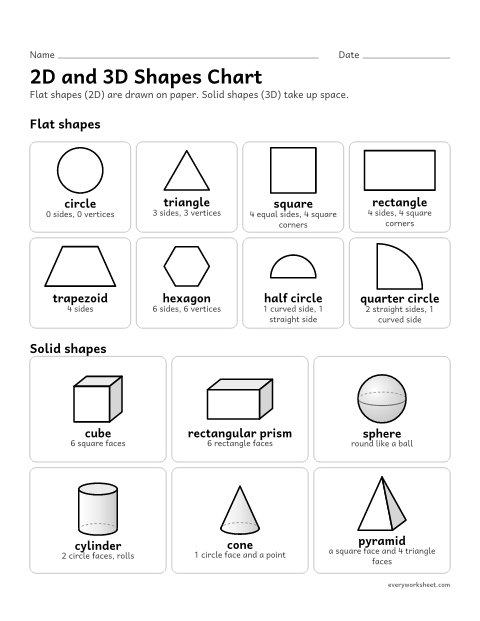
2D and 3D shapes chart
Naming flat and solid shapes and their sides, corners and faces
1 page38 KB
Shape pages for 1st grade: a 2D and 3D chart, sides and vertices, what makes a triangle or rectangle, riddles, drawing, putting shapes together and 3D shapes.
View largerNaming flat and solid shapes and their sides, corners and faces
1 page38 KB
 View all 2 pages
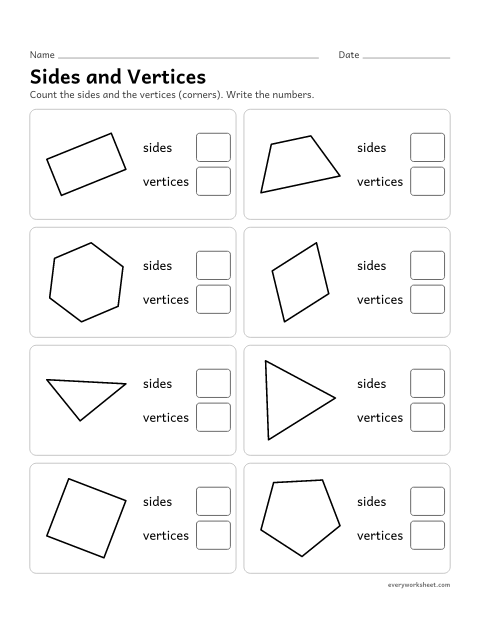
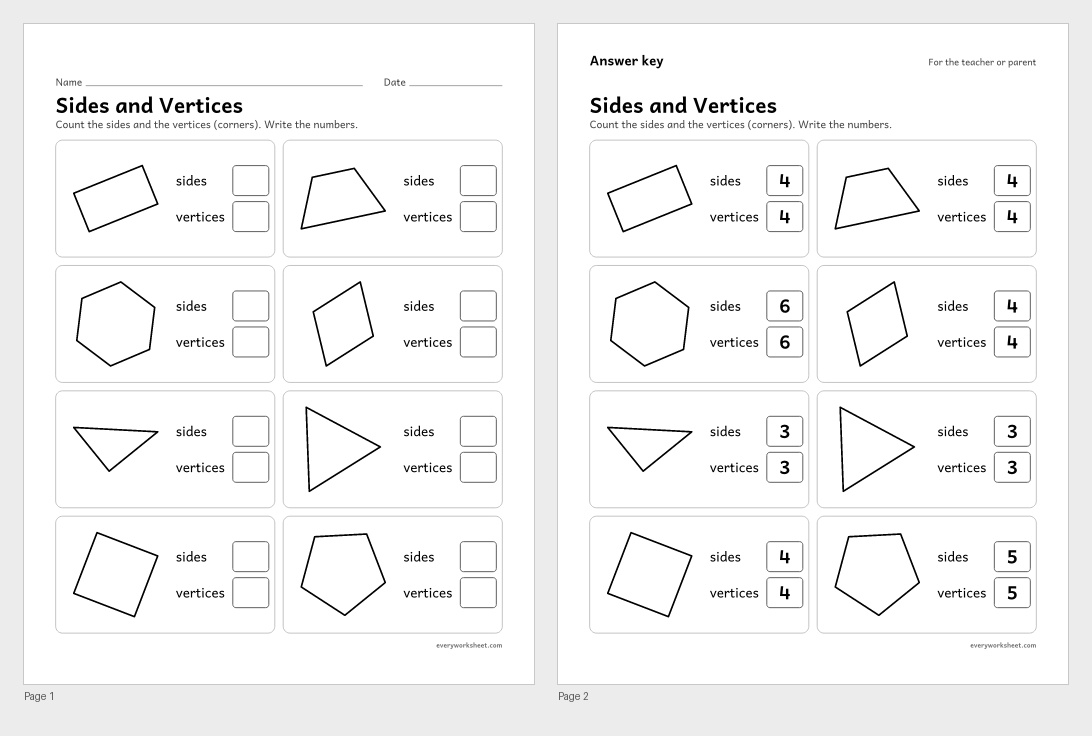
Counting sides and vertices (corners) of flat shapes
Answer key on page 2
2 pages47 KB
 View all 2 pages
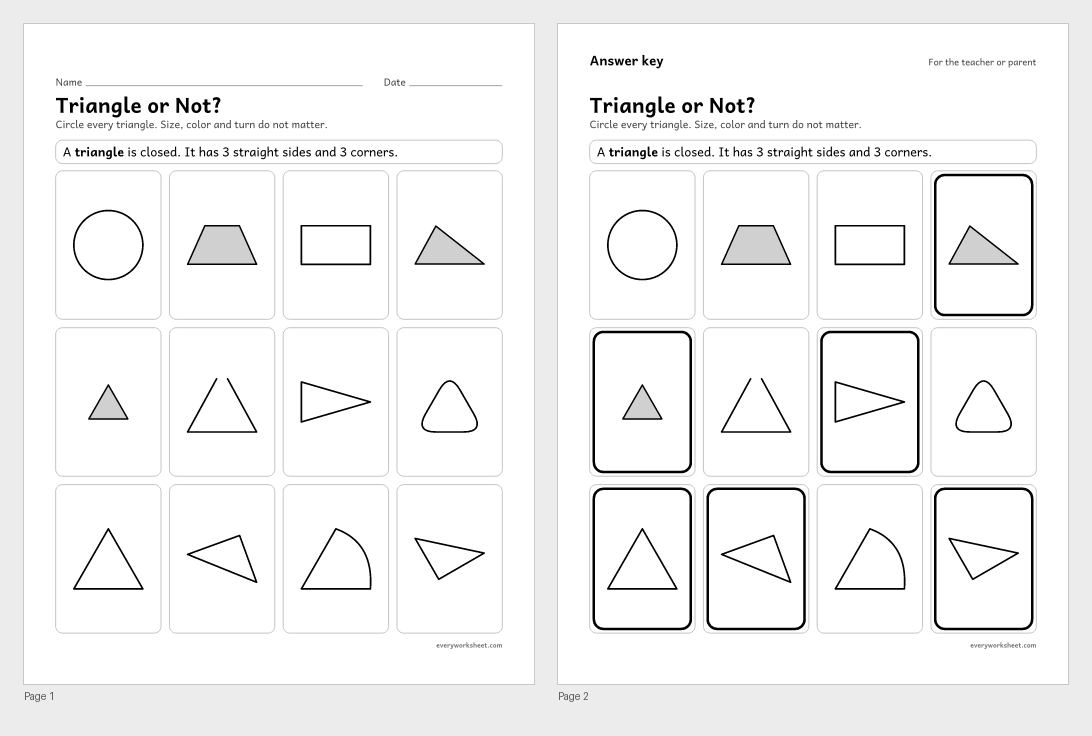
Using defining attributes: closed, 3 straight sides, 3 corners (not color, size or turn)
Answer key on page 2
2 pages32 KB
 View all 2 pages
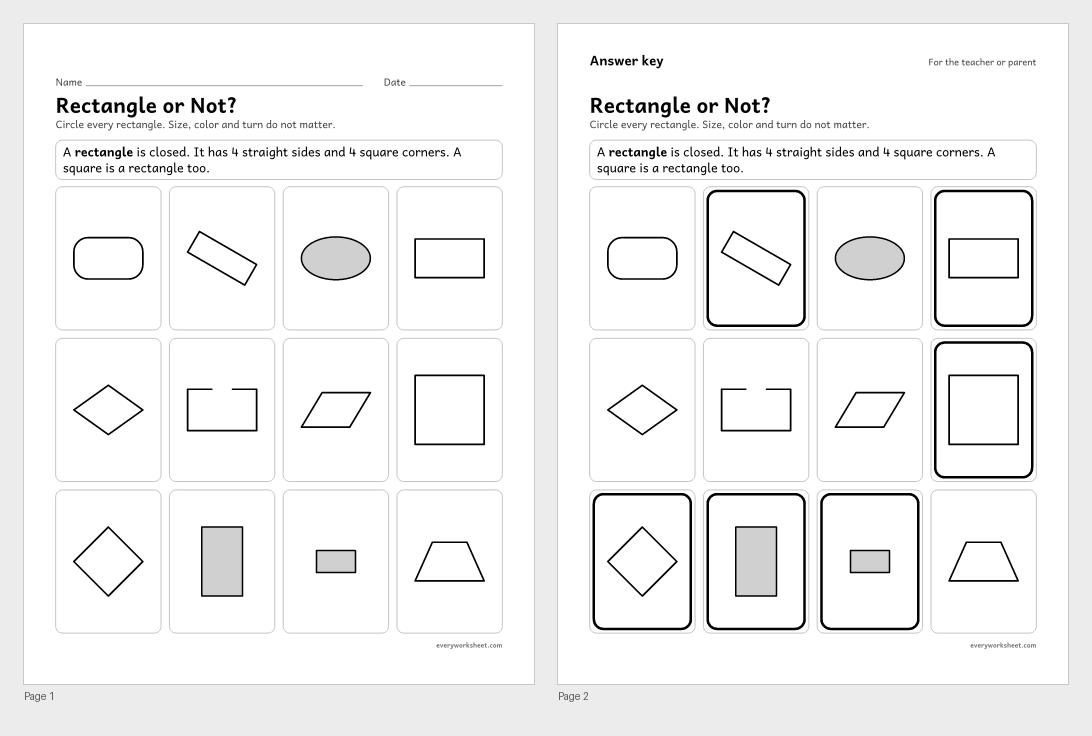
Using defining attributes: 4 straight sides and 4 square corners (a square counts)
Answer key on page 2
2 pages33 KB
 View all 2 pages
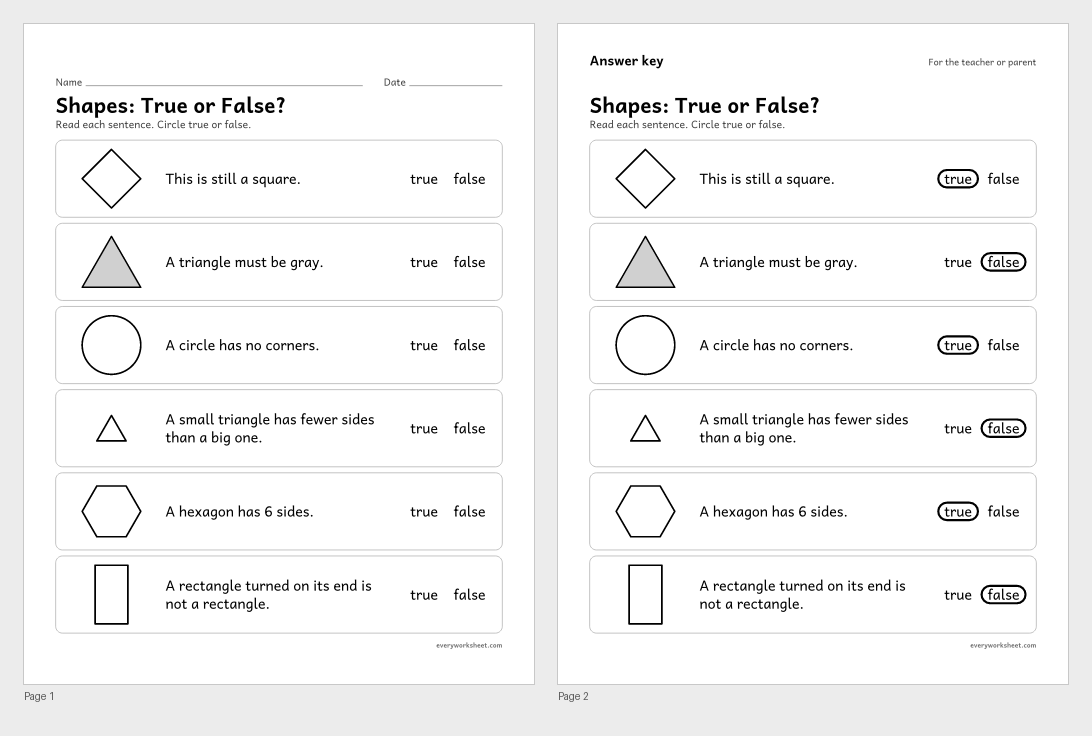
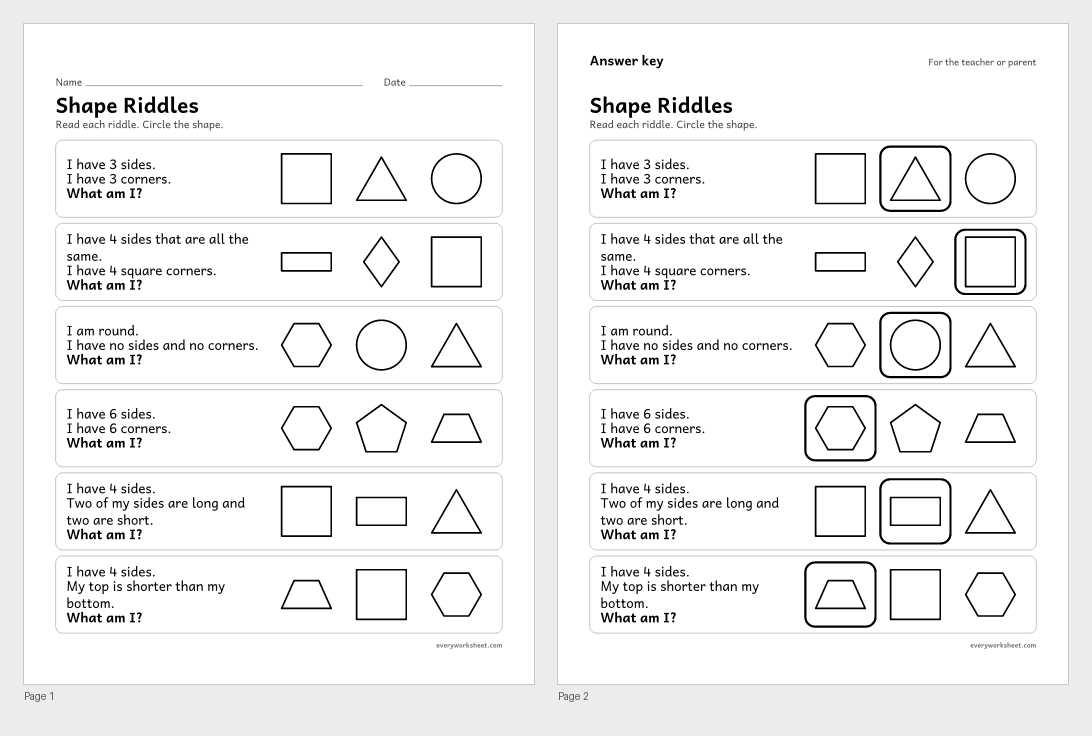
Telling which attributes make a shape what it is
Answer key on page 2
2 pages37 KB
 View all 2 pages
 View all 2 pages
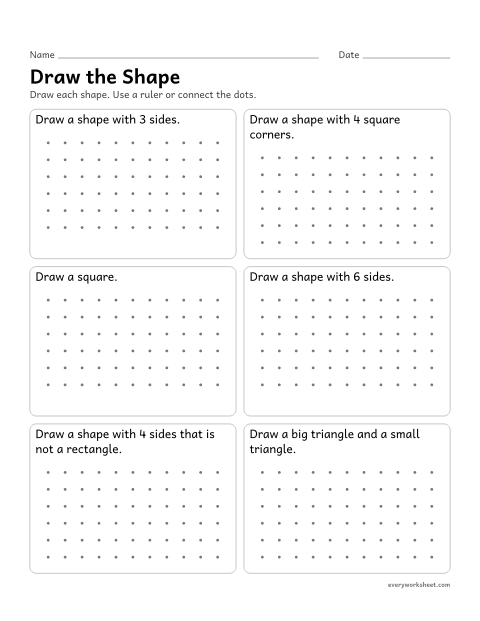
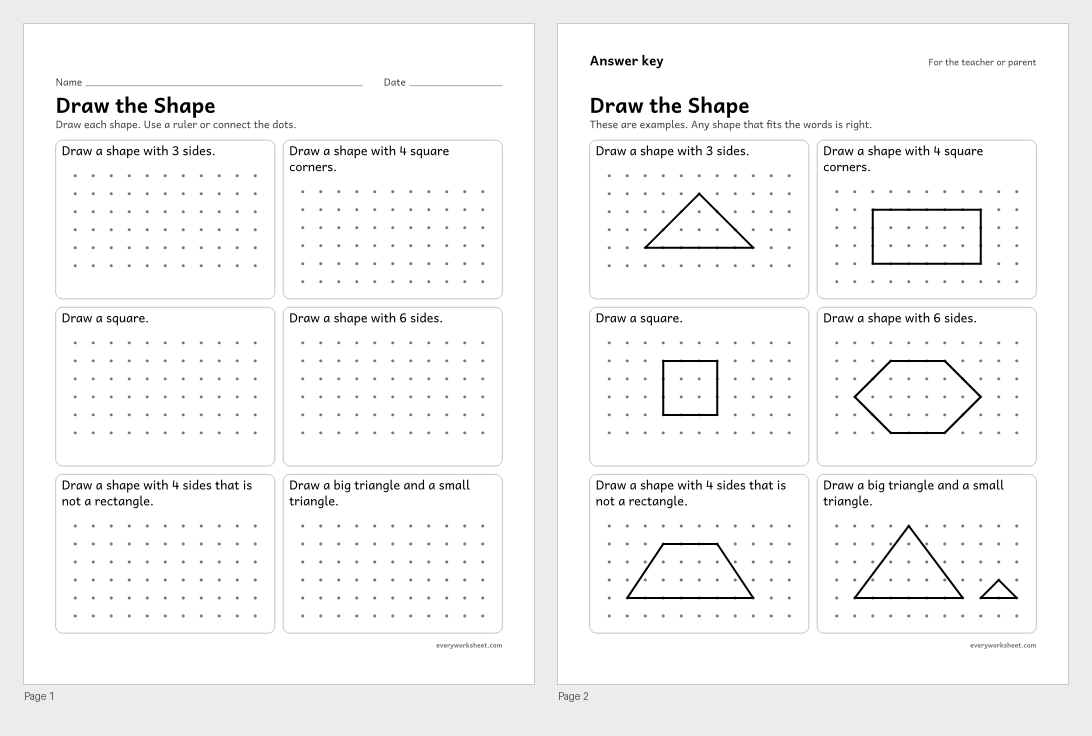
Drawing shapes that have given attributes
Answer key on page 2
2 pages34 KB
 View all 2 pages
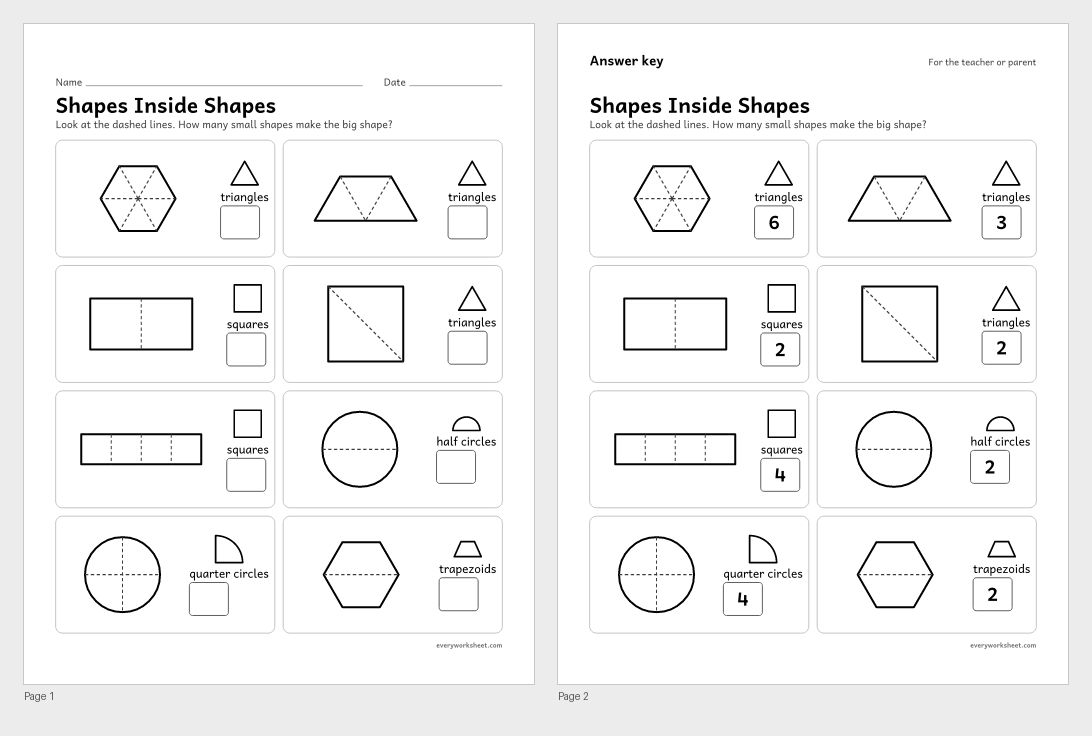
Finding the smaller shapes that make a bigger shape
Answer key on page 2
2 pages38 KB
 View all 2 pages
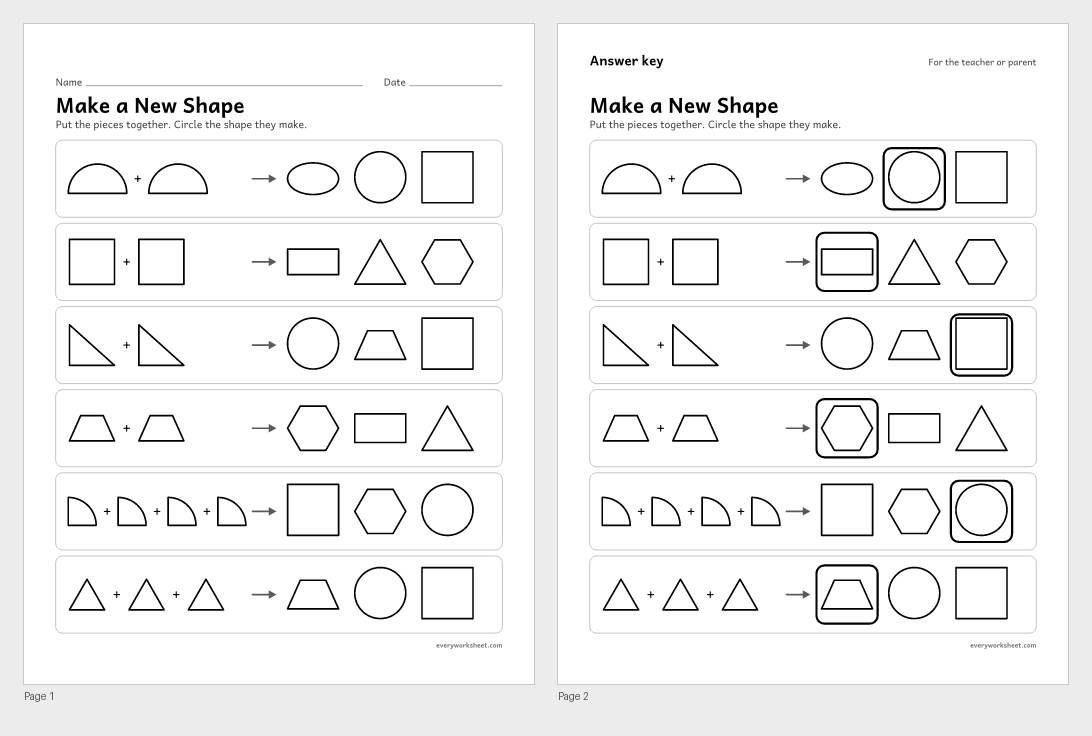
Putting two or more shapes together to make a new shape
Answer key on page 2
2 pages37 KB
 View all 2 pages
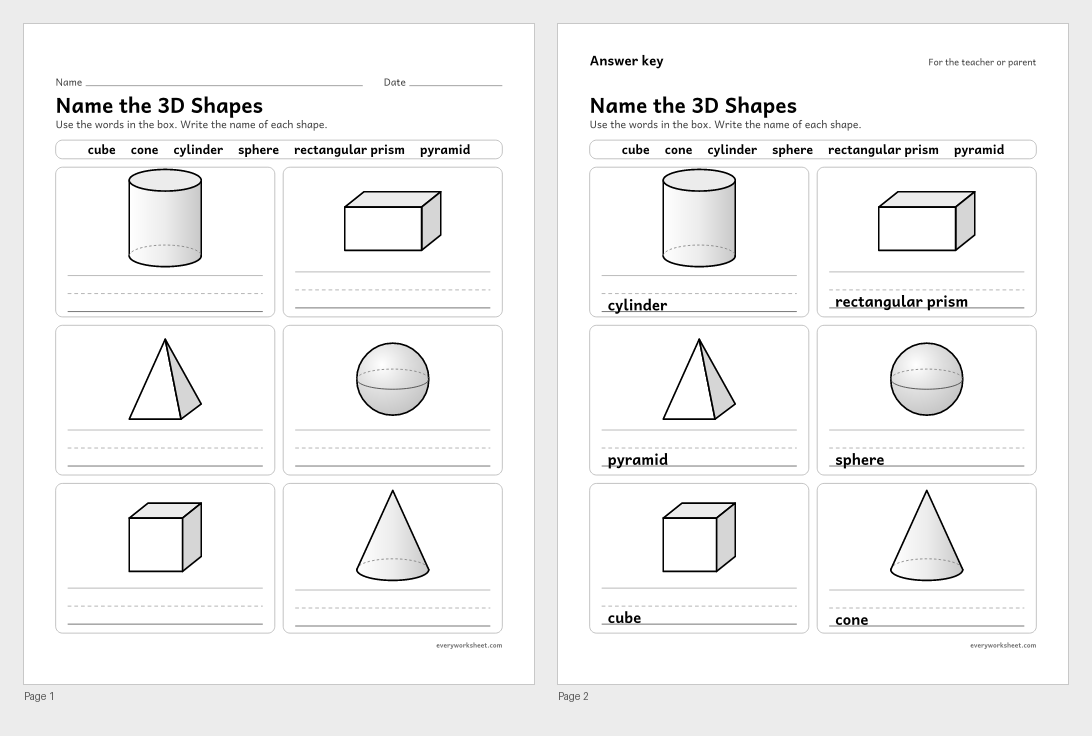
Naming cubes, rectangular prisms, cones, cylinders, spheres and pyramids
Answer key on page 2
2 pages38 KB
 View all 2 pages
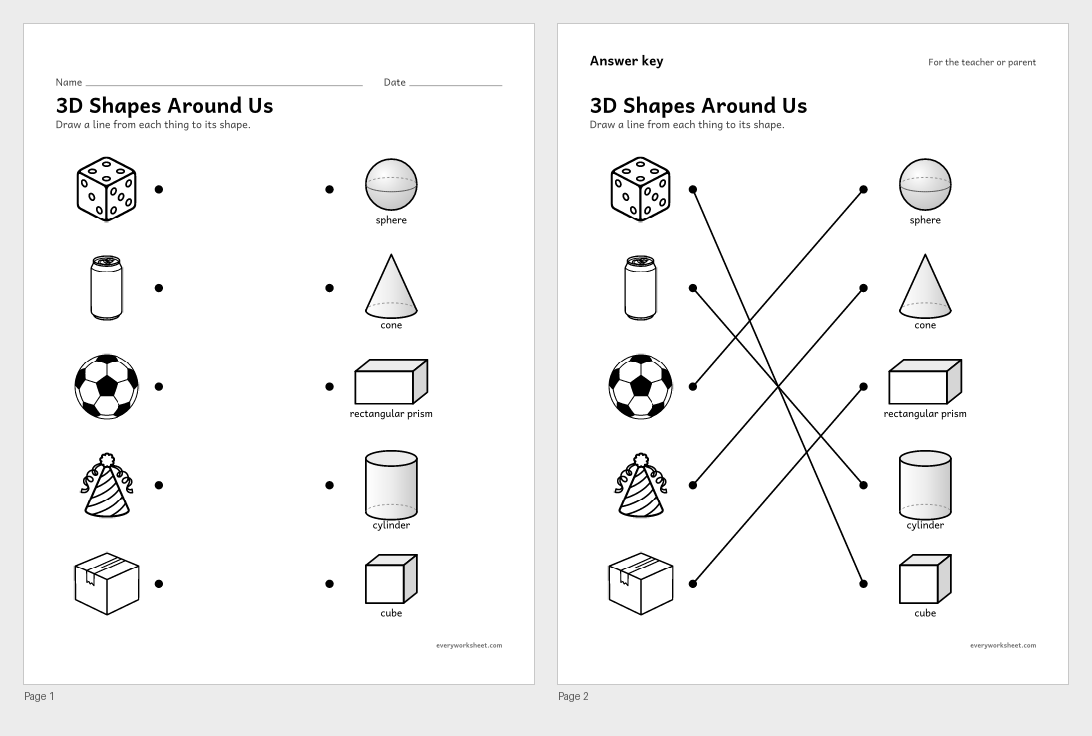
Matching everyday things to cubes, cones, cylinders, spheres and prisms
Answer key on page 2
2 pages215 KB
 View all 2 pages
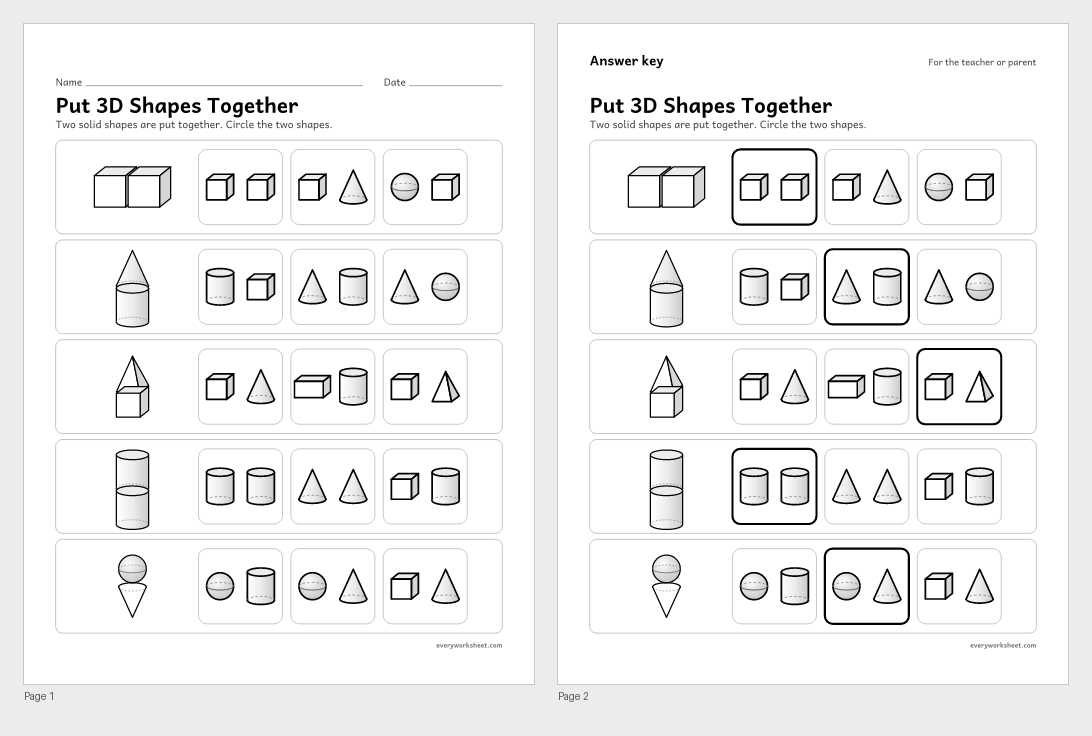
Naming the solid shapes that make a composite solid
Answer key on page 2
2 pages56 KB
Print at 100% (actual size) for the cleanest tracing lines.
In 1st grade, children move from naming shapes to explaining what makes a shape that shape. A triangle is closed and has three straight sides; its color, size and which way it is turned do not matter. They also put shapes together to make new ones, with flat shapes and with solids.
The chart shows the flat and solid shapes first graders use, with sides, vertices and faces. Then children count sides and vertices, sort shapes that are and are not triangles or rectangles (open shapes, curved sides and rounded corners included), decide which sentences about shapes are true, solve riddles, and draw shapes from clues on dot grids.
Putting shapes together comes next: counting the small shapes inside a big one, choosing the shape two or more pieces make, and naming the two solids that make a stacked shape. 3D pages cover naming solids and matching them to everyday things like a can, a ball and a box. Every page with right answers has an answer key.
CCSS.MATH.CONTENT.1.G.A.1Distinguish between defining attributes (e.g., triangles are closed and three-sided) versus non-defining attributes (e.g., color, orientation, overall size); build and draw shapes to possess defining attributes.CCSS.MATH.CONTENT.1.G.A.2Compose two-dimensional shapes (rectangles, squares, trapezoids, triangles, half-circles, and quarter-circles) or three-dimensional shapes (cubes, right rectangular prisms, right circular cones, and right circular cylinders) to create a composite shape, and compose new shapes from the composite shape.Flat shapes such as circles, triangles, squares, rectangles, trapezoids, hexagons, half circles and quarter circles, and solids such as cubes, rectangular prisms, cones, cylinders and spheres.
They are the things that make a shape what it is, like being closed and having three straight sides for a triangle. Color, size and how a shape is turned are not defining attributes.
Vertices are corners, the points where two sides meet. A triangle has 3 vertices and a hexagon has 6.
Yes. A rectangle has four straight sides and four square corners, and a square has all of that plus four equal sides. Our rectangle pages count squares as rectangles.
Yes. Every page with right answers has an answer key on page 2. On the drawing page, the key shows examples, and any shape that fits the clue is right.