Science Worksheets for 1st Graders
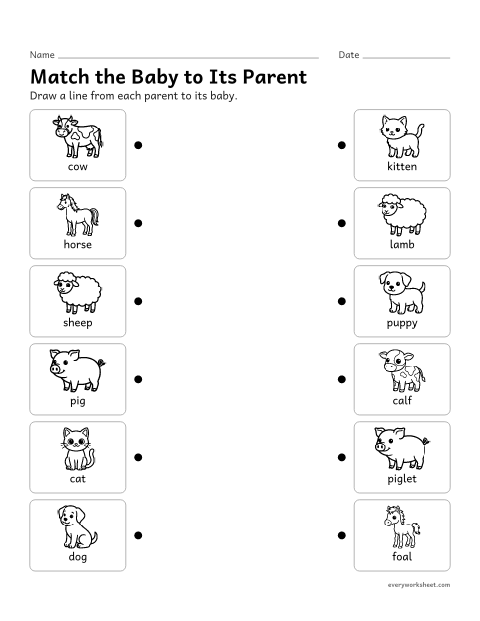
Light and sound, animal and plant parts, parents and offspring, patterns of the sun, moon and stars, and daylight through the seasons.
The science year, in order
Light and sound
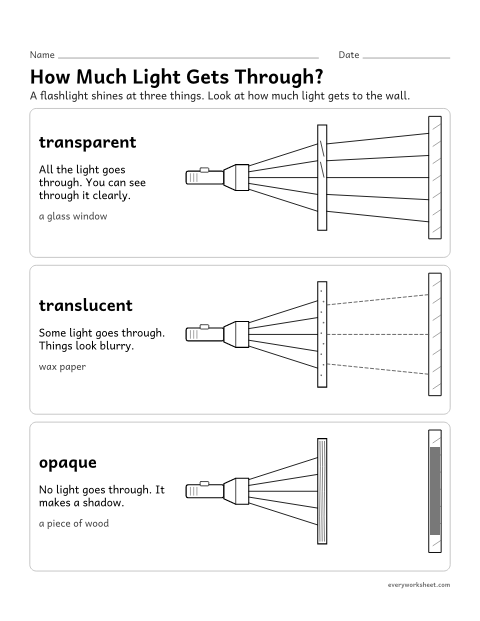
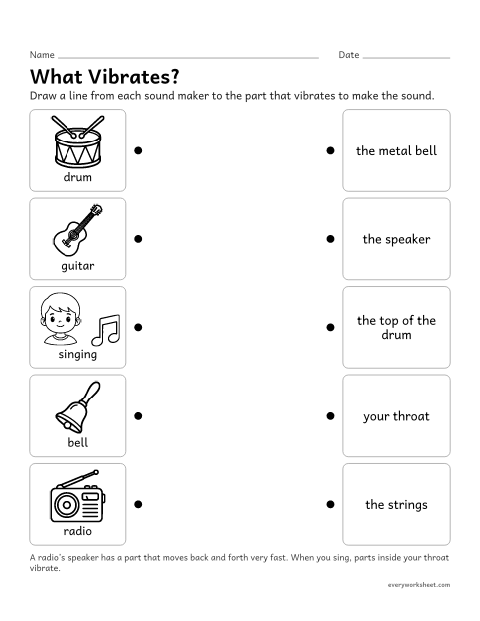
17 sheets readyVibrations make sound, light lets us see, how much light passes through different materials, and signals that use light or sound.
Living things
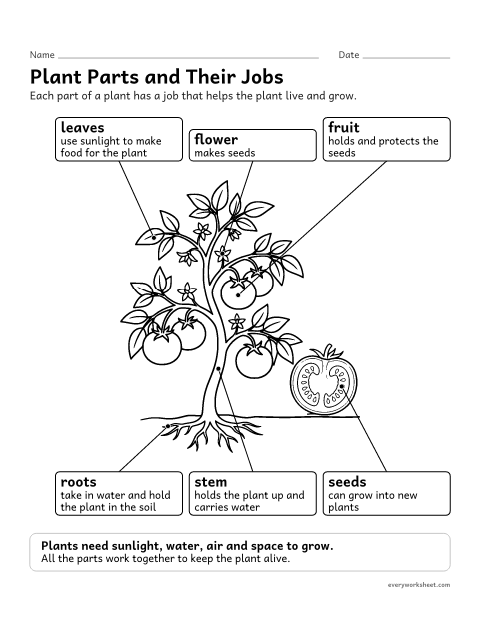
26 sheets readyWhat plant and animal parts do, ideas copied from nature, how young plants and animals are like their parents, and how parents help their young.
Sky and seasons
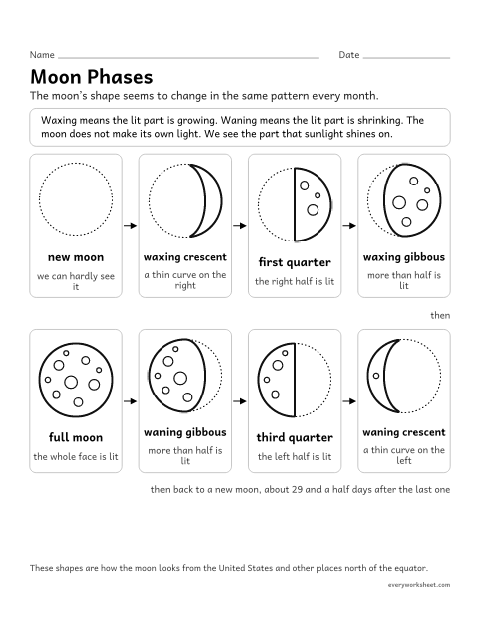
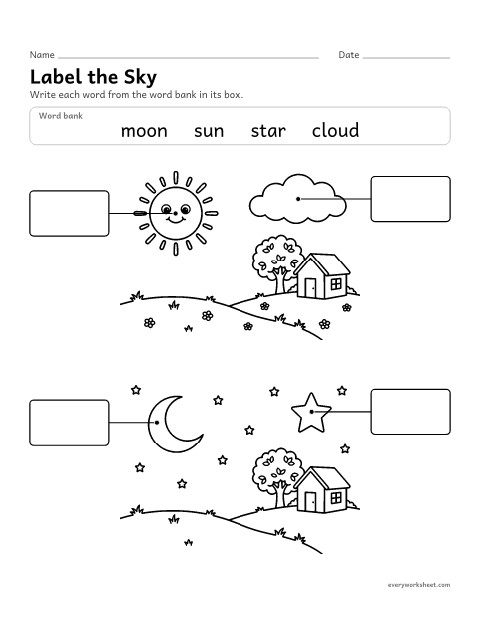
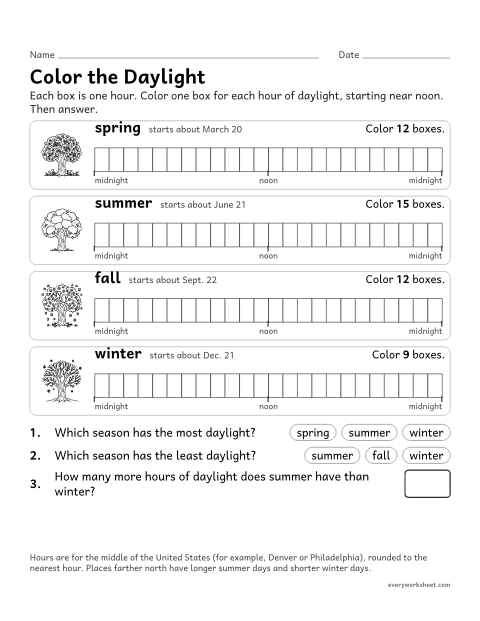
28 sheets readyThe sun’s path and shadows, moon phases, stars, and how the hours of daylight change through the year.
About science worksheets for 1st graders
First grade science asks children to notice patterns and explain them. Why can’t we see in a dark closet? Why does a drum buzz when you tap it? How does a turtle’s shell keep it safe, and why does a puppy look like its mom but not exactly like her? Why is it still light after dinner in June but dark in December?
These science worksheets for 1st graders follow those questions in three strands. Light and sound pages pair simple tests with record sheets. Living things pages cover what plant and animal parts do, how babies are like their parents, and how parents help their young. Sky pages track the sun’s path, the moon’s phases and the hours of daylight in each season.
Children use what they learn to design things too: a signal that uses light or sound, and a solution that copies an animal part. Every page is black and white line art with short directions a 1st grader can read, prints on US Letter or A4, and pages with right answers have an answer key on page 2.
Questions
What science do 1st graders learn?
Most 1st grade science covers light and sound, the parts of plants and animals and what they do, how young plants and animals are like their parents, and patterns in the sky, like the sun’s path, the moon’s phases and the amount of daylight in each season.
Do these worksheets need special materials?
Most pages need only a pencil and crayons. The investigations use simple things like a flashlight, a shoebox, rice, a drum or pan, wax paper, foil, paper cups and string.
Can 1st graders read these pages on their own?
Directions are short and use simple words, so many 1st graders can read them on their own. Read them aloud for early readers. Reading passages are short and stay close to the pictures.
Are there answer keys?
Yes. Every page with right answers has an answer key on page 2. Posters, journals and design pages have no key.