 View all 2 pages
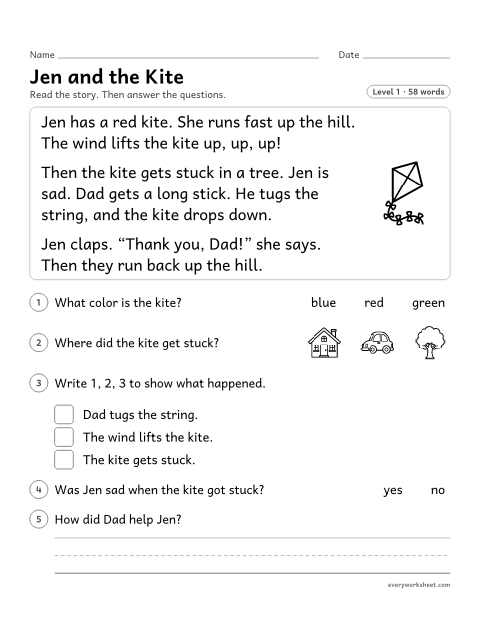
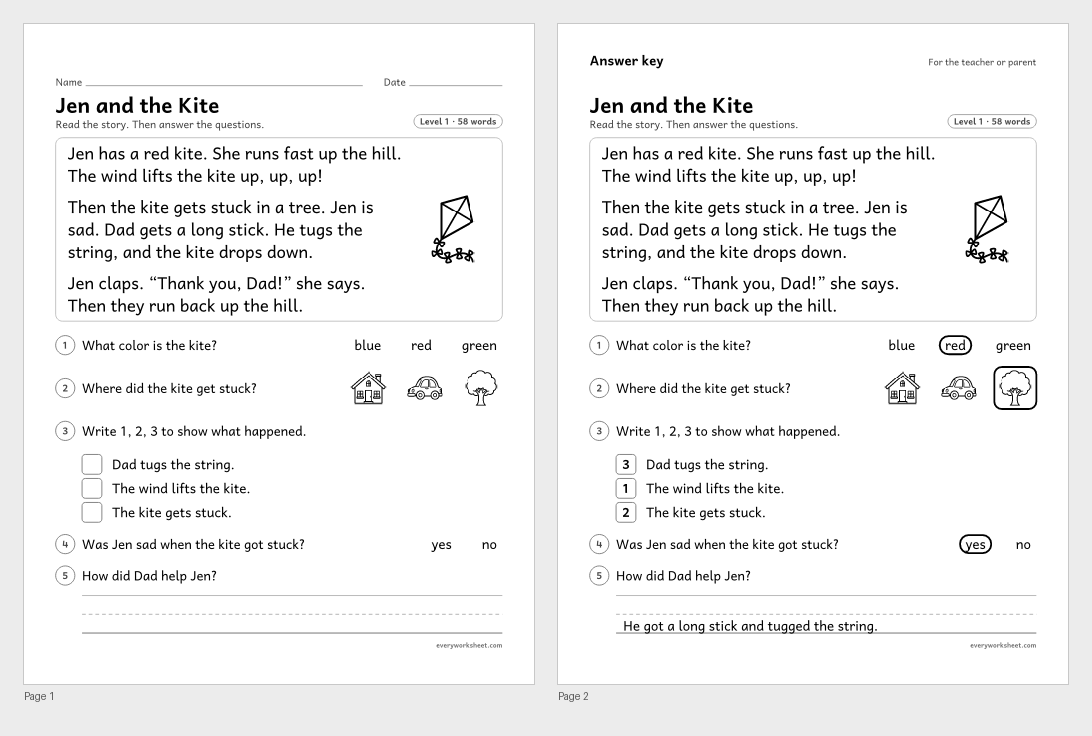
Jen and the kite
Reading a short story and answering questions about key details
Answer key on page 2
2 pages137 KB
Original short stories and nonfiction passages at three reading levels, each with questions and an answer key, plus read-aloud pages and question pages for any book.
View all 2 pagesReading a short story and answering questions about key details
Answer key on page 2
2 pages137 KB
 View all 2 pages
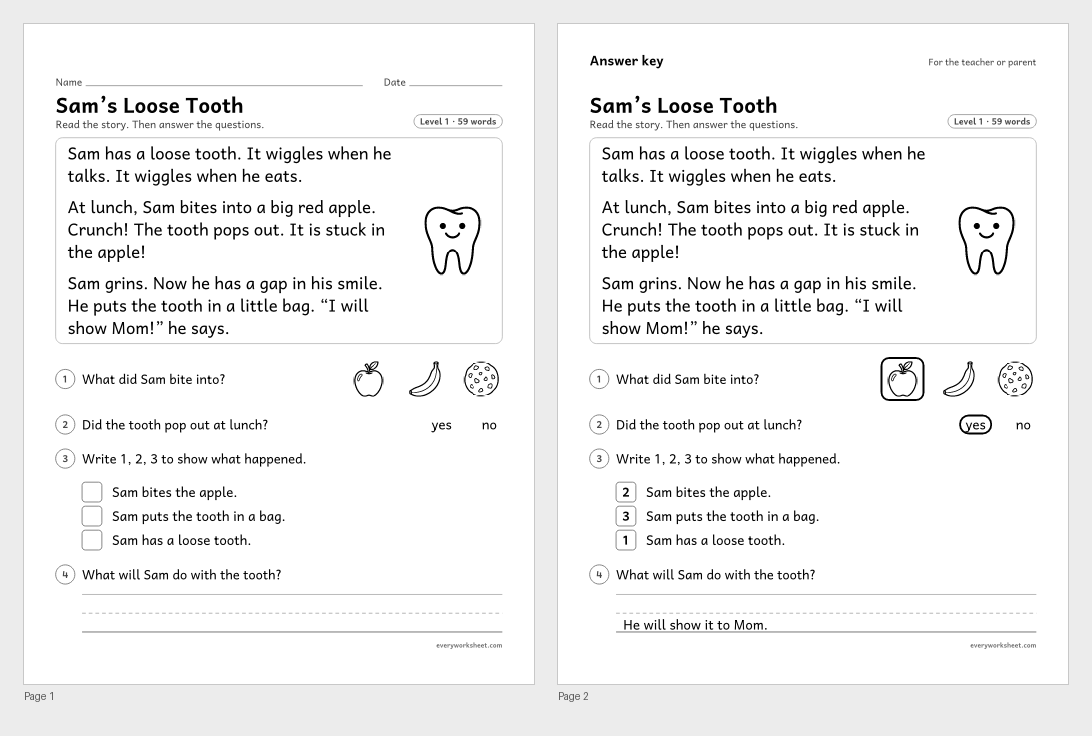
Describing a character and the key events in a short story
Answer key on page 2
2 pages175 KB
 View all 2 pages
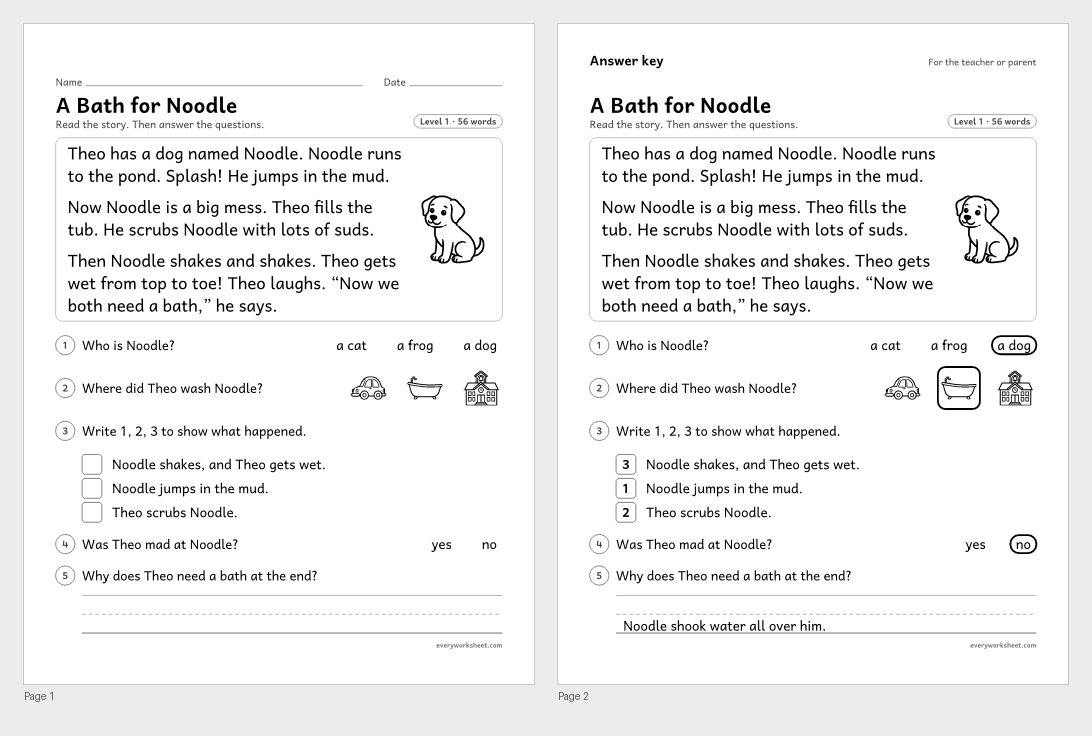
Telling the problem and the ending of a short story
Answer key on page 2
2 pages137 KB
 View all 2 pages
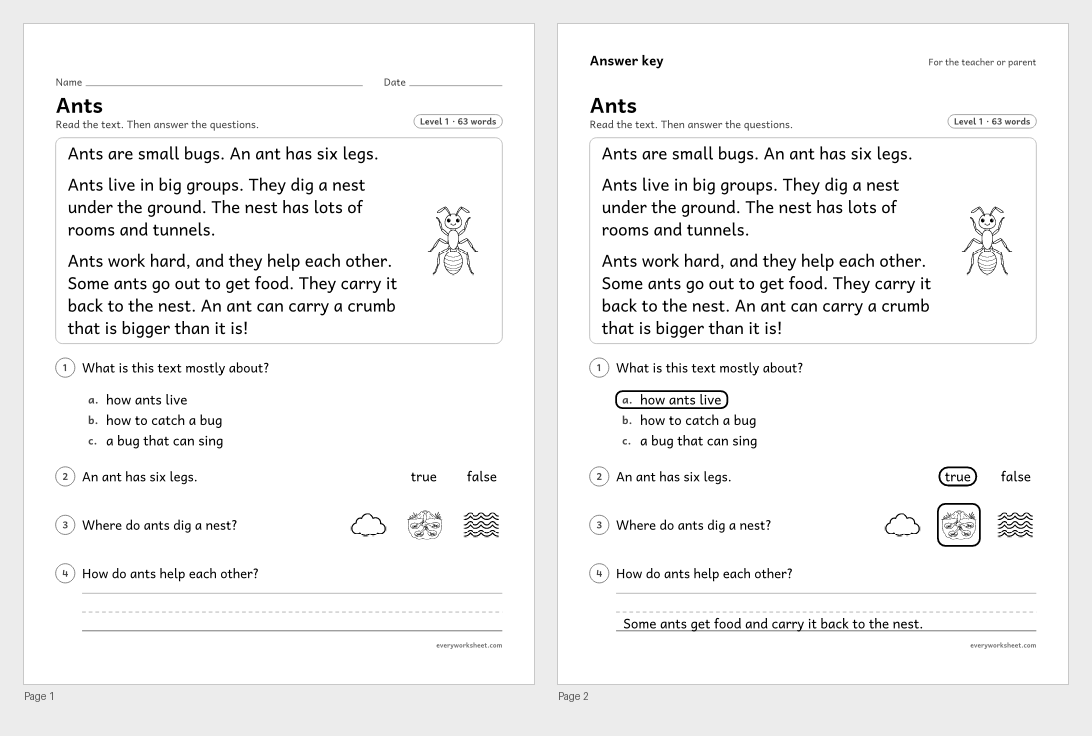
Telling the main topic and key details of a short nonfiction text
Answer key on page 2
2 pages138 KB
 View all 2 pages
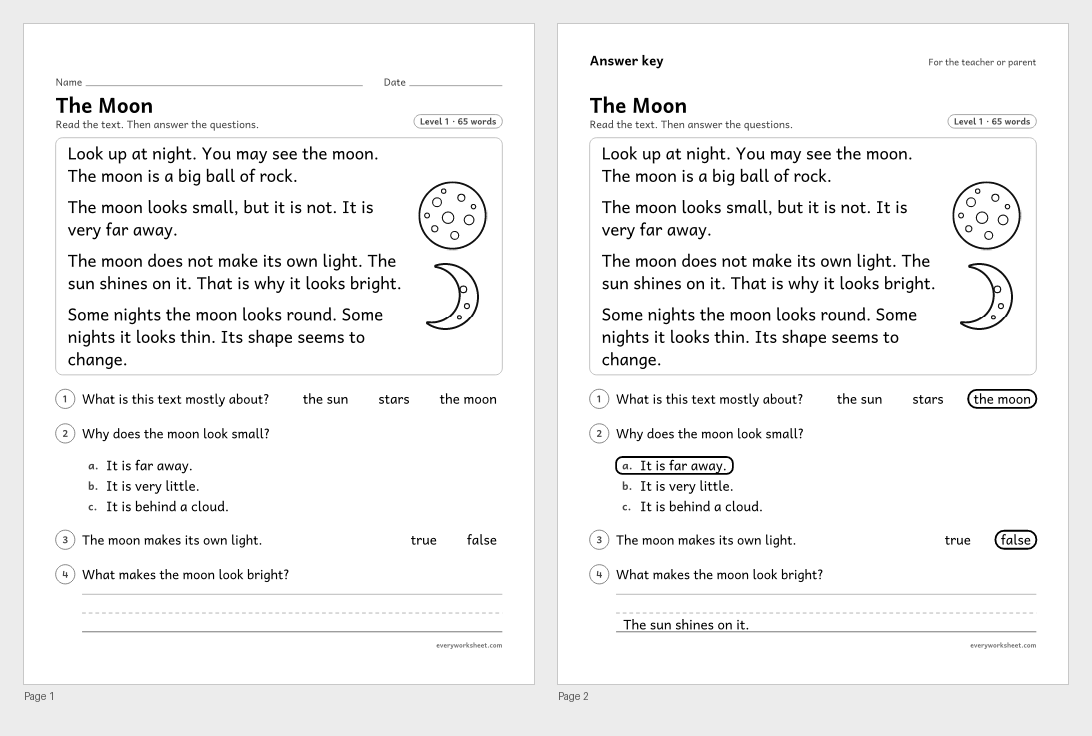
Answering questions about key details in a short nonfiction text
Answer key on page 2
2 pages54 KB
 View all 2 pages
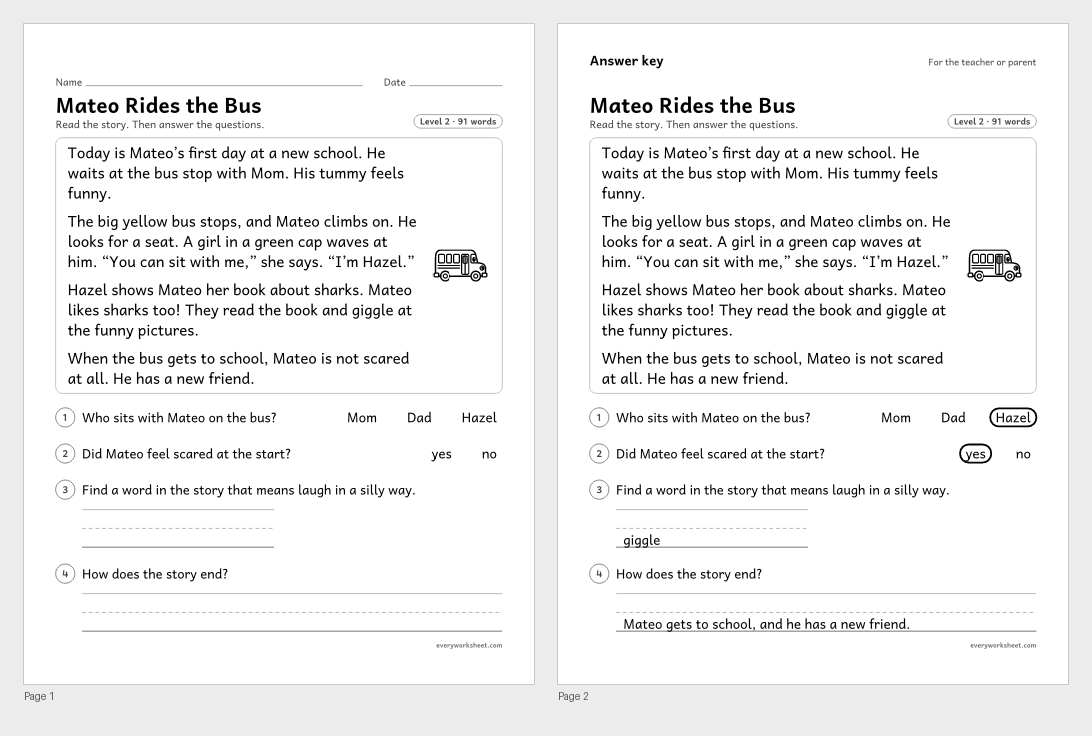
Describing the characters, setting and events of a story
Answer key on page 2
2 pages64 KB
 View all 2 pages
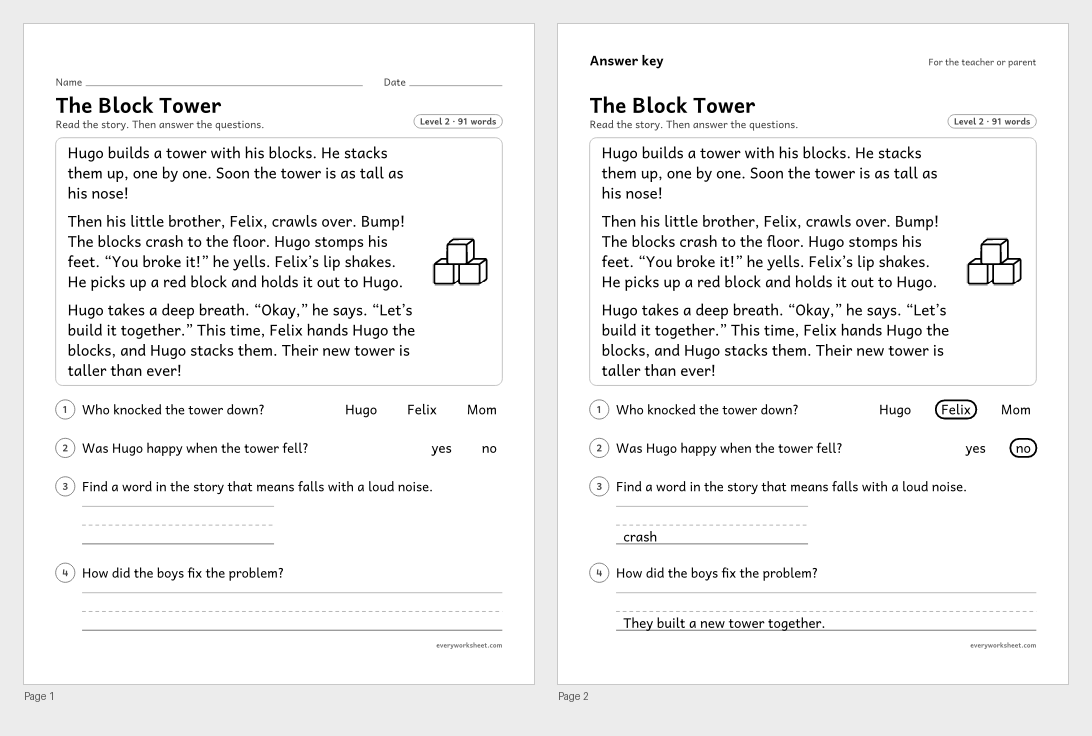
Telling the problem in a story and how the characters solve it
Answer key on page 2
2 pages52 KB
 View all 2 pages
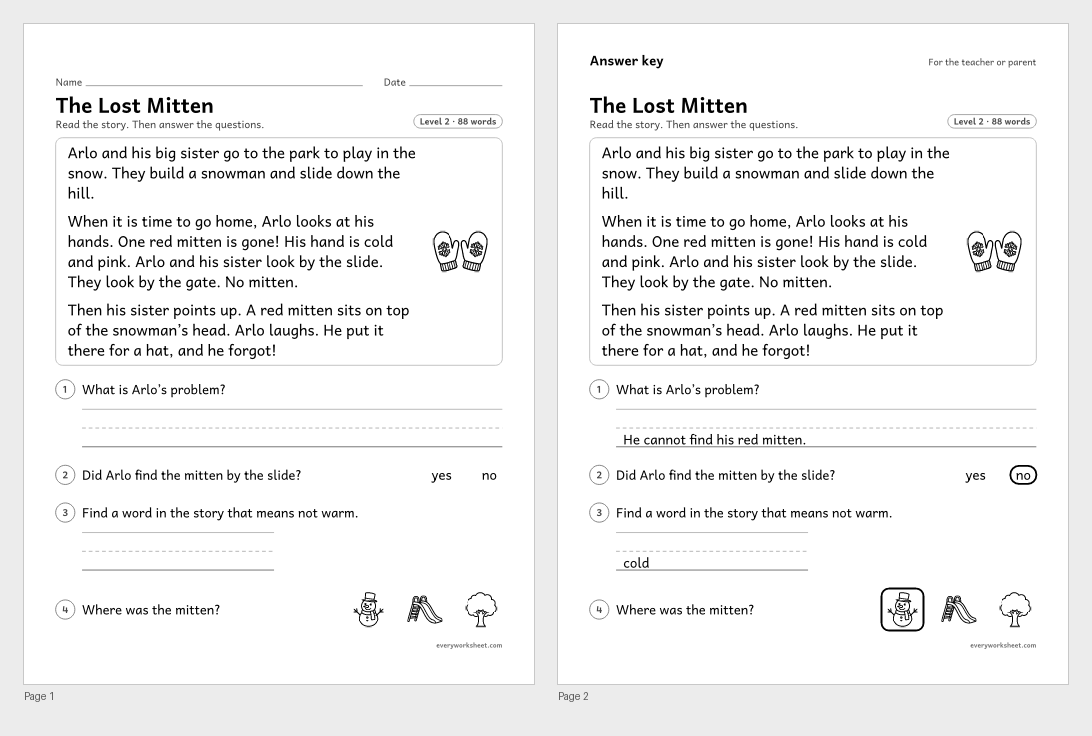
Telling the setting, the problem and how a story ends
Answer key on page 2
2 pages163 KB
 View all 2 pages
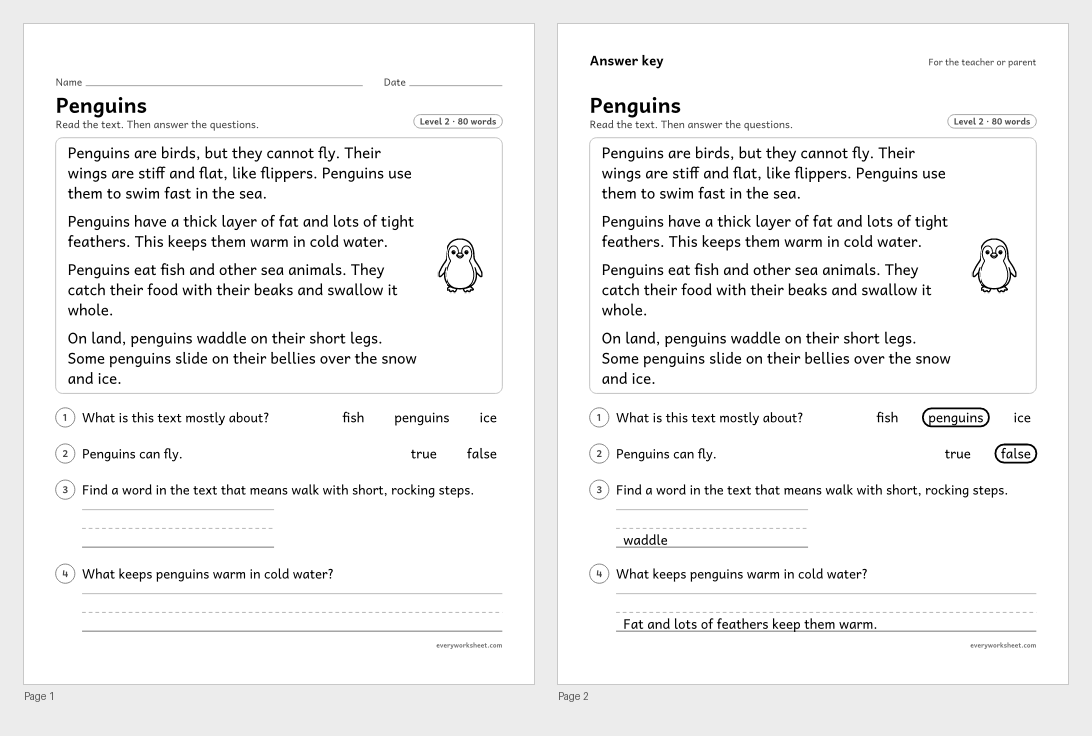
Using the text to work out the meaning of a word in a nonfiction text
Answer key on page 2
2 pages82 KB
 View all 2 pages
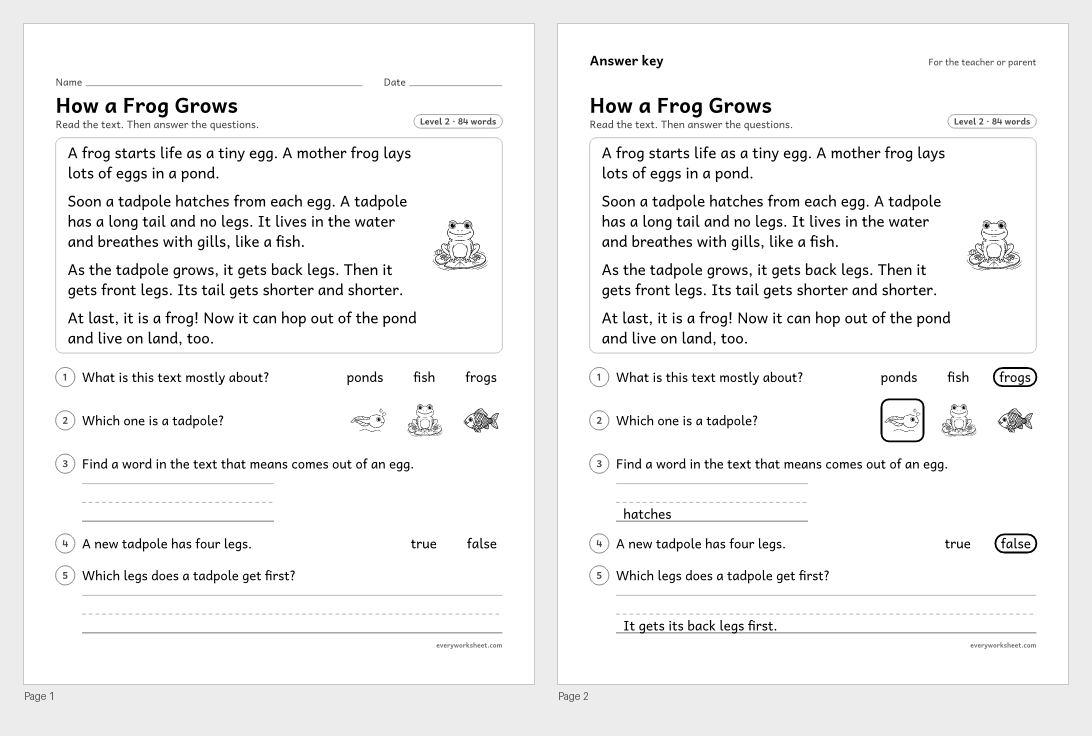
Telling the main topic and the steps described in a nonfiction text
Answer key on page 2
2 pages146 KB
 3 pagesView all 3 pages
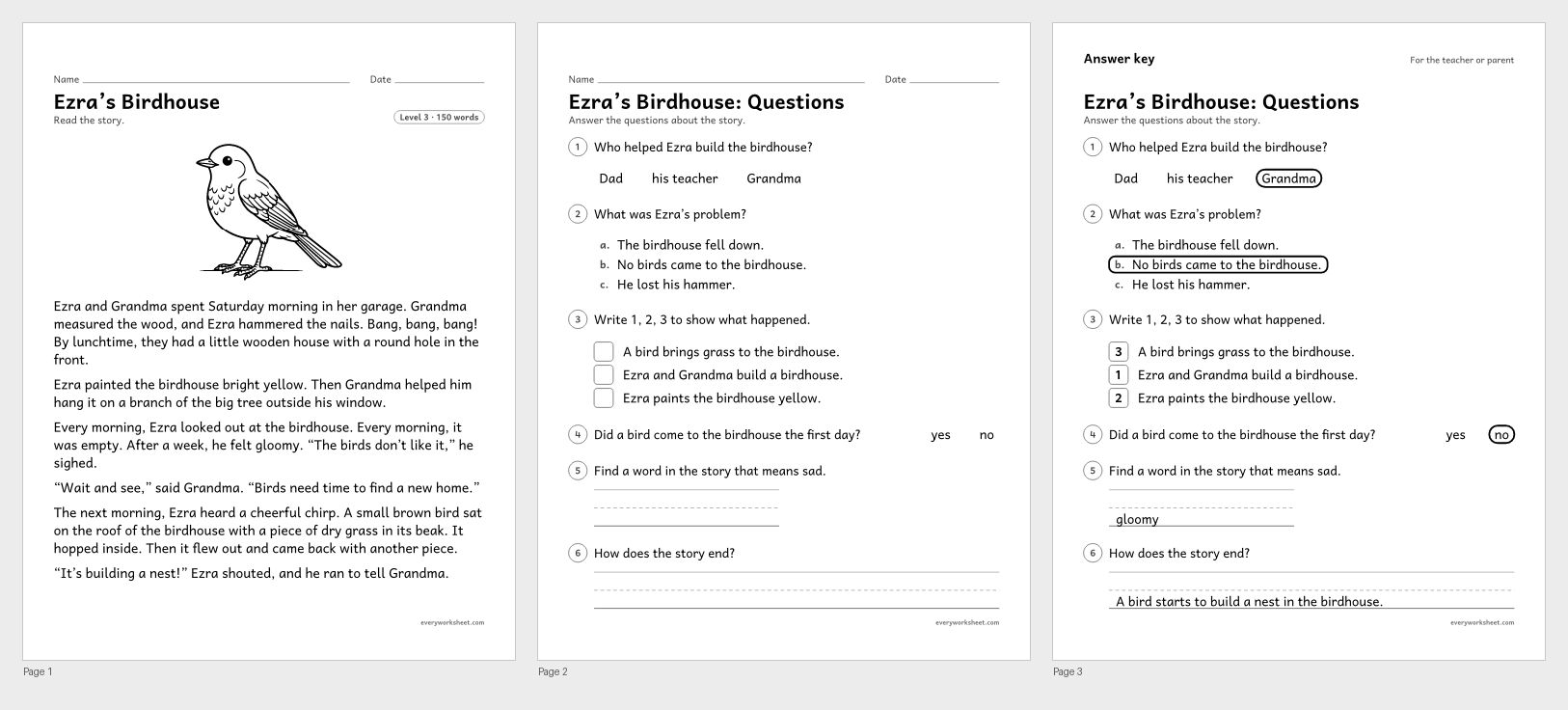
Telling the problem, key events and ending of a story
Answer key on page 3
3 pages66 KB
 3 pagesView all 3 pages
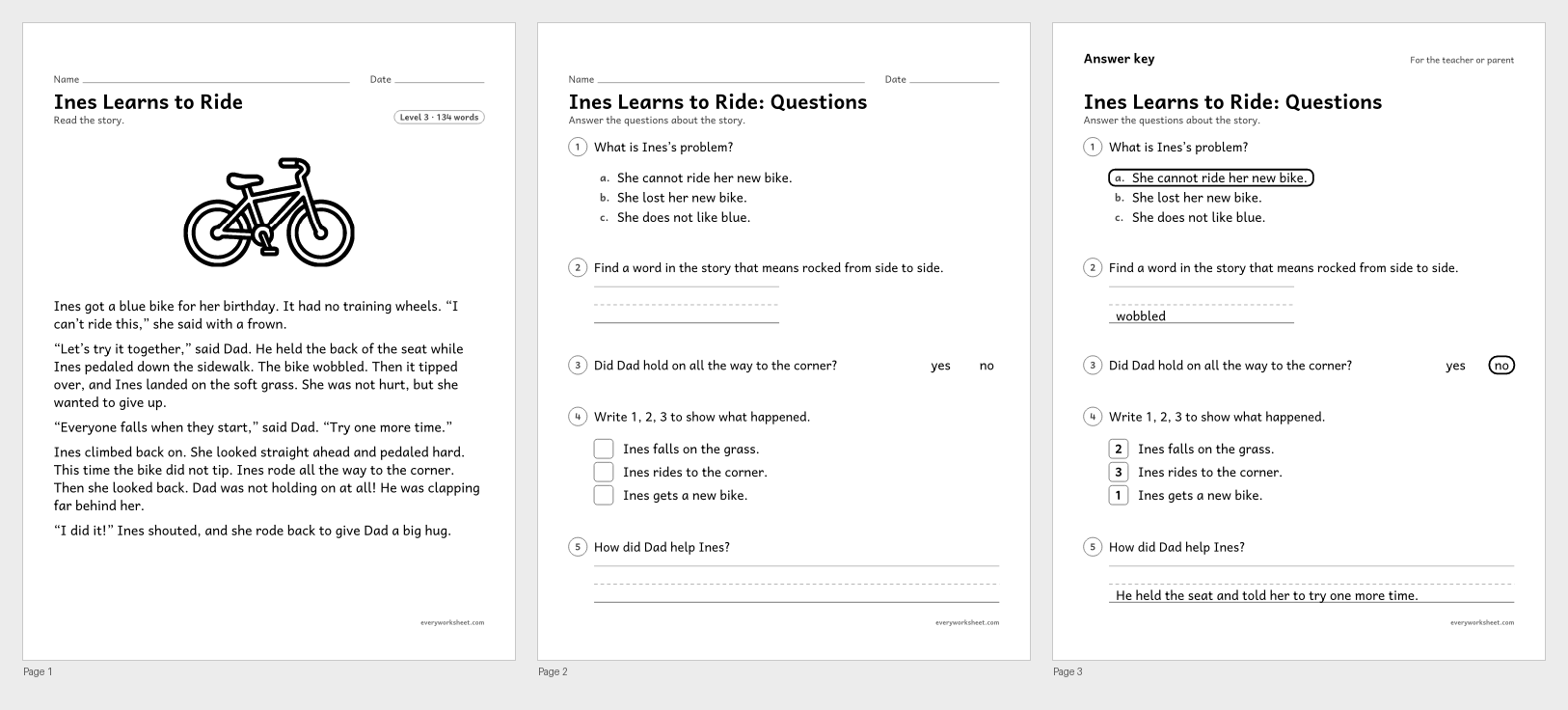
Describing how a character feels and changes across a story
Answer key on page 3
3 pages72 KB
 3 pagesView all 3 pages
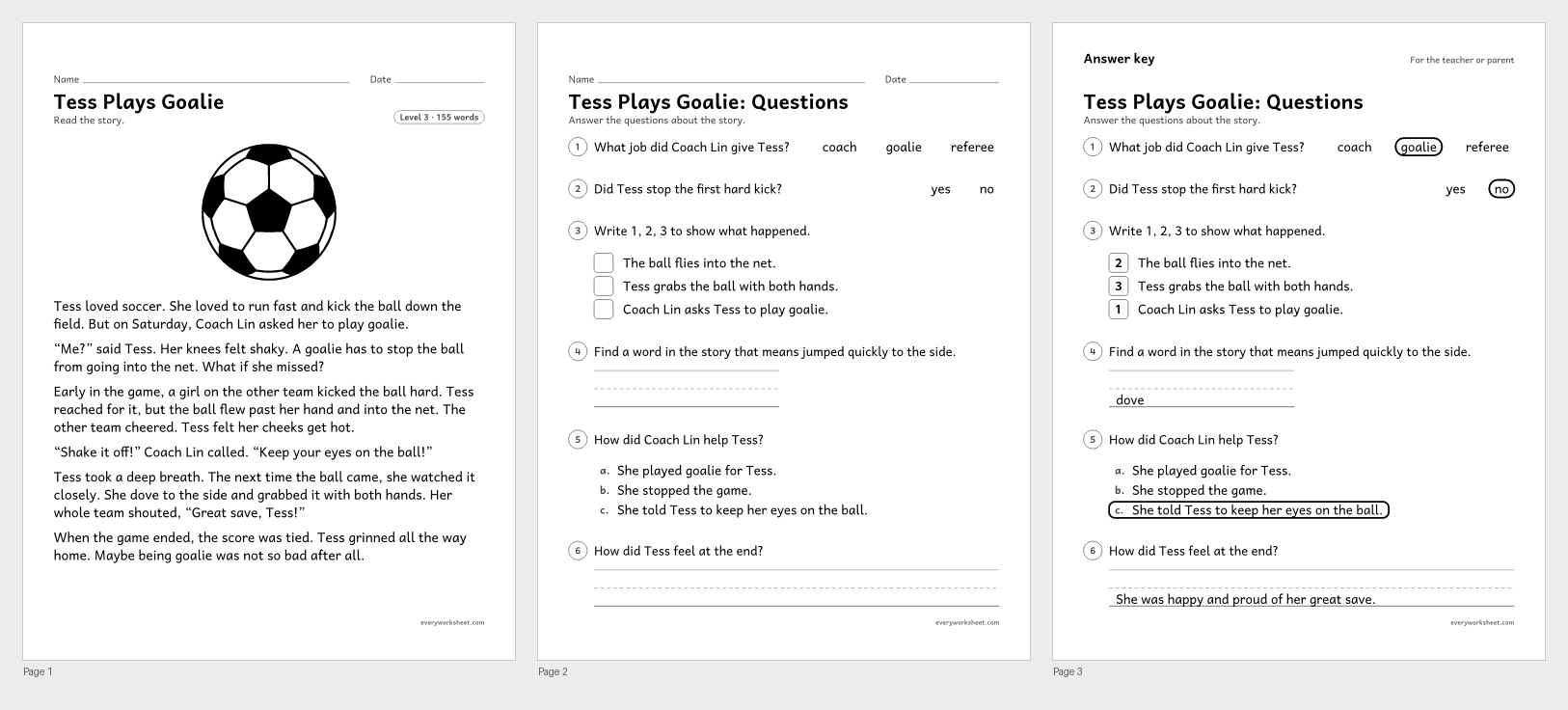
Describing how a character feels and changes across a story
Answer key on page 3
3 pages53 KB
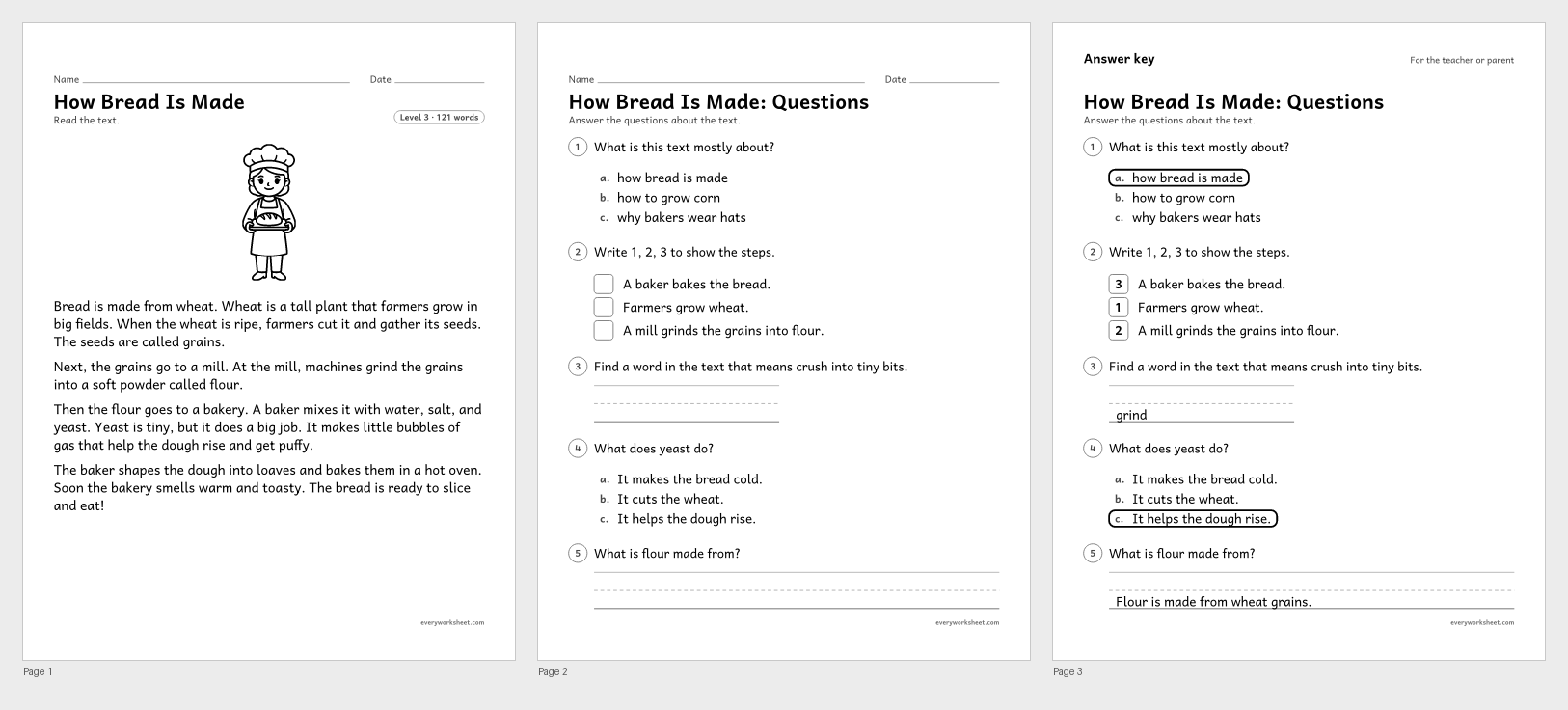 3 pagesView all 3 pages
Telling the main topic and key steps of a nonfiction text
Answer key on page 3
3 pages61 KB
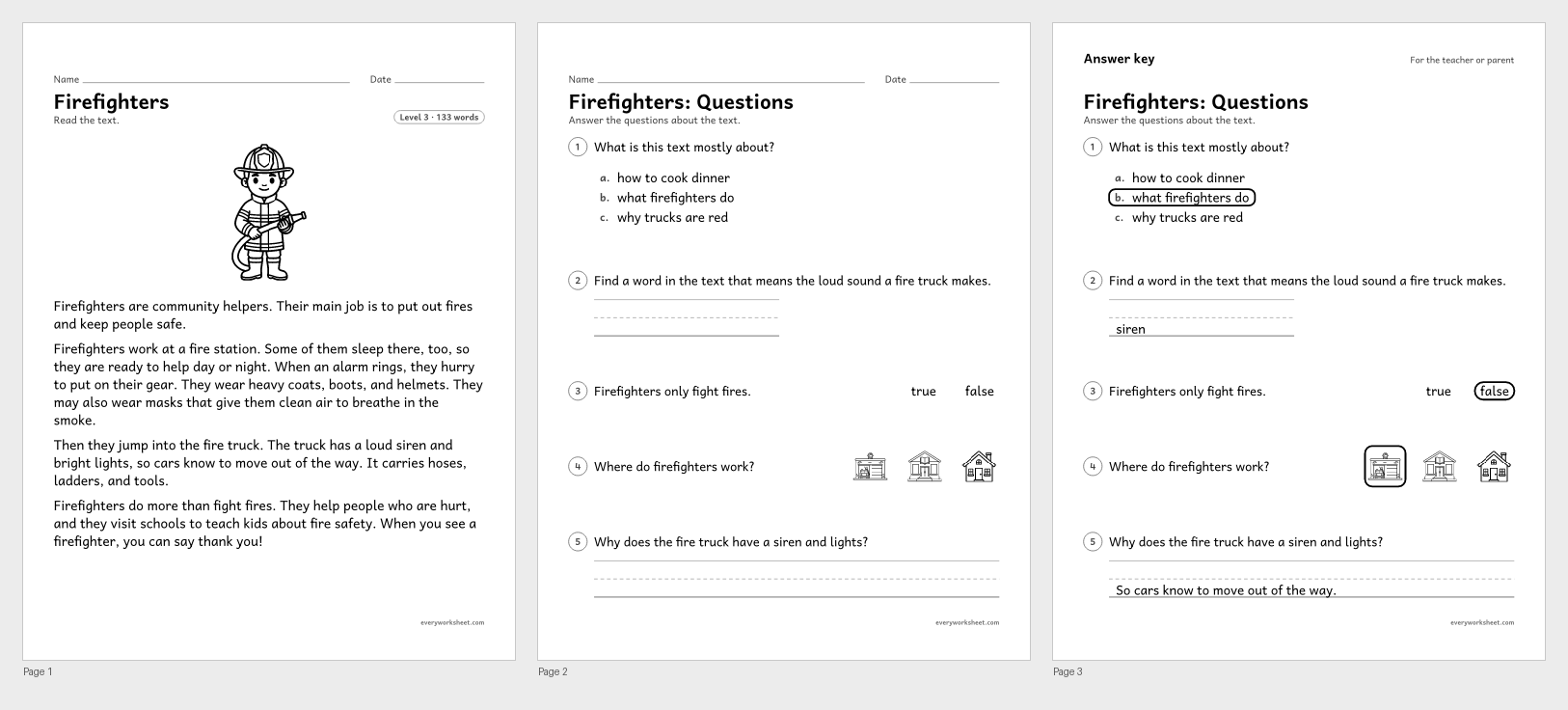 3 pagesView all 3 pages
Using the text to work out the meaning of a word in a nonfiction text
Answer key on page 3
3 pages102 KB
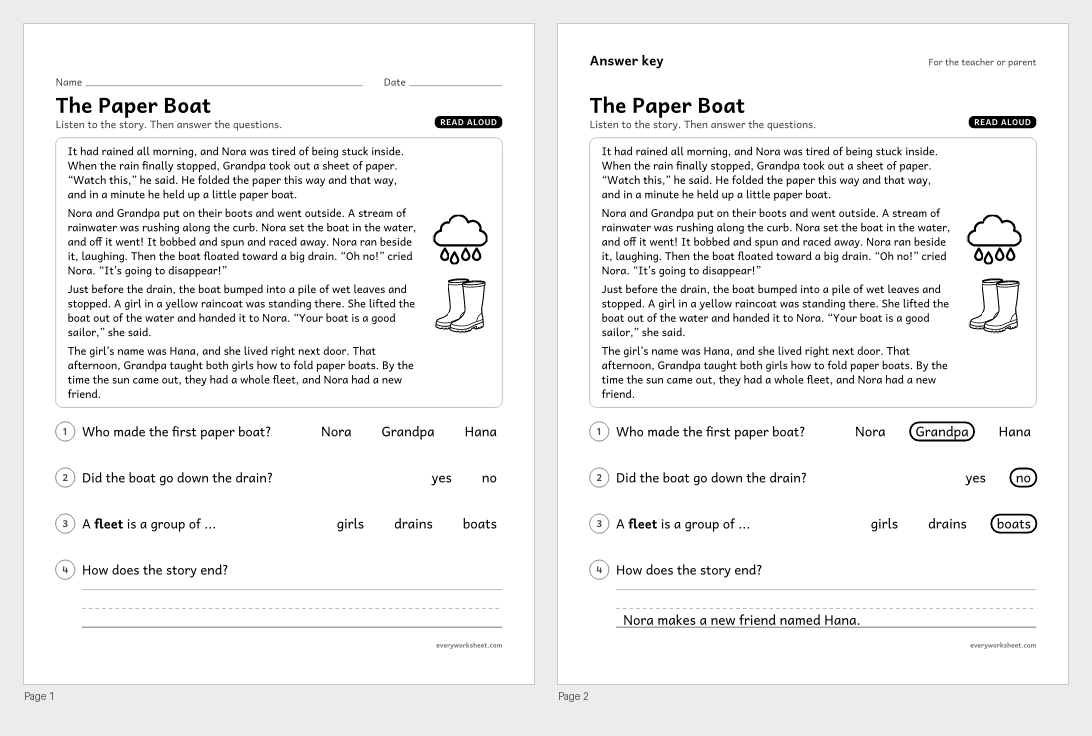 View all 2 pages
Listening to a story read aloud and answering questions about key details
Answer key on page 2
2 pages60 KB
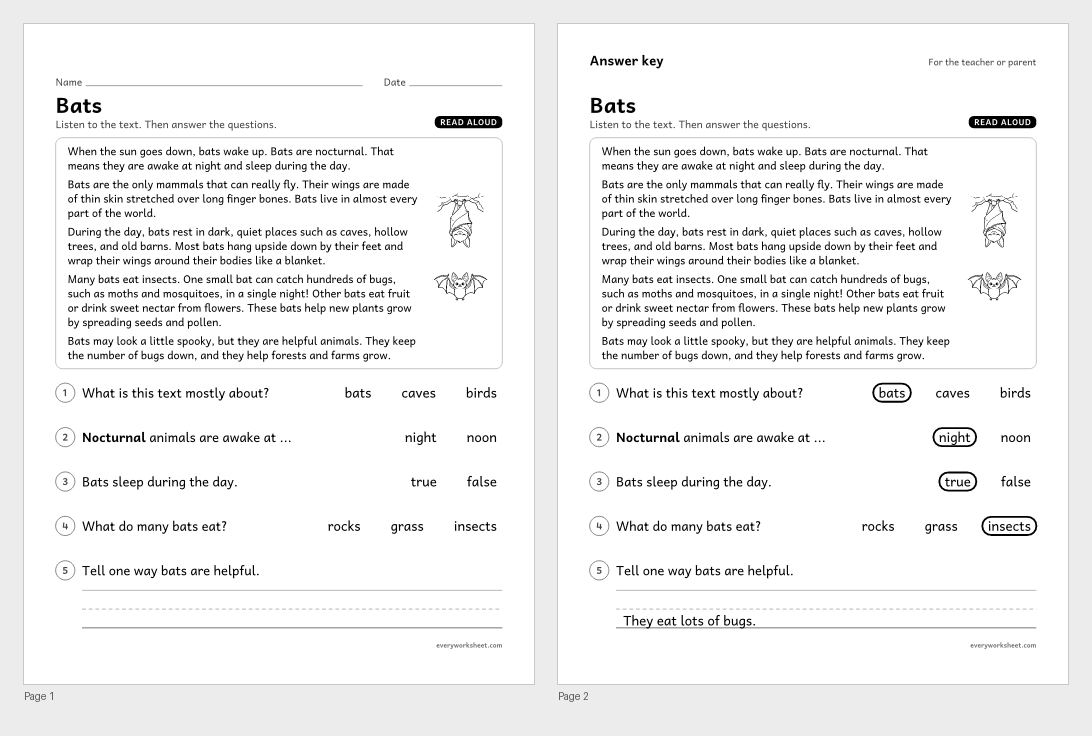 View all 2 pages
Listening to a nonfiction text read aloud and answering questions about key details
Answer key on page 2
2 pages85 KB
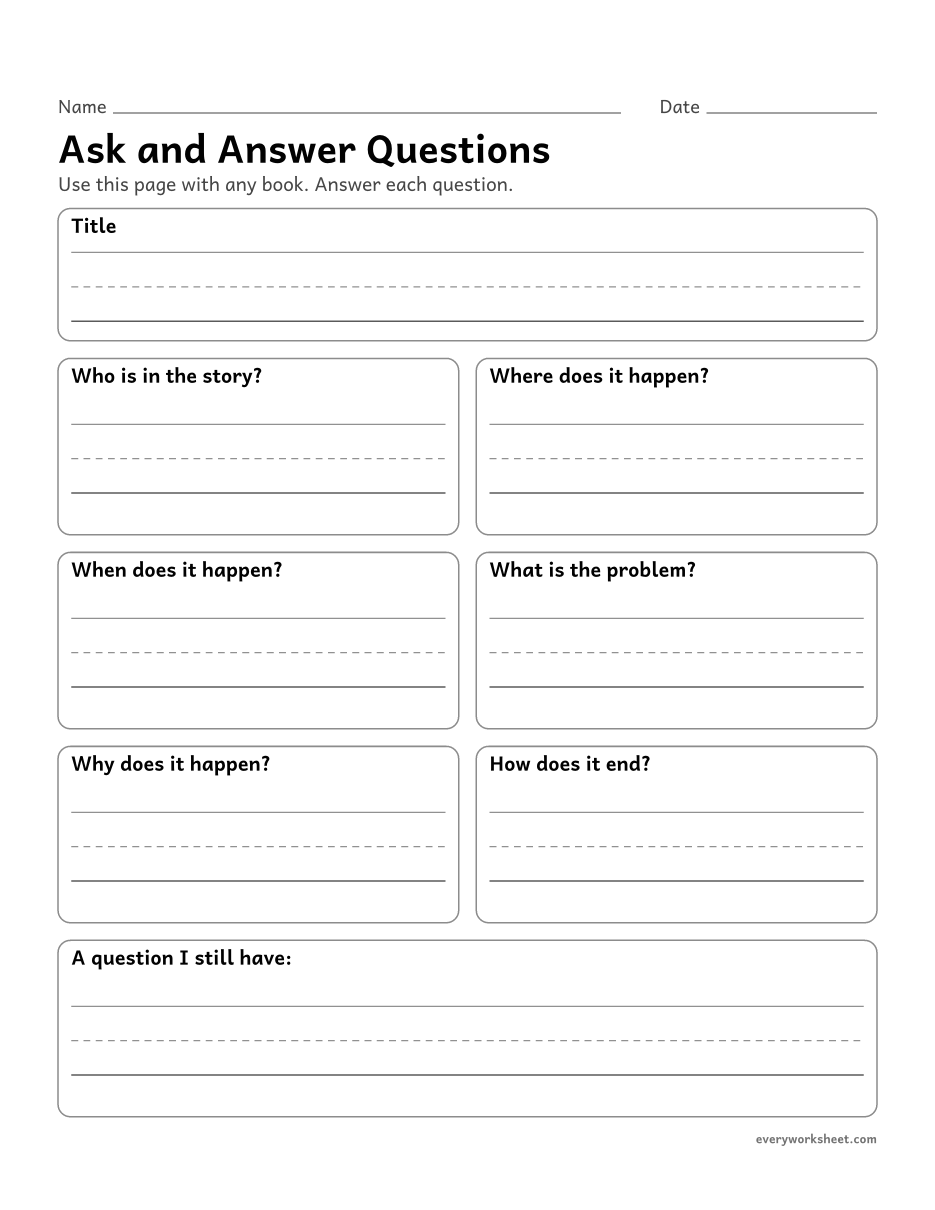 View larger
Asking and answering who, what, where, when, why and how questions about a book
1 page28 KB
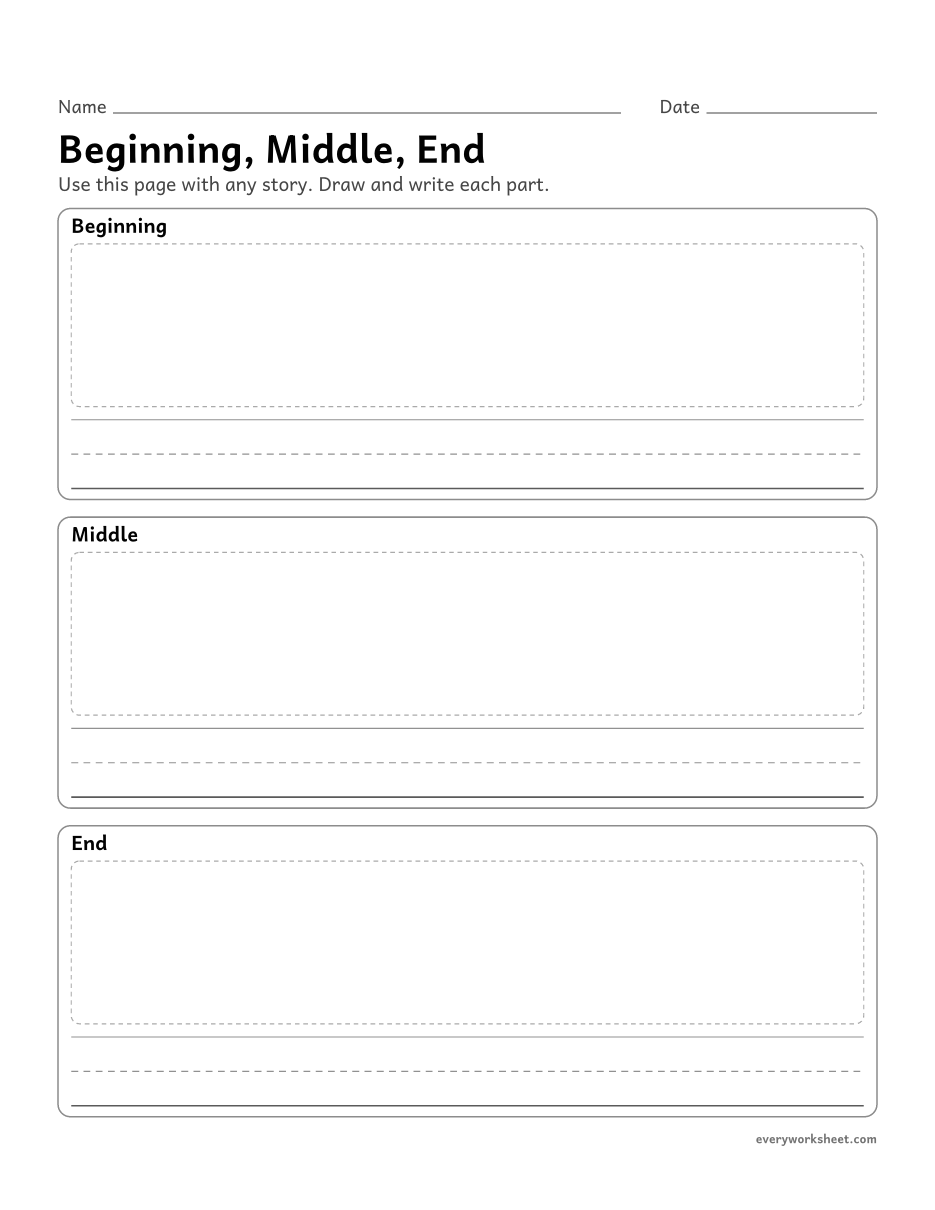 View larger
Retelling the beginning, middle and end of a story
1 page25 KB
Print at 100% (actual size) for the cleanest tracing lines.
In first grade, children move from reading single sentences to reading whole short texts on their own. Comprehension is what makes that reading worth it: knowing who and what a text is about, remembering the details, putting events in order and explaining what happened in their own words.
These reading comprehension passages for 1st graders are all original and come in three levels. Level 1 passages are short (about 50 to 75 words) and use simple short-vowel words and common sight words. Level 2 passages add longer words and a little more detail. Level 3 passages are about 120 to 160 words, with a page of text and a separate page of questions. Each level mixes made-up stories and true nonfiction about animals, the moon, firefighters and how bread is made.
Every passage has a mix of question types: circle the answer, pick a picture, number the events in order, find a word that means something, and write a short answer. Two read-aloud pages give children harder texts to listen to, and two pages of questions work with any book. Every page with right answers has an answer key.
CCSS.ELA-LITERACY.RL.1.1Ask and answer questions about key details in a text.CCSS.ELA-LITERACY.RL.1.2Retell stories, including key details, and demonstrate understanding of their central message or lesson.CCSS.ELA-LITERACY.RL.1.3Describe characters, settings, and major events in a story, using key details.CCSS.ELA-LITERACY.RL.1.10With prompting and support, read prose and poetry of appropriate complexity for grade 1.CCSS.ELA-LITERACY.RI.1.1Ask and answer questions about key details in a text.CCSS.ELA-LITERACY.RI.1.2Identify the main topic and retell key details of a text.CCSS.ELA-LITERACY.RI.1.4Ask and answer questions to help determine or clarify the meaning of words and phrases in a text.CCSS.ELA-LITERACY.RI.1.10With prompting and support, read informational texts appropriately complex for grade 1.CCSS.ELA-LITERACY.RF.1.4.ARead grade-level text with purpose and understanding.CCSS.ELA-LITERACY.L.1.4.AUse sentence-level context as a clue to the meaning of a word or phrase.CCSS.ELA-LITERACY.SL.1.2Ask and answer questions about key details in a text read aloud or information presented orally or through other media.They come in three levels. Level 1 is for the start of first grade (short texts with simple words), Level 2 is for the middle of the year, and Level 3 is for the end of first grade. Each page shows its level and word count.
Yes. Every passage and story was written for this site, so you can print and copy them freely for your class or family.
Yes. Each passage has an answer key on the page after the questions. Writing questions show an example answer.
Have them reread, look back in the text for answers, and retell the story in their own words. Asking who, what, where, when and why after reading helps a lot.
Yes. Each level mixes stories with true nonfiction about animals, the moon, firefighters, bread and more.