 View all 2 pages
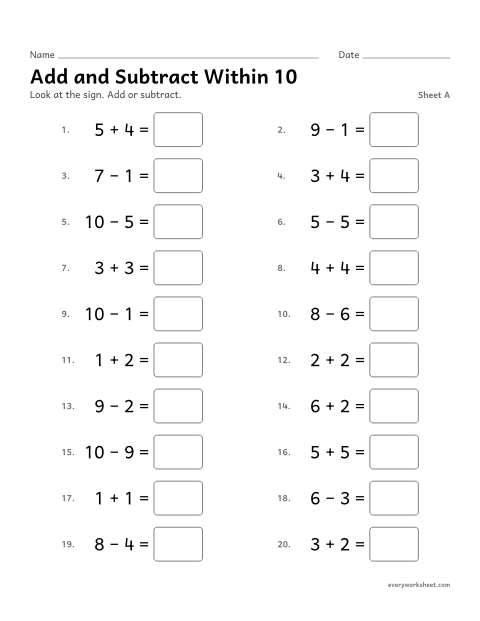
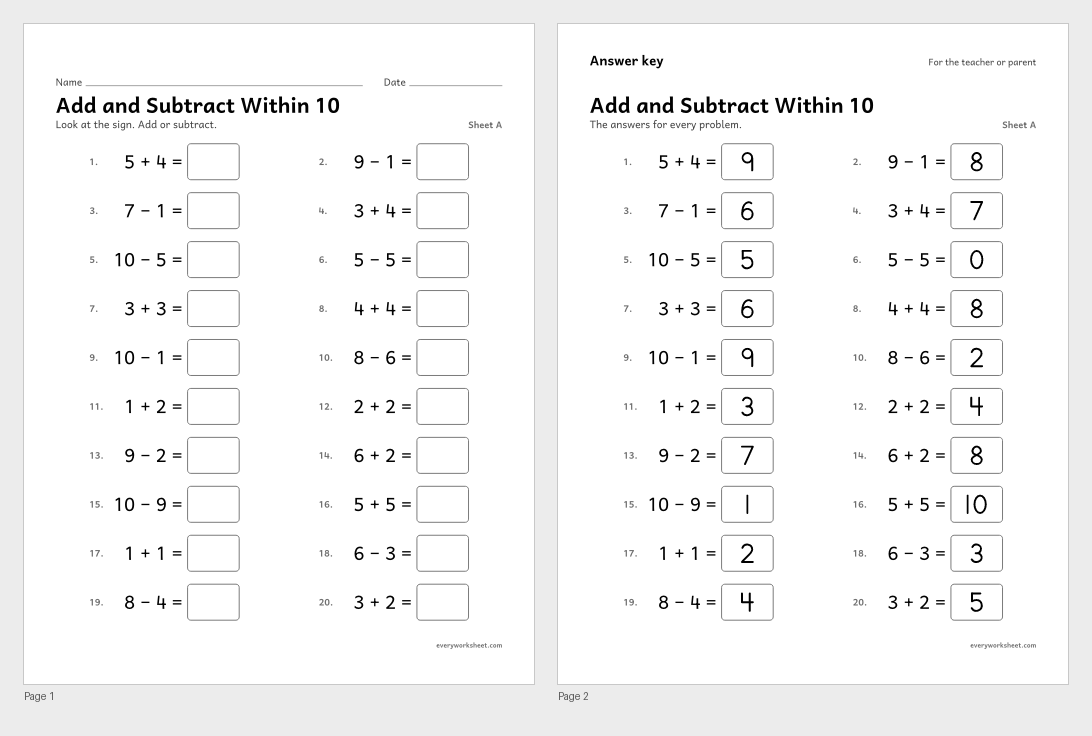
Add and subtract within 10, sheet A
Adding and subtracting within 10
Answer key on page 2
2 pages95 KB
Mixed addition and subtraction within 20, fact families, number bonds, missing numbers and true or false equations for 1st grade, with answer keys.
View all 2 pagesAdding and subtracting within 10
Answer key on page 2
2 pages95 KB
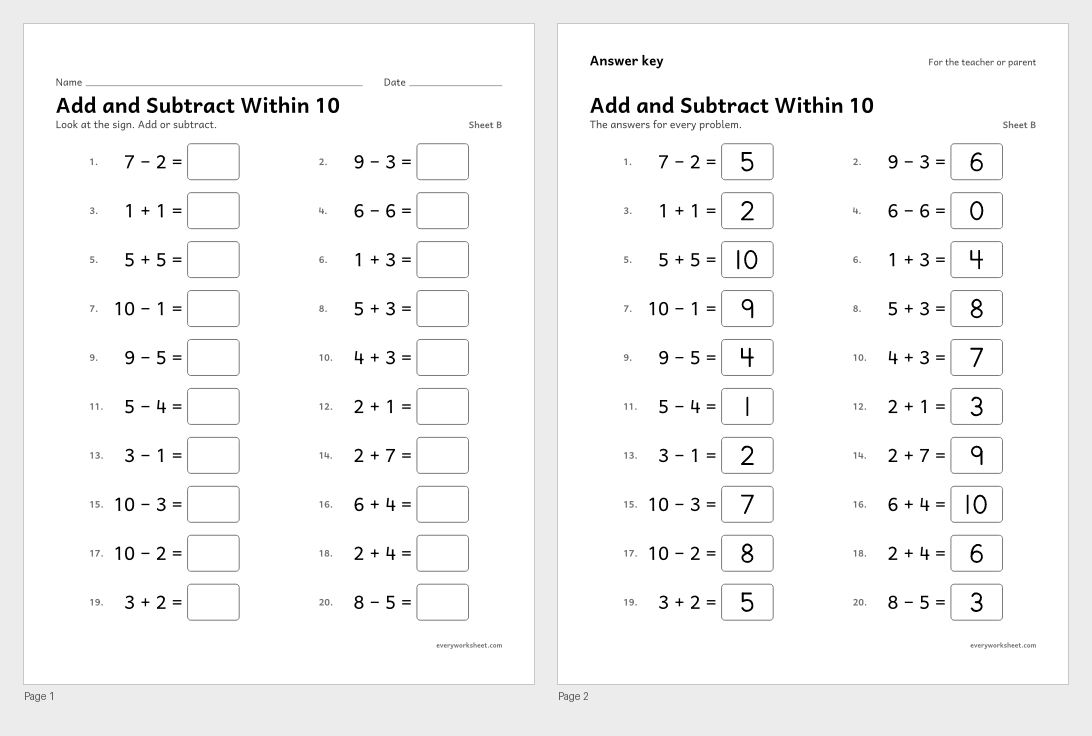 View all 2 pages
Adding and subtracting within 10
Answer key on page 2
2 pages95 KB
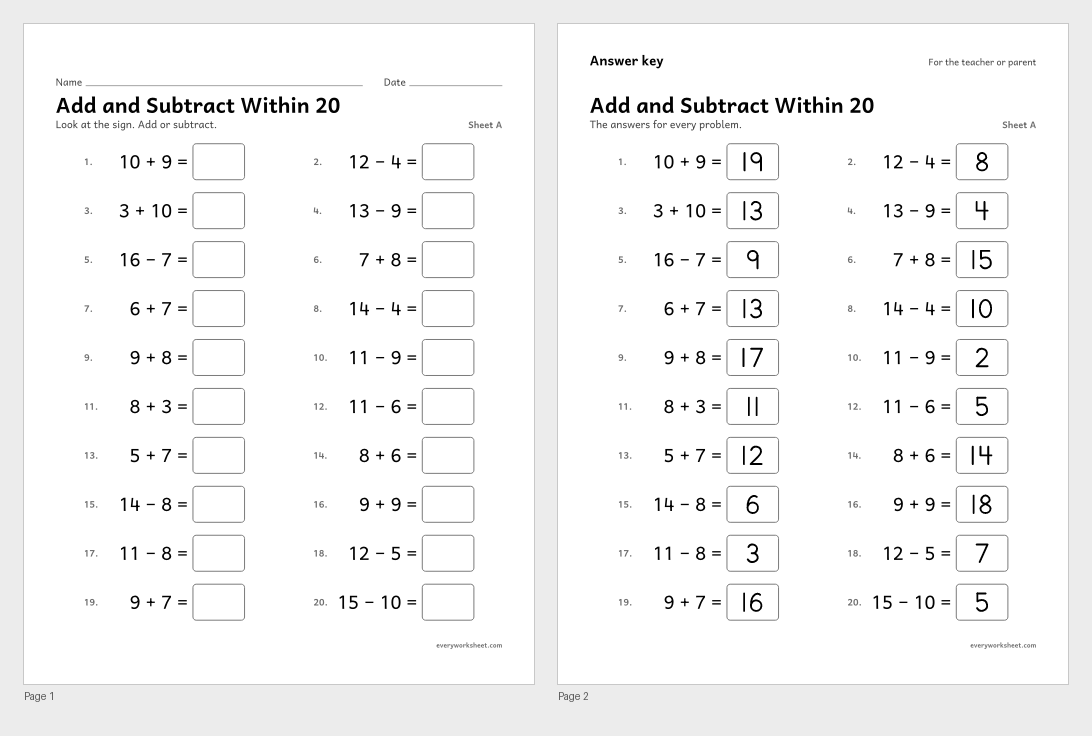 View all 2 pages
Adding and subtracting within 20
Answer key on page 2
2 pages95 KB
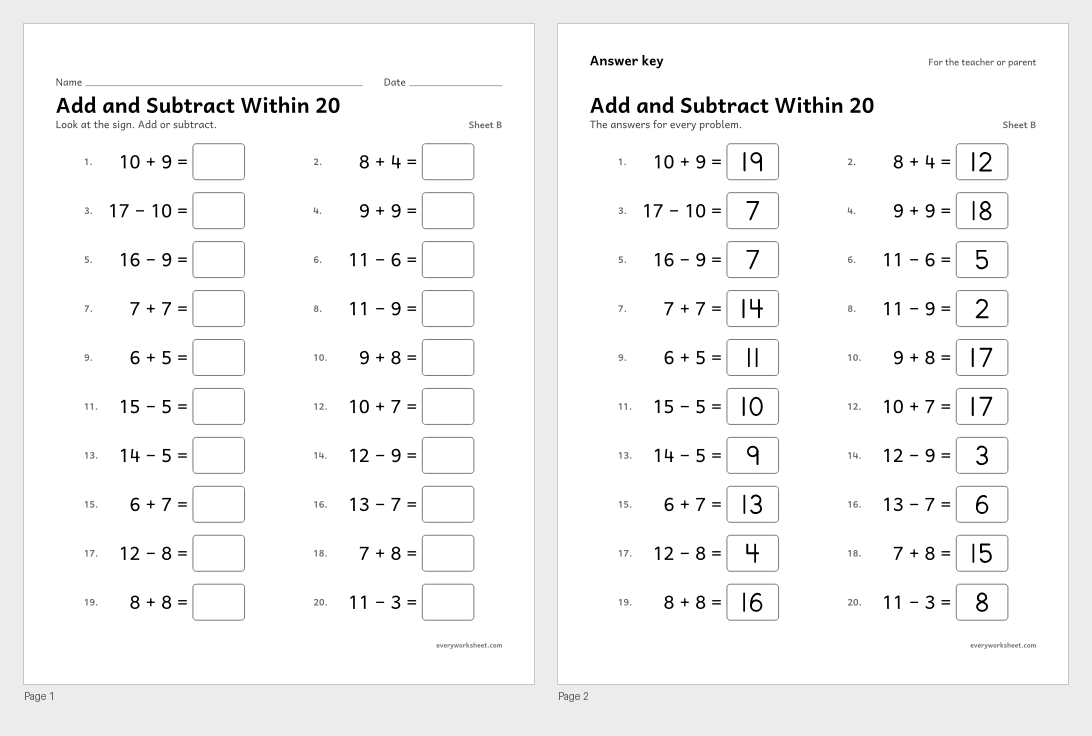 View all 2 pages
Adding and subtracting within 20
Answer key on page 2
2 pages95 KB
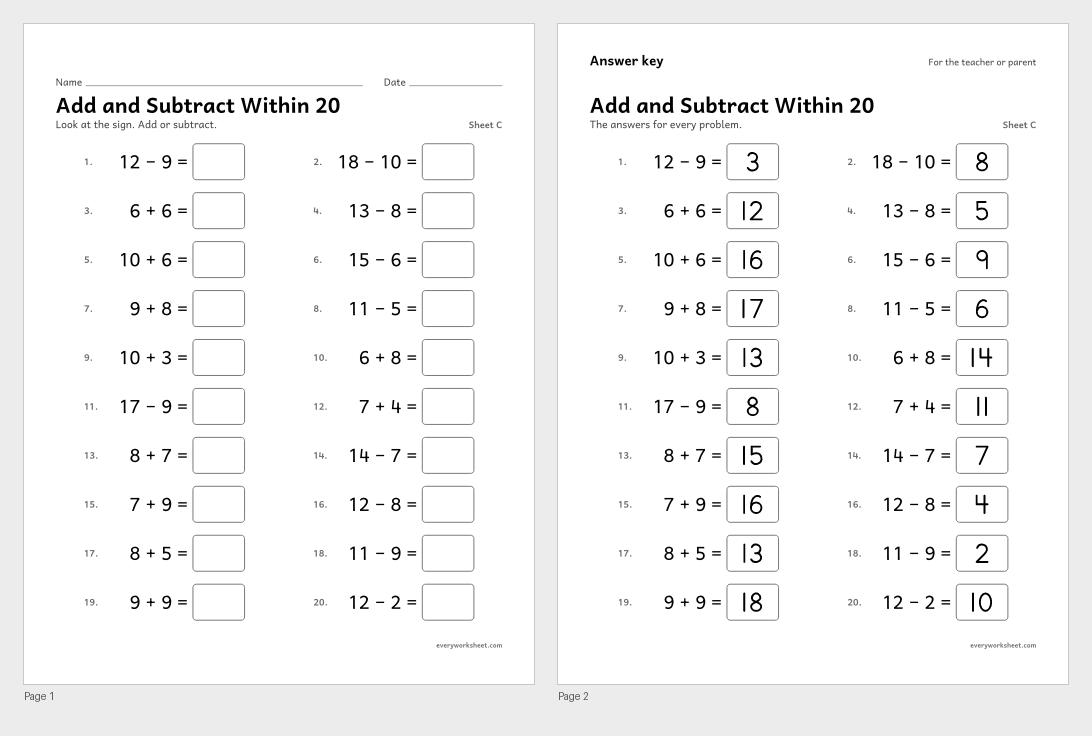 View all 2 pages
Adding and subtracting within 20
Answer key on page 2
2 pages95 KB
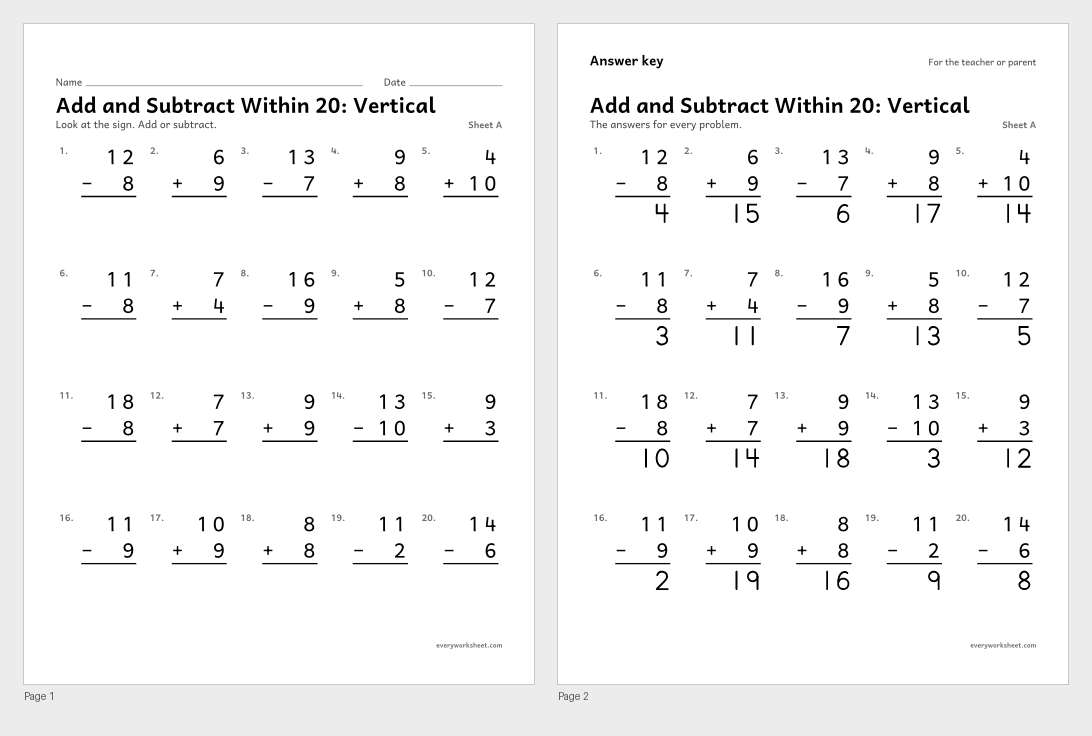 View all 2 pages
Adding and subtracting within 20 in vertical form
Answer key on page 2
2 pages59 KB
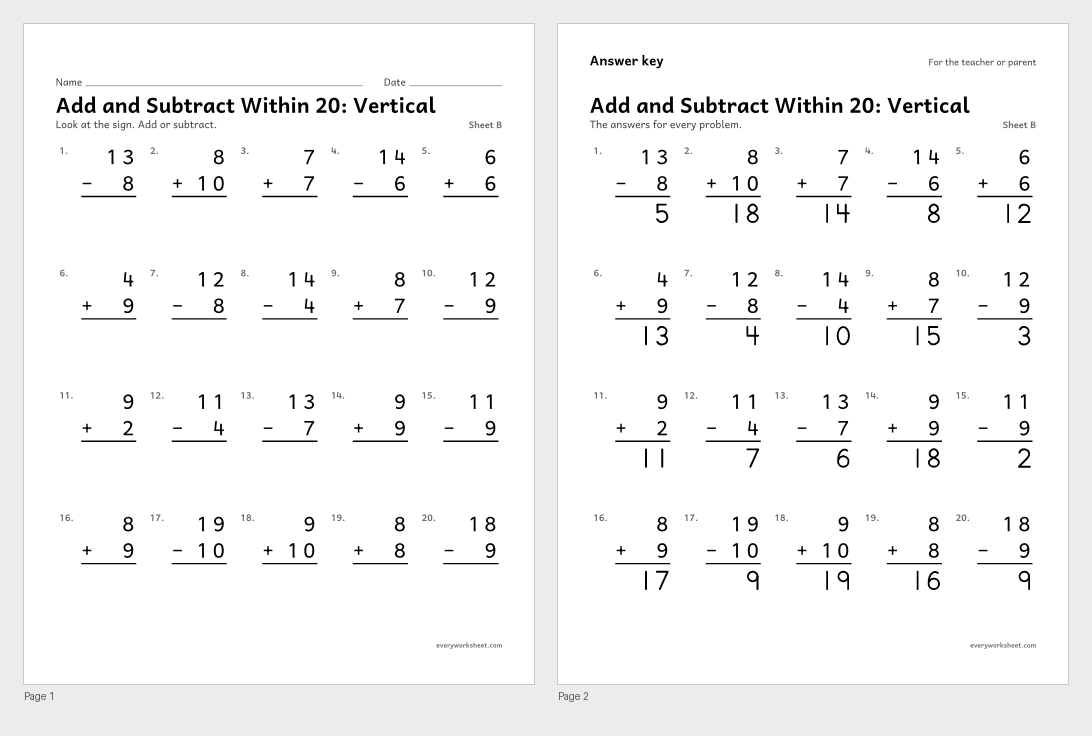 View all 2 pages
Adding and subtracting within 20 in vertical form
Answer key on page 2
2 pages59 KB
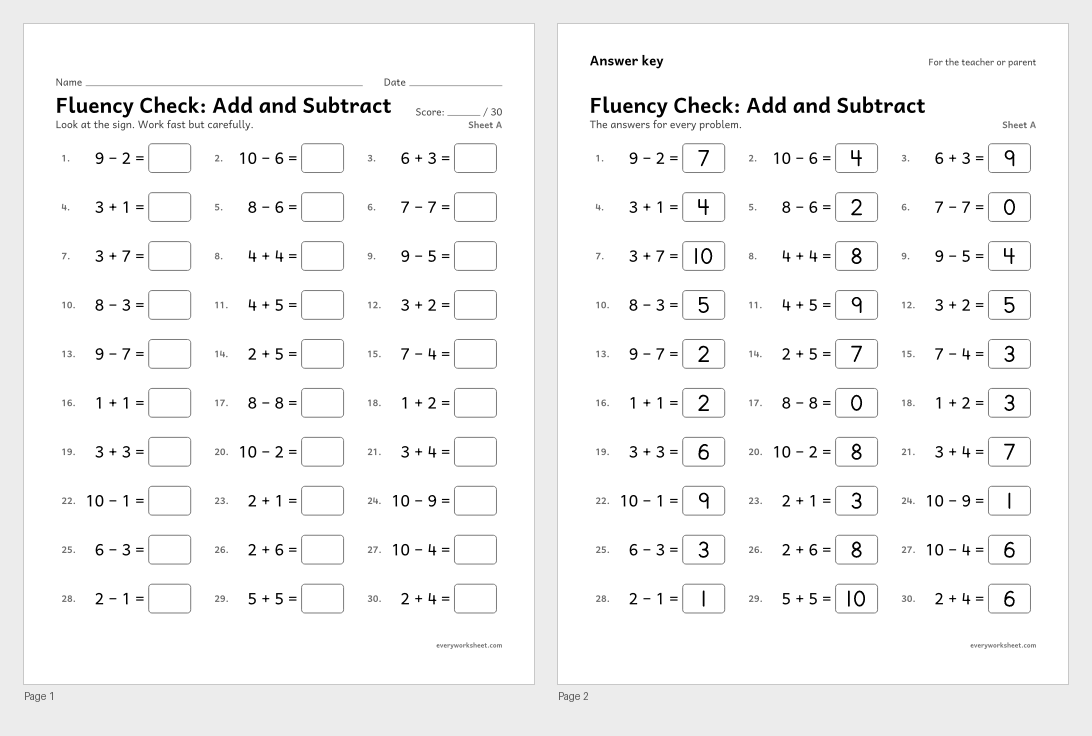 View all 2 pages
Adding and subtracting within 10 fluently
Answer key on page 2
2 pages127 KB
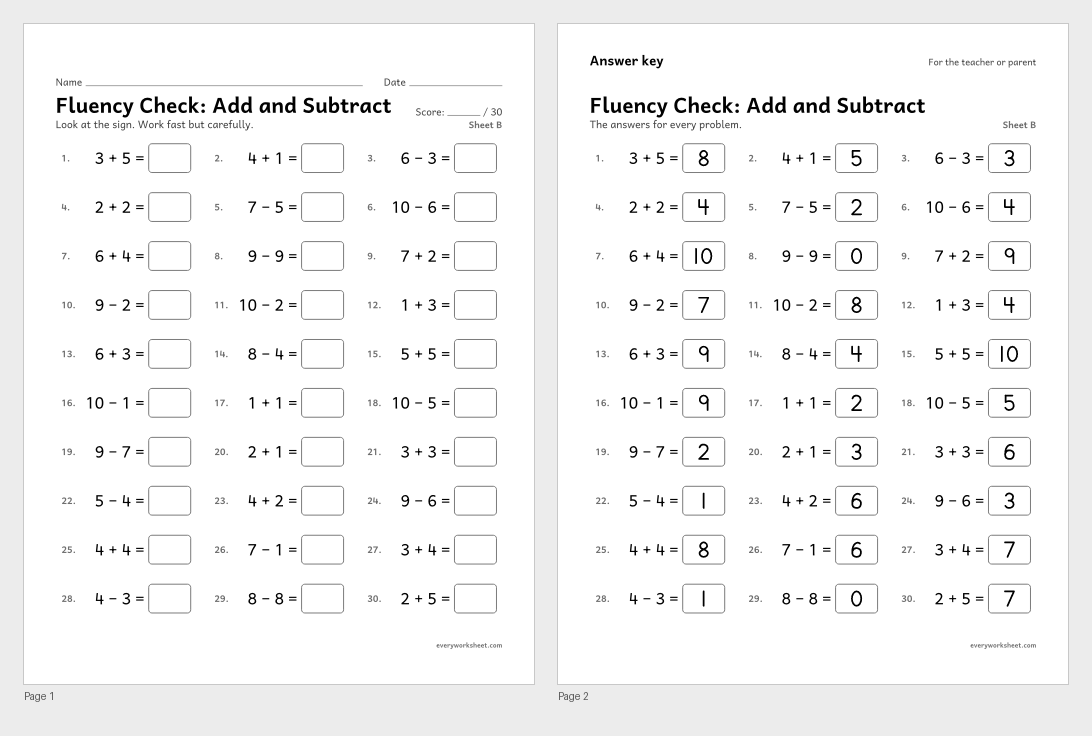 View all 2 pages
Adding and subtracting within 10 fluently
Answer key on page 2
2 pages128 KB
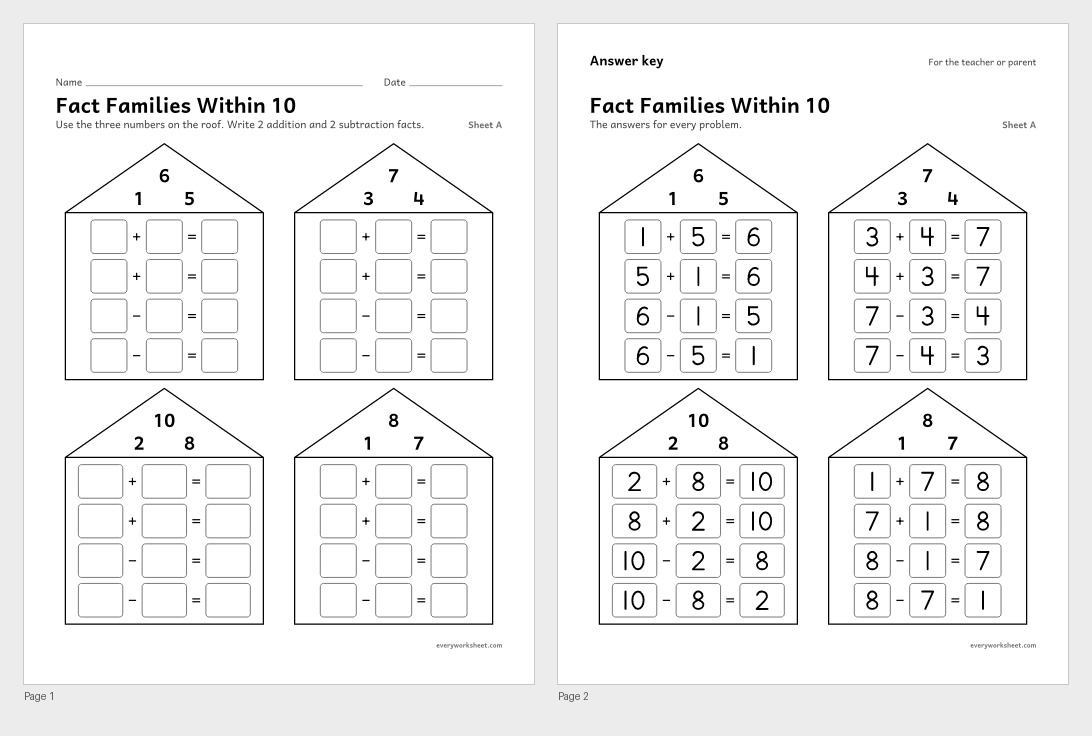 View all 2 pages
Writing the four facts of a fact family within 10
Answer key on page 2
2 pages58 KB
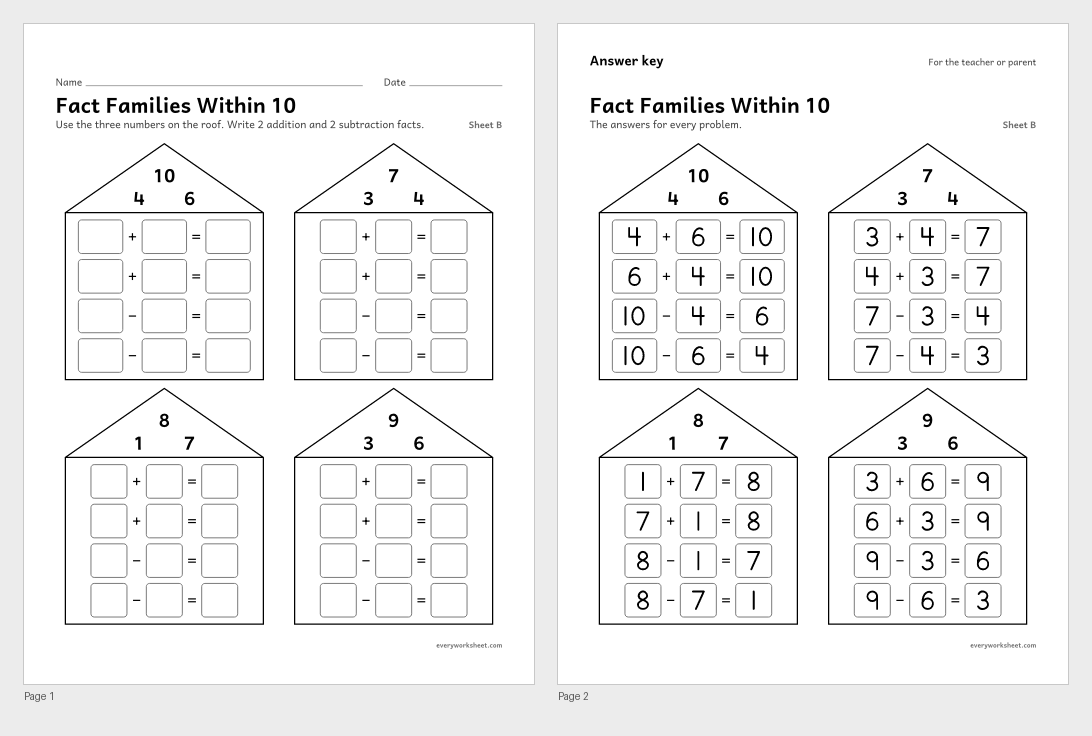 View all 2 pages
Writing the four facts of a fact family within 10
Answer key on page 2
2 pages58 KB
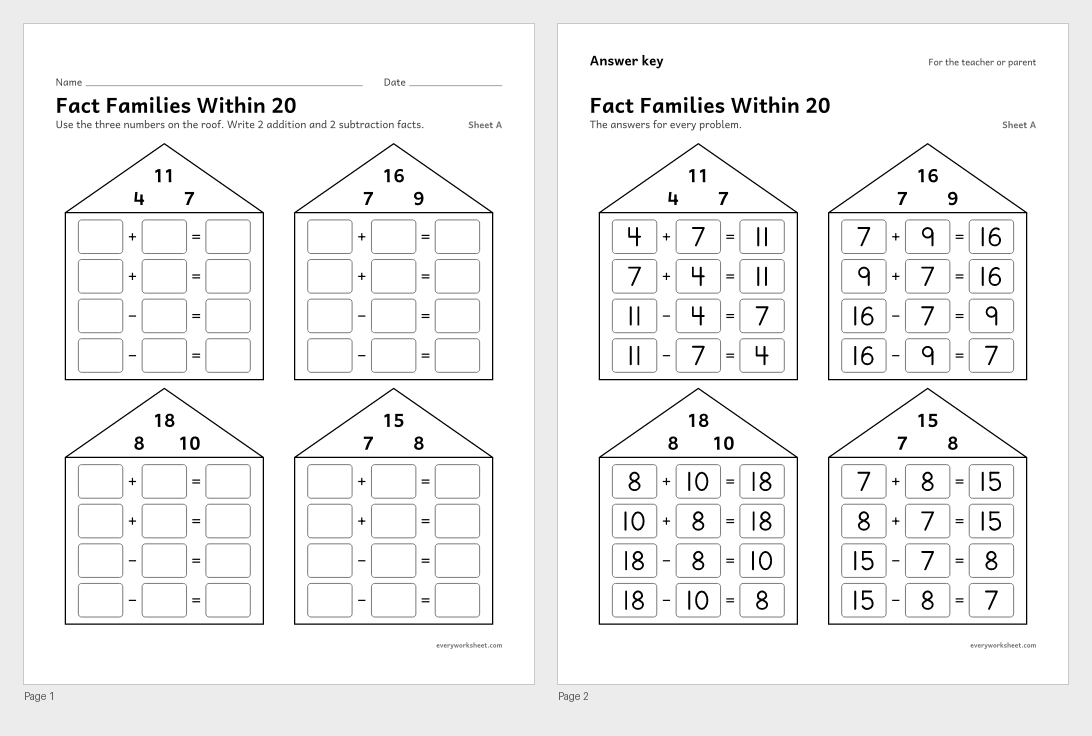 View all 2 pages
Writing the four facts of a fact family within 20
Answer key on page 2
2 pages58 KB
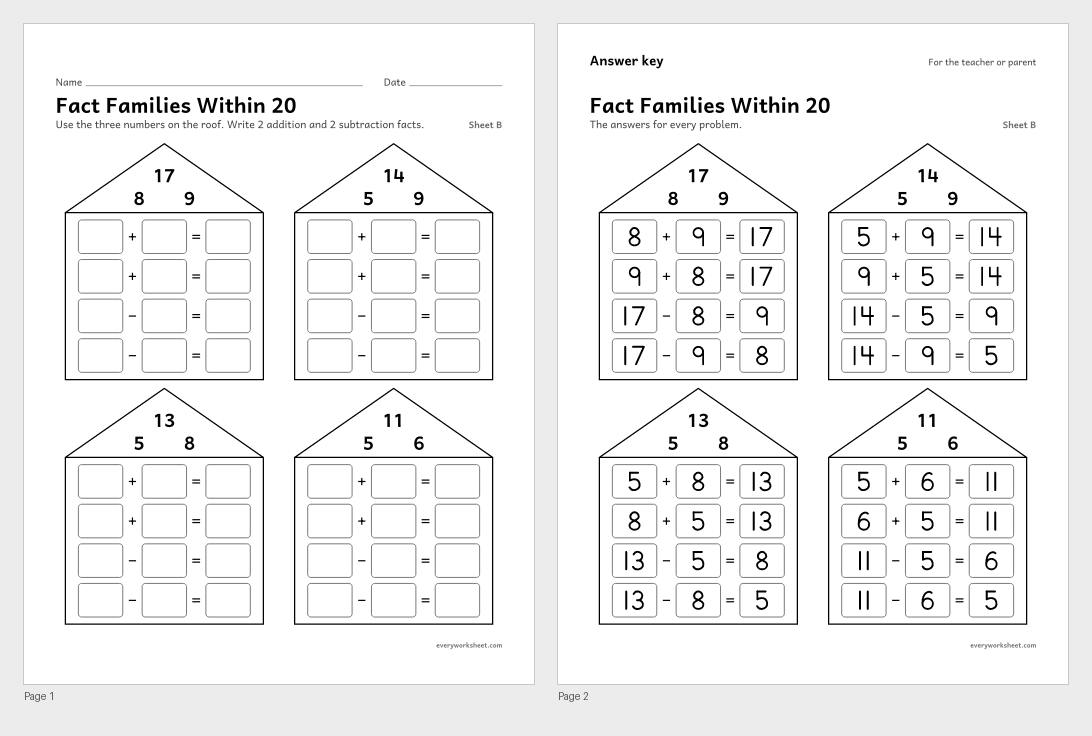 View all 2 pages
Writing the four facts of a fact family within 20
Answer key on page 2
2 pages58 KB
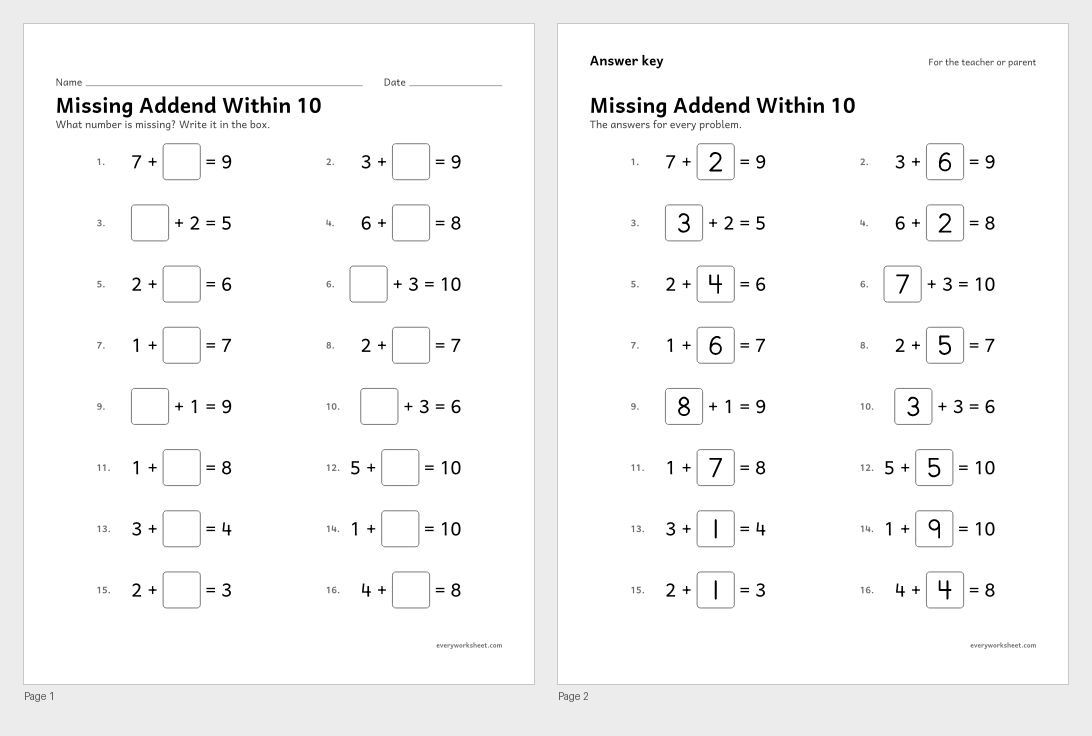 View all 2 pages
Finding a missing addend within 10
Answer key on page 2
2 pages82 KB
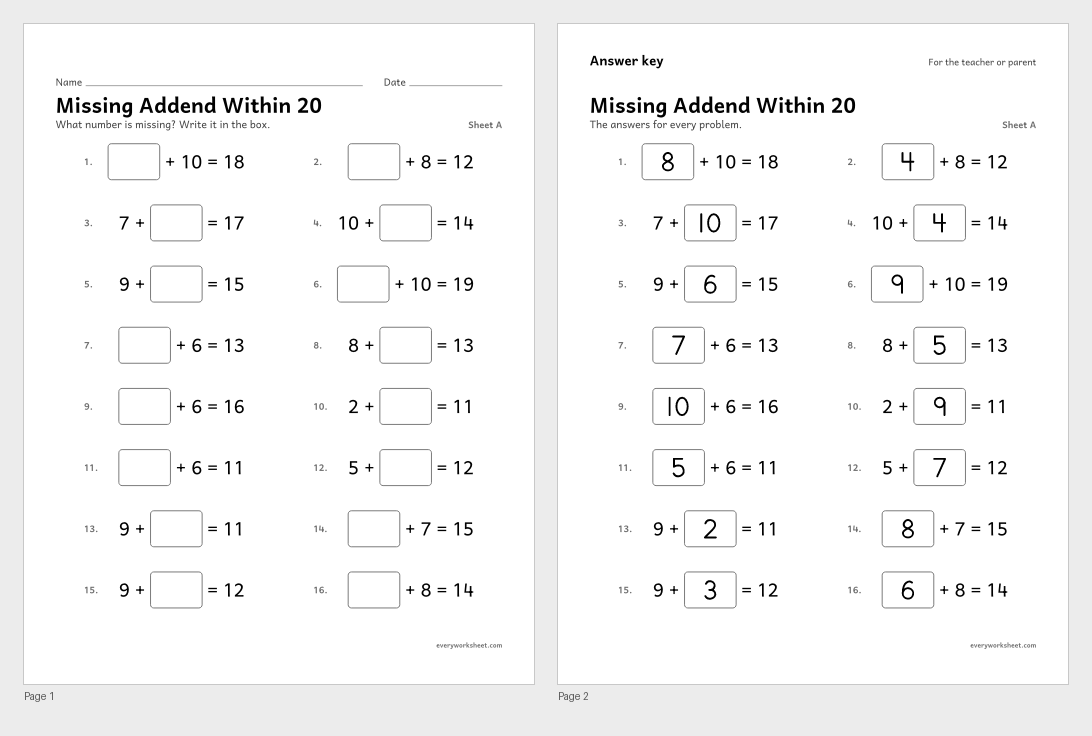 View all 2 pages
Finding a missing addend within 20
Answer key on page 2
2 pages82 KB
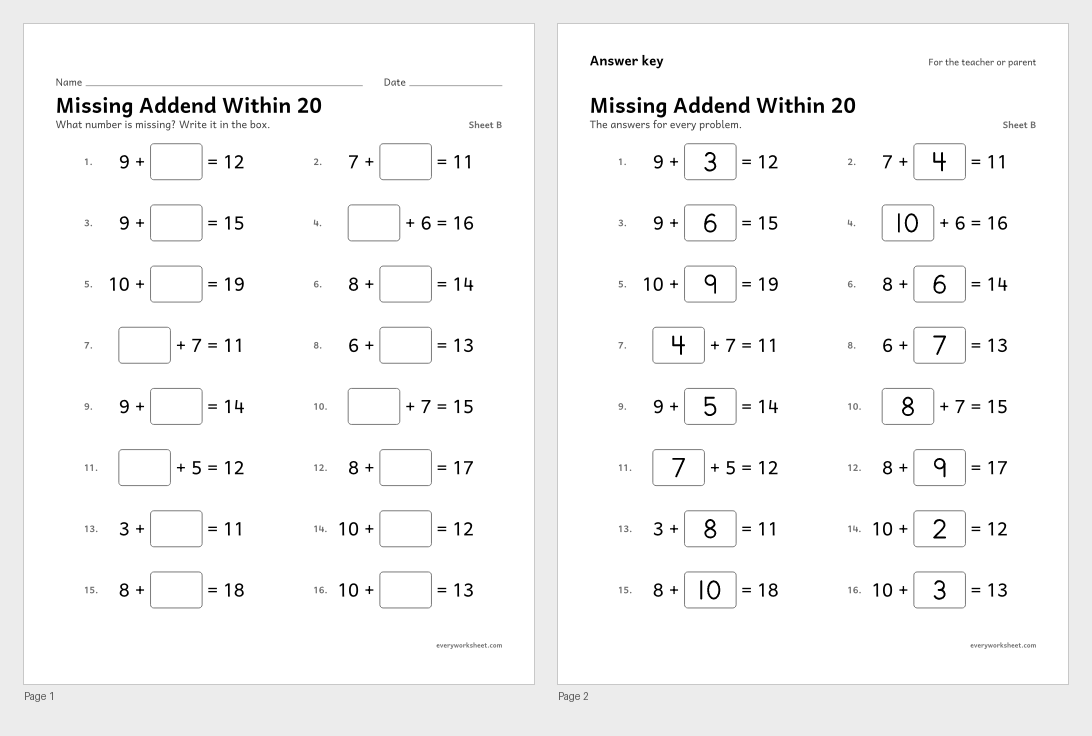 View all 2 pages
Finding a missing addend within 20
Answer key on page 2
2 pages82 KB
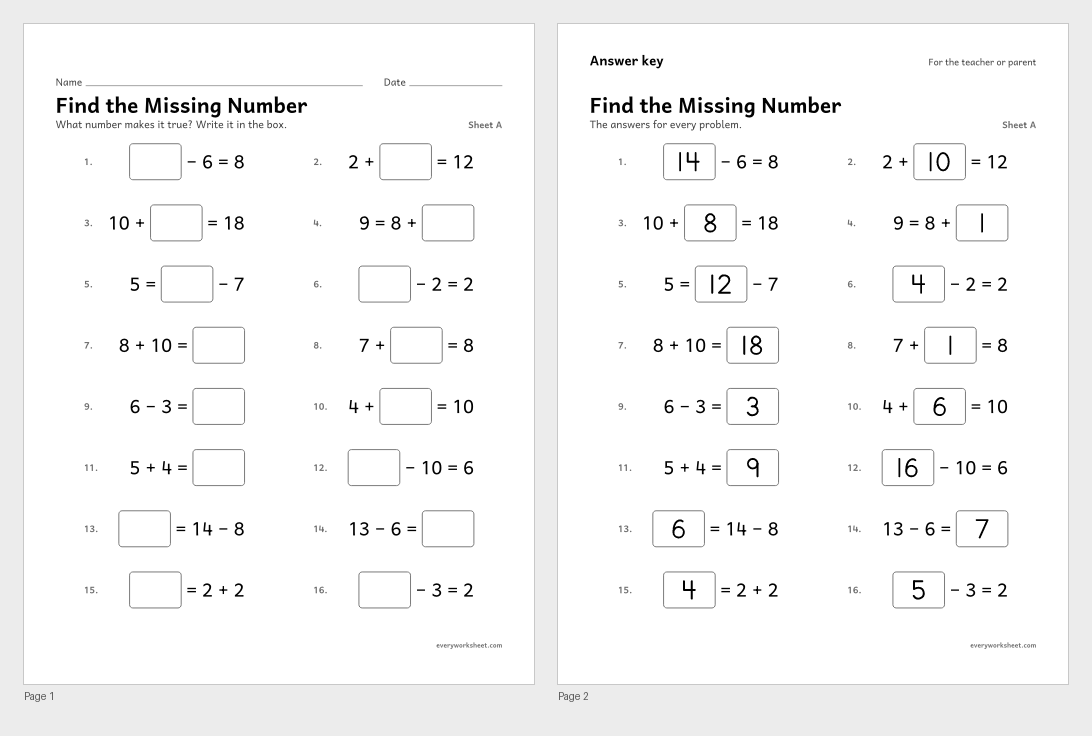 View all 2 pages
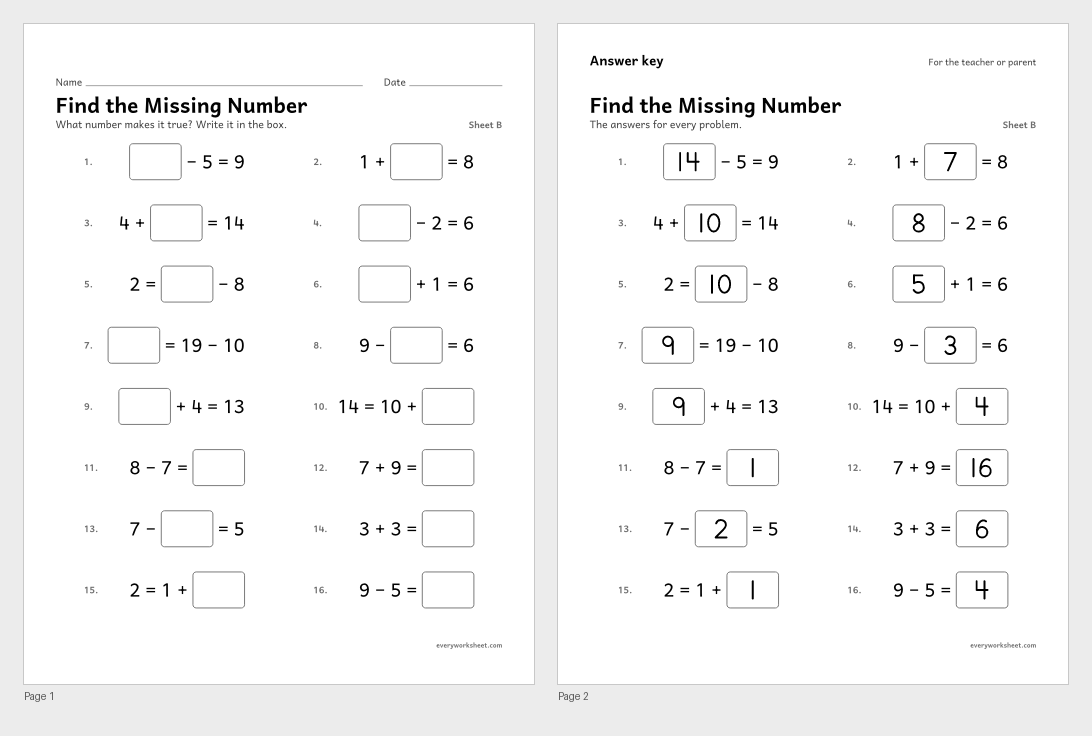
Finding the unknown number in any place in an equation
Answer key on page 2
2 pages83 KB
 View all 2 pages
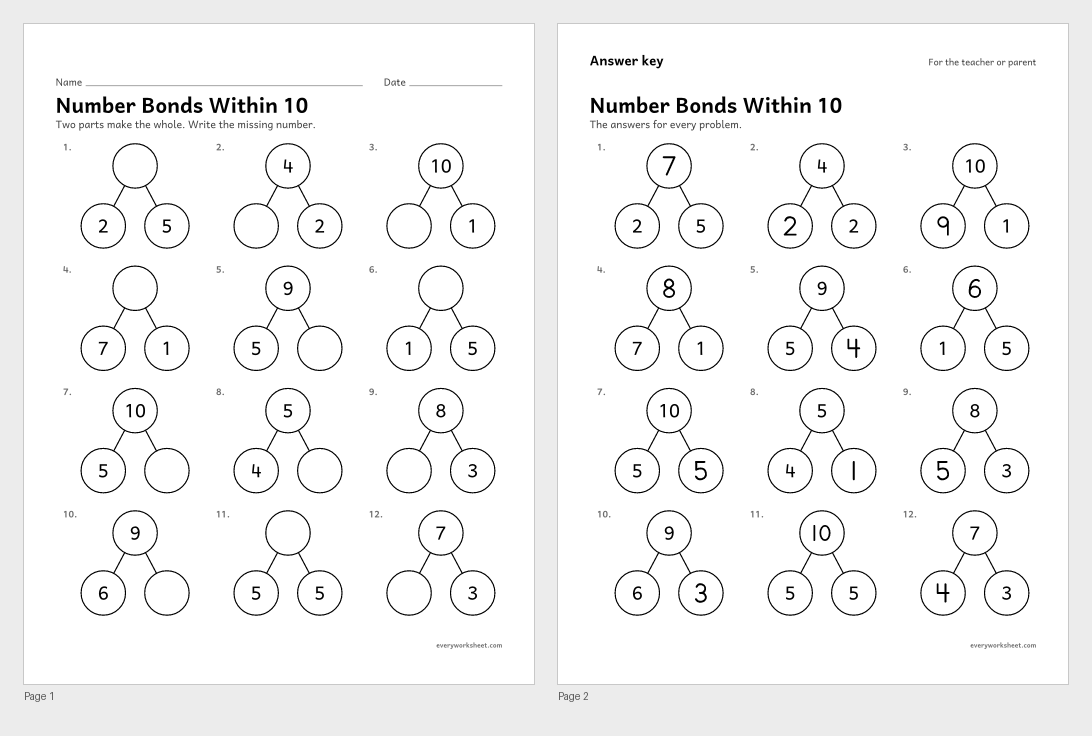
Finding the unknown number in any place in an equation
Answer key on page 2
2 pages83 KB
 View all 2 pages
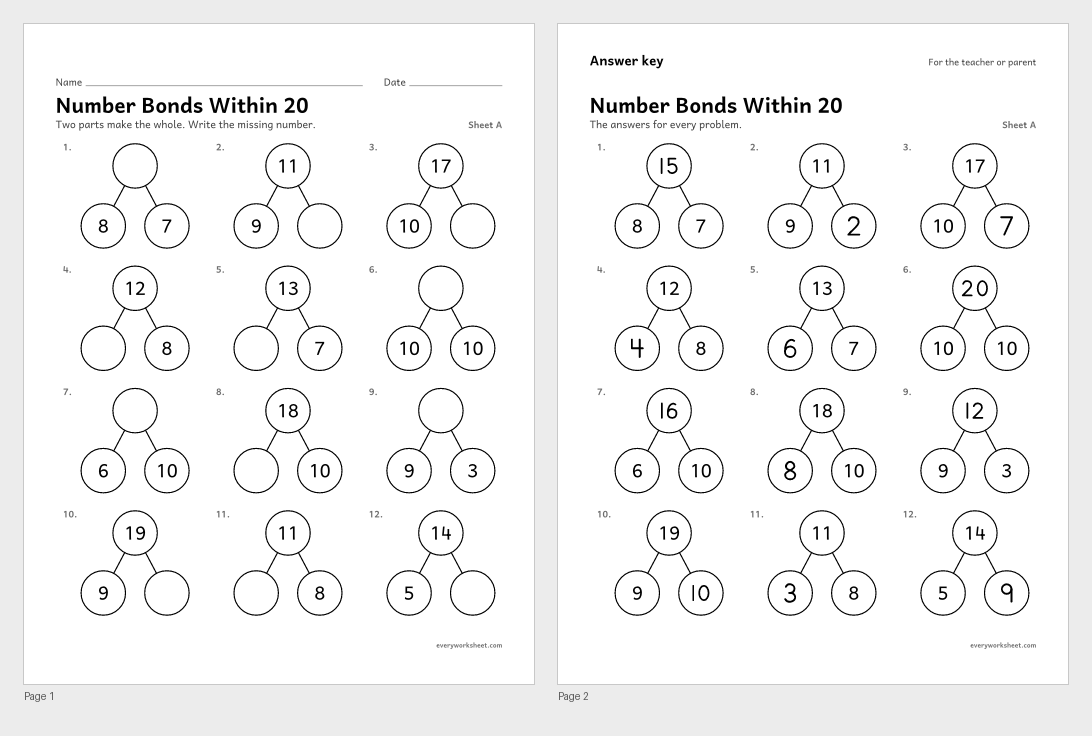
Finding a missing part or whole within 10
Answer key on page 2
2 pages47 KB
 View all 2 pages
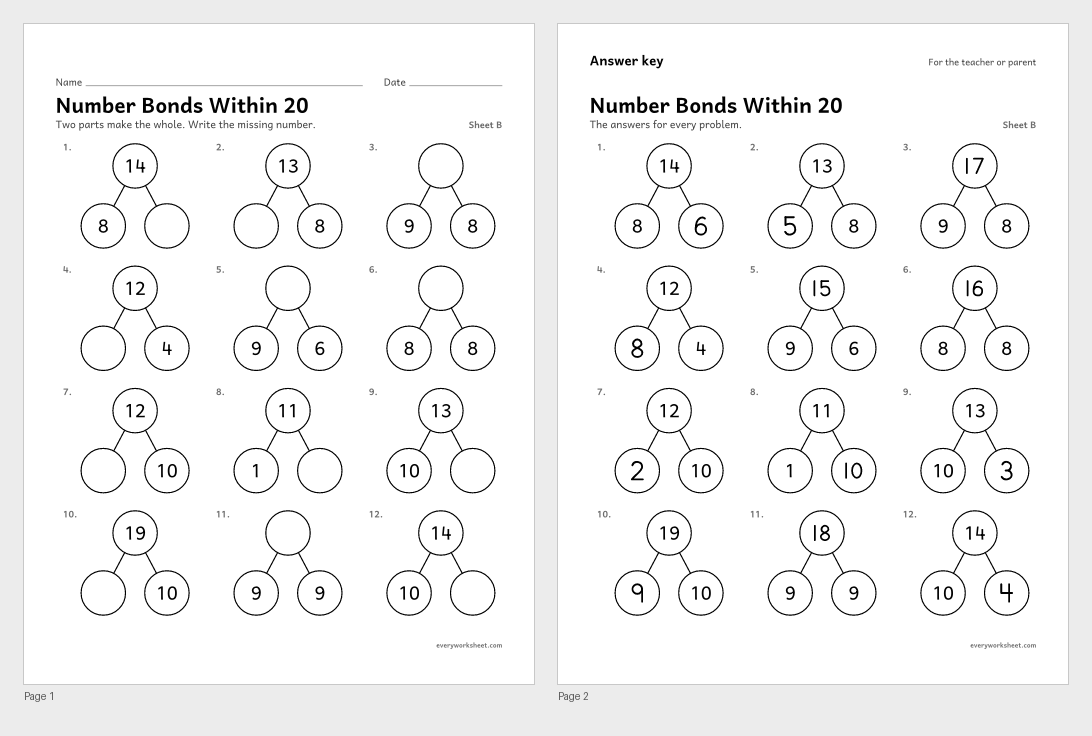
Finding a missing part or whole within 20
Answer key on page 2
2 pages48 KB
 View all 2 pages
Finding a missing part or whole within 20
Answer key on page 2
2 pages48 KB
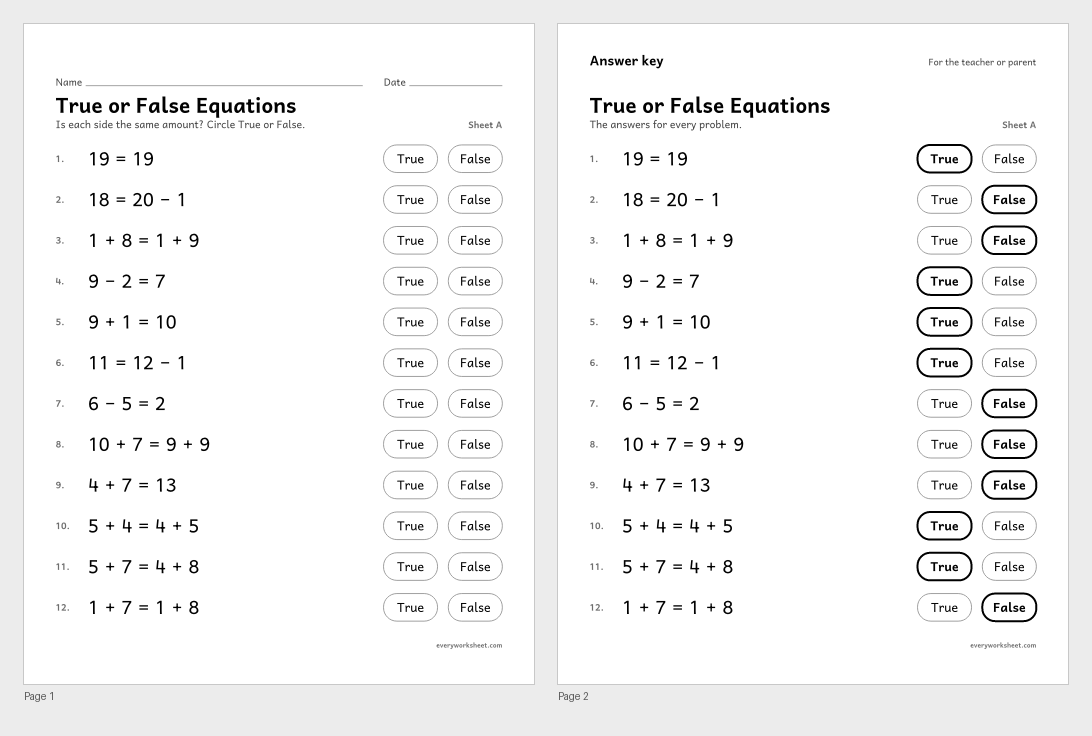 View all 2 pages
Deciding if an equation is true or false
Answer key on page 2
2 pages79 KB
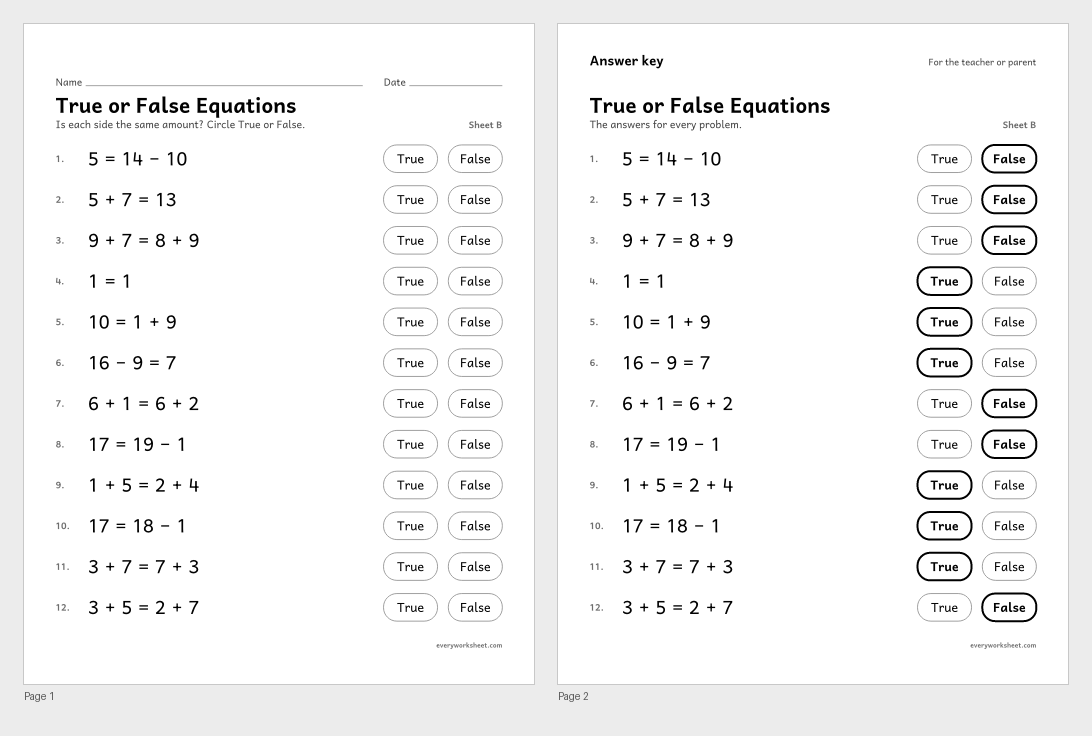 View all 2 pages
Deciding if an equation is true or false
Answer key on page 2
2 pages79 KB
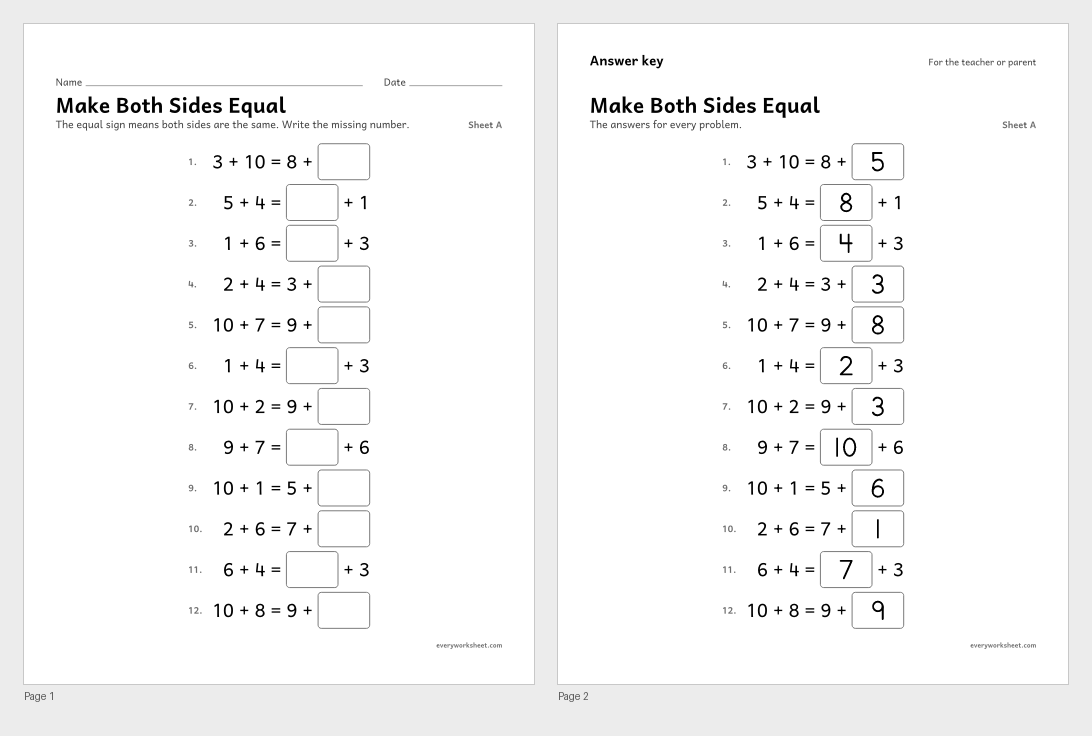 View all 2 pages
Finding the number that makes both sides equal
Answer key on page 2
2 pages82 KB
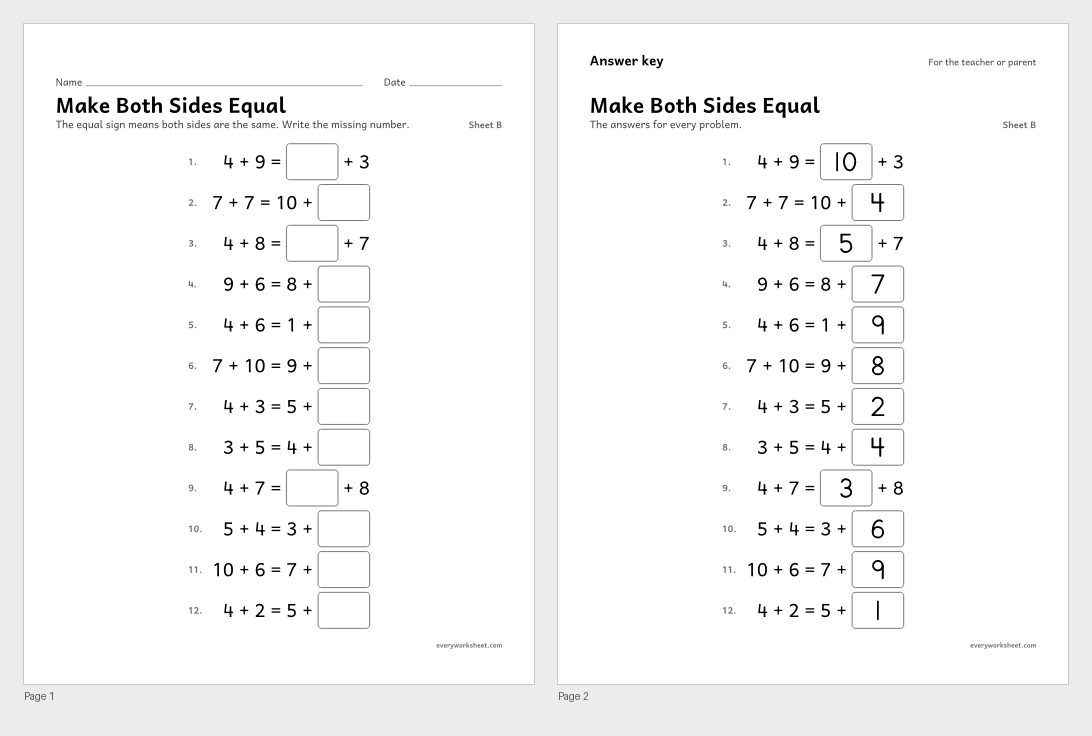 View all 2 pages
Finding the number that makes both sides equal
Answer key on page 2
2 pages82 KB
Print at 100% (actual size) for the cleanest tracing lines.
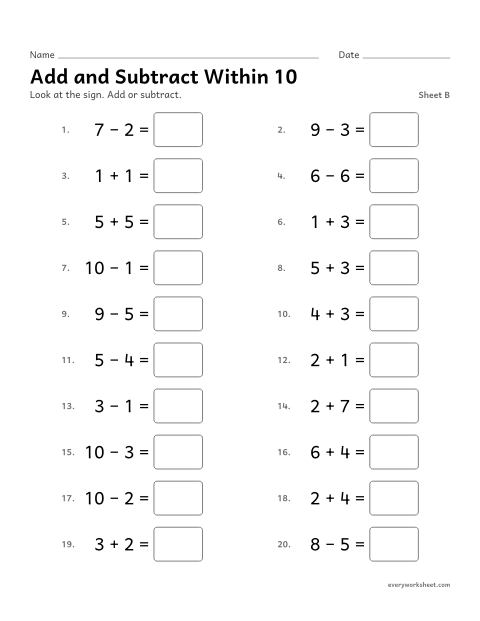
Once children can add and subtract, the next step is seeing how the two fit together. These addition and subtraction worksheets mix the two operations so children read each sign, and they show the link between them with fact families and number bonds.
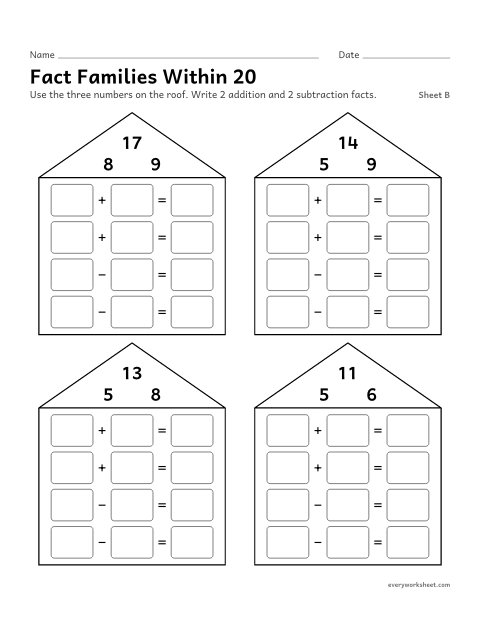
Fact family houses ask for all four facts from three numbers. Number bonds show a whole and its two parts. Missing number pages put the blank anywhere in the equation, as in 8 + ? = 11 or 5 = ? − 3. True or false pages and make both sides equal pages teach what the equal sign really means: both sides are the same amount.
Most pages come in several versions, Sheet A, B and C, with the same skill and new problems. Every page has an answer key on page 2, and prints in black and white on US Letter or A4.
CCSS.MATH.CONTENT.1.OA.B.4Understand subtraction as an unknown-addend problem. For example, subtract 10 - 8 by finding the number that makes 10 when added to 8.CCSS.MATH.CONTENT.1.OA.C.6Add and subtract within 20, demonstrating fluency for addition and subtraction within 10. Use strategies such as counting on; making ten (e.g., 8 + 6 = 8 + 2 + 4 = 10 + 4 = 14); decomposing a number leading to a ten (e.g., 13 - 4 = 13 - 3 - 1 = 10 - 1 = 9); using the relationship between addition and subtraction (e.g., knowing that 8 + 4 = 12, one knows 12 - 8 = 4); and creating equivalent but easier or known sums (e.g., adding 6 + 7 by creating the known equivalent 6 + 6 + 1 = 12 + 1 = 13).CCSS.MATH.CONTENT.1.OA.D.7Understand the meaning of the equal sign, and determine if equations involving addition and subtraction are true or false. For example, which of the following equations are true and which are false? 6 = 6, 7 = 8 - 1, 5 + 2 = 2 + 5, 4 + 1 = 5 + 2.CCSS.MATH.CONTENT.1.OA.D.8Determine the unknown whole number in an addition or subtraction equation relating three whole numbers. For example, determine the unknown number that makes the equation true in each of the equations 8 + ? = 11, 5 = _ - 3, 6 + 6 = _.Three numbers that make two addition facts and two subtraction facts. For 3, 5 and 8: 3 + 5 = 8, 5 + 3 = 8, 8 − 3 = 5 and 8 − 5 = 3.
They teach that the equal sign means 'the same amount as', not 'write the answer next'. Children who understand this find missing number problems and later algebra much easier.
A number bond shows a whole number and two parts that make it, such as 14 split into 9 and 5. The pages ask for the missing part or the missing whole.
Yes. Every page has an answer key on page 2 of the PDF.