 View larger
Adjectives Worksheets
Find describing words, describe pictures, sort words by the senses, match opposites, order words by strength and compare with -er and -est.
Download the adjectives worksheets
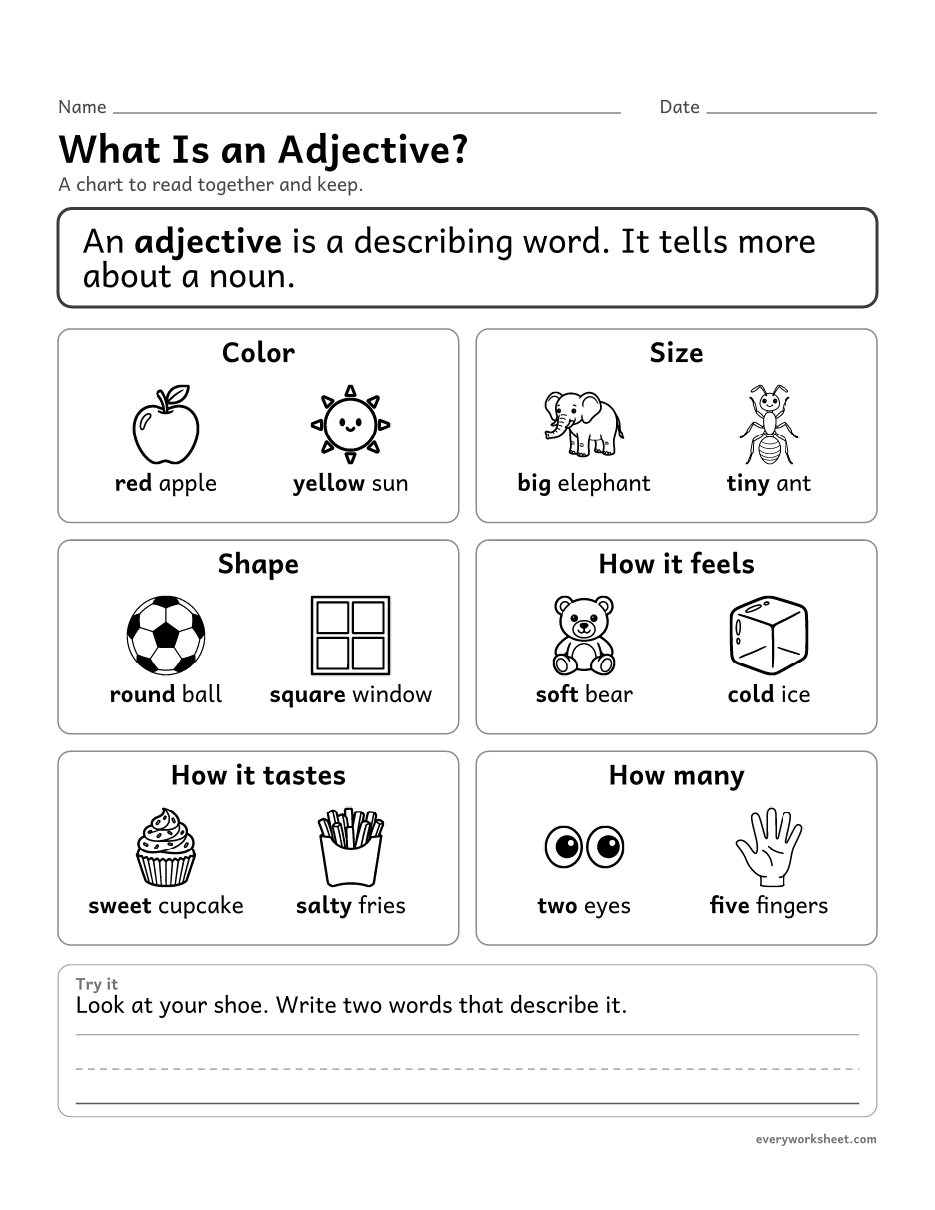
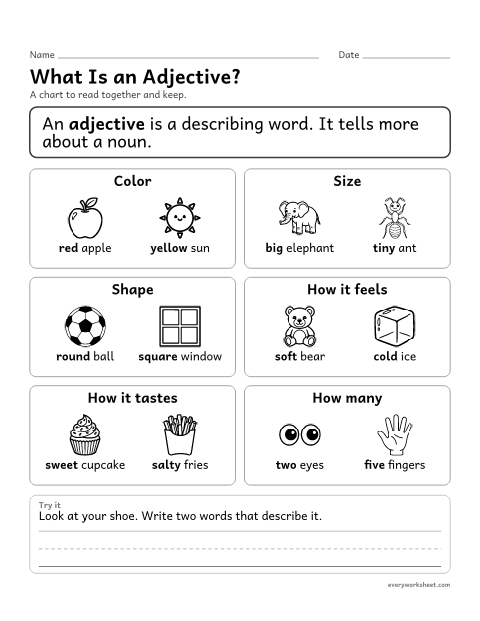
What is an adjective?
 View larger
Find the adjectives
 View all 2 pages
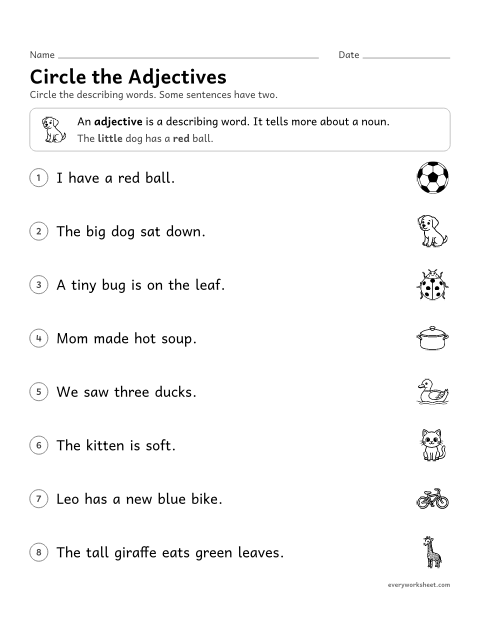
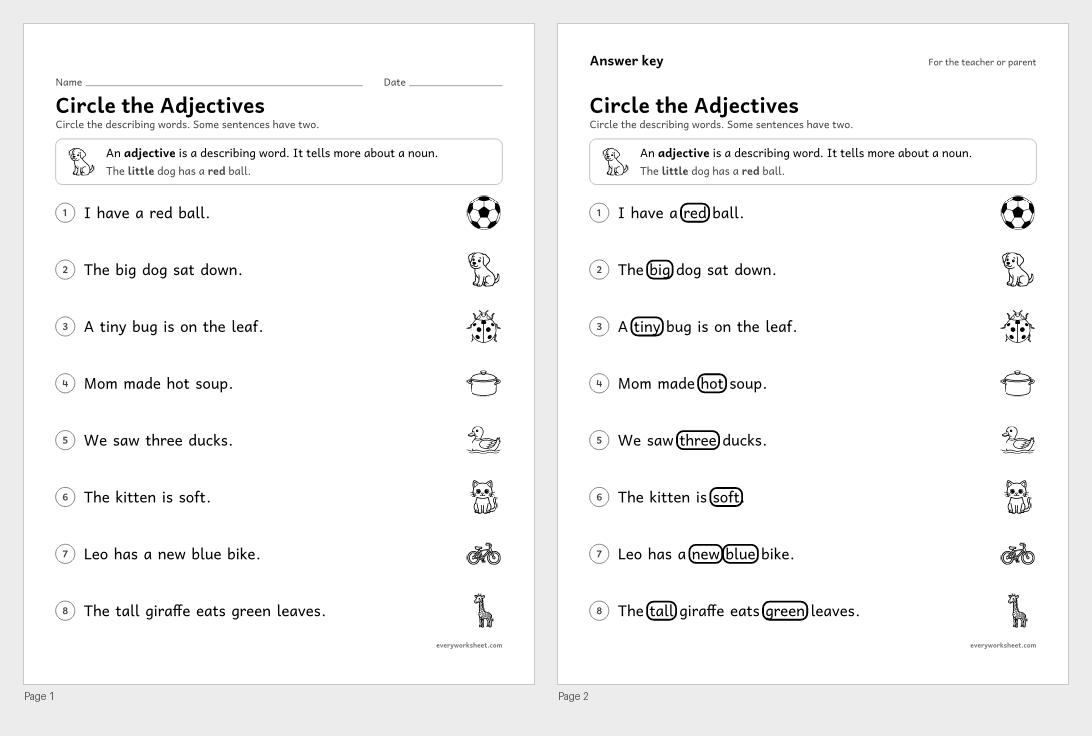
Circle the adjectives
Finding the adjectives in a sentence
Answer key on page 2
2 pages305 KB
Describe it
 View all 2 pages
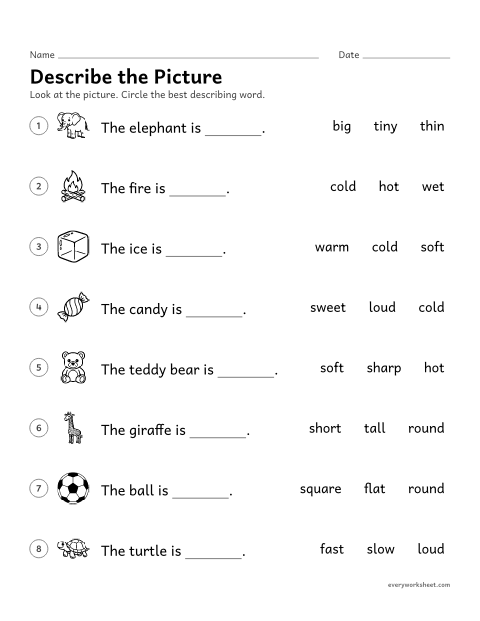
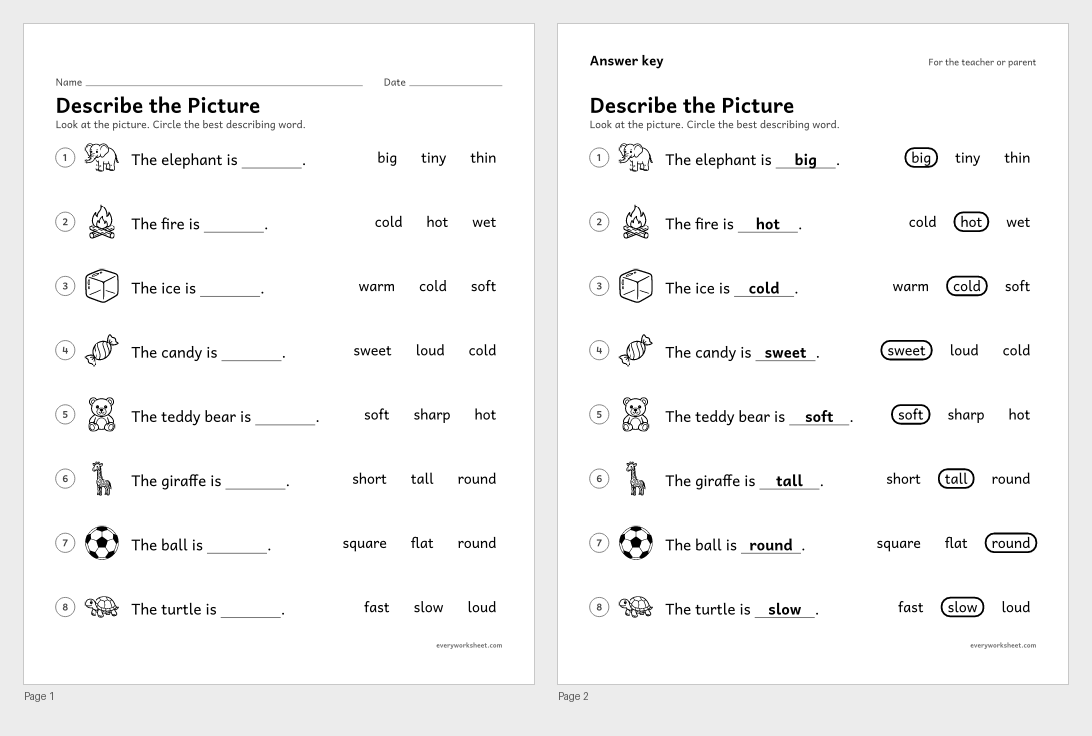
Describe the picture
Choosing an adjective that describes a picture
Answer key on page 2
2 pages353 KB
 View all 2 pages
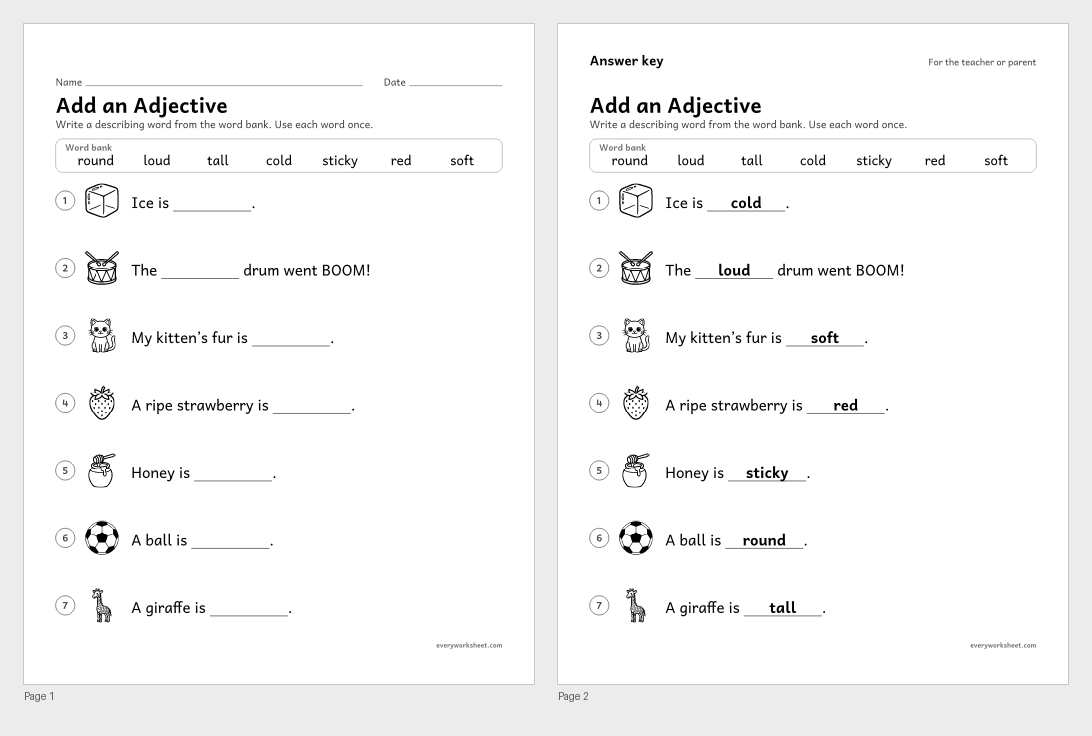
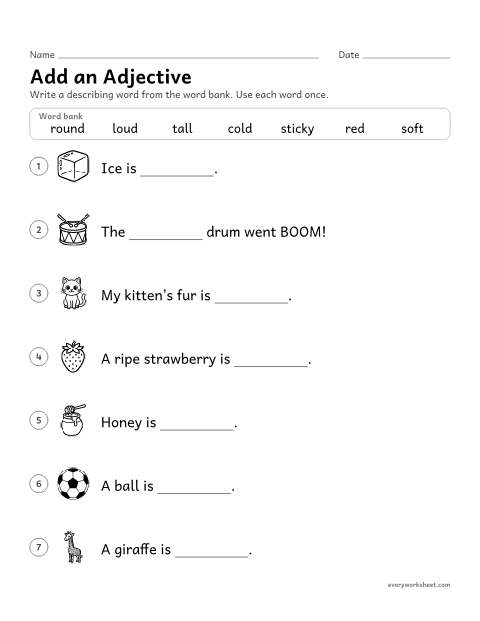
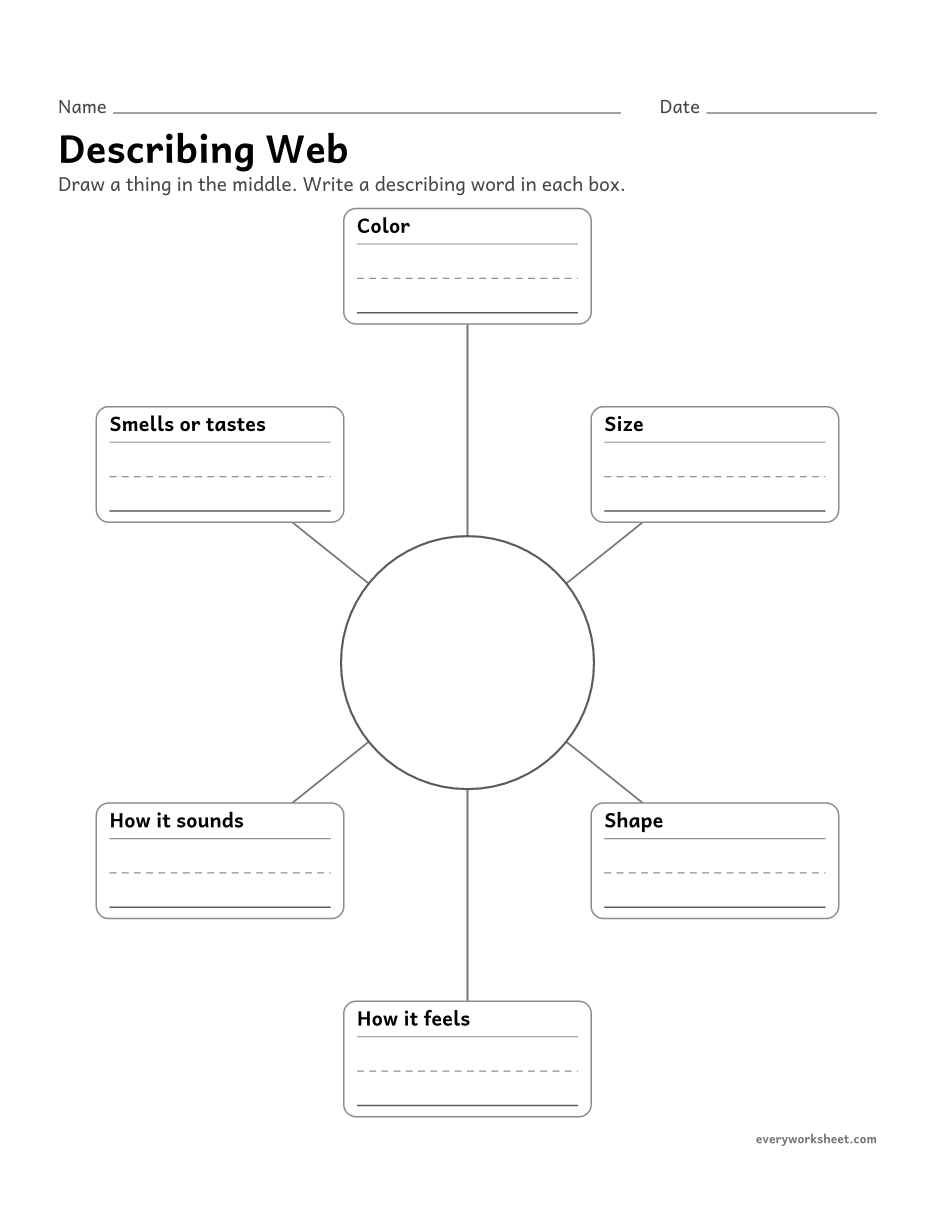
Describing web
Looks, sounds, or feels?
 View all 2 pages
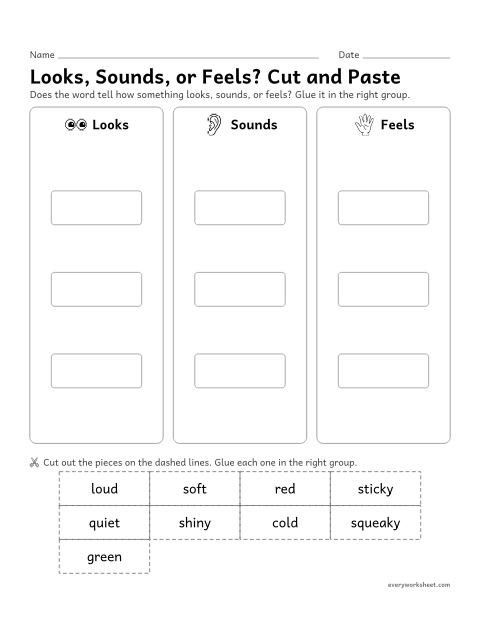
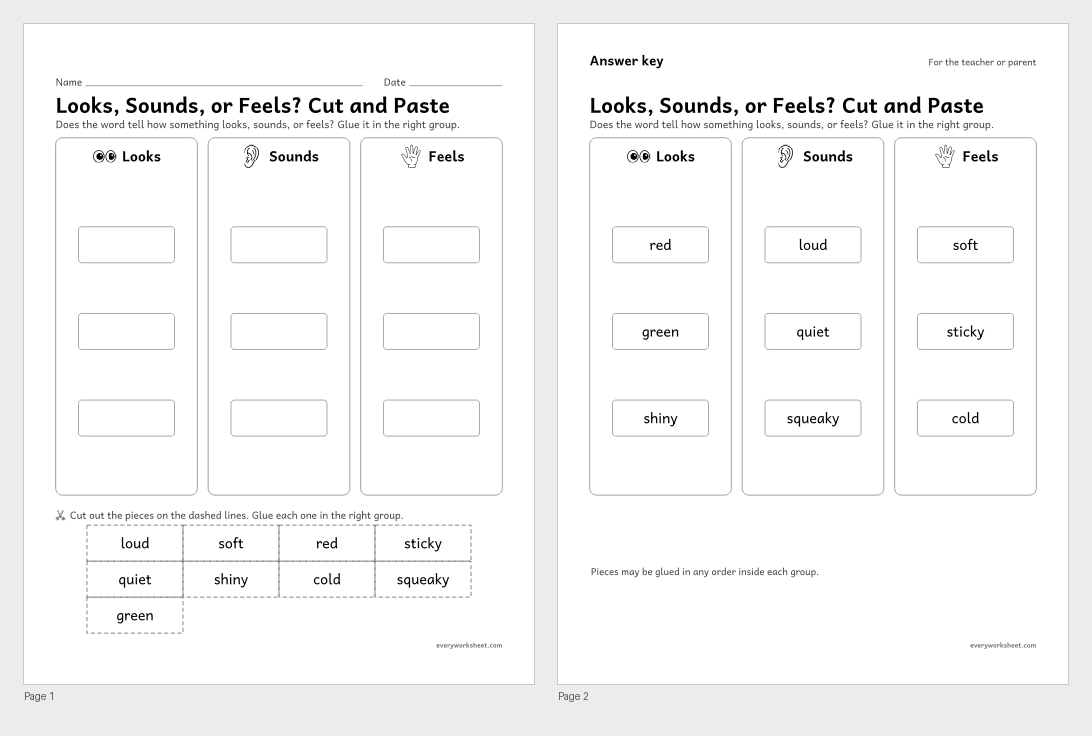
Looks, Sounds, or Feels? cut and paste
Sorting describing words by the sense they use
Answer key on page 2
2 pages102 KB
 View all 2 pages
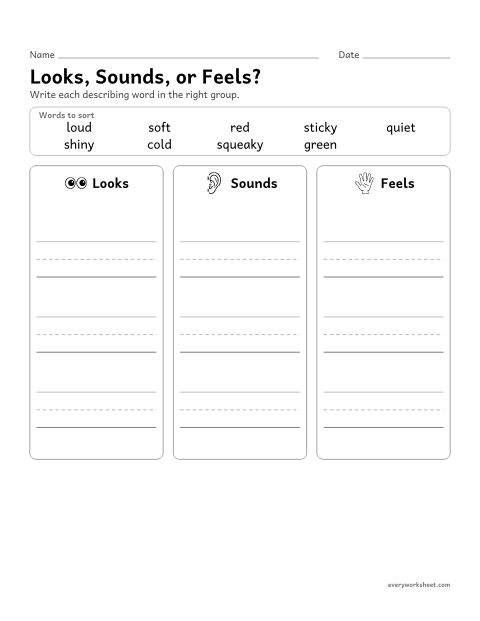
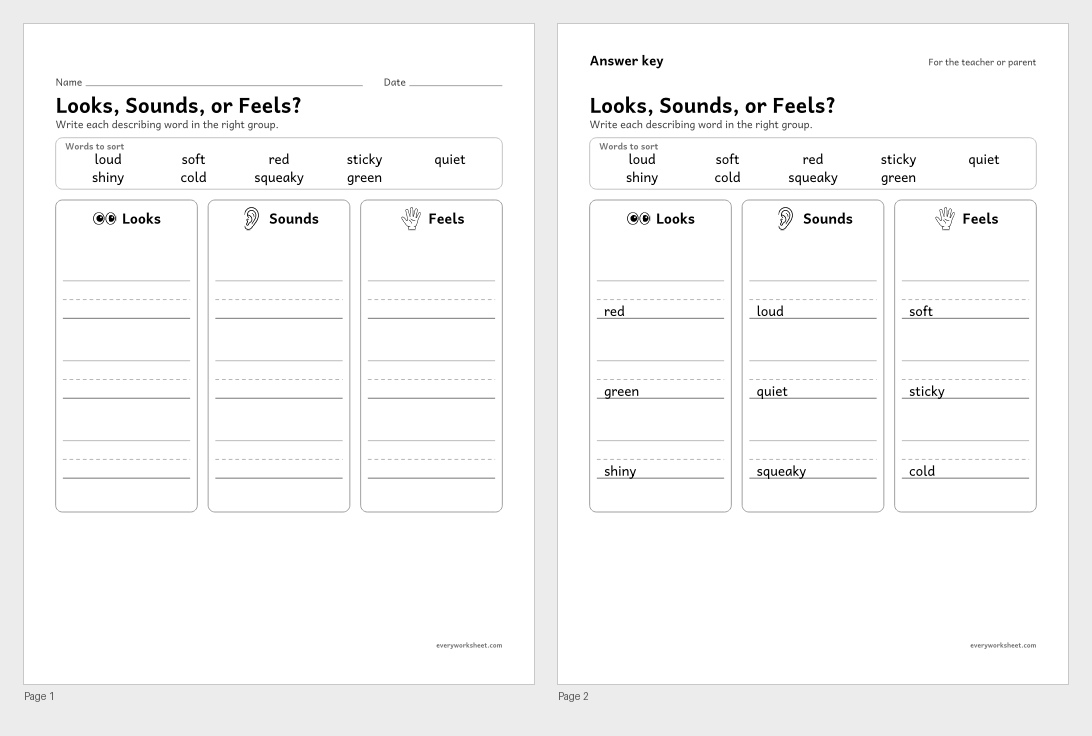
Looks, Sounds, or Feels?
Sorting describing words by the sense they use
Answer key on page 2
2 pages72 KB
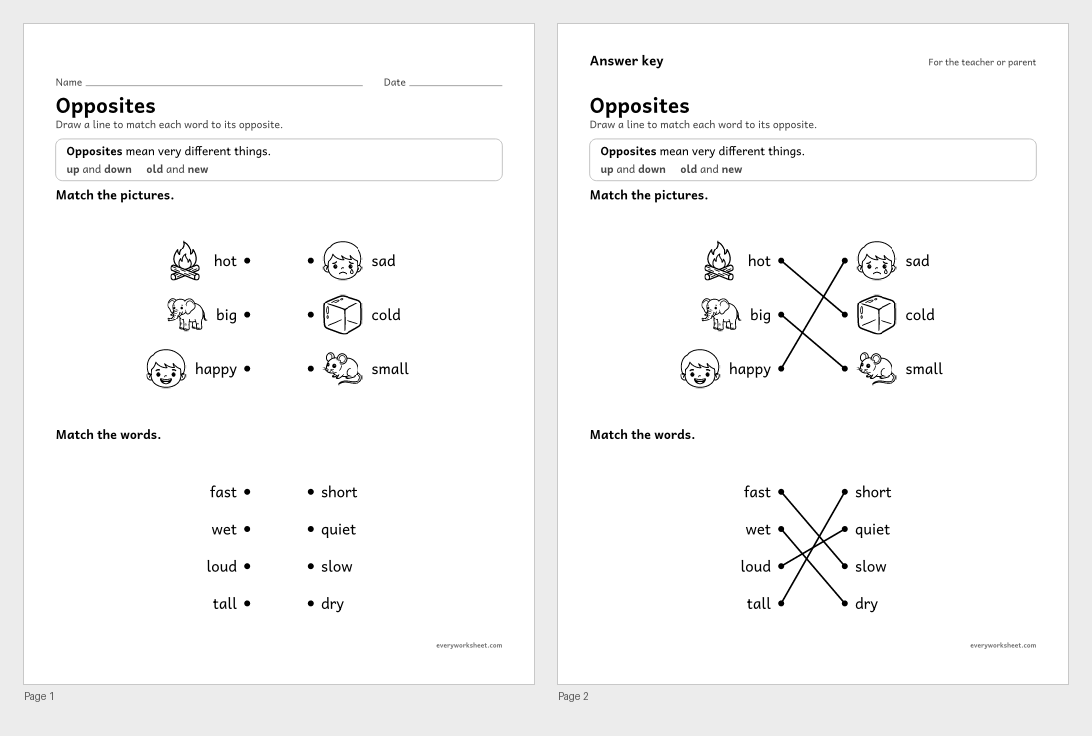
Opposites
Shades of meaning
 View all 2 pages
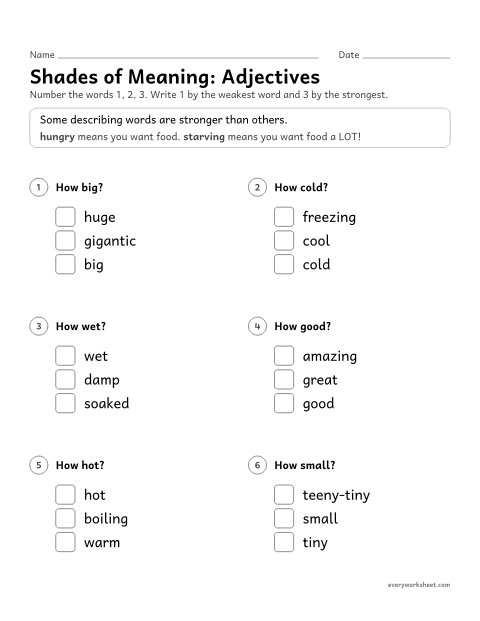
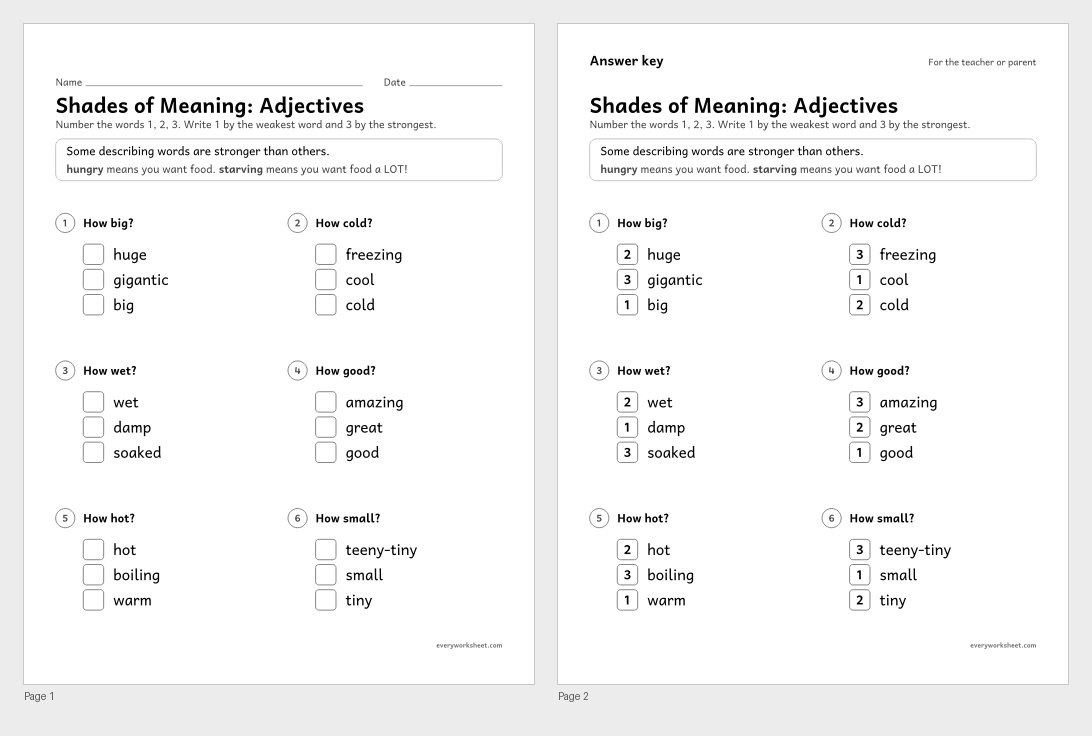
Shades of Meaning: adjectives
Ordering adjectives that mean almost the same thing
Answer key on page 2
2 pages56 KB
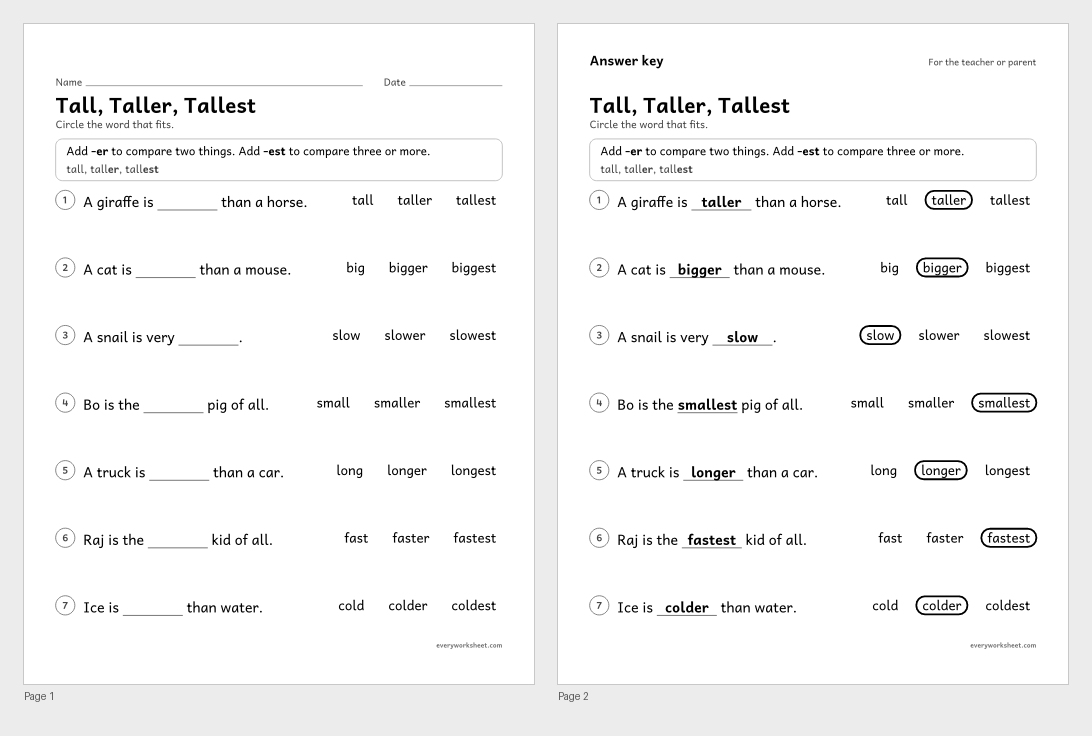
-er and -est
Print at 100% (actual size) for the cleanest tracing lines.
About these adjectives worksheets
An adjective is a describing word. It tells more about a noun: what color, what size, what shape, how it feels, sounds or tastes, or how many. Using adjectives makes children's writing clearer and more fun to read.
These adjectives worksheets start with a chart of describing words with pictures. Children then circle adjectives in sentences, choose the best word to describe a picture, add adjectives from a word bank, sort words by how something looks, sounds or feels, match opposites, put words like big, huge and gigantic in order, and compare with -er and -est.
A describing web works with any object. The senses sort comes as a cut and paste page and a no-cut twin. Pages with right answers have an answer key.
Standards
CCSS.ELA-LITERACY.L.1.1.FUse frequently occurring adjectives.CCSS.ELA-LITERACY.L.1.5With guidance and support from adults, demonstrate understanding of word relationships and nuances in word meanings.CCSS.ELA-LITERACY.L.1.5.ASort words into categories (e.g., colors, clothing) to gain a sense of the concepts the categories represent.CCSS.ELA-LITERACY.L.1.5.DDistinguish shades of meaning among verbs differing in manner (e.g., look, peek, glance, stare, glare, scowl) and adjectives differing in intensity (e.g., large, gigantic) by defining or choosing them or by acting out the meanings.CCSS.ELA-LITERACY.SL.1.4Describe people, places, things, and events with relevant details, expressing ideas and feelings clearly.
How to use them
- Start with the chart, then play I spy with adjectives: I spy something round and red.
- Do Circle the Adjectives and Describe the Picture next.
- Use the describing web with a real object your child can hold, smell and look at.
- Teach opposites and shades of meaning by acting words out (tiny steps, gigantic steps).
- Use -er when comparing two things and -est for three or more.
Teaching tips
- Ask what kind? how many? and which one? to find adjectives.
- Color and number words are adjectives when they describe a noun: three red apples.
- Children's writing gets better fast when they add one adjective to each sentence.
- For shades of meaning, line up three children and act out warm, hot and boiling.
- Cut and paste sorts have a no-cut twin with the same words.
Questions teachers and parents ask
What is an adjective for kids?
An adjective is a describing word. It tells more about a noun, like a red ball, a tiny bug or a soft kitten.
What adjectives should a first grader know?
Colors, sizes, shapes, numbers, feelings and words for the senses, like soft, loud, sweet and shiny.
How do I teach adjectives at home?
Describe things together. Hold an object and take turns naming what it looks, feels and sounds like.
Do the pages have answer keys?
Yes, every page with right answers has a key on page 2. The describing web has no key because answers vary.