 View larger
Animal body parts and what they do poster
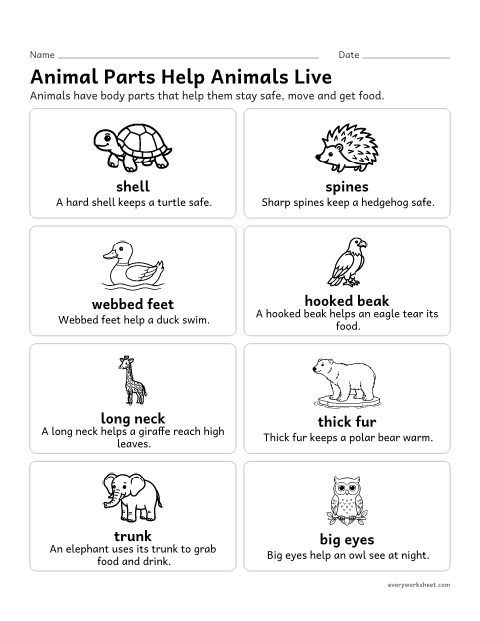
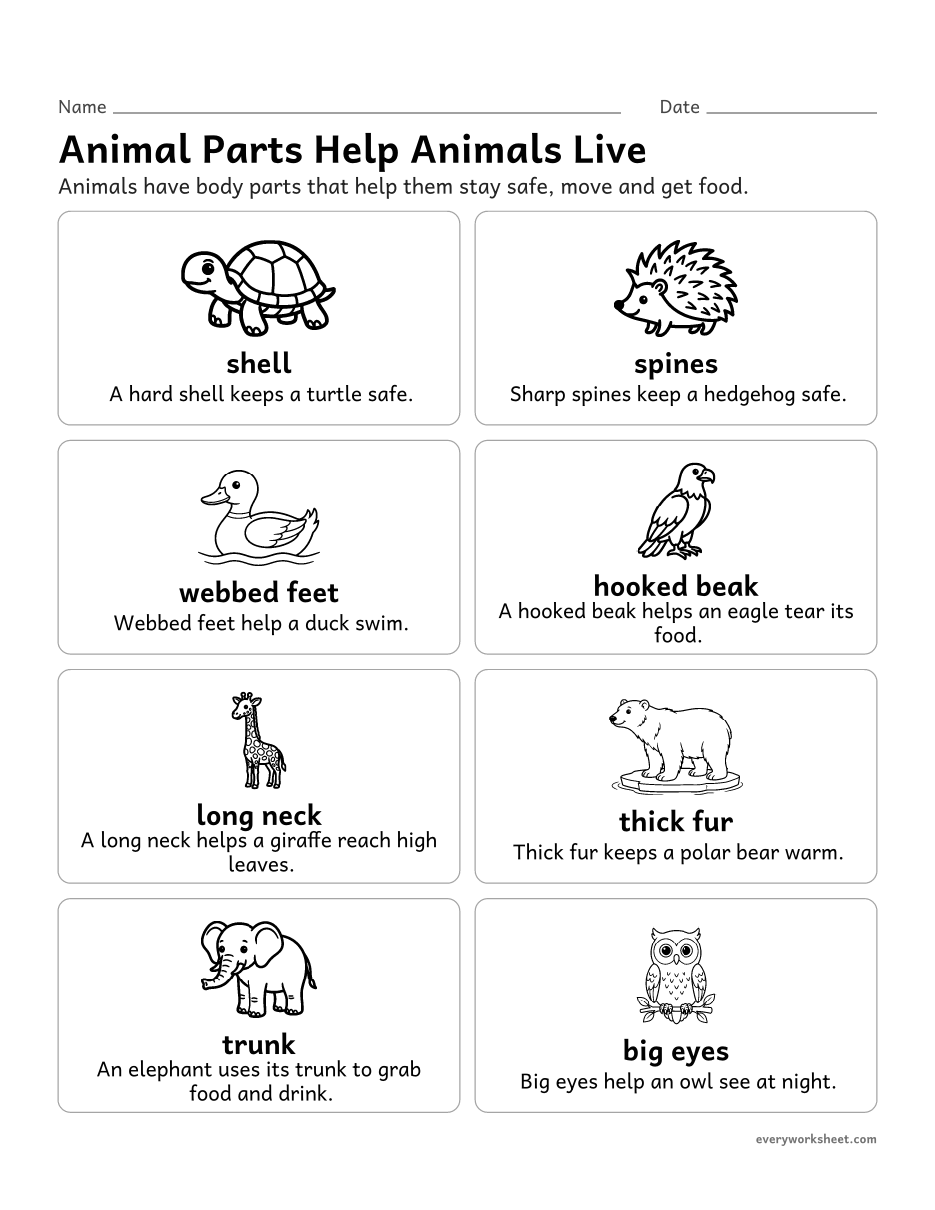
Describing how animals use their external parts to survive
1 page165 KB
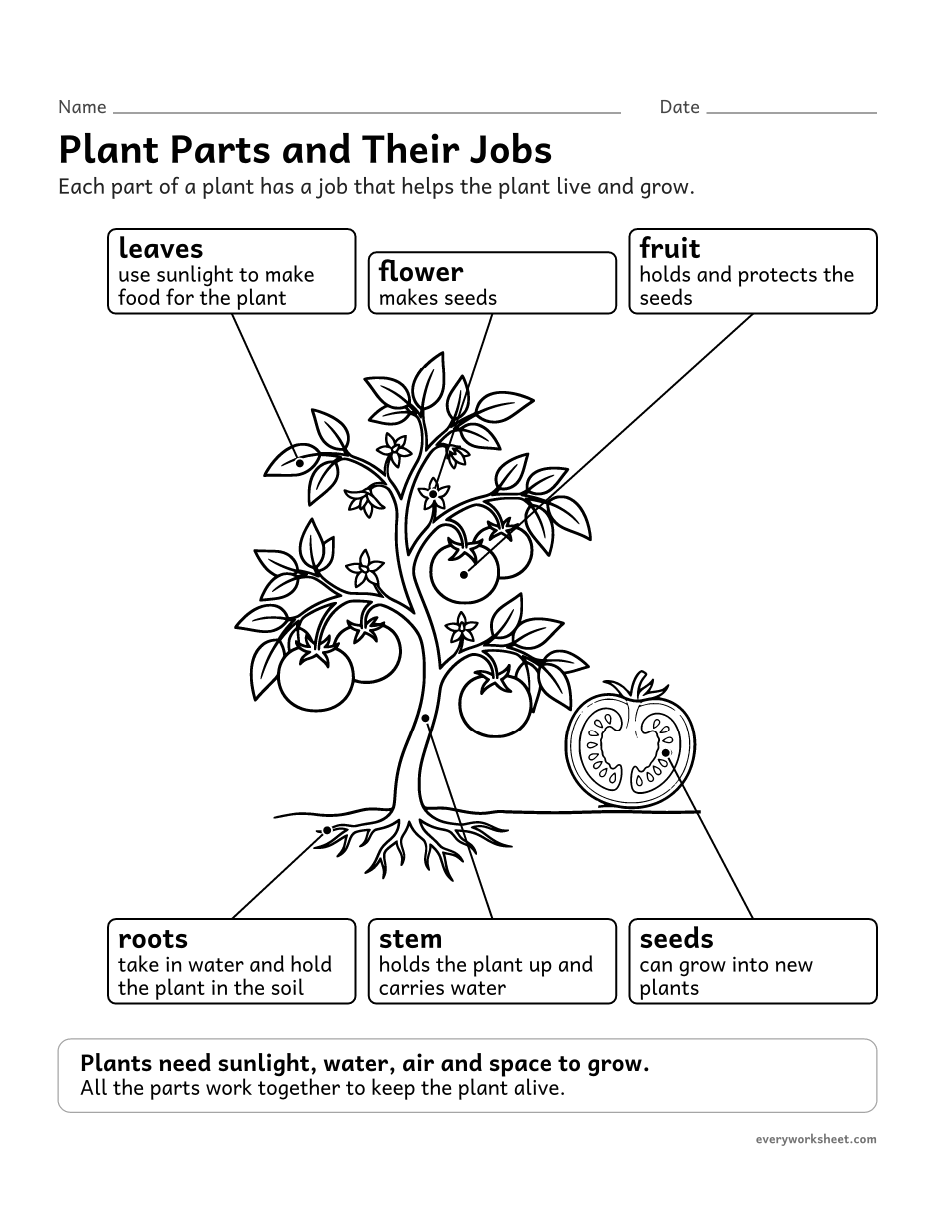
Plant parts and their jobs, fish and bird parts, how animal parts help them survive, riddles, a reading passage and design pages that copy nature.
View largerDescribing how animals use their external parts to survive
1 page165 KB
 View larger
 View all 2 pages
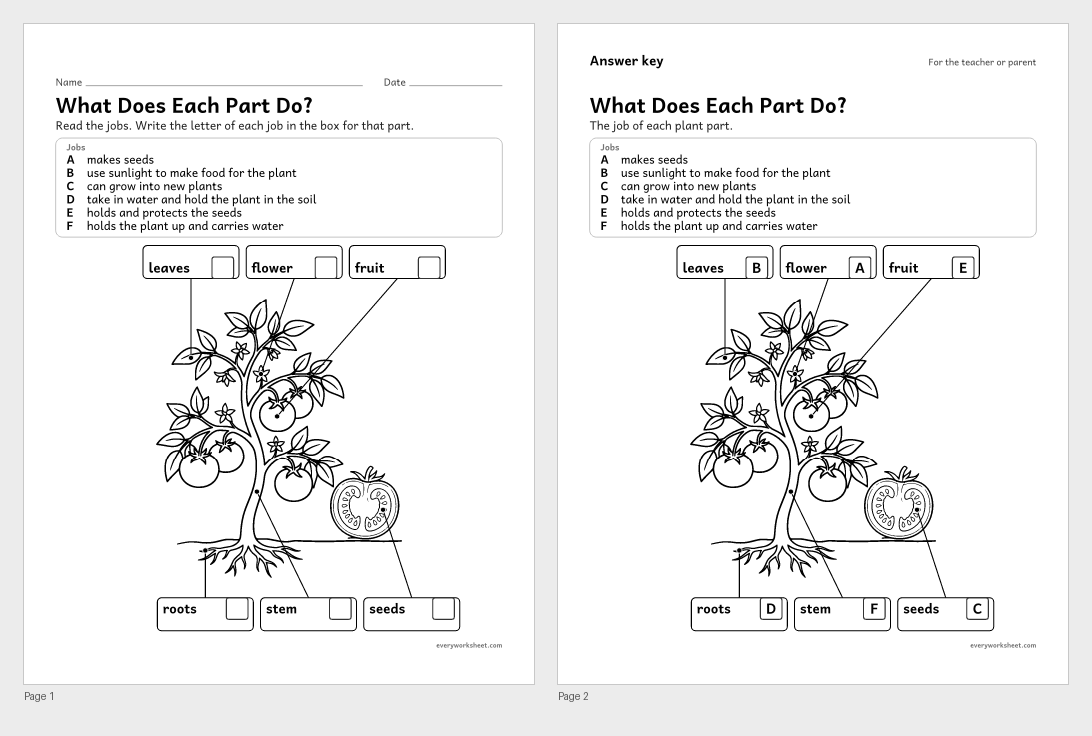
Matching plant parts to their jobs
Answer key on page 2
2 pages113 KB
 View all 2 pages
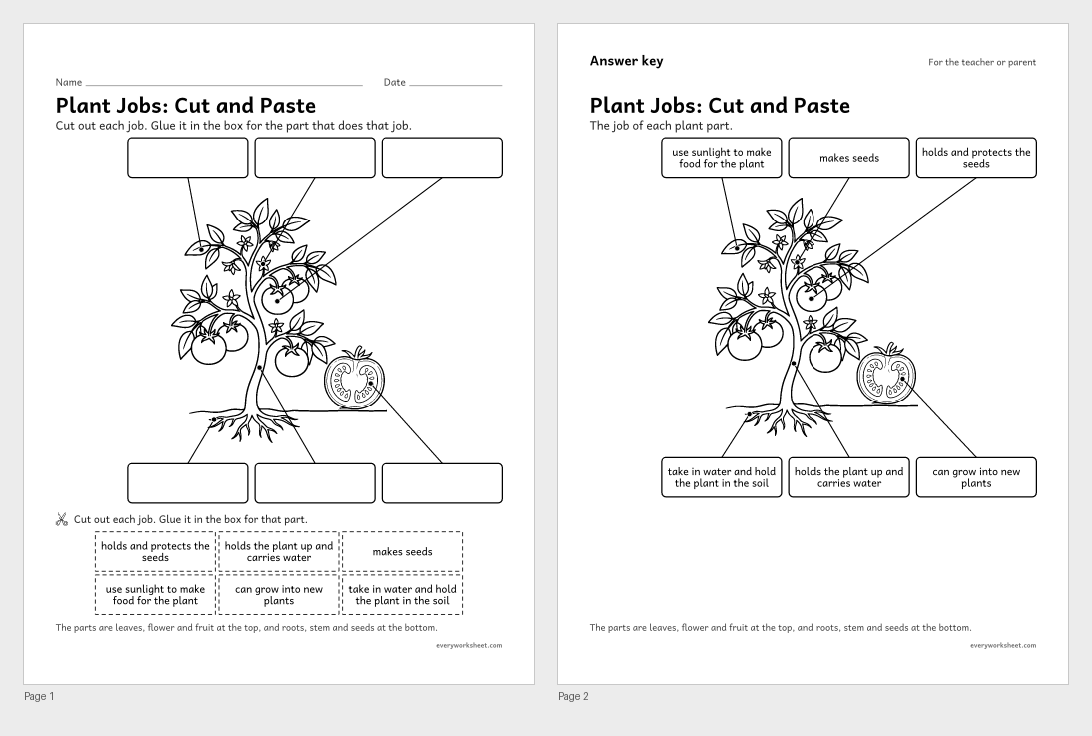
Matching plant parts to their jobs
Answer key on page 2
2 pages129 KB
 View all 2 pages
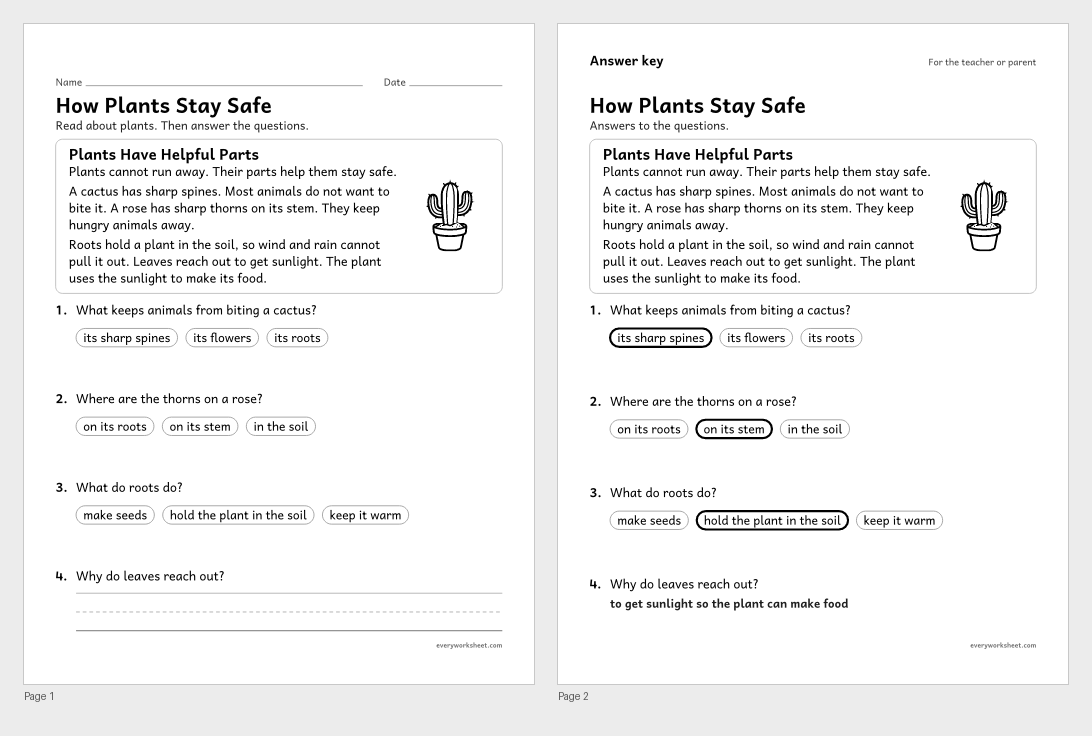
Reading how plants use their parts to survive
Answer key on page 2
2 pages67 KB
 View all 2 pages
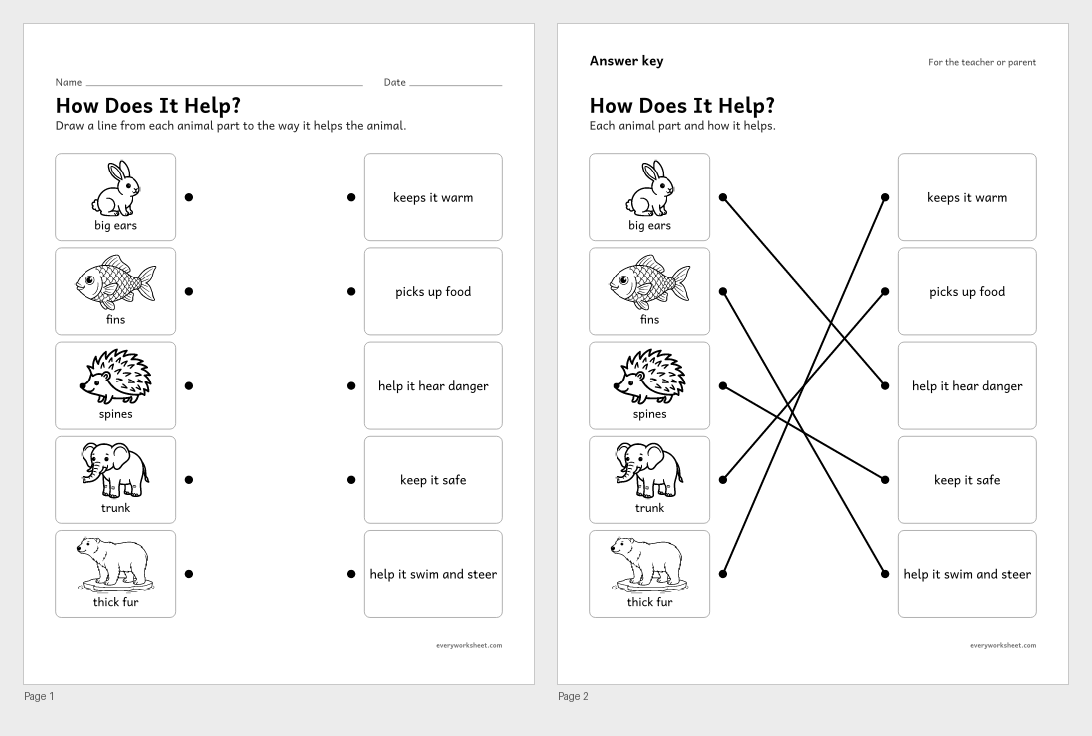
Matching animal parts to how they help the animal survive
Answer key on page 2
2 pages192 KB
 View all 2 pages
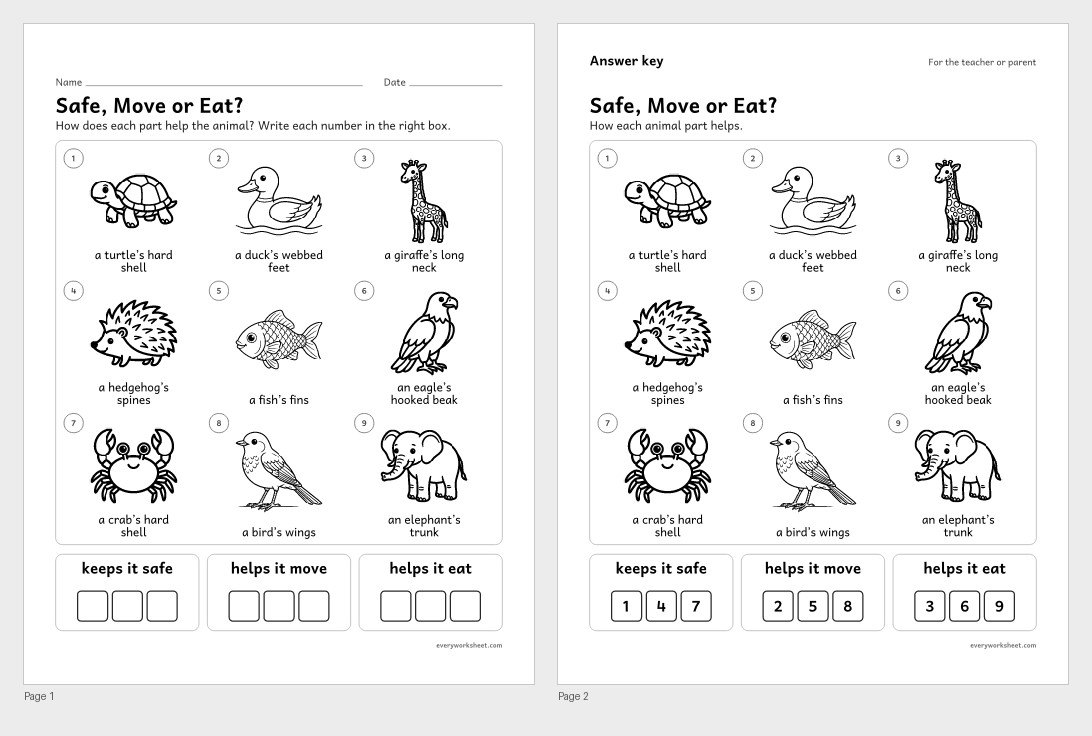
Sorting animal parts by how they help the animal survive
Answer key on page 2
2 pages355 KB
 View all 2 pages
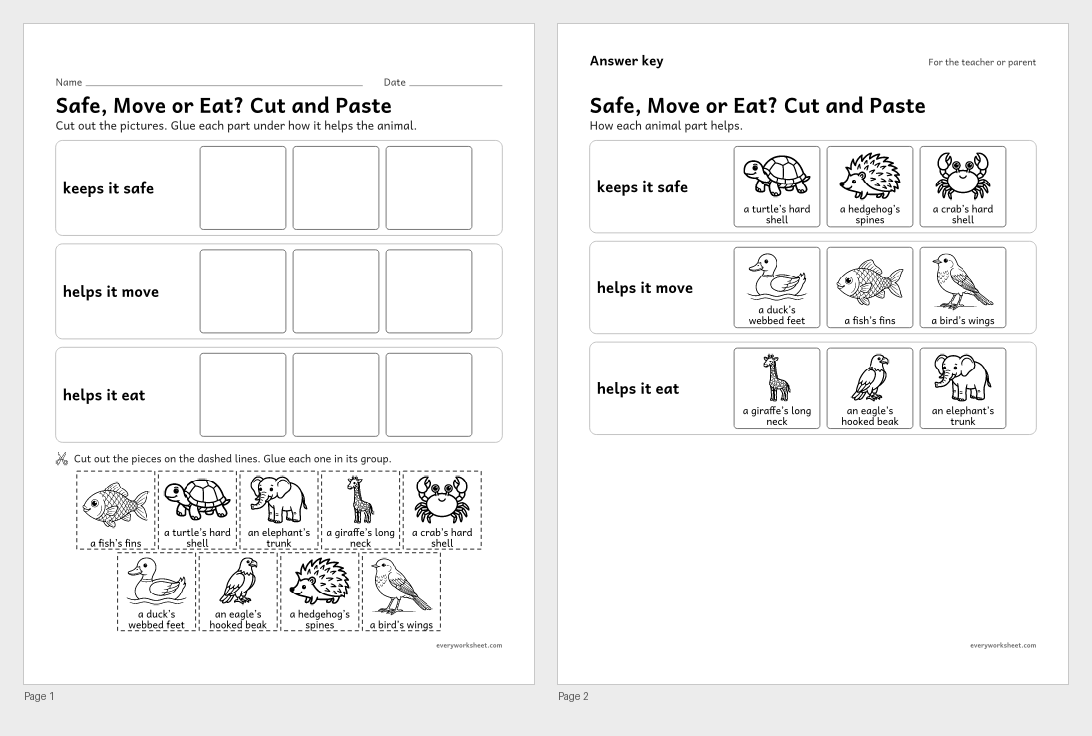
Sorting animal parts by how they help the animal survive
Answer key on page 2
2 pages378 KB
 View all 2 pages
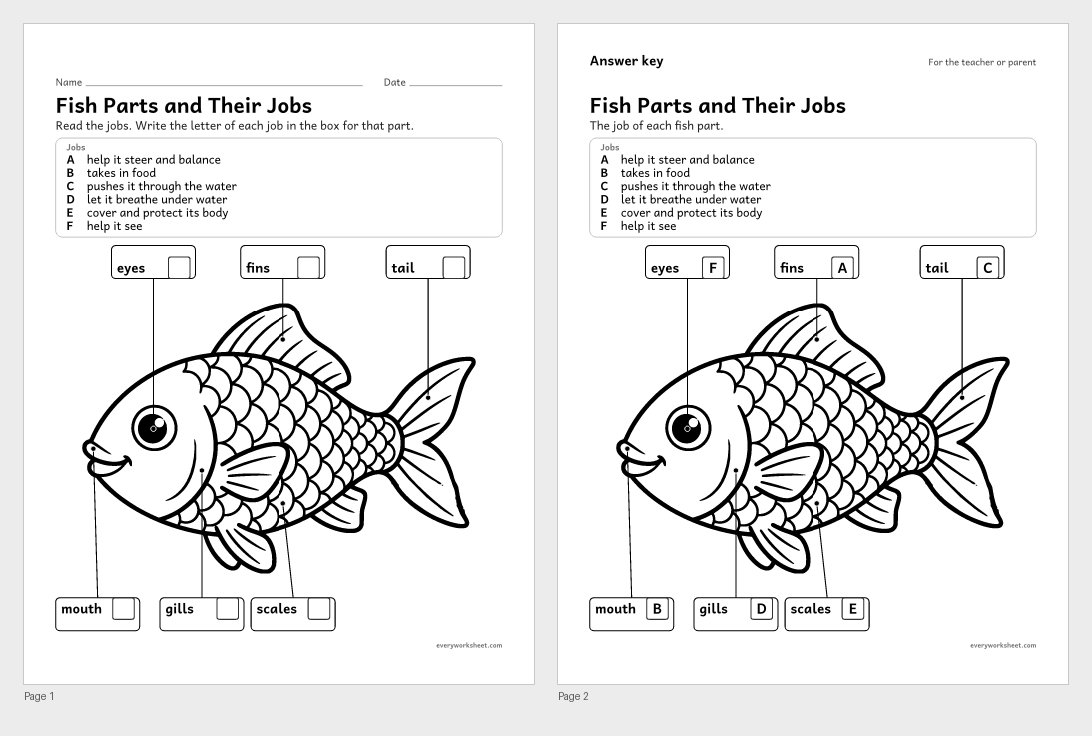
Matching fish body parts to their jobs
Answer key on page 2
2 pages76 KB
 View all 2 pages
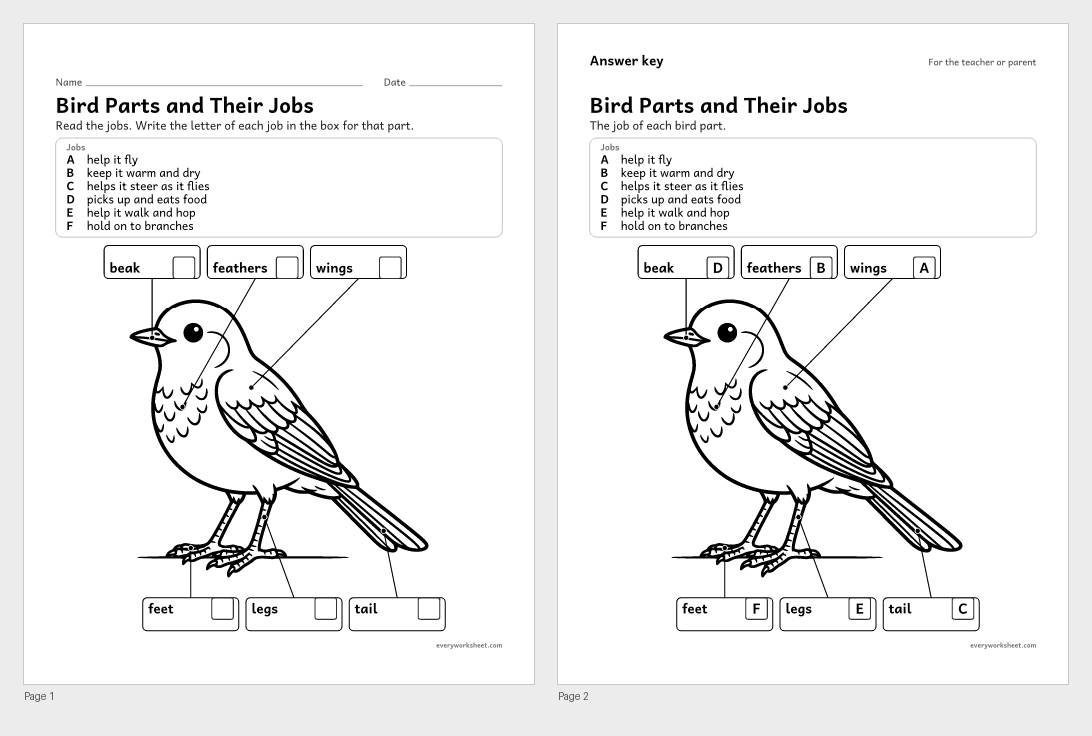
Matching bird body parts to their jobs
Answer key on page 2
2 pages73 KB
 View all 2 pages
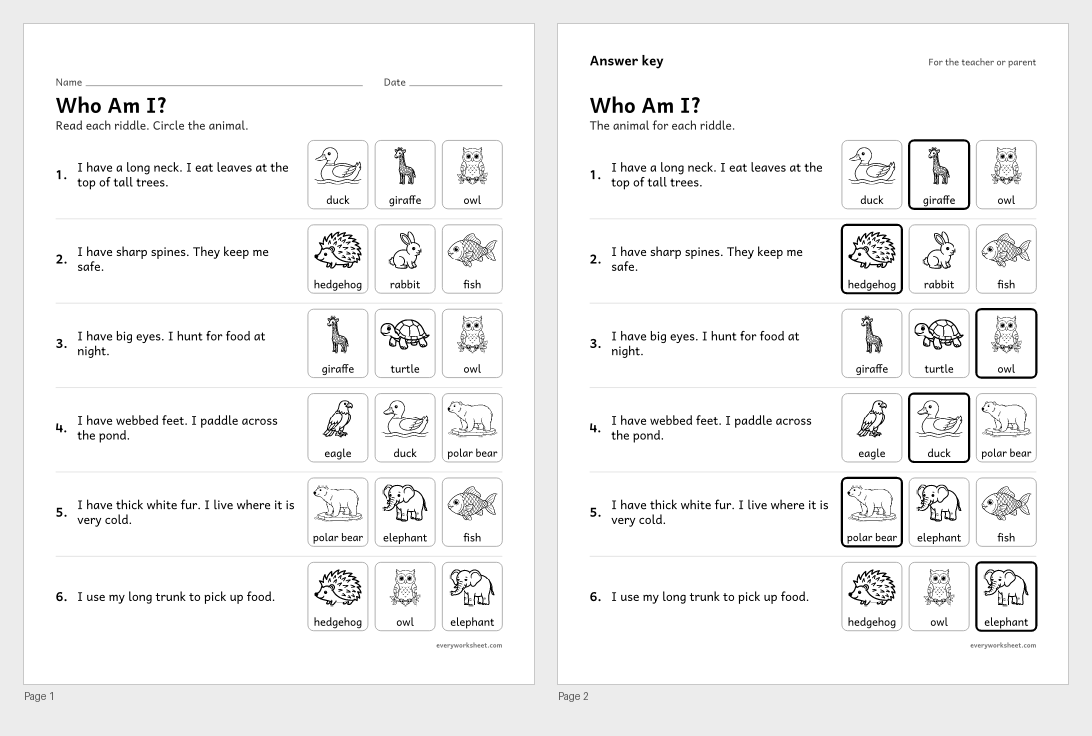
Using clues about body parts to name an animal
Answer key on page 2
2 pages611 KB
 View all 2 pages
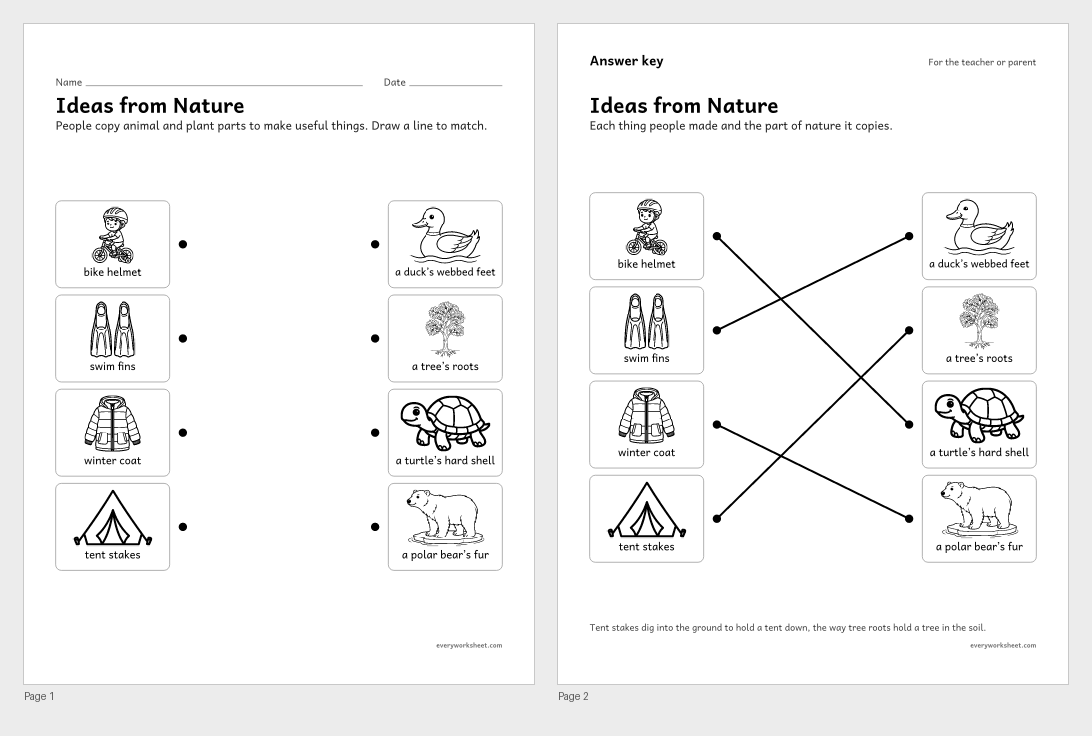
Matching human inventions to the plant and animal parts they copy
Answer key on page 2
2 pages395 KB
 View larger
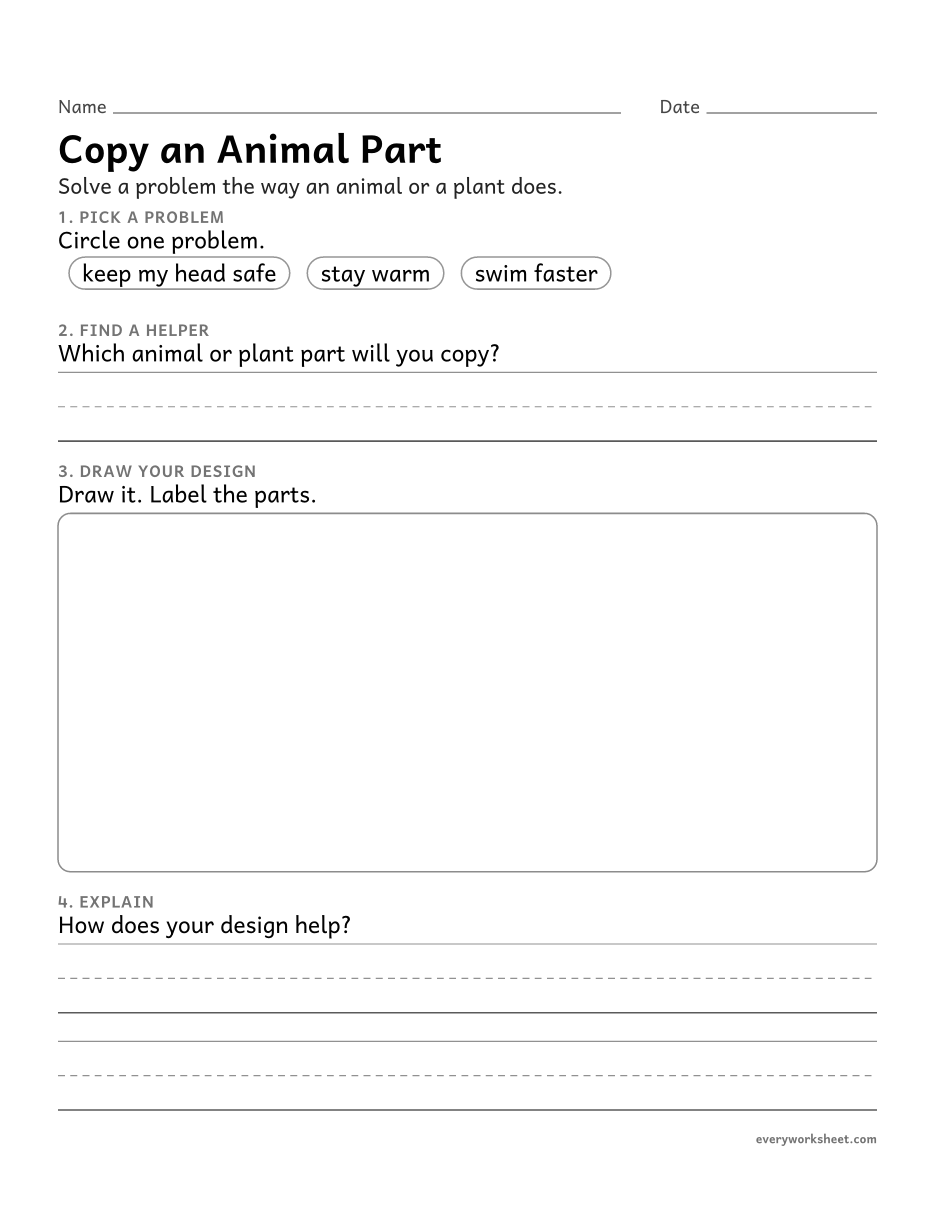
Designing a solution to a human problem by copying an animal or plant part
1 page28 KB
Print at 100% (actual size) for the cleanest tracing lines.
In kindergarten, children learn to name the parts of plants and animals. In 1st grade, they ask what each part does. Roots hold a plant in the soil, a hard shell keeps a turtle safe, and webbed feet help a duck swim. Every part helps the plant or animal live, grow and get what it needs.
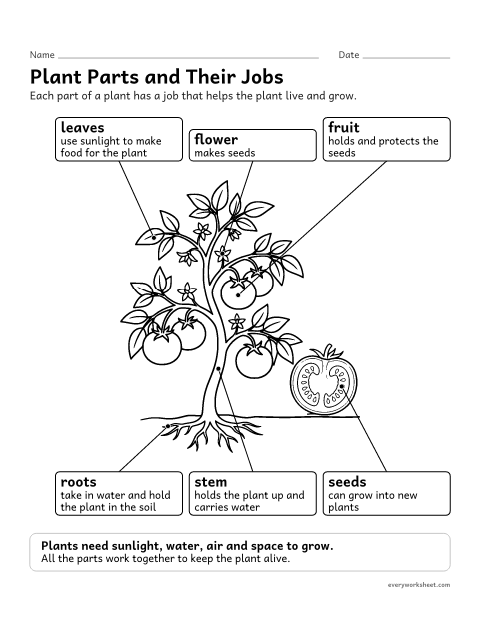
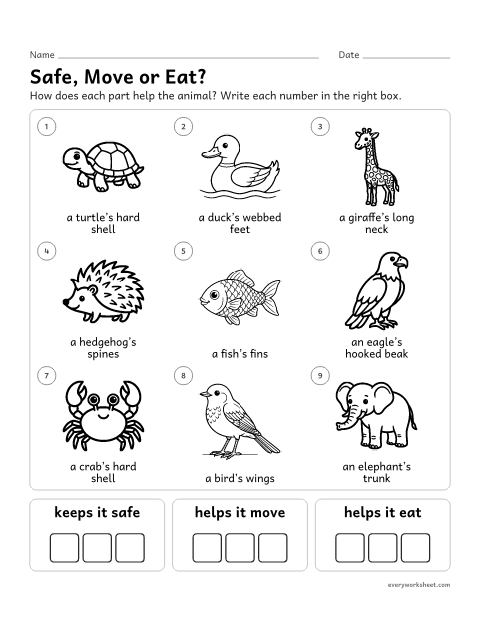
These worksheets start with posters of animal and plant parts and their jobs. Children match jobs to the parts of a tomato plant, a fish and a bird, and sort animal parts by how they help: keeping the animal safe, helping it move or helping it eat.
Then children see how people copy nature. A bike helmet works like a turtle’s shell, and swim fins work like a duck’s feet. The design page asks them to solve a problem the same way. Pages print on US Letter or A4, and pages with right answers have an answer key on page 2.
NGSS 1-LS1-1Use materials to design a solution to a human problem by mimicking how plants and/or animals use their external parts to help them survive, grow, and meet their needs.NGSS K-2-ETS1-1Ask questions, make observations, and gather information about a situation people want to change to define a simple problem that can be solved through the development of a new or improved object or tool.NGSS K-2-ETS1-2Develop a simple sketch, drawing, or physical model to illustrate how the shape of an object helps it function as needed to solve a given problem.CCSS.ELA-LITERACY.RI.1.1Ask and answer questions about key details in a text.CCSS.ELA-LITERACY.L.1.5.ASort words into categories (e.g., colors, clothing) to gain a sense of the concepts the categories represent.Kindergarten pages name the parts. These 1st grade pages add what each part does and how it helps the plant or animal survive, and they ask children to copy a part to solve a problem.
People often solve problems by copying how plants and animals use their parts. A helmet protects your head like a shell protects a turtle, and swim fins push water like a duck’s webbed feet. The design page asks children to try it.
Yes. Every page with right answers has an answer key on page 2. The design page is open ended, so it has no key.