 View larger
Cause and effect
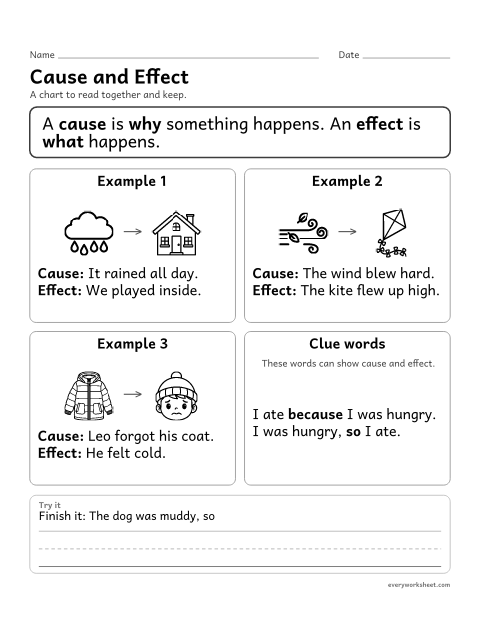
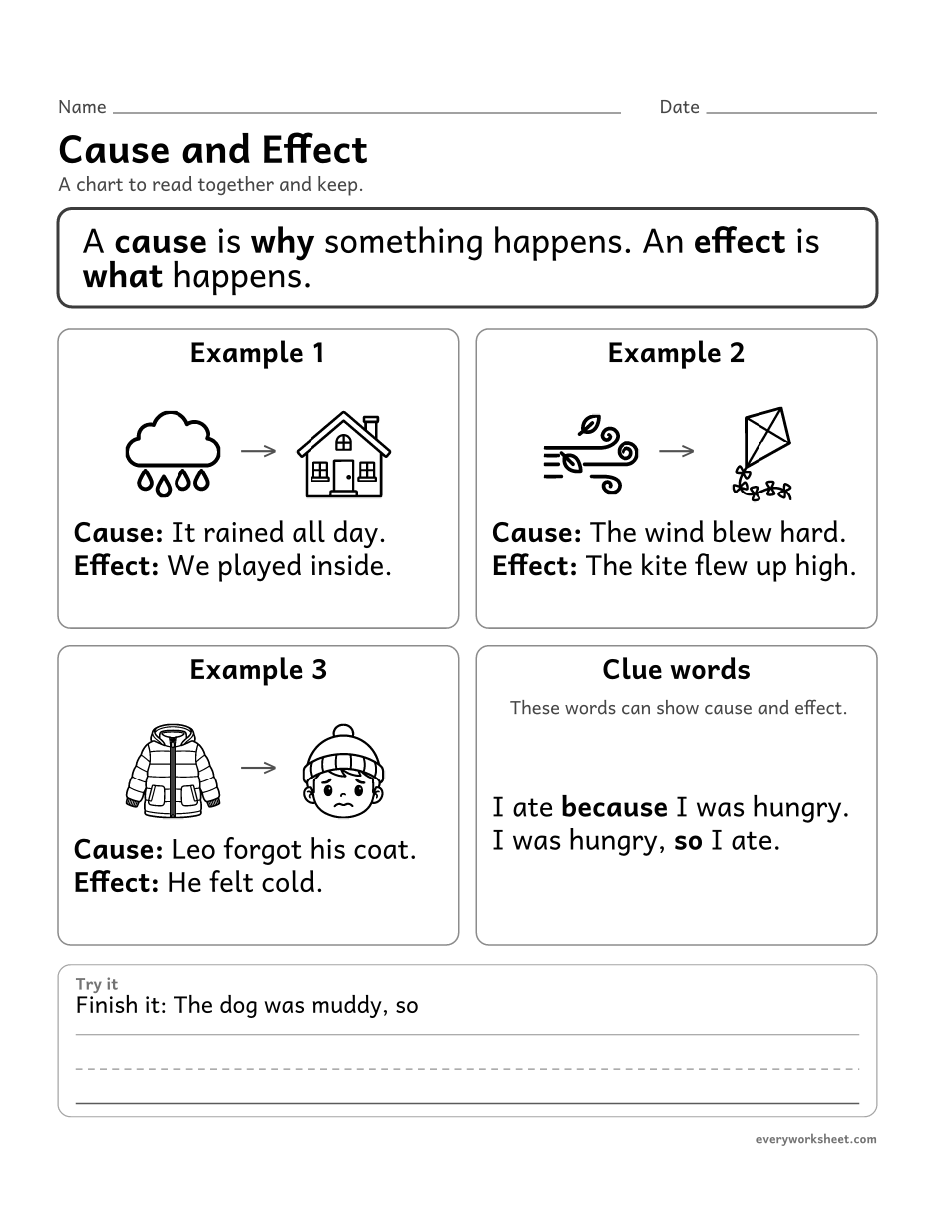
Knowing that a cause is why something happens and an effect is what happens
1 page105 KB
Match causes and effects, choose what happened or why, finish because sentences and find causes and effects in a story, with answer keys.
View largerKnowing that a cause is why something happens and an effect is what happens
1 page105 KB
 View all 2 pages
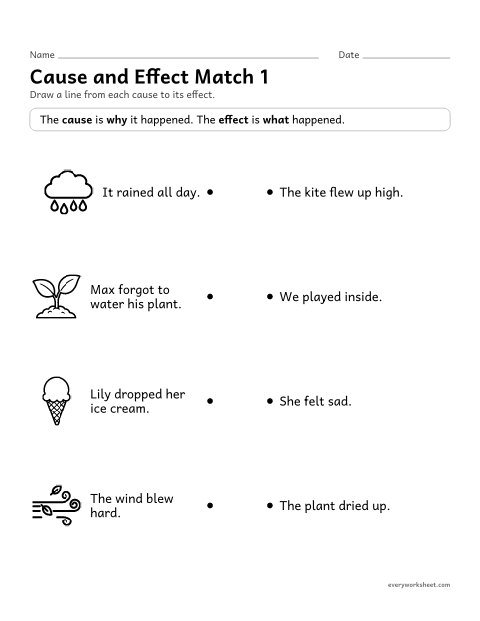
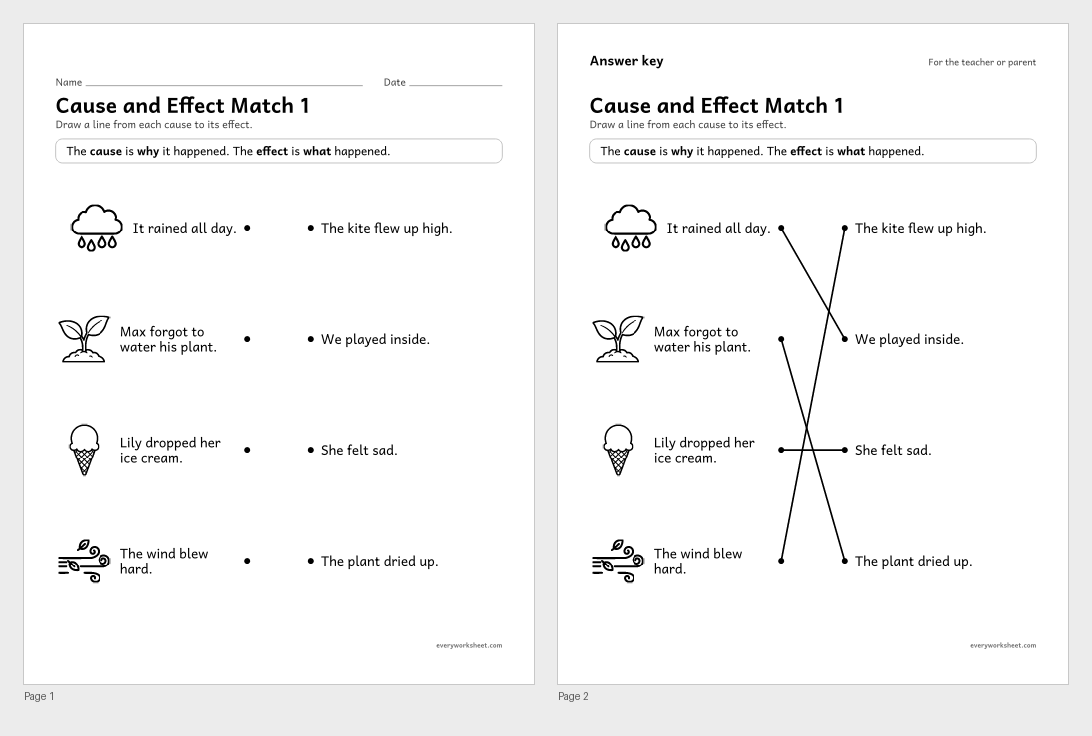
Matching each cause to its effect
Answer key on page 2
2 pages99 KB
 View all 2 pages
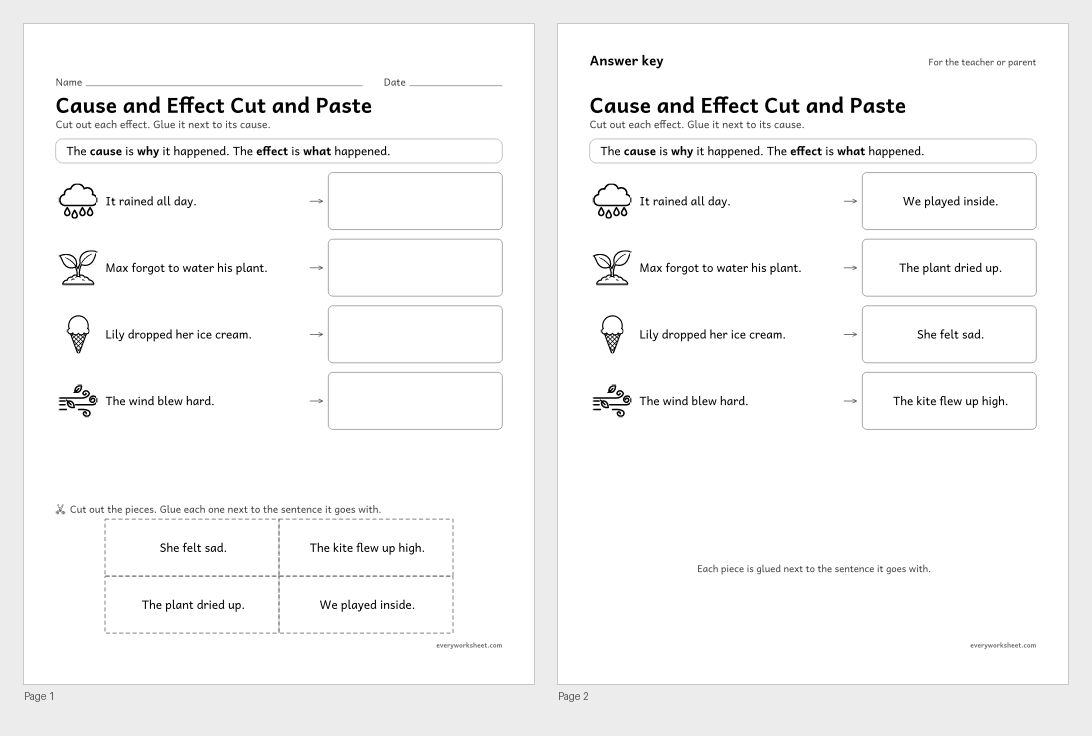
Matching each cause to its effect (cut and paste)
Answer key on page 2
2 pages132 KB
 View all 2 pages
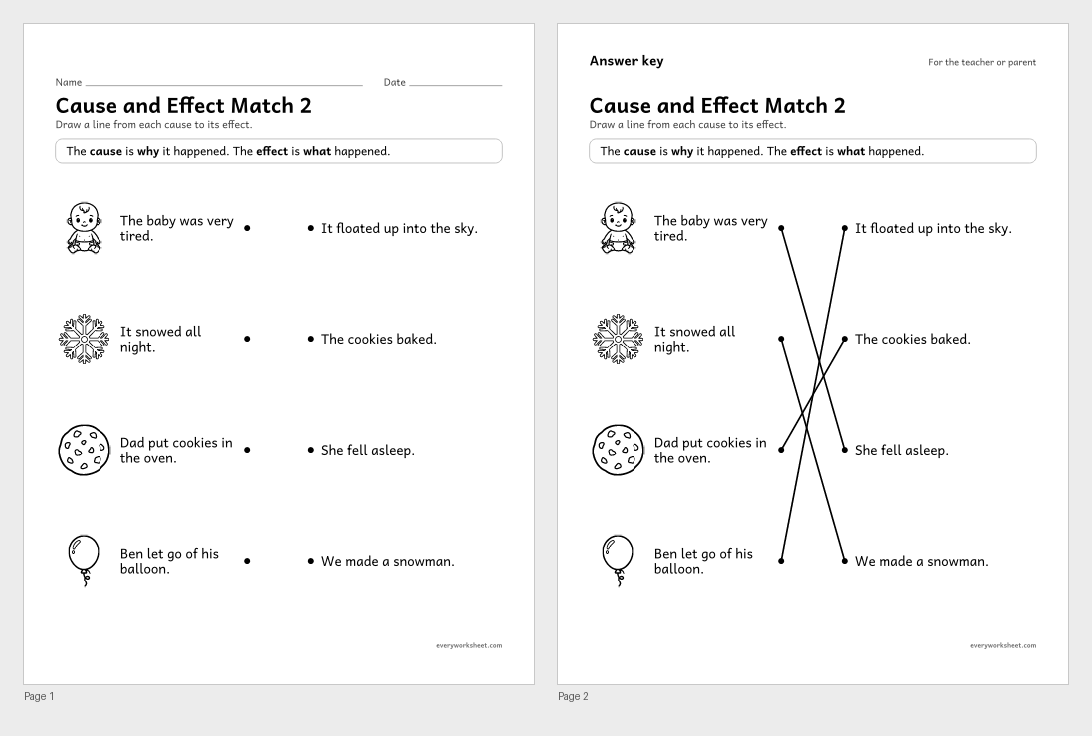
Matching each cause to its effect
Answer key on page 2
2 pages154 KB
 View all 2 pages
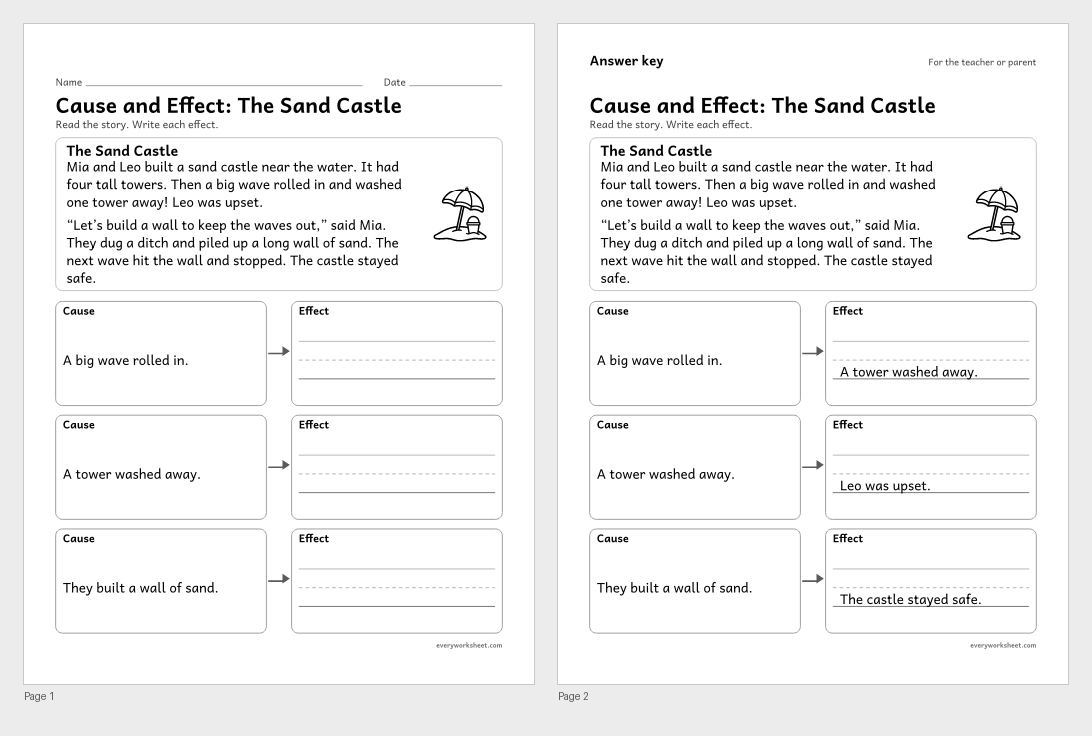
Finding causes and effects in a story
Answer key on page 2
2 pages79 KB
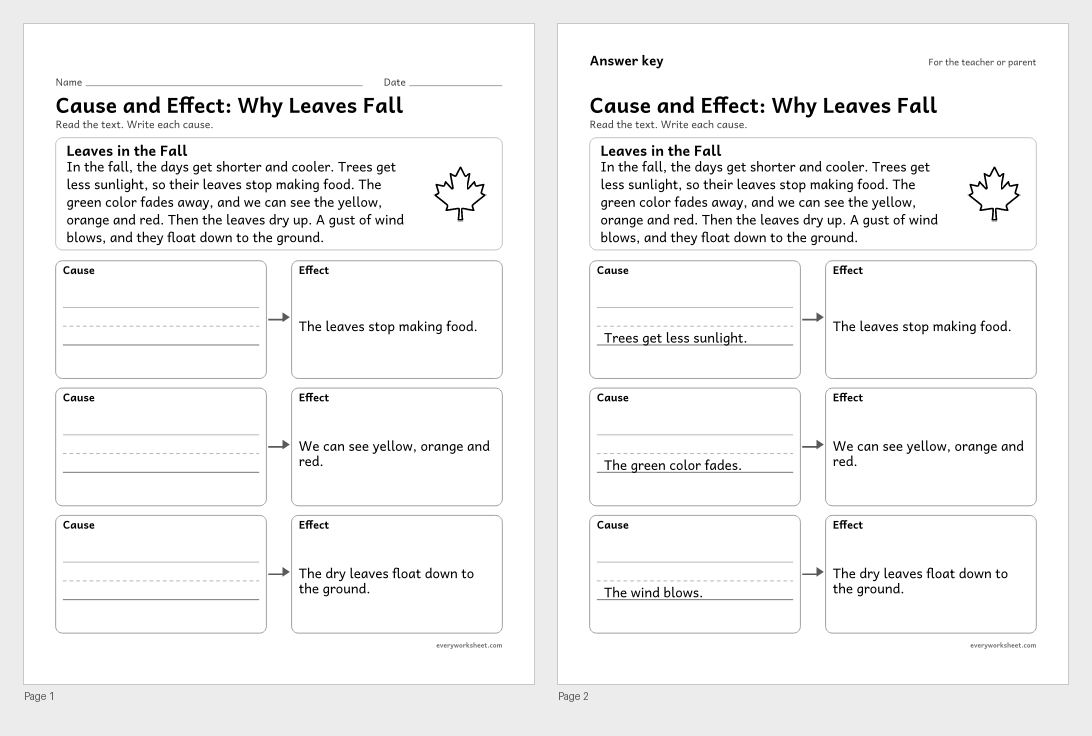 View all 2 pages
Finding causes and effects in a nonfiction text
Answer key on page 2
2 pages61 KB
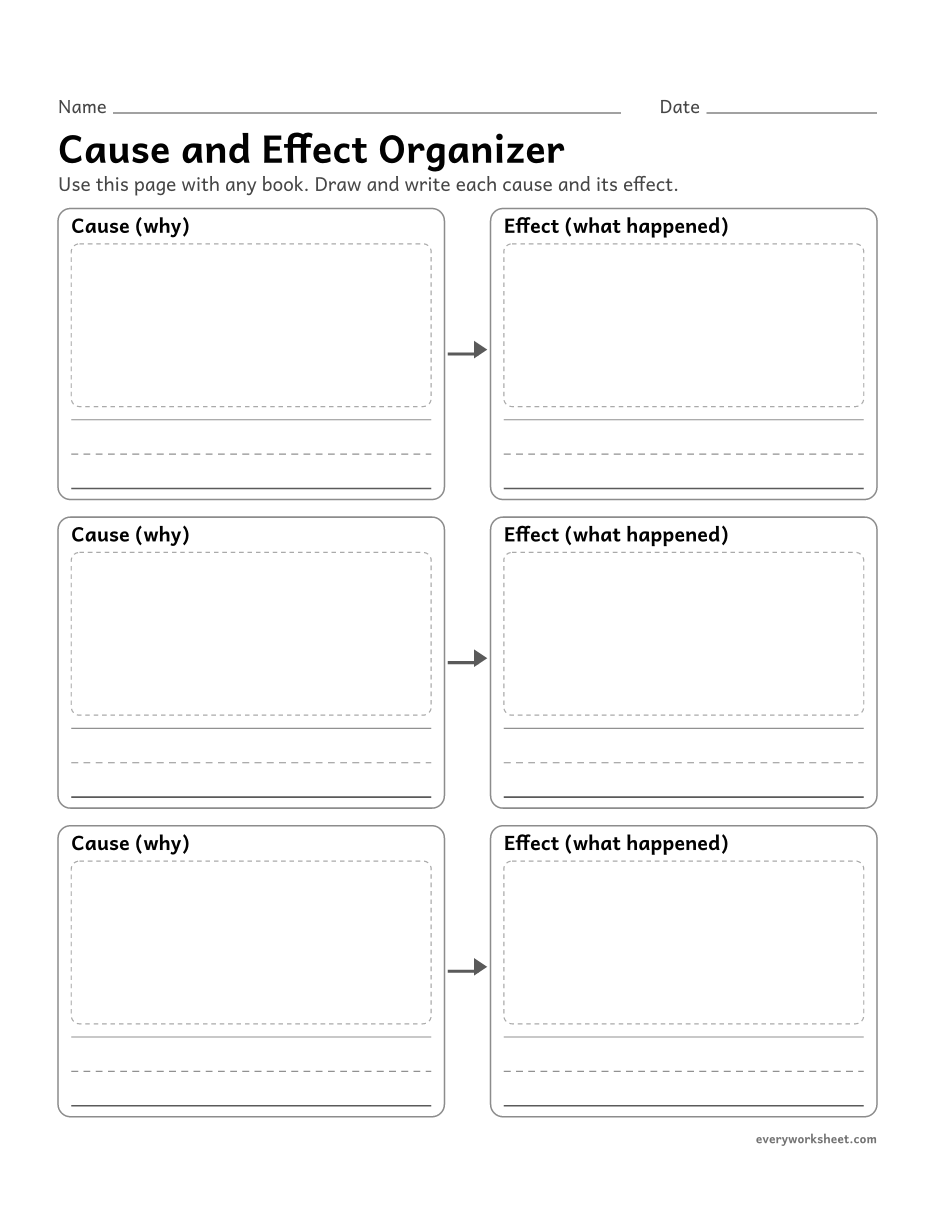 View larger
Print at 100% (actual size) for the cleanest tracing lines.
A cause is why something happens. An effect is what happens. First graders use cause and effect every day (it rained, so we played inside), and noticing it in books helps them understand how events in a story and facts in nonfiction connect.
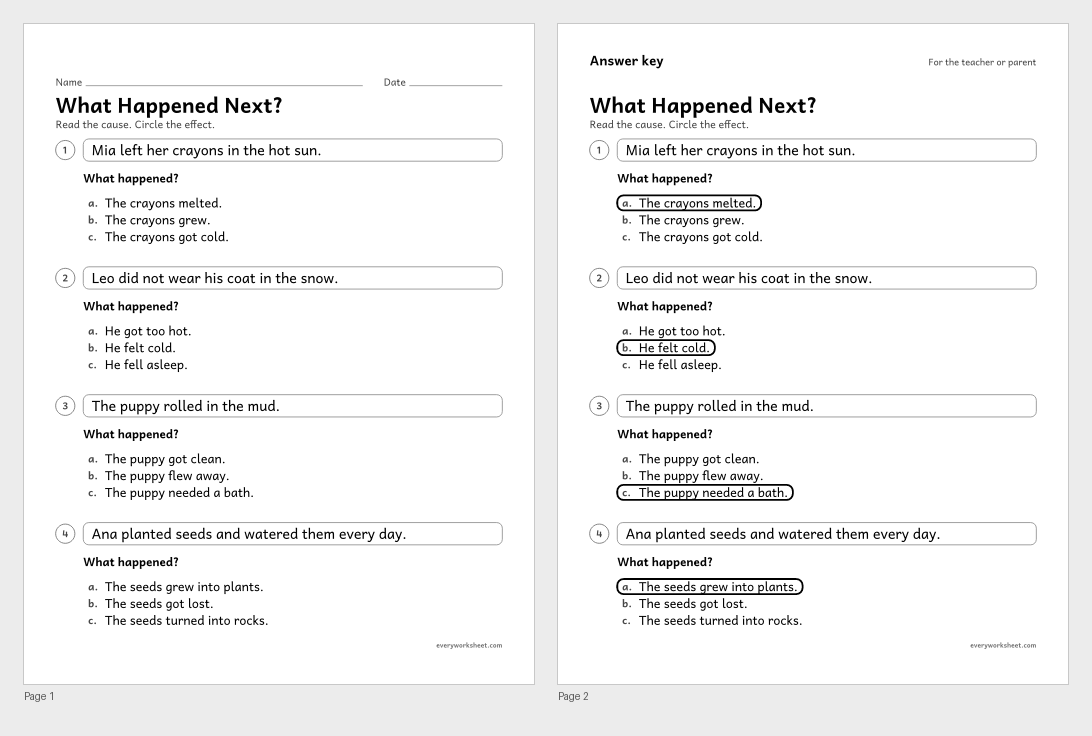
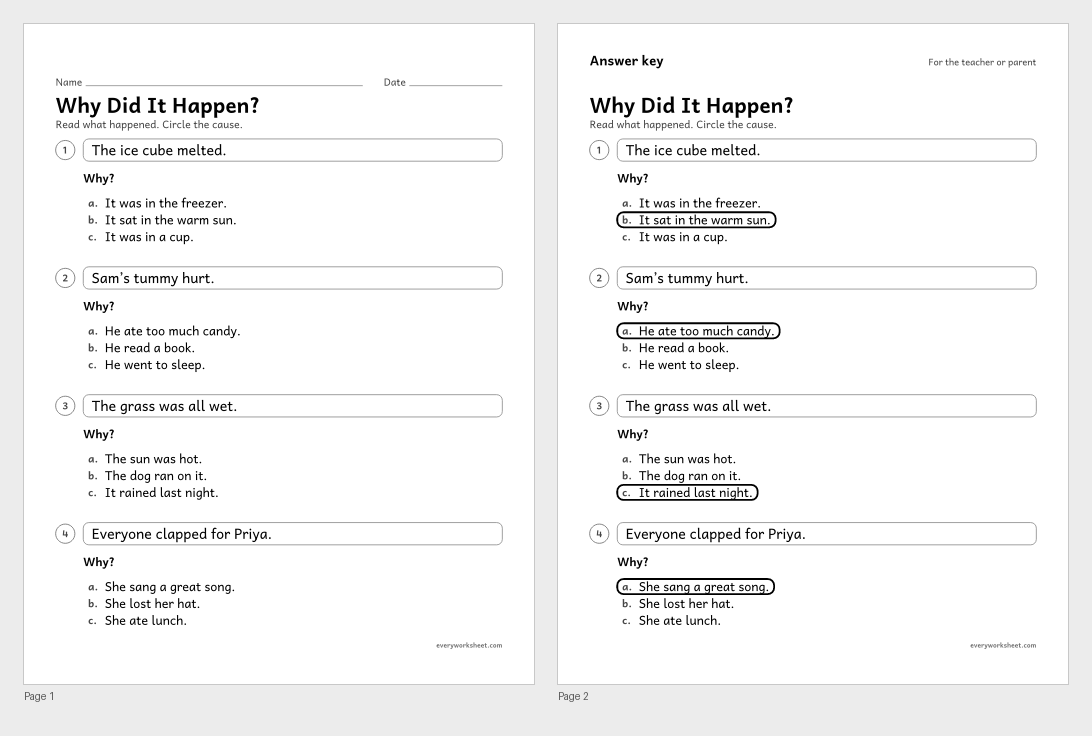
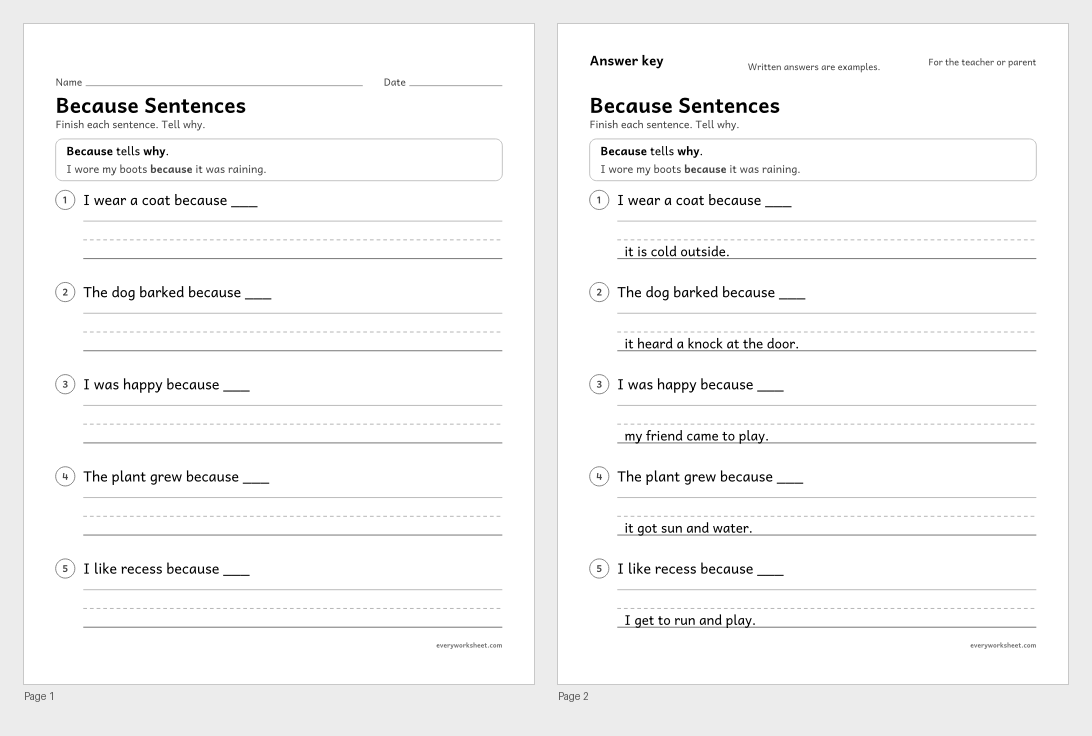
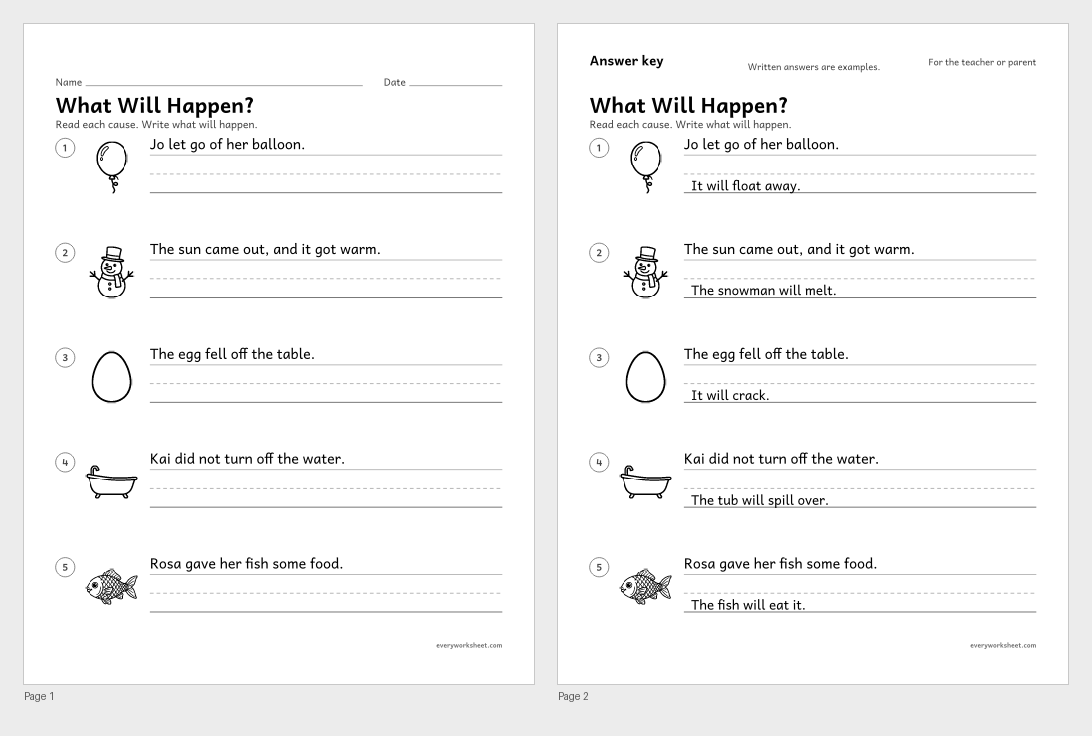
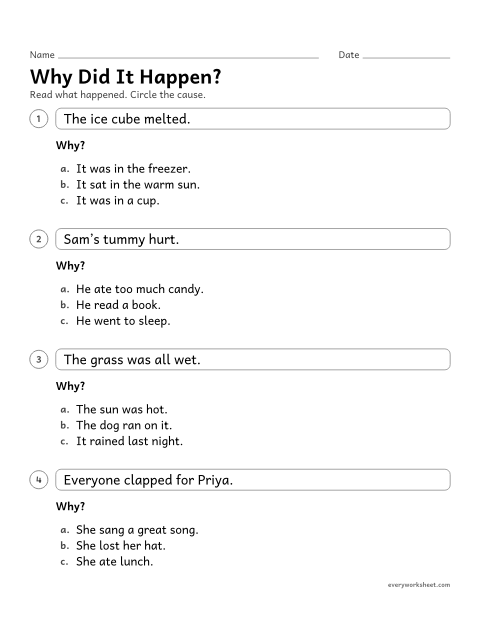
These cause and effect worksheets begin with a chart and picture matching: draw a line from each cause to its effect, or cut and glue each effect next to its cause. Then children read a cause and choose the effect, read an effect and choose the cause, finish sentences with because, and write what will happen next.
Two organizers pair an original story about a sand castle and a short text about falling leaves with cause and effect boxes. A blank organizer works with any book. Pages with right answers have an answer key.
CCSS.ELA-LITERACY.RI.1.3Describe the connection between two individuals, events, ideas, or pieces of information in a text.CCSS.ELA-LITERACY.RL.1.3Describe characters, settings, and major events in a story, using key details.CCSS.ELA-LITERACY.L.1.6Use words and phrases acquired through conversations, reading and being read to, and responding to texts, including using frequently occurring conjunctions to signal simple relationships (e.g., because).CCSS.ELA-LITERACY.L.1.1.GUse frequently occurring conjunctions (e.g., and, but, or, so, because).CCSS.ELA-LITERACY.SL.1.2Ask and answer questions about key details in a text read aloud or information presented orally or through other media.A cause is why something happens and an effect is what happens because of it. If it rains (cause), the grass gets wet (effect).
Because, so, since and and then are common clue words for first graders.
Use real life: you forgot your coat, so you felt cold. Ask what happened, then why it happened.
One page is cut and paste, and it has a twin with the same pairs where children draw lines instead. All other pages need no cutting.